



Thick hair is a blessing until it starts doing its own thing by lunchtime. The shape looks clean when you leave the barber’s chair, then the sides puff, the fringe bends weird, and suddenly you’ve got more volume than you asked for. That’s exactly why Korean haircuts for men with thick hair make so much sense: they work with density instead of fighting it.
What I like about Korean cuts is how often they use softness as the control method. Less hard edge. More movement. The best versions keep the top full, but remove weight in the right places so the hair doesn’t sit like a helmet. That matters a lot with thick strands, because thick hair can look rich and sharp or bulky and stubborn depending on how the shape is built.
There’s also a practical side people forget. Thick hair usually needs a barber who understands internal layering, not just clipper work on the sides. You want shape that bends, falls, and stays put without needing half a tub of product. If you’ve ever had a cut that looked fine for two days and then turned into a triangle, you already know the problem.
So let’s get into the styles that actually make thick hair easier to wear, not harder.
1. Two-Block Cut With a Soft Fringe
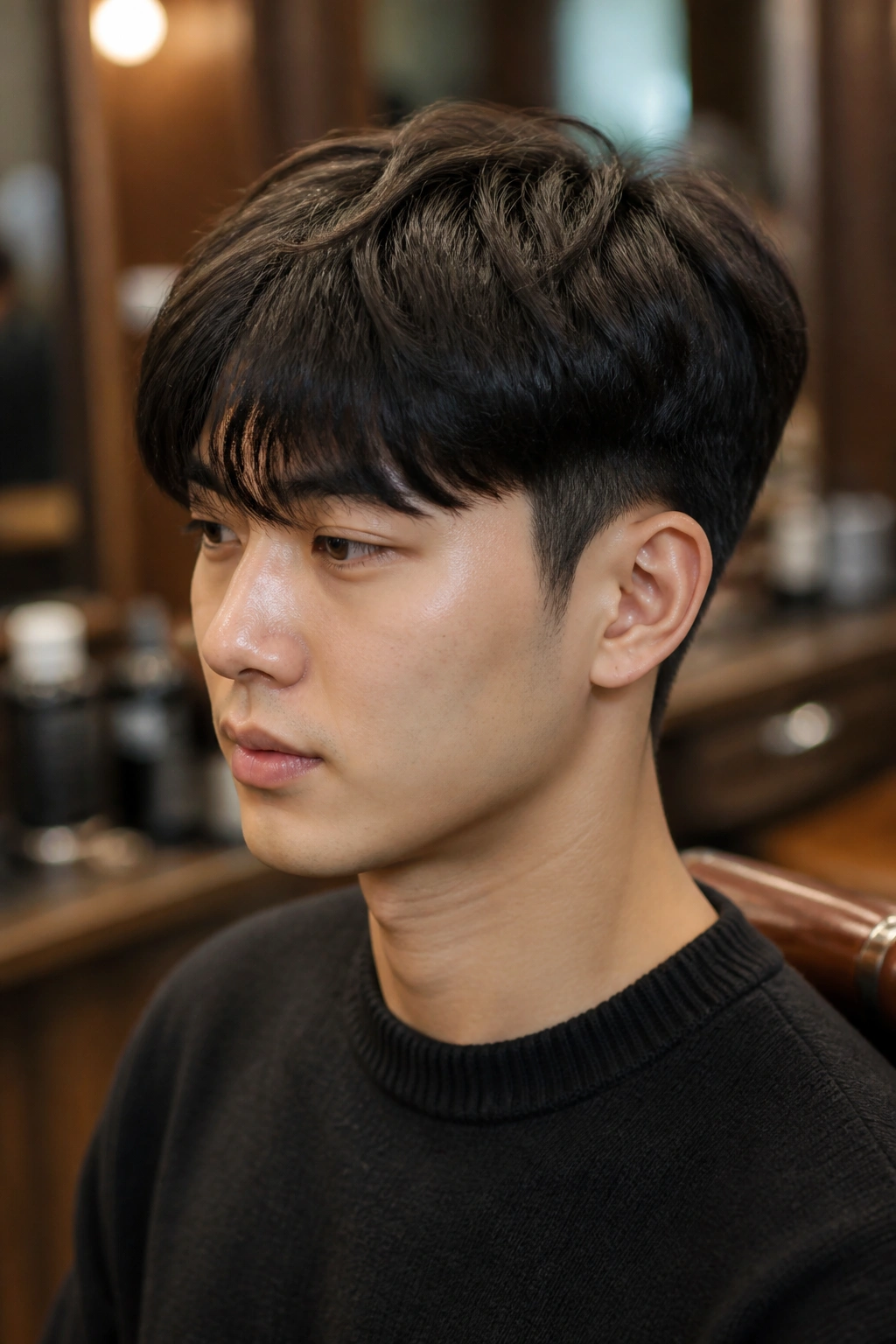
This is the classic starting point for a reason. A two-block cut keeps the sides and back much shorter than the top, which gives thick hair a clean frame without flattening the part that gives it character.
Why It Works on Thick Hair
The top stays full, so you still get that dense, healthy look. The short sides stop the shape from ballooning around the ears and jaw. A soft fringe keeps the front from feeling too heavy, which is the mistake that makes a lot of thick haircuts look boxy.
Ask for 7 to 9 cm on top if you want enough length to brush forward or slightly aside. If your hair grows straight out, tell the barber to remove weight from the underside of the top section. Not the surface. The surface is what gives the cut its movement.
- Keep the fringe soft, not blunt.
- Leave the temples tight and clean.
- Use a light matte paste, about a pea-sized amount.
My opinion: if you only try one Korean shape for thick hair, start here. It’s the least fussy and the easiest to grow out.
2. Curtain Bangs With Tapered Sides

Curtain bangs are one of those styles that look calm even when the hair itself is doing a lot. On thick hair, that balance is a gift. The split front creates movement, while the tapered sides stop the whole cut from feeling dense around the ears.
The trick is length. You need enough front length for the fringe to part naturally, usually 10 to 12 cm, sometimes a touch more if your hair shrinks when it dries. If the front is too short, the curtains stick up. If it’s too heavy, they fall into your eyes like a mop. No middle ground there.
I like this style for men who want something softer than a hard part but less casual than a messy crop. It sits in that sweet spot where the hair looks styled without looking overworked. A blow-dryer and a round brush help, but finger-drying works if your hair already has a bit of bend.
3. Textured Crop With a Low Fade

Can thick hair wear a crop without looking like a square block? Yes — if the top is cut with texture instead of a solid line. That’s the whole game.
A textured crop keeps the fringe short and broken, which is useful when the hair grows fast and heavy. Thick hair naturally wants to sit forward, so the crop works with that tendency instead of forcing it back. The low fade keeps the lower half neat without creating a harsh contrast.
How to Style It
Dry the hair forward with your fingers first. Then add a matte clay or paste and pinch small sections at the front. You want the ends to look separated, not pasted together. If the top feels too puffy, your barber should have removed bulk from the interior layers, not just hacked at the surface.
This cut is one of the best picks if you like a short style that still has some shape. It’s tidy. It’s easy. And it doesn’t ask for a perfect hair day.
4. Hush Cut With Airy Layers
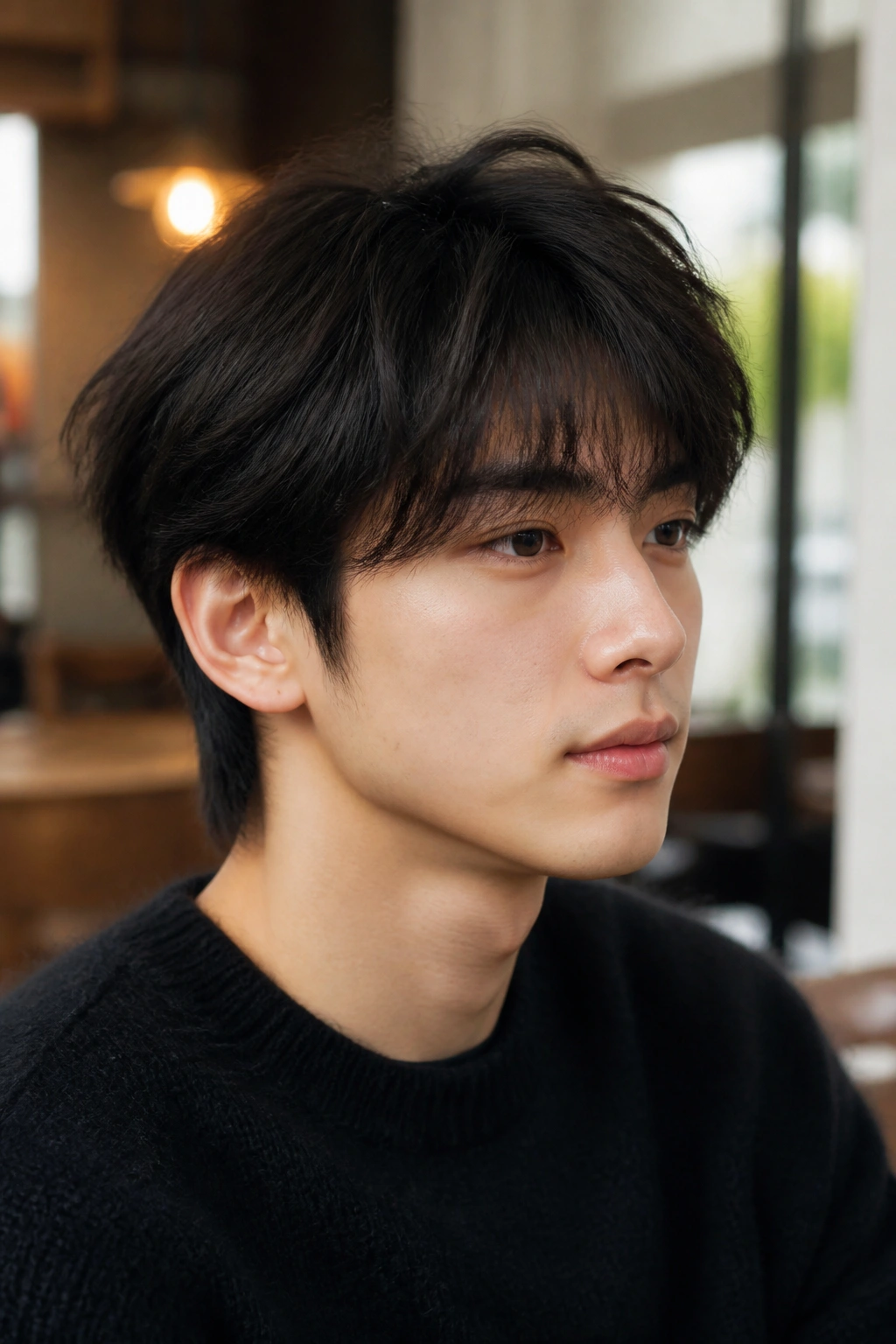
A hush cut gives thick hair room to breathe. That sounds soft, and it is, but it’s also practical. The cut uses light layers to break up the weight, especially around the crown and sides, so the hair falls with a softer outline.
I’ve seen a lot of thick-haired men fight their hair with blunt cuts when they really needed the opposite. The hush cut removes enough bulk that the hair can move instead of sitting in one heavy sheet. It’s especially useful if your hair has a slight wave, because the layers help that wave show instead of collapsing under its own weight.
Keep the ends feathered, not choppy. And avoid over-thinning the top. That’s the fast track to frizz, especially if your hair gets dry or puffy in humidity. A small amount of cream or light mousse is usually enough.
5. Korean Ivy League With Loose Volume
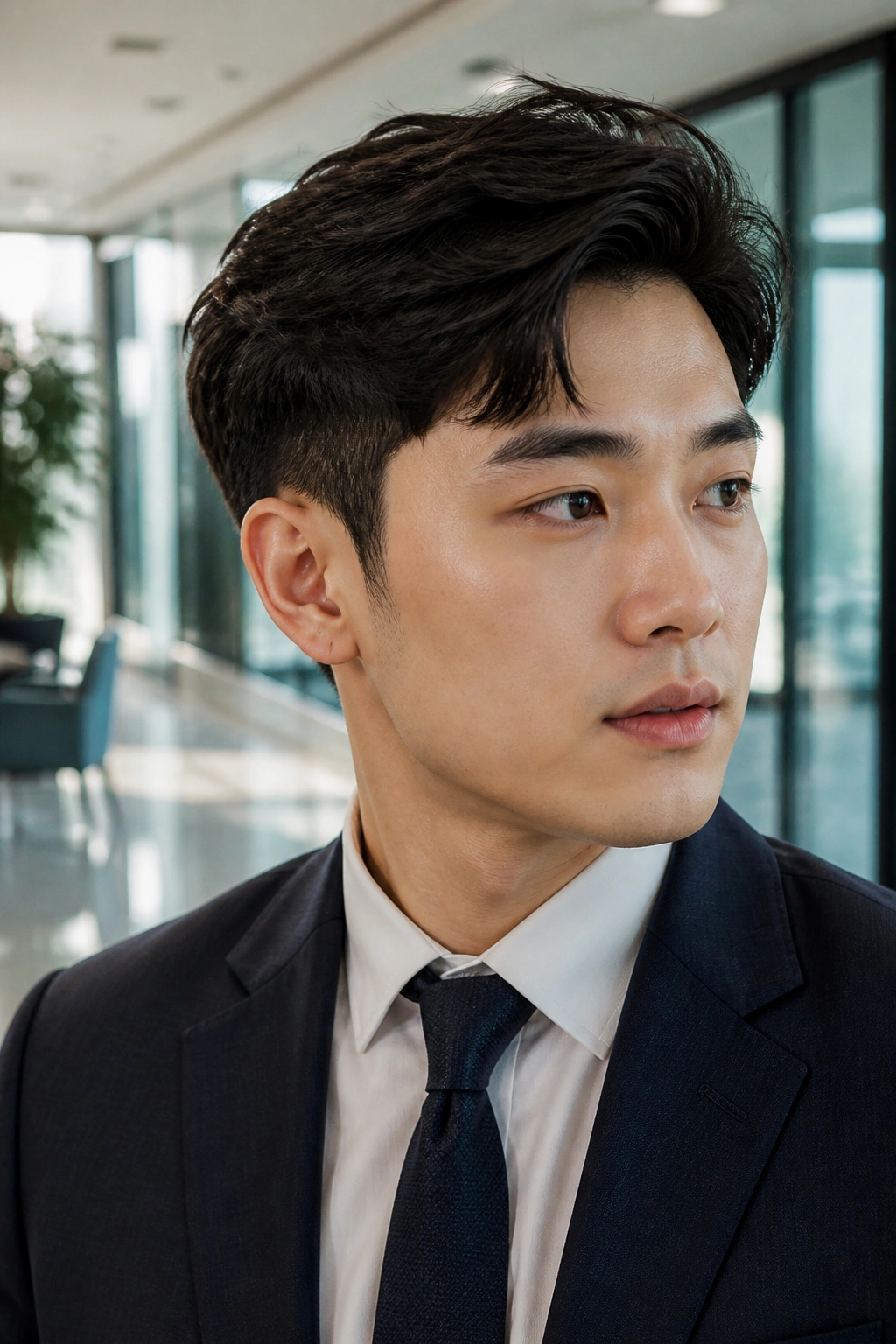
The Korean take on an Ivy League is cleaner than the American version, but softer around the edges. The sides are tapered, the top stays neat, and the front has enough length to sweep across without looking stiff.
Thick hair gives this cut a nice bonus: the top doesn’t collapse. It holds shape on its own, which means you can get away with lighter styling. A side part, even a loose one, looks sharper when the hair has natural density. You do not need a hard part line here. That would fight the whole point.
I like this style for men who want something office-friendly but not old-fashioned. It looks polished, yet the finish can stay relaxed if you use a matte cream instead of a heavy pomade. Keep the top around 5 to 7 cm, then taper the sides close enough to define the head shape without exposing too much scalp.
6. Comma Hair With a Clean Side Sweep

Comma hair has a face-shaped curve in the front that gives thick hair a controlled swoop instead of a flat part. It’s one of the more recognizable Korean styles, and thick hair actually helps it because the front has enough body to bend and stay in place.
Compared with a classic side part, comma hair feels softer. The sweep is less rigid. It curves over the forehead and then hooks slightly to one side, which gives the cut a bit of character without turning it into a full fringe. That makes it a good choice if you want movement near the face but still want the forehead partly open.
Use a blow-dryer on low to medium heat and guide the front with a brush or your fingers. A small round brush helps, but the shape can work without one if your hair already has some bend. Keep the sides tapered tight so the front remains the focus.
7. Middle Part With Long, Controlled Layers

A middle part on thick hair can look excellent, but only when the weight is managed. Otherwise it turns into a heavy curtain that sits flat at the center and puffs at the sides. The Korean version solves that by keeping the top long and the layers controlled.
Barber Notes
- Leave 10 to 14 cm through the top and front.
- Remove bulk underneath the crown.
- Keep the part loose, not carved with a razor line.
- Taper the sides so the hair doesn’t expand around the ears.
The best middle parts on thick hair have a little movement at the ends. They should frame the face, not drown it. If your hair is pin-straight, a light wave spray or a very loose perm can make the part look less severe. If it already bends naturally, even better. This style suits oval, square, and longer faces most easily.
8. Soft Mullet With a Tapered Neck
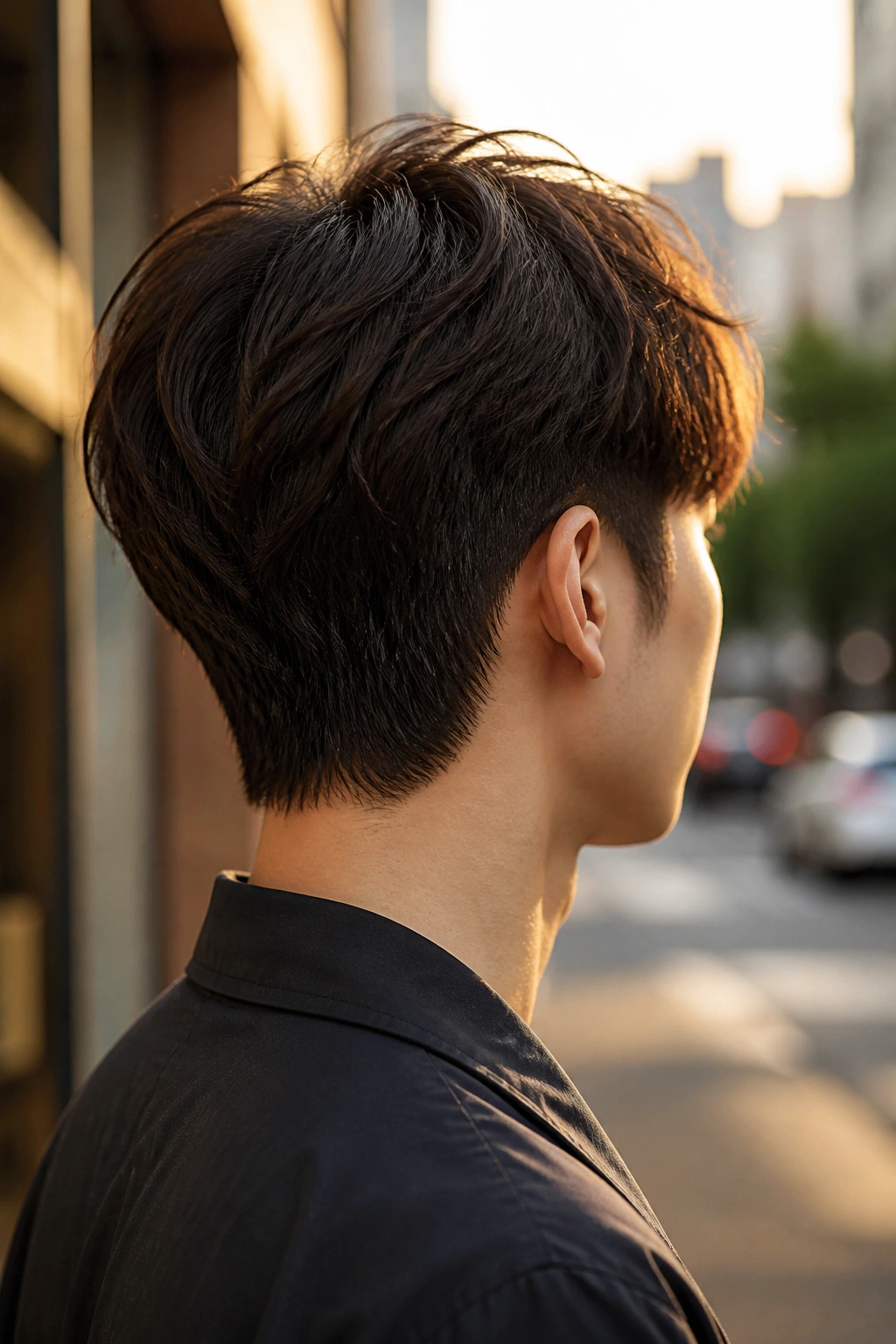
A mullet does not have to look like a joke from the back row of a bad yearbook photo. In Korean styling, the soft mullet is controlled, layered, and surprisingly wearable.
Thick hair is a huge help here because the back needs enough density to show shape without becoming stringy. The top stays textured, the sides are trimmed shorter, and the neck area is tapered so the cut doesn’t feel shaggy in a sloppy way. What makes this version work is restraint. You want visible length at the back, not a dramatic tail.
I’d pick this for someone who wants personality without a full fashion haircut. It works well with straight or slightly wavy hair, and it looks better when the layers are left soft instead of heavily razored. The back should move when you turn your head. If it feels stiff, the cut is too blunt.
9. Layered Bowl Cut With Rounded Edges
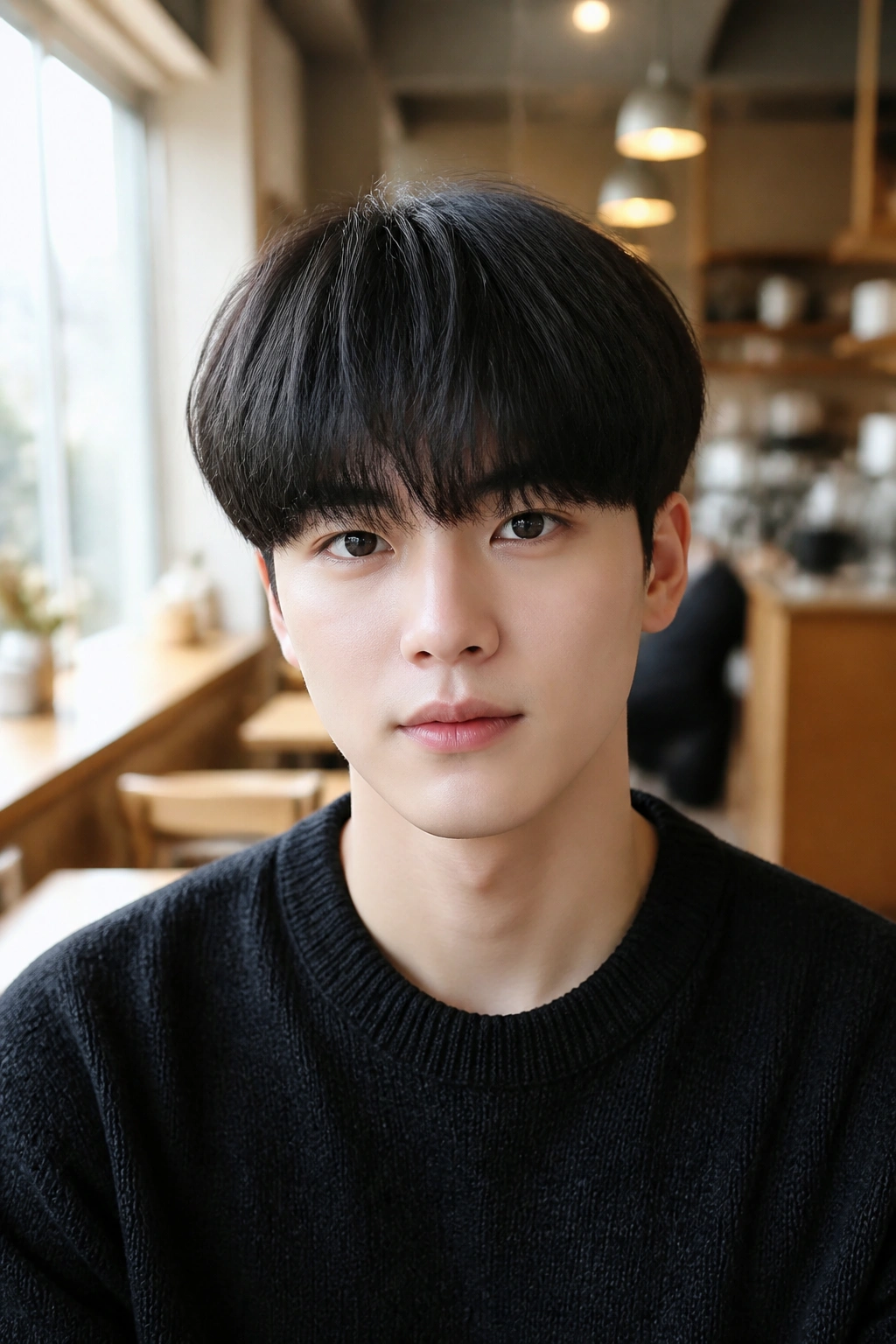
Why does a bowl cut work on thick hair when so many bad versions look childish? Because thick hair can carry the shape without collapsing, and the Korean version softens the edges so it feels intentional.
The modern layered bowl cut is not the blunt mushroom cut people are still scared of. The perimeter sits around the head, but the interior is cut with texture so the top doesn’t become a hard dome. That subtle movement is what keeps it usable. The rounded line also suits thick hair because the density makes the contour look clean.
What to Ask For
- A rounded shape that follows the head.
- Light texture through the top.
- A softer fringe, not a heavy shelf.
- Tapered sides or a gentle undercut to reduce bulk.
This cut works best if you like a bold outline and you’re willing to style it with a little matte product. It’s not a lazy haircut. It’s a shape haircut.
10. French Crop With a Choppy Fringe
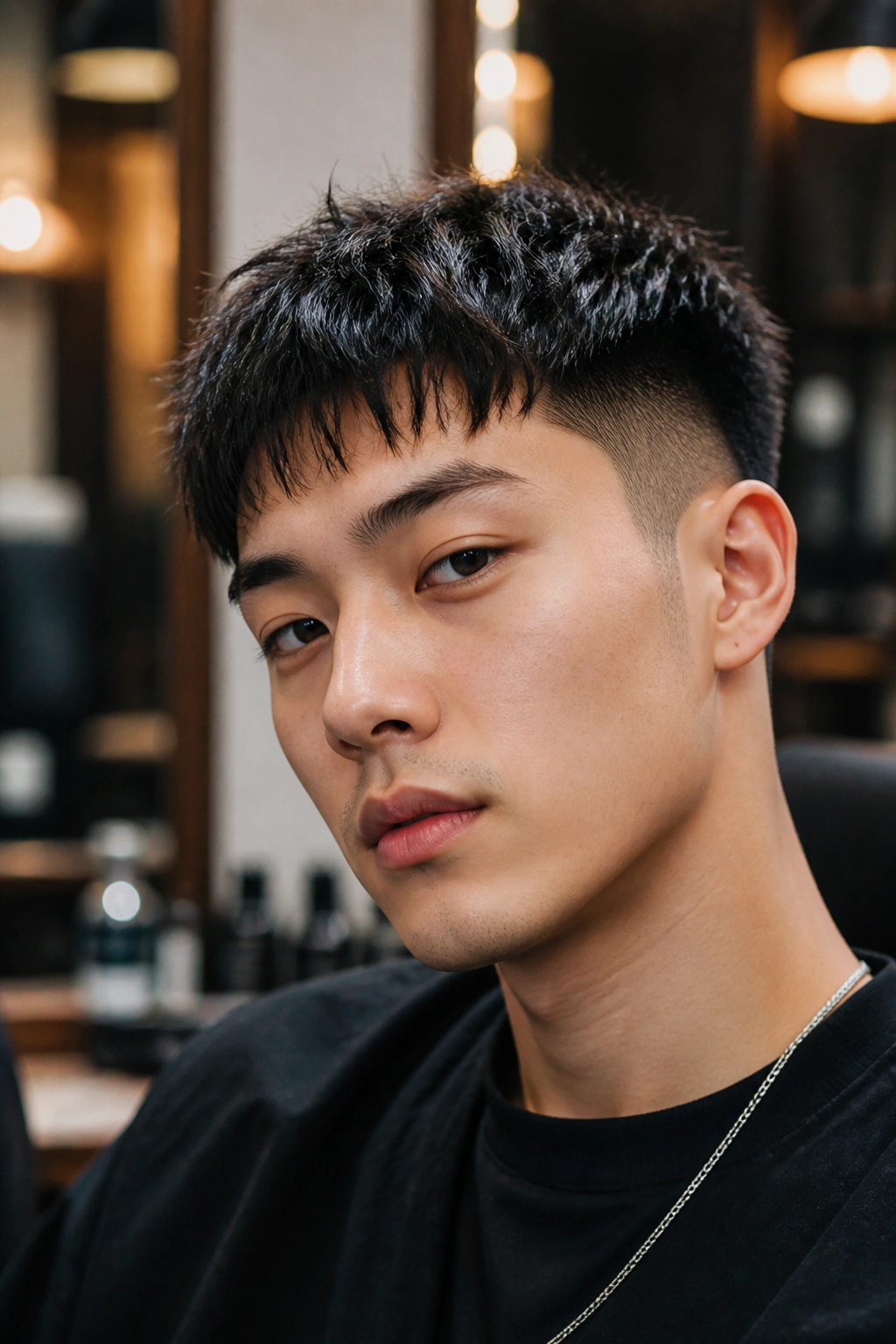
The French crop is one of the easiest short styles for thick hair, and that’s why it keeps coming back. The fringe sits forward, the sides are tight, and the top is broken up enough that the hair doesn’t look like a single slab.
Thick hair gives this style a lot of mileage because the fringe has real presence. On fine hair, a crop can look flat. On thick hair, it looks deliberate. The key is a choppy finish at the front. You want the fringe to have uneven tips, not a blunt line that hugs the forehead too hard.
This is the kind of cut I recommend to men who want something fast in the morning. A small amount of matte paste, a quick push forward with the fingers, and you’re done. It also grows out well, which matters more than people admit. Bad growth is where a lot of short cuts fall apart.
11. 7:3 Side Part With Natural Lift
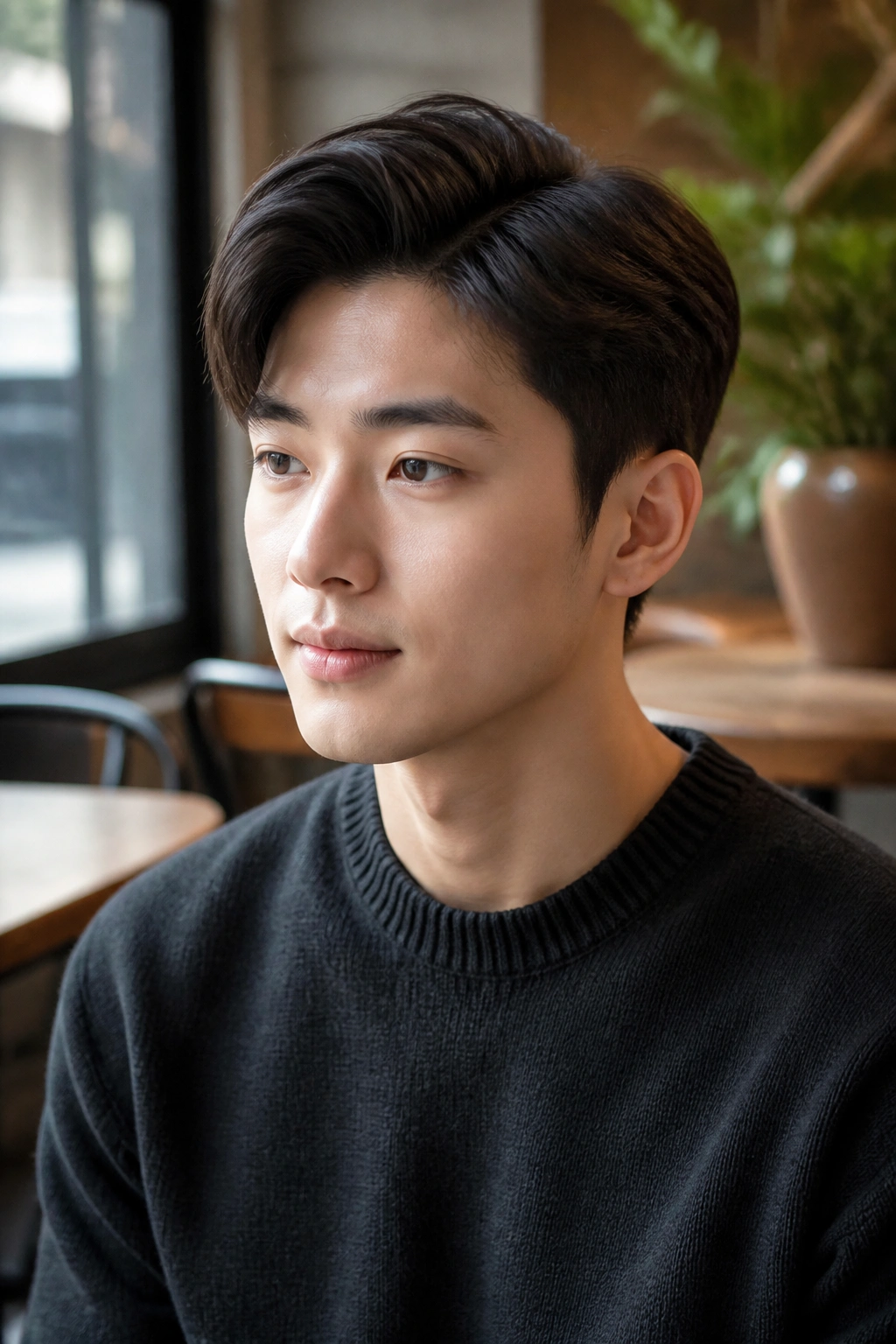
The 7:3 side part is one of those Korean looks that deserves more attention outside barber circles. The part sits off-center, with more hair lifted on one side and a softer fall on the other. Thick hair makes it look fuller and more expensive-looking, if I can put it that way without sounding like a billboard.
What separates this from a strict side part is the ease. A hard part can feel severe and old-fashioned. The 7:3 version has movement at the front and a little bend through the top, so it doesn’t lock the head into one flat shape.
Keep the top long enough to sweep, around 6 to 9 cm, and ask for tapering rather than a high fade. High fades can eat too much weight and make the top look disconnected. Use a blow-dryer to set the direction, then finish with a lightweight cream. Too much product kills the lift.
12. Brush-Up Quiff With a Low Taper
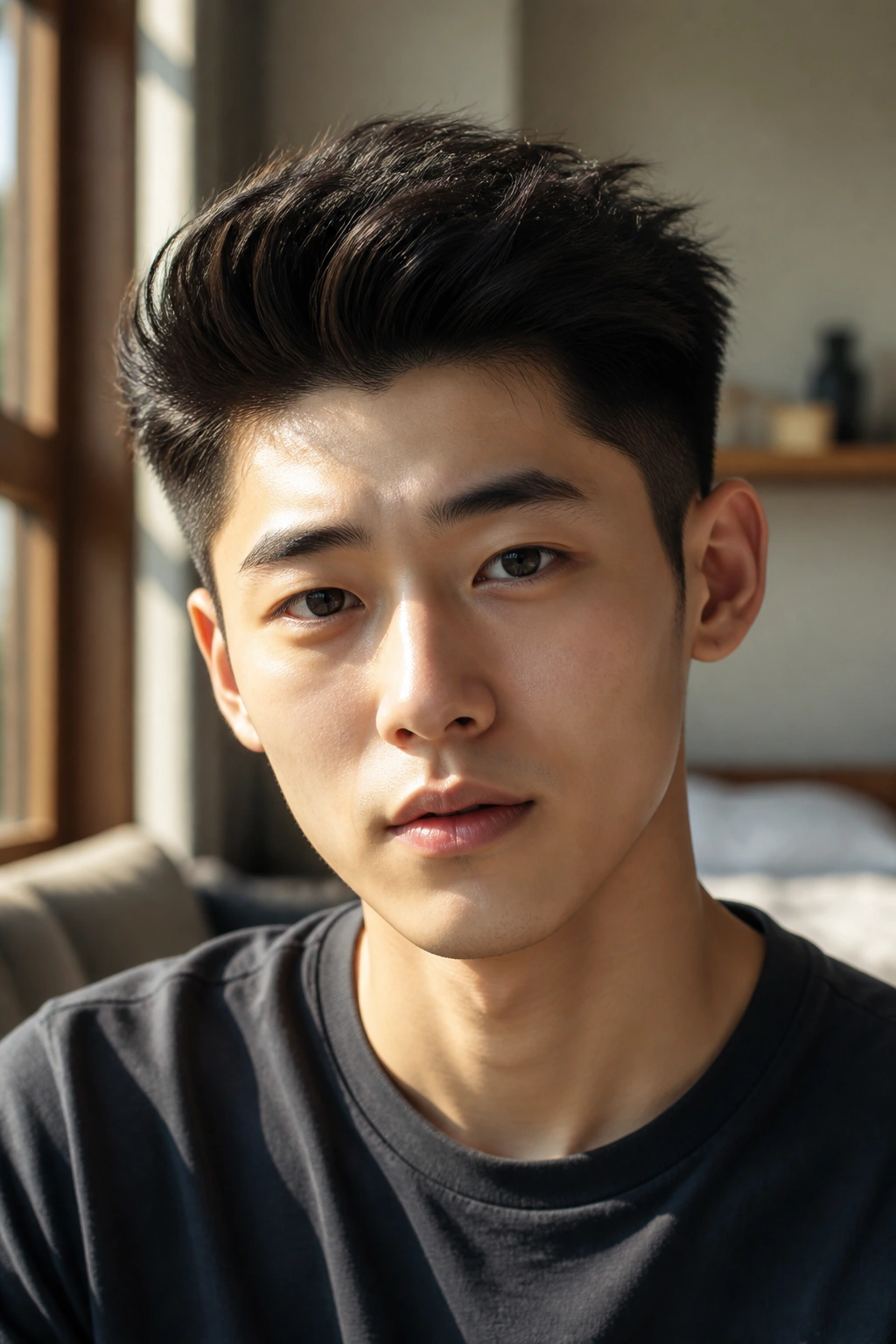
A brush-up quiff can look loud if it’s overbuilt. On thick hair, though, it can also look clean and energetic when the height is controlled and the sides stay quiet.
The low taper is what keeps this from turning into a retro pompadour. You’re not building a wall in front. You’re guiding the front upward so the shape opens the face and gives the crown some air. Thick hair helps because the quiff holds a ridge without needing a mountain of product.
I’d keep the front a bit longer than the rest of the top, then shorten the back slightly so the silhouette leans forward. That small shift keeps the cut from puffing out behind the forehead. Matte clay works if you want texture; a light styling cream is better if you want the front to feel touchable. Either way, skip anything sticky. That stuff turns thick hair into a brick.
13. Two-Block Undercut With a Longer Top

This is the sharper, more dramatic cousin of the softer two-block cut. The sides and back are cut even cleaner, sometimes with a real undercut effect, while the top stays long enough to style in several directions.
What to Tell the Barber
- Keep the sides very short, but not stripped bare.
- Leave 8 to 12 cm on top.
- Remove bulk from the crown if the hair grows out wide.
- Soften the transition behind the ear so it doesn’t look harsh.
Thick hair makes this style easier to wear because it gives the long top some substance. Without density, the top can look thin or floppy. With density, it has body. The downside is maintenance. If you let the sides grow too long, the contrast gets messy fast. This cut suits men who are fine with barber visits on a regular rhythm and want a more styled, fashion-forward result.
14. Loose Perm-Style Crop

Do you need a perm to make thick hair behave? Not always. But on straight, heavy hair, a loose wave or Korean perm can make a huge difference in how a crop sits.
The point isn’t curl for curl’s sake. It’s movement. A slight bend helps thick hair fall instead of standing out from the scalp, and that makes styling easier every single morning. If your hair already has a bit of texture, the perm only needs to be gentle. Too much curl and the cut starts to fight your head shape.
This style works especially well with a shorter crop or a layered top because the wave creates separation without making the cut look overdone. A light styling cream is enough most days. If you use a blow-dryer, keep the heat low and diffuse the airflow with your fingers. You want shape, not frizz.
15. Bro Flow With Korean Layers
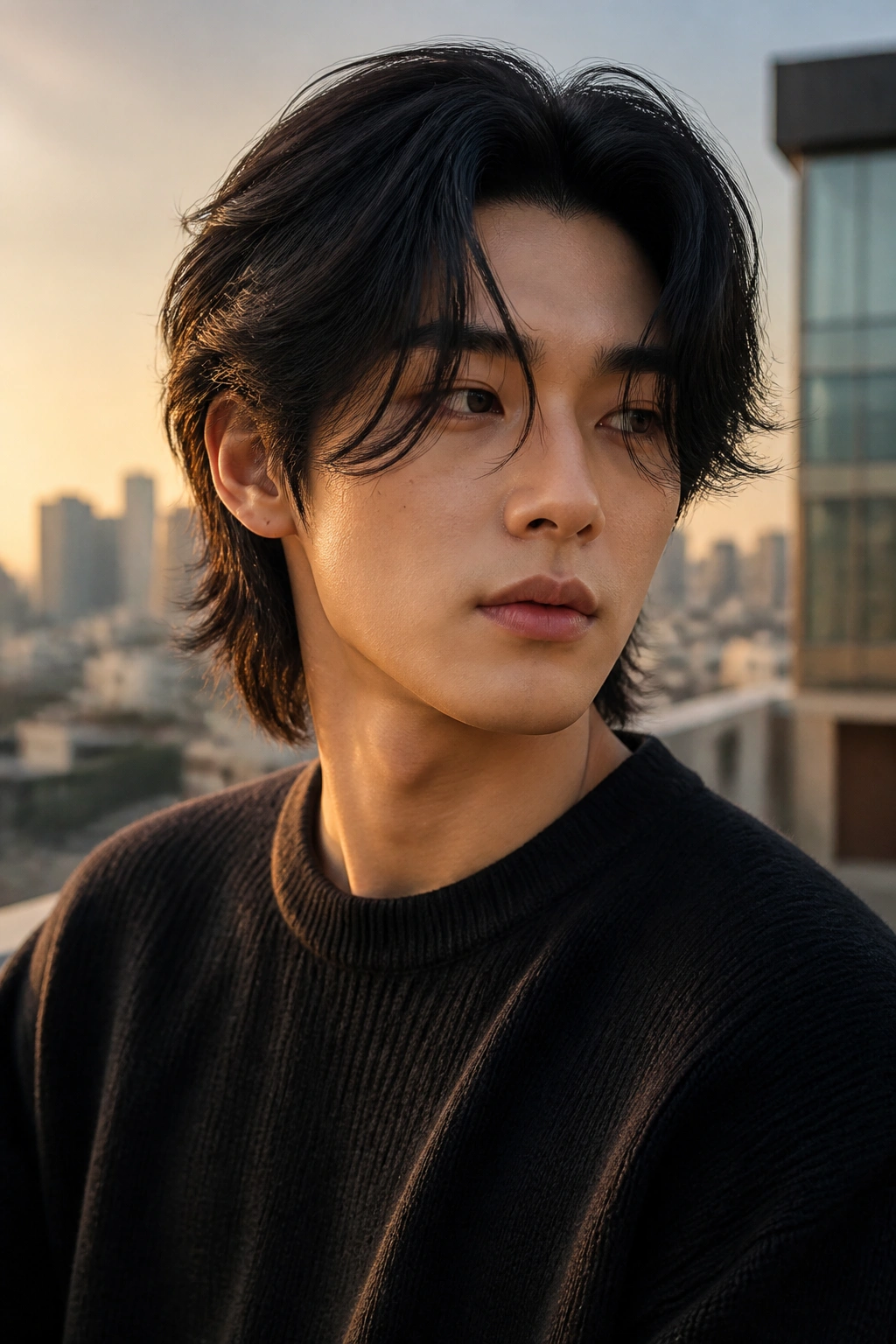
The bro flow gets a better reputation when it’s cut with Korean layering instead of left to grow wild. Thick hair can carry length beautifully, but if the weight isn’t managed, the style hangs like a curtain rod.
The right version keeps the front and sides long enough to sweep back, while the layers around the crown and temples stop the silhouette from becoming triangular. I like this cut for men who want a relaxed style but still want the hair to sit off the face. It has a laid-back feel, yet it still reads as deliberate.
If you’re growing your hair out, this is one of the cleaner stages to pass through. The trick is regular trimming around the ends every few months so the shape doesn’t get too bottom-heavy. Use a leave-in cream if the hair feels dry, and don’t overload it with paste. You want flow. Not glue.
16. Forward Fringe With a Tapered Neckline
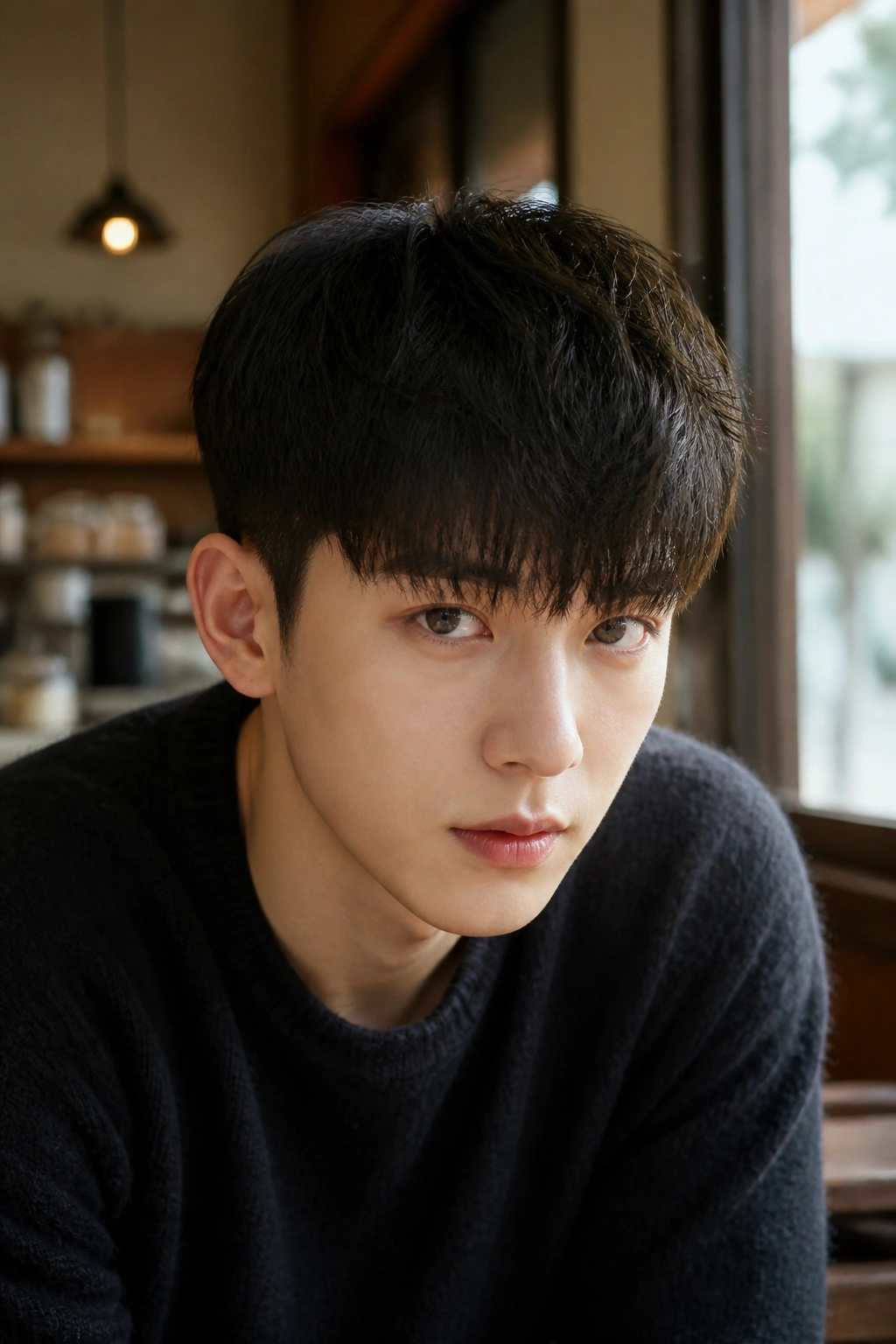
A heavy fringe can look sharp if the line is soft. That’s the whole appeal of a forward fringe on thick hair. The front gets the attention, while the neckline stays neat and tapered.
This style suits men with a higher forehead or anyone who likes some coverage without a full, blunt fringe. Thick hair helps the front sit with body, so it doesn’t split apart or look thin at the ends. The danger is weight. If the fringe is too dense, it sits like a curtain stuck to the skin. That’s where the barber’s scissor work matters.
I’d ask for texture through the front, then a clean taper at the nape so the cut doesn’t feel unfinished from behind. Style it with a tiny bit of paste, pushing some of the fringe forward and some slightly off-center. The goal is a soft shape that moves when you do.
17. Messy Caesar With Texture
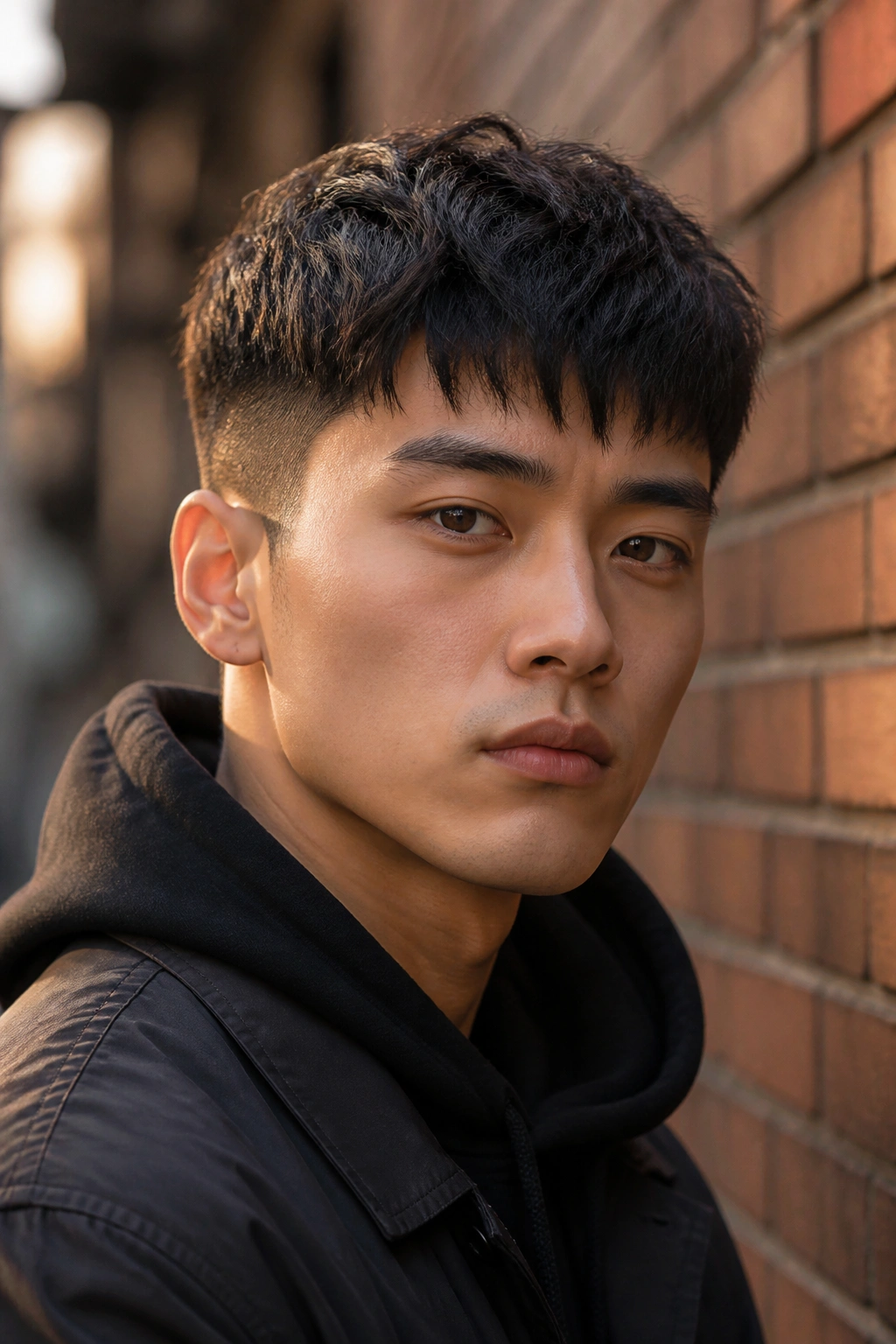
The Caesar cut can go very wrong on thick hair if it’s cut too blunt. Then it becomes a hard little shelf. The Korean version is better because it breaks the line up and leaves the front textured.
This style keeps the fringe short, usually just above the brows, with the top cut close enough to sit flat but not so close that it loses shape. Thick hair makes it look fuller and more defined, which is useful if you want a short cut that still has some edge. The texture stops it from feeling military.
Best part? It’s low-maintenance. A finger-length amount of matte product is enough. Push the top forward, then pinch the front to split it slightly. If your hair grows fast, this cut starts to change shape sooner than longer styles, so don’t let it go too long between trims.
18. Slick Back With Airy Separation
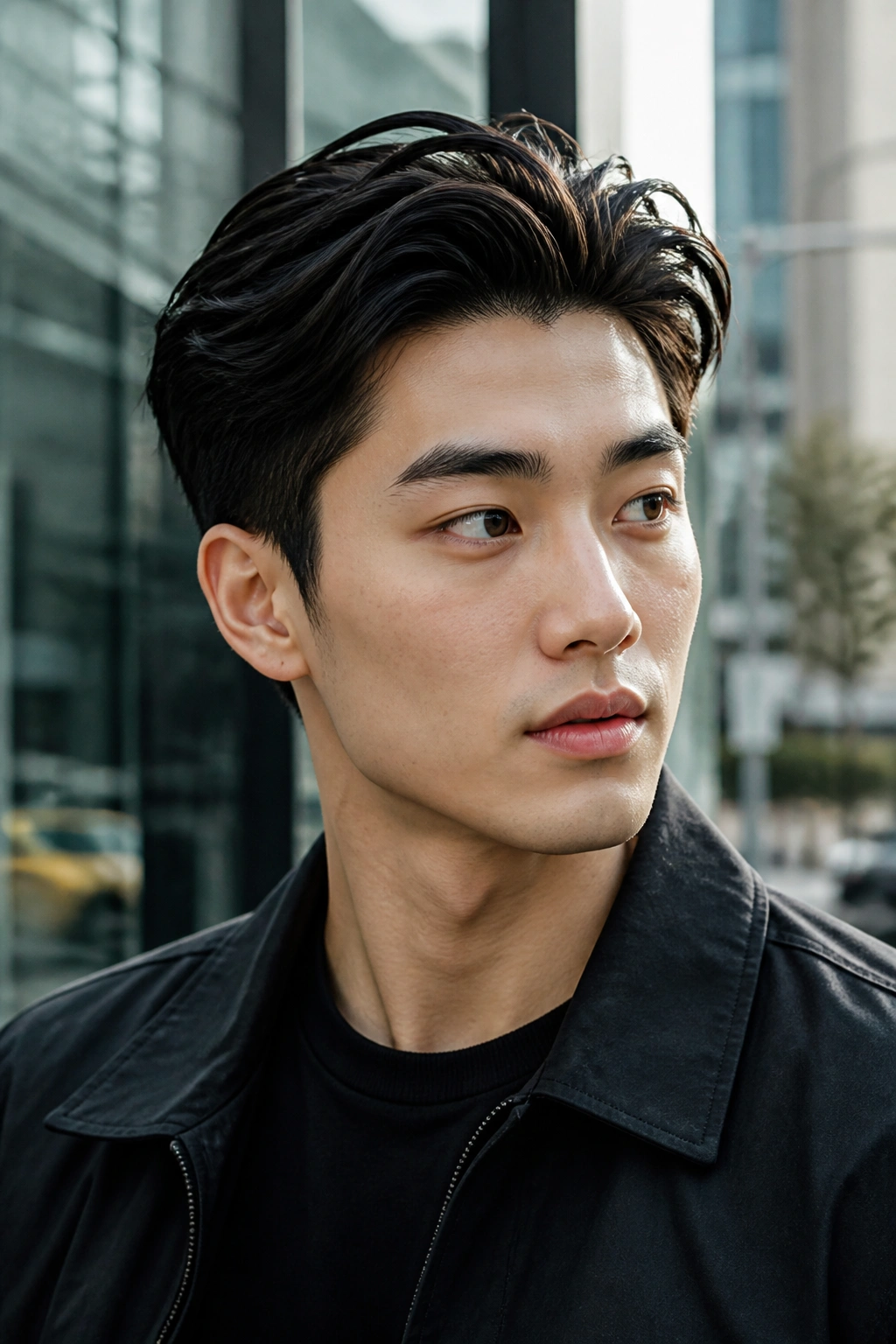
A slick back on thick hair can look either sharp or oily, and the difference comes down to texture. I’m a fan of the airy version, where the hair is swept back but still has visible separation between strands.
How to Keep It from Looking Wet
Use a lightweight cream or a soft pomade, not a heavy gel. Dry the hair backward with a brush first, then use your fingers to break the surface once it’s in place. That keeps the finish from looking like plastic. If your hair is very thick, a blow-dryer helps more than people expect, because it sets the direction before product goes on.
This style is good when you want a cleaner, more mature look without losing density on top. The sides should stay tapered, not shaved too high, or the contrast gets severe. Thick hair carries the slick-back well because it holds shape; the job is just to keep it from turning shiny and stiff.
19. Drop Fade With a Longer Top
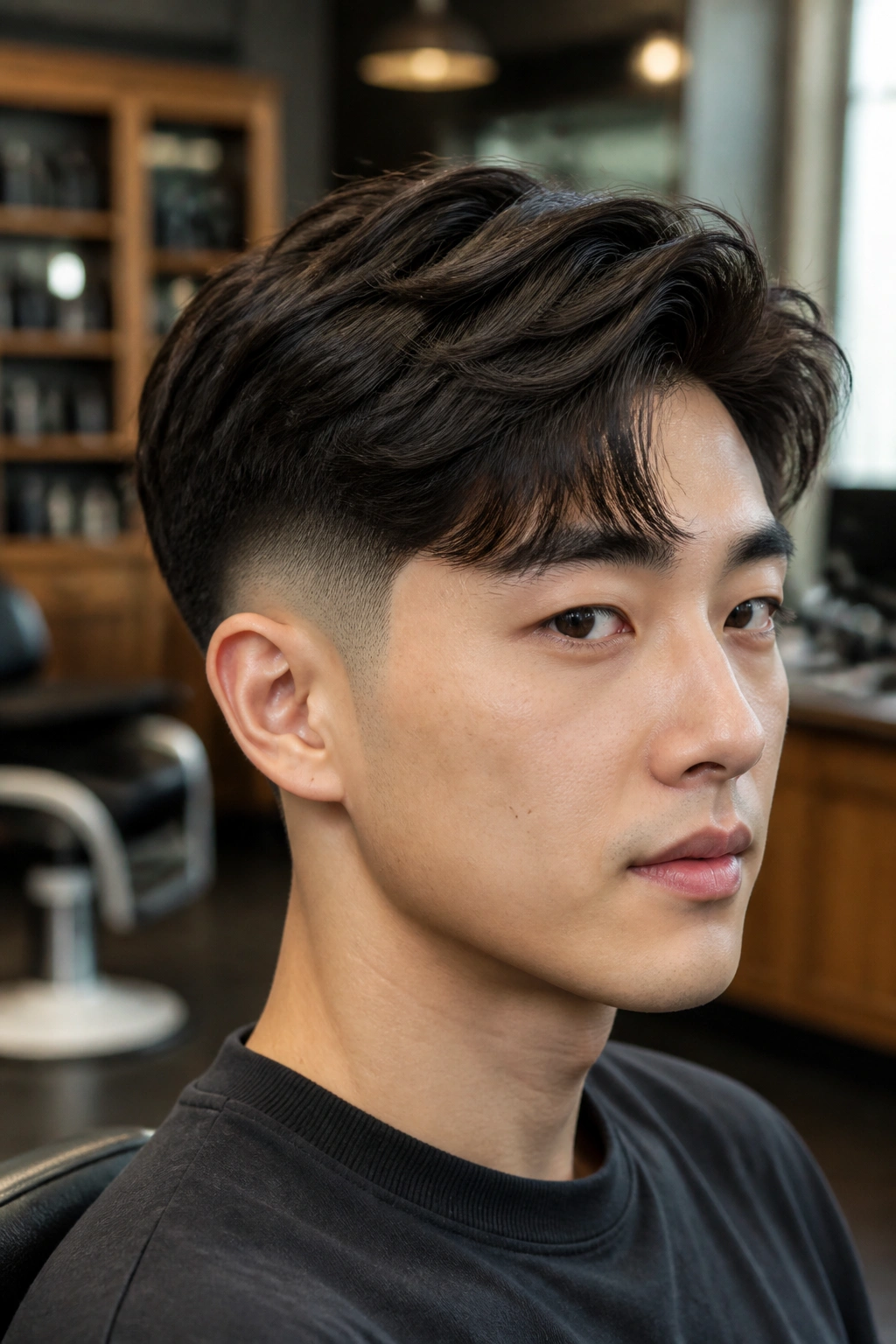
A drop fade is a smart move when the head shape needs a little help. The fade curves down behind the ear and lower at the back, which creates a smoother frame for thick hair on top.
The longer top can be styled in almost any direction — forward, aside, or lightly upward — but the fade gives it a cleaner base. That matters if your hair grows out fast around the temples. Thick hair often expands there first, and a drop fade takes that bulk down before it gets loud.
I like this cut on round or square faces because the fade curve softens the sides. Keep the top textured rather than flat, and avoid a harsh disconnect unless you want the style to feel more aggressive. It’s a good choice if you want a cut that looks neat from every angle, not just the front.
20. Soft Wolf Cut With Broken Layers
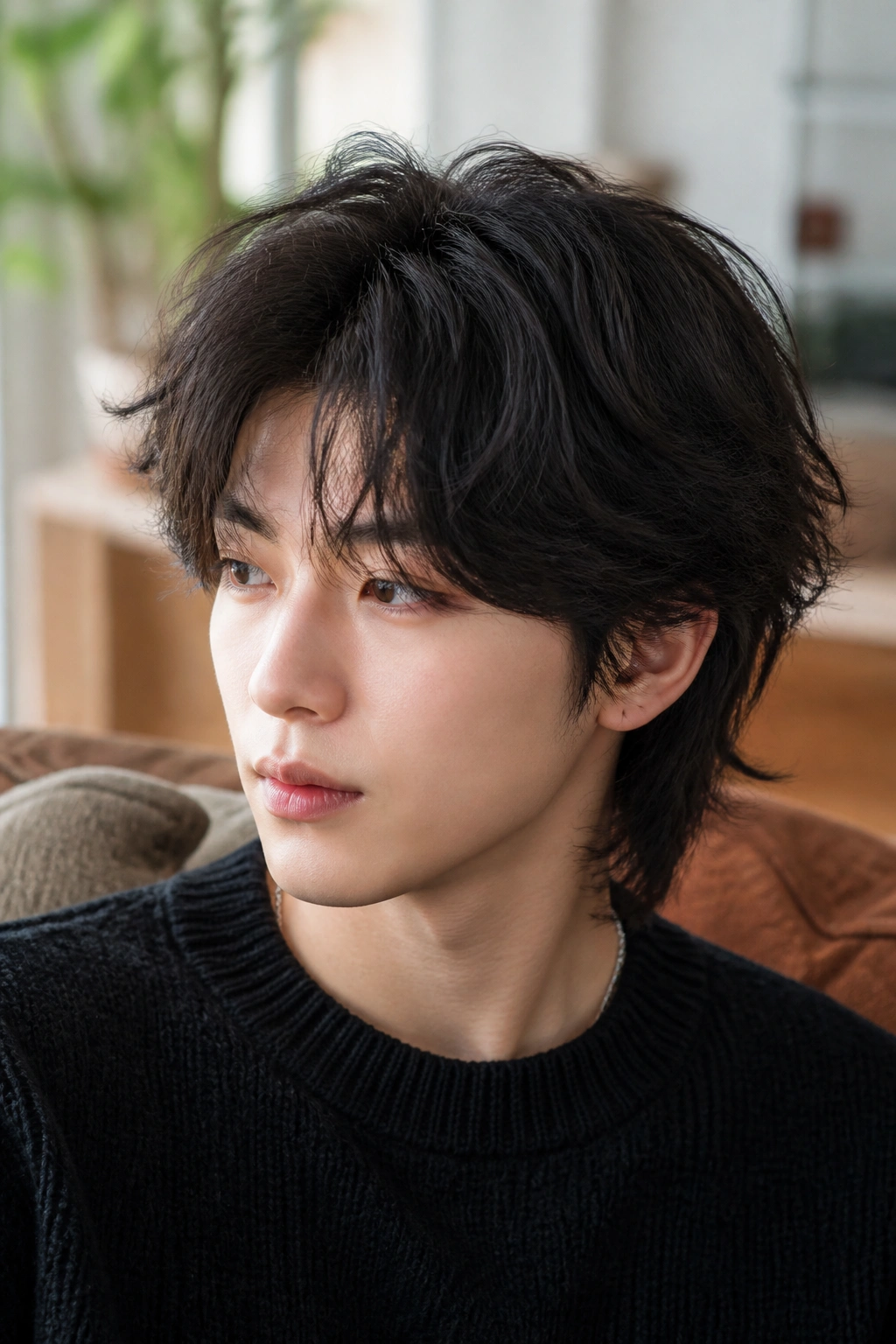
A soft wolf cut is basically controlled chaos. The crown has volume, the layers fall unevenly, and the ends are broken enough that thick hair doesn’t sit in one heavy shape.
Where the Layers Should Sit
- Shorter layers around the crown for lift.
- Medium length through the sides to stop puffing.
- A bit more length at the nape for flow.
- Fringes kept soft so the front doesn’t look choppy.
This cut works best when the layers are visible but not ragged. A lot of people think wolf cuts are all about shaggy ends. Not really. The good version has shape. Thick hair gives it the body it needs, and the broken layers keep it from feeling weighed down.
If your hair already has wave, this style gets easier fast. Straight hair can still wear it, but it needs more styling with a blow-dryer or light texture spray. Either way, the point is movement, not polish.
21. Rounded Crop With Temple Fade

The rounded crop is one of the neatest options on this list. It keeps the outline soft and curved, which suits thick hair because the density naturally fills the shape instead of making it look sparse.
The temple fade keeps the sides clean around the face, while the top is cut into a gentle curve rather than a hard block. That shape is subtle, but it changes how the whole haircut feels. It makes thick hair look intentional, not bulky. It also works well if you don’t want a fringe dropping into your eyes.
This is a good office haircut, plain and simple. It doesn’t scream for attention, but it does look cared for. A small amount of matte product helps the top stay separated, though it can also be worn more naturally if your hair has a bit of bend. I’d call it dependable, which is not a boring compliment when it comes to men’s hair.
22. Curtains With Tucked Sides

Curtains and curtain bangs are cousins, but this version is a little looser and more grown out. The sides are tucked enough to keep the face open, while the top falls in a soft split through the center.
On thick hair, the style gets its strength from density. The part doesn’t look empty. It looks full, which is the whole point. You want the front pieces to move away from the face instead of hanging straight down like curtains on a window. The sides should be tapered enough that the silhouette stays neat.
I prefer this style on men who want a soft, almost thoughtful look. It’s not the sharpest haircut in the room, but it has character. The best versions have a bit of bend at the ends, so the hair looks like it was shaped by movement instead of forced into place. A little leave-in cream is enough most days.
23. Tapered Pompadour With Movement
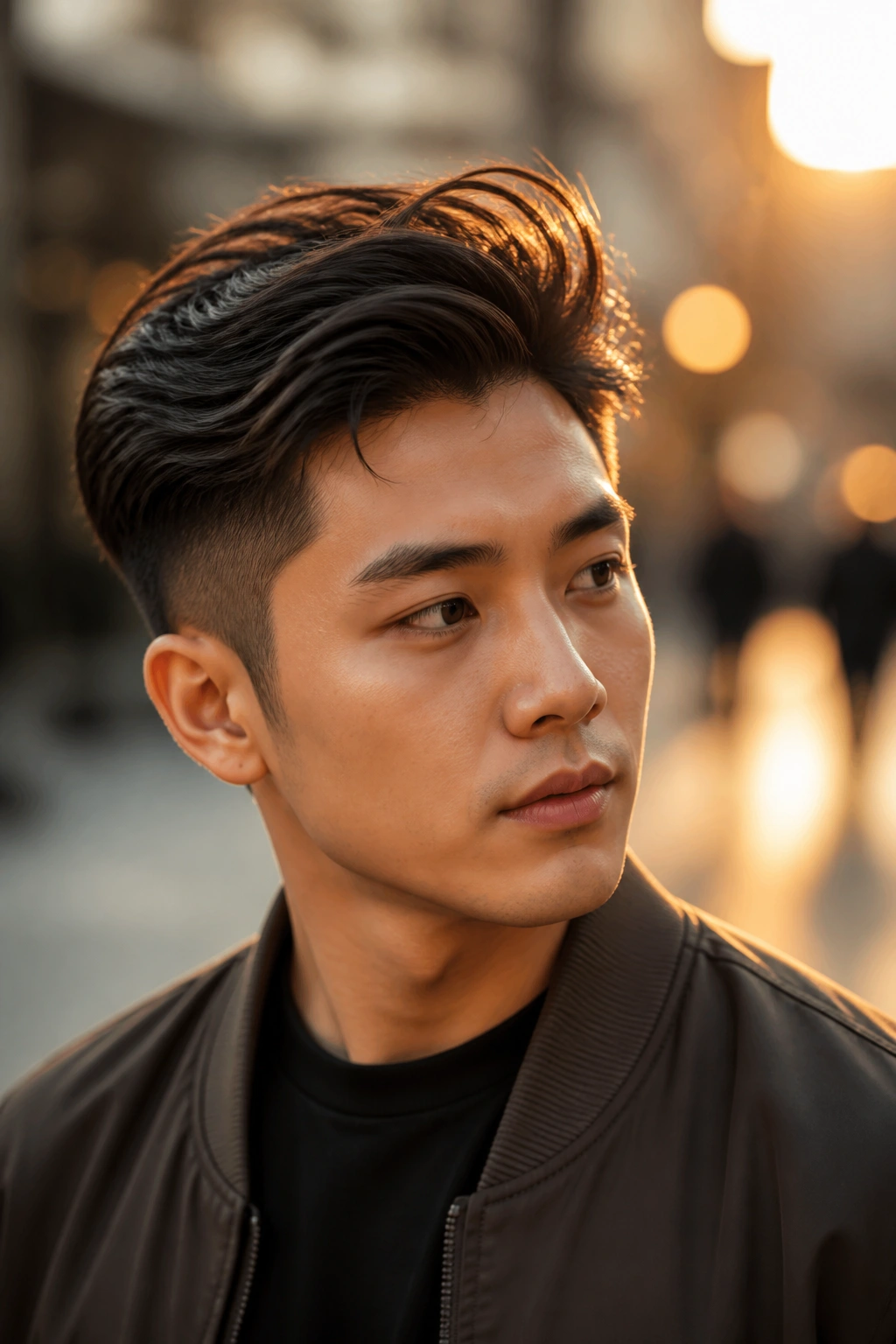
A pompadour on thick hair is a strong look, but it can easily turn stiff. The Korean version loosens it up, keeps the height moderate, and lets the front move a little instead of locking into a vintage wall.
The taper is what keeps the shape modern. It reduces bulk around the sides and neck, so the volume up top feels balanced rather than heavy. Thick hair gives the pompadour real structure, which is why this style works better on dense hair than on limp hair that needs half its life in spray.
Blow-dry the front upward first, then guide it back with a round brush or your fingers. Use a light-to-medium hold product, and stop before the finish gets shiny. The hair should still look touchable. If it looks sealed in place, you’ve gone too far. This is a style that rewards a little restraint.
24. Long Layered Top With Clean Sides
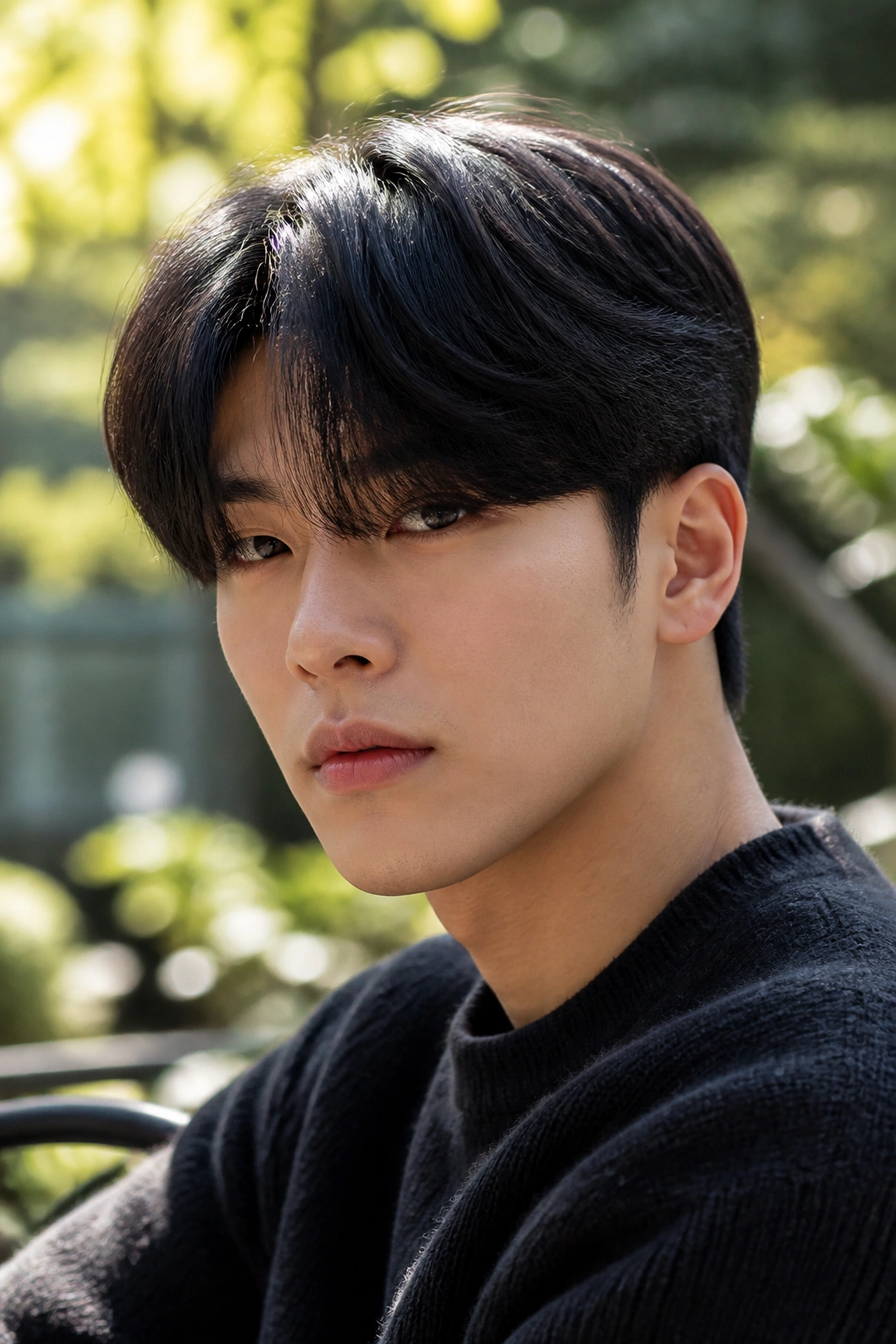
Long hair on thick men looks best when it has internal layers. Otherwise it can sit like one heavy sheet. Clean sides fix the bulk problem, and layered length on top gives the style room to move.
This cut is a good bridge between short Korean styles and longer, more relaxed shapes. The top can reach the nose, cheekbones, or even lower, depending on how much hair you want to work with. The important part is keeping the weight from collecting at the ends. That’s what makes long thick hair drag down the face.
I’d recommend this if you like growing your hair but still want a polished outline. The sides can be tapered or trimmed close around the ears, which keeps the cut from spreading outward. Use a light cream or leave-in conditioner if the ends get dry. Long thick hair needs softness more than shine.
25. Hybrid Two-Block Mullet
This one is for the guy who wants shape with a little edge. The hybrid two-block mullet takes the clean separation of a two-block cut and stretches the back just enough to give it movement and attitude.
Thick hair is what makes this style believable. The top stays full, the sides stay tight, and the back gets a bit of length so the cut doesn’t feel abrupt. It’s a balanced version of two different ideas, which sounds messy on paper but works well in the chair when the barber keeps the layers soft.
I would not recommend this if you want a safe, corporate haircut. It has personality. That’s the point. But it still looks controlled when the taper is clean and the back is shaped with intention instead of left to wander. If you like Korean haircuts that feel a little fashion-forward without crossing into costume territory, this is one of the strongest options.
Final Thoughts
Thick hair gives you more to work with than most men realize, but it also punishes bad structure faster than fine hair does. The best Korean haircuts for men with thick hair do three things well: they remove bulk, keep movement, and leave enough shape on top to make the density look deliberate.
If you’re sitting in a barber’s chair, don’t ask for a style name and leave it there. Say how much length you want on top, where the hair feels too heavy, and whether you want the fringe to fall, part, or sweep back. That conversation matters more than people think.
And if you’re torn between two styles, pick the one that matches your morning routine, not the one that looks best in a photo. Hair has to live with you, not the other way around.
