



A good side part can save a haircut.
Long hair on men looks better when it has a direction. That’s the real reason side part long hairstyles for men keep working across different hair types, face shapes, and dress codes. The part gives the hair a line to follow, which means the style reads as deliberate instead of accidental.
And the nice part? You do not need to chop your length to get shape. A side part can make shoulder-length hair look cleaner, make waves look richer, and stop thick hair from spreading into a heavy triangle around the head.
The catch is that the part line matters more than most guys think. Move it half an inch and the whole haircut changes. Put it too high and it starts to feel stiff. Put it too low and the hair collapses into your face. Small details. Big difference.
1. Classic Deep Side Part with Collar-Length Hair
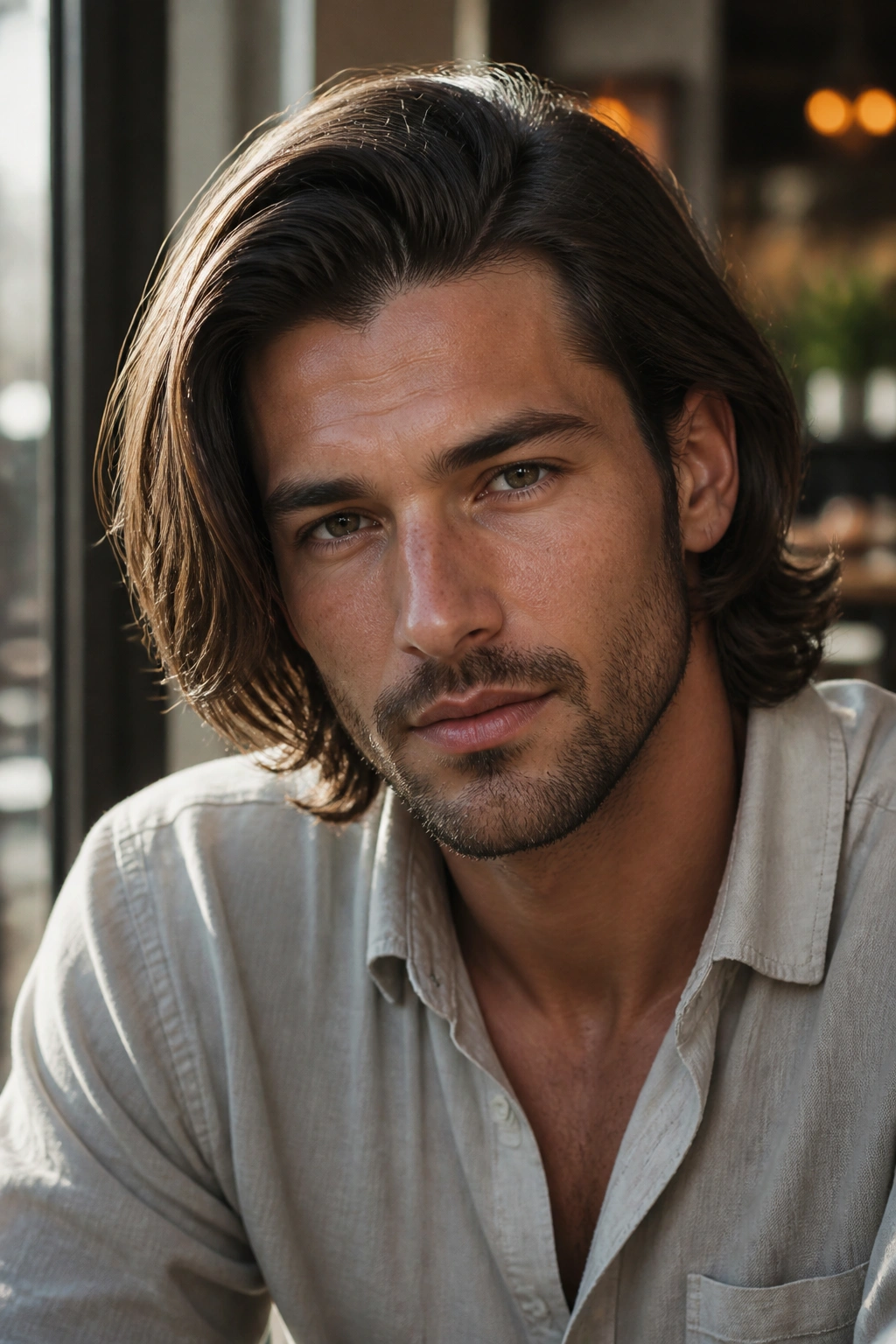
A deep side part is the cleanest way to wear long hair without making it look forced. It gives the hair a clear anchor point, then lets the length fall in a way that feels easy and controlled. If your hair hits the collar or sits just above it, this shape can make everything look more intentional without turning the style into a helmet.
Why It Works
The deeper part creates a stronger visual line, which helps balance longer hair around the jaw and neck. That matters if your hair tends to puff out at the sides or if one side always falls into your eyes. A deep side part pulls the shape back into place.
It also works because it leaves room for movement. The hair is still long, still soft, still slightly relaxed. It just has a point of order.
Styling Notes
- Comb the part in when the hair is damp, not dripping wet.
- Blow-dry the top section in the direction you want it to lie.
- Use a pea-sized amount of medium-hold cream if your hair is straight or slightly wavy.
- Keep the ends loose so the haircut doesn’t feel too neat.
- If the part collapses, dry the root first with your fingers, then finish with a comb.
Best tip: a deep side part looks better when the ends are a little imperfect. Sharp roots, soft length. That contrast is the whole point.
2. Loose Side Part with Natural Waves
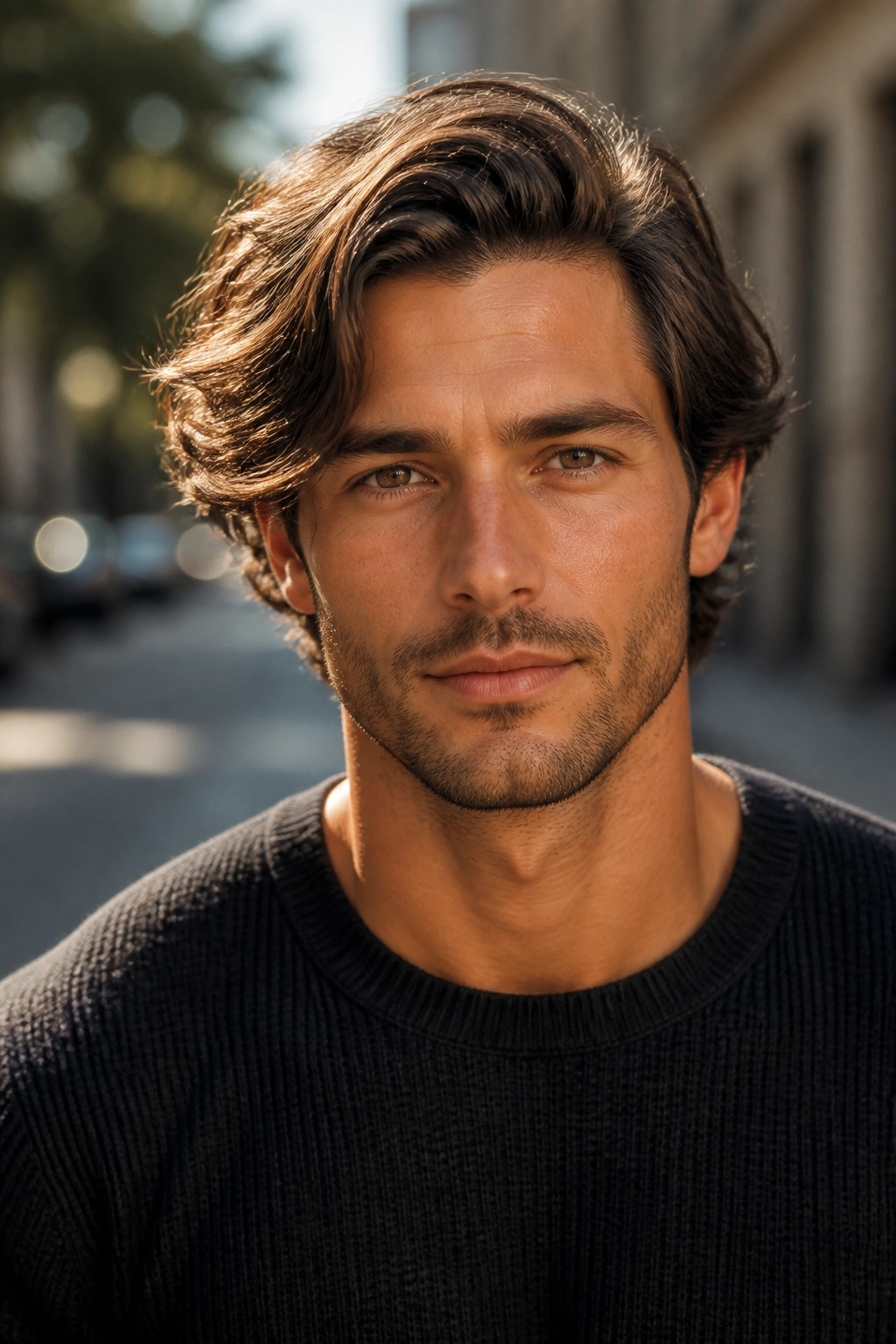
Why do waves and a side part work so well together? Because the waves do half the styling for you. A loose side part gives the hair a direction, then the wave pattern fills in the rest with movement and texture. The result feels less polished than a deep part, but far more natural.
This is a strong choice if your hair has a little bend once it dries. You do not need to force the part line with a comb every time. Fingers are often enough. A light mist of sea salt spray at the roots can help the hair hold its shape without making it crunchy.
Let the top dry about 70% of the way before you decide exactly where the part sits. That keeps the style flexible. If you set the part too early, the wave can fight you and push one side flat.
Don’t overcomb it. Seriously. A loose side part looks best when it feels like the hair settled there on its own.
3. Side Part with Tapered Sides and Neckline
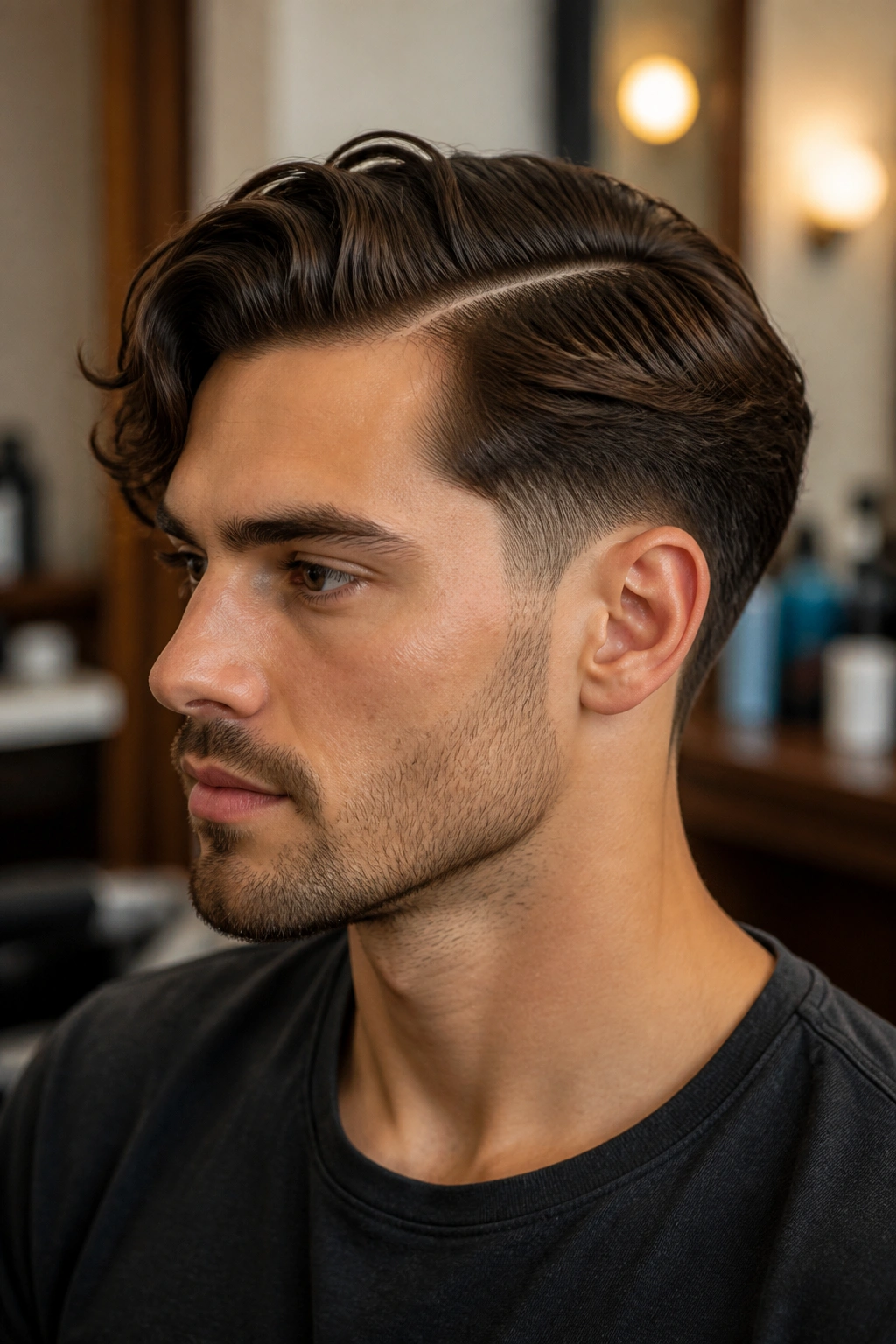
If you want long hair that still looks crisp around the edges, a taper is the move. The longer top keeps the style in the “long hairstyle” lane, while the sides and neckline get cleaned up enough to stop the whole cut from ballooning outward.
This is one of those haircuts that looks better from every angle. The taper around the ears makes glasses sit better. The cleaner neckline keeps the back from looking shaggy after a few weeks. And the side part gives the length a route to follow instead of letting it spread in every direction.
What to Ask for at the Barber
- Keep the top long enough to reach the cheekbone or jaw.
- Taper the sides gently, not with a hard skin fade.
- Blend the nape so the back grows out cleanly.
- Leave enough weight through the top to hold the part.
- Use scissors more than clippers if you want a softer finish.
A taper is useful because it buys you time between cuts. You still need trims, but the grow-out looks less messy than a blunt long cut. That matters if you hate the awkward stage.
4. Bro Flow Side Part

There’s a reason bro flow keeps hanging around. It works because it looks like hair that’s been lived in, not hair that’s been ordered into place. Add a side part to it, and the shape gets a little more structure without losing the easy movement that makes bro flow feel good.
Picture hair that brushes the ears, skims the neck, and falls forward just enough to frame the face. The part does not need to be dramatic. In fact, a subtle side part is usually better here. You want the hair to part by habit, not by force.
What Makes It Different
The bro flow side part depends on length and light layering. Without those two things, the style can look like it needs a cut. With them, it looks relaxed on purpose.
How to Keep It from Looking Lazy
- Air-dry the hair until it’s almost dry.
- Work in a small amount of leave-in conditioner.
- Push the front back with your fingers, then angle it to one side.
- Keep the ends soft, not shellacked.
- Trim every so often so the shape stays around the cheeks and collar, not past them.
This is the style I’d pick for men who want movement first and polish second.
5. Side Part for Curly Hair with Controlled Volume
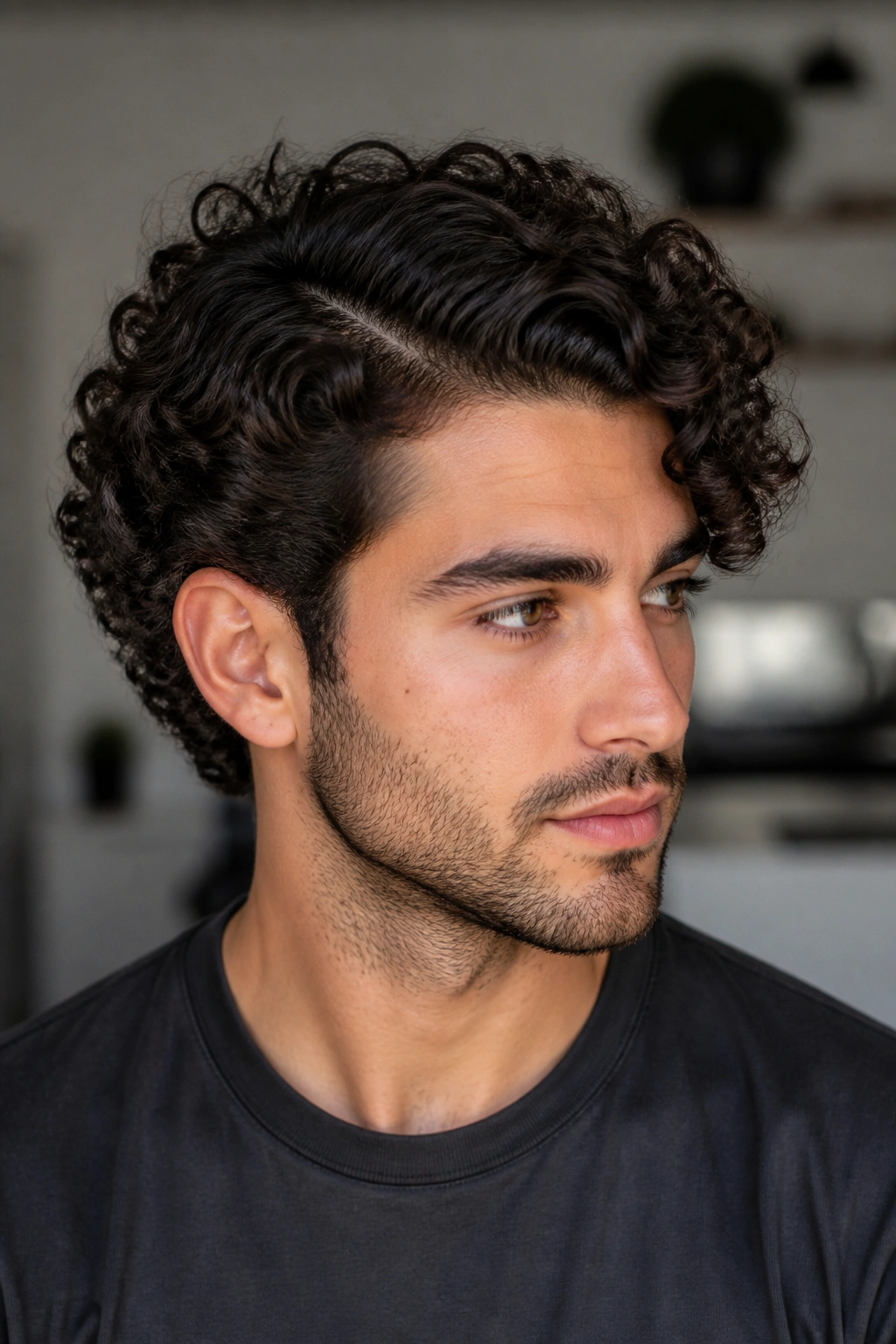
Curly hair does not need to be flattened to look tidy. It needs a shape that respects the curl pattern, and a side part gives it that. The part creates a clear starting point, while the curls do the rest by adding height, texture, and a bit of unpredictability.
Curl Control Without Crunch
The trick is to work with damp hair and let the curls set where they want to sit. A curl cream or light styling milk helps keep frizz down without turning the hair stiff. If you brush curly hair dry, the part usually falls apart and the top swells into a puff. No thanks.
Use a wide-tooth comb only when the hair is wet. After that, use your hands. That keeps the curl clumps intact and makes the side part look softer.
- Apply curl cream from mid-length to ends.
- Part the hair while it is still damp.
- Diffuse on low heat if you need more lift at the roots.
- Avoid heavy gels unless you want a sharper, wetter finish.
- Trim curls in layers so the sides do not widen too much.
A curly side part looks best when the silhouette is rounded, not square. Keep that in mind and the style gets easier fast.
6. Slick Side Part with a Low Fade

The slick side part is the sharpest version of this haircut. It feels formal, clean, and a little old-school in the best way. A low fade at the sides keeps the look modern, while the long top carries enough length to keep it from feeling too strict.
This style works best when the hair is damp and recently washed. That gives the pomade or gel a smoother base to hold onto. Comb the part once, maybe twice. After that, stop touching it. The more you fiddle, the more you risk breaking the surface and making the style look messy in a greasy way.
A low fade is a smart match because it stops the whole cut from getting bulky around the ears. That lets the part stay the star of the show.
If your hair is fine, use a lighter product. Heavy pomade can drag the top down and kill the shape by lunch. If your hair is thick, a firmer hold helps keep the top from splitting apart.
7. Side Part with Curtain Fringe
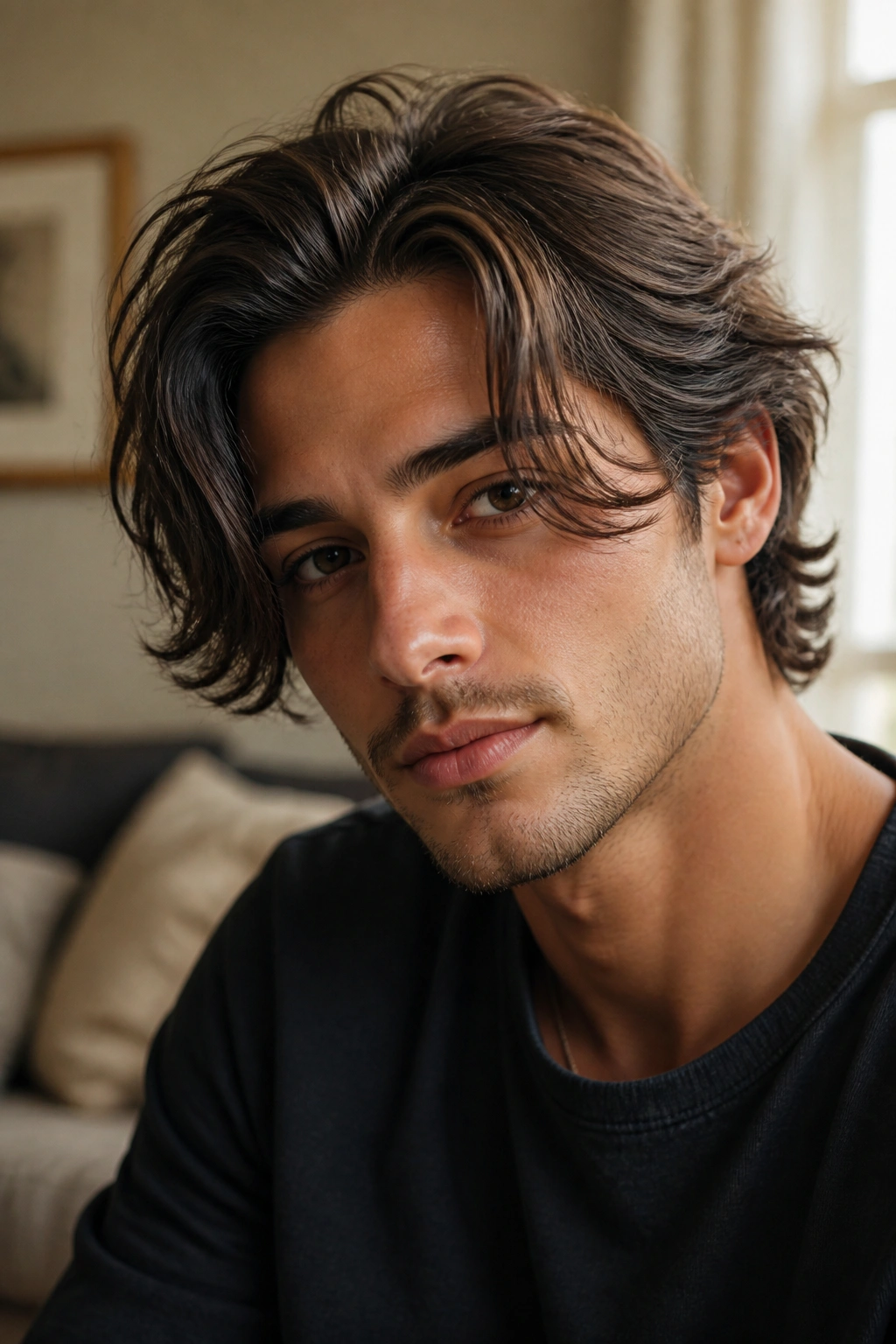
Growing out bangs can be awkward. Hair gets in your eyes. The front starts to kick out in odd directions. And then one day, with the right cut, it starts to look intentional again. A side part with curtain fringe sits right in that middle stage and makes it useful.
Where the Fringe Should Sit
The front pieces should be long enough to fall toward the cheekbones, not so long that they hide the whole face. The side part helps one half of the fringe sweep back a little, while the other side stays looser and softer. That split gives the haircut its shape.
A curtain fringe on long hair works especially well when the ends are lightly layered. That keeps the front from feeling heavy. It also stops the fringe from building a hard shelf across the forehead, which is the part that usually makes this style look dated.
What to Watch For
- Keep the fringe soft, not blunt.
- Use a blow-dryer on medium heat to set the curve.
- Aim the front pieces away from the eyes, then let them fall back slightly.
- Add a matte cream if the fringe keeps separating too much.
This one suits men who want length around the face without the full commitment of a heavy sweep.
8. Textured Layered Side Part
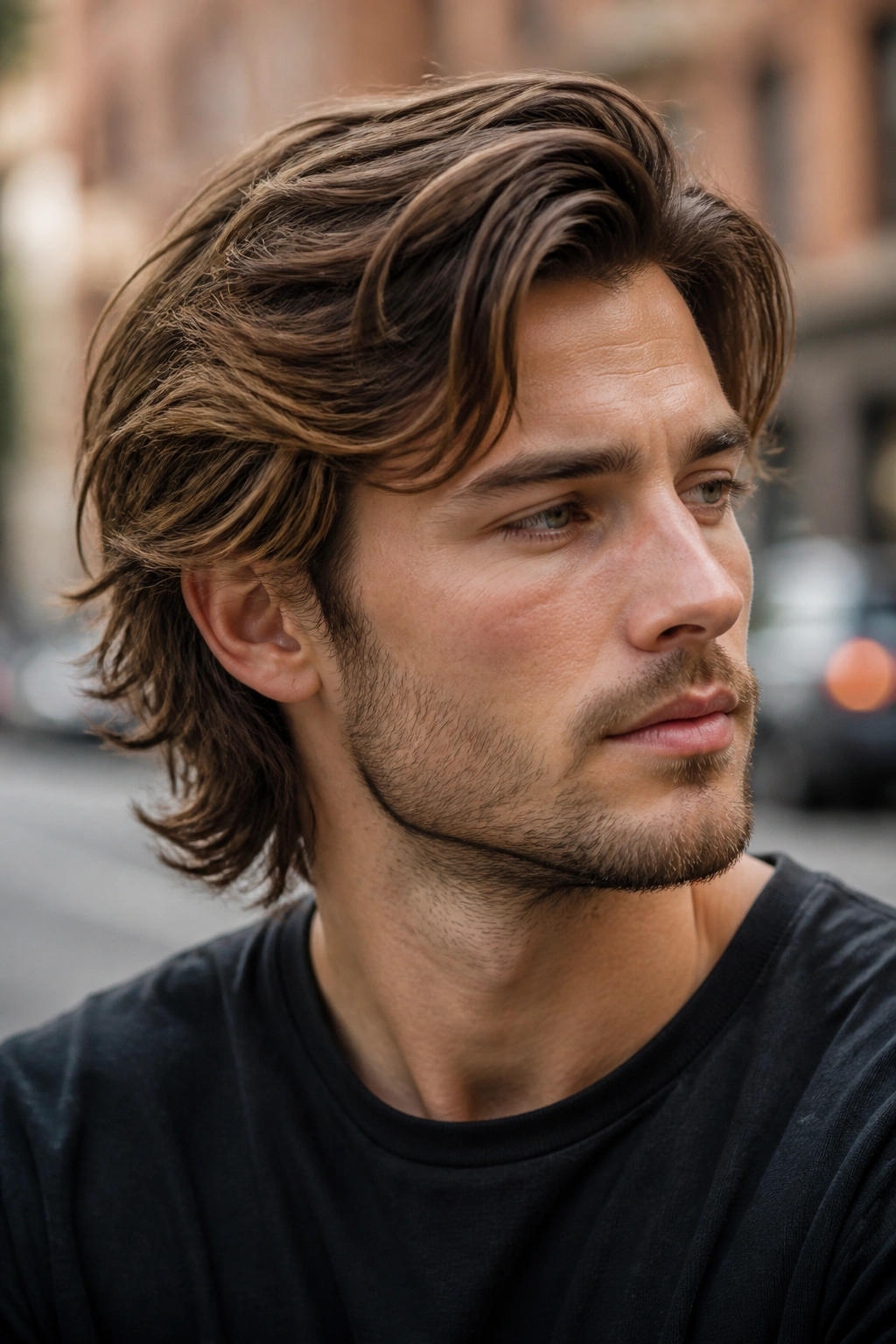
Textured layers change everything. Run your hand through them and the hair breaks into pieces instead of sitting as one thick sheet. That matters for long hair, because a side part on a blunt cut can sometimes look too flat, especially if the hair is dense or straight.
A layered side part gives you movement at the crown and softness at the ends. The part still organizes the style, but the layers keep it from looking stiff. It’s a good fit if you want your hair to look a little undone even when it’s styled.
A matte paste or light clay usually works better than anything shiny here. Work it through the roots first, then use your fingers to pinch a few pieces near the front. You are trying to define shape, not freeze every strand.
This is also the sort of haircut that looks better the second or third day after washing. The texture has a little grit, and the part holds easier.
9. Side Part with Undercut
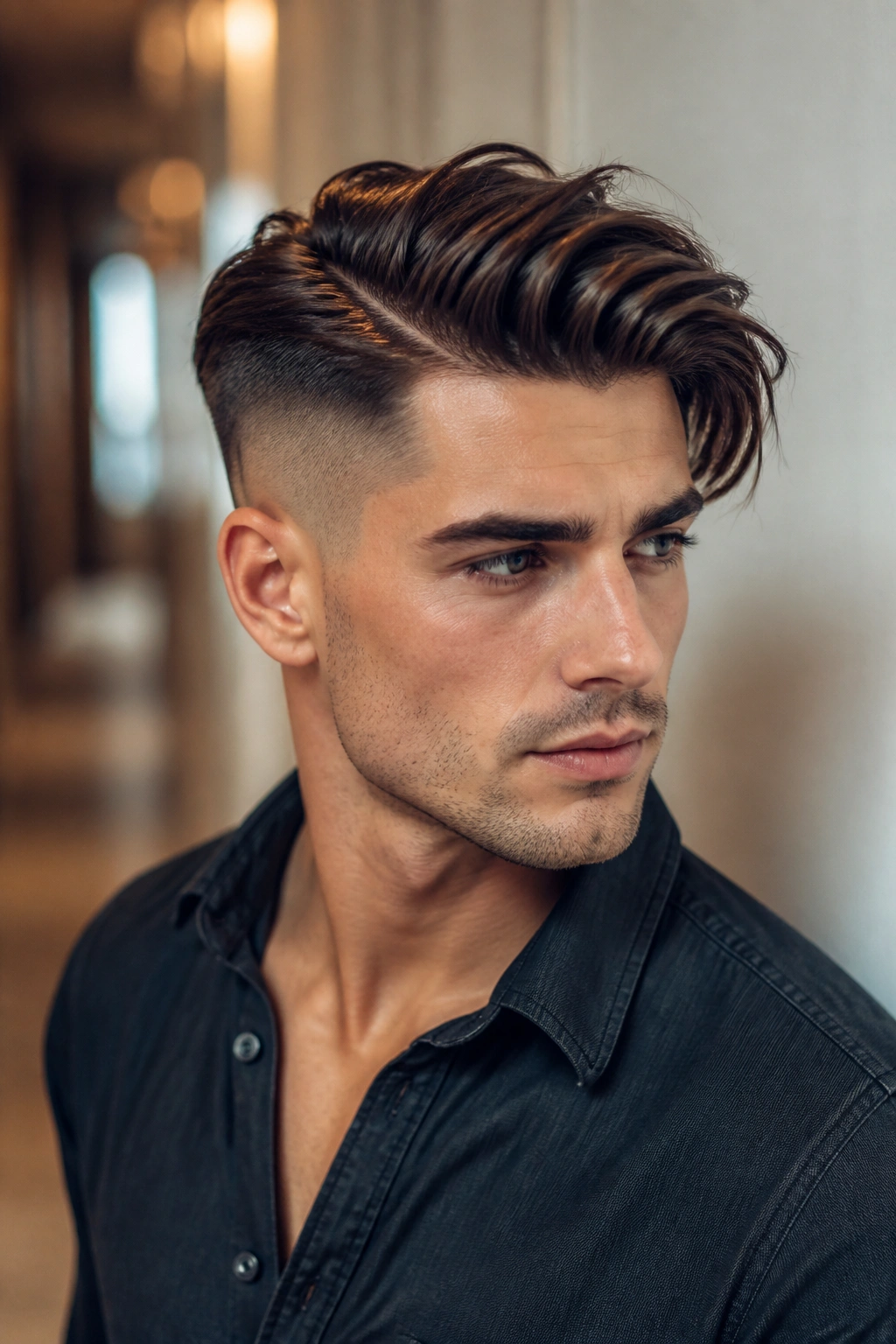
An undercut makes long hair look cleaner, not harsher, when the top keeps enough movement. That is the part people miss. They picture a shaved disconnect and assume it must look severe. It can, but it doesn’t have to. On the right head shape, a long top with an undercut and side part feels sharp and simple.
The appeal is contrast. The sides are short, sometimes dramatically short, while the top stays long enough to sweep over cleanly. That makes the side part easy to see and easy to maintain, because the shape isn’t fighting extra bulk near the temples.
It’s not the most forgiving option, though. Grow-out on the undercut can look awkward faster than a taper or fade, so plan on more regular cleanups.
Who It Suits
- Men who want a bold outline.
- Hair that is thick enough to hold the top up.
- Styles that lean cleaner and more graphic.
- People who do not mind obvious barber upkeep.
If you want softness, skip this one. If you want a strong line and a clear profile, it delivers.
10. Side Part into a Man Bun

Some mornings the hair stays down. Other mornings it belongs in a knot. That’s where the side part into a man bun earns its keep. You wear the hair loose when you want movement, then gather it back when the day turns practical.
The side part helps here because it keeps the loose version from looking random. When the hair is down, the part gives it direction. When you tie it up, the front sections still fall in a way that frames the face instead of sticking straight back.
How to Make the Transition Work
Start with hair that is about 80% dry. Too wet and the bun can pull hard at the roots. Too dry and the top can puff out when you tie it back. Use a satin or soft elastic, and don’t yank the knot tight enough to flatten the crown.
Leave a few front pieces loose if your hair naturally falls that way. That keeps the style from looking severe.
A man bun paired with a side part is one of the better low-effort choices for long hair, but only if you keep the bun placement relaxed. High, tight, tiny buns can look a little try-hard.
11. Half-Up Side Part Knot

The half-up knot sits in the middle of the road. It keeps hair off the face, leaves length down the back, and works well when you want structure without a full tie-back. Add a side part, and the front half of the style gets a little more shape.
This is a good option for shoulder-length hair that tends to collapse in the front. The knot takes the weight off the eyes, while the loose section keeps the cut from feeling strict. It also works nicely with layered hair, because the shorter pieces around the face can stay out while the longer pieces get tied.
A small detail matters here: don’t pull the knot too tight at the crown. If you do, the top can look flat and the side part disappears. Leave a little lift at the roots, then secure only the top section.
This style has a relaxed, practical feel. It’s the kind of thing that looks good with a jacket, a T-shirt, or a shirt collar. No drama. Just useful hair.
12. Feathered Side Part for Straight Hair
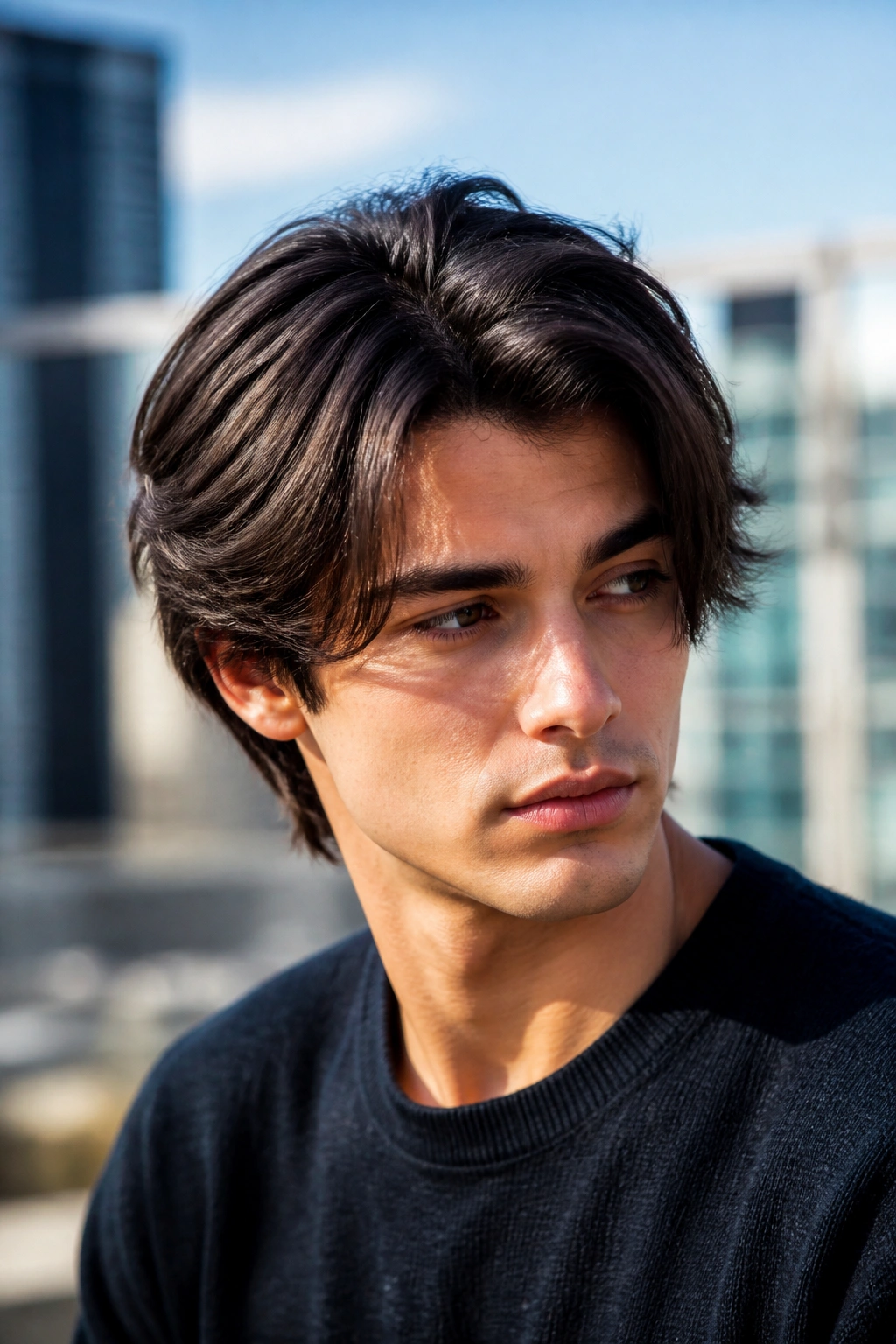
Can fine hair pull off long length without going limp? Yes, but feathering helps a lot. Straight hair tends to lie close to the head, which can make a side part look flat or heavy if the cut is blunt. Feathered layers break up that solid block and give the hair a little air.
The Trick With Fine Hair
Ask for soft, angled layers around the sides and front. Not choppy. Not shaggy. Just enough to stop the length from sitting like one flat panel. A vent brush and a blow-dryer can help lift the roots at the part, while a lightweight mousse gives the top some memory without making it sticky.
- Blow-dry the root opposite the part first.
- Flip the hair back across the part once it has shape.
- Use a light cream, not a thick wax.
- Keep the ends soft so the cut stays airy.
- Trim before the shape gets too narrow at the bottom.
Feathered side part styles are one of the easier ways to make straight hair look fuller. They also grow out well, which is a bonus if you don’t want to visit the barber every few weeks.
13. Heavy Side Part for Thick Hair
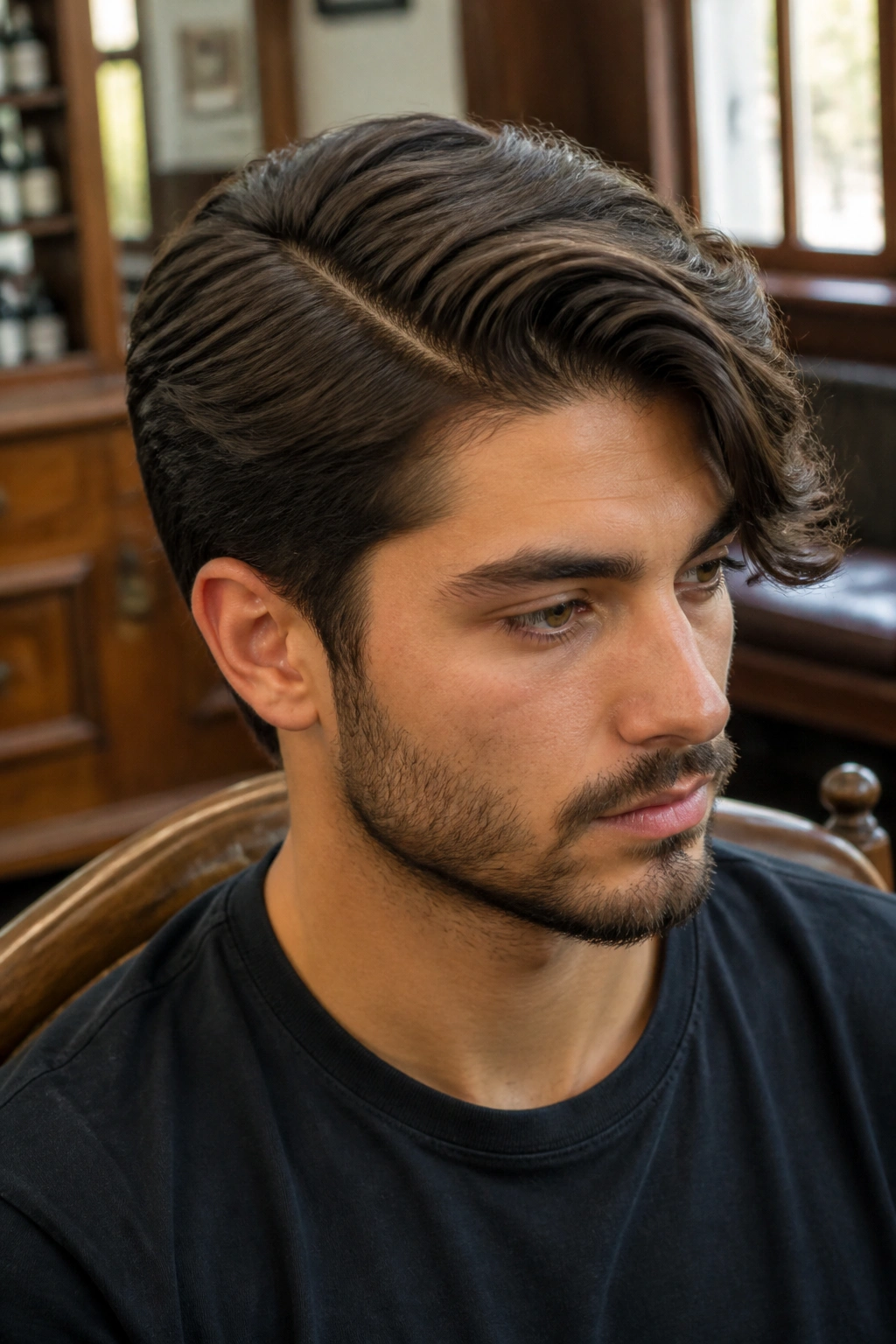
Thick hair needs shape more than shine. If you try to slick it down without removing any bulk, it can end up looking like a cap sitting on your head. A heavy side part fixes that by giving the hair a clear split and enough layering to let it move.
Ask for Internal Weight Removal
This is the part to mention to your barber: you want the density reduced inside the shape, not just the outline chopped shorter. Point-cut layers and careful thinning near the bulkier areas can make the hair sit flatter at the sides and less puffy at the top. Blunt ends can be too much here.
A side part helps thick hair because it creates an escape route. One side can sit tighter, the other can carry more volume, and the whole cut feels more balanced. You can also push the top with a wide comb after blow-drying, which keeps the part visible without forcing every strand into place.
A heavy side part is not delicate. It has presence. That is the appeal. It looks especially good when the hair has enough weight to move when you turn your head.
14. Side Part with Beard Frame

A beard can either fight long hair or anchor it. When the side part is working, the beard often does the second job. It gives the lower half of the face enough structure to match the hair on top, which stops the whole look from floating away from the jaw.
The best version of this style usually keeps the beard edges tidy and the sideburns blended into the haircut. That connection matters. If the beard starts abruptly while the hair ends loosely, the face can look chopped into separate parts. A cleaner blend makes everything feel like one shape.
I like this combination on men who want a little maturity in the style without going short. The side part keeps the hair directional, and the beard keeps the face grounded.
Beard oil helps too, but not for the reason people think. It does not magically style the haircut. It just keeps the beard from looking dry and wiry next to softer long hair. That contrast matters more than most guys realize.
15. Wet-Look Side Part
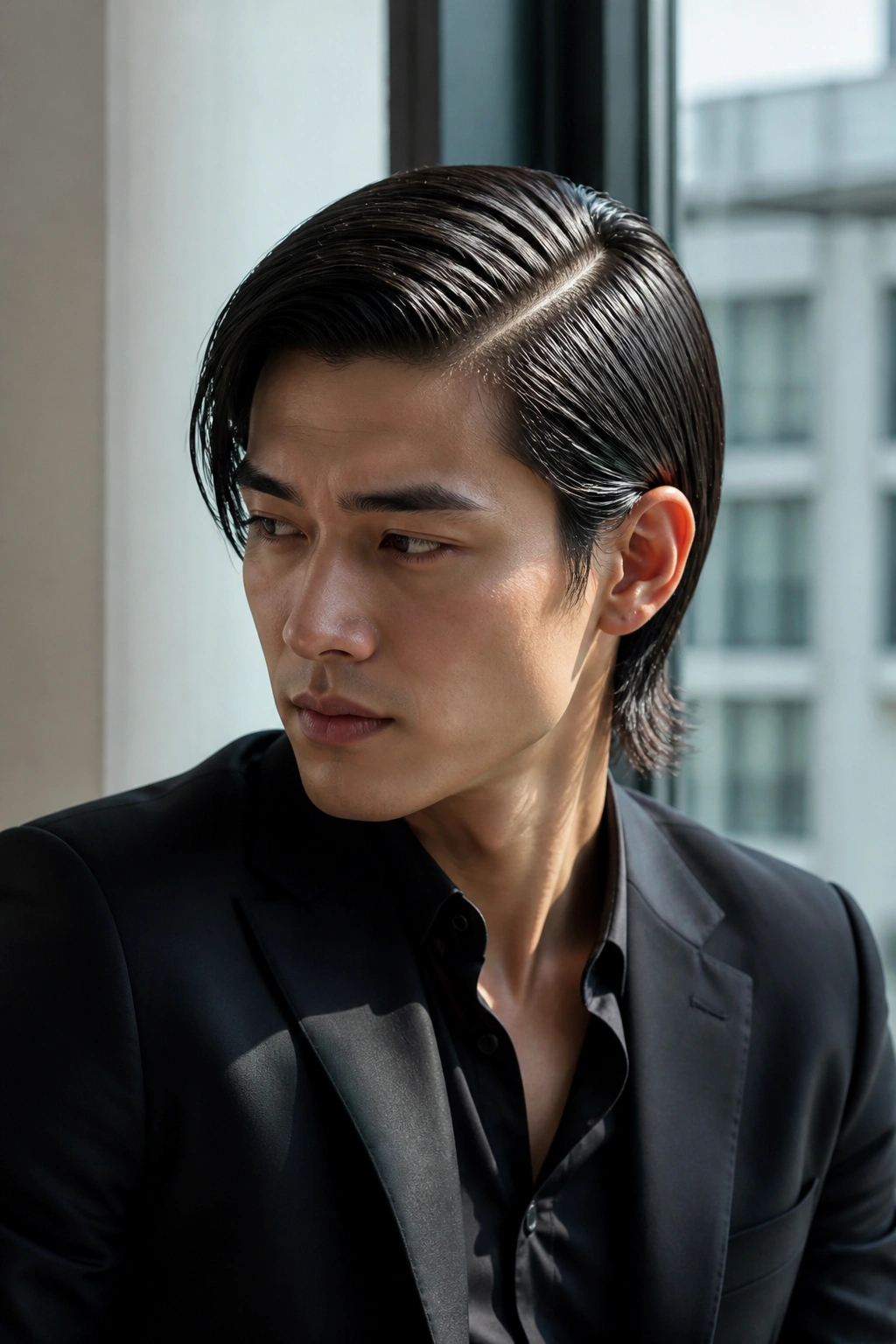
Glossy. Controlled. A little severe.
A wet-look side part is the sharpest place to go if you want your long hair to look finished in a very obvious way. It relies on product more than shape alone, so the hair needs to be clean, damp, and combed with purpose. Once the part is in place, the rest of the style should stay still.
This look works best on straight or slightly wavy hair because the surface stays smooth longer. Use a strong-hold gel or a high-shine styling cream, then comb the hair into the part and leave it alone. Touching it too much breaks the shine and makes the style look greasy instead of glossy.
It’s not a casual haircut. That’s fine. Some styles should have a little edge. Wear this one with a blazer, a fitted jacket, or a crisp shirt, and it does exactly what it is supposed to do.
If your scalp gets oily fast, go lighter on product. Wet-look hair is unforgiving when you overdo it.
16. Long Side Part with Face-Framing Layers
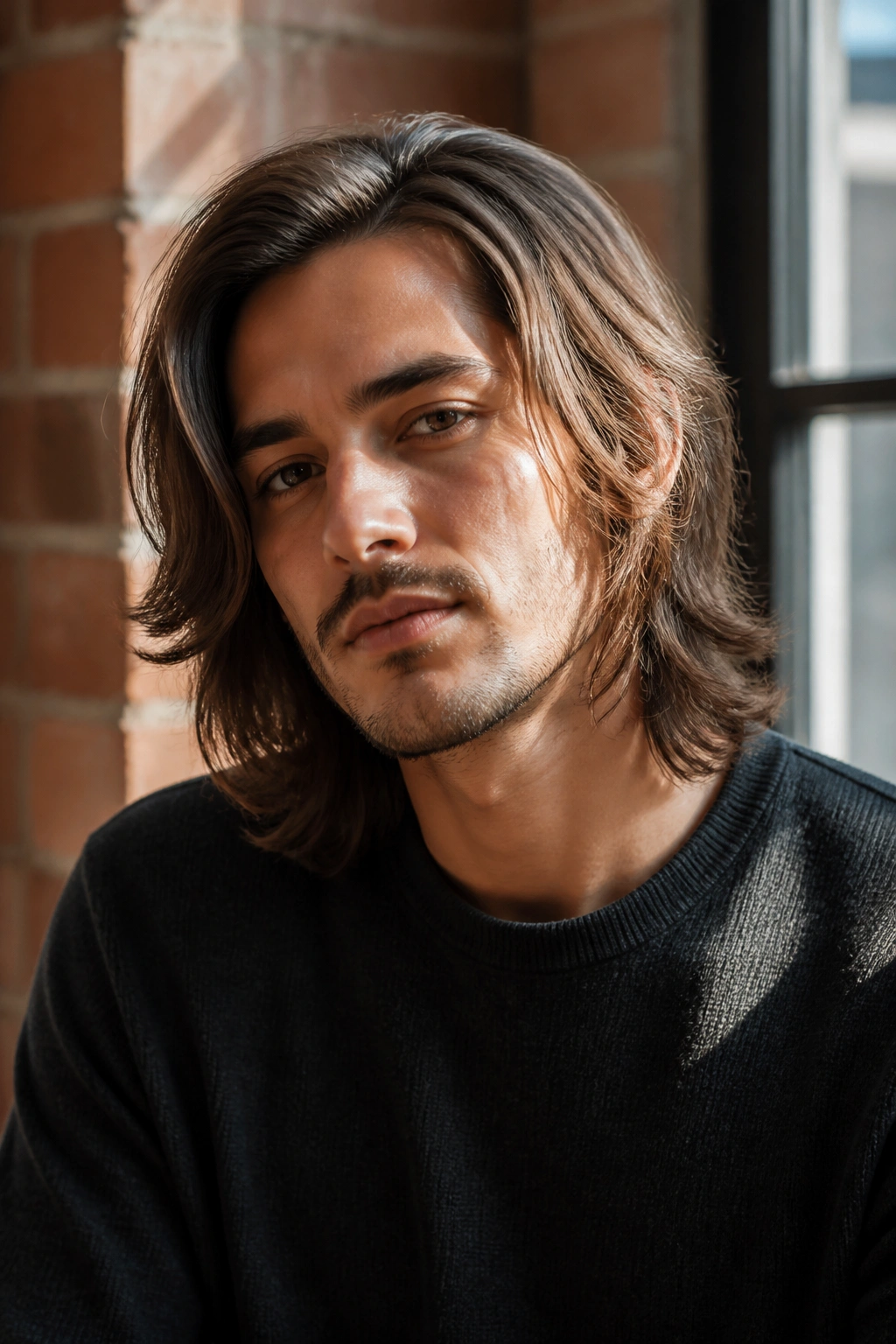
Face-framing layers fix a common problem with long hair: the weight all settles at the same length, and the front starts to drag the whole face downward. A side part plus shorter layers around the cheekbones gives the haircut some lift and some movement where you need it most.
What the Layers Do
They break up the length near the front, which helps the side part fall in a softer way. The hair no longer hangs as one heavy curtain. Instead, it bends around the face and leaves the jawline visible. That can be useful if your hair is straight and stubborn, or if your face shape needs a little more balance.
Where They Should Start
- Cheekbone length gives the most face shape.
- Chin length works if you want a softer frame.
- Longer layers near the collar keep the back flowing.
- Shorter front pieces help the side part stay visible.
This style is one of the easiest to wear every day because it looks good even when it’s not perfectly styled. The layers do enough of the work that you do not need a ton of product. A little cream, a quick comb, and you’re out the door.
17. Tucked Side Part for Shoulder-Length Hair
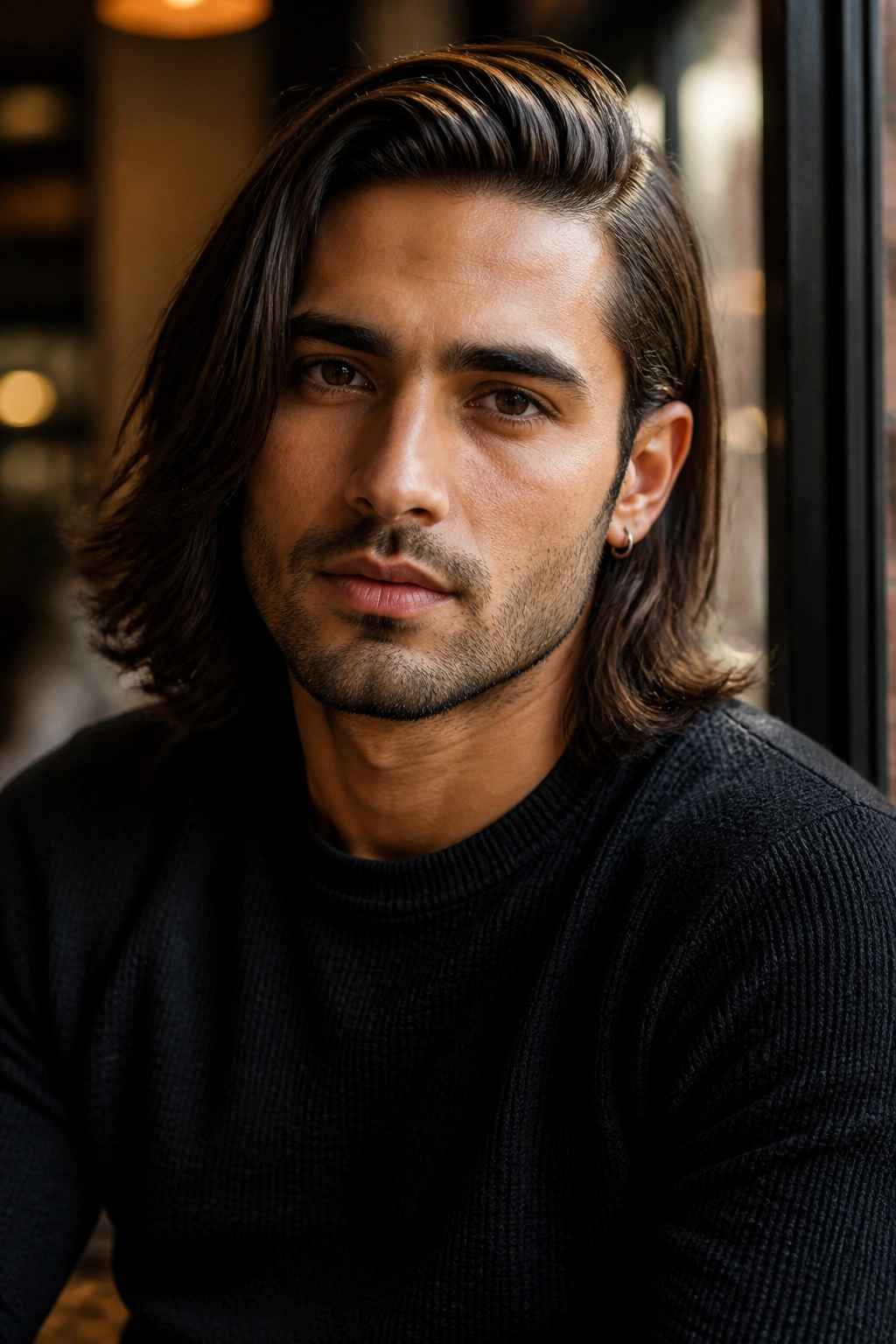
Want a cleaner profile without tying everything up? Tucking one side behind the ear can do it. It sounds tiny, almost too small to matter, but on shoulder-length hair it changes the whole shape of the face. The side part gives the hair a starting point, and the tuck keeps one side open so the cut doesn’t swallow your features.
This works especially well if you wear glasses, earrings, or just hate hair brushing your cheeks all day. The tucked side creates a neat line near the jaw, while the loose side keeps the style relaxed. It’s an easy way to make longer hair look more deliberate without using a tie or clip.
A light cream or leave-in conditioner helps the tucked side stay where you put it. If the hair is too slippery, use less product near the ear and more through the ends. That keeps the tuck in place without turning the whole cut stiff.
Small move. Big difference.
Final Take
The best side part on long hair is the one that matches how much control you actually want to keep in your morning routine. A slick version, a tapered version, and a wet-look version all say something different, and none of them are interchangeable once you start living with the cut.
The part itself is doing more work than it gets credit for. It shapes the face, sets the balance, and keeps long hair from drifting into that vague, unfinished zone that so many men end up in after a few months of growth.
Bring a photo to the barber, yes. But also say how you wear it on a normal day — down, tied back, tucked, air-dried, or combed. That detail changes the haircut more than a lot of people expect.
