



Thick hair can be a blessing and a headache in the same morning. Cut it badly and it puffs at the sides, swallows your forehead, or turns into a helmet the minute the weather gets humid. Cut it well and it holds shape, shows texture, and makes even a simple outfit look sharper than it has any right to.
The trick with mens hairstyles for thick hair is not to fight the density. That usually ends badly. Better cuts take weight out where it builds up, keep enough length where the shape needs support, and use texture instead of trying to flatten everything down into obedience. Thick hair has a mind of its own. Fine. Work with it.
Some guys want a clean, short cut that looks neat with almost no effort. Others want volume up top, a stronger line around the temples, or something longer that still behaves after a quick comb-through. Thick hair can do all of that, and it can do it without looking thin or sad if the cut is built the right way.
A good barber will pay attention to the crown, the hairline, and the way your hair grows around the ears. That matters more than the photo you bring in. So do the blow-dry habits, the product choice, and how often you’re willing to get a trim. Start with the short, low-risk options. Then move toward the bolder shapes.
1. Textured Crop With a Short Taper
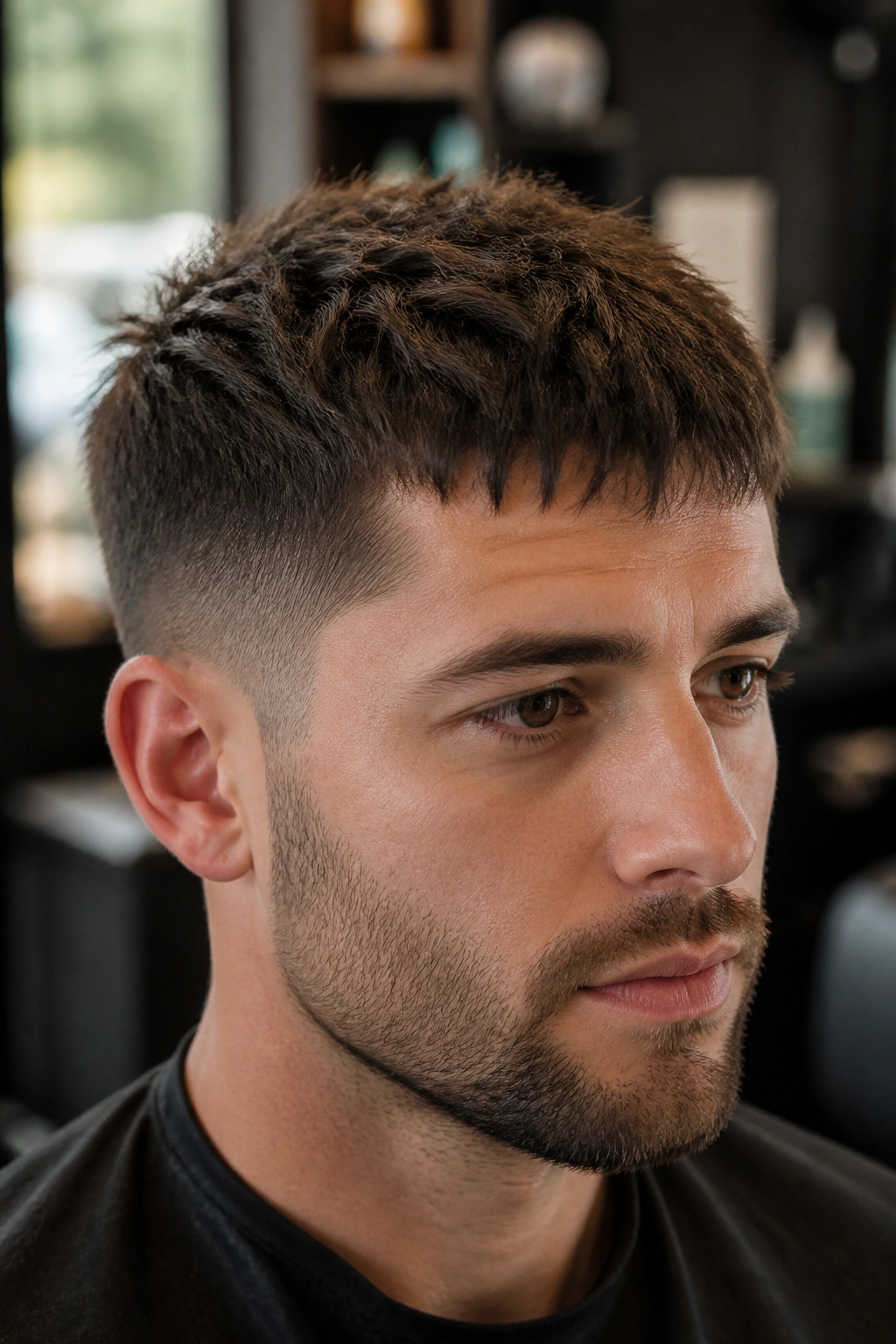
This is where thick hair starts behaving. The textured crop keeps the top short enough that it doesn’t balloon, but not so short that it loses all personality. The fringe sits forward, the ends are choppy, and the sides stay neat with a low taper that clears out bulk around the ears.
What to ask your barber
Ask for 2 to 3 inches on top, point-cut for texture, and a taper that begins low and stays soft. If the fringe grows straight down, tell your barber not to make it too blunt or it’ll sit like a block. A little irregularity helps. That’s the whole point.
A matte clay is the usual styling partner here. Work in a pea-sized amount on dry hair, push the front forward, then pinch the ends with your fingers instead of combing them smooth. It should look lived-in, not styled to death. This cut is especially good if your thick hair grows in different directions, because the texture hides the cowlicks instead of fighting them.
2. French Crop With a Blunt Fringe
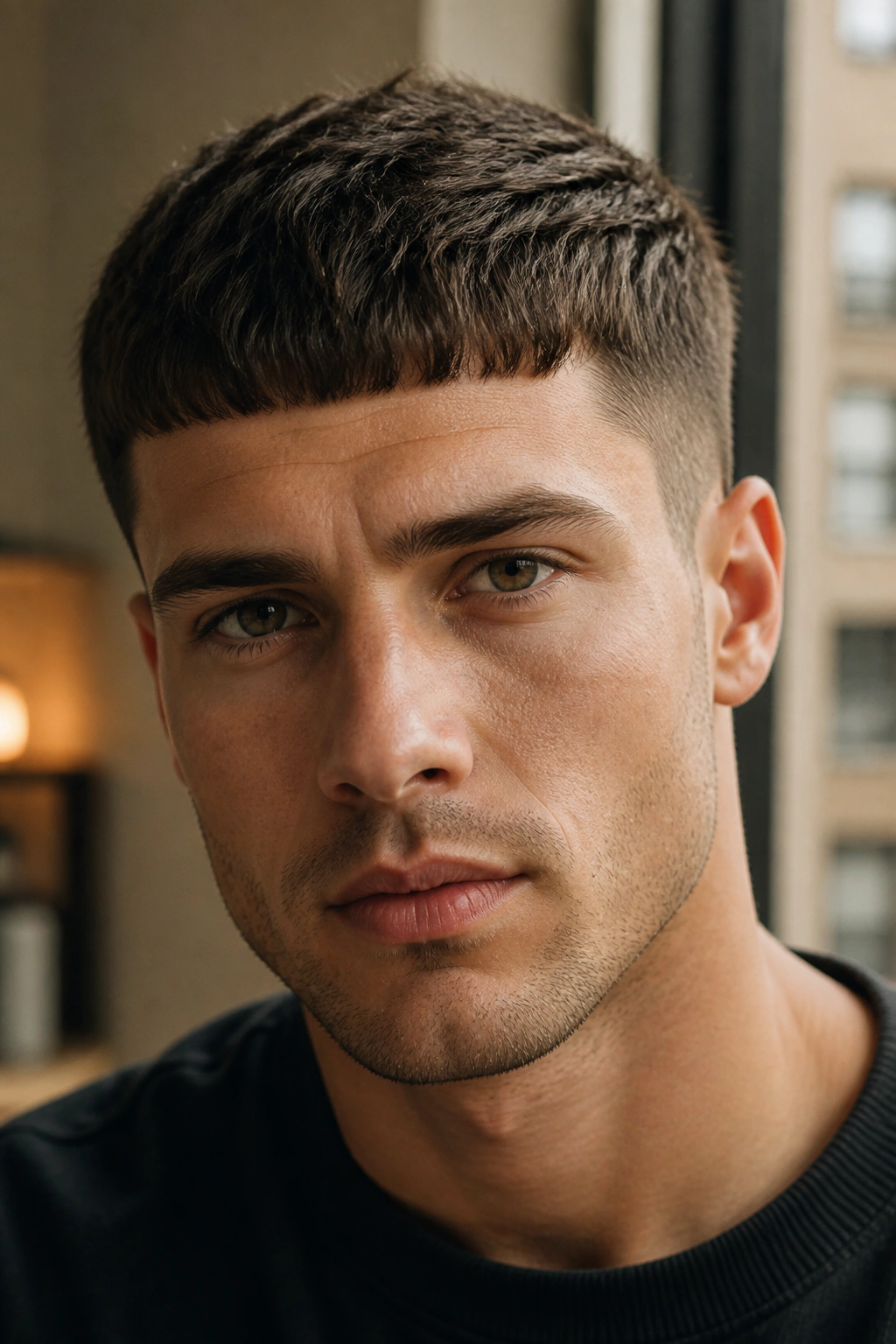
The French crop is blunt, compact, and a little stubborn in the best way. Thick hair suits it because the style depends on weight at the front, not a lot of airy lift. The sides stay short, the top stays controlled, and the fringe lands just above the brows instead of hanging in your eyes.
It’s a smart move if your hairline is strong and your hair likes to stand up when it gets too short. Ask for the fringe to be cut straight but softened at the corners. That tiny detail matters. If the front is cut too hard, the whole thing can look boxy.
A light paste works better than glossy pomade here. Thick hair already brings enough presence; you don’t need shine doing extra work. This cut is clean, but it never feels fussy. That’s why it gets worn so often by guys who want short hair without looking like they gave up.
3. Crew Cut With Tapered Sides
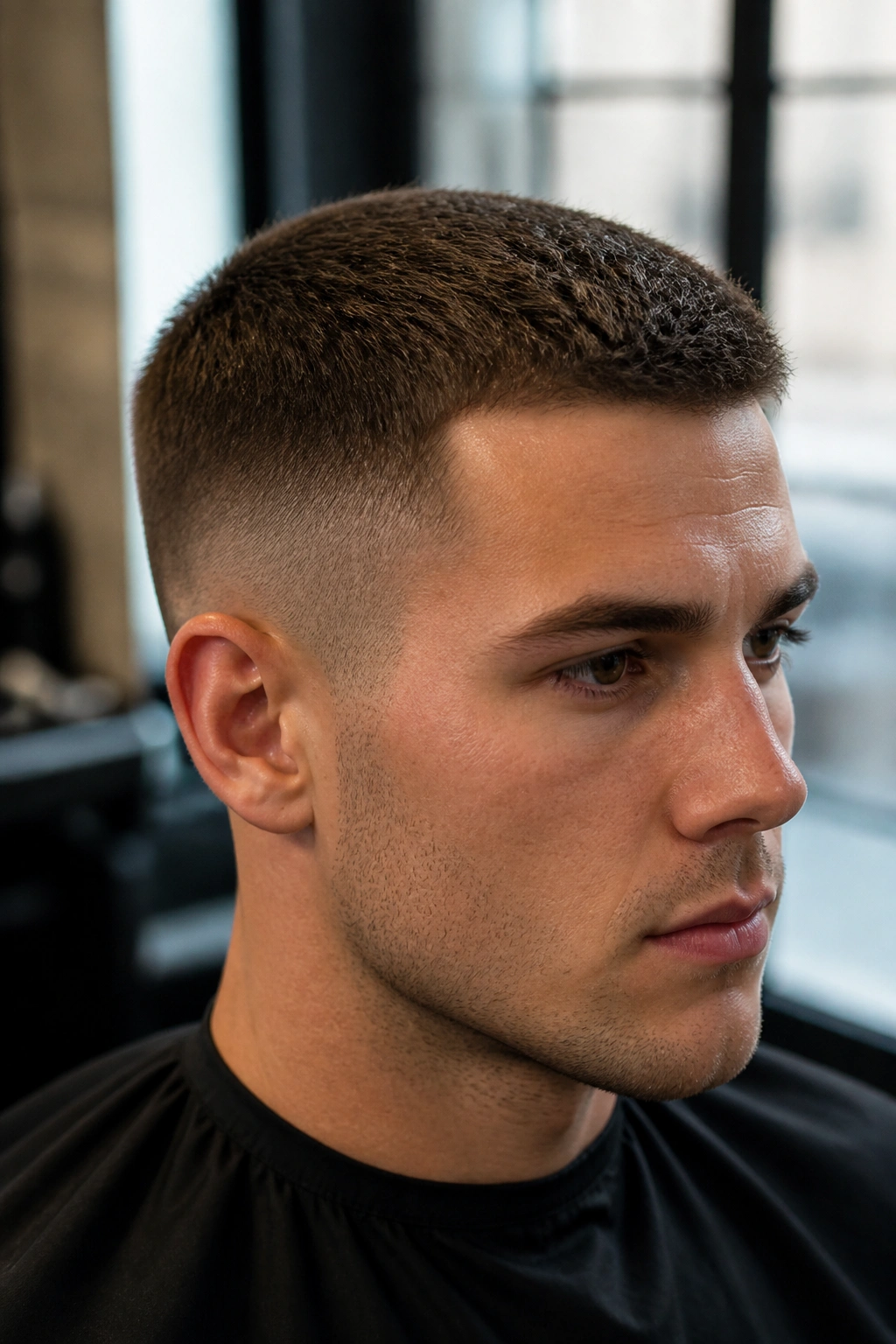
The crew cut is the old reliable of thick hair. Short on the sides, slightly longer on top, and no nonsense about it. What makes it good on dense hair is that it removes the heavy top-heavy look without making the head feel shaved bare.
A proper crew cut still needs shape. Ask for a gradual taper at the sides and a bit more length at the front than the crown. That small slope keeps the cut from looking flat. If the barber takes the top down too evenly, the style loses its clean line and starts looking more like a buzz with opinions.
Styling note
You barely need product. A touch of matte cream or even nothing at all can work if your hair naturally falls into place. The real win is the maintenance: a crew cut stays tidy through sweat, rain, and a messy morning, and thick hair makes it look fuller than it does on thinner strands. That’s a nice trade.
4. Caesar Cut With a Straight Fringe
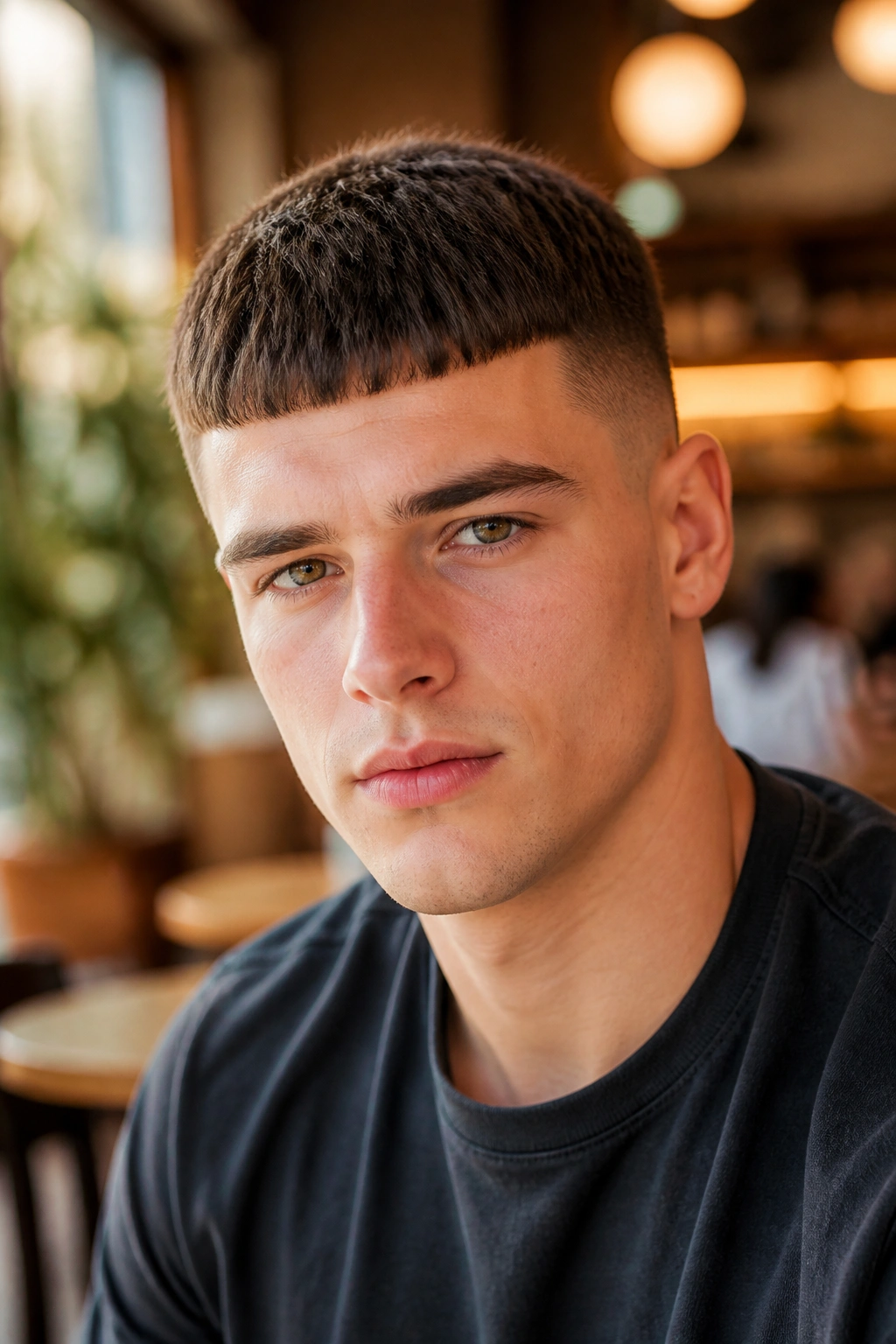
The Caesar is short, blunt, and much better than people remember. It works especially well when thick hair has a bit of natural straightness, because the front fringe can sit flat without fighting the texture. The sides are kept short and even, and the top is cropped close enough to keep bulk under control.
There’s a reason this cut keeps coming back. It’s practical. It also makes a receding hairline look more intentional because the fringe is forward and low. Just don’t go too short on the top if your hair is coarse; you want a slight line of weight, not a helmet edge.
Use a small amount of matte paste and push the fringe forward with your fingers. The finish should be tidy, not shiny. If you like low-maintenance cuts and hate blow-drying, this is one of the better answers for thick hair that grows fast and dense.
5. Ivy League With a Soft Side Part

The Ivy League is what happens when a crew cut grows up and learns manners. The top stays long enough to part, the sides taper neatly, and thick hair gets to keep its shape without looking bulky. It’s one of the easiest cuts to wear to work because it reads clean from across the room but still has enough texture up close.
What makes it work
- 2 to 3 inches on top gives the part some real structure.
- A scissor taper or low fade keeps the sides from puffing out.
- The part should follow your natural growth pattern, not fight it.
- A light cream or low-shine pomade keeps the shape in place without making the hair look stiff.
This cut is a good option if you want something polished but not slicked down. Thick hair helps a lot here because the part line holds better and the top has enough body to stay lifted. Keep the neckline neat every few weeks, and the whole style stays sharp.
6. Side Part With a Clean Taper

A side part is still one of the simplest ways to make thick hair look deliberate. The difference between a good one and a stale one is all in the taper. If the sides are too heavy, the part gets lost. If the top is too short, the whole thing looks like a compromise.
The cleanest version uses a natural part, not a shaved line. That makes it easier to wear day after day and helps the hair sit where it actually wants to go. Thick hair is useful here because it gives the part some lift and keeps the style from collapsing by noon.
A medium-hold pomade or styling cream is enough. Comb the top over while it’s still damp, then let it dry with the shape in place. This is a strong choice for men who want order without looking overstyled. Simple. Sharp. Done.
7. Slick Back With Controlled Volume

A slick back can look sharp or greasy, and thick hair is exactly where that line gets crossed. The good version starts with enough length on top — usually 3 to 5 inches — and a tapered or faded side that keeps the shape from turning into a triangle.
What keeps it clean
You have to blow-dry it back from damp hair. Air-drying thick hair and then smearing product over it is how you get that heavy, helmet-like finish. Use a vent brush or your hands, aim the dryer backward, and keep the heat moving. Once the hair is mostly dry, add a small amount of medium-hold pomade or cream.
The best slick backs keep a bit of texture. They are not mirror-finish helmets from a movie. If your hair is very coarse, leave a little looseness near the front so it doesn’t look glued down. That extra movement makes the cut easier to wear in real life, especially if your hair grows dense at the crown.
8. Pompadour With Tapered Sides
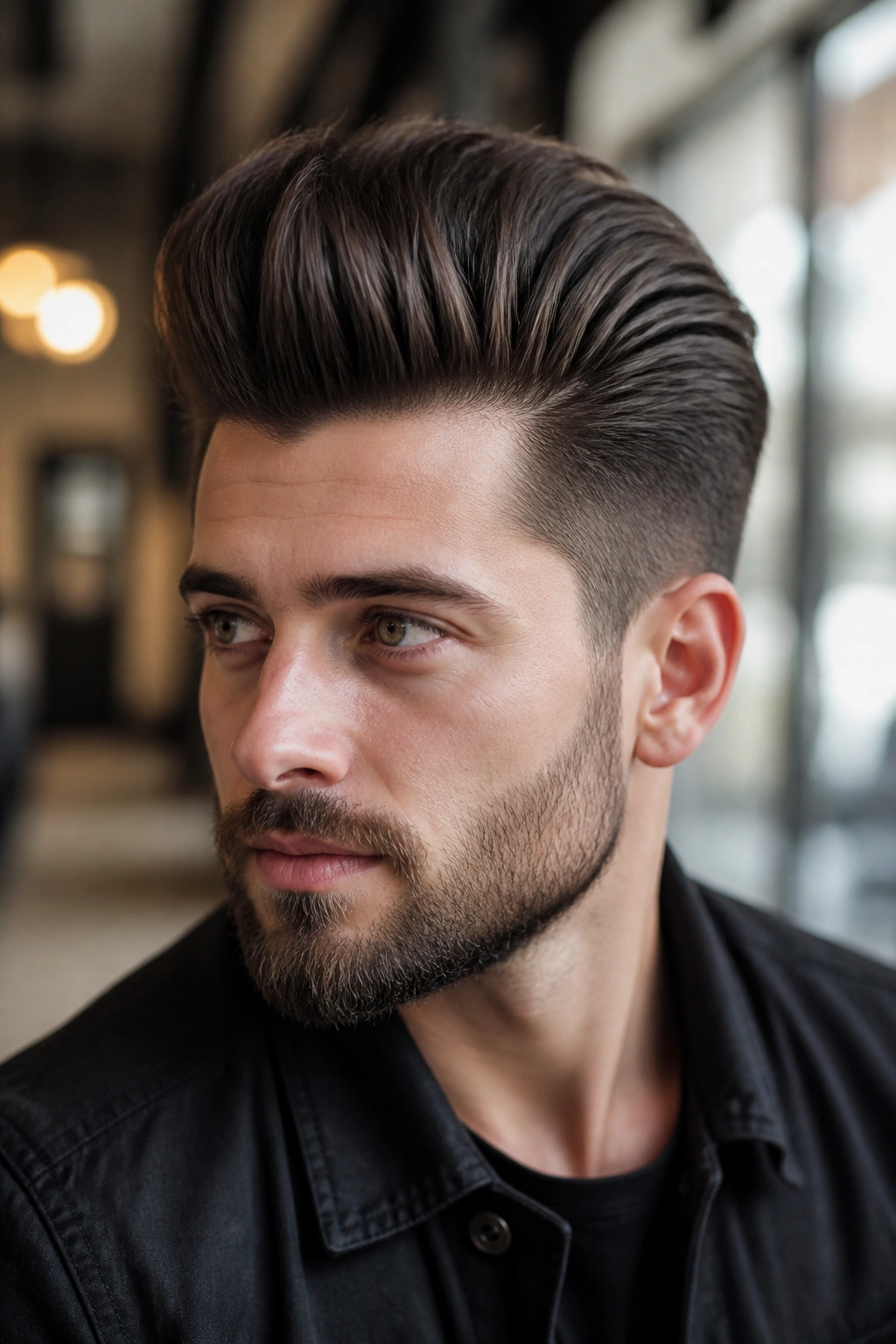
The pompadour is one of those styles thick hair can do better than fine hair. You need enough density to push the front up without it falling flat, and thick strands give you that built-in body. The catch is that the top has to be shaped, not just lifted and hoped for.
Ask for shorter sides with a gradual taper and more length at the front than the crown. That slope is what builds the volume. If everything on top is the same length, the pompadour gets heavy and loses the shape that makes it work.
How to keep it from collapsing
Blow-dry the front up and slightly back using a round brush or your fingers. Then work in a matte paste or strong cream. Avoid loading the front with too much product; it weighs the hair down fast. A good pompadour should feel solid but not crunchy. If you touch it, it should still move a little.
9. Quiff With Loose Texture
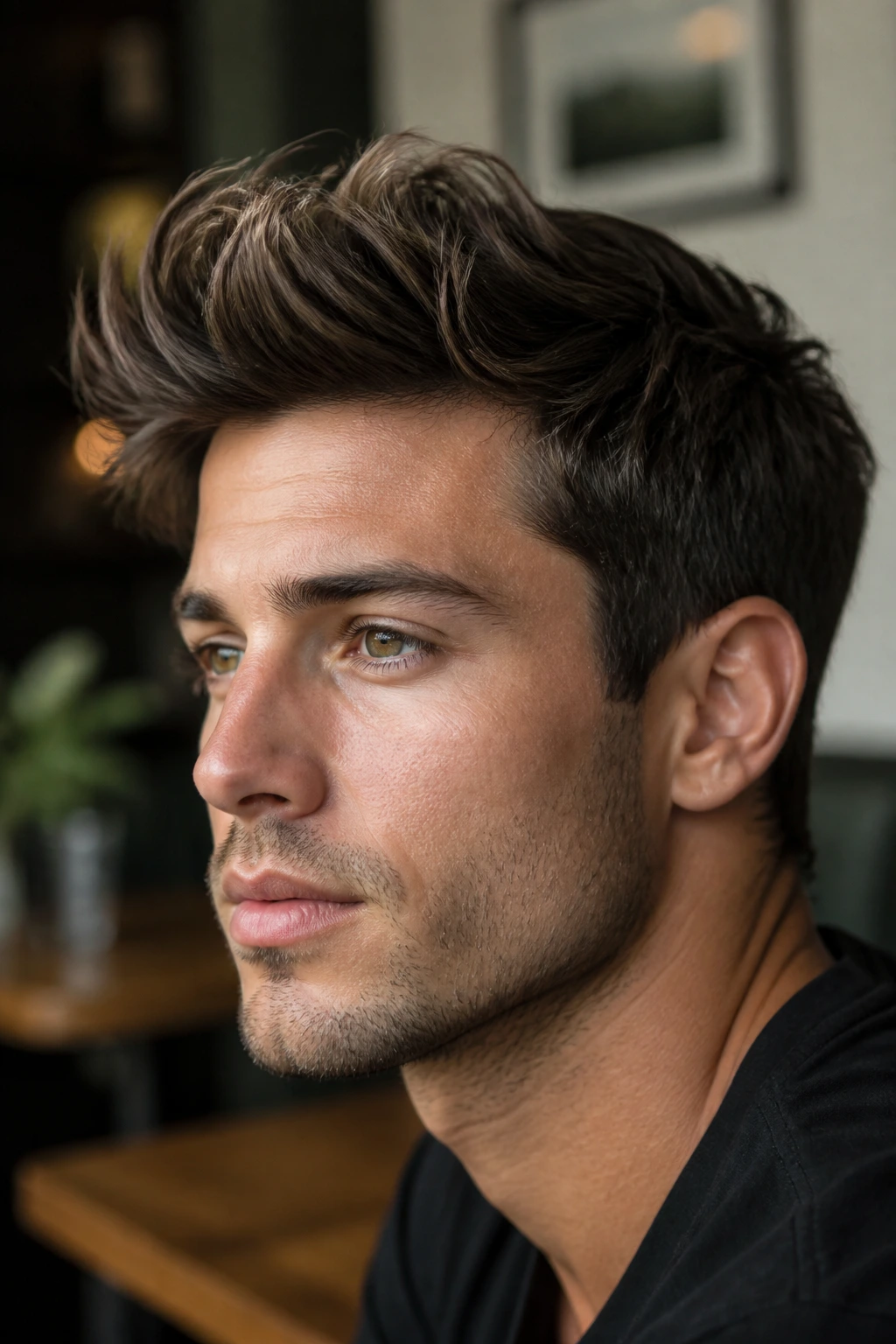
The quiff is the relaxed cousin of the pompadour. It still lifts at the front, but it doesn’t need that tall, sculpted arch. Thick hair gives the quiff a lot of natural support, which is why it often looks better after a few minutes of rough drying than after a long styling session.
This cut works best when the top is longer in front and shorter toward the crown. That shape lets the front rise while the back settles. The sides should stay tight enough to keep the head shape clean, or the top can feel too bulky.
A sea-salt spray or light mousse helps if your hair is stubborn. Push the front upward with your fingers, then let a little of the natural bend stay in place. The result should look like you care, but not too much. That balance is hard to fake, and thick hair usually gives it to you for free.
10. Brush Back With Natural Movement
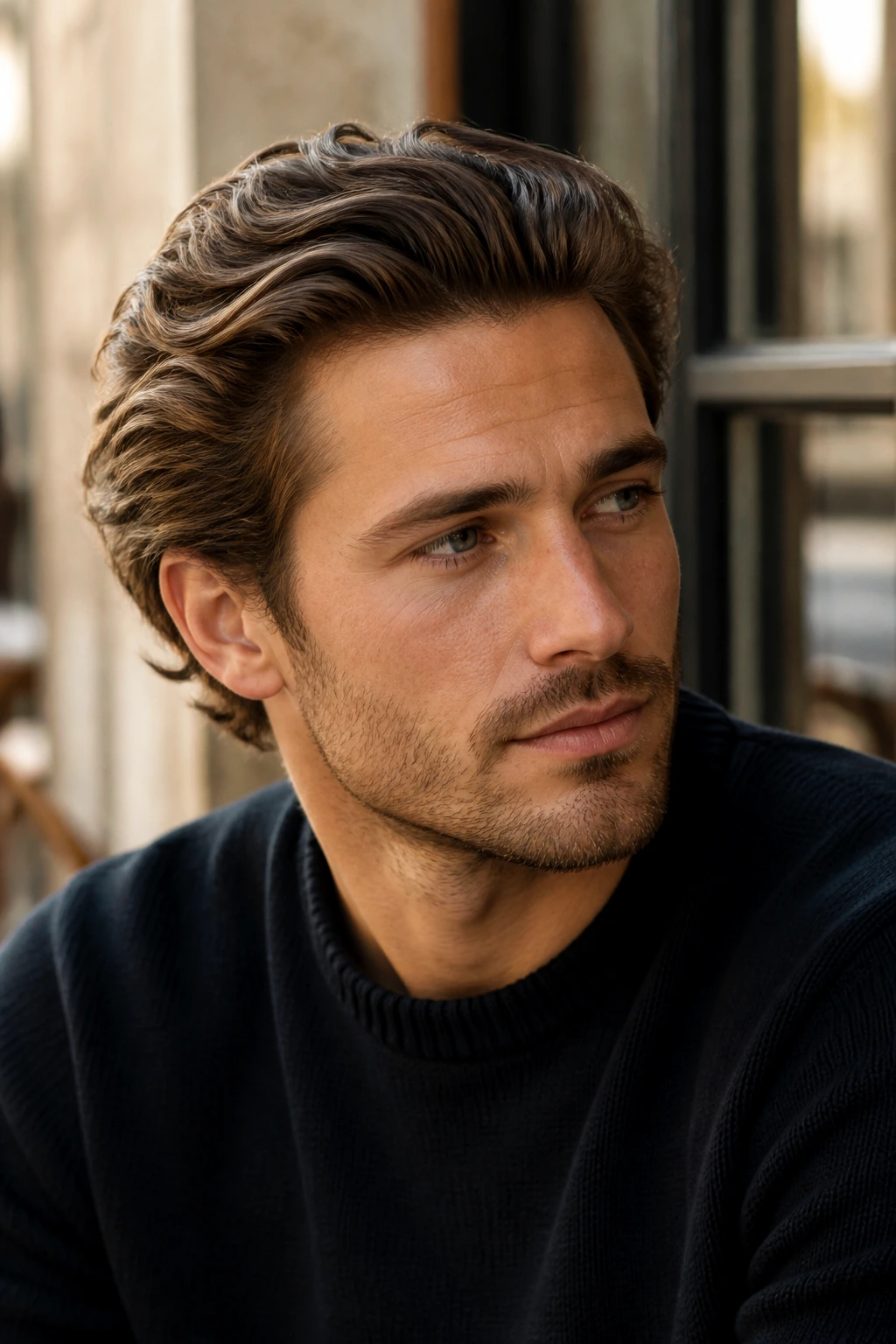
Brush-back styles are underrated. They give thick hair a place to go without forcing it into a hard part or a glossy finish. The hair is swept back, but not flattened, so the cut keeps some air and doesn’t feel overworked.
This is a good move for guys whose hair grows dense around the front and sides but still has a bit of wave. The brush-back lets that wave show instead of hiding it. Keep the sides tapered and leave enough length on top for the hair to bend back on its own.
Styling note
A light cream or low-hold paste is enough. Comb or brush the hair back while it is damp, then use your hands to break up the finish once it dries. That keeps it from looking like a politician’s helmet. The whole style depends on calm movement. If you make it too neat, it loses the charm.
11. Comb Over Fade With a Natural Part
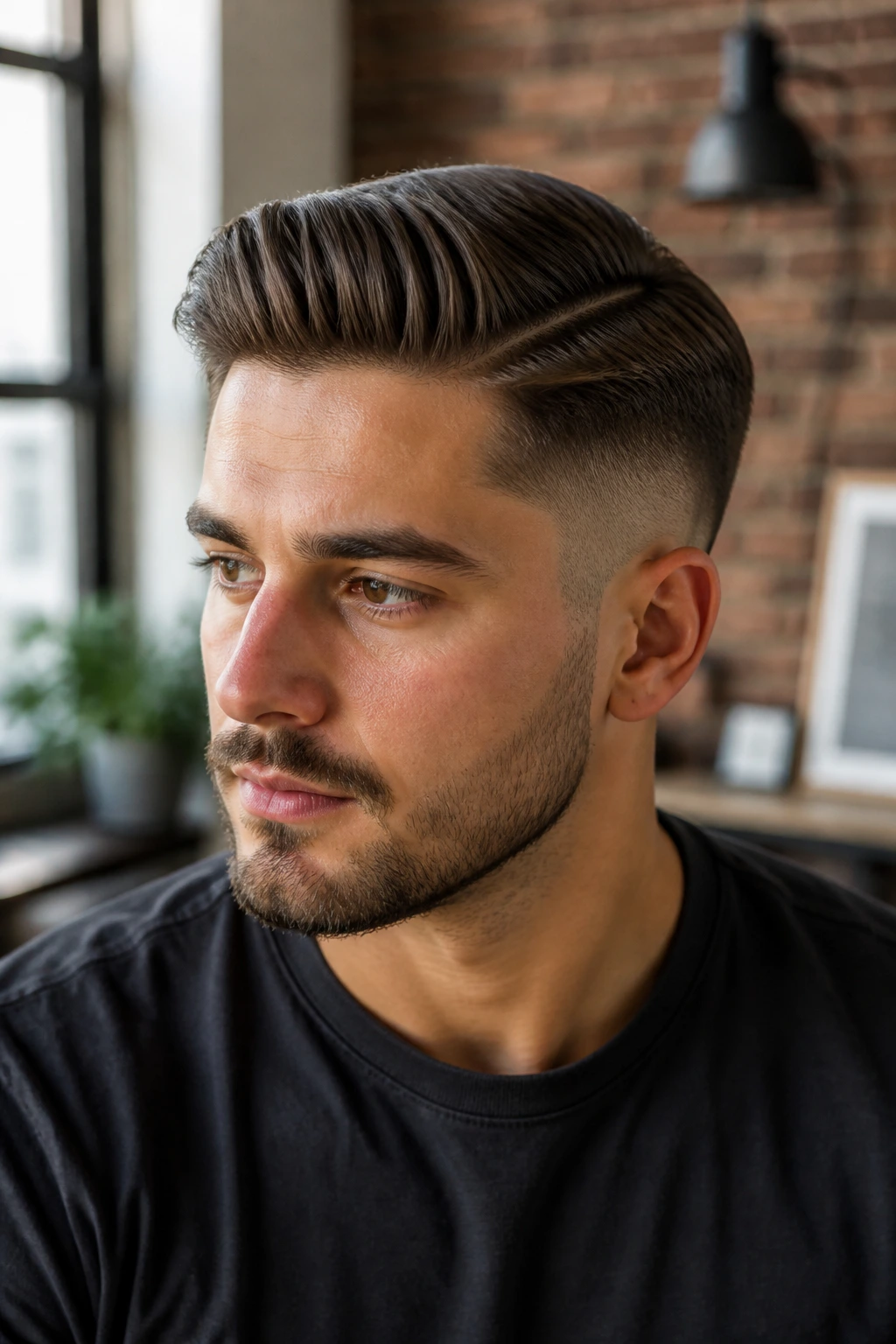
Comb overs get a bad reputation because of the bad ones. The clean version is a smart cut for thick hair, especially if your hair grows heavy at the temples or kicks out at one side. The fade clears out the sides, while the top is guided across in a controlled sweep.
The key is to keep the part soft. You want a natural split, not a scalp stripe that screams for attention. Thick hair works well here because it gives the sweep enough body to stay in place without looking thin. That’s a real advantage.
What to watch for
- Don’t let the top get too long, or it will droop.
- Ask for the fade to start low if you want a softer look.
- Use a comb while drying, then break the finish with your fingers.
- A matte product keeps the style modern; shiny pomade makes it feel older.
It’s a neat, useful cut. Not flashy. Just useful in a good way.
12. Undercut With a Heavy Top
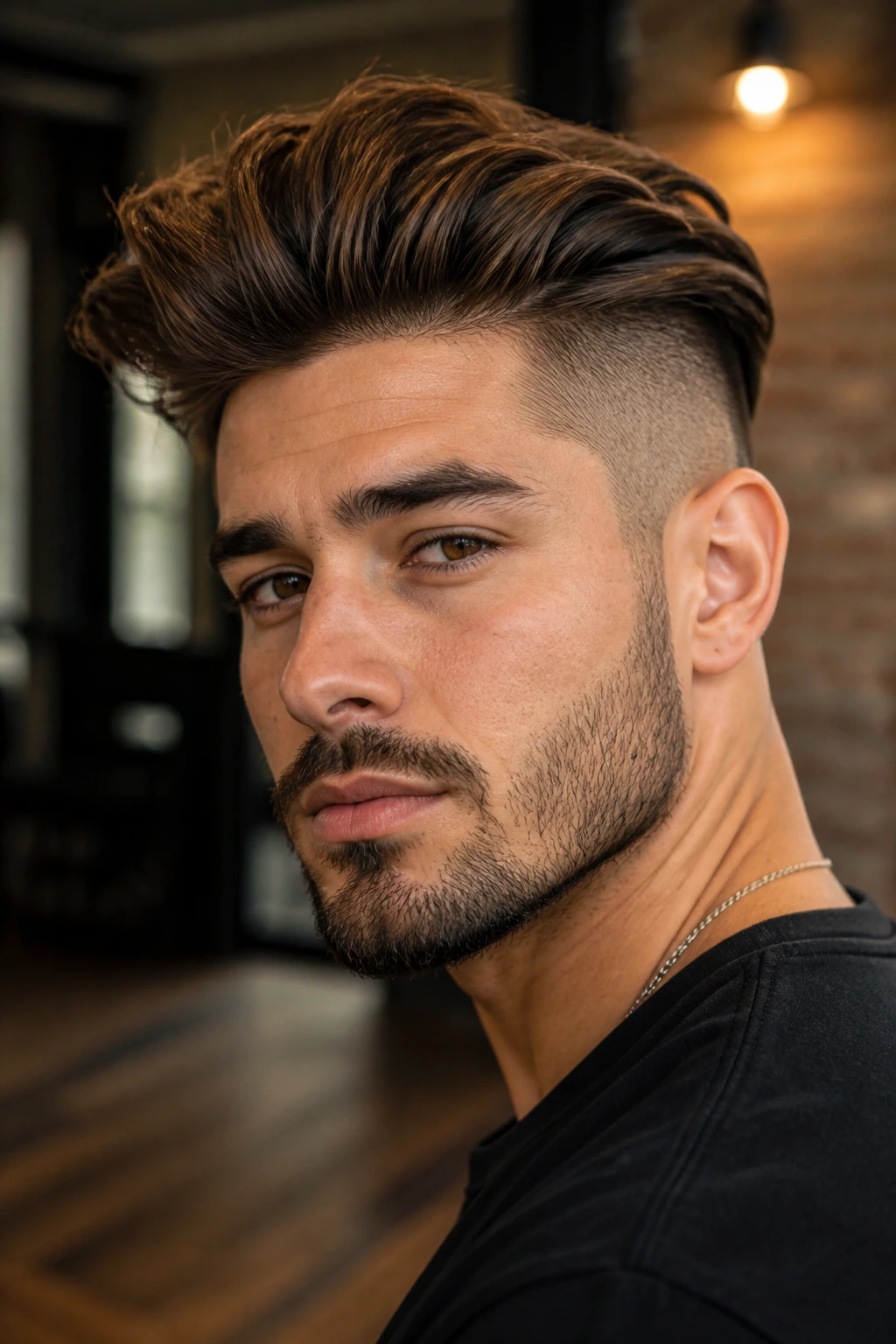
The undercut is not subtle, and that’s part of the fun. Thick hair gives it serious contrast because the top stays full while the sides get cut short or disconnected. If you want a style that makes the top feel bigger and the sides disappear, this is a strong one.
Why thick hair likes it
Thick hair has enough mass to hold a dramatic shape on top. With fine hair, an undercut can look thin or weak. With dense hair, it looks intentional. That said, the cut needs styling. If you leave it alone, it can swell out and look boxy, especially near the crown.
Keep the top at around 3 to 5 inches and ask the barber to leave weight where you need lift. A blow-dryer and matte clay make the shape hold better than heavy wax. This style suits men who like edge and don’t mind spending a few minutes making the top sit properly.
13. High and Tight With a Sharp Fade

A high and tight does thick hair a favor by getting ruthless with the sides. It’s very short, close to the head, and clean around the ears, which means dense hair doesn’t get a chance to puff out and misbehave. The top stays short too, but not skin-short.
This cut feels disciplined. It also feels practical, which is why a lot of men keep coming back to it once they get tired of styling longer hair every morning. If your hair is coarse, grows fast, or gets bulky at the nape and temple area, the high and tight solves that problem fast.
No elaborate product routine here. Maybe a tiny bit of matte cream if you want the top to look softer. Otherwise, let the cut do the work. It needs regular trims, though. Every few weeks, the shape starts to loosen, and on thick hair that happens faster than people expect.
14. Buzz Cut With a Clean Line-Up
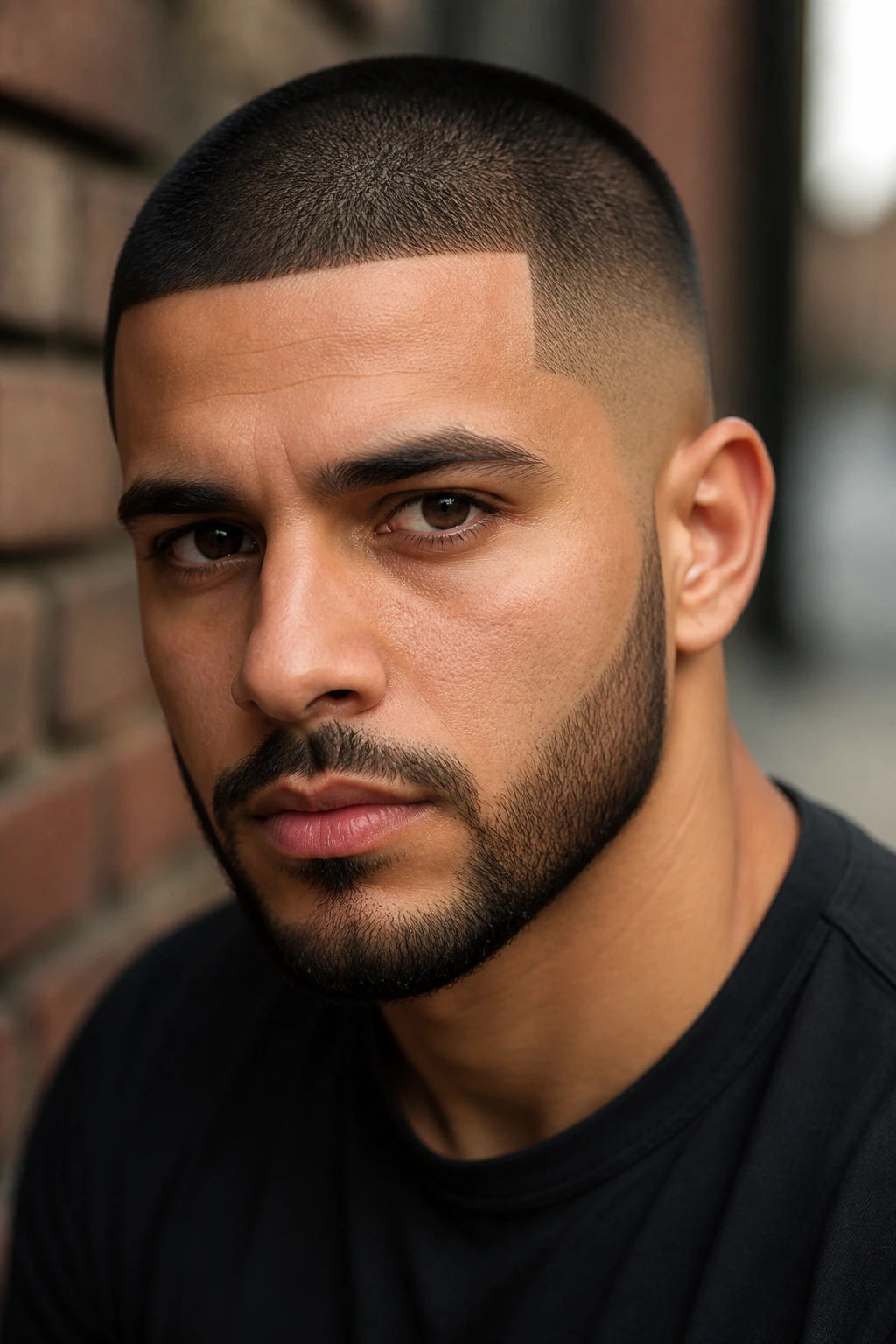
A buzz cut is not a surrender. On thick hair, it can look strong, tidy, and expensive in the quietest possible way. The density gives the cut a solid, even finish, and a sharp line-up at the hairline keeps it from looking accidental.
You still need to pick a guard length with care. Too short, and the scalp shows more than you may want. Too long, and the thick hair can start to resemble a soft brush. A mid-range guard usually gives the best balance, especially if the hair grows in different directions.
A buzz cut also puts the face on display, so the beard matters more here. If the facial hair is clean, the whole look feels crisp. If not, the cut can seem unfinished. That’s the honest part people skip.
15. Messy Fringe With Broken Texture
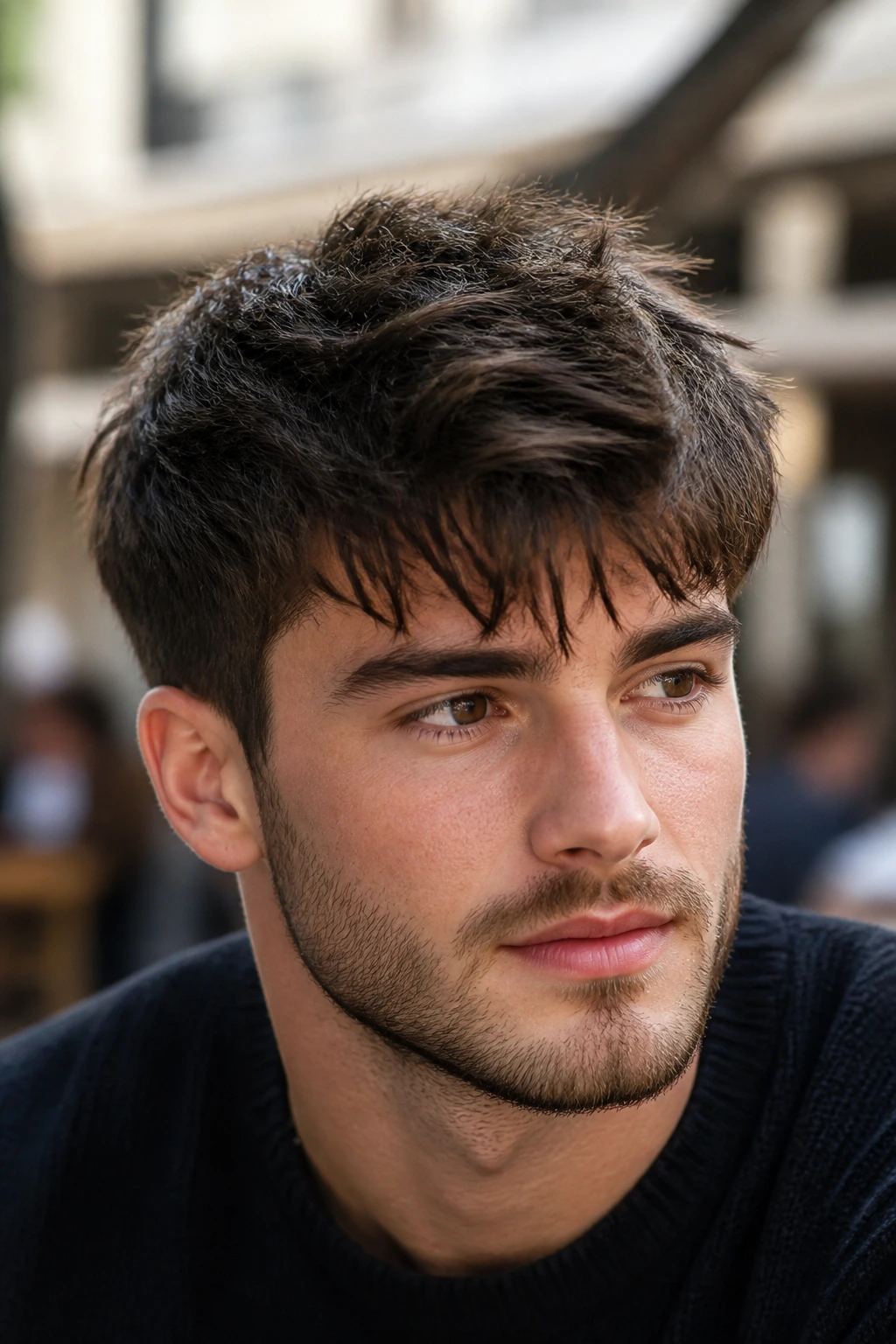
Messy fringe works because thick hair already wants to sit forward. Instead of forcing everything straight back or to the side, this cut lets the front fall in a loose, broken line across the forehead. It feels casual, but only if the bulk has been removed in the right places.
Ask for texture through the top and a softer, piecey fringe rather than a heavy curtain of hair. If the front is too dense, it starts to look damp even when it’s dry. That’s the mistake. The better version has lightness at the ends and some air around the temples.
Styling tip
Use sea-salt spray or a light matte paste on towel-dried hair. Push the fringe forward, then scrunch it a little with your fingers to break the shape. Don’t overcomb it. The style works because it looks like thick hair that moved naturally, not thick hair that was forced into a role.
16. Curtains With a Loose Middle Part
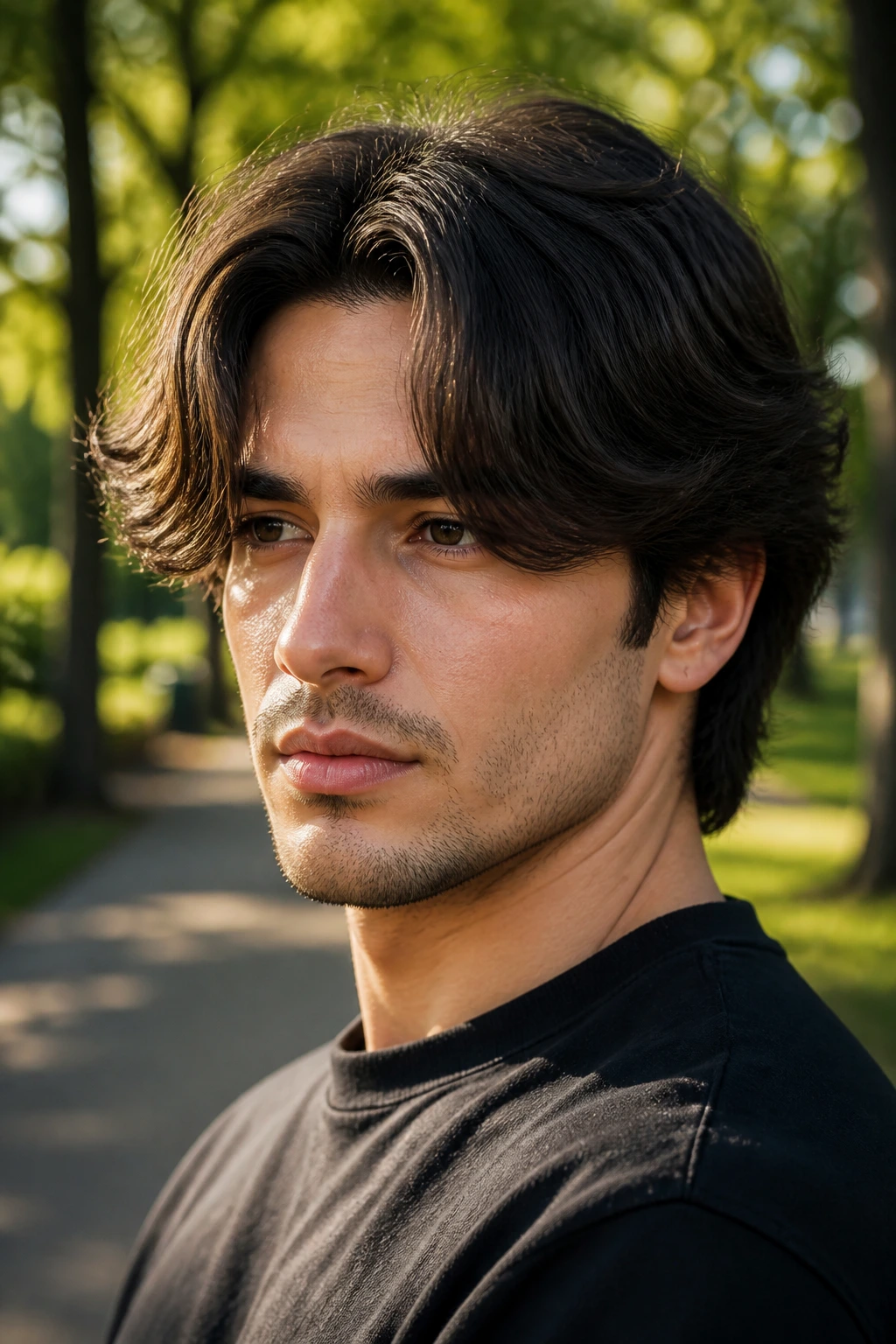
Curtains can look dated or very good, and the difference is usually the cut. Thick hair gives the style enough weight so the middle part stays visible and the sides don’t collapse into the face. When it’s cut with soft layers, the whole thing looks relaxed rather than nostalgic in the wrong way.
The length matters. You need enough top length for the front pieces to fall to either side, usually past the eyebrows a bit. Keep the sides layered, not bulky, or the part loses its shape and the style turns into a wide block.
A little leave-in conditioner or light cream keeps the hair from frizzing out. Let the part land where it naturally wants to sit. If you force it too hard, the style looks stiff. If you leave it alone, thick hair usually does the work for you.
17. Bro Flow With Natural Length
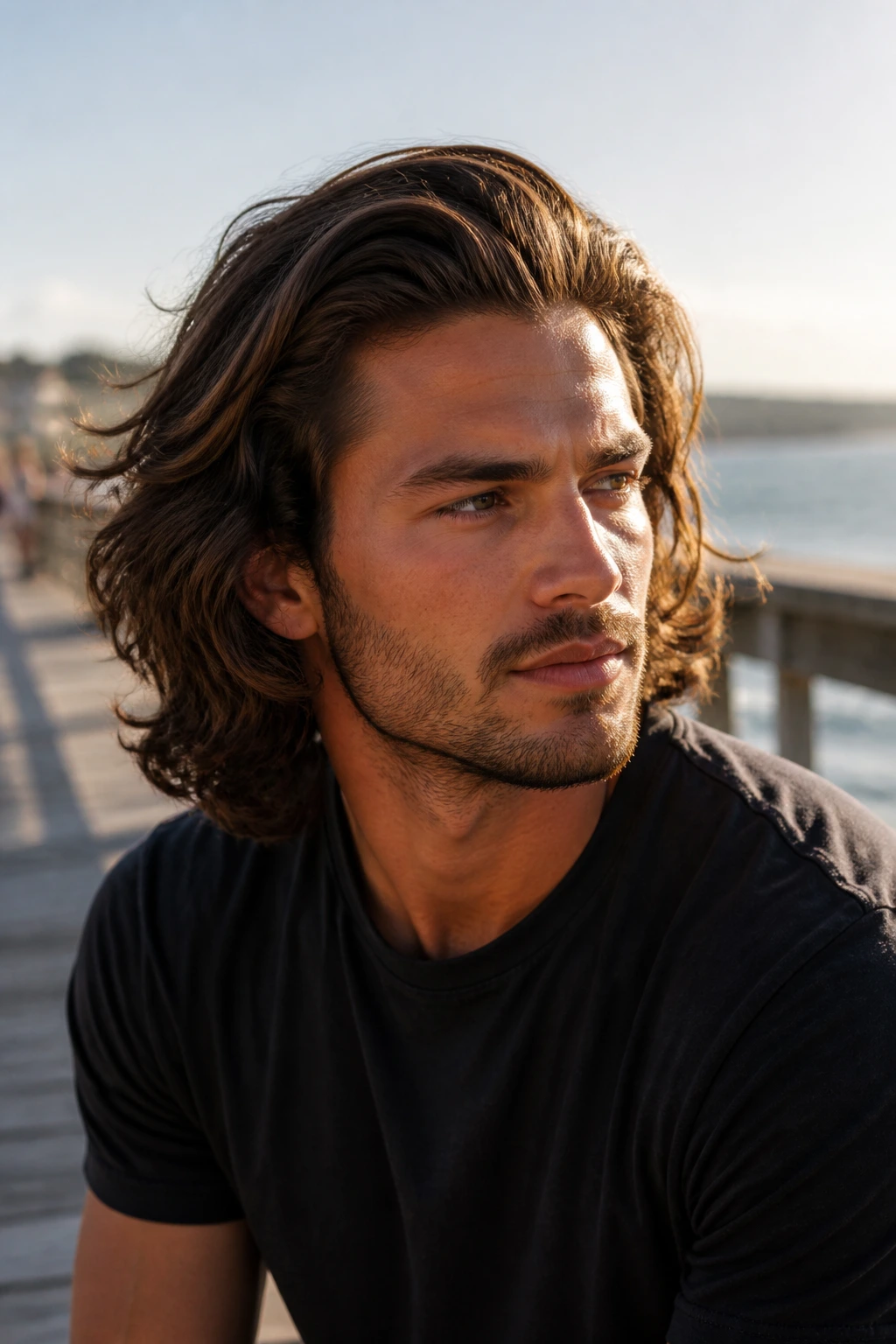
Bro flow is what happens when thick hair grows out with some restraint. The hair sits back and away from the face, often brushing the ears and neck, but it still needs shape or it turns into a mop. The best versions have enough layering to keep the ends from feeling heavy.
This is one of the few long styles that really benefits from thick hair, because the weight helps it fall in a smooth way. Thin hair can look stringy in this cut. Thick hair looks full and deliberate, especially when the neckline is cleaned up every few weeks.
You do need patience. There’s an awkward stage. That part is unavoidable. Once the length lands in the right place, though, the style starts to feel easy. It works best on guys who don’t want a polished finish and don’t mind a little movement in the wind.
18. Medium Layers That Remove Bulk
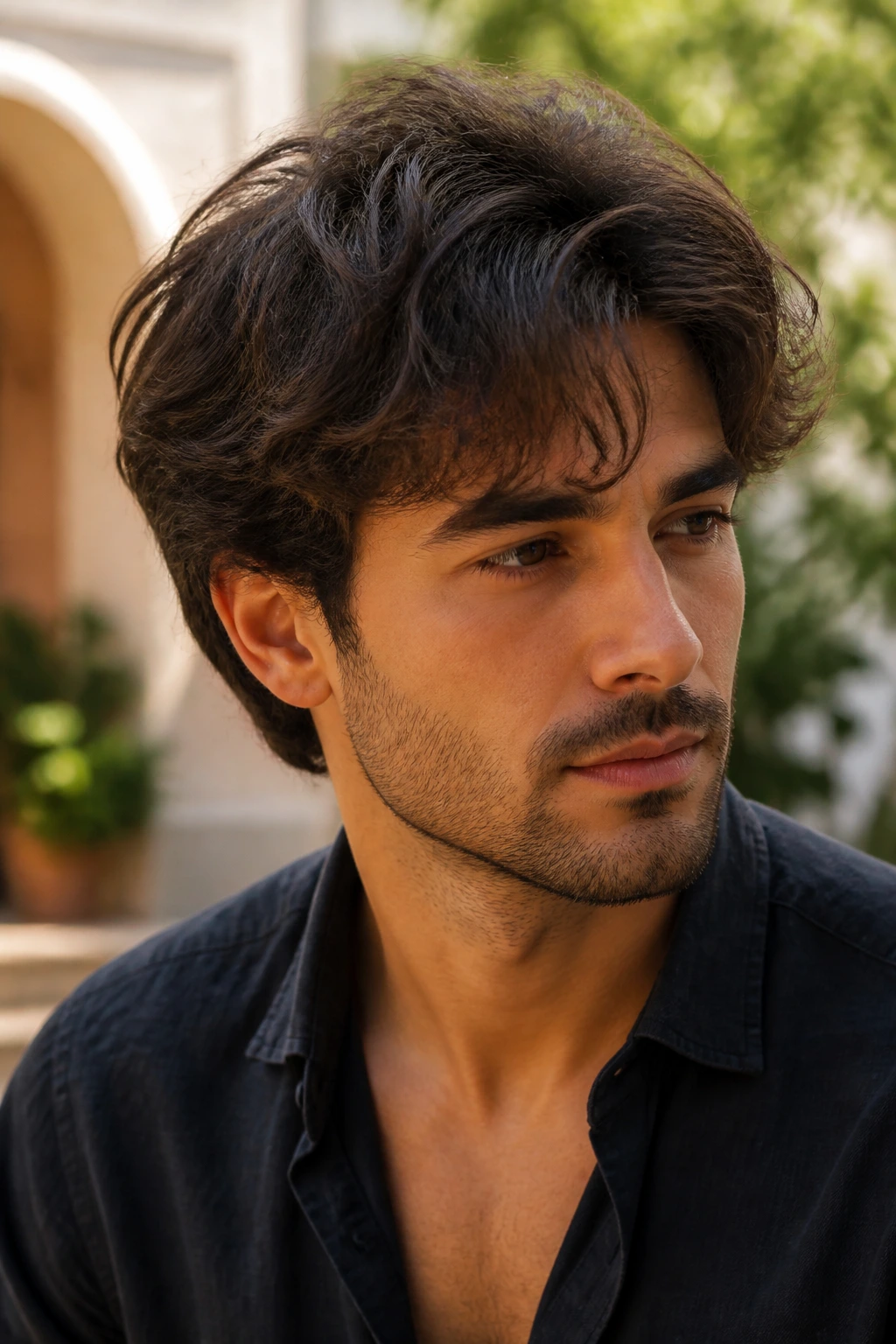
Medium layers solve a problem that short cuts can’t always fix: too much weight without wanting to go short. Thick hair in one block tends to mushroom at the sides and flatten at the crown. Layers break that up and let the shape move.
Why the layers matter
Ask for scissor-cut layers through the top and sides, not just the ends. That keeps the cut from looking like a blunt rectangle. A good layered cut should still feel full, but it won’t sit like a brick on the head. That’s the real job.
This style gives you room to comb it back, push it to the side, or leave it loose. A cream or light mousse works well, especially if the hair has a slight wave. It suits men who want flexibility and don’t want to commit to a single hard shape every day.
19. Shag Cut With Choppy Ends
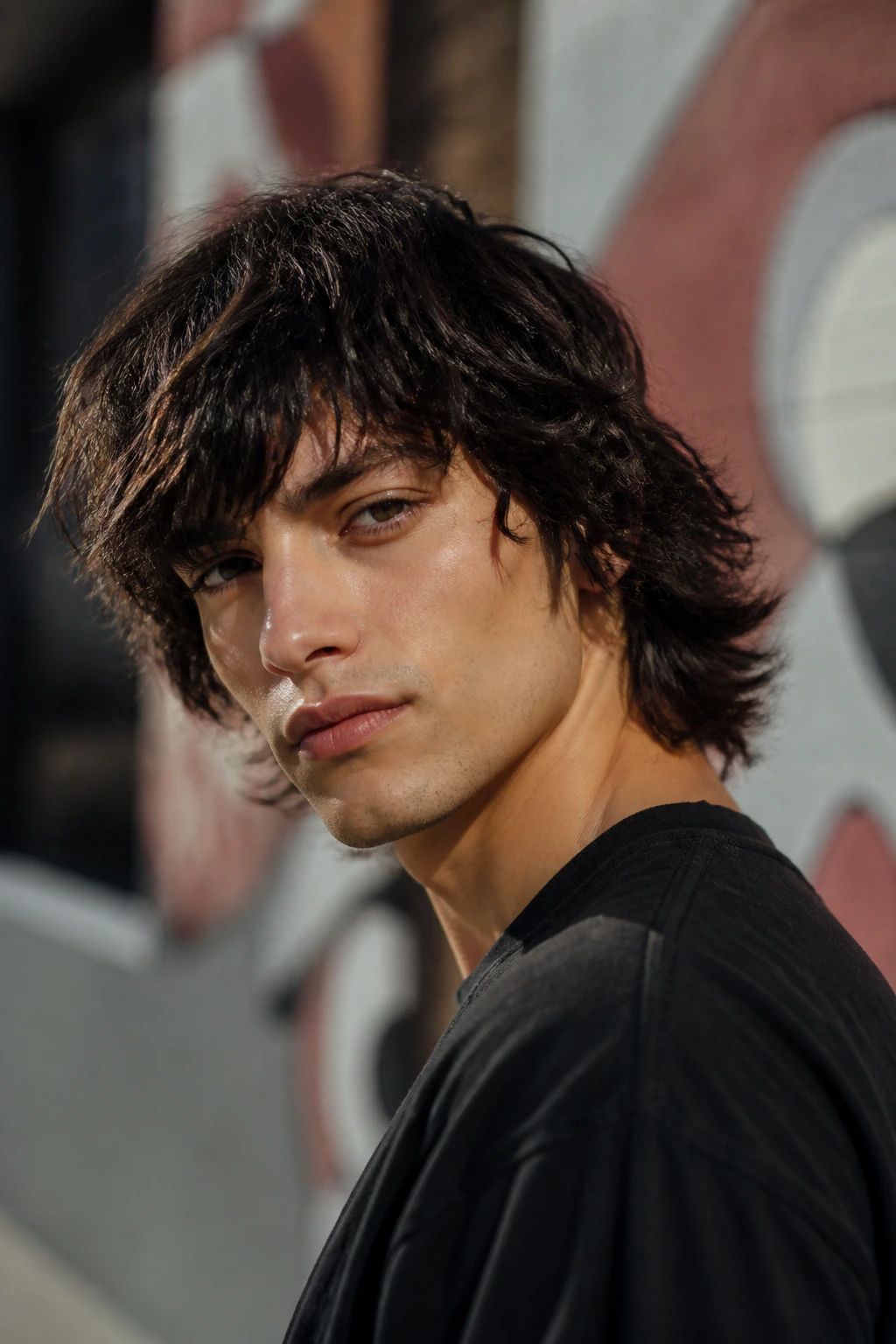
The shag is a little wild, and thick hair wears it better than most hair types. All those choppy layers keep the top from getting too heavy, while the rough ends make the shape move instead of sitting in one solid block. It has a lived-in feel without needing much polish.
The cut works especially well if your hair has wave or bends in it already. Straight thick hair can wear a shag too, but the styling takes a bit more help. Ask for lots of internal texture and some softness around the crown so the silhouette doesn’t blow up too much.
A texturizing spray or light cream is enough. Use your hands, not a comb, and let the layers fall where they want. The appeal here is the slightly undone edge. Too neat, and the shag loses its point. Too messy, and it becomes a bad haircut. The middle ground is where it lives.
20. Modern Mullet With a Blended Back
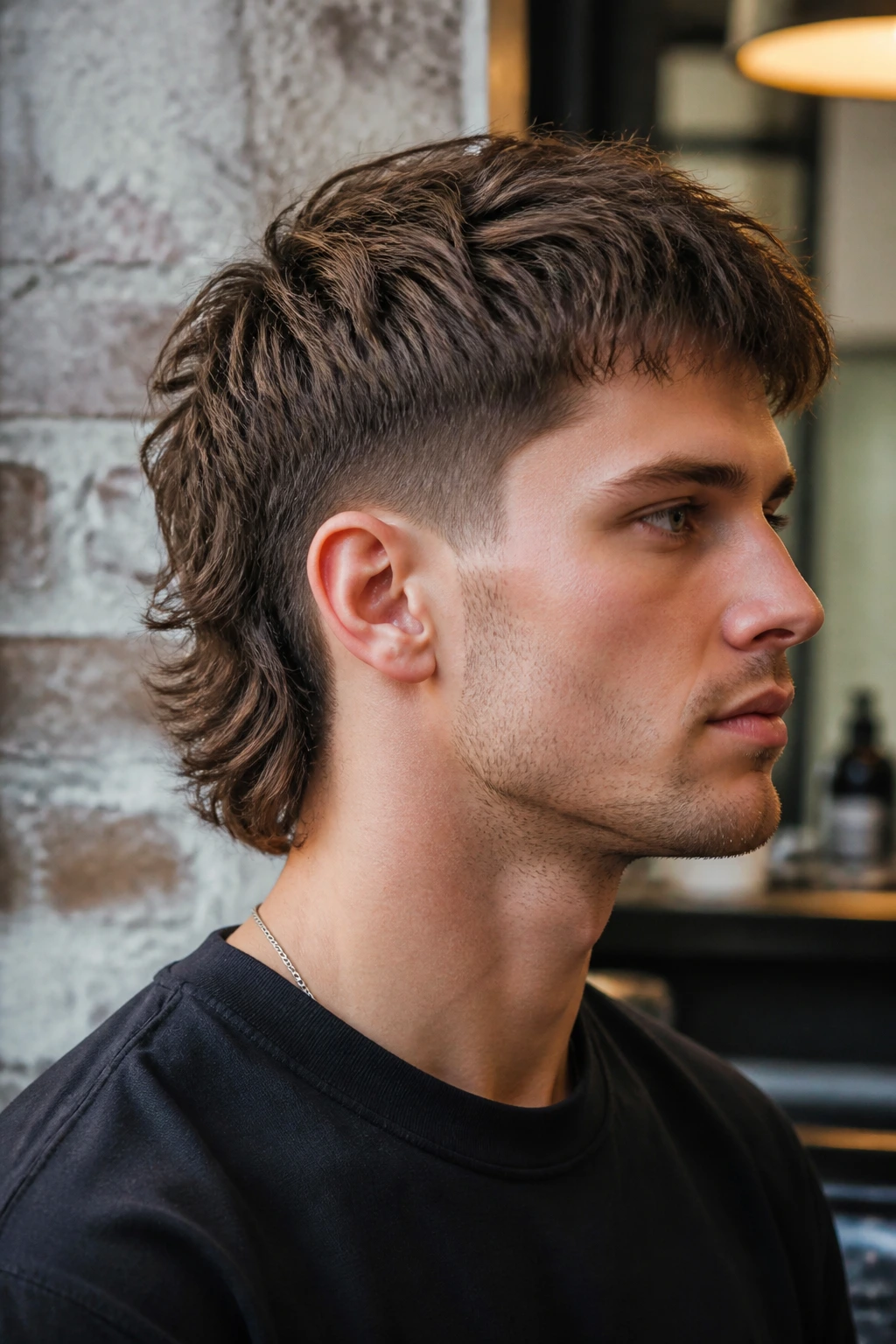
The modern mullet is not the old joke version. It keeps the front and sides shorter, lets the back run longer, and blends the transition enough that it looks like a haircut, not a dare. Thick hair helps because the length in the back has enough body to show shape.
What makes it wearable
The neckline has to be handled carefully. If the back is left too blunt, the style gets heavy and boxy. Ask for soft blending through the crown and enough texture to keep the back moving. The sides should be short enough to contrast the top but not shaved so tight that the cut looks disconnected in a harsh way.
A light cream or matte paste is plenty. You want the style to fall with a bit of attitude, not freeze into place. This one suits men who want something bolder than a standard taper but still want the hair to grow out in a controlled way.
21. Wolf Cut With Heavy Texture

The wolf cut is a shag with more bite. It uses lots of layers, a fuller crown, and pieces that fall in different directions on purpose. Thick hair is almost made for it, because the density gives the shape enough substance to look full without needing a lot of styling rescue.
This is a stronger look than a regular layered cut. The top usually sits a bit shorter and messier, while the ends stay broken up. If your hair is very straight and very heavy, you’ll need some product or heat to keep the shape from sinking into itself. If it’s wavy or curly, the style comes alive faster.
It is not the neatest haircut in this list. That’s the point. The wolf cut works best for men who want movement, edge, and a little chaos without giving up length. Keep the layers fresh, or the shape can get dull fast.
22. Curly Crop With Short Sides

Curly hair and thick hair often show up together, and the curly crop handles both well. The sides stay short, usually faded or tapered, while the top keeps enough length for the curls to form instead of flattening out. The result is tidy but still full.
The biggest mistake with curly thick hair is cutting it too wet and assuming the curl will behave the same way when dry. It won’t. Ask for the curls to be cut with their natural spring in mind, and keep the top long enough that the curl pattern has room. A little shape at the front helps too.
Use curl cream on damp hair and let it air-dry or diffuse it gently. Don’t rough it up with heavy wax. That usually turns curls into a stiff lump. The curly crop looks best when the curl pattern is allowed to stay soft and defined.
23. Curly High Top Fade

A curly high top fade gives thick, coily hair a strong shape and a clean frame. The sides are faded down tight, while the top is left tall and rounded, which lets the curls build upward instead of spreading out sideways. That shape matters more than people realize.
The barber details that make it work
- Ask for a rounded top, not a flat shelf.
- Keep the fade clean around the temples and neckline.
- Let the barber shape the top while the hair is dry or stretched so the curl pattern is easier to judge.
- Use a sponge, curl sponge, or curl cream if the texture needs extra definition.
This cut has presence. It also needs upkeep, because the fade grows out fast and the shape loses sharpness around the edges. Still, when it’s done well, thick coily hair looks powerful in it. Not loud. Just strong.
24. Man Bun With Tapered Sides

A man bun is only good when the length is long enough to keep it calm. Thick hair makes the bun look full rather than scrappy, but that same density can make it pull and puff if the hair is too short. You usually want at least 8 to 10 inches before the tie-up starts to feel easy.
The cleaner versions use a taper or undercut at the sides so the bun doesn’t sit on a wide base of hair. That keeps the shape neat and stops the whole head from looking oversized. If the sides are left too heavy, the bun can start to feel like a weight sitting on top of another shape.
Use a soft elastic, not a hard band that snaps the hair. Pull the bun low or mid-height depending on your face shape and where the bulk sits. This style works best when it looks relaxed but controlled. Tight and sleek is fine, but only if your hair actually stays that way.
25. Shoulder-Length Layers That Stay Moveable

Shoulder-length layers are the quiet winner for men who want length without the mess. Thick hair can turn into a heavy curtain at this stage if the ends are left blunt and the top is all one length. Layers solve that. They let the hair fall around the face and shoulders without building a box.
Ask for the layers to start around the jawline or cheekbone if you want shape near the front. Keep the ends light enough to move, but not so thinned out that the cut looks frayed. That balance matters more than people think. Thick hair needs enough weight to look full, just not so much that it sits like a blanket.
You can wear this loose, tuck it behind the ears, or pull it back into a half-up tie when it gets in the way. A light leave-in conditioner keeps the ends from getting puffy. Long thick hair only looks good when the layers do some of the work. Otherwise it starts wearing you.
