



If the sides of your haircut keep puffing out while the top falls flat by lunchtime, you already know why longer shapes matter. Long on top haircuts for men solve that problem better than almost any other approach, but only when the proportions are right.
Length by itself does nothing. Four inches can look polished, messy, sharp, or sloppy depending on where the weight sits, how short the sides are, and whether the top is layered or left blunt.
I’m partial to cuts that survive a bad day. A good long-top style should still look decent after a hat, a workout, a windy commute, or one too many times running your hand through it.
The 15 cuts below cover clean, casual, wavy, straight, thick, and stubborn hair that refuses to cooperate. If you know how your hair behaves, one of them will click almost immediately.
1. Textured Quiff

A textured quiff is the easiest way to get height without making your hair look glued in place. It gives you lift at the front, some softness through the crown, and enough movement that it still looks good when it loosens up a bit.
What Makes It Work
The sweet spot is usually 3 to 5 inches on top, with the front left slightly longer than the crown. Ask for choppy texture rather than a blunt top line, because that broken-up finish is what keeps the quiff from looking stiff or dated.
A low taper or a mid taper on the sides keeps the shape balanced. Go too tight and the top can start to look like it’s floating on its own. That can work if you want a bold contrast, but most guys look better with a little softness around the temples.
Use a blow-dryer first, then a small amount of matte clay or texture paste. Blow the front upward and slightly back with your fingers, not a brush. The goal is lift with movement, not helmet hair.
2. Slicked-Back Taper

Clean doesn’t have to mean stiff. A slicked-back taper gives you that smooth, grown-up shape without forcing your hair into the severe, high-shine look that can feel a little too polished.
The haircut works best with 5 to 7 inches on top and a taper that fades gradually into the neckline and sideburns. That gentler side shape matters. If the sides are too severe, the slick back starts looking harsh instead of refined.
I like this cut on guys with medium to thick hair because there’s enough density to comb straight back without exposing too much scalp. Fine hair can wear it too, but the finish should be looser and lower-shine. A cream or light pomade usually does the trick.
There’s a small trap here. If you drag every strand straight back with too much product, the style turns flat and dated fast. Keep a little air in it. The best version looks brushed back, not painted on.
3. Curtain Fringe
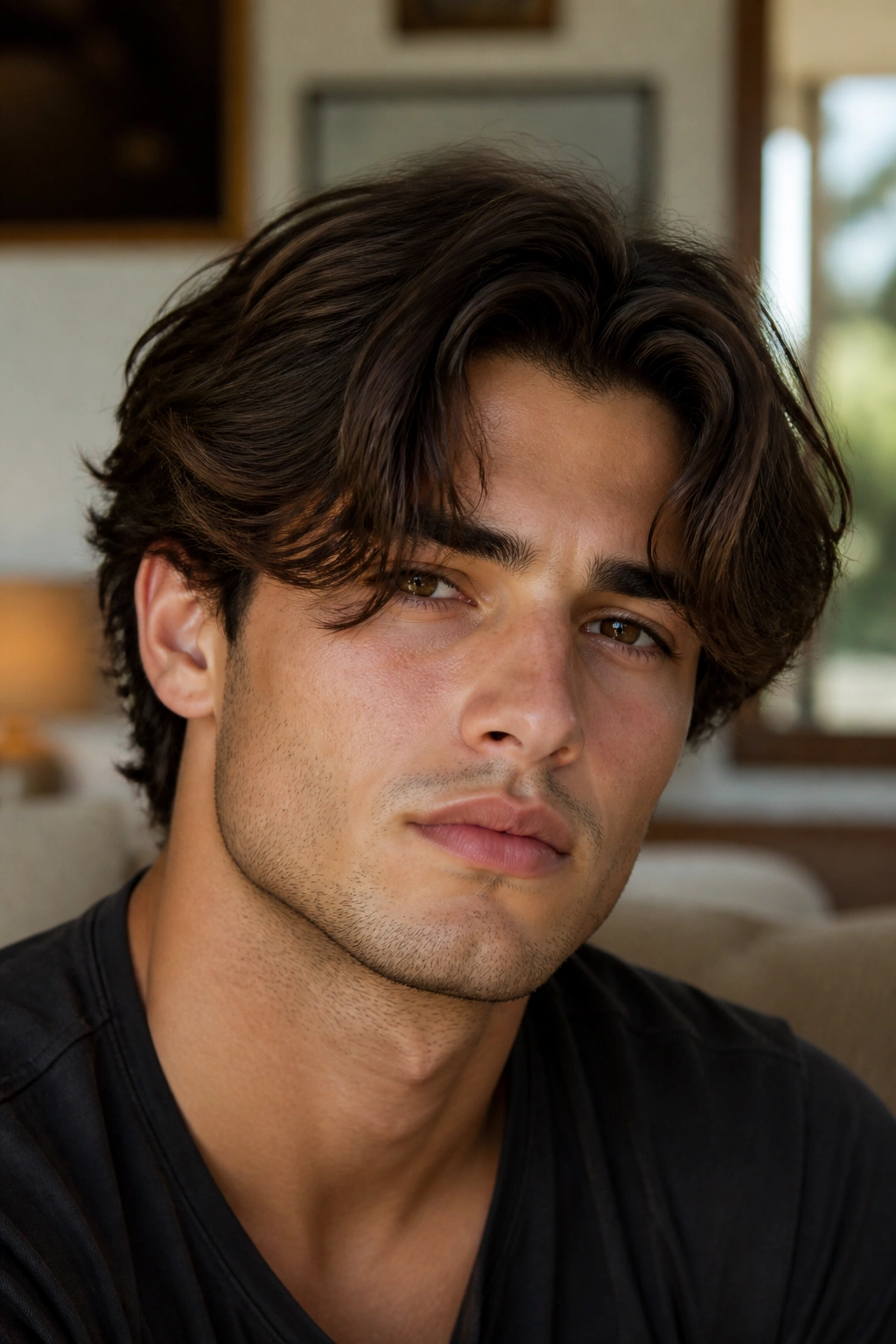
Why does the curtain fringe keep showing up? Because it solves a problem most men have: the front of the haircut needs to do something useful, not just sit there. This cut drops length toward the forehead and parts in the middle or just off-center, which softens the face in a way short cuts can’t.
How to Shape It
Curtains usually need 4 to 6 inches on top, with the front left long enough to fall naturally around the brows. The sides can be tapered, scissor-cut, or lightly faded, but the top should keep enough width to frame the face. Too much thinning and the whole thing turns wispy.
This style works well on straight and wavy hair. If your hair bends a little, even better. The bend gives the fringe a bit of swing instead of hanging like a wet towel.
A good curtain cut is all about balance. The part doesn’t need to be sharp, and that’s part of the charm. It should look like the hair found its own lane, not like you drew a line with a ruler.
4. Bro Flow
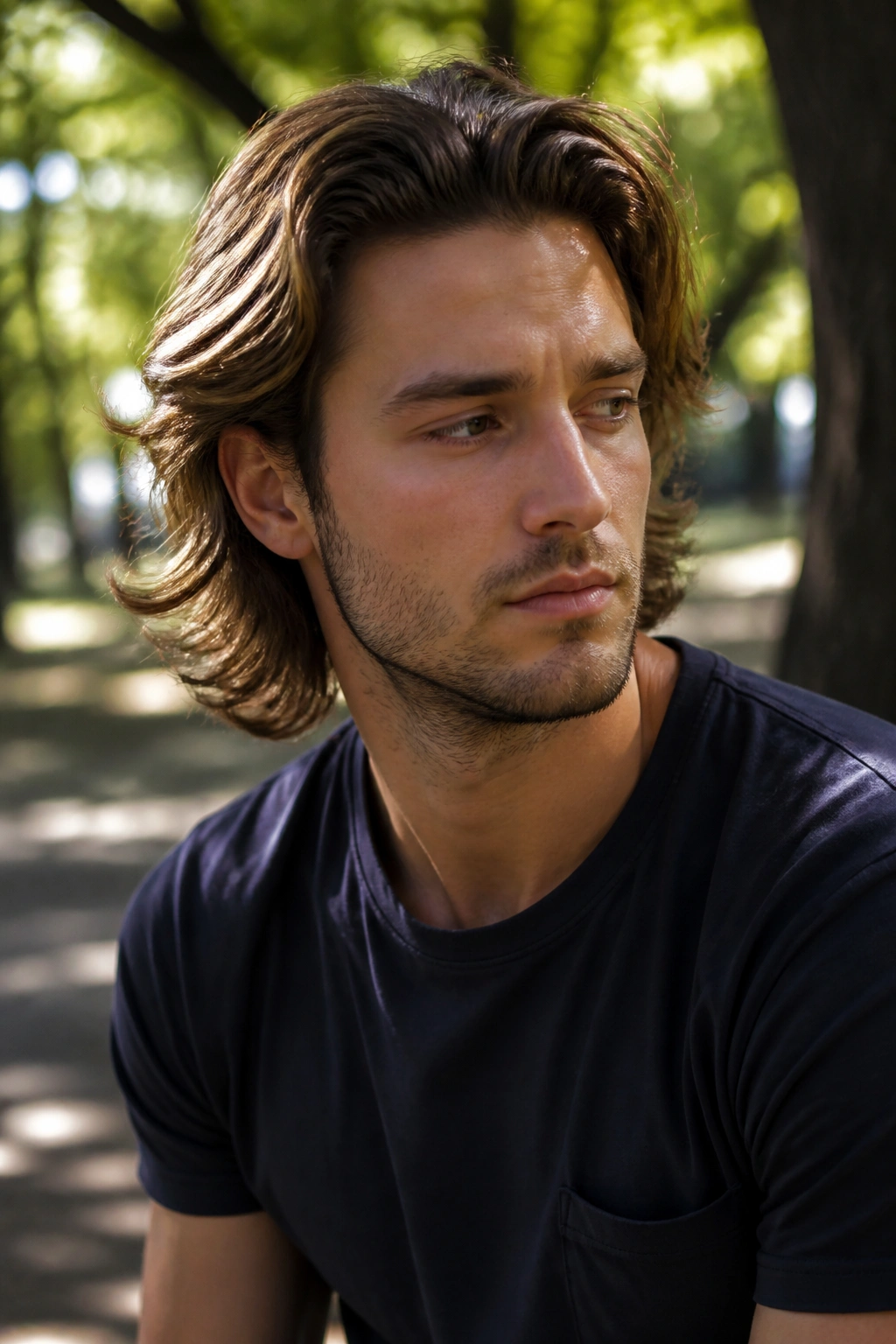
There’s a point when hair gets long enough to sit back on its own, and that’s where the bro flow starts making sense. It has that laid-back, moving-back-from-the-face shape that feels relaxed without looking careless.
The best bro flow is layered so the ends don’t bunch up into one heavy curtain. You want the hair to move when you turn your head, not stick out in one chunky block. If your hair reaches the collar or sits just above it, you’re in the right zone.
This cut shines on medium and wavy hair. Straight hair can wear it too, but it usually needs a little more help with a blow-dryer or a salt spray. Very fine hair can struggle if it’s left too long without enough texture, because it may collapse instead of flowing.
Ask your barber to keep the sides soft and let the top and back connect gradually. The shape should feel easy. If it looks like you spent twenty minutes arranging it, it’s probably too styled for what this cut is meant to do.
5. Side Part with Length
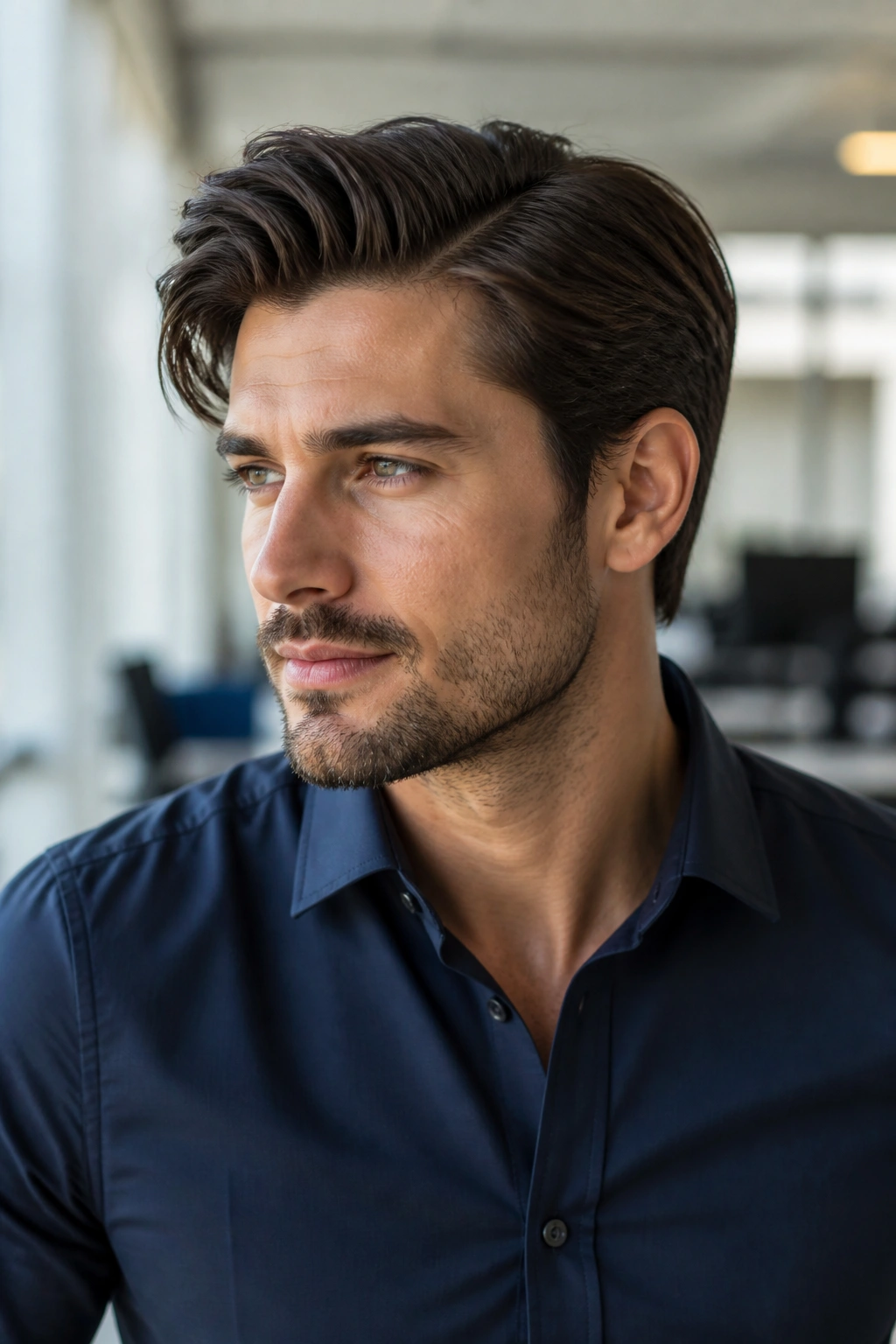
A side part with length can look sharper than a short corporate cut, and that surprises people who think longer hair automatically means casual. The truth is, a clean side part with a little top length can read smart, controlled, and modern all at once.
What makes it work is the separation. Keep 3 to 5 inches on top, leave enough length to sweep across the head, and keep the part soft instead of carved in. A hard line can work, but it changes the whole mood. Softer usually feels better unless you want a more dramatic edge.
Where It Wins
This cut suits men who want something office-friendly without losing personality. It also flatters square and oval faces because the side sweep gives the head a little extra shape. If your face is narrower, keep the volume low so the style does not widen you too much.
Use a light cream or a soft pomade, then comb the hair once and finish with fingers. That small bit of looseness matters. The haircut should look intentional, not over-pressed.
6. Pompadour with Taper Fade
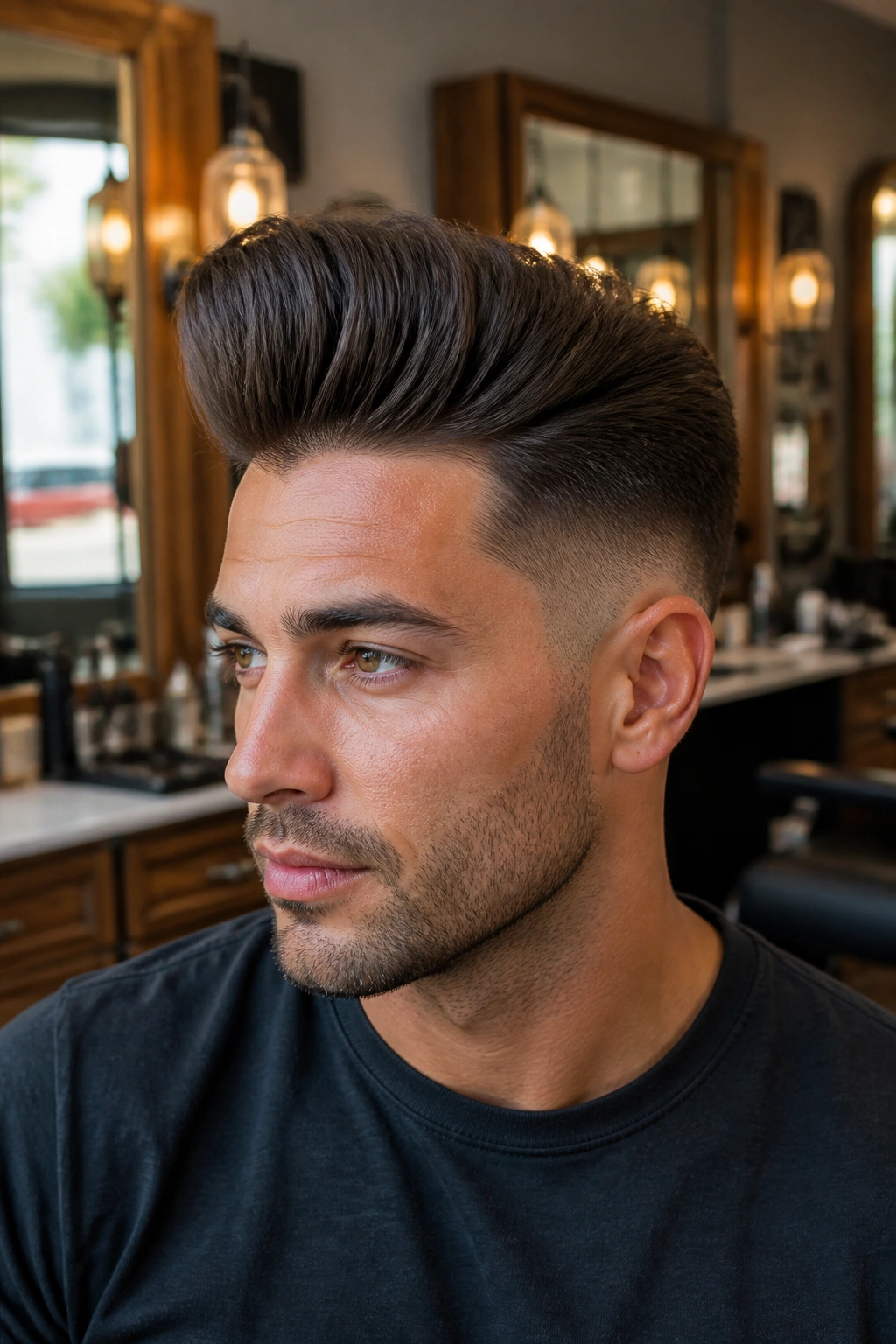
Unlike a quiff, the pompadour wants a smoother rise and a cleaner front edge. It’s the cut you choose when you want height that feels a little more dressed up, a little more structured, and honestly a little more confident.
The shape works best with 4 to 6 inches in front, slightly less at the crown, and a taper fade that keeps the sides tidy without dragging the whole look into skin-fade territory unless that is the contrast you want. A low fade gives the pompadour room to breathe. A high fade can make it look more aggressive.
How to Keep It From Looking Too Big
Use a vent brush or a round brush with a blow-dryer and push the front up first, then back. Don’t skip the drying stage. That’s where the shape lives. Product alone will not build a good pompadour; it only locks in what the dryer already made.
Matte or low-shine product usually looks better than glossy pomade if you want a modern finish. Too much shine can make the style feel costume-like. The best pompadour has height, but it still moves when you tilt your head.
7. Messy Fringe Crop
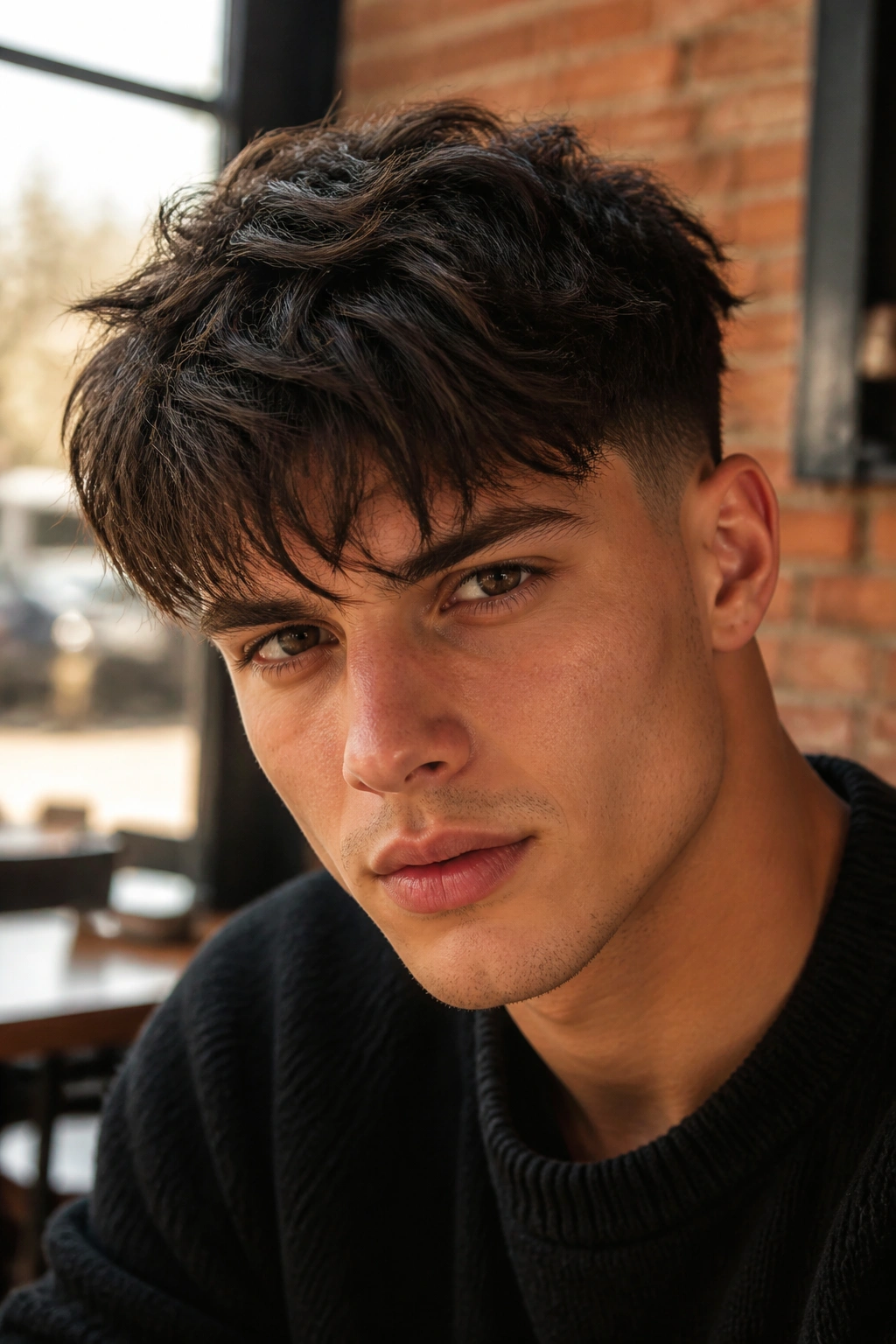
The front falls forward first. Then it breaks into short pieces. That’s the whole charm of a messy fringe crop, and it’s one of the easiest long-on-top styles to wear if your hair is thick or naturally stubborn.
This cut usually sits in the 2 to 4 inch range up front, with choppy texture through the fringe and a tighter shape on the sides. The front should look deliberate, but not neat. If every strand is combed into place, you’ve lost the point.
What to Ask For
- Leave extra weight in the fringe so it can fall forward.
- Cut the top with point-cut texture, not blunt lines.
- Keep the sides tapered or faded, but avoid making the top and sides blend into one mushy shape.
- Let the crown stay a touch longer if your hair sticks up there.
A messy fringe is excellent for guys with a high forehead or strong hair density. It also plays well with matte paste or clay, but only in a small amount. This cut gets worse fast when you overload it with product.
8. Wavy Side-Swept Top
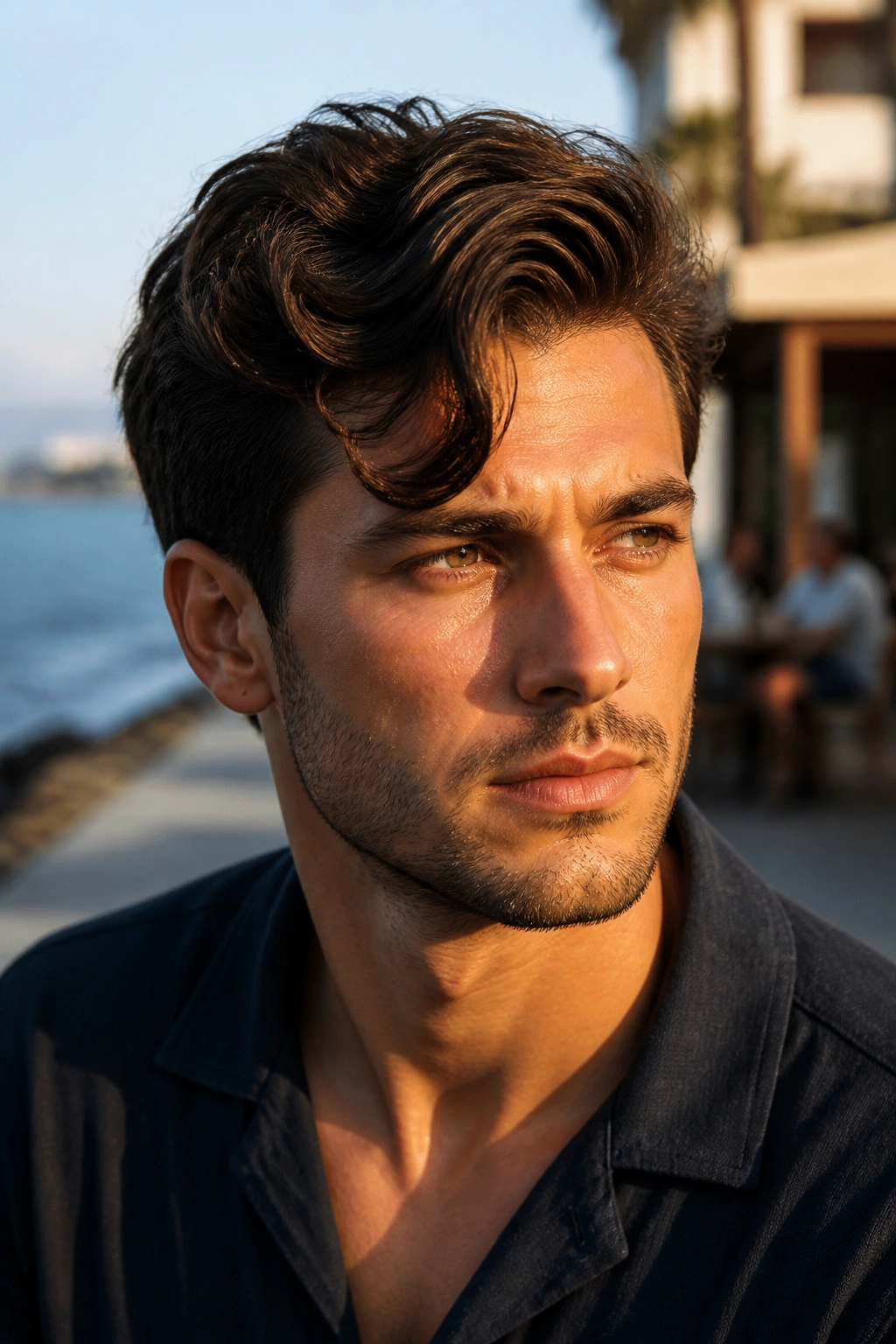
If your hair already bends, stop trying to flatten it. A wavy side-swept top works because it follows the natural pattern instead of fighting it, and that usually produces a better shape with less effort.
The length can sit anywhere from 4 to 6 inches on top, depending on how strong the wave is. The key is keeping enough length for the wave to show, but not so much that the hair starts to puff out around the ears. The sides should stay neat and low so the top has room to move.
Fighting a wave is a waste of time.
A light cream, mousse, or salt spray works well here. Use your fingers instead of a comb if you want the sweep to stay loose. If you comb wavy hair too hard while it’s damp, you can flatten the bend and make it frizz later. Let the wave do half the job.
9. Modern Mullet
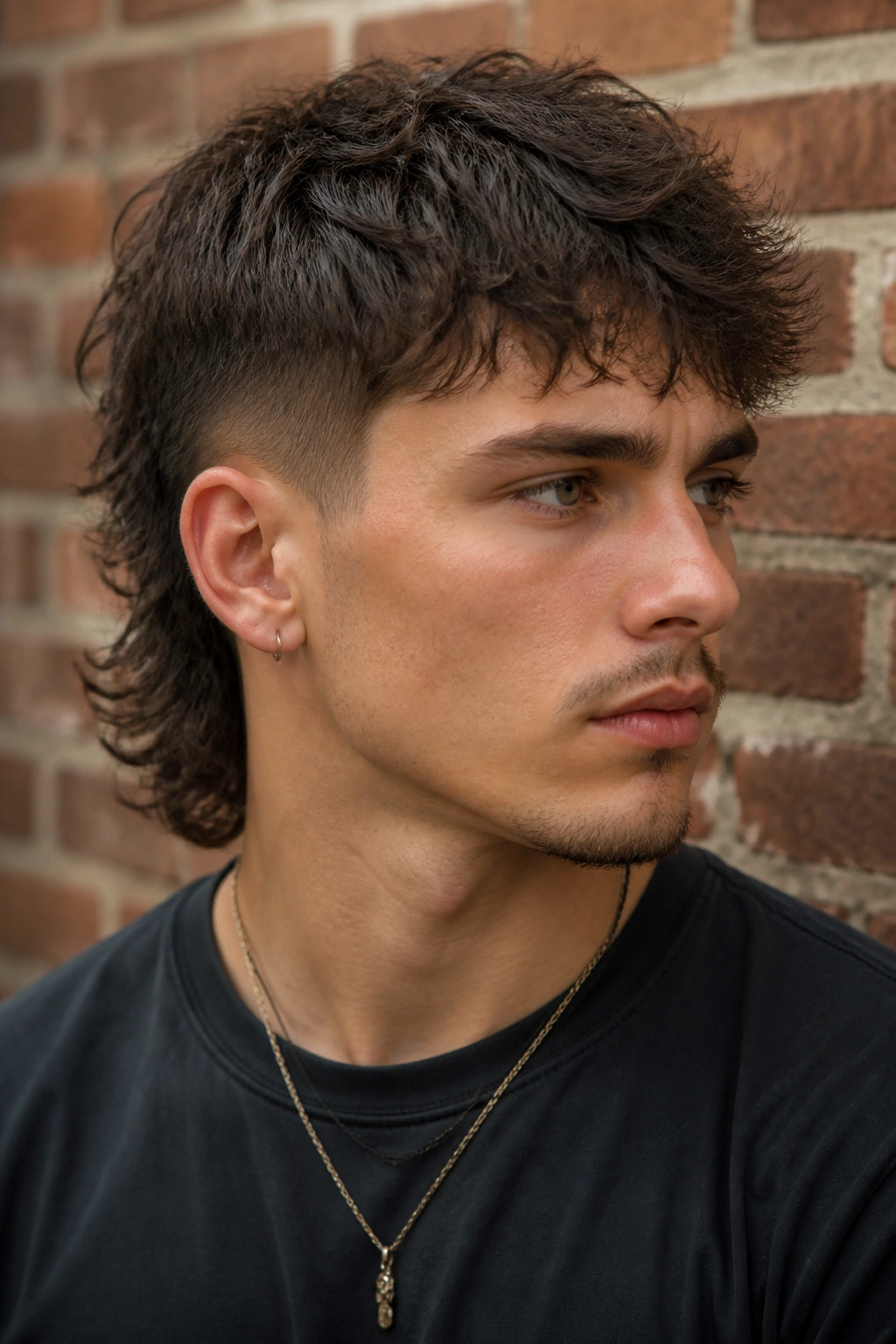
A good mullet is not a joke haircut. A bad one is. The difference comes down to control, and that means clean sides, a shaped top, and a back that looks intentional instead of forgotten.
The modern version keeps the top layered and textured, the sides shorter, and the back long enough to show movement at the neck. It should not look like you simply stopped cutting it. That lazy version is what gives the style a bad name.
Where the Balance Lives
- Keep the top choppy so it does not sit like a flat sheet.
- Let the back reach the collar, but not drag into shoulder length unless that’s the look you want.
- Clean up the neckline often; a messy nape ruins the whole thing.
- Keep the sides tapered or lightly faded so the shape stays clear.
This cut works best on thick or wavy hair, since the texture helps the transition from short to long feel natural. If the top is too smooth and the back too heavy, the style loses its edge and starts looking accidental.
10. Ivy League with Extra Length

Need something tidy enough for work but less stiff than a crew cut? The Ivy League with extra length is a solid answer. It keeps the polish of a traditional short style, but the top has enough room to part, lift, or sweep depending on the day.
Why It Stays Sharp
The top usually sits around 2 to 4 inches, with the front given a little more length so it can lean to one side. The sides stay neat through a taper or soft fade, which keeps the overall shape clean. You’re not chasing drama here. You’re chasing control.
This haircut is especially useful if you want something that can be dressed up fast. A dab of cream and a comb give it a neat finish; finger-styling makes it feel more relaxed. Both work.
I like this cut on men who need versatility without a high-maintenance routine. It can look serious in a jacket and still easy on the weekend. That’s the real selling point: it does not force one mood.
11. Soft Brush Back
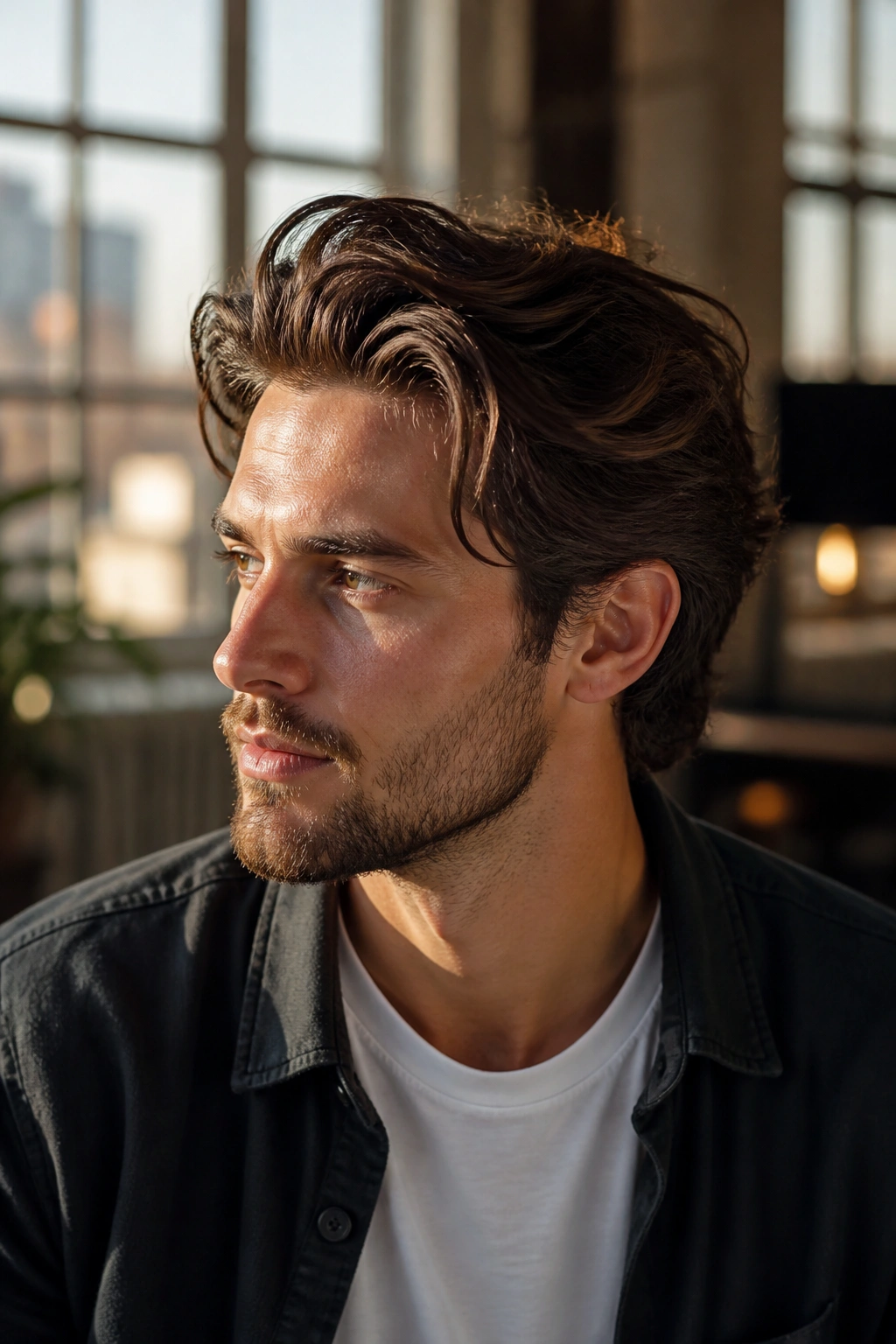
The soft brush back is the cut people want when they say they hate product. It gives the hair a backward direction without locking it into the hard, wet look that can feel too formal or too shiny.
This style usually needs 4 to 6 inches on top, enough to sweep away from the forehead and sit back over the crown. The sides can be tapered or softly faded, but the top should keep a bit of width. If the haircut is too narrow, the brush back starts to look severe.
What makes it easy to wear is the finish. You’re using a small amount of cream or low-hold product, then pushing the hair back with fingers or a vent brush. That creates separation. It also keeps the cut from turning into a helmet.
It works well on straight and slightly wavy hair. If your hair is coarse, a blow-dryer helps train it backward first. The shape should feel relaxed, not forced.
12. Layered Shag
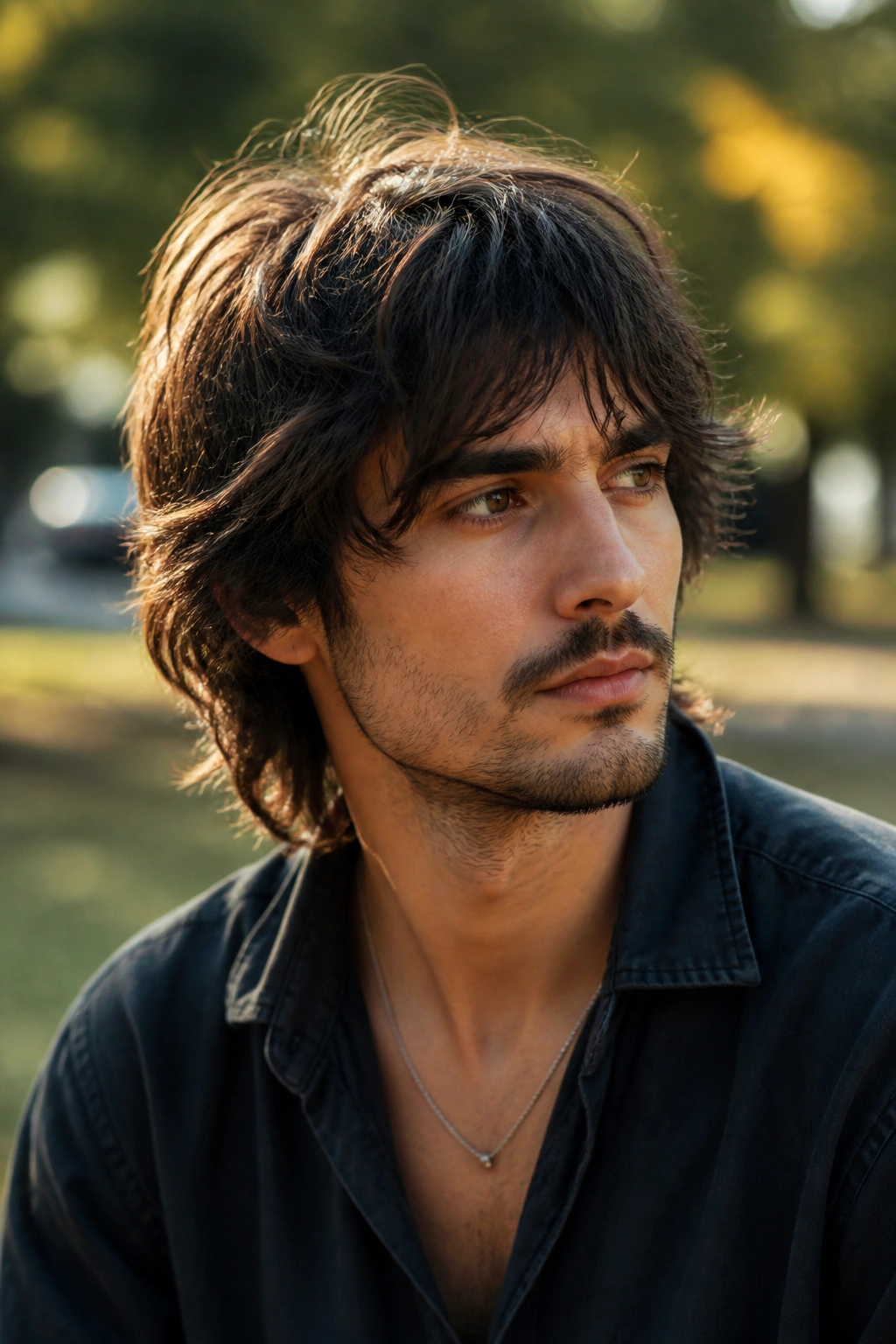
Some guys need less structure, not more. The layered shag is the haircut for that crowd, and it’s one of the easiest long-on-top styles to wear if your hair has wave, curl, or natural movement.
The cut is built on internal layers. That means the hair gets broken up from the inside so it can fall with shape instead of hanging as one heavy block. The top, sides, and back should connect, but not blend into a flat mass. The best shags look a little undone in the nicest possible way.
How to Ask for It
Tell your barber you want layers through the top and crown, with the ends kept piecey. If your hair is thick, ask for some weight removal around the upper sides so the shape doesn’t balloon out. If it’s curly, the layers should be longer and softer so the curls don’t spring too high.
A shag does not need a lot of styling. A little salt spray, a touch of cream, and air-drying often get you most of the way there. The cut is doing the heavy lifting.
13. Faux Hawk with Length
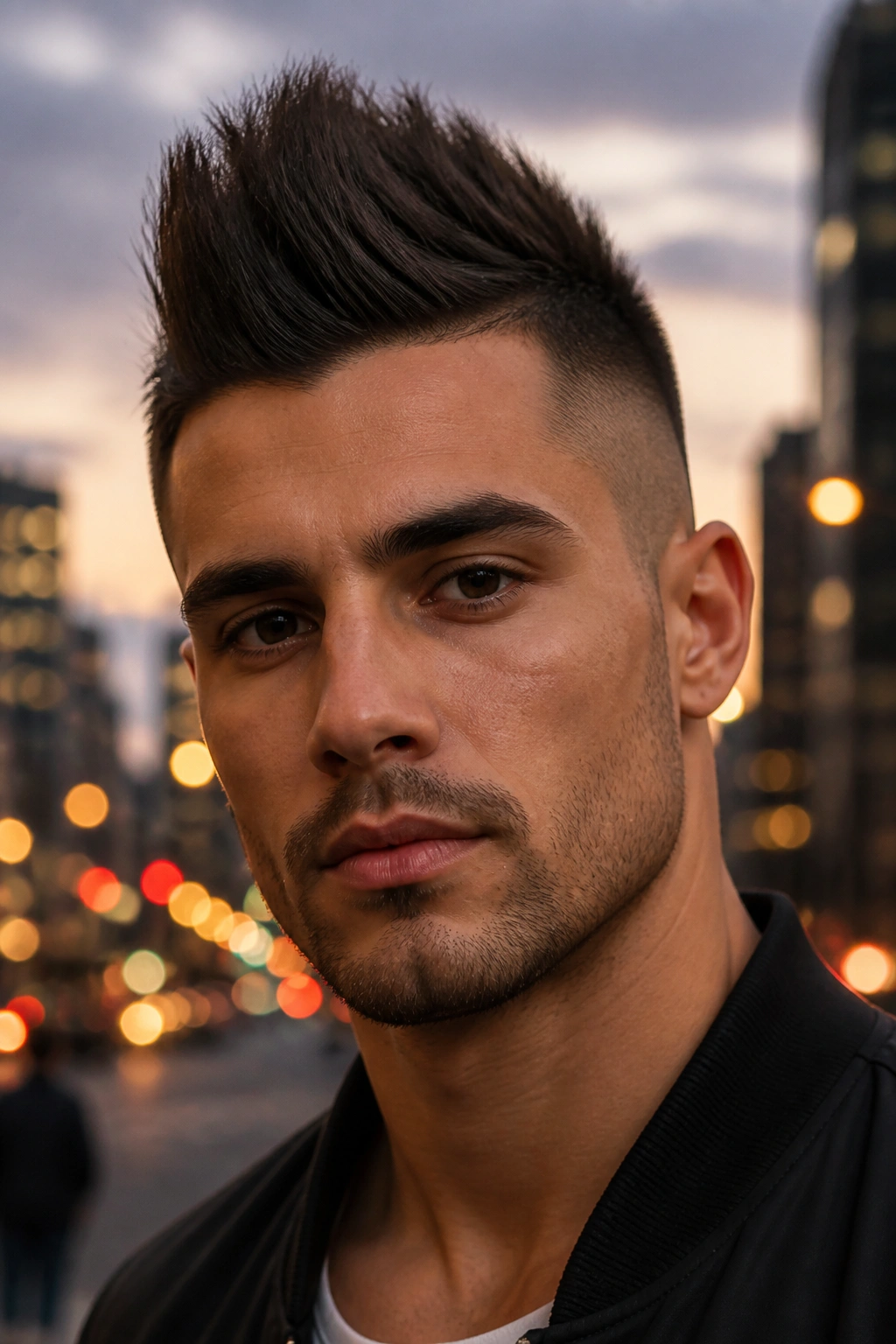
A faux hawk keeps the attitude and drops the drama. That’s why it works so well for men who want some edge but do not want to commit to a full mohawk shape.
The center section stays longer and more visible, usually with 3 to 5 inches on top, while the sides are shorter and closer to the head. The strip down the middle should be obvious, but not cartoonish. The shape is strongest when the hair can rise slightly in the center and taper down toward the temples.
This one suits thick straight hair especially well, because it holds height without collapsing. Wavy hair can wear it too, though the texture will make the center ridge look softer. That is not a flaw. It changes the vibe.
Use a matte paste and pinch sections upward through the middle. Don’t make every bit stand at attention. A faux hawk looks better when the top has some irregularity instead of perfect symmetry.
14. Comb Over with Volume
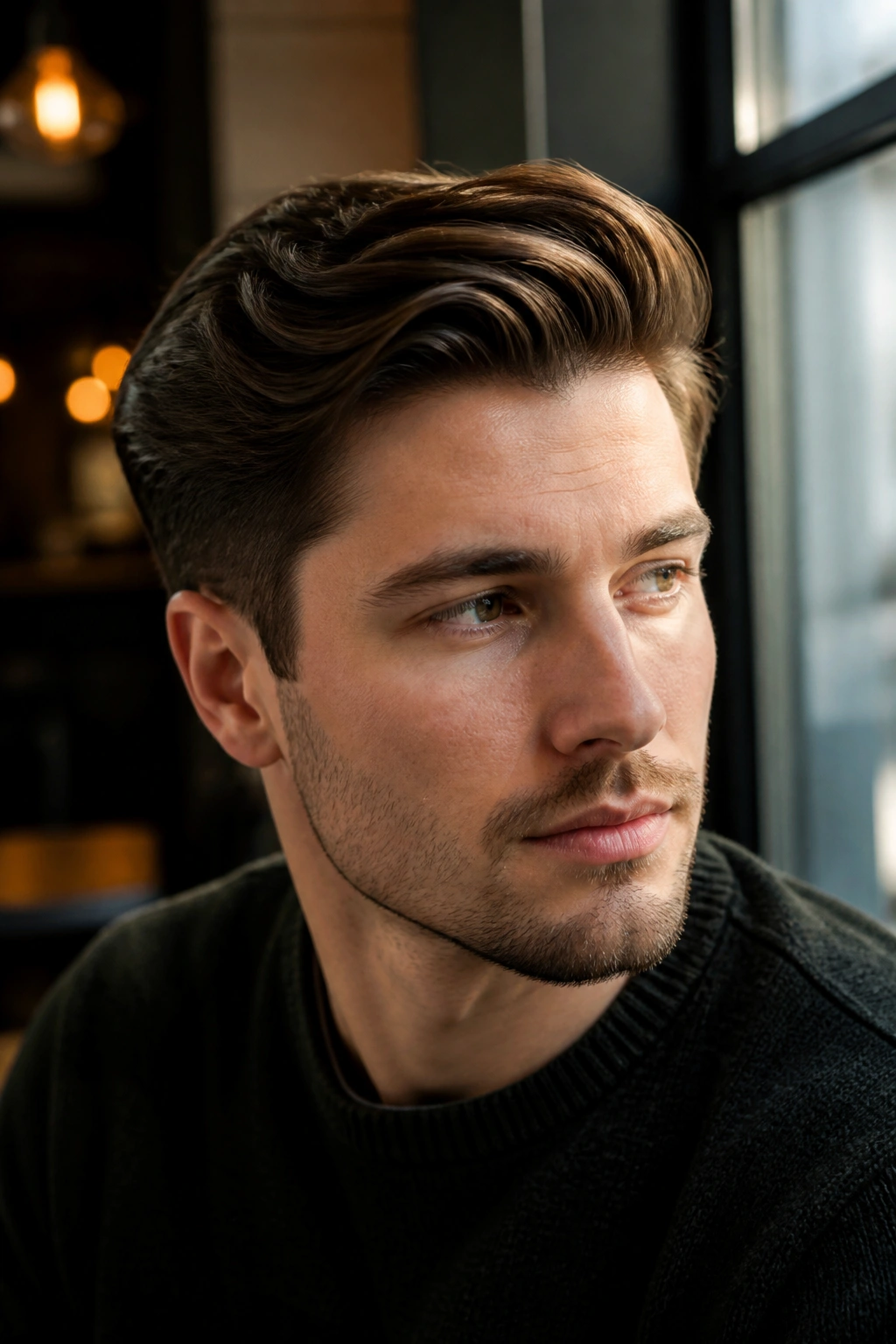
A comb over only looks tired when it is cut like a cover-up. A modern version uses real volume, a clean sweep, and enough length on top that it reads as style rather than concealment.
The haircut usually works best with 4 to 6 inches on top, especially if the front is left a touch longer. The part should be soft, not razor-sharp unless you want a stronger classic look. A low taper on the sides keeps the cut neat without making it feel dated.
This style has a nice advantage: it gives structure to straight or slightly wavy hair without needing heavy product. You can blow-dry the top up and over, then settle it with a light cream or pomade. If the top falls too flat, the whole haircut loses its shape fast.
It’s a good choice for men who want something clean, professional, and easy to dress up. The volume is the point; the comb-over line is just the path it follows.
15. Disconnected Undercut with Long Top
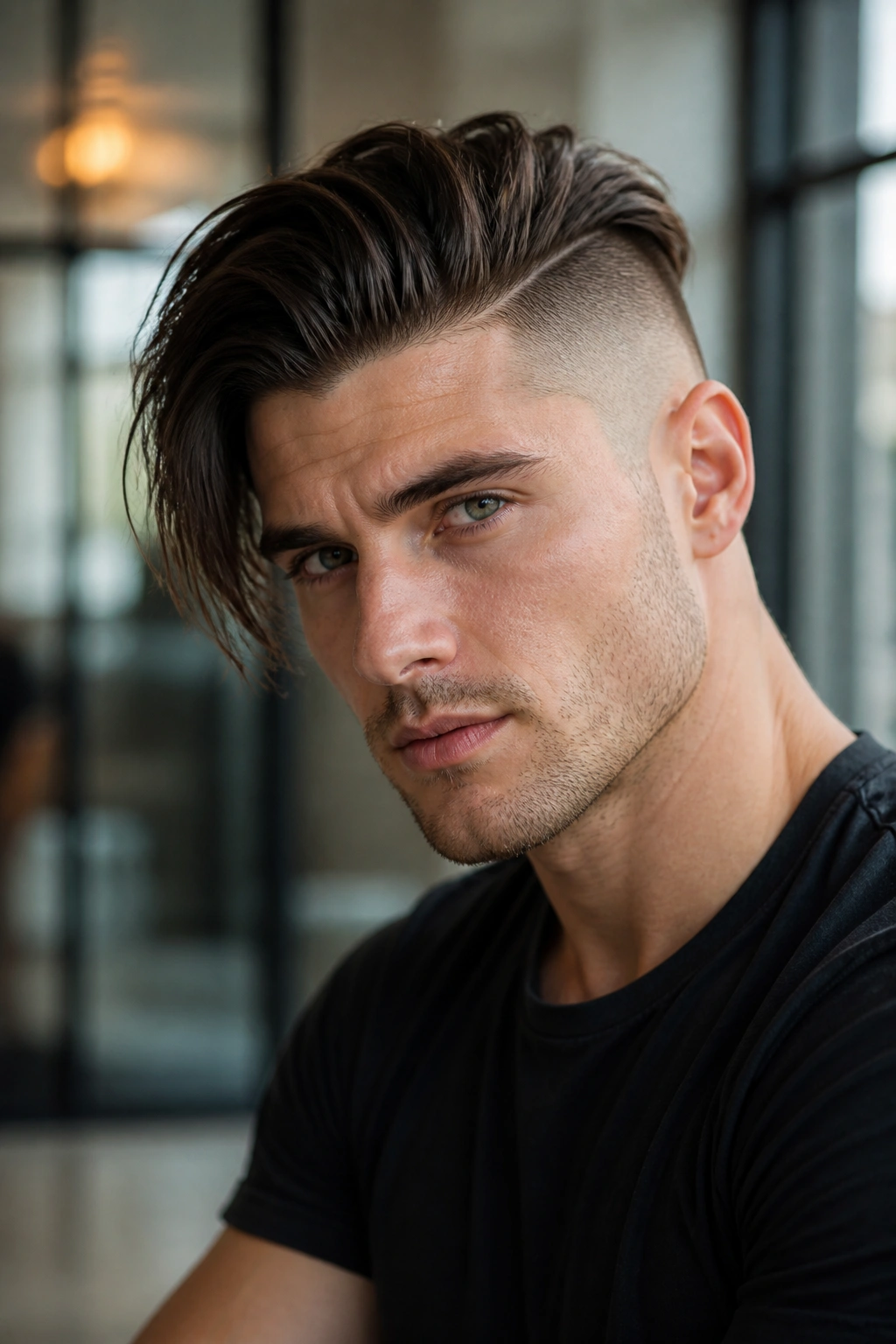
If you want the strongest visual contrast in one haircut, this is it. The disconnected undercut puts the length up top front and center, then cuts the sides short enough that the shape looks deliberate from across the room.
This style usually asks for 6 inches or more on top, though some guys wear it even longer. The sides are clipped tight and left clearly separate from the top instead of blended. That hard edge is the whole point. It creates a clean break that makes the top feel even longer.
Who It Suits
- Men with thick hair who want drama without extra styling tricks.
- Guys with straight or wavy hair that can hold shape on top.
- Anyone who likes a bold look and doesn’t mind upkeep.
- People who are comfortable getting the sides cleaned up often.
The catch is simple: if the top is left too heavy or the sides grow out too much, the cut stops looking crisp. It starts to look grown out instead. This one wants maintenance, and it looks best when you respect that.
The right long-top cut is the one that works with your growth pattern, not against it. If your hair likes to lift, pick a shape that lets it do that. If it wants to bend and fall, stop trying to iron it into submission.
Pick the silhouette that matches your day-to-day life, then wear it with a little consistency. Hair that behaves well on Tuesday and Saturday is the real win.
