



The best hairstyle ideas for men are the ones that still look sharp after a rough night’s sleep, a windy commute, and a mirror check done one minute before you leave. A good cut does not need to be dramatic to work. It needs shape, a clean outline, and a plan for what happens when your hair does what hair always does: grows in inconvenient directions.
That is where most guys get tripped up. They ask for a haircut they saw on someone else, then wonder why it sits differently on their own head. Hairline, crown swirl, density, and texture change everything. A style that looks effortless on one man can look puffed up, flat, or oddly severe on another.
The smart move is to treat a haircut like a tool, not a costume. Some cuts are better for thick hair. Some are better for receding temples. Some need a blow-dryer. Some need almost nothing. The point is to pick something that works with your routine, not against it.
So let’s get into the styles that actually earn their keep, starting with the one that barbers probably recommend more than any other for a reason.
1. The Classic Taper Fade

A taper fade is the haircut equivalent of a clean white shirt. It works with almost everything, and it rarely looks out of place. The sides and back gradually shorten toward the neckline and around the ears, while the top can stay short, medium, or a little longer depending on how much shape you want.
Why it works
The taper keeps the haircut tidy without making it look harsh. You get a neat edge near the ears and neck, but the transition stays softer than a skin fade. That matters if you want something office-friendly, school-friendly, and still good with a T-shirt on the weekend.
What to ask for
- A low taper if you want the cleanest, most understated version.
- A mid taper if you want a little more contrast on the sides.
- A longer top if you like styling with a comb, cream, or matte clay.
- A short top if you want the cut to look good with almost no effort.
A taper fade also plays well with different face shapes, which is why it shows up so often in real barber chairs. If your hair grows fast around the ears, this cut buys you extra grace between appointments. And if your hairline is starting to shift, the gradual fade usually looks easier on the eye than a blunt, boxy shape.
Use a small amount of matte product on top, about the size of a pea or two, and work it through dry hair. Keep the finish touchable. Too much shine can make the whole thing look older than it is.
2. The Textured Crop

Choppy texture beats perfect symmetry almost every time on this cut. A textured crop keeps the top short, usually around 1 to 3 inches, then breaks it up with uneven layers so the hair falls in pieces instead of one flat sheet. The result feels modern without trying too hard.
This is one of the better hairstyle ideas for men with thick hair, fine hair, or cowlicks at the front. Thick hair gets some control. Fine hair gets the illusion of body. A stubborn front swirl gets tucked into the texture instead of fighting the whole style.
What makes it so useful is the fringe. You can wear it straight across, slightly piecey, or brushed forward with a little mess. The sides are usually tapered or faded tight, which keeps the shape from getting bulky. If you like the look of a cut that seems casual but still intentional, this is a strong one.
A lot of guys overdo the product here. Don’t. A dry finish is the point. Use a matte paste or clay, warm it in your palms, and press it into the top in small sections. Then push a few strands forward and leave the rest alone. That little bit of imbalance is what makes it look right.
3. The Side Part
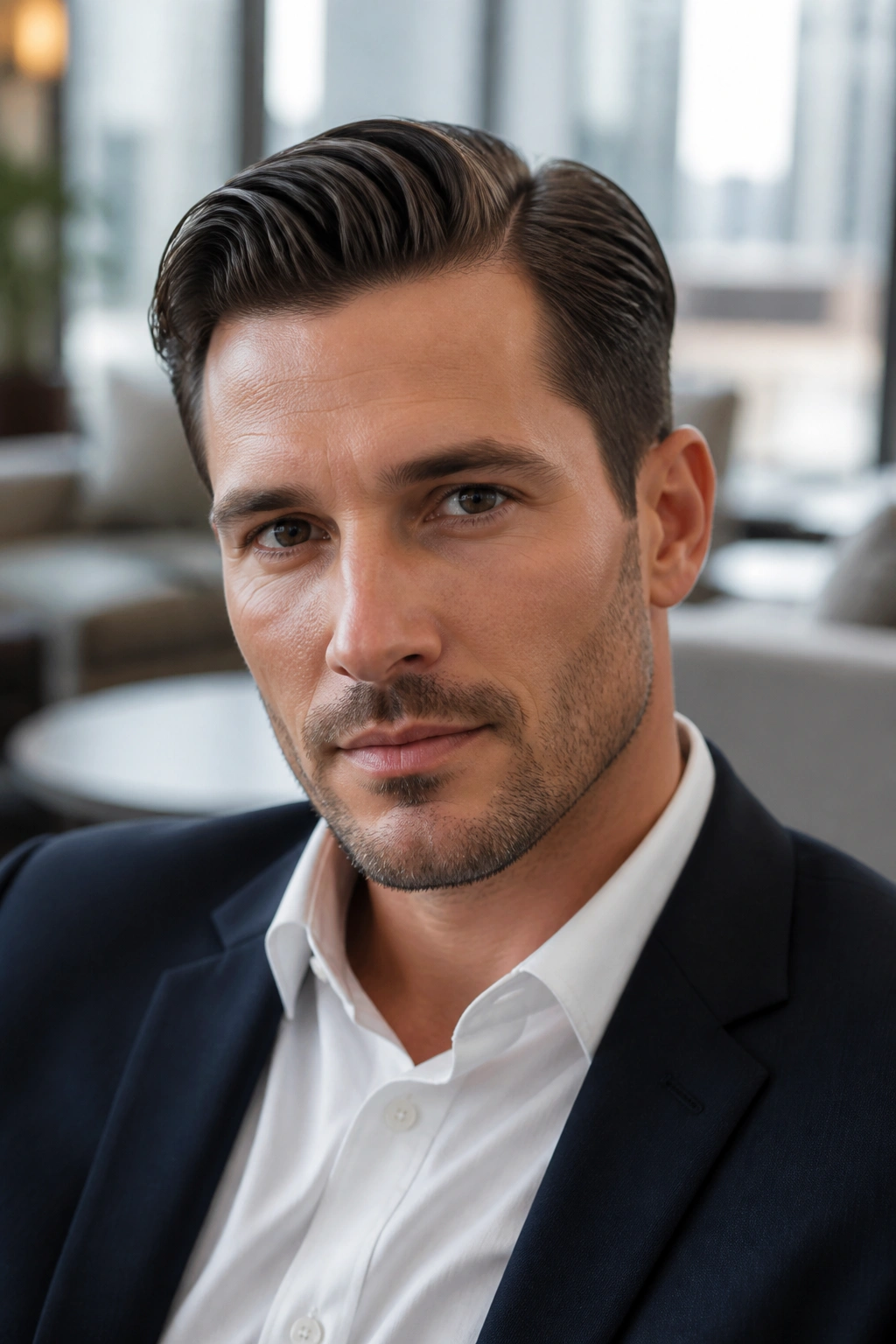
Picture a man who wants to look put together without looking like he spent 25 minutes in front of the mirror. That’s the side part. It has been around forever, which is exactly why it works. The line is simple, the shape is readable, and it gives structure to hair that might otherwise drift around.
Why people keep coming back to it
A side part gives the hair a direction. That sounds basic, but it changes everything. Hair that sits flat suddenly has a shape. Hair with some wave gets a cleaner flow. Hair with medium density looks fuller because the part creates a little lift at the roots.
Best ways to wear it
- Soft side part: No shaved line, just comb the hair over naturally.
- Hard part: A barber razor line adds definition and a sharper look.
- Loose side sweep: Works well if your hair has movement and you do not want it too formal.
The side part also pairs well with facial hair, especially a short beard or clean stubble. The haircut frames the face, and the beard gives the jaw a bit more weight. If your hair is thinning at the crown, avoid slicking the top too hard. A softer finish hides more than a greasy comb-over ever will.
A light cream or low-shine pomade is enough. Comb it while the hair is still slightly damp, then let it settle. If it looks too exact, use your fingers to break the line up a little.
4. The Buzz Cut
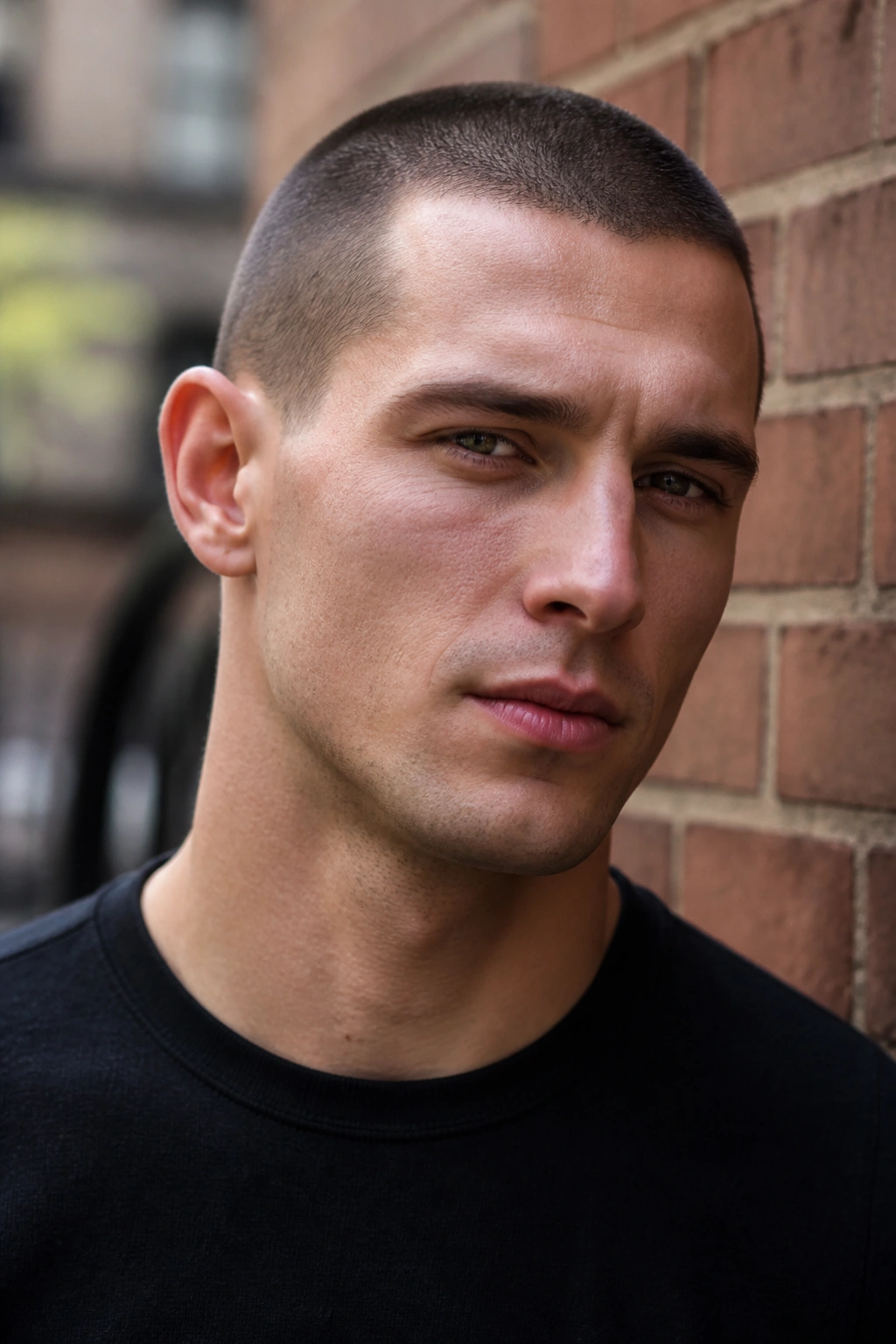
Why does the buzz cut keep showing up? Because it refuses to waste your time. No styling. No brush. No product shelf full of half-used jars. Just clippers, a clean guard length, and a shape that depends on your head rather than your hair being cooperative.
That sounds simple because it is. But simple haircuts are unforgiving. A buzz cut puts your head shape, hairline, and scalp right out in the open. If you have a good contour, it can look crisp and athletic. If your hairline is uneven or your crown is very visible, the cut can feel harsher than expected.
How to make it look intentional
The secret is not always going shorter. A #2 or #3 guard often looks more finished than shaving everything down to the skin. If you want a cleaner edge, add a line-up around the forehead and temples or a low taper at the neck. That tiny bit of detail keeps the cut from looking accidental.
Buzz cuts also need honest maintenance. If your scalp burns in strong sun, you’ll need a hat or sunscreen. If you have flakes, the short length will expose them. No drama. Just reality.
This is one of those haircuts that suits guys who want a hard reset, a low-maintenance routine, or a cleaner look during hot weather. It is not flashy. That is the point.
5. The Crew Cut

A crew cut sits in the useful middle ground between a buzz cut and a longer short style. The top is left a little longer, often just enough to show direction, while the sides taper down neatly. It is tidy, masculine, and practical without feeling severe.
What separates it from the buzz cut is shape. A crew cut gives the front a bit of lift and the top a little more movement, so the haircut can still be combed lightly or pushed forward. That extra length also helps if your hair grows in a stubborn direction. The cut can absorb the weirdness instead of exposing it.
It suits men who want to look polished but not fussy. Athletic guys like it because it stays in place. Office workers like it because it reads as clean. Guys with thicker hair like it because the top can be reduced without losing all sense of style.
Ask for the top to stay slightly longer at the front than the crown. That small adjustment helps the haircut sit better when dry. If the barber takes the top down too evenly, the shape can go flat fast.
A tiny dab of light cream or nothing at all is enough. If you can run your hand through it and not disturb the shape, you got the length right.
6. The Slick Back

Slicked-back hair can look expensive or oily, and the difference is usually about 20 seconds of drying time. That sounds picky because it is. The slick back depends on control, not just length. You need enough hair on top, usually medium length, and you need it to sit back without collapsing into a greasy sheet.
Straight hair handles this best, but wavy hair can do it too if the cut is shaped well. The sides are often faded or tapered, which keeps the profile clean. If the sides get too wide, the slick back starts looking old-fashioned in a bad way. A tighter silhouette keeps it current without making it trendy for the sake of it.
Here’s the part people miss: the blow-dryer matters more than the product. Dry the front back with a brush or your fingers first, then add a small amount of pomade, cream, or gel depending on how shiny you want it. If you apply product to soaking wet hair, it never sets the same way.
The best version of this cut has movement. It is not a helmet. A few loose strands near the temples or crown make it feel lived-in, which is better than a lacquered, glued-down look. If your hair is fine, keep the sides tighter and the top modest so the style does not collapse halfway through the day.
7. The Modern Quiff

The quiff is a front-heavy haircut. The hair rises away from the forehead, then rolls back with volume, which gives the whole face a little lift. It is one of the most flattering hairstyle ideas for men with decent density on top, especially if the front naturally wants to stand up a bit.
What makes it different
A quiff is not a pompadour wearing a suit. It is looser, less polished, and easier to wear in daily life. You still need height, but you do not need perfection. The best quiffs have a bit of bend in them, which keeps them from looking like a retro stage costume.
How to style it
- Start with damp hair, not dripping wet.
- Blow-dry the front upward and slightly back.
- Use a vent brush or your fingers to create lift.
- Finish with a matte clay or medium-hold cream.
The quiff works especially well if your hair has some wave or a touch of thickness. Fine hair can do it too, but it usually needs more blow-drying and a lighter product so it does not droop. If the front of your hair is starting to thin, keep the height modest. Too much volume can expose more than it hides.
A quiff is a haircut with personality. It looks relaxed when done well and sloppy when rushed, so the prep matters. Five minutes is usually enough if the cut itself is right.
8. The French Crop
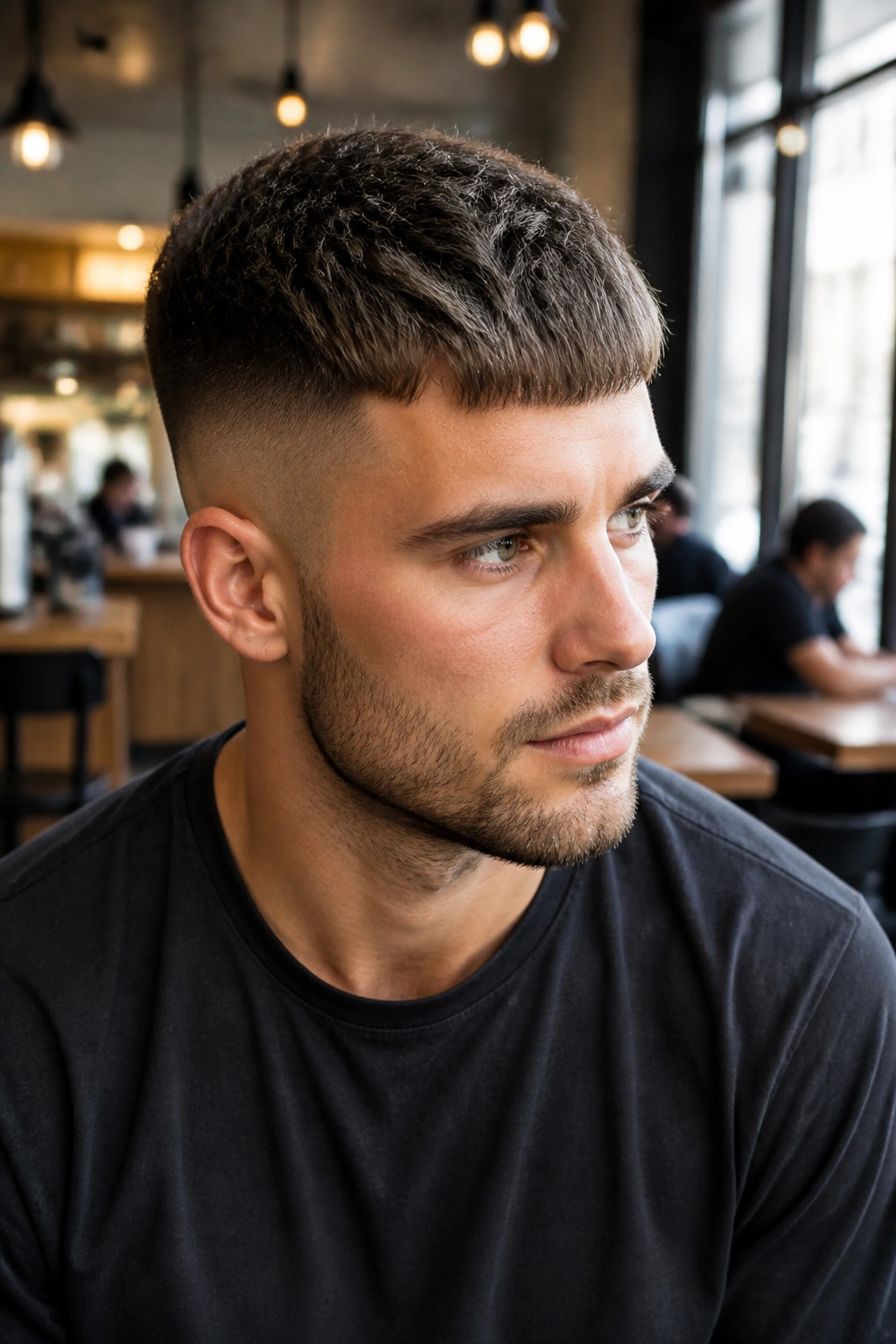
A French crop wins because it looks deliberate even when you do very little to it. The top stays short, the fringe comes forward, and the sides usually get a fade or taper that keeps the shape tight. It is blunt in the front, neat at the edges, and easy to wear.
This cut is especially useful for men who want something that sits close to the head. It can make a receding hairline feel less exposed because the fringe takes attention away from the temples. It also works well on straight or slightly wavy hair, where the short length keeps the texture from puffing out.
What to ask your barber
Tell them you want a short, textured top with a forward fringe and the sides faded clean. If you like the fringe to sit a little higher, say so. If you want it more blunt and heavy, say that too. A good French crop depends on the exact weight of the front, and tiny changes matter.
The styling is mercifully easy. A matte paste and a quick finger comb are usually enough. Push the front forward, then mess up the top just a little. The haircut should look finished before the product ever enters the room.
One warning: if your hair is very flat and fine, keep the fringe a little shorter or it may look limp. Short and textured beats long and soggy every time.
9. The Curly Top with a Fade
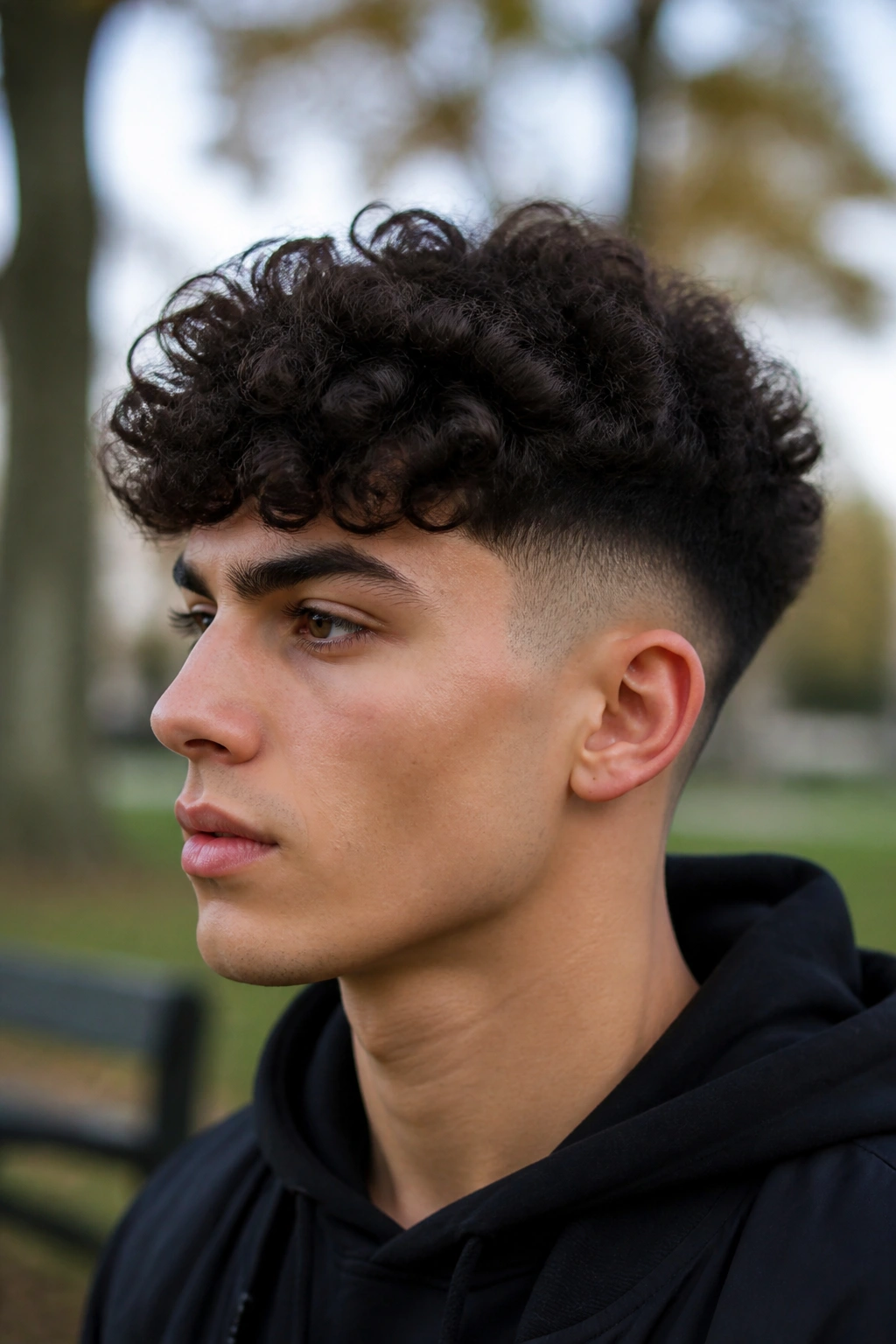
Curly hair changes the whole conversation. You are not trying to force it into straight lines. You are giving the curls a clean border so the texture can do its own thing on top without exploding at the sides. That is why a curly top with a fade works so well.
The fade keeps the outline neat around the ears and neck. The curls stay fuller on top, where they can show shape, bounce, and density. If the curls are cut too short, they can shrink up and vanish. If they are left too long with no shape, the whole style can turn into a triangle. The sweet spot is in the middle.
How to keep curls looking good
- Use a curl cream or light leave-in on damp hair.
- Scrunch the top with your hands instead of combing it hard.
- Let the hair air dry or use a diffuser on low heat.
- Ask for the top to keep enough length to show the curl pattern.
This style is forgiving if your curls are tight, loose, or somewhere between the two. It also looks better when it is a little lived-in. Perfect curls are not the goal. Defined curls are.
If your barber knows curls, they will leave the top longer than they would for straight hair. That part matters. Curls spring up once they dry, and a cut that seems long in the chair can shrink fast.
10. The Bro Flow

There’s a reason medium-length hair gets romanticized so often: when it sits right, it looks like you did not force it. The bro flow leans into that idea. Hair stays long enough to move, fall back, or tuck behind the ears, and the cut relies on natural flow more than strict shape.
This style suits wavy hair best, though straight hair can wear it too if the layers are cut well. The important part is keeping the ends from turning blocky. A few soft layers remove the heavy shelf effect that makes medium-length hair look puffy around the sides. The hair should move, not sit like a cap.
A bro flow takes patience. It usually looks awkward at one stage, and that stage is annoying. Grow-through periods always are. But once the length passes the ears and the top has enough weight to fall with gravity, the look starts working.
You do need trims, even if you are growing it out. Clean up the ends every 8 to 10 weeks so the shape does not get ragged. A bit of sea salt spray on damp hair can help bring out wave and separation. Heavy waxes tend to kill the whole effect.
This is the haircut for men who like a softer, more relaxed profile. It pairs well with a beard or stubble, and it looks especially good when the hair has some natural texture instead of fighting against it.
11. The Ivy League

The Ivy League is what happens when a crew cut grows up. The top stays long enough to part or sweep, while the sides stay neat and tapered. It feels tidy, smart, and easy to wear without going full banker.
What makes it different from a side part is the looseness. You can still direct the hair, but the finish is less formal and less rigid. Compared with a crew cut, it gives you a bit more styling room. Compared with a side part, it asks for less precision. That middle ground is why it has lasted so long.
This cut works especially well for men who want a clean look with a little personality. If your hair is straight or slightly wavy, it settles nicely. If it is thick, the barber can thin the top a touch so it does not balloon. If it is fine, the short length helps it look fuller than it is.
Ask for a short taper on the sides and enough length on top to create a subtle part. You do not need a hard line unless you want one. A bit of matte cream or light pomade is usually enough to keep it from separating too much.
It is one of the few short styles that can move from casual to dressed up without changing the haircut. That is useful. Not glamorous. Useful.
12. The Pompadour
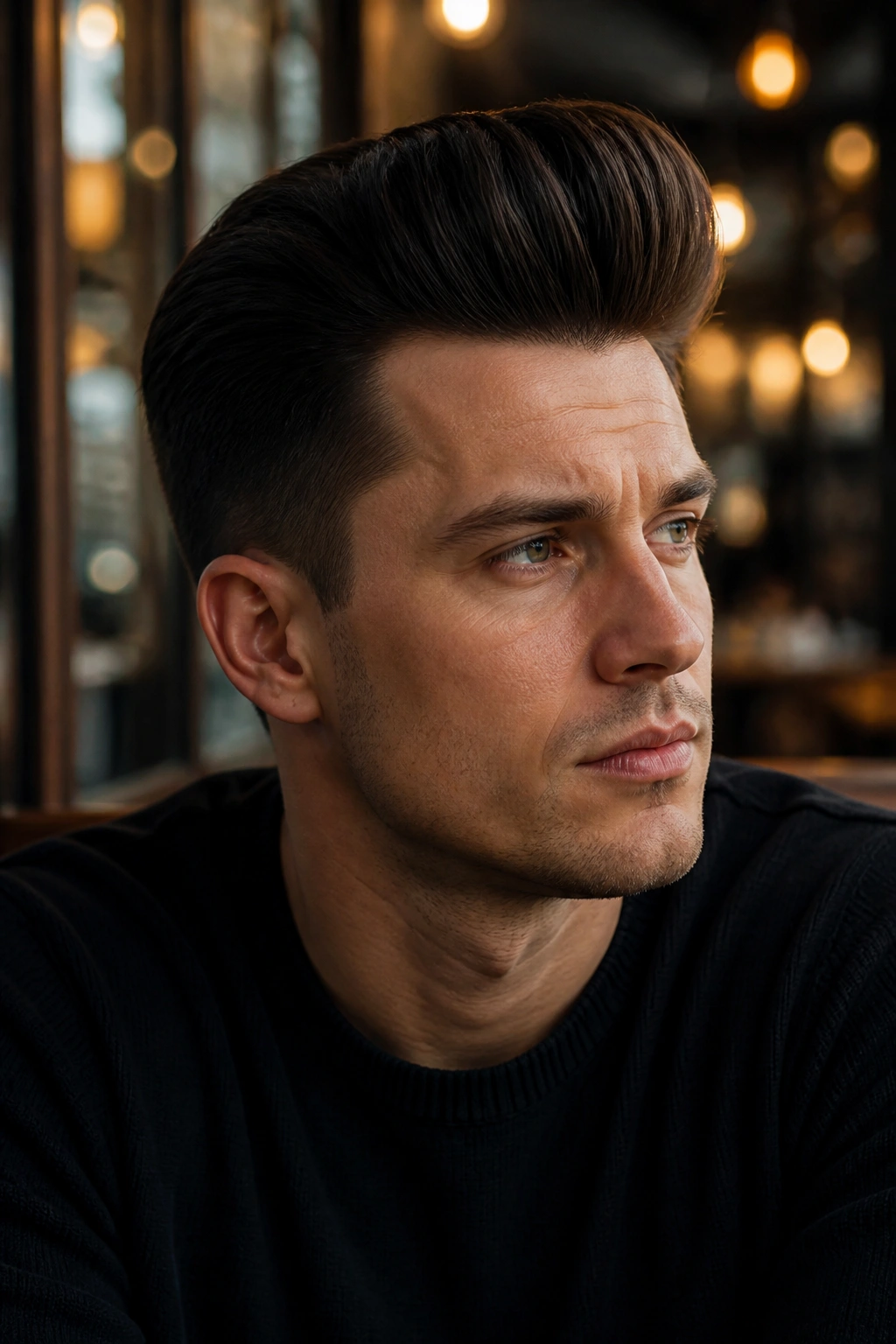
Pompadours look bold because they are. The hair rises high at the front and sweeps back, which creates one of the strongest silhouettes in men’s grooming. Done well, it has lift, shape, and a clean arc that makes the face feel more defined.
The catch is that it needs support. A pompadour without structure just turns into a soft mound by lunchtime. You need length on top, shorter sides, and enough blow-drying to build the front upward before styling product goes in. Thick hair handles this best, though medium-density hair can work if the cut is right.
What helps it hold
- Pre-style with a blow-dryer and a brush or your hands.
- Use a light volumizing spray before product if your hair is fine.
- Finish with a medium- or high-hold pomade depending on shine.
- Keep the sides tight so the top looks taller by comparison.
The modern version of the pompadour is usually less shiny and less rigid than the old-school one. That is a good thing. A matte finish can make the style feel more current, and a softer roll at the front keeps it from looking costume-like.
If your face is narrow, the extra width on top can balance it out. If your face is already long, keep the height reasonable. Too much vertical lift can stretch the shape more than you want.
13. The Caesar Cut

A Caesar cut is the haircut for men who want the fringe to do the work. The hair is kept short all around, and the front is cut into a short, even fringe that sits forward across the forehead. It is simple, blunt, and strangely effective.
The style has a practical edge. It can make hair look denser because the short length avoids wispy ends. It also keeps things neat on a windy day, which sounds small until you have lived with longer hair. Men with straight or slightly wavy hair usually get the best result, since the fringe lies flatter and cleaner.
What to watch for
- If the fringe is too long, it can look heavy and flat.
- If the sides are too wide, the shape loses its clean outline.
- If your hairline is receding, a short fringe can soften the look, but it should not be pushed too low.
The Caesar cut also suits men who do not want to spend time styling. A fingertip of matte paste is enough. Rub it in, push the hair forward, and leave the fringe a little uneven. A perfect straight line can look stiff. A bit of texture keeps it alive.
This is a blunt haircut, and I mean that in a good way. It does not pretend to be complicated. It just works.
14. The Undercut

An undercut makes a bigger statement than most haircuts because the sides disappear fast. The top stays long and the contrast is sharp. That contrast is the whole point. It gives you a strong shape, but it also asks for more maintenance than a taper fade.
The style can be slicked back, pushed over, worn messy, or even tied up if the top is long enough. That flexibility is why it became so common. One cut, several moods. Still, the undercut is less forgiving than people think. If the top is too thin, the contrast can feel harsh. If the sides are cut too high, the shape can start looking disconnected in a way that feels more accidental than intentional.
How to make it work
Ask for a clear difference between top and sides, but not a severe drop unless that is what you want. A low or mid undercut usually wears better than an extreme one. Keep the top long enough to style without fighting it. Medium-length hair works best here, because it gives you room to move.
A lightweight pomade or cream is usually enough for the top. If you want it slicked back, dry it first. If you want it messy, use less product and break the front up with your fingers. The haircut lives or dies on how neat the lines are around the ears and neckline, so do not let those areas go shaggy.
15. The Natural Afro Fade

Coily and tightly curled hair deserves more than a generic fade with nothing on top. The natural afro fade keeps the texture front and center while cleaning up the sides and neckline so the shape looks sharp instead of unfinished. It is one of the best ways to wear textured hair because it respects the curl pattern rather than flattening it.
What makes this cut work is balance. The top can stay rounded, shaped, or slightly cropped, while the fade creates a crisp edge around the temples and ears. A sharp line-up can help if you like a more defined look. A softer shape works if you want the cut to feel less boxed in. Either way, the texture should remain visible. That is the whole point.
This style benefits from moisture more than heavy styling products. A leave-in conditioner, curl cream, or light oil can keep the hair from drying out and frizzing up. If you use a sponge brush or twist method, keep the motions gentle and consistent so the curls form evenly. Rough handling tends to make the top look patchy.
It also needs regular shape-ups. Coily hair can shrink, and the silhouette changes fast when the sides grow in. A clean fade every couple of weeks keeps the cut looking crisp. Without that, the outline starts to blur, and the style loses the strong contrast that makes it work.
A good haircut should make your hair look like itself, only better. That is the real goal, whether you prefer a taper, a crop, a quiff, or a full textured shape with a fade. Pick the version that fits your hair type and your morning routine, then keep the outline clean. That part matters more than chasing whatever looks best in a photo.
