



Short curly haircuts work best when they stop fighting the curl.
That sounds obvious, but it’s the part people still get wrong. A good cut doesn’t try to flatten texture into obedience. It gives the curl room to spring, bend, and stack where it wants to, which is exactly why short lengths can look so sharp on curls, coils, and waves.
The tricky part is shape. Too much bulk at the sides and the head can look wide. Too much weight at the bottom and the whole cut droops. Too many layers in the wrong spot and you get frizz where you wanted movement. The sweet spot sits somewhere between structure and freedom, and a stylist who understands dry cutting, shrinkage, and curl pattern will make that difference in the first five minutes.
I’ve always liked short curly hair because it has less to hide. You see the line of the cut, the density, the way the hair bends at the crown, and whether the fringe belongs there or not. There’s no extra length to cover a weak shape. That’s the appeal. Clean edges, real texture, and a cut that looks alive even when you’ve barely touched it.
1. Tapered Curly Pixie
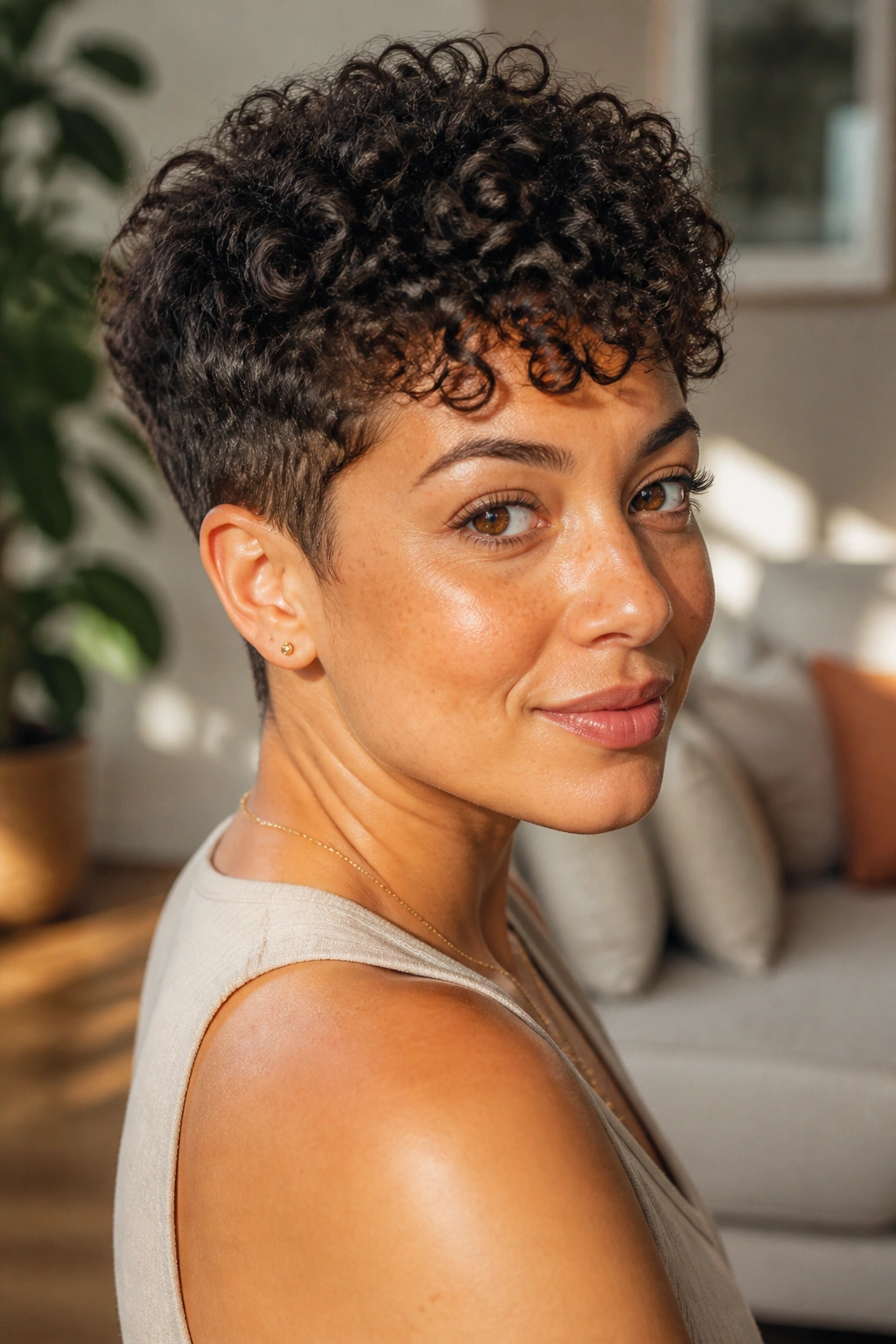
A tapered curly pixie is the haircut I reach for when someone wants their curls to look crisp, not bulky. The sides and nape stay short and neat, while the top keeps enough length for curl pattern to show. That contrast is the whole point. It makes the face open up fast.
Why it works
The taper keeps the outline clean, which matters more on curly hair than people think. Curls already carry volume, so removing bulk from the lower half gives the top room to move without puffing out like a triangle.
- Best on tight curls and coily textures.
- Ask for a soft taper at the nape and temples.
- Leave the crown slightly longer for lift.
- Use a cream or gel on damp hair and scrunch once.
Pro tip: If your curl pattern shrinks a lot, ask for the top a little longer than you think you need. A true pixie on curly hair can turn into a near-crop once it dries.
2. Curly French Bob
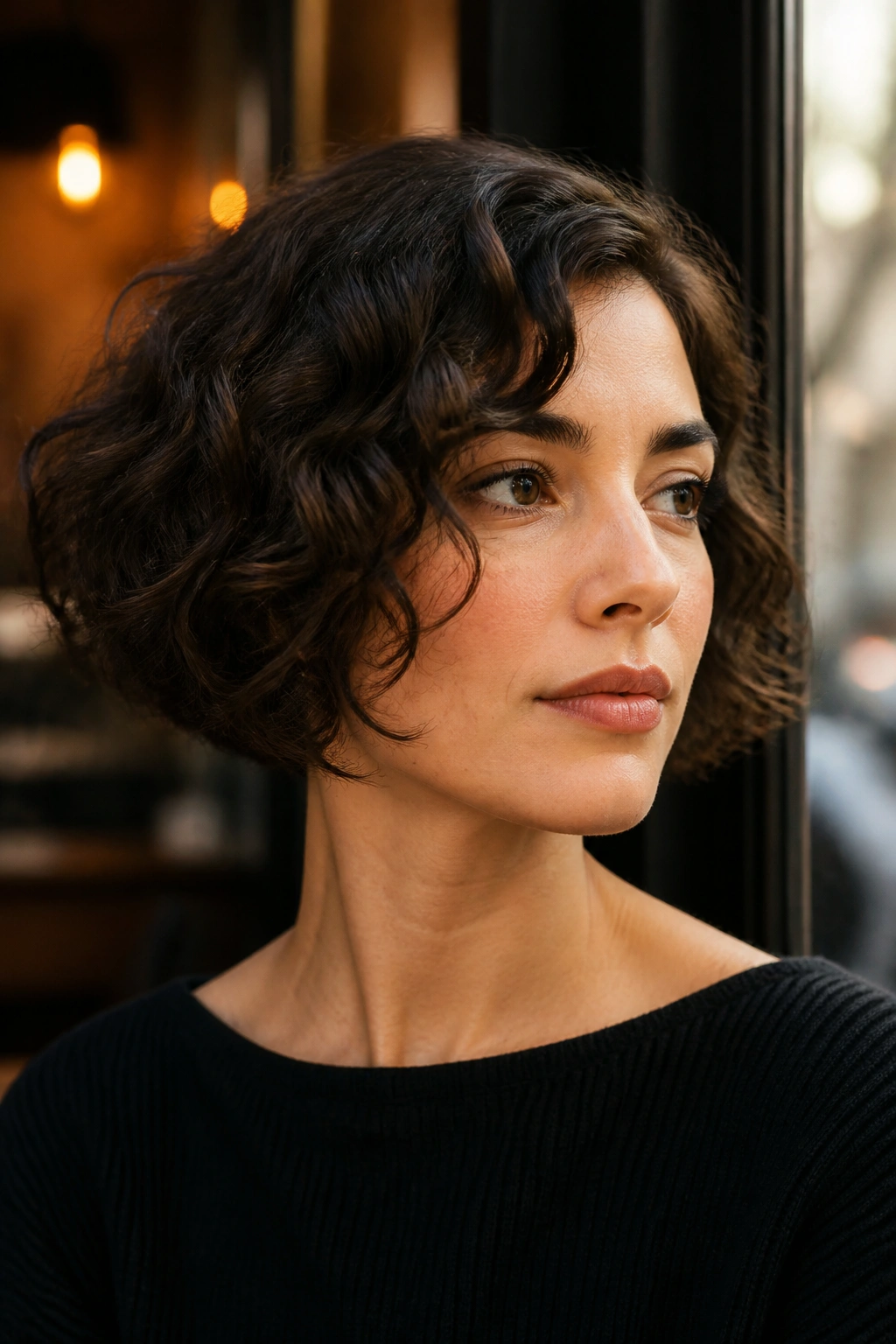
The curly French bob sits at the jaw and looks best when the ends are blunt enough to hold a shape. On curls, that bluntness does not read heavy the way it can on straight hair. It reads chic, a little old-school, and very deliberate.
What makes it work is the balance between width and swing. If the cut is too layered, the bob loses its line. If it’s too dense, it can sit like a helmet. The sweet version keeps the perimeter solid and lets the inside of the curl do the movement.
How to wear it
Wear it with a side part for a softer look or a center part if you want the face to look longer. A diffuser helps, but only on low heat. High heat tends to frizz up the ends and flatten the crown at the same time.
Quick notes
- The best length hits just below the cheekbone or at the jaw.
- A little face-framing goes a long way.
- Works especially well on looser curls and wave-curl mixes.
- A satin pillowcase keeps the edge from looking crushed.
3. Rounded Afro Crop
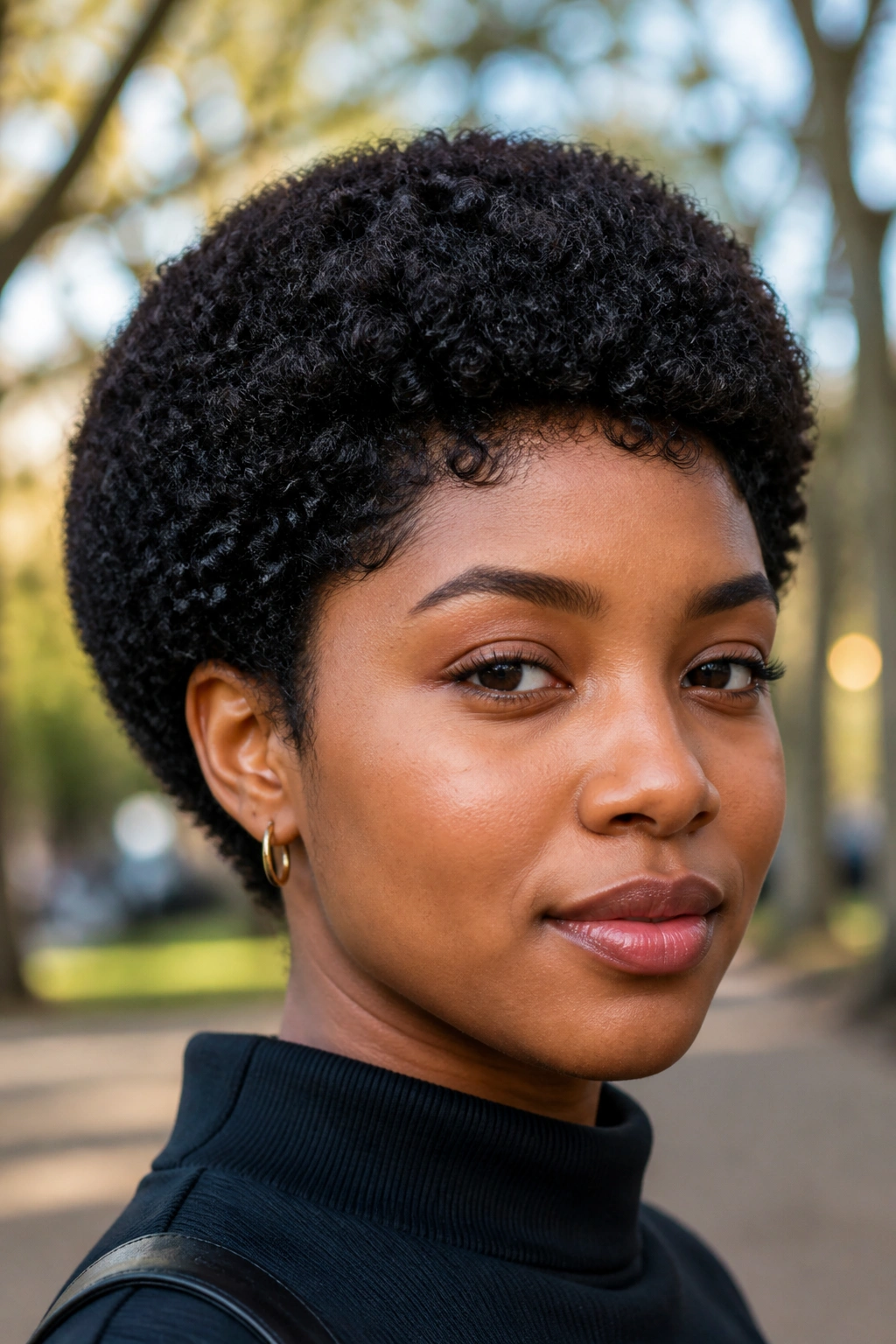
A rounded afro crop is one of those cuts that looks simple until you see how much shape is doing the work. The silhouette follows the curve of the head, which gives the style a neat, full outline without making the sides explode outward.
Why do I like it so much? Because it respects density. Instead of thinning curls to death, the cut uses the natural fullness and shapes it on purpose. That’s smarter than chasing a flat result that never lasts past the first humid afternoon.
What makes it stand out
The round shape softens the whole look and puts attention on texture, not length. It’s a strong choice if you want something low-fuss that still feels polished.
Best styling move
Use a light leave-in and a tiny amount of styling gel at the edges. Then lift at the roots with your fingers while drying. Don’t rake through it. That breaks up the curl clumps and robs the cut of its shape.
4. Curly Shag Crop

A curly shag crop has energy in it. Choppy layers, a little mess, a little lift, and that lived-in shape that makes curls look like they belong exactly where they landed. If you like hair that moves when you do, this cut earns its keep.
The shag works because curls already want to stack. Layers help them do that without collapsing into one heavy shape. The trick is not to over-layer the bottom. That’s where a lot of bad shags go sideways. You want the top to feel airy while the perimeter still has enough weight to hold the outline.
Why people keep asking for it
It’s one of the easiest ways to make short curly hair look fuller at the crown and lighter around the face. The fringe can be worn forward, swept aside, or tucked behind one ear when you’re tired of it.
- Best for medium-density curls.
- Ask for layers that start near the cheekbones.
- Keep the ends soft, not razor-thin.
- Diffuse upside down for lift, then finish upright.
One warning: If your hair is already very fine, too much shag can leave the ends wispy fast.
5. Micro Fringe Crop
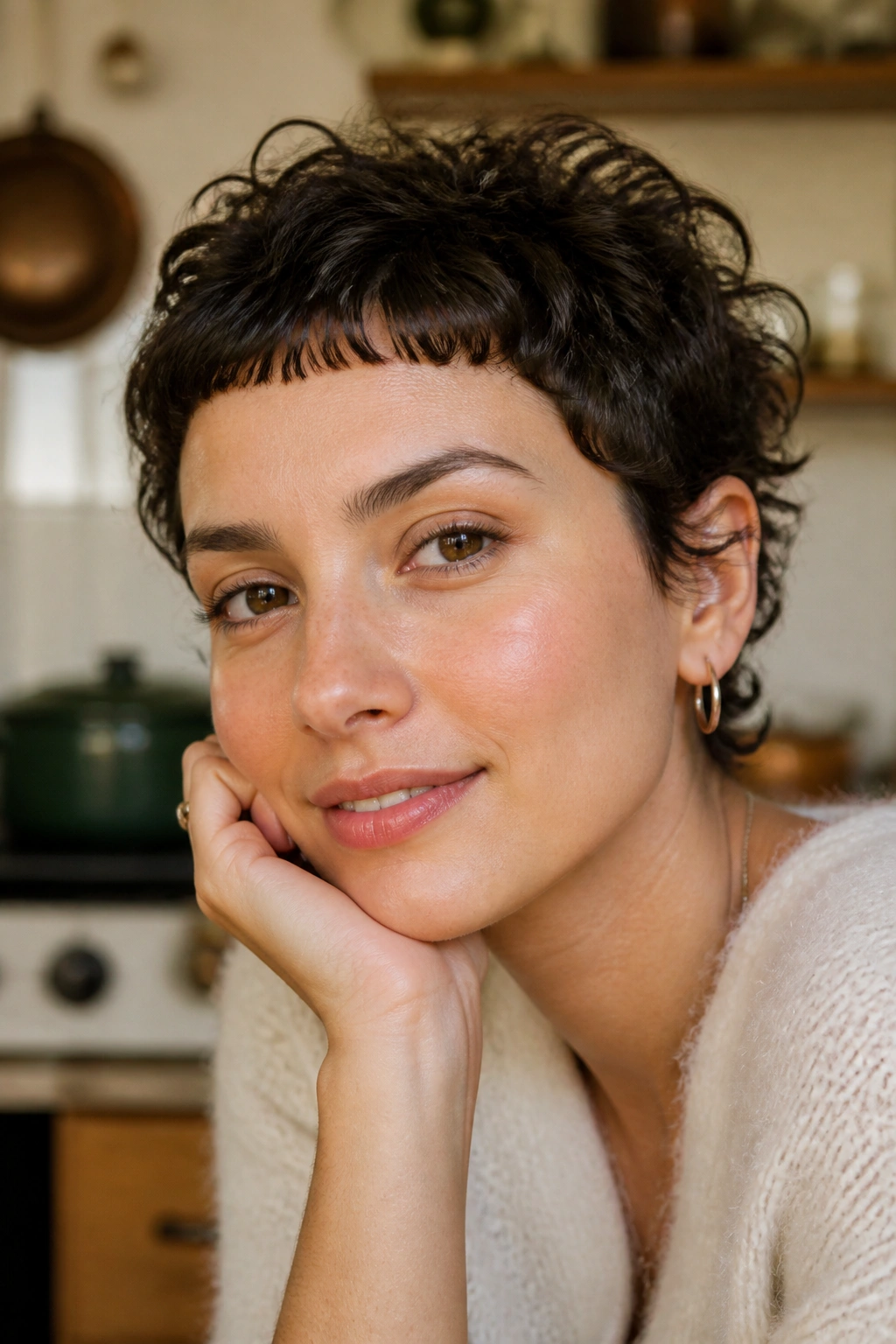
A micro fringe on curly hair is bold in a way that feels charming rather than theatrical, if the cut is done with restraint. The bangs sit short, sometimes above the brows, and the rest of the hair stays cropped enough to keep the attention on the shape of the fringe and the curl.
This cut is not for someone who wants hair to disappear into the background. It announces itself. But it also has a practical side: a short fringe can keep curls off the face while still showing off pattern right at the front.
What to know before you ask for it
A micro fringe needs a stylist who understands how curl springs upward when it dries. Cutting it wet and too short is a rookie mistake. You’ll end up with bangs that float several millimeters higher than planned.
Styling notes
- Keep the fringe a little longer on the first cut.
- Use a light cream rather than heavy butter or oil.
- Shape it with your fingers, not a brush.
- Trim carefully every 4 to 6 weeks if you like the sharp edge.
The cut looks best when the rest of the hair stays simple. Let the fringe be the statement.
6. Asymmetrical Curly Bob
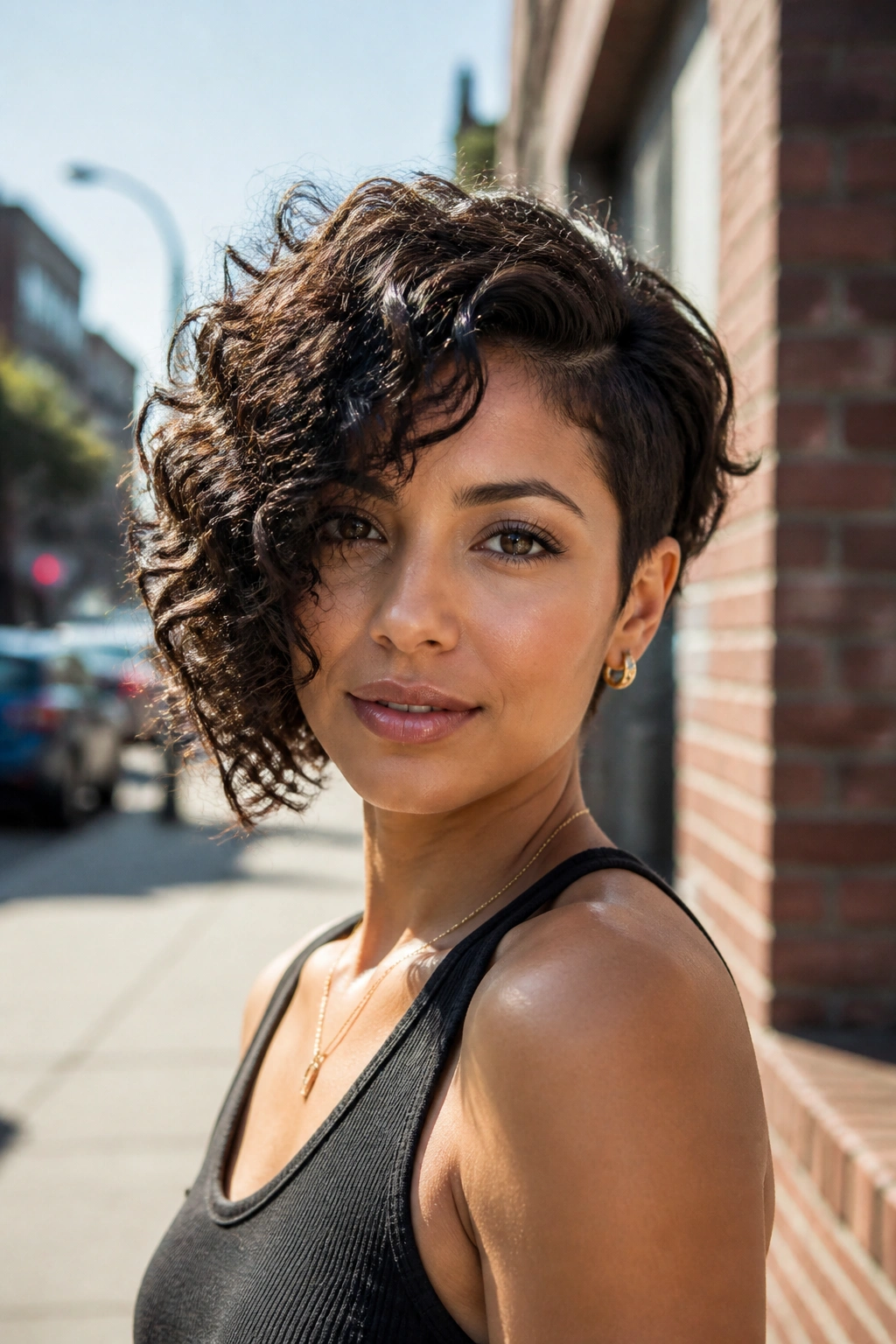
An asymmetrical curly bob gives texture a reason to move. One side sits a little longer, the other side shorter or tucked closer to the jaw, and the difference creates a line that makes curls look even more dimensional. It’s one of the few short curly haircuts that can feel polished and slightly rebellious at the same time.
The shape helps if your curls fall unevenly from one side to the other. Instead of fighting that, the cut uses it. A good asymmetrical bob makes the unevenness look intentional, which is often the whole battle with curly hair.
How to use it well
Wear the deeper side part where the hair naturally wants to fall. That keeps the longer side from puffing out in the wrong place. If you push the part against the grain every day, the style starts to feel forced.
A few things worth asking for
- A longer front section that grazes the chin.
- A soft stack in the back if you want lift.
- Internal layers to reduce bulk without killing shape.
- Clean edges around the neck and ears.
7. The Bixie Cut
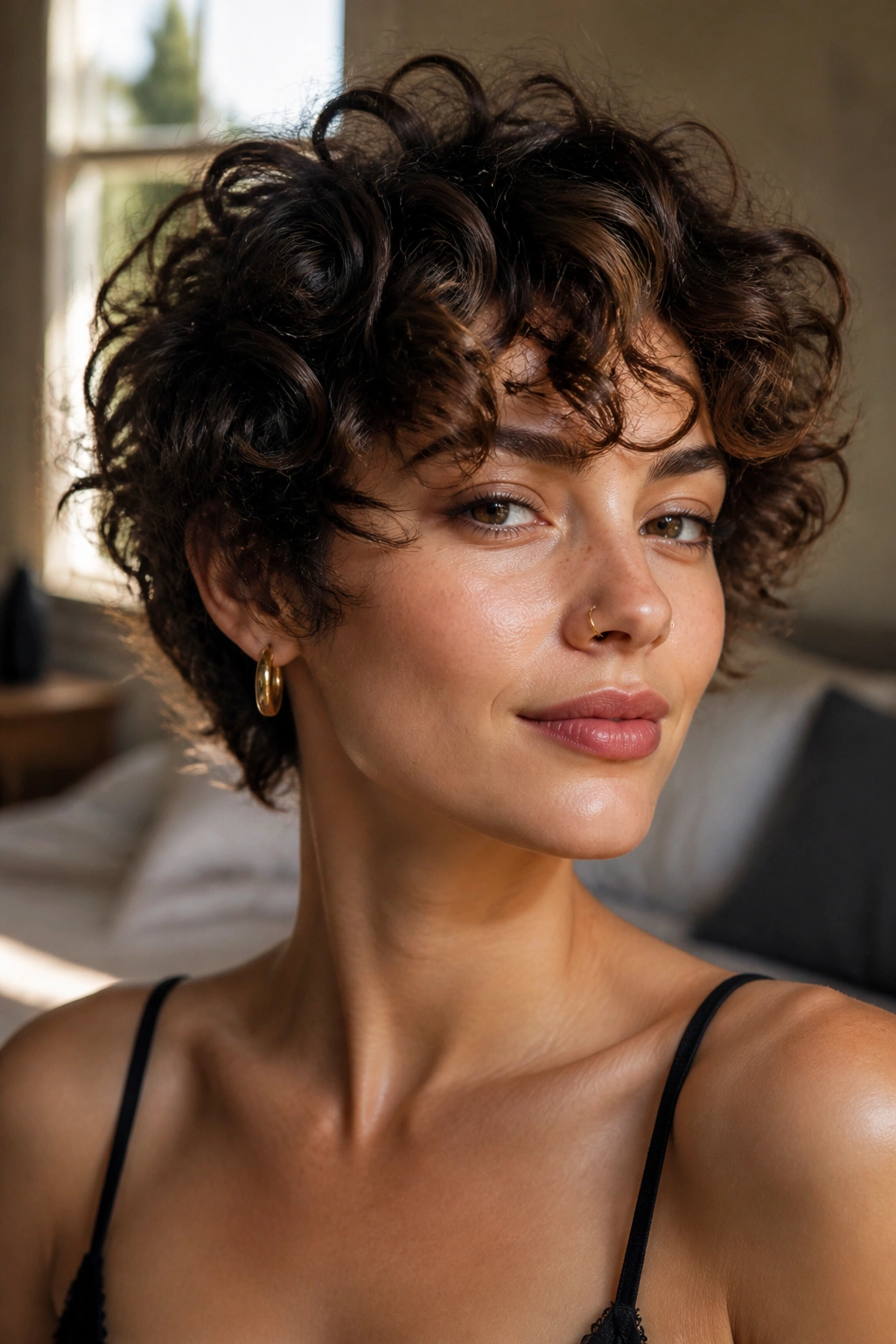
The bixie lives in the sweet spot between a bob and a pixie, and curly hair gives it a nice edge. It’s short enough to feel fresh, but not so short that you lose the bend and bounce people want from curls. If you’ve ever wanted a cut that looks airy without going full pixie, this is the one.
What I like about it is the range. With tighter curls, it can read compact and sculpted. With looser curls, it can feel piecey and soft. The same cut lands differently depending on texture, and that’s part of the fun.
Who it suits
People with curls that need shape near the face but don’t want a blunt bob often land here. It’s also a decent choice if your hair is thick and you’re tired of it sitting like a block.
Styling it
Use a small amount of mousse at the roots, then scrunch in a lightweight cream on the ends. Too much product kills the airy feel. Seriously. The bixie looks best when the curls can separate a little.
8. Undercut Curly Crop

An undercut curly crop is for the person who knows their hair has more volume than they want to manage every single morning. Shaving or closely cutting one side or the underneath section removes weight fast, which lets the top curl pattern sit higher and cleaner.
That weight removal changes everything. The shape gets lighter, the neck feels cooler, and the top doesn’t collapse under its own density. It’s a practical cut first, a style statement second.
What makes it different
Unlike a standard short crop, this one solves the problem underneath where no one sees it at first. That’s why it works so well on dense curls. The visible top stays full while the hidden part does the quiet work.
Best for
- Very thick curls
- Coily hair that builds too much bulk at the sides
- People who want one side shaved or hidden under a longer top layer
- Anyone tired of drying time that feels endless
If you like your curls big but controlled, this cut earns a serious look.
9. Jaw-Length Layered Bob
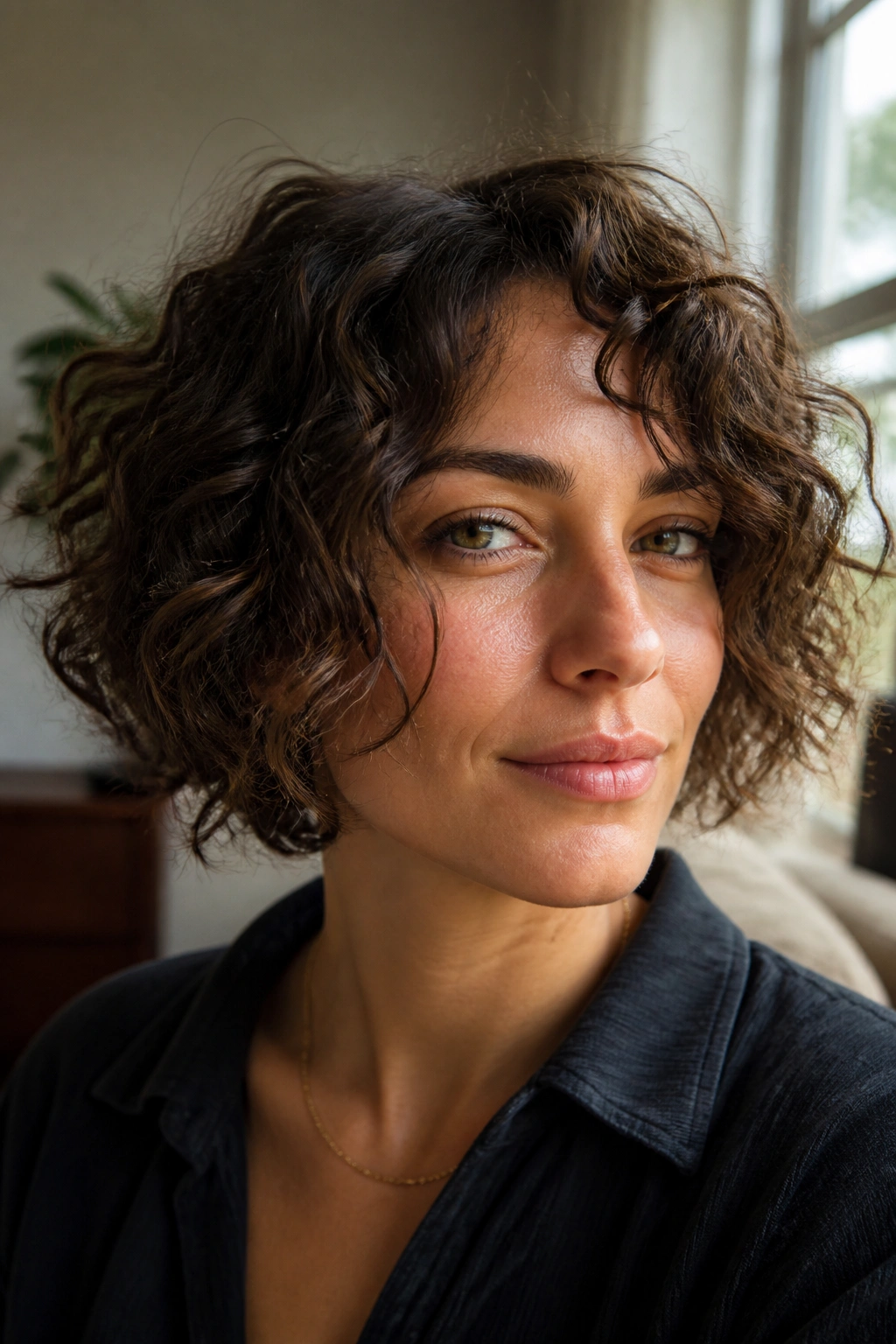
A jaw-length layered bob is one of the most useful short curly haircuts because it gives shape without going too severe. The length sits right where the curl can flip out a little, which makes the haircut feel soft around the face instead of boxy.
Layers matter here, but not in a random way. You want enough movement to stop the bob from turning into a triangle, yet enough weight to keep the ends from fraying. That balance is harder than it sounds.
How to ask for it
Tell your stylist you want a bob that follows the jaw, with internal layers instead of choppy surface layers. That usually gives curls room to separate while keeping the line clean.
A small but useful detail
The front pieces can be a touch longer than the back. That tiny difference helps frame the face and keeps the bob from looking too blunt on rounder faces.
Use a diffuser only until the curls are about 80 percent dry. Then let them finish in the air. The shape stays softer that way.
10. Curly Mullet
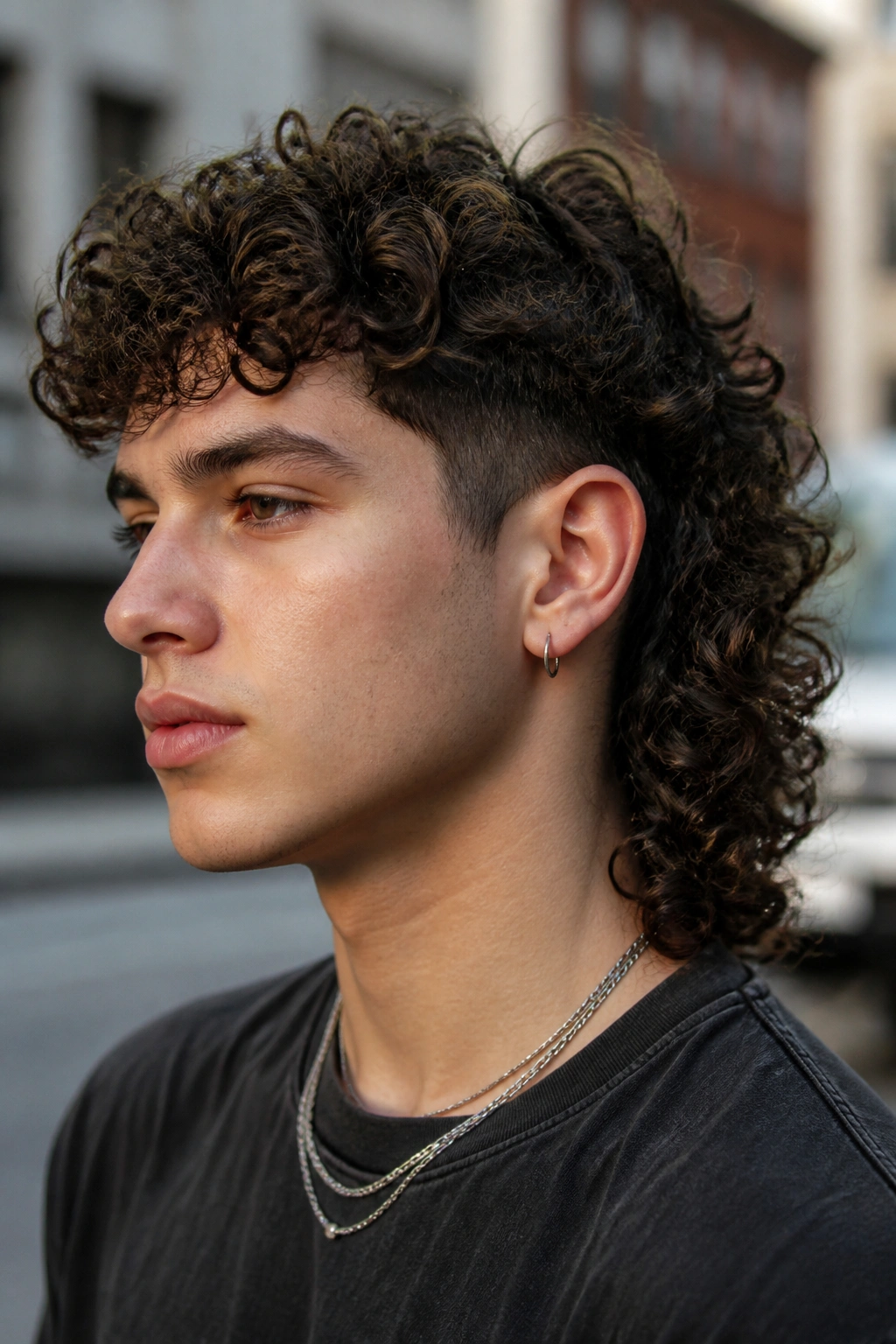
A curly mullet sounds louder than it often looks. On texture-heavy hair, it can be surprisingly flattering because the front and crown stay short enough to lift, while the back keeps a bit more length for movement. The contrast gives curls room to do something interesting instead of sitting in one flat mass.
People still act like mullets are only about attitude. Not really. On curls, they’re about shape control. Shorter sides stop the width from spreading, and the longer back gives the eye something to follow.
What to watch for
The mullet works best when the transition between short and long feels soft, not chopped off with a hard line. Hard lines can look harsh on curls unless that’s the whole point.
Styling ideas
- Add mousse at the roots for lift.
- Pin the front upward while drying if the crown falls flat.
- Keep the back trimmed so it doesn’t turn stringy.
- Use your fingers to separate the curls, not a brush.
It’s a cut with personality. No getting around that.
11. Dry-Cut Deva Shape

A dry-cut Deva shape is less about a named silhouette and more about the way the cut is built around your actual curls. The hair is cut while dry, curl by curl, so the stylist can see how each section falls and where the weight sits. On curly hair, that matters a lot.
Wet hair lies. Not maliciously. It just stretches, shrinks, and hides the real shape until too late. A dry cut lets the stylist make decisions based on the curl in its honest state.
Why I’m a fan
It’s one of the few approaches that handles uneven curl patterns without forcing them into the same length. If one side curls tighter than the other, the cut can be adjusted right there.
How to get the most from it
Bring your hair down in the state you wear it most often. If you usually wear it with a side part and a diffused finish, don’t arrive with slicked-back hair and expect the cut to translate. The stylist needs the version of your curls that lives in real life.
12. Side-Swept Curly Pixie

A side-swept curly pixie softens the classic pixie shape by keeping one section long enough to fall across the forehead or cheek. That longer sweep adds movement and keeps the cut from feeling too severe. It’s a nice option if you want the ease of short hair but still like a little hair near the face.
The side-swept piece also helps balance strong features. A sharp jaw or a longer face can take this cut beautifully because the fringe adds a little horizontal line. Hair that’s shorter on one side and fuller on the other looks especially good when the curl pattern has some bounce to it.
Small styling trick
Set the longer section with a curl cream and clip it into place while it dries. That keeps the front from splitting in the wrong direction. Once it dries, let it fall and move.
Best for
- Loose curls through tight ringlets
- People who want a feminine pixie without too much forehead exposure
- Hair that sits flat at the crown and needs a visual lift
It’s soft, but not shy.
13. Curly Caesar Crop

The curly Caesar crop keeps the fringe short and forward, which gives the haircut a structured edge without making it stiff. On curls, that forward movement is the interesting part. The texture breaks up the geometry just enough so the style doesn’t feel severe.
This cut works well when you want low maintenance but still want shape around the face. The top stays short, the fringe stays controlled, and the sides usually sit close enough to keep the outline tidy.
Why it suits curly hair
Curls keep the Caesar from looking flat. Even a short fringe gets a bit of lift and bend, which makes the cut feel less like a helmet and more like a styled crop.
A good ask at the salon
- Keep the fringe short, but not chopped to the scalp.
- Leave enough top length for curl definition.
- Tighten the sides slightly for a neat edge.
- Avoid over-thinning the front.
It’s a strong look. Clean, direct, and a little unexpected on texture-heavy hair.
14. Stacked Curly Bob
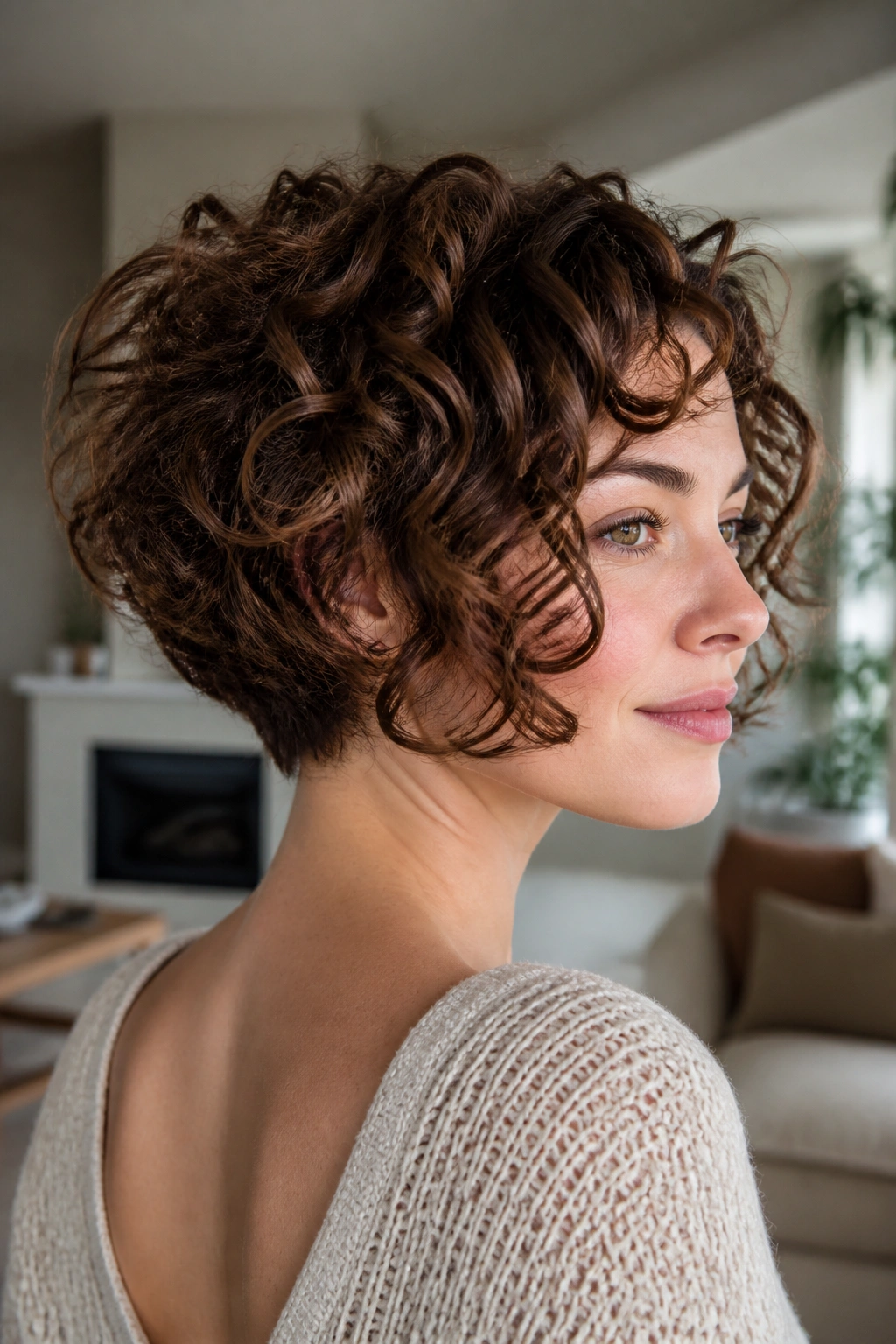
A stacked curly bob builds volume in the back without letting the cut flare out at the bottom. That stack gives the crown a little rise and helps the front curve around the face. On curls, it can look rich and rounded instead of bulky.
The trick is in the graduation. Too much stack and the back turns puffy. Too little and the bob falls flat. A good stylist will cut it so the back supports the shape while the front stays soft enough to move.
What makes it useful
If your curls are dense and tend to sit heavy near the neck, a stacked bob lightens that area while keeping enough length to show the curl pattern. It also dries faster than a longer bob, which is one of those practical perks people forget to mention.
Style note
Dry the back first. If the crown stays damp too long, the stacked shape can collapse and make the whole cut look lower than it should.
15. Rounded Mushroom Crop

A rounded mushroom crop sounds a little retro, and that’s part of its charm. The shape hugs the head more closely than a shag or stacked bob, but it’s softened so the curls still have room to show off. On the right texture, it looks sculpted without being stiff.
The key is softness at the edge. A harsh bowl shape can swallow curls. A rounded version lets the top keep lift while the sides curve in a way that feels deliberate.
Why it can work so well
It suits hair with a tighter pattern that wants to spring upward. The shape makes the curl line visible around the head, which can be striking on dense hair.
Things to ask about
- Keep the perimeter rounded, not blunt and heavy.
- Let the top retain enough length for curl definition.
- Use minimal thinning, if any.
- Ask for a shape that follows your head, not a one-size template.
It’s not the cut for everyone. But on the right curls, it has real presence.
16. Tiny Afro with Shaped Edges
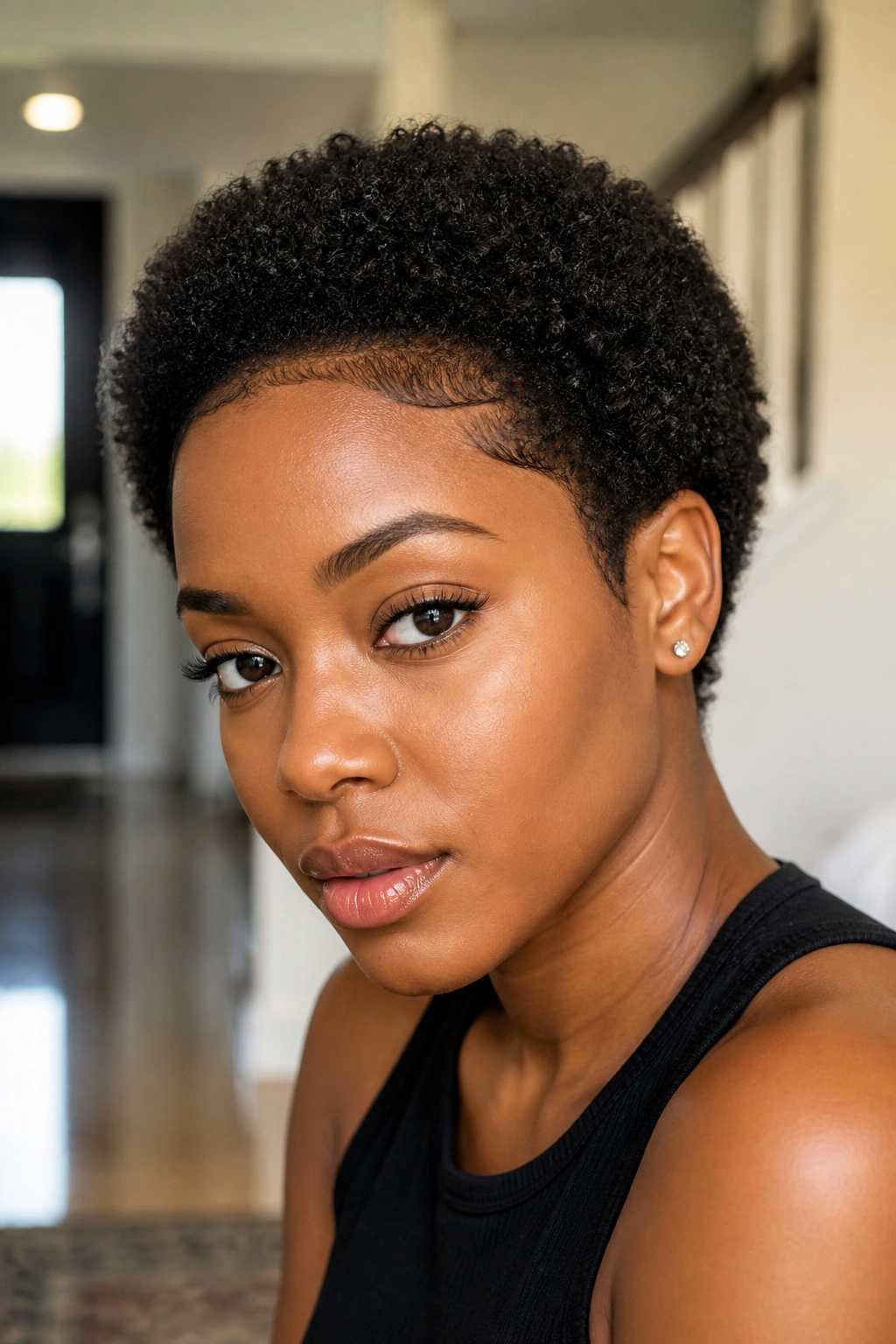
A tiny afro with shaped edges is one of the cleanest ways to show texture in a short cut. The hair stays close and full, the outline is neat, and the natural coil pattern sits right on the surface instead of being pushed under layers.
What I like here is honesty. There’s no pretending the texture isn’t there. The cut lets the hair be exactly what it is, only shaped with intention. That’s what makes it look strong rather than fussy.
How to keep it looking sharp
Use a pick at the roots if you want a bit more lift, but don’t overdo it. Too much picking breaks the shape and creates frizz at the outer layer.
A few useful details
- Ask for clean edges around the neck and temples.
- Keep moisturizing light so the coils stay defined.
- Trim every few weeks if you like the outline crisp.
- Works especially well when the hairline is shaped to suit your face.
Small does not mean plain. Not even close.
17. Curtain Bang Curly Crop
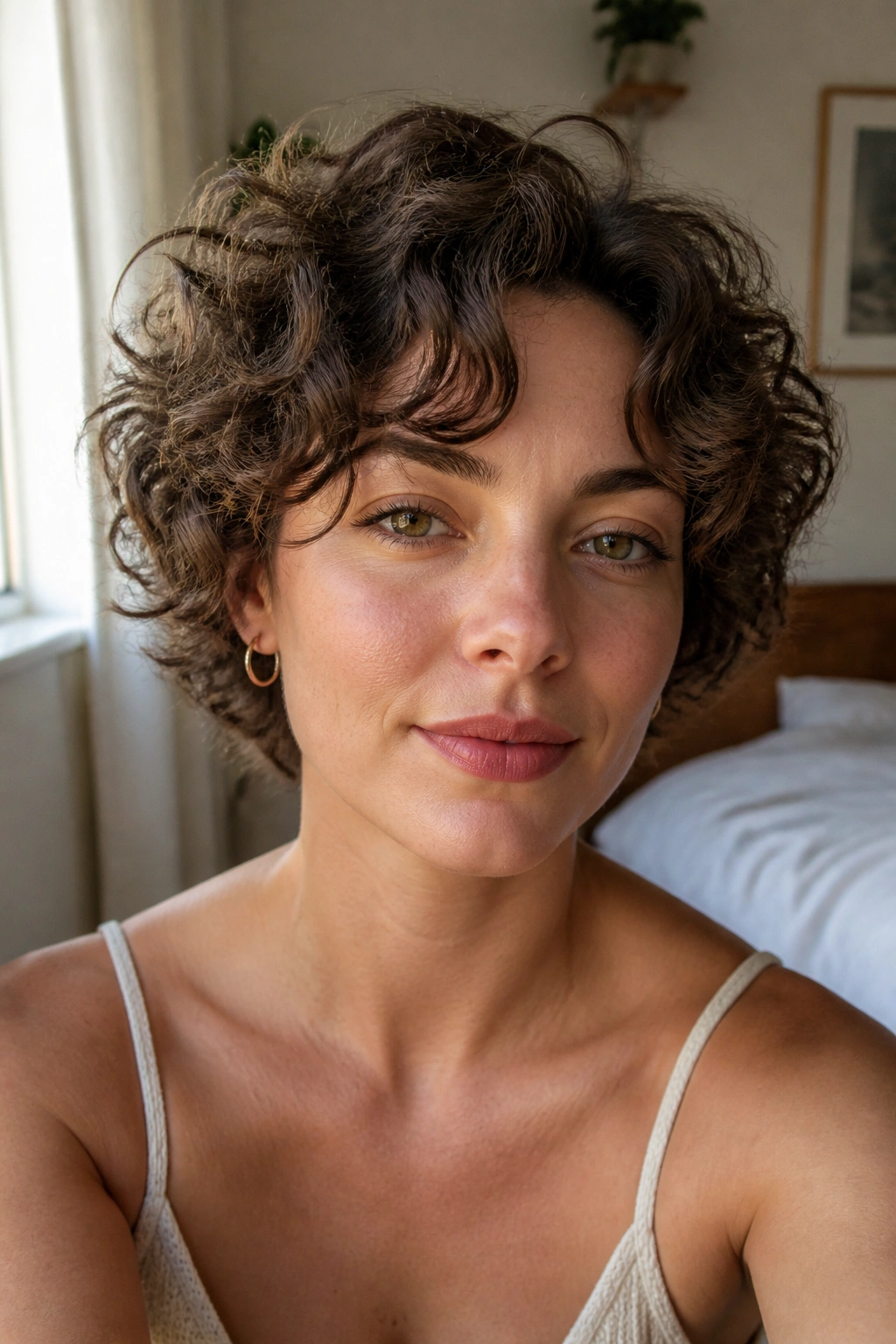
Curtain bangs on short curly hair can be a little tricky, but when they work, they look soft in a way straight bangs never do. The fringe splits naturally or is encouraged to part near the center, and the curls frame the face with less pressure than a full fringe.
The cut works best when the bangs are left long enough to shrink without ending up too high. That one detail matters. Short curly bangs can jump upward faster than people expect, and then the face framing disappears.
Styling it well
Use a small amount of cream on the bangs and twist them with your fingers while they dry. That helps the pieces fall in a more controlled way. If they need extra help, pin the front sections apart for the first part of drying.
Why it’s appealing
It softens a short cut without making the whole style look heavy. You get movement around the eyes, a little cheekbone framing, and a shape that feels gentler than blunt fringe.
18. Curly Style with One Shaved Side

One shaved side changes the whole mood of a curly cut. It cuts down bulk, puts emphasis on the top and opposite side, and makes texture look sharper because the contrast is so clear. If you’ve got dense curls and you want something that feels modern without being overworked, this is a strong move.
The shaved side also solves a real problem: weight. Curly hair can get hot and heavy near the temple and ear. Removing that section makes the rest of the style easier to manage.
A practical way to wear it
Wear the longer curls swept across the shaved side for softness, or pin them back if you want the contrast to show. Both versions work. The cut changes mood fast, which is one reason people stay loyal to it.
Good for
- Dense curls
- Coils that puff out at the sides
- People who want a visible shape shift
- Anyone comfortable with a bolder outline
It is a statement. A useful one, too.
19. Neck-Length Curly Bob
A neck-length curly bob sits between short and medium, but it still reads as a short curly haircut because the shape is compact and the ends stay above the shoulders. This length is a sweet spot for curls that need enough room to form but not enough room to drag themselves flat.
The cut works especially well when the hair is cut to follow the curve of the neck and jaw. That keeps the silhouette tidy. If the bob is too straight across, the bottom can look wide. If it’s curved just right, the curls stack in a way that feels natural.
Why people like it
It’s easy to wear down, easy to clip half up, and easy to refresh with water and a little leave-in. Not glamorous in the dramatic sense. More useful than that.
Styling note
A light mousse at the roots can keep the crown from collapsing, especially if your curls are fine or looser in pattern.
20. Boxy Coily Crop
A boxy coily crop has a sharper outline than a rounded afro, and that shape can look excellent when the coils are tight and springy. The silhouette is more squared off, especially through the sides and top, which gives the haircut a neat graphic feel.
I like this cut when someone wants the texture to stay front and center but doesn’t want the outline to go fully round. The squarer shape shows off density in a different way. It feels cleaner, almost architectural, without turning cold.
What to keep in mind
The boxy look depends on a stylist who can shape the perimeter cleanly. If the edges are uneven, the whole point disappears.
Practical details
- Keep the top dense enough to hold the box shape.
- Avoid over-layering the sides.
- Moisturize in small amounts so the outline stays clear.
- Trim shape more often than length if you like the cut crisp.
It’s a strong choice for coils that naturally rise.
21. Face-Framing Mini Shag
A face-framing mini shag gives you just enough layering to soften a short cut without letting it turn into a full shag. The layers usually sit around the cheeks and jaw, where they can break up bulk and make the face look more open.
This is the version I like for people who want movement but hate the feeling of hair taking over their head. The top stays light, the sides stay controlled, and the face gets a little curve from the front pieces.
Where it shines
It works especially well on curls that clump nicely. The front pieces catch that pattern and make the haircut look intentional even when it’s a bit tousled.
Quick styling thought
Air-dry the front section a little longer if you want the face-framing pieces to keep their bend. If you blast them dry too early, they can lose the shape that makes the cut work.
Small shag. Big payoff. That’s the whole deal.
22. Soft Bowl Cut
The soft bowl cut gets a bad reputation from bad versions of the style. A curly one, cut with a little room and softness around the edge, can look smart and modern. The trick is that the line should feel rounded, not pasted on. Curls need space to move inside the shape.
That’s what makes this cut interesting. It turns texture into the main event, but it also gives the head a clear silhouette. On the right hair, it looks almost graphic from the front and much gentler in motion.
What to ask for
- Rounded perimeter, not a hard helmet line.
- Enough top length to keep curl movement alive.
- Slightly shorter sides if you want more lift.
- No heavy thinning at the crown.
Who it suits
People with dense curls or tight waves often wear this well because the shape gives structure to hair that might otherwise spread out. If you like clean lines, it’s worth a look.
23. Ear-Length Curly Crop
An ear-length curly crop is one of the shortest ways to wear curls and still keep enough length for visible texture. The hair sits around the ears and nape, so the shape feels compact, fresh, and easy to move through the day.
It sounds simple because it is. But simple cuts can be tricky on curly hair. The edges need to be clean, and the top has to keep enough curl length to avoid looking clipped too close to the scalp. You want texture, not fuzz.
Styling benefits
It dries fast. That alone makes it appealing. Less time with a diffuser, less product needed, less fuss in the morning.
Best for
- Springy curls that hold their shape
- People who like an almost-boyish, cropped feel
- Hot climates and active routines
- Hair that grows thick around the ears and neck
Keep the outline neat and the top soft. That’s the whole formula.
24. Grown-Out Pixie with Crown Volume
A grown-out pixie with crown volume is what happens when a short curly cut starts to gain a little length and gets better, not worse. The top stays lifted, the sides remain trimmed enough to avoid bulk, and the crown becomes the main shape point.
I love this stage because it feels relaxed without looking careless. The curl pattern gets more room, and the haircut starts to show movement in a way a tighter pixie sometimes can’t. It’s the version of short hair that still feels easy to manage on a busy morning.
What makes it work
The crown needs a bit more length than the sides. That difference creates height and stops the cut from spreading outward.
A small styling move
Flip your head forward for five seconds while scrunching in mousse, then stand upright and shape the crown with your fingers. That tiny change can keep the top from going flat.
25. Curly Crop with Nape Taper
A nape taper is one of those details that seems small until you see the cut from behind. On curly hair, cleaning up the neck area removes a lot of visual weight and makes the whole shape feel sharper. The top can stay soft and full while the back stays neat.
That contrast matters. Without it, short curls sometimes look unfinished in the rear view. A tapered nape fixes that quickly.
Why people notice it
The cut looks tidy even when the curls are a little wild on top. That’s useful if you want texture but not a messy outline.
A few practical notes
- Ask for the taper to blend, not stop suddenly.
- Keep the top slightly longer so the taper has contrast.
- Great with diffused curls or airdried coils.
- Easy to maintain between trims with a light cleanup around the neck.
It’s a detail cut, and details are where curly hair wins.
26. Deep Side-Part Curly Crop
A deep side-part curly crop can change the whole face shape without changing the length much at all. The part moves the volume to one side, creates a little lift at the root, and gives the curls a direction that feels elegant without trying too hard.
The nice thing here is control. Curls often decide where they want to sit. A deep side part gives them a place to land and turns that natural tendency into shape. You’ll see more dimension too, because the hair stacks differently on each side.
How to wear it
Set the part while the hair is damp, not after it has fully dried. Once the curl pattern locks in, moving the part can create weird dents and a puffy root on the wrong side.
Why it suits short curls
- Adds height at the crown
- Softens wide cheekbones
- Works with bob lengths and pixie lengths alike
- Gives fine curls a bit more presence
It’s a quiet change, but a strong one.
27. Short Curly Wolf Cut
A short curly wolf cut takes the shag and pushes it a little rougher, a little wilder, and a little more layered through the crown. The result is texture with movement that looks intentionally undone. On curls, that’s a very forgiving shape.
The reason it works is that the cut uses different lengths to break up bulk. The top can stay airy while the bottom keeps enough length to show the curl pattern. If the layers are cut with care, the whole thing feels lively instead of ragged.
What to ask your stylist
Tell them you want layered texture, not thin ends. That matters. A bad wolf cut on curly hair can leave the perimeter stringy, which is a fast way to lose the shape.
Styling note
Use a curl cream at the ends and a lighter mousse near the roots. That combo keeps the top from collapsing while the length stays piecey and defined.
It’s best for people who like a little edge in their haircut.
28. Blunt-Bang Curly Bob
Blunt bangs on curly hair can be tricky, but when the cut is right, they make the whole bob look bold and graphic. The line across the forehead gives the face a frame, while the curls elsewhere keep the style from feeling too severe.
The bangs should be cut with shrinkage in mind. Too short, and they spring up too far. Too thin, and they separate into little stray bits. A good blunt fringe has enough density to read as a fringe, not a series of curls pretending to be one.
Where it works best
This cut shines on hair with a consistent curl pattern in the front. If the front curls behave differently from the rest of the head, the bangs can take more effort to style.
Ask for this
- Fringe cut dry or mostly dry
- Bob length at the chin or just below
- Soft internal layers to reduce bulk
- A slightly longer bang on the first pass
It’s bold in a clean, wearable way.
29. Coily Fade
A coily fade gives the sides a crisp finish and lets the coils on top hold all the drama. It’s sharp, practical, and easier to keep neat than many other short curly cuts because the fade does so much of the visual work.
The fade also helps tighten the shape around the face and ears. That makes the top feel taller and more deliberate. If your hair tends to puff outward at the sides, a fade can cut that problem down fast.
Why it’s a strong option
It works for people who want texture without bulk, and it photographs cleanly because the contrast between the faded sides and the textured top is so obvious.
Simple maintenance
- Keep the fade edged up regularly.
- Moisturize the top with a small amount of cream.
- Sponge or shape the coils if you like definition.
- Protect the fade at night with a bonnet or scarf.
It’s one of the neatest short curly haircuts out there.
30. Sculpted Curly Crop
A sculpted curly crop is the kind of cut that looks finished from every angle. The sides stay controlled, the top keeps enough length to show texture, and the whole shape feels intentional without looking overworked. If you want short curly hair that shows the curl pattern but still reads polished, this is where I’d end the list.
What makes it strong is restraint. The stylist leaves enough movement for the curl to breathe, but trims enough weight to keep the silhouette clear. That balance is hard to fake. You can see it in the outline, especially when the hair is dry and the curls settle into their own shape.
Ask for clean edges, moderate texture through the top, and a neckline that follows your head instead of hanging off it. That’s the difference between a decent short cut and one that makes the curls look expensive without trying to look expensive. The haircut does the talking.
