



Side bang styles for soft layers work best when the fringe feels built into the haircut, not dropped on top like an afterthought. That sounds picky because it is. A good side bang can sharpen the face, soften a strong jaw, or give movement to a layered cut that has gone a little flat around the front.
The part people miss is density. A side fringe that looks great in a salon chair can fall apart at home if it’s too thick, too short, or cut at the wrong angle for the rest of the layers. I’ve seen plenty of haircuts lose their shape because the bangs fought the layers instead of flowing into them.
I tend to like side bangs that start a touch longer than the first instinct says. They behave better on second-day hair, they tuck more easily, and they don’t trap you in one styling routine. That matters more than a perfect photo.
1. Long Side Bangs That Melt Into Soft Layers
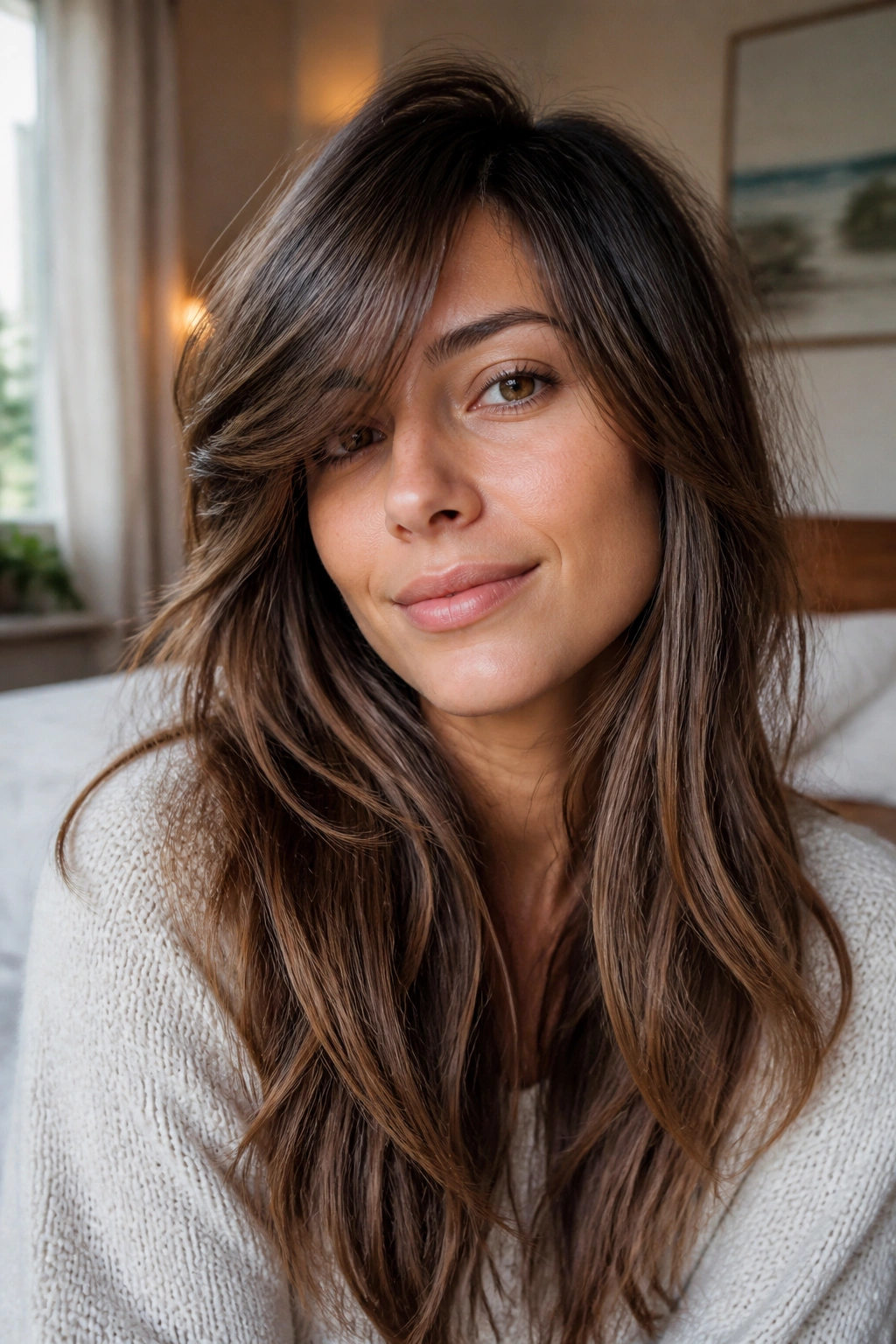
Long side bangs are the easiest place to start if you want a fringe without a dramatic commitment. They usually begin around the outer brow or cheekbone and taper down into the front layers, which keeps the line soft instead of obvious.
Why This Shape Flatters Soft Layers
The length is doing most of the work here. A longer side bang has room to move, so it can slide across the forehead and blend into the rest of the cut instead of sitting in a hard block at the front.
I like this version for medium-length hair, layered lobs, and shoulder-length cuts that need a little front motion. It also holds up well if your hair has a natural bend, because the bang can follow the same curve as the layers.
- Ask for the shortest piece to land near the outer eyebrow.
- Keep the longest piece near the top of the cheekbone or just below it.
- Use point-cutting on the ends so the edge doesn’t look blunt.
- Blow-dry with a medium round brush, not a tiny one.
- Trim every 5 to 7 weeks if you want the shape to stay clean.
Tip: If you’re nervous, ask for the bang to be cut longer than you think you want; long bangs are easy to shorten, and much harder to grow out gracefully.
2. Wispy Side Bangs With an Airy Edge
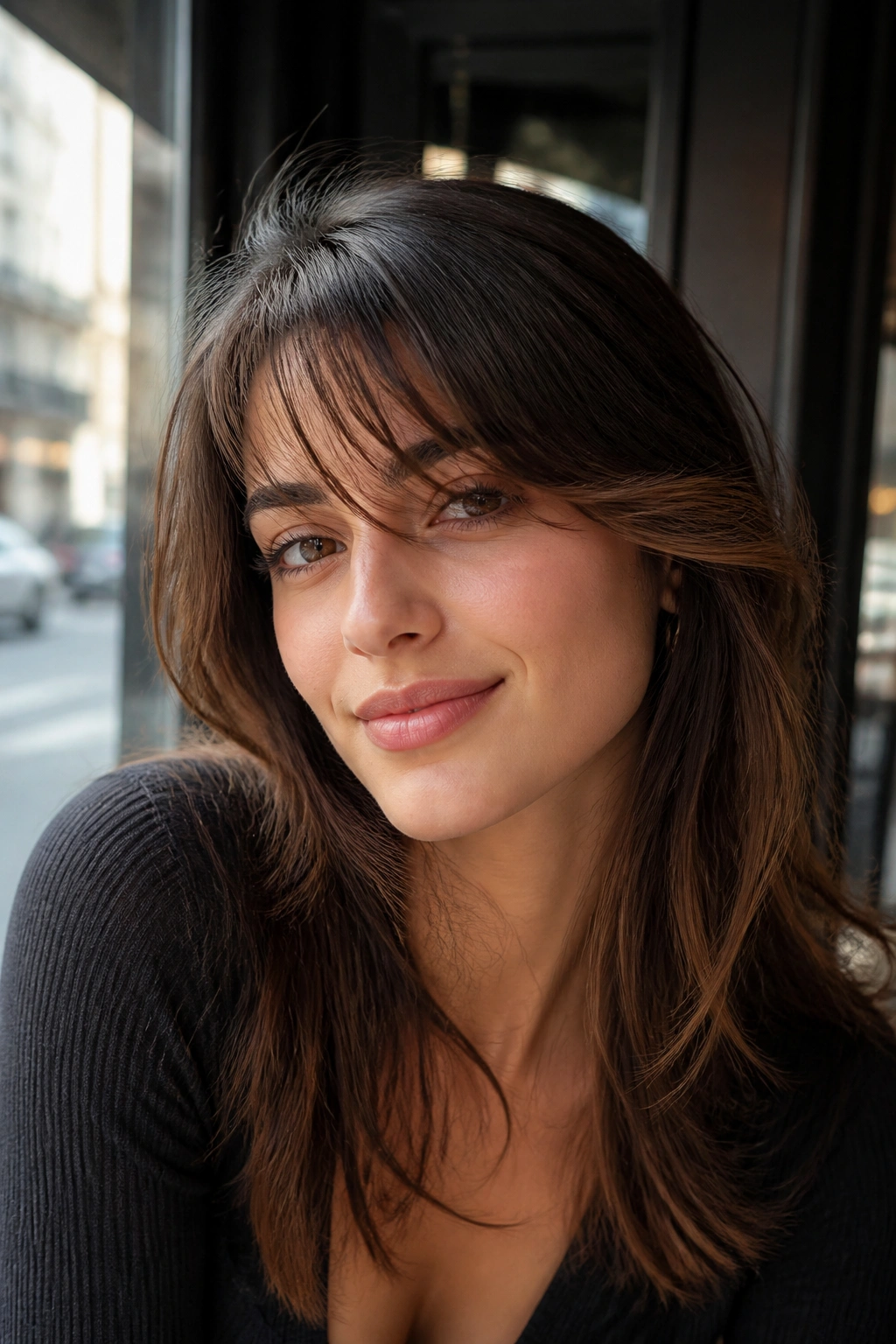
Wispy side bangs are the version I reach for when hair starts to feel heavy but the person does not want a full fringe. They’re light, narrow, and broken up at the ends so the front never feels crowded.
That little bit of openness matters. On fine hair, a dense bang can look flat and limp, while a wispy version leaves some forehead showing and keeps the whole haircut from closing in around the face. The soft layers behind it can still move, which is the point.
This style works best when the section is kept narrow — about the width of two fingertips at the hairline. Any wider and the bang starts to act like a curtain. Any thinner and you risk that stringy, unfinished look that some stylists accidentally create when they over-thin the front.
I’d style it with a light mousse at the roots and a quick dry with fingers first, then a small round brush just at the end. No heavy cream. That tends to make wispy bangs fall into little greasy pieces by lunch.
3. Deep Side-Swept Bangs for a Strong Part
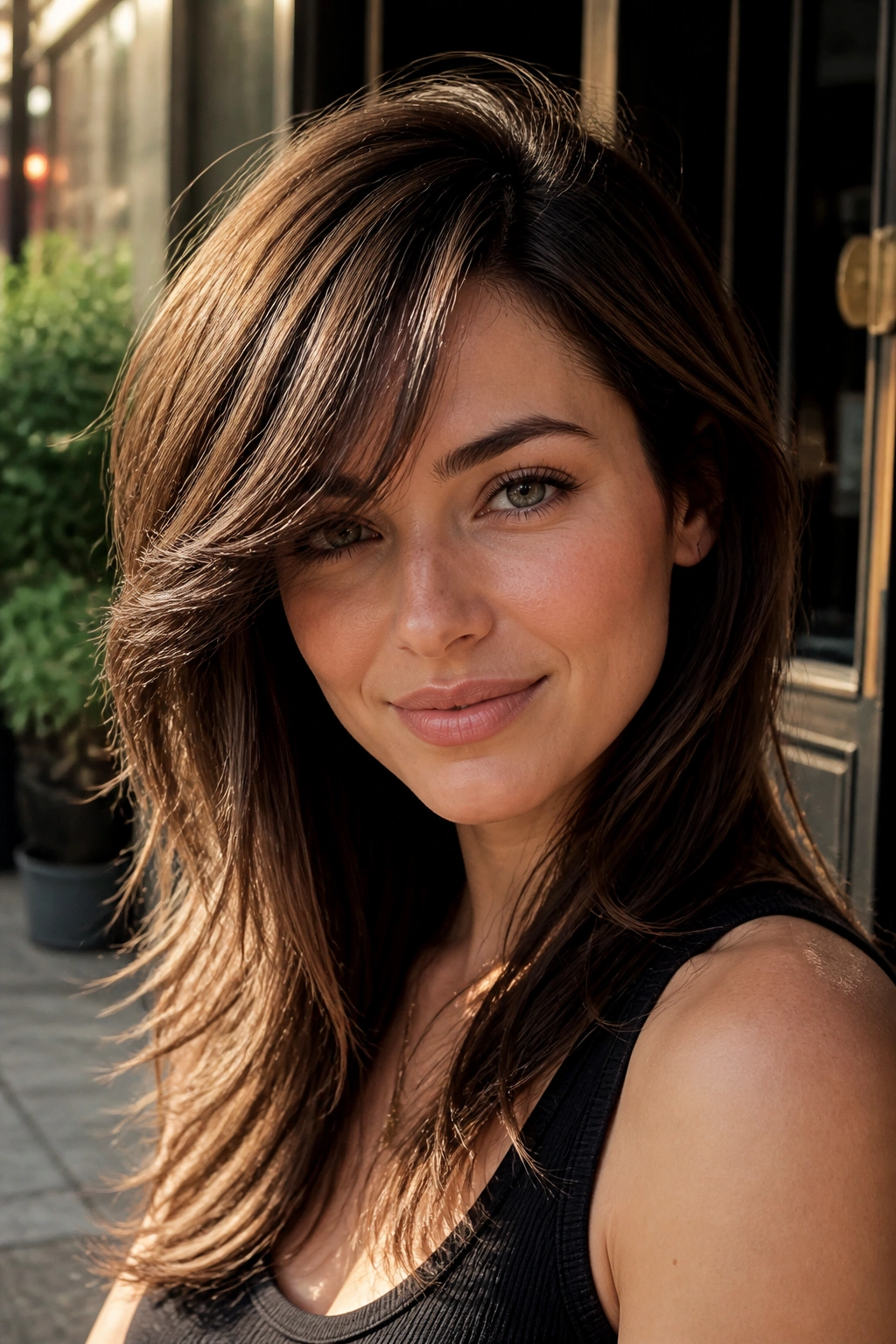
Need more lift at the front without changing the whole haircut? Deep side-swept bangs are the sharpest answer. They start from a far side part and sweep across the forehead with enough weight to create shape, but not so much weight that they collapse into a curtain.
A deep part can be a gift if your hair tends to sit flat at the crown. It creates a natural push at the roots, and that extra lift makes the layers around the face look fuller. The trick is not cutting the bang too short; when it’s too short, the sweep loses its line and starts flipping in odd directions.
How to Style It Without Collapse
Blow-dry the front in the opposite direction first. That sounds backwards, but it gives the roots enough bend to hold the side sweep once the hair cools.
Then clip the front section to the side for a minute or two while you finish the rest of your hair. That pause helps the shape settle. If you skip it, the bang usually falls right back into the middle of the forehead by the time you leave the bathroom.
A deep side sweep looks especially good with longer layers around the cheek and jaw, because the bang has somewhere to disappear. Without those soft layers, the front can feel too heavy.
4. Feathered Side Bangs for Shaggy Layers
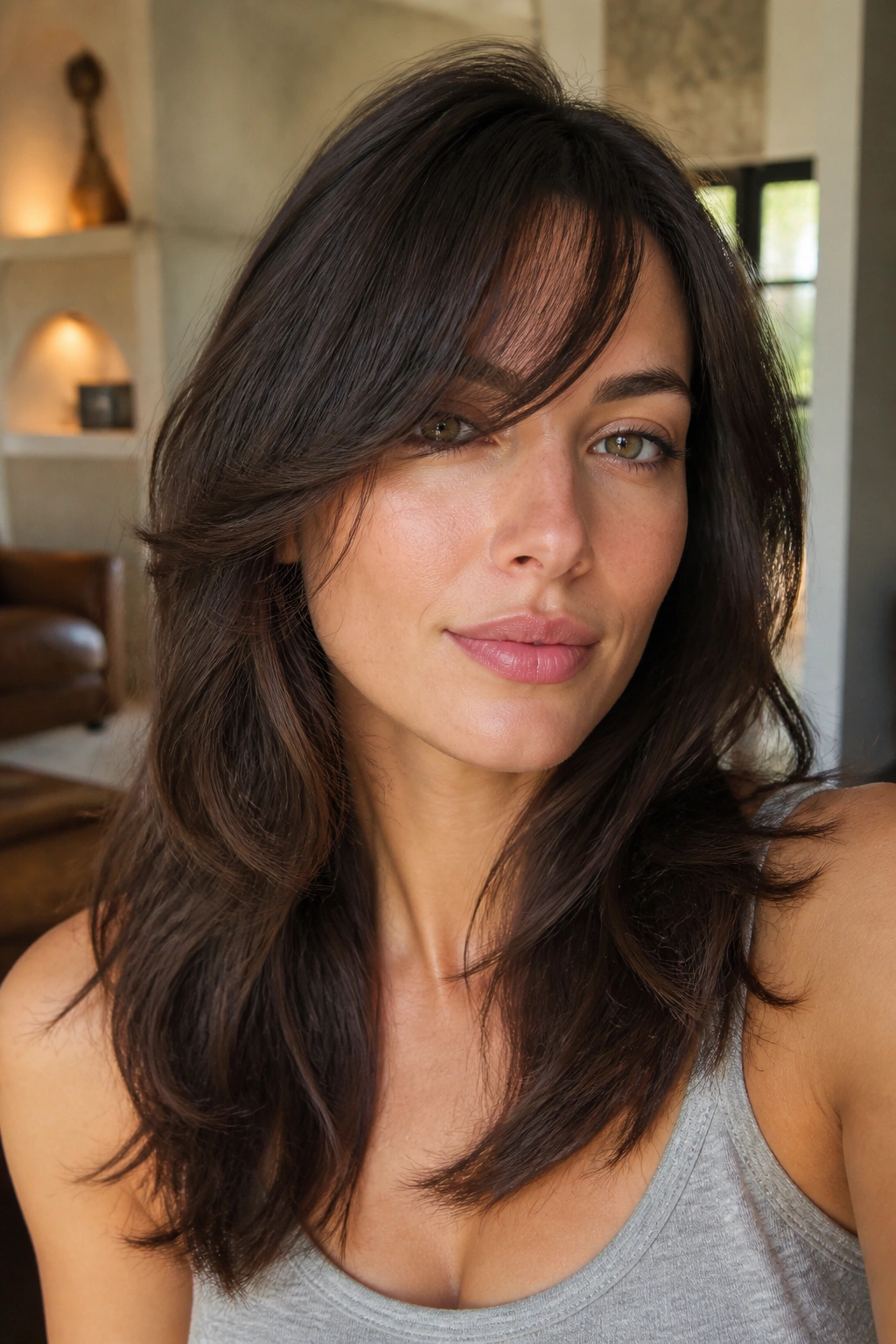
If your hair dries into a fuzzy triangle at the cheeks, feathering is usually the move. Feathered side bangs break up the front edge so the bang doesn’t sit like a chunk of hair cut off at the temple.
This style belongs with shag cuts, airy layers, and hair that already has some natural texture. The feathered edge gives the front a light, brushed-out look, which is much kinder to layered hair than a heavy, straight line. I’m also a fan of it on coarse hair because it removes visual weight without making the fringe disappear.
A razor can work here, but I’m picky about that. On fine hair, a razor can shred the ends too much and leave the bang looking see-through faster than you want. Scissors with point-cutting usually give more control, especially if the hair is already a bit dry or frizzy.
- Best with shaggy, lived-in layers.
- Works well on wavy and slightly coarse textures.
- Needs a small amount of texture spray, not a stiff hairspray.
- Keeps the front from feeling dense around the temples.
- Grows out into face-framing pieces without a hard line.
The whole point is movement. Once the bang stops moving, the feathered effect is gone.
5. Curtain-to-Side Hybrid Bangs
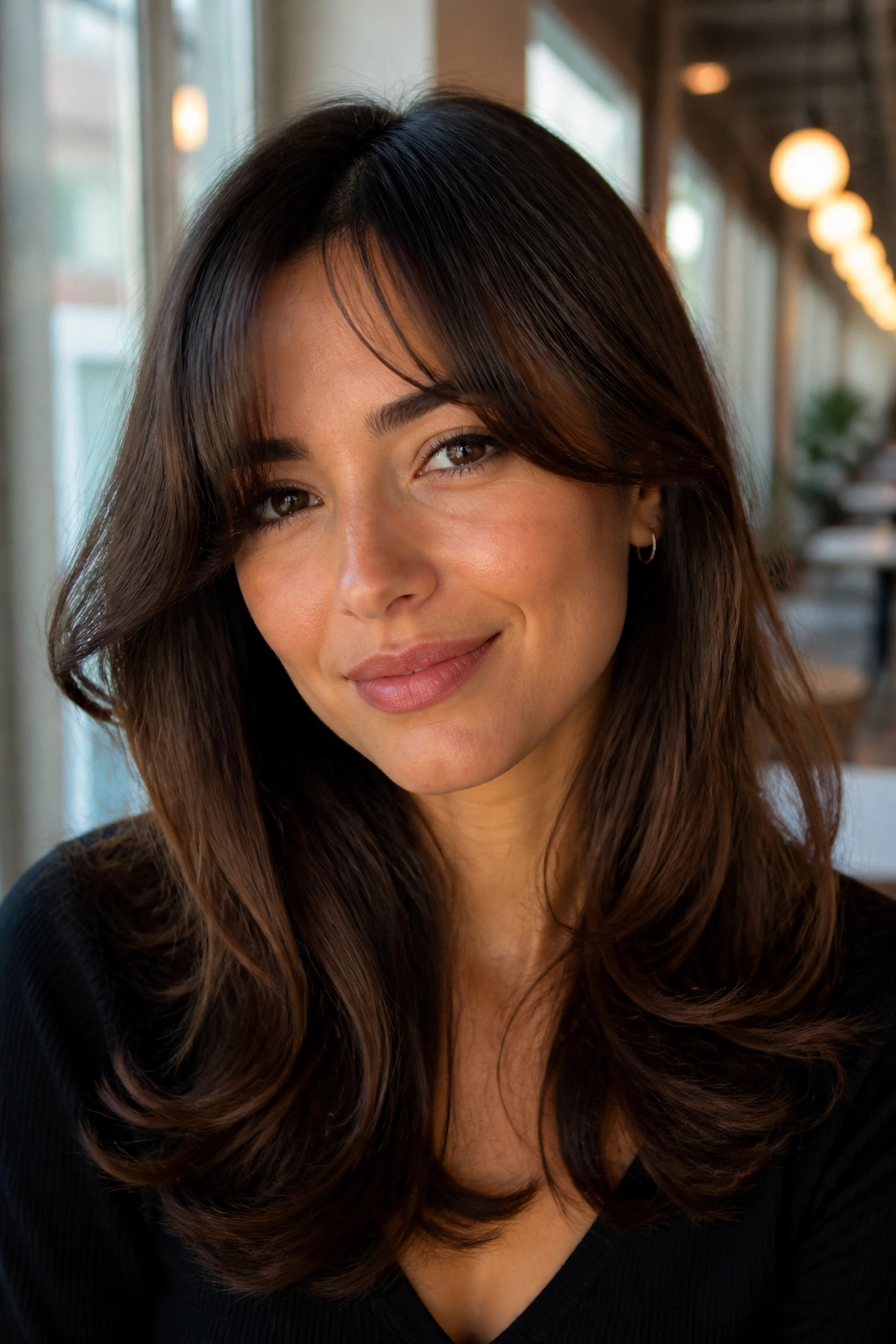
A curtain-to-side hybrid is for the person who wants softness but does not want to commit to one side forever. The bang starts near the center, opens around the forehead, and then drifts naturally toward one side as it reaches the cheekbones.
That flexibility is the charm. You can wear it with a center part on clean hair and sweep it sideways on days when the front needs more shape. It’s a good choice if your part shifts from day to day, or if your hair likes to fall a little differently depending on how much product you use.
The cut itself usually needs a gentle C-shape, not a sharp diagonal. A stylist can carve the front so the shortest pieces sit a bit lower than a classic fringe, then leave the outer lengths long enough to blend into the first layers. The result feels softer and less committed than a hard side bang.
I like this look on shoulder-length cuts with loose movement. It gives the face something to hold onto without boxing it in. And yes, it’s one of those styles that looks better when it’s not too perfect.
6. Chin-Length Side Bangs for Short Layered Cuts
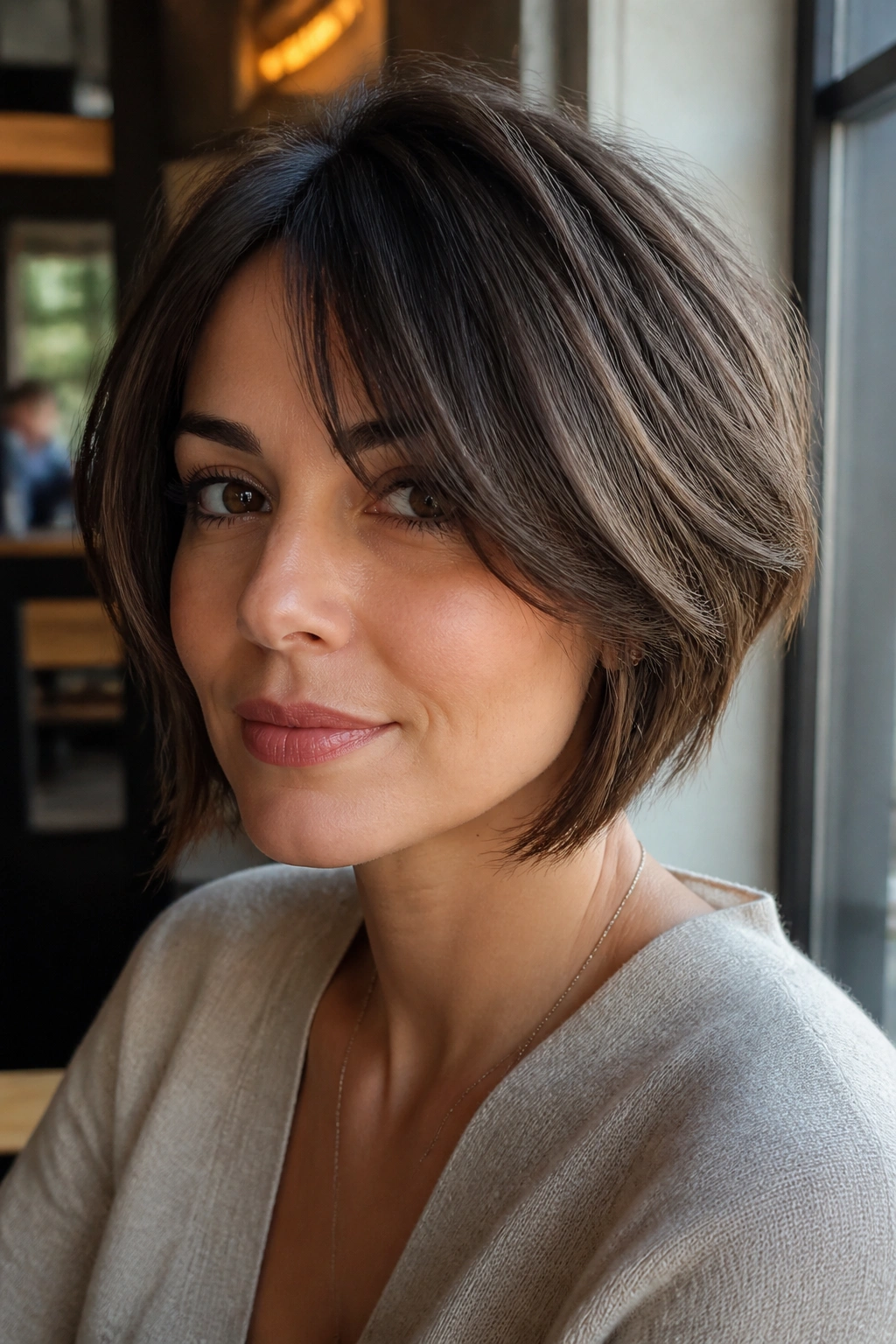
Unlike long side bangs, chin-length versions keep the front cleaner. They’re a smart fit for short layered cuts, bobs, and lobs that need a front piece with enough weight to matter but not enough length to get in your eyes all day.
This shape can look surprisingly polished when the rest of the haircut is soft and airy. The bang falls low enough to tuck behind the ear, but it still gives the front of the cut a defined line. That makes it useful for people who wear glasses, because the bang can clear the frames instead of fighting them.
Who It’s Best For
If your hair is straight or softly wavy, this shape usually behaves well. It has enough length to swing, but not so much that it turns into a full face-framing layer.
Ask for the shortest point to skim the outer brow and the longest point to land around the jaw or upper chin. That diagonal keeps the silhouette clean. Too much layering here can make the bang look choppy, which defeats the point.
I think this is one of the easiest side bang styles to maintain if you like short hair but hate the feel of too much hair on your forehead.
7. Rounded Side Bangs That Soften a Square Jaw
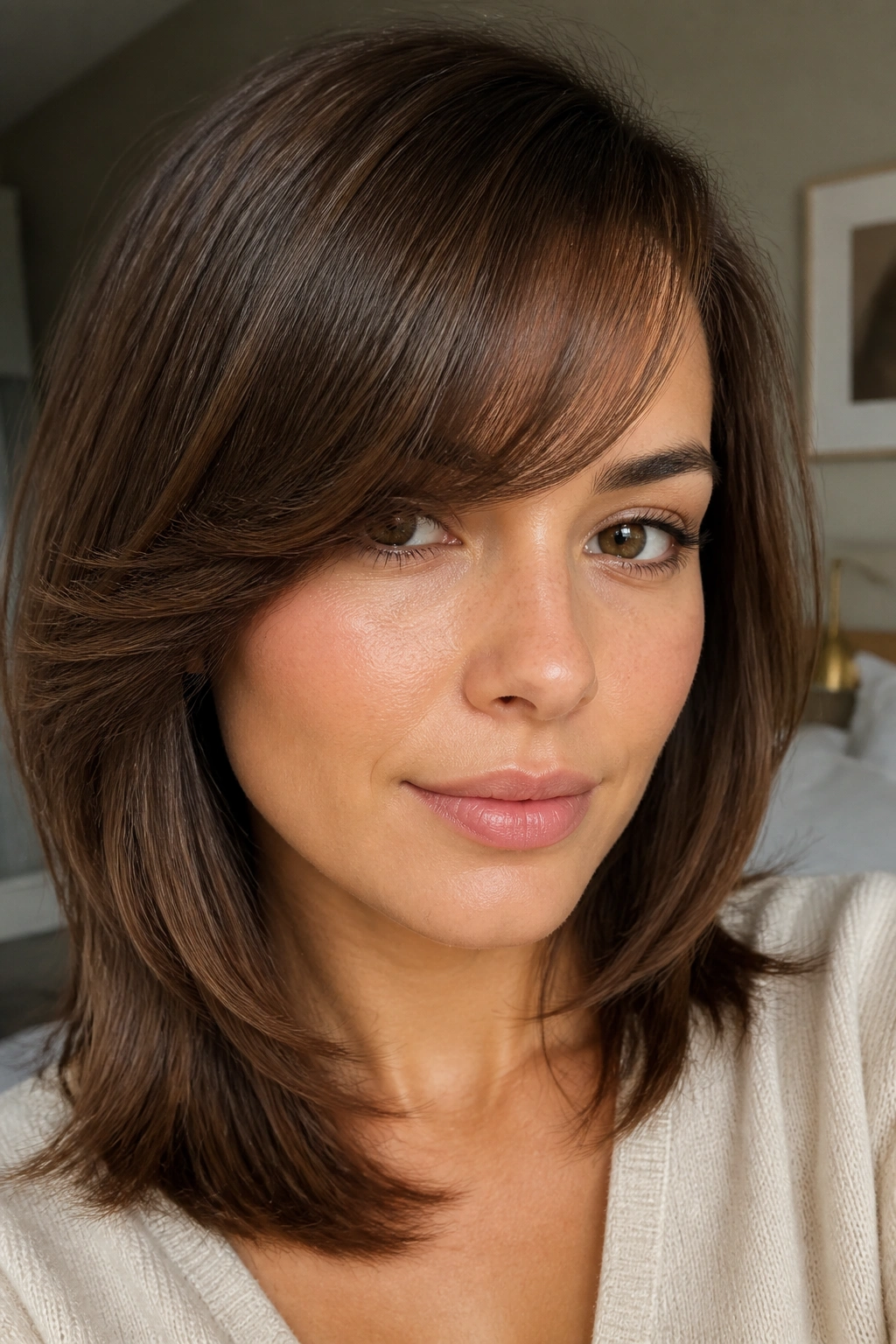
Can a side bang soften a strong jaw without hiding your face? Yes, if the curve is right. A rounded side bang is shaped with a gentle arc so it bends around the cheekbone instead of landing in a straight, sharp line.
That curve changes the whole mood of the haircut. A straight diagonal can emphasize angles, while a rounded sweep takes some pressure off the jaw and makes the front feel softer. It’s a small shift, but it matters.
Placement Matters More Than Length
Start the bang a little wider at the temple, then let it narrow as it travels across the face. The longest point should land before the jaw angle if you want the softest effect.
- Keep the arc loose, not tight.
- Avoid a heavy center section.
- Use point-cutting near the ends.
- Style with a brush that matches the bend you want, usually 1.25 to 1.5 inches.
- Trim more often if your hair grows fast at the front.
This is one of those styles that can feel almost invisible when it’s cut well. You notice the face looks softer, but you don’t immediately clock the bang itself. That’s usually a good sign.
8. Side Bangs for Curly and Wavy Hair
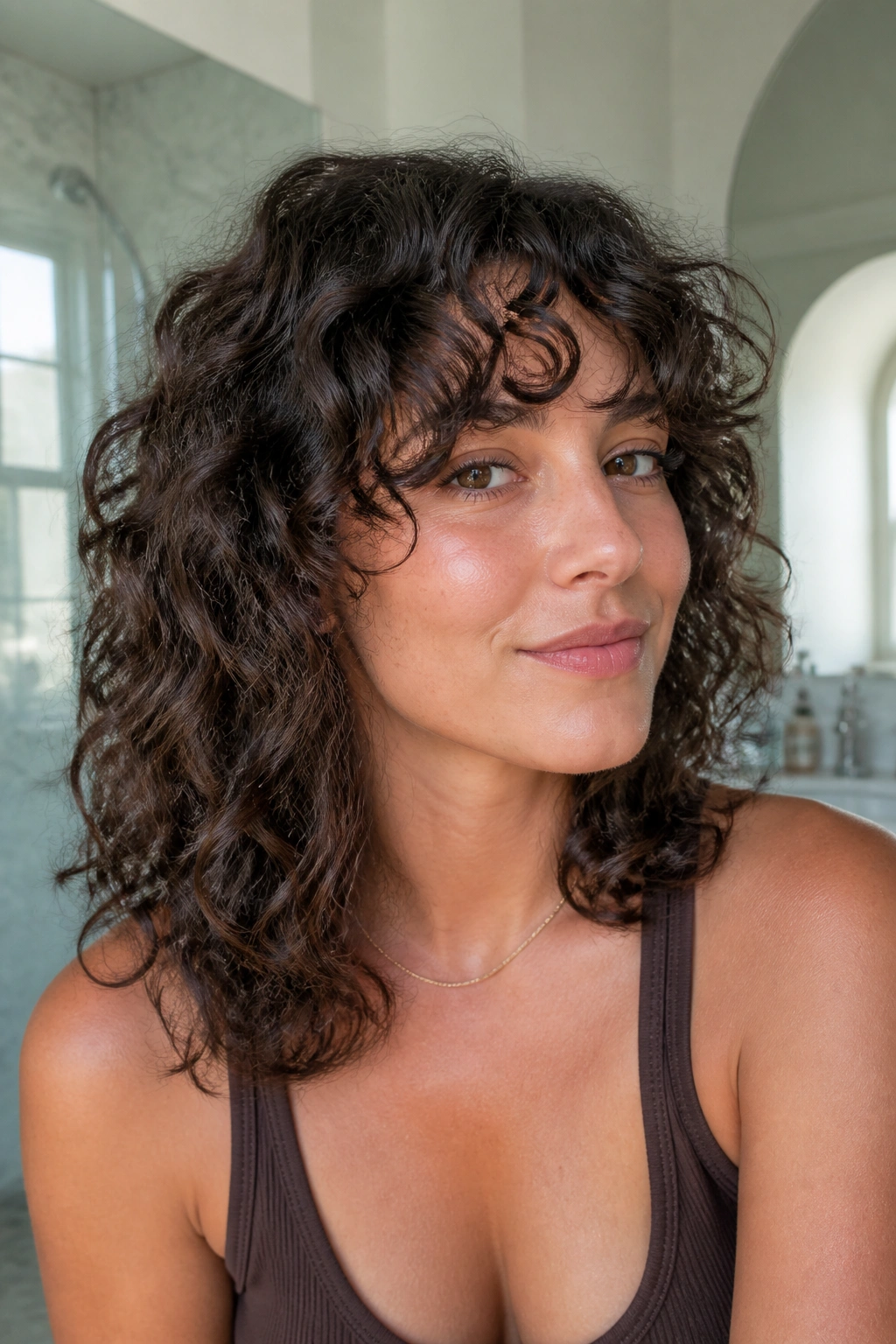
Curly side bangs should feel springy, not stiff. If they’re cut too short, they jump up and sit in the middle of the forehead. If they’re left too long, they can hang limply and drag the rest of the front down.
The safest approach is to respect shrinkage. Curly and wavy hair often rises more than straight hair once it dries, sometimes by half an inch, sometimes by a lot more depending on the pattern. That means the bang should usually be cut longer than the final shape you’re imagining.
Dry-Cut Detail
A dry cut, or a cut done with the curl pattern visible, helps the stylist see where the bang actually lives. That matters because a curl that looks long when wet can bounce up fast once it’s dry.
Use a diffuser on low heat, and avoid brushing the bang dry. Fingers or a wide-tooth comb are safer. A curl cream can help, but too much product in the bang area makes it sag and clump.
- Leave the front about 1/2 inch longer than you think you need.
- Cut in small curl groups instead of one big section.
- Let the curl fall where it wants before trimming again.
- Use a side part that follows the natural bend.
- Refresh with water and a touch of cream rather than re-wetting the whole head.
Curly side bangs look best when they seem to belong to the curl pattern, not when they’re forced into a straight-line idea of bangs.
9. Piecey Side Bangs for Fine Hair
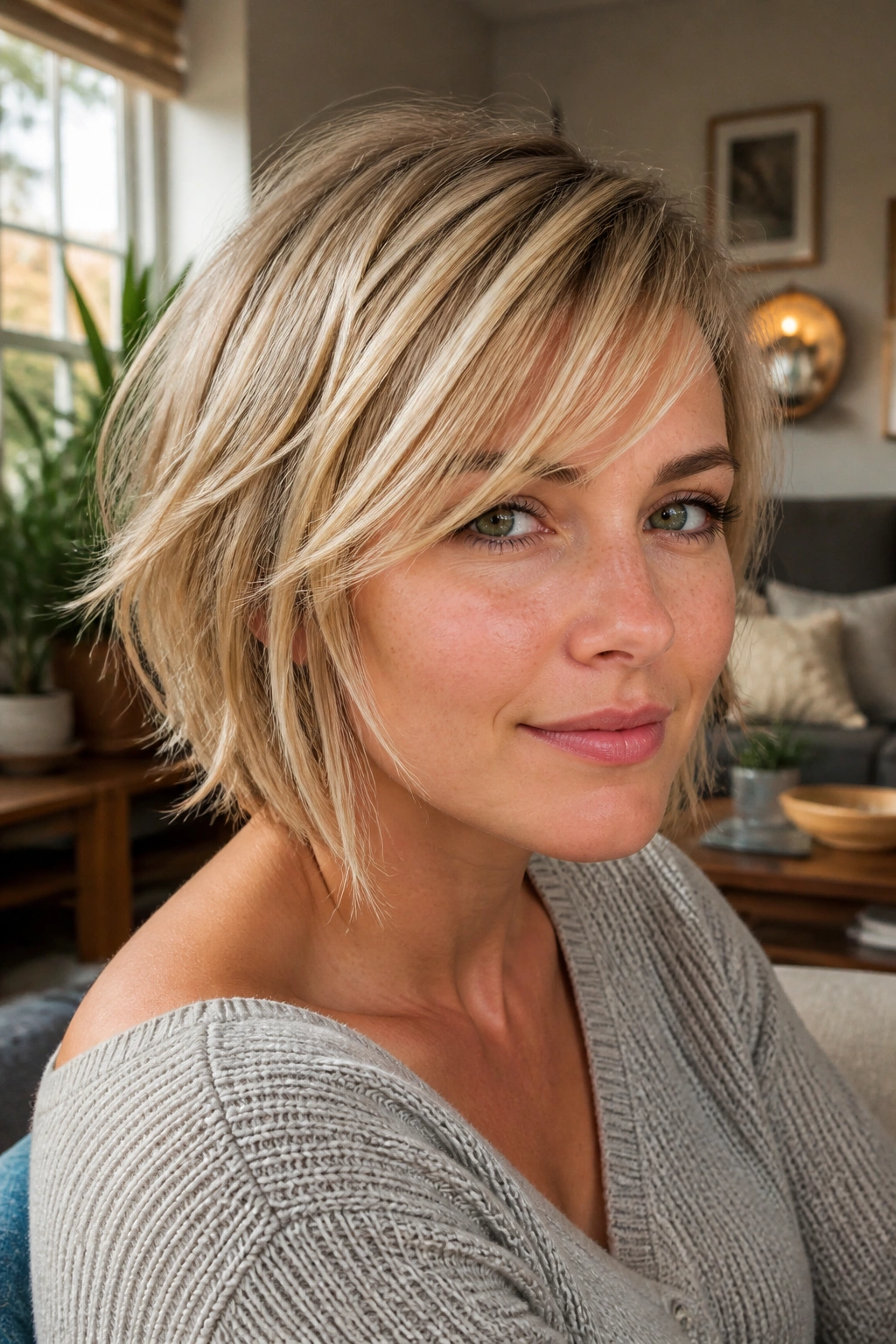
Fine hair often looks thicker with less hair in the bang, not more. That’s the whole logic behind piecey side bangs. You keep the section light, break up the ends, and let a few visible strands do the job of framing the face.
A thick bang on fine hair can collapse fast. It sits flat at the root, separates into oily sections, and makes the front of the haircut feel smaller. A piecey version avoids that by leaving some air between the strands.
I prefer this style when the rest of the haircut has soft layers around the cheek and collarbone. The layers give the bang support. Without that support, the piecey front can look too sparse.
A tiny amount of texture powder at the root can help, but don’t pile on dry shampoo right away. That makes the bang chalky and stiff. A light blow-dry with fingers, then a quick twist of the front pieces around a small brush, usually does the trick.
10. Side Bangs That Tuck Behind the Ear
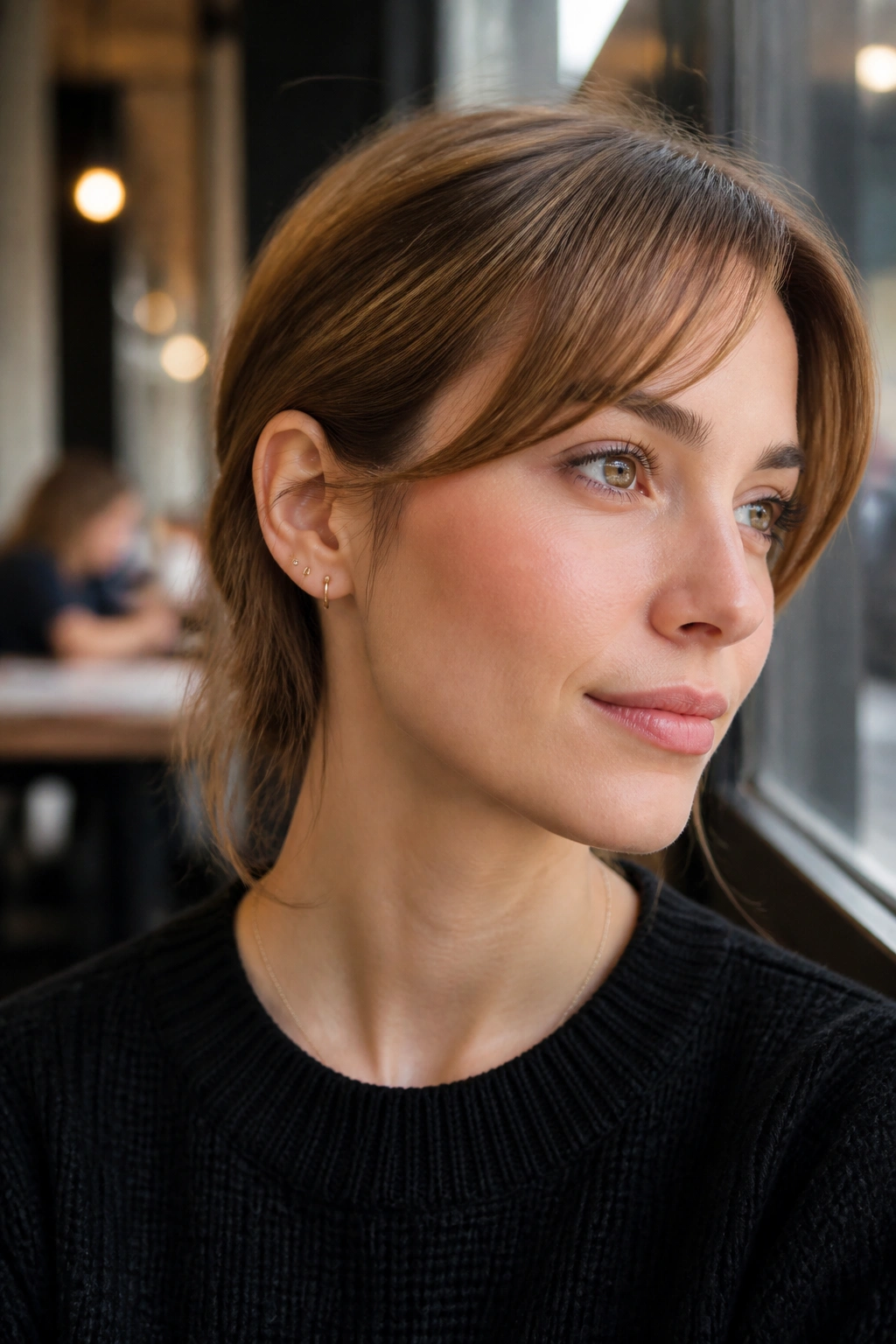
Some days you want the fringe. Some days you want it gone. Side bangs that tuck behind the ear are built for that kind of mood swing, and I think that flexibility is underrated.
The length needs to be long enough to clear the cheekbone and sit comfortably near the jaw. Too short, and the bang springs out of the ear tuck and lands in your eyes. Too long, and it stops reading as a bang at all. The sweet spot is usually somewhere between the cheekbone and the mouth corner, depending on the haircut.
This version is useful for people who work in the real world, where hair gets shoved behind sunglasses, headphones, and scarf collars. It also helps if your front tends to separate during the day, because the tuck gives you a quick reset without needing a full restyle.
If you like a polished look in the morning and a looser one by lunch, this is a smart shape. It changes its job without making you start over.
11. Side Bangs With a Flipped-Out Blowout
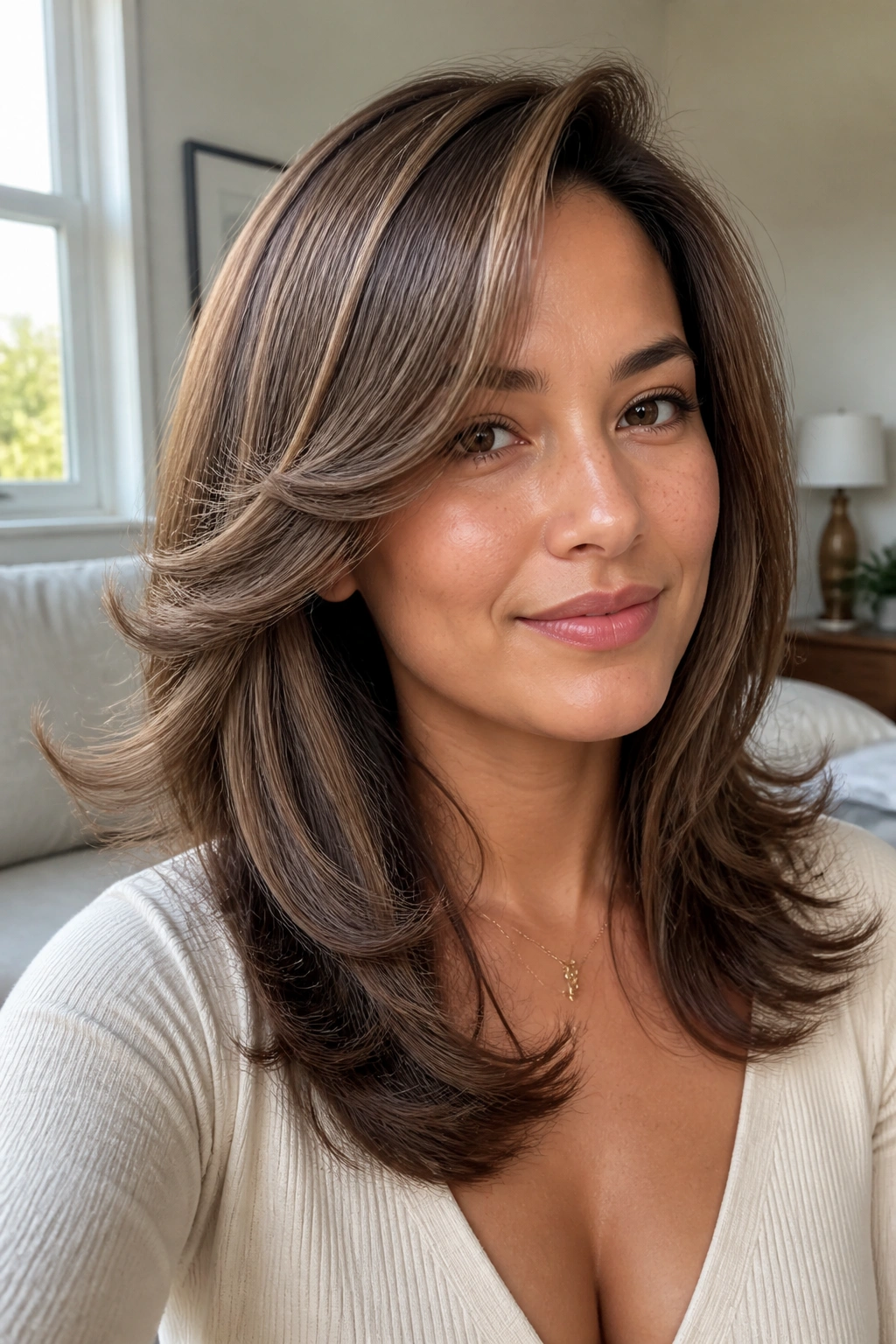
This is the version that looks like you actually brushed your hair on purpose. Side bangs with a flipped-out blowout have a little bend at the end, so the front lifts away from the face instead of lying heavy against it.
A round brush between 1.25 and 1.5 inches usually gives the nicest bend. Smaller brushes make the bang curl too tightly. Bigger ones can leave the front too flat unless your hair is already fairly full.
The trick is to direct the hair away from the face while it cools. That cooling step matters more than people think. Warm hair still remembers the shape you gave it; if you drop it too soon, the bang will collapse and split.
- Blow-dry the bang first, not last.
- Roll the ends under and then slightly out.
- Let the brush sit for a few seconds before releasing.
- Finish with a light spray, not a stiff shell.
- Reheat for 10 to 15 seconds the next day if the bend goes limp.
I like this style on layered lobs and shoulder-length cuts because the flip gives the front some energy. Straight, dead-straight bangs can make a soft layer cut look tired. This fixes that.
12. Side Bangs for Thick Hair That Need Bulk Removed
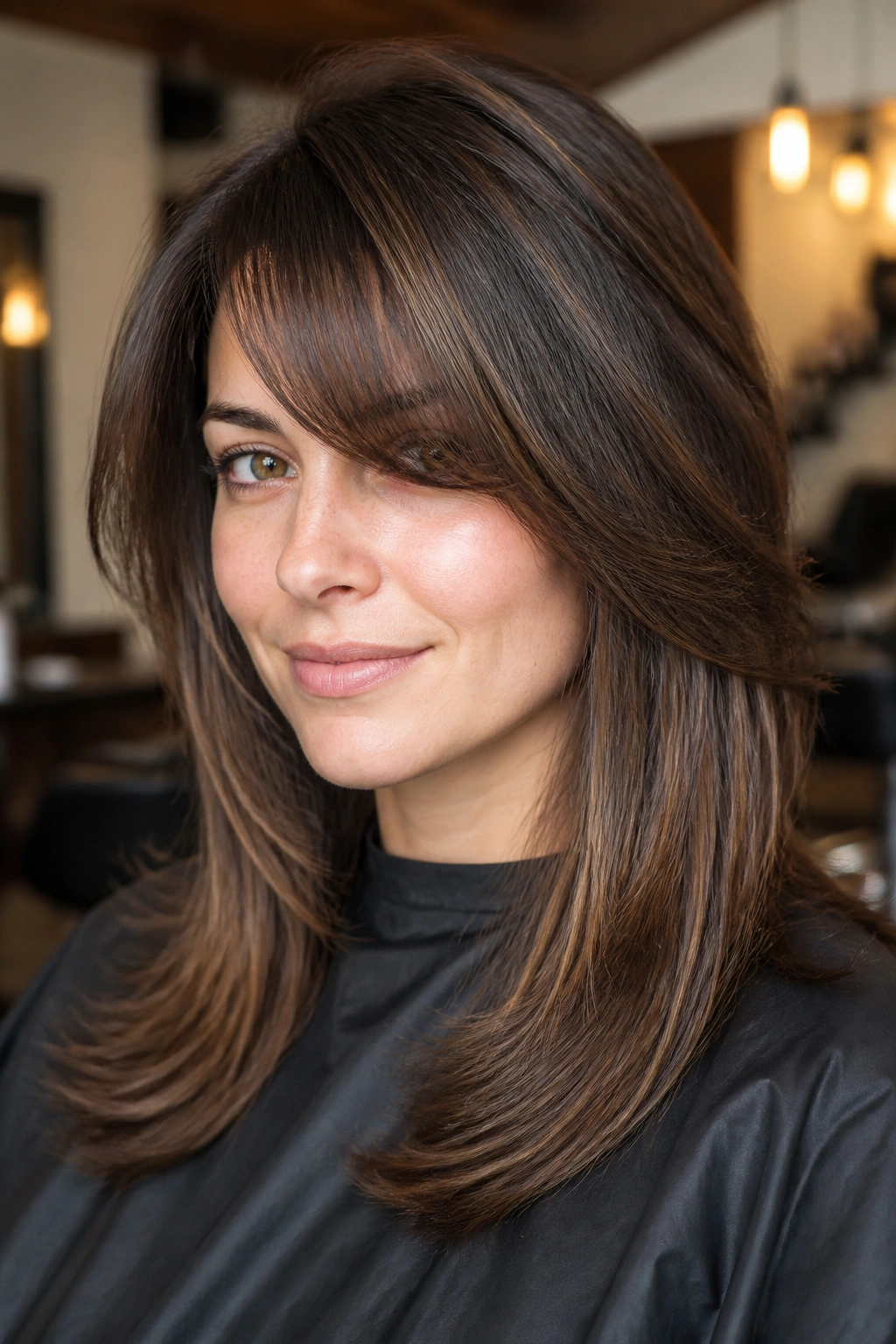
Thick hair can make side bangs look heavy fast. The front piles up around the temples, the layers lose movement, and the whole haircut starts feeling wider than it should.
That’s why thick hair usually needs bulk removed from underneath, not just a quick snip across the top. The stylist should keep the perimeter strong enough to hold shape while taking weight out of the interior. If they thin too aggressively at the very ends, the bang can frizz up and puff at the first sign of humidity.
What to Ask For
Be specific. Say you want the front softened, not shredded. That difference matters more than most people realize.
- Keep the longest front piece long enough to blend into the cheek layer.
- Remove weight from the underside with careful internal cutting.
- Avoid overuse of thinning shears near the edge.
- Preserve enough density so the bang still falls as one shape.
- Style with a smoothing cream or light serum on the ends only.
I’m blunt about this one: thick hair side bangs go wrong when someone tries to make them “light” by removing too much hair. That usually creates a frizzy halo, and nobody wants that. A good thick-hair bang should move, not disappear.
13. Soft Blunt Side Bangs With a Point-Cut Finish
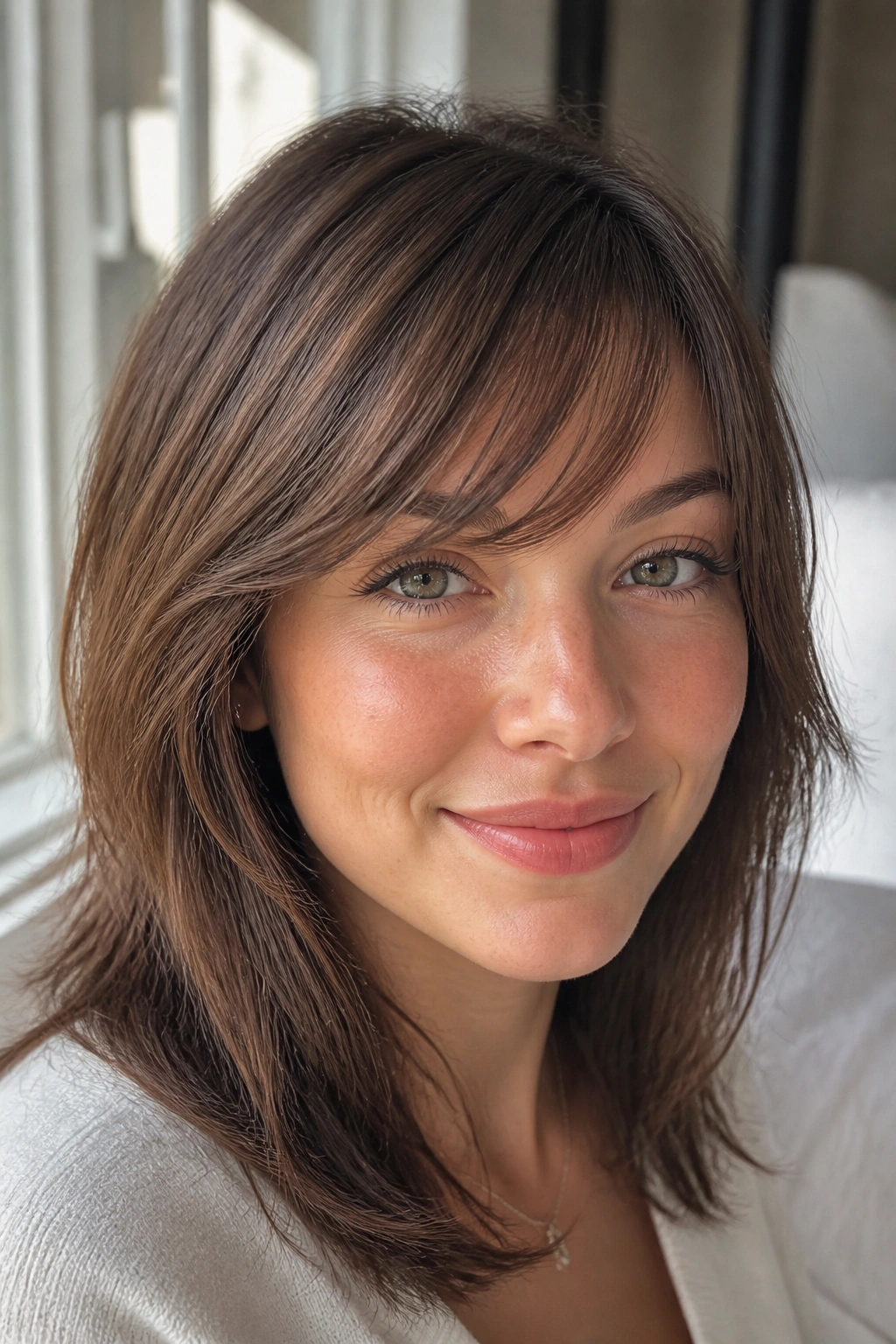
Can a blunt-looking bang still count as soft? Absolutely. A soft blunt side bang keeps a clear edge, but the ends are point-cut so the line doesn’t feel hard or boxy.
This is a good middle ground for someone who wants a little more structure than a wispy bang but doesn’t want the severe look that comes with a crisp, straight edge. The shape gives the face definition, while the softened tips keep it from fighting the layers around it.
Where the Softness Comes From
The softness is mostly in the finish, not the outline. A blunt side bang can still sweep diagonally, but the ends should be chipped or feathered enough to break up the solid wall of hair.
That makes it work nicely with soft layers that already have some movement at the ends. If the rest of the haircut is airy, a completely blunt bang can look too heavy. A softened blunt bang keeps the front from overpowering the cut.
This one tends to look best on straight hair or hair that can be blown smooth without much effort. If your hair is very textured, the sharp edge will need more maintenance than the wavy version in Section 8.
14. Grown-Out Side Bangs That Stay Intentional
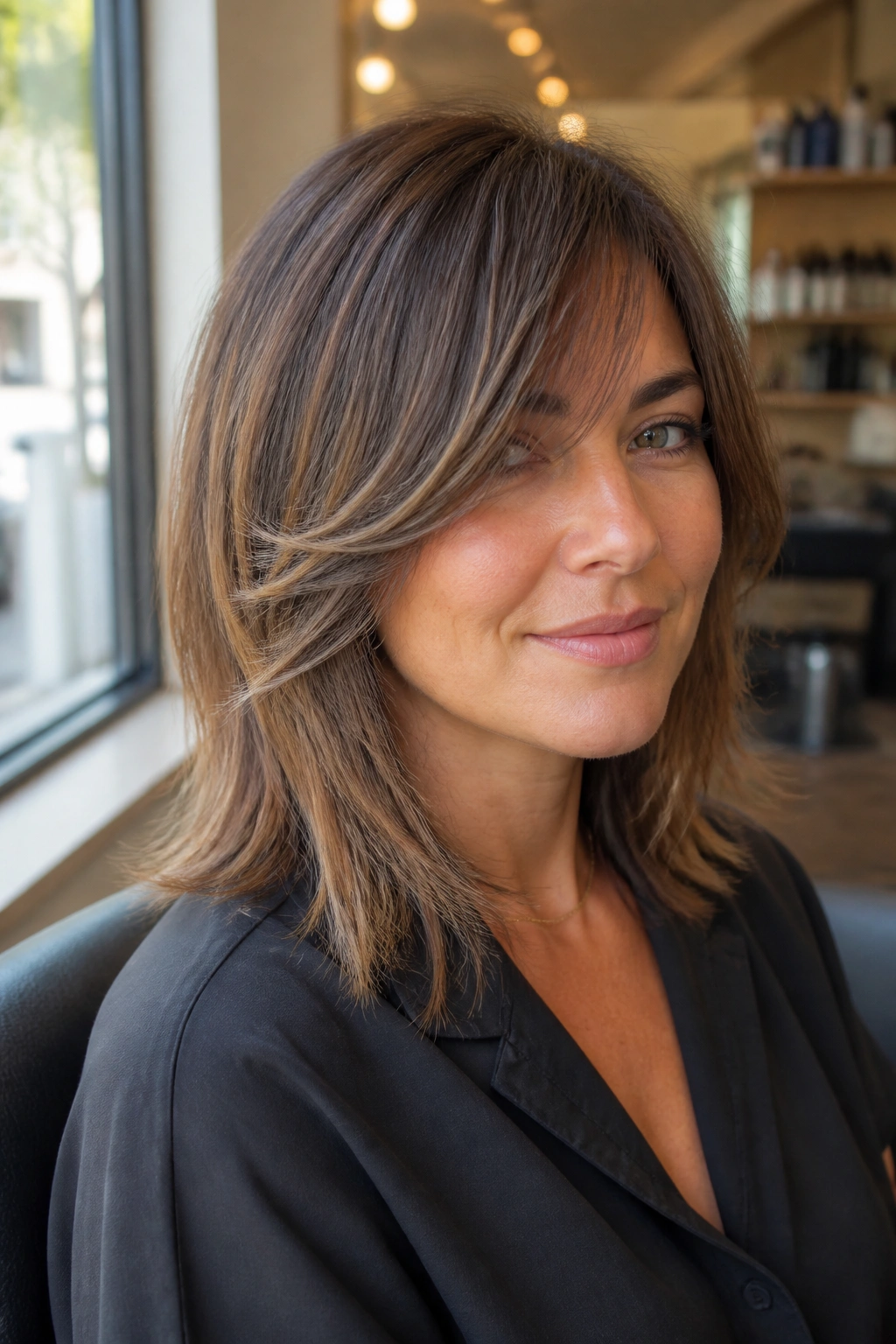
The awkward grow-out stage is where a lot of bangs either get rescued or get chopped off in frustration. Grown-out side bangs give that stage a shape, so the front looks deliberate instead of forgotten.
This works especially well when the shortest pieces have already passed the eyebrow and the lengths are drifting toward the cheekbone. At that point, forcing them to behave like a fresh fringe is a waste of time. Better to make them part of the front layers.
A side part helps here, but the styling matters too. Blow-dry the front forward first, then sweep it sideways while it’s still warm. That little bit of direction keeps the bang from splitting into two sad pieces.
A small bobby pin near the temple can hold the shorter side in place on days when the front won’t cooperate. Dry shampoo helps with grip, not just oil control, which is useful when the bang has lost some of its original structure.
This is one of those hair phases that feels annoying until it doesn’t. Once the pieces start reaching the cheek, the whole cut relaxes.
15. Side Bangs for Pixie Cuts and Short Layers
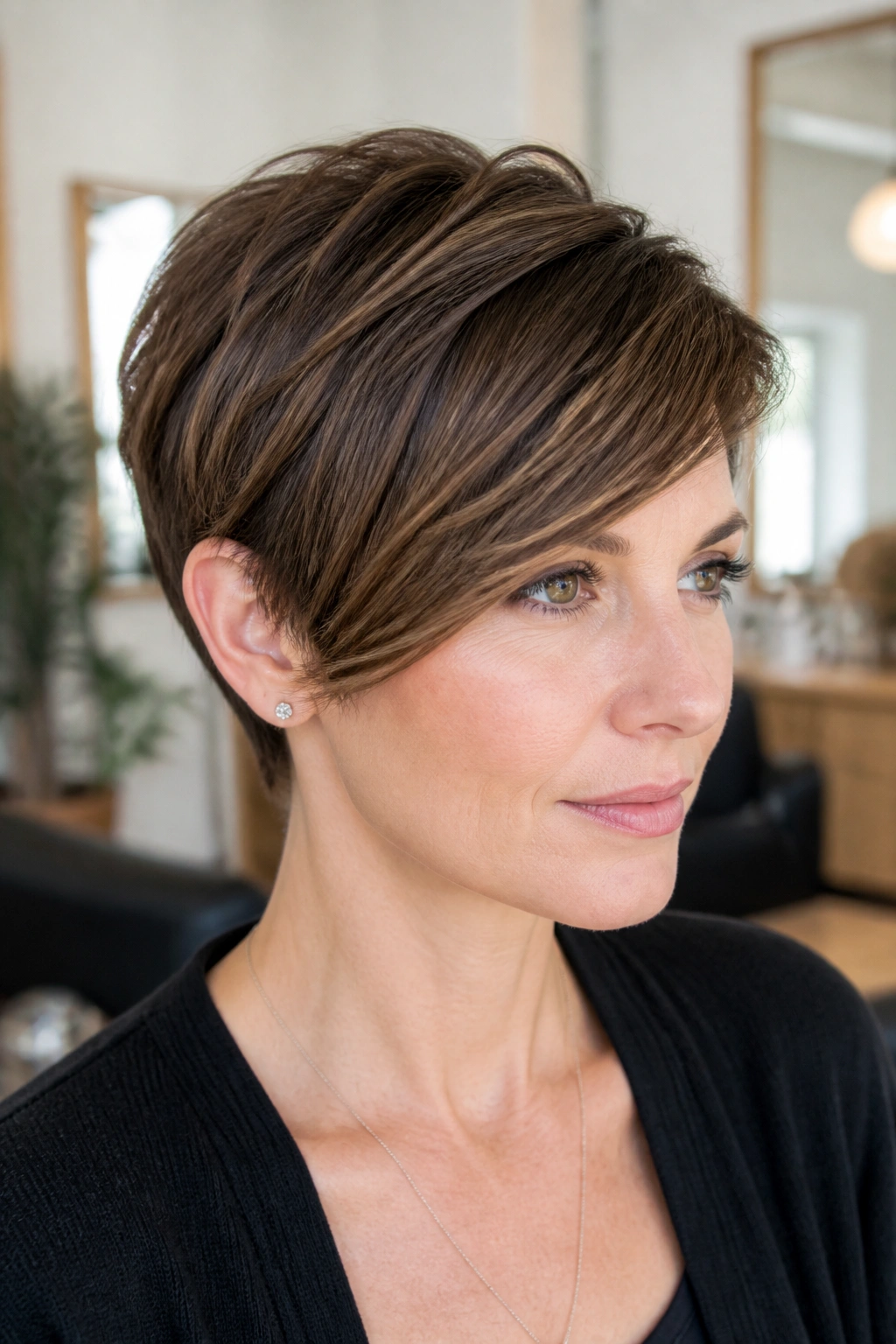
Short hair can carry a side bang without looking fussy. In fact, it often needs that front movement because the rest of the cut is too short to make the face framing on its own.
On a pixie, the side bang usually works as part of the whole shape, not as a separate fringe. The front should angle softly from the temple toward the cheekbone, with enough length to move but not enough to flop into the eyes every five minutes.
A good short side bang gives a pixie some direction. Without it, the cut can feel all crown and no front. With it, the shape has a little swing.
I like this version when the top layers are left long enough to tuck, twist, or sweep over with fingers. That small amount of length gives the cut life. Too short, and the bang ends up looking more like a notch than a style choice.
If you wear short hair and want softness, this is one of the cleanest ways to get it.
16. Brow-Skimming Side Bangs With a Diagonal Sweep
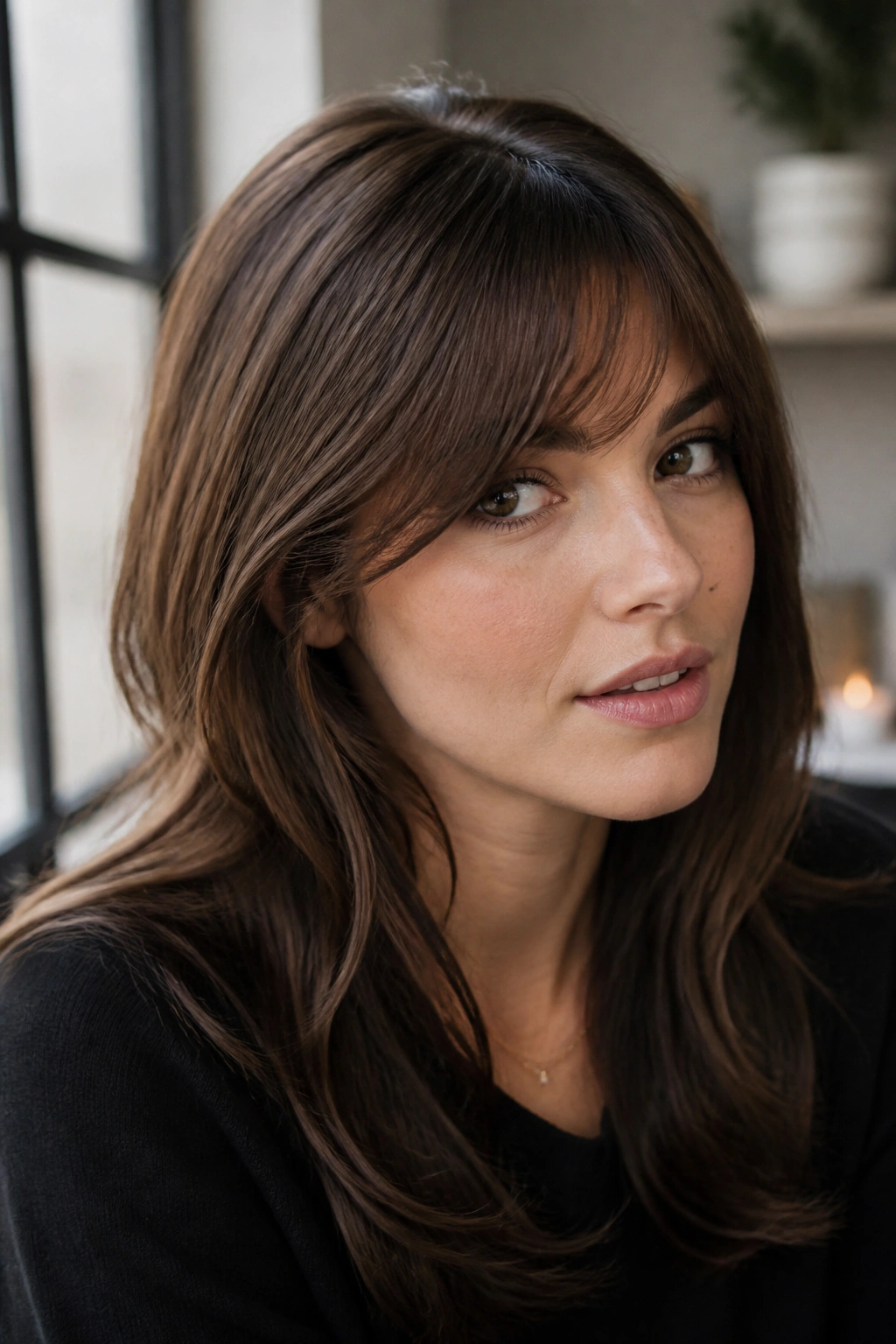
What if you want the fringe to be noticeable, but not heavy? Brow-skimming side bangs hit that sweet spot. They touch the outer brow, then slide diagonally across the face toward the cheekbone.
That diagonal line does a lot of work. It gives the front a clear shape, but the sweep keeps it from looking blunt. It’s a smart pick for people whose hair naturally falls forward at the front, because the bang can follow the grain instead of fighting it.
How to Style It on Wash Day
Dry the bang in the direction you want it to sit, but don’t flatten the root. A little lift at the base keeps the sweep from sticking to the forehead.
Then use a medium brush and turn only the last inch or so under or slightly away from the face. You want bend, not a curl.
- Keep the shortest point near the outer brow.
- Let the longest point reach the cheekbone.
- Use a small clip while the front cools.
- Refresh the root with a quick blast of air the next morning.
- Trim before the bang starts hitting the lashes constantly.
This style has a polished feel without turning stiff. It’s a good choice if you want the haircut to look finished even when the rest of your hair is a little messy.
17. Side Bangs on Layered Lob Cuts
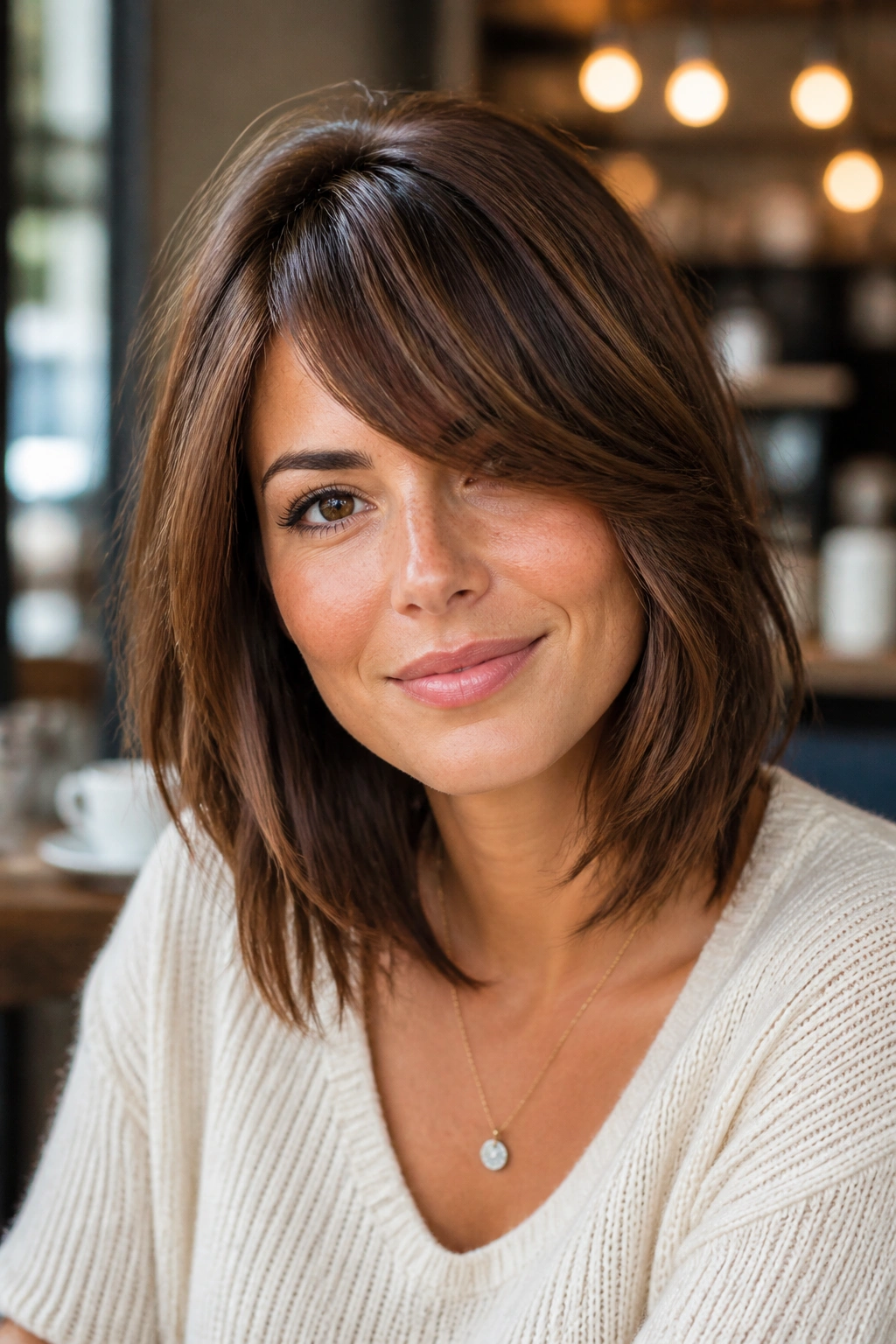
A lob can look boxy when the front is all one note. Side bangs break that up fast. They give the collarbone-length cut a front point that moves when you turn your head, which matters more than people think.
On a layered lob, the bang should connect to the face-framing pieces rather than sit on top of them. That connection keeps the haircut from looking chopped into separate zones. If the bang is too short, the front gets disconnected. If it’s too long, it stops doing the job entirely.
I think this is one of the most wearable pairings in hair. The lob already has length and swing; the side bang gives it direction. Together, they make the cut feel finished without being stiff.
This is also a good option for people who want to keep their hair up in a low clip or half-up style. The side fringe still leaves something around the face, even when the rest of the hair is pulled back.
18. Soft Diagonal Side Bangs That Disappear Into the Front Layers
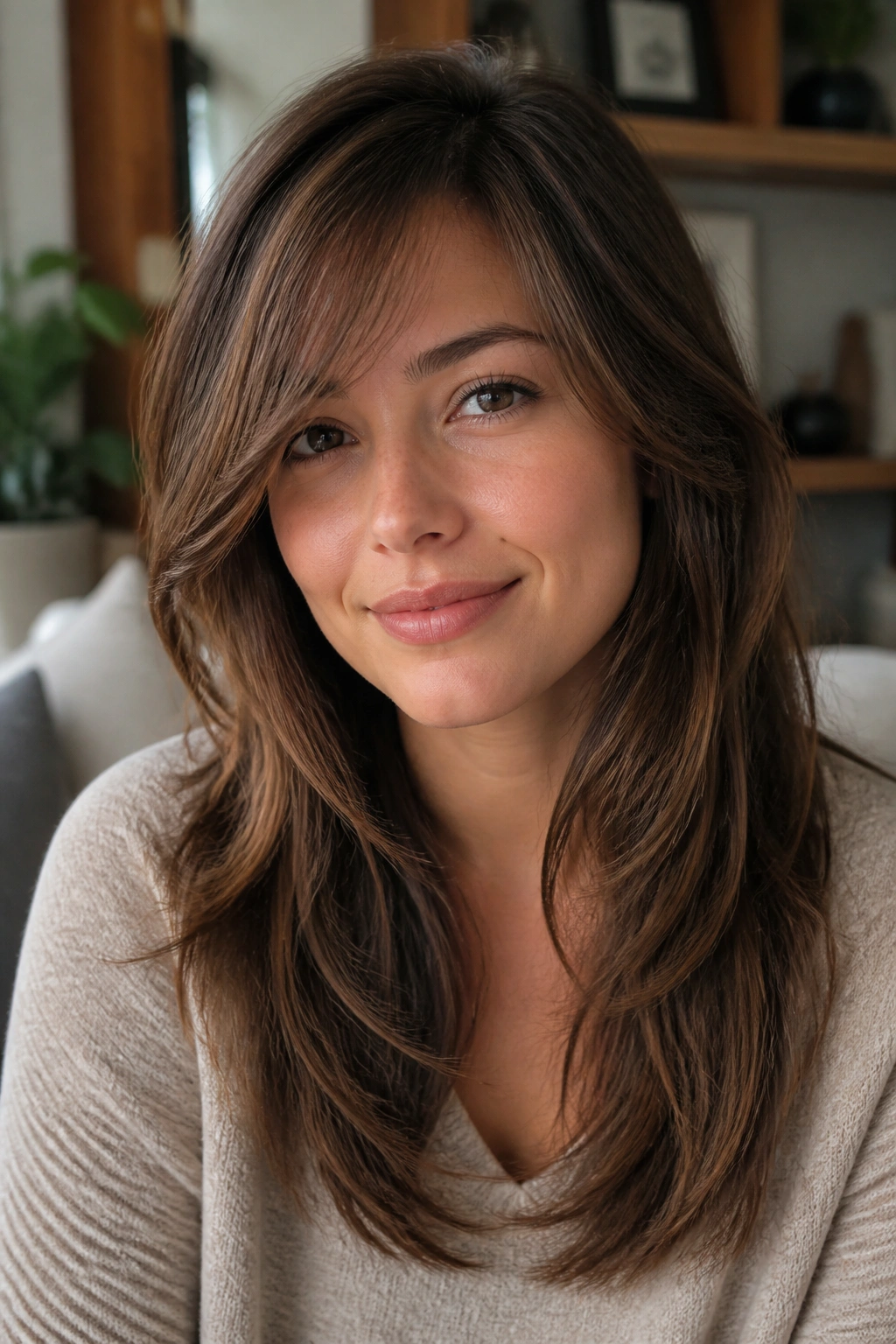
The most natural-looking side bang is often the one that barely announces itself. A soft diagonal version starts near the part and tapers gradually into the front layers, so the eye reads movement before it reads “bang.”
That’s what makes it useful. You get face framing, but you don’t get a hard cut line at the front. The shape blends into soft layers so well that it can almost vanish on second-day hair, which is a blessing if you hate feeling trapped by your fringe.
I especially like this on medium-density hair that needs a little shaping but not much drama. The cut can be made with a shallow diagonal — not steep, not sharp — so the front falls in one long sweep instead of two separate pieces.
This style also grows out kindly. A lot of bangs get awkward at the six-week mark. A soft diagonal fringe usually just turns into better face-framing layers, which is a much easier life for everyone involved.
Final Thoughts
Side bangs work best when they respect the haircut they live inside. Soft layers want movement, not a hard block of hair sitting across the face, and that means the angle, density, and length matter more than the label on the style.
If you’re sitting between two options, go longer. A side bang that lands near the cheekbone can be pushed, tucked, pinned, or blown forward in different ways. A short bang can’t give you that same range, and grow-out gets annoying fast.
Bring a photo if you want, but bring one with hair that looks like yours — same density, same bend, same front length. That one detail saves a lot of disappointment.
