



Round faces have a softness that can look graceful, fresh, and easy to wear, but the wrong haircut can flatten that shape into one broad curve. Layered haircuts with bangs for round faces work best when they create a little length, a little angle, and enough movement that the eye keeps traveling.
Bangs are where people get nervous. Heavy fringe can make the face look shorter, while a lighter curtain bang or a side sweep can balance the forehead and pull attention outward in a better way. That is the whole trick, really.
Layers matter just as much. If the shortest piece lands right at the cheek, the cut can box in the face; if the layers start lower and move in a soft diagonal, the whole style feels slimmer and more alive. Small difference. Big payoff.
The 22 looks below cover the cuts that do that job well, from soft and romantic to sharp and shaggy. Some are easy to air-dry, some need a round brush, and a few are for people who want a little attitude with their fringe.
1. Long Curtain Bangs and Soft Cascade Layers
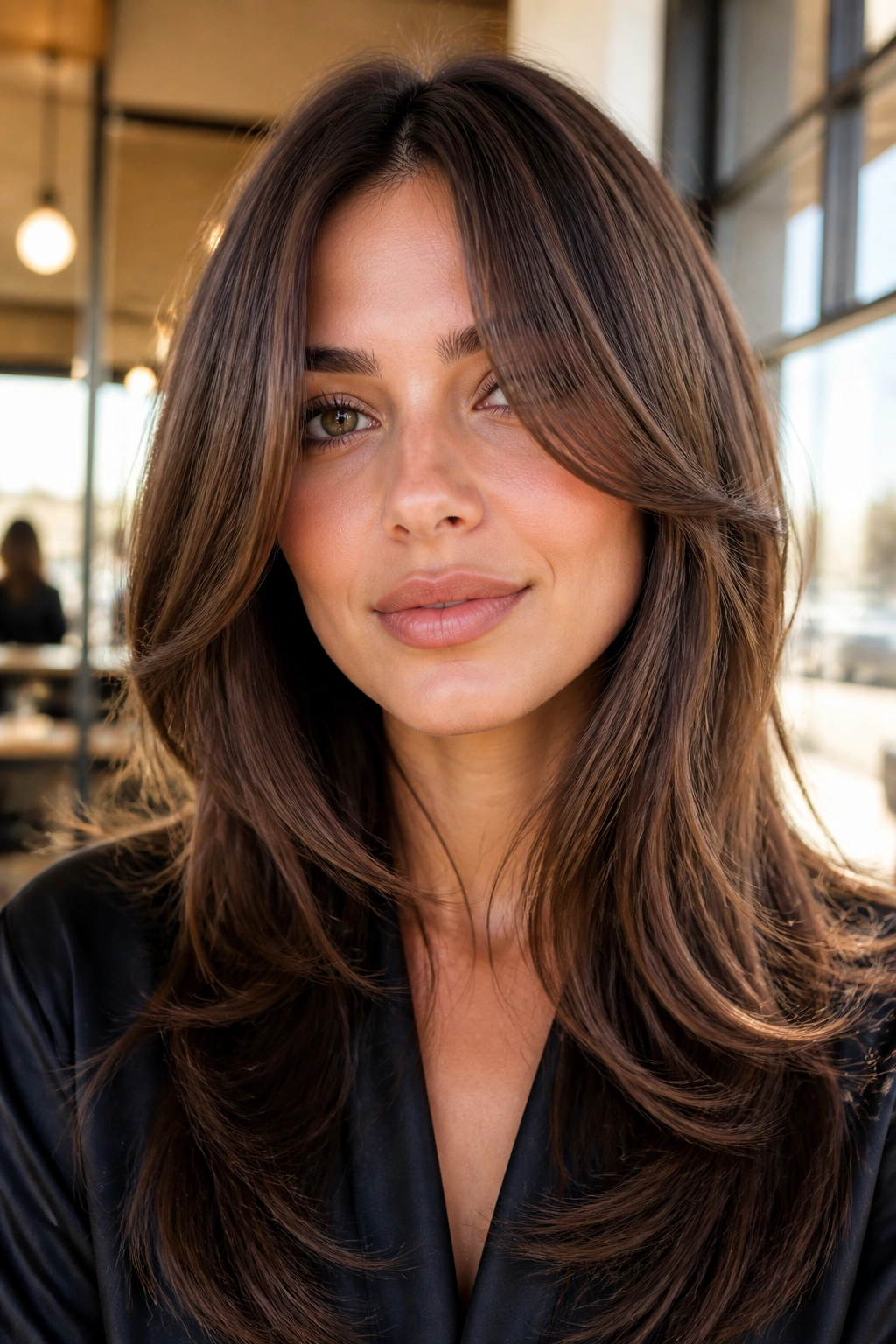
Long curtain bangs are the safest place to start if you want shape without drama. They split at the center, fall past the cheekbones, and create two clean vertical lines on either side of the face, which is exactly what a round face usually needs.
Why it works
The magic is in where the bangs end. When they hit below the cheekbone and blend into long layers, they stop the face from reading as one big circle. The eye moves down instead of stopping at the widest point.
- Best on medium to thick hair
- Ask for layers that start below the chin
- Keep the shortest bang piece around the nose or upper lip
- Style with a round brush, curling away from the face
Pro tip: A soft bend looks better than a stiff curl here. You want movement, not helmet hair.
2. Collarbone Shag with Choppy Fringe
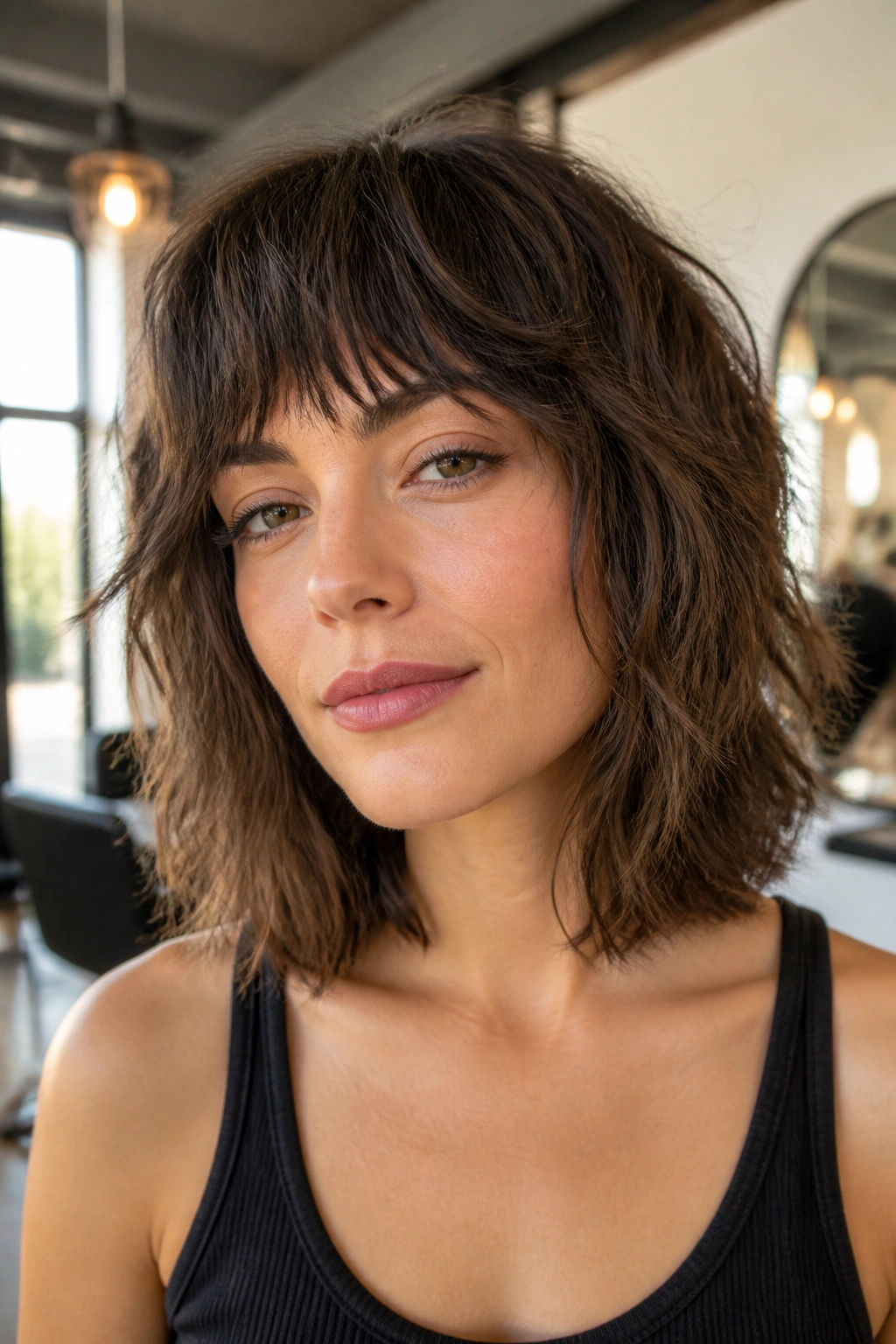
This is the cut for anyone who wants hair that looks like it has a pulse. A collarbone shag puts texture at the ends, not the cheeks, so the shape feels longer and less round.
The choppy fringe helps because it breaks up the forehead line without laying a heavy block across it. That tiny bit of unevenness matters. It keeps the style from looking too neat, which is exactly why it flatters round faces so well.
A shag like this is happiest with natural wave, a diffuser, or a rough blow-dry. If your hair is fine, ask for lighter layers so the whole thing does not go sparse at the ends. If your hair is thick, the shag can take more texture and still hold its shape.
3. Side-Swept Lob with Hidden Layers
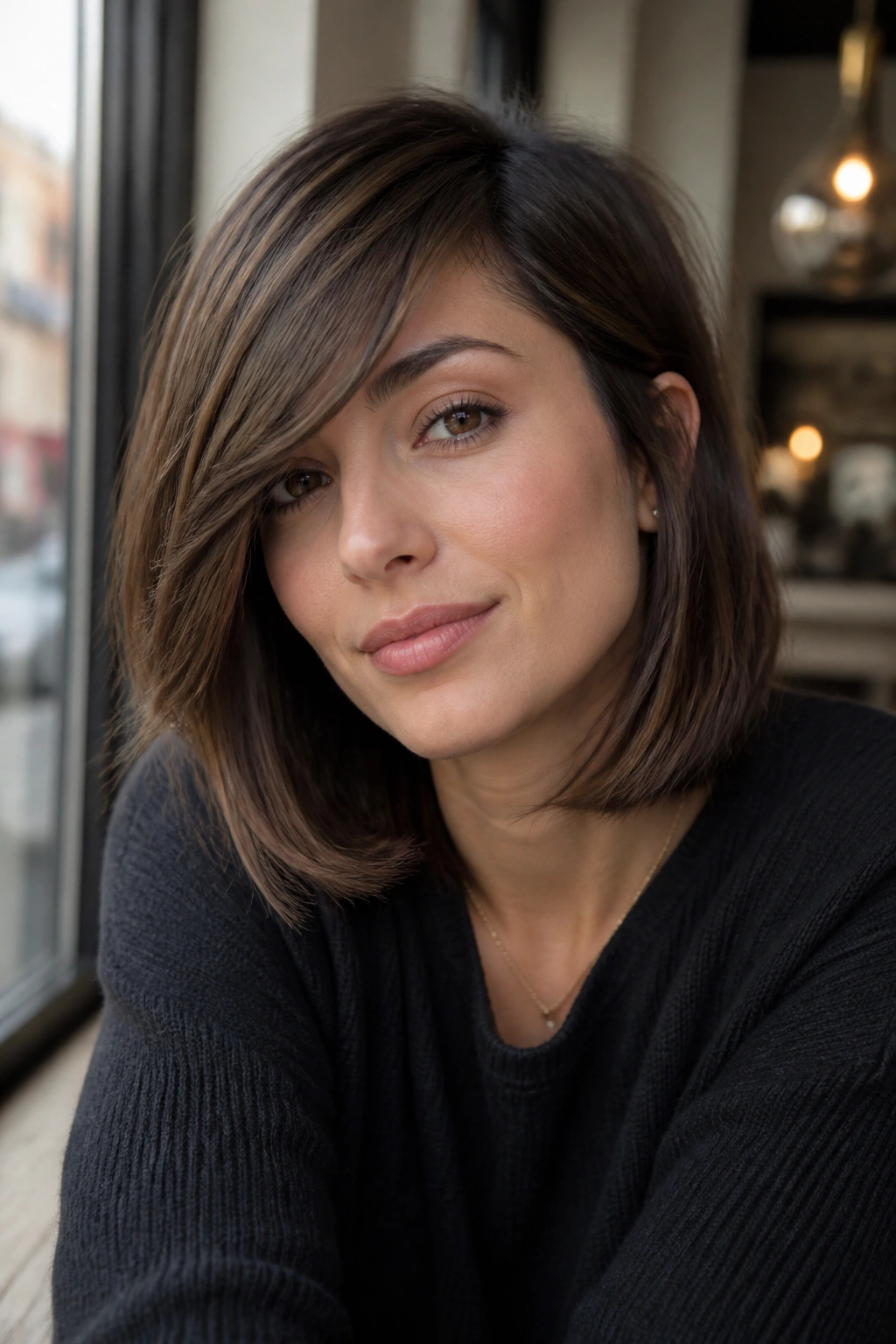
Want a cut that looks polished but does not box in your face? A side-swept lob is one of the easiest answers. The length usually lands at the collarbone, which gives the face a longer line, and the side bang creates a diagonal that cuts across the roundness.
How to ask for it
Ask your stylist for subtle internal layers, not obvious choppy ones. That keeps the outline smooth while letting the ends move a little. A heavy blunt line at the bottom can make a round face feel wider than it is.
The bang should start near the temple and sweep across the forehead, not sit like a shelf. If you wear glasses, this version is especially nice because the fringe can tuck around the frames instead of fighting them.
It is a calm haircut. Not boring. Calm. And that calmness is what makes it useful.
4. Butterfly Cut with Airy Bangs

A butterfly cut is built for people who like the look of long hair but hate the weight of it. The top layers are shorter and float around the face, while the lower length stays long, so you get lift without giving up the size of the ponytail.
The shape in plain English
The shorter face-framing pieces should start around the cheekbone or just below it. That keeps them from landing right on the roundest part of the face. The airy bangs do their share too, since they blur the forehead without closing it off.
- Works well on medium to long hair
- Best if you want a blowout look
- Great with a round brush or a big-barrel curling iron
- Keep the top layers soft, not chopped up
This cut can fall flat if the shortest layers are cut too high. Ask for movement around the face, not a sudden shelf near the eyes.
5. Soft Wolf Cut with Bottleneck Bangs

The wolf cut earns its spot because it adds height where round faces usually need it most: up top. The crown gets lift, the sides stay leaner, and the ends are left loose enough that the shape does not turn into one big puff.
Bottleneck bangs are a smart match. They start narrow in the center and open wider toward the temples, which gives the face a little frame without making the forehead look trapped. It is a very good trick, and it works especially well on wavy or thick hair.
Be careful with over-layering if your hair is fine. Too many short pieces can leave the cut looking stringy instead of cool. The good version of this style looks wild in a controlled way. The bad version looks like a haircut that got interrupted.
6. U-Shaped Long Cut with Wispy Fringe
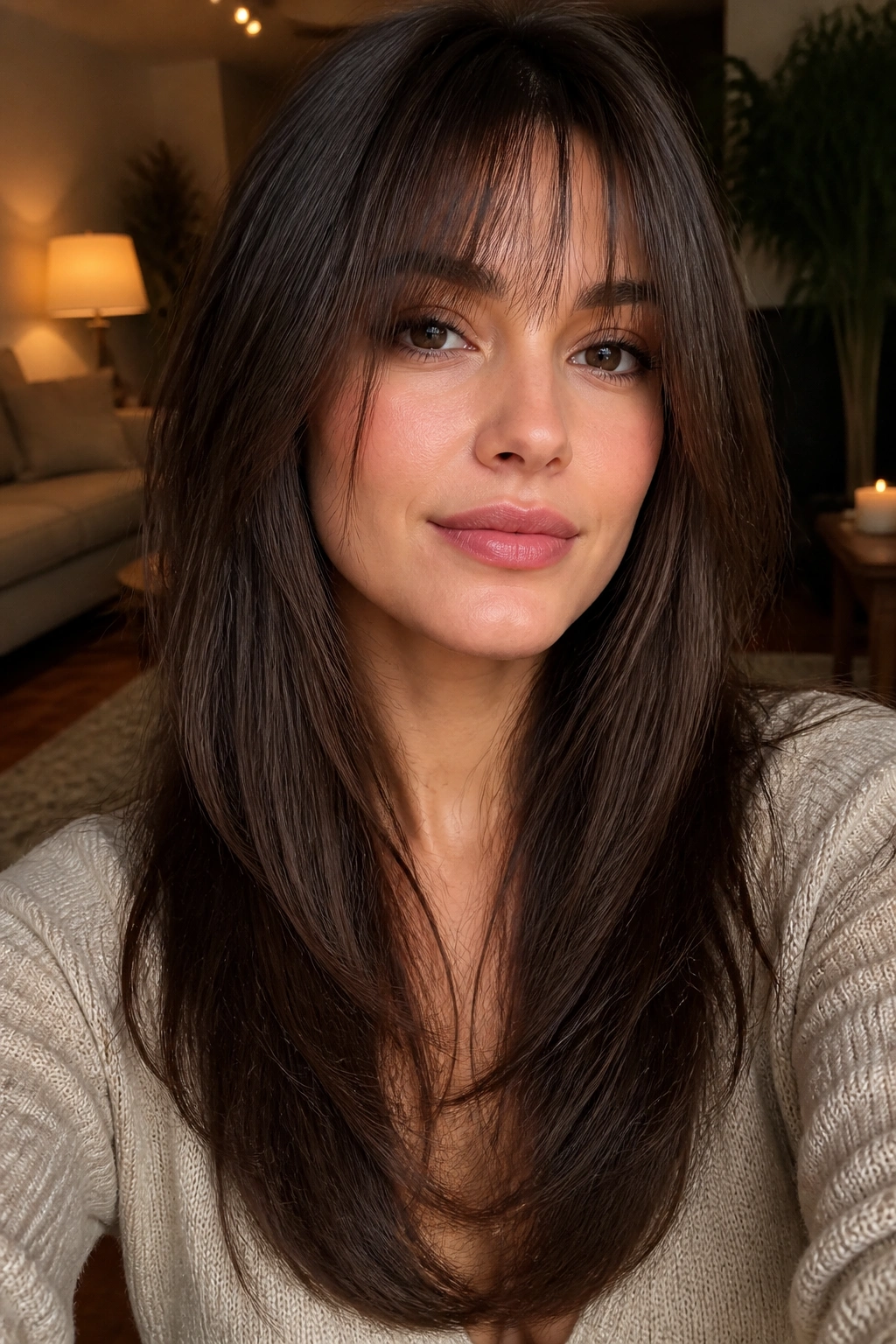
A U-shaped cut is one of those quiet fixes that people miss because it does not shout. The back stays a little longer in the center, and the sides curve in, which creates a vertical line down the middle of the hair instead of a wide shelf across the face.
Wispy bangs keep the front light. They show a little forehead, soften the eye area, and avoid the heavy block that can make a round face feel shorter. If you have thick hair, this cut is even better because the U-shape removes bulk without taking away length.
Unlike a blunt long cut, this one moves when you do. That matters. Hair that swings a little at the ends almost always looks better on round faces than hair that hangs in one solid line.
7. Feathered Shoulder Cut with Side Part
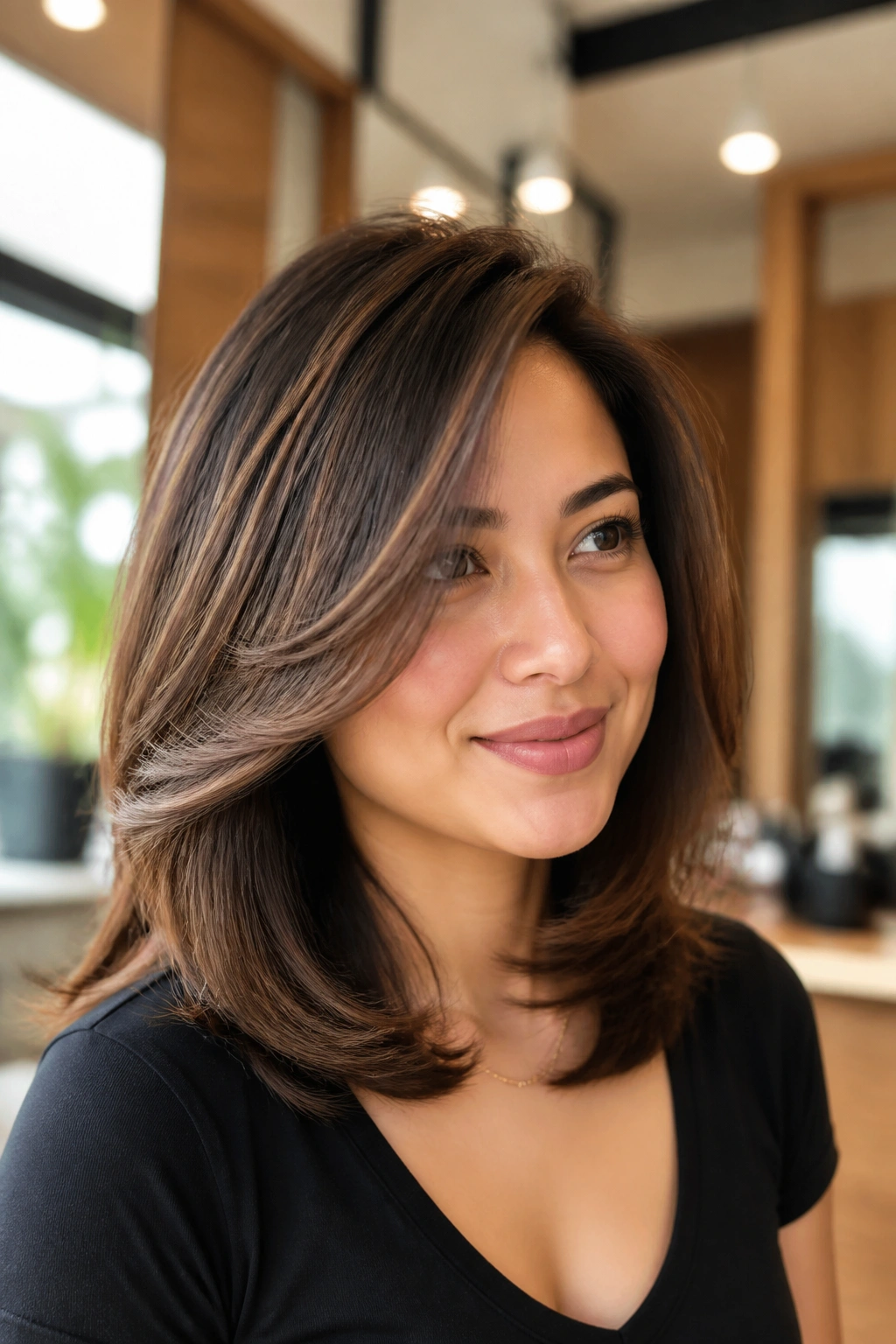
Feathering is old-school in the best way. The layers are sliced so the ends soften into each other, which keeps the style from sitting like a hard line at the cheeks. On a round face, that soft edge is doing real work.
The side part gives you the other half of the equation. It shifts some of the volume off center, and that little imbalance makes the face read longer. A middle part can work too, but the side part is easier if you want a more sculpted look without fussing all morning.
What to keep in mind
- Ask for feathering below the cheekbone, not at it
- Use a lightweight mousse at the roots
- Blow-dry with the part already set
- Keep the ends soft, not razor-thin
This is a good cut for people who want polish without stiffness.
8. Razored Midi Cut with Brow-Skimming Bangs

Razoring can be brilliant on the right head of hair. It takes bulk out of thick strands and leaves the edges broken enough that the cut does not form one blunt circle around the face. That broken edge is the whole point.
Brow-skimming bangs can help a round face when they are not too dense. They sit just above or right at the brows, which frames the eyes without cutting the forehead in half. If the bangs are too heavy, the face shortens fast. If they are too thin, they disappear. There is a sweet spot.
This cut is strongest on hair that has some texture already. Straight, very fine hair can lose body if too much is taken out with a razor, so ask for controlled layering rather than a full shred. Texture should look lived-in, not thinned out.
9. Bixie with a Long Sweeping Fringe

A bixie is what happens when a bob and a pixie stop arguing and meet in the middle. Shorter around the back and sides, longer on top, it gives round faces a little lift at the crown and keeps the outline lean.
Why it flatters round faces
The long fringe is the important part. It sweeps across the forehead at an angle, which breaks up the soft curve of the face and gives the eye somewhere to go. If the fringe is short and blunt, the shape changes fast. Longer is safer.
A bixie works best if you like styling product in your hair. A pea-sized amount of paste or cream can shape the fringe and keep the top from collapsing. If you want something airy and wash-and-go, ask for soft edges rather than very short sides.
It is a brave cut, but not a reckless one.
10. Curly Layers with Curly Bangs

Curly hair on a round face can be gorgeous, but only when the shape is cut with the curl pattern in mind. If the curls are all one length, the widest part often sits right at the cheek and creates a triangle or a halo that goes sideways instead of down.
Curly layers fix that by stacking the shape upward. Curly bangs help too, as long as they are cut to account for shrinkage. A bang that hits the brow when wet may spring up well above it once dry, so the cut needs room to bounce.
What to ask for
- A dry curl cut if your stylist offers it
- Bangs cut longer than you think you need
- Layers that remove bulk from the sides
- A shape that lets curls fall forward, not out
Use a diffuser on low heat. High heat can puff the fringe and make the whole top feel wider.
11. Inverted Bob with Face-Framing Pieces

An inverted bob is shorter in back and longer in front, and that simple angle does a lot for round faces. It draws the eye down and forward, which creates length without making the cut look severe.
The front pieces matter more than the back here. If they stop at the jaw, the shape can look too boxy. If they land below the jawline, the face gets a cleaner line. That is the sweet spot I would ask for every time.
This cut can be sleek or tousled, but it should never feel bulky at the sides. Keep the layers tucked in around the nape and let the front carry the visual weight. It is a neat haircut, which is nice when you want structure without losing softness.
12. V-Cut Length with Split Bangs
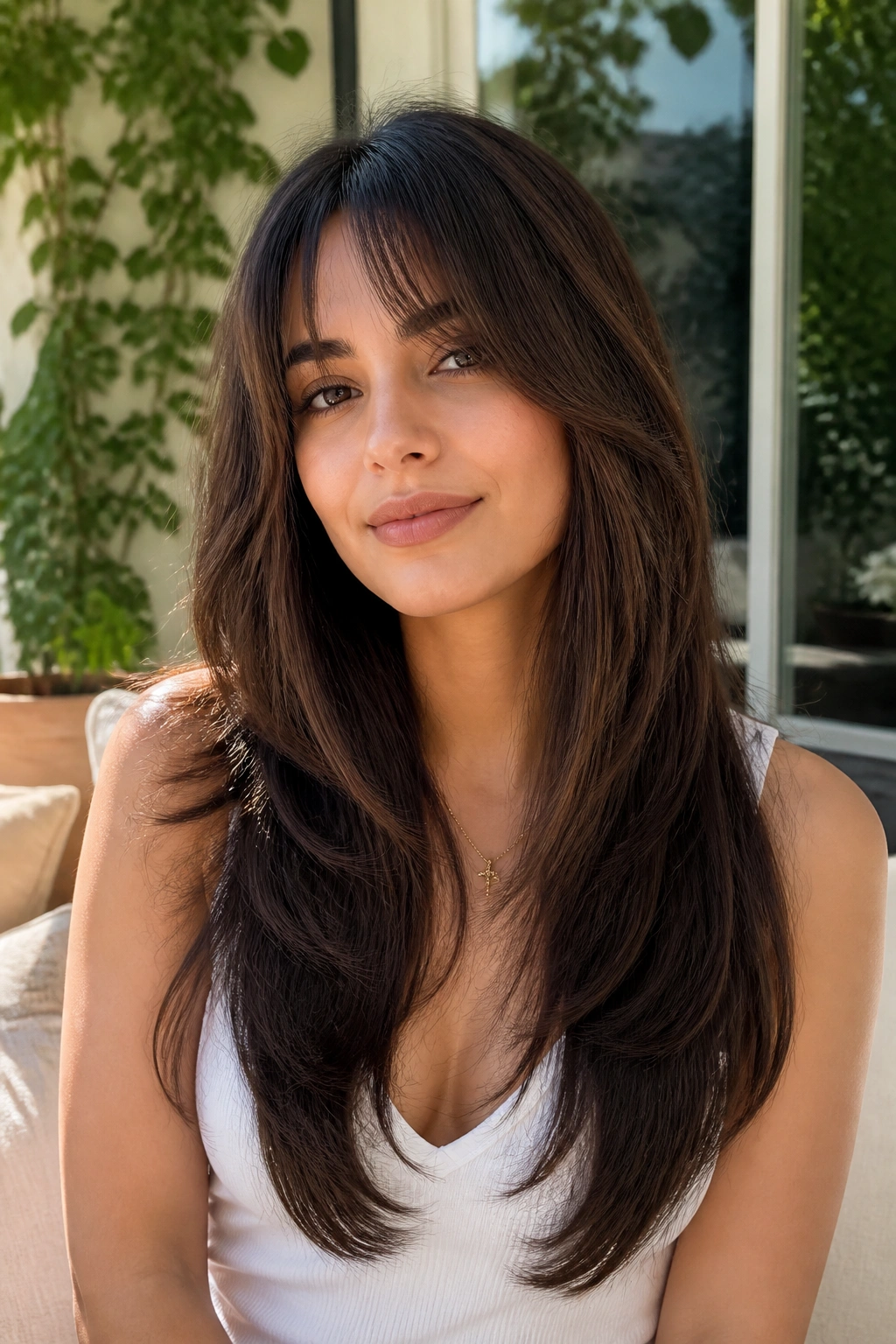
A V-cut is exactly what it sounds like: the longest point sits in the middle of the back, and the sides angle up toward it. On thick or long hair, that shape keeps the ends from reading as one heavy wall.
Split bangs are the front half of the equation. They open the forehead and create a center line that works a bit like an arrow, leading the eye up and down instead of side to side. That helps a round face feel more oval.
Unlike a U-shape, the V-cut has a sharper point, so it tends to suit hair that already has some density. Fine hair can look wispy if too much length is removed from the sides. Ask for soft internal layers instead of aggressive thinning if your strands are delicate.
13. Chin-Length Layered Bob with Side Bangs
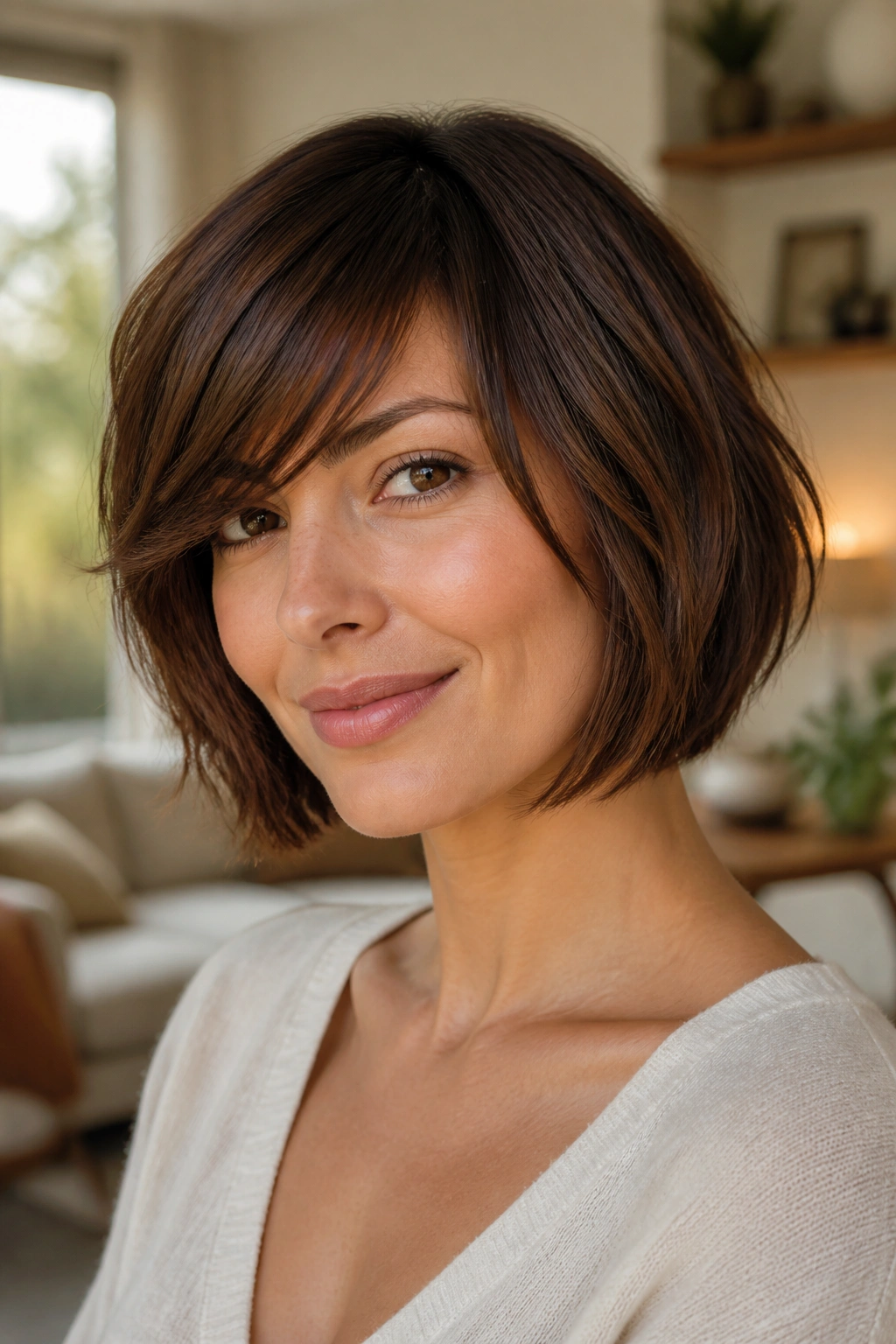
A chin-length bob is risky on a round face if it is cut as one blunt block. Short hair at the jaw can make the face look wider fast. The fix is to soften the perimeter and push the length a touch longer in front.
Side bangs are the part that saves this cut. They angle the front of the style and stop the eye from settling right at the chin. That gives the bob some motion and keeps it from feeling boxy.
Best details to request
- Keep the front pieces grazing below the cheekbone
- Ask for soft layering through the crown
- Avoid a hard line at the jaw
- Part it off-center if you want extra length
This is a good pick if you like short hair but still want a bit of movement around the face. It is tidy, which is nice, but not stiff.
14. Shaggy Lob with Broken Texture

The shaggy lob is one of the easiest haircuts to live with, and that matters. The broken texture keeps the ends from making a hard horizontal line, which is exactly the line a round face does not need.
The lob length keeps the overall shape below the widest part of the face. The shag layers soften it. Put them together and you get a cut that can look cool with air-drying or better with a quick bend from a flat iron. Not much else required.
It works on straight and wavy hair, though the finish changes. Straight hair reads cleaner and more modern; wavy hair gets a little more grit. If you want a style that does not ask for a perfect blowout every time, this is one of the smarter choices on the list.
15. Sleek Long Cut with Arched Bangs
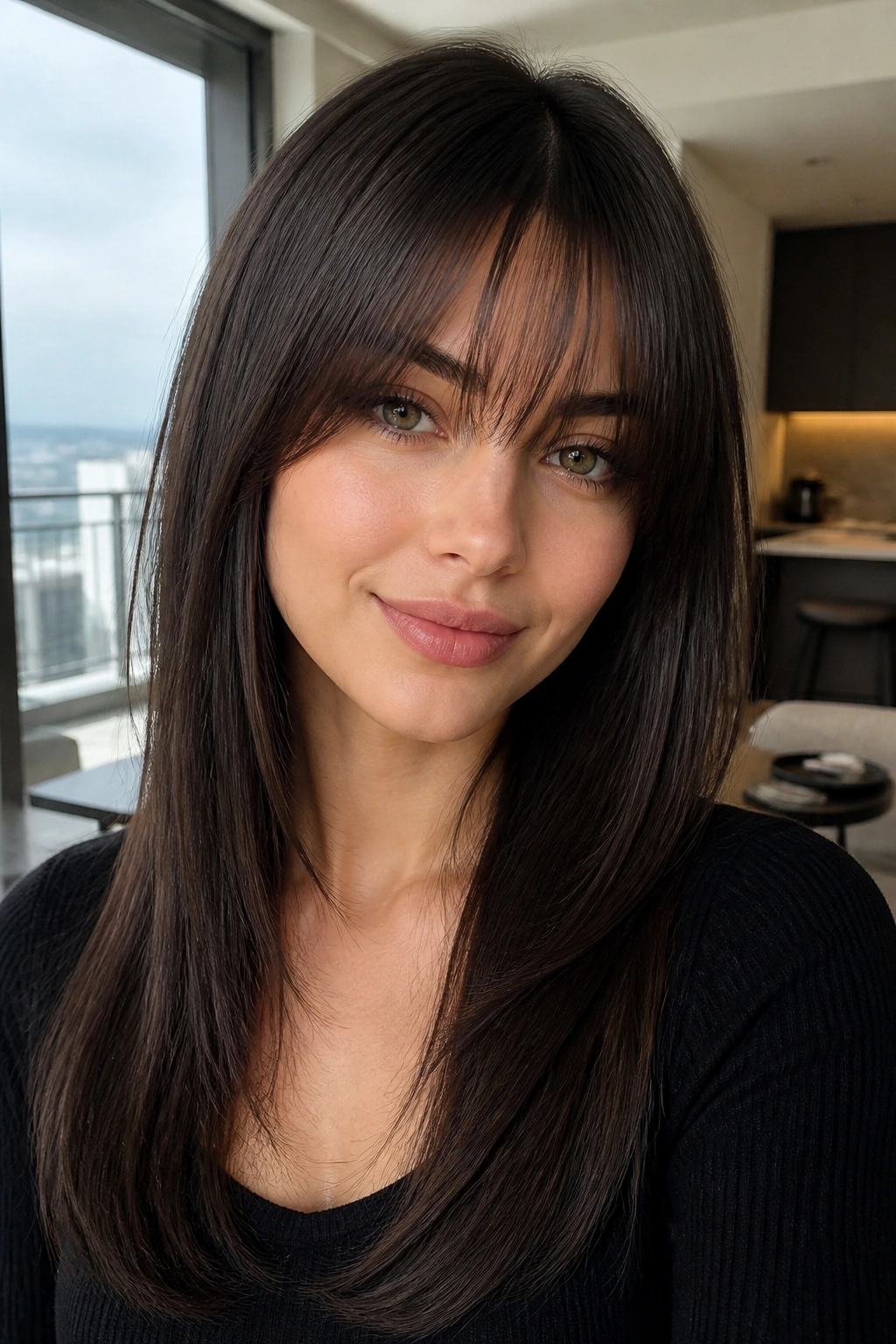
Can straight hair and bangs flatter a round face? Absolutely, if the bangs are cut with some curve. Arched bangs are shorter in the center and longer at the sides, so they follow the shape of the forehead instead of cutting across it like a ruler.
That arch helps because it gives the eyes a frame without making the face feel shorter. The rest of the hair should stay long and sleek, ideally below the collarbone. Length matters here more than people think.
How to style it
Use a heat protectant first. Then blow-dry the bangs with a small round brush, bending the ends slightly away from the face so they do not sit too flat. Finish the lengths with a light serum on the mids and ends only.
Keep the rest of the cut clean. Too many short layers can fight the sleek shape and make the whole style lose its line.
16. Textured Pixie with Sweeping Fringe
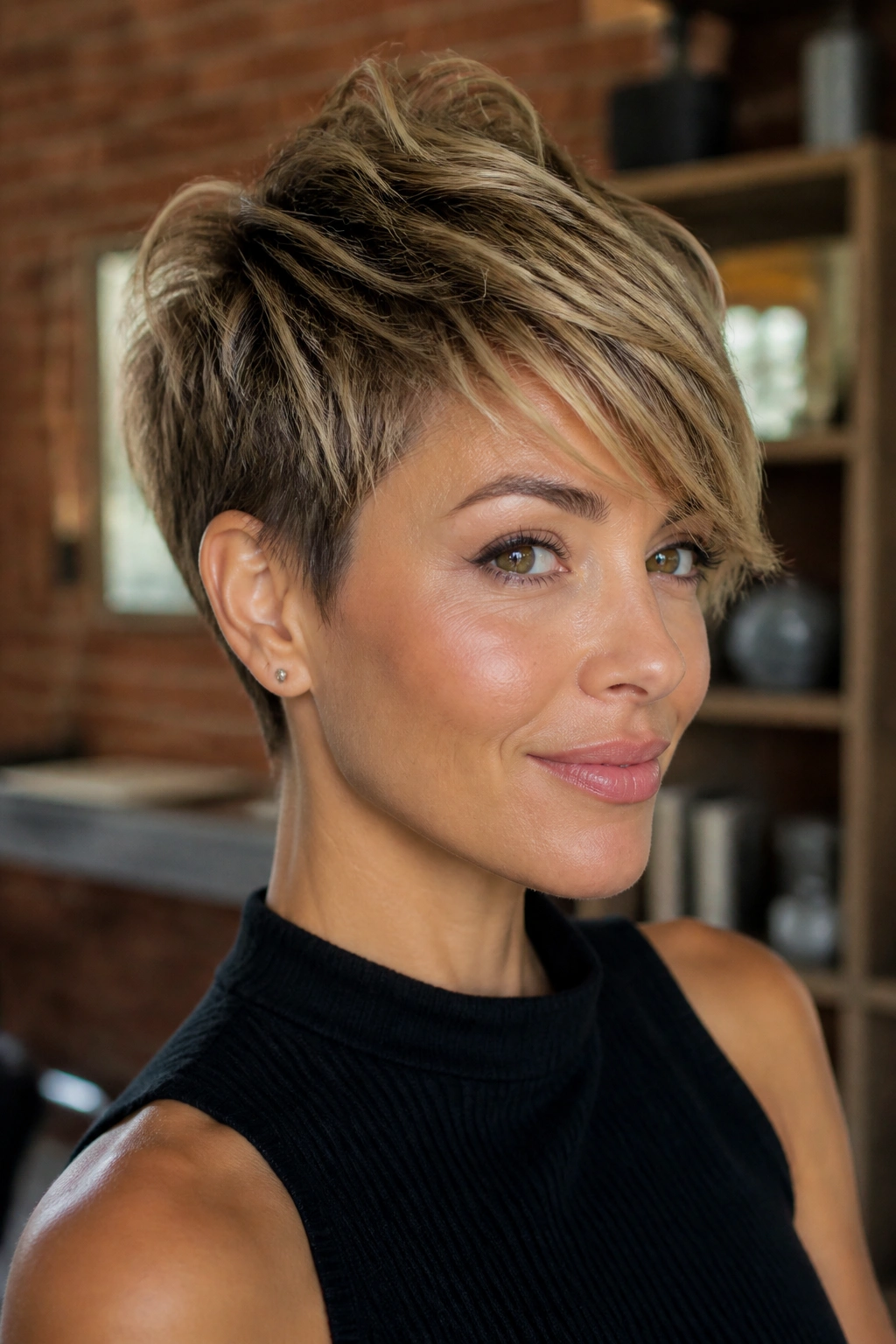
Short hair can work on a round face. It just needs height, movement, and a fringe that gives the eye a direction to follow. A textured pixie does all three if it is cut with some lift at the crown and a longer sweep in front.
The sweeping fringe is the reason this cut belongs here. It breaks the circle of the face and pulls attention diagonally, which is the quickest way to sharpen a soft shape. Short sides alone can be too harsh; the longer fringe softens that edge.
Keep an eye on this
- Ask for extra length through the fringe
- Leave room at the crown for volume
- Use paste or wax, not heavy cream
- Be ready for regular trims
This is not the haircut for people who want to wash and go with zero thought. It is short, not lazy.
17. Wavy Cut with Piece-Y Fringe

Piece-y fringe is lighter than a full curtain bang and less committed than a blunt one. It breaks into small sections, which is useful on a round face because the forehead stays visible in little bits instead of one closed line.
Waves do the rest. They add vertical movement and keep the cut from sitting flat against the cheeks. If your hair has a natural bend, this style can look almost effortless, though I would still call it calculated. There is a difference.
A little sea-salt spray, a quick scrunch, and a hand off the brush is often enough. The main thing is not to overwork the fringe. The more you brush it into one solid shape, the more you lose the airy effect that makes it flattering.
18. Air-Dried Layered Cut with Curtain Bangs

Some cuts are built for a blowout. This is not one of them. An air-dried layered cut works with your natural texture, which is handy if your hair bends, frizzes, or waves on its own and you do not want to fight it every morning.
Curtain bangs stay soft when air-dried, especially if they are long enough to split and move. They do not need to sit in a perfect curve. That looseness is what helps the face look longer and less full.
The layers should be placed lower on the head so the hair falls in long pieces instead of puffing at the cheeks. If you have fine hair, keep the layers light. If your hair is thick, ask for internal weight removal so the style dries clean instead of ballooning out.
19. Soft Mullet with Longer Sides and Fringe

The soft mullet is not the scary version people picture from old photos. Done well, it gives height at the crown, softness around the face, and length through the back and sides that helps a round face look less wide.
The fringe should be textured and a little broken. A blunt fringe would fight the whole shape. The longer sides are the part that keeps the cut wearable, because they pull the eye down near the jaw and neck instead of leaving everything concentrated in the middle of the face.
This cut is strongest on wavy hair, though straight hair can wear it too if you are willing to style it. It is a little more personality-forward than the other cuts here. That is the point. If you want quiet, skip it. If you want shape with edge, it earns its keep.
20. Long Boho Layers with See-Through Bangs
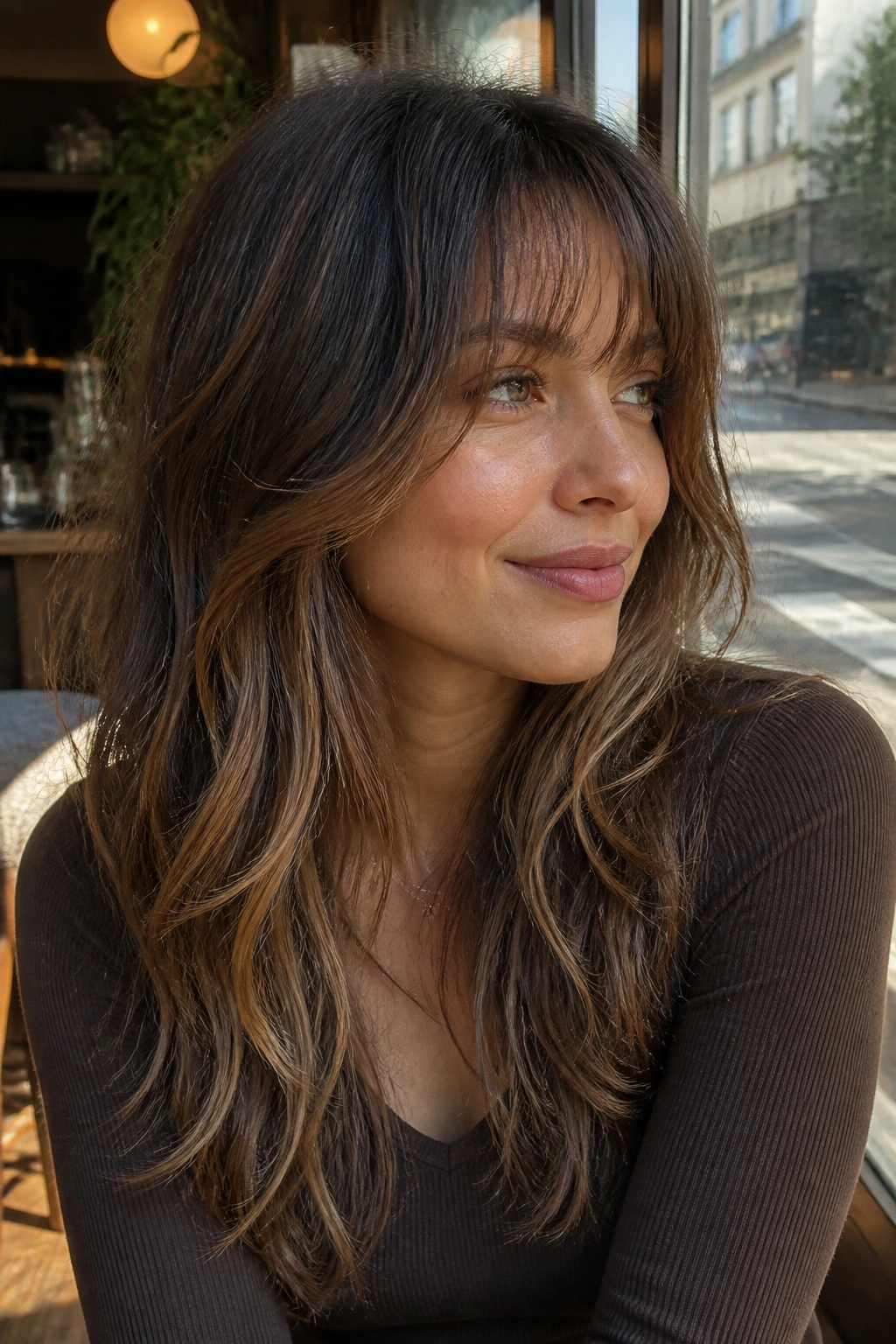
Long hair can look beautiful on a round face, but it can also weigh the whole look down if the length is one heavy sheet. Boho layers fix that by breaking the hair into soft sections that move, bend, and fall away from the cheeks.
See-through bangs are the smart finishing touch. They leave some forehead visible, which keeps the face from looking shorter, and they work especially well if your hair is naturally fine or medium. You get the presence of bangs without the wall.
A center part is usually the cleanest match here, though a slight off-center part can be nice if you want more lift at the crown. Add a drop of oil to the ends and leave the fringe light. Heavy product will pull the front down, and that defeats the whole purpose.
21. Graduated Bob with Cheekbone-Grazing Layers

A graduated bob has more structure in the back and more length in the front, which makes it one of the cleaner shapes for a round face. It brings the eye upward first, then down along the front angle, so the cut never sits still in one wide line.
Cheekbone-grazing layers are the detail that keeps it from feeling stiff. They sit just above or across the cheekbone, then move away from the face instead of hugging it. That small shift changes the shape a lot more than people expect.
You can pair this bob with a side bang or a soft curtain fringe. I would avoid a blunt brow-heavy bang here; the cut already has enough structure. Let the layers do the work and keep the fringe light.
22. Waist-Length Split Layers with Curtain Bangs

If you like long hair, you do not have to give it up for balance. Waist-length split layers create a long center line that helps a round face look narrower, and the length itself gives the style room to move instead of sitting on the cheeks.
Curtain bangs keep the front from feeling bare, but they should stay soft and bendy. Straight-across fringe can make all that length feel chopped off at the top. Split bangs are kinder. They open the face, hold the forehead in view, and blend into the layers without a hard stop.
The main thing I would watch here is density. Very thick hair can overwhelm this style unless the layers are shaped carefully. Very fine hair can look stringy if it is over-thinned. Ask for the shortest face-framing piece to land below the cheekbone and let the rest fall cleanly. That simple choice does more than most people think.
