



Thinning hair after 50 has a way of exposing every lazy haircut choice. Too much length drags the shape flat. Too many short layers can make the ends look see-through and tired. The sweet spot is usually somewhere in the middle, where the cut keeps its outline but shifts weight away from the places that collapse first.
Layered cuts for thinning hair over 50 work best when they support the hair instead of fighting it. That means a stronger perimeter, smarter layering, and a shape that gives the eye something to land on near the jaw, cheekbones, or crown. Gray hair adds its own twist too. It can be coarser in one section and softer in another, which is why a cut that looked fine years ago can suddenly feel off by a full inch.
A good layered cut does not try to hide thinning hair. It makes the hair look intentional. That is a different job. One cut may need weight held at the ends so the bob doesn’t fray, while another needs soft crown layers to keep the top from sinking like a wet napkin.
The styles below are the ones I keep coming back to for women who want movement without losing density, polish without stiffness, and a shape that still looks good when the blow-dryer got skipped. Start with the chin-length bob. It’s often the easiest place to win.
1. Chin-Length Layered Bob

A chin-length layered bob is one of the most reliable cuts for thinning hair because it puts the line of the haircut right where the face does the most work. The jawline has structure already. Let the hair sit there, and suddenly the whole head looks more defined.
The trick is restraint. Too many choppy layers can make a bob look broken apart, which is the last thing fine or thinning hair needs. Ask for soft internal layers rather than a shredded finish, and keep the perimeter full enough that the ends still read as a solid line.
Why It Works
The shorter length removes the dead weight that drags hair down, but it does not go so short that the hair loses all movement. A chin-length bob also sits well with a side part, especially if your crown needs a little help.
A few details matter:
- Keep the front 1/2 inch longer than the back if you want a slightly softer angle.
- Ask for layering that starts around the mid-cheek to jaw area, not high up near the roots.
- Style with a 1-inch round brush at the ends for a bend, not a curl.
- Use a light mousse at the roots before blow-drying if the crown goes flat fast.
My honest take: this cut looks best when the ends are polished, not overly piecey. Thin hair usually needs a clean outline more than it needs drama.
2. Collarbone Lob with Hidden Layers
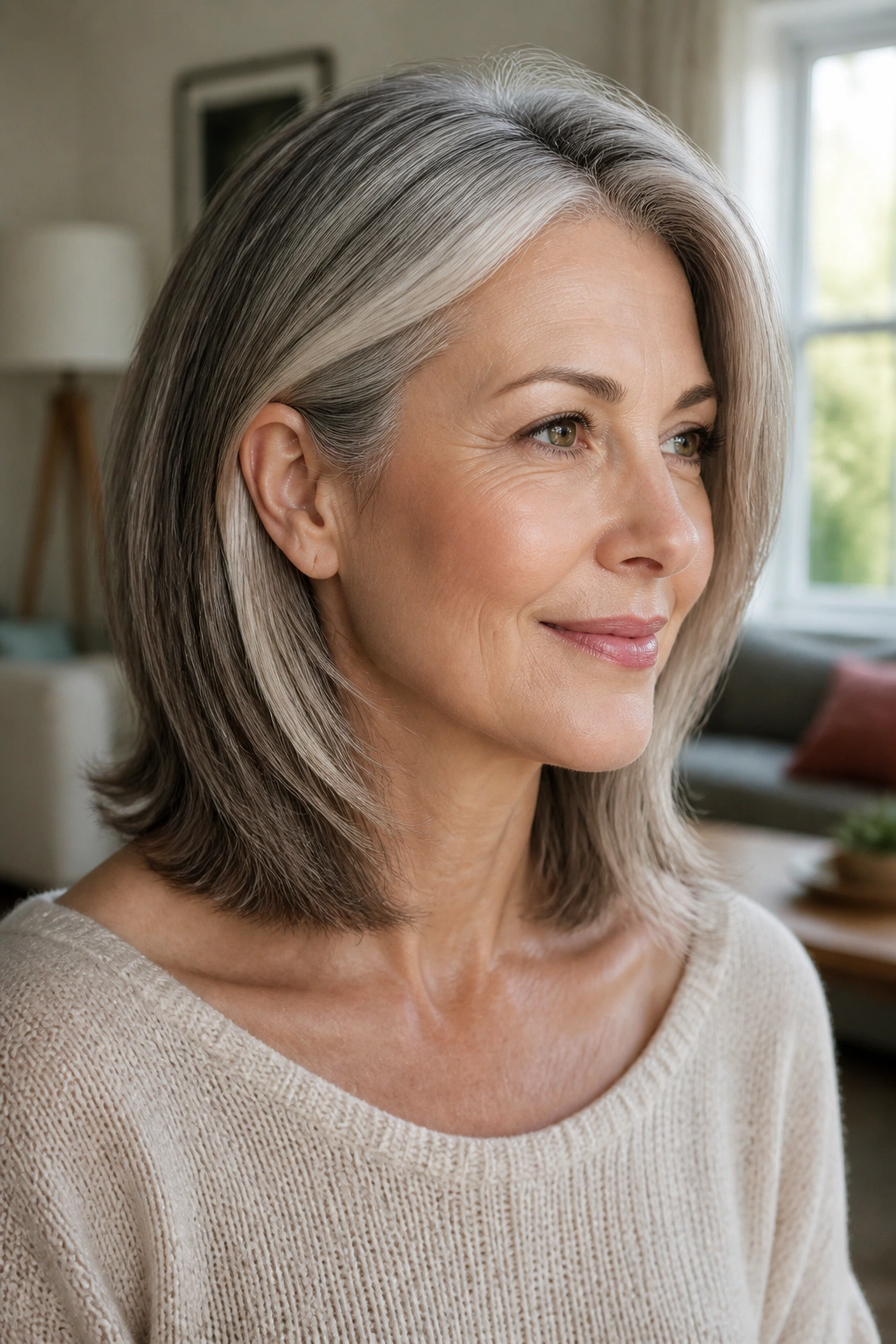
If you want to keep some length, this is the cut I would point to first. A collarbone lob gives you enough hair to tuck behind the ears or pull into a low clip, but the length stops before the ends start looking stringy.
What makes it work is the hidden layering. The perimeter stays strong, which keeps the hair looking thicker, while the inside loses a bit of bulk so the shape can move. That matters a lot with gray hair that has gone a little wiry or with fine hair that collapses when it gets too long.
The collarbone is a smart landing spot because it gives the hair a built-in resting place. It does not flop against the chest in a heavy curtain, and it does not sit so high that every little cowlick shows. If your hair is straight and thin, this shape can look sleek. If it has a soft wave, the cut looks even better because the layers help the bend show up without a fight.
I like this cut for women who wear glasses, because the hair doesn’t crowd the frames. I also like it for anyone who wants a shape that still looks decent on day two. A little dry shampoo at the roots and a quick bend through the front pieces is usually enough.
3. Feathered Pixie with Crown Lift
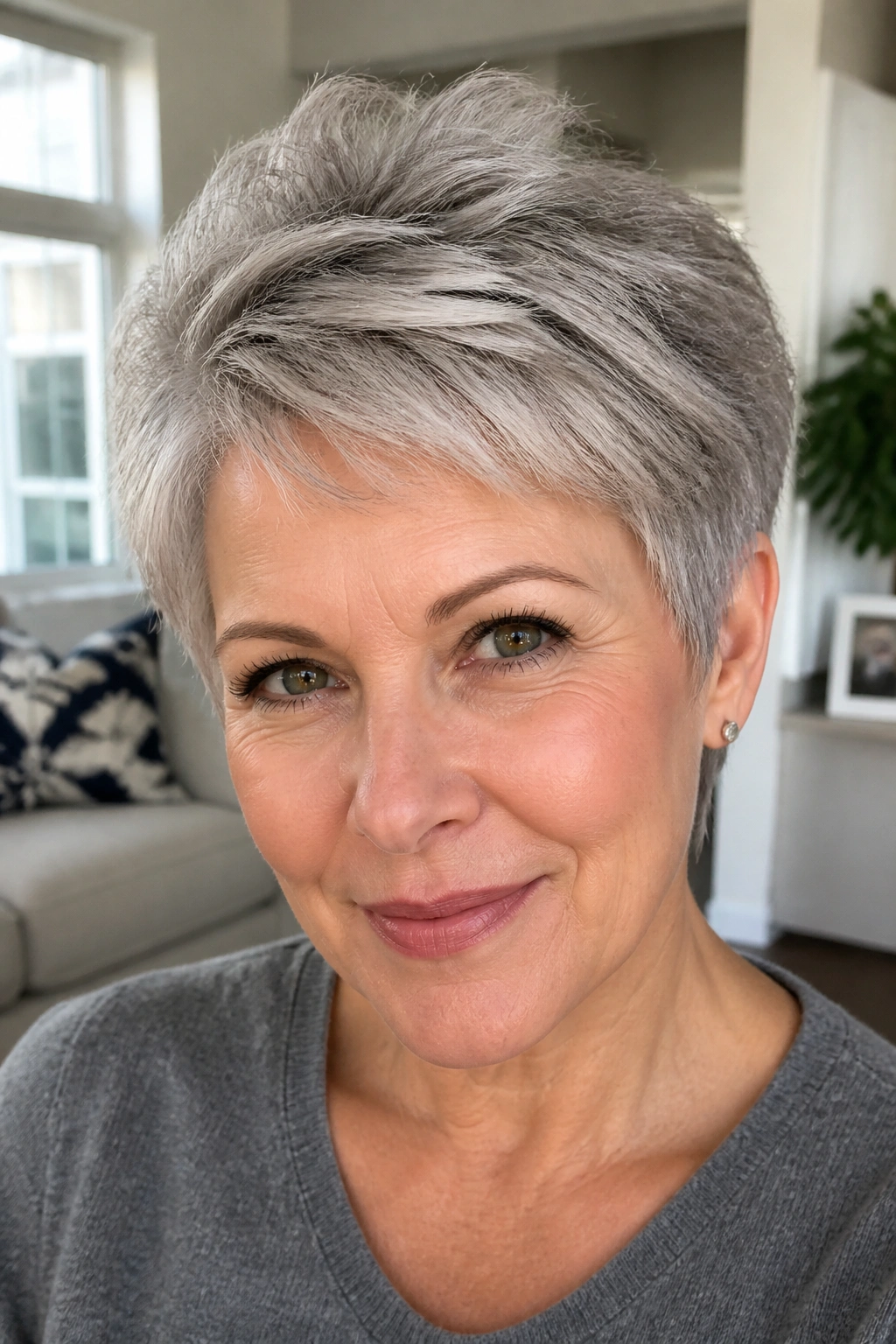
You can tell when a pixie was cut for thinning hair instead of just chopped short. The top has room to lift. The sides hug the head without looking shaved down to nothing. And the back sits clean instead of puffing out in odd places.
A feathered pixie is about removing weight where it hurts and keeping it where you need it. The crown gets the most attention here, because that’s where a lot of women over 50 notice the first real drop in fullness. Short, feathered layers at the top can make the hair stand up a little without looking spiky or stiff.
The Parts That Matter
- Leave enough length on top for a small round brush or fingers to direct the hair forward or to the side.
- Keep the sides soft around the ears so the cut doesn’t look severe.
- Ask for a tapered neckline if you want the back to stay neat between trims.
- Use a pea-sized amount of styling cream or paste, not a heavy wax that clumps the hair.
The best feathered pixies look airy, not empty. That is a fine line. Too much thinning or slicing can leave the top too skinny, and then the cut starts working against you. But when the balance is right, it looks sharp, easy, and a little bit cheeky in the best way.
4. Soft Shag with Curtain Bangs

Can a shag work on thin hair? Yes — if it is soft, not shredded to death. That distinction matters more than people think.
A soft shag gives the hair some lift at the crown and movement through the sides, which helps when the texture has gone a little limp or the hairline has started to shift. Curtain bangs are the quiet hero here. They open the face, soften the forehead, and let the hair look fuller in front without needing a heavy fringe that eats up density.
How to Ask for It
Tell your stylist you want longer layers around the cheekbones and chin, not a lot of short layers around the top. The crown should have movement, not a bunch of disconnected spikes.
Curtain bangs should start around the bridge of the nose or just below the brow, then taper into the sides. If they’re cut too short, they can make the forehead feel exposed. If they’re cut too long and heavy, they collapse into the rest of the hair.
This cut works especially well if your hair has a little natural bend. It can also soften gray regrowth, which is useful when your color transition is still growing out and you want a shape that looks deliberate while the shades mix together.
5. Graduated Bob with a Built-In Lift
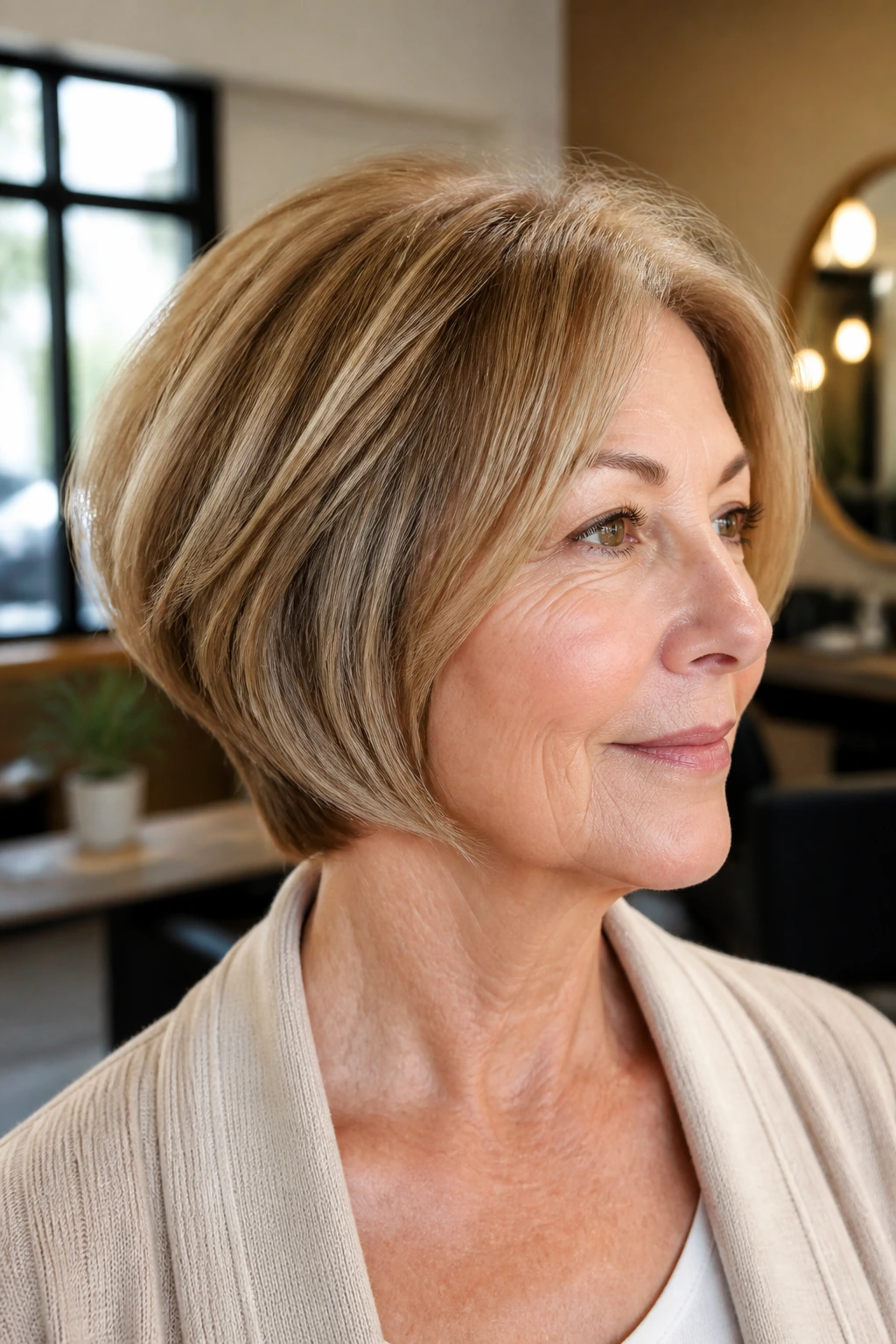
A graduated bob can be a miracle cut for thinning hair when it’s handled with a light hand. Too steep, and it starts looking boxy. Too flat, and you lose the lift that makes the whole thing worth wearing. Get the balance right, and the back lifts the head while the front stays soft enough to frame the face.
The graduation is what helps here. The back is slightly stacked, which creates the illusion of density right where many women need it most — at the nape and crown. That little rise in the back changes how the whole haircut sits, and it can make the hair look much thicker than it actually is.
I like this cut most on straight or lightly wavy hair. If your hair is very curly, the stacked shape can fight the curl pattern and puff in the wrong spots. If it is poker-straight and fine, the graduation gives the style some backbone without asking for much styling in the morning.
What I’d avoid: razor-thinned ends with a steep graduation. That combo can make the bob look hollow fast. Keep the perimeter clean, keep the stack soft, and the result usually feels modern without looking fussy.
6. Shoulder-Grazing Layers with Face Framing

A shoulder-length cut with face-framing layers is the compromise a lot of women end up loving for a reason. It keeps the comfort of length, but it stops the ends from hanging like they have given up on life.
Unlike a blunt shoulder cut, this version takes some weight off the front so the shape can move around the cheeks and jaw. That matters when hair is thinning at the temples or around the hairline, because a little movement there can make the whole face look less heavy. The rest of the length stays intact, which is useful if you still want a ponytail, a twist, or a clip.
The face framing should not start too high. If the shortest pieces hit above the cheekbone, the cut can look dated fast. I prefer layers that begin around the chin or just below it, then drift down into the shoulders. That keeps the shape soft without turning the front into a staircase.
This is a good pick if you do not want to commit to short hair but know the ends are getting wispy. It also works well for women with a strong side part, since the front layers can lift away from the face instead of lying flat across it.
7. Rounded Bob for Gray Hair
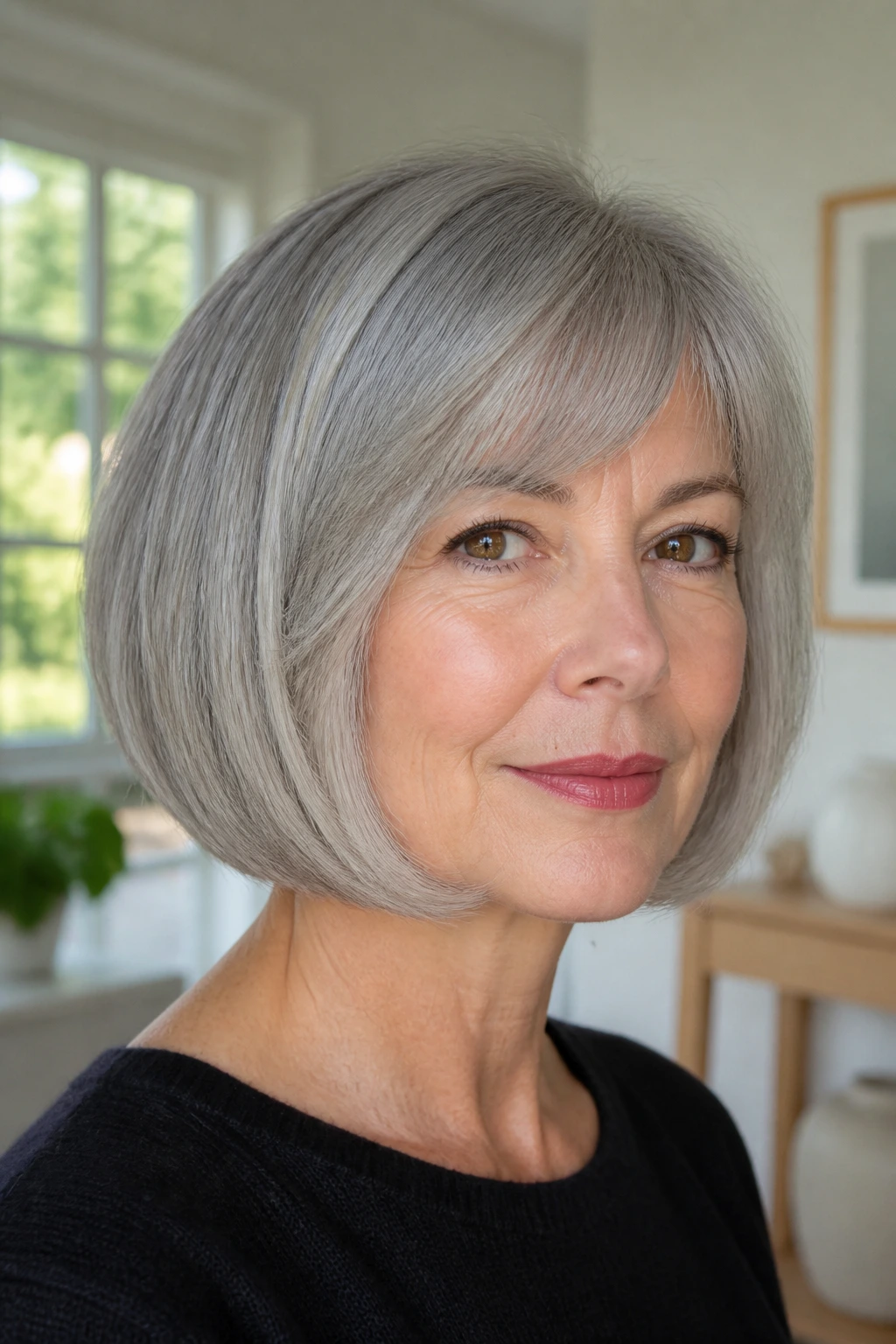
Gray hair can be stubborn. It often feels a touch coarser at the ends and softer at the crown, which is why a rounded bob can be such a smart shape. The curve makes the haircut feel deliberate, not accidental.
A rounded bob keeps the outline close to the head at the top, then sweeps in gently at the sides and under the jaw. That rounded line helps silver and white hair look full because the eye sees one clear shape instead of a lot of uneven ends. It is especially good if your hair has lost some density around the temples.
What to Ask For
- Keep the bob at jaw length or just below.
- Ask for soft internal layers, not a lot of piecey texture.
- Leave enough weight around the perimeter so the cut stays solid.
- Have the ends slightly turned under or beveled, not blunt in a heavy helmet way.
The style pairs nicely with gray hair that has different tones through it — salt-and-pepper, white streaks, silver with darker lowlights. The rounded shape helps those colors look richer because the haircut gives them a clean frame.
A quick blow-dry with a paddle brush near the roots and a small round brush only at the ends usually does the trick. Don’t overthink it. The shape is doing most of the work.
8. Bixie Cut with a Tapered Nape
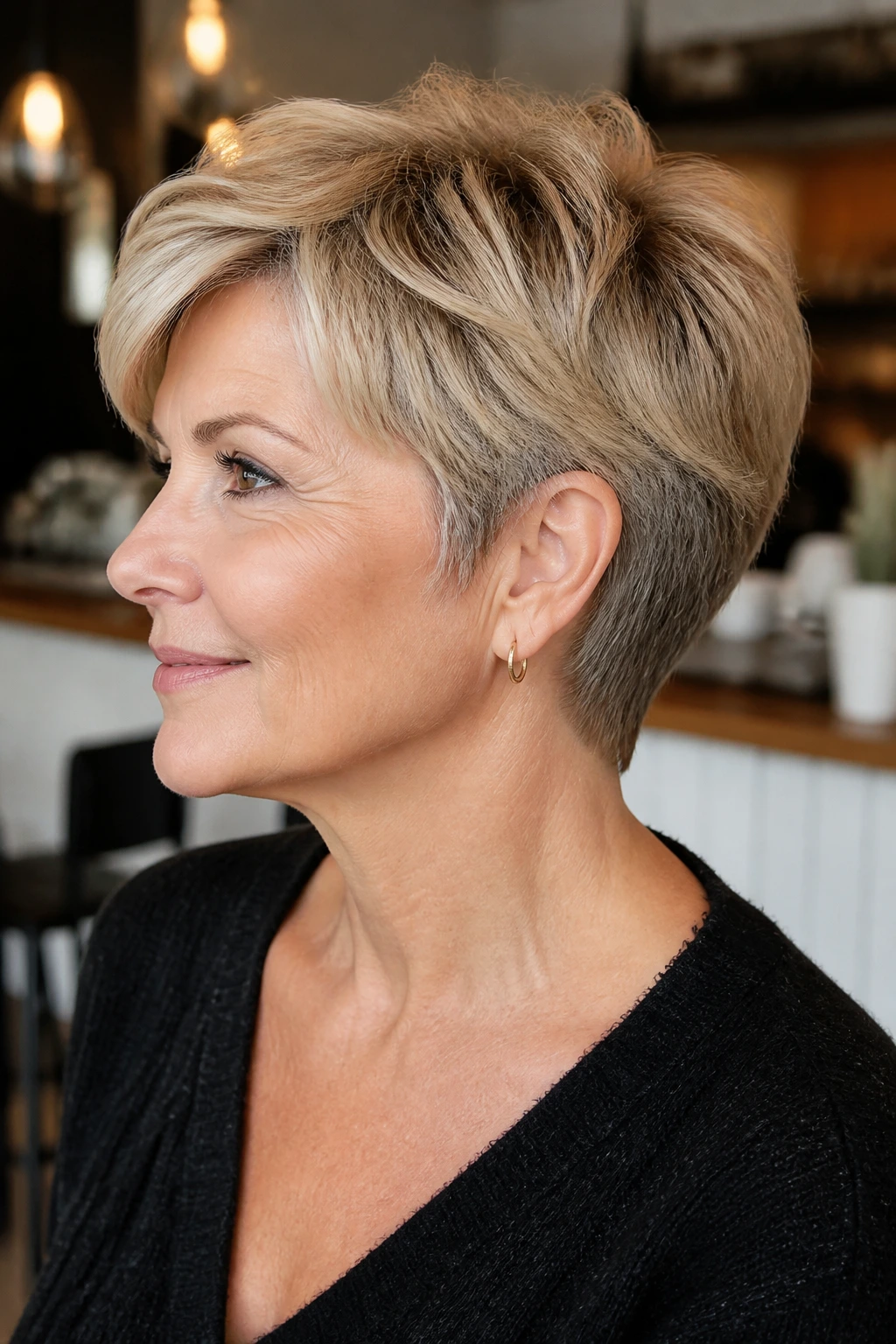
Think of the bixie as the middle ground between a bob and a pixie, which is exactly why it’s so useful for thinning hair. It gives you short-hair ease without the hard cut-off that some full pixies have.
I like this shape for women who are tired of wrestling shoulder-length hair but are not ready for a cropped style. The bixie keeps the front a little longer, lets the crown have some lift, and tapers the nape so the back doesn’t feel bulky. That taper is doing quiet, important work. It stops the haircut from sitting like a block.
Key Details to Look For
- Keep the top long enough to sweep rather than stand straight up.
- Let the side pieces graze the cheekbones so the cut softens the face.
- Ask for the nape to be cleaned up without being shaved too tight.
- Avoid too much point cutting on the ends if your hair is already fragile.
The bixie also plays nicely with glasses and earrings, which sounds minor until you wear them every day. The haircut leaves room for both. It can look polished with a quick round-brush blowout, or a little tougher and more piecey if you work in a tiny bit of texture cream and let it air-dry.
9. Long Layers That Start Below the Collarbone
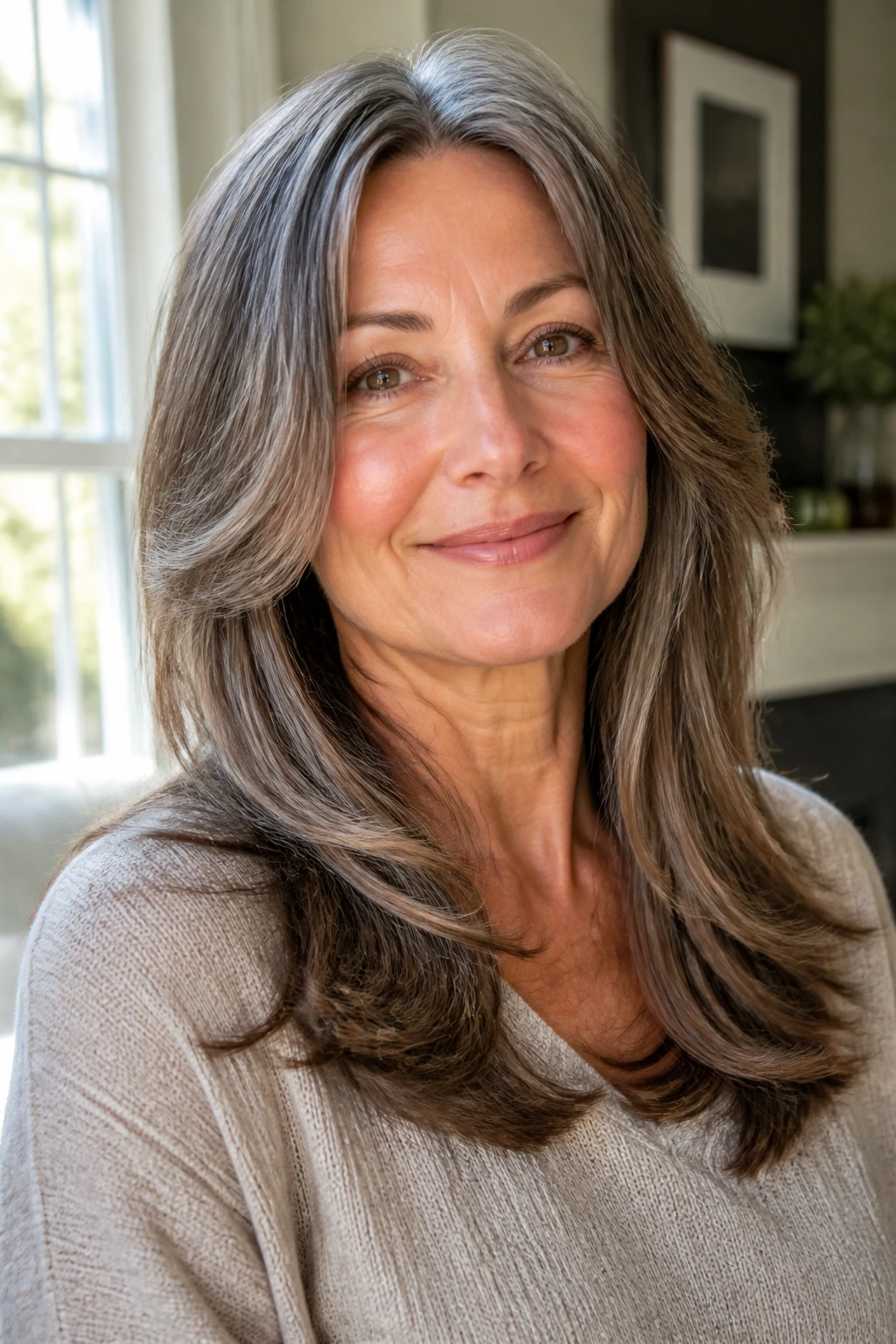
Long hair after 50 is not the enemy. Bad long hair is the enemy. There’s a difference.
If you want to keep length, the layers need to start low enough that the ends still look full. That means no floating layers around the cheekbones that strip the sides bare. A better approach is long layers beginning below the collarbone, where they add movement without chewing through the density at the bottom.
This cut is best when the hair still has a decent amount of body, even if the crown has thinned a bit. The layers can shift weight away from the roots, which helps the hair move instead of hanging in one flat curtain. But the perimeter has to stay strong. If the bottom is too thinned out, the whole thing starts looking fragile.
A lot of women keep long hair because they like the option to clip it up, and that makes sense. Just be honest about the upkeep. Long layers need trims on a steady schedule, because once split ends start creeping up, they make the fullness problem worse. I’d rather see shoulder-grazing hair that looks healthy than waist-length hair that looks tired from ten feet away.
10. Razor Lob with Airy Movement

Can a razor cut work on thinning hair? Sometimes yes. Sometimes no. The difference is the hair itself.
A razor lob is good when the hair has a bit of softness or wave and the ends are not already fragile. The razor removes bulk and gives the edges a lighter feel, which can keep a lob from looking too blunt or too heavy. On a thicker strand, that can be a gift. On a weak, dry strand, it can create frayed ends that show every week of growth.
How to Wear It
If your hair bends naturally, this cut can look loose and modern with very little work. A quick twist with a diffuser or a rough dry with fingers can be enough. Straight hair usually needs a round brush or a flat iron bend at the ends so the texture does not fall flat and separate.
The front pieces should stay a touch longer than the back, which keeps the shape from looking too chopped. And the razor work should be subtle. I’m not a fan of heavy razor damage on fine hair. That usually turns into a wispy mess by the second week.
A razor lob suits women who like movement more than polish. If you want glossy, tidy, and thick-looking ends, a scissor-cut lob may be the safer choice.
11. Layered Crop with a Side-Swept Fringe

You do not need blunt bangs to soften the face. A side-swept fringe can do the job with less commitment and a lot less daily annoyance.
A layered crop with a side-swept fringe is useful when the forehead feels more prominent, the hairline has thinned, or the front pieces need a little camouflage without hiding the whole face. The fringe should be long enough to move across the brow and tuck behind one ear on lazy days. Too short, and it can look chopped. Too heavy, and it drags the style down.
The cut itself stays fairly close to the head. That gives it shape without asking for a lot of length. The layers should be soft and directional, guiding the hair diagonally instead of puffing it out. Diagonal movement is your friend here. It pulls the eye across the face, which makes the hair look fuller and the style feel lighter.
I like this on women who wear makeup lightly or not at all, because the fringe gives enough framing on its own. It is also a smart option if you want to keep the ears partly covered. That little bit of coverage can be comforting when the hair has started to feel sparse around the temples.
12. French Bob with Internal Texture
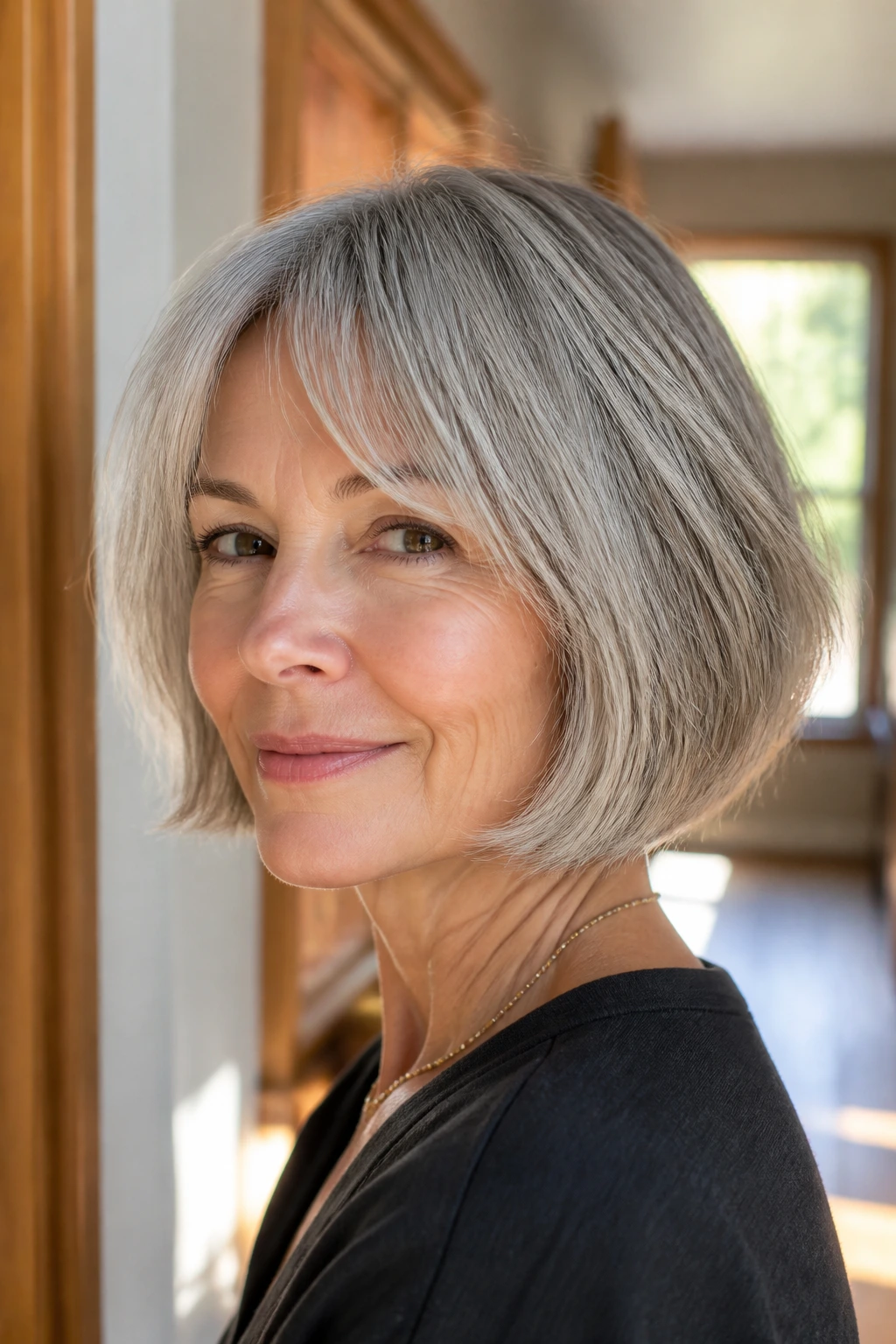
A French bob sounds fancy, but the reason it works is simple: it keeps the line clean and the styling easy. For thinning hair, that combination matters more than a trend name ever will.
The cut usually sits around the jaw, sometimes a touch shorter, with internal texture that lets the hair move instead of sitting like a helmet. On fine gray hair, that internal texture can make the whole style feel lighter without stripping away the shape. The result is neat, yes, but not stiff. And that distinction is the whole point.
I like this cut when someone wants polish without the daily wrestling match. You can air-dry it and let the natural bend do its thing, or rough-dry with a small brush if the roots need a lift. The key is to keep the perimeter strong. A French bob falls apart fast if the ends are over-layered.
There is also a nice honesty to this cut. It does not try to pretend the hair is thicker than it is. It just gives the hair a beautiful line and enough texture to avoid looking flat. That’s enough.
13. Mid-Length Cut with Invisible Layers

The mid-length cut with invisible layers is for the woman who wants movement but hates looking layered. Good. That’s exactly the right instinct.
Invisible layers sit inside the haircut instead of announcing themselves at the surface. The outline still looks full, but the interior has enough release that the hair does not hang as one heavy sheet. This is especially useful if your thinning shows up more at the sides than at the crown, because the shape can stay solid while the hidden layers help the hair swing.
Where This Cut Wins
- It keeps the outer line thick-looking.
- It gives the hair just enough bend around the face.
- It works with air-drying better than a heavy one-length shape.
- It still goes up in a clip or low ponytail.
The best version lands somewhere between the chin and the shoulders. Any shorter, and it starts behaving more like a bob. Any longer, and the fine ends may begin to look transparent unless the density is still decent.
This is one of those cuts that looks almost plain in a chair and quietly excellent three days later. That’s not a bad thing. In fact, it’s often the smartest choice for women who want the hair to look fuller without calling too much attention to the cut itself.
14. Soft Wolf Cut for Fine Hair

A true wolf cut can be too much for thinning hair. The choppy crown and heavy layers can leave the ends hanging on for dear life. The soft version solves that problem by keeping the attitude but dialing back the aggression.
A soft wolf cut still has movement at the crown and around the face, but the layers are longer and less shredded. That matters. You want lift, not a bunch of empty space between the top and the bottom. When the layers are too short, the hair can look thinner than it is. When they’re softer and more connected, the cut keeps its body.
This shape is best on hair with a little natural bend or on women who do not mind using a diffuser or a wave spray. Straight hair can wear it too, but it needs more styling help. I would not put this on very fragile ends unless the perimeter is kept stronger than usual.
There’s a casual coolness to this cut that some women love and some absolutely do not. Fair enough. If you want something cleaner and more classic, skip it. If you like hair that looks a little undone, but not sloppy, the soft wolf cut can be a nice middle road.
15. Tapered Layered Cut with Soft Ends

This is the cut I’d hand to someone who wants the hair to look fuller without looking overworked. The taper keeps the outline neat, the layers keep it moving, and the soft ends stop the whole thing from turning into a crisp little sculpture.
A tapered layered cut is especially good when thinning shows up mostly through the mid-lengths and the ends. The shape brings a bit more structure back to the perimeter, which is where too many layered cuts go wrong. Instead of thinning the hair out from top to bottom, this version keeps the bottom looking alive. That alone can change how thick the hair reads.
It also behaves well on gray hair that has gone wiry or coarse in patches. The taper helps the hair sit closer to the head in the right places, while the softer ends prevent the style from looking severe. If you like a side part, this cut usually takes to it well. If you prefer a center part, the soft layers can still frame the face without falling into a limp curtain.
One thing I’d say plainly: don’t let the stylist over-thin the ends. That is the fastest way to ruin a good layered shape on low-density hair. Keep the perimeter honest, keep the layers connected, and you get a cut that feels lighter without looking sparse.
If you’re sitting in the chair trying to explain what you want, say this: you want movement at the crown, fullness at the edges, and no shredded ends. That sentence is doing a lot of work, and a good stylist will understand it fast.
