



A bad haircut in your forties is expensive in the worst way. It steals time every morning, throws off the shape of your face, and makes a good shirt look oddly unfinished.
That’s why haircuts for women in their 40s need to do more than look polished leaving the salon. They have to survive a rushed blow-dry, a little humidity, a growing gray streak, and the weird truth that hair often changes texture right around this stretch of life. Some strands get finer. Some get coarser. A few rebel for no reason at all.
The cuts that age well are usually the ones that do one of three things: create lift where hair has gone flat, soften a jawline that feels sharper than it used to, or keep length without letting it drag everything downward. The good ones also grow out cleanly. That part matters more than people admit.
There’s a reason stylists keep circling back to lobs, bobs, short crops, and layered midlength cuts. They give shape without demanding a full morning routine. The smartest cuts earn their keep in the mirror, on a rushed weekday, and six weeks after the appointment.
1. Shoulder-Grazing Lob with Soft Ends
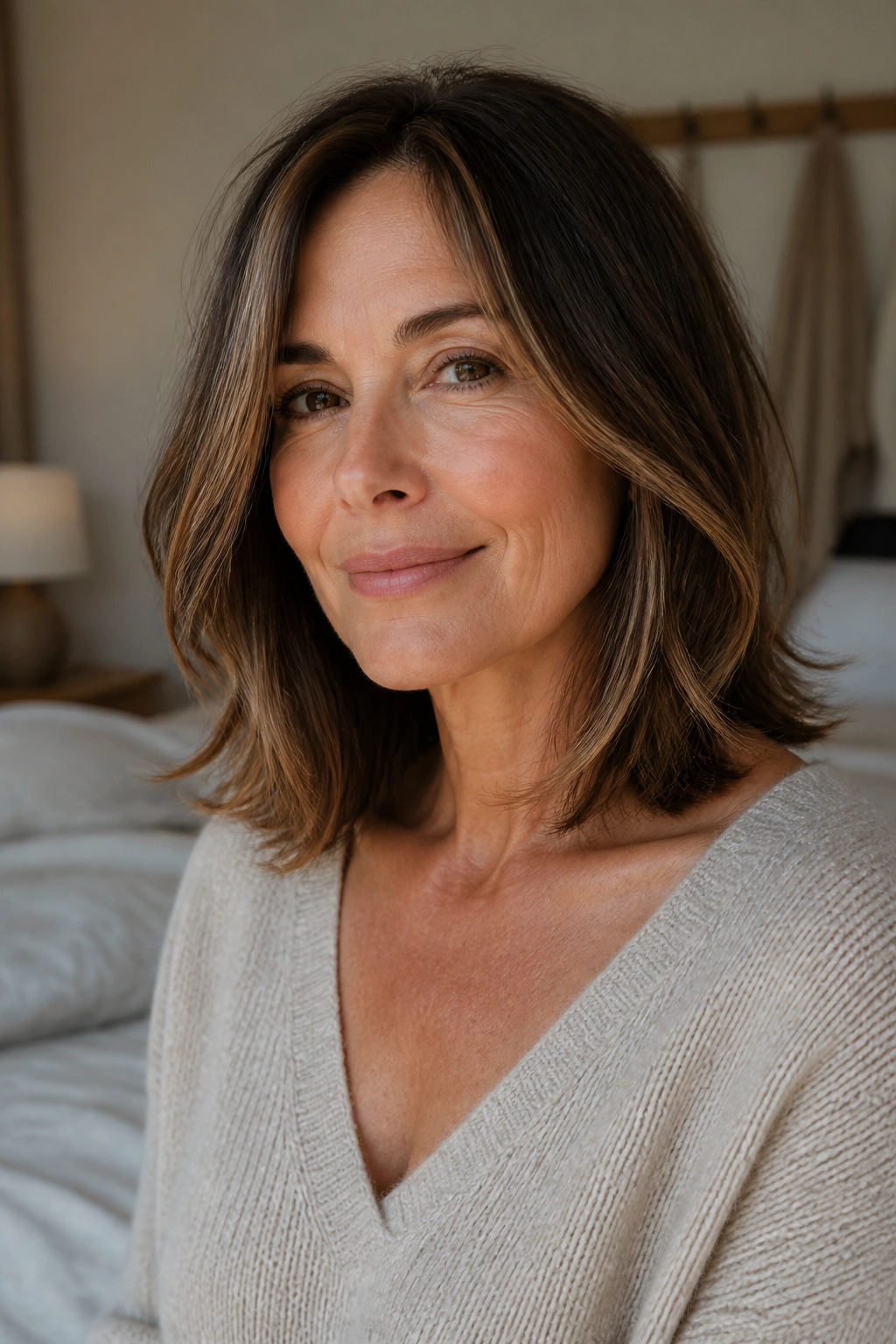
A shoulder-grazing lob is one of those cuts that keeps showing up because it does a little bit of everything. It has enough length to tuck behind the ears, enough weight to look deliberate, and enough movement to keep the whole shape from feeling stiff. On women in their 40s, that matters. Hair often wants a little more control by this point, not more drama.
Why It Works
The line lands right where the neck and shoulders meet, which gives the cut structure without making it feel boxy. Soft ends keep it from looking blunt in a harsh way, so the finish feels easier and less severe.
- Sits around the collarbone or just above it.
- Lets you wear it straight, waved, or clipped back.
- Grows out without turning into a lopsided mess.
- Helps fine hair look fuller than longer, thinner lengths do.
My favorite version keeps the ends slightly feathered, not thinned to death. That tiny choice is the difference between hair that swings and hair that looks wispy.
The lob also plays nicely with gray blending, because the shape stays clean even when the color starts shifting. If you want one cut that doesn’t box you into one styling routine, this is probably the easiest place to start.
2. Blunt Collarbone Bob
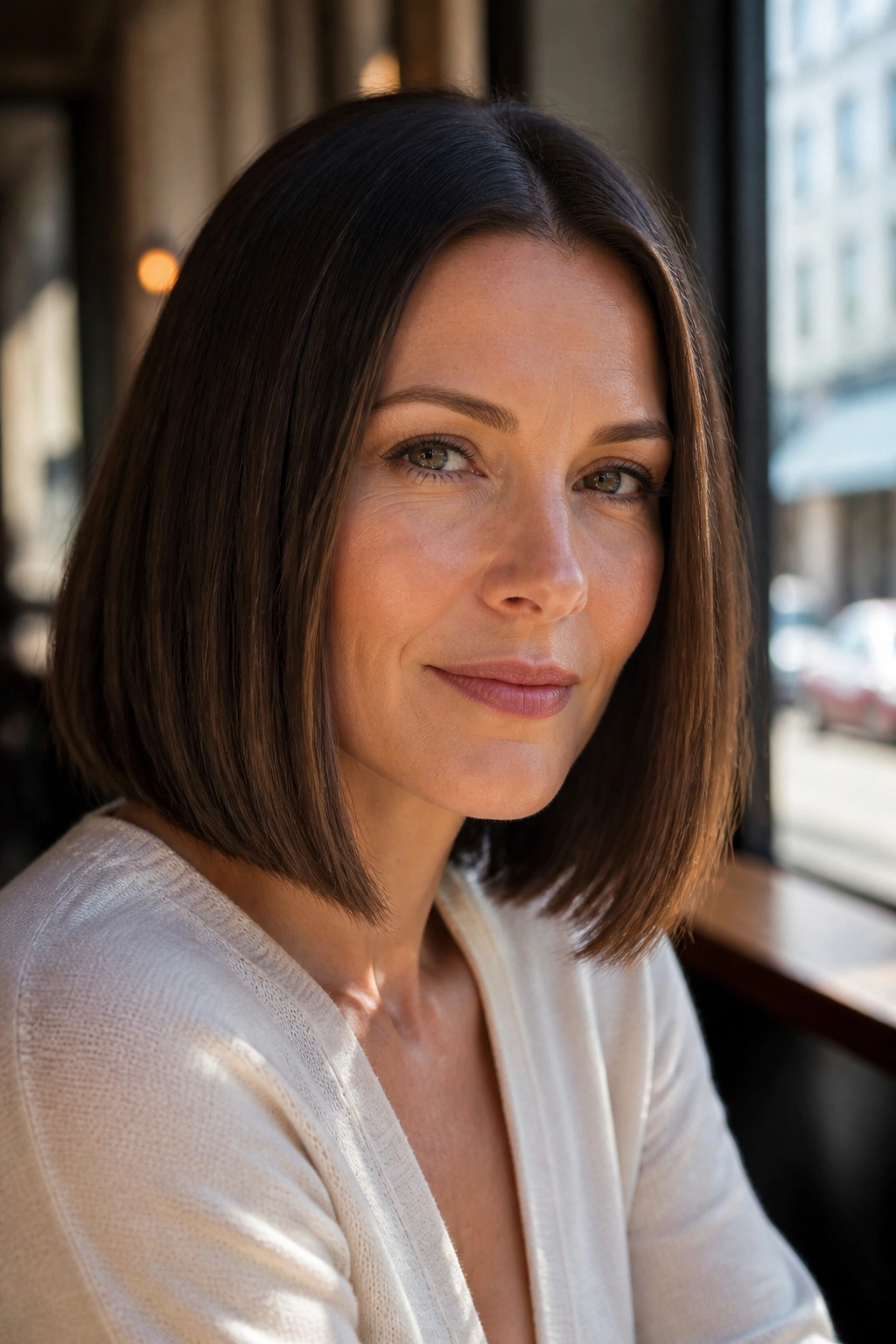
A blunt collarbone bob looks calm, but it has attitude. The straight edge gives hair a denser look, which is a gift if the ends have started feeling a little see-through. Compared with a heavily layered cut, this one makes the hair line read thicker and more intentional.
The trick is keeping the line crisp without making it helmet-like. A tiny bend through the mid-lengths is enough. Too much curl and the shape loses the clean edge that makes it work.
This cut loves shine. If your hair is straight or only slightly wavy, it can look polished with very little effort. If your hair is textured, ask for enough length that the front still grazes the collarbone instead of kicking up at the sides. That small detail keeps the bob from ballooning.
One sentence, really: This is the cut for people who want density. Not layers. Not fluff. Density.
3. Midi Cut with Internal Layers
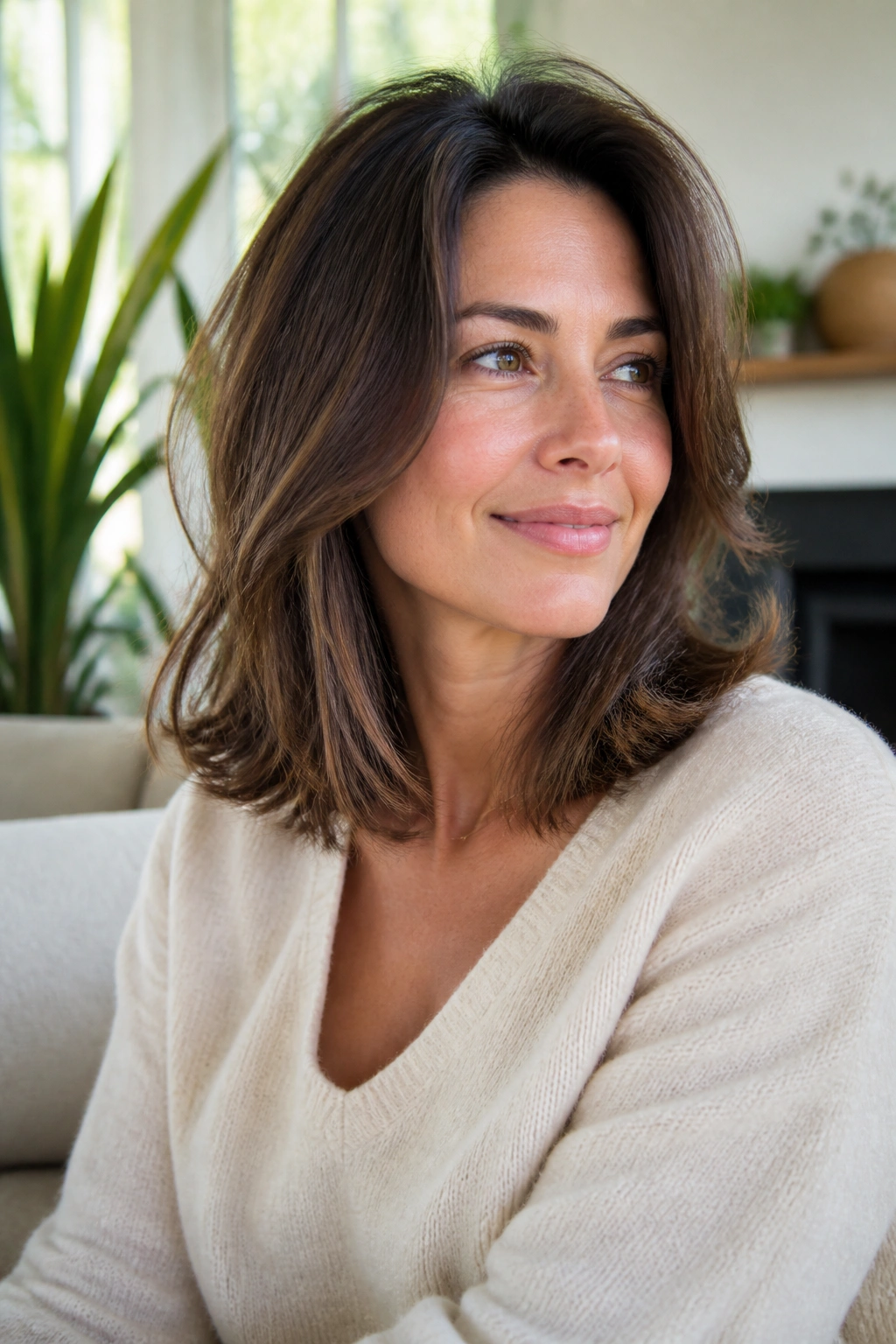
Why does a midlength cut sometimes feel easier than long hair? Because it removes weight without taking away the feeling of having hair. The external outline can stay fairly full, while the hidden layers do the boring work of stopping the ends from dragging.
What to Ask For
Ask your stylist to keep the perimeter strong and place the lighter layers inside the shape. That means the hair still looks like one clean piece from the outside, but it moves better when you walk or turn your head.
- Keep the longest point at the collarbone or a touch below.
- Ask for internal layers rather than choppy surface layers.
- Leave the front pieces a little longer if your hair is fine.
- Skip aggressive thinning if your hair already frizzes.
The cut is especially useful if your hair has gotten denser at the roots and flatter at the ends, which is a common annoyance in this decade. You get movement without the kind of shaggy texture that can make hair feel busy instead of flattering.
4. French Bob with a Light Fringe
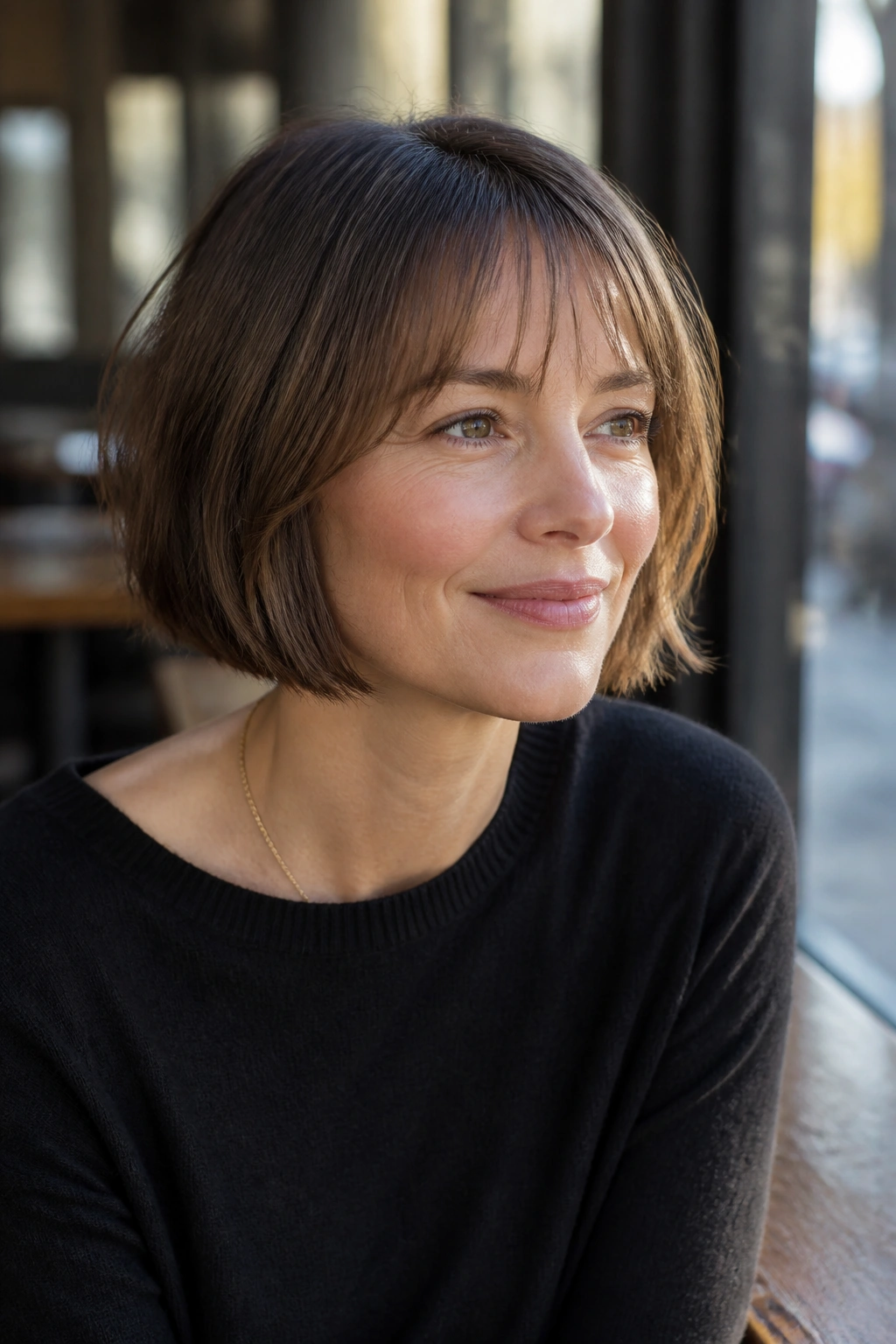
Picture a jaw-length bob, a soft fringe, and just enough bend to keep the whole thing from looking too precious. That’s the French bob in plain English. It is short, sure, but not severe. On the right face, it can make cheekbones look sharper and the eyes feel more open.
The fringe matters here. Keep it light and a little see-through, not thick and square. Heavy bangs can make the cut feel too boxed in, especially if your hair is on the fine side or your forehead needs some breathing room.
This cut works best when it looks touched rather than overworked. Let it air-dry a bit, then smooth the fringe with a small brush or your fingers. A little asymmetry helps. Perfect symmetry can make this style feel stiff, and nobody needs that.
If you wear gray or silver strands, the French bob can look especially crisp because the shape frames the face so cleanly. It has that smart, a little undone quality that keeps it from feeling fussy.
5. Curtain Bangs and Long Layers
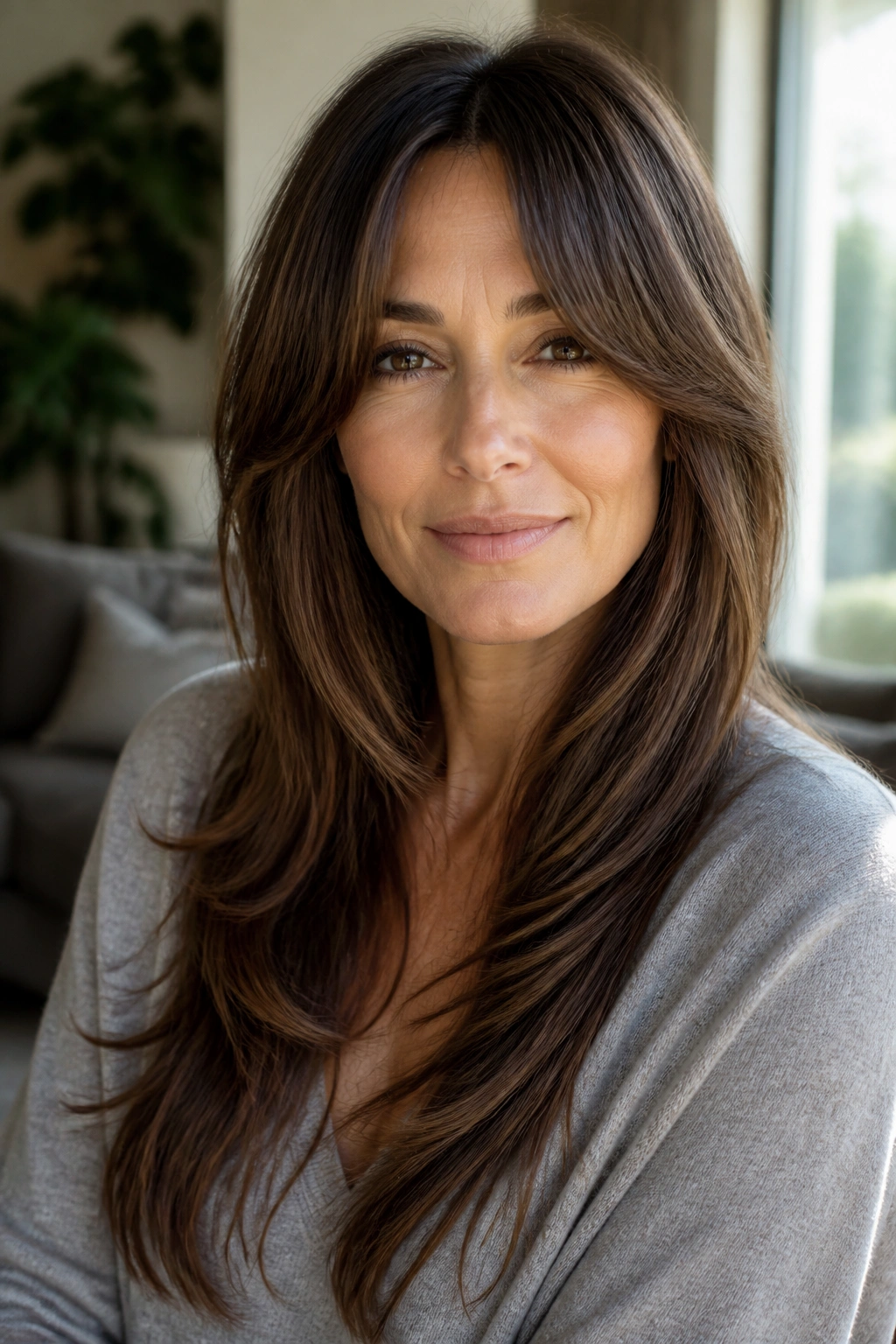
Curtain bangs are one of the few fringe styles that can change a face without making you feel trapped by bangs. They split at the center, sweep outward, and blend into long layers instead of sitting there like a separate object on your forehead. That’s why they work so well for women who want movement but not a dramatic chop.
The appeal is simple. Curtain bangs soften the front of the face while the long layers keep length and flexibility. You can wear your hair up, half-up, curled, straight, or waved, and the whole thing still makes sense.
They do ask for some styling. A round brush or velcro roller gives them shape fast, and a quick bend away from the face keeps the center from falling flat. If your hair is cowlick-prone at the front, ask for longer curtain pieces. Short ones can fight back.
This is a good option if you want a change that reads as thoughtful, not loud. It also grows out better than a blunt fringe, which is worth a lot on busy mornings.
6. Chin-Length Bob with Side Volume
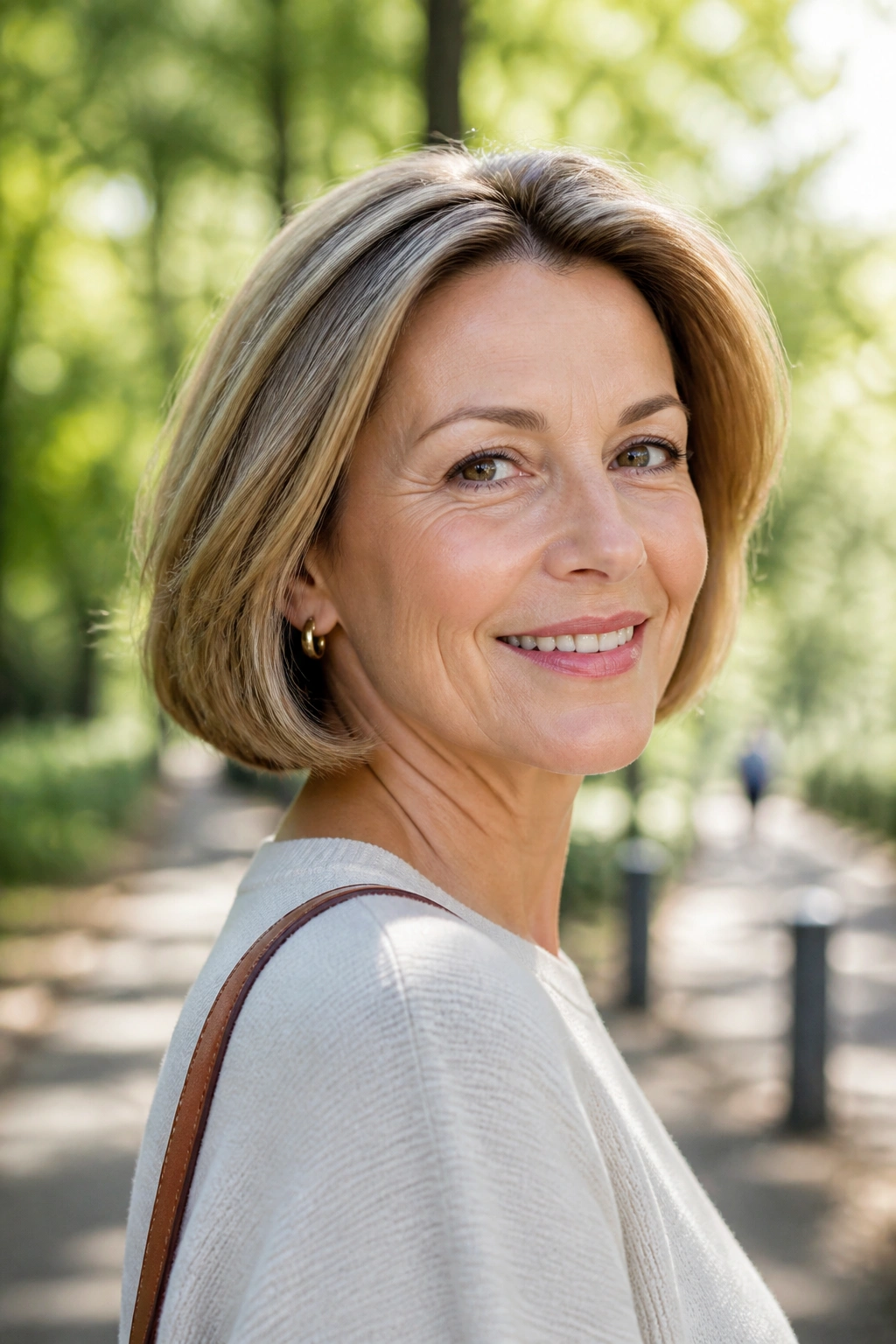
A chin-length bob has a clean, almost graphic feel, but the side volume keeps it from looking too sharp. That little lift near the part opens the face and gives the jawline some air. Compared with a center-part bob, the side volume often feels softer and more forgiving.
This cut suits people who like seeing their neck and collarbones. It also plays well with glasses, because the hair does not crowd the frame or sit in a heavy wall at the cheeks.
The biggest mistake is letting the bob get too wide at the bottom. Ask for a shape that hugs in slightly under the jaw, then keep the top light enough to move. If hair puffs out at the sides, the cut loses its clean line.
It’s a little more styled than a lob, but not by much. That is part of the appeal. You get structure without the sense that your hair is trying too hard.
7. Pixie Cut with a Longer Crown
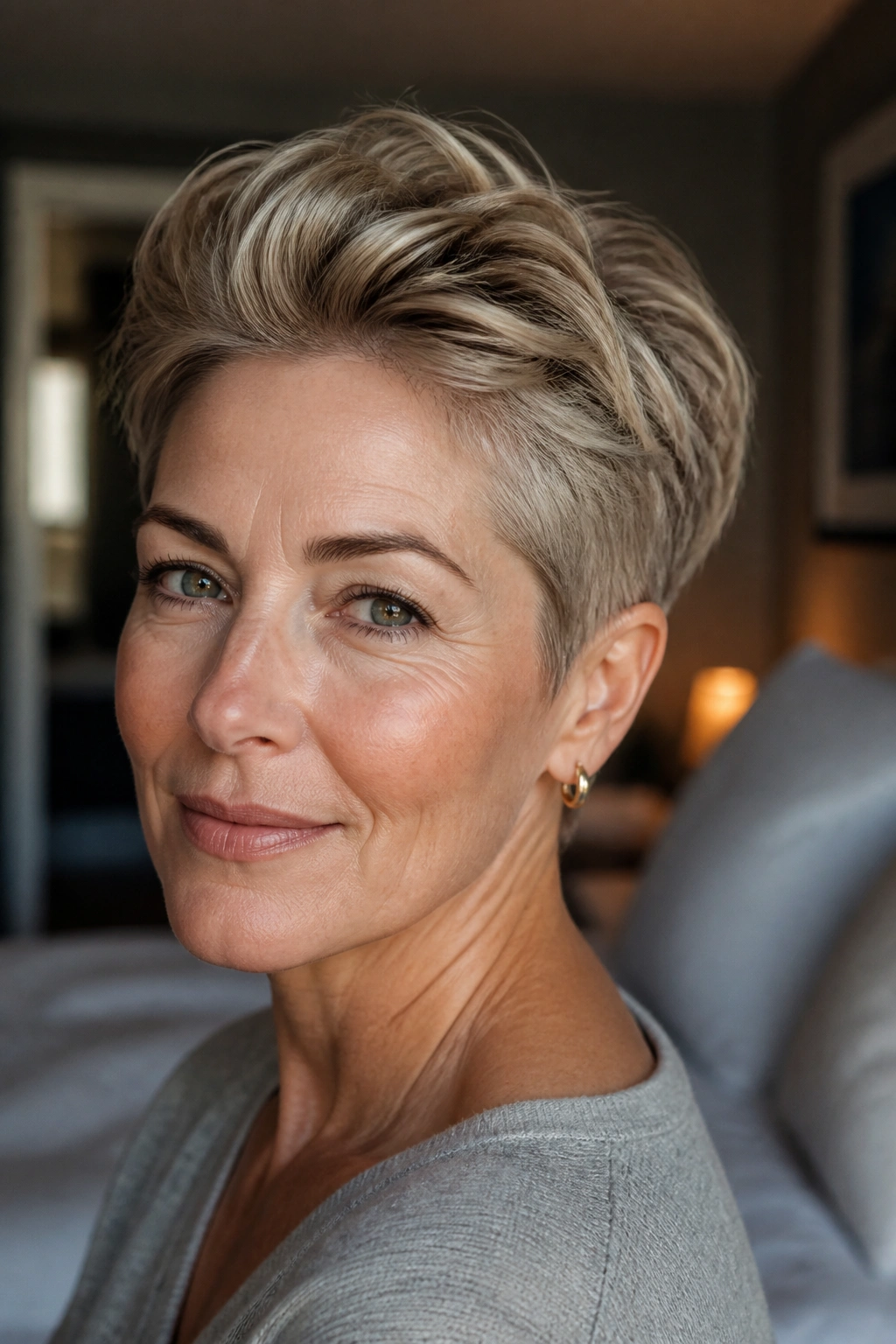
A pixie cut with a longer crown gives you the shape of short hair without stripping away softness. The top stays long enough to sweep, lift, or tousle, while the sides and nape stay tight enough to keep the head shape neat. That combination is why this cut works for so many face shapes.
How to Style It
You don’t need much. A pea-size amount of styling cream or paste is enough for most days.
- Blow-dry the crown upward with your fingers for extra lift.
- Smooth the sides with a small dab of cream.
- Use a matte paste if you want separation.
- Skip heavy oils; they flatten the top in minutes.
A longer crown also makes this cut friendlier to gray hair, because the surface shows texture and tone instead of a single flat block. If your hair has gotten softer or finer, the extra height at the top gives back some of the shape that length used to provide.
I like this cut when someone wants short hair but not a severe short haircut. It has edge, but it still feels human.
8. Modern Shag with Piecey Layers
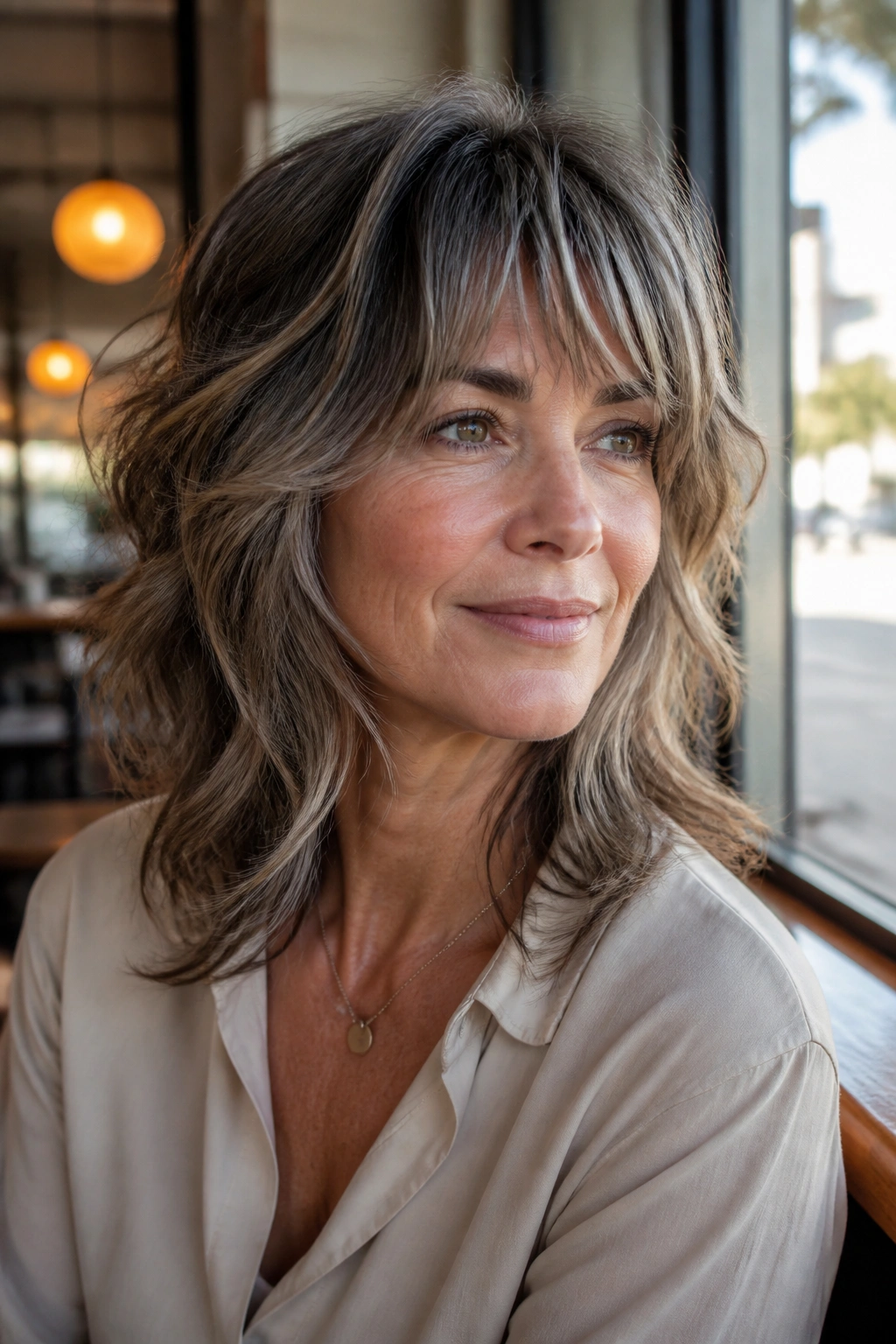
The modern shag is not the shredded, overworked version people remember from old photos. A good one has movement, air, and some roughness around the ends, but the shape still hangs together. That balance is the entire point.
This cut is especially kind to wavy hair. The layers encourage the wave pattern to show up without making the hair puff into a triangle. If your hair is straight, the shag can still work, but it will want a little styling cream or a quick pass with a curling iron to keep the layers separated.
What I like about this cut is the way it softens the face without hiding it. The pieces around the cheekbones and jaw give motion where longer, heavier hair can start to look flat. And if you are growing out color or letting gray blend in, the texture helps that transition look intentional.
It is not the cleanest cut on this list. That is the charm.
9. A-Line Bob with a Tucked Nape
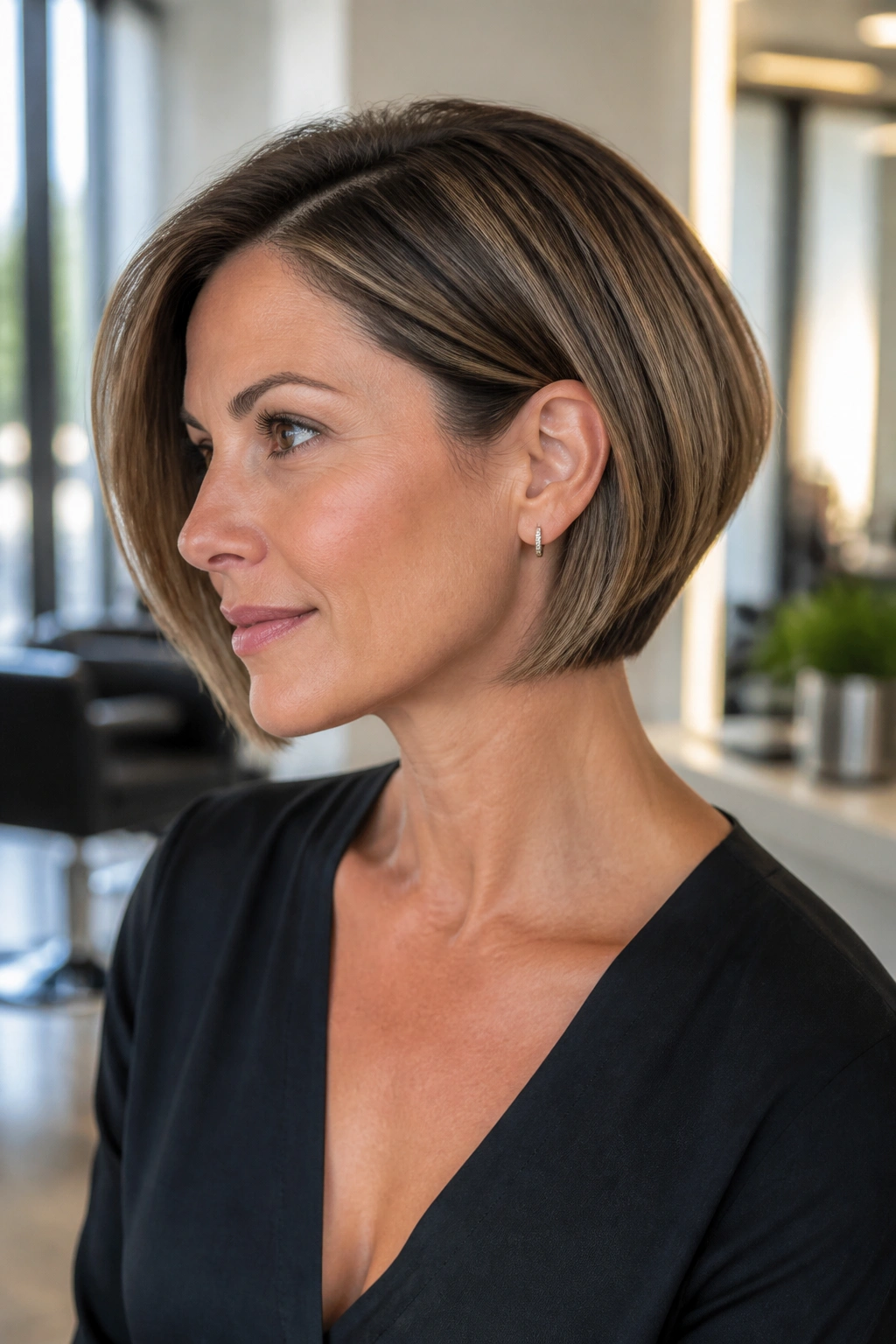
An A-line bob gives you a little geometry without going full sharp-edged. The back sits shorter and cleaner at the nape, while the front drapes longer toward the jaw. That angle makes the neck look longer and keeps the front pieces from feeling heavy.
If you like tucking hair behind one ear, this cut is a strong choice. The longer front sections stay visible and elegant, while the shorter back keeps the shape from collapsing. It also works nicely with earrings, which sounds like a small thing until you see the haircut in real life.
What to Watch For
The angle should be subtle, not dramatic. A steep A-line can start to look dated fast, and that’s not the mood here. Ask for a gentle incline and clean edges through the back.
This is one of those cuts that looks especially good on a fresh blowout, but it should still hold its line after a simple rough-dry. If it only looks good after 25 minutes of styling, the angle is probably too extreme.
10. Bixie Cut with Feathered Sides
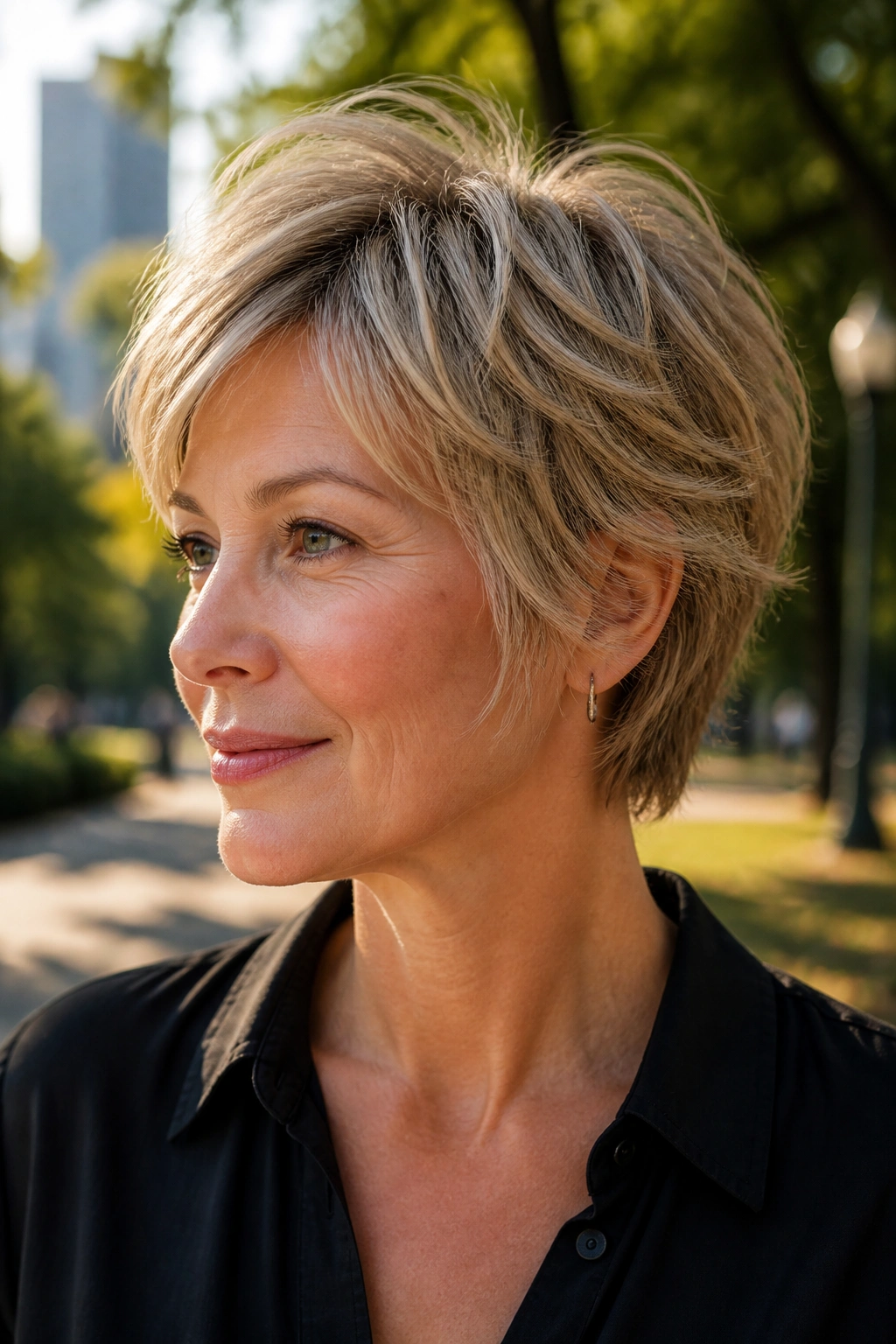
A bixie is the middle ground between a bob and a pixie, and that in-between space is exactly why it works. You get the lightness of short hair with a little more coverage around the ears and nape. The feathered sides keep it from feeling blocky.
Think of it as a haircut for people who want to say goodbye to heavy length but are not ready for a full pixie. The shape tends to frame the face gently, especially when the top is left a touch longer than the sides. That top length also gives you room to style it forward, sideways, or slightly back.
A bixie looks best with some movement in the finish. Flat-ironed to the head, it can lose its point. A bit of texture spray, a dab of paste, or even just finger-drying can keep the layers visible.
It is a smart choice if your hair has become less dense and you want the cut to do some of the volume work for you.
11. Feathered Shoulder Cut
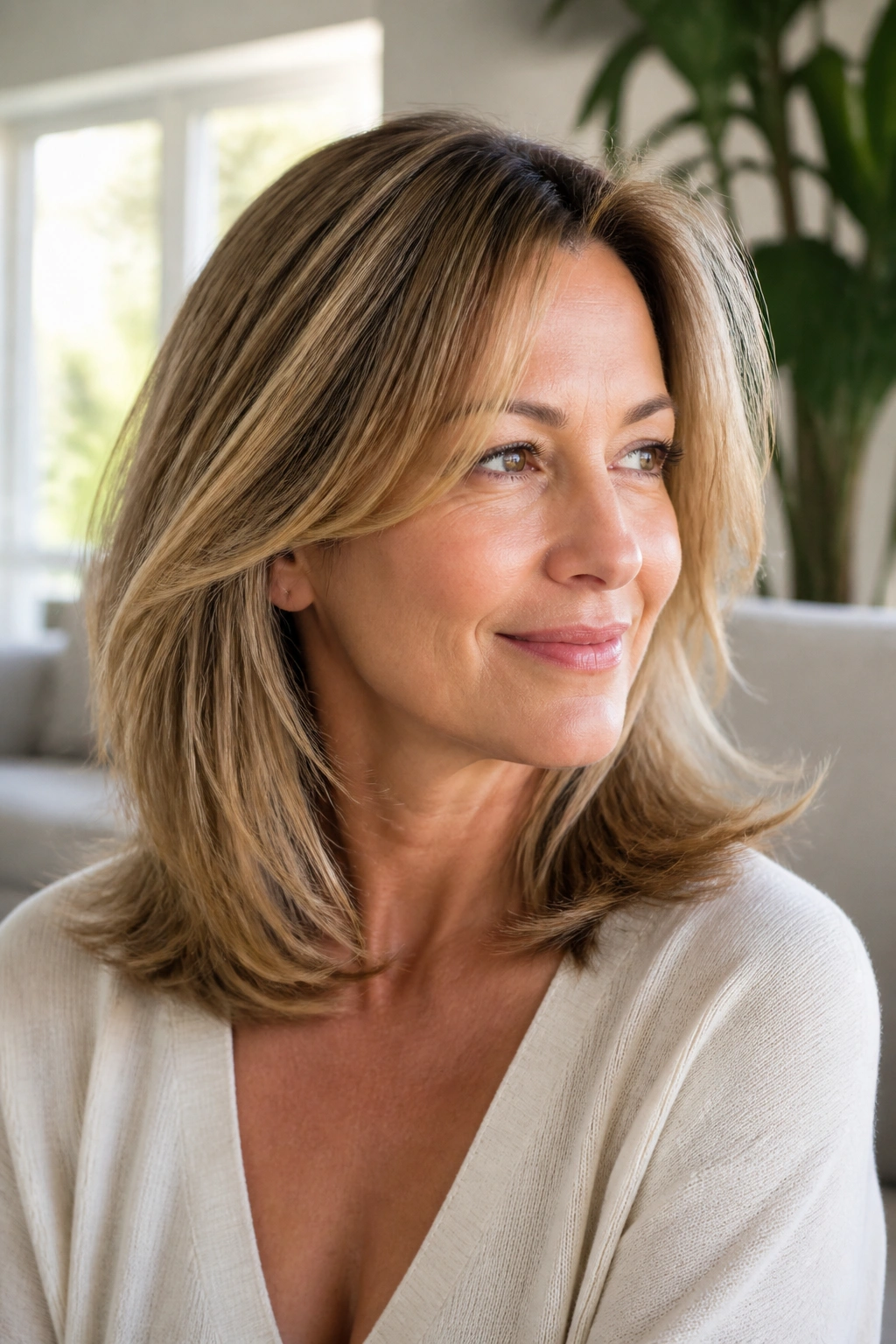
A feathered shoulder cut has a softer edge than a blunt lob, but it is less shaggy than a full layered look. The ends are shaped to flick out a little, which keeps the haircut lively around the shoulders instead of letting it sit there like a curtain.
This is a good answer when you want movement and still need enough length to pull your hair back. You can wear it down on a normal day, then twist it into a low clip or ponytail without fighting uneven ends.
One nice thing about feathering is that it takes some of the seriousness out of medium-length hair. The cut can feel lighter around the face even when the hair is fairly dense. On gray hair, those feathery edges can also catch light in a way that blunt ends sometimes miss.
It does need a round brush or at least a little hand shaping. If you want the cut to look like it has air in it, you cannot just blast it dry and hope for the best.
12. Sleek One-Length Cut
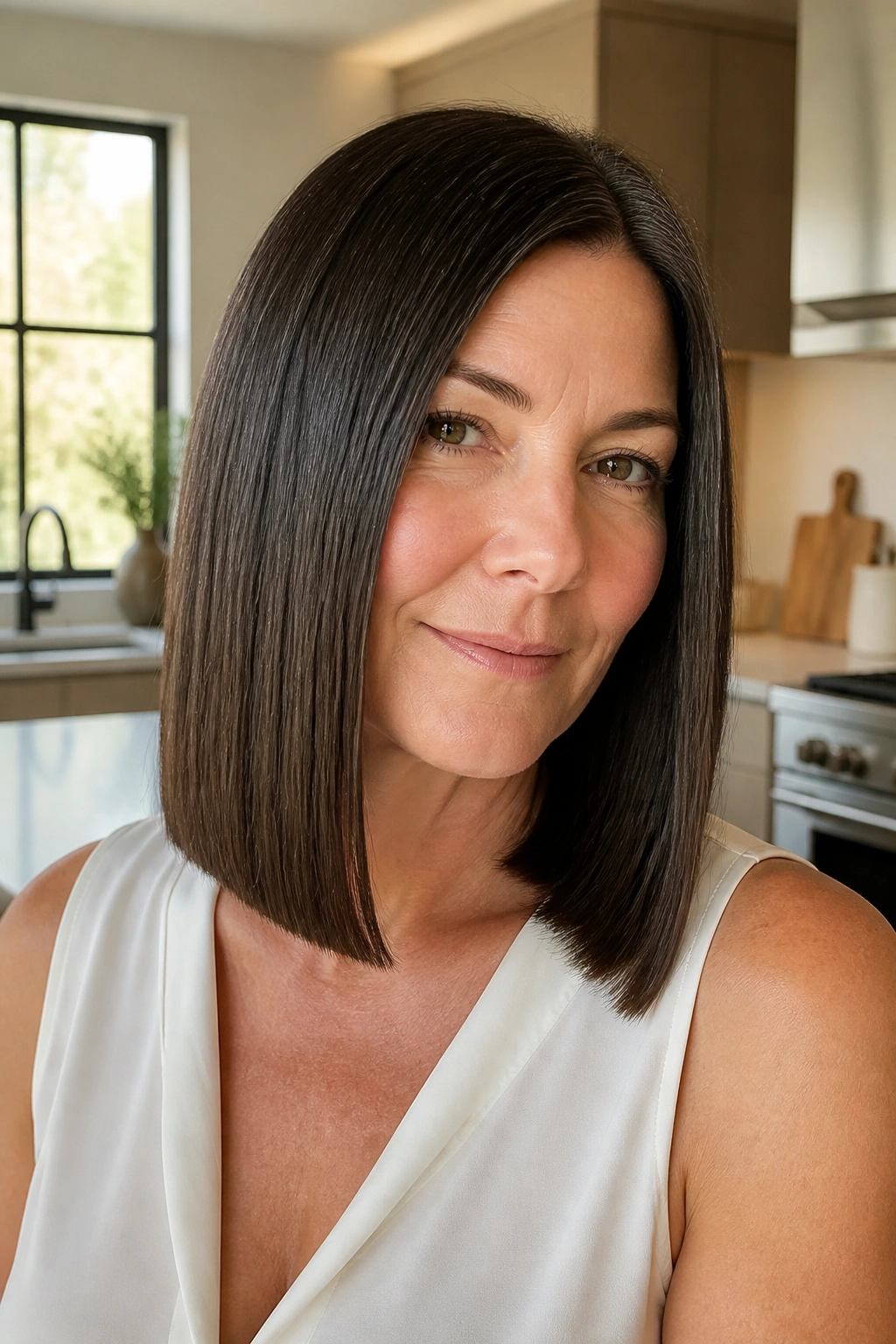
A sleek one-length cut is the opposite of fussy. No stacked back. No heavy face layers. No extra pieces trying to compete for attention. Just a clean line that makes the hair itself do the talking.
This is a strong choice for women with straight hair, especially if the color is silver, salt-and-pepper, or a deep brunette with shine. The even line makes the hair look deliberate and healthy, and the simplicity can be striking. Sometimes restraint looks better than effort.
The one-length shape does ask for good ends. Split ends or rough damage show faster here, which means trims matter more than they do with more layered cuts. Keep the perimeter tidy, and the haircut stays sharp for longer.
If your hair is very thick, ask your stylist not to over-bulk the interior. You want movement, not a shelf. A sleek cut can handle weight. It cannot handle puff.
13. Tapered Crop for Natural Texture
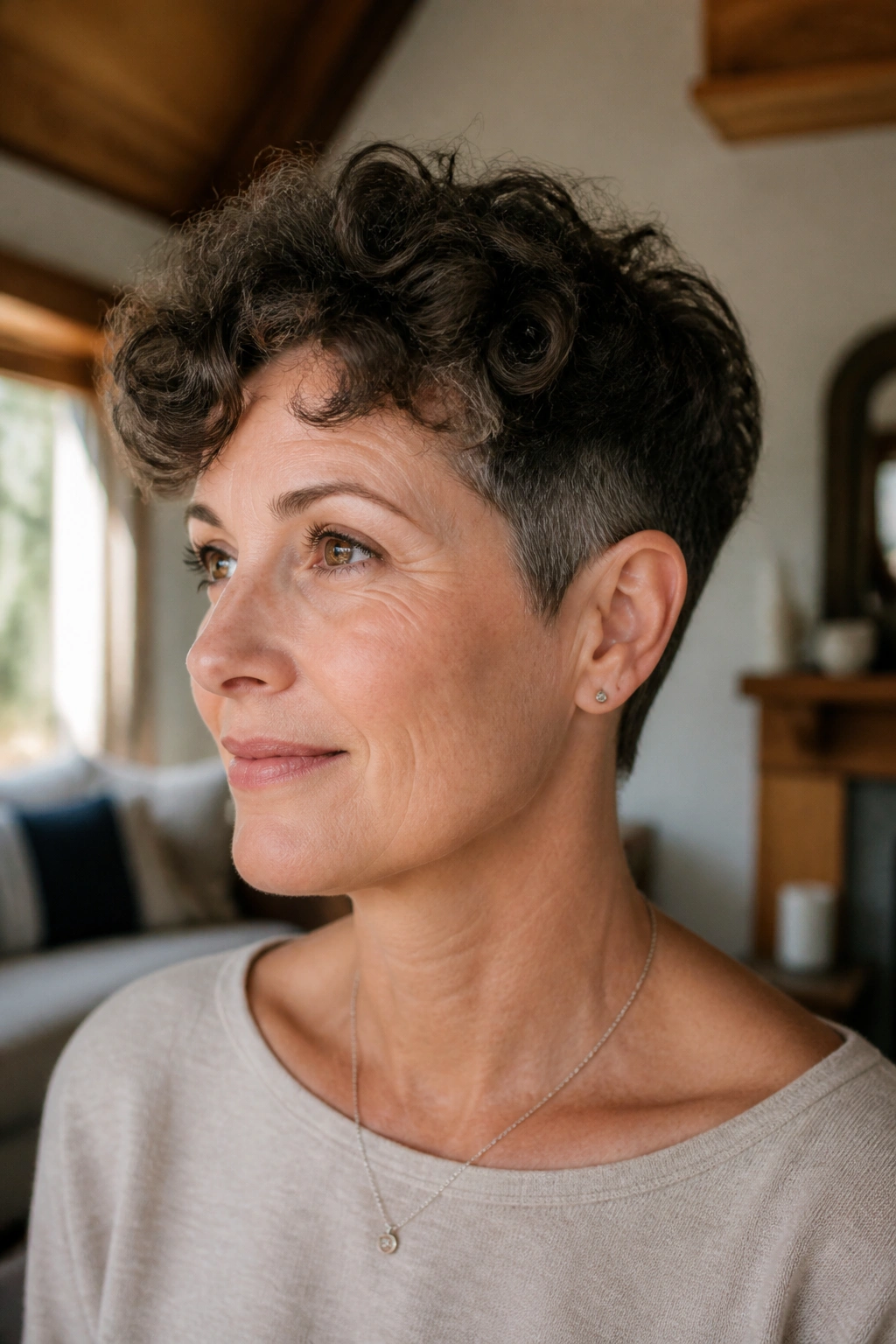
A tapered crop is built for texture. The sides and nape are kept close, while the top stays longer and softer so curls, coils, or waves have room to live. That shape can make natural texture look intentional instead of unruly, which is a relief if your hair refuses to behave under blunt lines.
The Shape Matters
The taper should follow the head, not fight it. If the crown is too short, the top can stick up in a way that feels harsh. If it is too long, the cut loses the point.
- Keep some softness through the crown.
- Ask for clean edges around the ears.
- Leave enough length on top to twist or smooth.
- Use a light cream, not a heavy gel, if you want movement.
This crop is especially nice for people who are done spending time forcing texture into something it is not. The haircut does the work. You just need to put a little product in and move on.
14. Curly Rounded Bob
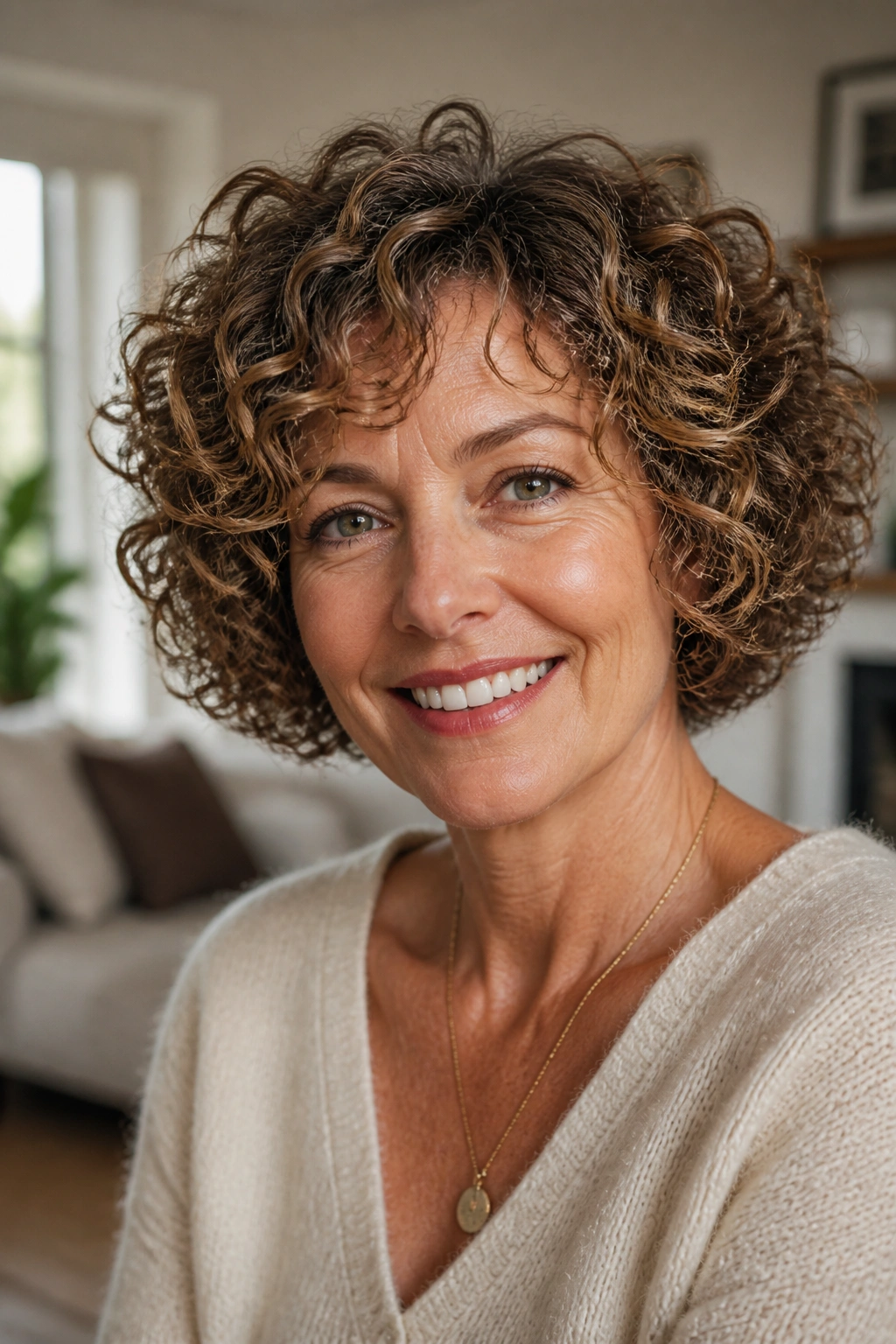
A curly rounded bob is a haircut, not a battle plan. The shape follows the curl pattern instead of flattening it, so the result feels full and soft rather than stiff. When it is cut well, the bob forms a rounded silhouette that sits around the jaw and cheeks in a very flattering way.
The key is dry cutting or cutting with the curl pattern in mind. Curly hair shrinks, and if the shape is guessed at while soaking wet, the result can be uneven in all the wrong places. A good stylist will leave room for bounce and shape the ends so they do not turn into triangles.
This cut loves hydration. A leave-in conditioner and a lightweight gel or curl cream usually do more good than a cabinet full of products. Diffuse on low heat if you want more lift, or let the curls air-dry and accept a little softness in the shape.
One small warning: a rounded bob on curls needs upkeep around the perimeter. If the bottom edge gets shaggy, the whole silhouette loses its charm fast.
15. Side-Swept Bangs with Layered Lengths
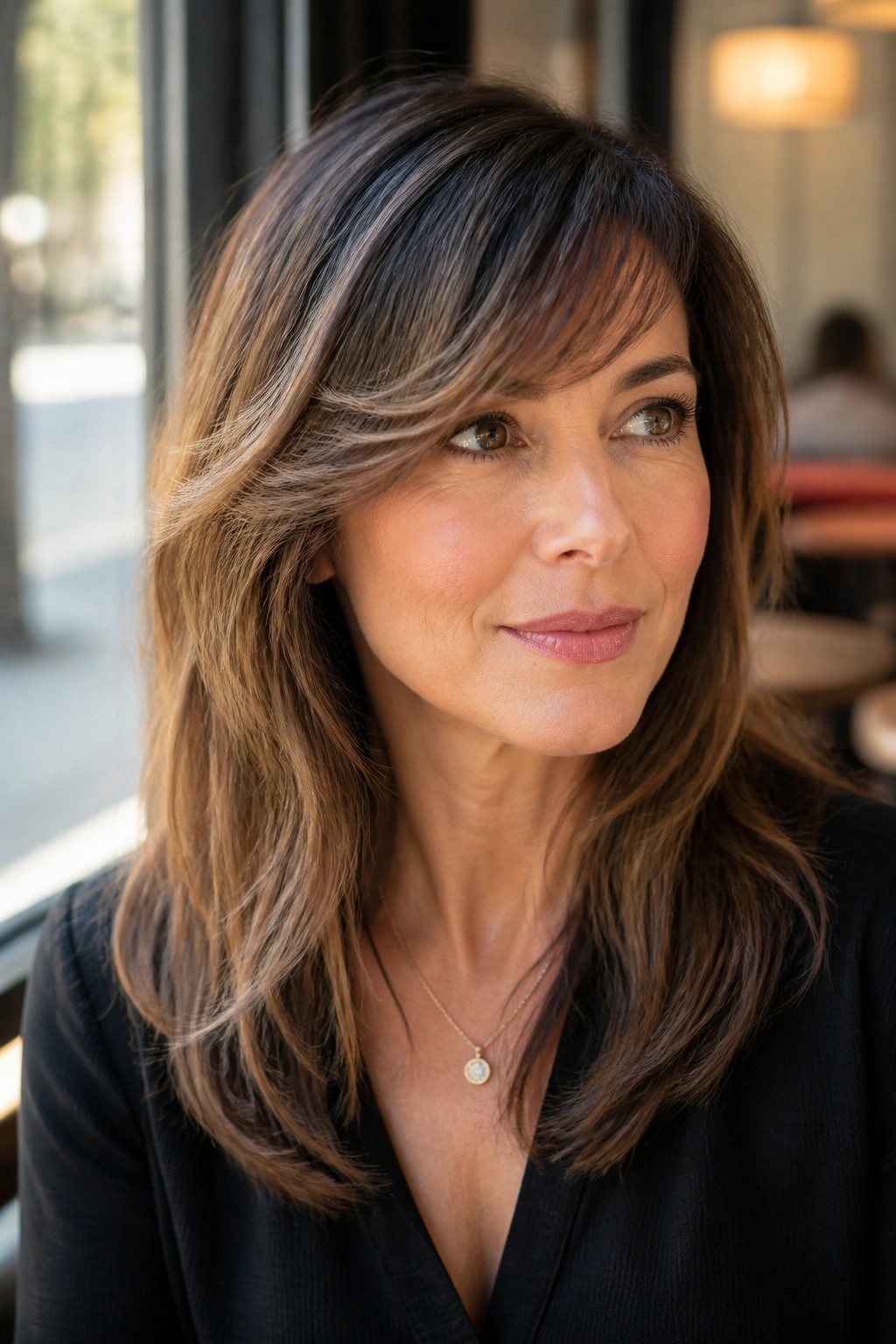
Side-swept bangs can be a very practical kind of pretty. They soften the forehead, draw attention toward the eyes, and blend into layers without the hard stop that straight bangs can create. That makes them easier to grow out and easier to live with.
Why They Age So Well
The diagonal line across the face gives movement without needing a lot of styling. It also leaves some flexibility if your part shifts during the day.
The layered lengths behind the bangs matter just as much as the fringe itself. Without some shaping through the sides, the bangs can look disconnected, like an afterthought. With soft layers, the whole haircut moves as one piece.
This is a strong choice if you want to change the front of your haircut without chopping off length. It works on straight hair, wavy hair, and even slightly curly hair if the bang area is left long enough.
16. Textured Crop for Fine Hair
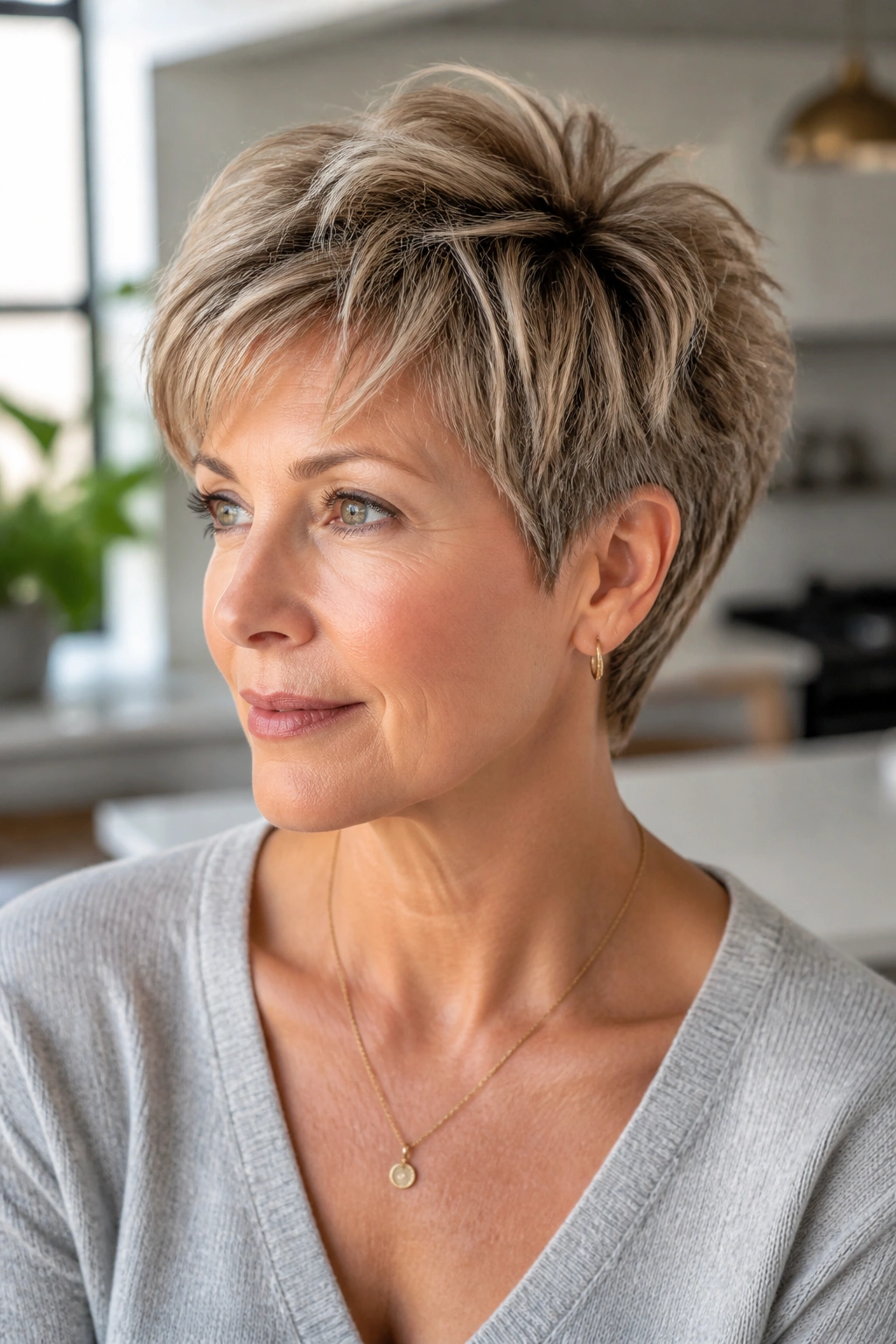
A textured crop can rescue fine hair from looking limp by noon. The cut is short enough to remove dead weight, and the texture keeps the surface from lying flat against the scalp. That combination gives fine hair the illusion of fullness without asking it to do the impossible.
Compared with a blunt bob, this cut is lighter and more playful. The edges can be point-cut or softly chipped so the hair breaks up into pieces instead of one solid line. That makes the crown look fuller, which is usually the goal.
What Makes It Different
The shape should stay close to the head, but not too close. If the sides are cut too short, fine hair can look thin in a rushed way. If the top is left too long, the style collapses.
A little dry shampoo at the root and a quick tousle with the fingers go a long way here. This is not a cut that wants heavy brushing. It wants movement and a small amount of grit.
17. Long Layers with Face-Framing Pieces
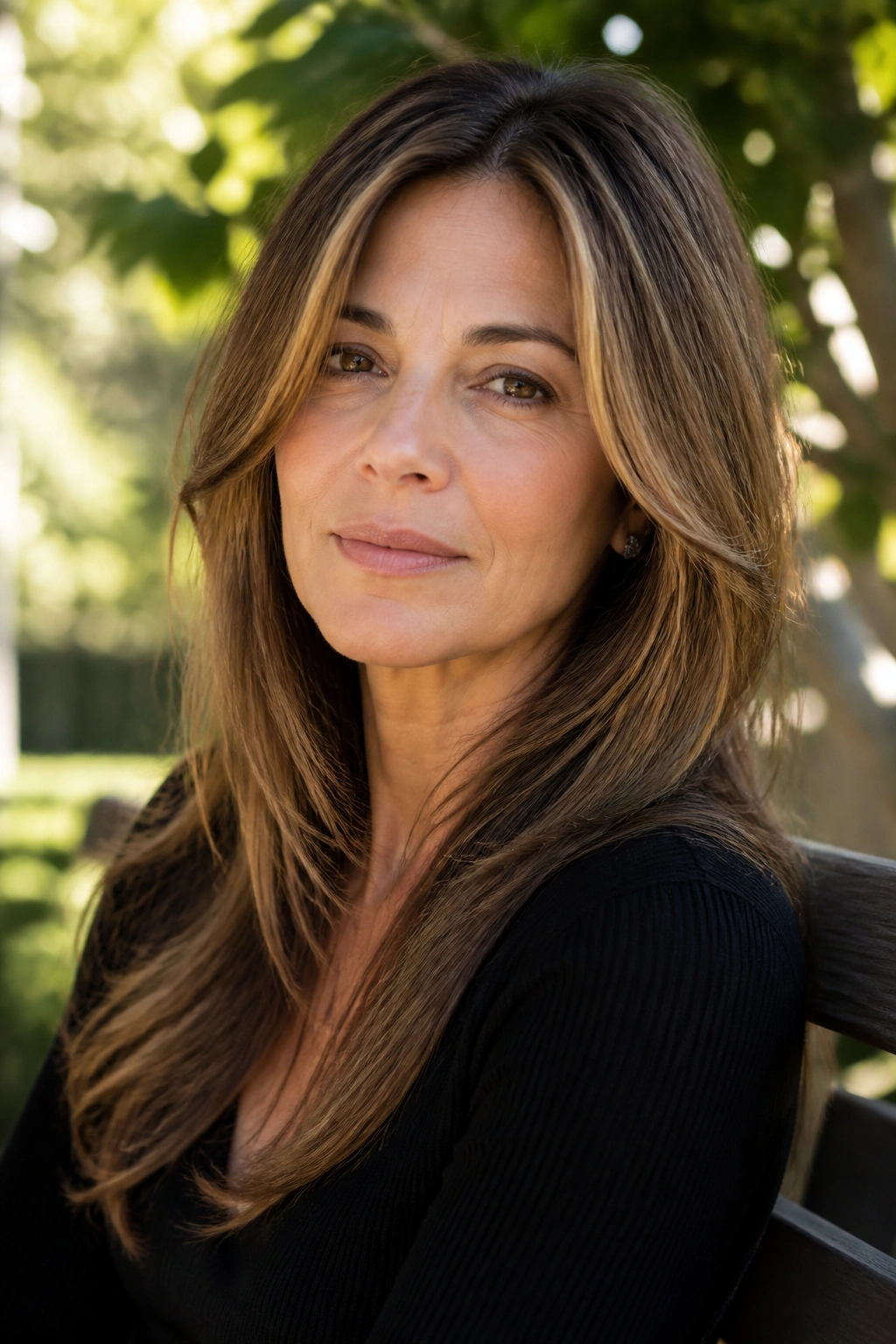
Long hair after 40 does not need to be defended. It just needs structure. Long layers with face-framing pieces let you keep the length while stopping the ends from looking like a single heavy curtain.
The face-framing sections should start where they actually help: around the cheekbones, chin, or collarbone, depending on your face and your density. Too short, and the front pieces can feel disconnected. Too long, and you lose the point of having them at all.
This cut works especially well if you wear your hair in waves or loose bends. The layers give the movement somewhere to go. If your hair is straight, the same cut can still work, but it needs clean edges and regular trims so the ends stay healthy-looking.
It’s a strong choice for anyone who likes length but wants the haircut to do more visual work than a single one-length cut can.
18. Graduated Bob with Built-In Lift
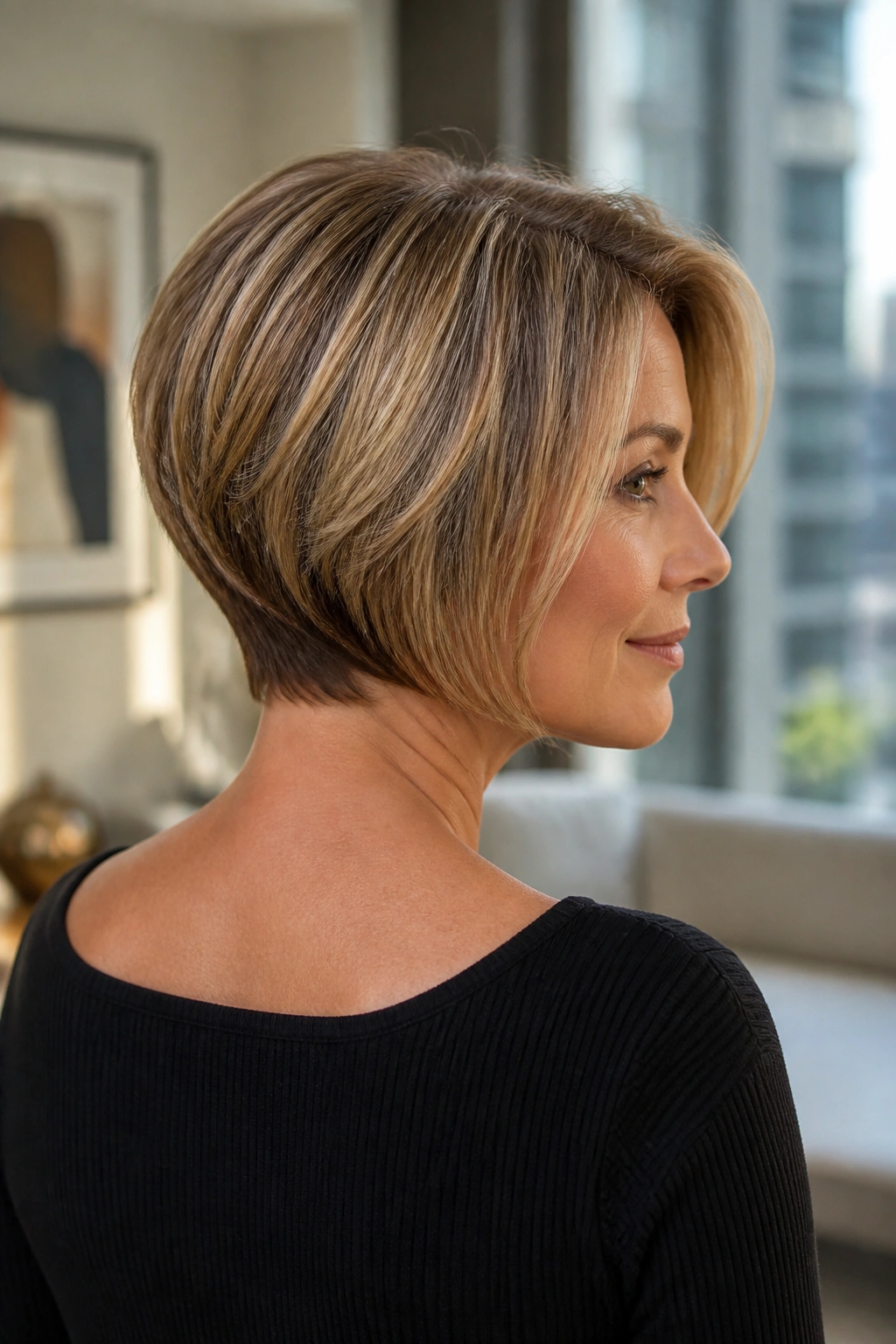
A graduated bob gives you lift at the back without making the front pieces too short. The stack in the nape creates a little rise, which can be a real help when hair has started lying flat against the head. It is a shaped cut, not an accidental one.
Compared with an A-line bob, the graduation is more obvious in the back. That extra structure can make the crown look fuller, and it can sharpen the jawline without the hair feeling harsh. The front still needs enough length to balance the back, or the whole thing starts looking top-heavy.
Best For
This shape is especially useful for fine to medium hair that needs body. It can also work on slightly wavy hair if the stack is kept smooth rather than overly choppy.
- Keep the shortest back pieces neat at the nape.
- Ask for soft graduation, not a severe wedge.
- Style with a round brush or root lift spray.
- Trim it regularly so the back does not grow out awkwardly.
19. Soft Wolf Cut with Loose Layers
A soft wolf cut is not the wild, over-shredded version that shows up in dramatic photos. The good version has looseness, some lift at the crown, and longer layers that taper without looking jagged. It feels lived-in in the best way.
This cut can be a gift for wavy hair, especially if your texture likes to do its own thing. The top gets some height, the ends stay light, and the face-framing pieces keep the shape from feeling like a cloud. There is a lot of room here for personality.
The catch is that the cut has to be balanced. Too many short layers and it turns frizzy. Too few and it loses the point. A soft wolf cut should feel a little rebellious, but still wearable at work, at dinner, and with a plain white shirt.
It is a good choice for women who want movement and do not want a polite haircut.
20. Asymmetrical Lob with a Deep Side Part
An asymmetrical lob gives you a subtle edge without needing a dramatic shape. One side is slightly longer than the other, and that small difference changes how the whole haircut sits on the face. Pair it with a deep side part and the effect is even stronger.
This cut works because it adds direction. Instead of hair falling evenly on both sides, the line leads the eye. That can be flattering if you want to soften one side of the face or create a little lift near the forehead.
It also helps if your hair tends to split down the center on its own and then refuse to behave. A deep side part gives the style a clear intention. That alone can make a haircut look more expensive, even when it is not complicated at all.
Keep the asymmetry subtle. A tiny difference reads as polished. A loud difference can start to feel like a stunt.
21. Flip Layers That Hit at the Shoulders
Flip layers bring a little outward bend to the ends, which can make shoulder-length hair feel lively instead of heavy. The shape nods to older blowout styles, but the modern version is softer and less set. It works best when the ends move away from the face instead of sitting straight down.
This cut is useful if your hair naturally wants to curve inward and flatten at the shoulders. The flip gives the edge a little air, which keeps the outline from looking stuck. A round brush or medium rollers can help, but you do not need a perfect salon finish to make it work.
It’s also a good answer when you want movement without obvious layering through the whole head. The main action lives at the ends, so the body of the hair still feels full. That makes the style feel balanced.
A small warning: too much flip can look old-fashioned fast. Keep the bend gentle.
22. Gray-Friendly Crop with Bright Face Framing
Gray hair often looks best when the cut is clean enough to let the color do its thing. A gray-friendly crop keeps the perimeter neat and adds a little brightness around the face, so the hair does not read as flat or heavy. That is especially useful when the gray is coming in in streaks rather than all at once.
What to Ask Your Stylist For
Ask for a shape that follows your head and a few lighter pieces near the cheekbones. Those pieces should not be so short that they fight the rest of the cut. They should just brighten the front.
- Keep the outline crisp around the nape.
- Use soft face-framing pieces rather than thick chunks.
- Let the gray sit in the shape instead of hiding it.
- Choose a finish with shine, not dry texture.
A crop like this can make silver strands look intentional rather than patchy. The haircut does not need to scream. It just needs to frame the face well enough to let the color breathe.
23. Layered Cut for Thick, Heavy Hair
Thick hair can be a blessing until it turns into a triangle. A layered cut for thick hair solves that by removing bulk in the right places and keeping weight where the shape needs it. The goal is control, not feathering everything into nothing.
This cut should be handled carefully. Over-thinning can make thick hair frizzy and stringy at the same time, which is a bizarre combination but a common one. Better to use longer layers, interior shaping, and clean ends that hold together.
The haircut works because it gives the hair room to move. Heavy hair often looks best when it is not forced into one giant mass. A little shaping around the face and through the ends can change the whole feel of it.
If you have thick hair, this is the section to read twice. A good layered cut can feel like losing ten pounds from your head. A bad one can feel like a puffball with receipts.
24. Wavy Midlength Cut with Soft Ends
A wavy midlength cut is one of the most forgiving shapes around. The length gives the waves room to form, while the soft ends keep the haircut from feeling boxy or blunt. It is especially good if your hair does not want to be perfectly straight and you are done fighting that fact.
The sweet spot usually sits between the collarbone and the top of the chest. That length lets the wave pattern show without the hair getting too heavy. A soft end finish helps the wave clump in a nicer way, which matters a lot when you air-dry.
You can keep this haircut simple. A little mousse at the roots, a light cream through the mids, and scrunching with your hands may be enough. If the wave pattern is more stubborn, a diffuser on low heat can give it shape without making it puffy.
This is the sort of cut that rewards honesty. If your hair is wavy, let it be wavy.
25. Undercut Pixie with Soft Top
An undercut pixie is the most decisive short cut on this list, and that is exactly why some women love it. The nape and sides are cut very close, sometimes even hidden underneath a longer top section, which removes bulk and gives the top room to lift. On dense hair, the difference is huge.
Who It Suits
This shape is for someone who wants short hair that feels clean and modern, not soft and fuzzy. It also works well if your hair grows fast at the nape or if the underside tends to puff out.
- Keep the top long enough to sweep or spike.
- Ask for the undercut to stay subtle if you do not want a stark look.
- Trim every 4 to 6 weeks to keep the shape sharp.
- Use a light paste or cream, depending on how much texture you want.
The cut is not for everyone, and that is fine. It asks for maintenance. It also gives back a lot: coolness on the scalp, faster styling, and a shape that keeps its edge longer than many people expect.
Final Thoughts
The smartest haircut in your 40s is not the one with the most layers, the most movement, or the most praise in the mirror. It is the one that still looks decent when you have not touched it for a while.
If your hair has changed, the cut should change with it. That might mean a blunt bob, a longer lob, a cropped shape, or a layered cut that finally respects your texture instead of fighting it. The right answer is usually the one that fits your routine as well as your face.
Ask for shape first. Trend can come later.
