



Gray hair styles for women over 50 work best when the cut has shape, not fuss. A lot of women blame the color when the real issue is the structure: heavy ends, flat roots, a part that sits too stiffly, or bangs that were cut with no thought for how silver strands move. Gray hair tells on a bad haircut fast. It also looks gorgeous fast when the line is clean and the shape has a little intention.
I’ve always liked gray hair when it looks like it belongs to the face, not like it was pasted on top of it. A blunt edge can make finer silver hair look fuller. Soft layers can stop thicker gray hair from ballooning out at the sides. And bangs—yes, bangs—can work, but only when they’re cut to suit the hair’s density and the person’s forehead, not because someone decided bangs were the answer to everything.
That balance matters.
The best cuts for silver, salt-and-pepper, and full gray hair do one thing especially well: they give the hair a job. Some add lift at the crown. Some slim the jawline. Some keep curls from expanding into a triangle. Some make straight hair look shinier because the ends are blunt and tidy. The styles below cover short, medium, and longer lengths, with enough variety to suit fine hair, thick hair, curls, coils, and the in-between textures that do not always fit neat salon categories.
1. Gray Hair Styles for Women Over 50: Chin-Length Blunt Bob
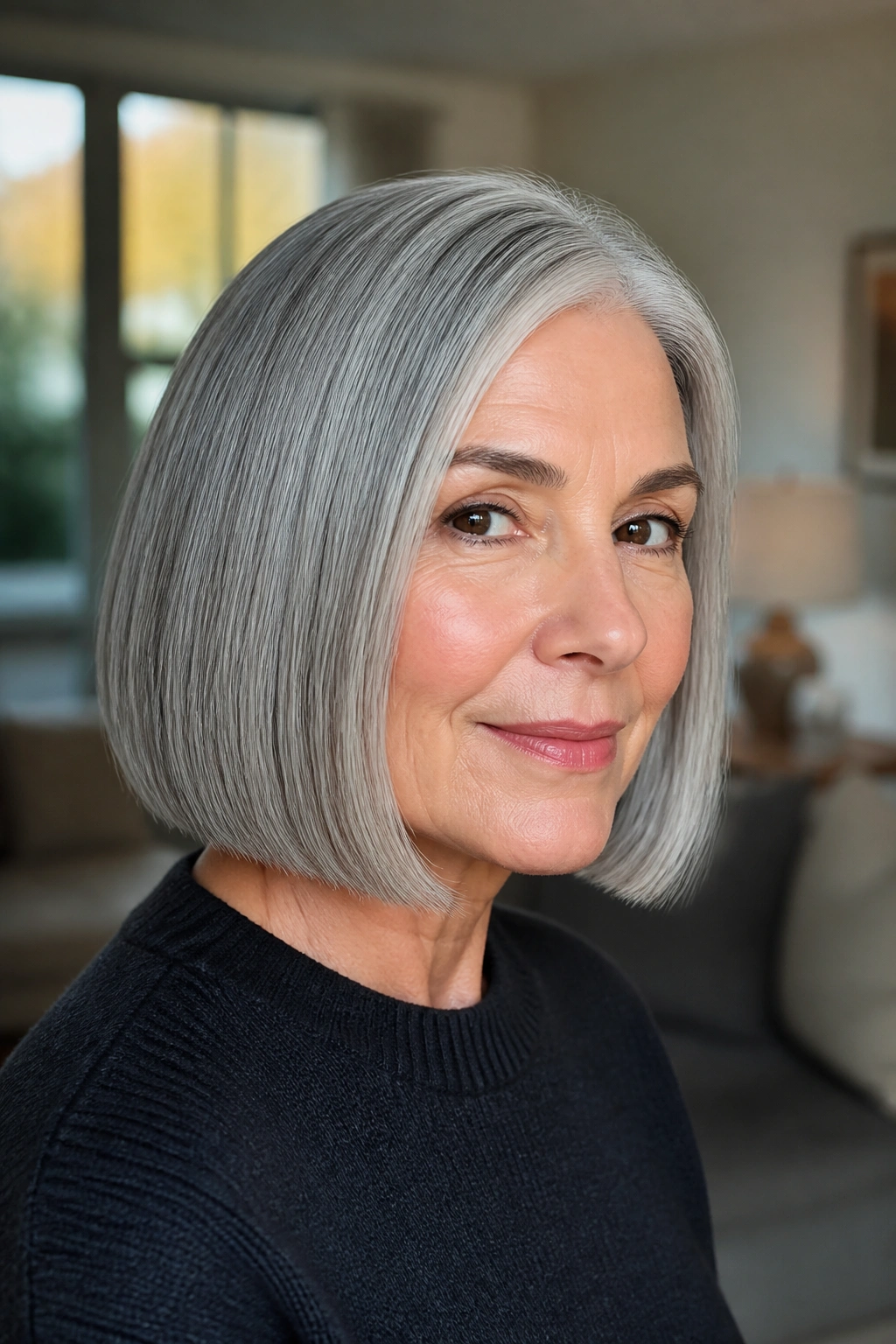
A chin-length blunt bob is one of the cleanest ways to make gray hair look fuller. The straight edge gives silver strands a dense-looking finish, which matters a lot if your hair has thinned a bit around the temples or part.
Why it works so well
A blunt line around the chin gives the eye something solid to read. That makes the hair look stronger, even when the actual texture is soft or fine. I like this cut most on hair that falls flat at the ends and needs a little visual weight.
Ask for this at the salon
- Keep the perimeter at chin level, or just below it.
- Leave the ends blunt instead of heavily point-cutting them.
- Add only a small amount of internal shaping if the hair is thick.
- Blow-dry with a round brush for a slight bend under the jaw.
Best tip: keep the part soft, not ruler-straight. A tiny shift off center gives the bob more life.
2. Soft Layered Lob

If you want gray hair to move without losing length, the soft layered lob is a dependable choice. It lands around the collarbone, which is long enough to tuck behind the ears and short enough to keep the shape tidy.
The trick is restraint. Too many layers and the cut starts to fray. Too few and it can hang like a sheet. The sweet spot is a few long layers that start below the cheekbone and fade down toward the ends. That keeps the face open while preserving weight at the bottom.
This style is especially good if your gray hair dries puffy at the crown but flat at the ends. A little mousse at the roots and a quick rough-dry are often enough. Simple. Clean. Useful.
3. Tapered Pixie with a Longer Crown
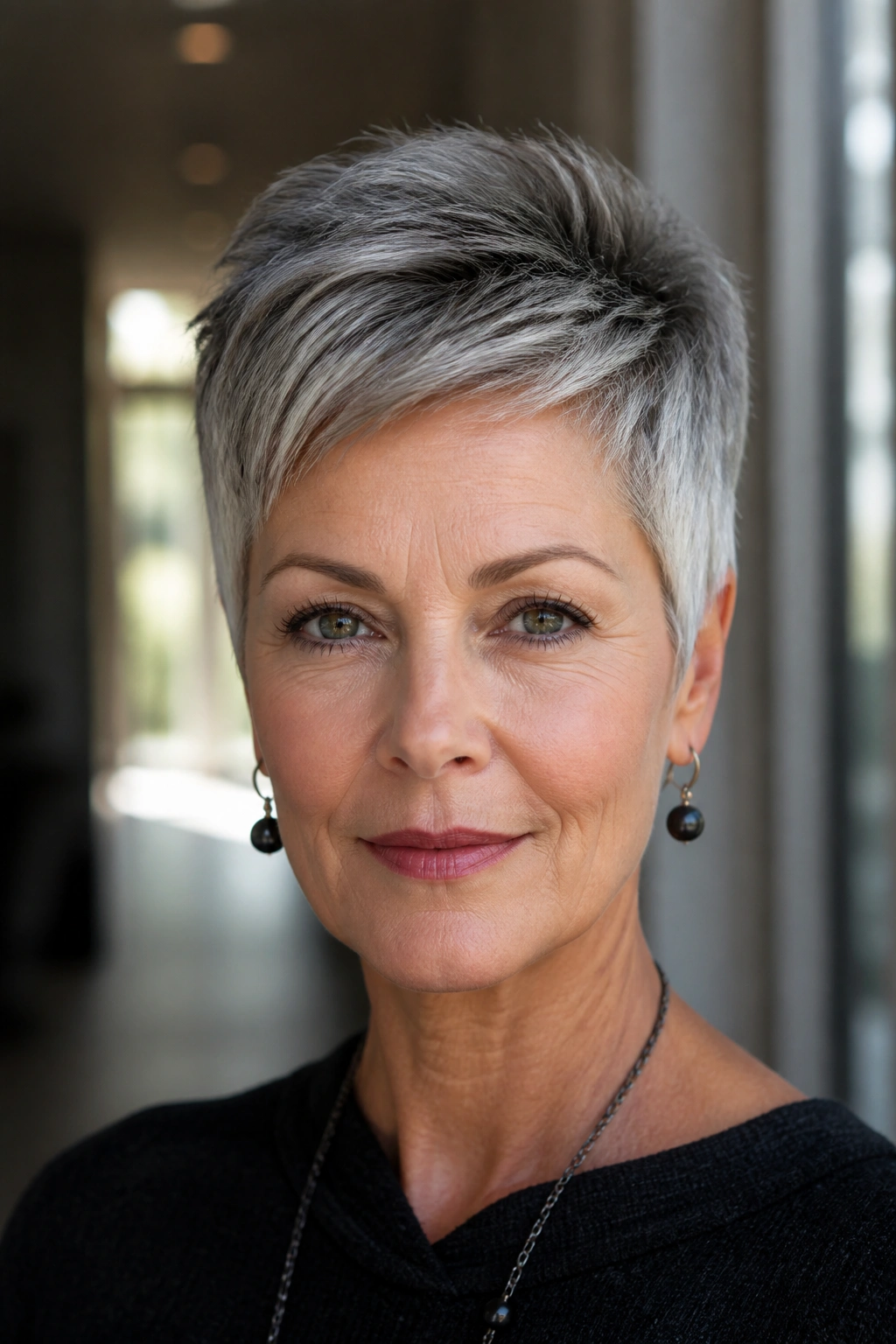
What makes a pixie flattering instead of severe? Usually, it’s the crown. A tapered pixie with a little extra length on top gives gray hair lift where it counts and keeps the sides neat.
The shape to ask for
Ask for close tapering around the ears and nape, then leave about 1½ to 3 inches on the crown depending on your hair density. That extra top length can be brushed forward, swept up, or pushed to one side. It gives you options.
Short gray hair can look chic when the texture is visible. It can also look harsh if the cut is too tight or too square. This version avoids that. It feels airy, but not wispy.
A touch of styling cream is usually enough. If you use too much product, the hair can look stringy fast.
4. Silver Shag with Curtain Bangs

On straight or wavy gray hair that refuses to move, a shag can be a lifesaver. The layers create motion, and curtain bangs soften the forehead without looking heavy.
I like this cut when the hair has some thickness and needs shape from the top down. The layers should start near the cheekbone and continue in a loose cascade to the shoulders or just above them. If the bangs are too short, they can look abrupt. If they’re too long, they can disappear into the rest of the cut.
Good details to keep in mind
- Curtain bangs should open around the bridge of the nose.
- The shortest face-framing layer usually sits near the cheekbone.
- A diffuser can keep the shape soft on wavy hair.
- A little texturizing spray is enough; no need to load it up.
Worth saying: this cut is not lazy. It looks relaxed, but the actual shape has to be precise.
5. Shoulder-Length Cut with Face-Framing Layers
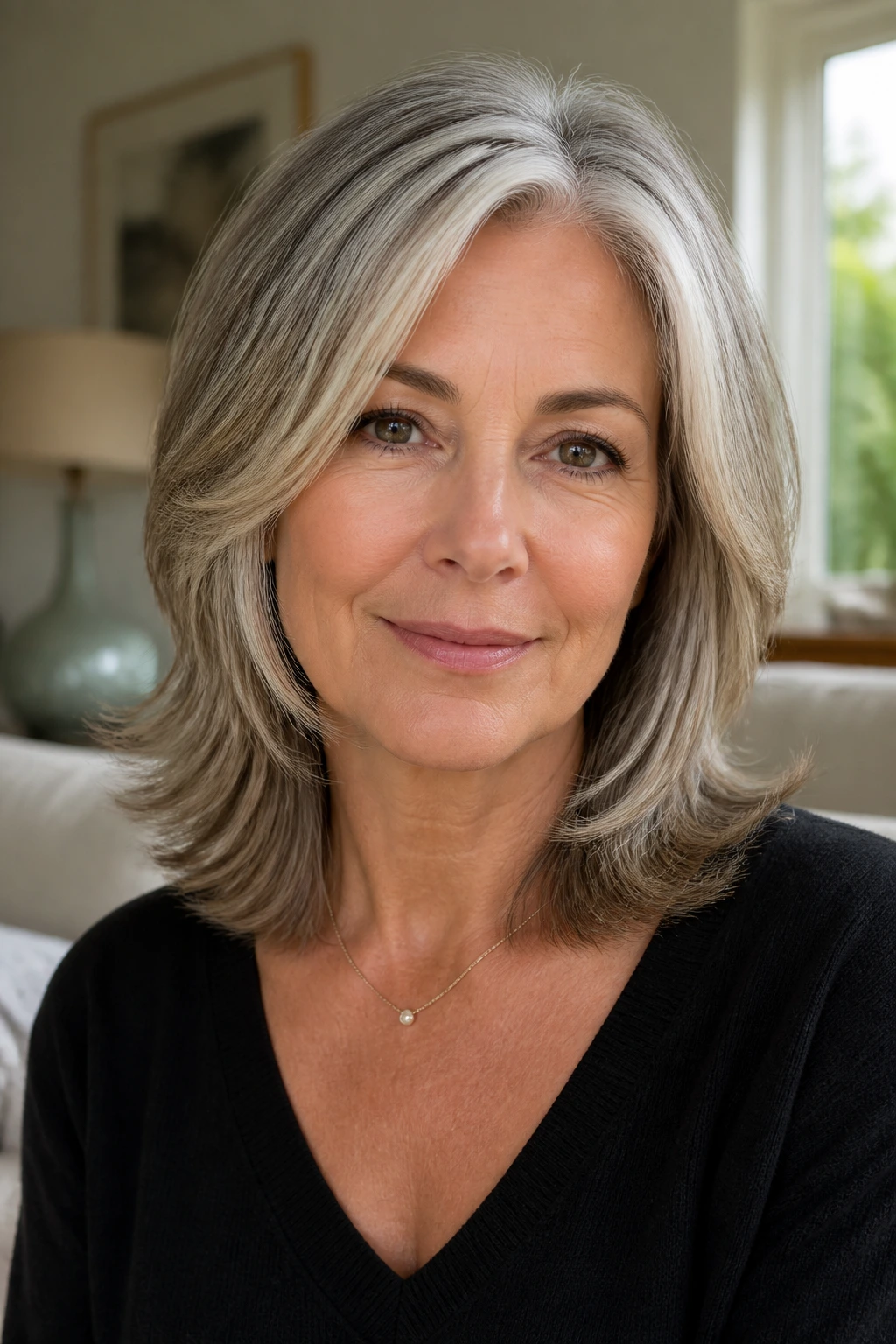
Shoulder-length hair often gets called safe, which is unfair. Done well, it is one of the smartest lengths for gray hair because it gives you room to wear it up, wave it, or leave it straight without fighting constant upkeep.
The face-framing layers matter more than people think. They should start around the jaw or just below it so the cut opens the face instead of collapsing around it. That little move can make the cheekbones look higher and the neckline feel longer.
This is a good cut if you like flexibility. It can be air-dried on busy mornings. It can be smoothed with a brush for cleaner days. It can even be tucked into a low clip without losing shape. No drama. Just useful hair.
6. Sleek Side-Parted Lob

A side-parted lob is a nice antidote to hair that falls flat through the crown. The side part adds lift instantly, and the long line through the front makes silver hair look polished rather than stiff.
Unlike a center part, which can sometimes split fine gray hair in a way that shows scalp more than you want, a side part shifts the weight and gives the top a little height. The result feels softer around the face. It also works well if one side of your hair grows flatter than the other.
A flat iron bend at the ends is enough. You do not need poker-straight perfection. In fact, a small curve at the bottom looks better because it keeps the style from feeling severe.
7. Curly Crop with a Rounded Shape

Does short curly gray hair have to puff out? Not if the shape is cut well. A rounded crop keeps curls contained while still letting them stack with lift.
How to wear it
The most useful version is cut dry or nearly dry, curl by curl, so the stylist can see how the pattern sits. That matters a lot with gray curls, which often feel drier and spring in a slightly different way than they did before.
Use a leave-in conditioner on damp hair, then a small amount of curl cream. Scrunch gently, diffuse on low heat, and stop touching it once it starts setting. The round shape should follow your head, not sit on top of it like a helmet.
If your curls are tight and springy, this cut can be fantastic. If they’re loose and easily frizzy, the perimeter needs to stay soft.
8. Feathered Bob with a Soft Fringe
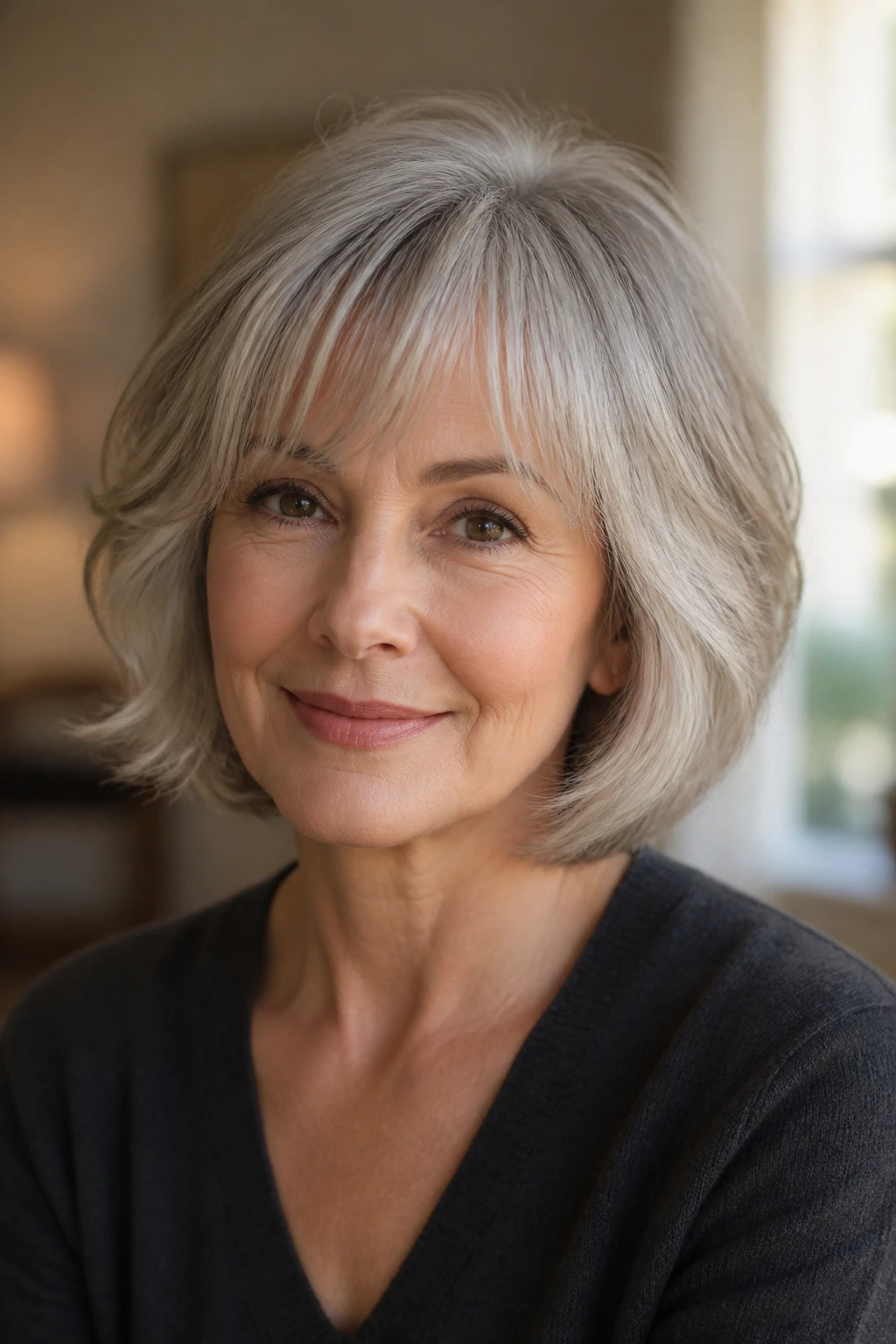
A feathered bob gives gray hair a lighter edge without making it look thin. The feathering happens in the movement of the ends, not in a choppy, over-thinned way. That’s the difference.
A soft fringe can do a lot here. It eases the transition between forehead and hairline, and it keeps a bob from feeling too blunt around the face. I prefer this on medium-density hair, where the feathering creates shape instead of gaps.
A round brush and a quick blow-dry toward the face usually do the trick. Skip the heavy waxes. They flatten the very movement you want. If your hair tends to look bulky near the cheek, this cut is one of the easiest ways to soften it.
9. Wavy Collarbone Cut
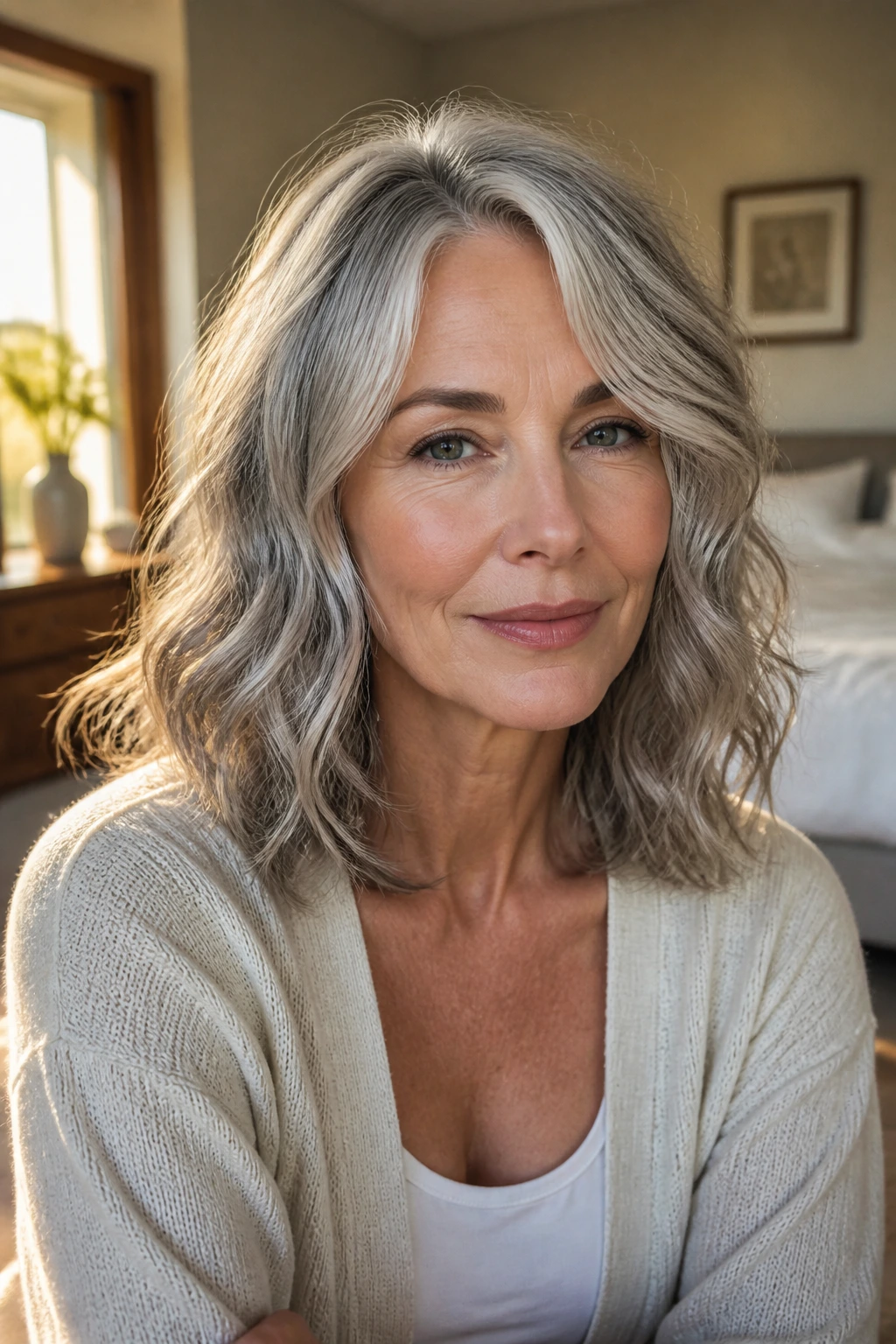
Why does collarbone length keep showing up in good gray hairstyles? Because it sits in a useful middle zone. It’s long enough to swing, short enough to stay tidy, and it avoids the heavy drag that can happen below the shoulders.
Waves look especially good here. The length lets them bend naturally instead of puffing out at the wrong point. A little layering through the mid-lengths keeps the waves from turning triangular. That matters more than a lot of people realize.
How to style it
- Work a light cream through damp hair.
- Scrunch with your hands, not a brush.
- Let it air-dry if the texture allows.
- Use a 1¼-inch iron on a few face pieces if the hair falls too flat.
The result feels easy, but not unfinished. That’s the sweet spot.
10. Short Crop with Textured Top
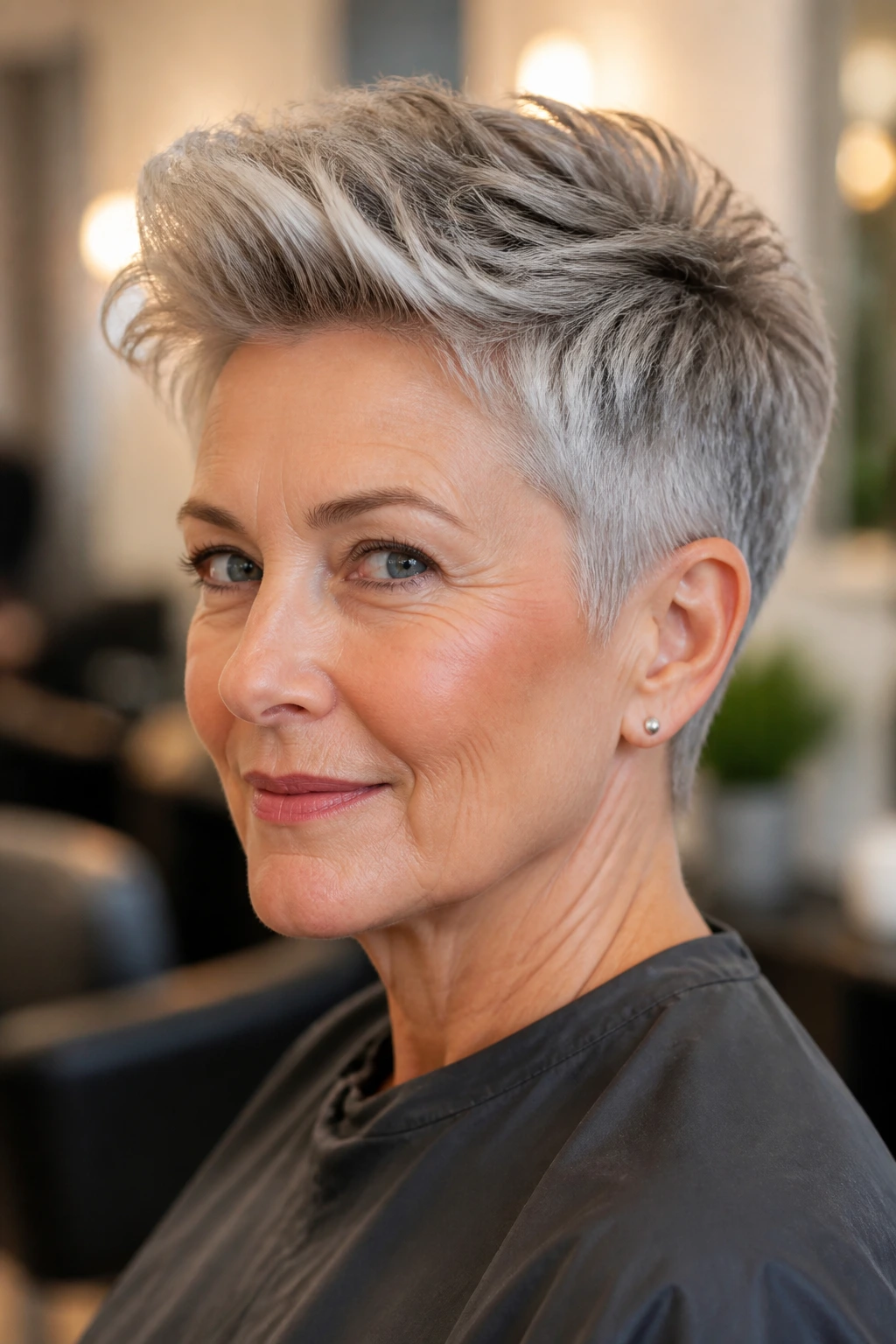
If you like low-maintenance hair, a short crop with a textured top deserves a hard look. It keeps the sides neat and leaves just enough length on top to create movement and height.
This cut is especially useful for women whose gray hair dries quickly and lies flat in the morning. A bit of texture cream rubbed between the fingertips and worked through the top can lift it in under a minute. You do not need much. A pea-size amount is often enough.
What to tell your stylist
- Keep the top around 2 to 3 inches.
- Leave enough length to sweep forward or up.
- Taper the sides gently, not too close.
- Avoid blunt heaviness at the crown.
It’s a clean cut. Fast, too.
11. Angled Bob
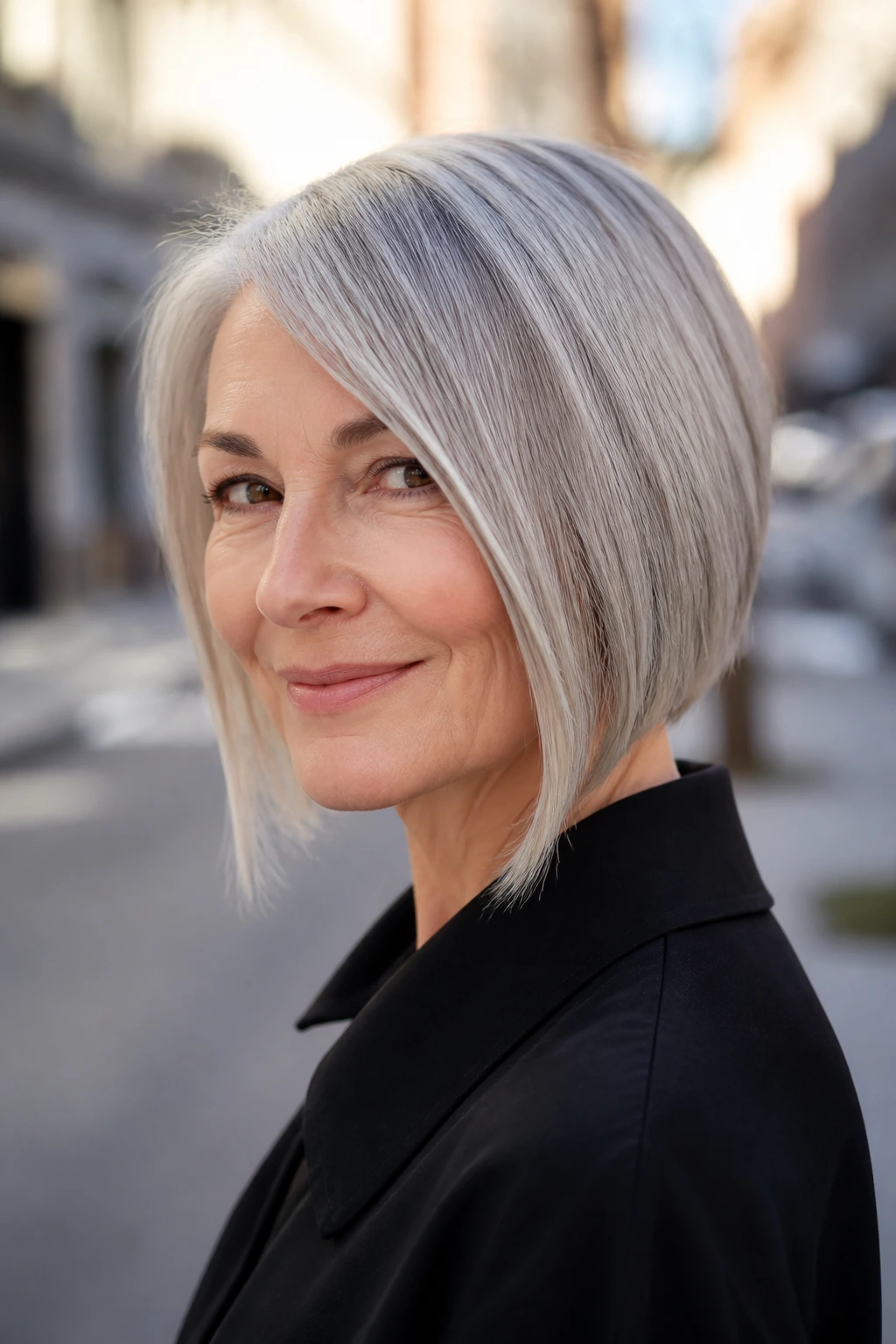
An angled bob gives gray hair a little architecture. Shorter in the back, longer in the front, it creates a diagonal line that can slim the jaw and bring the eyes upward.
The angle does not need to be dramatic. In fact, a subtle tilt often looks better because it feels more natural and less try-hard. About an inch or so of length difference between back and front is enough for most people. That small shift changes the whole mood.
This cut is especially handy if you like tucking one side behind the ear. The front pieces stay long enough to frame the face, while the back stays light and easy to manage. It’s sharp without being stiff.
12. Long Layers with a Deep Side Part

If you are attached to length, long layers can keep gray hair from settling into one heavy block. The deep side part gives the crown a lift, while the layers stop the ends from looking thick and blunt in the wrong places.
I like this style most on hair that has some wave or a little natural bend. Straight long gray hair can still wear it, but the layering has to be gentle. Too much cutting and the ends look thin before you expect them to.
A large round brush or a wide-barrel iron can add polish when needed. But the cut should do most of the work. That’s the point. You want the shape to support the length, not fight it.
13. Classic French Bob
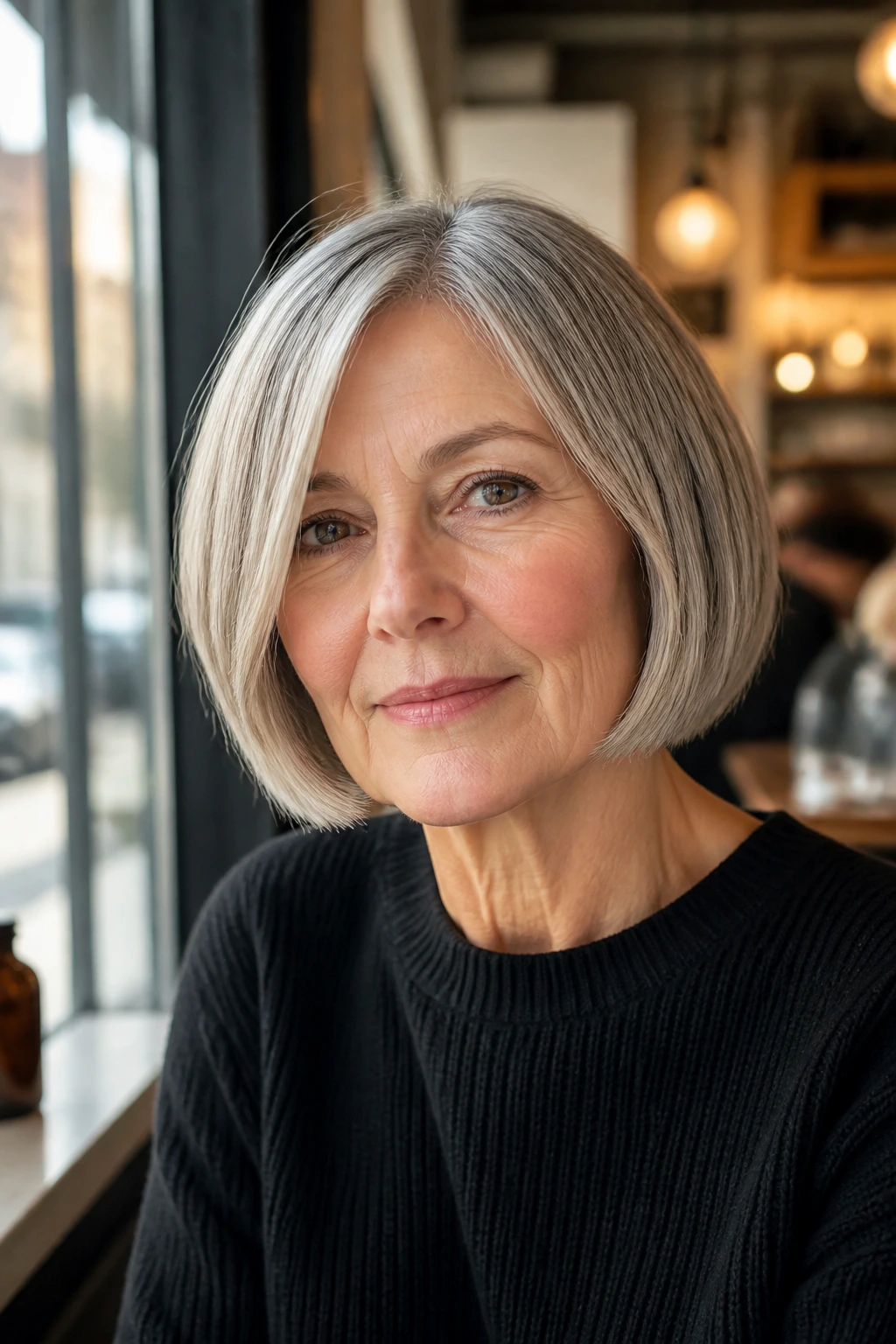
A French bob lands between cheekbone and chin, and it has a clean little confidence to it. Gray hair wears that line well because the cut shows off the shape instead of hiding behind length.
What makes it different
The perimeter is usually blunt, and the overall effect is neat rather than fluffy. A tiny fringe can be added, but it should stay soft unless you like a very crisp look. On gray hair, I prefer the version that skims the jaw and leaves room for earrings, glasses, and a little neck space.
This cut suits people who like a tidy profile. It also works when you want a style that reads polished without needing a full blowout every day.
Best for: straight to slightly wavy hair, especially if the strands have good density.
14. Layered Shoulder Cut with Bottleneck Bangs

Bottleneck bangs are one of those details that can make gray hair feel newer without looking trendy for the sake of it. They’re shorter through the center, then longer as they sweep outward, which helps the bangs blend into shoulder-length layers.
That shape is forgiving. It softens a high forehead, hides a little growth time, and frames the eyes without sitting like a block across the front. The shoulder cut underneath keeps the rest of the hair from feeling too heavy.
Salon notes that matter
- Keep the bang center short, but not chopped.
- Let the sides taper into the cheek area.
- Ask for long layers through the body of the hair.
- Style the fringe with a round brush and a cool shot of air.
It’s a thoughtful cut. Not fussy. Just well planned.
15. Gray Hair Styles for Women Over 50: Shaggy Mid-Length Cut with Choppy Ends
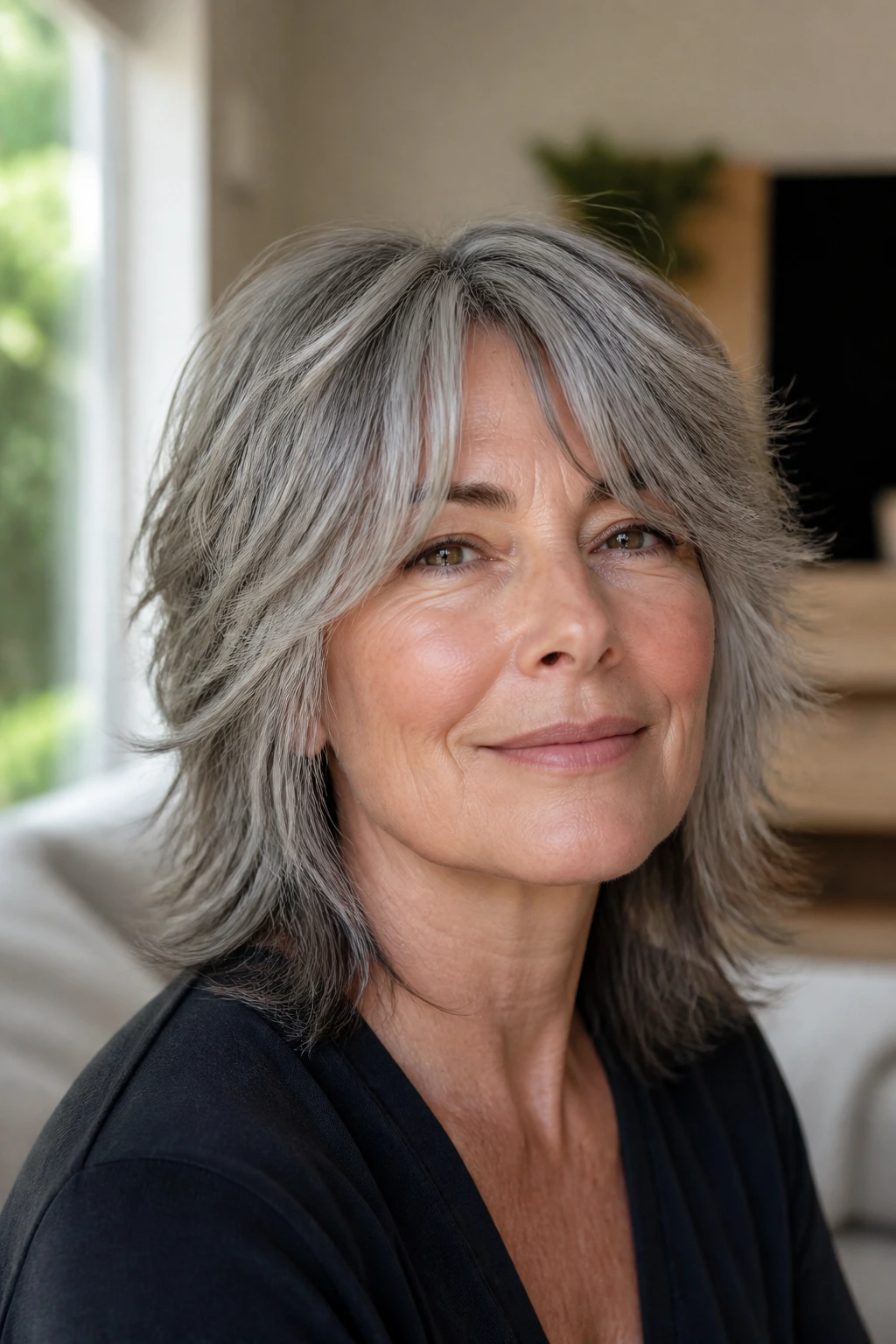
A shaggy mid-length cut is one of the easiest ways to wake up thick gray hair that has gone a little puffy or heavy. The choppy ends keep the shape loose, while the layers add movement from the cheekbones down.
The key is not to overdo the slicing. Gray hair can get frayed fast if the scissors are too aggressive. Ask for texture that removes bulk without making the ends look see-through. That difference matters a lot in daylight, where rough ends show more than they do in a salon mirror.
This cut is good for women who like hair with a bit of edge. It feels casual, but not messy. And it works with a half-up clip on days when you want the front off your face.
16. Asymmetrical Bob
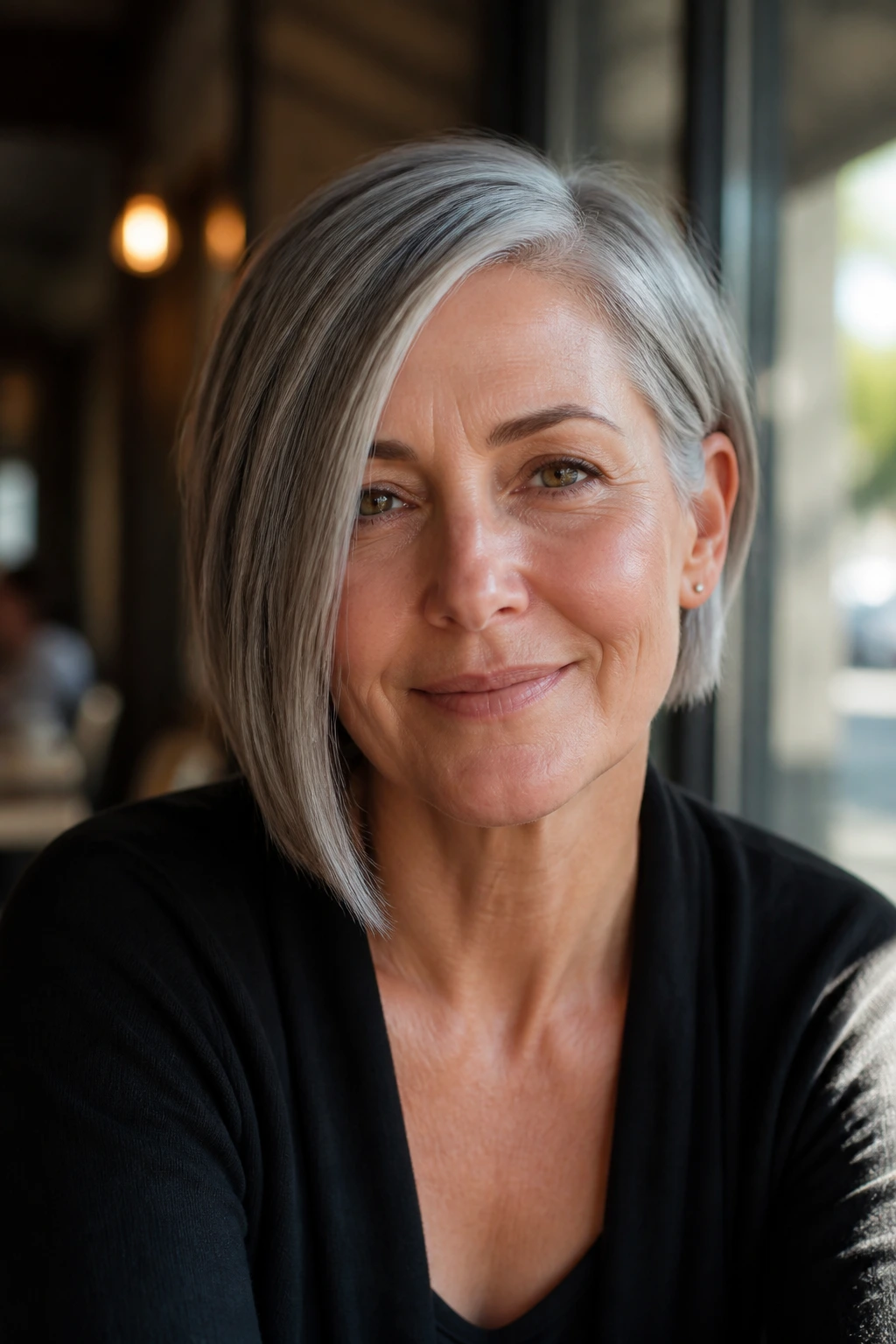
An asymmetrical bob gives gray hair a strong shape without needing much styling. One side sits a little longer than the other—usually by half an inch to an inch—and that small imbalance gives the whole cut more energy.
I like this cut when a standard bob feels too expected. The diagonal line draws the eye downward and can soften one side of the face if that’s something you want. It also adds interest without asking you to do much every morning.
This is not a haircut that forgives sloppy cutting. The lines need to be clean, or the shape reads accidental. But when it’s done well, it looks deliberate in the best way.
17. Soft Undercut Pixie
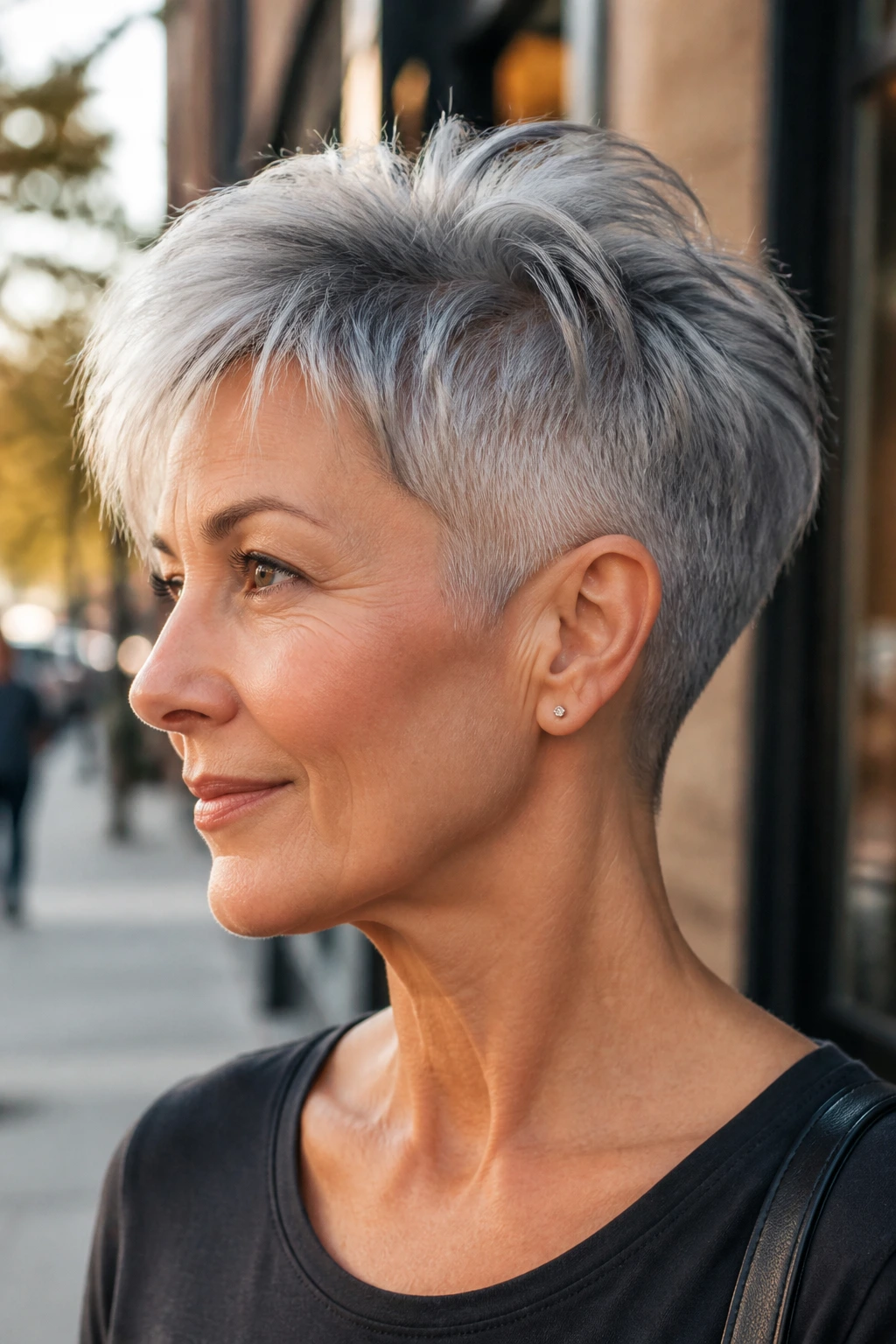
A soft undercut pixie is a smart fix for thick gray hair that piles up at the nape or behind the ears. The undercut removes bulk where you don’t need it, while the top stays soft and wearable.
What to ask for
- A tapered or clipped nape with enough length to blend.
- Longer top sections, usually around 2 to 3 inches.
- Side softness near the ears, not hard edges.
- A little length in front if you like to sweep the fringe sideways.
The nice thing about this cut is that it can look neat without looking severe. A bit of cream or wax keeps the top separated, not stiff. If your hair gets heavy fast, this is one of the cleanest fixes.
18. Mid-Length Razor Shag
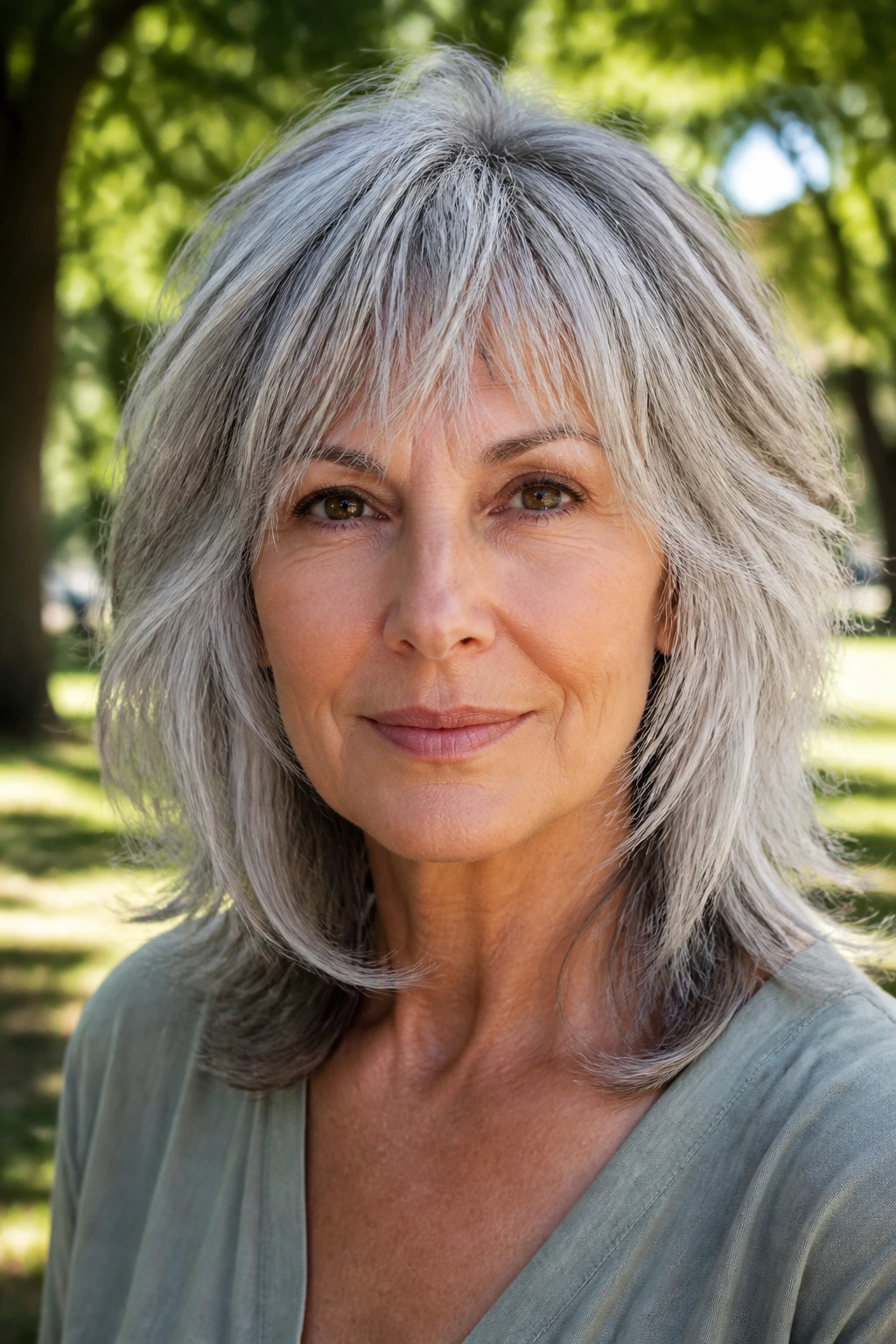
A mid-length razor shag can be brilliant on coarse gray hair, but only when the razor is used with care. Too much slicing and the ends can go fuzzy. Used well, though, it takes weight out of thick hair and creates movement that a blunt cut cannot.
The shag shape works because the layers are spread through the mid-lengths, not stacked all at once. That keeps the outline soft. It’s a good choice if your hair has a natural bend and you want that bend to show instead of being flattened under a brush.
A bit of mousse, then a rough-dry with your fingers, is usually enough. The style should look like the hair has room to move.
19. Defined Curly Cut with a Curl-by-Curl Shape
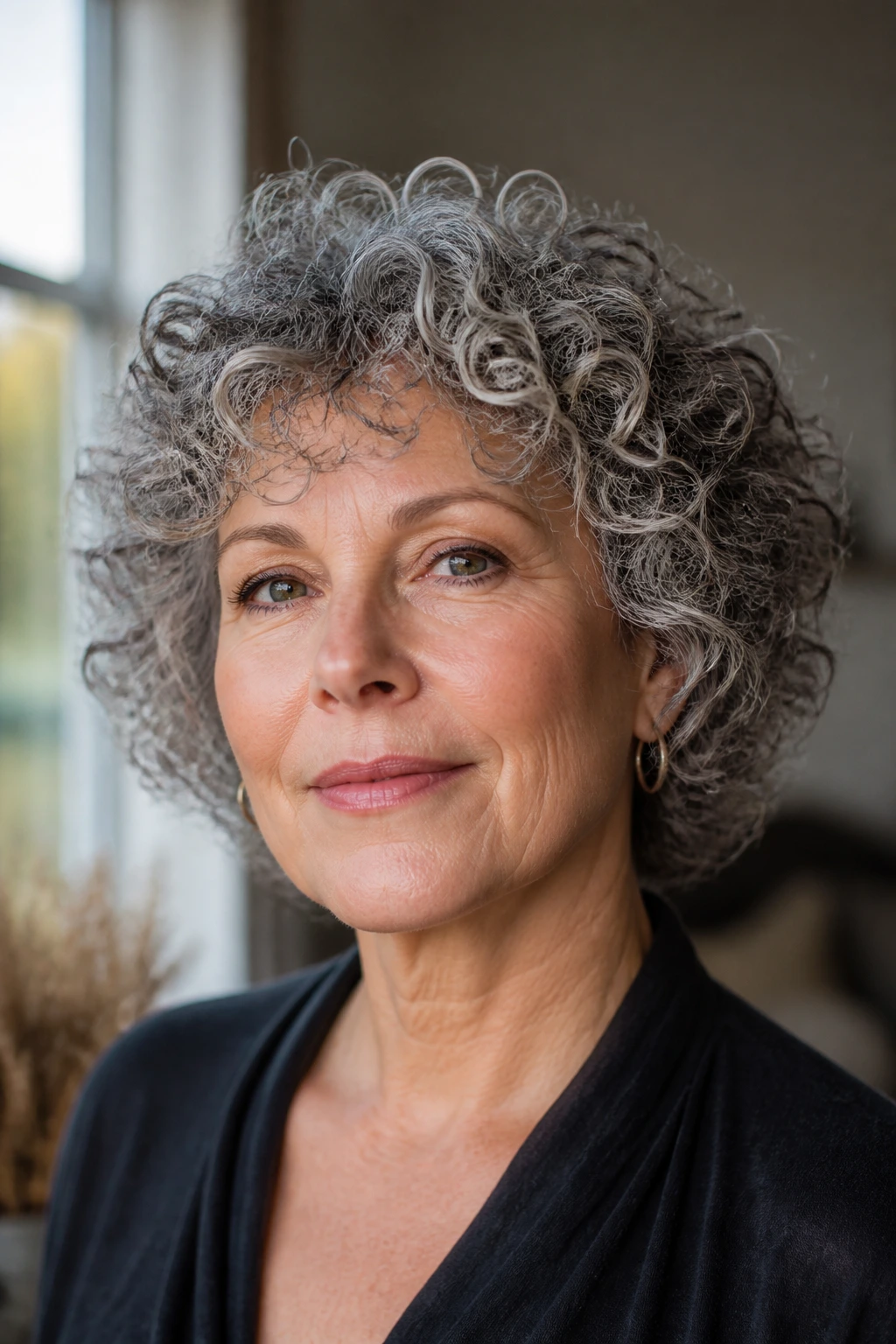
What if your curls are gray, dry, and a little unpredictable? Then a curl-by-curl cut can be a smart move. Each curl is cut where it actually lives, not where the stylist hopes it will fall.
Why the shape matters
Gray curls often have less moisture and a different spring than darker hair. A dry cut makes it easier to see the real pattern. That reduces the triangle effect and helps the cut sit closer to the head in the right places.
How to wear it
Use a leave-in conditioner, then a gel or cream that gives hold without crunch. Let the curls set before fluffing them out. If the crown goes flat, lift it at the root while drying instead of piling on heavier product later.
This style rewards patience. The cut has to be right first.
20. Salt-and-Pepper Blunt Lob
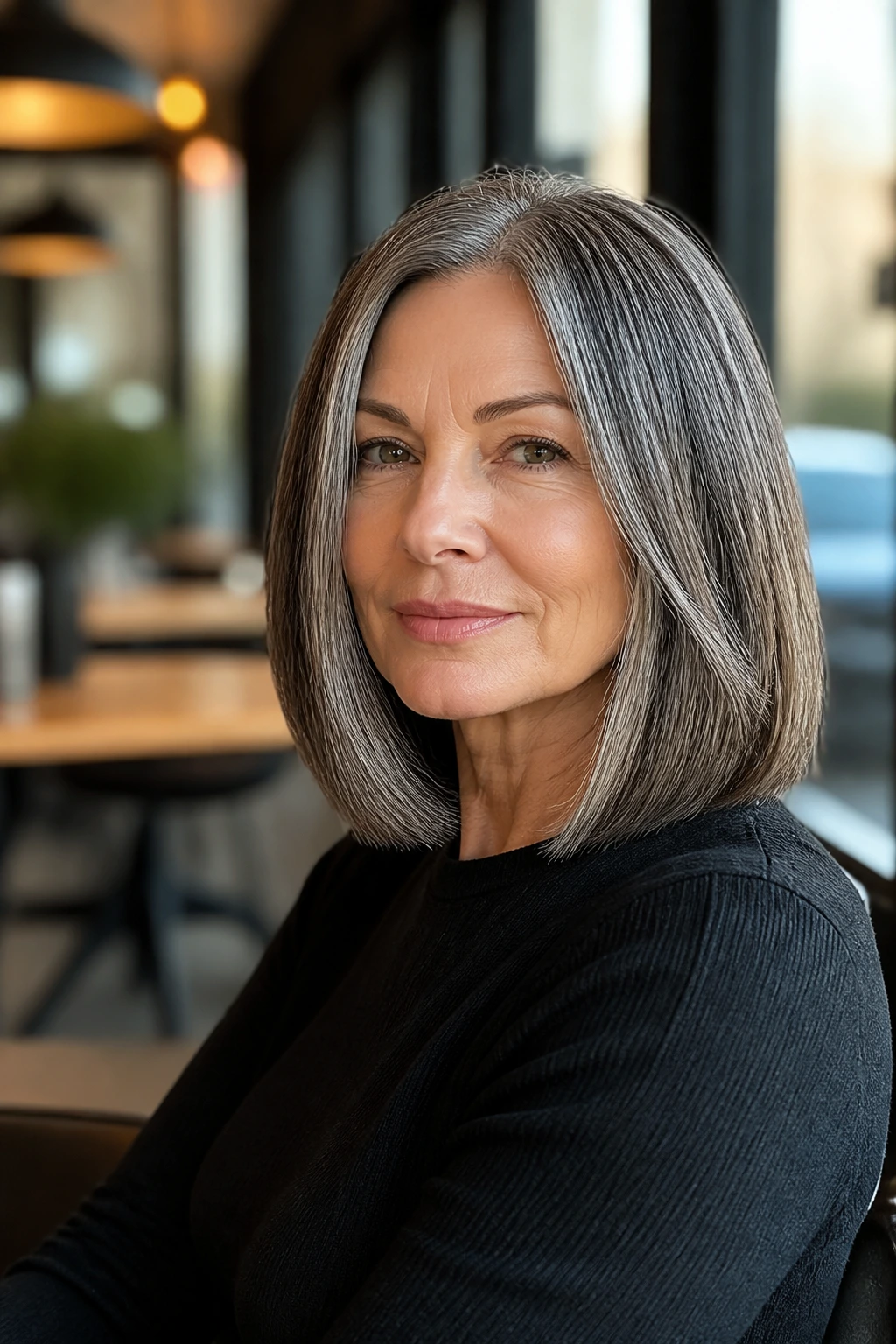
A blunt lob is one of my favorite cuts for salt-and-pepper hair because the clean line makes the color mix look intentional. It’s a simple trick, but it works. The straight edge turns mixed gray, white, and darker strands into a visual feature instead of a leftover stage between colors.
Fine hair benefits a lot here. The blunt edge gives the illusion of density, and the collarbone length keeps the style from feeling stiff. A smooth blowout or a flat iron pass shows off the line well. A little bend at the ends keeps it from looking too boxy.
If you want low drama and a crisp outline, this is an easy one to wear. It does not need a lot of extras.
21. Brushed-Back Crop
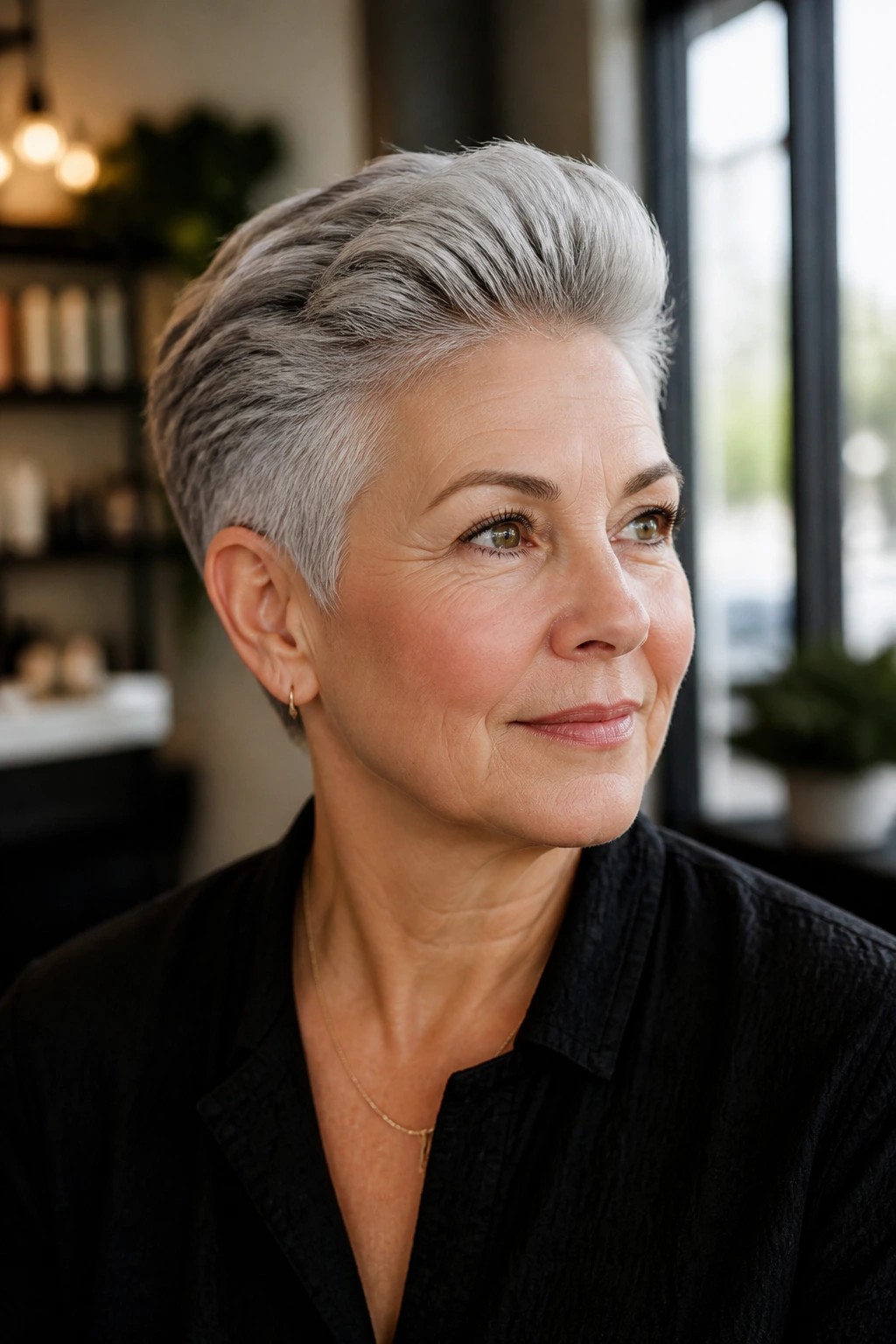
A brushed-back crop has a little polish to it that gray hair wears nicely. The front is lifted away from the face, which opens the features and makes the crown look taller.
I like this cut when the hairline is strong and the top has enough length to be coaxed backward. A mousse at the roots helps, but you do not need a giant amount. Too much product and it starts looking wet in the wrong way.
Good details to request
- Keep the sides short but not shaved.
- Leave enough length on top to brush back.
- Taper the nape for a cleaner finish.
- Ask for soft texture at the crown so it doesn’t sit flat.
This cut has presence. That’s the point.
22. Collarbone Cut with Hidden Layers
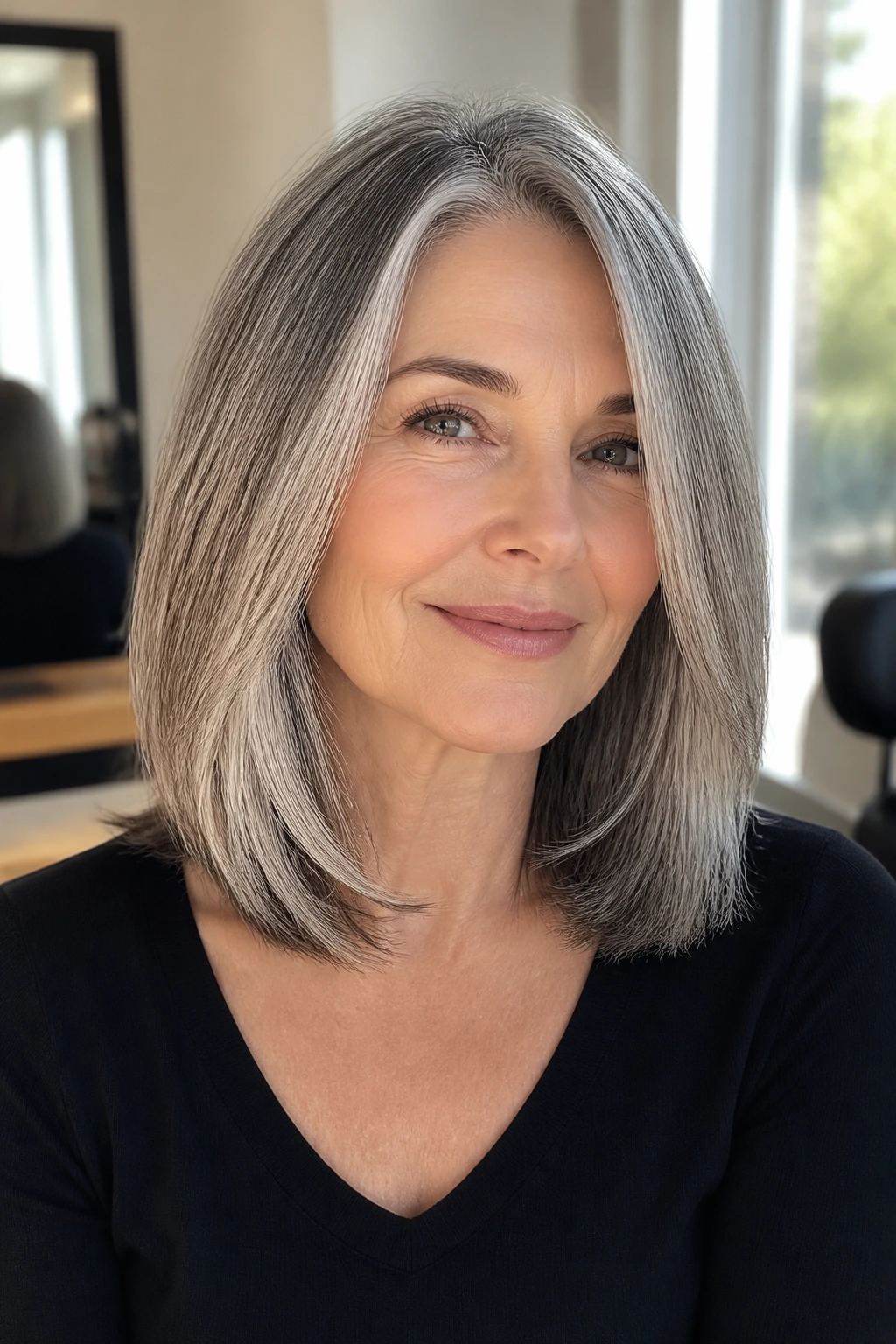
A collarbone cut with hidden layers is for people who want movement without seeing a lot of choppy steps. The layers are placed inside the haircut, so the surface stays smooth and the ends keep a clean edge.
That makes it a good choice for gray hair that can look stringy when layers are too obvious. Hidden layers keep the body, but they let the hair swing instead of hang. It’s a subtle fix, which is often the better fix.
If your hair is straight or slightly wavy, this cut can feel especially neat. If it is thick, ask for the weight to come out from underneath rather than through the visible top layer.
23. Grown-Out Pixie

A grown-out pixie is one of those styles people underestimate. It’s not a mistake or a halfway stage. Done well, it has a soft, easy shape that can move toward a bob later if you want to keep growing.
The top stays long enough to tuck behind the ear, while the sides and back stay tapered. That combination gives gray hair some lift but avoids the over-groomed feel some short cuts can have. It’s a good option when you want short hair that still feels gentle.
You can style it with a little cream and your fingers. No special tools. No long routine. It’s the sort of haircut that quietly earns its keep.
24. Rounded Bob with Tucked Ends
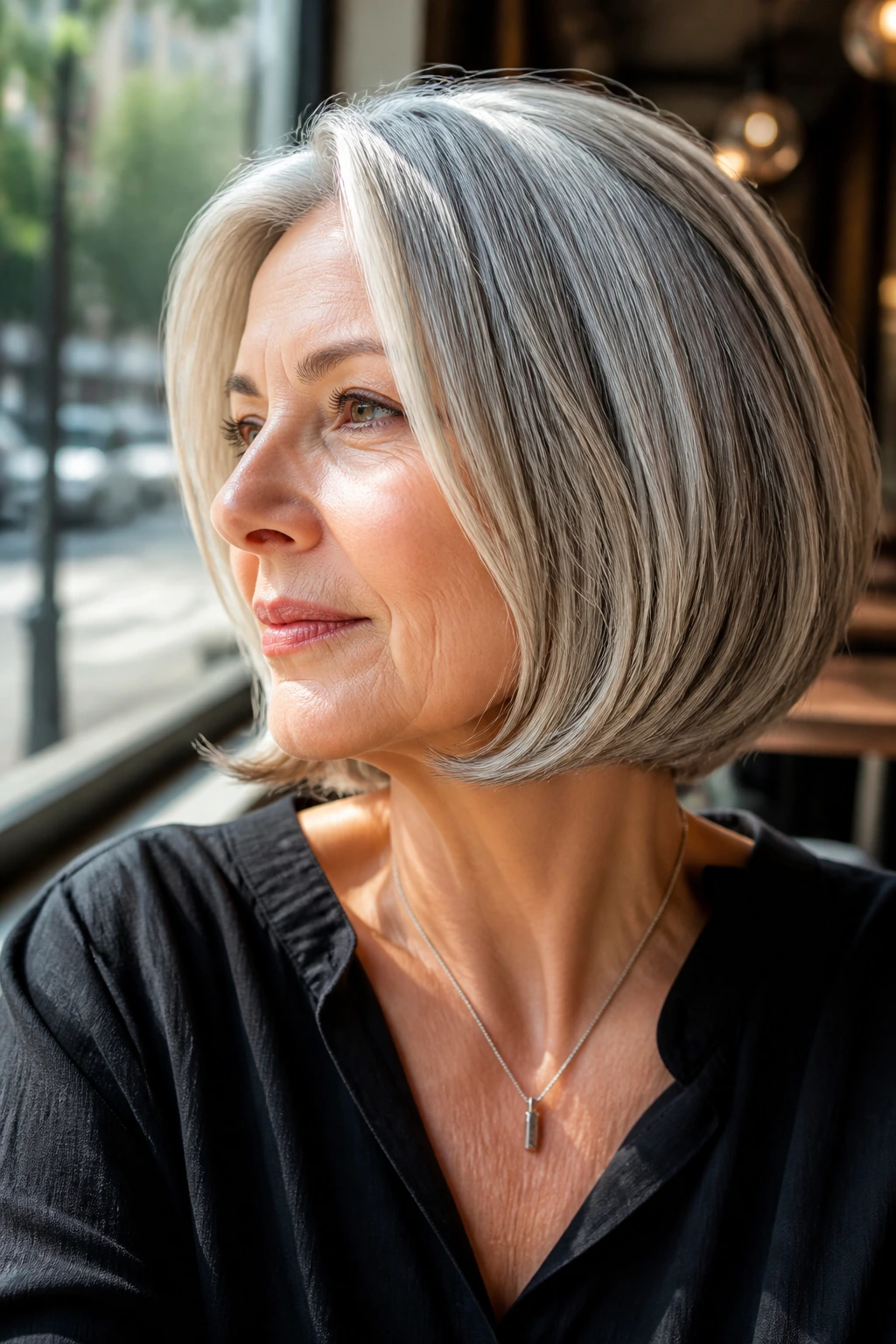
A rounded bob is neat in a way that never gets old. The silhouette curves gently around the head, and the ends tuck inward, which can soften a square jaw or make a broad face feel a little narrower.
Why people like it
The round shape keeps gray hair from sticking out at the sides. That’s useful if your hair has a bit of body and tends to expand as it dries. The ends should curve under, not flip out. That small detail changes the whole feel.
Style notes
- Blow-dry with a medium round brush.
- Roll the ends under while they’re still warm.
- Keep the back slightly shorter if you want extra lift.
- Use a light spray, not a heavy helmet of hairspray.
It’s tidy. Not boring.
25. Long Silver Waves with Invisible Layers

Long gray hair can look striking when the ends are healthy and the layers are kept out of sight. Invisible layers are cut inside the shape, so the surface stays smooth while the weight is redistributed under the hair.
That’s useful if you want length but not the triangle effect that long hair sometimes gets after 50. Waves help here because they break up the length and keep the style from looking flat. A large iron or even a loose braid set can add shape if the hair is stubbornly straight.
The important part is maintenance. Long silver hair needs clean ends. Trim it often enough that the shape stays deliberate, not stringy.
26. Tapered Natural Coil Cut
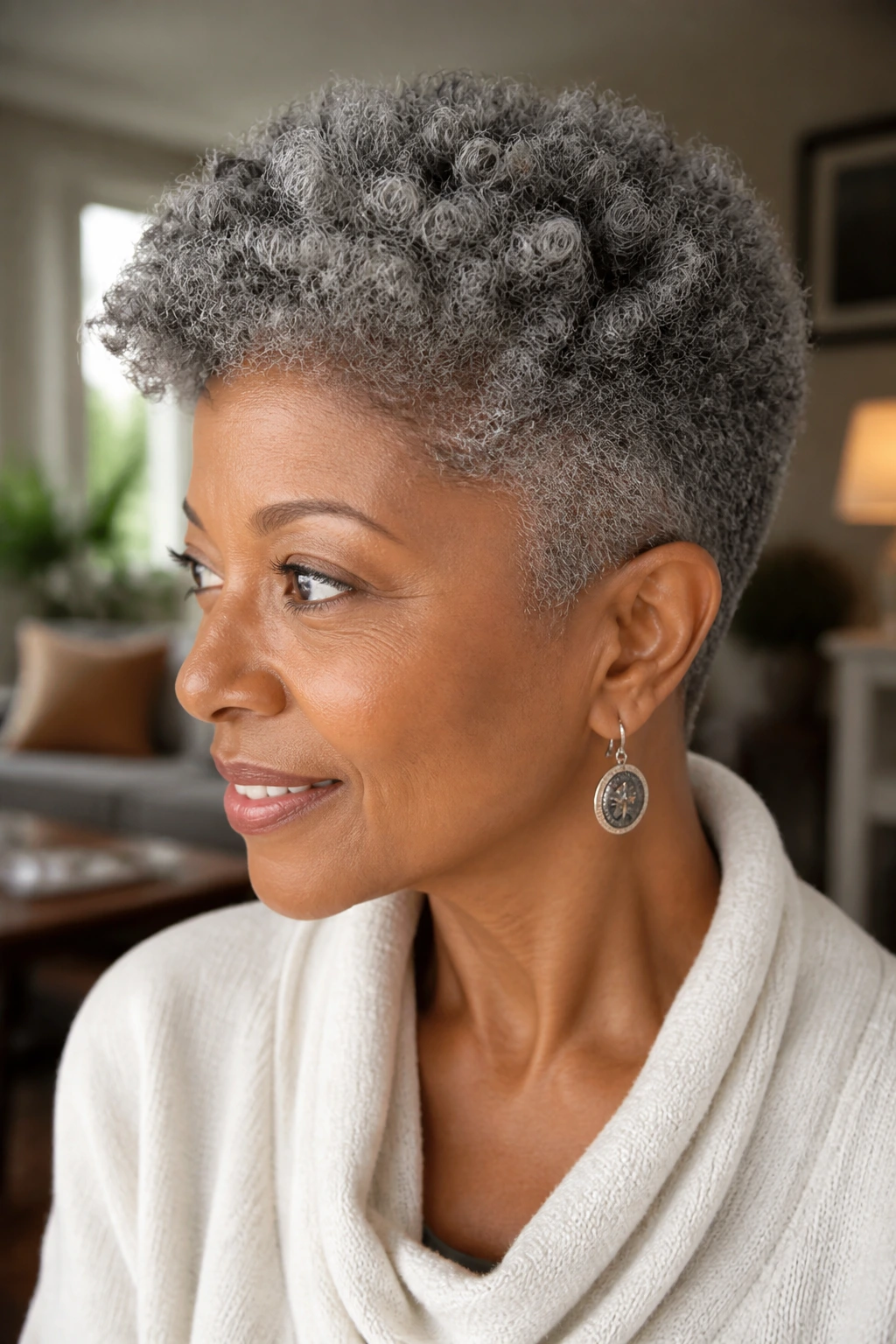
A tapered cut is one of the best ways to give coily gray hair a shape that feels balanced. The sides and nape stay closer to the head, while the top and crown keep more length. That creates lift where you want it and removes bulk where you don’t.
What makes it work
Coils can shrink a lot once they dry, and gray coils often need more moisture than people expect. A tapered shape helps the hair sit neatly while still giving the coils room to spring. It also keeps the profile elegant instead of boxy.
Use a rich leave-in and seal lightly with oil if your hair likes that. Drying with a diffuser or in sections can help the top keep its shape. Moisture matters here. A dry coil cut loses its polish fast.
27. Wispy Chin Bob with Side Fringe
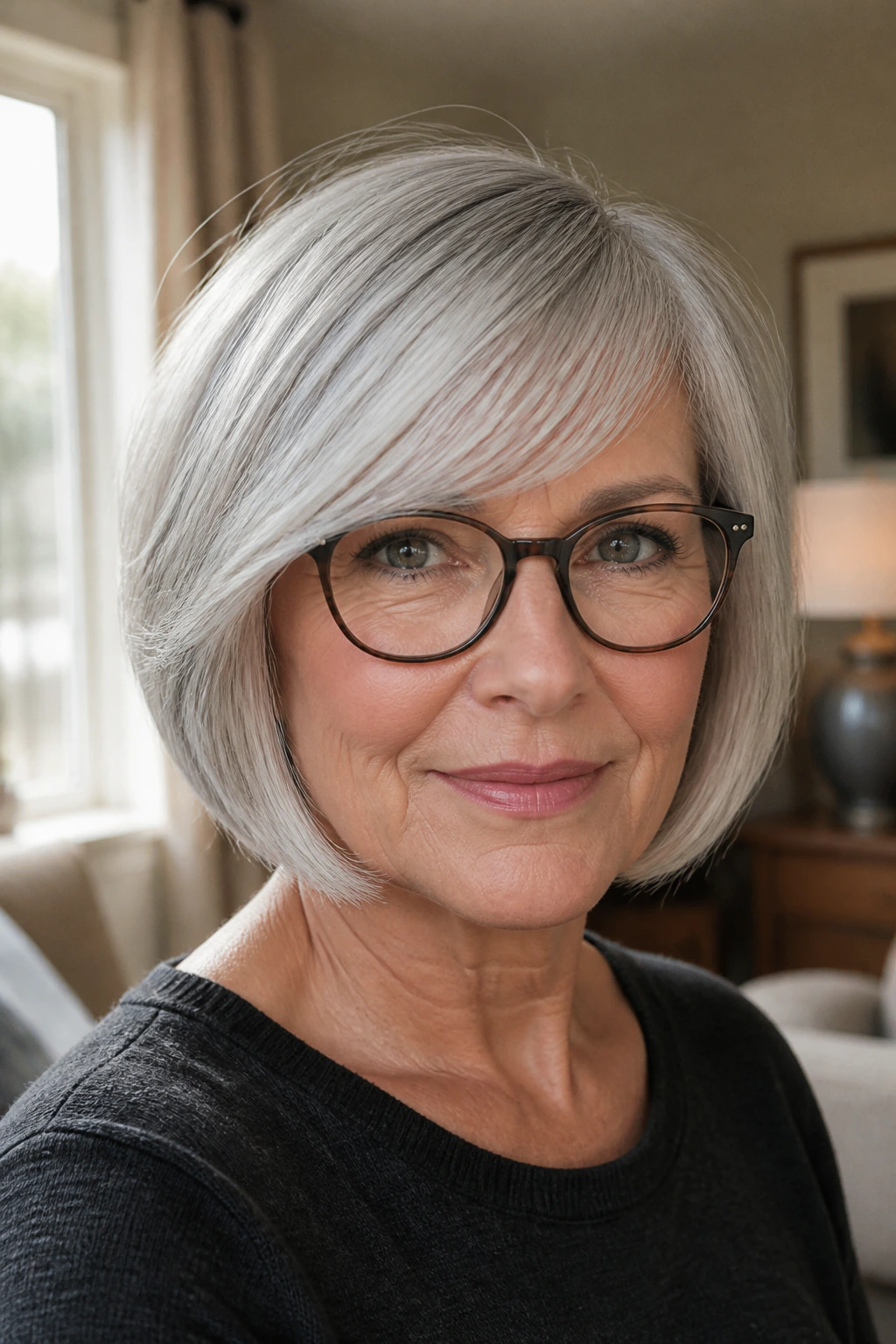
What if you want short hair but not a hard line? A wispy chin bob is the answer. It gives gray hair a clean shape around the chin, then softens the front with a side fringe that blends instead of shouting for attention.
This cut works well when the hair is fine or medium and you do not want much weight sitting at the sides. The wispy edges keep the style from feeling blocky. The side fringe, meanwhile, gives the forehead a little coverage without trapping the face under a straight line.
I like this on people who wear glasses. It sits nicely around frames and keeps the front from feeling crowded. That matters more than people think.
28. Tousled Lob with Piecey Ends
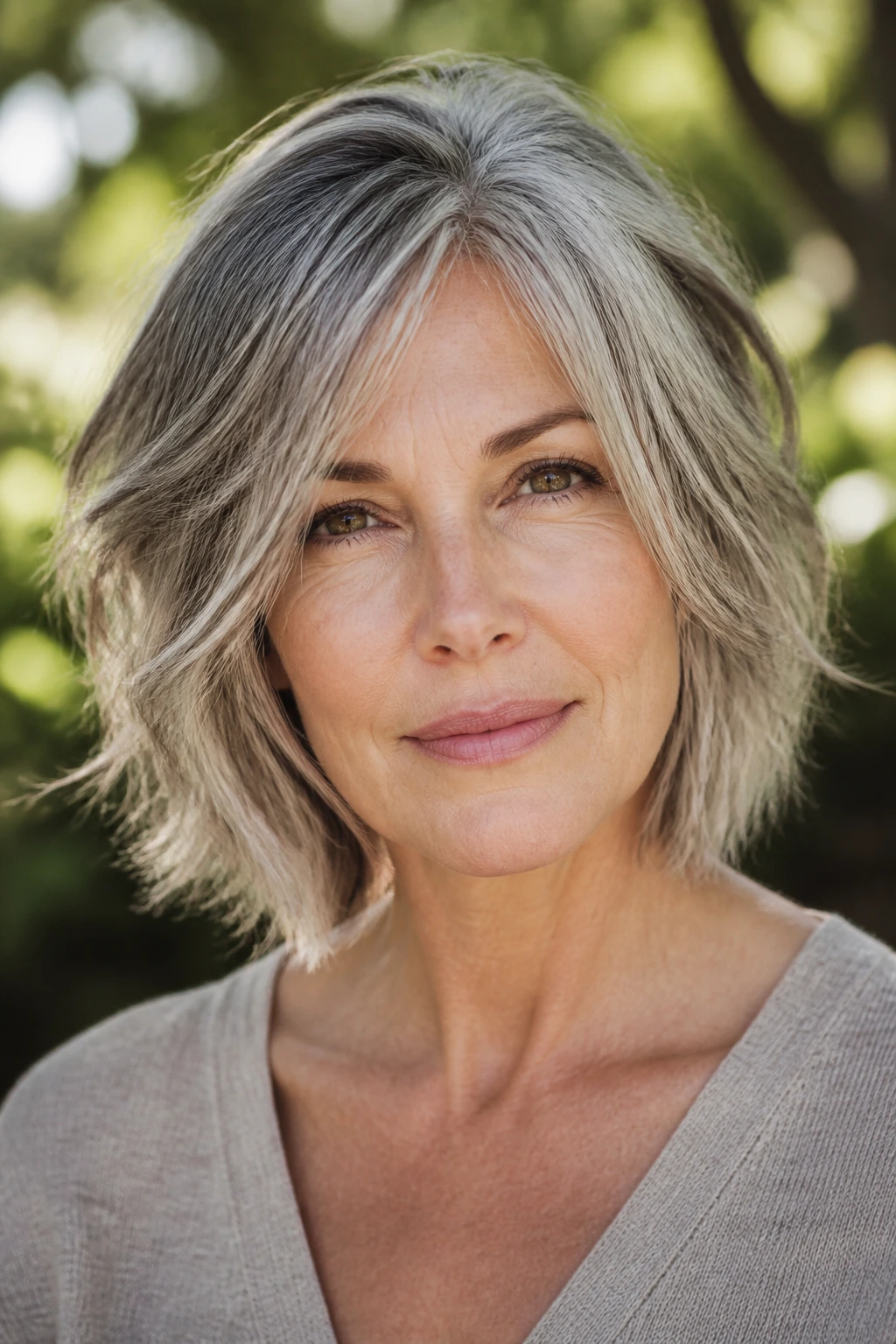
A tousled lob is what you reach for when you want gray hair to look relaxed but still put together. The piecey ends keep the shape from feeling too solid, and the longer length gives enough room for waves and bends.
What to ask for
- Collarbone length with soft internal movement.
- Piecey ends, not shredded ends.
- A little face-framing around the cheekbone.
- Texture that shows when you scrunch it dry.
This is a good choice if you like a hairdo that can survive a little mess. A few twists with a curling iron, then finger-separating the pieces, is often enough. Too much brushing kills the effect. Let the strands keep some separation.
29. Polished Glass-Hair Lob
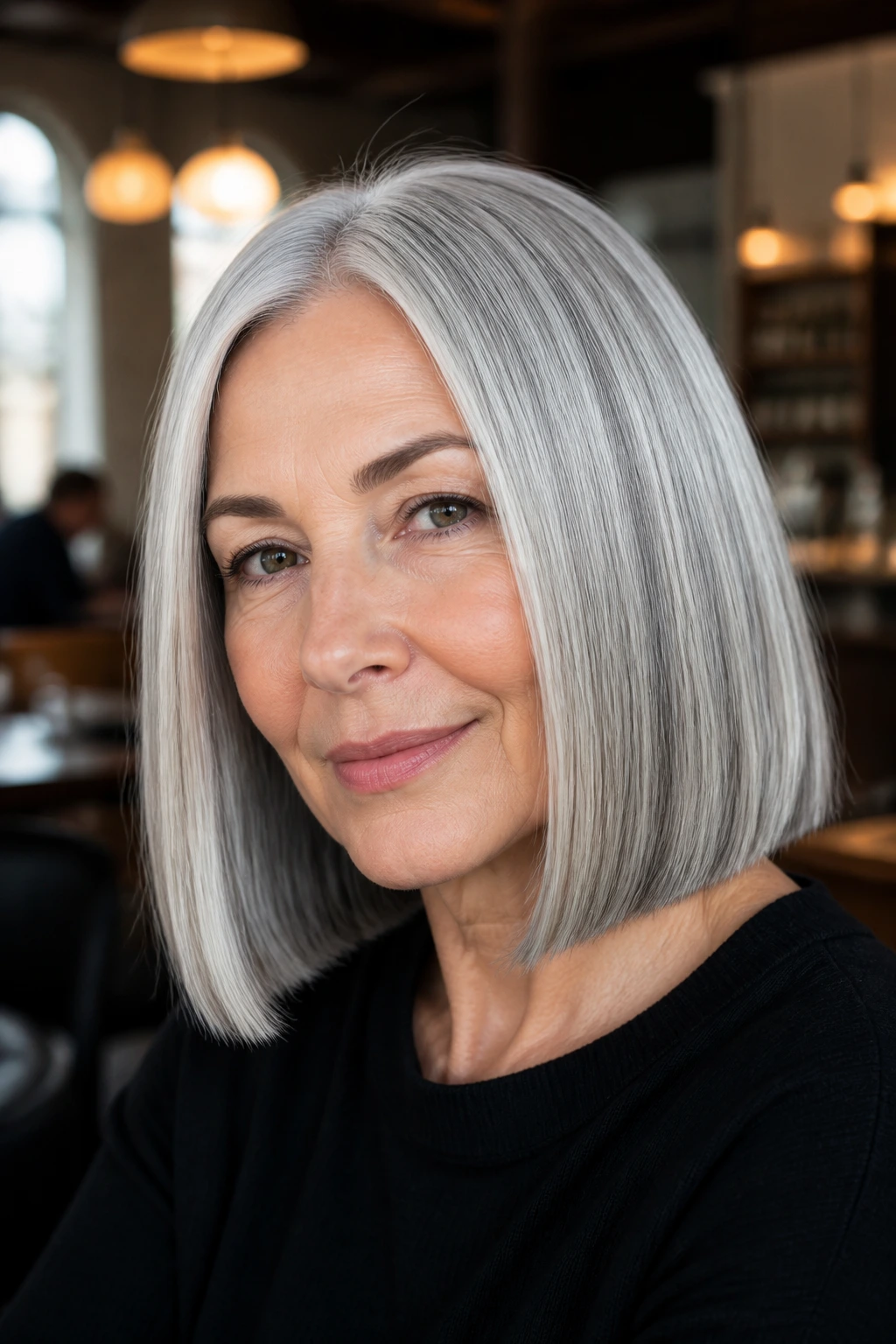
A polished glass-hair lob is for gray hair that looks best when it’s sleek and reflective. The cut itself should be blunt or nearly blunt, with a smooth perimeter that shows off shine and a clean line through the ends.
Straight gray hair can look expensive in the nicest sense when it’s smoothed properly. Not stiff. Not shellacked. Just calm and neat. A heat protectant, a blow-dry in sections, and a small amount of serum on the mid-lengths are enough for most people. Keep the serum light or the hair can go limp fast.
This style is less forgiving than a tousled one, but the payoff is sharp. It suits people who like order.
30. Gray Hair Styles for Women Over 50: Short Layered Crop with Crown Lift
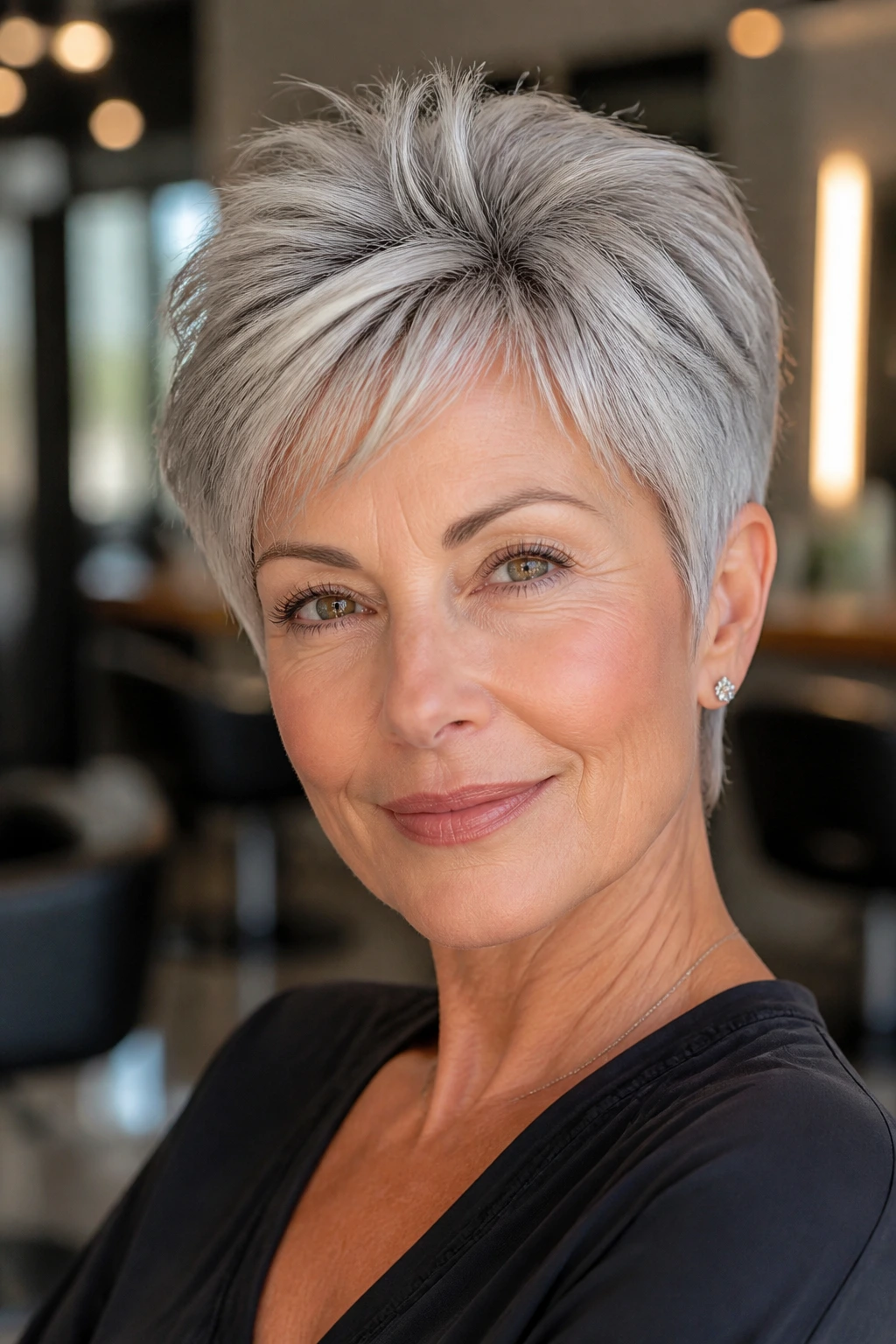
A short layered crop with crown lift is a strong finish because it solves one of the most common gray-hair problems: flatness at the top. The crown has enough layering to rise, while the sides stay controlled and close to the head.
That shape keeps the face open and stops the haircut from collapsing by midday. I like it for fine gray hair that needs visual height, and for thicker hair that gets bulky if it grows too wide. A little root mousse and a quick blow-dry with a small round brush usually bring it to life.
The best short gray styles do not try to hide the hair. They give it a job. When the crown lifts, the whole face looks more awake, and the cut stops feeling like an afterthought.
