



Medium length hairstyles are the sweet spot when you want shape without giving up options. Too short, and the haircut can feel boxed in. Too long, and the face-framing detail gets lost under its own weight. Somewhere around the collarbone, shoulders, and that in-between zone where hair still moves but does not fall flat, you get room to adjust the whole look with layers, bangs, parting, and texture.
Face shape matters. So does hair density, curl pattern, and the way your hair dries on its own. A blunt edge can make fine hair look thicker. A few soft layers can keep thick hair from ballooning out. A fringe can shorten a long face or soften a forehead. That flexibility is why medium length hairstyles show up again and again in salons when people want something flattering but not fussy.
The trick is not finding one magic cut that suits every face exactly the same way. It is choosing a shape that can be nudged in the right direction with a part, a bend at the ends, or a few inches of layering. That is where these styles earn their keep. They are easy to adapt, easy to wear, and a lot less boring than people assume.
1. The Blunt Collarbone Lob

A blunt collarbone lob is one of those cuts that looks deliberate even when you do almost nothing to it. The length hits right where the neck starts to narrow, which helps round faces look longer and gives square faces a cleaner line to work with. If your hair is fine, this cut is a gift. The straight edge makes the ends look fuller.
Keep the part slightly off-center if you want a softer feel. Dead center can read sharper, which is fine if that is your thing, but a half-inch shift changes the whole mood. Nice little trick. Blow it out with a paddle brush, then tuck one side behind the ear and leave the other side loose.
2. Soft Layered Lob

A soft layered lob is what I suggest when someone wants movement without losing the shape. It sits at the shoulders or collarbone, but the layers stop it from hanging there like a block. On heart-shaped faces, those layers help fill out the jaw area. On long faces, they add width at the sides, which matters more than people think.
Why It Works
The layers should start low, usually around the chin or just below it, so the top of the head does not get too puffy. That keeps the cut balanced. Ask for pieces that graze the cheekbone and then taper down.
- Best for medium to thick hair
- Easy to air-dry with a little mousse
- Looks good with loose bends, not just curls
- Keeps bulk under control
Styling note: twist two-inch sections around a 1.25-inch iron, then brush them out once they cool.
3. Curtain Bang Lob

Curtain bangs change the whole face in a way few other details do. They split the forehead in a soft V shape, which is why they work on round, square, and heart-shaped faces without feeling like a hard frame. Paired with medium length hair, they pull attention to the eyes and cheekbones instead of the jaw or forehead.
The best version lands somewhere between the brow and the cheekbone. Too short and the bangs take over. Too long and they stop doing their job. Keep the ends of the lob loose and a little bit airy. That contrast is what makes the cut feel current without trying too hard.
4. Face-Framing Layers Around the Cheekbones
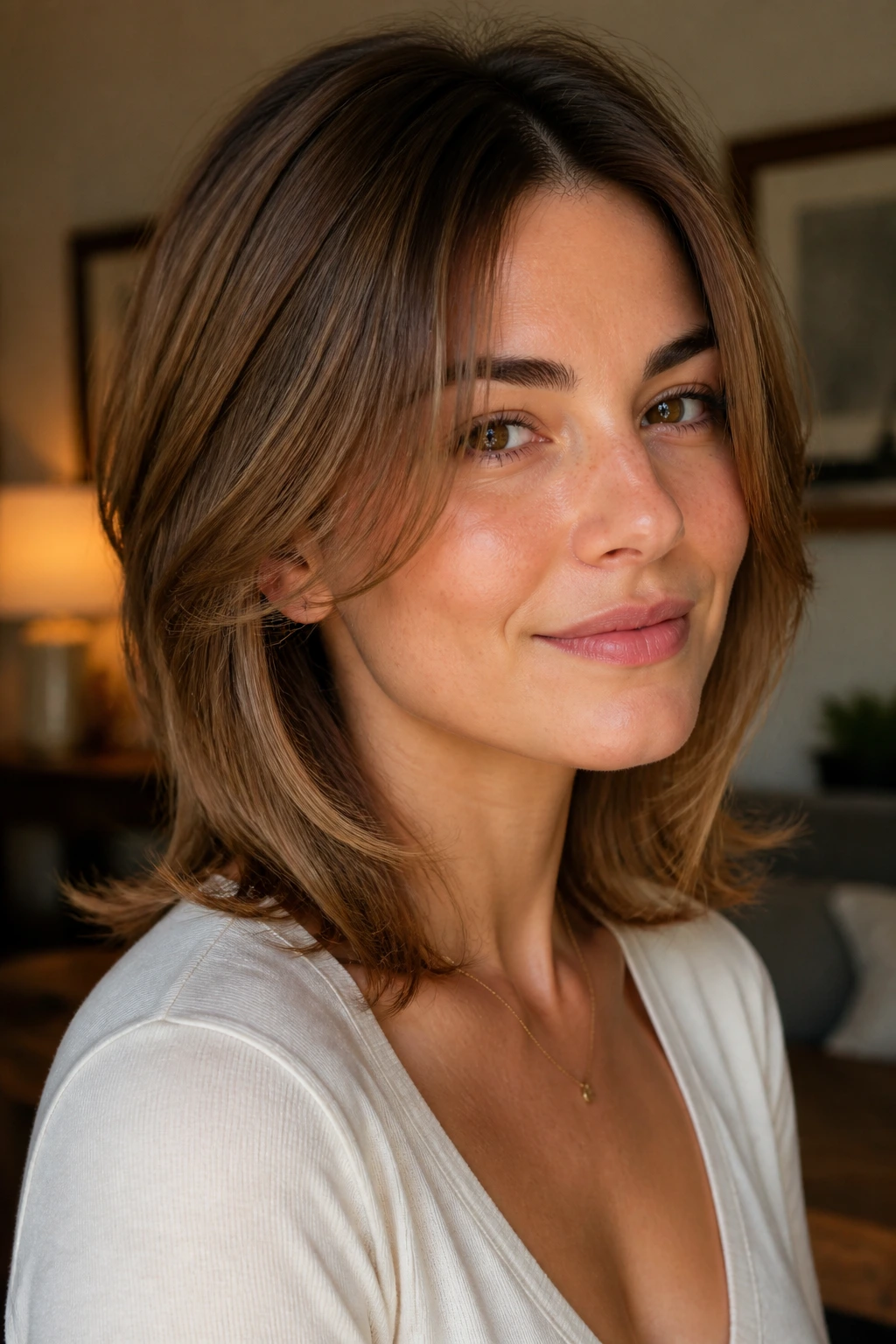
Face-framing layers are the easiest way to make a medium cut feel customized. A stylist can place the shortest pieces at the cheekbone, chin, or jaw, and that tiny choice changes how the face reads. For round faces, chin-length framing helps create length. For square faces, cheekbone pieces soften the corners.
What To Ask For
Ask for the front to connect into the rest of the cut without a harsh shelf. That matters. Hard, obvious layers can look choppy in a bad way, while soft framing blends into the rest of the hair and moves better.
A round brush helps here, but you do not need a perfect blowout. A bend at the front pieces and a clean finish through the ends is enough. Simple. Clean. No drama.
5. Textured Shoulder-Length Cut
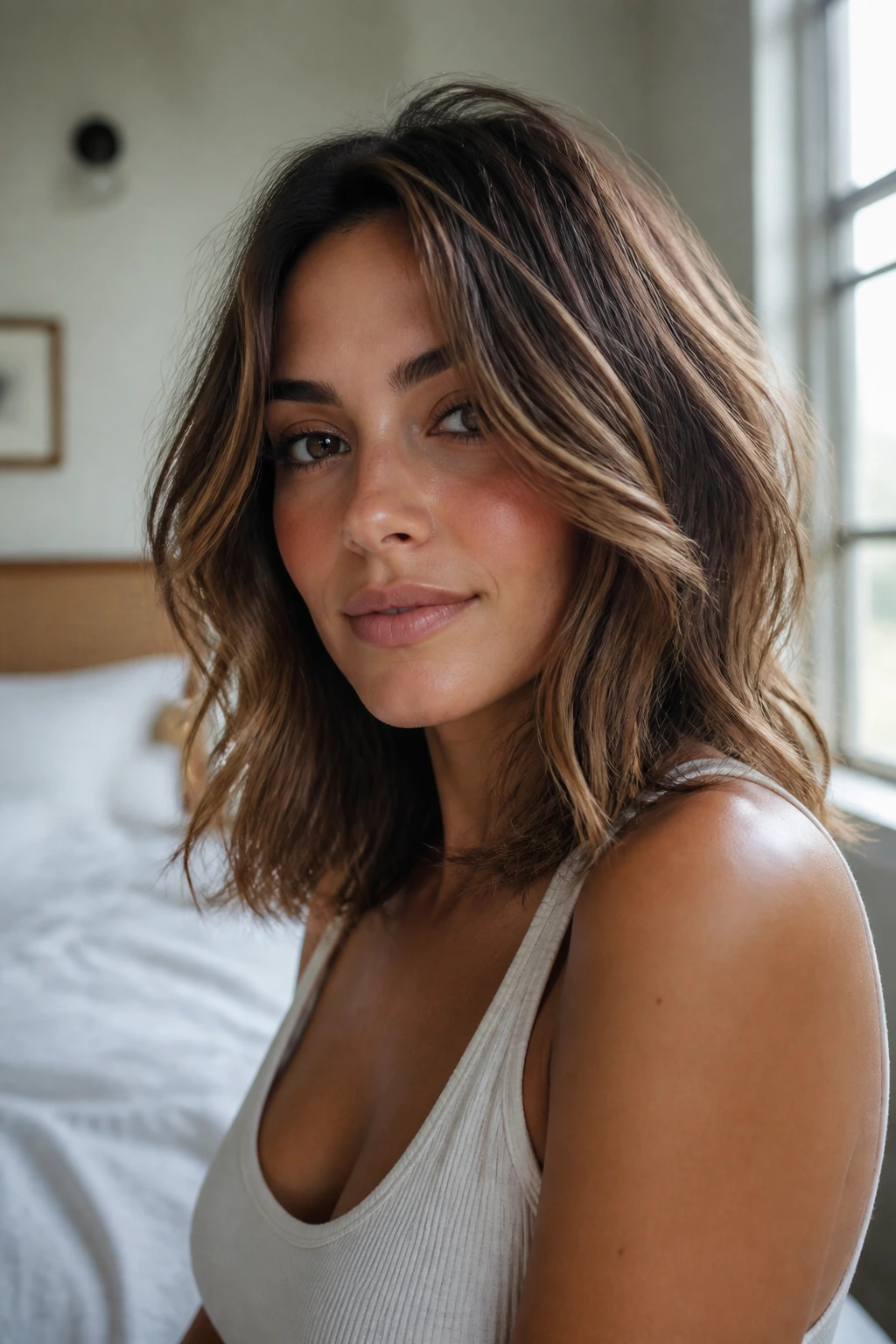
A textured shoulder-length cut has a little grit to it, and I mean that in a good way. It keeps the hair from sitting too neatly against the face, which is useful if you want something that feels relaxed. The texture also keeps thick hair from expanding at the sides, and that can help square and round faces look softer.
Use this cut if you like a lived-in look that still has shape. A salt spray or light texturizing cream works well, but do not overdo it. Too much product and the ends start sticking together. Air-drying works fine, especially if your hair has a wave in it already.
6. The Modern Shag at Mid-Length

A shag at medium length is not the wild, feathered haircut people picture from old photos. The modern version is cleaner and a lot easier to wear. It still has layers everywhere, but the shape is more controlled, so it flatters oval, heart, and long faces without making the hair look thin at the ends.
The real payoff is movement. Hair lifts around the crown, dips through the sides, and falls in pieces instead of one solid sheet. That gives the face a bit of softness and keeps the style from swallowing smaller features.
If your hair is dense, ask for internal layering so the outside shape stays intact. That keeps the cut from getting fluffy in humid weather.
7. Side-Swept Bangs with a Lob

Side-swept bangs are underrated. They soften a forehead, break up a strong center line, and give a medium cut a more forgiving shape. If your face is long or square, that diagonal line can be a relief. It pulls the eye across the face instead of straight down it.
A Small Detail That Helps
The bangs should blend into the side layers, not sit on top like a separate section. That blend is what keeps the cut from feeling dated. Ask for a longer front section that can be tucked behind the ear on one side and brushed forward on the other.
This is also a smart option if you are nervous about full bangs. You get movement near the face, but the upkeep stays lower.
8. The U-Shaped Mid-Length Cut
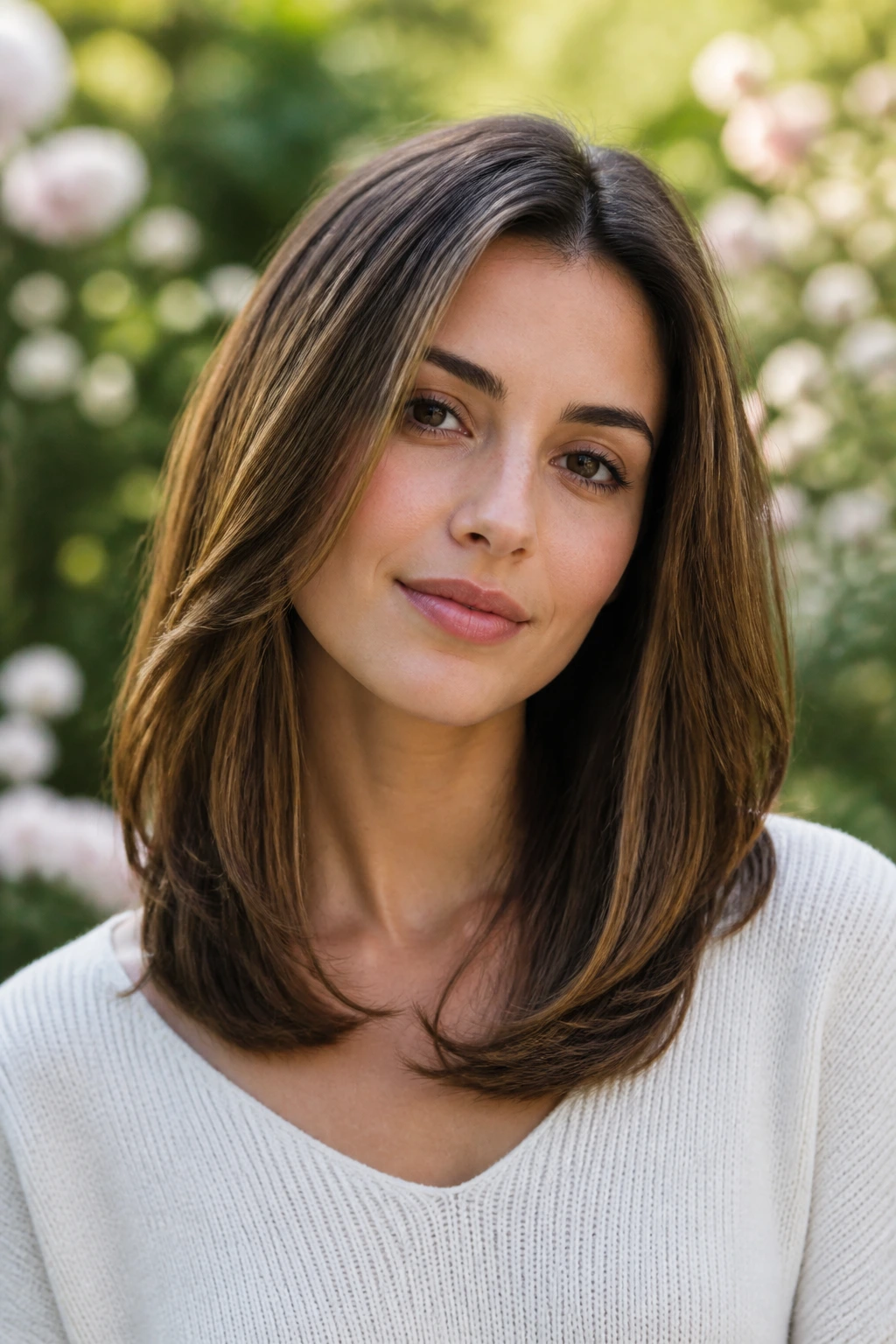
A U-shaped cut sounds plain until you see what it does in motion. The back stays slightly longer than the front sides, which adds a gentle curve that flatters almost every face shape. It gives long faces a little width and keeps the hair from making the jaw look too sharp on square faces.
How To Wear It
Keep the front pieces around the collarbone and the back only a little longer. You want a soft curve, not a dramatic waterfall. If the contrast is too big, the shape starts to feel like a joke version of a salon cut.
This one works especially well if you like to wear your hair down most days. The curve shows up even when the hair is straight, which is handy. No curling iron required.
9. Choppy Ends with a Center Part

A center part can be unforgiving on the wrong cut. On a choppy medium cut, though, it feels balanced and modern. The broken-up ends keep the style from looking severe, and that helps on round faces that need a bit more length through the middle.
The key is not choppy everywhere. Leave the top and sides controlled, then let the ends get a little piece-y. That keeps the hair from fraying into a mess. A light styling paste on the last inch of the hair can help define the ends without making them crunchy.
This cut looks especially good on straight or slightly wavy hair. If your hair is curly, keep the layers longer so the shape does not puff out too much.
10. Loose Wavy Lob

A loose wavy lob is the haircut people point to when they say, “I want something flattering.” And they are not wrong. The wave breaks up the outline of the face, which softens square jaws and gives narrow faces a little extra width at the sides.
How To Style It
Use a 1-inch curling iron or wand and wrap sections away from the face, leaving the last inch out. That keeps the bend soft instead of ringlet-tight. When the curls cool, run your fingers through them. Not a brush. Fingers. That keeps the wave broad and touchable.
It is one of the easiest medium length hairstyles to wear on busy days because the wave does not have to be perfect. A little unevenness actually helps.
11. Sleek Lob with Tucked Ends
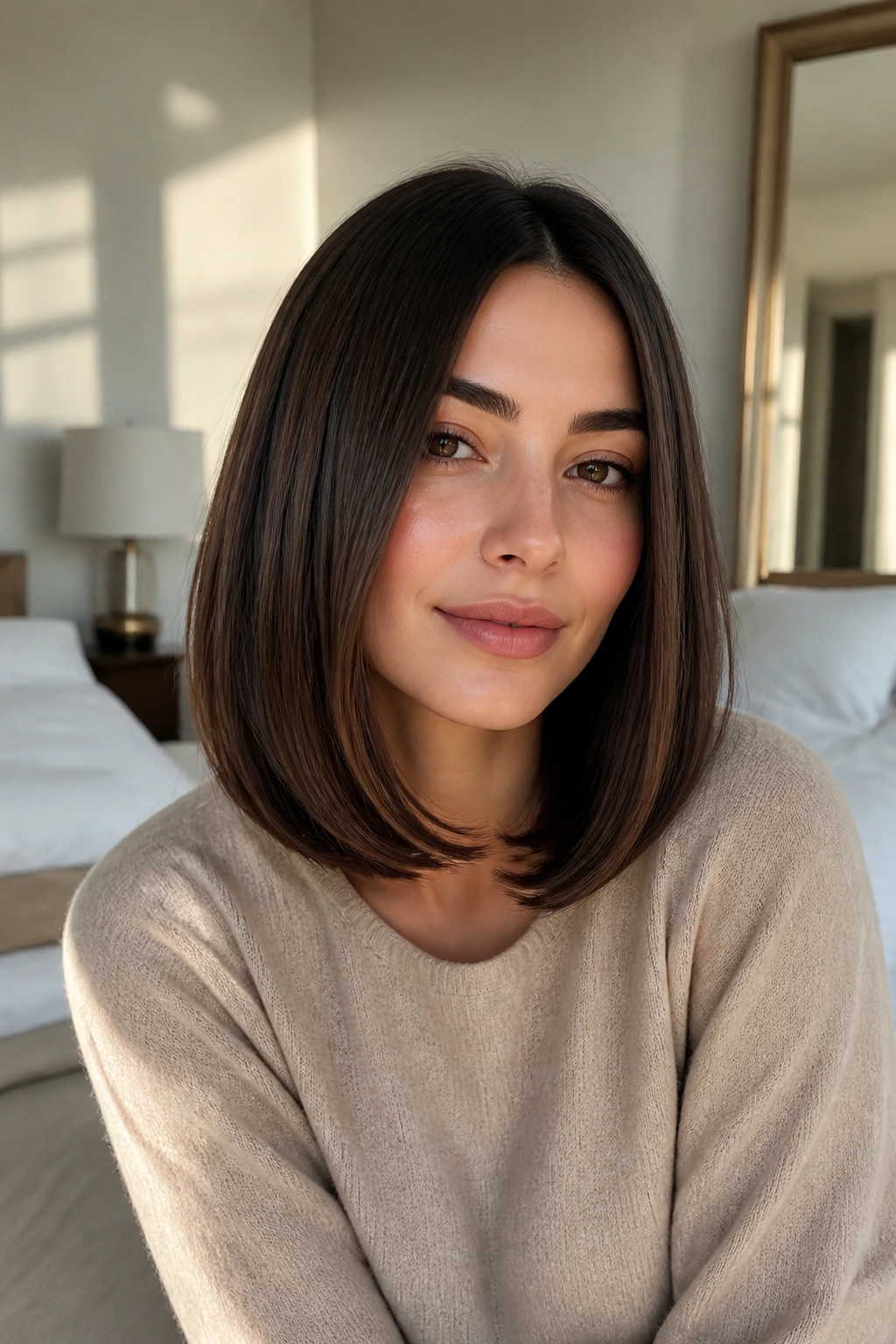
A sleek lob with tucked ends has a clean line that can make the face look sharper in a good way. It is a strong choice for oval, heart, and round faces because the polish draws attention to the bone structure instead of the hair itself. The tucked end gives the style a small twist without needing layers everywhere.
Blow it out smooth, then turn the ends inward or outward just enough to stop them from hanging straight. That tiny bend matters. Too flat and the look feels stiff; too much curl and it stops being sleek.
This is one of those cuts that looks more expensive than it is. That is not a technical term, but you know what I mean.
12. Rounded Shoulder Cut
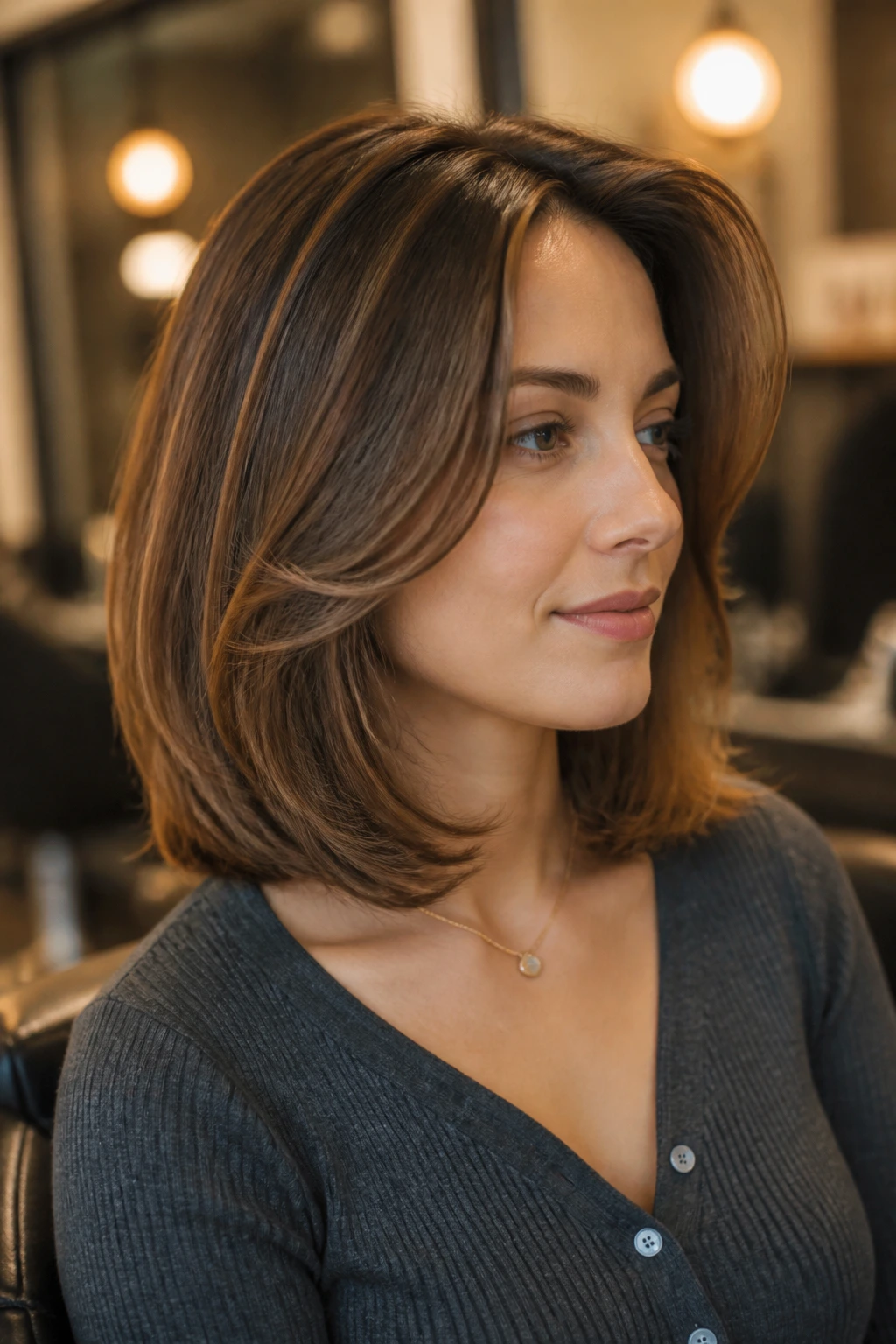
A rounded shoulder cut brings the shape inward at the sides, which can be a lifesaver for faces that need a little softness around the jaw. Square and diamond faces often look especially good with it because the curve around the shoulders balances out sharper angles.
The roundness should come from the cut, not from puffed-up styling. Ask for layers that arc gently, with the longest pieces landing just below the shoulders. If the ends are cut too blunt, the shape loses its softness. If they are too thin, the cut can collapse.
A medium round brush and a light smoothing cream are enough here. You do not need a huge salon blowout every time.
13. Long Layers That Start Low

Long layers are boring only when they are done badly. Done right, they are one of the most useful shapes for medium hair because they add movement without taking away length. They work on almost every face, but especially on thick hair that needs to move away from the cheeks and jaw.
The trick is to keep the shortest layer low, usually below the cheekbone. That stops the hair from puffing too high around the face. The end result is soft and easy to wear, not too structured and not too casual.
A side part or middle part both work here. That flexibility is half the appeal.
14. Bottleneck Bangs with Medium Hair

Bottleneck bangs are a little softer than curtain bangs and a little more precise than wispy fringe. They are short in the middle, longer at the sides, and they curve around the face in a way that helps balance a wide forehead or strong cheekbones. On heart-shaped faces, they can be especially nice.
Why They Feel Different
The center section opens the face up, while the longer sides melt into the rest of the cut. That keeps the bangs from looking like a separate piece. If you have medium hair, this fringe can make the whole haircut feel fresher without losing length.
Style the bangs first with a round brush so they do not separate awkwardly. Once they are set, the rest of the hair can stay loose and simple.
15. The Soft Wolf Cut
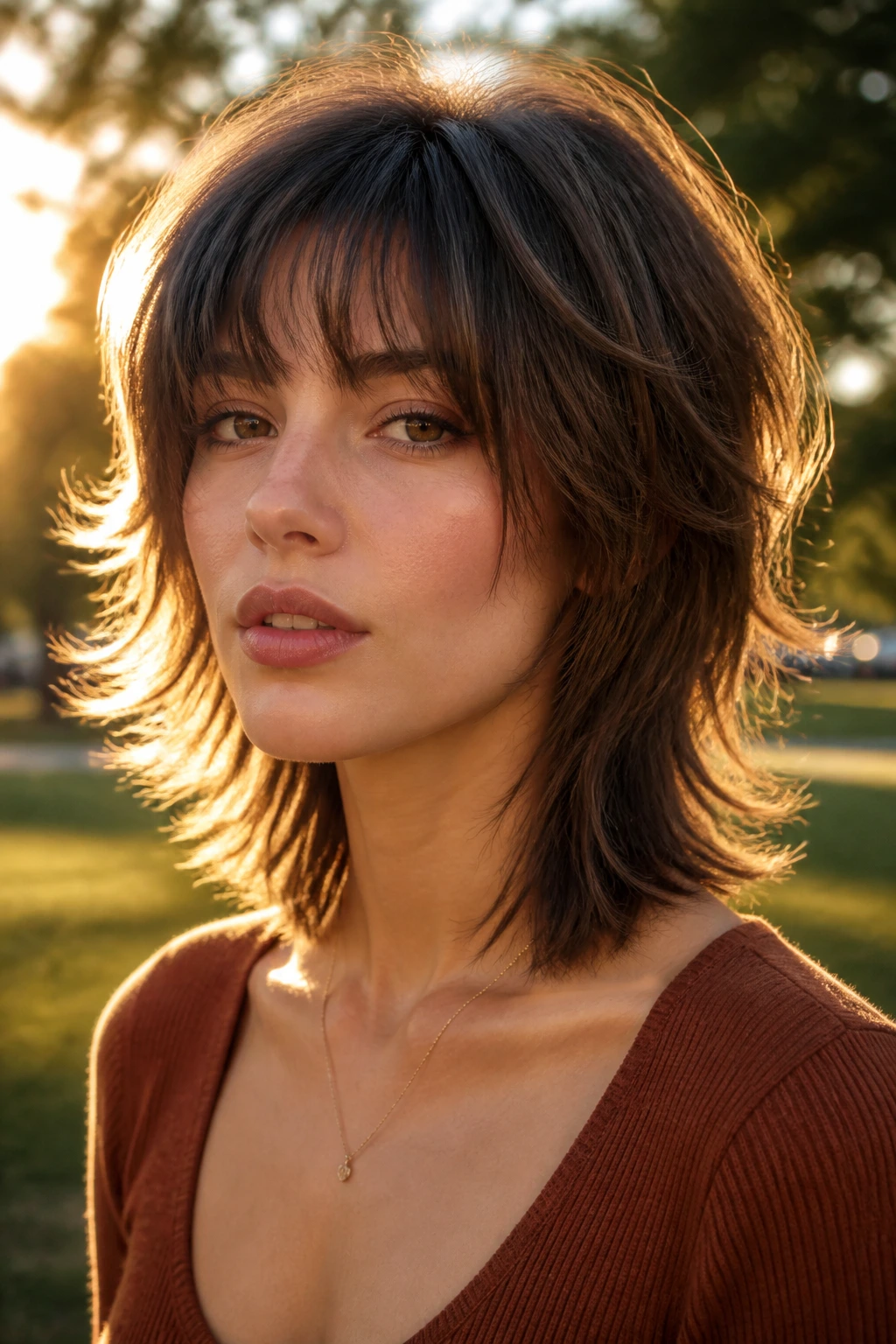
The soft wolf cut is for people who like texture but do not want the full drama of a high-contrast cut. It keeps volume at the crown, then tapers through the ends so the shape feels lighter around the face. That balance flatters round, square, and long faces in different ways.
Round faces get lift at the top. Long faces get width around the sides. Square faces get a little break in the line at the jaw. That is a lot of work for one haircut.
Keep the layers soft, though. If the cut gets too aggressive, it can start looking like you lost a fight with thinning shears.
16. The Asymmetrical Lob

An asymmetrical lob has one side slightly longer than the other, and that tiny difference changes the whole silhouette. It creates movement even when the hair is straight, which is why it works so well on oval and square faces. The off-balance line softens symmetry in a way that feels intentional.
This style shines when the longer side falls just past the collarbone. That gives the shape enough length to feel modern without turning it into a dramatic statement cut. Keep the shorter side grazing the jaw or just below it.
A deep side part can make the asymmetry stronger. A center part tones it down. Easy switch.
17. The Half-Up Friendly Layered Cut
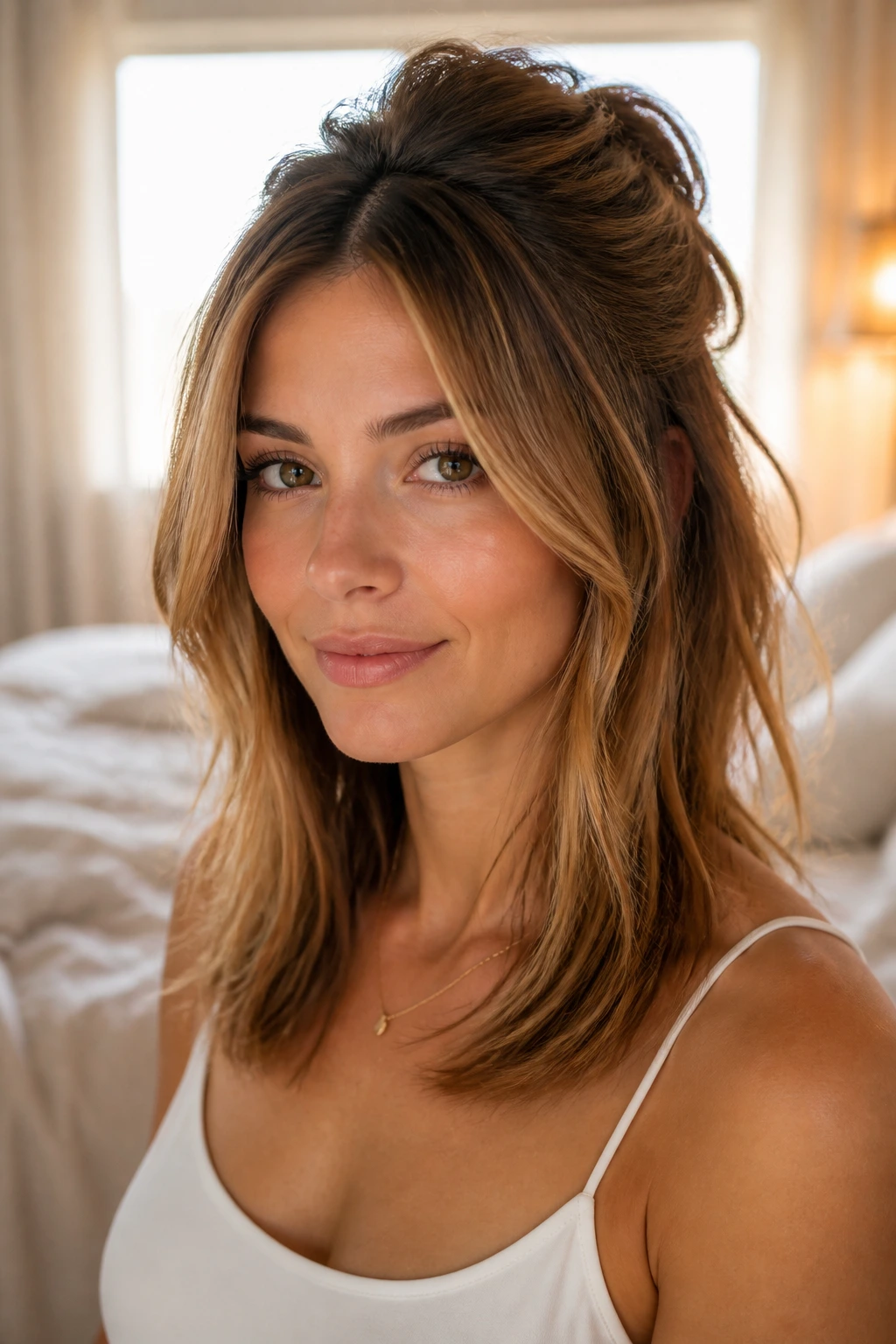
Some cuts only look good when fully styled. This is not one of them. A half-up friendly layered cut keeps enough length and face-framing detail that you can pull the top section back without leaving a sad little tail at the front. That matters more than people admit.
The layers should be light around the crown and fuller near the ends. That makes the half-up shape sit nicely instead of collapsing. It also helps broader cheekbones and fuller jaws because the pulled-back top shows off the face while the front lengths still soften it.
If you wear hair clips often, this is a smart pick. The cut does half the work for you.
18. Soft Curls at Shoulder Length

Soft curls at shoulder length have a way of making the face look gentler without making the hair feel fussy. The curl adds width at the sides, which is useful for long or narrow faces. On square faces, the curve helps soften the jaw. On round faces, keep the curl a little looser and lower.
What To Ask For
Ask for a cut that keeps enough length for the curl to sit below the cheekbone. Too short and the shape balloons. Too long and the curl hangs out of view. The sweet spot is usually right at or just past the shoulders.
Use a 1.25-inch iron if your hair is fine or medium. Bigger curls look more relaxed and hold longer as they fall.
19. The Deep Side-Part Cut

A deep side part can change a medium haircut in ten seconds, which is why I like it so much. It gives lift at the crown, adds diagonal movement, and can make a round face look longer or a flat cheek line look softer. You do not need a new cut every time. Sometimes you just need a new part.
This works especially well with blunt ends or low layers. The contrast between the strong part and the clean shape keeps the style from looking accidental. If one side of your face feels stronger than the other, a deep side part can balance that out.
Give the roots a quick blow-dry in the opposite direction first. That bit of grit helps the part stay put.
20. The Air-Dried Texture Cut
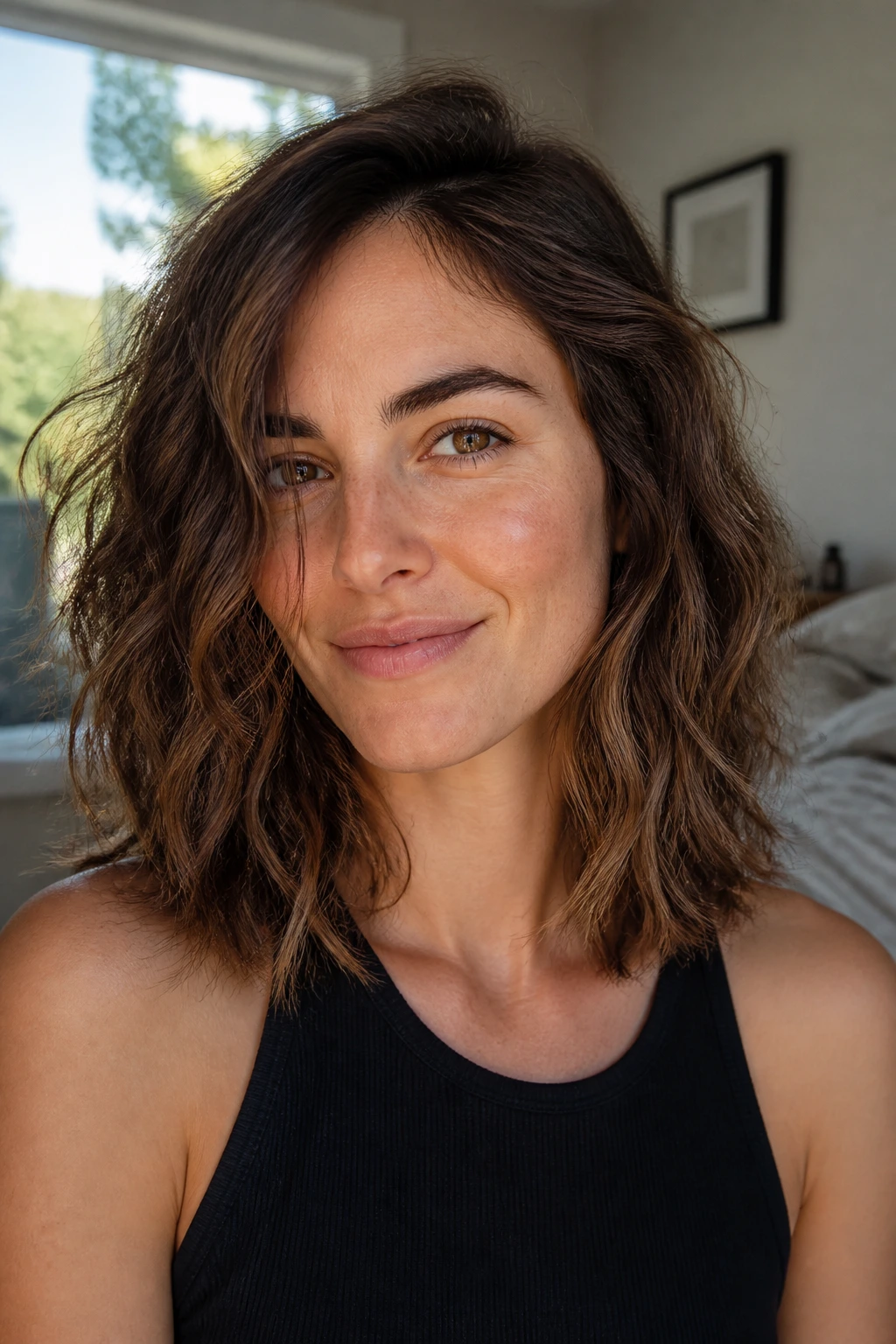
An air-dried texture cut is for people who want the hair to behave on its own. The shape should be built for your natural wave or bend, not forced into something fake. That makes it a quiet winner for almost every face shape because the cut follows the hair instead of fighting it.
The best version uses subtle layers and a slightly broken-up outline. Nothing too shaggy. Nothing too blunt. If your hair is thick, ask for internal removal so the ends do not spread like a triangle when dry.
Scrunch in a little curl cream, twist a few pieces around your fingers, and walk away. That is the appeal. Low effort, decent shape, no weird crunch.
21. The Money Piece Lob

The money piece lob uses lighter front sections to draw the eye forward. That bright frame can soften a wider forehead, highlight the cheekbones, and make a medium cut feel a little sharper around the face. It is especially good on heart and oval faces, but it can work almost anywhere if the placement is right.
Where The Bright Pieces Go
Keep the front streaks near the temple and cheekbone rather than right at the hairline. That keeps the contrast from looking stripey. The rest of the hair can stay darker or more natural, which gives the cut depth.
This is one of those styles that looks more styled than it is. A smooth blow-dry and a slight bend at the ends are enough. The front pieces do the talking.
22. Feathered Layers

Feathered layers have a reputation for looking dated, but the modern version is softer and cleaner. The ends are lightly tapered so the hair moves away from the face in thin, airy sections. That helps square faces and fuller cheeks because the line does not hit all at once.
The best feathering happens through the mid-lengths, not just the last inch. That keeps the cut from looking scraggly. You want movement, not frizz. A round brush and a little smoothing lotion are enough to bring the shape out.
This is a good cut if you hate heavy ends. Some people do. I get it.
23. The Modern Rachel Cut

The modern Rachel cut borrows the face-framing shape people still love, but it is softer at the ends and less choppy through the crown. It flatters oval, round, and heart-shaped faces because the layers open around the cheekbones instead of cutting straight across them.
What matters most is the front. The shortest pieces should skim the chin or cheekbone, then flow into longer layers through the rest of the hair. That gives the style movement without the old-school helmet effect.
It works best with a round brush blowout or a soft bend from a flat iron. Straight and stiff is not the goal here. Swingy is.
24. Blunt Cut with Micro-Layers
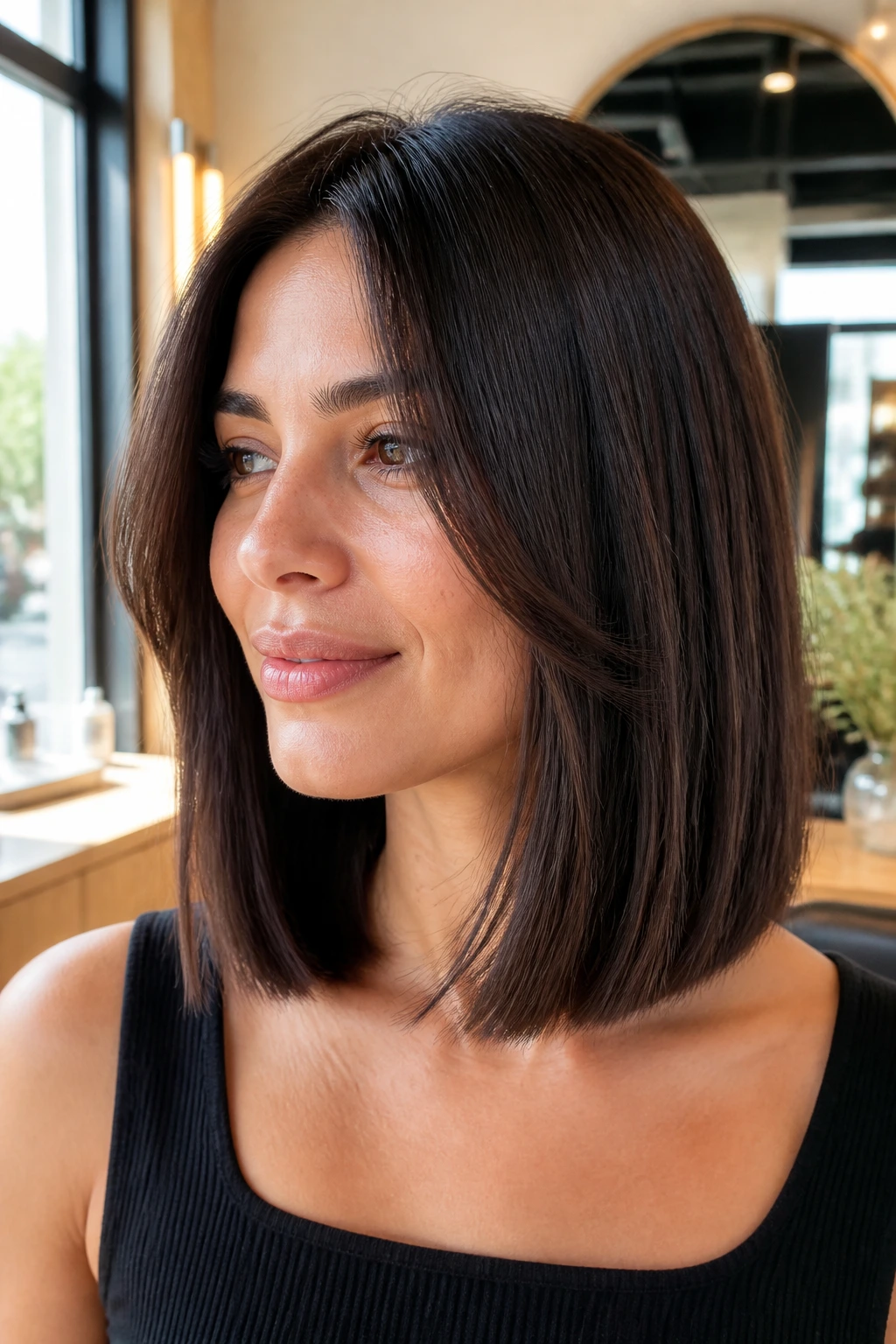
A blunt cut with micro-layers sounds contradictory, and honestly, that is why it works. The outline stays full and clean, but tiny hidden layers remove enough weight to keep thick hair from becoming a brick. It is a smart option for square faces that want softness without losing structure.
The layers should be barely visible. Think support, not drama. If you can spot them from across the room, they are probably too short. This cut is about control.
Use it if you want the feel of a blunt lob but your hair tends to puff out at the bottom. Micro-layers keep the shape neat. Nice and practical.
25. The Wispy Bangs Shoulder Cut
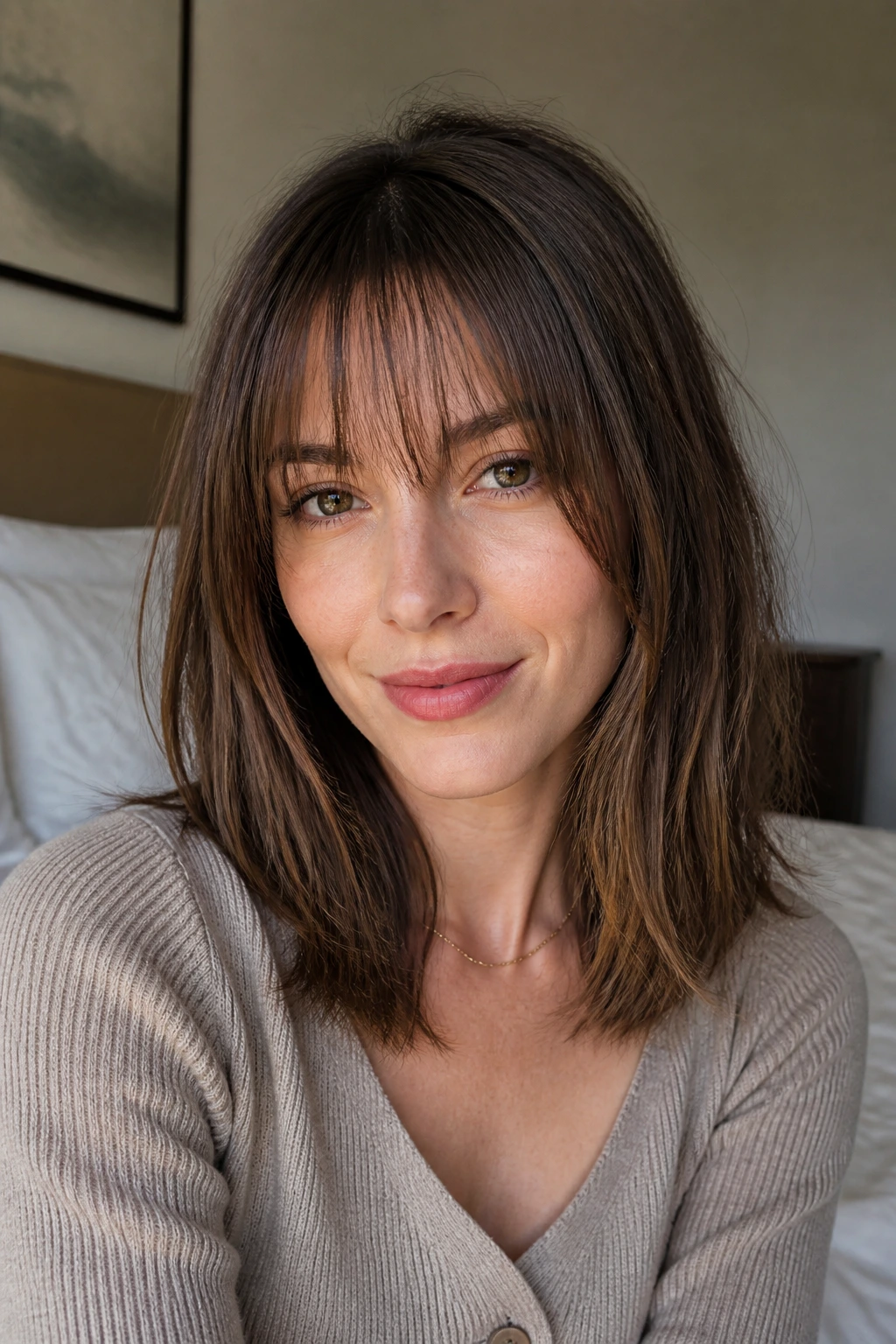
Wispy bangs can take the edge off a medium haircut fast. They break up a forehead, lighten a heavy look around the face, and add a little softness without committing to full fringe. That makes them useful on long, oval, and heart-shaped faces.
The bangs should look airy, not sparse. There is a difference. They need enough density to read as a fringe, but the ends should be lightly feathered so they do not sit like a curtain across the brow.
Keep the rest of the cut simple. Straight or softly waved lengths work better than lots of layers here, because the bangs already do some of the visual work.
26. The Flip-Ended Cut

Flip ends are back in a low-key way, and I am not mad about it. A slight outward flip at the ends can lift the face and keep medium-length hair from feeling too serious. It works especially well on long faces because the outward curve adds width right where it helps.
Ask for a cut that reaches the collarbone or just below it. Then style the last inch or two with a round brush or flat iron bend. You do not need a dramatic vintage flip. A small, clean turn is enough.
This style looks best when the roots are smooth and the ends have some movement. That contrast keeps it lively.
27. The Lived-In Lob
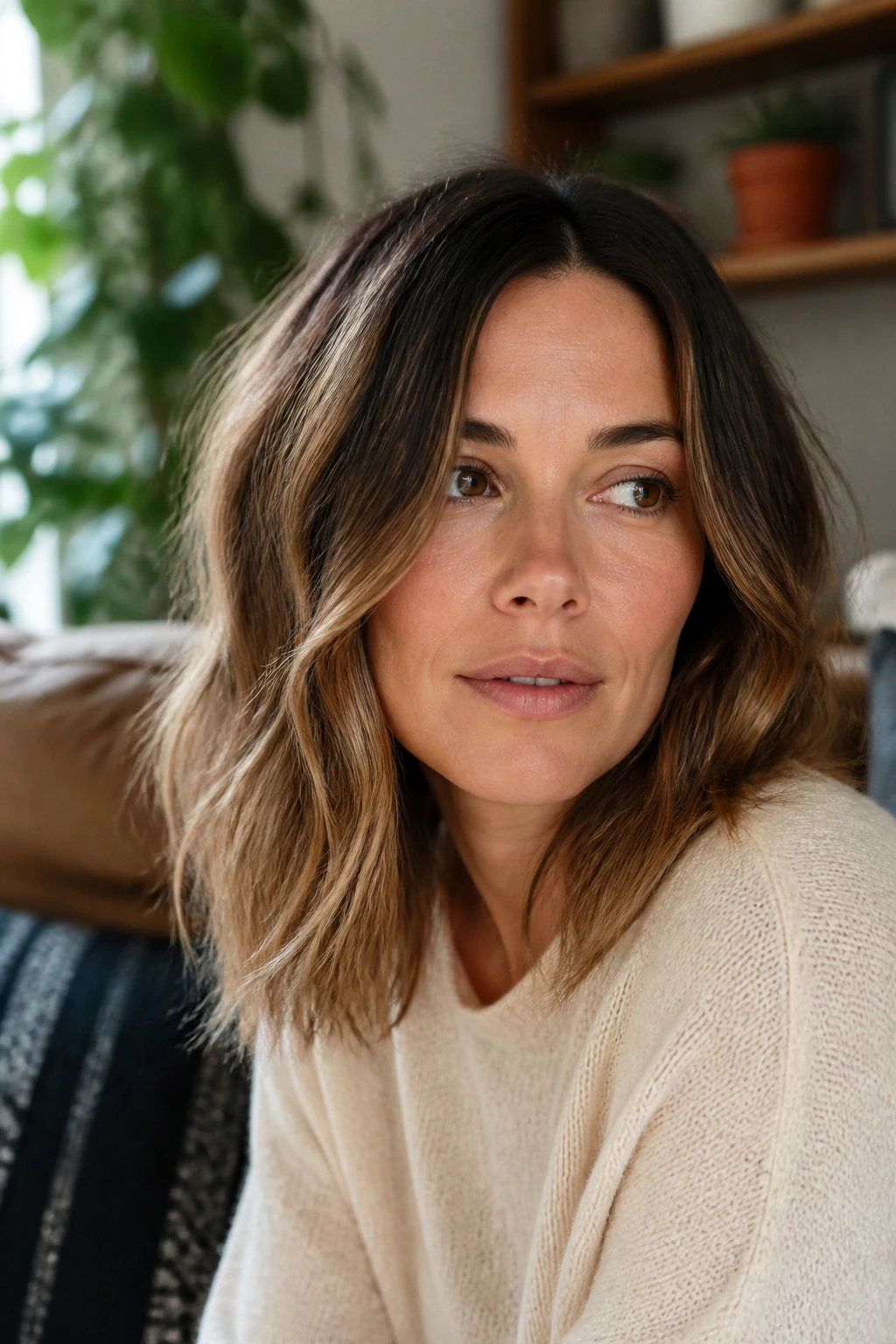
A lived-in lob is not lazy hair. It is hair that has a shape even when it is not freshly styled. The cut usually has soft layers, a little texture, and ends that are not too sharp. That makes it flattering on almost every face shape because it never looks like it is sitting on one hard line.
Best Features
- Soft movement around the jaw
- Easy to part on the side or center
- Works with air-drying and light heat styling
- Grows out without looking awkward
If you want a medium style that survives a busy week, this one is hard to beat. A little wave on day one and a dry shampoo refresh on day three usually gets you there.
28. The A-Line Lob
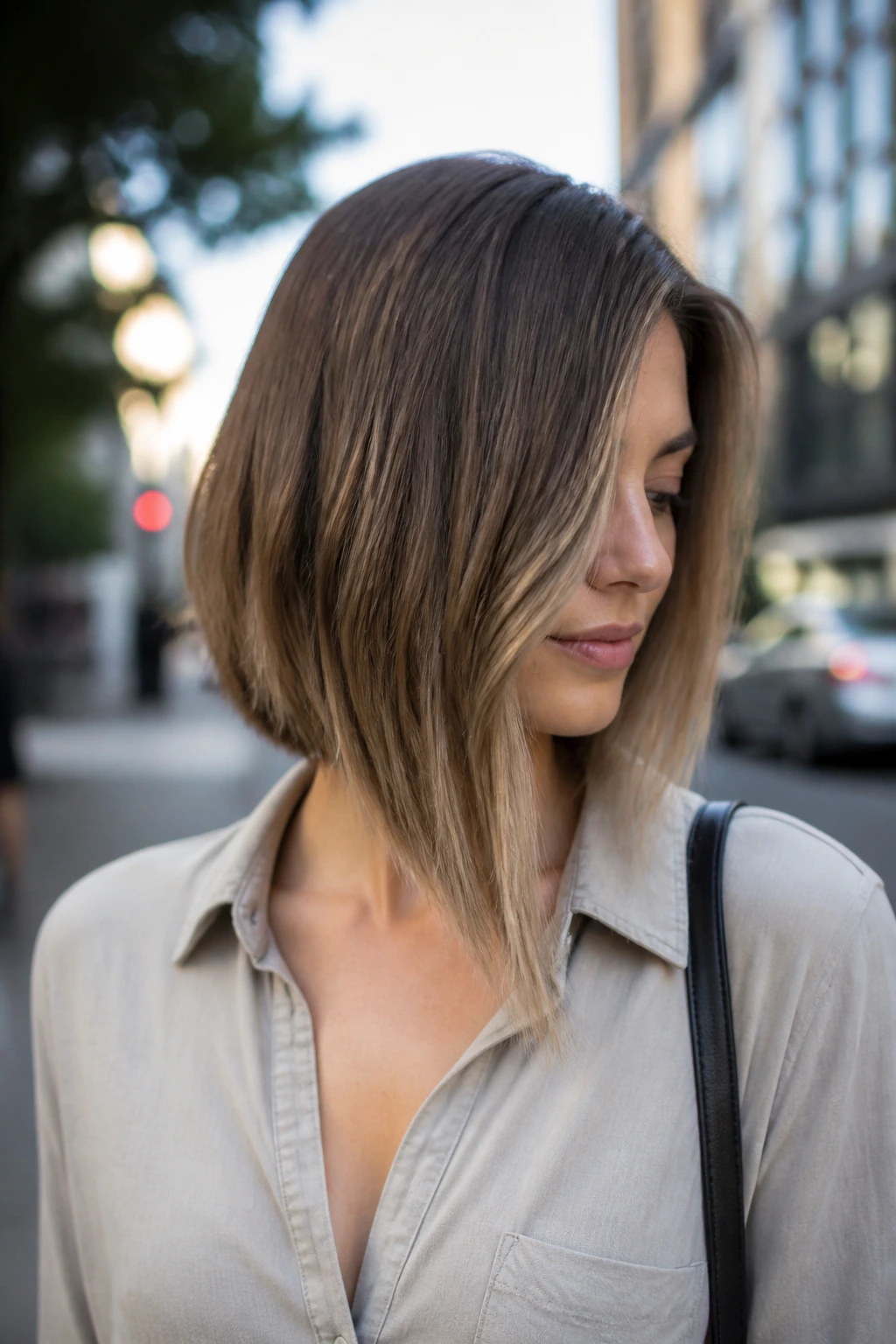
An A-line lob is slightly shorter in the back and longer in the front, which creates a subtle angle that lengthens the face. That is useful for round and square faces, but it also gives oval faces a sharper outline if that is what you want. The angle does not need to be dramatic.
Keep the front just past the collarbone and the back near the nape or upper shoulder. That keeps the cut sleek. If the angle gets too steep, the shape can feel dated fast. Mild is better.
Straight styling shows off the line best, but a loose bend works too. The shape should still be visible even when the hair moves.
29. Internal Layers That Stay Hidden
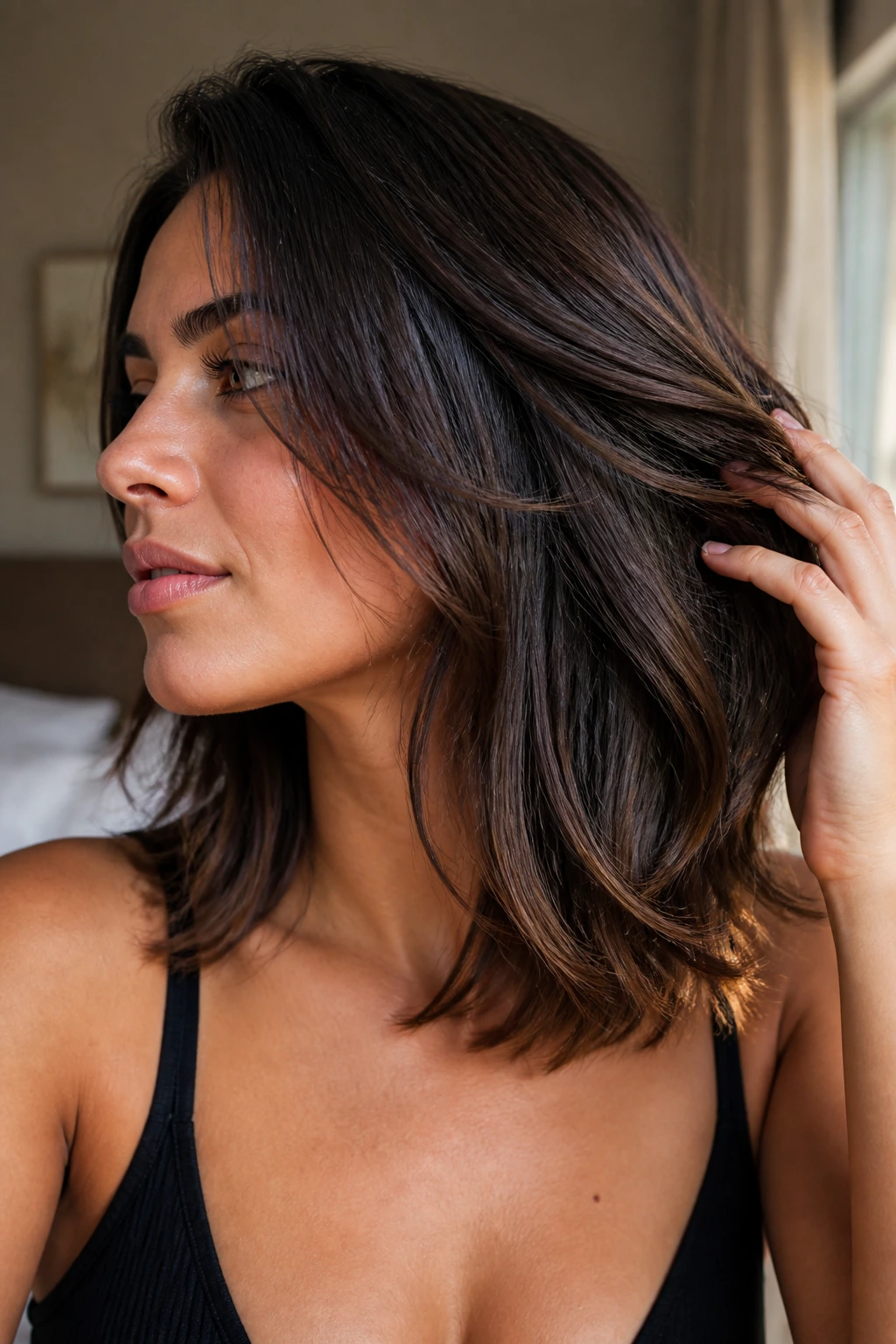
Internal layers are one of the quietest ways to improve medium length hairstyles. They remove bulk from inside the cut, so the outer shape stays smooth. That is great for thick hair, curly hair, and any face that gets lost under too much width near the cheeks.
The beauty of this approach is that it changes how the haircut feels without screaming “layers.” From the outside, you still get a polished outline. Underneath, the hair is lighter and easier to control.
If you have ever had a medium cut that looked good for one day and puffy the next, internal layers are worth asking about. They solve that problem better than most people expect.
30. The Long Side Fringe Cut

A long side fringe can do what heavy bangs cannot: shape the face without closing it off. It sweeps across the forehead, softens a strong brow, and creates a diagonal line that works well on round and square faces. It also gives medium hair a little movement when you pull the rest back.
The fringe should blend into the longest front pieces so it does not stop abruptly. That connection keeps the cut from looking chopped up. If you want low maintenance, this is a solid choice because it grows out into face-framing layers instead of a weird in-between bang.
Blow it in the direction you want it to sit, then pin it for a few minutes while you do makeup or get dressed. It helps.
31. The Curly Shoulder Cut

Curly hair needs room. A shoulder-length cut gives curls enough length to spring and enough shape to avoid the triangle effect. That is why it flatters so many faces. The curl itself does the softening, while the shoulder length keeps the outline contained.
A Better Way To Think About It
Do not cut curly hair like straight hair and hope for the best. The shape needs to respect shrinkage and volume. Ask for curl-by-curl shaping or dry-cutting if your stylist works that way. The goal is to keep the curls from piling up too high around the face.
A shoulder cut with a few longer face-framing pieces can slim a wide cheek area and keep the curls from crowding the jaw. Easy win.
32. Razored Ends with Medium Length
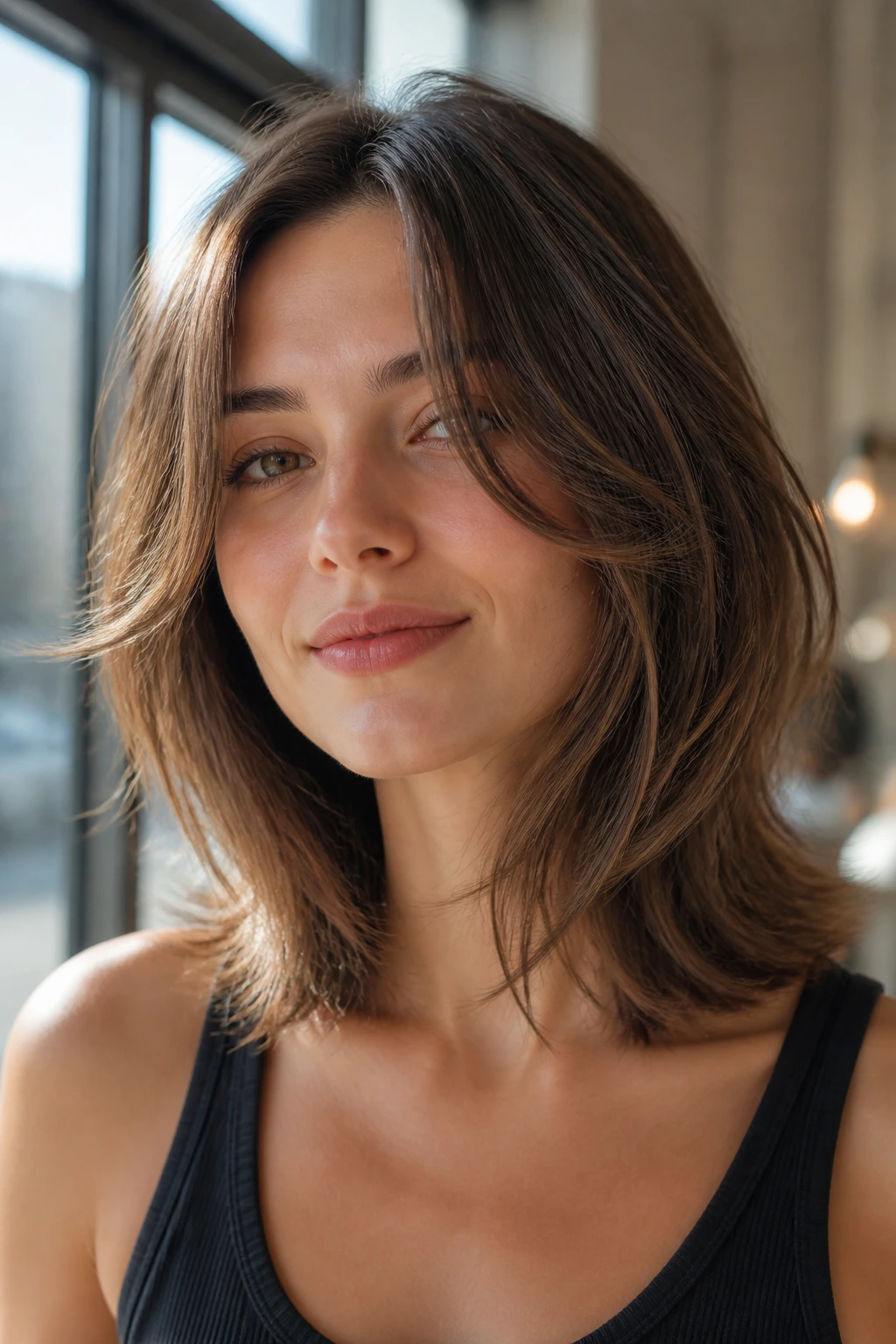
Razored ends give a medium haircut a lighter finish, which can be useful if blunt edges feel too heavy on your face. The blade removes bulk and creates a slightly softer edge, so the hair moves better around the jaw and neck. On square faces, that softness helps. On thick hair, it keeps the cut from feeling blunt in a bad way.
That said, razoring is not for everyone. Fine hair can fray if it is overdone, and very curly hair can puff if the ends are thinned too hard. The best version is subtle. A little slice here and there, not a full shred.
If your hair feels boxy at the ends, this can loosen it up fast.
33. The Straight Collarbone Cut

A straight collarbone cut is clean, simple, and stubbornly useful. It lands at a point where hair still moves but the shape stays clear. That length flatters long faces by stopping the eye at the collarbone, and it can slim fuller cheeks without needing layers everywhere.
Keep the line exact. That is the whole point. If the cut gets too layered, it loses the neatness that makes it work. A center part feels modern here, but a deep side part gives it more softness.
This is a good haircut if you like low-drama styling. Brush it smooth, add a little shine serum to the ends, and go.
34. The Soft Mullet-Inspired Mid Cut

A soft mullet-inspired mid cut sounds daring, but the wearable version is surprisingly gentle. The front stays a little shorter, the crown gets some lift, and the back keeps enough length to preserve balance. That shape can flatter round and square faces because it gives height without making the sides look heavy.
The key word is soft. You want the transition between lengths to be smooth, not jagged. If the layers get too extreme, the cut stops being flattering and starts becoming a costume. Nobody wants that at brunch.
This style looks best with a little texture spray and air-dried movement. It is a good pick if you want personality in the haircut without turning every morning into a styling project.
35. The Polished Blowout Lob
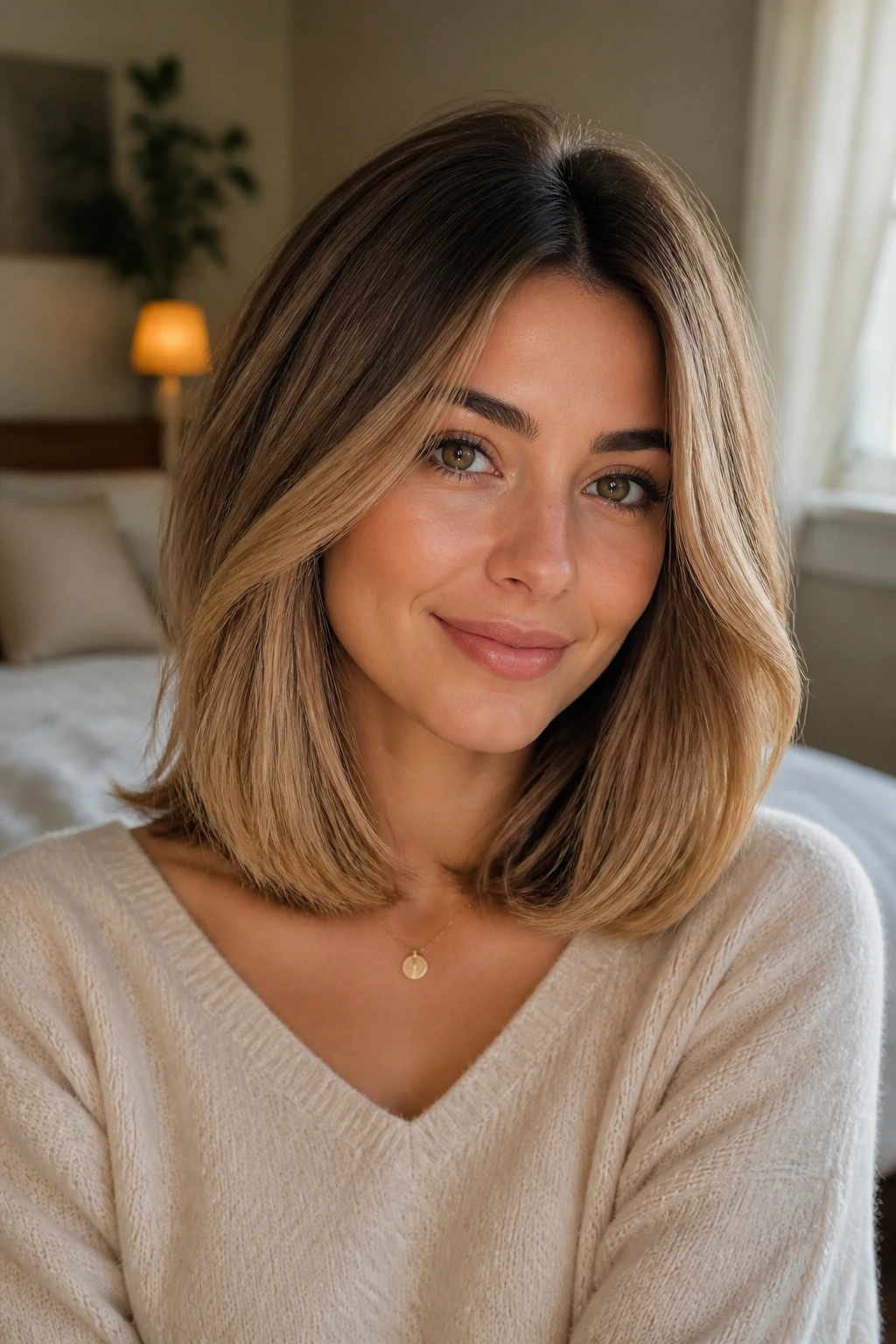
A polished blowout lob is the style I keep coming back to when someone wants medium hair that looks put together fast. The shape usually sits between the collarbone and shoulders, with just enough layering to keep the ends from dragging down the face. On oval faces, it looks balanced. On round faces, the volume through the sides adds length. On heart-shaped faces, the fuller ends help even out the forehead.
The blowout part matters. A medium round brush, a smoothing cream, and a quick bend away from the face can make the whole cut feel lifted. Not stiff. Lifted. That is a better word. If you only choose one style from this list, choose the one that makes your hair easy to live with on a Tuesday morning, not just nice in a salon mirror.
