



Long face shapes do not need more length. They need interruption.
That sounds blunt, but it’s the whole game. When hair falls straight past the jaw with no break in the line, the face can look even longer than it is. Add too much height at the crown and the effect gets stronger, not softer.
The cuts that work best do one of three things: they create width at the sides, they shorten the forehead with fringe, or they stop the eye from traveling straight down the center of the face. A sharp bob can do it. So can a shag, a lob with bangs, or a curly cut with a round outline. Tiny details matter here — where the layers start, how heavy the perimeter is, and whether the part sits dead center or off to one side.
I’ve always liked haircuts for long face shapes that have a little opinion to them. A flat, waist-length curtain of hair can look elegant in a photo and oddly severe in real life. A chin-length bob, a shoulder-grazing shag, or a lob with curtain bangs usually does more for balance, and balance is what you’re after. Not disguise. Balance.
1. Chin-Length Blunt Bob

A chin-length blunt bob is one of those cuts that looks simple until you see what it does to a long face. It puts a hard stop right at the jawline, which gives the eye a place to rest instead of letting it drift downward. That horizontal line is the whole point.
I like this cut best on straight or slightly wavy hair, especially if the ends are kept dense and clean. A bob that is too wispy loses the shape. A blunt edge, though, feels strong in the best way.
What to ask for
- A length that hits right at the chin or just below it
- A blunt perimeter with little to no feathering at the ends
- A soft bend under the jaw if your hair flips out
- A tiny bit of internal removal only if your hair is thick and bulky
Pro tip: If your hair tends to puff out at the bottom, ask your stylist to leave the outline heavy and only soften the inside. That keeps the shape crisp without turning the sides into a bell.
2. Collarbone Lob with Curtain Bangs

Why does this combo work so well on long face shapes? Because it breaks the face in two directions at once. The collarbone length keeps you away from extra vertical length, and curtain bangs cut across the forehead so the eye doesn’t keep climbing upward.
This is one of the easiest haircuts to live with. It works on straight hair, wavy hair, and even curls if the layers are handled with restraint. The bangs are the part that makes it feel intentional rather than safe.
How to make it flattering
- Keep the longest pieces at the collarbone, not past the chest
- Ask for curtain bangs that start around the brow or top of the cheekbone
- Blow-dry the fringe away from the face so it opens softly
- Use a medium round brush on the front sections only
The nice thing about this cut is that it grows out without looking sloppy. That matters more than people admit. A lot of fringe styles look good only in week one; this one tends to keep working because the bang line stays useful even when it gets a little longer.
3. French Bob with Brow-Skimming Fringe
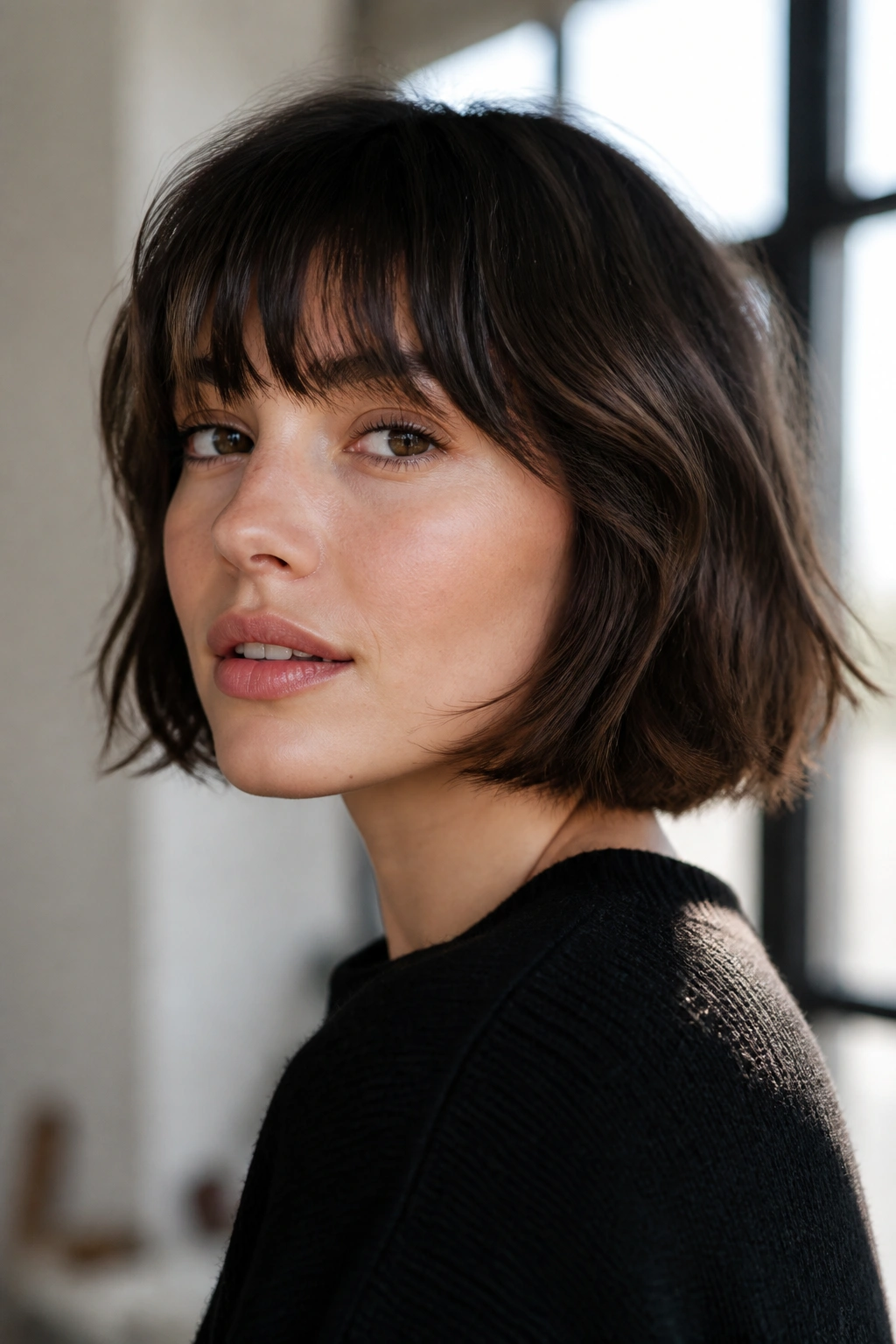
Shorter can be smarter. Especially here.
The French bob sits around the lip, cheek, or jaw area, and the brow-skimming fringe does a lot of the balancing work. On a long face shape, that little strip of bangs changes the whole frame. Suddenly the forehead is less dominant, the face looks a bit wider, and the haircut has some bite.
I prefer this cut when the texture is not too polished. A little bend gives it life. Perfectly flat styling can make the shape feel severe, while a soft wave turns it into something much more forgiving.
A blunt brow-grazing fringe is the part that sells it. If the bangs are too airy, the face can still look long. If they sit with enough weight, they shorten the face in a way that feels natural, not forced. It’s a small difference. It matters a lot.
4. Shoulder-Grazing Shag

A shag is a good answer when you want movement without length working against you. The layers build width around the sides of the head, which gives a long face more balance than a straight fall ever will. Done well, it looks lived-in instead of overdone.
Why it helps long faces
The shag works because it spreads the visual weight out. You get texture near the cheekbones, some softness around the jaw, and a little chaos that stops the eye from tracking straight down. That is useful. Very useful.
- Ask for layers that start around the cheekbone or upper lip
- Keep the crown layers lighter than the side layers
- Let the ends stay a little piecey, not razor-thin
- Add curtain bangs or a broken fringe if your forehead feels long
The mistake most people make with a shag is taking too much off the top. That can make the head look taller, which is the opposite of what a long face needs. Keep the volume at the sides. That’s where the shape lives.
5. Side-Parted Lob with Cheekbone Layers

A side part does quiet work that a center part can’t. It shifts the eye off the middle of the face, breaks up symmetry, and gives the haircut a little sweep. On a long face shape, that off-center energy is a gift.
This cut is especially good if you like a clean look but do not want your hair to feel severe. The lob length keeps everything modern and easy, while the cheekbone layers widen the midface just enough. You get softness without losing structure.
What makes it different
Unlike a center-parted, one-length lob, this version builds shape where it matters. The layers start high enough to frame the face but not so high that they bounce around like old-school Rachel layers.
How to wear it
- Part the hair about one inch off center
- Keep the front pieces grazing the cheekbone or top of the lip
- Add a slight bend with a flat iron or round brush
- Let the shorter side tuck behind the ear when you want more lift
I like this cut for people who need something polished enough for work but not boring. It has a little movement, and that movement is doing real visual work.
6. Rounded Curly Bob

Curly hair and long face shapes can be a very good match, as long as the cut respects the curl pattern instead of trying to bully it into submission. A rounded curly bob gives width through the sides, which is exactly what a long face often needs.
The key is shape. Not length.
If the curls hang too far past the jaw, the cut can start pulling the face down. If the bob sits around the chin or just above it, the shape opens up the face and makes the cheek area look fuller. That can be beautiful on naturally curly, coily, or wavy hair.
The best version is usually cut dry, curl by curl, so the stylist can see where the hair wants to sit. Ask for a rounded outline rather than a triangle or a boxy block. One looks soft and balanced. The other can get bulky fast.
A little side part helps too. It keeps the top from feeling too tall and gives the curls a more relaxed fall. If your curls shrink a lot, cut with that in mind or you’ll end up shorter than you meant to.
7. Bixie with a Long Side Fringe

The bixie sits between a bob and a pixie, and that in-between space is useful for long face shapes. You get the lightness of short hair without exposing the whole face in one clean sweep. The long side fringe keeps it from looking too sharp.
This cut has personality. It also has a nice practical side: the fringe softens the forehead, while the cropped back and sides keep the overall silhouette compact. That balance matters if you want short hair but do not want your face to look stretched.
Why it works
- The side fringe breaks up the forehead line
- The short back keeps the style close to the head
- Texture on top adds movement without adding height everywhere
- It grows out more gracefully than many short cuts
Use a little styling cream or light paste, not a heavy wax. Heavy product can make the fringe collapse in a sad, greasy way. A small amount rubbed through damp hair is enough to keep the pieces separated.
This is a good choice if you like short hair with some edge, but it is not the cut for someone who wants to air-dry and walk out the door with no thought at all. It needs a bit of hand work. Not much. Enough.
8. Soft A-Line Bob

A soft A-line bob gives you the face-shaping benefits of a bob without the bluntness feeling too severe. The front pieces angle gently toward the jaw, while the back stays a touch shorter. Done softly, it gives long face shapes a bit of width through the lower half of the face.
The word here is soft. A dramatic A-line can drag the eye downward if the front is too long. That is not what you want. A subtle angle, with the front landing around the chin and the back just a little shorter, is usually the sweet spot.
Ask for this version
The sweet spot
A gentle angle makes the haircut feel modern, but it still keeps the eye moving sideways instead of straight down.
- Keep the front at chin length or a hair below
- Avoid a steep drop from back to front
- Leave the ends thick so the line stays visible
- Add a side part if your face needs more width near the temples
This one works nicely on straight hair because the shape shows clearly, but it also looks good on a loose wave. I’d skip an overstyled, super-shiny finish. A little texture keeps the geometry from looking too stiff.
9. Wolf Cut with Bottleneck Bangs

The wolf cut is not quiet, and that is part of why it can flatter a long face. It gives you movement around the cheeks and jaw while the bottleneck bangs shorten the forehead in a way that feels soft, not heavy. The result is a haircut with attitude that still knows what it is doing.
It works best when the layers are controlled. Too much height at the crown turns the face even longer. Too much thinning at the sides makes the head look narrow. The sweet spot is a shaggy outline with enough width through the midsection to counter the length of the face.
You can wear this cut tousled, air-dried, or lightly blown out. It does not need to look polished to work. In fact, it usually looks better when the texture is a little messy and the fringe sits in separate pieces.
Who should skip it? Anyone who wants a very neat, tidy shape with no movement. The wolf cut lives on texture, and texture can be a blessing or a headache depending on your tolerance for styling. Be honest with yourself there.
10. C-Cut Layers at Mid-Length

A C-cut is one of those shapes stylists use when they want the hair to curve toward the face instead of dropping in a straight sheet. For long face shapes, that inward bend is gold. It softens the outline, widens the middle, and keeps the haircut from looking like a long curtain.
The best C-cut starts its framing pieces around the cheekbone or chin, then lets the layers sweep down and back in a loose curve. You get movement, but it’s controlled movement. That control is what separates it from a standard layered cut that can drift into generic territory.
What to ask your stylist
- Mid-length hair that lands between the shoulder and collarbone
- Front layers that curve inward toward the chin
- Soft interior layering, not choppy ends all over
- A side or off-center part if your forehead is tall
I like this cut on thick hair because it removes weight where you need it without stealing the shape. On finer hair, it works too, but the layers need to stay long enough to keep the silhouette full. If they’re too short, the whole thing can go limp.
11. Feathered Cut with a Full Fringe

A feathered cut does something blunt cuts can’t: it lightens the perimeter while still leaving enough shape to frame the face. Add a full fringe and you get a haircut that shortens the forehead and broadens the visual line across the face.
This is a good pick if you want softness rather than sharp edges. The feathering makes the cut feel airy, while the fringe gives the face a clear top line. Together, they stop the long-face effect from taking over.
What I like most about this cut is that it looks flattering without screaming for attention. It has a little retro energy, but not the kind that feels costume-y. A round brush and a quick blow-dry can make the fringe sit nicely, and the rest of the cut can stay loose.
It’s especially kind to fine hair. Feathering can create the look of fullness without requiring a massive amount of density. Thick hair can wear it too, but the layers need a careful hand so the ends do not separate into fuzzy bits.
12. Rounded Afro Shape

Coily and kinky textures have their own rules, and long face shapes benefit most when the cut respects the natural roundness of the hair. A rounded afro shape adds width at the sides and temples, which balances a long face better than a tall, narrow silhouette ever will.
This is not about hiding length. It’s about choosing where the volume sits. If the shape climbs too high at the crown, the face can look longer. If the width stays fuller at the sides and the outline is softly rounded, the whole head reads more balanced.
A good stylist will often cut this shape dry, checking how the curls or coils spring back in their natural state. That matters. Wet hair can lie to you. Dry hair tells the truth.
A tapered neckline can help too, especially if you want the shape to feel neat rather than giant. I like a little lift near the temples and a soft roundness around the top corners. Clean, but not severe.
13. U-Shaped Long Cut with Face-Framing Layers
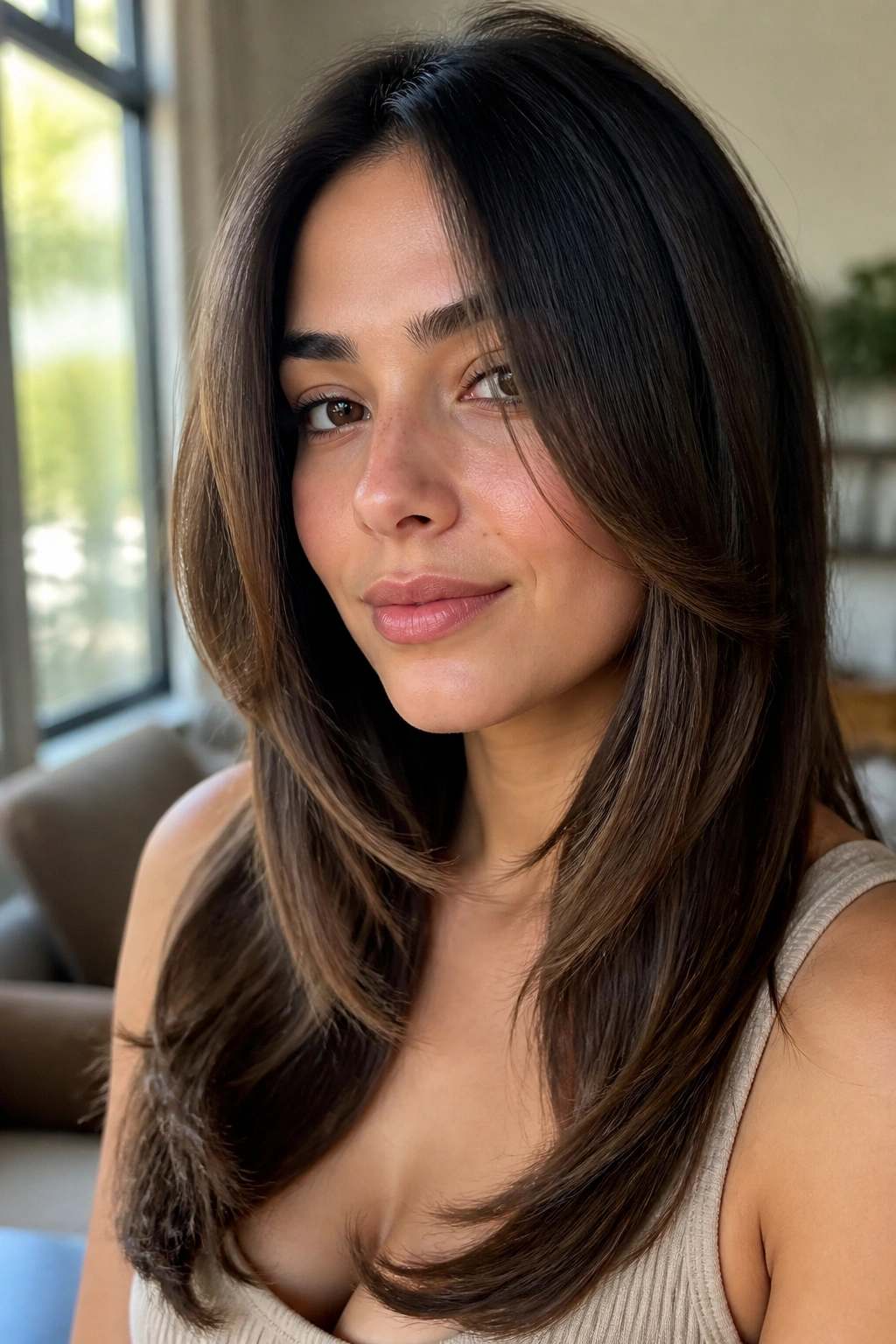
Long hair can work on a long face shape. It just needs smarter lines.
A U-shaped cut is softer than a blunt curtain of length, and softer usually means kinder here. The rounded bottom edge keeps the eye from sliding down a hard vertical line, while face-framing layers starting around the chin or collarbone bring some width into the middle of the face.
Why the U matters
A V-shape often pulls the eye straight down the center. A U-shape spreads that attention more gently. It’s a small change on paper and a big one in a mirror.
- Ask for the longest point to sit in a soft U, not a sharp point
- Keep the front layers around the chin, lip, or collarbone
- Use a side part if your face feels too symmetrical
- Add a loose bend through the mid-lengths so the shape does not hang flat
This cut is the answer for people who love length and refuse to give it up. Fair enough. You do not have to go short to flatter a long face. You just need the bottom line and the face frame to do more work than they usually do.
14. Modern Pageboy with Soft Ends

The pageboy gets overlooked because people picture a stiff, old-fashioned helmet shape. The modern version is softer, looser, and far more flattering on long face shapes than most people expect. The curved ends sit around the jaw or cheekbone, which gives the face a wider middle section.
The magic is in the bend. A pageboy that tucks inward pulls the eye sideways and slightly upward. That helps shorten the look of the face without needing heavy bangs or a drastic chop.
What makes it feel current
- Ends curve under instead of flipping out hard
- The fringe can sit as a soft brow-skimming line or a gentle side bang
- The overall shape stays compact through the sides
- It works especially well on straight or lightly wavy hair
If you want something clean, a little architectural, and not overlayered, this is a smart move. It is not a cut for someone chasing messy texture. It is for the person who likes shape. Real shape. The kind you can see from across the room.
15. Soft Mullet with Curtain Fringe

A soft mullet sounds bold, and it is, but the right version can flatter a long face better than a lot of safer cuts. The reason is simple: it builds movement around the sides and cheeks while the curtain fringe shortens the forehead. If the proportions are handled well, the whole haircut feels balanced instead of stretched.
The mistake is going too high on top or too skinny at the sides. That turns the face into a long line with extra lift, which is the opposite of flattering. Keep the crown controlled, let the fringe sit low enough to matter, and make sure the sides keep some fullness.
I like this cut on hair that already has texture. Straight hair can wear it, but it usually needs a bit more styling to keep the outline from falling flat. Wavy hair does the least work here, which is honestly part of the appeal.
If you want one haircut that mixes softness with a little edge, this is a strong place to land. If you want something quieter, go back to the lob or bob options above. But if you like hair that moves and has some shape to it, the soft mullet can do more for a long face than people give it credit for.
One last thing: tell your stylist where you want the eye to land. Cheekbones, not forehead. That tiny instruction can change the whole cut.
