



A good 90s pixie cut does two things at once: it trims the drama and keeps the attitude.
That’s why pixie cuts from the 90s still look sharp on real people, not just in old magazine scans. The best versions were never stiff little helmets. They had side parts, feathered ends, soft fringe, and enough movement to catch a little air when you turn your head.
There’s a reason these cuts keep coming back. They work on fine hair that needs lift. They work on thick hair that gets bulky fast. They even work on curls, which is where a lot of people get nervous and stop too early. The shape matters more than the length, and the 90s knew that better than most decades did.
What makes these cuts feel retro without looking costume-y is the balance: short at the sides, a little longer where the face needs it, and texture that looks touched, not lacquered. That’s the sweet spot. And it’s where the good stuff starts.
1. Feathered Side-Part Pixie
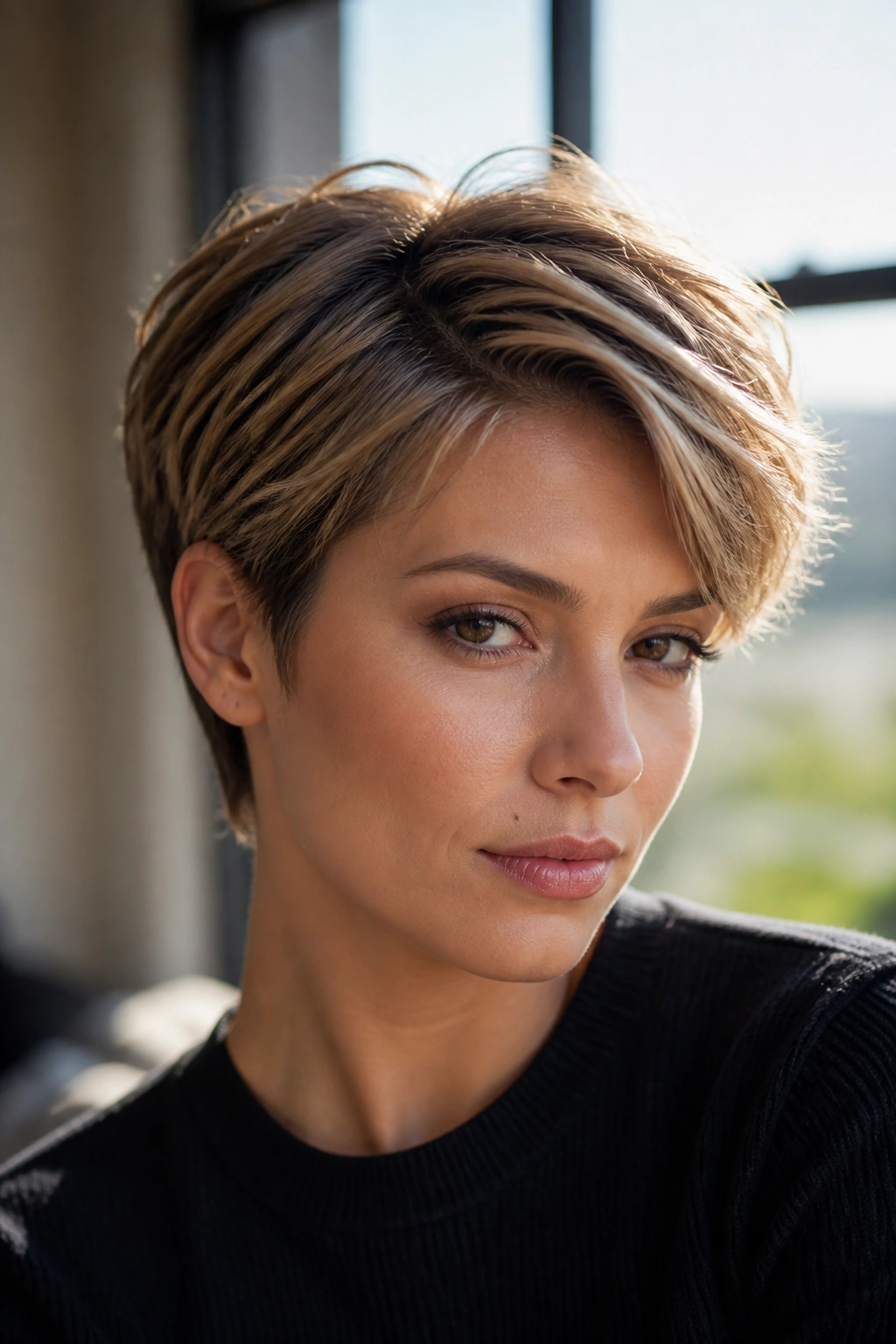
The feathered side-part pixie is probably the easiest 90s cut to wear if you want retro energy without looking like you raided a costume trunk. The side part gives it direction, and the feathering keeps the top from sitting flat and lifeless.
Why It Still Works
The shape is doing most of the work here. A clean side part creates a little lift at the root, while the feathered ends soften the whole cut so it moves instead of sitting in one blunt block.
- Best on straight to slightly wavy hair
- Looks strongest when the top has 2 to 3 inches of length
- Needs only a pea-size amount of light mousse or styling cream
- Air-dries fast, which is part of the charm
The version I like best has a narrow nape and a soft sweep over one temple. It feels feminine without getting fussy. That’s the whole appeal.
2. Choppy Boyish Pixie
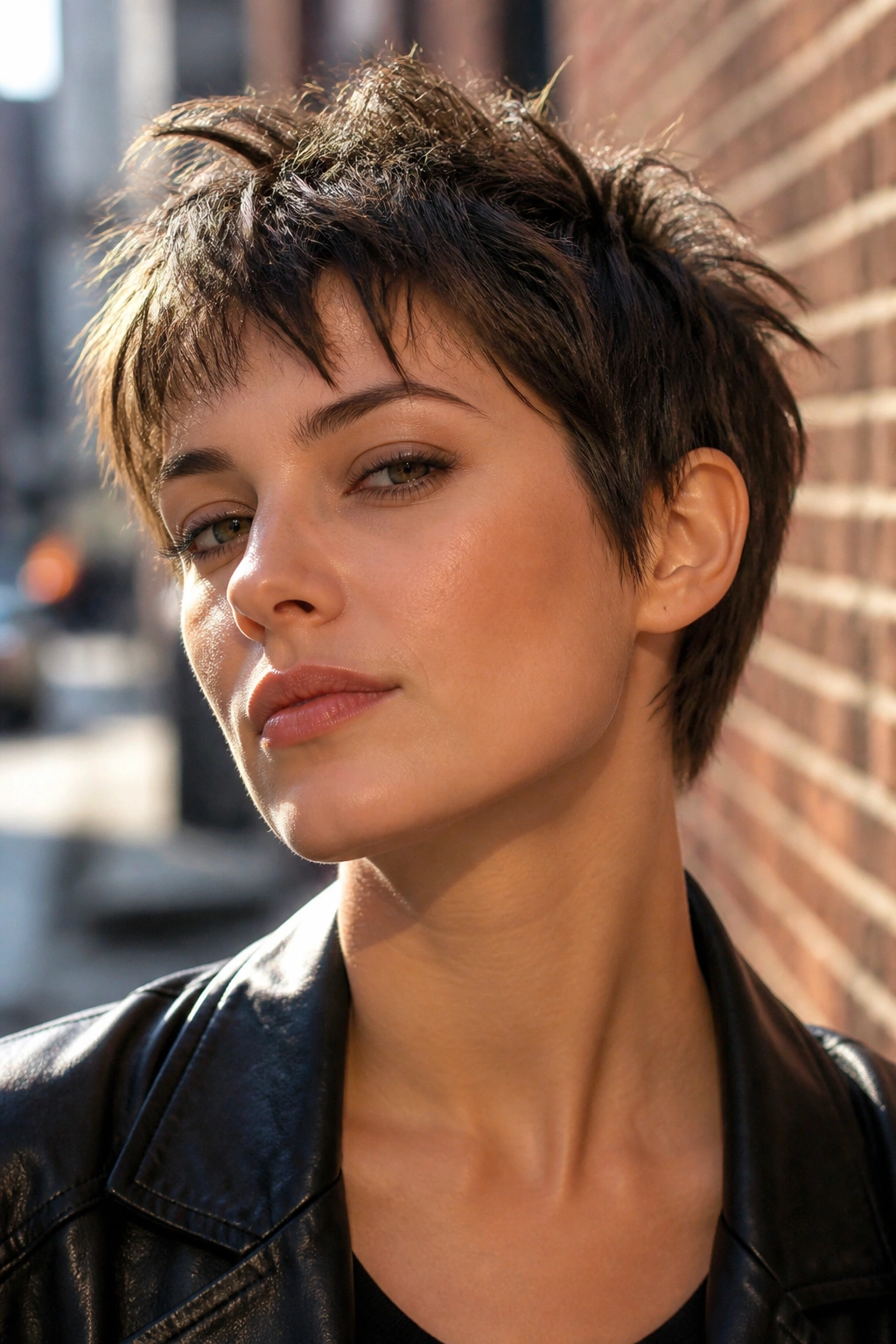
This one has bite. The choppy boyish pixie is the cut that gives off a little rebellion without trying too hard, and that’s why it still reads as cool instead of dated.
What makes it work is the texture. Instead of polished layers, you want rough, piecey ends and a slightly uneven surface through the crown. A razor or point-cut finish helps here, because blunt scissors can make the style look too neat, and neat is not the point.
Wear it with a tiny bit of matte paste rubbed between your palms until it disappears. Then push it through the top in small sections. Don’t smooth everything down. The cut needs a little chaos to keep its shape alive.
3. Swooped Fringe Pixie
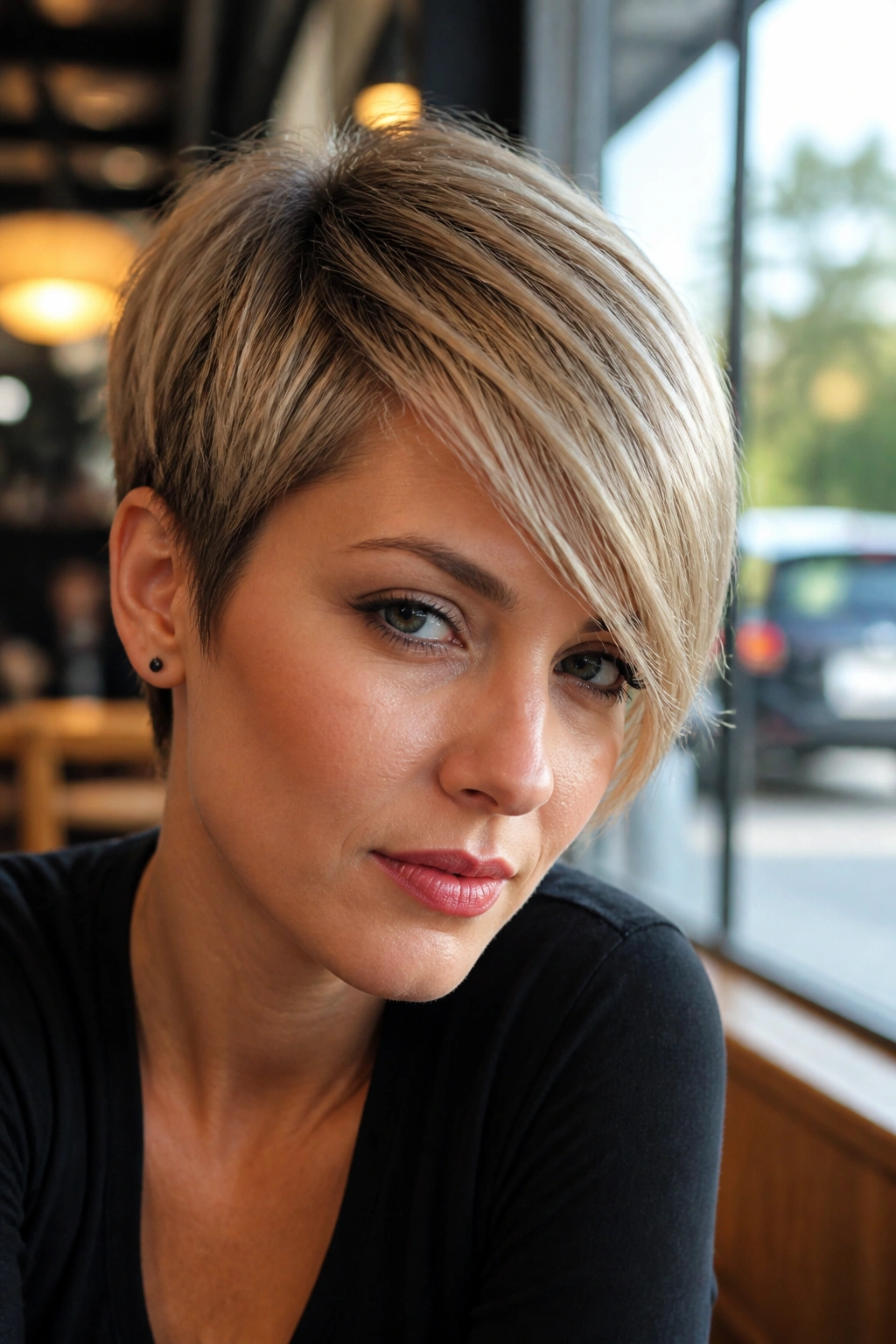
Why does this one keep showing up in old 90s photos? Because a long, swooped fringe changes everything. It softens the forehead, gives the face a diagonal line, and makes a short cut feel less severe.
How to Style the Sweep
Start with damp hair and aim the fringe forward while you blow-dry it. Once it’s mostly dry, twist the front slightly away from the face with a round brush or even your fingers, then let it cool in that direction. That cooling part matters more than people think.
A swooped fringe pixie looks best when the bang is long enough to skim the brow or the outer corner of one eye. Shorter than that, and you lose the drama. Longer than that, and it starts to behave like a bob that got lost on the way to the salon.
4. Ultra-Short Crop
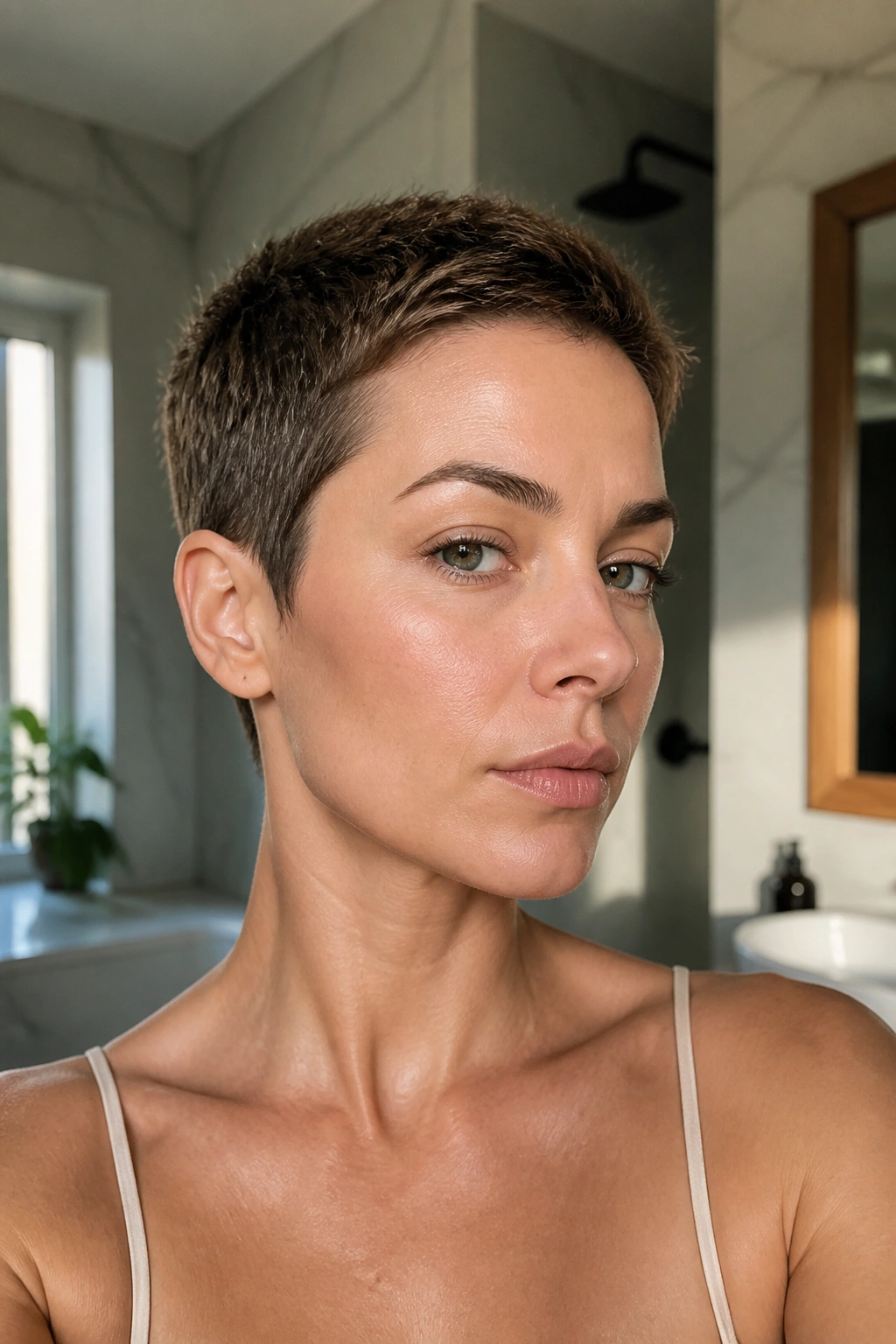
If you want the shortest possible answer to “retro pixie,” this is it. The ultra-short crop brings the face into focus fast, and it gives off that glossy, direct 90s energy that never feels shy.
The trick is keeping the outline tidy. A crop this short can look elegant or harsh depending on the edges, so the temples and nape need a soft taper. Not a fuzzy mess. Just enough blending so the cut hugs the head instead of sitting on top of it.
I like this style on people with strong brows, good cheekbones, or a face that already has good structure. It can also be a sneaky choice for fine hair, because there’s no heavy length dragging the roots down. Very little styling. Very little fuss. A lot of attitude.
5. Tapered Nape Pixie
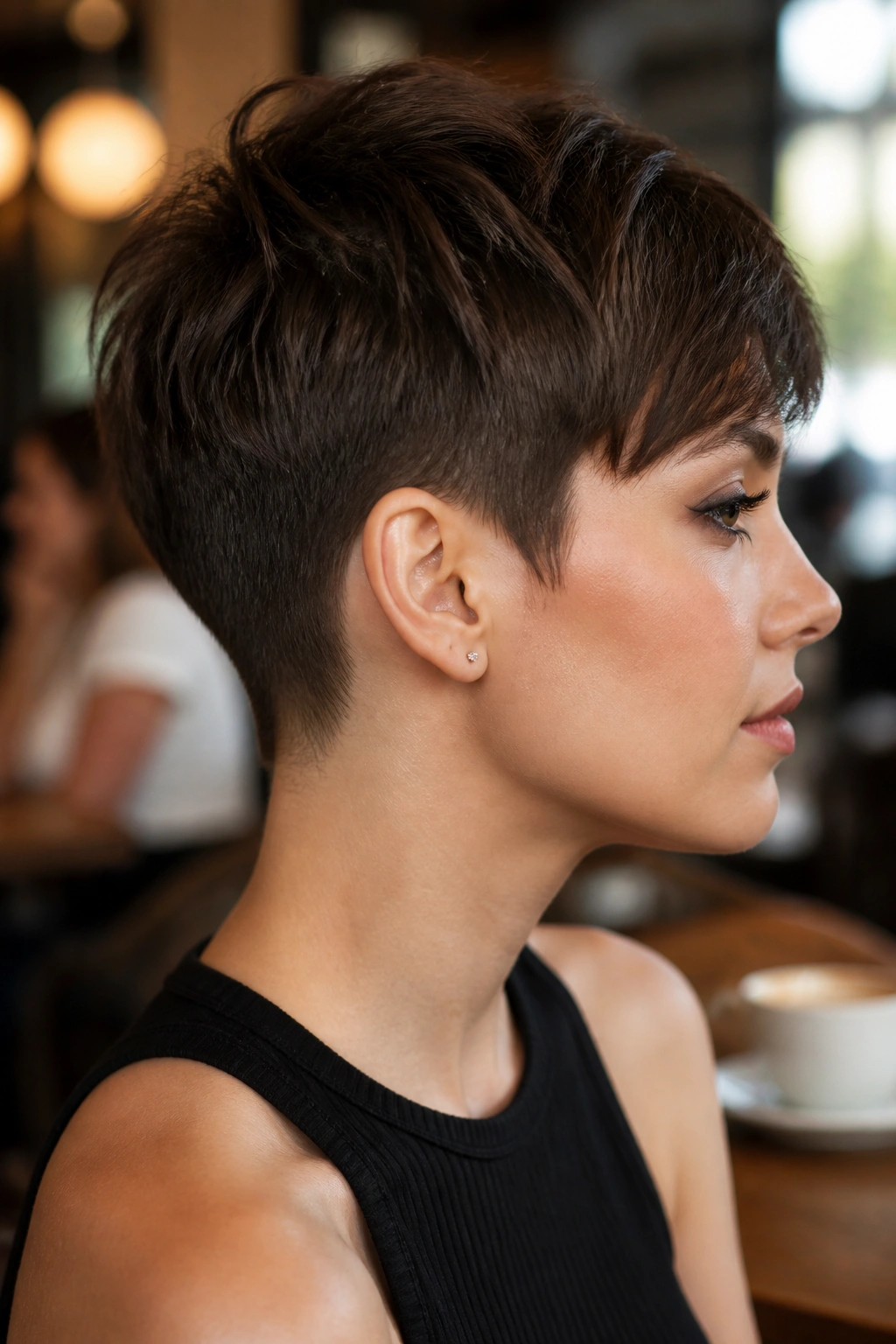
The back of this cut is the whole story. A tapered nape pixie keeps the neckline clean and close while leaving the upper layers a touch fuller, which gives the silhouette a neat little kick.
That taper is what makes the cut feel intentional. Without it, a pixie can wander into “grown-out” territory fast. With it, the neck looks longer, the head shape looks tidier, and the top gets enough room to move.
What to Ask For
- A close, soft taper at the nape
- Shorter sides that blend into the ear area
- Slightly longer layers through the crown
- A finish that’s neat but not helmet-like
This is one of those cuts that looks even better from the back than from the front, which sounds odd until you see it. Then it makes sense immediately.
6. Curly Cloud Pixie
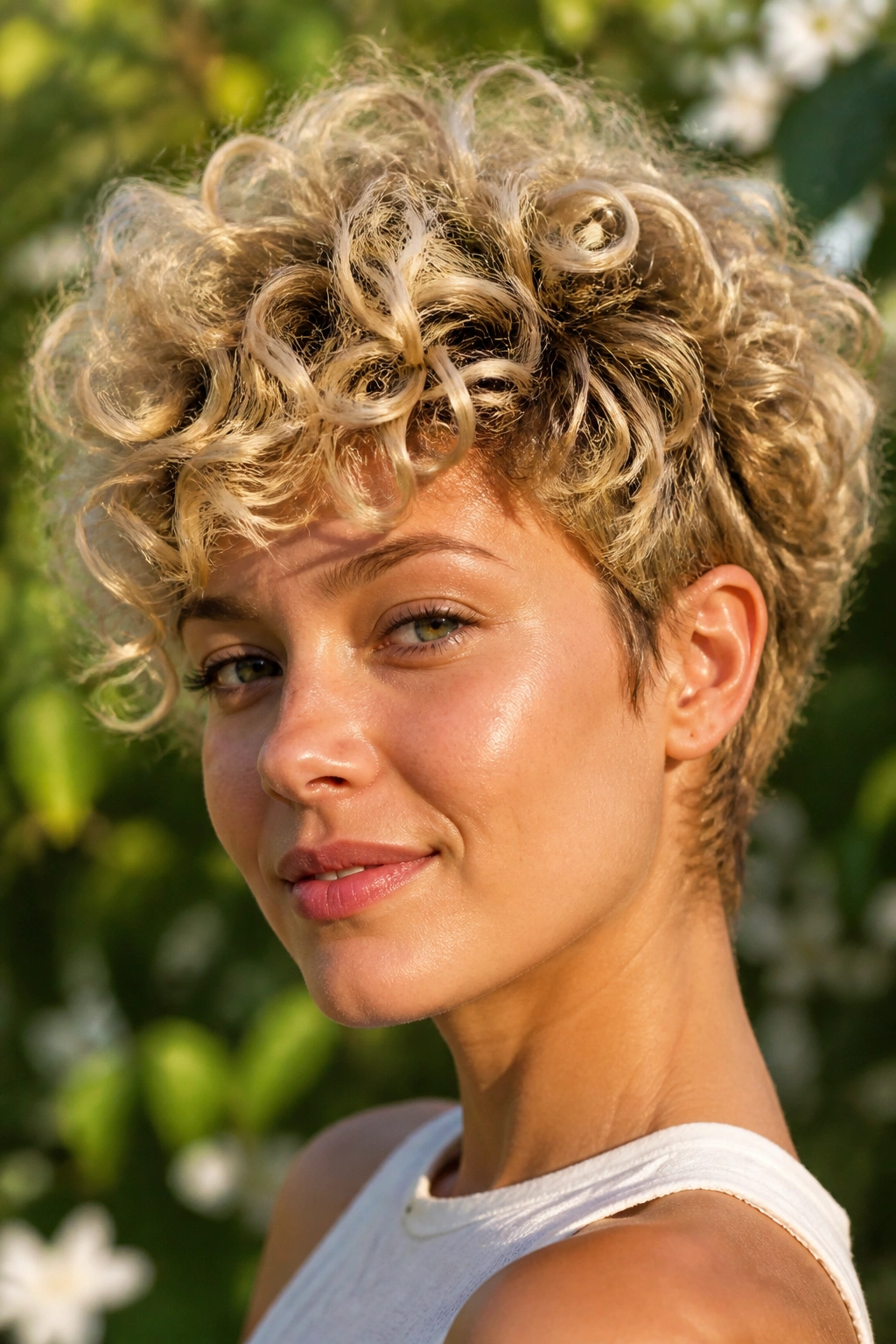
A curly pixie should never be forced into a flat shape. That’s the whole mistake people make. The curly cloud pixie works because it leaves room for the curl to bounce up and spread out a little, like it’s supposed to.
The top should stay longer than the sides, and the layers need to follow the curl pattern instead of fighting it. If your hair bends into ringlets, the cut should respect that. If it forms a looser wave, keep the crown soft and let the fringe do a little of the framing.
Best Curl Pattern
- 3A to 4A curls get a lot of shape here
- A leave-in plus gel combo helps the curl hold without crunching
- Diffusing on low heat keeps the root from collapsing
- Too many short layers can create halo frizz, so ask for control, not excess
This cut has a lovely roundness when it’s done right. It feels airy. That’s the word.
7. Rounded Bowl Pixie
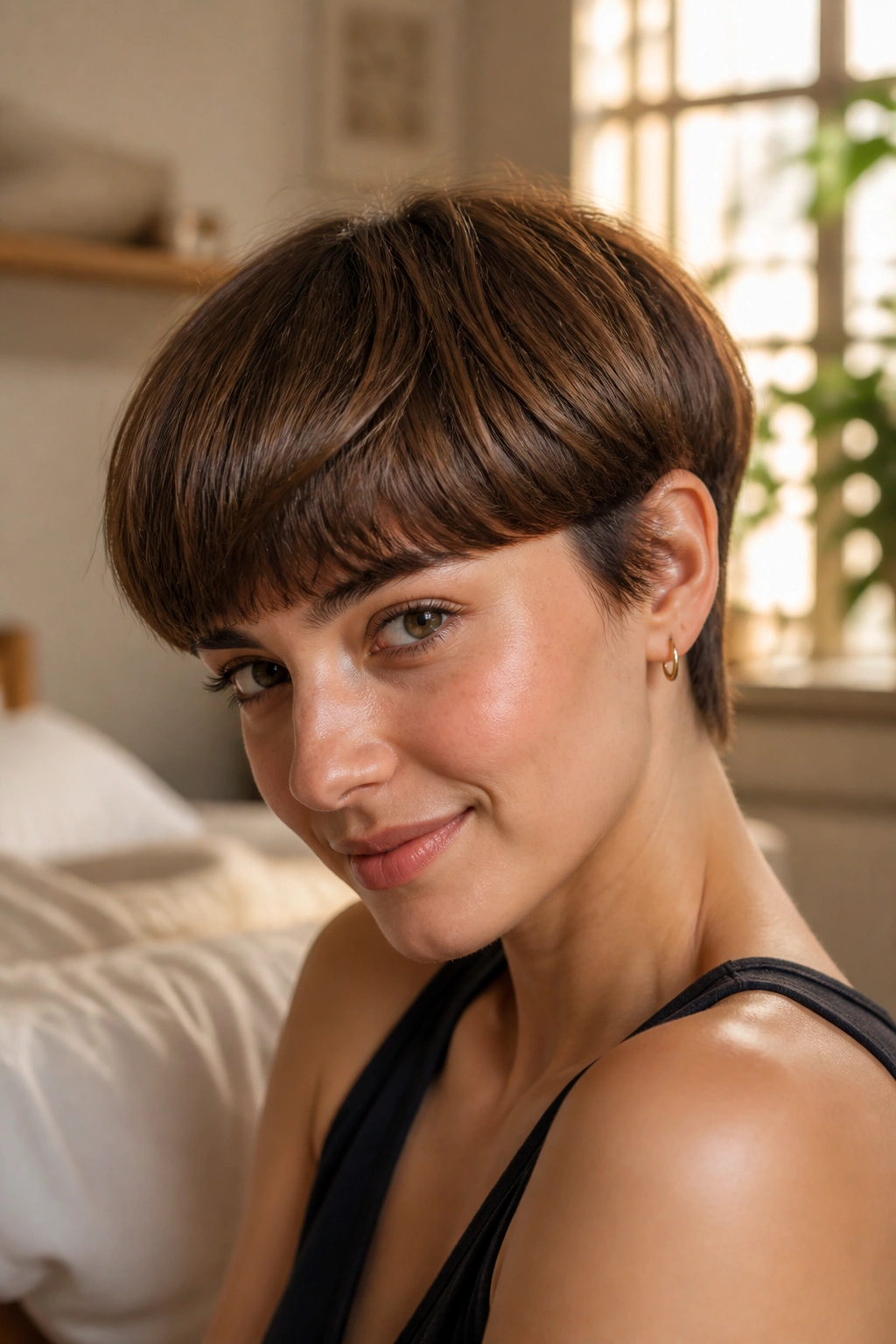
The rounded bowl pixie is the one people either underestimate or secretly love. Done badly, it looks stiff. Done well, it has that smart, slightly artsy 90s shape that sits between a pixie and a tiny mushroom cut.
What saves it is softness at the edge. The curve should follow the head, but the line around the temples and ears needs a bit of feathering so the shape doesn’t become too literal. A blunt perimeter can feel harsh fast, especially on straight hair.
I think this cut works best when the fringe is curved rather than chopped. That tiny change makes the difference between “retro editor haircut” and “I did this at home with a kitchen scissor,” which is not the same thing at all.
8. Asymmetrical Pixie

One side longer. One side tighter. That’s the whole point, and it’s a good point.
The asymmetrical pixie brings movement before you even style it. A cheekbone-grazing side on one side gives the face a diagonal line, while the shorter side keeps the shape grounded. It’s clean, but not polite. That’s why it still feels fresh.
This cut is especially useful if you like wearing one ear exposed or if you tend to tuck one side back anyway. The imbalance becomes part of the design instead of looking accidental. That matters. Accidental asymmetry reads as a bad cut; deliberate asymmetry reads as style.
9. Slicked-Down Pixie
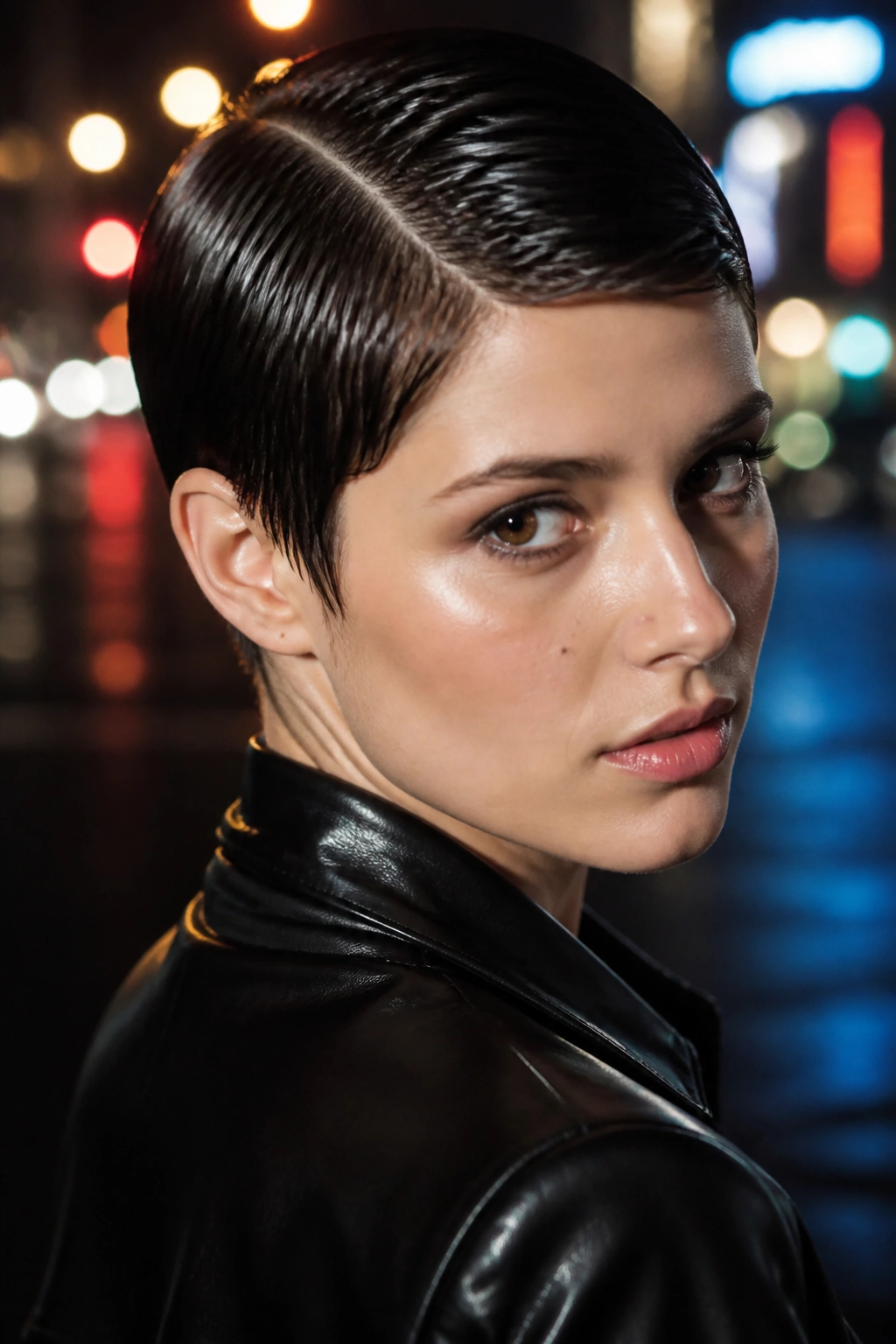
Some 90s pixies were soft and fluffy. This one isn’t. The slicked-down pixie leans into shine, clean lines, and a flat, glossy finish that looks sharp on a night out and surprisingly good in daylight too.
Use a water-based pomade or gel, not a greasy wax that never settles. A fine-tooth comb helps the part stay crisp, and a tiny mist of spray can keep the front from lifting back up when you walk outside.
The reason I like this version is simple: it makes a short cut feel deliberate. No fluff, no guesswork. Just shape.
10. Feathered Layer Pixie

People hear “feathered” and think dated in a bad way. I get it. But when the layers are cut cleanly and kept light through the ends, feathering is one of the best tricks for softening a pixie.
What Makes It Different
A feathered layer pixie doesn’t stack weight in one spot. The movement is spread through the top and sides, so the cut feels airy instead of bulky. That’s especially helpful if your hair grows thick around the temples or tends to puff out behind the ears.
- Ask for soft point cutting
- Keep the ends wispy, not ragged
- Blow-dry with a small round brush
- Finish with a touch of light cream, not a heavy paste
This cut is for someone who wants retro shape with a bit of ease. It’s not precious. That’s the nice part.
11. Long-On-Top Pixie
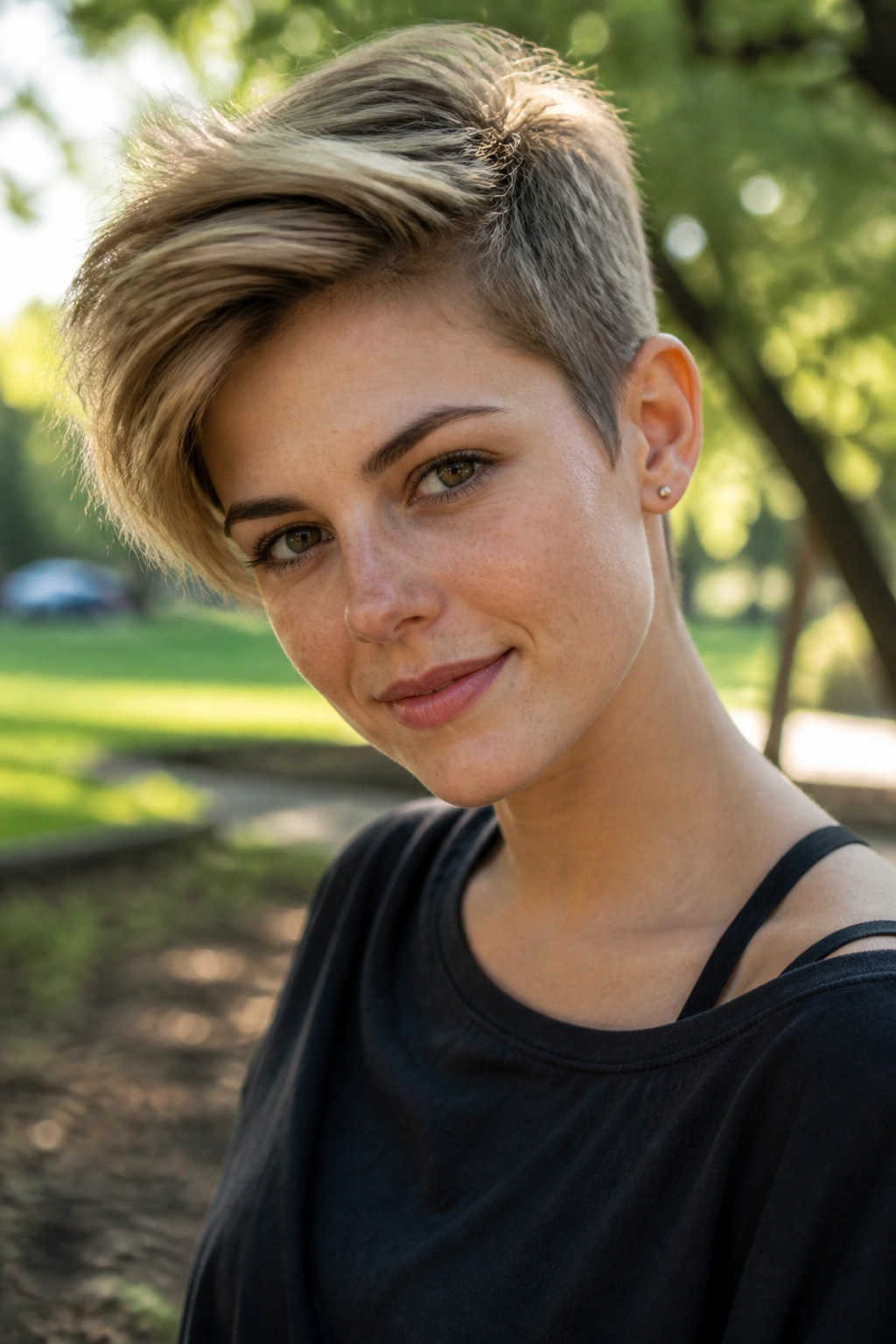
Think of this as the pixie for anyone who wants to dip a toe into short hair without jumping all the way in. The top stays noticeably longer, while the sides and back keep things clean.
That extra length gives you options. You can sweep it forward, part it deeply to one side, or tuck one piece behind the ear and leave the rest loose. The cut earns its keep because it can change mood without changing shape.
The Length Rules
The top usually looks best around 3 to 4 inches, sometimes a little more if your hair is dense. Shorter than that, and you lose the styling range. Longer than that, and it starts to behave like a shaggy crop instead of a pixie.
It’s a smart choice if you like to play with your hair. Not every day. Just enough.
12. Baby Bang Pixie
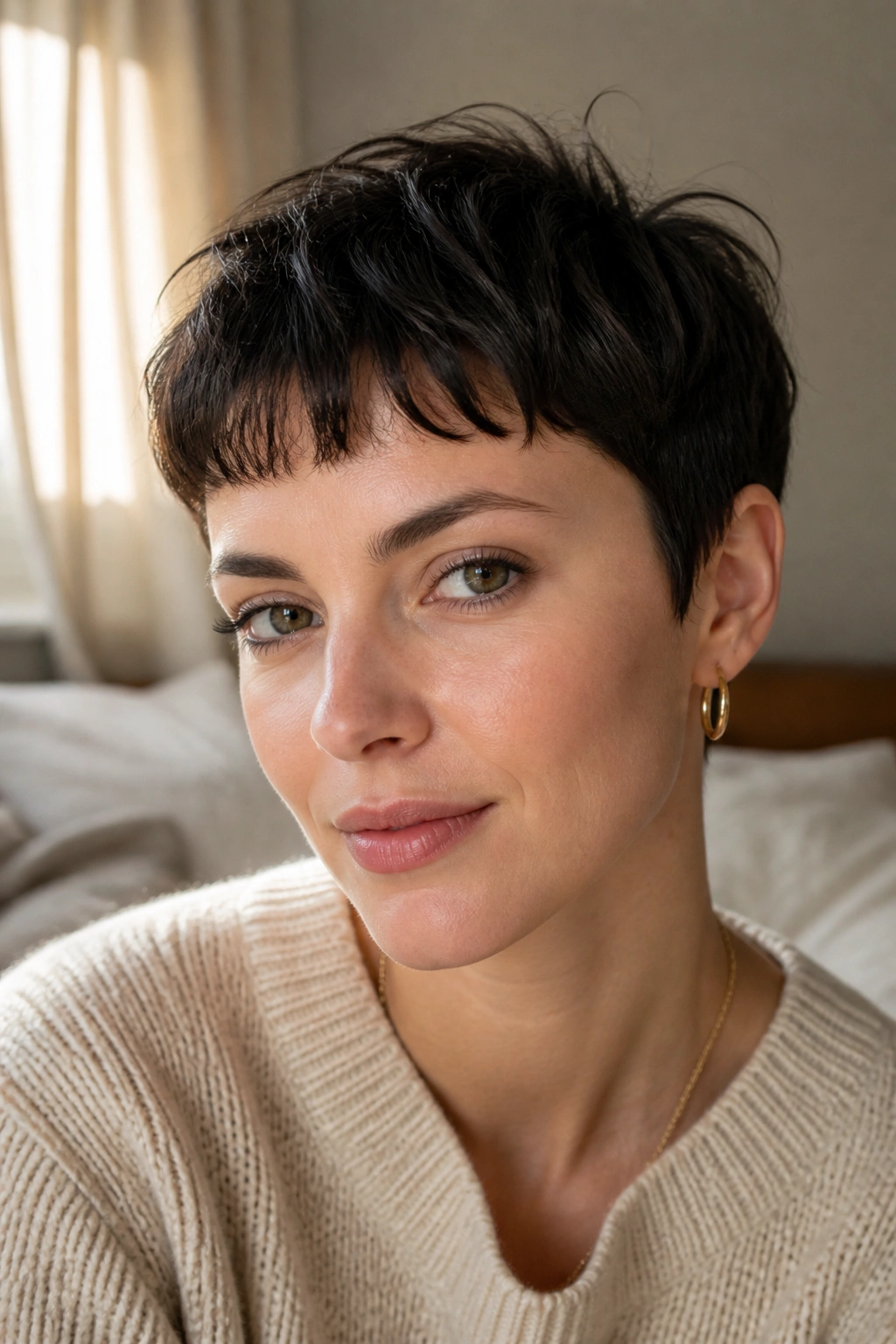
Baby bangs with a pixie cut are risky in the best way. The short fringe pushes the style straight into 90s territory, and if the rest of the cut is balanced, the result feels bold rather than theatrical.
The key is softness. A baby bang should skim the forehead with a little texture, not sit like a hard strip across the face. If the fringe is too blunt, the cut starts to look severe. A few broken ends make all the difference.
Who Usually Wears It Well
- People with smaller foreheads or strong brows
- Hair that lies fairly flat at the front
- Anyone who likes a cut with a little edge
- Faces that can handle a strong horizontal line
This is not the most forgiving pixie on the list, but it is one of the most memorable. And sometimes that’s the whole reason to get a haircut.
13. Razor-Cut Pixie
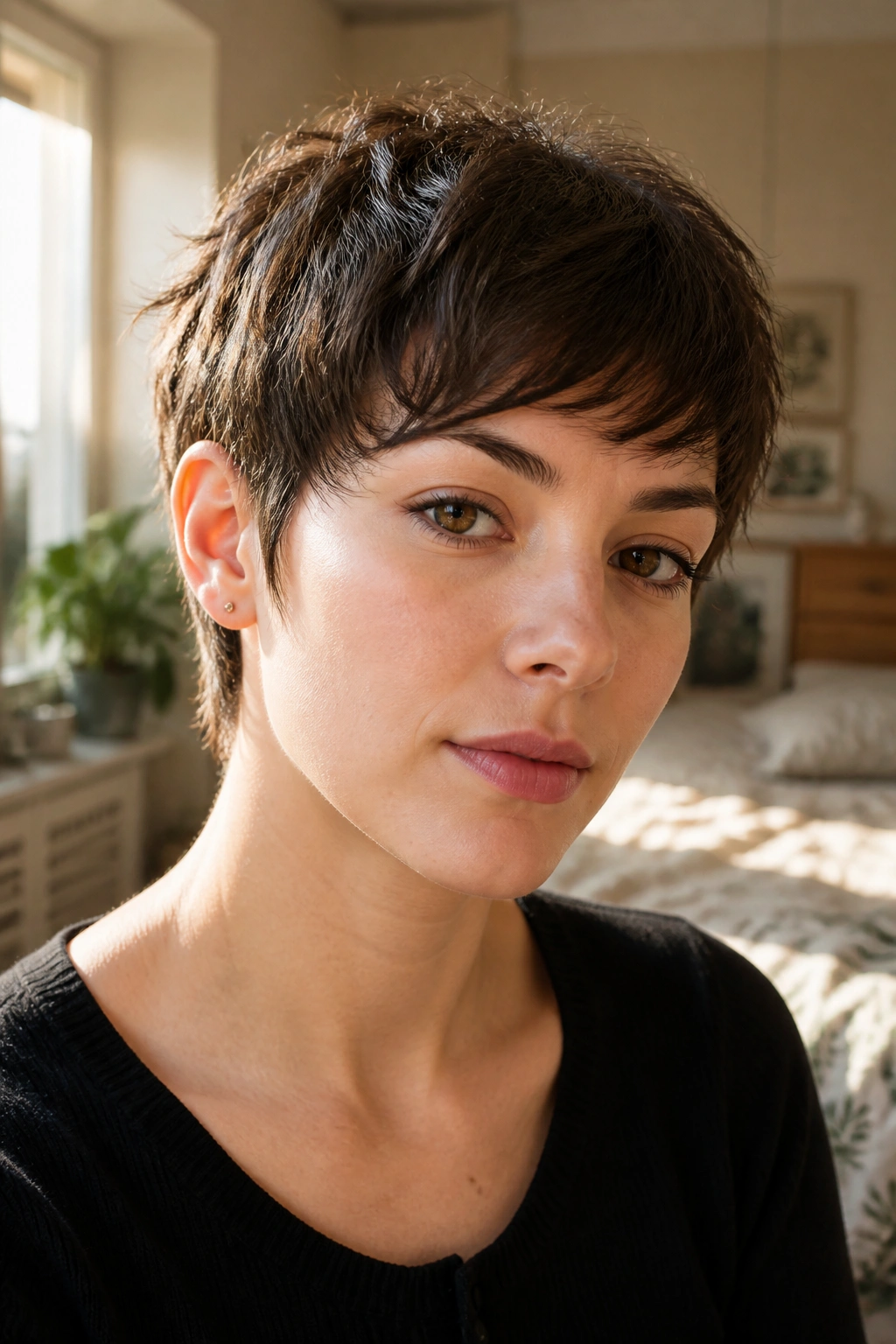
A razor-cut pixie has a softer, airier finish than a scissor-cut version. The ends fall a little more freely, which gives the hair that lightly broken texture you see in a lot of 90s crop cuts.
It works especially well on dense hair that feels bulky when it’s cut blunt. A razor can remove weight without stripping the shape, so the top still has movement while the sides sit close to the head. That balance matters. Too much razor work, and the ends get wispy in a bad way. Too little, and the cut turns heavy.
Use this one if you like your hair to look a bit lived-in. Not messy. Just soft around the edges, like it has already had a good day.
14. Wet-Look Pixie
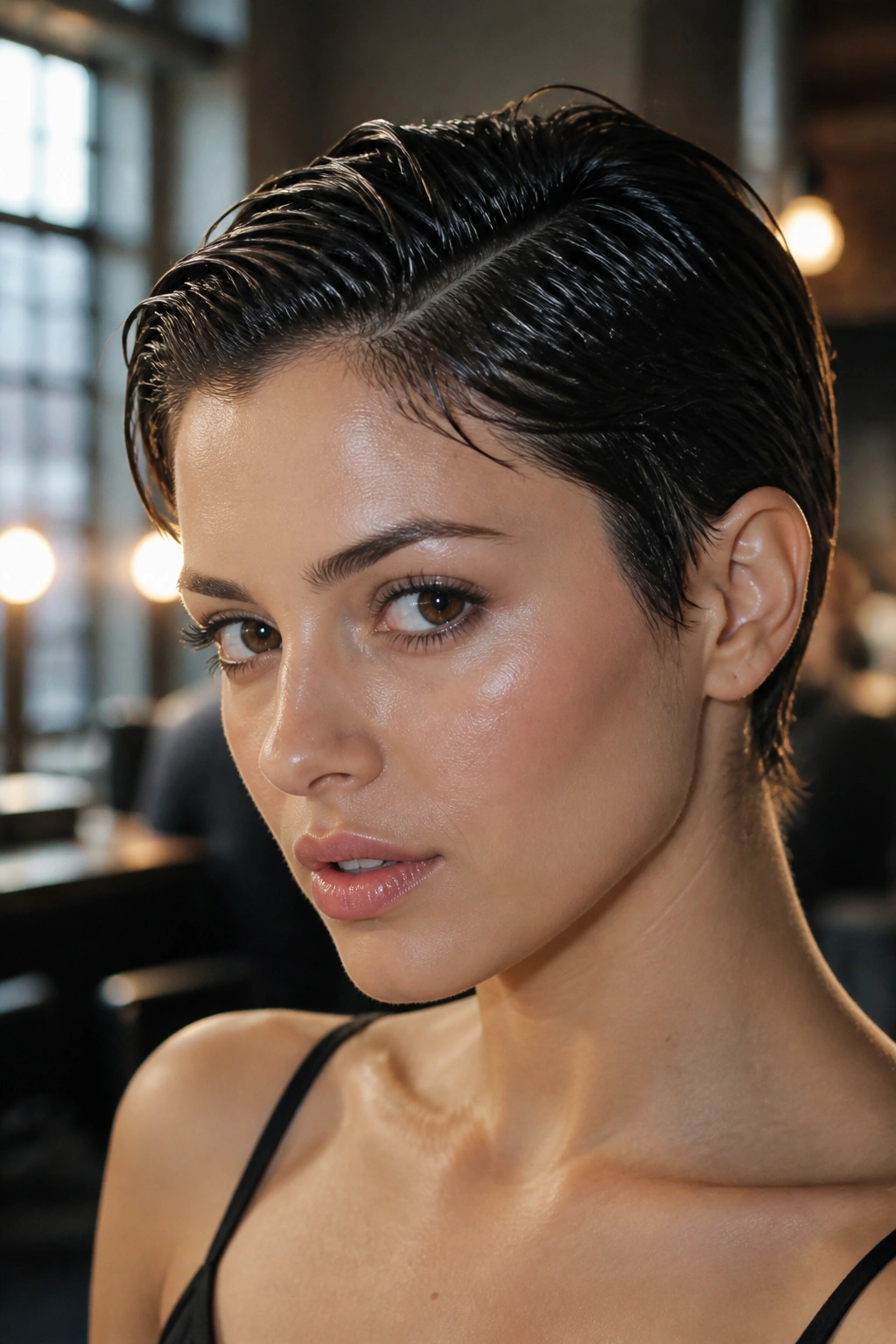
The wet-look pixie is one of those cuts that instantly changes the mood of a room. It’s sleek, shiny, and a little bit dramatic, which is exactly why it had such a strong run in the 90s.
How to Get the Finish
Work gel through damp hair from roots to ends, then comb it into place before it starts drying. A nickel-size amount is often enough for short hair, though thick hair may need a little more. The trick is even distribution. Lumps in the product are a dead giveaway.
- Use a fine-tooth comb for a smooth finish
- Keep the part clean and intentional
- Let the hair dry without touching it
- Add a touch of shine spray only if the gel dries flat
This cut looks best when the face is the focus. The hair becomes a frame, not the headline. That’s the appeal.
15. Ear-Tucked Pixie
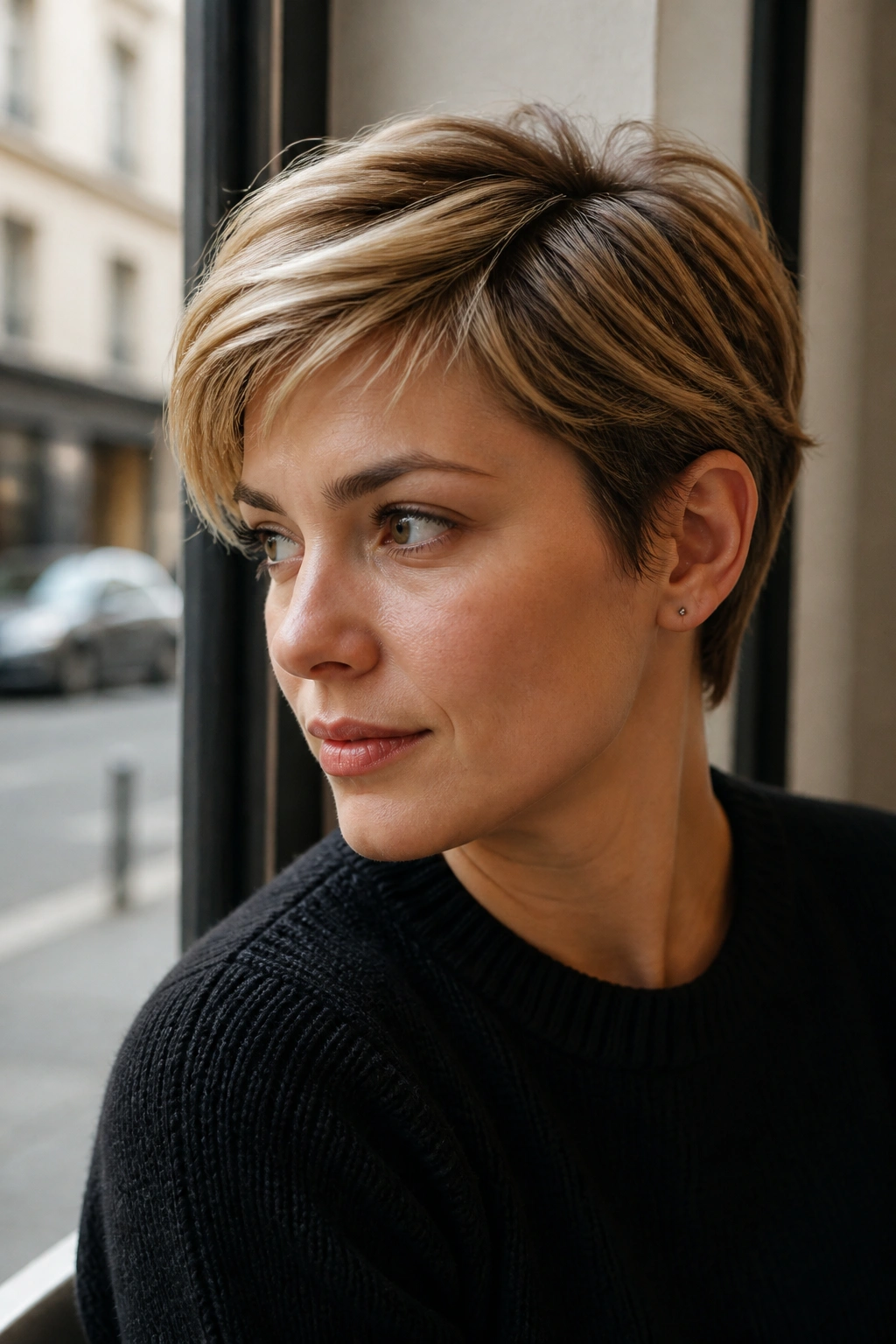
Some haircuts are made for tucking behind the ear. This is one of them. The ear-tucked pixie uses one clean side to create contrast with a fuller top, and that little shift gives the whole style a smarter, more relaxed look.
A tucked side does a nice job of showing off earrings, jawline, or a sharp side part. It also stops the cut from feeling too busy around the face. If one side has a little more length, that tucked piece can act like a built-in styling move.
This is a quiet style, which is not a bad thing. Quiet can look expensive, even when the haircut itself is low-maintenance.
16. Tousled Bedhead Pixie
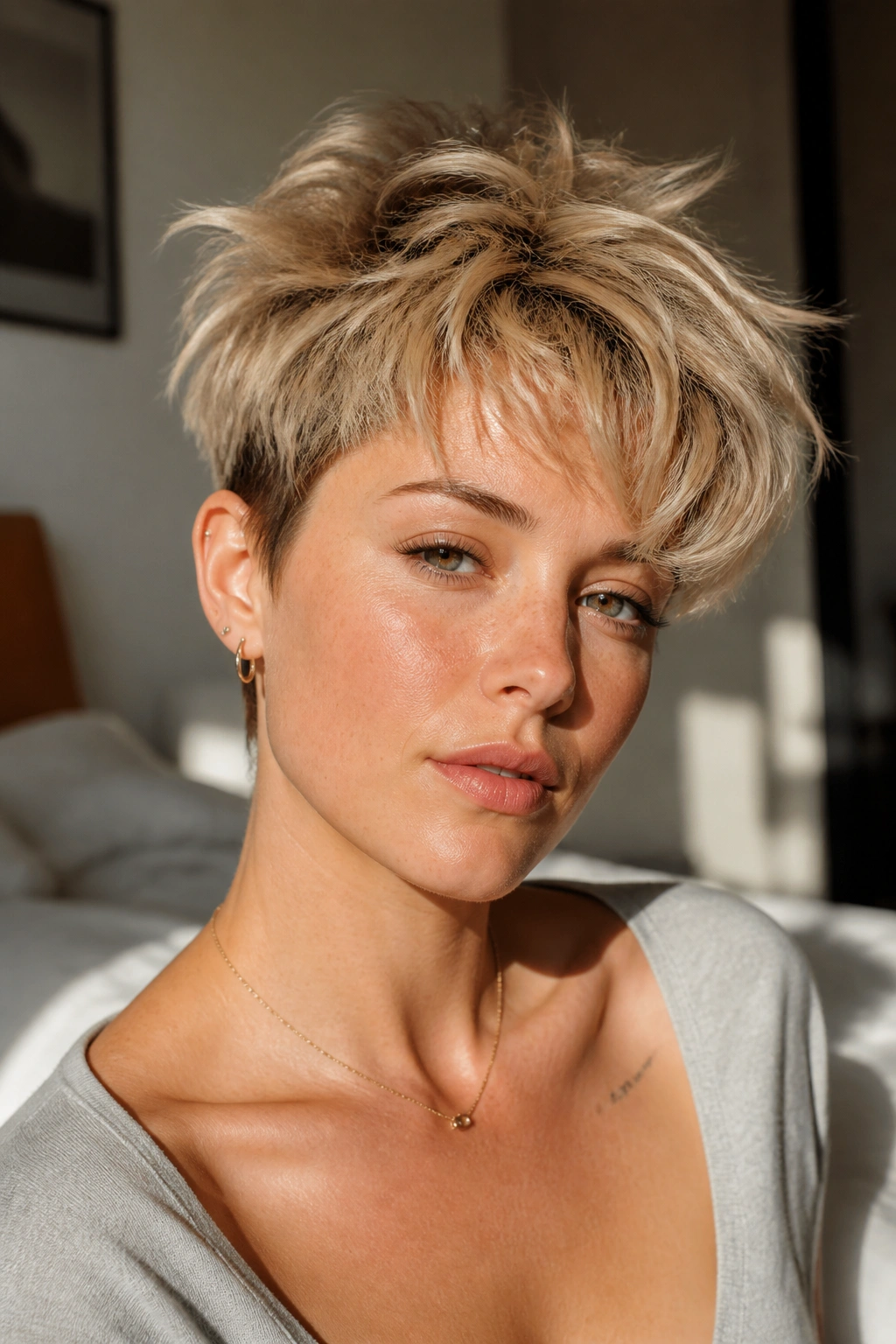
The bedhead pixie is the cut for people who like their hair to look touched, not polished. A little piecey texture on top, some roughness around the crown, and a side fringe that falls where it wants to fall — that’s the shape.
The best part is how little product it needs. Too much and the style goes from relaxed to greasy in a hurry. A dab of matte paste, rubbed very thin between the fingers, is usually enough. You want separation, not glue.
Why It Beats a Too-Smooth Finish
A slick pixie can feel sharp. A tousled one feels lived-in. On fine hair, the movement helps the cut look fuller. On wavy hair, it lets the natural bend do half the work.
That’s the kind of shortcut I can get behind.
17. Brushed-Forward Pixie
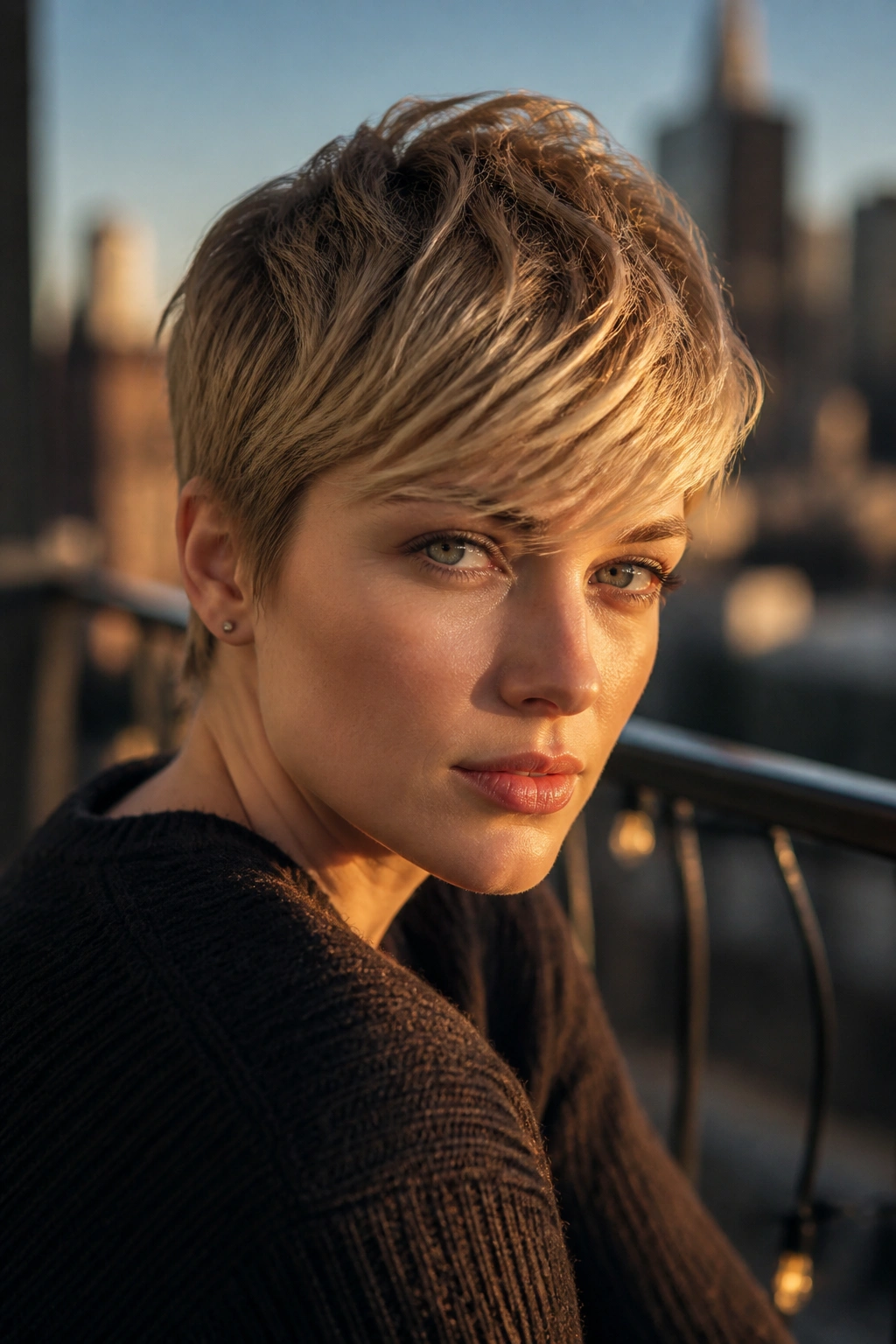
Brushing the hair forward changes the whole personality of a pixie. Instead of opening the face up completely, the cut falls toward the forehead and eyes, which creates a cooler, more mysterious line.
The front should be soft enough to move, but not so long that it covers everything. You want the fringe to graze the brows or skim just above them. That gives the style shape without turning it into a full bang situation.
Sensory Detail Matters Here
The hair should feel light when you run your fingers through it, almost like it’s floating a little. If it feels stiff, the product load is too high. If it falls apart immediately, there isn’t enough hold.
This is a good cut for strong brows, longer foreheads, and anyone who likes a little shadow across the eyes. It can make the face look deliberate in a way that’s hard to fake.
18. Soft Perm Pixie
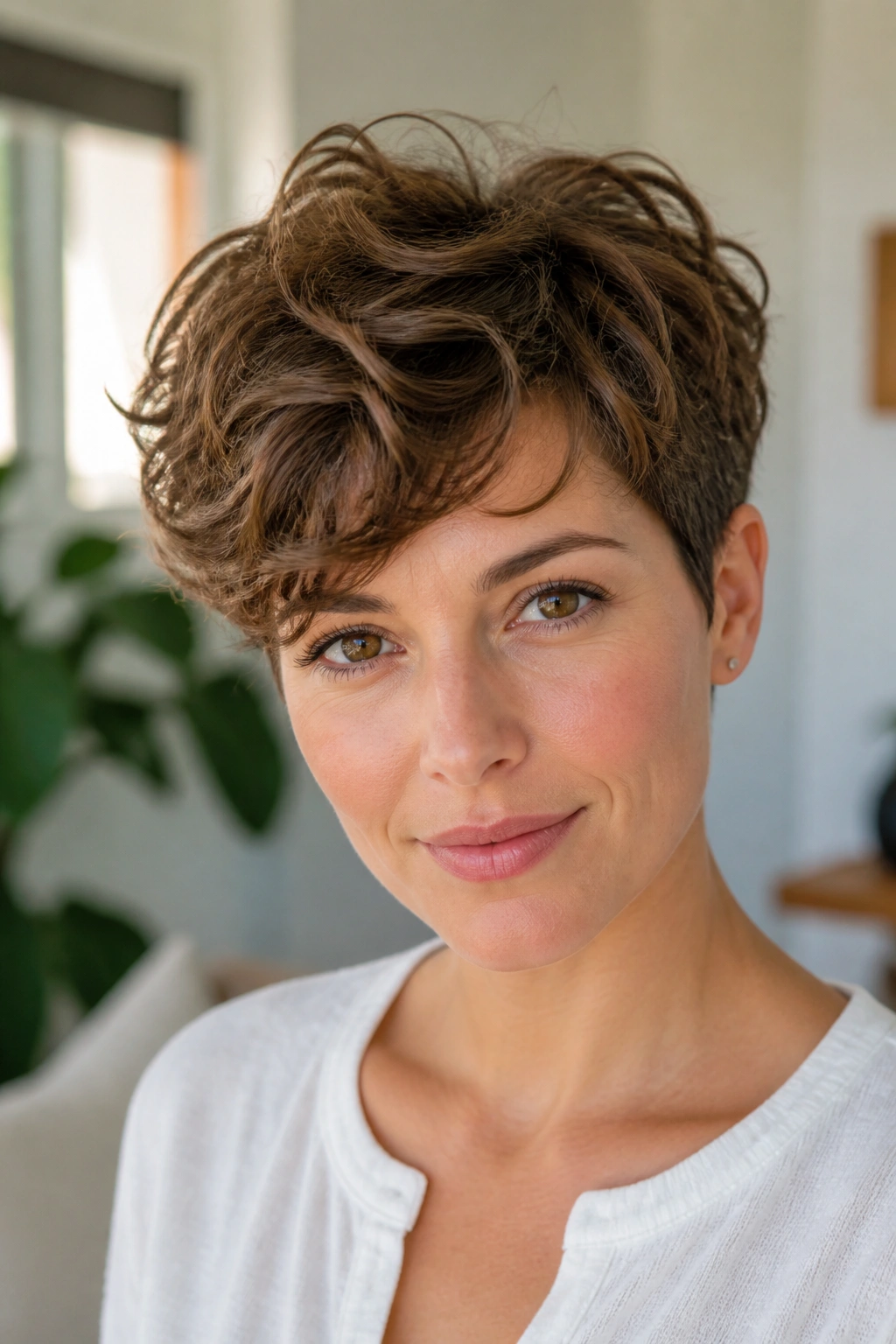
A soft perm on a pixie cut can be brilliant when the hair needs body and won’t hold volume on its own. The trick is using a loose curl pattern, not tight little ringlets that turn the whole head into a ball.
What to Ask Your Stylist
Ask for movement through the top and a softer result around the temples. The sides should stay controlled while the crown gets the bend and lift. If the perm is too tight, the cut loses that elegant 90s ease and starts looking dated in the wrong way.
The best soft perm pixies have a kind of buoyancy. They sit up without looking puffy. They feel fuller at the crown, but still airy at the ends. That balance is the whole job.
19. Spiky Texture Pixie
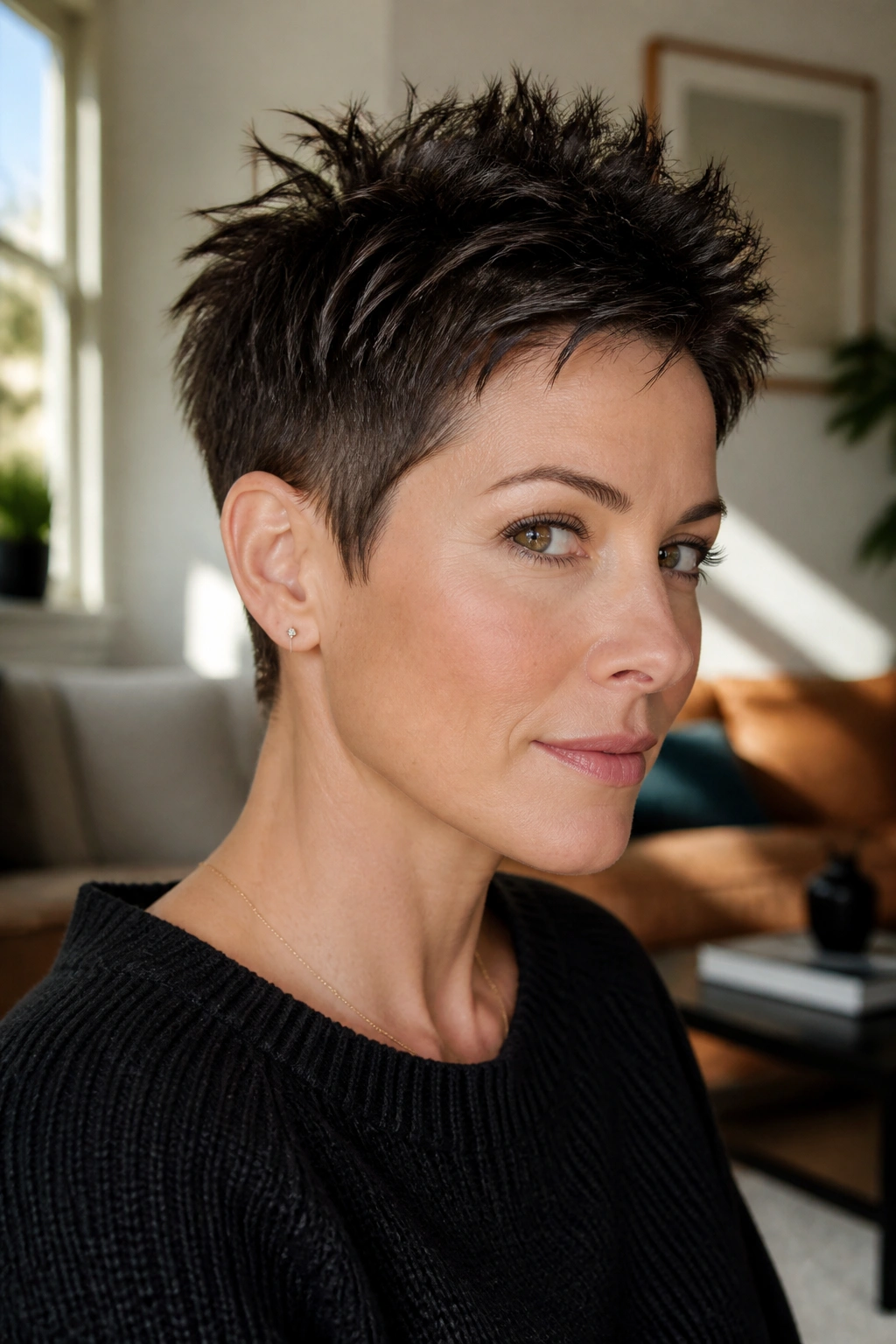
The spiky pixie is the boldest of the bunch, and yes, it absolutely belongs here. The 90s loved a little spike, especially when it was short, directional, and a touch messy around the crown.
Keep the spikes short. Long spikes look costume-y fast. Short ones, pinched with a bit of wax, give the cut energy without turning it into a cartoon. The goal is texture that moves in small pieces, not stiff little points that never budge.
What to Watch For
- Use less wax than you think
- Work in tiny sections with your fingertips
- Keep the sides cleaner than the top
- Stop before the hair starts looking crunchy
This cut is happiest on people who like a bit of edge and do not mind a styling step. That part matters.
20. Sideburn-Framing Pixie
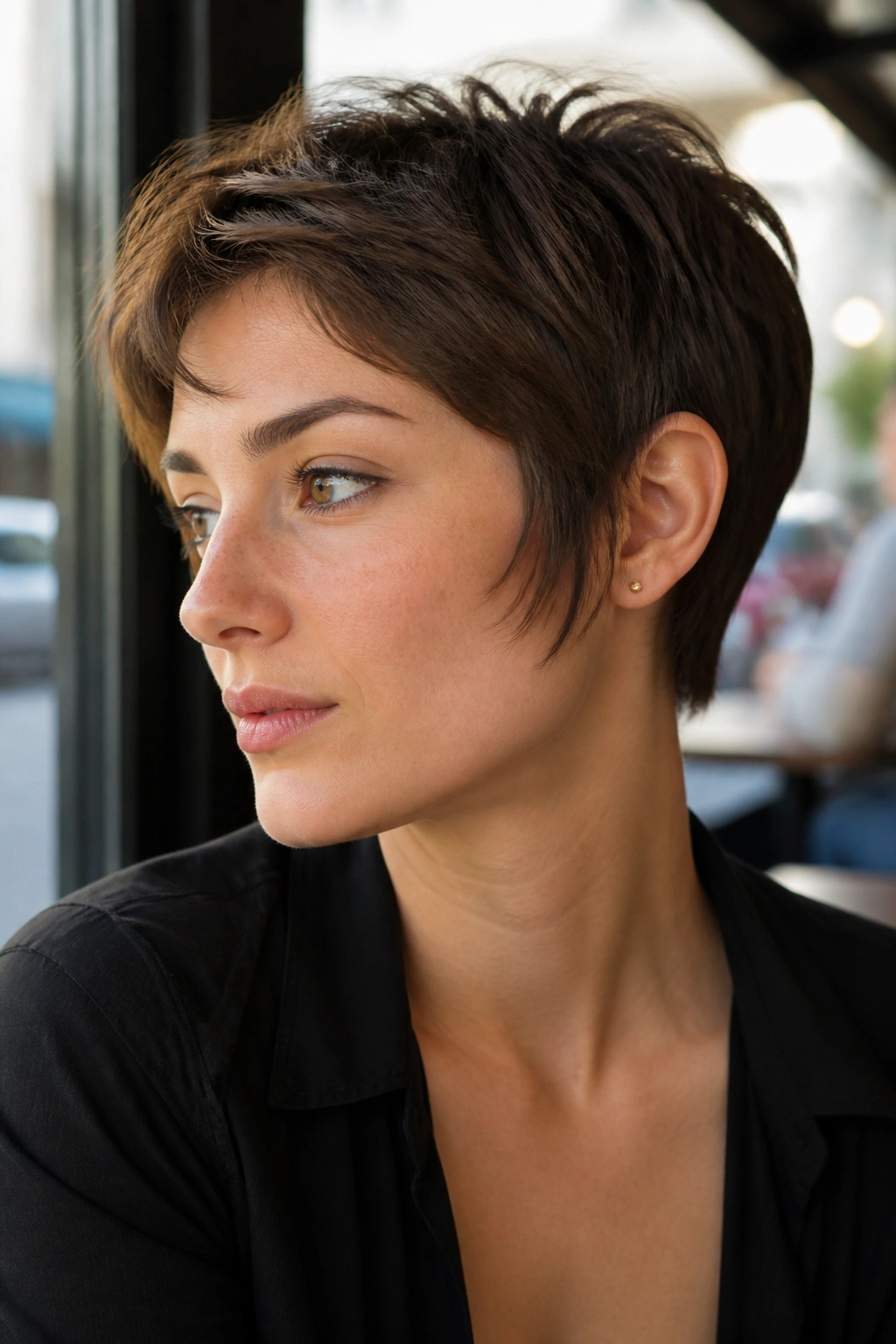
A lot of pixies forget the sideburns. This one doesn’t. The sideburn-framing pixie leaves a little length near the ear and cheek so the face gets a softer outline, which can be a relief if you do not want everything clipped back.
That tiny bit of extra hair changes the profile. It gives the jawline some movement and keeps the cut from feeling too exposed. On a square face, it softens the angles. On a round face, it can add a little vertical pull if the sideburns are kept slim.
I prefer this version when the rest of the cut is neat and controlled. The sideburns become the small detail that keeps it from feeling severe. Small detail, big payoff.
21. Deep Side-Part Pixie
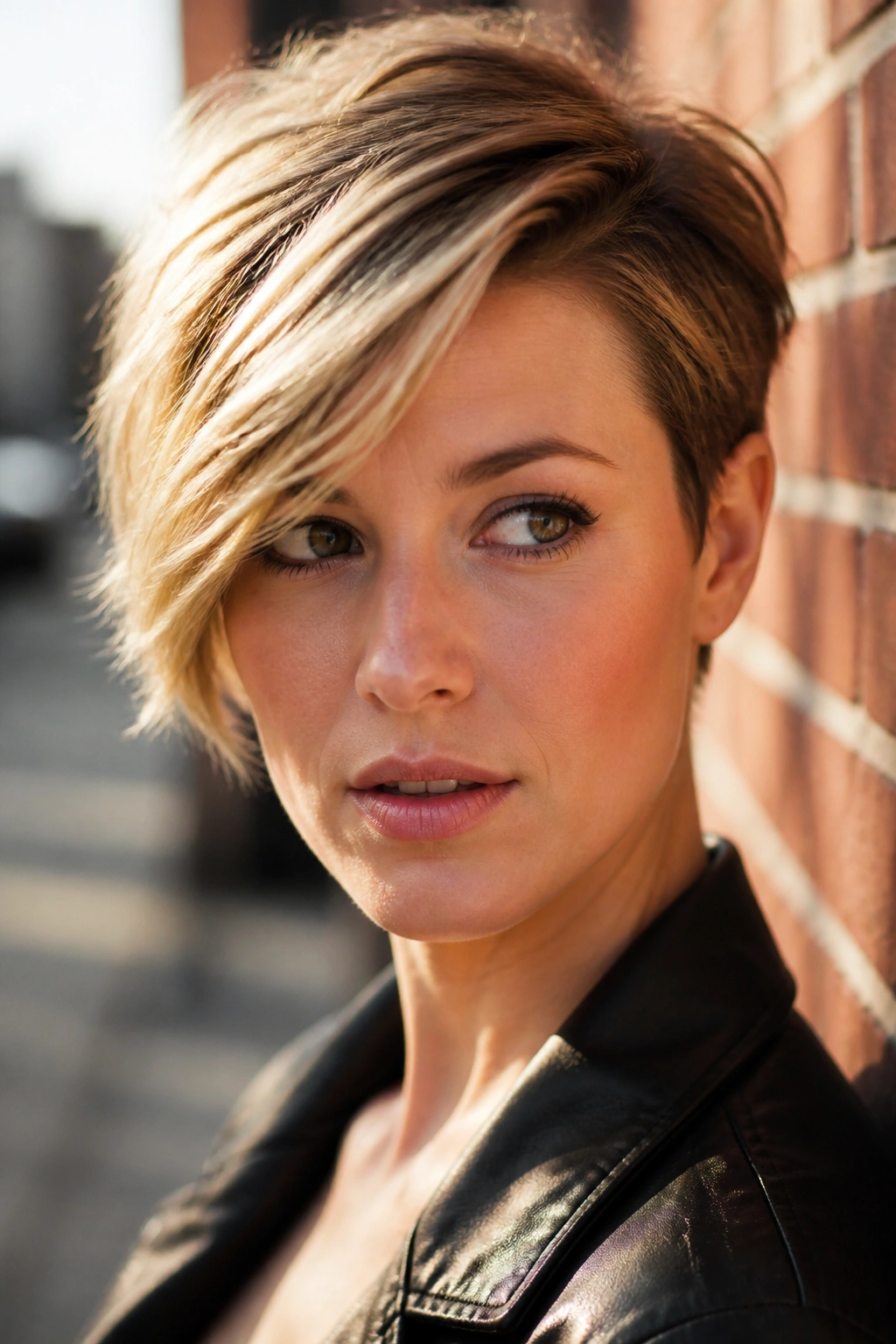
A deep side part does more than move the hair around. It changes the whole personality of the cut. The deep side-part pixie feels sharper, more sculpted, and a little more intentional than a center or soft side part.
The heavier side can sweep across the forehead while the shorter side sits close to the head, which gives the style built-in drama. It’s especially good if you want a 90s look that feels polished rather than playful. Not every pixie needs to be cute. Some should be a little stern.
Use a root-lifting spray at the crown if your hair collapses quickly. A flat top kills the effect. The part needs height to earn its keep.
22. Soft-Focus Pixie
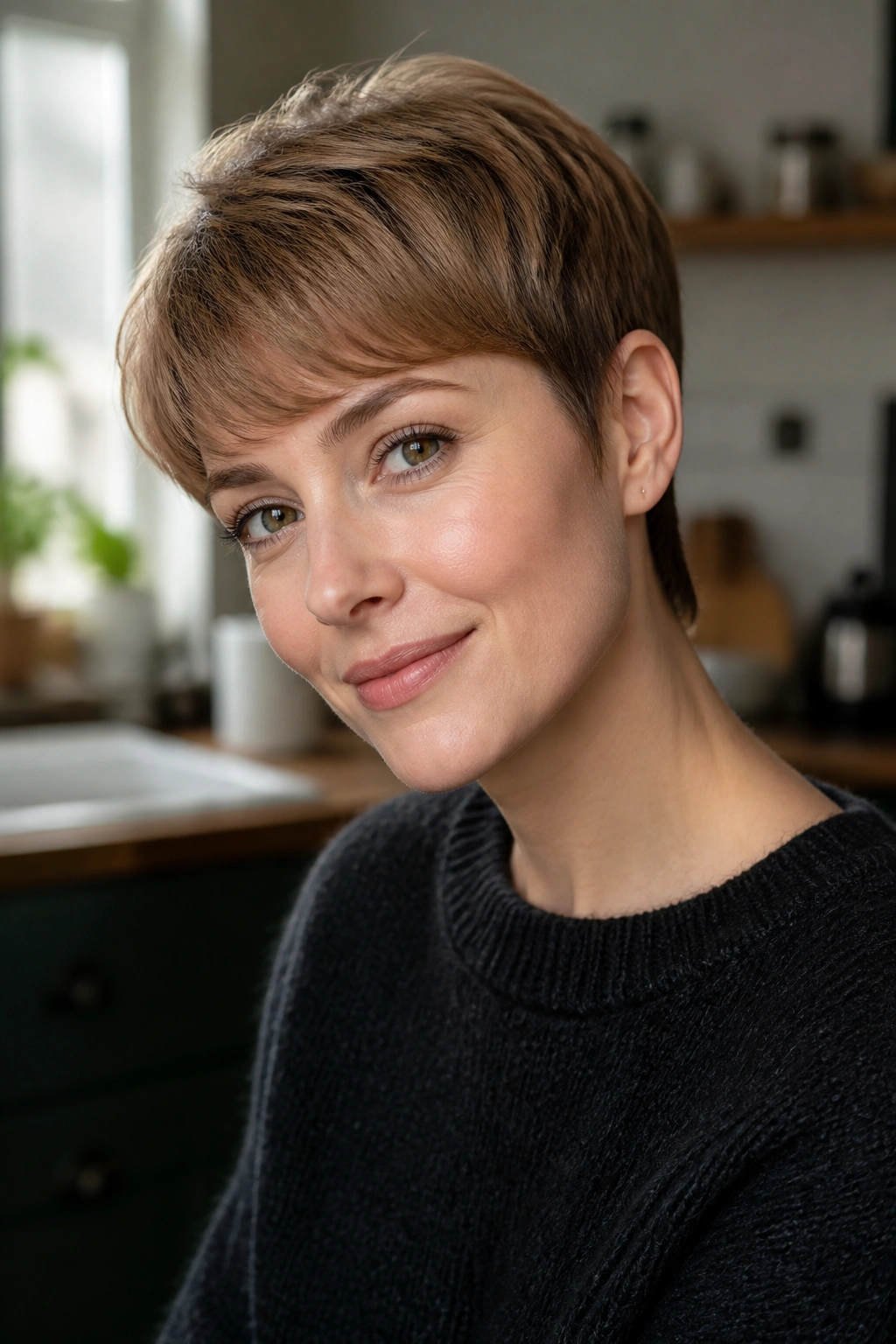
The soft-focus pixie is the one I’d point to if someone wanted retro vibes but didn’t want to commit to a louder cut. It keeps the 90s shape — short sides, movement on top, a little face framing — but rounds off the edges so it feels wearable in almost any setting.
The Shape That Makes It Work
The crown should have enough length to bend, not flop. The fringe can be side-swept or lightly brushed forward. Around the ears and nape, the line should stay neat but not sharp, because sharp edges can make a short cut feel harder than it needs to.
This is the cut I’d call the safest entry point for the whole 90s pixie family. It has enough character to feel styled, enough softness to avoid harshness, and enough structure to stay flattering when you’re running out the door with a little styling cream and not much else. If you want one retro pixie that doesn’t ask for a costume or a mood board, start here.
