



Viking-inspired haircuts for bold women work because they look deliberate, not dressed up. The strongest versions have a little grit in them: shaved sections, hard part lines, braids pulled tight, texture that looks lived-in instead of sprayed into place.
That’s why the look holds up so well outside of costume parties and themed photos. It doesn’t need horns, fake fur, or anything silly. A clean undercut, a heavy braid, a blunt fringe, or a rough shag can carry the whole mood on its own.
There’s also a practical side people forget. Viking-age grooming mattered; combs, tweezers, and other care tools turn up in graves, and the hair choices that echo that era tend to be the ones that feel controlled, weather-proof, and tough enough to survive a windy day. That’s a much better starting point than chasing a fantasy version of “wild” hair.
The trick is matching the style to your hair density, face shape, and patience level. A braid-heavy style on fine hair needs different support than one on thick curls, and a sharp side shave grows out with a personality of its own. Start with the cut that sets the tone, then let the styling do the rest.
1. Undercut with Two Viking Braids
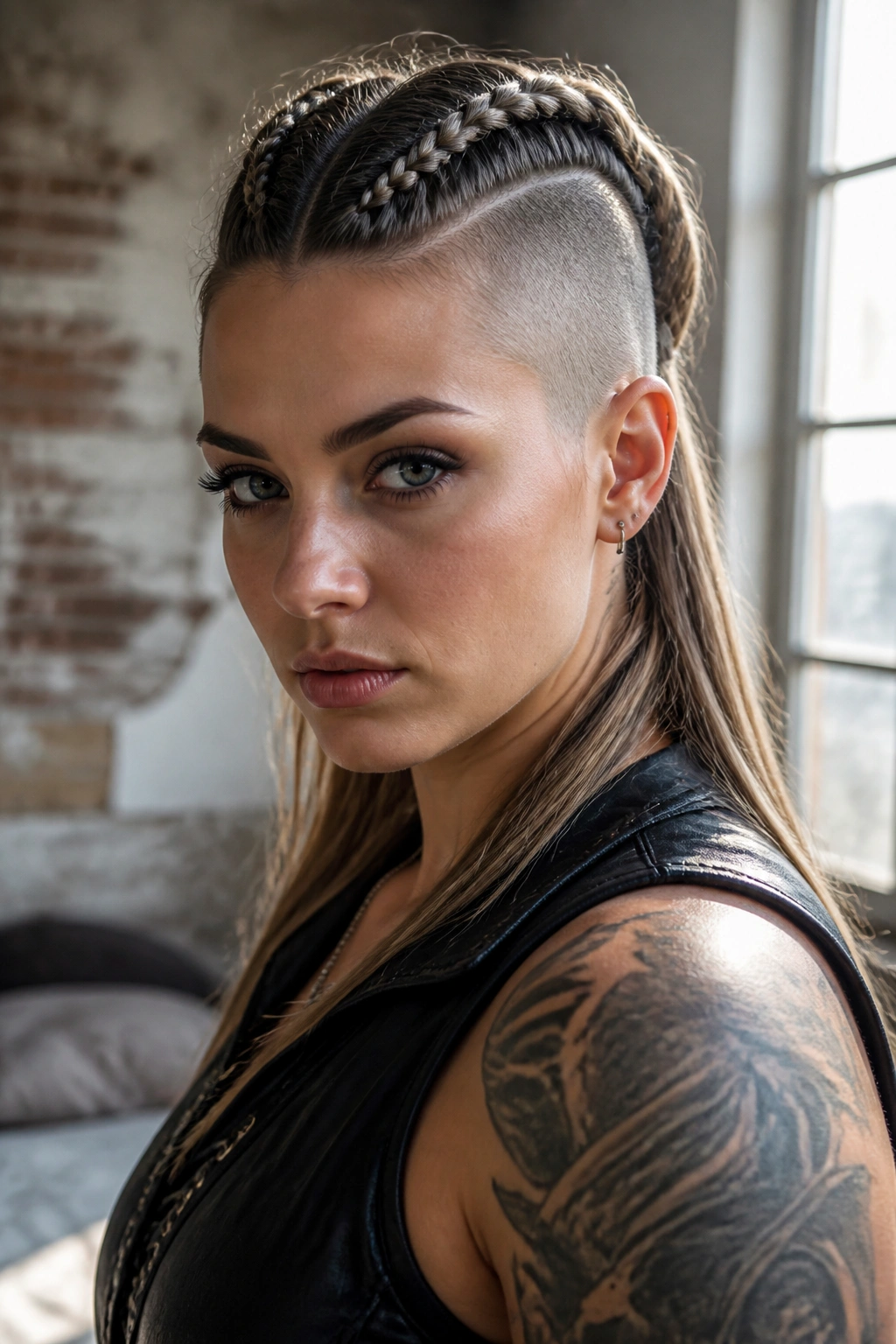
If you want the cleanest entry into this look, start here. A long top section paired with an undercut gives you the strongest Viking silhouette without making the style feel costume-y or hard to wear.
The magic is in the contrast. The sides can be clipped close or faded, while the top stays long enough for two tight braids to run back from the hairline. I like this one on women who want a cut that says “don’t mess with me” before they even speak.
A deep side part makes the braids look even sharper. Keep the plaits small and neat, then secure them with clear elastics or wrapped thread if you want a rougher finish. Matte pomade is better than glossy gel here; shine makes the style drift into pageant territory fast.
This cut grows out well, too. The undercut softens into a punky shape after a few weeks, and the braids still work even when the top has a little extra length. Low drama. High payoff.
2. Crown Braid Over Long Loose Waves
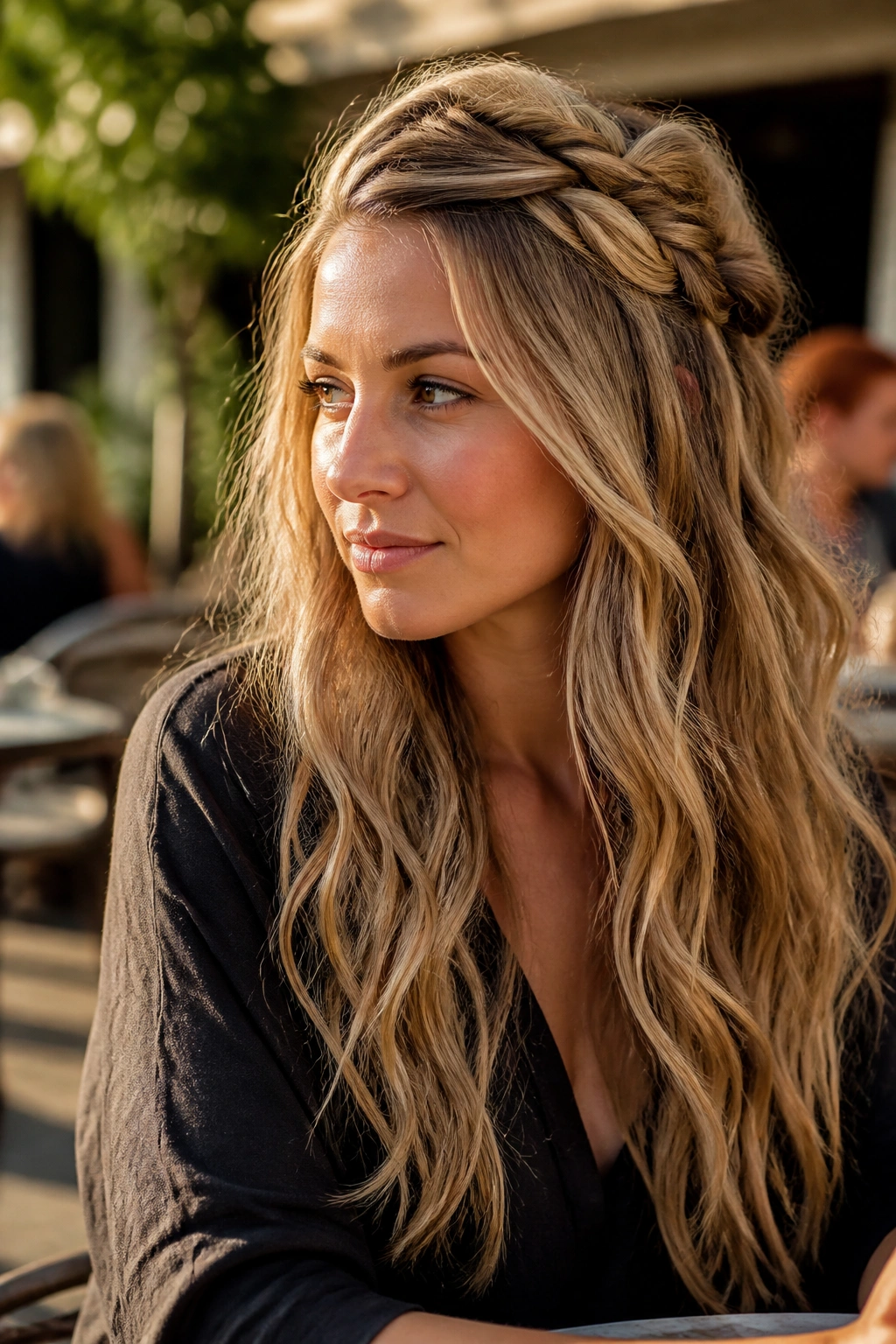
Why does a crown braid feel so close to the Viking look? Because it keeps the hair anchored while letting the length stay visible, which is exactly the balance that makes the style feel strong instead of fussy.
The best version is not a perfect halo. That’s where people go wrong. A slightly off-center braid tucked across the top of the head, with loose waves falling past the shoulders, gives the whole style more edge. It reads like someone who could ride through a storm and still look put together.
How to keep it from looking bridal
Use a sea salt spray on damp hair, then rough-dry with your fingers. If your hair is straight, bend the ends with a 1-inch curling iron and leave the middle sections a little flat. That uneven texture helps the braid sit naturally instead of looking pinned in place.
A few face-framing pieces matter. Too many, and the braid loses structure. Too few, and the style can feel severe. Aim for two slim tendrils around the cheekbones, then leave the rest alone.
This one suits long hair that already has some movement. It’s also a smart choice if you want the Viking mood without sacrificing length.
3. Side-Shaved Pixie with Texture
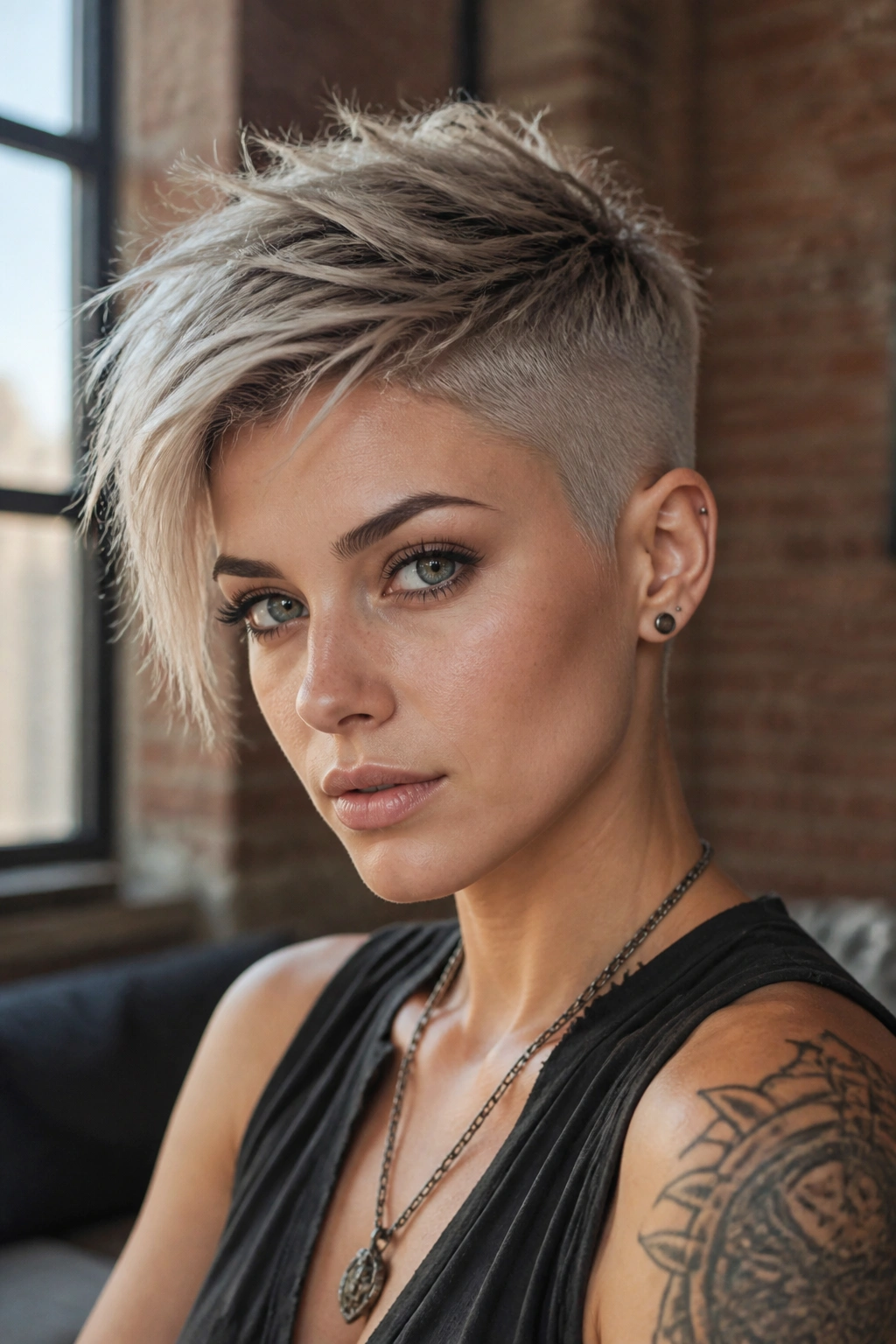
Picture this: one side clipped tight, the top left long enough to flip, spike, or sweep back with your fingers. Sharp. Easy. A little dangerous.
That is the appeal of a side-shaved pixie. It has the clean lines of a warrior cut, but it still feels modern because the texture on top does the talking. If your hair is straight to wavy, this cut wakes up fast in the morning and holds its shape with a tiny amount of paste.
Best details to ask for:
- A clipper cut on one side, usually with a short fade
- Longer length through the crown for movement
- Piecey layers on top so the style does not lie flat
- A small amount of separation around the fringe
You’ll need maintenance every few weeks to keep the shaved side crisp. That’s the tradeoff. Still worth it, in my opinion, because nothing kills the effect faster than a fuzzy grow-out line.
This cut works especially well with dark blonde, copper, or black hair. The short length shows the shape first, then the color does the rest.
4. Braided Faux Hawk with Height
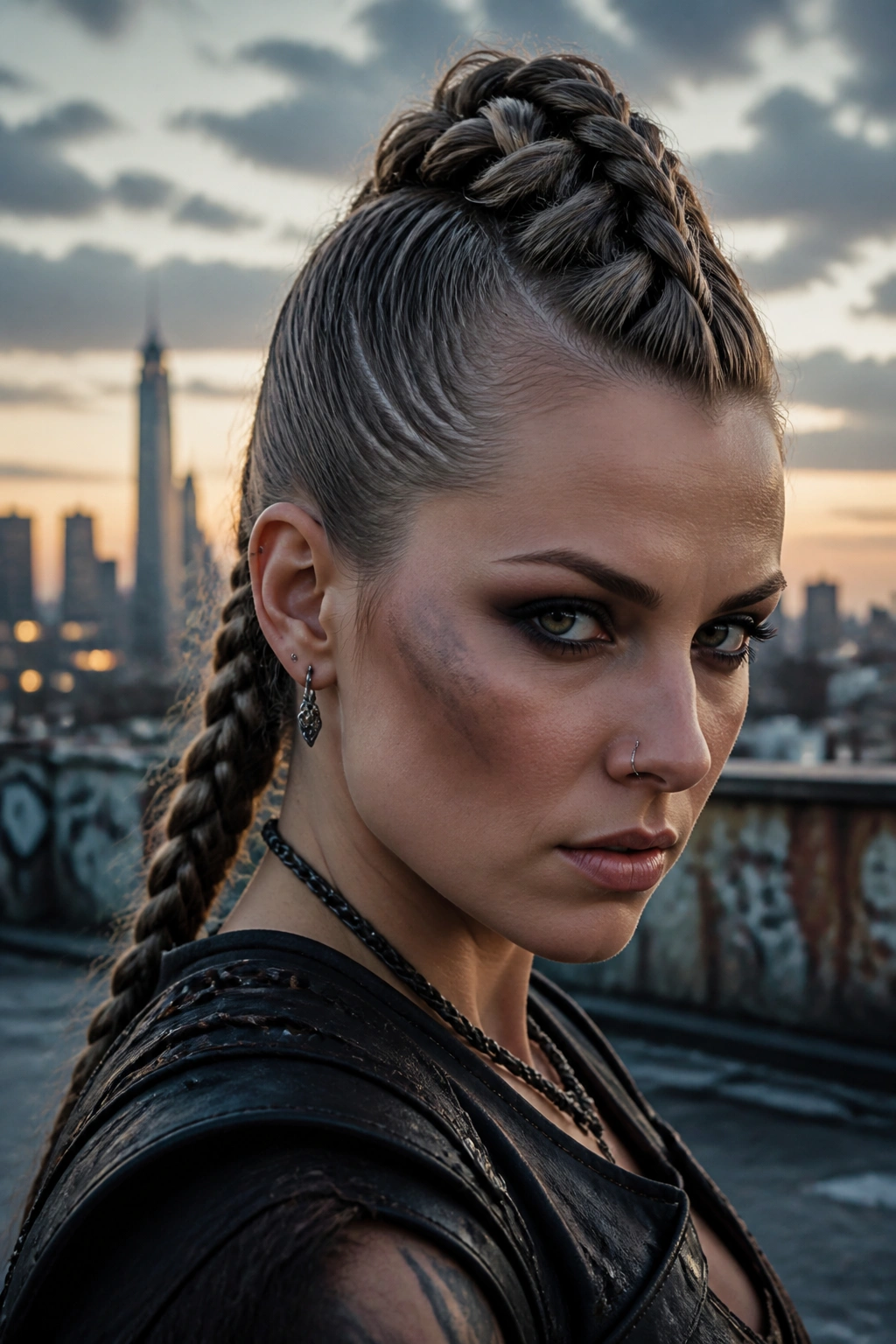
A braided faux hawk gives you the Viking mood without committing to a full mohawk cut, and that matters if you want flexibility during the week. Wear it tight for a clean shape, or pull it apart a little for a rougher finish.
The structure is simple: the sides are smoothed back, then the center strip is braided from forehead to nape. If you have layered hair, the braid may need a few hidden pins to stop the shorter pieces from slipping out. That is normal. Short layers are sneaky.
Why it works so well
The eye goes straight down the center line, which makes the style feel tall and strong. It also gives your face more lift than a flat braid. If your jawline is sharp, this cut shows it off. If your hair is thick, even better. You get more braid texture and a fuller ridge.
A little root powder at the crown helps the style hold. Use a fine-tooth comb to smooth the sides first, then braid with firm tension and finish with a few discreet pins under the back of the braid.
Small tip: pull the braid outward a touch at the edges after it’s secured. Not too much. Just enough to widen it by about half an inch.
5. Wolf Cut with Rope Braids
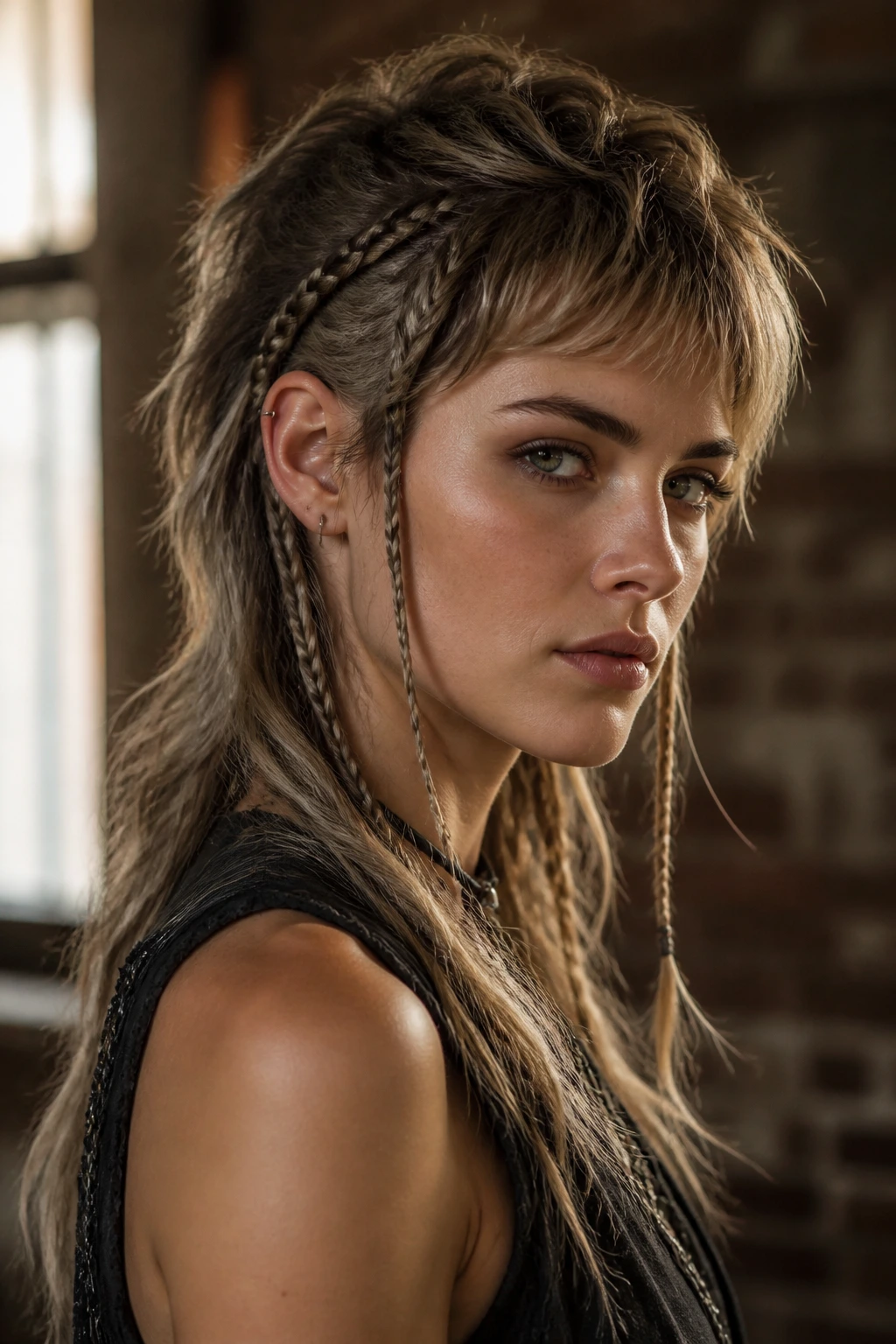
Unlike a classic shag, a wolf cut gives you messy movement with a more aggressive shape. The layers fall in different places on purpose, which is why it works so well with small rope braids at the temples or around the crown.
This style is for people who do not want their hair to look polished. They want air in it. They want texture that catches a little when you move. Rope braids fit that energy better than neat three-strand braids because they look rougher and a bit more handmade.
The cut itself should have short layers around the top and longer ones through the bottom. That mix keeps the shape from collapsing. A bit of dry shampoo at the roots gives the hair some grip, and that grip matters because slippery hair makes rope braids unravel faster than most people expect.
If you like wearing leather jackets, heavy knits, or dark lipstick, this cut fits that wardrobe without trying too hard. It has edge baked in.
6. High Ponytail Wrapped with Thin Braids
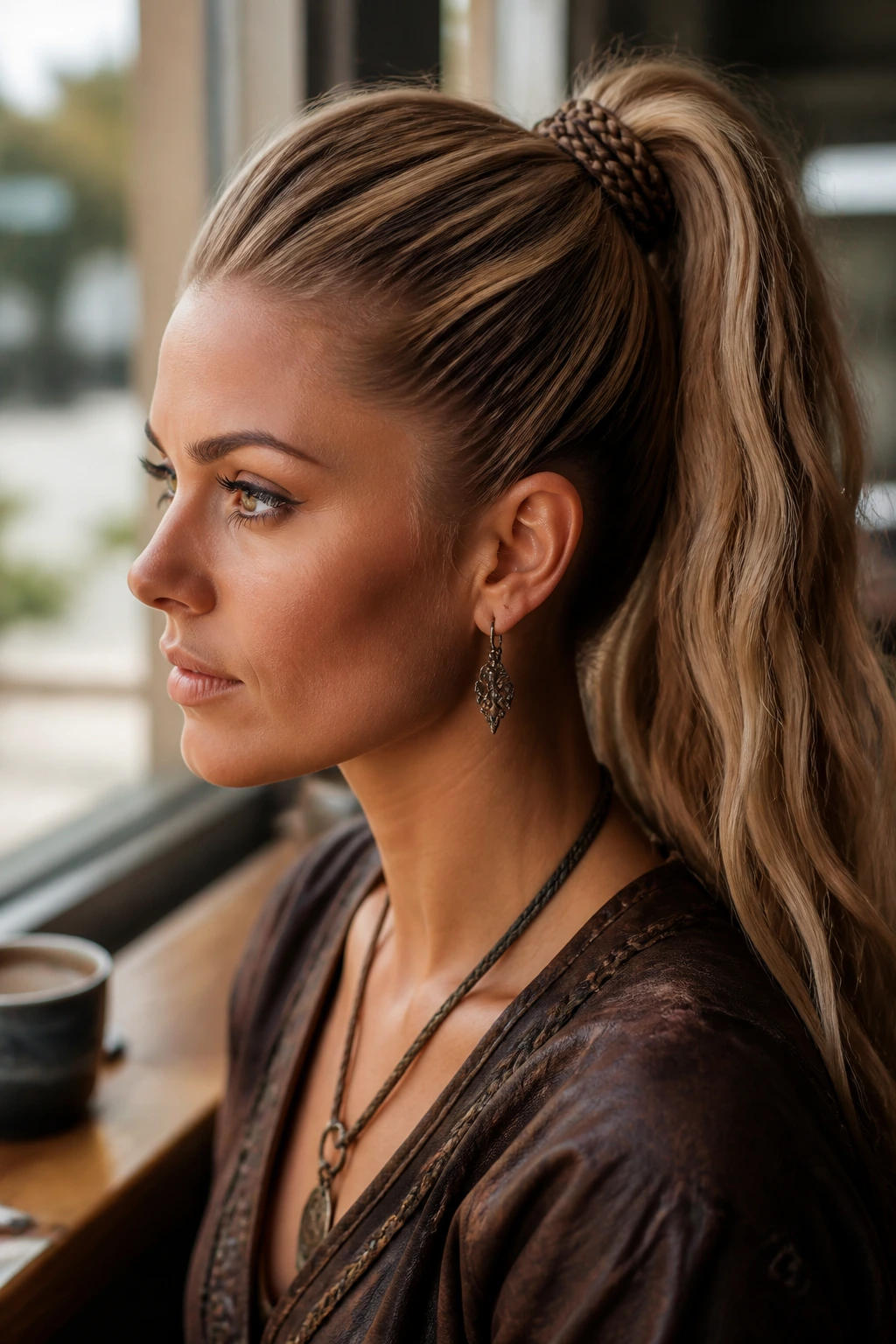
A high ponytail sounds simple until you give it Viking treatment. Then it gets a lot more interesting. A wrapped braid around the base turns the whole look into something stronger and more finished, without adding much time.
I like this for days when your hair is long but not cooperating. Smooth the top, gather the ponytail at the crown, then take a thin section from underneath and braid it tight. Wrap that braid around the elastic and pin the end underneath the ponytail.
The finish matters here. Keep the crown sleek, but leave the tail with some texture. If the ponytail is poker-straight, it can look too neat for the theme. A slight bend from a blow-dryer or large iron makes the length feel more alive.
A copper ring or a small leather tie works well if you want a subtle nod to the era. You do not need much. One detail is enough.
This is also one of the easiest styles to dress up or down. Gym bag, date night, black dress, denim shirt — it handles all of it.
7. Sleek Bob with Temple Braids
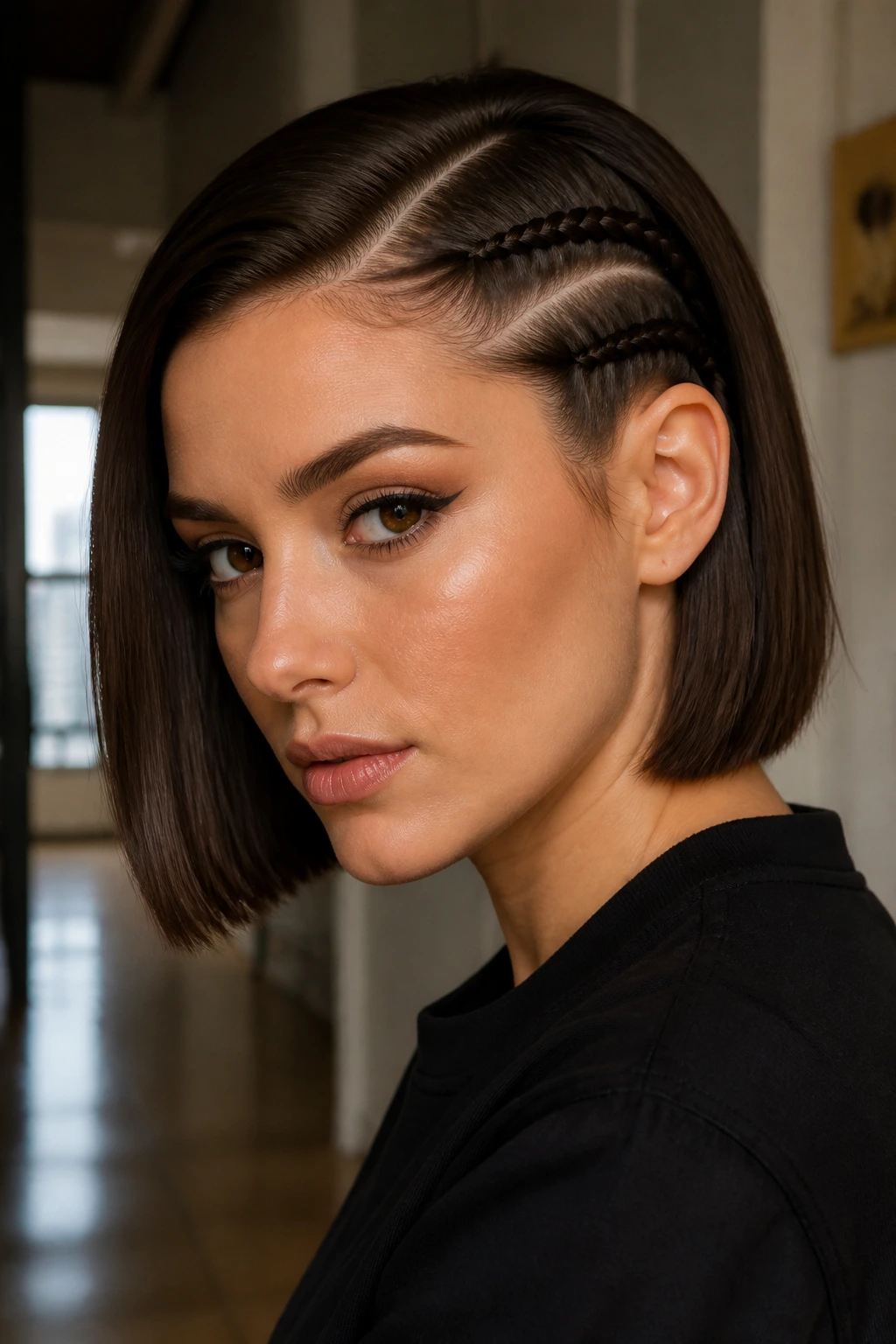
A bob can absolutely work here, and I think people underestimate that. The key is to keep the shape blunt and add the Viking part in small, deliberate doses.
A chin-length bob with two slim temple braids feels sharp without looking overdone. The braids sit close to the head, usually just above the ears, while the rest of the bob stays smooth and straight. That contrast is what gives it bite.
What makes it different from a standard bob
The part is often deeper than usual, which creates more drama on one side. The ends should sit cleanly at the jaw or just below it. If the ends are too wispy, the whole cut loses weight and starts to read more casual than strong.
Use a smoothing cream or a light blowout balm before drying. Then flat iron only the top layer if needed. You want the surface sleek, but not stiff. A bob that moves a little is better than one that looks shellacked.
This style suits women who want a polished shape with a rough edge hidden inside it. It’s especially good for fine hair, because the blunt line makes the hair look fuller at the bottom.
8. Half-Up Knot with Loose Length
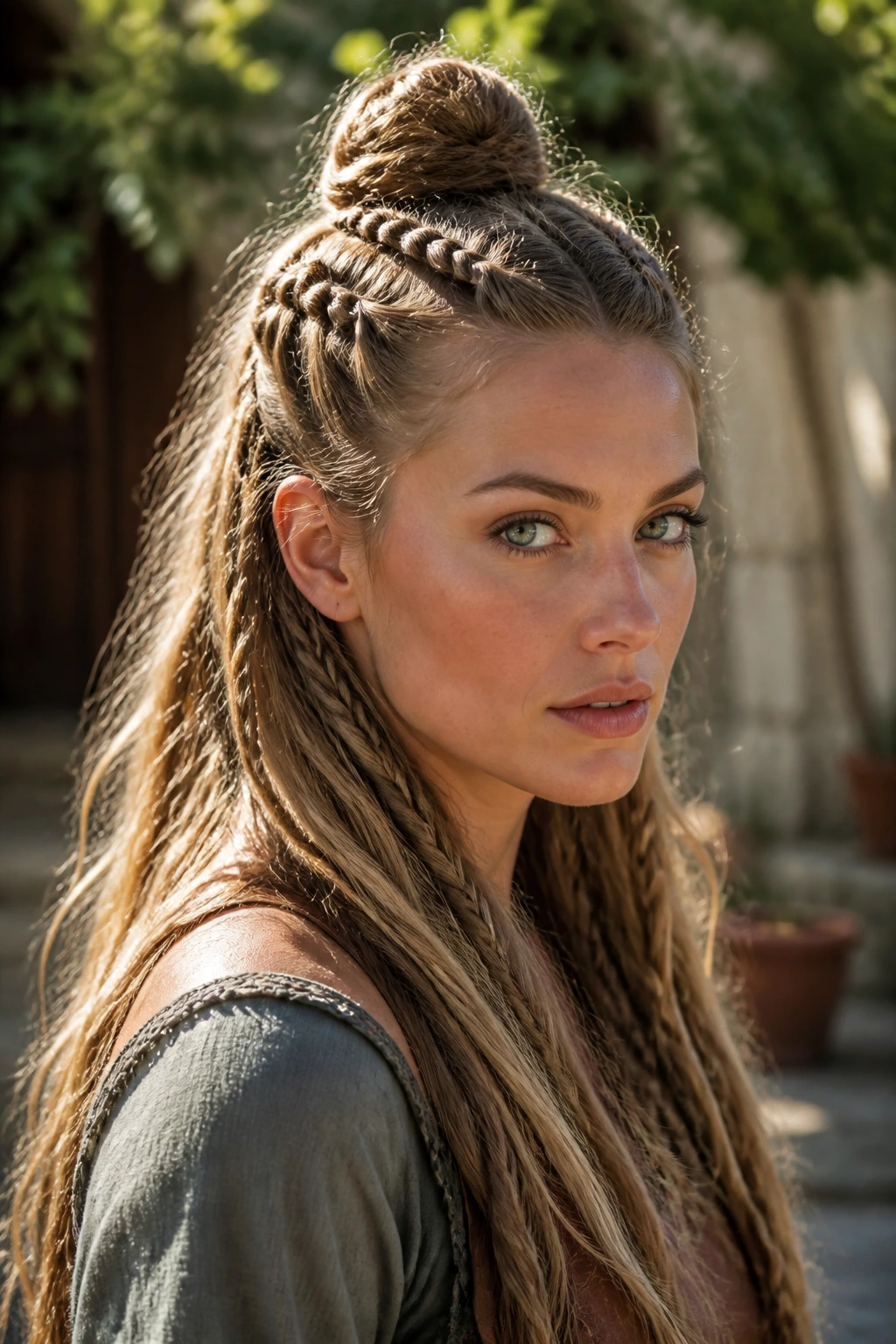
If you like keeping your hair down but still want a clear Viking note, the half-up knot is one of the smartest choices. It lets the length stay visible while the top section does the heavy lifting.
Gather the top half of the hair from temple to temple, twist it into a knot, and anchor it with pins or a small elastic hidden underneath. Then braid one or two narrow sections from the sides and feed them into the knot. That keeps the shape from feeling random.
A few things help this style look intentional:
- Pull the top section from a clean, even part
- Keep the knot snug against the head
- Leave the lower lengths loose and textured
- Add one leather cord or ring if you want a harder finish
This is a good choice for layered hair, because the bottom half can stay soft while the top stays controlled. It also flatters most face shapes since it opens the front without stripping away all the fullness.
You can wear it with straight hair, waves, or loose curls. The knot does not care much, which is half the charm.
9. Curly Undercut with Beaded Braids
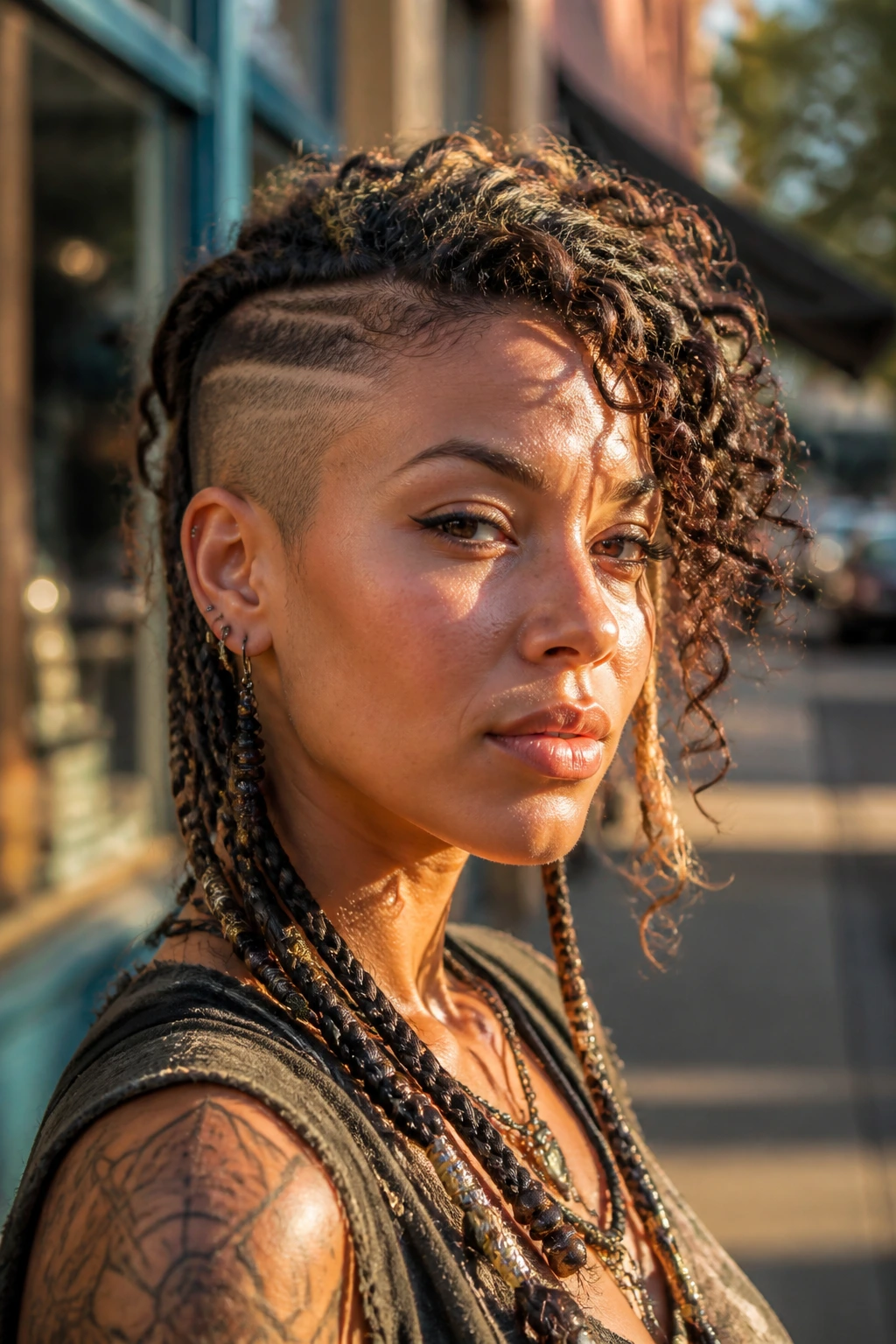
Bold does not always mean straight hair or smooth lines. A curly undercut with small braids and beads can look even stronger because the texture brings so much natural movement to the cut.
The contrast is the whole story. One side or the back is clipped short, while the curls stay longer on top or at the crown. Then a few narrow braids are woven into the curl pattern and finished with metal beads, wooden rings, or plain cords. That tiny bit of hardware makes a big difference.
The important part is balance. Too many beads and the style gets heavy. Too many braids and the curls lose their shape. Two or three braids is enough for most people, especially if the curl pattern is dense.
This cut loves moisture. Use leave-in conditioner and a curl cream that defines without turning sticky. If the curls are dry, the whole look turns frizzy instead of fierce. Nobody wants that.
The style is especially good on hair that already has spring and volume, because the undercut removes bulk and lets the curls sit where they should.
10. Choppy Shag with Micro Braids
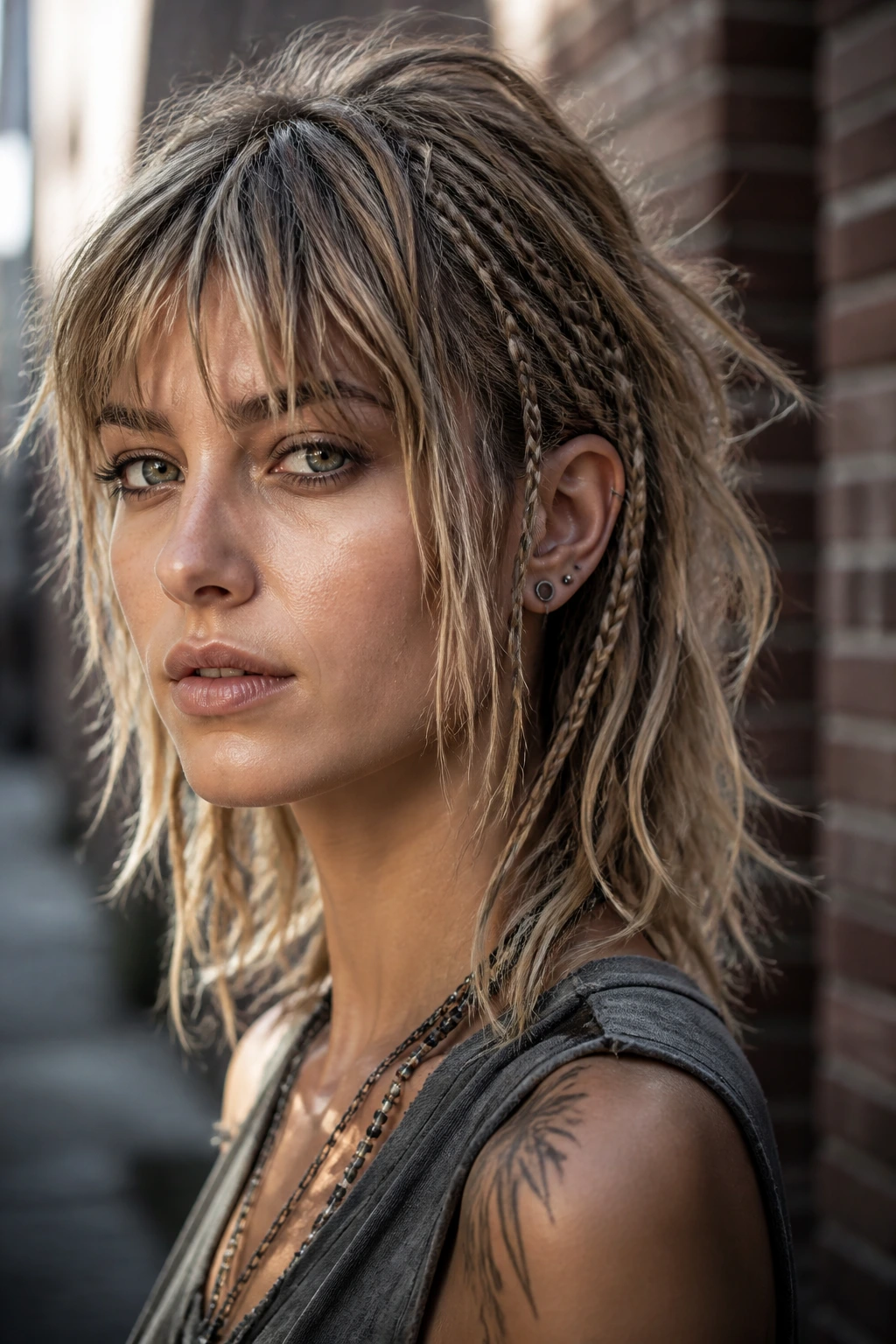
A choppy shag is the least fussy way to get into this style family, and I mean that in the best way. Unlike a smooth cut, it depends on uneven layers, which makes it look more rough-hewn and more believable.
Micro braids scattered through the top layer are enough. You do not need a full head of braids. Two near the fringe, one at the side, maybe one hidden behind the ear — that’s plenty. The cut already carries motion, so the braids just steer the eye.
The best version uses a texturizing spray or a light wax spray on dry hair. Clean hair can make the layers fall too flat, which kills the whole point. A little grit gives the ends something to grip.
This one is good for women who like their hair to look lived-in by noon. It has a slightly rebellious feel, but it is not hard to wear. If you want the style to lean more Viking and less rock-band, keep the braids narrow and avoid over-teasing the crown.
The shape does most of the work. That’s the charm.
11. Braided Mohawk for Coily Hair
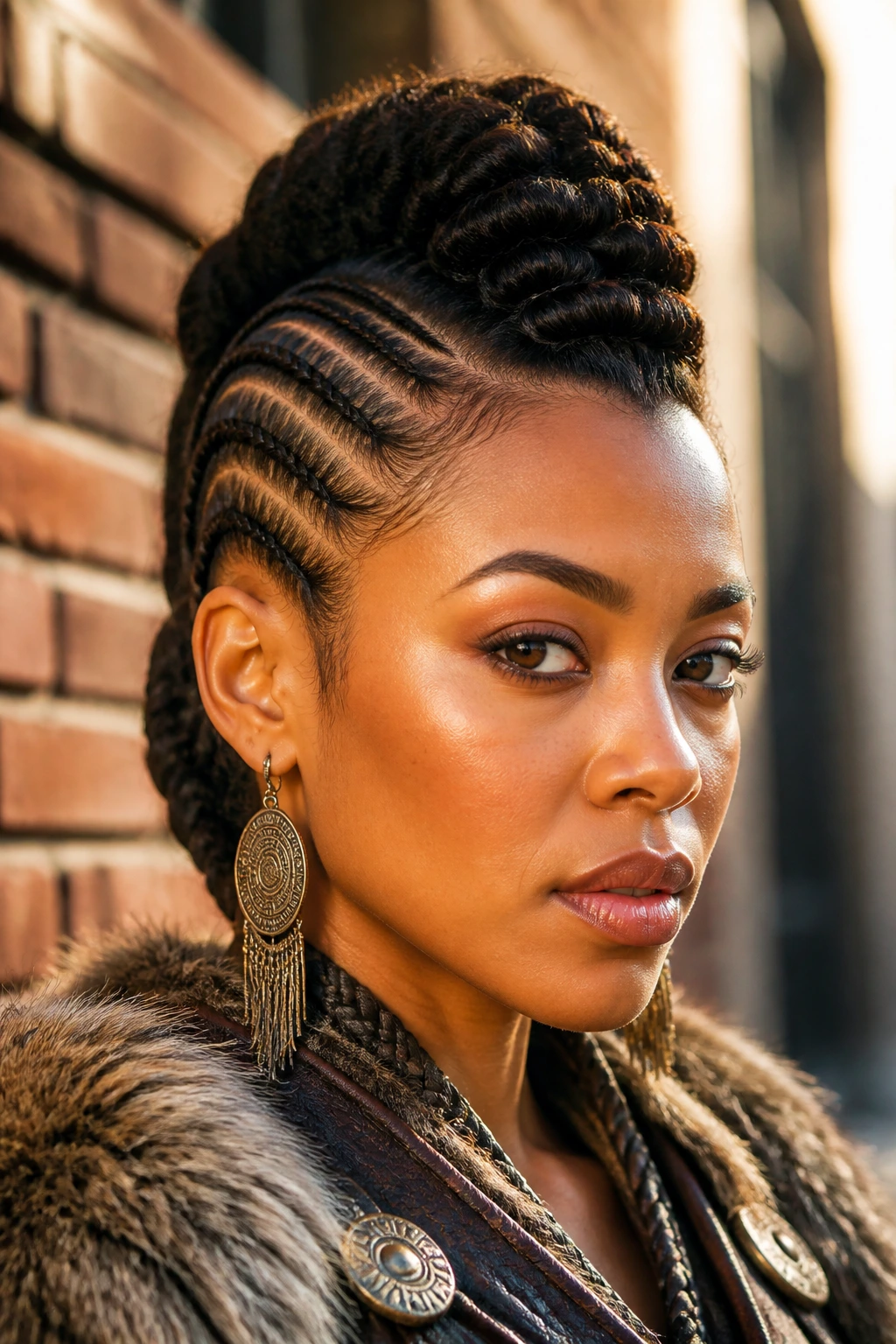
Can a coily texture pull off a Viking look? Absolutely. In fact, it can be one of the strongest versions because the shape gets extra lift and presence from the hair itself.
A braided mohawk works by smoothing or pinning the sides tight while leaving the center ridge full and structured. On coily hair, that center section can be braided, twisted, or left in defined coils depending on the length. The style looks especially striking when the front is lifted a little at the root and the back follows the same line.
How to use it
Start with damp hair and a leave-in conditioner, then stretch the hair lightly if you want more length to work with. Part the sides cleanly and secure them low and flat with pins or gel. After that, braid or twist the middle section from front to back.
A hard side part can sharpen the whole look, but a curved part softens it if you want less edge. Either way, the style needs hold around the sides. A toothbrush or small edge brush helps smooth the hairline without making it look wet.
This is one of those cuts that looks better when it has height. Let it rise a little.
12. Long Layers with One Statement Braid
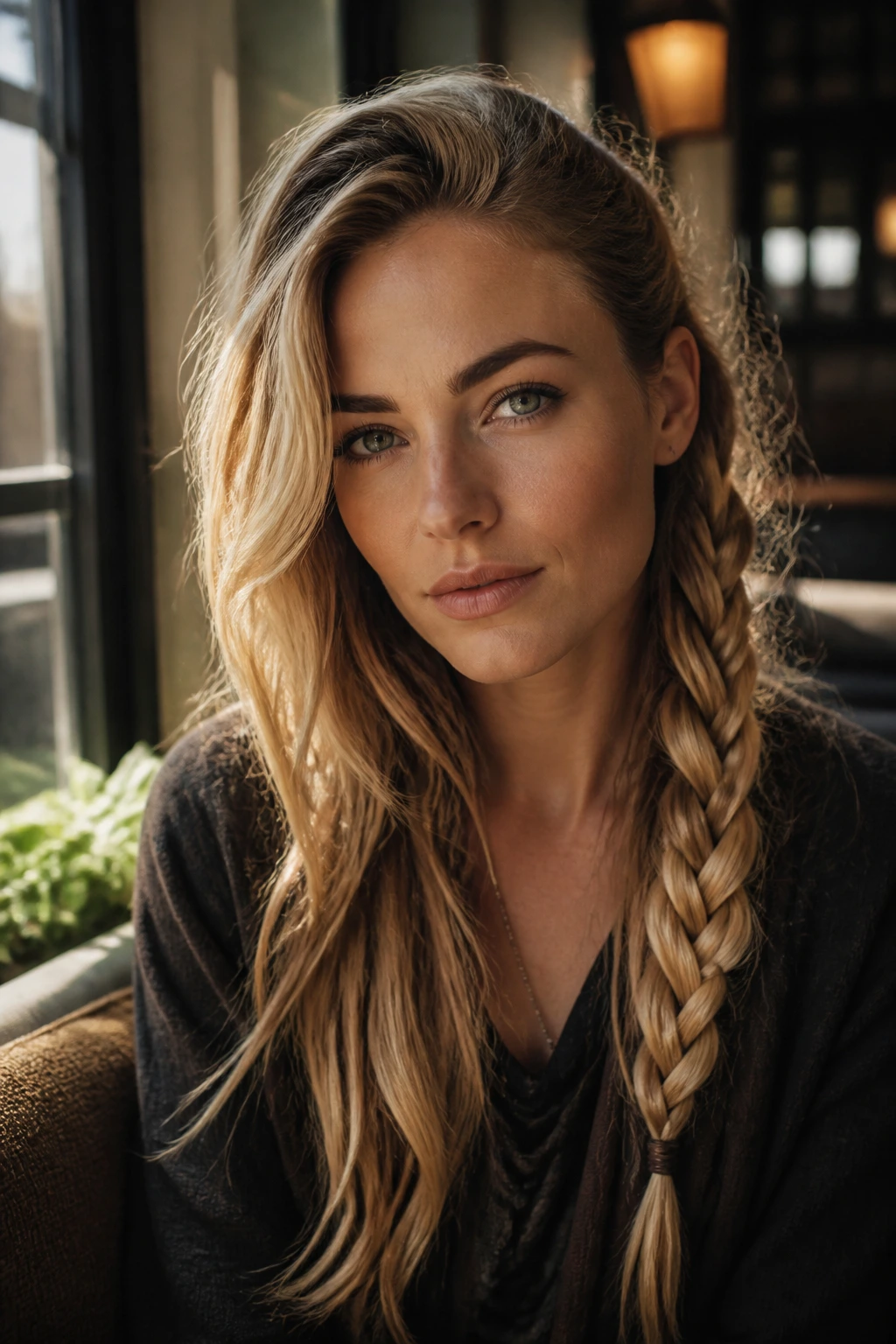
Sometimes one braid is enough. I like that restraint. A long layered cut with a single heavy braid over one shoulder feels confident because it does not try to decorate every inch of the head.
The cut should have movement through the ends, not choppy bulk. Then the braid becomes the focal point. A deep side part gives the front more shape, and a single three-strand braid or Dutch braid over one side keeps the look grounded. If the hair is very long, braid from the temple all the way down and tie it with a leather cord for a harder finish.
Quick details that matter
- Works best when the layers start below the cheekbones
- Needs enough length to keep the braid visible past the chest
- Looks sharper with a side part than a center part
- Holds better if the hair has one day of natural oil or a bit of dry shampoo
The beauty of this style is that it leaves room for strong clothes and strong makeup. The hair is not competing with anything. It just sits there with a lot of presence.
13. Blunt Lob with Hidden Cornrows
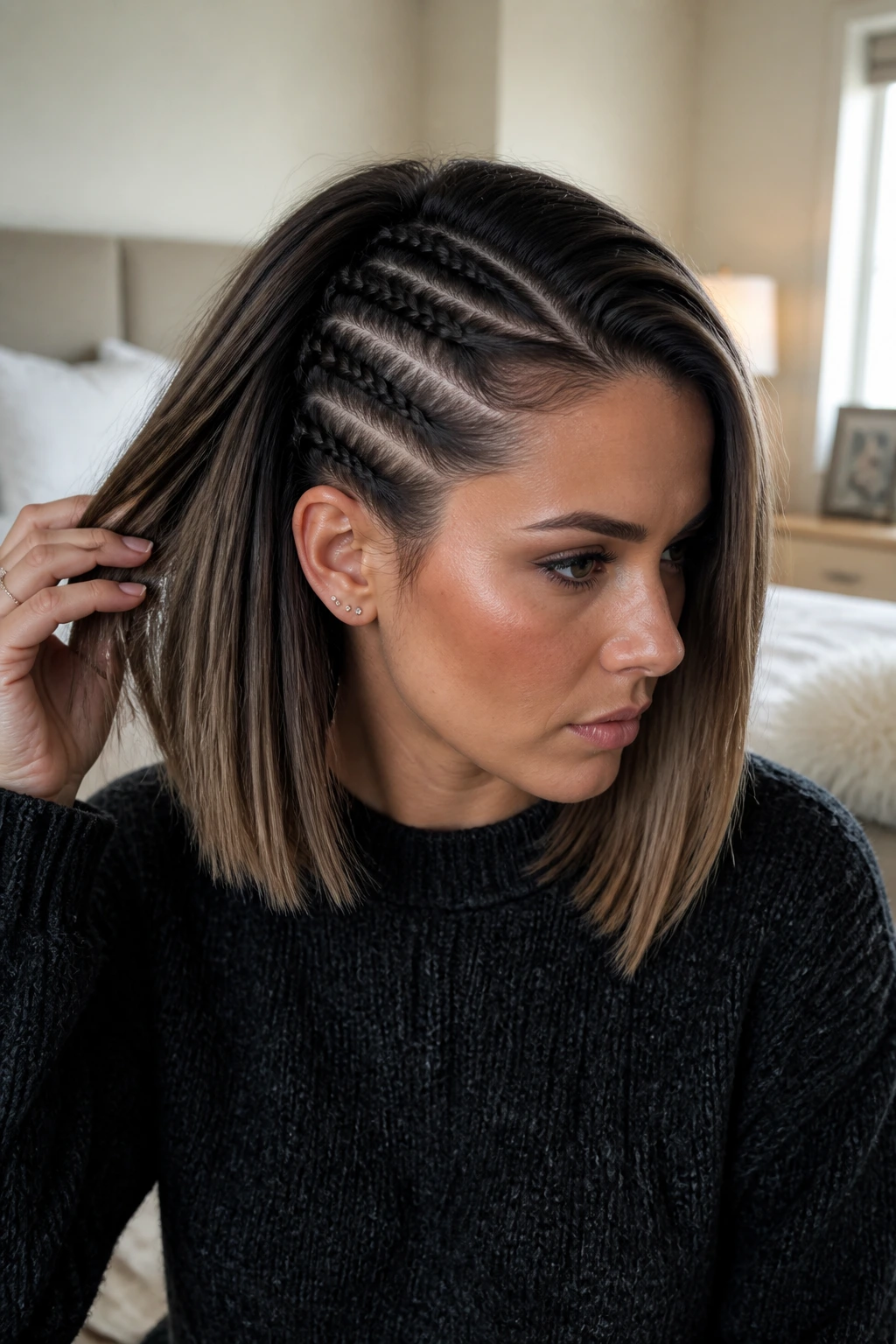
A blunt lob is not the first shape people think of for Viking-inspired hair, which is exactly why I like it. The surprise comes from the hidden details: cornrows or tight braids tucked underneath the top layer so the style reveals itself when the hair moves.
That hidden layer matters more than people expect. It gives the haircut structure without making it look busy from the front. From a distance, it reads as a clean lob. Up close, there’s a whole second story.
The best version keeps the ends blunt and the length around the collarbone or a little above it. That line gives the hair weight, which helps the top layer sit over the braids without puffing out. If your hair is straight, this cut looks sharp fast. If it’s wavy, the movement makes the hidden braids show through even more.
Maintenance is modest if the braids are done neatly. The grow-out, though, can get bulky. Plan for a tidy-up once the roots start lifting, or the concealed texture will start showing too much at the surface.
This is a smart pick for anyone who wants a subtle version of the theme. It whispers instead of shouting.
14. Asymmetrical Cut with Side Braids
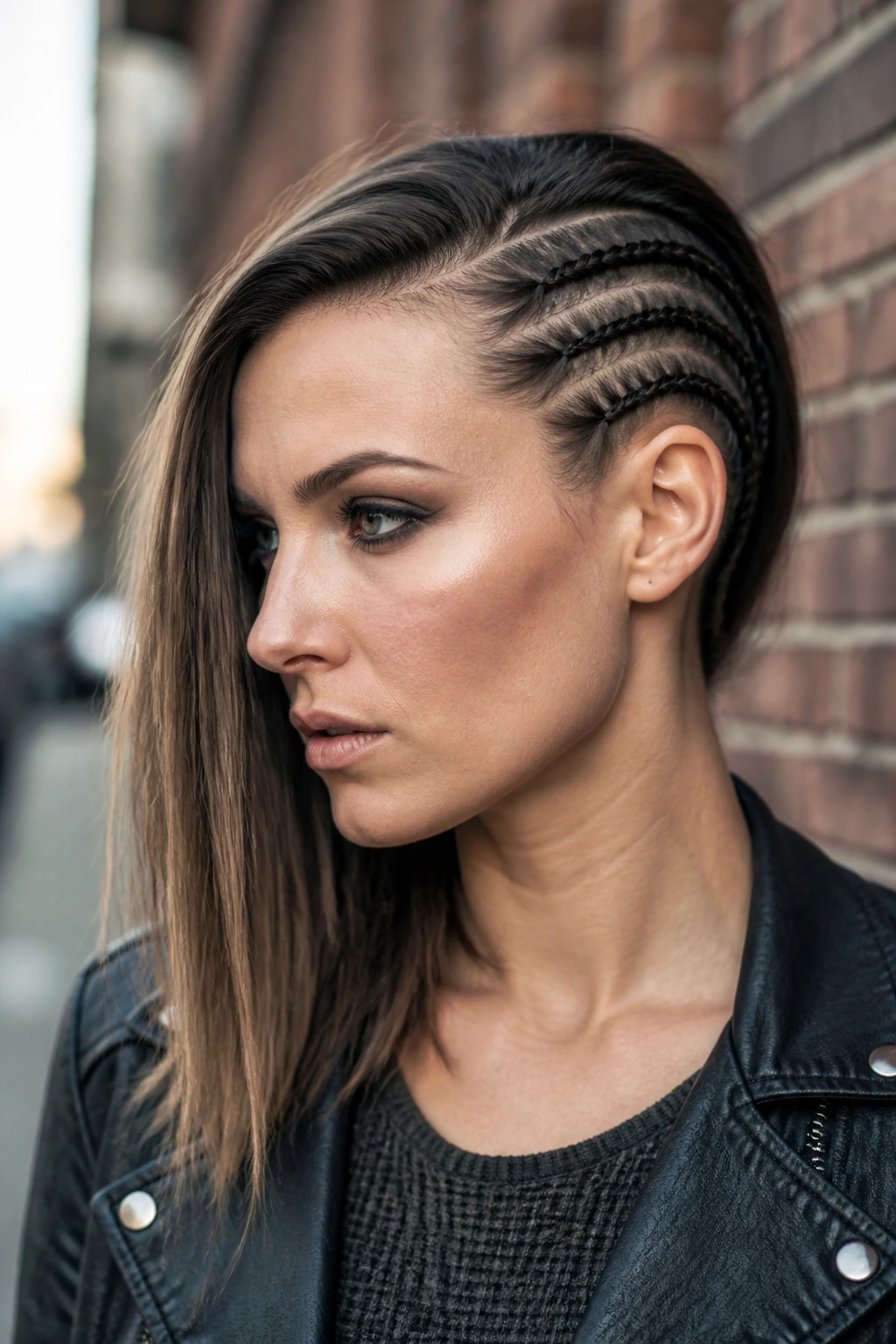
One side longer, one side shorter. That shape alone has attitude, and it gets even better when you braid the shorter side close to the head.
I remember seeing a version of this where the longer side grazed the jaw and the shorter side was split into two tight braids at the temple. It looked sharp from every angle. The asymmetry made the face feel more carved out, almost like the cut had its own point of view.
Key things to ask for
- One side kept at least 2 to 4 inches longer than the other
- Clean, blunt ends on the longer side
- Tight braids or flat twists on the shorter side
- A soft taper near the neckline if you want the back to sit cleaner
This style is good if you enjoy shape and movement but do not want all the upkeep of a shaved design. It gives you drama without asking for constant clipper work. A little styling cream on the longer side keeps it from flipping out too much, and a fine comb helps the shorter side stay neat.
It’s one of the more architectural looks on this list. Strong lines. Clear contrast. No fluff.
15. Soft Mullet with Viking Braids
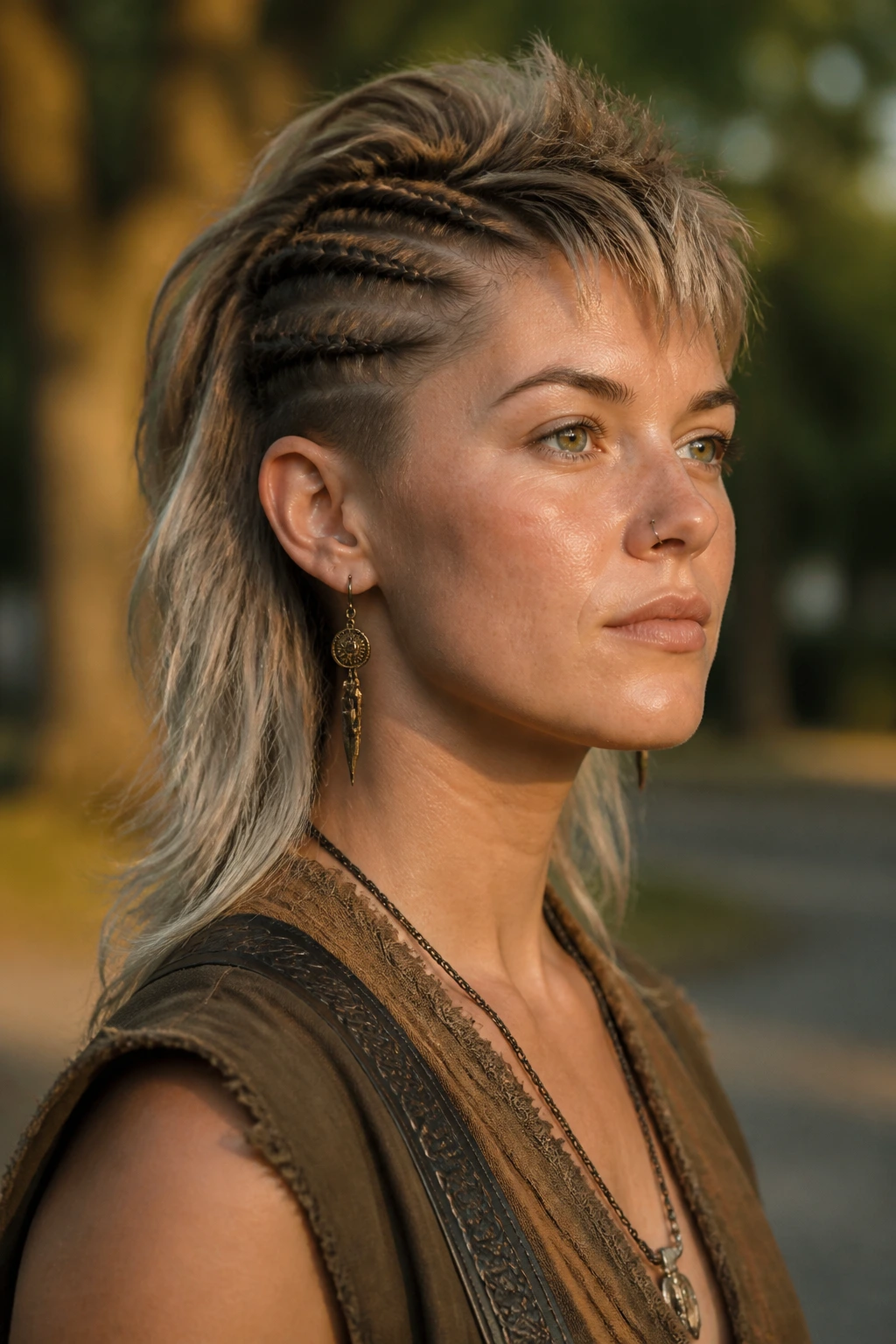
A soft mullet sounds risky, and that’s part of why it works. The modern version keeps the edges blended, the fringe face-framing, and the back just long enough to move, which gives the whole cut a rough, warrior-like feel without turning it into a joke.
The braids are what bring it into Viking territory. Two slim braids near the front, or one braid sweeping back from the temple, stop the mullet shape from feeling too loose. If the layers are shaggy enough, the braids sit into the cut naturally and the whole thing looks intentional instead of thrown together.
This style suits women who do not want a clean finish. They want motion, edge, and a little attitude in the silhouette. It also works well with copper, dark brown, or ash blonde tones because those shades show the layer breaks more clearly.
Keep the texture touchable. That matters. A soft mullet loses its charm if it gets overdone with product and starts looking sticky. A little cream, a little grit, and a braid or two is enough.
If you want the look to feel bold instead of try-hard, keep the outline sharp and the texture a little imperfect. That’s the sweet spot.
