



Some pixie cuts from the 1980s look a little wild at first glance. That’s the point.
Flat hair kills a pixie. Full stop. The 80s knew that, and the decade leaned hard into feathering, lift, side-swept movement, and ends that felt sliced, shaken out, and a little undone on purpose. A good short cut wasn’t just short; it had shape, air, and a bit of attitude in the crown.
That texture mattered for a practical reason, too. Short hair can collapse fast, especially if it’s fine, heavy, or cut into one blunt shape with no internal layering. The better 80s pixie cuts fixed that by building movement into the cut itself — not relying on wishful thinking and a can of spray alone. Mousse, gel, a round brush, maybe a diffuser, maybe a little finger-raking at the end. Messy, but controlled.
I keep coming back to these cuts because they do something a lot of short styles miss: they make the face feel framed without feeling fussy. One pixie can read sharp and punky. Another can feel soft and feathered. Another still can go glossy and sculpted. The texture changes the whole mood, and that’s exactly why these looks still have so much pull.
1. Feathered Crown Pixie
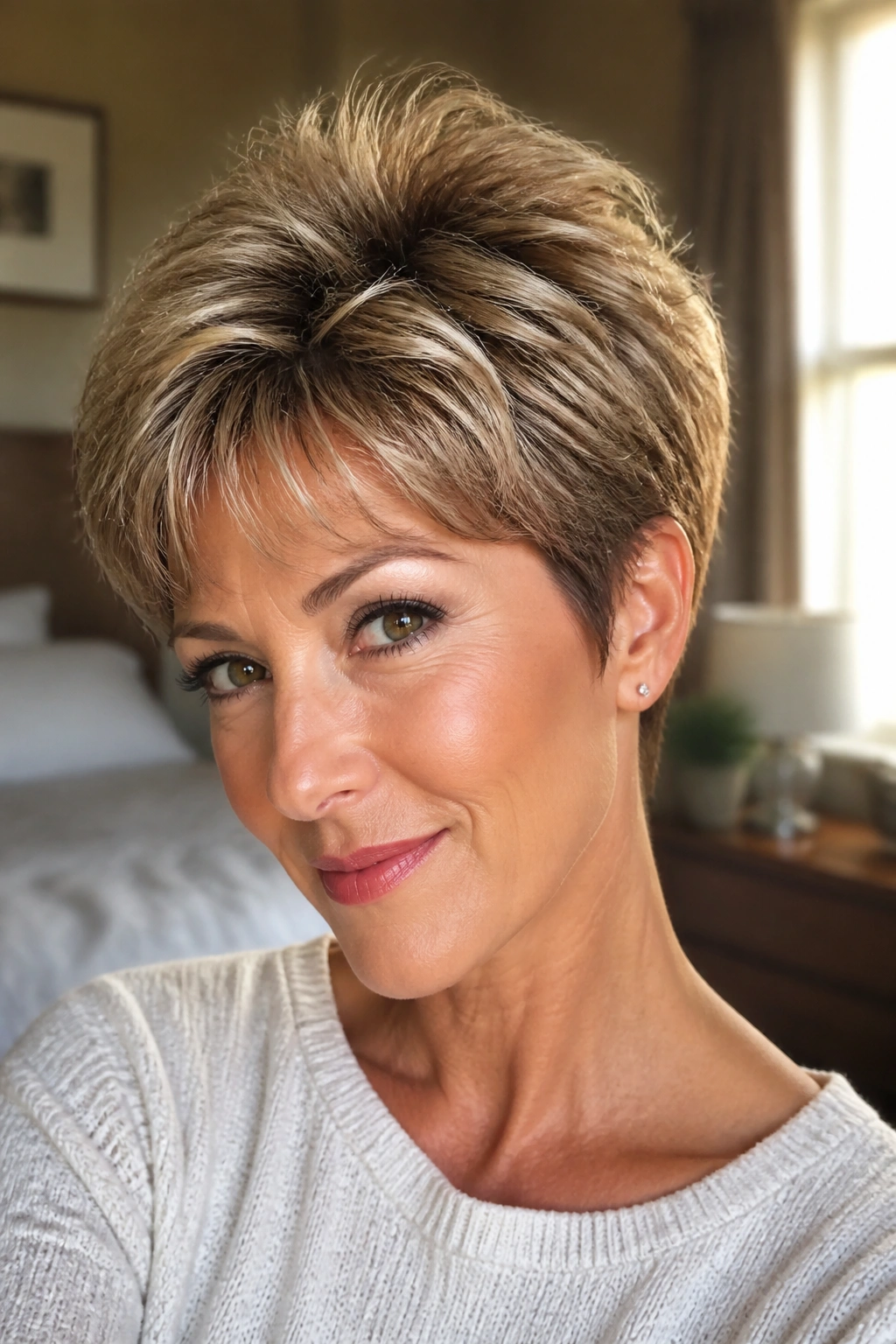
A feathered crown pixie is one of those cuts that looks easy until you try to describe why it works. The answer is the crown. The top stays a little longer, the sides are tapered, and the layers are cut so they skim away from the head instead of sitting in one solid block.
Why the Crown Matters
The feathering gives the cut lift right where short hair tends to go limp. If the top is left around 1½ to 2½ inches and the sides are cropped closer, you get that soft halo of movement the 80s loved so much. It’s airy, but not wispy.
This is a smart choice for medium to thick hair because the extra density helps the feathered ends stay visible. Fine hair can wear it too, but the layers need to be a little shorter so the shape doesn’t disappear by noon. And yes, a round brush helps, but fingers do half the job.
- Ask for soft, directional layering through the crown rather than choppy pieces everywhere.
- Keep the sides and nape tighter so the top has room to stand up.
- Use a golf-ball amount of mousse on damp hair before blow-drying.
- Finish with a light mist of flexible spray so the ends move instead of freezing.
Pro tip: If the crown is flat, the whole cut reads tired. Lift at the roots first. Style the rest second.
2. Choppy Micro-Bang Pixie
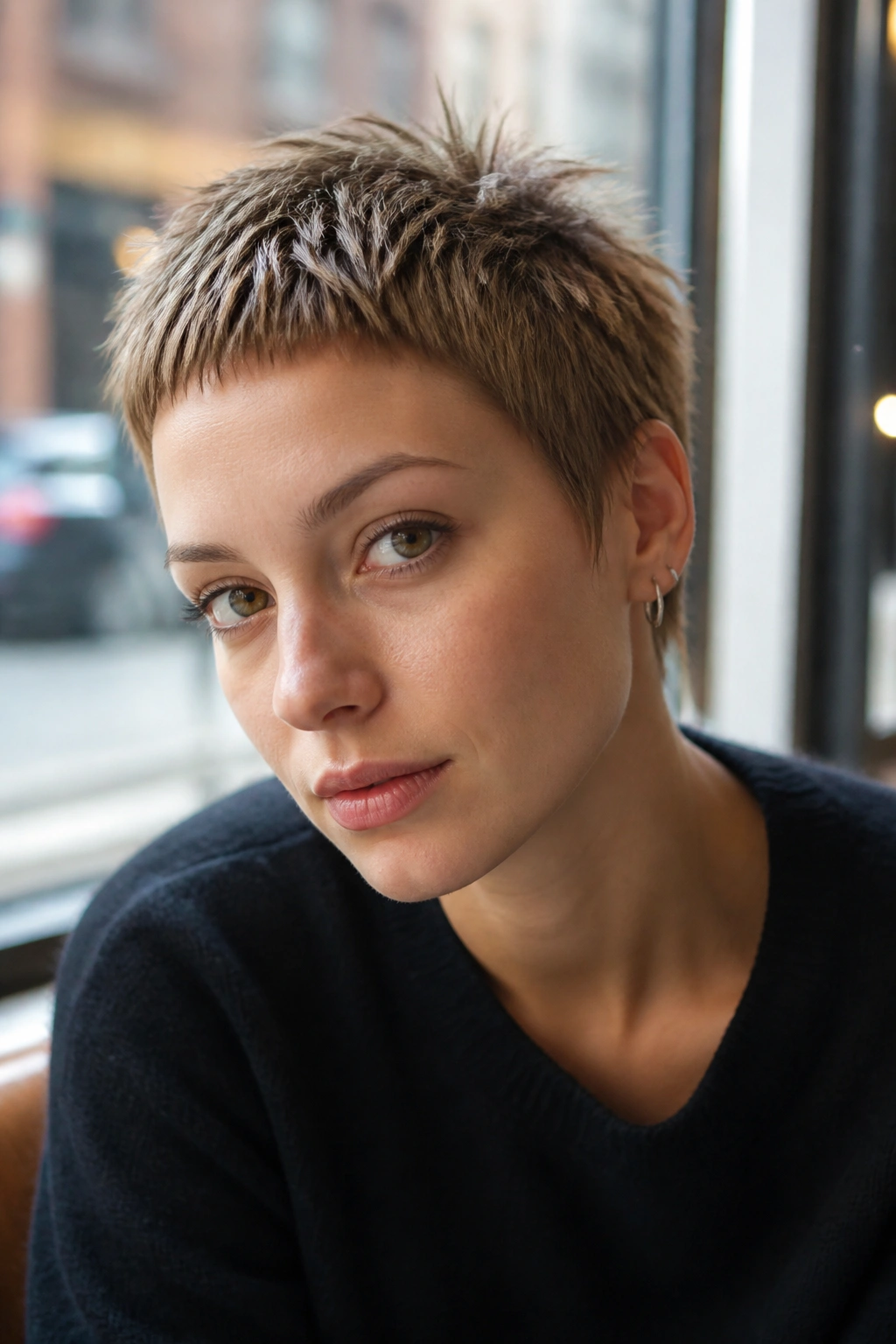
Tiny bangs change the whole mood of a pixie. They make the cut feel sharper, a little bratty, and much more specific than a long fringe that can hide behind itself.
Micro-bangs work best when the rest of the cut is broken up with choppy texture. If the top is too smooth, the bangs look detached. If the layers are piecey and irregular, the fringe feels intentional. That contrast is the reason this style still has teeth.
I like this version on straight hair because the short fringe shows off the cut line cleanly. It also suits faces that can handle a little extra edge at the forehead — oval, long, and strong-boned shapes wear it well. Rounder faces can wear it too, but the top needs enough lift to keep the cut from feeling short all over.
A lot of people ask for micro-bangs and then panic when they see how blunt they are dry. Fair enough. They shrink up. Tell your stylist you want the fringe cut slightly longer than you think, then dry it before making any final calls.
3. Side-Swept New Wave Pixie
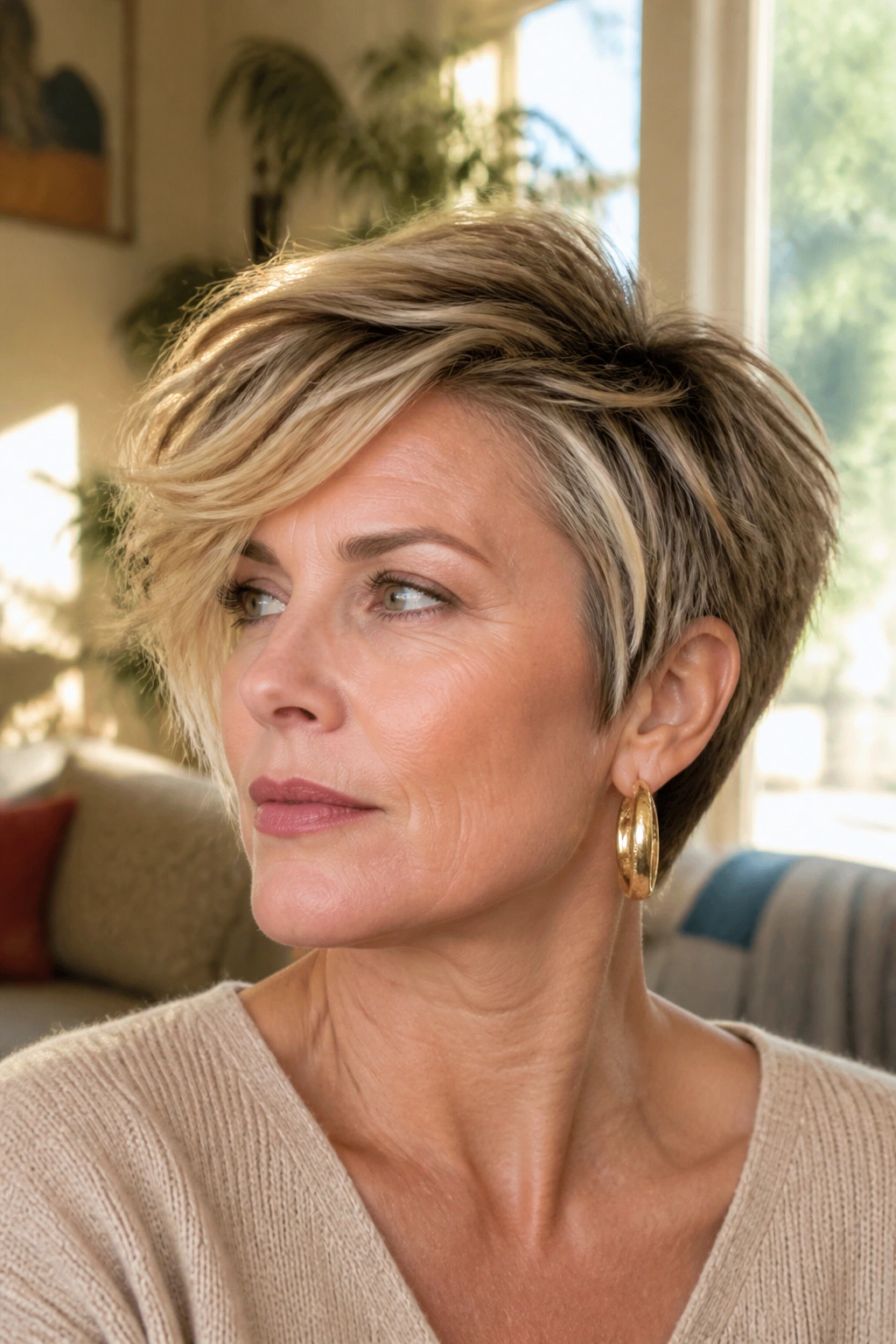
Why did so many 80s pixies sweep the bangs off to one side? Because it softens the whole cut without killing the texture.
The side-swept version gives you movement at the front and a cleaner shape at the temple. It’s one of the easiest ways to make a short cut look a little more wearable if you do not want a harsh, boyish line. The side part also helps the style feel less top-heavy, which matters if your hair grows straight up at the crown.
How to Wear It
Start with damp hair and apply a small amount of lightweight mousse near the roots. Blow-dry the front in the direction you want the fringe to sit, then bend the ends with a round brush or your fingers. Don’t overwork it. The charm is in the bend, not in making every strand behave.
- Part the hair about 1 inch off center for a softer sweep.
- Keep the fringe long enough to graze the brow or upper cheekbone.
- Use a pea-sized amount of pomade on dry hair if the ends need separation.
- If your hair is fine, this cut gets extra lift from a quick blast at the roots with a nozzle attachment.
It’s a good pick for someone who wants texture but not chaos. Clean enough for work. Lively enough to keep things interesting.
4. Spiky Crown Pixie
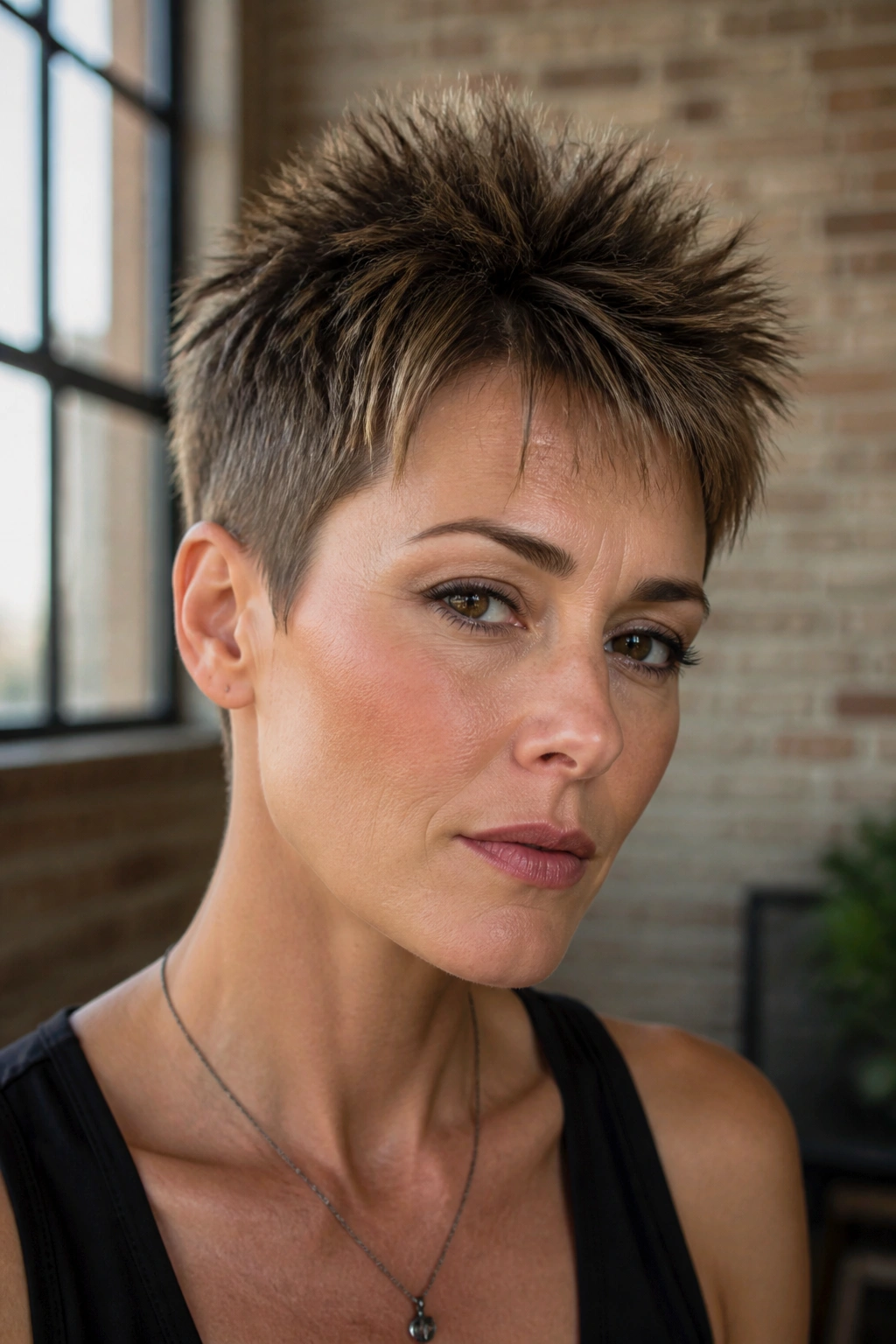
A spiky pixie can look ridiculous if the product is wrong. Too much gel, and it turns stiff. Too little, and the spikes fall into soft little puddles by lunch.
The sweet spot is separation. You want short layers on top — often around 1 to 2 inches — with the sides kept close so the crown has somewhere to go. That little bit of height at the top is what gives the cut its 80s energy. It also works nicely if your hair is thick and naturally wants to stand up anyway.
I’ve always liked this version on straight or slightly wavy hair because the ends hold shape with less effort. Blow-dry the top until it’s about 80% dry, then pinch tiny sections with paste or wax. The motion matters. Scrubbed-up hair looks accidental; piecey spikes look chosen.
If you want the style to last, avoid heavy cream products. They soften the whole thing. Fine hair can handle a drier paste. Coarser hair usually needs a stronger hold gel at the roots and a lighter finish on the tips.
5. Razor-Shag Pixie
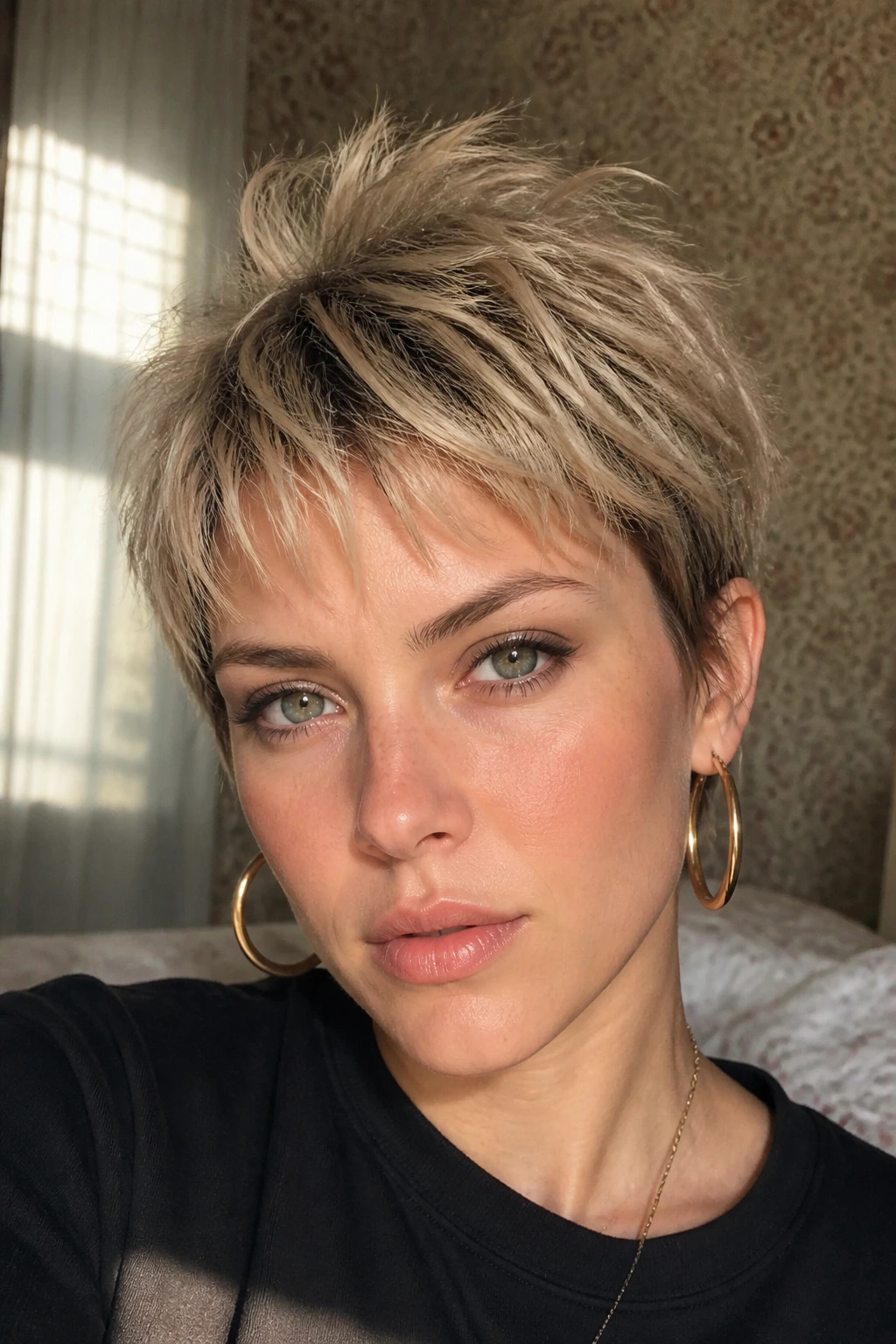
Razor-cut texture gives a pixie that slightly torn, feathered finish that salon scissors sometimes miss. It’s looser, a little more shredded at the edges, and far less neat than a classic crop.
That is exactly why it works. The razor creates movement by taking out some of the bulk inside the cut, especially through the mid-lengths and ends. On thick hair, that can be a blessing. On already fragile hair, it can be too much, so this is one of those styles where hair condition matters more than people admit.
The version I like best keeps the top layered enough to move but leaves the fringe uneven, not blunt. The result feels easy, almost accidental, even though it depends on a very deliberate shape underneath. You see the texture before you notice the haircut itself.
Skip this one if your ends are fried or your hair breaks easily. A razor can make damaged hair look even thinner at the tips. If your hair is healthy and dense, though, it’s a very good fit. It has a lived-in look that straight-out-of-the-salon bluntness never quite matches.
A little matte paste at the end is enough. Too much, and the texture gets gummy.
6. Asymmetrical Crop Pixie
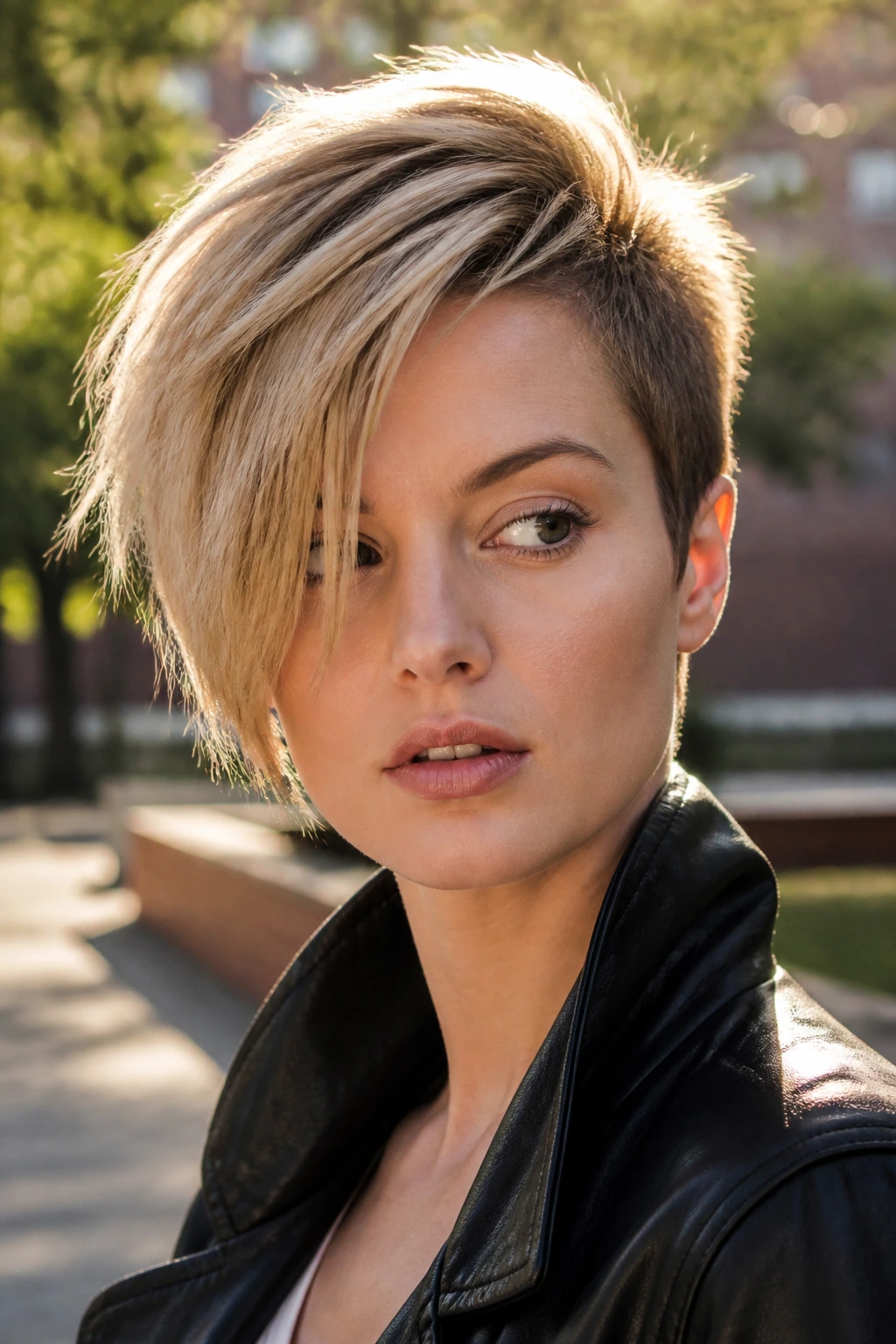
One side shorter, one side longer. That simple shift changes the whole silhouette.
An asymmetrical pixie feels more dramatic than a balanced cut because your eye has to travel. The longer side can sweep across the cheekbone, skim the jaw, or angle toward the chin, while the shorter side keeps the shape tight and strong. It’s a good choice if you like a cut that makes a statement before you’ve even styled it.
This version suits people who want texture with a little structure. The cut line does half the work, so you do not need a ton of product. A bit of cream or wax through the longer side is usually enough to show the shape. If you over-style it, you flatten the whole point.
Best for: strong jawlines, long faces, and anyone who likes a sharper profile.
Watch for: a heavy side that falls into the eye if the longer section is cut too bluntly. That happens all the time. Ask for soft internal layering through the long side so it moves instead of hanging.
The best asymmetrical pixies do not look gimmicky. They look deliberate, which is a much better thing to wear.
7. Curly Volume Pixie
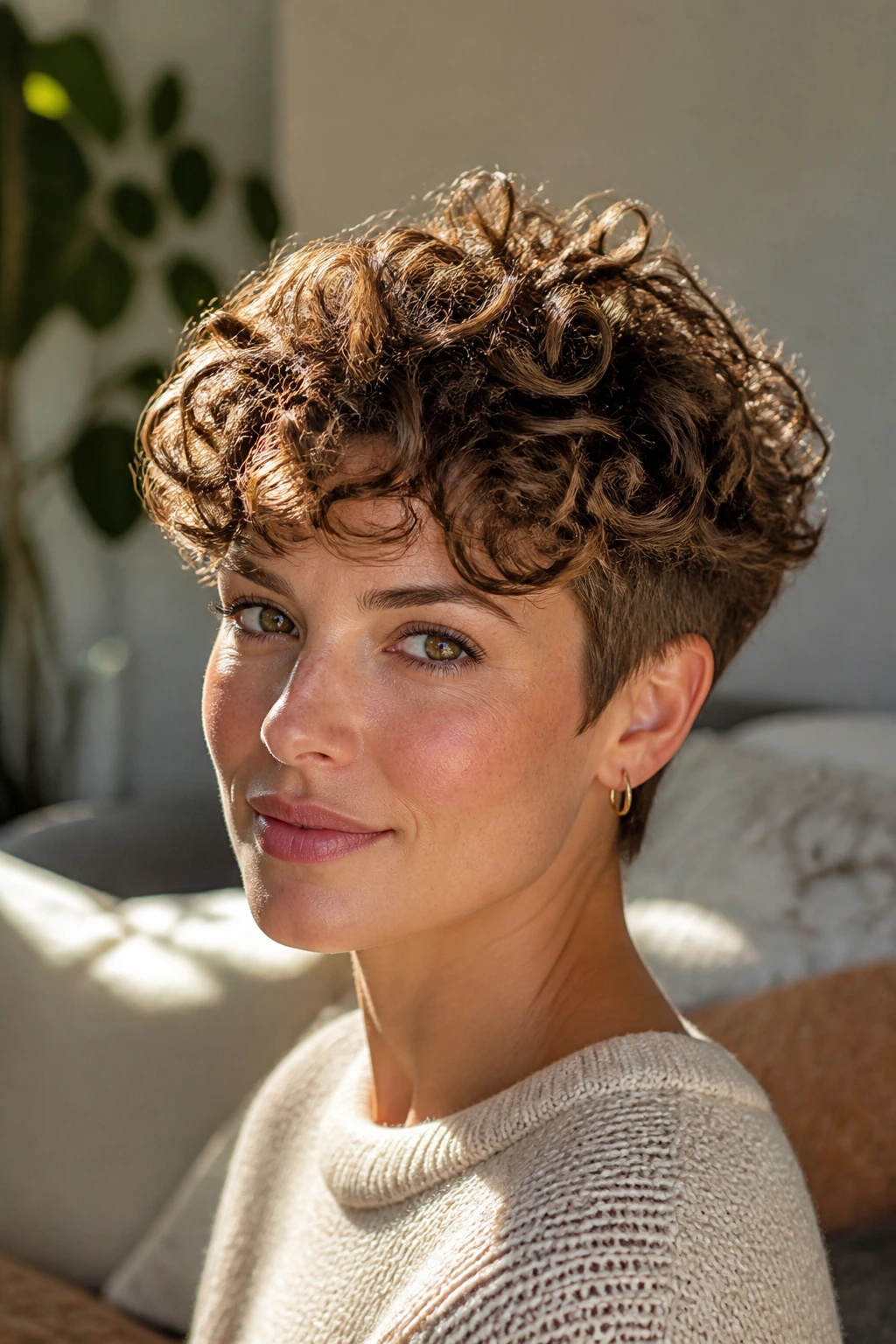
Curly hair and pixies can be a great match when the cut respects the curl pattern instead of fighting it. The 80s had a real fondness for volume, and curls were one of the easiest ways to get it without making the hair look overbuilt.
The key is length at the top. If the curls are cut too short, they spring up unevenly and can sit like little knots. Leave enough length — usually around 2 to 3 inches on top, sometimes a touch more — so the curls can form their own shape. The sides can be tapered down, but they should still blend into the crown. Hard lines are unforgiving on curls.
A diffuser is the friend here. Low heat, low speed, and a little scrunching at the ends help the curls set without puffing out too much. I’d reach for curl cream before gel if the hair is dry, but if the curl pattern is loose and you want definition, a light gel can hold the pieces together better.
This cut is especially good when you want height without teasing the roots to death. Curls already bring the volume. The haircut just needs to give them somewhere to live.
8. Wet-Look Slick Pixie
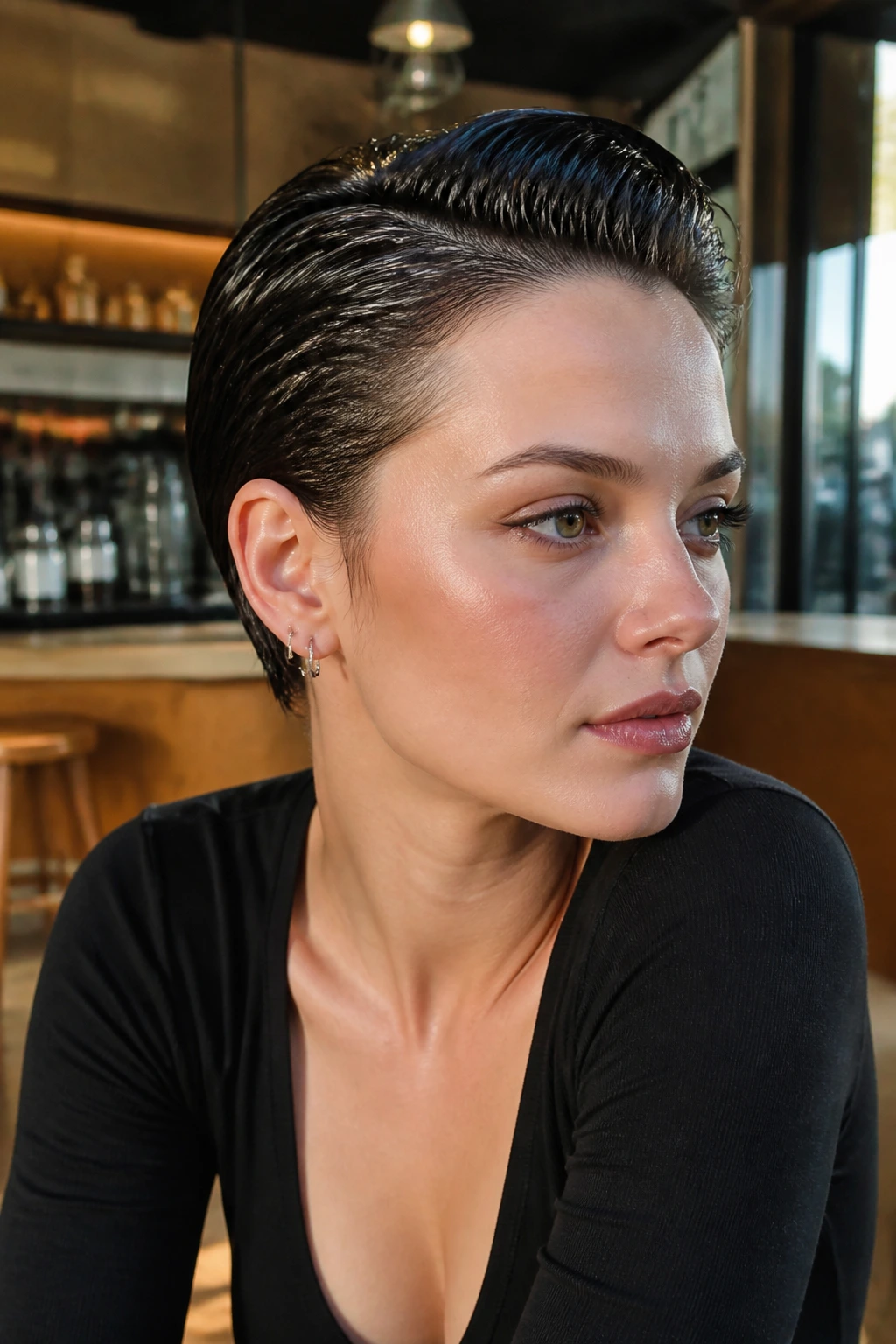
Not every textured pixie has to be fluffy or airy. Some of the strongest ones are slicked back and glossy, with the texture sitting close to the scalp in a very controlled way.
The wet-look pixie works because the shine becomes part of the shape. Short sides, a lifted front, and a bit of length through the top let the hair reflect light in clean lines. It feels bold, a little severe, and much more polished than a tousled crop. If you want softness, this is not the one. If you want drama, it does the job.
Use gel on damp hair, then comb it back or diagonally across the forehead. A fine-tooth comb gives more polish, while fingers leave it softer and less formal. A small amount of pomade at the ends can help keep the silhouette glossy without turning the roots greasy.
This look works especially well on fine hair because the slicked finish can make the hair look denser than it is. The catch? It shows scalp more easily if the cut is too sparse. So the layering has to be smart. Too much removal at the sides and the style starts to look thin instead of sleek.
9. Tapered Nape Pixie

A tapered nape gives a pixie its cleanest finish. The neckline gets carved close, the shape hugs the head, and the top is left with enough length to stay lively.
Do you want a pixie that grows out gracefully? Start here.
The nape taper keeps the back from puffing out, which is one of the biggest problems in short cuts. Hair at the neckline can kick out, curl weirdly, or collect bulk. A good taper fixes that by blending the shortest section into the next length up, so the outline stays neat for weeks instead of days.
What to Ask For
- A close taper at the neckline with no hard shelf.
- Slightly longer hair through the crown, around 1½ to 2 inches.
- Soft sideburns if you want a less severe finish.
- A light texturizing technique through the top so it doesn’t sit flat.
This is the pixie for people who like a tidy base but still want movement on top. It looks especially good if you wear earrings or high collars, because the neckline stays clean and intentional. One of the nicest things about it is how often it needs only a quick finger-style in the morning. Easy wins do exist.
10. Frosted Piecey Pixie
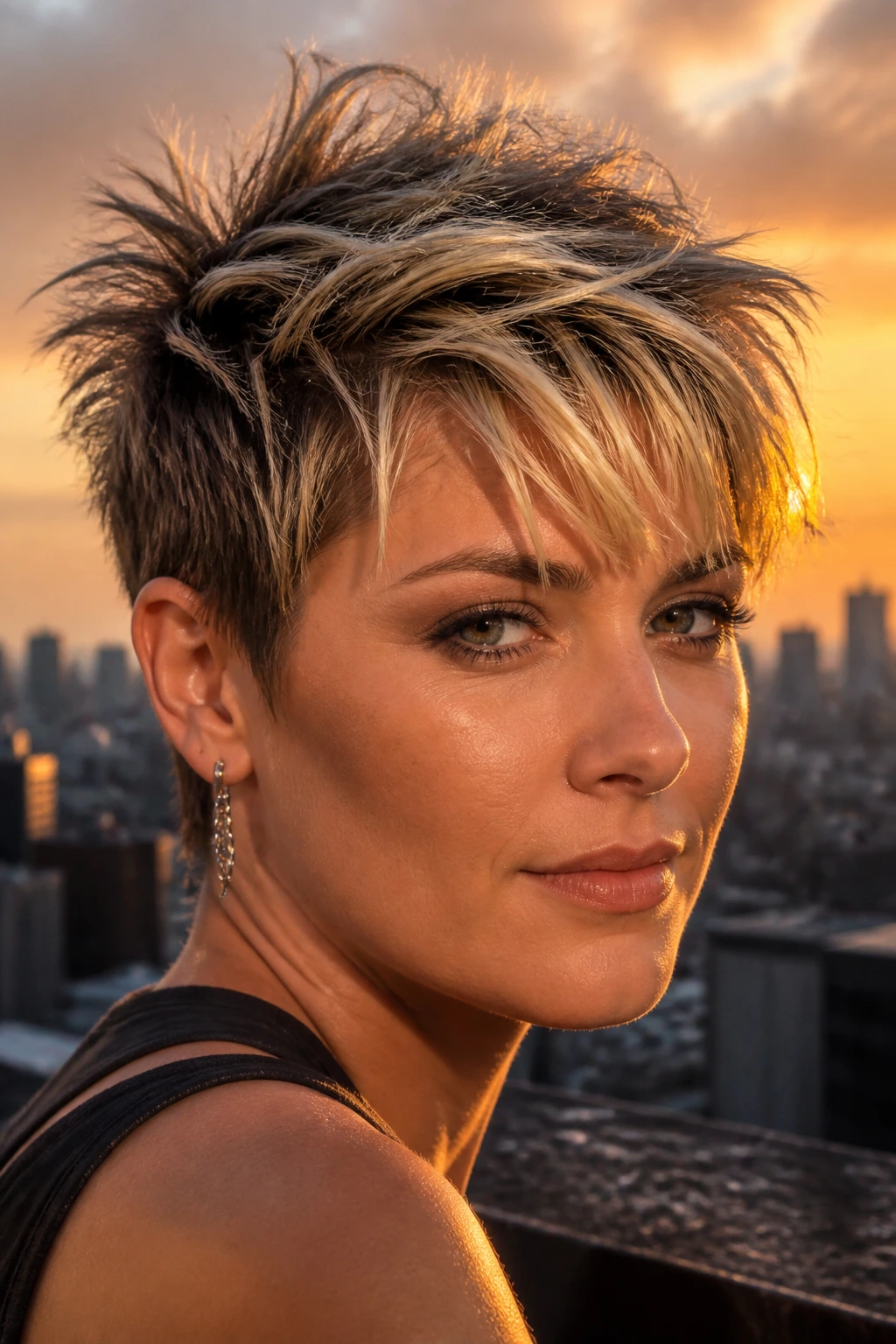
Frosted highlights and piecey texture go together like they were made for each other. The lighter strands show off every layer, which is half the fun of a short cut with movement.
A solid one-tone pixie can look too flat if the layers are busy. Add a few lighter ribbons through the top and fringe, and suddenly the cut reads more dimensional. The ends pop. The direction of the hair becomes easier to see. It’s not about making the hair blond all over; it’s about giving the texture somewhere to stand out.
I like this style on cuts that already have some separation in the layers. If the haircut is too blunt, frosted pieces can look stripy rather than lived-in. The better version keeps the roots a little deeper and the ends a touch lighter, which gives the hair a bit of contrast without turning it into a costume.
Use a wax stick or a tiny bit of paste to pinch out the pieces after styling. That part matters. Color alone won’t create texture. It only shows what’s already in the cut.
This is one of the easiest ways to make a short haircut feel lively in a mirror, in a photo, and in motion.
11. Permed Ringlet Pixie
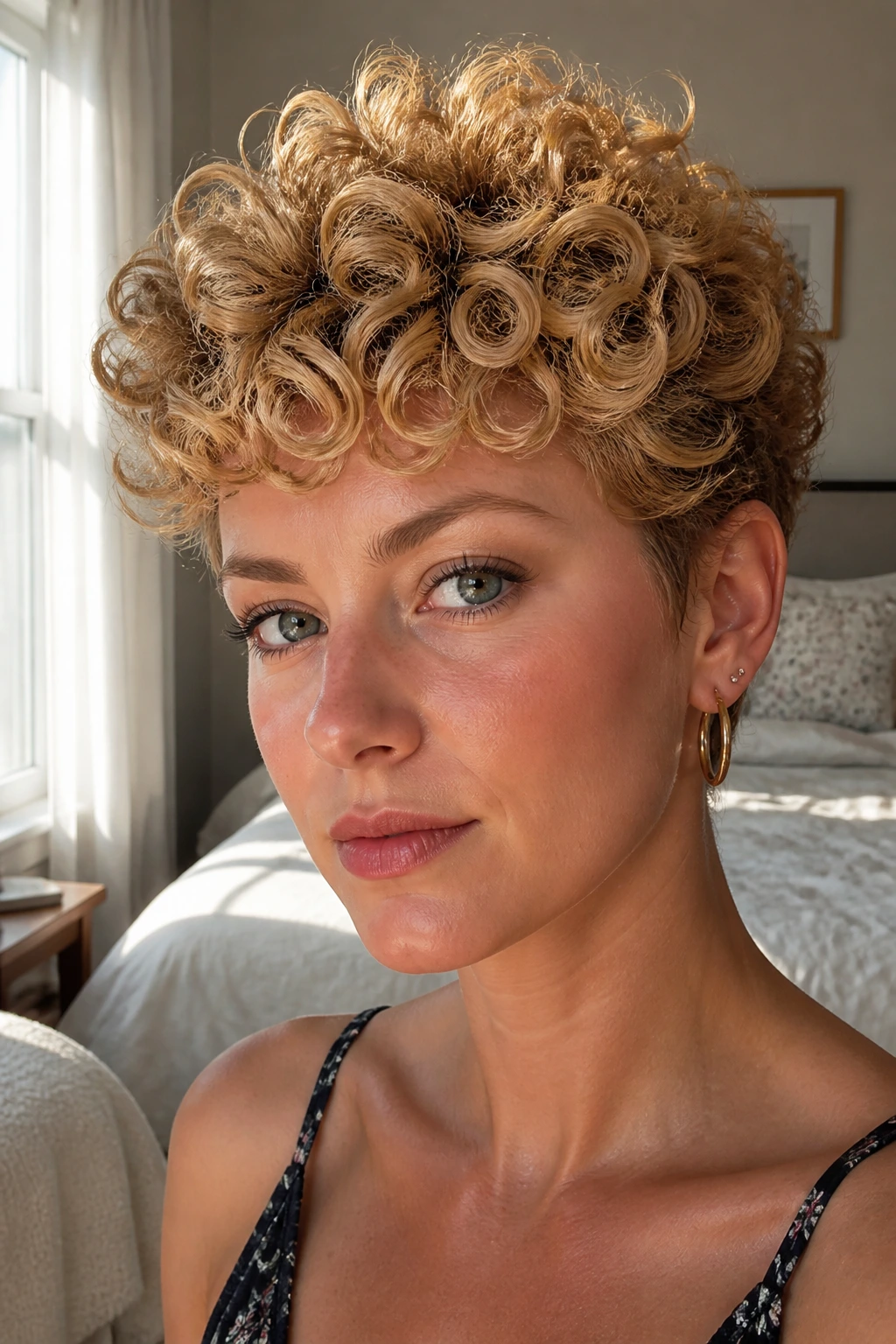
Permed texture and pixies have always had a strange little chemistry. Short hair plus curls can go adorable, bold, or plain chaotic, depending on the rod size and the cut underneath.
A pixie with permed texture works best when the curl is small enough to lift the crown but not so tight that the style balloons into a triangle. Rods around 1/4 to 1/2 inch usually create a tighter bend, while larger rods give a looser wave. The choice matters more than people think. A tiny rod gives height and grip. A bigger rod gives movement.
This cut has a lot of personality, but it does need maintenance. Permed hair can dry out faster, especially at the ends, so you want regular conditioning and a stylist who knows how to keep the shape balanced. If the cut is too heavy on top, the curls pile up. If it’s too short, you lose the definition you paid for.
One thing I appreciate here: it solves the “my hair goes flat in an hour” problem in a pretty direct way. The curl pattern does the lifting for you. Not a bad trade.
It’s not the lowest-maintenance choice in the list, though. You do have to respect the curl.
12. Soft Mullet Pixie
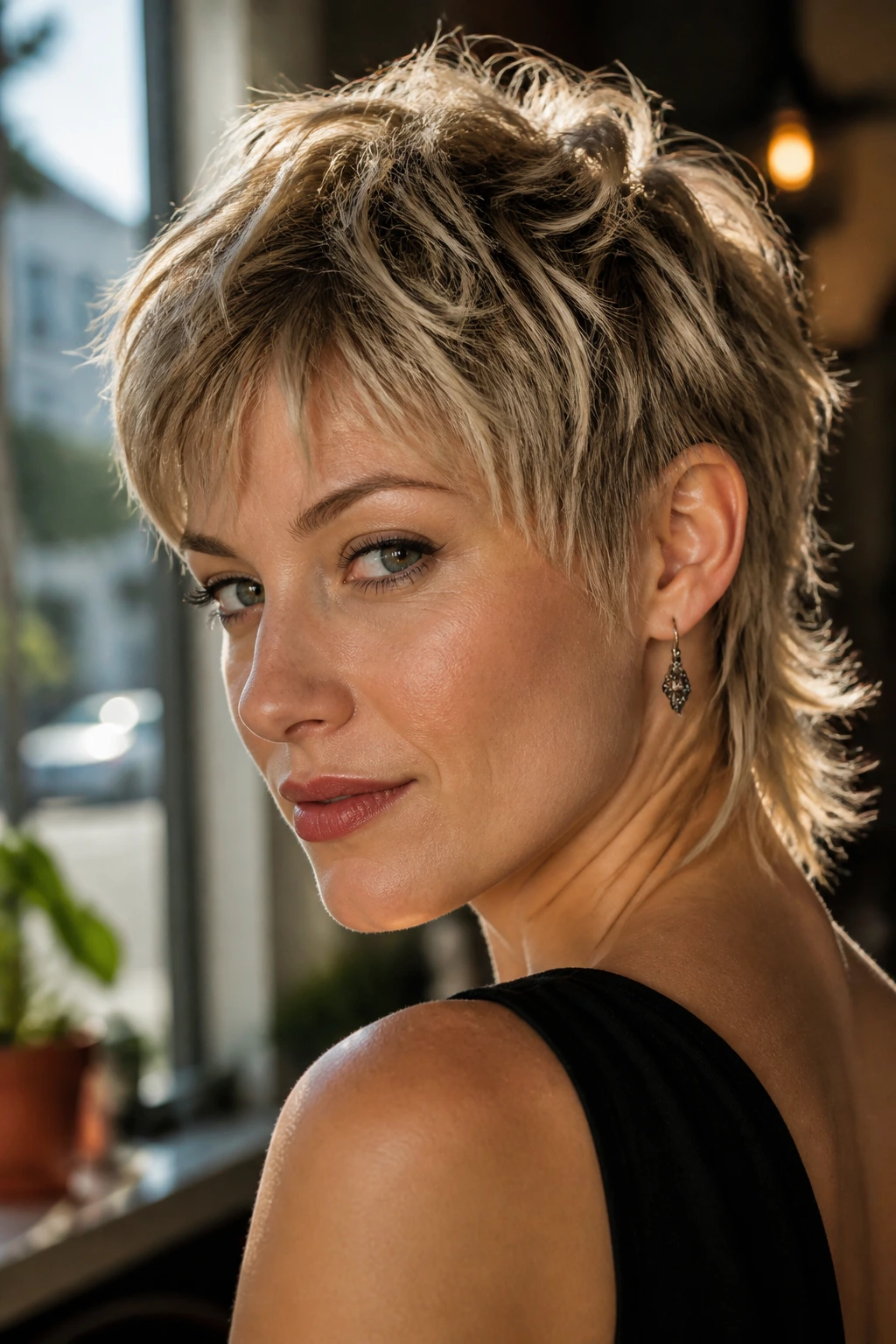
A soft mullet pixie keeps the front and sides short, then leaves a little more length at the back. Not a lot. Just enough to give the silhouette a tail end and a slight kick.
Unlike a strict pixie, this version doesn’t try to make the whole head one tidy shape. It lets the neckline breathe a little. That extra length at the nape can make the cut feel more relaxed, especially if your hair grows fast or if you hate constant trims. It also gives the style a bit of 80s mischief, which is the whole appeal for plenty of people.
The best version is still controlled. You want the back long enough to suggest a shape, not so long that it starts reading mullet in the loudest sense. A few short crown layers keep the top from collapsing, while the sides stay close enough to frame the face.
This is a good choice if you want edge but not a full punk statement. It wears well with glasses, sharp collars, and plain tees, which sounds random but really isn’t. Short, strange hair changes how clothes sit on you.
If you’ve ever wanted your pixie to feel a little less obedient, this is a strong place to start.
13. Sculpted Finger-Wave Pixie
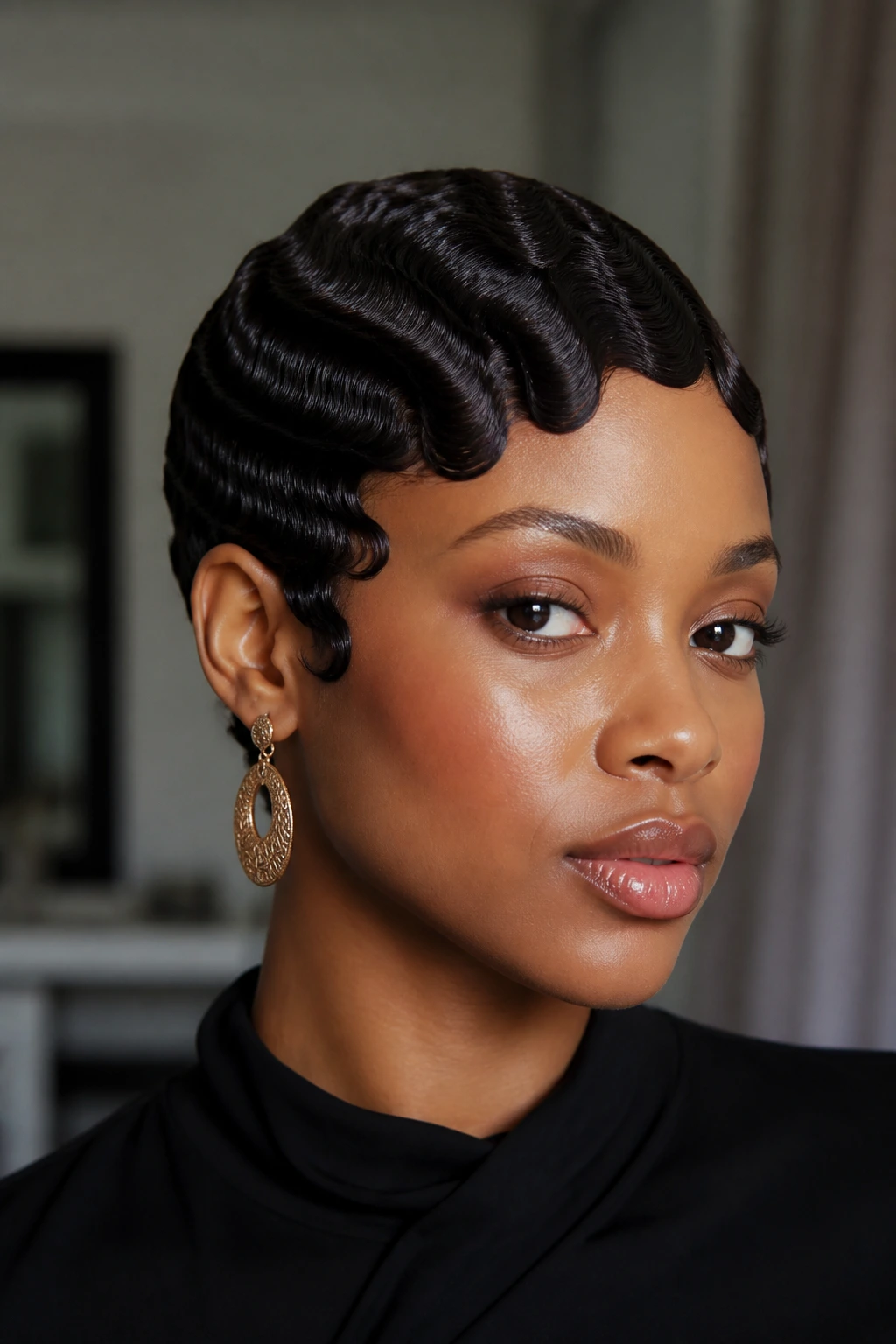
Finger waves on short hair can look almost architectural. Smooth ridges, curved sections, and a glossy finish give the pixie a more dressed-up feel than the rougher textured cuts.
The Curve and the Control
The trick is setting the hair while it’s still damp. Use a strong-hold gel, then shape the waves with your fingers or a small comb in 1-inch sections. The curves need to sit close to the head, so clips help hold the shape while it dries. Ten to fifteen minutes under a dryer cap or a careful air-dry can make a big difference.
- Work on small sections so the wave pattern stays clean.
- Use duckbill clips or wave clips to hold each ridge in place.
- Finish with a shine spray, not heavy oil.
- Keep the rest of the cut cropped tight so the waves remain the focus.
This style is for someone who likes precision. It does not pretend to be casual. The payoff is a pixie that feels elegant in a sharp, graphic way, with texture that reads as design rather than mess.
And yes, it takes more effort than a quick tousle. Worth it, though, when you want the cut to look intentional from every angle.
14. Punk Fringe Pixie
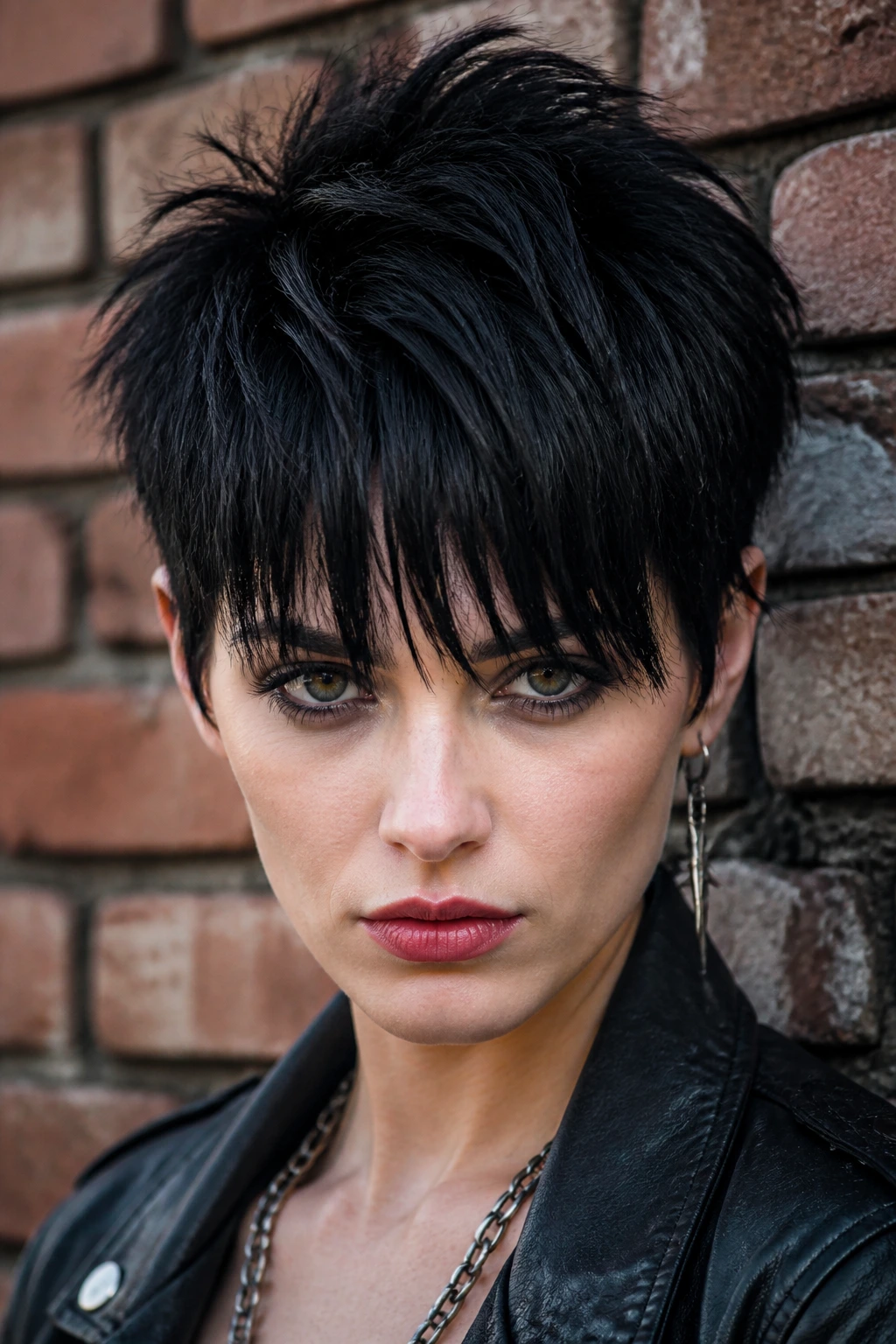
A heavy fringe changes everything. Put that fringe on a short, choppy pixie and the whole haircut feels louder, bolder, and a bit more defiant.
The fringe can sit forward, angle across the forehead, or break into uneven pieces that skim the brows. The rest of the cut usually stays short and tight, which keeps the focus up front where all the attitude lives. This is one of those 80s-inspired looks that doesn’t need much convincing. You either want the drama or you don’t.
A punk pixie works especially well when the ends are rough rather than polished. A little irregularity gives it life. Keep the top around 2 inches if you want the fringe to move, or shorter if you want a more graphic finish. Styling product should stay matte or semi-matte. Anything too shiny makes the cut look softer than it should.
Key details:
- Fringe length around 1½ to 3 inches, depending on forehead coverage.
- Shorter, tighter sides so the front carries the weight.
- Dry shampoo can help create grip on clean hair.
- A quick pinch of paste at the ends keeps the texture broken up.
This is not a quiet haircut. If you like quiet, skip ahead. If you like a cut that looks like it has opinions, this one delivers.
15. Rounded Brush-Back Pixie
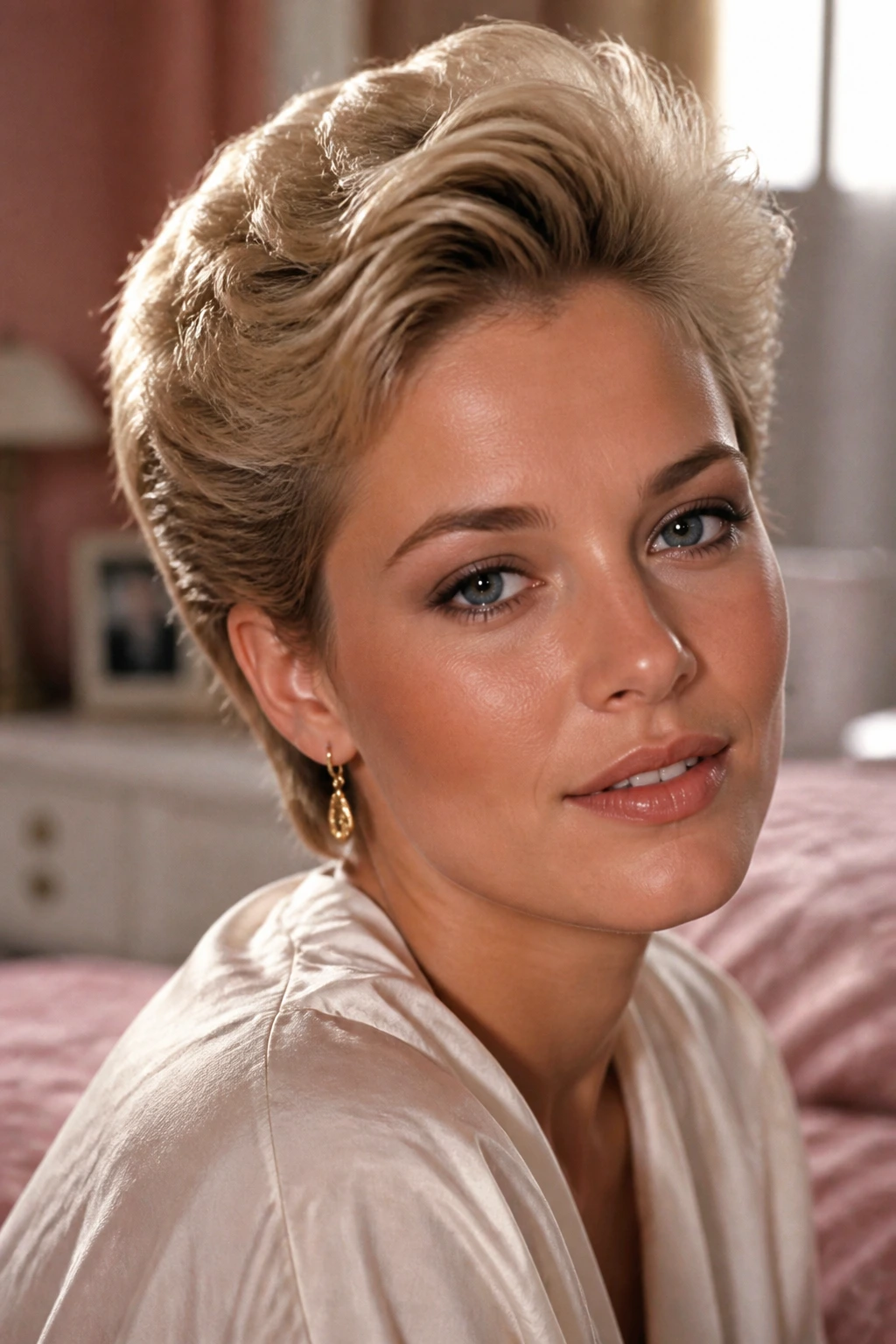
A rounded brush-back pixie is the polished cousin in this lineup. The hair is blown away from the face and shaped into a soft curve, with the crown lifted and the sides tucked in just enough to keep the silhouette neat.
Why does this still feel like an 80s cut? Because the volume is built into the shape, not bolted on afterward. The front rises. The crown rounds. The ends stay softly separated. It has that airy, brushed finish that makes short hair look fuller than it is, which is exactly why stylists kept coming back to this approach.
Best Hair Types
Fine hair gets a lot out of this cut because the brush-back motion creates instant lift. Thick hair can wear it too, but the layers need internal removal so the top doesn’t turn bulky. If your hair has a cowlick at the front, this style may need a little extra heat and a strong parting direction.
I’d style it with mousse at the roots, a round brush to lift the crown, and a touch of flexible spray when it cools. Not heavy spray. Heavy spray flattens the whole thing and kills the curve. That’s the recurring lesson with short hair: control without stiffness.
This is the pixie for someone who wants shape first and edge second. It still has texture, but it feels smoother, cleaner, and easier to wear with almost anything.
Final Thoughts
The best 80s pixie cuts were never about one exact formula. They used texture to change the shape of the head, the line of the face, and the mood of the whole haircut. Feathered, spiky, glossy, curly, asymmetrical — each one lands differently because the layering does real work.
If you want the easiest route, start with a tapered nape, a side-swept fringe, or a feathered crown. If you want something with more bite, go for punk fringe, asymmetry, or a wet-look finish. The good versions all share one thing: they look like the texture was planned, not left to chance.
And that’s the bit worth remembering. Short hair does not have to be tame. Give it shape, give it lift, and let the ends move a little.
