



A bob with fringe can look razor-sharp, soft, or a little messy in the best way, and that range is exactly why it keeps hanging around in salon chairs. The cut has a built-in advantage: the bob gives shape, while the fringe gives personality. Put those two together well, and you get something that feels pulled together even when the rest of your hair is doing its own thing.
The part people miss is balance. A heavy fringe with a tiny, wispy bob can feel odd. A blunt bob with a see-through fringe can feel half-finished. The best versions work because the perimeter, the fringe, and the styling all agree with each other. You can see it immediately. The line sits where it should. The hair moves in a believable way. Nothing looks pasted on.
I care most about how these cuts behave after the first ten minutes. A fringe that looks lovely in a mirror and then splits into awkward chunks by lunch is not doing its job. Neither is a bob that needs fifteen minutes of heat every morning just to stop looking flat. The styles below lean into shape, texture, and wearability, which is what makes them worth keeping in the real world.
1. The Chin-Length Blunt Bob With a Heavy Fringe
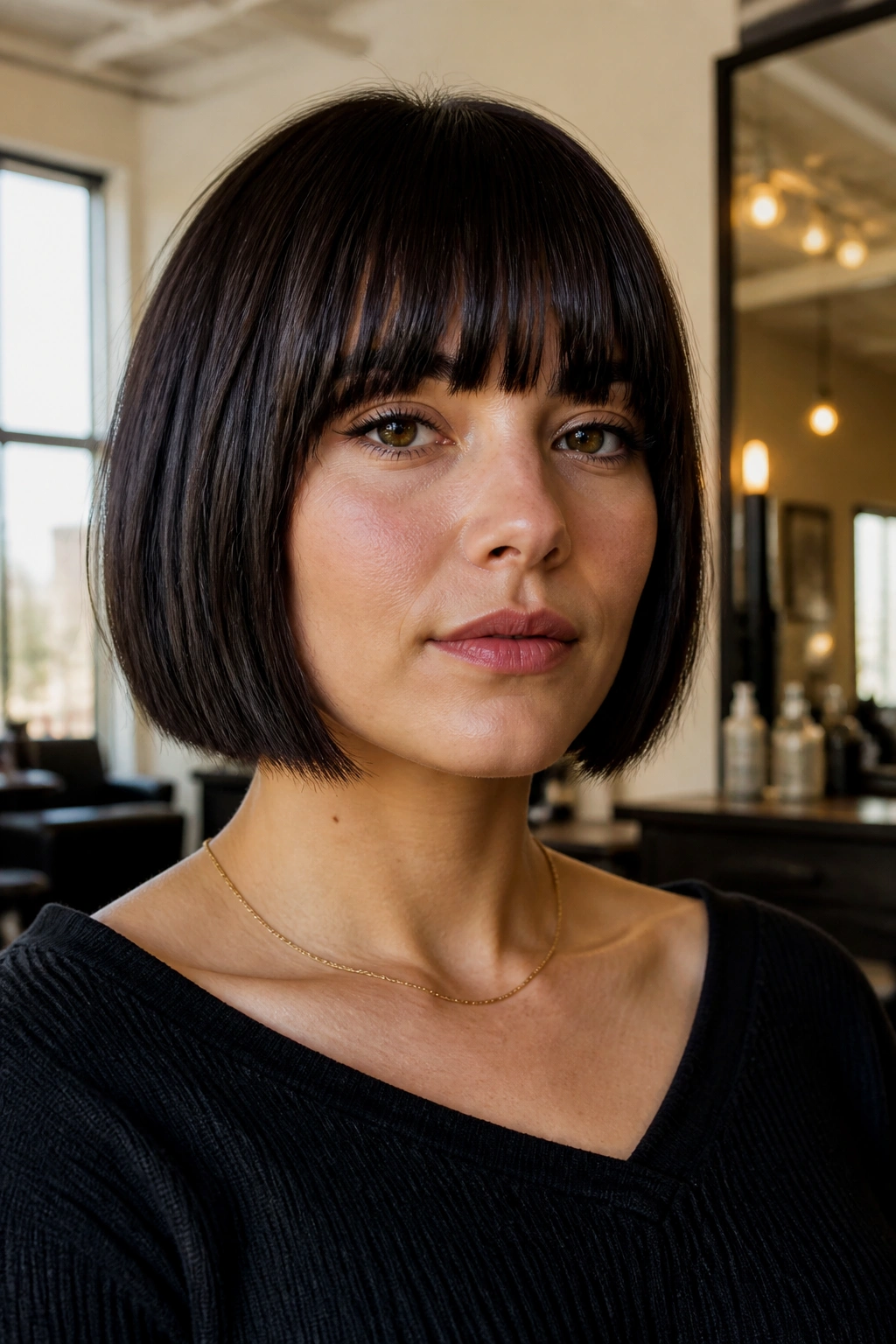
This is the sharpest version of the bunch, and I mean that in a good way. A chin-length blunt bob with a heavy fringe looks clean from every angle because the ends all land with purpose. There’s no softness to hide behind. That’s the appeal.
Why the blunt line matters
A blunt edge makes the hair look thicker than it is. Fine hair gets a little more body, and thicker hair looks deliberate instead of puffed out. The fringe does the same job up front. When it’s cut dense enough to sit as one clear shape, it anchors the whole haircut.
This cut likes straight or slightly wavy hair best. Strong curl can work too, but only if you are happy to blow-dry the fringe smooth and keep the bob under control with a round brush or flat iron. The point is crispness, not fuss.
- Best length: chin level or just above it
- Best fringe: full and dense, sitting close to the brows
- Best styling tool: a flat brush or 1-inch round brush
- Best face match: oval, heart, and narrower jaw shapes
My strong advice: keep the fringe blunt, but not boxy. A tiny bit of curve at the edges stops it from looking helmet-like.
2. The French Bob With Eyebrow-Skimming Bangs

The French bob survives because it looks easy even when it isn’t. The cut usually sits a little shorter, often around the cheekbone or jaw, and the fringe barely brushes the brows. It has that neat, slightly insouciant feel that makes people think you just woke up like this. You didn’t. But it’s nice that it gives that impression.
The real strength here is proportion. A shorter bob can look severe if the fringe is too heavy. Keep the bangs light enough to show a bit of forehead, and the whole thing softens. That’s the difference between chic and stiff.
I like this shape on fine to medium hair because it does not need a ton of volume to work. A little root lift, a quick bend through the ends, and you’re done. If your hair falls flat easily, this cut still has structure. If your hair has a natural wave, even better.
The key is not overdoing the styling. A light mousse at the roots and a small round brush are usually enough. Let the fringe fall a touch imperfectly. That little break in the line is part of the charm.
3. The Airy Italian Bob With a Feathered Fringe
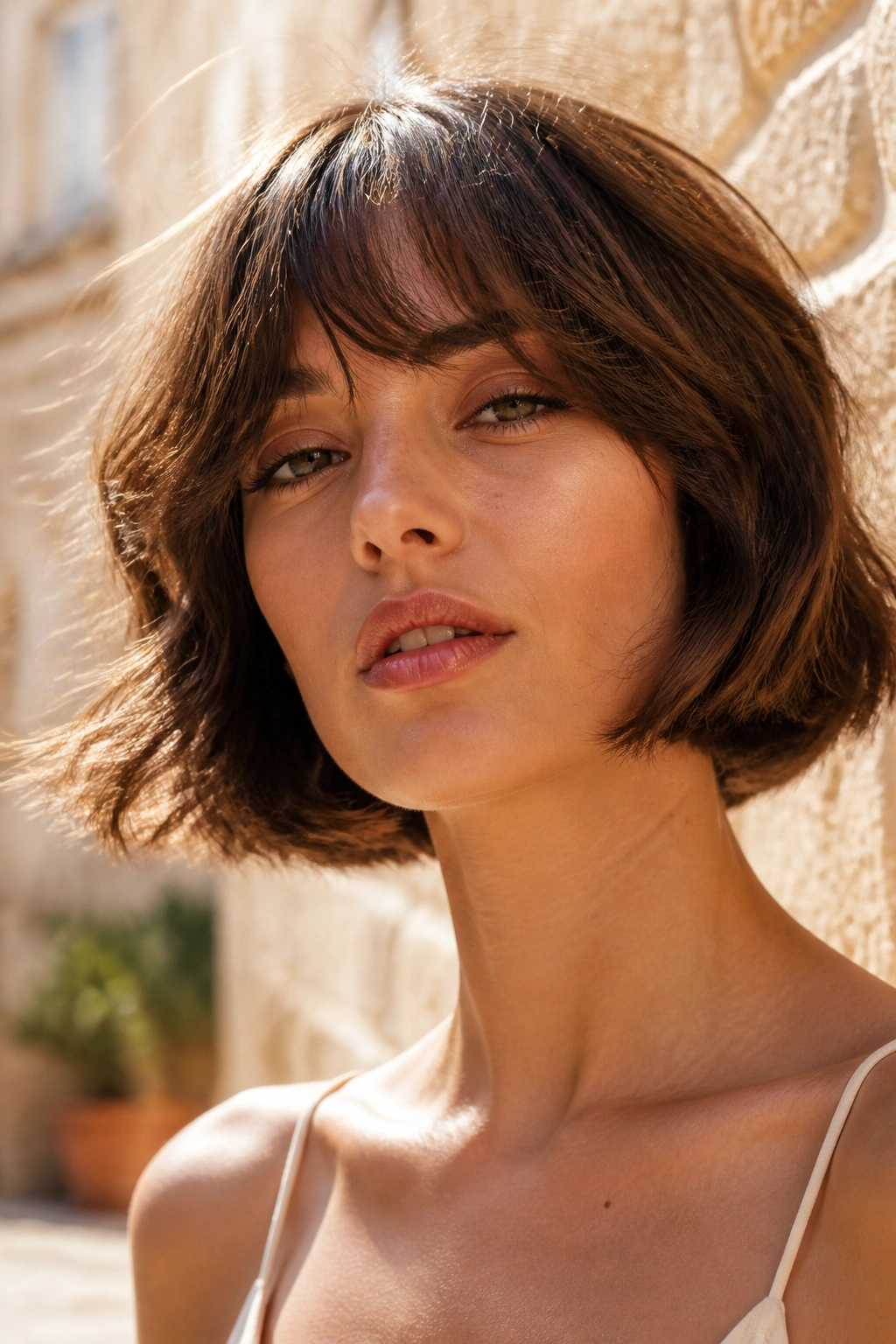
Why does this one feel softer than a blunt bob? Because the ends and fringe are both cut with movement in mind. An airy Italian bob usually lands between the jaw and the neck, with a fringe that is feathered instead of packed full. The result is fullness without weight.
How to wear it
The trick is to keep the shape buoyant. A round brush helps the ends curve under just enough, while the fringe should be blow-dried forward and then gently separated with your fingers. No stiff shellacked finish. That ruins the whole point.
This is one of the better options for medium to thick hair because a little internal movement helps the cut sit better. Too many layers, though, and the silhouette starts to lose its polish. You want feathering, not thinning for the sake of thinning.
A soft blowout makes this cut sing. A large round brush, a medium heat setting, and a touch of smoothing cream on the mids and ends are usually enough. If you like your hair to feel touchable and not frozen in place, this is a strong pick.
4. The Jaw-Grazing Bob With Curtain Fringe

If you tuck your hair behind one ear a lot, this cut starts to make sense fast. The jaw-grazing bob with curtain fringe gives you that face-framing shape even when the rest of the hair is tucked, bent, or pushed aside. It is one of the easiest ways to make a shorter bob feel less blunt and more relaxed.
The fringe is the star here. Split down the center or slightly off-center, it opens around the face instead of sitting like a wall across the forehead. That makes the cut feel softer, and it also gives you a little flexibility when the fringe grows out. Grow-out matters more than people admit.
- Ask for the fringe to start just below the brow line
- Keep the shortest pieces near the bridge of the nose or cheekbone
- Let the outer corners fall into the bob, not stop abruptly
- Works especially well with loose bends or natural waves
The nicest thing about curtain fringe is that it buys you time. A straight fringe starts complaining the minute it grows. This one keeps looking intentional longer.
5. The Glassy Sleek Bob With a Side-Swept Fringe
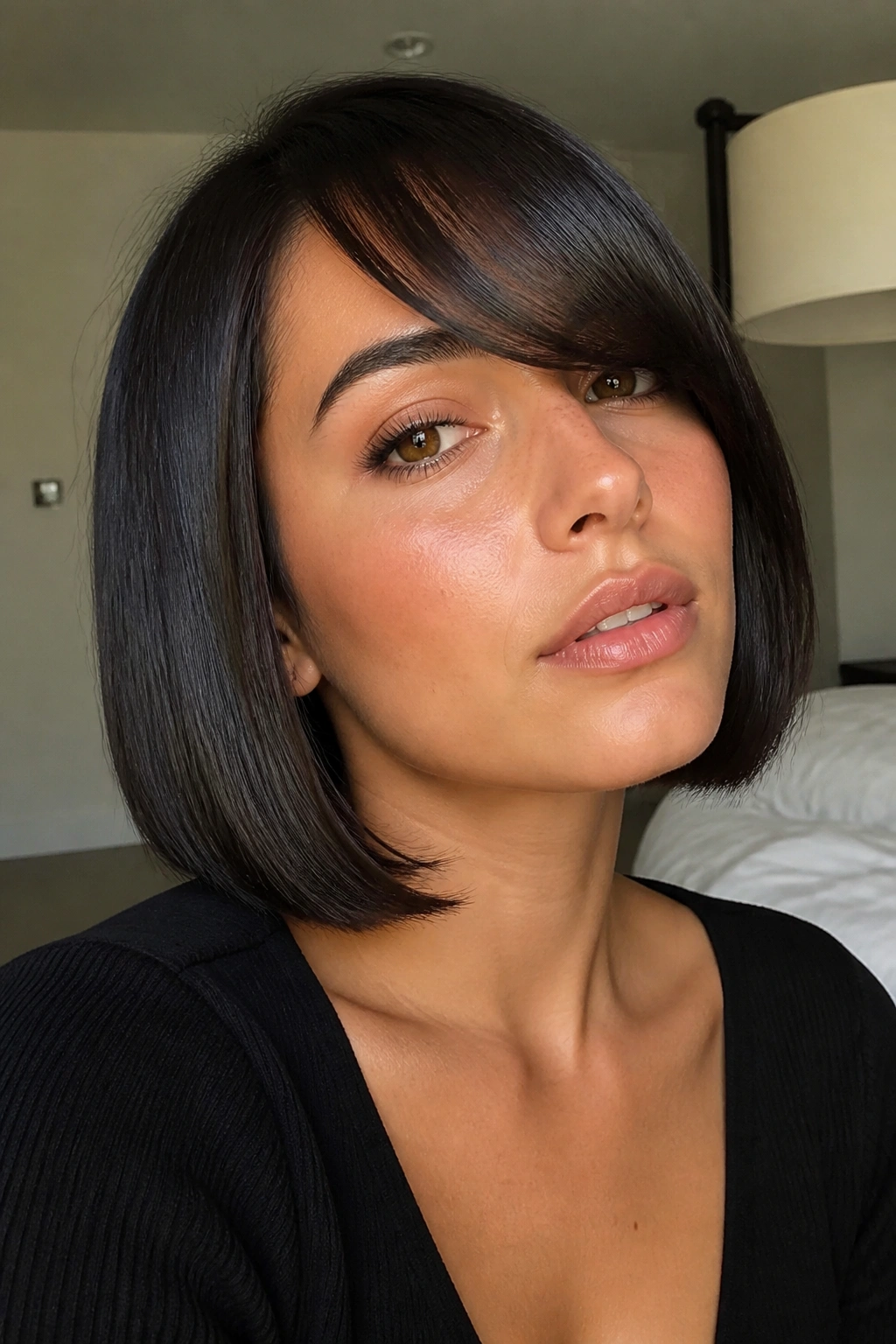
A sleek bob with a side-swept fringe has a very different mood from the softer cuts above. It is polished, a little dramatic, and much less forgiving of sloppy drying. But when it’s done well, it has a kind of clean force that I never get tired of seeing.
The shine matters here. So does tension. Blow-dry the hair smooth, then pass a flat iron through in small sections if needed, keeping the ends slightly tucked under. The fringe should sweep diagonally across the forehead with enough weight to stay put, but not so much that it blocks the face.
It’s a good option if your hair naturally falls to one side or if you have a cowlick that refuses to cooperate with straight-across bangs. A side sweep can work with that pattern instead of fighting it. That alone is worth considering.
Use a lightweight gloss cream or a drop of serum on the ends. Too much and the bob starts looking greasy. Too little and the finish goes fuzzy by noon. There is a narrow sweet spot here, and once you find it, the cut looks expensive without being loud.
6. The Wavy Bob With a Broken, Piecey Fringe

Unlike a full fringe, this one does not pretend every hair should sit in a perfect row. The wavy bob with a broken, piecey fringe leaves little gaps, movement, and air around the face. That makes it easier to wear if your hair has texture already, or if you want a cut that looks better a little undone.
It’s a relief, honestly. Some fringes fight every shift in humidity. This one leans into the mess a bit. The bob itself usually lands around the cheekbone or just below the jaw, with soft waves through the mids and ends. The fringe follows the same logic. It should look separated, not chopped into a neat little strip.
This version is especially kind to finer hair because the piecey fringe doesn’t steal too much density from the front. Add texture spray, scrunch once or twice, and leave it alone. The less you fuss, the better it behaves.
If you want a bob with fringe that can look good on day two, this is one of the easiest to keep alive with dry shampoo and your fingers.
7. The Boxy Bob With a Full Straight Fringe

A full straight fringe changes everything. It makes the bob feel graphic, almost architectural, and that’s exactly why some people love it. The boxy bob underneath supports the strong fringe line, so the whole cut lands with a clean, squared-off shape that reads bold without needing any extras.
What to ask your stylist
You want the perimeter to stay blunt. You also want the fringe to be dense enough to sit as one panel across the forehead. If the ends are thinned too much, the shape starts to wobble. That wobble is the enemy here.
This style suits people who like a bit of structure in their clothes too. It pairs well with sharp collars, simple earrings, and minimal styling. If your wardrobe leans soft and flowy, the cut can still work, but it will create a stronger contrast.
- Keep the fringe heavy and even
- Ask for little to no internal layering
- Let the sides sit at jaw length or slightly below
- Use a paddle brush for drying if you want a flatter finish
I would not call this low-maintenance. It is not. But it is one of the most satisfying fringe-and-bob combinations when you want the haircut itself to do the talking.
8. The Soft A-Line Bob With Brow-Graze Fringe

This is the easiest way to keep a bob with fringe from feeling harsh. The back sits a little shorter, the front drifts longer toward the jaw, and the fringe skims the brows instead of cutting across them like a ruler. The whole shape has a built-in slope, and that slope changes the mood completely.
A soft A-line bob works well if you want movement without layers everywhere. It gives the hair a direction. It also helps thick hair collapse a little more neatly, which is a blessing if your ends tend to stick out at odd angles. The fringe should stay gentle and slightly blended into the front pieces.
I like this cut for people who want polish but do not want to look severe. The back gives lift. The front gives softness. The fringe ties both together. Easy to say, harder to get wrong if the stylist understands proportions.
Use a round brush to guide the front pieces forward and under. A small amount of styling cream on the fringe keeps it from splitting too much, especially if your hairline likes to fight back.
9. The Curly Bob With a Curly Fringe
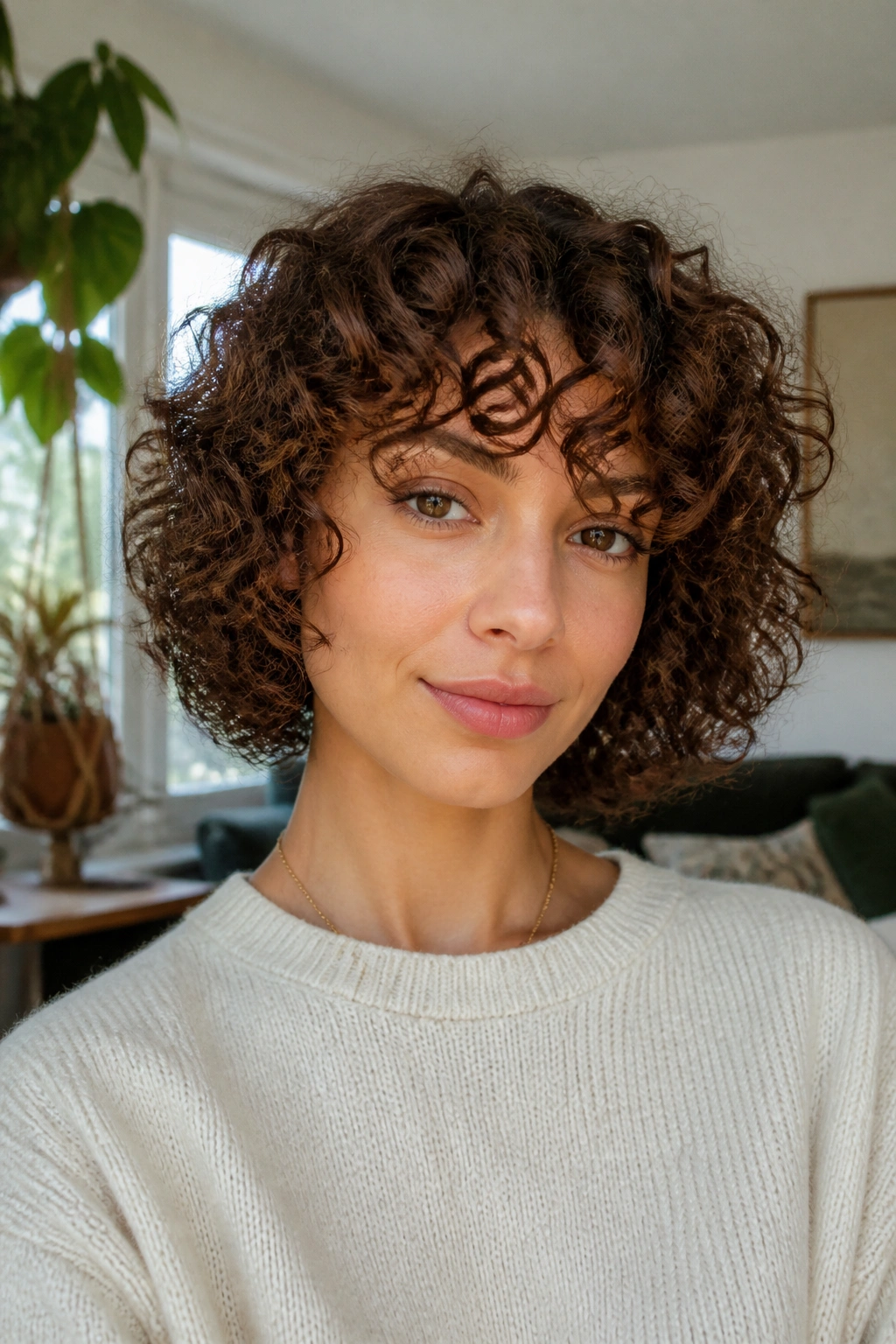
Can fringe work on curls? Absolutely — if the cut respects the curl pattern instead of bullying it. A curly bob with a curly fringe looks best when the fringe is cut dry, curl by curl, so the final shape matches how the hair actually lives. That part matters more than people think.
The fringe here should sit longer than you expect. Curl shrinkage is real, and a fringe that looks safe on the cutting chair can spring up much shorter once it dries. A stylist who understands your curl pattern will leave room for that movement and shape the front in a way that frames the eyes without fighting the coil.
How to style it
Use a curl cream on damp hair, then scrunch the fringe lightly with your hands. Diffuse on low heat or let it air-dry if your curl pattern holds shape on its own. After it dries, separate any clumps with a drop of oil on your fingertips.
Do not brush this cut when it’s dry. That turns a shaped curl into a puffball fast. If you want the fringe to stay flattering, the cut has to do the heavy lifting, and your styling has to stay gentle.
10. The Shaggy Bob With Choppy Fringe
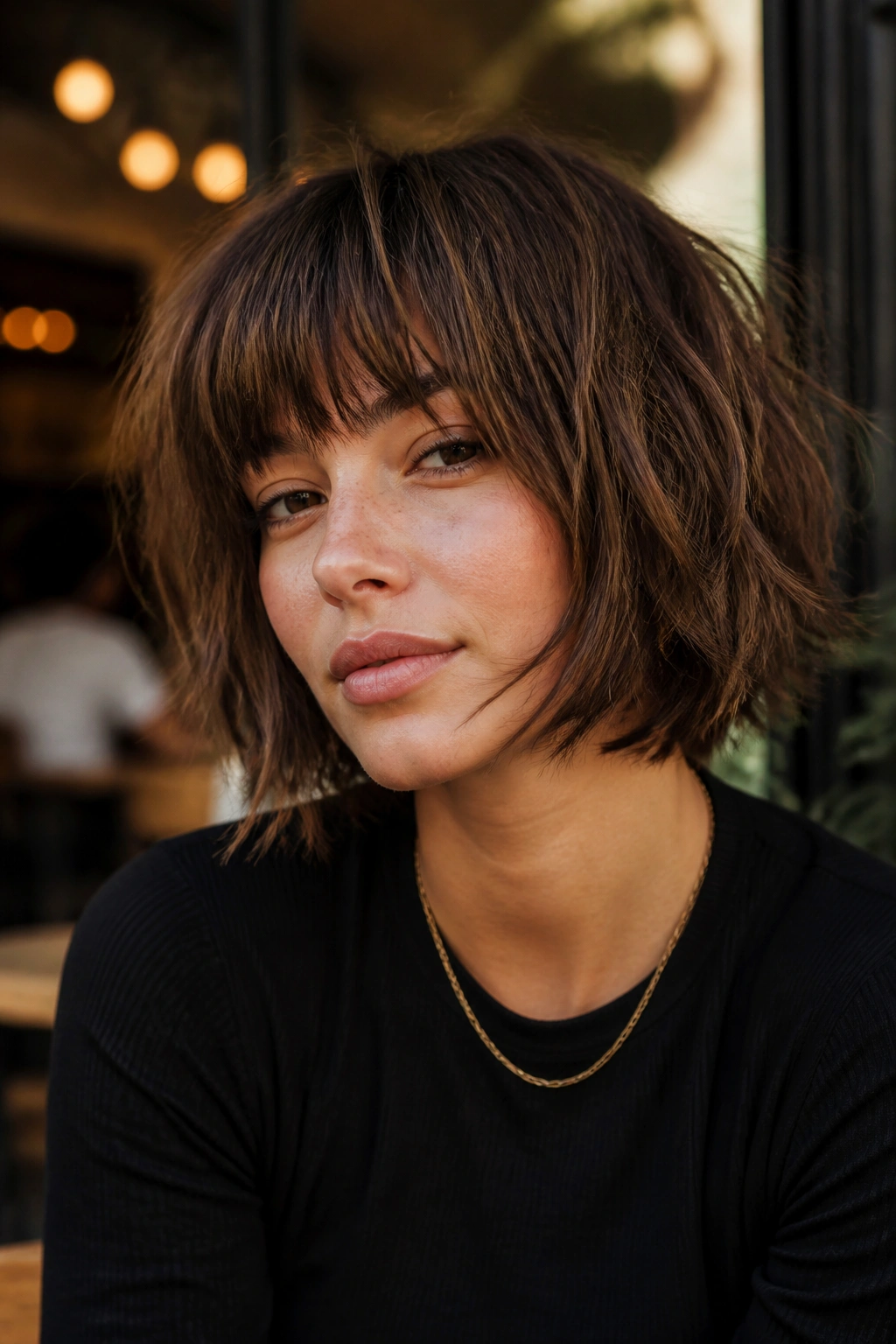
If your hair gets puffy by noon, the shaggy bob with choppy fringe can feel like a small mercy. It breaks up bulk, keeps the shape loose, and gives the fringe enough texture to avoid that flat, helmet-like line that some blunt cuts fall into. The whole thing looks lived-in on purpose.
The magic is in the layers. Not too many, not too few. The bob usually sits somewhere around the jaw or upper neck, and the fringe is cut into uneven pieces so it blends with the rest of the haircut instead of sitting on top of it. That makes the front move more naturally when you turn your head.
- Best for thick or dense hair
- Good choice if your hair goes flat at the roots
- Works with texture cream or a light matte spray
- Needs a trim before the layers start drifting too far apart
This cut has a bit of attitude, but it is not trying to be perfect. That’s the point. It looks best when there is a little bend, a little separation, and a little second-day grit.
11. The Tucked-Under Bob With a Slim Fringe
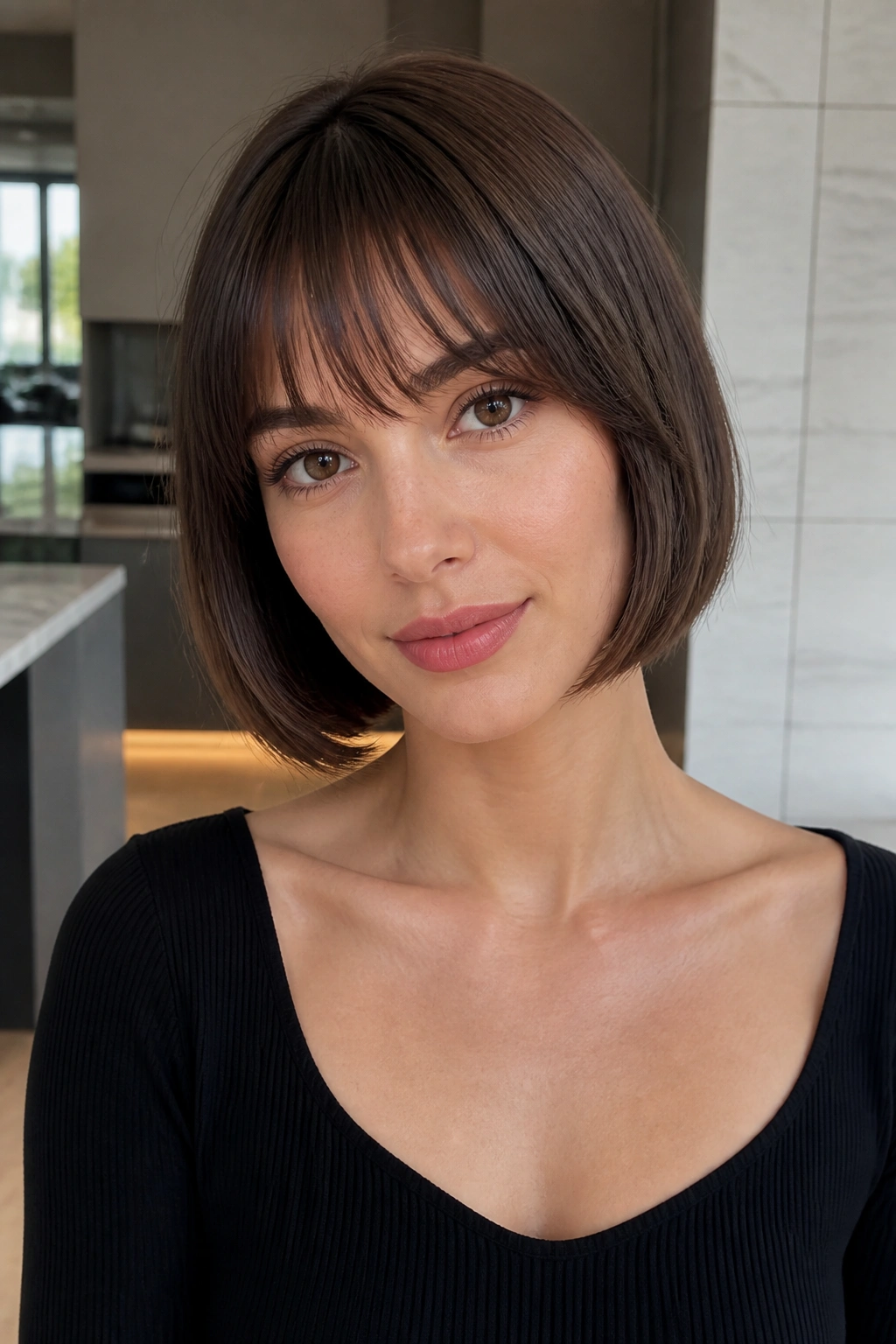
A tucked-under bob is one of those cuts that looks neat fast. The ends curve inward toward the neck, the fringe stays slim and controlled, and the whole shape has that tidy, blowout feel even if you only spent ten minutes on it. It’s understated, but not boring.
The slim fringe is what keeps it from turning too heavy. A narrow fringe shows more forehead, which lightens the face and stops the bob from feeling boxed in. If your hair is fine, this can be a smart move. If your hair is medium density, it can still work beautifully as long as the fringe is not cut too thick.
I like this on hair that holds a smooth blow-dry without needing a lot of product. A round brush, a medium heat setting, and a tiny amount of cream at the ends usually do it. The ends should curve under just enough to feel deliberate.
There is a quiet confidence to this cut. Not flashy. Just neat, balanced, and easy to wear with almost anything.
12. The Asymmetrical Bob With a Diagonal Fringe
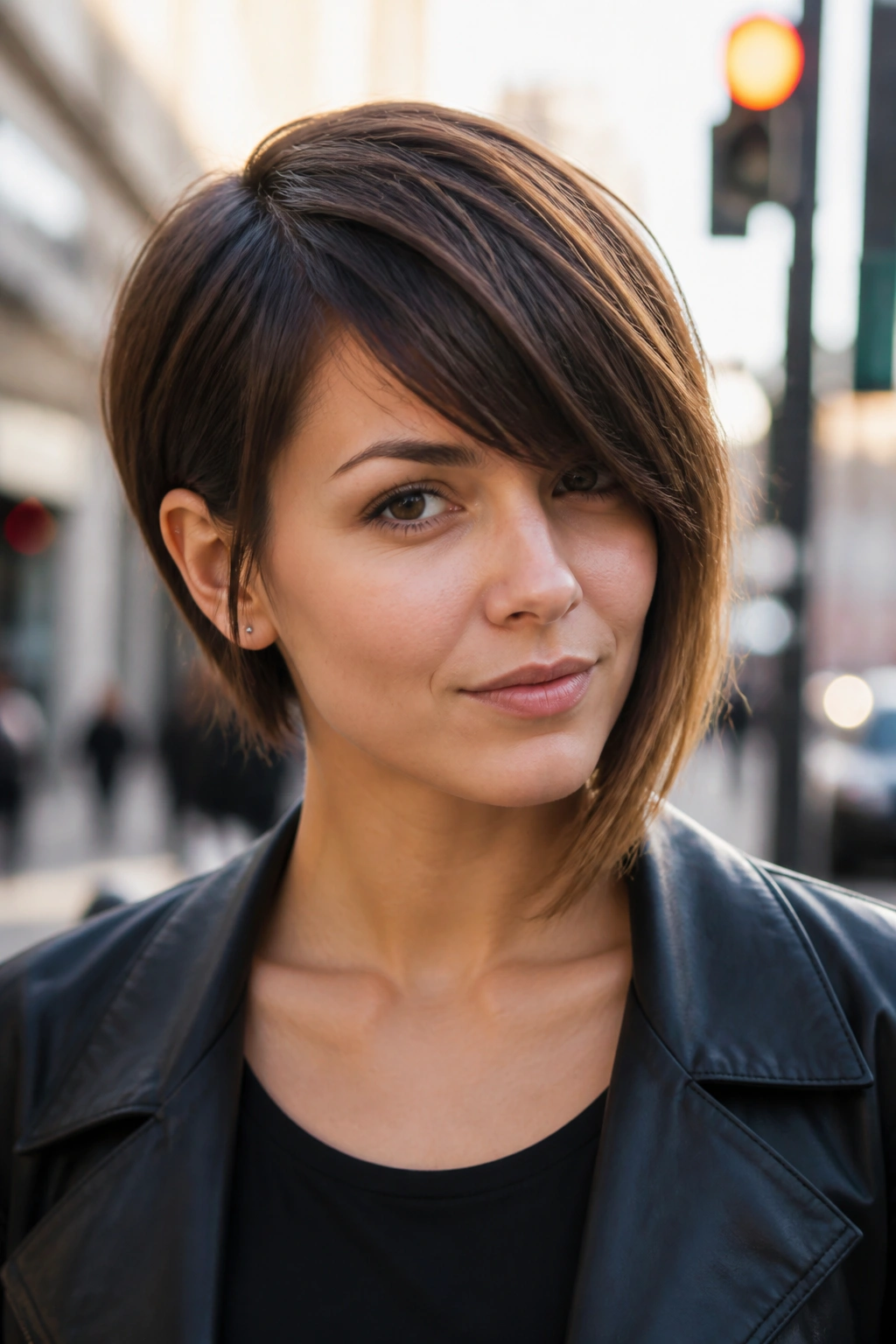
A straight-on fringe can feel too even for some faces. A diagonal fringe fixes that fast. Paired with an asymmetrical bob, where one side sits a little longer than the other, the cut creates a line that moves across the face instead of stopping dead at the cheeks.
That diagonal line does a nice job of softening strong features. It can take attention off a very square jaw or balance a forehead that feels wider than you want it to. The asymmetry does not need to be dramatic. Even a small difference in length can shift the whole mood of the cut.
This one works best when the haircut stays clean, not over-layered. The whole idea is a controlled angle, not a messy one. A smooth blow-dry and a slight bend at the ends help the geometry show up properly.
I’d recommend it for someone who wants a bob with fringe that feels less predictable. It has personality without asking for a full styling routine every day, which is a rare and welcome thing.
13. The Rounded Bob With a Baby Fringe
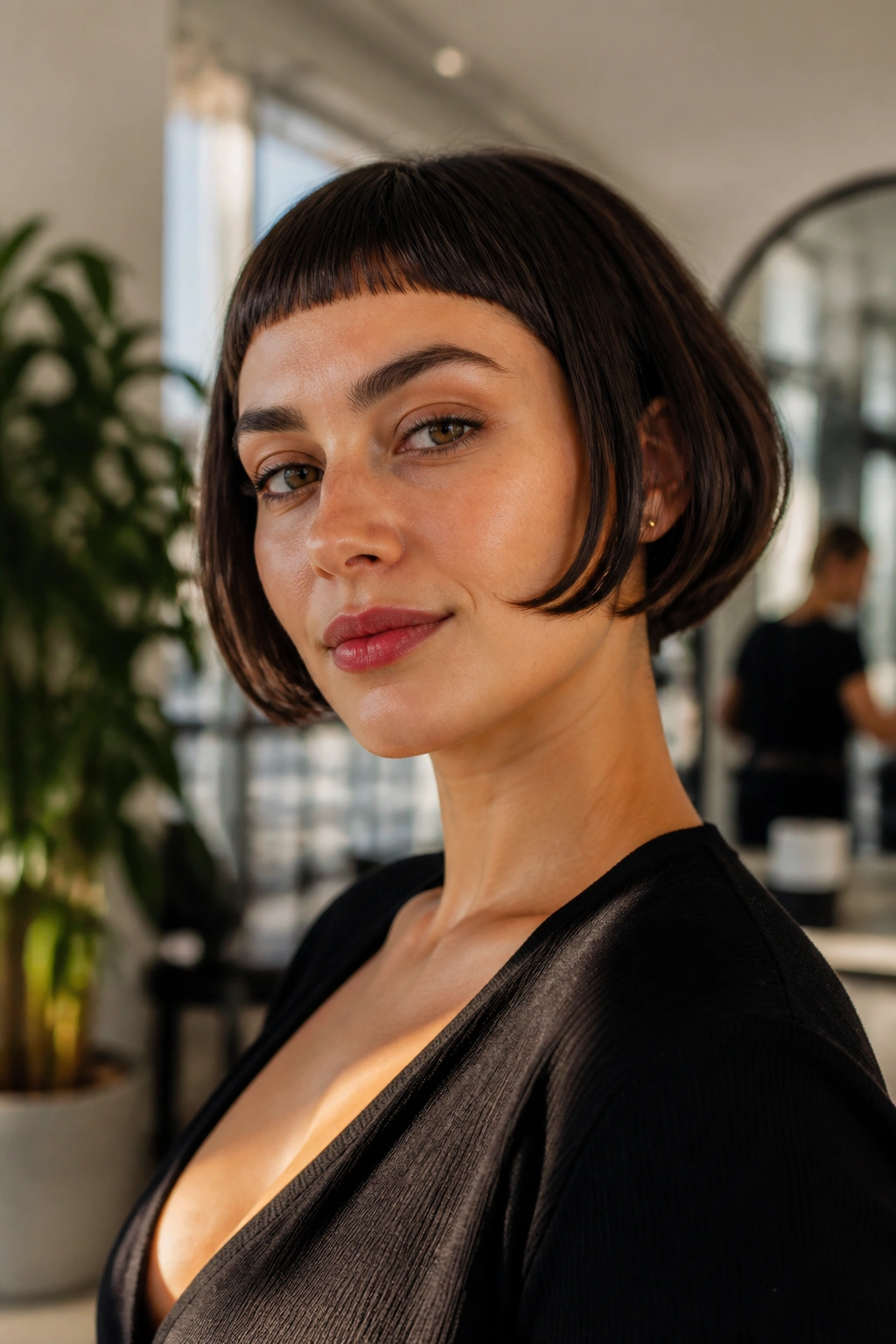
This is the riskiest cut on the list, and that is part of the appeal. A rounded bob with a baby fringe has a strong editorial edge because the fringe sits well above the brows and the bob curves around the head instead of falling straight. It is a look, not a background haircut.
What to know before you try it
The baby fringe draws attention straight to the eyes, so it works best when you want that area to stand out. It can be lovely on oval and heart-shaped faces, and it can also suit petite features that get lost under a heavier fringe. The round bob adds softness so the short fringe does not feel too severe.
- Needs frequent trims to keep the fringe from growing awkwardly
- Works best when the bob hugs the cheek and jaw
- Pairs well with bold earrings or a strong lip
- Needs a stylist who is comfortable cutting short fringe
This is not the easy option, and I would not recommend it to someone who wants a low-maintenance cut. But if you like a sharper, more fashion-forward shape, it has a lot of character.
14. The Collarbone Bob With a Bottleneck Fringe
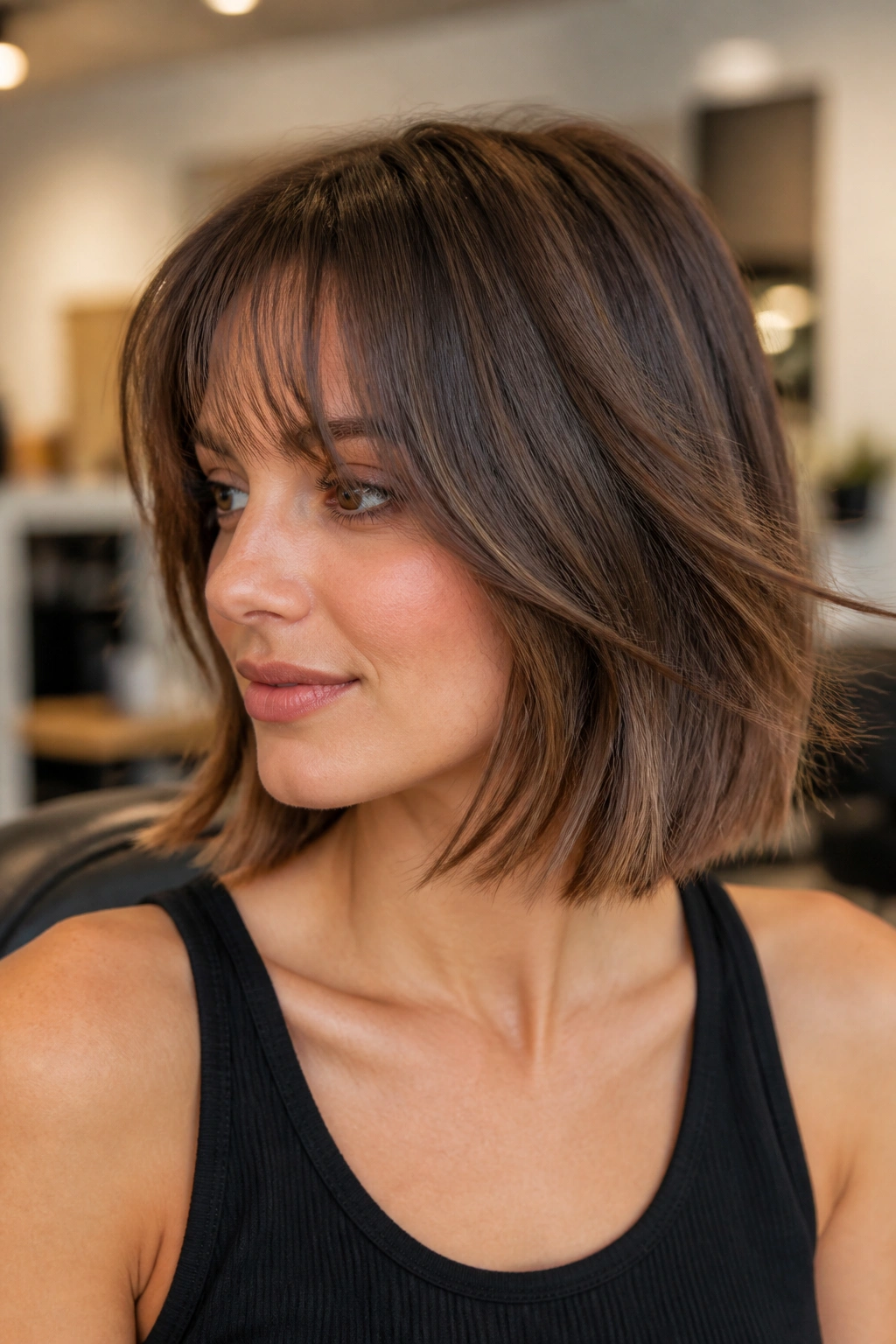
The collarbone bob is the most wearable bridge between long hair and a shorter cut, and the bottleneck fringe is the reason it works so well. The fringe starts shorter in the middle, then opens longer around the temples, which gives the face a soft frame without committing to a heavy curtain or a full blunt line.
That shape grows out better than a lot of fringe styles. It also works with hair that needs a little length to feel settled. If your ends start to flip strangely when they get too short, the collarbone length gives them room to behave. You still get the bob shape, just with more ease.
How to style the bottleneck shape
Blow-dry the fringe forward first, then sweep the sides away from the face with a round brush or your fingers. Keep the middle section a touch shorter so the eye lands there, then let the outer pieces skim the cheekbones. That bit of softness helps the whole style move.
This one is a smart choice if you want a fringe but do not want to feel trapped by it. It gives you shape, then gives you a way out if you decide to grow it later.
15. The Retro Flipped Bob With a Brushed-Out Fringe

The ends flick outward, the fringe softens at the brow line, and the whole haircut carries a little old-school polish without turning costume-y. That is the charm of a retro flipped bob with a brushed-out fringe. It feels styled, but not stiff.
A large round brush is your friend here. Blow-dry the bob with the ends turning slightly away from the neck, then brush the fringe so it breaks into a softer line instead of sitting flat and severe. The result is looser than a classic pin-straight bob, which makes it easier to wear with casual clothes.
This cut especially suits straight to wavy hair that can hold a bend. If your hair falls too flat, a bit of mousse at the roots helps. If it flips too much, reduce the heat and let the ends cool around the brush before releasing them.
There is something pleasing about a bob with fringe that looks finished without looking precious. This is one of those cuts. It can make a plain T-shirt look pulled together, which is about as useful as a haircut gets.
