



Punk pixie cuts are not polite haircuts. They sit close to the head, then refuse to stay neat for long. A good one looks a little rough on purpose — as if the wearer had better things to do than fuss with a comb — but the shape underneath still has to be sharp.
If the cut is too blunt, it turns boxy. Too soft, and the attitude disappears. That is the annoying part of short hair: every millimeter shows, and bad layers show up fast.
The best versions usually do one of three things. They remove weight at the sides, keep the top piecey, or use fringe and color to steer attention exactly where you want it. When those pieces line up, the haircut has edge before you even touch product.
Some of these looks are easy to wear with a fingerful of paste. Others need a razor, an undercut, or a little bleach discipline. All of them can work on the right head, and the trick is choosing the kind of bold you actually want to live with.
1. Choppy Razor Punk Pixie
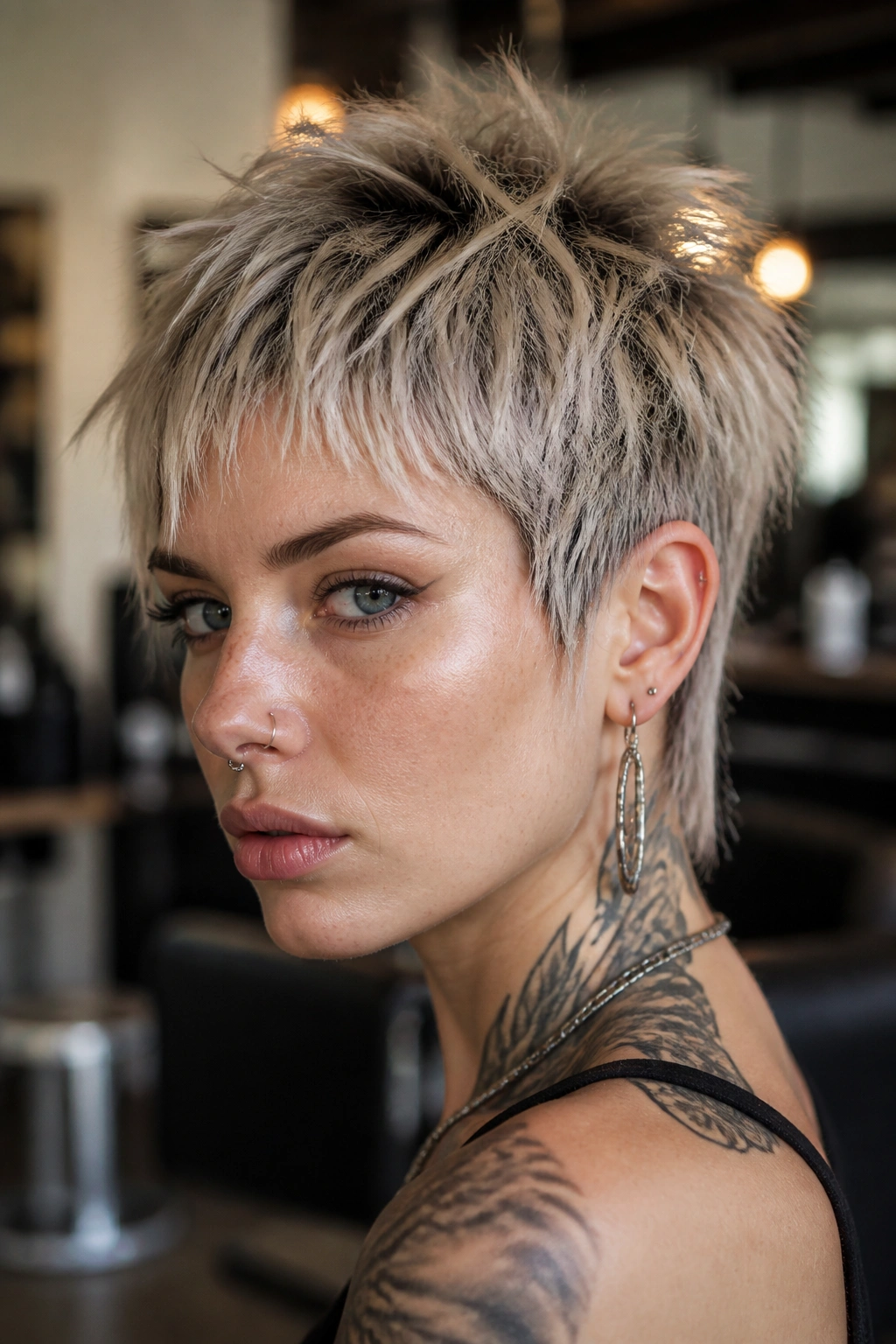
A razor-cut pixie has a built-in swagger that scissors alone rarely give you. The ends look broken in a good way, like they were chipped and softened at the same time, which keeps the cut from feeling helmet-stiff.
What makes this style sing is the contrast between the tidy outline and the messy top. Keep the sides snug, leave the crown a little longer, and let the razor create tiny gaps through the layers so the hair moves when you turn your head. That movement matters. Without it, the cut can look like a standard short crop.
This one works especially well if your hair is thick or straight and tends to sit in one heavy block. Ask for pointed, feathered ends rather than a blunt edge, then style with a pea-sized amount of matte paste. Warm it in your palms first. Then pinch the top pieces upward and outward until they separate into thin little spikes instead of one clump.
A lot of people overdo the product here. Don’t. You want texture, not sticky sculpture.
2. Undercut Punk Pixie with Shaved Sides
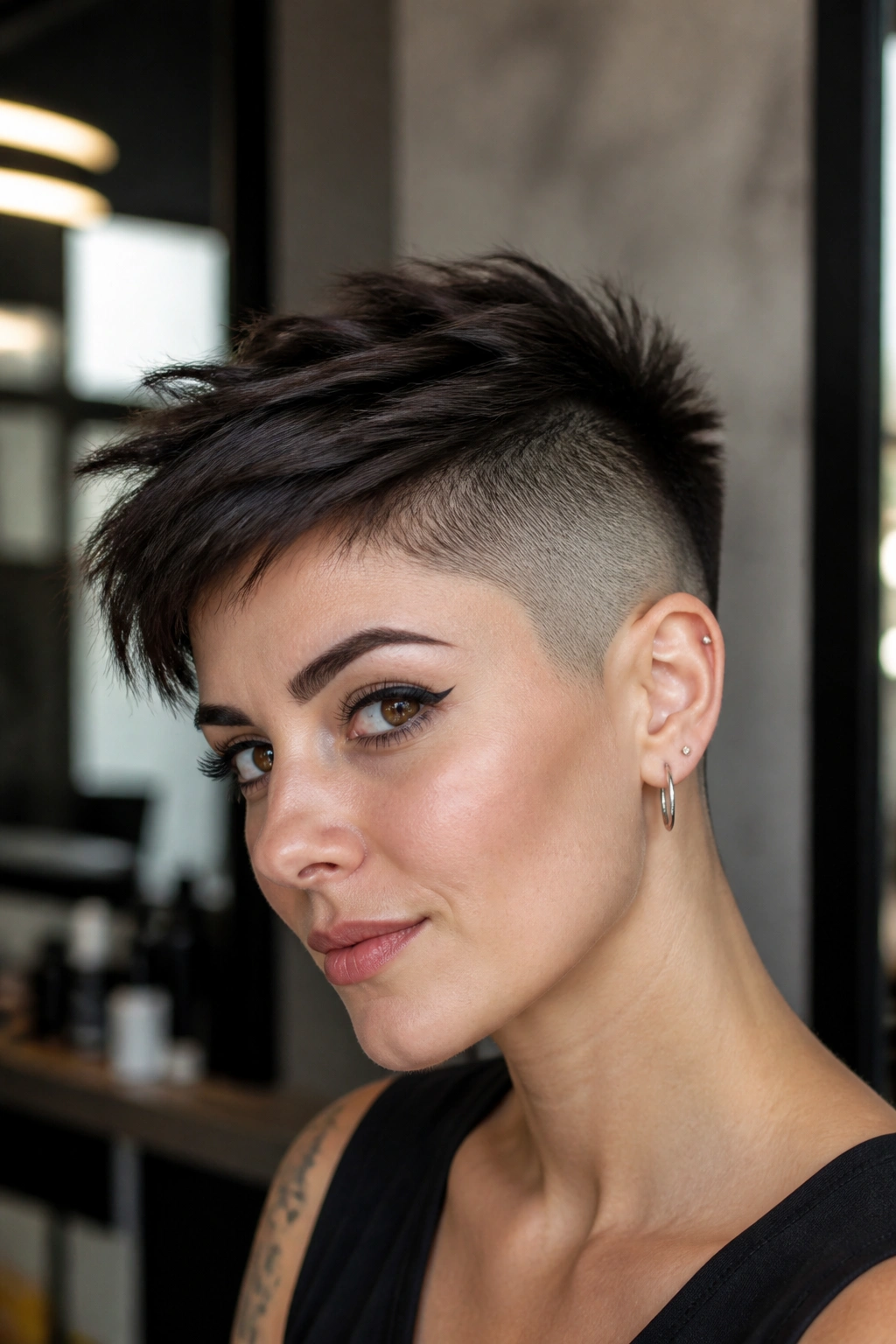
Heavy sides are the enemy of a punk pixie. If your hair swells at the temples or behind the ears, shaving or clipping the sides changes everything.
The top can stay around 2 to 4 inches, which gives you enough room to sweep it forward, spike it up, or push it to one side. Meanwhile, the sides can be clipped close with a #1, #2, or #3 guard, depending on how bold you want the contrast to feel. That sharp line between short and shorter gives the haircut its bite.
How to Style It
Dry the top first, then work in a light cream or firm paste. If you want lift, blow-dry the crown against the direction you want it to sit, then let it cool before touching it. If you want the top to lie flatter and more graphic, use a fine-tooth comb and a touch of pomade.
This cut looks strongest when the undercut stays crisp. Let it grow too much and the whole thing loses its edge. That’s the only real catch.
3. Micro Fringe Punk Pixie
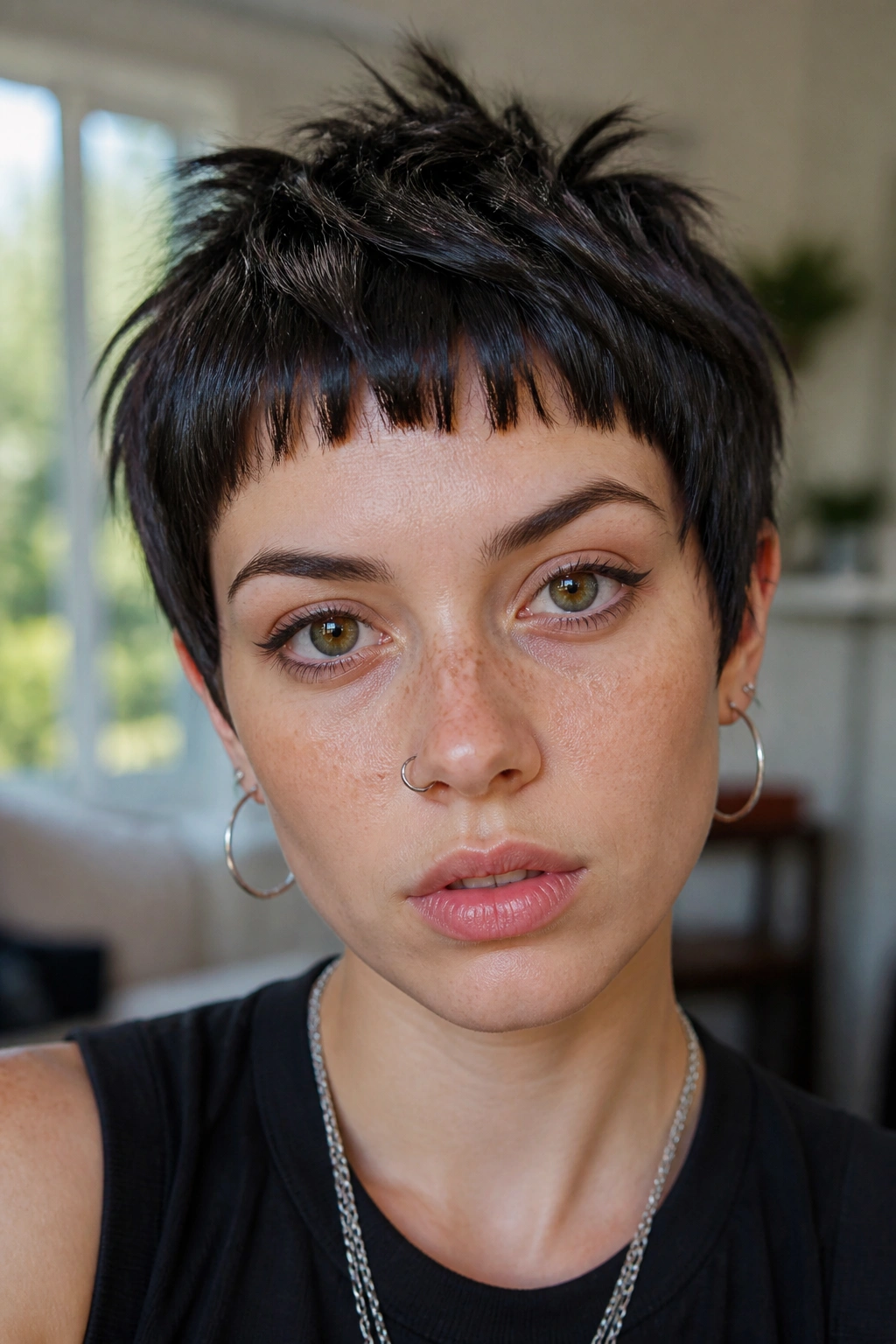
What happens when you cut the bangs down to the bare minimum? You get a face-framing detail that feels sharp, odd, and a little fearless.
A micro fringe sits well above the brows, usually around half an inch to an inch higher than a regular short bang. It puts the eyes front and center, which is part of the appeal. The rest of the pixie can stay choppy and loose, but that tiny strip across the forehead gives the haircut a deliberate sting.
This style lands best on straight or softly wavy hair because the fringe needs to stay readable. If the texture is too springy, the bang can puff up and lose its shape. Keep the top slightly piecey, not fluffy. And if your forehead is very short, ask your stylist to leave a touch more length so the fringe doesn’t feel abrupt.
- Keep the fringe blunt enough to show the shape.
- Let the crown stay broken and uneven.
- Use a flat iron only on the fringe if needed.
- Tuck the sides close for extra contrast.
The tiny fringe does not need much else. It already does the talking.
4. Spiky Bedhead Pixie
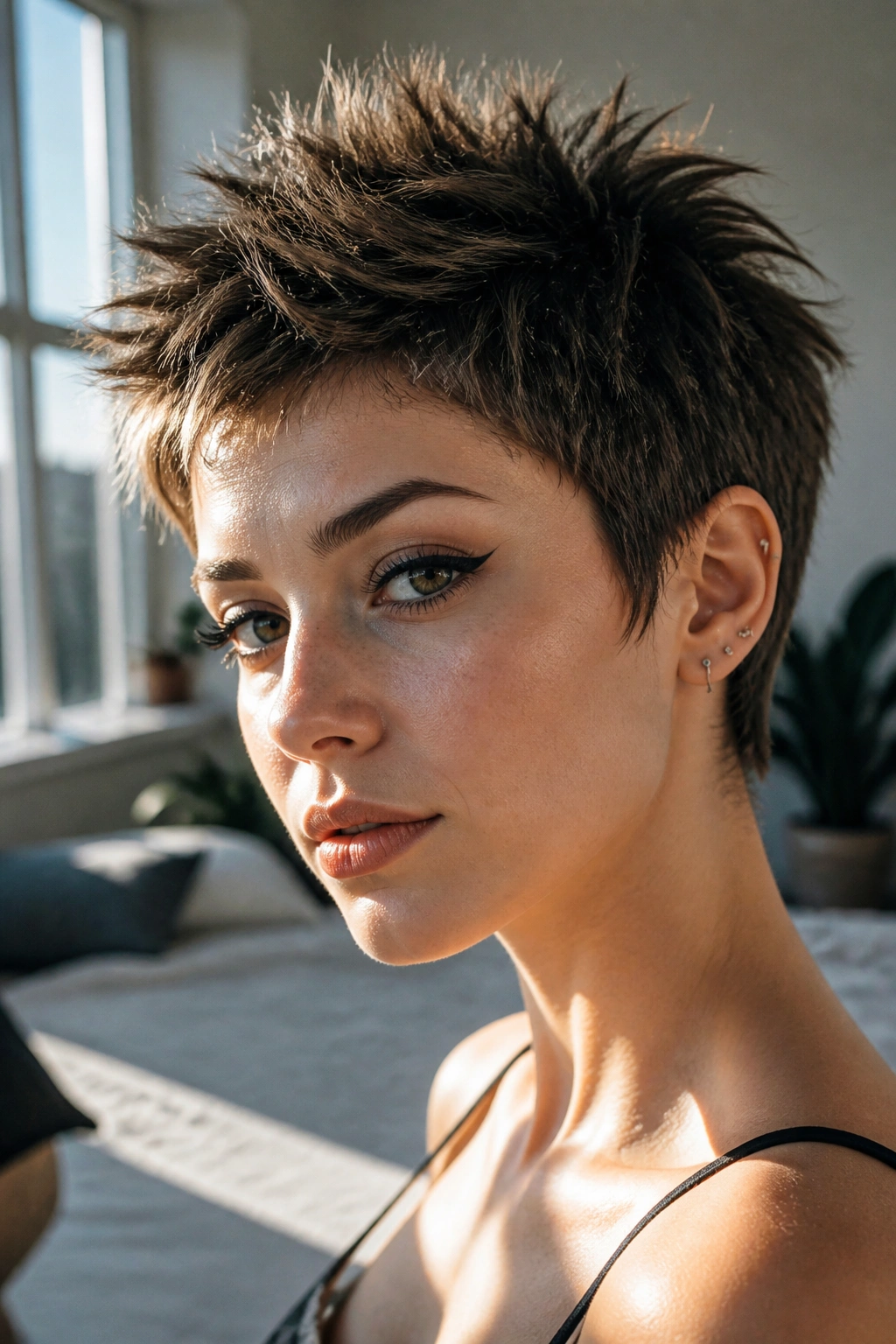
A spiky bedhead pixie looks casual, but that ease is a small lie. The cut needs the right length on top, or the “messy” effect just turns into flat hair with bad intentions.
The sweet spot is usually 1.5 to 3 inches on the crown, with shorter sides and a tighter nape. That gives you enough hair to bend upward and out without weighing the top down. The texture should feel rough, not polished, so the hair has places to stand up instead of collapsing into one sheet.
A little sea salt spray on damp hair helps. Blow-dry with your fingers instead of a brush, then tap in matte clay once the hair is almost dry. Don’t rub the product all the way through. That’s how you kill the shape.
This cut is a gift for fine hair because the spikes create the illusion of density. It can also work on thicker hair, though you’ll need more thinning and more patience. Either way, the key is to stop before it looks overworked. Punk hair should feel like it happened, not like it was arranged by committee.
5. Asymmetrical Side-Swept Punk Pixie
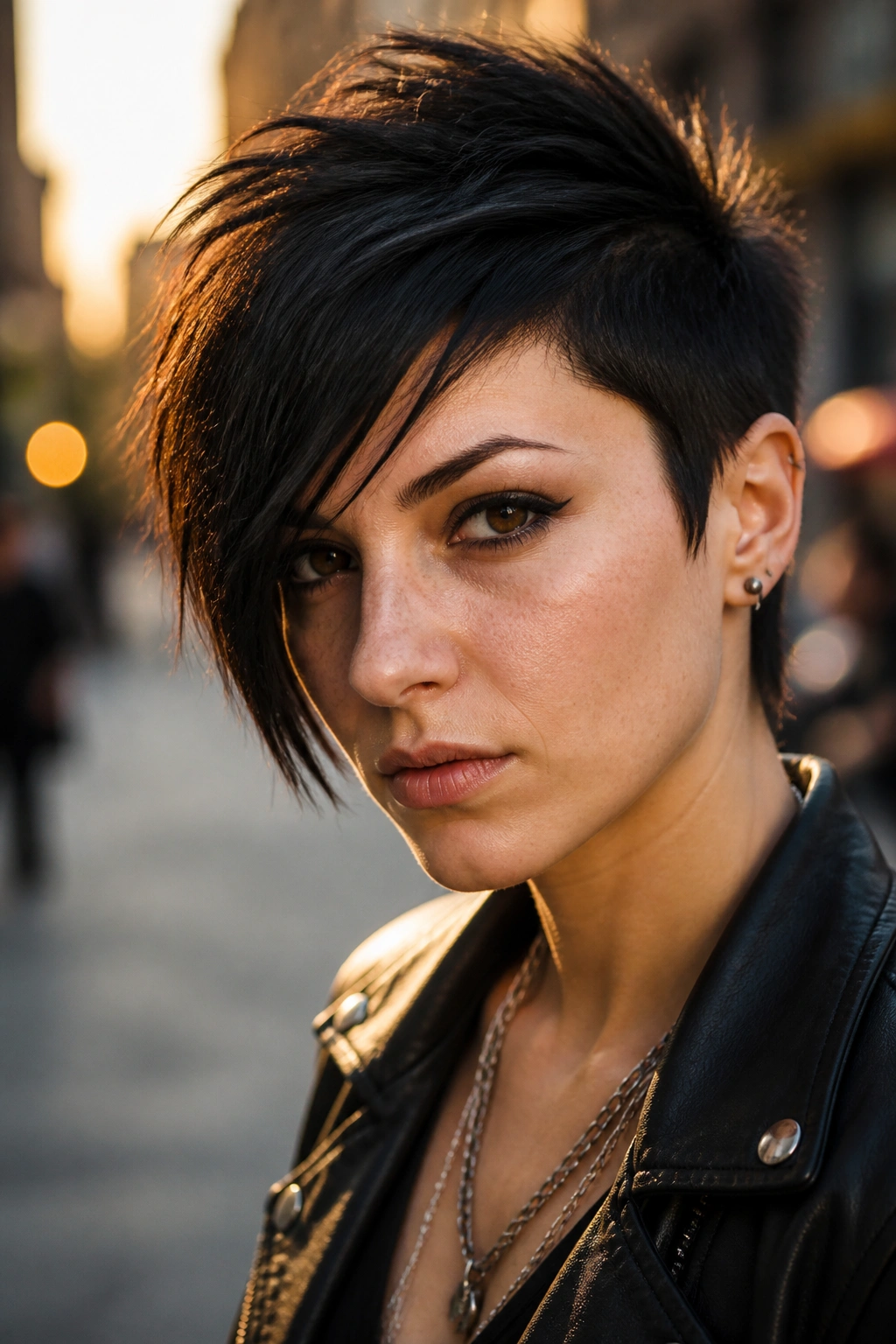
Asymmetry gives a pixie instant tension. One side longer, one side tighter, and suddenly the whole haircut has a point of view.
This version is especially handy if you want something edgy but not fully shaved. The longer side can skim the cheekbone or the jaw, while the shorter side stays tucked close to the head. That difference pulls the eye diagonally across the face, which softens strong jaws and gives rounder faces a bit of length.
The side part should sit deep enough to be visible, but not so deep that the cut starts to look dated in the wrong way. Keep the longer side piecey rather than sleek. A soft bend at the ends is better than a stiff curve, and a little under-layering helps the hair fall without bulk.
There’s a nice practical bonus here: you can shift the longer side forward on days when you want more drama, or tuck it back when you need the cut to behave. It’s one of the few punk pixies that can look serious at work and a little dangerous after dark.
6. Mohawk-Inspired Pixie
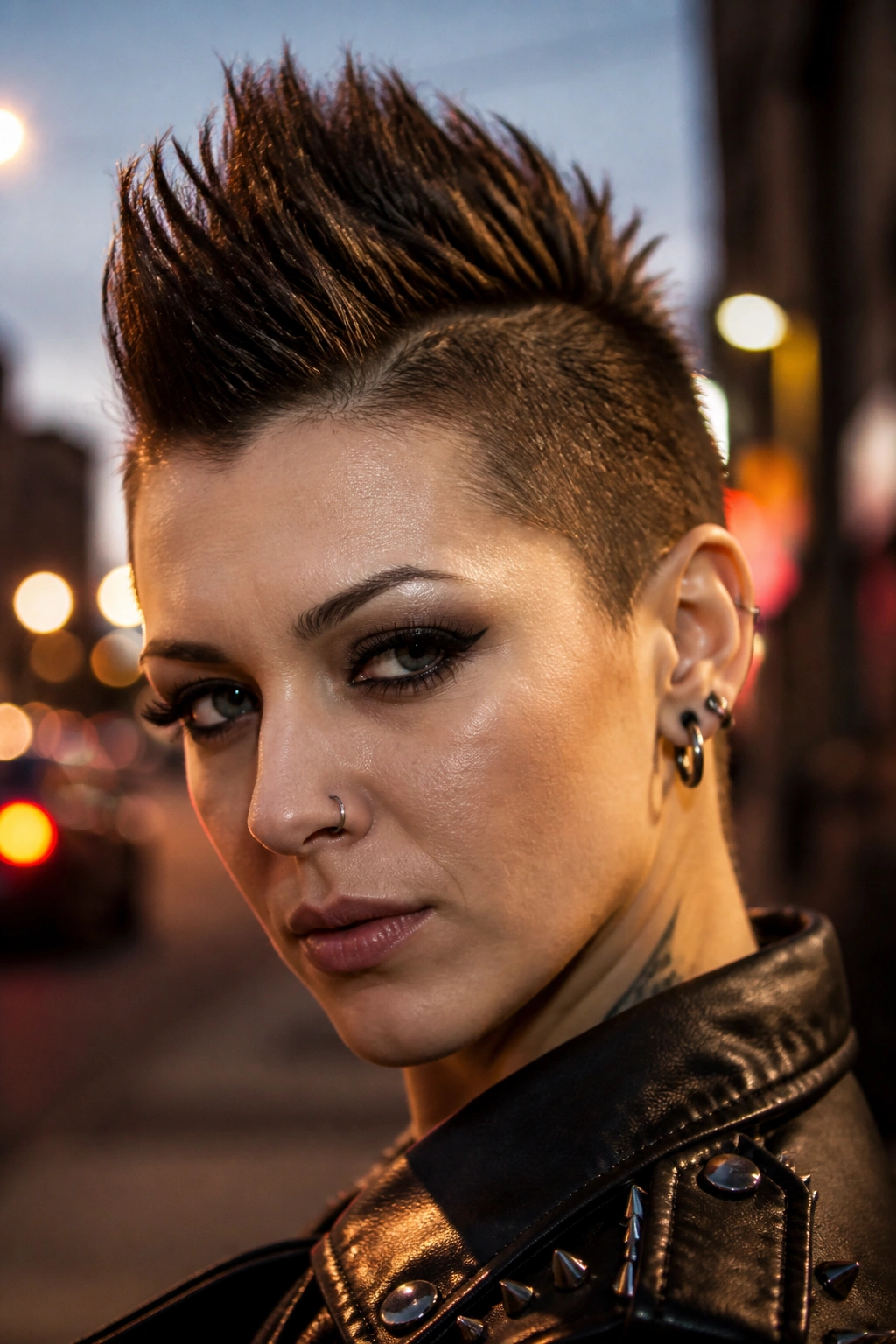
A faux hawk does not need a full strip of towering hair to feel rebellious. A short mohawk-inspired pixie can deliver the same energy with less maintenance and fewer odd stares from your boss.
The shape is simple: keep the sides very short, then leave a raised strip through the middle from the front hairline to the crown. The top should have enough length to bend upward, maybe 2.5 to 4 inches depending on your texture. If the hair is thick, the center strip can stand on its own. If it’s fine, you’ll want a blow-dryer, a little mousse, and maybe a mist of flexible hairspray to hold the lift.
What to Ask Your Stylist For
- Short, faded sides or a close clip through the temples
- A longer center strip from front to crown
- Point-cut ends so the top does not look heavy
- Enough length at the front to push upward or forward
The best part is how direct this cut feels. There’s no pretending it is subtle. It isn’t. That’s the point.
7. Tapered Pixie with Heavy Texture
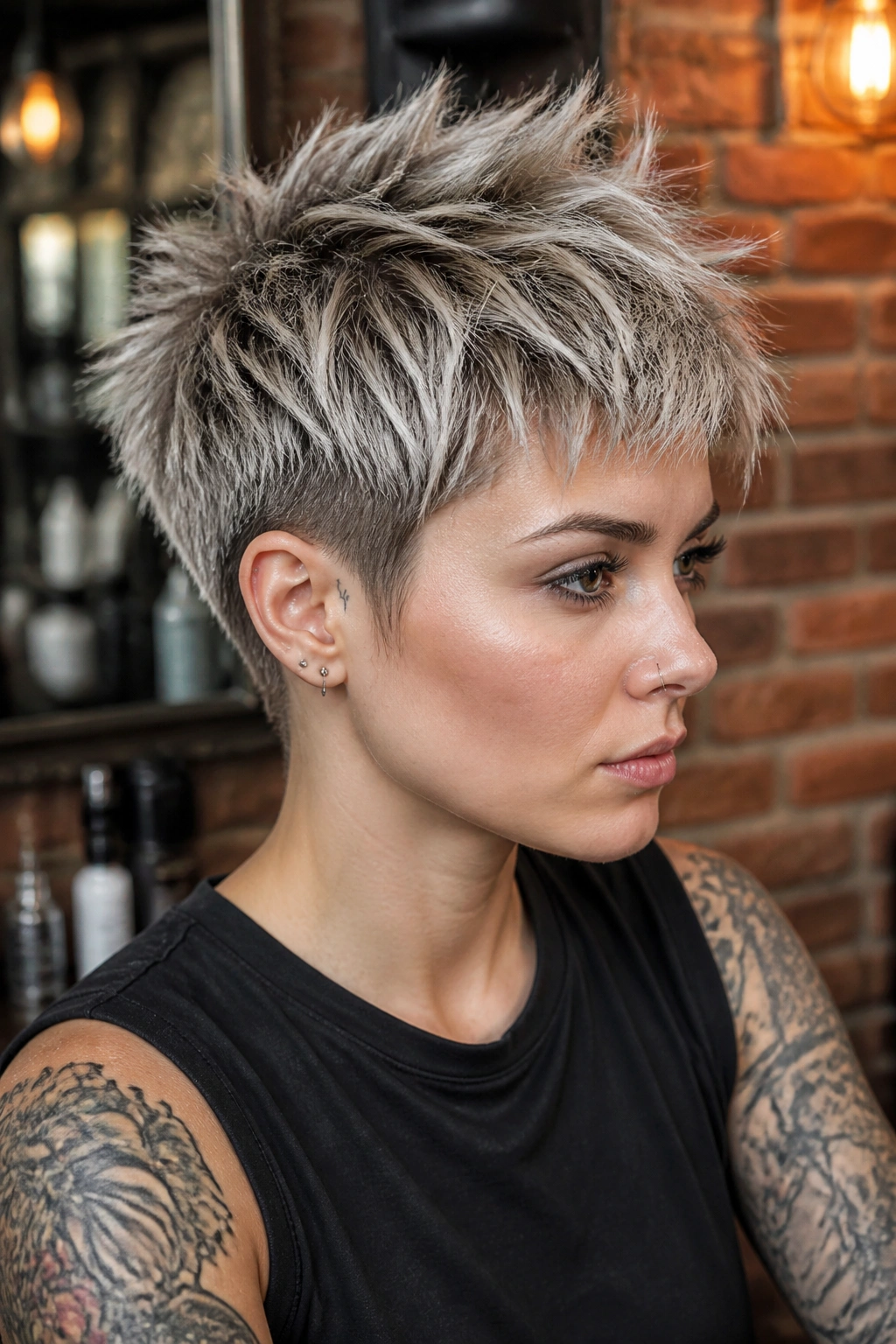
A tapered nape changes the whole shape of a short cut. It cleans up the back, keeps the neckline neat, and gives the messy top something solid to sit on.
This style is a good pick if you want punk texture without losing all structure. The sides stay gradually shorter as they move toward the ears and neck, while the top gets more broken up and full of movement. The result feels sharper than a soft pixie, but less aggressive than a shaved style.
It works well when the top is cut in uneven little panels rather than smooth layers. Ask for heavy texturizing through the crown, not just the ends. That difference matters. Ends-only texture can look wispy; texture through the body of the hair gives you lift and a bit of grit.
Rough-dry the hair, then rub a matte paste or styling cream through the top in small amounts. Push some pieces forward, some up, some sideways. You do not want perfect symmetry here. A punk cut looks better when it seems to shift a little as you move.
8. Color-Blocked Punk Pixie Cut
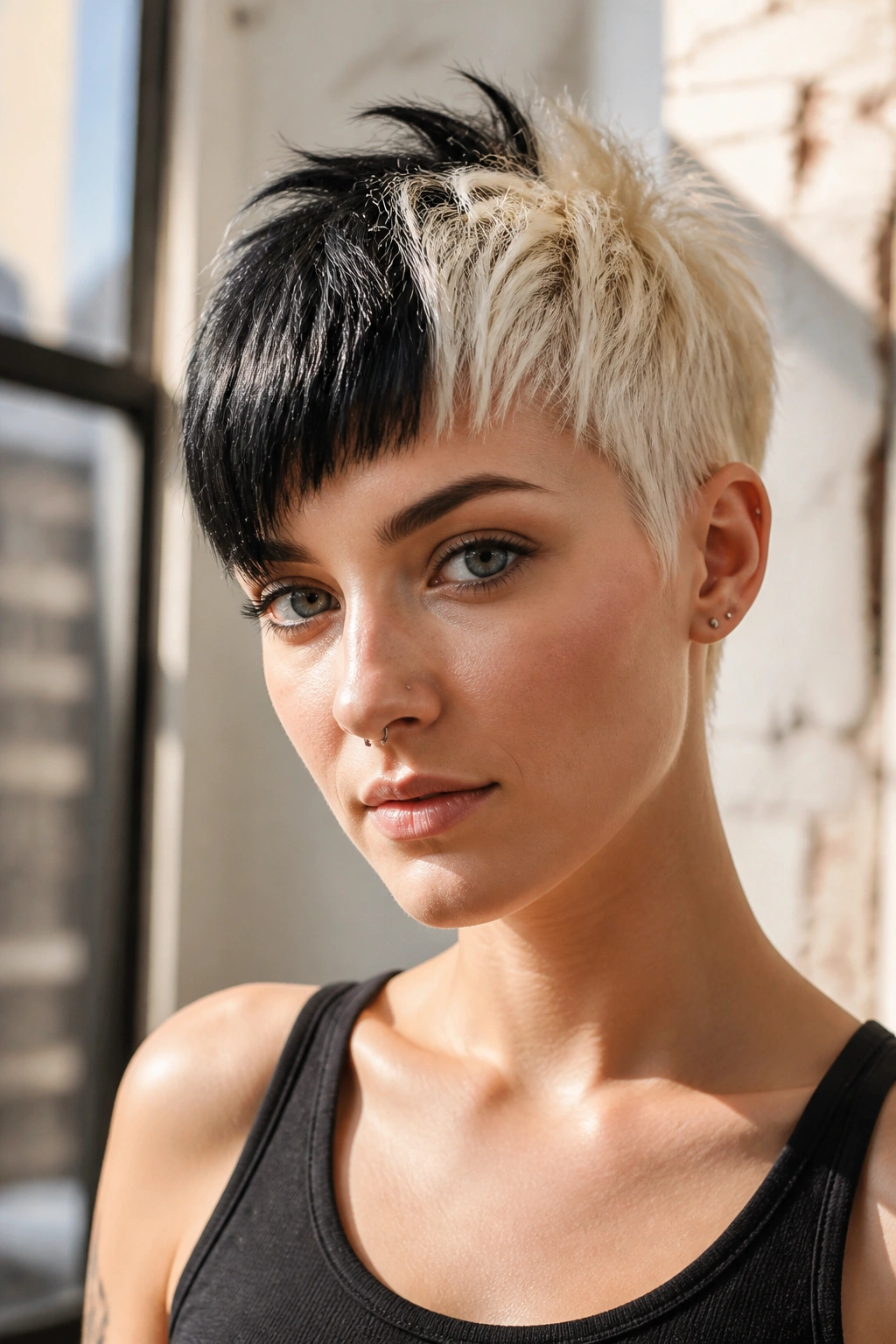
Why choose one shade when the haircut can carry contrast on its own? A color-blocked pixie makes even a simple shape feel louder.
This is the cut for anyone who wants the color to do some of the talking. One side can be dark and the other pale, or the fringe can carry a streak that cuts across a deeper base. The blocks do not have to be loud neon to work. Even a black-and-silver split or a copper-and-ink combo can make the haircut read harder.
Where the Color Works Hardest
Place the strongest color near the fringe, the crown, or one temple. Those spots catch the eye fastest, and they help the haircut look intentional instead of random. If the cut is very short, the color placement needs to be clean. Smudged edges make the whole thing look muddy.
A color-blocked pixie does need upkeep. Roots show fast. So do faded edges. Use color-safe shampoo, rinse with cooler water, and keep a gentle hand with hot tools if the hair has been lightened. Still, when the tones are crisp, the shape looks sharper than a plain crop ever could.
9. Curly Punk Pixie with a Piecey Crown
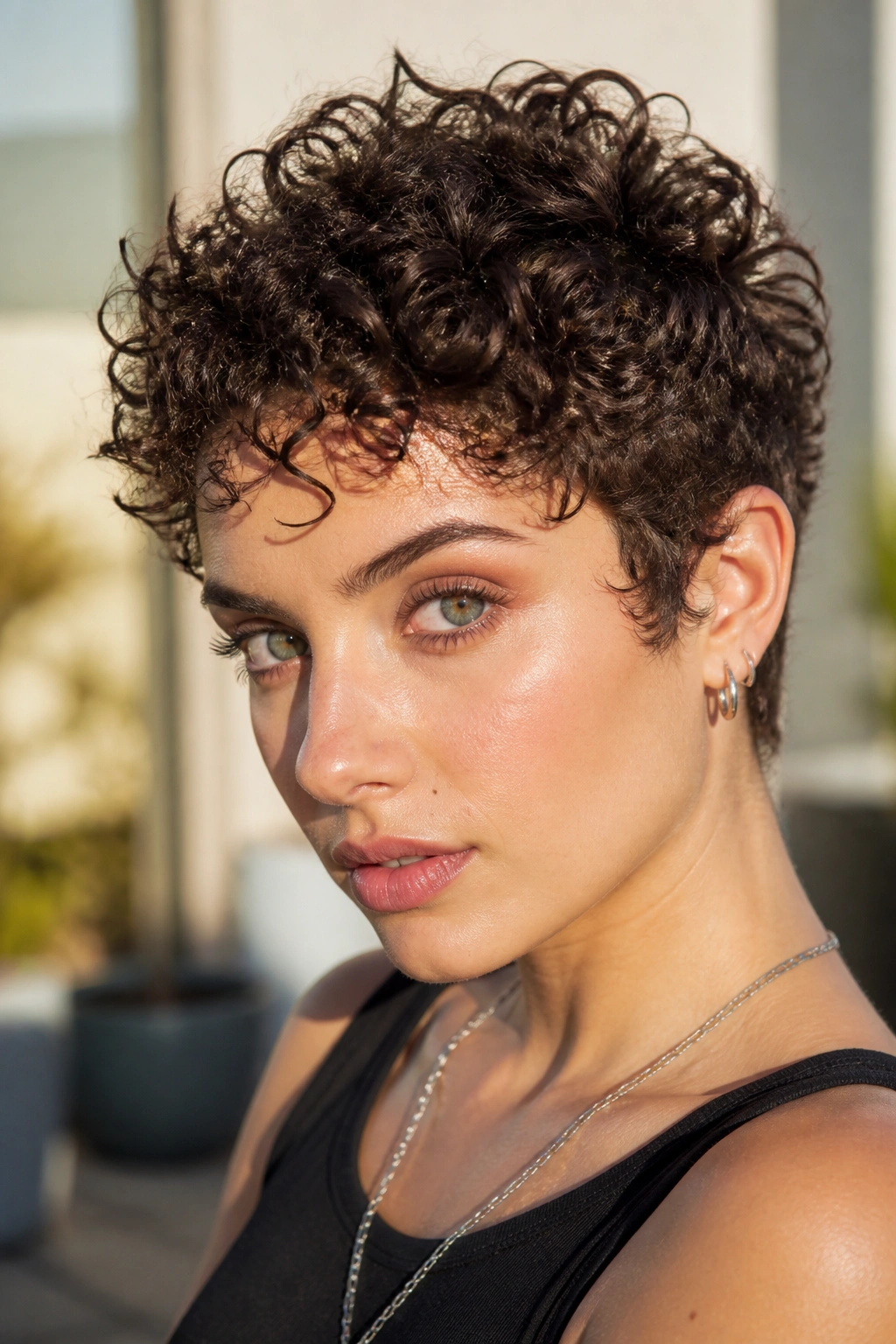
Curls and punk are not enemies. They just need a different set of rules.
A curly pixie gets its edge from contrast: tight sides, a bit of length at the crown, and curl definition that stops just short of “cute.” The top should not be brushed into one cloud. It should be broken into separate pieces so the shape feels controlled but not stiff. That means using a curl cream or light gel on damp hair, then letting the curls dry without too much touching.
If your curls are loose to medium, this cut can be a joy. If they are tighter, the stylist may need to carve the shape curl by curl instead of cutting a smooth outline. Dry cutting often helps here because the hair sits the way it naturally wants to sit. That makes the final shape easier to predict.
- Keep the sides shorter than the crown.
- Scrunch in gel while the hair is damp.
- Diffuse on low heat if you want more lift.
- Separate only the curls that clump too much.
The piecey crown is what keeps it punk. Without that separation, the whole thing turns soft in a hurry.
10. Slicked-Back Wet-Look Pixie
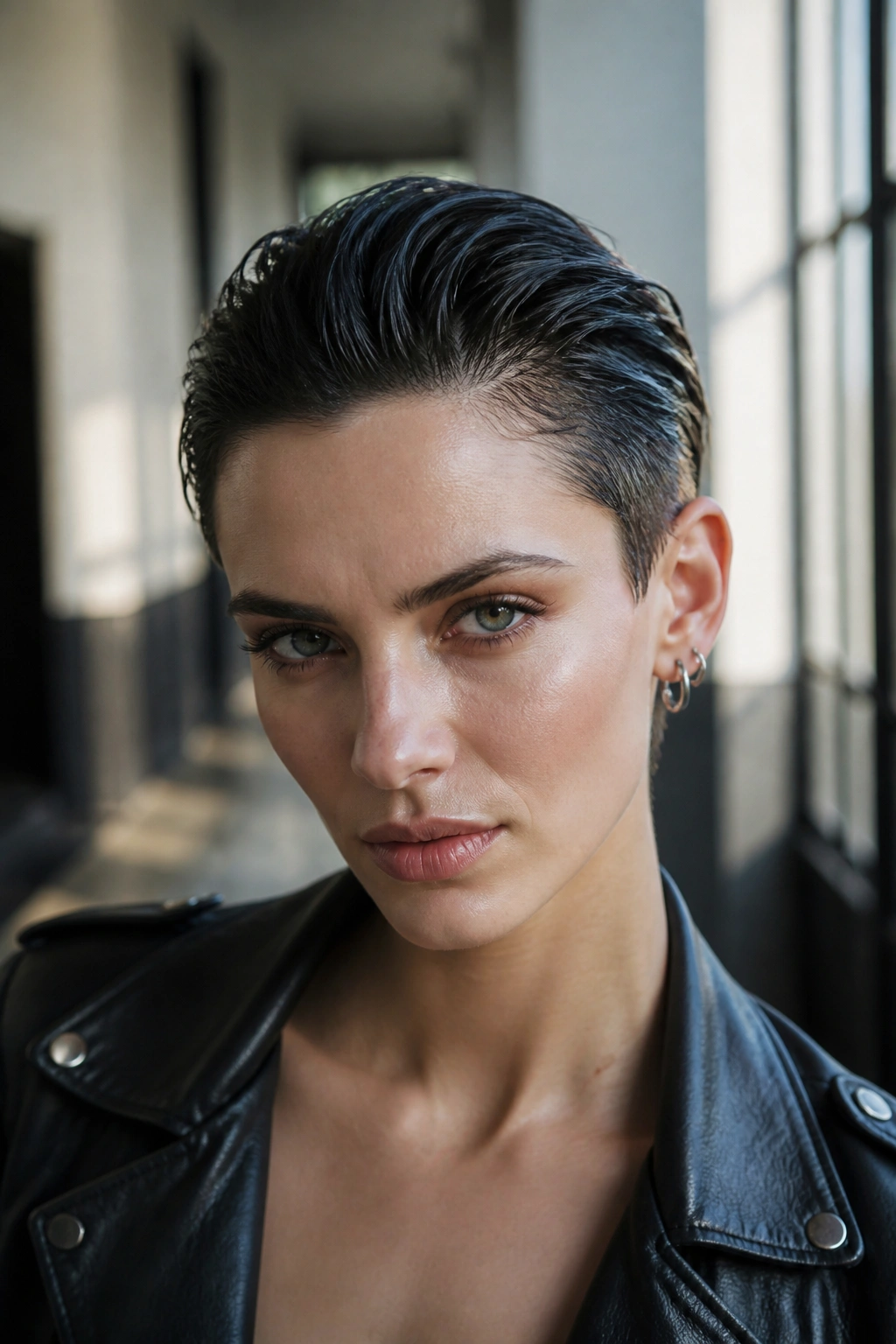
A slicked-back pixie has the meanest little attitude when it is done right. No fluff, no soft edges, no hiding.
The hair needs enough length on top to comb back or slightly back and to the side, usually around 2 inches or more at the front and crown. Shorter sides help, because they stop the silhouette from getting bulky. The wet look works best when the hair is damp, not dripping, and the product is spread evenly from roots to ends.
Gel gives the hardest hold. Pomade gives a bit more shine and flexibility. Use a fine-tooth comb for a sleek finish, or use your fingers if you want a looser, clubbier feel. Either way, the hair should look controlled from the front and tight at the sides.
This is one of those styles that looks especially good with strong brows, hoop earrings, or a high neckline. It feels deliberate. It also survives a long evening better than a lot of textured looks, because the shape is built on compression rather than volume.
11. Platinum Shaggy Punk Pixie
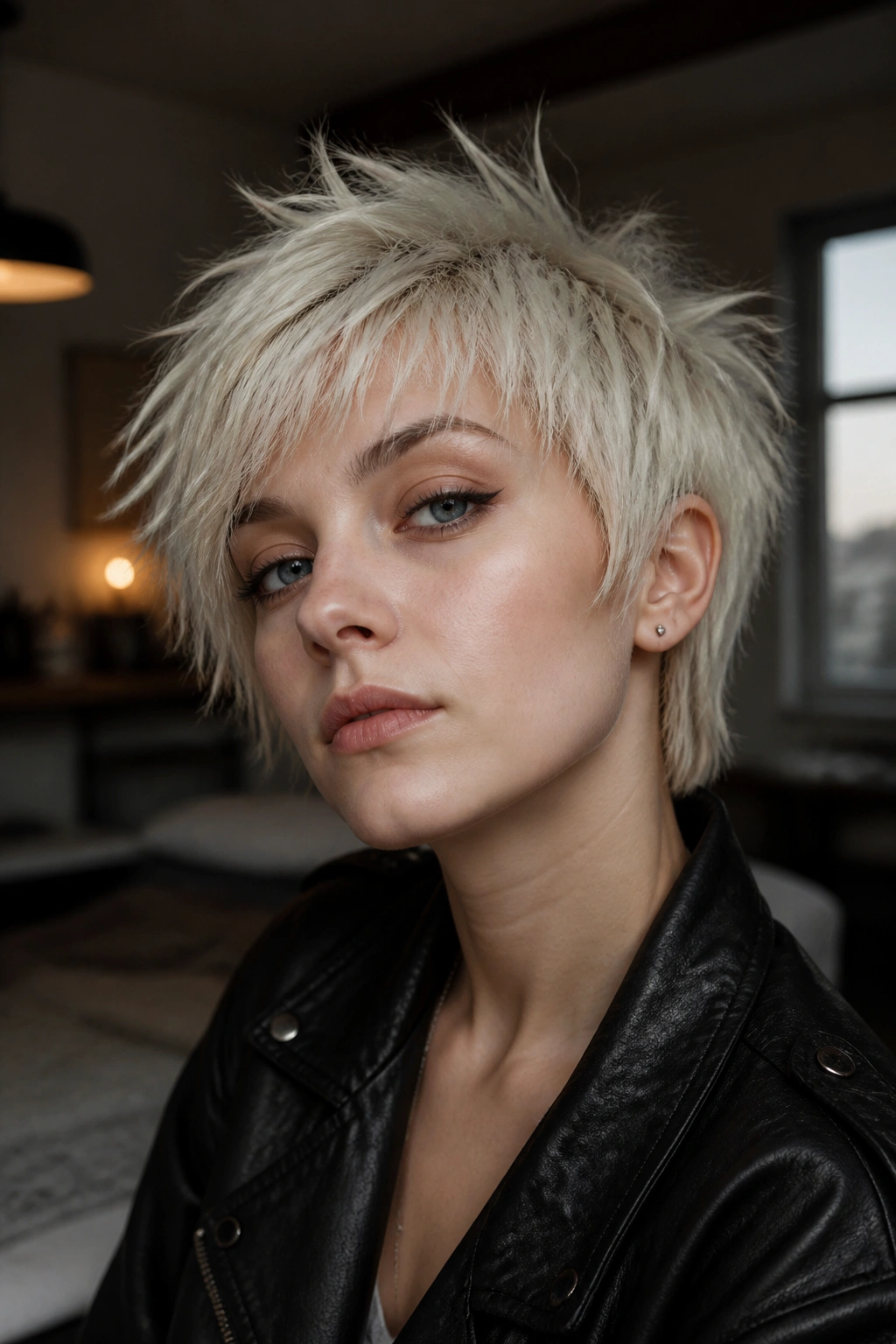
Platinum hair and punk shape are a dangerous little pair. Put them together and the whole haircut starts to glow, even when the style itself is rough.
This cut is not about perfection. It is about contrast: a pale color with messy layers, dark brows if you have them, and edges that look slightly torn on purpose. The platinum tone makes every broken layer visible, which is why this style looks so effective on a short crop with lots of movement through the crown and fringe.
The maintenance is not light. Lightened hair needs careful washing, and toning matters if you want the color to stay clean instead of yellow. Use a purple shampoo sparingly — once a week is often enough for many people — because too much can leave pale hair dull or patchy. A hydrating mask helps too, since short hair still gets dry after lightening.
Unlike a sleek platinum bob, this version likes mess. That is what makes it feel punk instead of polished. Keep the ends shattered, keep the top airy, and let a few pieces fall where they want to.
12. Bowl-Pixie with Razor Fringe
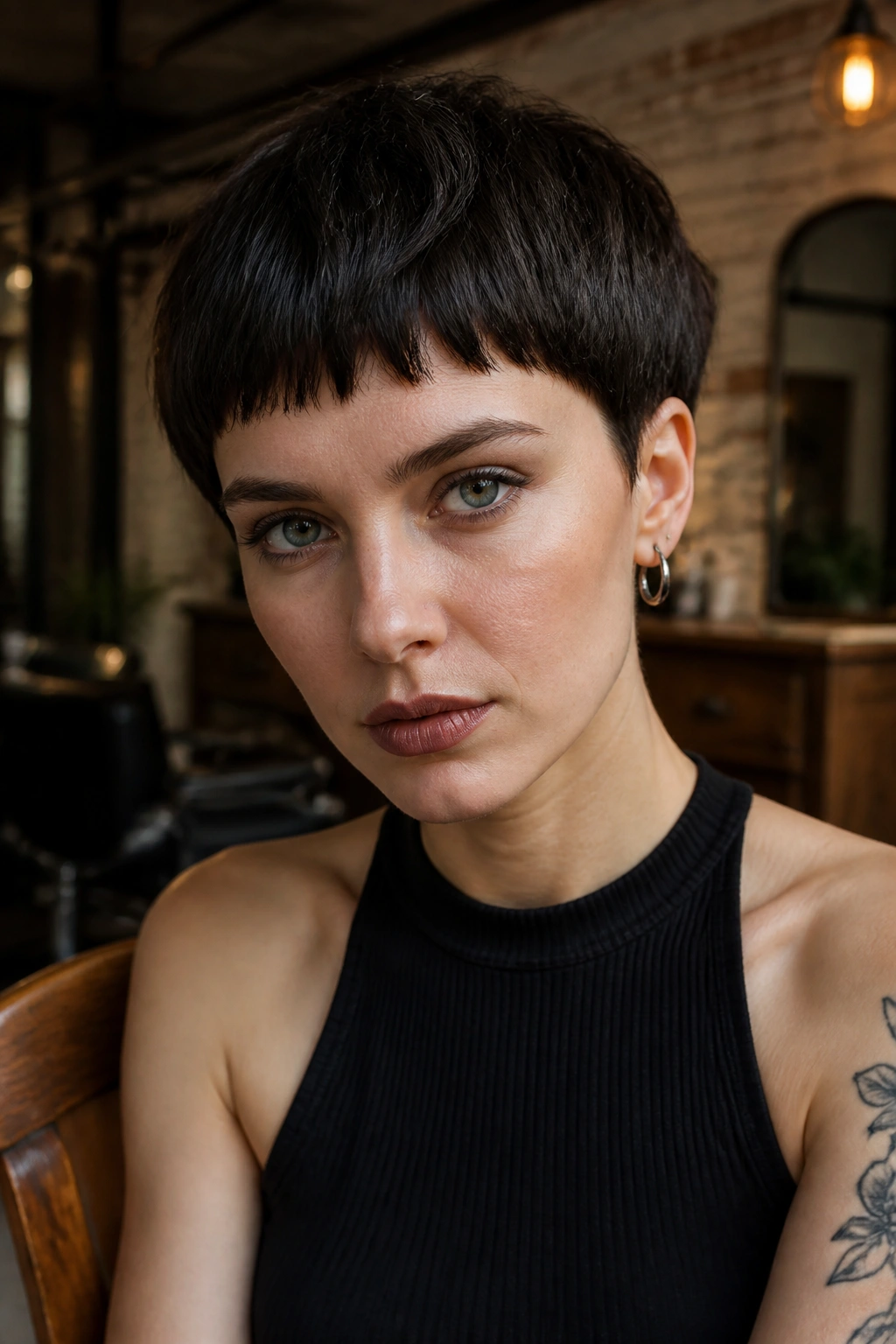
A bowl cut becomes interesting when the edges stop behaving.
That is the whole trick here. The outline is rounded, but the surface is cut with razored texture so it does not sit like a neat little helmet. The fringe can be blunt or slightly broken, and the corners around the ears can be softened just enough to keep the shape from looking too literal. It is a strange cut in the best way.
What Makes It Punk
- A rounded silhouette with rough texture
- A fringe that sits straight or a touch uneven
- Tighter sides or a soft undercut at the nape
- Point-cut ends so the shape moves
This look suits straight hair especially well because the clean lines show up fast. Thick hair can wear it too, but the inside needs some weight removal or the cut can puff outward in a way nobody asked for. If you like sharp lines, short fringe, and a little weirdness, this is a strong one to bring to the salon chair.
13. Temple-Undercut Punk Pixie
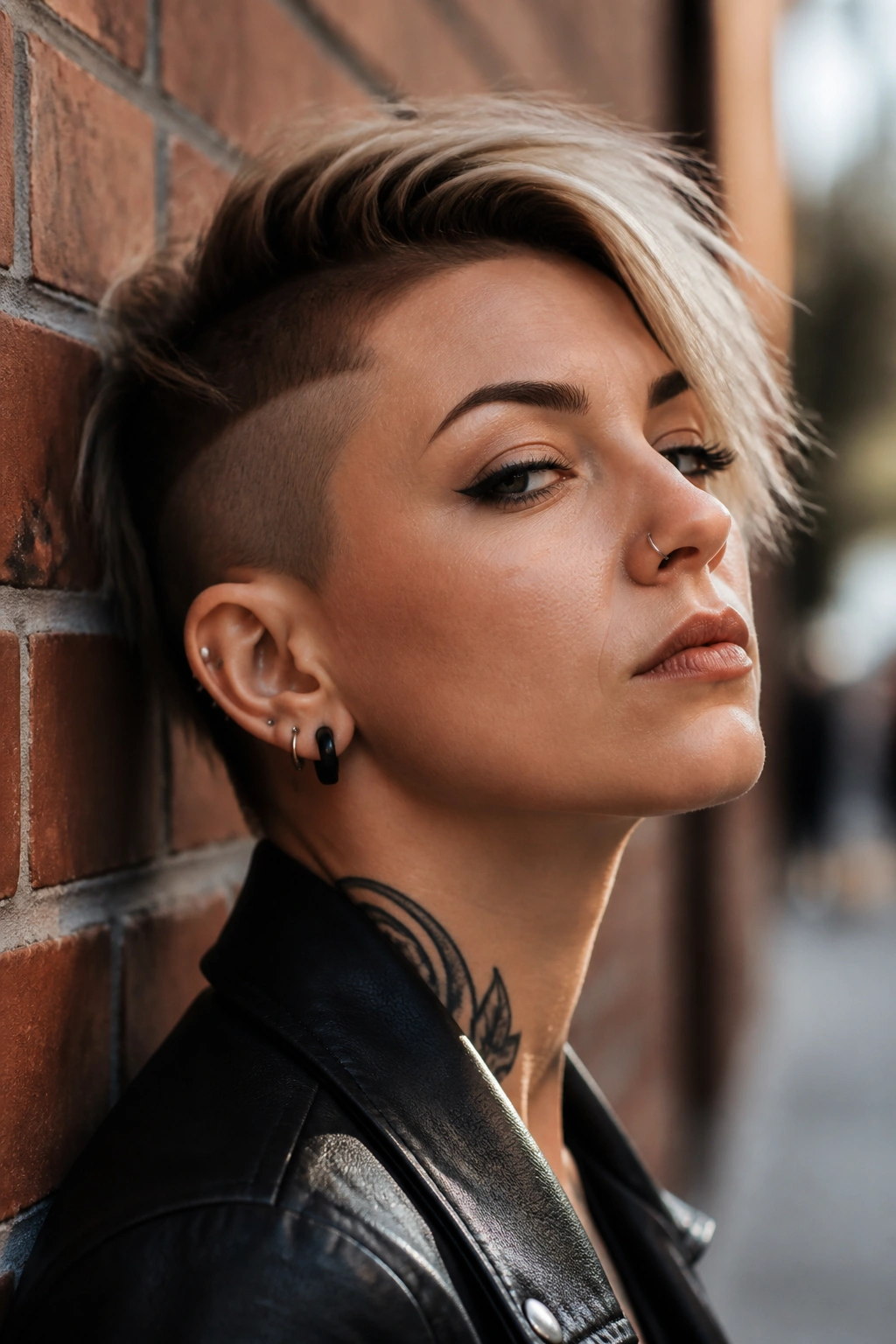
Temple undercuts are sneaky. They let you hide the edge under longer pieces one day and show it off the next.
The cut usually keeps the back and crown short while shaving or clipping around the temples. That gives the top room to sweep sideways, spike up, or fall forward over one side. It is one of the easiest punk pixie options to grow out without looking messy too fast, because the undercut can disappear under longer layers.
This style is smart for people who like change. One morning it can read neat and slightly androgynous. The next evening, tuck the top behind the ears and the shaved section suddenly becomes the point of the whole haircut.
Keep the undercut line crisp with regular trims every 3 to 5 weeks if you want the shape to stay visible. If you let it grow too long, it loses the point. That is the only real downside. The payoff is worth it, though, because this cut gives you two moods in one head of hair.
14. Feathered Punk Pixie
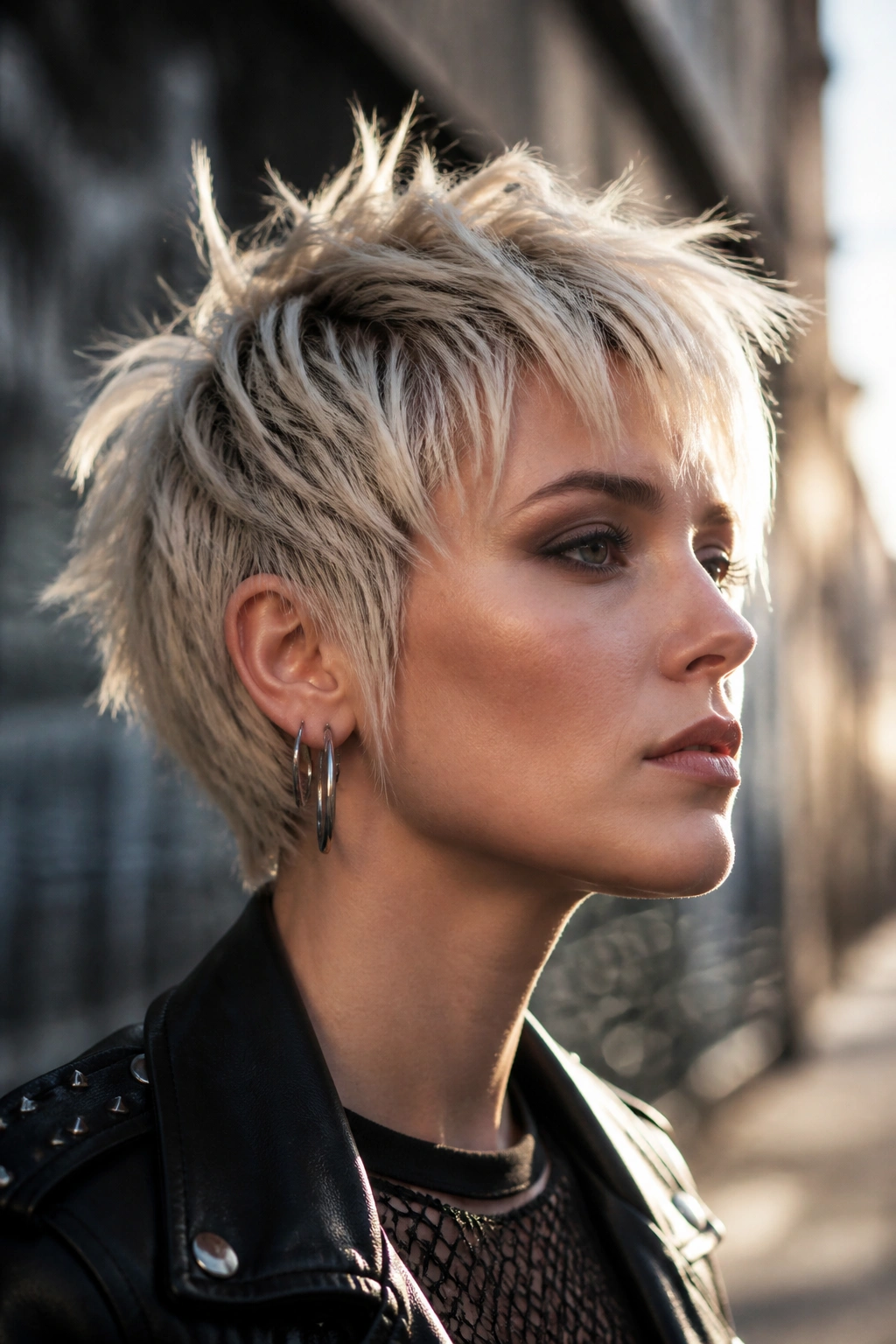
Can feathered hair still feel hard-edged? Yes, if the layers are short enough and the finish stays rough.
Feathering is one of those old-school techniques that can look either soft or sharp depending on how it is cut. In a punk pixie, the feathering should break the shape apart instead of smoothing it down. The top layers need movement, but the silhouette still needs to stay close to the head so the haircut does not drift into feathered-shag territory.
How to Style the Feathering
Use a light mousse on damp hair, then blow-dry with a small round brush only where you want lift. The brush should not polish every piece into place. You want some bend, not pageant hair. Once the hair is dry, use a tiny bit of spray wax or lightweight paste to separate the ends.
This cut is useful if you like a nod to retro hair but do not want the whole thing to feel soft. It has that sneaky vintage echo, then the rough styling pulls it back toward punk. A nice trick, and not a difficult one.
15. Short Mullet Pixie
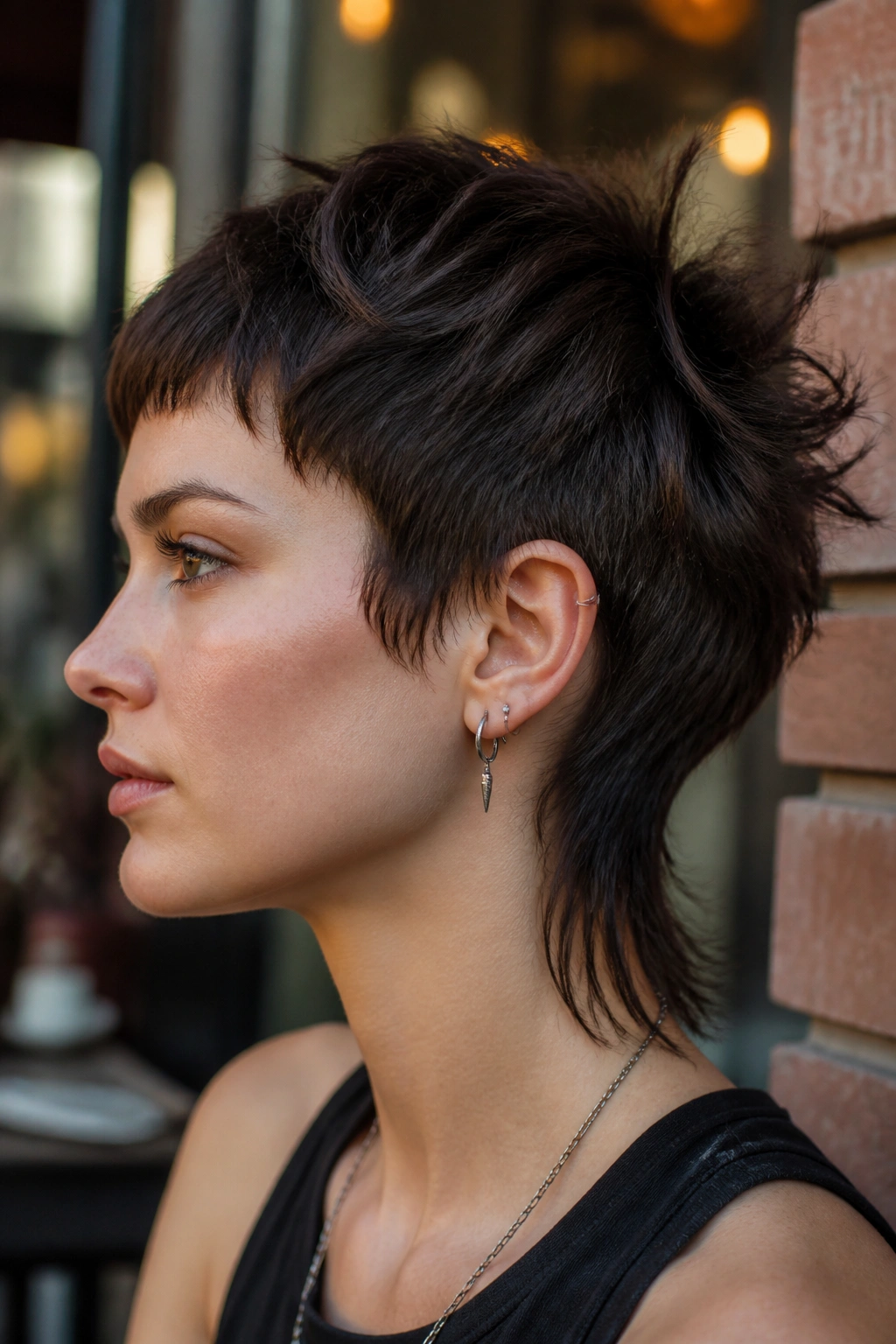
A short mullet pixie is for people who enjoy a little contradiction. The front stays cropped, the top stays textured, and the nape stretches out just enough to tell the truth.
That longer back piece is what gives the cut its nerve. It does not have to be dramatic. Even an extra inch or two at the nape can change the mood from tidy pixie to “yes, I meant this.” The front can stay close to the brows or a little above them, which keeps the face open while the back adds shape.
This cut works well with straight or wavy hair because the difference between the front and back reads clearly. If the texture is very curly, the back can get puffy unless it is layered with care. Styling is easy once the shape is right. A bit of wax at the ends, a rough dry, and maybe a finger twist at the nape are usually enough.
- Keep the front short and controlled.
- Let the nape stay wispy.
- Leave the crown choppy, not round.
- Finish with product only on the ends.
The best part? It looks intentional even when it looks a little wild.
16. Pompadour Pixie
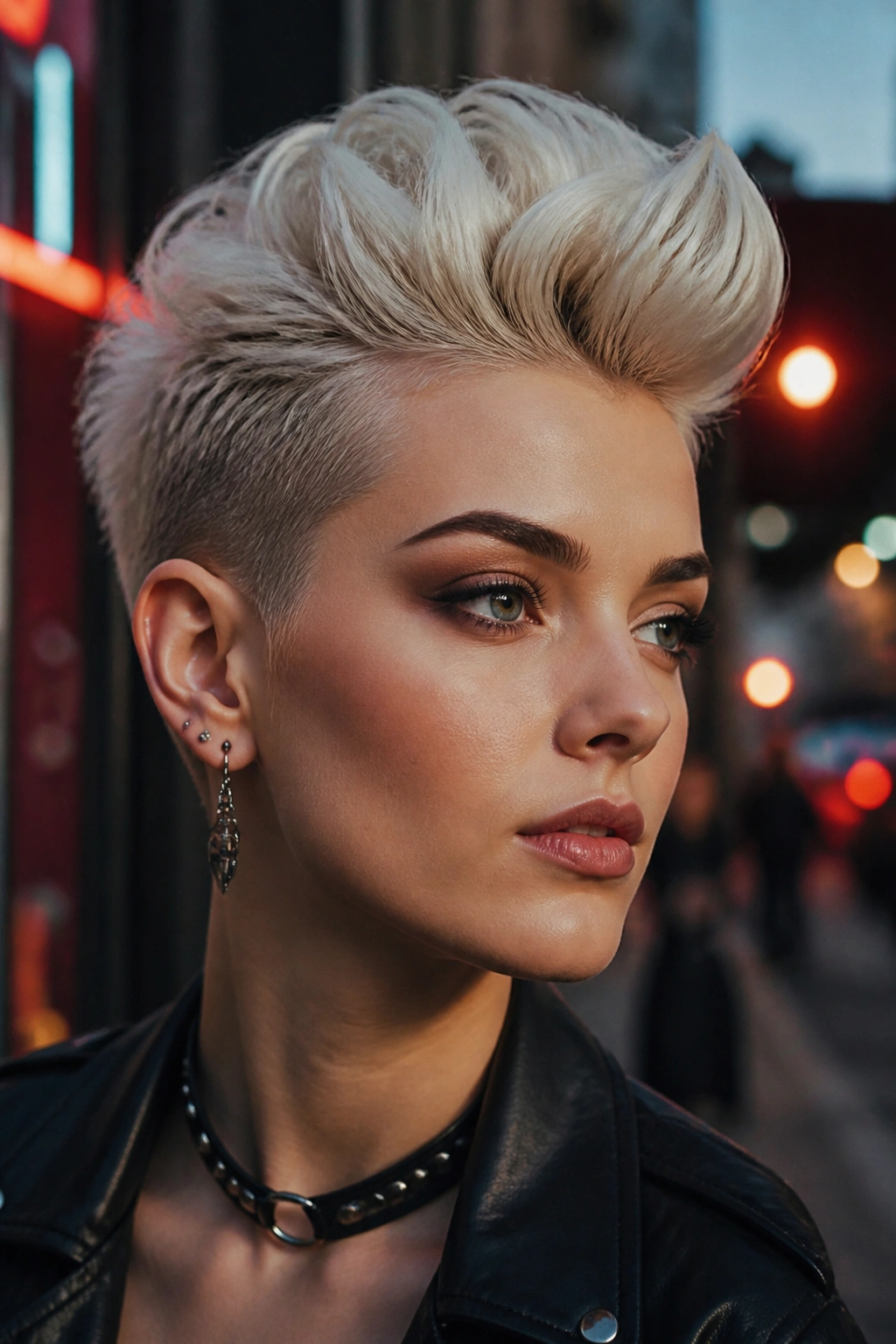
A pompadour pixie pulls from old rock-and-roll hair, then trims it down into something cleaner and stranger. I like that combination a lot.
The front is the star here. It needs enough length to lift at the roots and roll back or up, while the sides stay much shorter so the height stands out. You do not need a giant quiff to make the shape work. Even 1.5 to 3 inches of length at the front can create enough lift if the roots are dried in the right direction.
Start with volumizing mousse on damp hair. Blow-dry the front section upward with a round brush or your fingers, then set it with a little firm hairspray. If the hair is very fine, a gentle backcomb at the roots can help, but do not overdo it. Teasing too much turns a good pompadour into a frizzy mess fast.
This one reads glam and punk at the same time. That is a nice balance if you want something theatrical without going full costume.
17. Choppy Sideburn Pixie
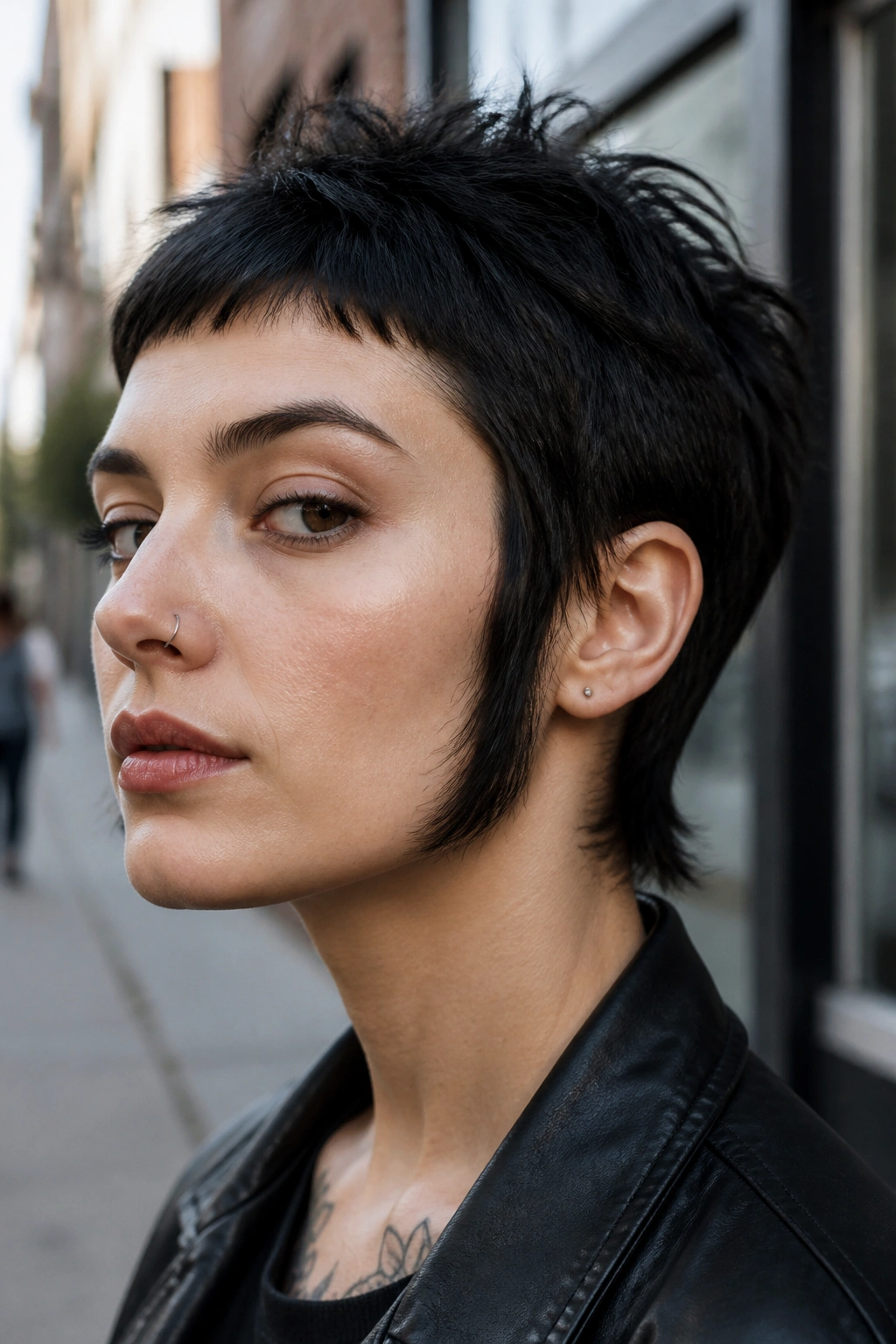
Sideburns are not a small detail here. They are part of the haircut, and they frame the face in a way that a lot of people overlook.
In a standard pixie, the sideburn area often gets tucked away. In this version, it stays visible and deliberate, either tapered into a fine point or left a little longer and jagged. That gives the haircut a sharper outline around the cheek and jaw, which can be really flattering if you like structure near the face.
This style pairs well with glasses, earrings, or strong makeup because the sideburns hold their own visually. The rest of the cut can stay choppy and short, with enough texture at the crown to keep the punk feeling alive. What matters most is the line around the ears and temples. If that area is too soft, the shape loses its nerve.
You can ask for sideburns that blend into the jawline or stop abruptly for a harder look. Both work. The choice depends on whether you want the cut to feel cleaner or more jagged.
18. Neon-Tipped Punk Pixie
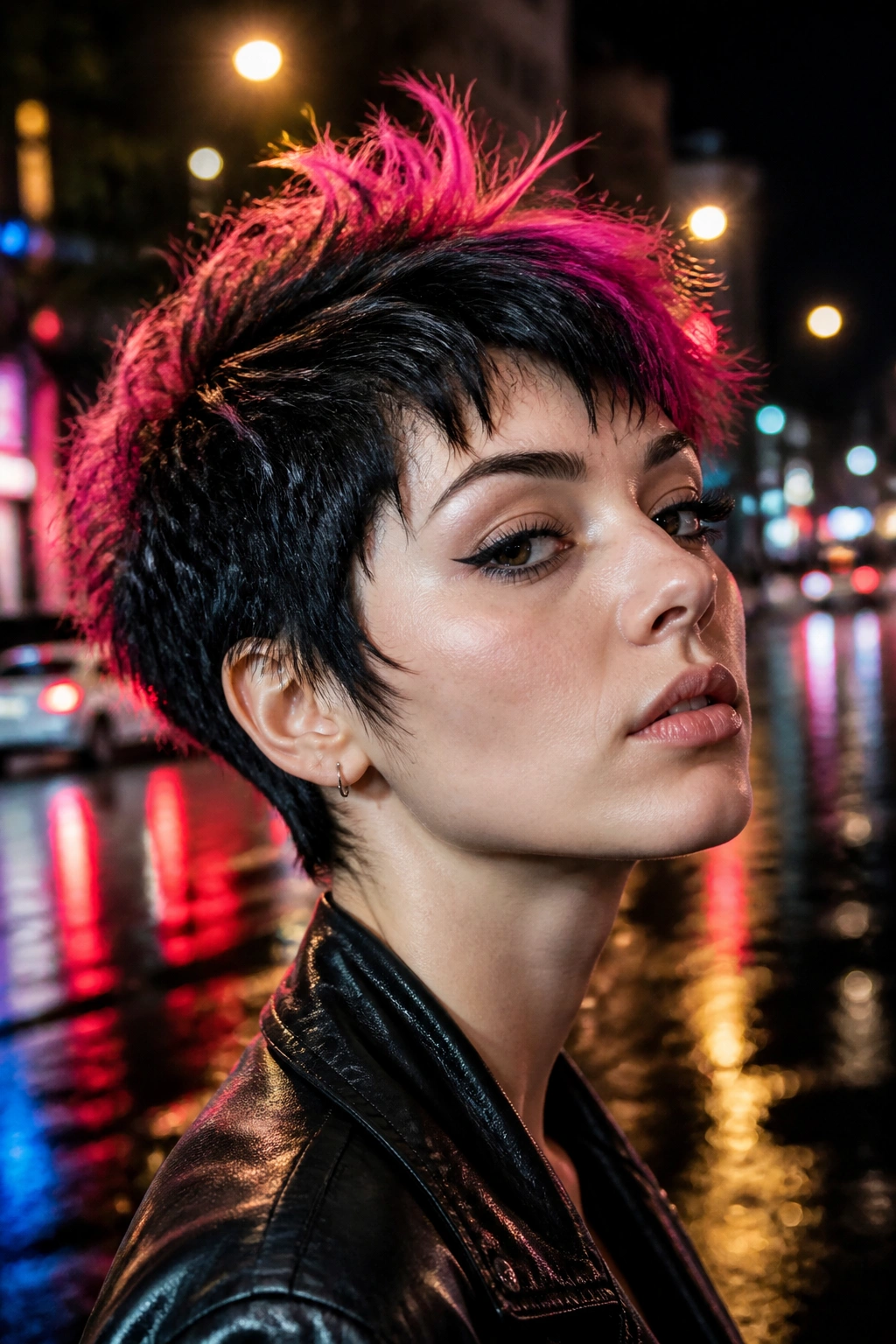
A neon-tipped pixie brings the chaos to the ends, which is smart. It keeps the base wearable and lets the color do the shouting.
The bright pieces can live at the fringe, around the crown, or just along the top layers where movement shows them off. On a dark base, a strip of electric pink, acid green, or vivid blue can look blunt and graphic. On a lighter base, the color reads more playful and less severe. Either way, the cut needs enough texture for the bright ends to break apart instead of sitting as one flat stripe.
Where to Place the Color
- Put it on the fringe if you want face-first impact.
- Put it on the crown if you want movement.
- Put it on the tips of layered pieces if you want the color to flash as you turn.
Because neon shades fade fast, this style works best if you like changing your hair often. Use a color-safe wash, keep heat low, and expect the tone to soften over time. That fading is part of the fun, honestly. The hair starts loud, then gets a little grittier, which suits punk hair just fine.
Final Thoughts
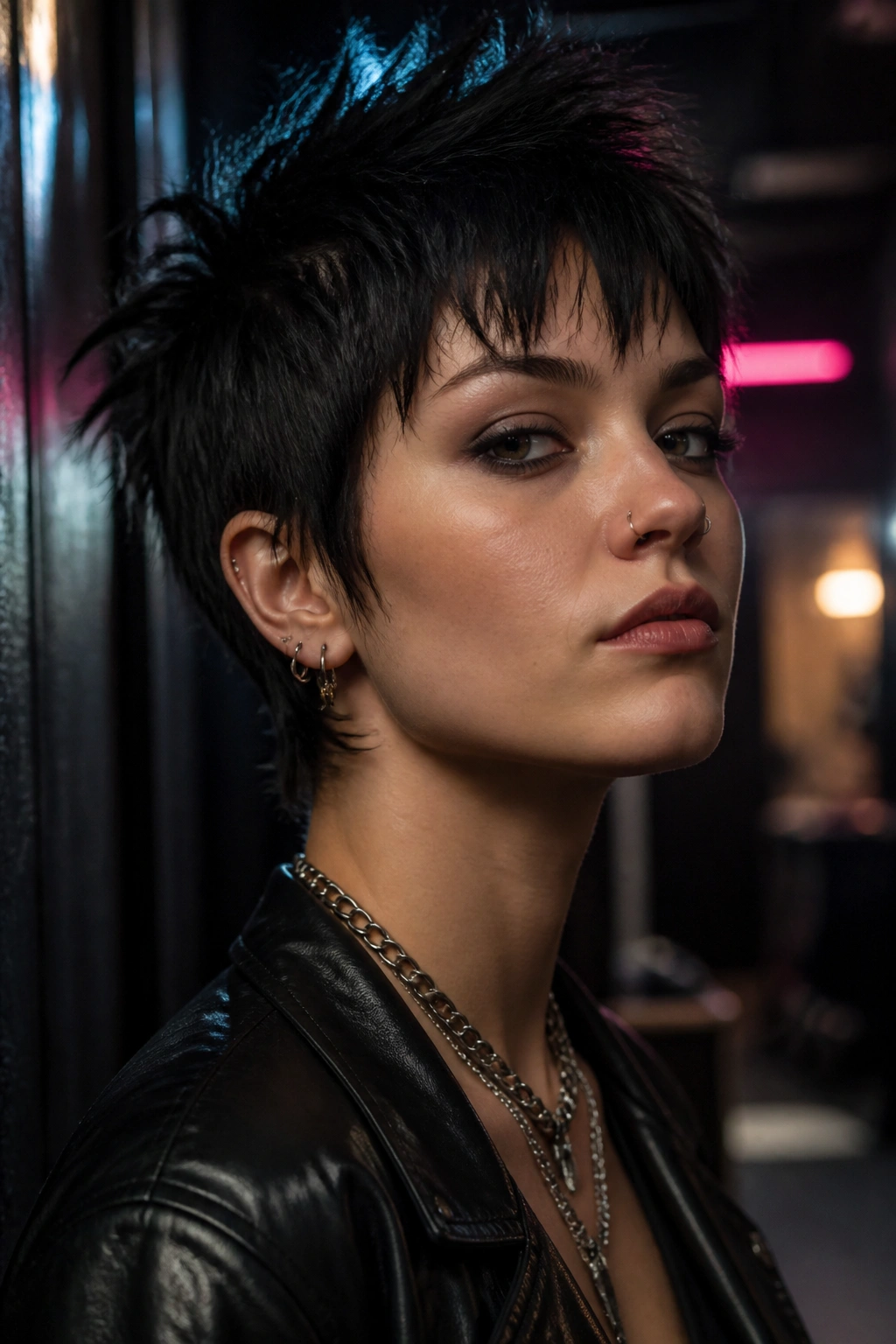
The strongest punk pixie cuts all share one thing: they make the shape obvious, then break it in a chosen spot. That can mean a shaved side, a jagged fringe, a color block, or a crown that stands up instead of lying flat.
Don’t overthink the “punk” part. It does not have to mean neon everywhere or a haircut so sharp it scares people at brunch. Sometimes it is just a short cut with one rude detail and enough attitude to carry the rest.
If you are taking one idea to a stylist, bring a photo that shows the silhouette first and the texture second. That saves a lot of trouble. The shape is the whole deal, and once that is right, the rest gets easier fast.
