



Wavy bob hairstyles have a way of looking finished even when the styling is almost lazy. That is the whole appeal, really: you get movement, shape, and a little attitude without spending half your morning fighting a round brush.
A good wavy bob is not about making hair look “done” in a stiff, lacquered way. It’s about letting the wave pattern do some of the work, then trimming the cut so the ends fall in a line that still feels clean. If the shape is off by even half an inch, the whole thing can tip from soft to puffy. That tiny difference matters.
I’ve always thought bob and lob haircuts work best when the cut respects the hair’s own bend. Fine hair needs a little structure so it doesn’t collapse. Thick hair needs weight removed in the right places so it doesn’t balloon. And naturally wavy hair? That’s where things get fun, because the cut can either flatter the wave or make it look like an accident.
The styles below lean into soft texture on purpose. Some are sleek at the top and loose at the ends. Some are airy and piecey. Some are blunt, some are layered, and a few are a little cheeky. All of them work because they keep the bob shape clear while giving the wave room to breathe.
1. Chin-Length French Bob

The chin-length French bob is the easiest way to make soft waves look deliberate. The cut lands right at the jawline or a touch below it, which gives the face a neat frame and keeps the texture from getting swallowed by too much length.
Why It Works
That short length does two things at once. It shows off the bend in the hair, and it keeps the ends from dragging the whole style down. If your wave pattern is loose, a chin-length bob makes it look fuller. If your hair is a little finer, the compact shape gives it more presence.
Ask for a soft blunt perimeter with the ends slightly beveled inward. Not a hard helmet line. A small bend from a 1-inch curling iron or a quick pass with a flat iron at the ends is enough.
- Keep the front pieces kissing the chin or grazing it by half an inch.
- Use a pea-size mousse at the roots before rough-drying.
- Wrap only the mid-lengths around a 1-inch barrel, leaving the last inch out.
- Tuck one side behind the ear for an easy finish.
Best tip: keep the wave loose at the crown and a little firmer through the ends. That contrast is what makes this cut feel light instead of boxy.
2. Soft A-Line Wavy Bob
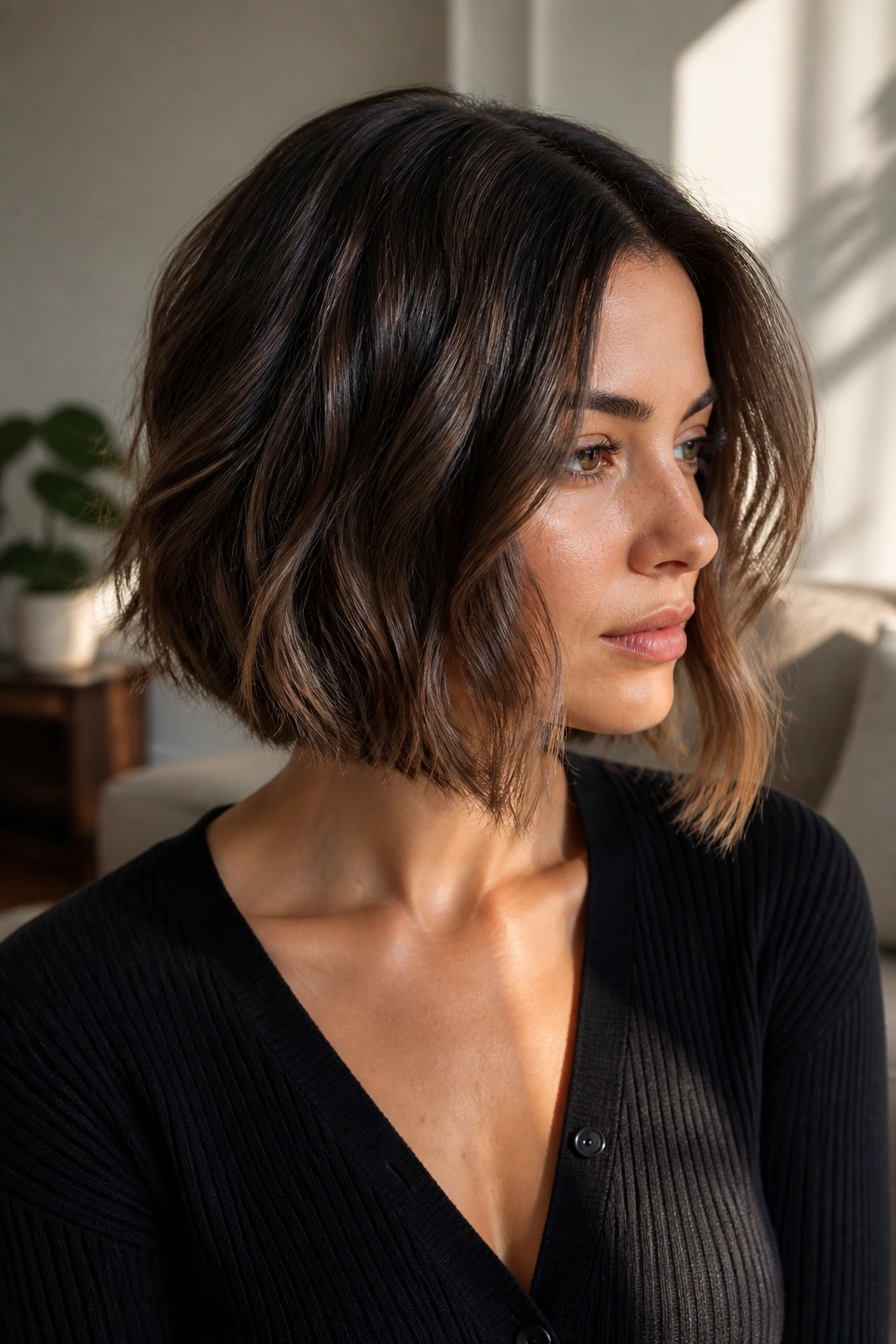
An A-line bob gives soft waves a cleaner edge than people expect. The back sits a little shorter, while the front drifts forward by about 1 to 1.5 inches, which creates a gentle diagonal line that feels polished without looking severe.
What I like about this shape is that it works with motion, not against it. Waves fall forward naturally, so the slightly longer front pieces look intentional. The nape stays tidy, which keeps the haircut from spreading out too much around the neck.
For styling, rough-dry the roots first, then bend the ends with a flat iron just enough to create a soft curve. Do not curl every section the same direction. That’s how you end up with a pageant bob. A mixed pattern keeps the movement quiet and natural.
This cut is especially good if you want your bob to feel a little sharper in the profile while staying gentle around the face. It has shape. It also has manners.
3. Jaw-Length Bob With a Side Part
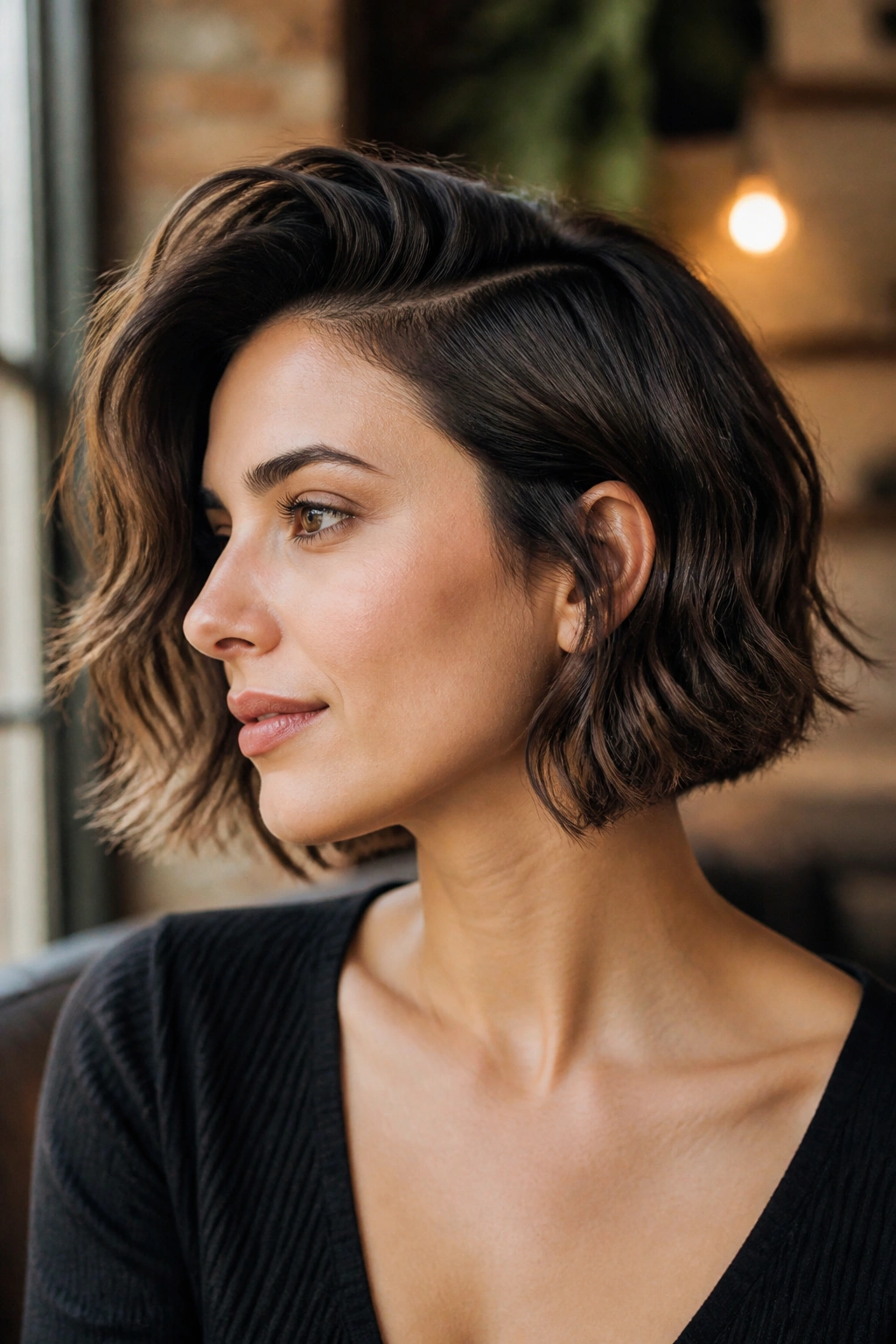
Need more lift at the crown? A deep side part does more than people give it credit for. On a jaw-length bob, it shifts the hair so one side gets a little extra height and the other side falls in a soft sweep across the cheekbone.
What the Side Part Changes
The side part breaks up symmetry in a way that makes the cut feel less rigid. That matters when you’re working with waves, because the texture already brings movement. A center part can be lovely here too, but the side part gives you a bit more shape near the temples and a little drama at the hairline.
This version is especially helpful for round or square faces. The diagonal line from the part to the jaw pulls the eye downward and outward, which softens the look of the face without hiding it. Use a light root spray at the heavier side, then blow-dry the roots in the opposite direction before flipping the hair back.
- Part the hair about 2 inches off center.
- Curl the front pieces away from the face with a 1-inch iron.
- Leave the ends slightly straighter for a cleaner finish.
- Pin the longer side back for 10 minutes while it cools if you want extra bend.
Small detail, big effect: the side with less hair should still move. If it goes flat, the style loses the whole point.
4. Layered Bob for Natural Waves

If your hair already has a wave, layers can save you a lot of time. Not the choppy kind that explodes outward. The useful kind. Long, internal layers remove weight so the wave can rise instead of hanging in a straight curtain.
The trick is restraint. Too many layers and the bob starts to look fuzzy at the outline. Too few and the wave gets crushed. I like soft point-cutting through the mid-lengths, with the perimeter left full enough to keep the shape readable.
This haircut is excellent for hair that gets heavy by midday. Thick, wavy hair often needs some room to move, and the right layering opens that up without turning the style into a shag. If you air-dry, even better. The layers will encourage the wave to separate on its own.
The finish should feel touchable, not crispy. Use a light curl cream, scrunch once, and leave it alone while it dries. That alone can make a layered bob look twice as alive.
5. Collarbone Lob With Airy Ends
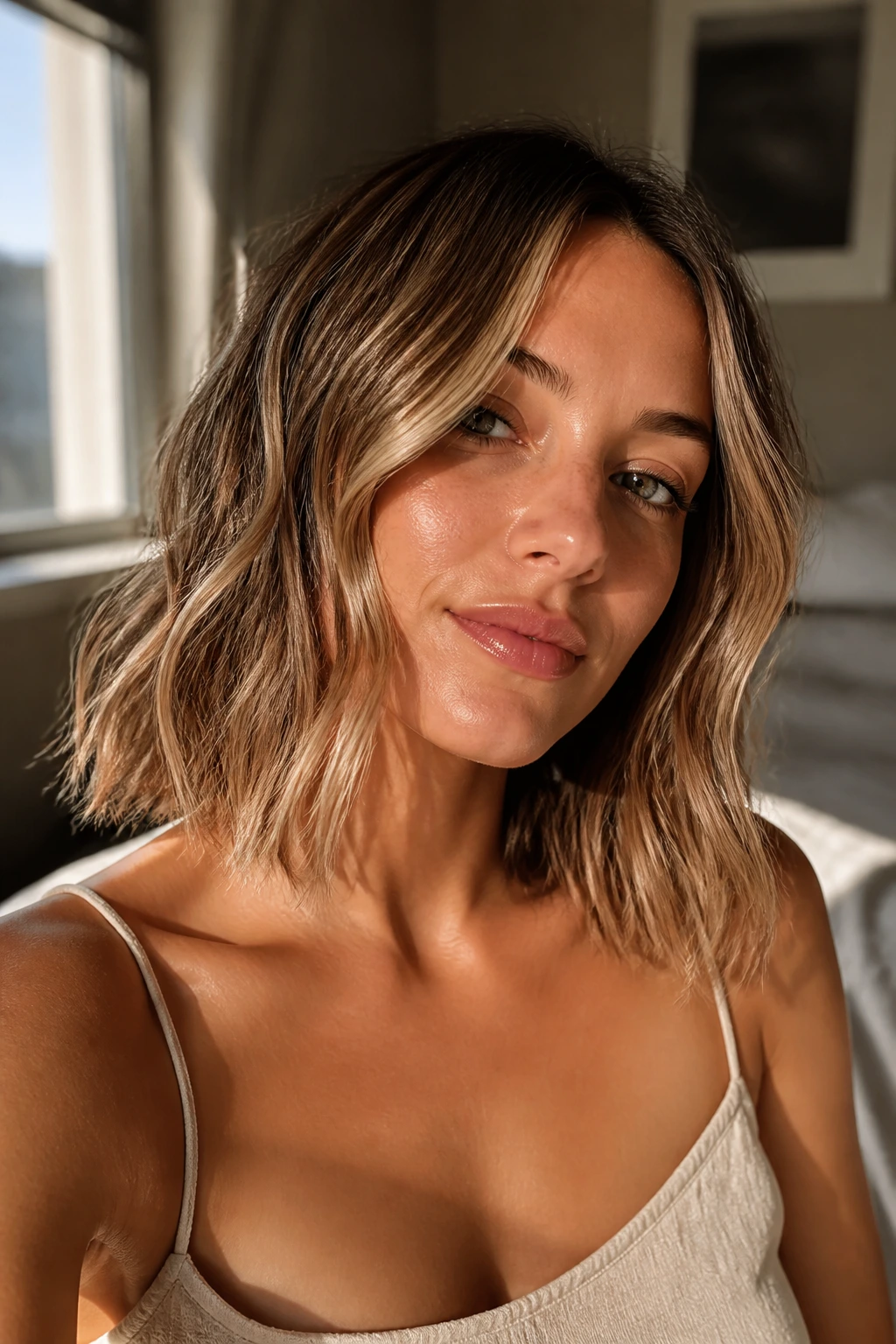
A collarbone lob is the sweet spot for anyone who wants softness without going short. The length brushes the collarbone or sits just above it, which gives the wave more room to stretch and makes the whole style feel relaxed instead of clipped.
The magic is in the ends. Keep them airy. Not wispy to the point of thinning, just light enough that they don’t sit as one heavy block. A 1.25-inch curling iron works well here, because it bends larger sections into a loose wave that falls naturally over the shoulders.
This cut is one of my favorites for growing out a shorter bob. It doesn’t look awkward during the in-between stage, which is more than I can say for a lot of lengths. It also plays nicely with both a center part and a soft off-center part.
Use a dab of smoothing cream on damp hair, then twist sections around your fingers as they dry. That finger-twist step sounds tiny. It isn’t. It helps the wave land in soft ribbons instead of one broad, sleepy bend.
6. Blunt Bob With a Hidden Bend

A blunt bob sounds strict, but the hidden bend at the ends changes everything. Unlike a shaggy cut, this shape keeps a clean perimeter while giving the lower edge a slight curve, so the hair looks full and controlled rather than puffy.
That contrast is the whole point. The line is sharp enough to give fine hair more density, yet the wave keeps the haircut from reading flat or boxy. If your hair is naturally straight with only a little bend, this is one of the easiest ways to fake texture without spending forever with hot tools.
Ask your stylist for a blunt cut that sits around the chin or just below it, then add barely there beveling at the ends. You want the outline to stay strong. The wave should live inside the cut, not destroy it.
Best on fine to medium hair. Also good if you like a polished look on Monday and something more casual by Friday. The cut can do both, which is rare enough to be worth paying attention to.
7. Shaggy Bob With Curtain Bangs

A shaggy bob with curtain bangs gives soft texture a little edge. The layers around the crown lift the hair, while the fringe opens across the forehead and blends into the sides instead of stopping in one hard line.
What to Ask For
Tell your stylist you want the bangs to start around the brow or just below it, then sweep into face-framing pieces that hit near the cheekbone. That keeps the fringe soft and avoids the heavy look that can happen when curtain bangs are cut too blunt.
The rest of the bob should stay piecey, not shredded. A few internal layers are enough. I’d avoid over-thinning the bottom because it can make the silhouette look tired fast.
- Use a round brush only on the bangs.
- Add texture spray to the mid-lengths, not the roots.
- Bend the side pieces away from the face.
- Keep the ends rough, not curled under too neatly.
One warning: if your hair is very fine, ask for less crown layering than the photos might suggest. Too much can make the top collapse.
8. Graduated Bob With Loose Waves
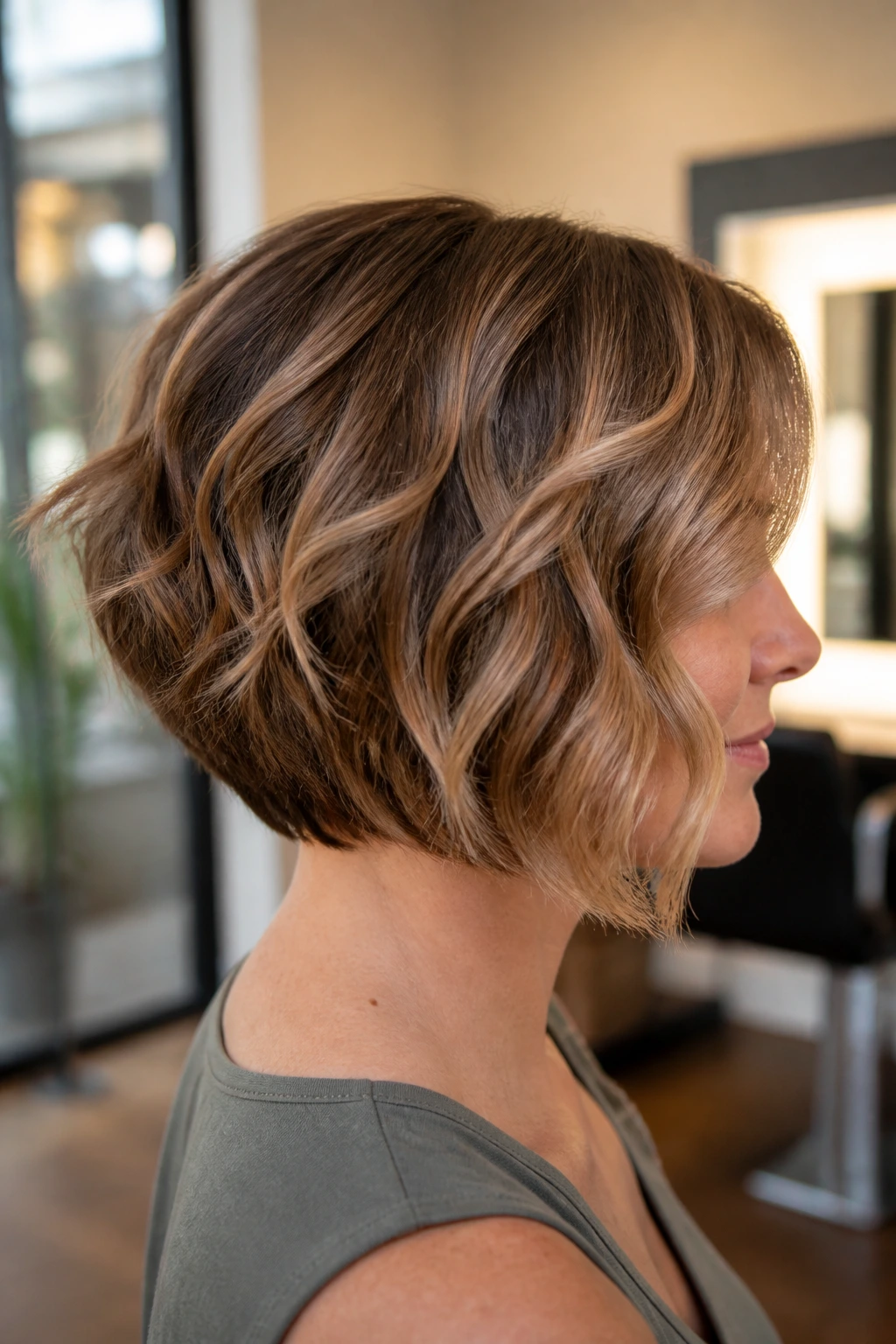
A graduated bob has a stacked shape at the back, and that extra lift gives loose waves a better place to sit. The nape stays shorter, the front stays a touch longer, and the whole haircut builds a clean curve through the back of the head.
That sounds technical because it is, but the result is simple. The haircut gets structure without looking hard. Loose waves soften the graduation, so you get shape at the back and movement everywhere else.
This is a strong choice for thick hair that tends to sit heavy at the neckline. The shorter layers remove bulk where it matters most. For styling, dry the roots with a nozzle pointed downward, then bend only the top layers around a 1-inch iron. Let the lower sections keep their own texture.
It’s a sharp-looking cut that still feels soft around the face. That balance is the reason stylists keep coming back to it.
9. Wet-Texture Tousled Bob

Some bobs are meant to look polished. This one isn’t. A wet-texture tousled bob uses gel, cream, or mousse to create a slightly glossy finish that shows off the wave pattern in slim, separated pieces.
How to Keep It Soft, Not Crunchy
Start with towel-dried hair that’s about 70 percent dry. Work a small amount of lightweight gel through the mid-lengths, then add a dime-size blob of curl cream on the ends. Scrunch upward with your hands, but stop before the hair turns stiff. The trick is to let the product define the wave without building a shell around it.
A diffuser on low speed helps, though air-drying works too if you have patience. The finish should look damp-ish, not soaked. If the hair gets too glossy, blot the ends with a microfiber towel.
- Use more product at the back than the front.
- Keep the part loose and slightly messy.
- Separate 2 or 3 face-framing pieces with your fingers.
- Skip heavy oils; they flatten the texture fast.
This style loves a casual wardrobe, but it also looks sharp with a blazer. Strange combo. Works anyway.
10. Side-Swept Wavy Bob

I reach for a side-swept bob when someone wants softness around the eyes. The long front sweep draws the eye diagonally, and the wavy texture keeps the shape from feeling too formal.
Think of this as the easier cousin of a side-part bob. The part still matters, but the front section does more of the visual work. One side falls closer to the cheekbone, the other side sits a little lighter and shorter.
The best way to style it is to blow-dry the front away from the face first, then curl only the frontmost strand with a 1.5-inch iron. That gives you a sweeping line without a tight curl. Hold it in place with a small clip while it cools, then brush it out once. Gently.
If you want the cut to feel modern, keep the ends blunt. If you want it softer, ask for a tiny bevel. That’s the fork in the road.
11. Sleek Top, Wavy Ends Bob

A sleek top with wavy ends sounds like a small detail. It changes the whole haircut.
The top section stays smoothed down with a flat brush or a dryer nozzle, while the lower half gets a loose bend. That contrast makes the head shape look cleaner and the wave pattern look more intentional, especially on thicker hair that can get puffy at the crown.
I like this style because it solves a common problem: lots of waves are lovely, but all-over wave can be a bit much when the hair is dense. Keeping the top flatter reins it in. The ends still get to move, which is where the fun lives.
Use heat only from the mid-lengths down, and leave the roots alone except for a little lift at the crown. A light shine spray on the outer layer helps the sleek top read smooth without turning greasy. The result feels a little chic, a little easy. Not fussy. Good.
12. Deep Middle-Part Lob
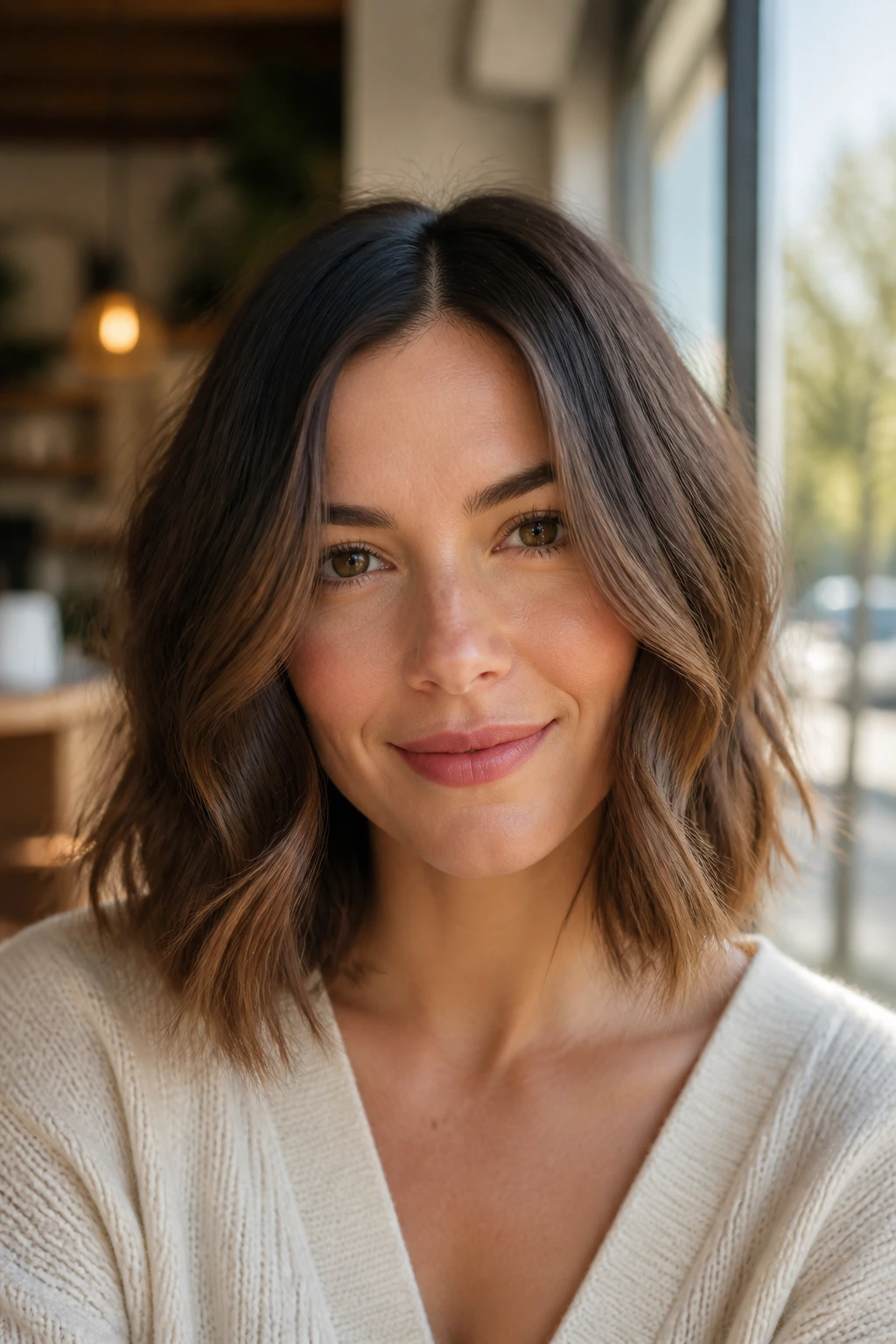
A deep middle-part lob gives soft waves a clean frame. Unlike a side part, which shifts the volume to one side, a center part keeps the shape balanced and lets the wave pattern show itself evenly on both sides.
That symmetry is useful when the hair is longer than a classic bob and sits somewhere around the collarbone. The length can feel heavy if the part is off, but a center line opens everything up. It also works well if the wave is loose and relaxed rather than tight and springy.
This cut suits oval and longer faces especially well because the even fall of the hair creates width at the cheeks. If your face is very round, you may want a softer off-center part instead. That’s not a rule, just a practical note from seeing this haircut on enough heads to know where it shines.
Use a large round brush or a blowout brush to bend the ends under just slightly. The wave should stay calm. Think polished beach texture, not pageant hair.
13. Piecey Bob With Micro Layers
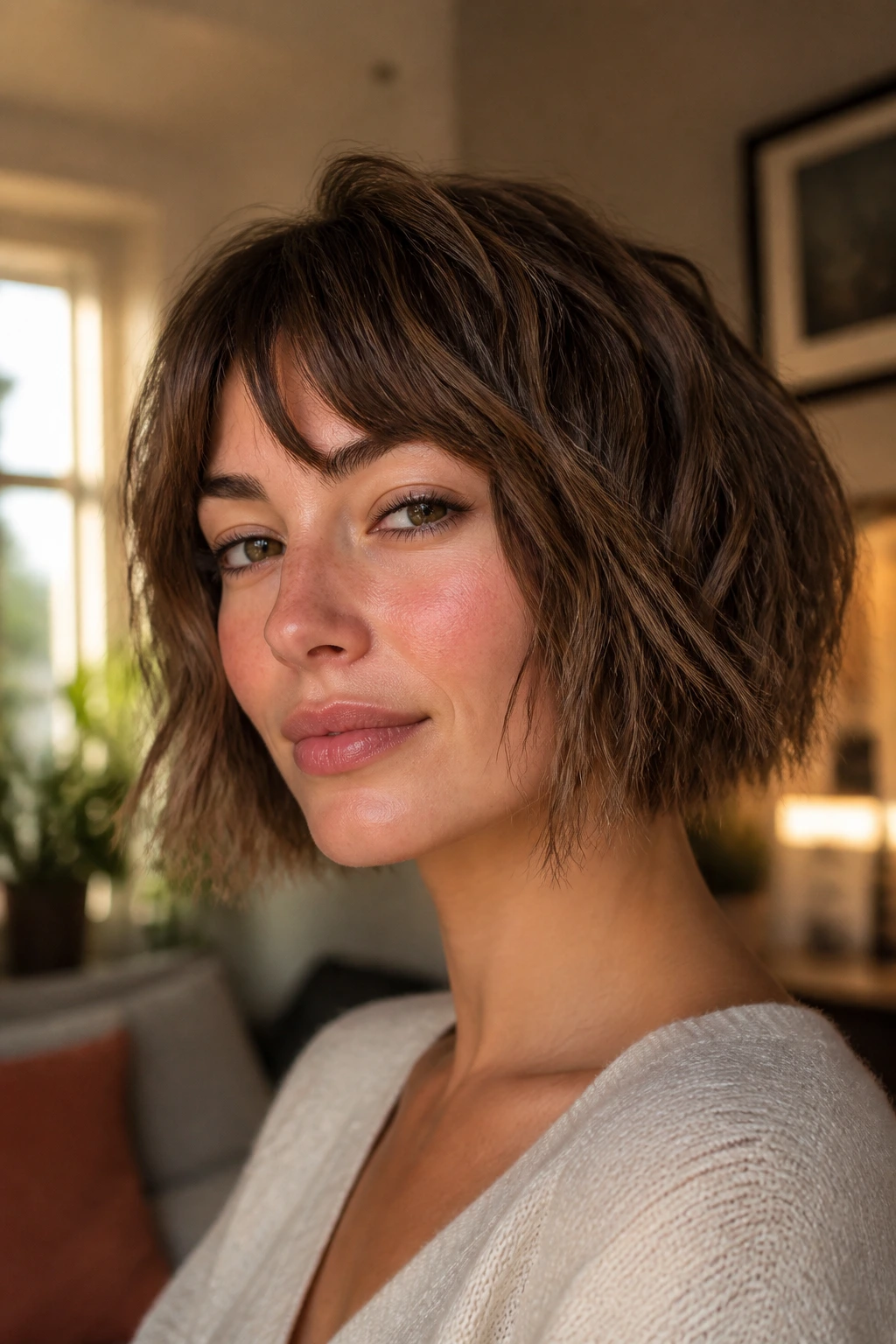
Piecey texture is the whole identity of this bob. Tiny internal layers break the hair into small sections, so the wave separates into little ribbons instead of one broad sheet.
Why It Reads So Soft
Those micro layers are subtle enough that the haircut still has a bob shape, but they create movement at the ends and through the sides. I’d call it the best option for people who like their hair to look lived-in, not overly styled. You can wear it with a soft bend, a rough air-dry, or even a quick twist through the front pieces.
A pea-size texture cream goes a long way here. Too much product turns piecey into sticky, and that is not the same thing at all. Work the cream through the ends only, then pinch a few strands with your fingers while the hair is still warm from the dryer.
- Ask for point-cutting, not choppy slicing.
- Keep the perimeter blunt enough to hold shape.
- Use a 1-inch wand only on random sections.
- Let a few ends stay straight for contrast.
My take: this is the bob for people who hate hair that looks too “perfect.” It has a little mess in it on purpose.
14. Asymmetrical Wavy Bob
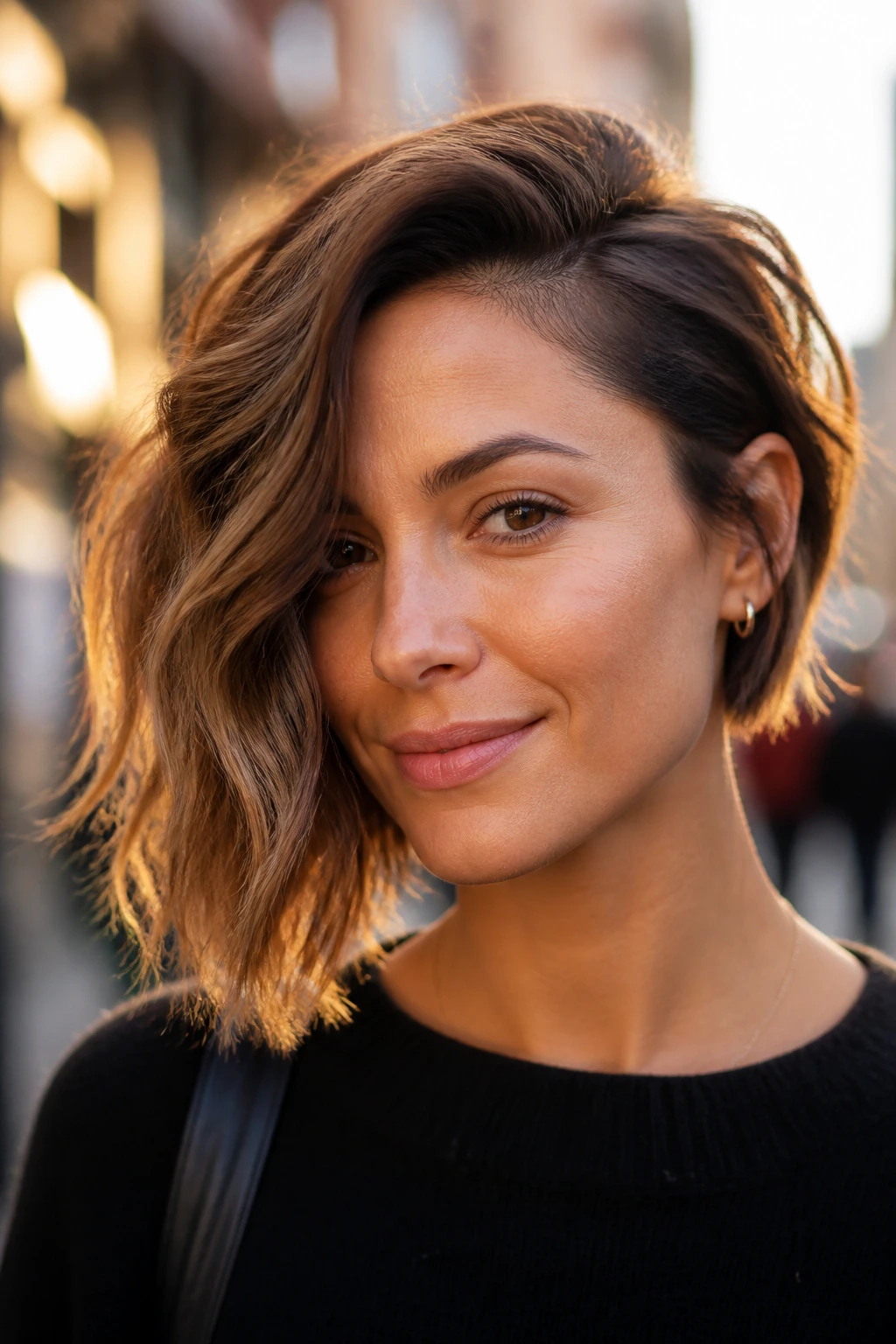
A small length difference can make a bob feel sharper in an instant. One side sits a touch longer than the other, and the waves soften what could otherwise feel severe.
That’s the beauty of an asymmetrical bob: the cut has attitude, but the texture keeps it from turning hard. The line still matters. The uneven length gives the eye something to follow, and the wave helps the haircut move instead of sitting like a block.
This style is great if you want a bob that feels current without becoming trendy in a way that dates quickly. The asymmetry should be subtle — about half an inch to 1 inch difference, not a dramatic slash unless you really want it. Keep the waves loose and the ends slightly piecey so the shape stays wearable.
If you tuck the shorter side behind the ear, the contrast becomes even clearer. Little things. That’s what makes the haircut work.
15. Face-Framing Undone Bob

Which pieces matter most in a wavy bob? The ones closest to the face, every time. A face-framing undone bob leaves those front sections a little longer and softer so they skim the jaw, cheekbone, or collarbone depending on your length.
Where to Place the Shortest Pieces
The shortest pieces should usually sit around the chin or just under the cheekbone, not much higher. Any shorter and the face can start to feel crowded. The goal is to make the wave move around the features, not sit on top of them.
This cut works well for people who want the hair to do some contouring without looking heavily layered. Ask for a gentle graduation around the front and keep the back more compact. That balance keeps the bob from losing its shape.
A 1-inch iron, wrapped away from the face, gives the front pieces a soft swing. Leave the ends loose and resist the urge to re-curl every strand. The messier bits are often the best bits here.
16. Retro Tucked Wave Bob
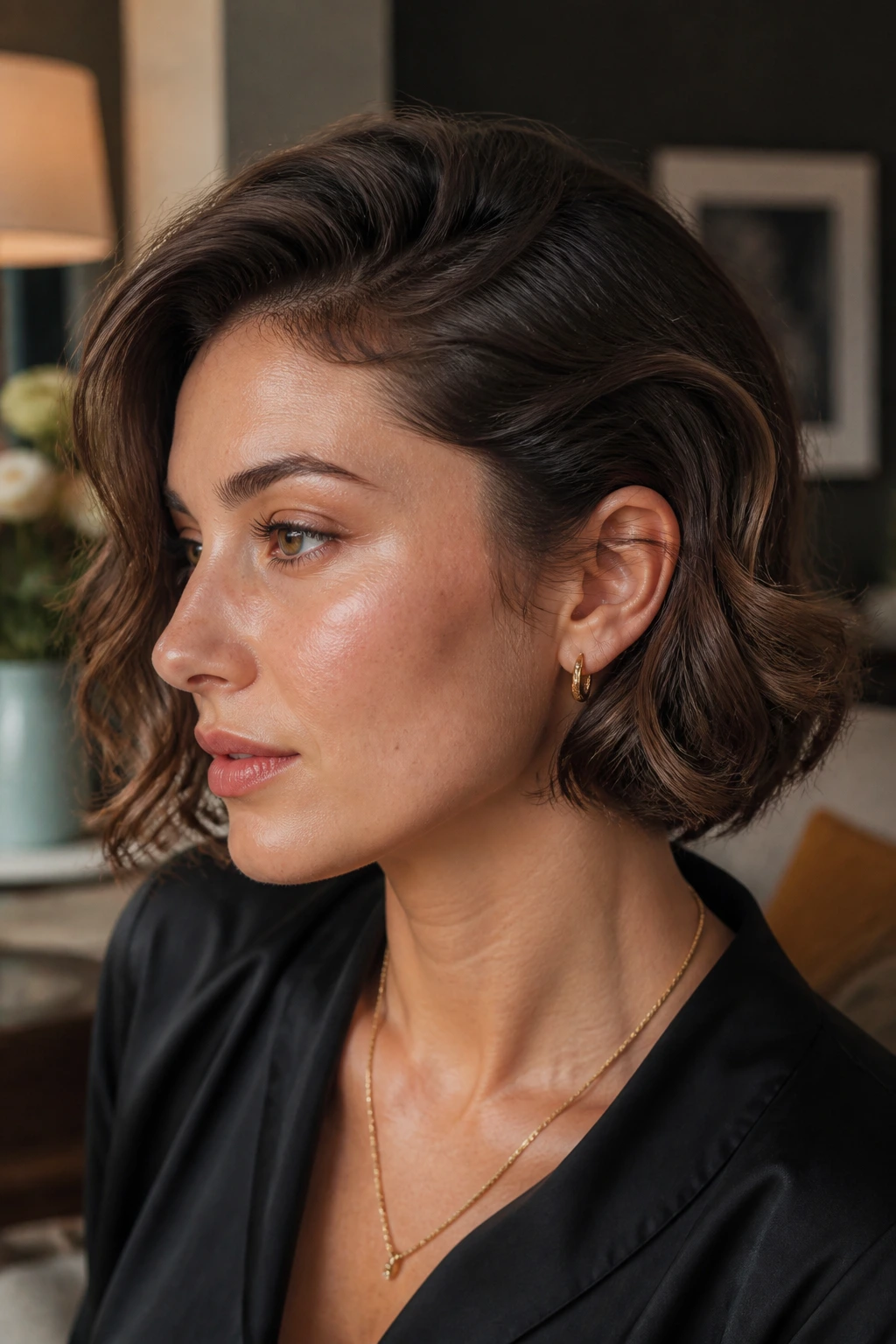
Think of the bob you tuck behind one ear after lunch and somehow it looks better than when it was perfectly arranged. That’s this cut.
The retro tucked wave bob uses a neat outline, soft waves, and a side tuck to create a shape that feels a little polished and a little lived-in. The tucked side exposes the jawline, while the opposite side keeps the movement and fullness.
It’s a good style for straight or slightly wavy hair because the texture can be built in with hot tools. Roll the front away from the face, then pin one side back for a few minutes so the bend sets. A light shine spray helps the surface look smooth without flattening the wave.
- Keep one side visibly fuller than the other.
- Use a clip or small pin, not a giant barrette.
- Curl the ends under only 1 turn.
- Brush the wave out once, not five times.
The vibe is neat, but not precious. A rare thing.
17. Grown-Out Bob With Root Lift

A grown-out bob can look far better than a freshly cut one if the shape is handled well. The key is root lift at the crown and soft movement at the ends, so the longer length feels intentional rather than in-between.
This cut is useful for anyone trying to stretch the time between salon visits. It usually lands between the jaw and the collarbone, with enough length to tuck back but not so much that it stops reading as a bob or lob. The wave helps blur the line between those two.
Blow-dry the roots upward with a small round brush, then use a 1.25-inch iron only on the lower half of the hair. Keep the very ends slightly straighter. That keeps the style from ballooning.
I like this cut because it is forgiving. On busy days, you can throw in a little dry texture spray and go. On better days, a bit of root lift makes it look planned.
18. Rounded Bob

A rounded bob follows the shape of the head instead of fighting it. The silhouette curves gently inward at the sides and back, which makes wavy hair look soft and compact rather than wide or puffy.
Unlike a boxy bob, the rounded version keeps the outline smooth. That matters if your hair is dense, because dense wave can spread outward fast. The rounded shape reins it in without taking away the movement that makes the style fun.
This cut works best when the stylist bevels the perimeter with a round brush or large roller set. You want the hair to curve under just enough to hold its shape, but not so much that it turns old-fashioned. A little modern wave through the surface keeps it fresh.
If your hair tends to flare out at the sides, this is one of the better fixes. It doesn’t fight the texture. It guides it.
19. Wolfy Bob Hybrid

The wolfy bob hybrid sits between a bob and a soft shag. The crown has a little lift, the ends are piecey, and the shape carries that slightly undone energy people like in wolf cuts — only shorter and easier to wear.
What to Ask For
Tell the stylist you want a bob-length perimeter with soft crown layers, face-framing pieces, and ends that are lightly razored or point-cut. The layers should create movement, not a full collapse into shag territory. That distinction matters. If the top is cut too short, the style can get too wild too fast.
This one suits wavy hair that has some bend but doesn’t always know where to land. The hybrid shape gives the wave a landing spot. Use a small amount of mousse at the root, then a dab of cream on the mids and ends. Scrunch, diffuse, stop.
- Keep the length around the jaw or just below it.
- Avoid heavy oils that kill the texture.
- Leave a few interior strands longer for softness.
- Use your fingers, not a brush, to break up the wave.
Strong opinion: this cut looks best when it isn’t over-styled. A little roughness is the point.
20. Air-Dry Friendly Wavy Lob

A good air-dry friendly lob saves time and still looks finished. The length usually sits from just below the chin to the collarbone, and the soft wave has enough room to dry without crumpling into odd shapes.
This cut depends on the right balance of weight and movement. Too blunt, and the hair dries flat at the top and wide at the ends. Too layered, and it can puff up. The sweet spot is a light interior shape with a perimeter that still has some line to it.
Use leave-in conditioner first if your hair gets frizzy when it dries. Then add a cream or light foam from mid-lengths to ends. Scrunch once or twice, shake the roots loose, and leave it alone. Seriously. Touching it every five minutes ruins the pattern.
The result has that soft, relaxed texture that looks easy because it mostly is. Not lazy. Just sensible.
21. Razor-Cut Bob

Can a razor cut make a bob softer? Yes, if the stylist knows where to stop. A razor can remove bulk and give the ends a feathered feel, which works especially well on thick hair that needs movement.
The catch is control. A razor on fragile or very fine hair can chew up the ends, so this is not the cut for every head. Used well, though, it creates a little edge and a lot of texture. The hair shifts more freely, and the waves separate instead of clumping.
I’d ask for razor work mostly through the surface and not at the entire perimeter. That keeps the outline from fraying. If you already have natural wave, the razor can make the pattern sit lighter. If your hair is straighter, it gives the bend more room to show.
This is one of those styles that looks better after it settles for a week. Fresh cuts can be a touch sharp. Then they soften, and that’s when it starts to look expensive in the practical sense — healthy, moveable, easy to wear.
22. Light Fringe Wavy Bob
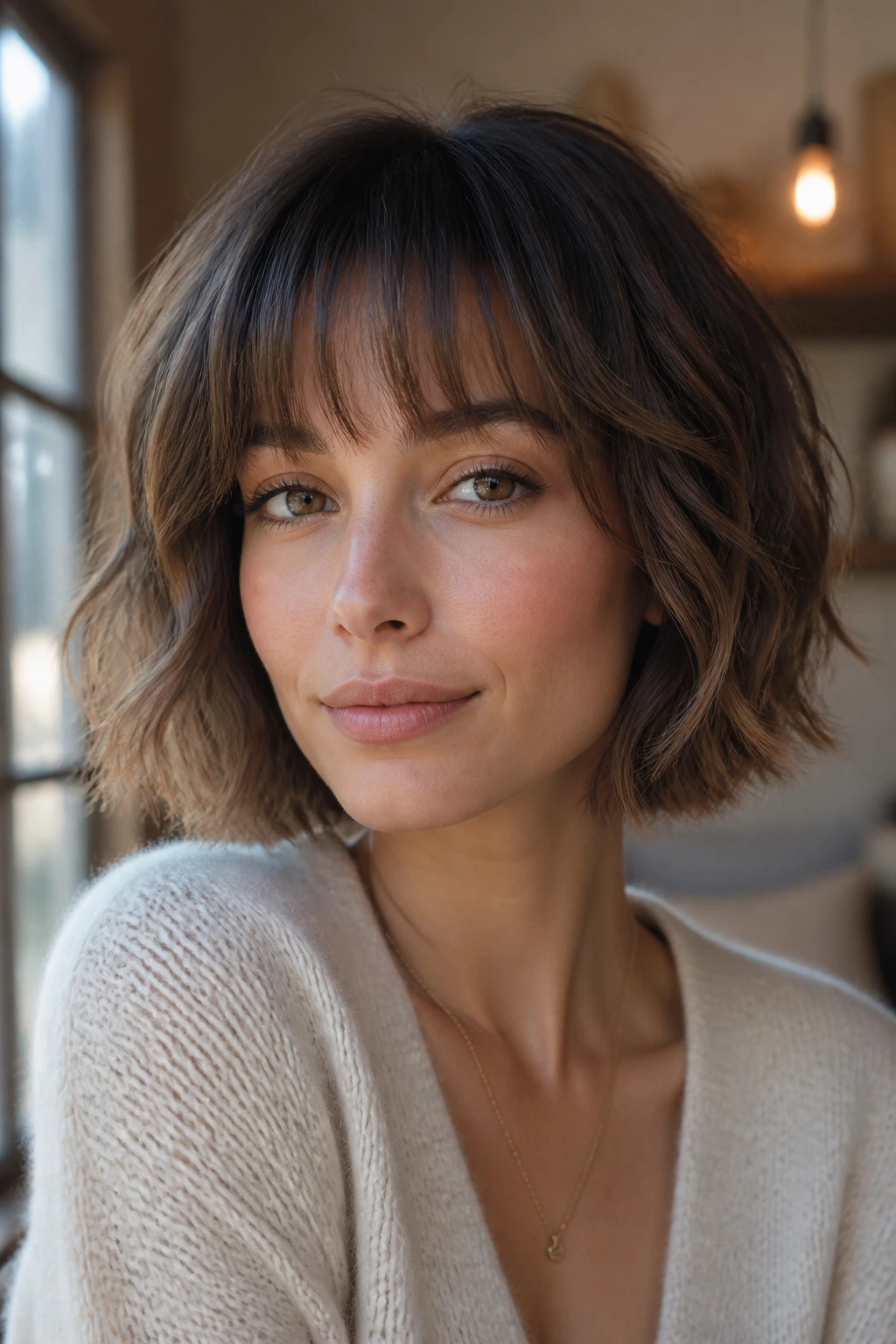
A light fringe changes the whole mood of a wavy bob. Even a thin, airy fringe breaks up the forehead and gives the hair a softer starting point, which makes the waves underneath feel more relaxed.
The fringe should stay light enough that it moves. Not a heavy curtain and not a blunt wall. I like brow-skimming pieces with a tiny bit of separation, especially on hair that already has a gentle bend. That keeps the line from getting too heavy around the eyes.
For styling, dry the fringe first with a small round brush or your fingers, then let the rest of the bob air-dry or diffuse. Keep a little lift at the roots and let the ends stay loose. If the fringe gets too flat, a mist of dry shampoo at the roots fixes it fast.
- Best with chin-length to collarbone lengths.
- Works well on fine hair that needs a softer front.
- Easy to tuck away if you want a cleaner look.
- Looks best with a loose, not polished, wave pattern.
The nice thing about this style is that it finishes the whole set of looks on a softer note. It’s the sort of bob that still feels easy on a Monday and still looks good when you run out the door on Friday.
