



Diamond face shapes are happiest in haircuts that soften the cheekbones and give the forehead or jaw a little more visual weight. Miss that balance, and the cut can make the face look sharper than it is. Hit it, and the whole shape settles into place fast.
The problem is not that diamond faces are hard to work with. They’re not. They just sit in a narrower lane than oval or square faces, so a cut that looks fine on someone else can land in the wrong spot and make the cheekbones do all the talking. Too much width at the widest point. Not enough movement above or below it. That’s the usual trap.
The good news is that the right haircuts for diamond face shapes are easy to spot once you know what to look for. Side parts, curtain bangs, soft fringes, jaw-skimming lengths, and layers that start in the right place tend to do the most work. A blunt line in the wrong spot can fight the face. A softer line in the right spot can do the opposite.
And that’s where these 15 cuts come in. Some are short, some are long, some are polished, and some are a little messy on purpose — but they all aim at the same thing: better balance, easier styling, and a shape that makes the face look more intentional without trying too hard.
1. Side-Swept Layered Lob for Diamond Face Shapes

A side-swept lob is one of the cleanest fixes for a diamond face shape. The side part creates a diagonal line across the forehead, which pulls the eye away from the widest part of the face. Then the lob length, sitting around the collarbone or just below, gives the jaw a little more presence without dragging the face down.
Why It Works
The whole point is to break up symmetry. Diamond faces already have strong structure in the middle, so a deep side part and soft layers keep the shape from feeling too narrow at the temples. The best version of this cut has layers that start below the cheekbone, not right at it. That detail matters.
- Keep the length at the collarbone or 1 inch below.
- Ask for soft, blended layers instead of choppy ends.
- Tuck one side behind the ear when you want the cheekbones to calm down a bit.
- Use a 1¼-inch curling iron and bend the ends away from the face for movement.
Pro tip: If your layers land exactly at cheek level, they can make the face look wider there. Move them lower.
2. Curtain Bangs and Long Layers for Diamond Face Shapes
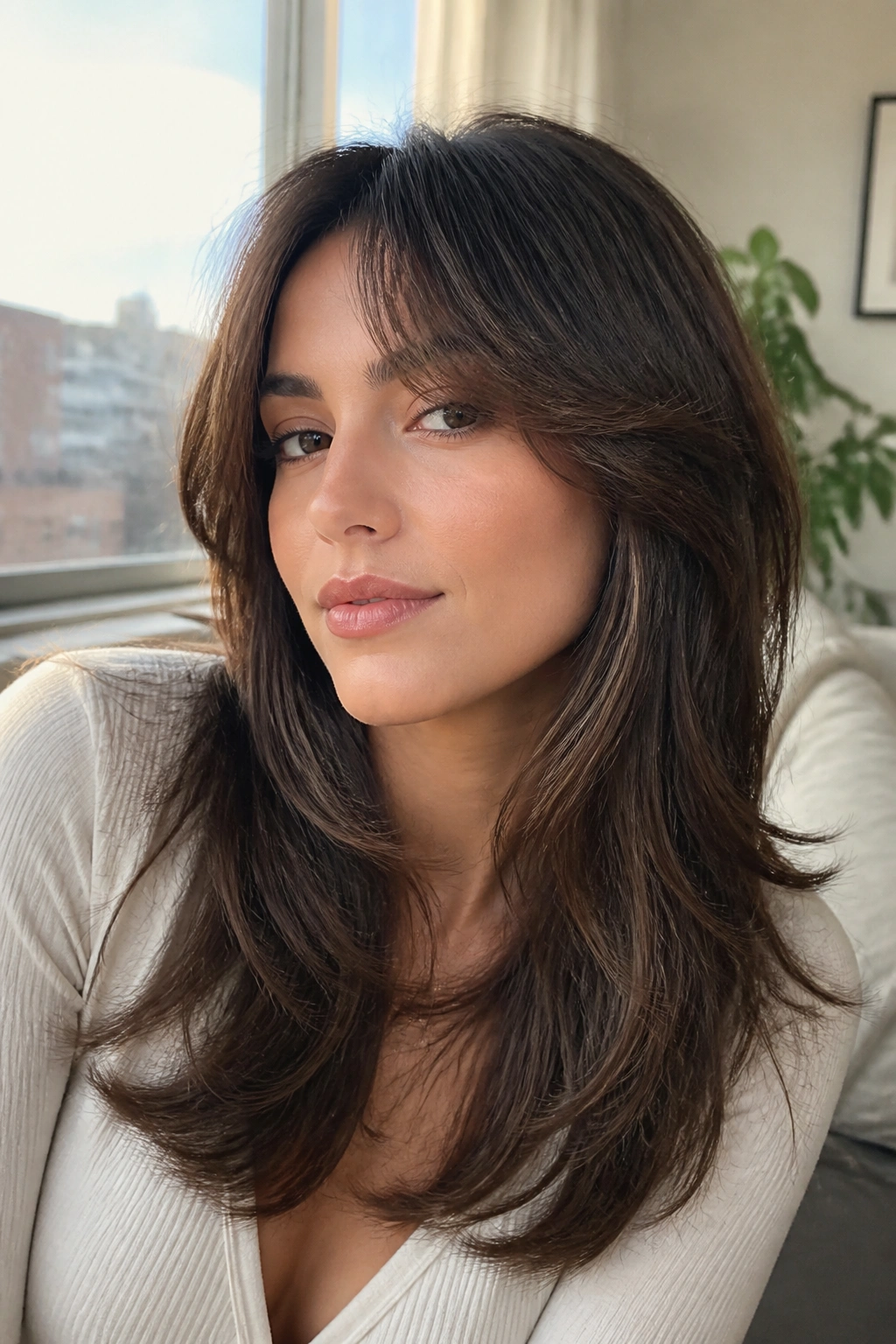
Why do curtain bangs show up on diamond faces so often? Because they solve two problems at once. They soften the forehead without boxing it in, and they frame the cheekbones without sitting directly on top of them. That little split in the middle gives the face room to breathe.
The trick is in the length. Curtain bangs that stop too high can make the face feel top-heavy, while bangs that fall a little longer and blend into layers feel easier and less fussy. I like them best when the shortest pieces hit around the brow or upper cheek, then feather into longer pieces at the jaw.
Long layers should stay light, not stringy. You want movement through the mid-lengths and ends, especially if your hair is straight and tends to hang flat. A center part can work here too, but a soft off-center part usually looks more relaxed and less exact.
One sentence can change the whole cut. Let those bangs bend outward, not straight down.
3. Chin-Length French Bob With Soft Ends

Picture a chin-length bob that brushes the jaw instead of stopping shy of it. That small difference gives a diamond face more balance, because the line of the cut lands where the face needs a little width and structure. A French bob does this nicely when it stays soft at the ends.
What to Ask For
This is not the place for a hard, helmet-like bob. You want movement. The ends should curve under just a bit, and the outline should feel airy rather than stiff. If your hair is thick, some internal weight removal helps. If it is fine, keep the shape fuller so it does not collapse by lunchtime.
- Ask for chin length or just below the chin.
- Keep the perimeter blunt enough to show shape.
- Add a soft bend at the ends with a round brush or flat iron.
- Leave the fringe light if you want one; a heavy bang can crowd the cheekbones.
The cut looks especially good on straight or slightly wavy hair. And yes, it does need regular trims. Short bobs lose their line quickly.
4. Textured Pixie With Wispy Fringe
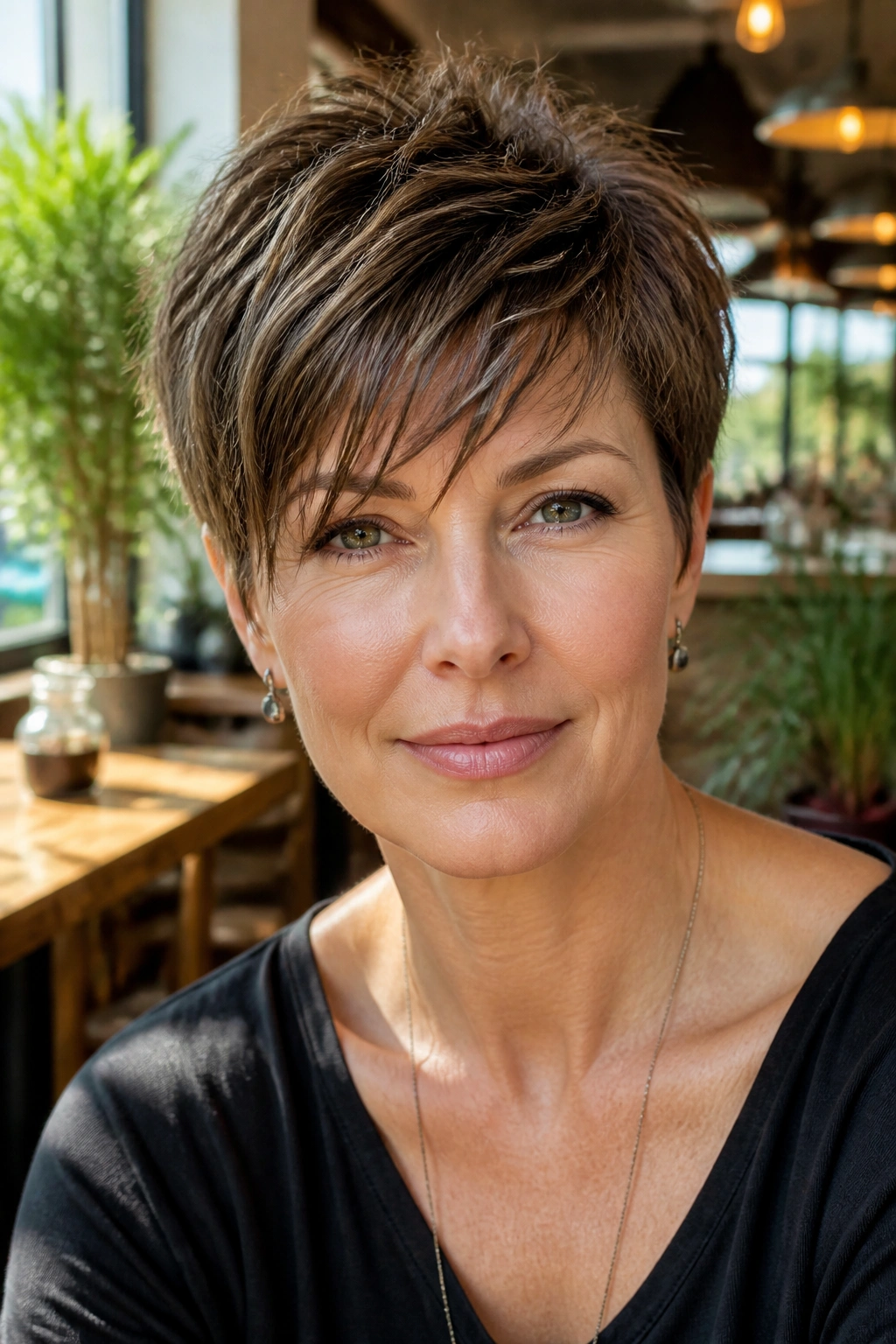
A pixie can work on a diamond face shape, but only if it has softness where the face needs it. The best version keeps the top slightly longer, the fringe wispy, and the sides close enough to the head that the cheekbones don’t end up looking even wider. Sharp, spiky pixies tend to fight the face. Soft ones flatter it.
A good textured pixie should have a little piecey movement at the front, not a stiff cap of hair sitting on the forehead. The fringe can sweep to one side or fall lightly across the brow. That gives the upper half of the face a bit more visual weight, which is exactly the point.
This cut is especially useful if you want something quick in the morning. A pea-sized dab of paste, scrunched through damp hair, is usually enough. Air-dry it if you like a rougher finish. Blow-dry it with your fingers if you want more lift at the crown.
Short hair is not the enemy here. Bad shape is.
5. Shoulder-Length Shag With Broken Layers

Shag layers should move when you shake your head. If they don’t, the cut is too controlled and starts working against the face instead of around it. On a diamond face, that looseness matters because it keeps the widest point from feeling trapped in one hard shape.
The shoulder-length shag is good because it adds softness above and below the cheekbones at the same time. The layers don’t all start in one place, which keeps the silhouette from looking boxed in. I’d rather see a shag that looks a little imperfect than one that’s over-styled and too neat.
This cut usually works best on hair with some natural wave, though straight hair can handle it with a bit of texture spray and a round brush. The shortest layers should sit below the cheekbone, not right across it. That’s the part people get wrong.
If you love a cut that looks better a little messy, this is one of the most useful options on the list.
6. Collarbone Cut With Soft Waves for Diamond Face Shapes
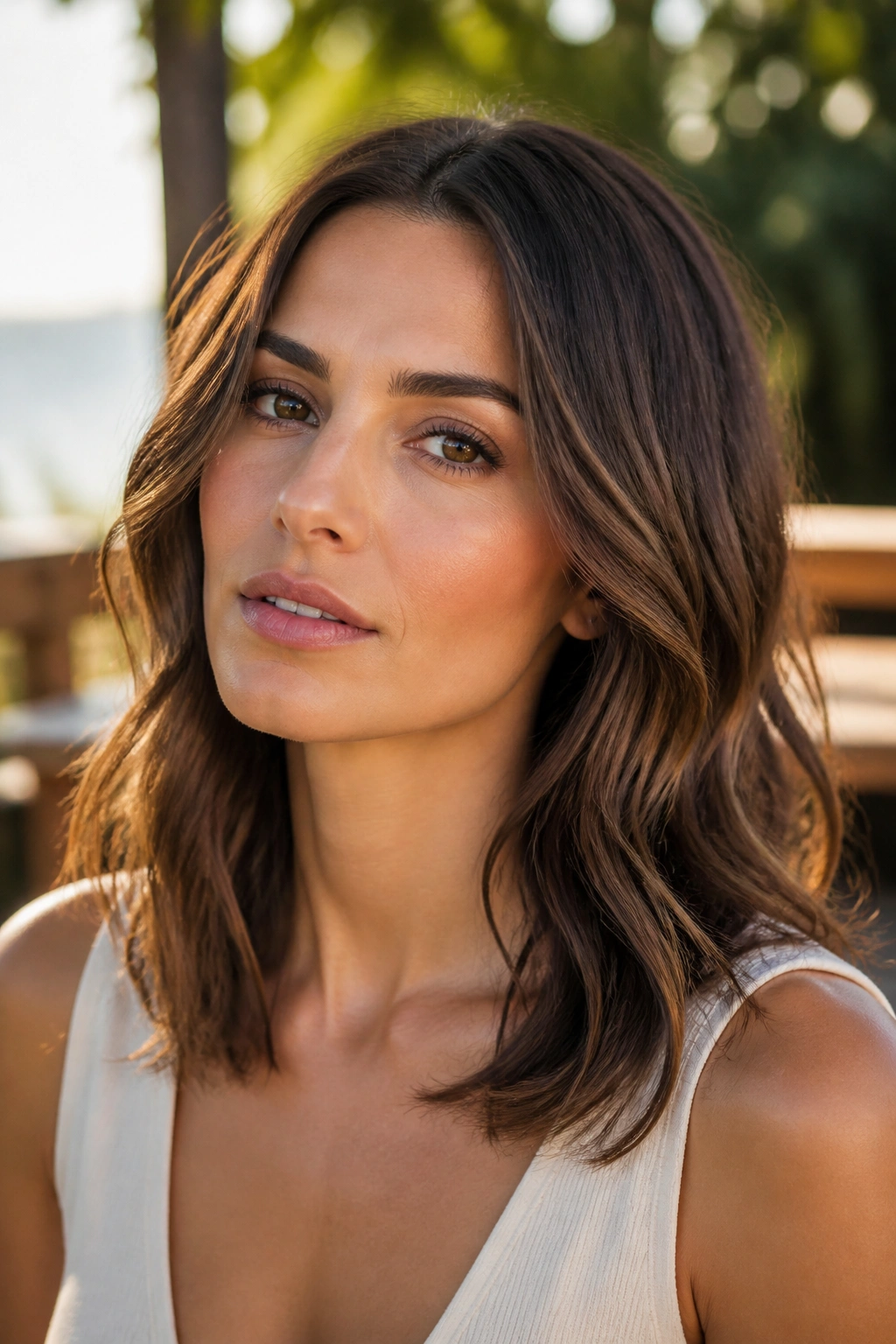
The collarbone is a sweet spot for diamond faces. It sits low enough to add length without pulling everything downward, and it gives the jawline a little more room to show up. Add soft waves, and the whole cut feels balanced instead of severe.
How to Style the Bend
A loose wave is better than a tight curl here. Tight curls can bunch at the cheekbone and make the face look narrower in the wrong place. Soft waves fall over the mid-lengths and break up the line without stealing attention.
- Use a 1-inch curling iron or wand.
- Wrap sections away from the face for the front pieces.
- Leave the ends out on a few sections so the wave does not look too uniform.
- Brush through the curls once they cool for a softer finish.
The collarbone cut is a good choice if you like medium-length hair but don’t want a bob. It also grows out well, which is one reason I keep recommending it. A lot of haircuts look good on day one and awkward by week six. This one behaves.
7. Deep Side-Part Long Layers
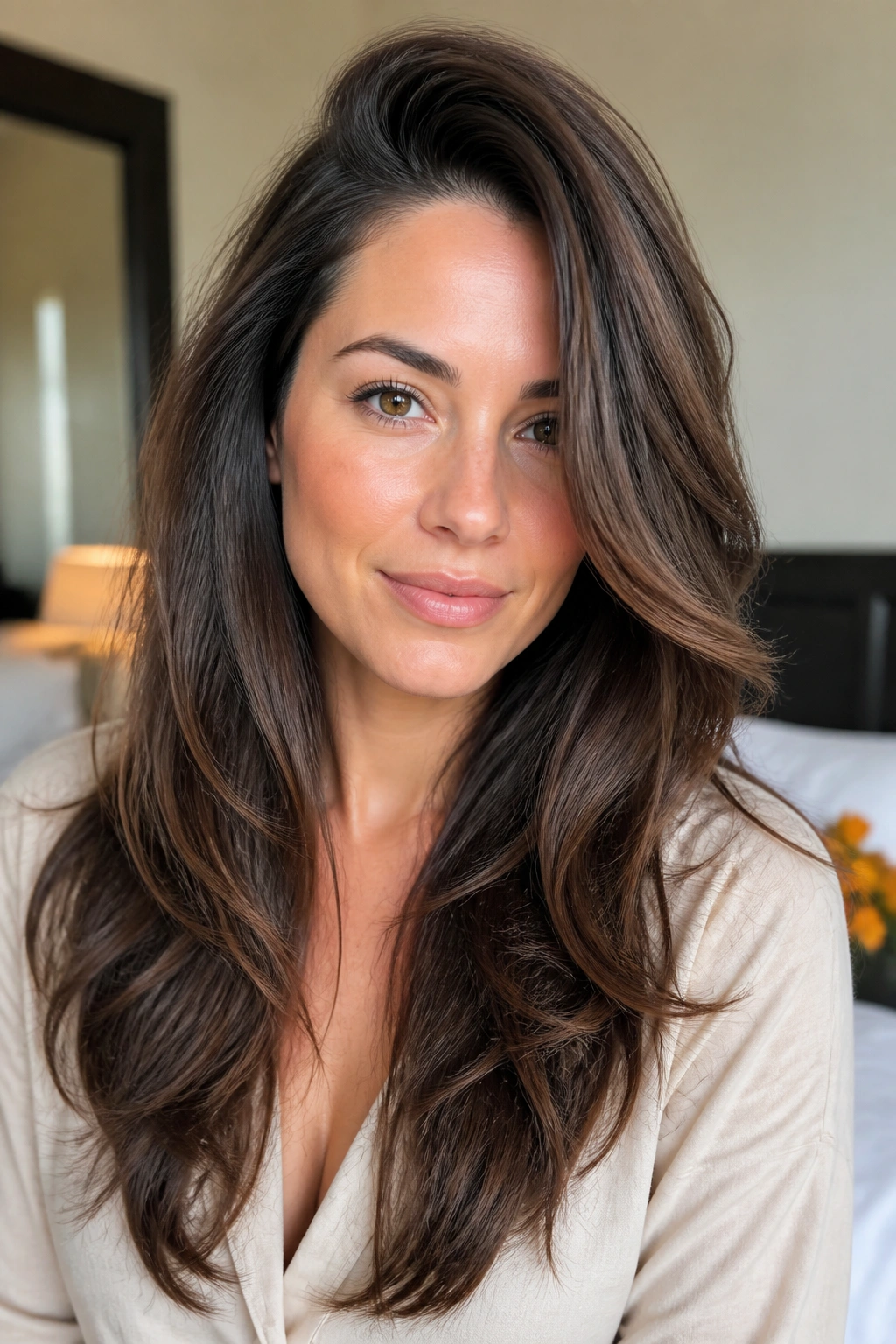
If you want to keep your length, the deep side part is a workhorse. It changes the whole balance of the face without taking off much hair. On a diamond face shape, that matters because the part shifts volume toward the forehead and away from the cheekbones, which makes the proportions feel calmer.
Long layers keep the ends from looking heavy and flat. Without them, long hair can hang straight down and make the face look narrower through the middle. With them, the hair moves. A lot more than people expect, honestly.
This cut is especially good for thick hair, because thick hair can handle the side part and still keep fullness where it needs to be. If your hair is fine, ask for fewer layers and keep the front pieces soft. Too many layers in fine hair can make the ends look thin.
What I like most: it looks expensive without being fussy. That’s a rare thing.
8. Asymmetrical Bob

A small imbalance can be a good thing. An asymmetrical bob breaks up the natural symmetry of a diamond face and gives the eye somewhere else to land. One side is usually just 1 to 2 inches longer than the other, and that tiny difference creates a sharper, more directional shape.
What Makes It Different
Unlike a standard bob, this one does not sit there and behave itself. It has a little edge. The longer side helps lengthen the jawline visually, while the shorter side keeps the look lively around the cheekbones. The cut works best when the shorter side still falls below the widest part of the face.
You do need to keep it trimmed. Every 6 to 8 weeks is a fair window if you want the angle to stay crisp. Past that, the whole point starts to blur.
Best for straight or lightly wavy hair, this bob can look sleek or slightly tousled. If you like a more fashion-forward cut without going full dramatic, this is a strong option.
9. Bixie Cut
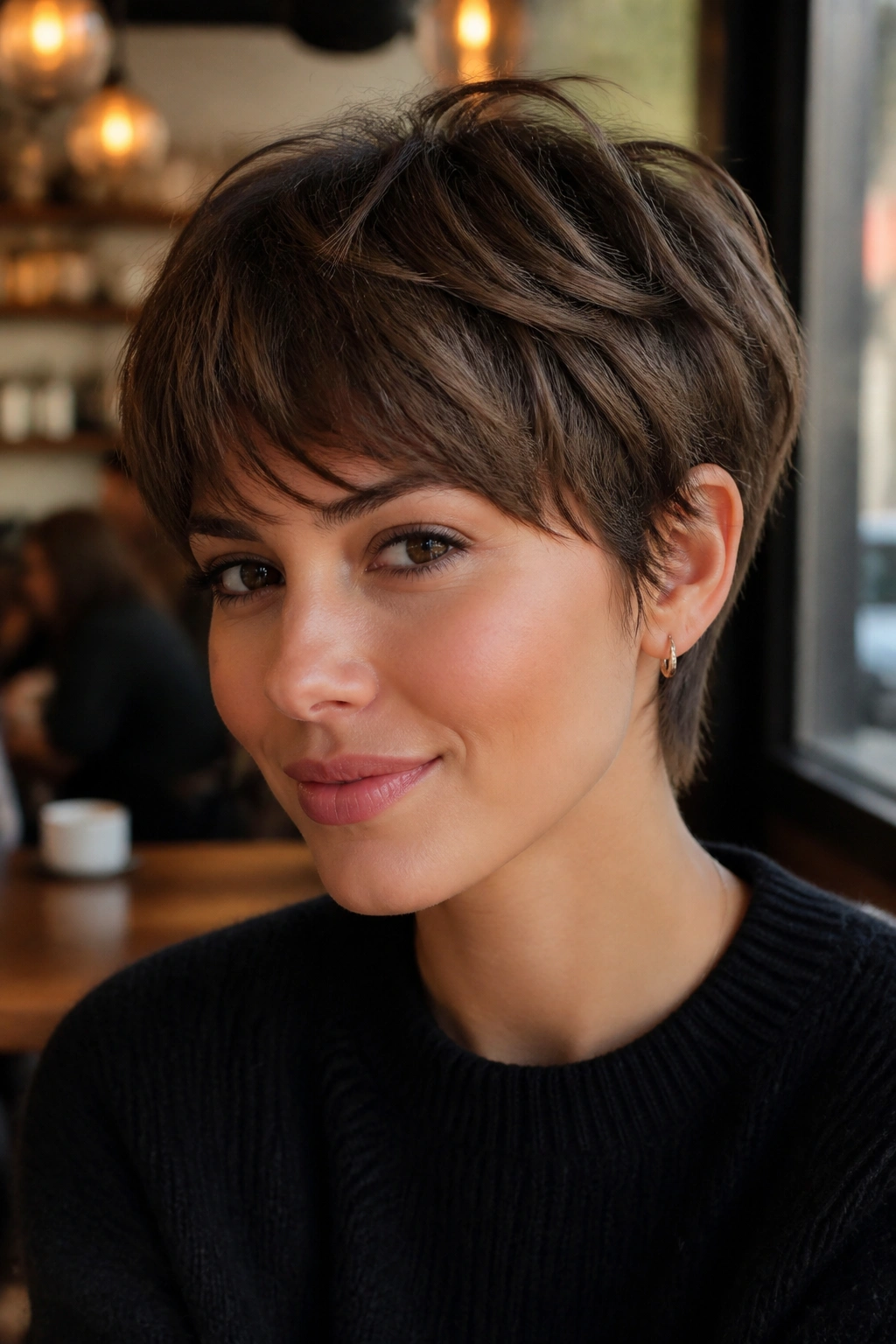
What do you get when a bob and a pixie stop fighting and agree to meet halfway? The bixie. On diamond faces, it works because it keeps softness around the temples while leaving enough length at the top and sides to avoid a hard, clipped look.
Why It Suits This Face Shape
The bixie gives you the lightness of short hair without exposing every angle of the face. That’s the useful part. The top can carry a little height, the fringe can sweep forward, and the nape can stay tapered so the cut doesn’t feel bulky at the back.
It is a smart choice if you want short hair but still want some styling range. You can push it forward, part it to one side, or rough it up with texture cream for a less polished look. Fine to medium hair handles it well, though coarse hair can look great too if the shape is carved carefully.
A bixie is not a lazy haircut. It needs shape. Done well, though, it gives a diamond face a nice mix of structure and softness.
10. Butterfly Cut
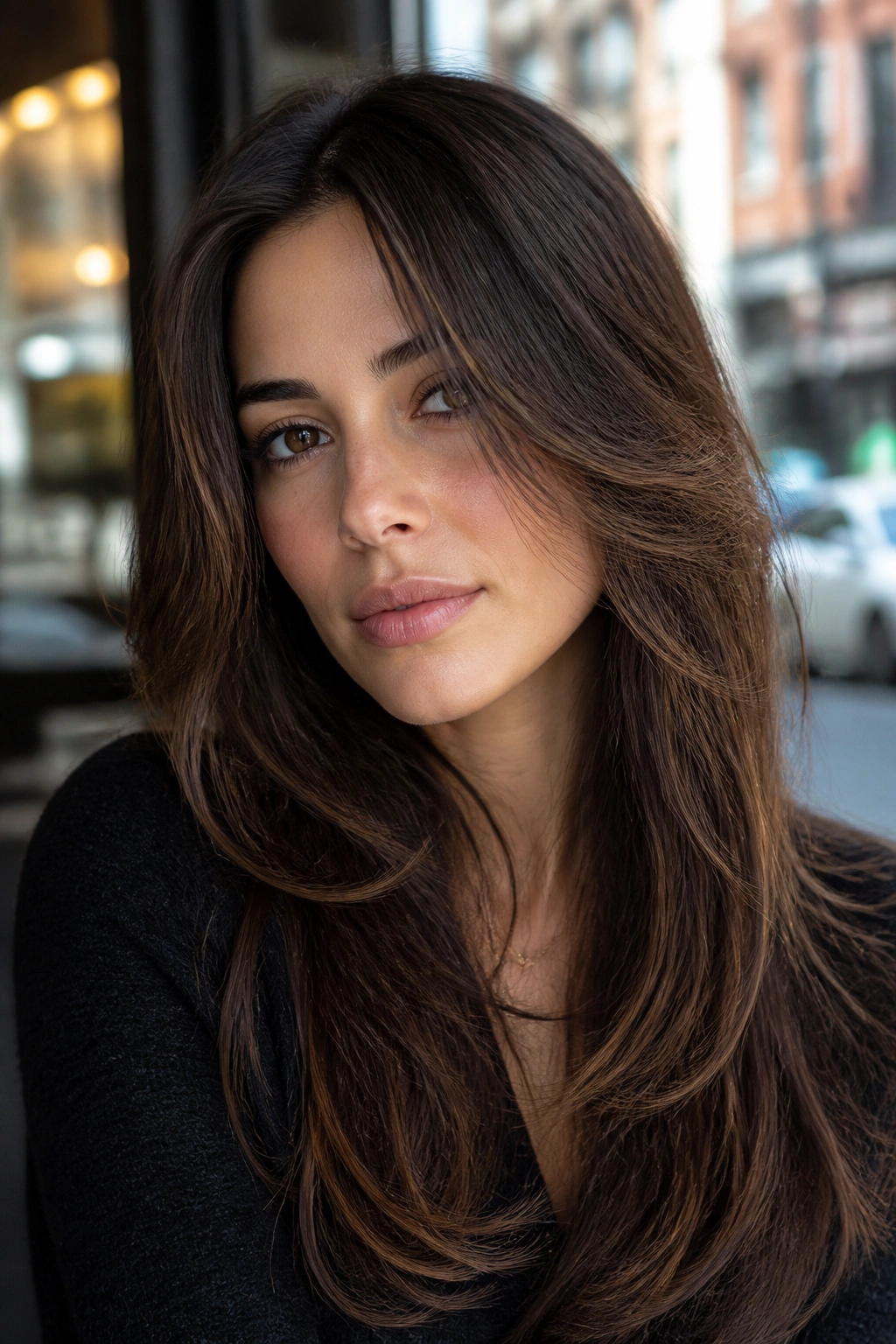
If you keep your hair long and like the look of a blowout, the butterfly cut does a lot of the balancing work for you. The shorter face-framing layers sit around the chin or collarbone, while the longer lengths stay intact. That contrast helps a diamond face because it adds movement around the cheeks without flattening the rest of the style.
The biggest mistake people make with this cut is starting the shortest layers too high. That can put extra volume right where the face is already widest. A better version starts lower and then opens out through the ends, almost like the hair is folding away from the face instead of sitting on it.
This cut loves round brushing. A 1½-inch brush and a blow-dryer nozzle can do a lot here. Pull the front pieces forward first, then sweep them back so the shape keeps that soft, floaty look.
It’s a good fit for anyone who wants volume without giving up length. That combination is not easy to get right.
11. Soft Wolf Cut
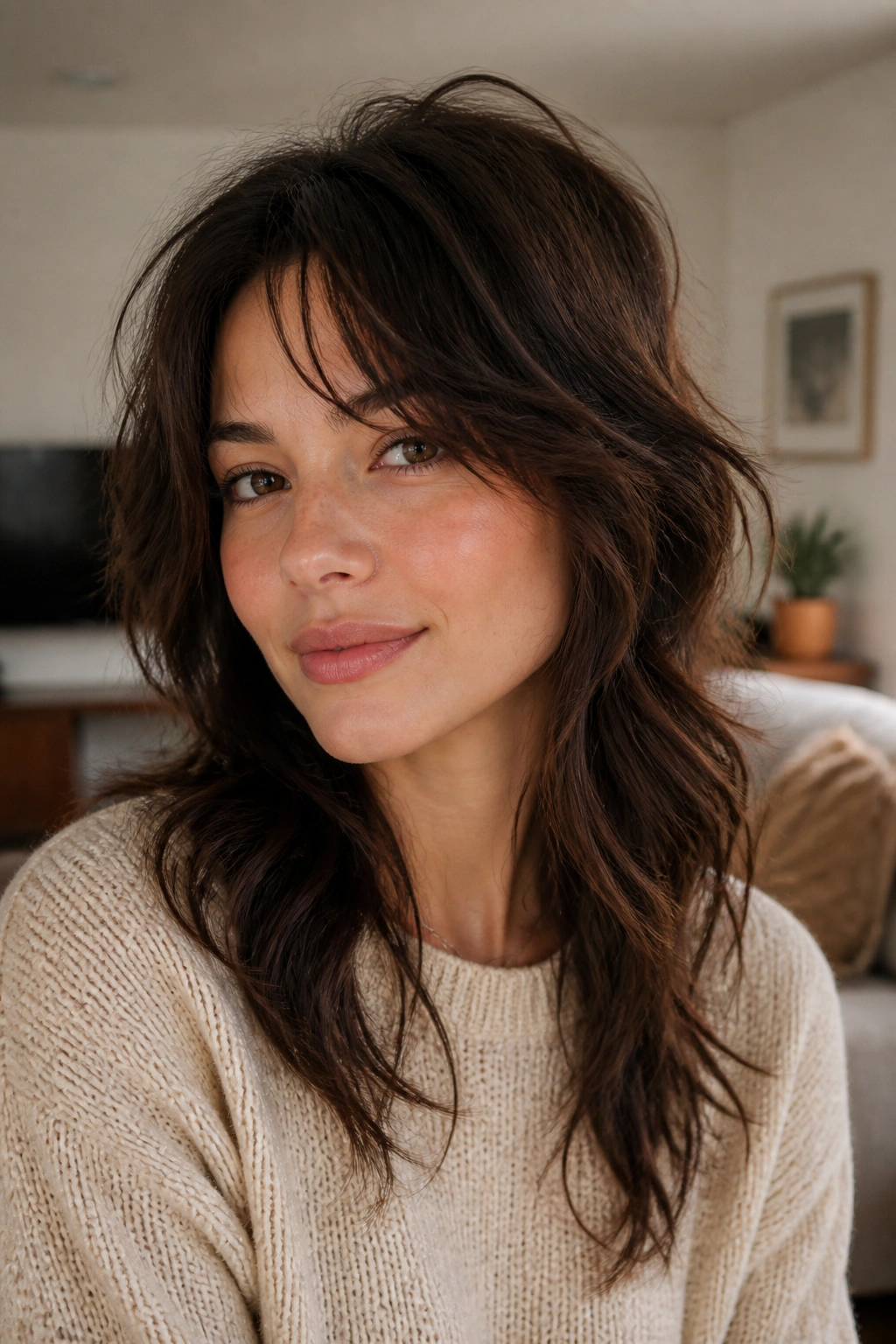
The wolf cut can flatter a diamond face, but only if it stays soft. The heavy, choppy version with aggressive crown volume is a bad match. It piles too much interest at the top and makes the cheekbones feel even more pronounced. The softer version, though, has enough layering to blur the widest point and keep the shape loose.
Keep the shortest layers below the cheekbone and avoid making the crown too tall. That’s the whole game. The front can still feel shaggy and undone, but the line around the face should be a little gentler than people expect from a wolf cut.
Keep It Soft, Not Spiky
The finish matters almost as much as the cut. A little texture spray through the mid-lengths is fine. Dry, crunchy product is not. You want pieces that separate a bit and move when you turn your head, not stiff spikes that sit there and announce themselves.
Wavy or curly hair does especially well with this version because the natural bend keeps the layers from looking too sharp. Straight hair can wear it too, but it needs some hand work. This is not the kind of cut that looks best air-dried and forgotten.
12. Blunt Lob With Bent Ends

A blunt lob can be a smart choice for diamond faces when the line sits in the right place. At the collarbone or just below, the clean edge gives the face more structure below the cheekbones. Then the slight bend at the ends keeps the cut from feeling hard or boxy.
The reason this works is simple: diamond faces already have enough definition in the middle. A blunt line gives the jaw a little more weight, which evens things out. If you cut the same shape too high, though, it can make the cheekbones feel crowded. Placement is everything.
How to Wear It Well
This cut is best when it’s polished, not overworked. A flat brush blowout or a loose inward bend at the ends usually looks cleaner than full curls. Fine hair likes this shape because the blunt edge makes it look fuller. Thick hair likes it because the weight line keeps it from puffing out.
- Ask for a blunt perimeter at the collarbone.
- Keep the bend subtle, not curled under like a pageant finish.
- Part it slightly off-center if you want a softer frame around the forehead.
- Trim it often so the line stays solid.
Short version: it’s a grown-up cut that still feels easy.
13. Feathered Mid-Length Cut

Feathering gets a bad reputation when it turns into over-thinning, but that’s not what I mean here. A feathered mid-length cut uses soft, directional layers to take the edge off the cheekbones and build a little swing into the sides. On a diamond face, that swing matters more than a lot of people realize.
The best feathering starts around the cheek or jaw and continues through the shoulders. It should look airy, not shredded. If the layers are too short or too aggressive, they can create frizz and make the face look narrower through the middle. Done with a light hand, though, the cut adds exactly the kind of movement that suits this face shape.
What to Watch For
This is a strong cut for straight or slightly wavy hair. Curly hair can wear it too, but the feathering needs to be handled carefully so the shape doesn’t explode outward at the widest part of the face. A stylist who knows how to cut movement into the hair without taking out too much weight is the one you want here.
I also like this cut for people who hate spending time on styling. A round brush and a light mist of setting spray are often enough.
14. Shoulder-Length Cut With Curved Bangs

If you want fringe but don’t want full bangs, curved bangs are the gentler choice. They open at the center, swing softly toward the cheekbones, and keep the forehead from feeling too bare. For diamond face shapes, that curve can be a nice middle ground between a curtain bang and a blunt fringe.
The shoulder-length cut underneath gives the bangs somewhere to land. If the rest of the hair is too short, the bang can take over. If it is too long and heavy, the fringe gets lost. Shoulder length keeps the whole thing in proportion.
This style is especially useful if your forehead is a little narrower and you want a softer frame on top. A center part still works, but I tend to like a slightly off-center part here because it lets the bangs sweep more naturally. The result is quiet, not rigid.
That sounds small. It isn’t. Bang shape changes everything.
15. Long Rounded Layers With Tucked Ends
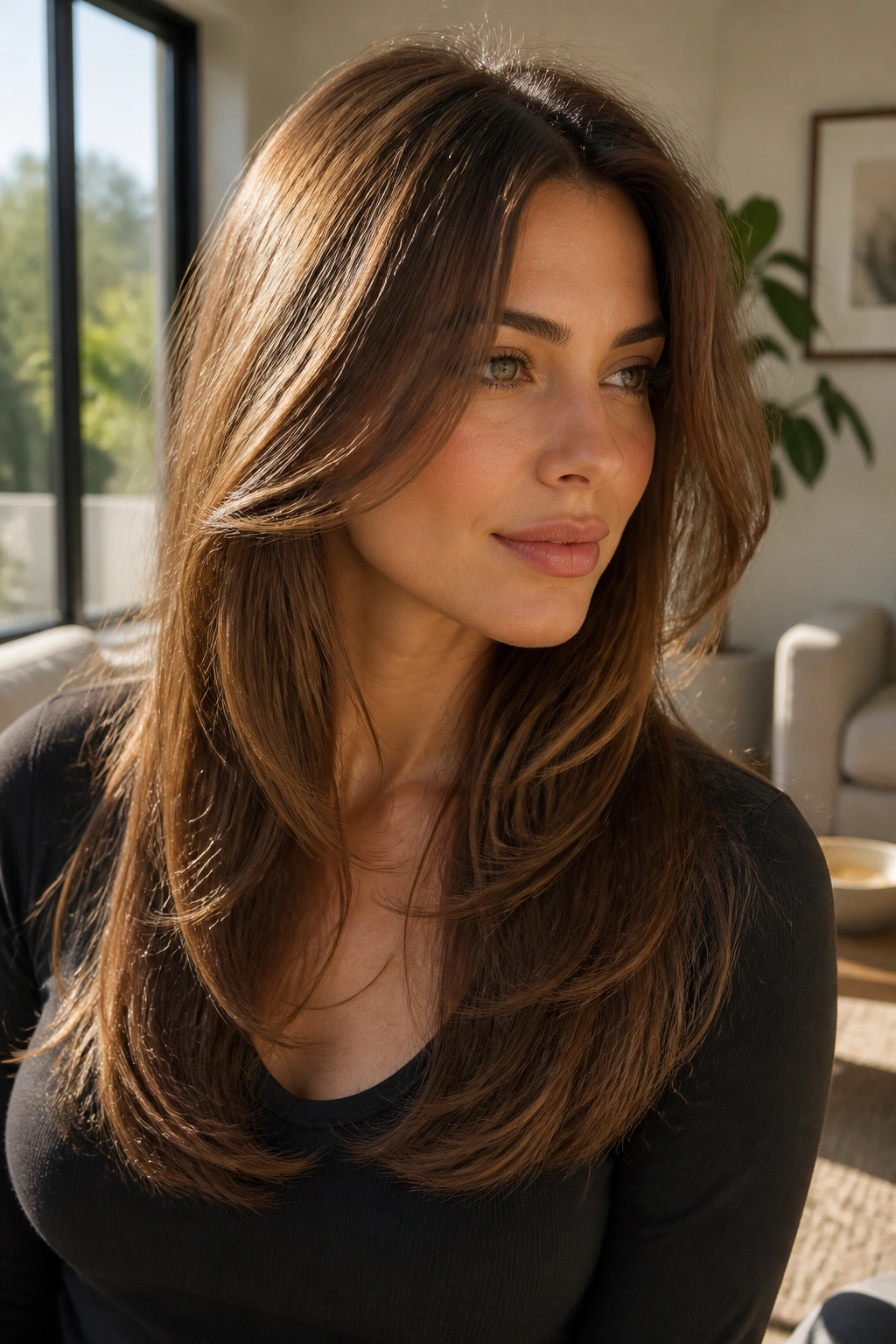
Long hair does not fight a diamond face. It only starts to misbehave when it hangs in one straight curtain with a hard middle part and no shape near the ends. Rounded layers fix that. They keep the length, soften the line, and let the hair curve around the face instead of dropping straight down from it.
The tucked-end finish helps too. You can wear the ends under, out, or softly bent with a brush, but the point is to avoid a dead-straight drop. A little roundness at the bottom gives the jaw some visual support and keeps the hair from making the face look narrower than it is.
This is a good cut for someone who wants length but still wants movement. It’s also one of the easiest styles to live with because it grows out gracefully. That matters more than people admit. A haircut that still looks decent when it’s a little longer is usually the one you keep reaching for.
If you are torn between short and long, choose shape before length. Diamond face shapes do best when the hair gives a little softness at the forehead, some calm around the cheekbones, and a clear line somewhere below the face. This cut does all three without making a big show of it.
