



Oval face haircut ideas can feel endless because an oval face gives you a rare amount of freedom. That sounds like good news, and it is, but it also means the wrong cut can feel a little bland instead of flattering.
The shape itself is balanced, with a forehead that’s usually a touch wider than the chin and cheekbones that do a lot of the heavy lifting. That balance lets you wear bangs, layers, bobs, shags, and long hair without the face fighting the cut. The catch is that hair texture, density, and styling habits still matter a lot. A blunt bob on fine hair behaves one way. The same bob on thick, wavy hair behaves like a different haircut altogether.
The smartest cuts for an oval face do one of three things: they bring attention to the cheekbones, they add structure near the jaw, or they keep length from looking stringy and flat. Tiny changes matter more than people think. A part that moves half an inch, a fringe that starts at the brow instead of the lash line, or layers that begin at the chin instead of the ears can change the whole mood.
Start with the bob. It’s still the cut I’d point to first when someone wants something clean, current, and easy to wear without spending twenty minutes arguing with a round brush.
1. Chin-Length Bob for Oval Faces
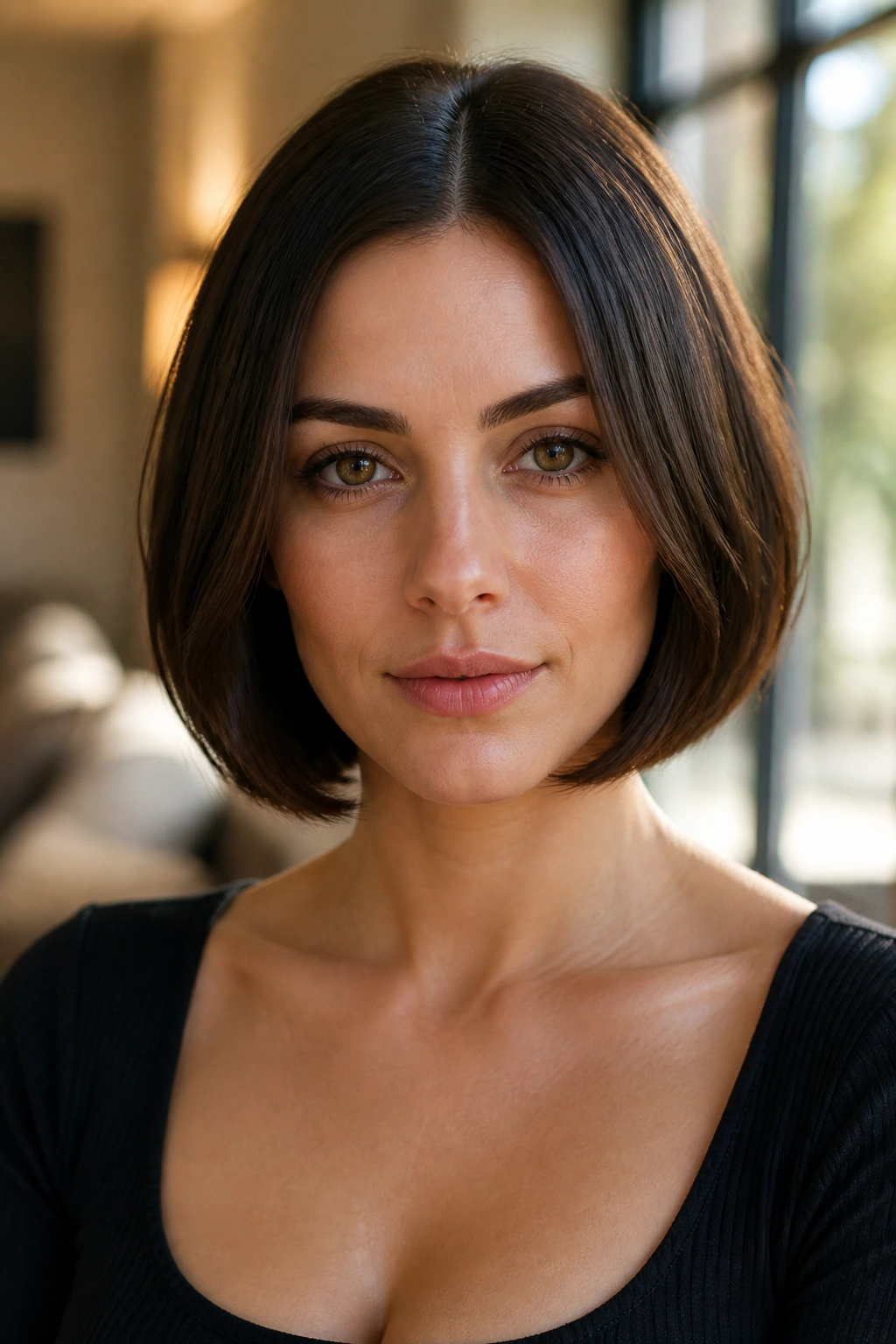
A chin-length bob sits in a sweet spot for oval faces because it lands right where the face already has shape. Too short and it can feel severe. Too long and it starts to lose the crisp line that makes the cut interesting.
Why It Works on an Oval Face
The end of the bob lands near the jaw, which gives the lower half of the face some definition without adding bulk. That matters if your hair is fine and tends to collapse by noon, because a blunt or softly beveled edge gives the illusion of thickness right where you want it.
- Ask for the length to hit about ½ inch below the chin, not right on top of it.
- Keep the ends slightly point-cut, not razor thinned, if your hair is fine.
- Wear it with a center part for a neat look or a slight side part for softer cheekbone emphasis.
- Blow-dry with a 1-inch round brush if you want a small bend under the ends.
Best tip: keep the line clean at the bottom and let the softness come from styling, not from over-layering.
2. Collarbone Lob With Loose Waves
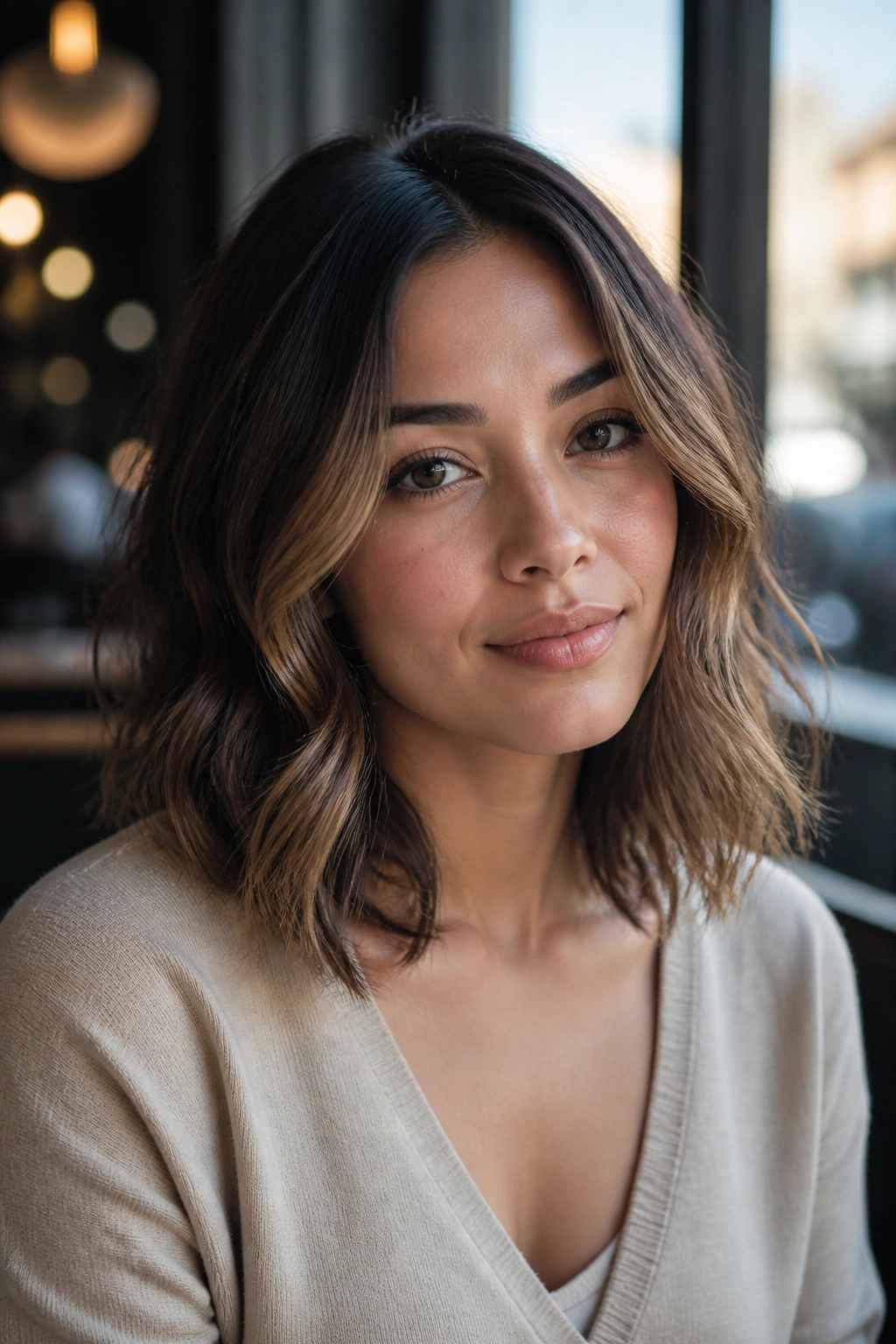
If you want one cut that almost never fights an oval face, make it the collarbone lob. It lands low enough to keep length, but not so low that the face disappears into the hair.
Loose waves give it shape without turning it into a prom curl situation. I like this cut especially for people who want hair that looks done after a 10-minute pass with a curling iron, not hair that needs a full production every morning.
The reason it works is simple: collarbone length creates a nice frame below the cheeks, and the wave bends keep the eye moving. Straight, one-length hair can drag an oval face downward if the strands are very long. A lob fixes that fast.
Use a 1¼-inch curling iron and leave the last inch of each strand out for a modern bend. If your hair is thick, ask for a tiny bit of internal weight removal so the shape doesn’t balloon at the sides.
3. Long Layers That Frame Oval Faces
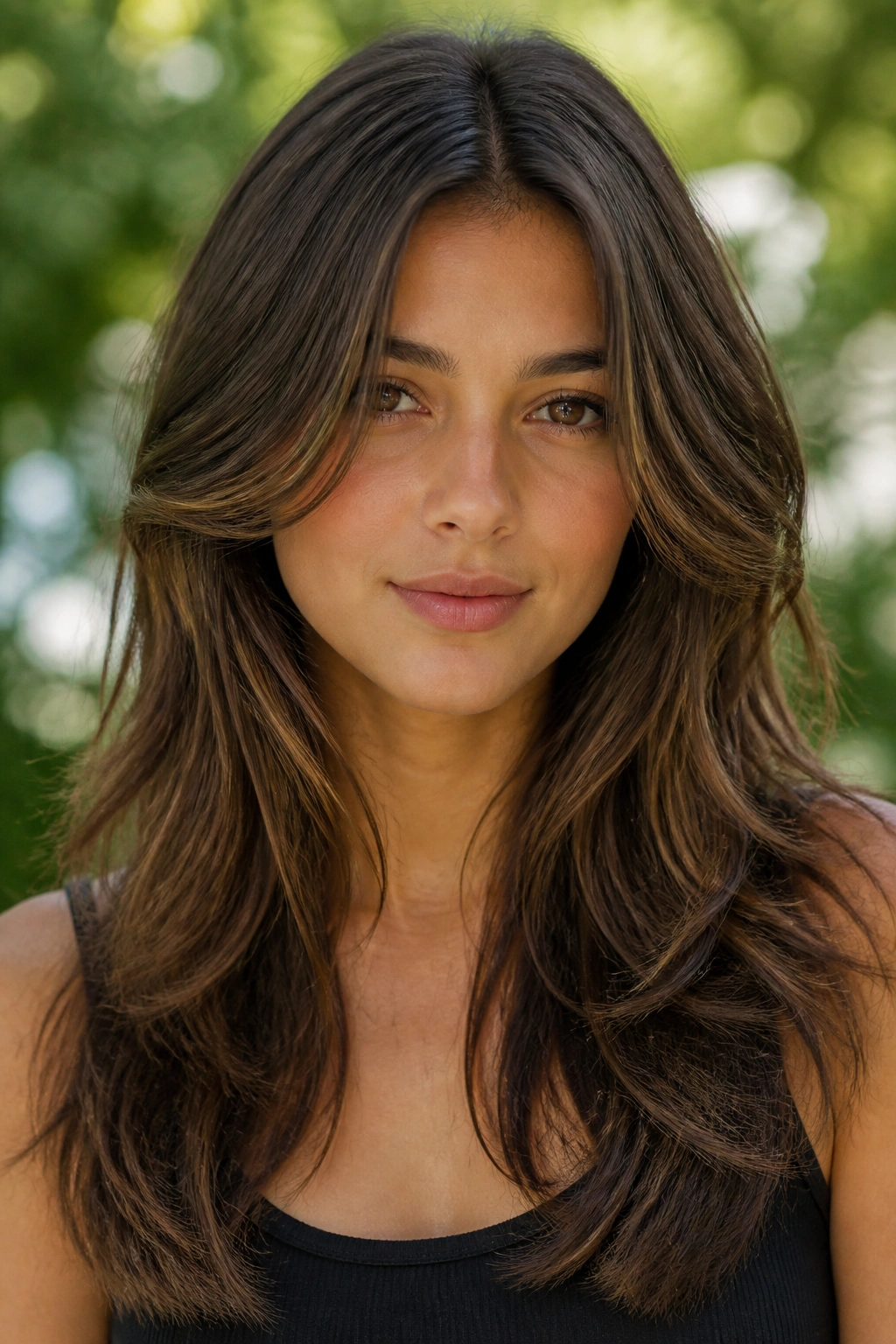
Why do long layers stop hair from looking flat on an oval face? Because they break up the curtain effect that happens when all the length falls in one heavy sheet.
Where the Shortest Pieces Should Land
The sweet spot is usually somewhere between the cheekbone and the chin. That gives you movement around the face without shaving off too much length. Shorter than that, and the layers can start to feel old-school or fussy. Longer than that, and they may not change the silhouette enough to matter.
I like this cut for women who want to keep their hair long but need a little more life around the front. It’s especially useful if your hair is medium to thick and tends to sit close to the head. The long layers take some weight out of the mid-lengths, which helps the hair swing instead of hanging.
How to Ask for It
- Ask for face-framing pieces that start at the chin or cheekbone.
- Keep the back layers long enough to preserve length.
- Request soft blending, not chunked layers.
- Style the front away from the face with a round brush or large roller brush.
Shorter isn’t always better.
4. Curtain Bangs With Mid-Length Layers
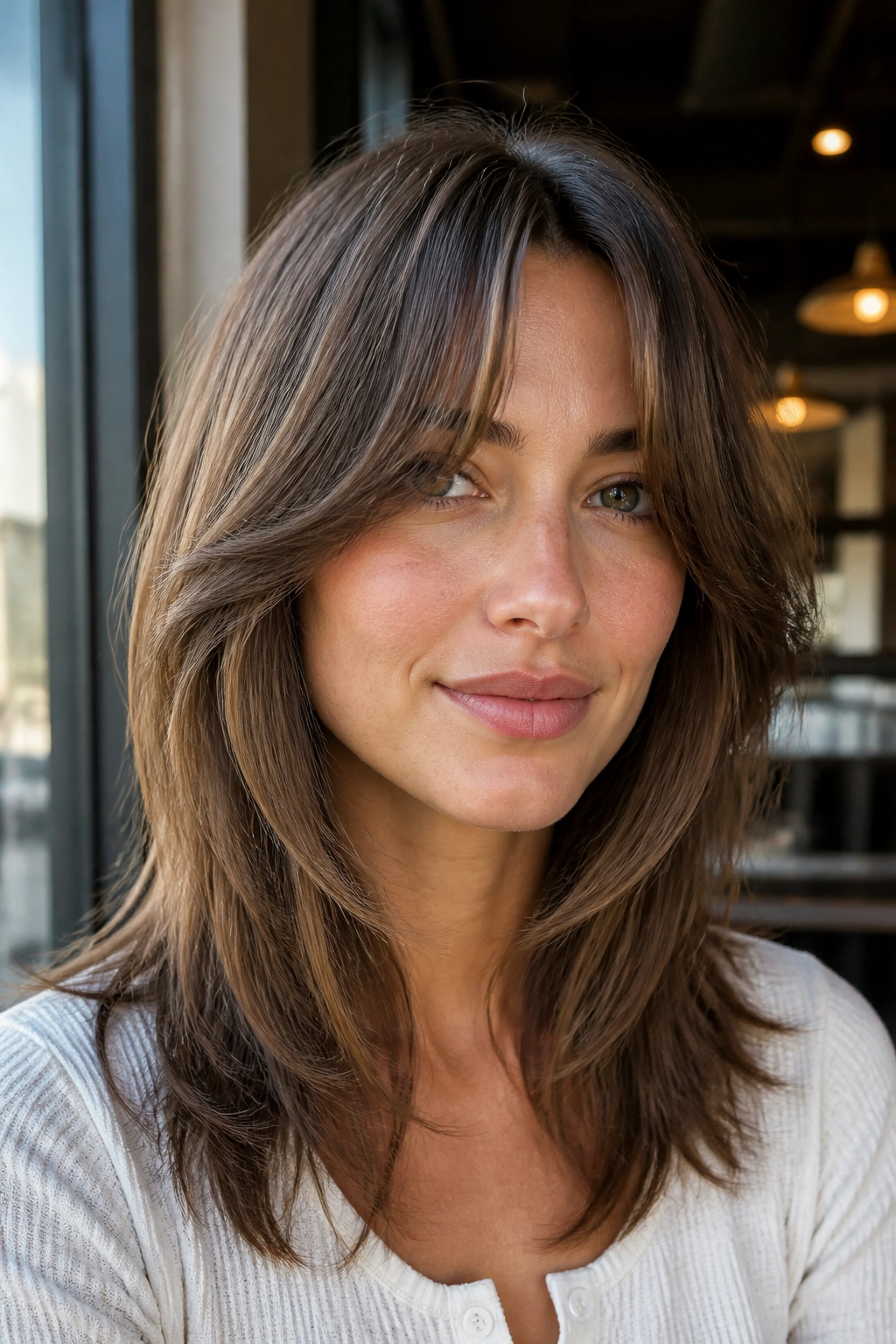
If your forehead feels a little too open, curtain bangs can solve that without boxing in your face. They soften the upper half, but they don’t eat up all your styling options the way a heavy full fringe can.
The best version for an oval face is usually a curtain bang that starts just under the brow and parts from the center, then drifts toward the cheekbones. That shape lets the bangs sit like a frame rather than a wall.
Mid-length layers underneath keep the whole cut from feeling flat. The bangs get the attention, but the layers keep the rest of the hair moving. If you’ve got a long face within the oval family, this is a smart choice because it shortens the visual distance between the forehead and the chin.
Ask for the shortest bang pieces to hit around the bridge of the nose when pulled down, then sweep upward as they fall. That gives you room for growth. It also means the bangs won’t look awkward after three weeks, which is where a lot of fringe cuts go wrong.
5. Blunt Mid-Length Cut With Center Part
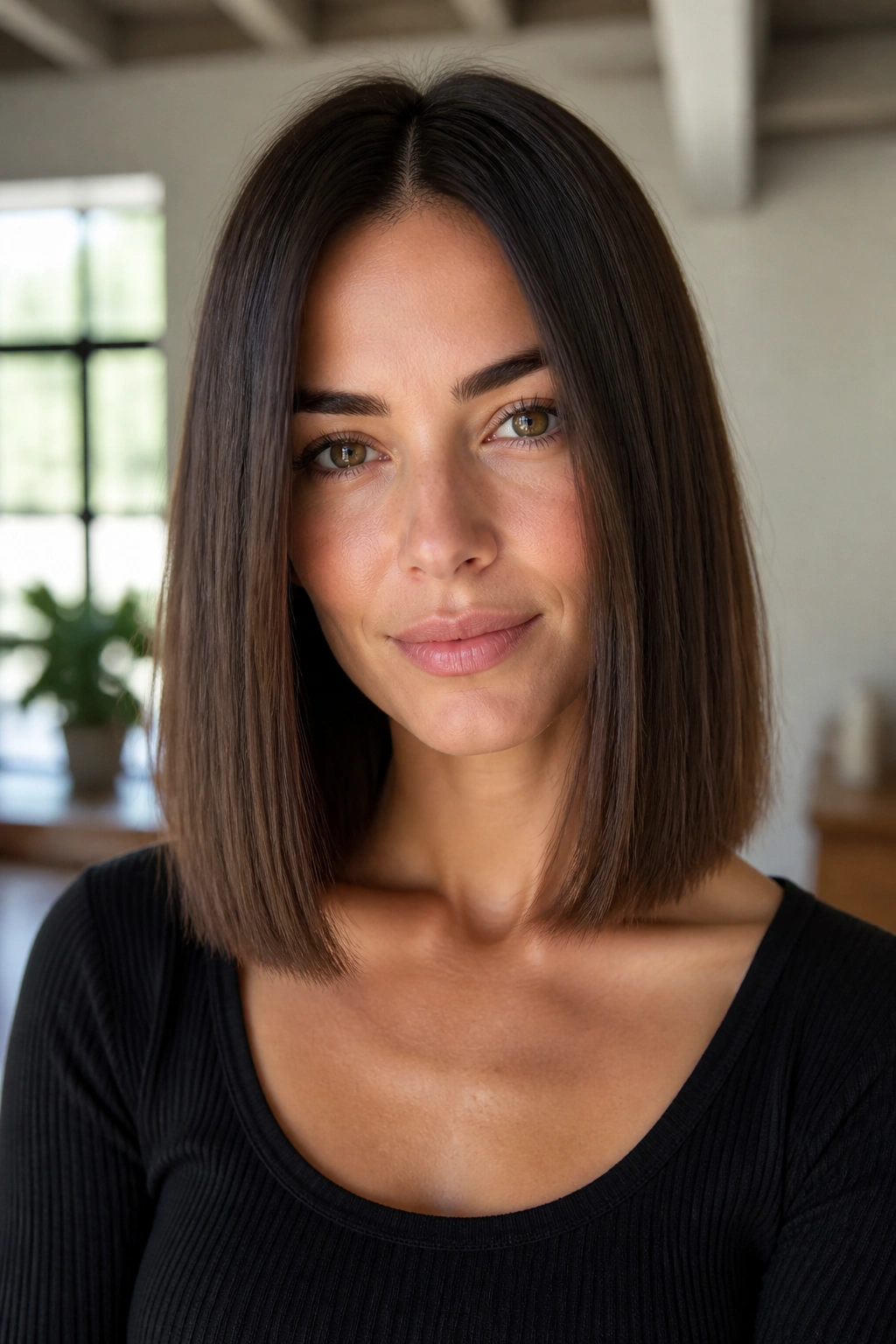
Not every oval face needs movement.
A blunt cut can be a relief when you’re tired of layers that flip out, fray, or disappear after one wash. On an oval face, a straight line at the collarbone or just above it gives the face a clear edge, which is useful if your features are soft or your hair is very fine.
I like this cut because it looks deliberate. There’s no hiding behind texture. The shape has to do the work, and it usually does. A center part keeps the lines symmetrical, which suits the natural balance of an oval face without making it feel too strict.
Sharp lines have a point.
The only real caution is density. If your hair is thick, a blunt mid-length cut can feel heavy at the bottom unless the stylist removes a little bulk inside the shape. Ask for soft point cutting on the ends, not choppy layers. That keeps the edge crisp but stops it from looking like a shelf.
6. Soft Shag With Choppy Texture
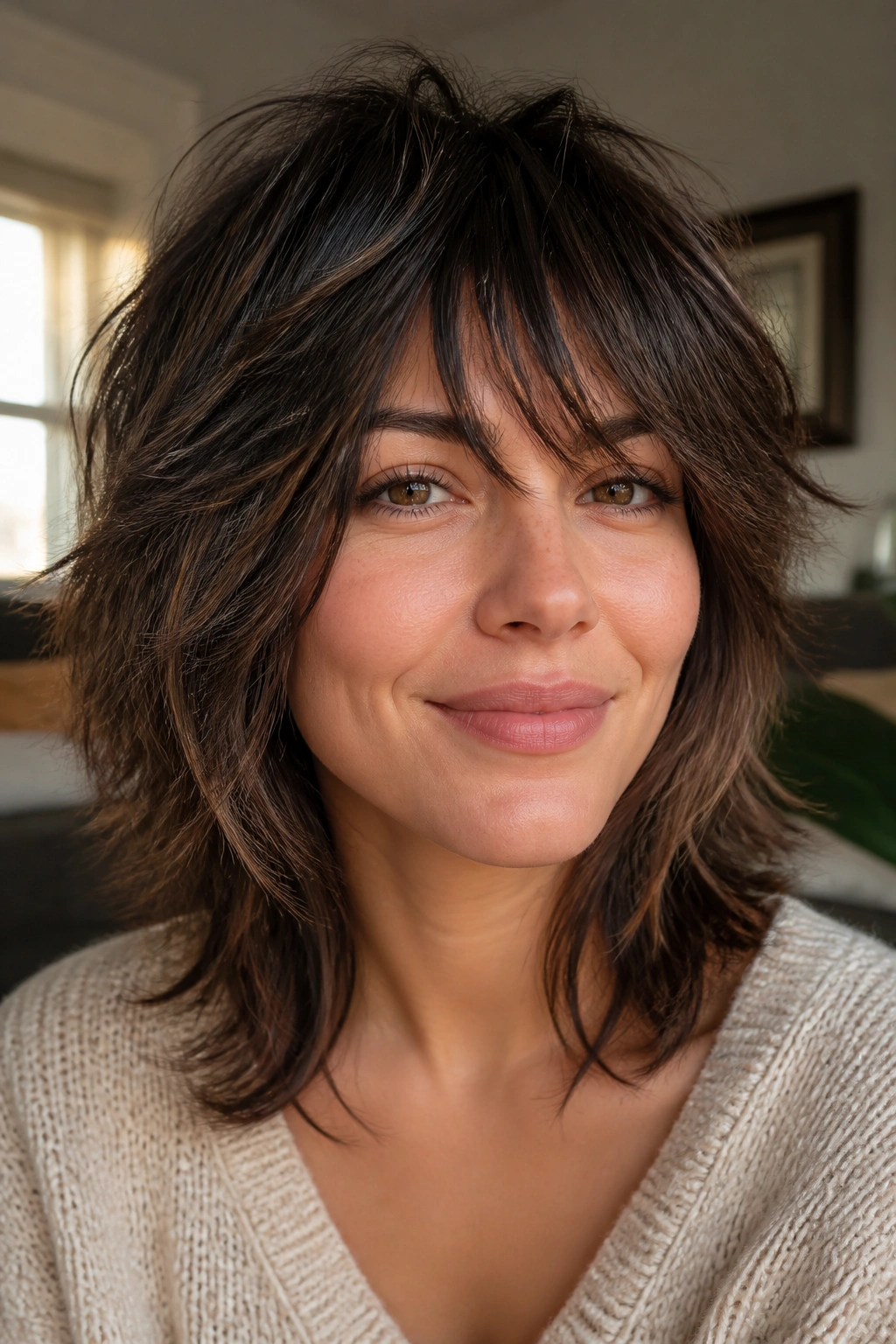
Unlike a heavy layered cut, a soft shag keeps movement high and the edges a little undone without turning into a mess. That difference matters. A real shag can get too edgy fast; a soft shag stays wearable.
This one suits oval faces that can handle a bit of attitude. If your hair is wavy or naturally tousled, the shape does half the work for you. The shorter crown pieces lift the top, while the longer layers around the jaw and shoulders stop the face from looking stretched.
What to Ask For
- Keep the shortest crown layers below the top of the head, not super short.
- Let the front pieces fall around the cheekbone or lip line.
- Ask for texturizing only where the hair feels bulky.
- Avoid aggressive thinning if your hair is fine.
Air-drying with curl cream makes this cut look relaxed instead of messy. A diffuser on low heat helps, too, especially if your hair likes to puff up at the roots.
7. Side-Swept Pixie Cut
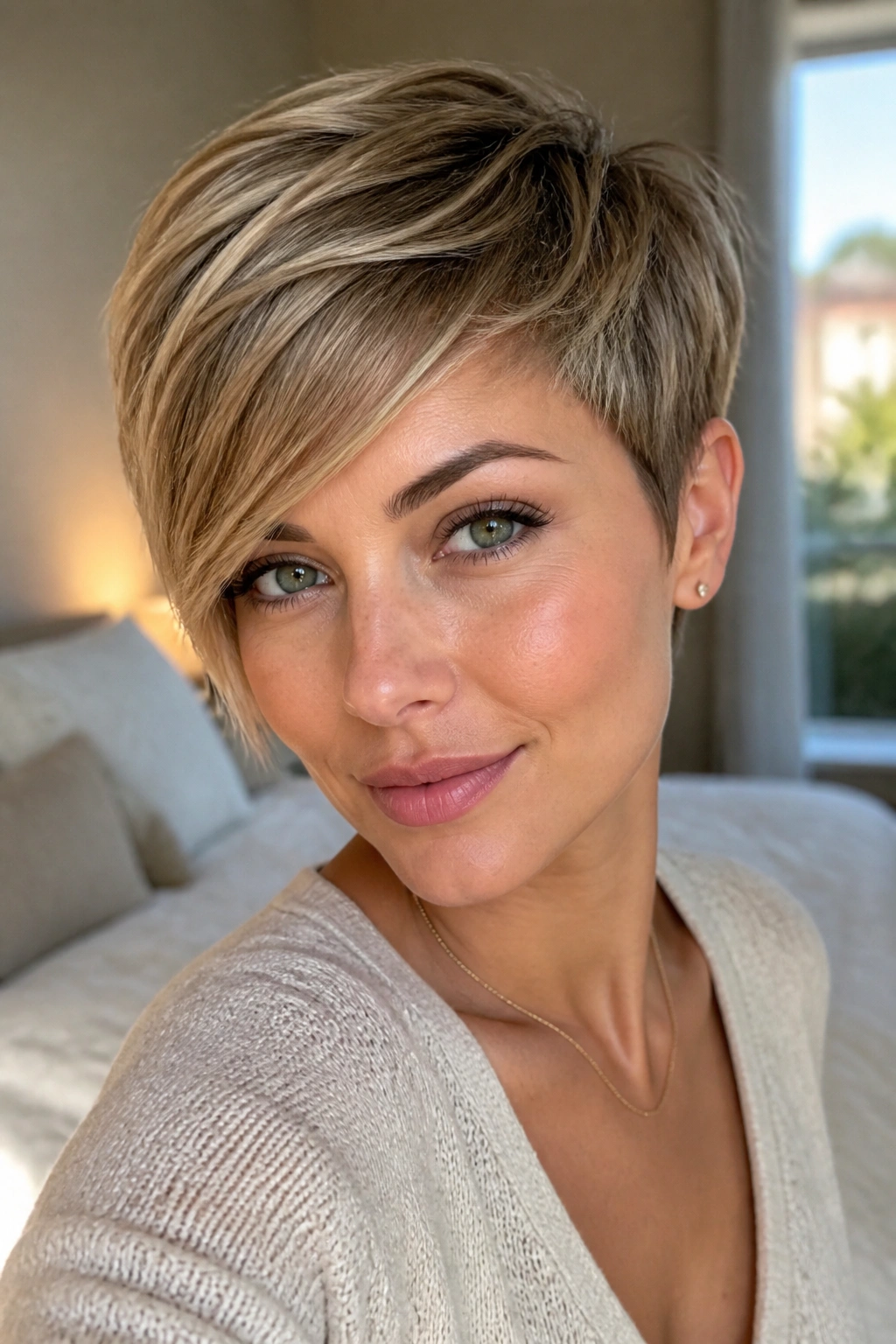
A pixie can be one of the most flattering oval face haircut ideas, especially if you like your cheekbones noticed. The trick is the side-swept fringe. It keeps the cut soft on top and stops the forehead from looking too exposed.
This is not the kind of pixie that needs tiny, spiky pieces all over the crown. I prefer a version with tapered sides, a little length through the top, and a fringe that sweeps across the brow. That shape keeps the head from looking overly round while still showing off the eyes and bone structure.
Ask for 2 to 3 inches on top and slightly more length in the fringe if you want styling room. A matte paste or lightweight cream gives control without turning the hair sticky. If your hair grows fast, be ready for trims every 4 to 6 weeks. Short hair is honest like that.
8. French Bob With Tucked-In Ends
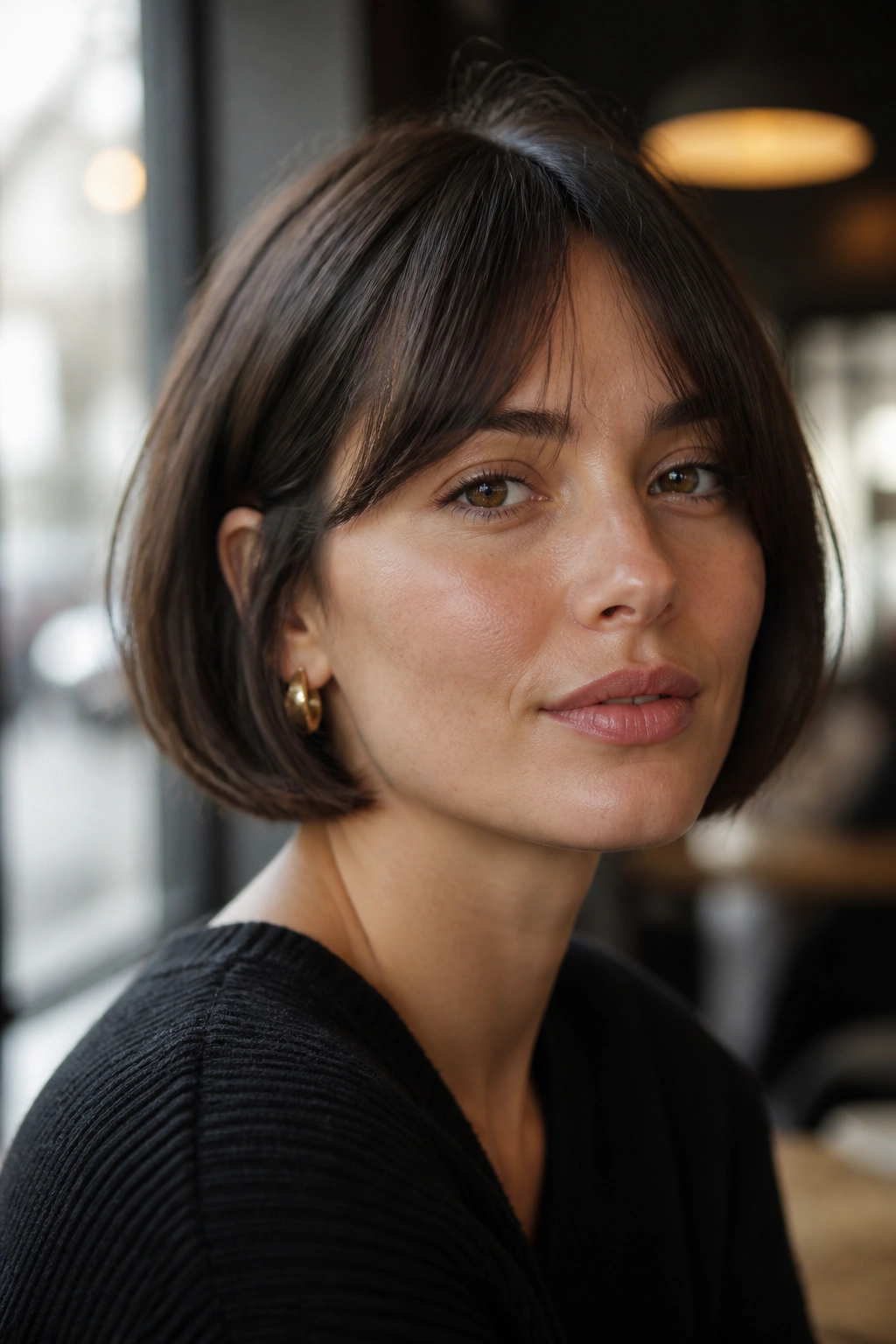
Picture a bob that stops near the jaw, bends in a little at the ends, and never tries too hard. That’s the French bob, and on an oval face it can look crisp without feeling harsh.
The shape works because it highlights the lower part of the face without crowding it. You can wear it with a micro fringe, a soft brow-skimming fringe, or no fringe at all. I like it most when the ends are tucked under just enough to show a little curve.
- Best length: jaw to just below the jaw
- Best styling: air-dried with a smoothing cream or blown under with a round brush
- Best texture: straight to slightly wavy
- Maintenance: every 5 to 7 weeks if you want the line to stay sharp
If your hair is very thick, ask for a bit of internal shaping so the bob doesn’t mushroom outward. That’s the one thing that can ruin the look fast.
9. Sleek Long Hair With Invisible Layers for Oval Faces

Invisible layers are not the same as choppy layers. They sit inside the haircut, so the length still looks full from the outside while the bulk gets removed from underneath.
That makes them a smart choice if you love long hair but hate the heavy, blank-sheet feeling that long one-length hair can create. On an oval face, the added movement keeps the shape from dragging downward. The face still shows up. The hair just behaves better.
This cut is especially good for thick straight hair. A stylist can remove weight below the ears and through the mid-back section, which helps the ends move instead of sticking out like a broom. If your hair is fine, keep the layering subtler. Too much internal cutting can make the ends look thin.
Use a heat protectant before any smoothing pass, and keep the flat iron around 300°F if your hair is delicate. The goal is sleek, not fried.
10. Butterfly Cut
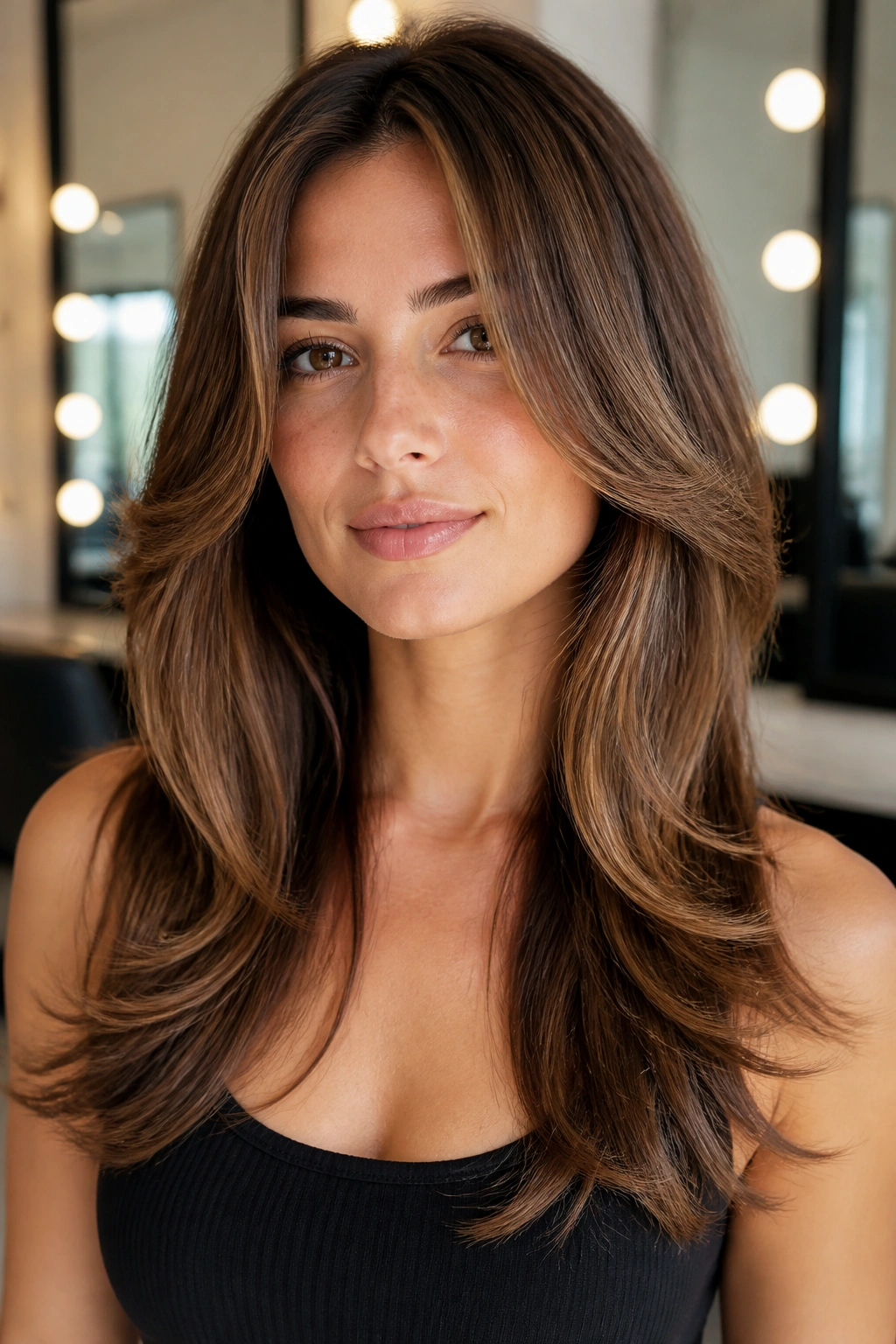
Want shorter face-framing pieces without giving up long hair? The butterfly cut is built for that exact frustration.
It uses shorter layers around the chin and shoulders, then leaves the bottom length intact. That split creates the illusion of two haircuts at once: a shorter, bouncy upper section and a long base underneath. On an oval face, that means you get width around the cheeks without losing the line down the back.
How to Style the Flip
- Blow-dry the top layers with a 2½-inch round brush.
- Direct the front pieces away from the face for a fuller frame.
- Leave the bottom section smooth so the contrast shows.
- Use a light volumizing mousse at the roots if your hair goes flat fast.
The butterfly cut can look stunning on medium to thick hair. Fine hair can wear it too, but the layers should stay controlled or the ends may look wispy. This cut lives or dies by its shape, so a rushed trim usually shows.
11. Shoulder-Length Cut With Swoopy Layers

Shoulder-length hair can sit in a dull zone if it’s all the same length. It hits the shoulders, flips oddly, and starts looking like it needs a decision.
Swoopy layers fix that by giving the hair a path to follow. Instead of spreading the layers all over the head, the best version creates movement that curves around the cheekbones and falls around the shoulders. On an oval face, that movement gives the face a little framing without overwhelming it.
This cut works well if you like hair that can go from air-dried to polished fast. A little mousse at the roots, then a round-brush bend at the ends, is enough. If you tuck one side behind the ear, the shape opens up and the cheekbones show off a bit more.
Watch for These Details
- Keep the length at or just below the shoulders
- Ask for layers that start around the mouth or chin
- Avoid too many short pieces at the top
- Use a medium round brush for styling
It’s a practical cut. Boring? A little. Useful? Absolutely.
12. Wispy Bangs With a Layered Lob
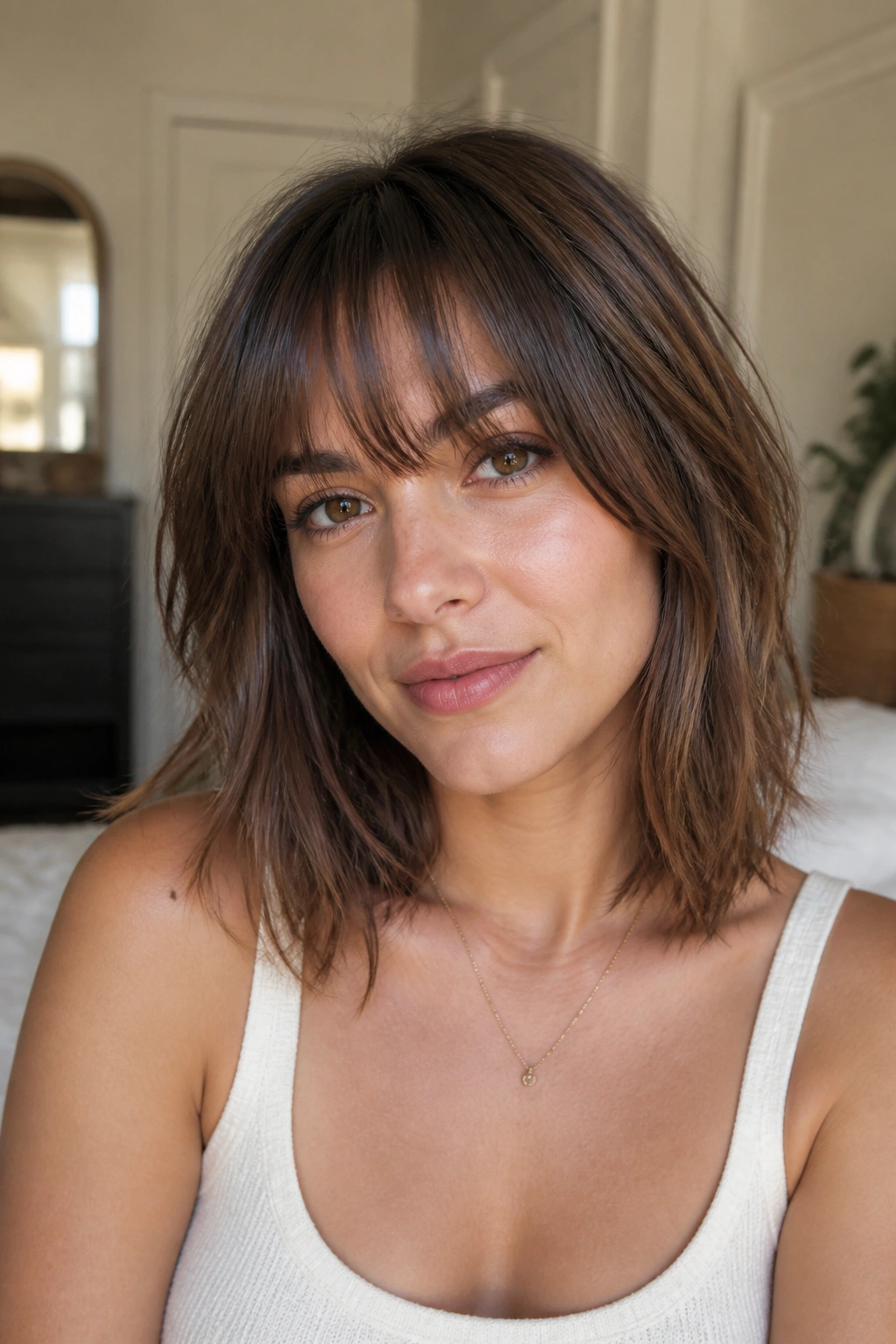
Wispy bangs are lighter than a full fringe, and that’s the whole point. They soften the forehead without taking over the face, which is a nice fit for oval shapes that already have balance.
A layered lob underneath keeps the bangs from floating in space. The length should sit around the collarbone, with subtle movement through the sides. If the lob is too flat, the bangs can look disconnected. If the layers are too busy, the whole cut starts to feel fussy. There’s a narrow middle ground here, and it’s the good one.
I like this style for people who want fringe but don’t want the commitment of a thick bang line. It grows out with less drama. It also plays well with a side sweep if you decide you’re done with the center part.
Heavy bangs are the trap.
A touch of dry shampoo at the roots keeps the fringe from sticking to the forehead, and a quick blast from the dryer — aimed downward, then side to side — keeps them from splitting.
13. Deep Side Part With Long Waves
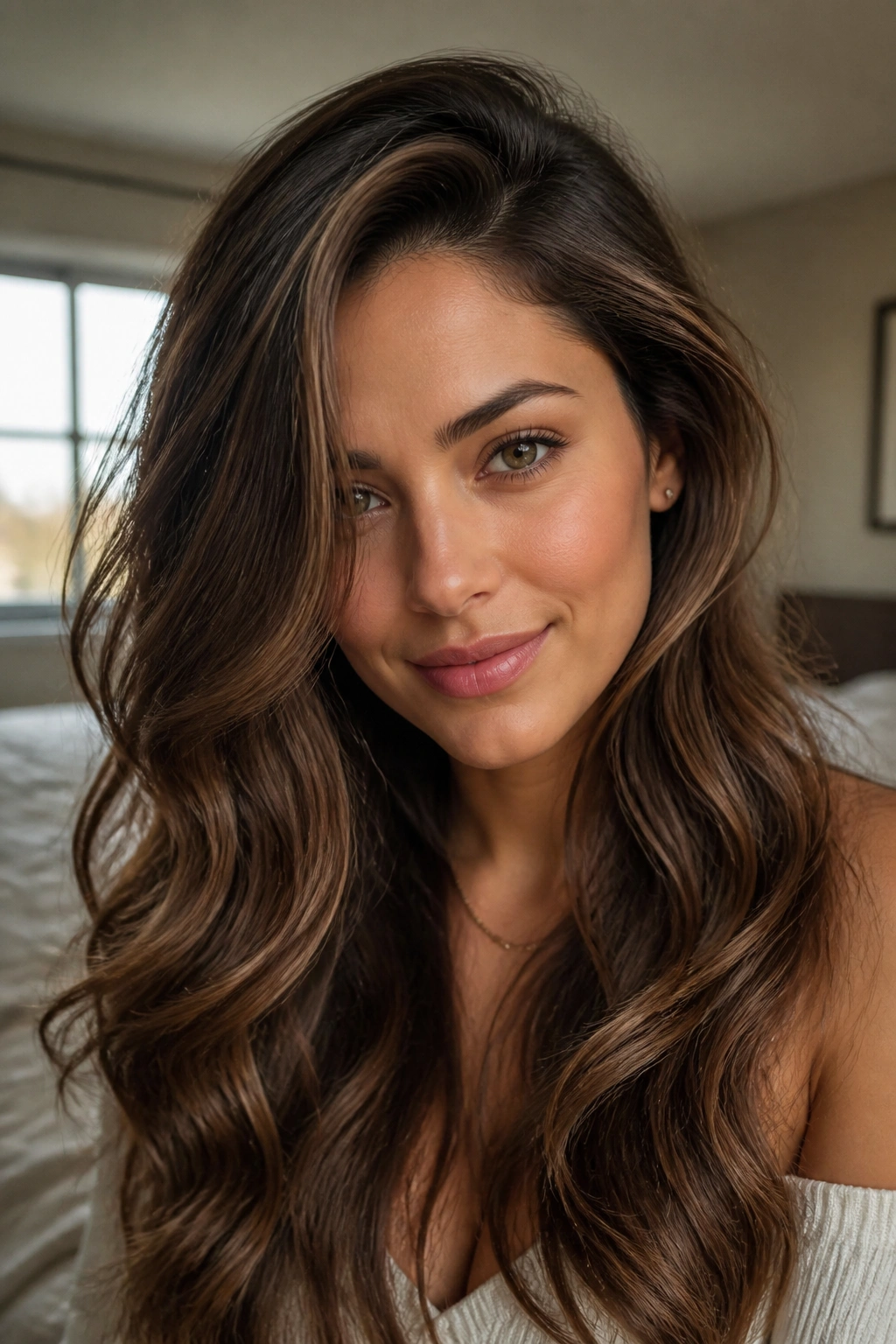
You do not need scissors to change the shape of your haircut.
A deep side part can turn ordinary long waves into something sharper and more flattering on an oval face. Shifting the part about 2 inches off center changes where the volume sits, and that shift gives the face a new angle. The effect is small on paper and obvious in the mirror.
This works especially well if your hair is long enough to fall past the shoulders. The deeper side adds lift at the root on one side, while the wave pattern softens the other side. The result feels less symmetrical, which sounds like a weird goal until you see it. Oval faces can wear symmetry well, but a little offset often looks more alive.
Best When You Want
- A quick change without cutting length
- Extra lift at the root
- A softer look for straight or fine hair
- More shape around the cheekbones
Clip the heavier side up while the roots cool if you blow-dry. That sets the lift where you want it instead of letting gravity flatten everything by lunch.
14. Curly Rounded Lob

Curly hair needs its own plan. Cutting it like straight hair usually ends in a triangle, and nobody asked for that.
A rounded lob keeps the silhouette balanced by allowing the curls to sit at the collarbone and curve in a gentle arc around the face. On an oval face, that roundness brings width back into the picture, which helps if your curls tend to stretch your features vertically. The shape also keeps the ends from looking thin and stringy when the curls shrink.
This cut should be shaped curl by curl when the hair is dry or mostly dry. That part matters more than people think. Wet curls lie. Dry curls tell the truth. If your stylist cuts too much off while the hair is wet, the final shape can end up several inches shorter than planned.
Use a cream that gives slip, then scrunch in a gel for hold. If the crown gets too flat, lift the roots with a diffuser for a minute or two at a time. Long, hot drying sessions make curls frizzy. Short bursts work better.
15. Feathered Cut

A feathered cut gives the hair a soft, brushed-out movement that can be gorgeous on oval faces, especially if your hair is thick and straight. It’s lighter than a blunt shape, but not as piecey as a shag.
The feathering usually happens around the face and through the mid-lengths, where the strands turn outward in a gentle sweep. That makes the cheekbones look more defined without creating hard edges. I like this shape for someone who wants polish but doesn’t want the hair to sit like a helmet.
What to Watch For
- Ask for feathering around the face first, then see if you want more through the ends
- Keep the crown soft; too much lift up top can feel dated fast
- Use a medium-barrel round brush to curve the layers out
- Skip aggressive thinning if your hair is already fine
This cut is a little old-school in the best way when it’s done cleanly. When it’s not, it can look like a costume from another decade. The difference is restraint.
16. Soft Wolf Cut

A wolf cut can flatter an oval face when the edges are softened. The rough version of this haircut can look too severe or too trendy-for-the-sake-of-it. The softer version is much better.
The shape usually keeps more length at the bottom while building shorter layers through the crown and face frame. That creates lift up top and movement around the jaw. On an oval face, that combination adds edge without making the features disappear.
This is a strong choice if you like a lived-in look and don’t want a haircut that needs a perfect blowout. Wavy and slightly messy textures handle it well. Straight hair can wear it too, but you’ll want some bend in the mid-lengths or the layers may look disconnected.
Ask your stylist to keep the shortest layers a few inches below the top of the head and to avoid over-texturizing the ends. The cut should feel shaggy, not shredded.
17. Straight Lob With Tucked Ends
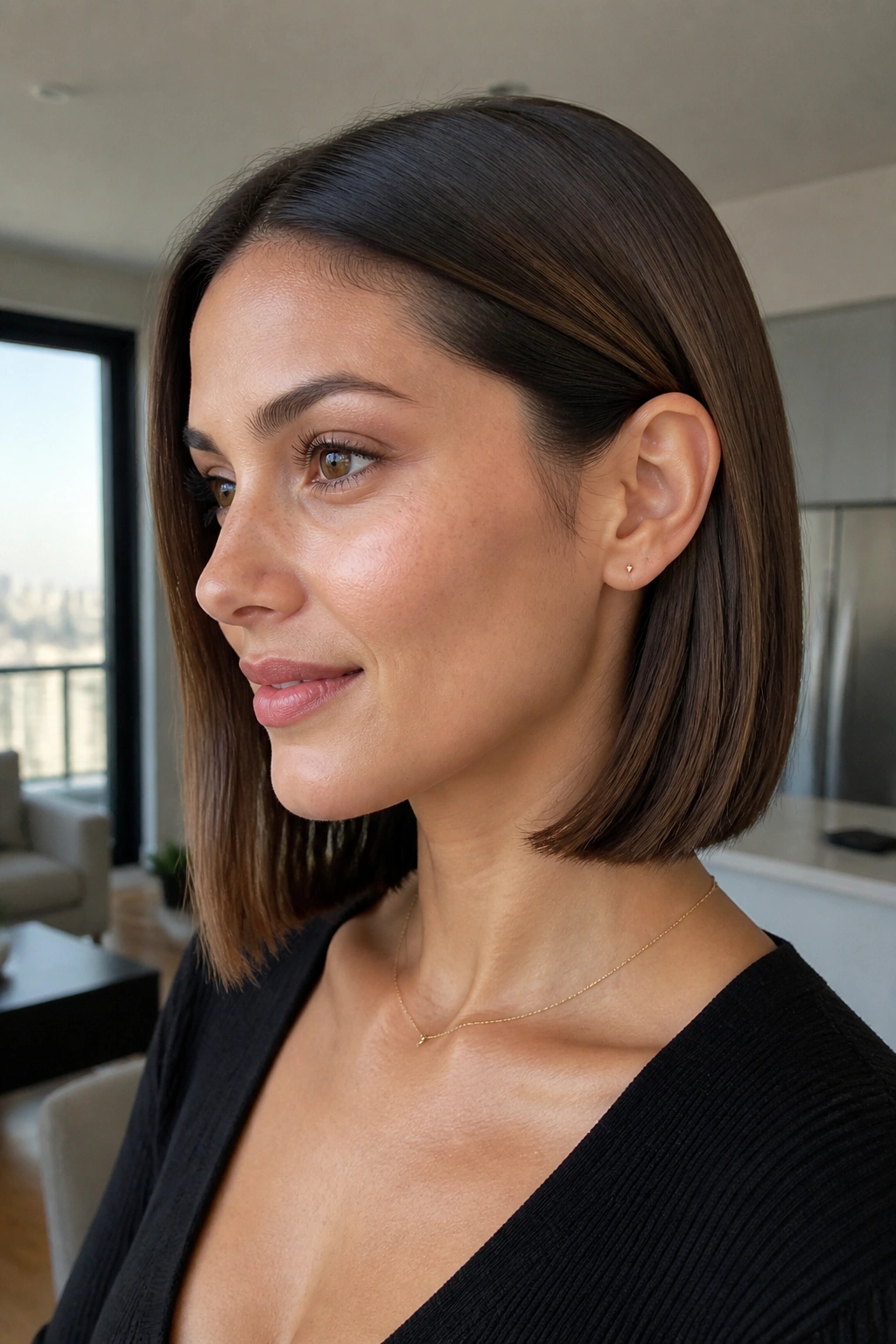
A straight lob that tucks behind the ears can look cleaner than a pile of layers. That’s the appeal here. The shape is simple, but the finish is polished enough to feel intentional.
The lob should land right around the collarbone, then bend inward just a little at the ends. That tiny inward curve keeps the hair from flaring outward at the shoulders, which is a common problem with medium-length cuts. On an oval face, the tucked effect opens up the cheekbones and gives the jawline some space.
Key Details to Ask For
- Length at collarbone or a touch below
- Ends with a soft inward bevel
- Minimal layering through the back
- Enough weight to tuck behind the ears without popping out
This is one of those cuts that looks expensive even when it isn’t. That’s partly because the line is clean, and partly because the styling doesn’t fight the haircut. A flat iron pass at low to medium heat and a smoothing cream usually does the trick.
18. A-Line Bob for Oval Faces

An A-line bob is sharper than a plain bob, and that extra angle matters. The back sits shorter, while the front drops a little longer toward the jaw. On an oval face, that diagonal line gives the features a cleaner frame.
I like this cut when someone wants a bob but worries about it looking too boxy. The longer front pieces keep the cut from puffing out at the sides, while the shorter back gives a neat lift through the nape. It’s tidy without being stiff.
Why the Angle Helps
- It creates a clear line that follows the face instead of sitting flat against it
- The longer front pieces slim the sides a bit
- The shorter back makes thick hair feel lighter
- A side part makes the angle stand out more
If you have straight or slightly wavy hair, this cut is easy to maintain. Thick hair may need weight removal inside the shape so the front doesn’t swing forward too much. The angle should look clean, not dramatic enough to shout from across the room.
19. Long V-Cut

Why keep long hair flat when you can give it shape at the bottom? A V-cut keeps the length but trims the back into a soft point, which stops long hair from looking like one heavy curtain.
On an oval face, that point draws the eye downward in a controlled way. It gives long hair movement without shortening the front pieces too much. This is a good cut if you like hair past the shoulders and want the ends to look more deliberate than blunt.
How to Keep It from Looking Stringy
- Keep the point soft, not narrow and sharp
- Add face-framing layers that start around the chin
- Avoid too much thinning if your hair is fine
- Curl the bottom half only when you want a softer finish
The V-cut is strongest on medium to thick hair. Fine hair can wear it too, but the point should stay gentle or the ends can look thin in photos and in real life. A lot of people ask for long hair and shape at the same time. This is one of the cleaner ways to get both.
20. Polished Blowout Layers for Oval Faces
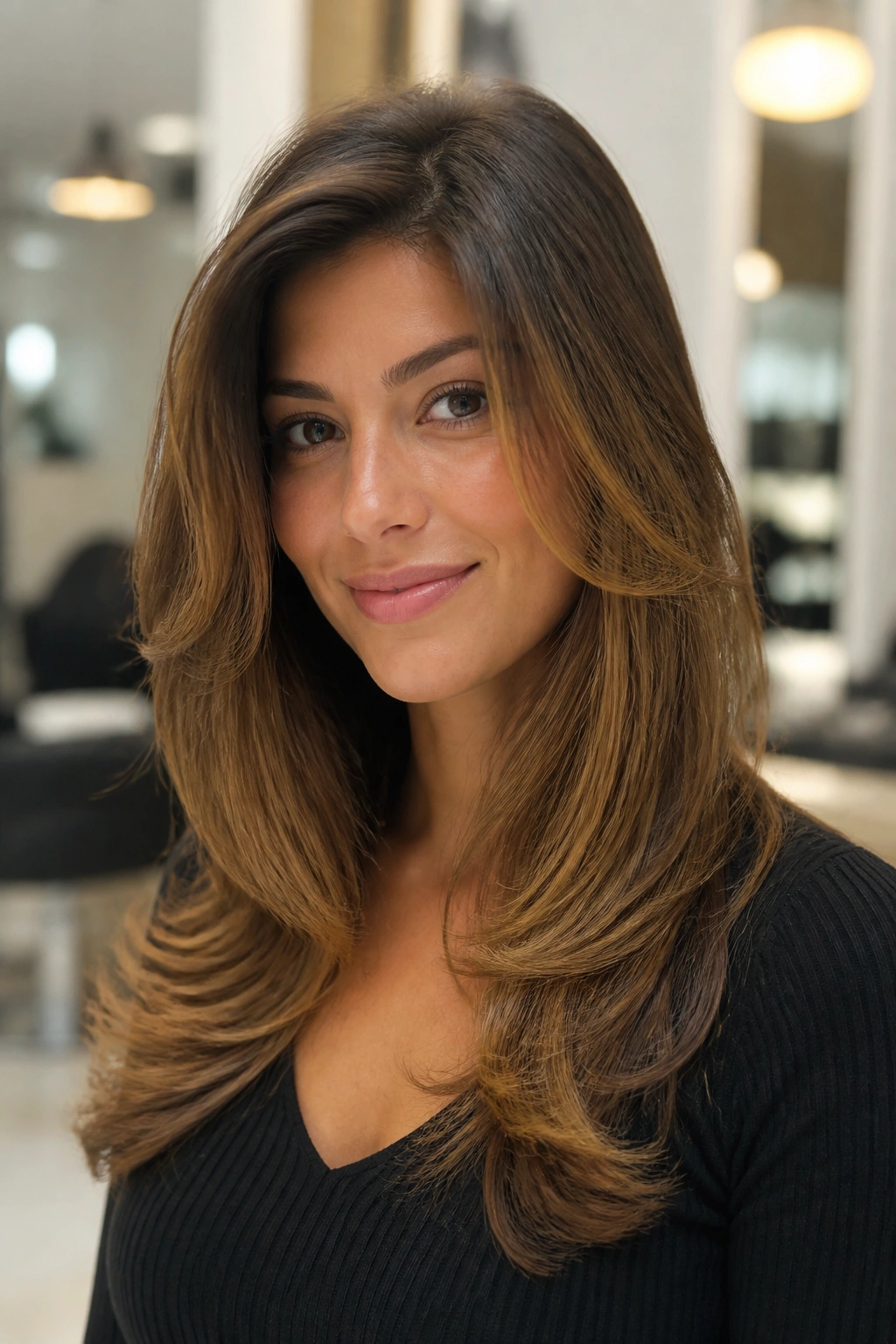
This is the haircut for anyone who likes hair that looks styled even when the day gets messy. The cut itself usually features long layers, face-framing pieces, and enough length to hold a round-brush bend without collapsing.
What makes it different is the finish. The layers should start around the cheekbones or chin, then drift down toward the shoulders and chest. That setup gives the hair lift near the face, while the longer bottom section keeps the shape elegant without being severe. On an oval face, the symmetry of the shape looks especially clean when the ends are curled under or turned away from the face.
I like this cut for medium to thick hair that wants movement but not a lot of visible choppiness. It’s also a smart option if you wear your hair out more than up. A blowout cream, a 1½- to 2-inch round brush, and a cool shot at the end are enough to make the layers sit correctly.
Some haircuts shout. This one speaks in a cleaner voice.
A few of these ideas are low effort, a few ask for a little styling, and a few need a stylist who knows how to keep the shape balanced instead of just adding layers everywhere. That’s the real difference. The right oval face haircut does not try to “fix” the face; it works with the bones already there and gives the hair a job to do.
