



Hair after 70 gets easier when you stop fighting it. The best hairstyle ideas for women over 70 do not pretend silver hair, finer strands, or a softer jawline are problems to hide; they give those changes a shape that looks clean and intentional.
Gray hair often feels coarser than it did before, and the ends can fray faster than the roots. A cut that ignores that shift can puff out at the sides, collapse at the crown, or hang flat in the back within half a day.
I always look for one of three things: lift at the crown, movement around the cheekbones, or a neckline that stays neat without a lot of fuss. That is where the real difference lives.
A bob can look sharp, a pixie can look soft, and a longer cut can still feel light. The trick is choosing the shape that matches your texture, your glasses, your neck, and the amount of styling you actually want to do.
1. Soft Layered Bob for Women Over 70 and Gray Hair

A soft layered bob is the easiest place to start if your hair has gone a little finer. It gives the illusion of thickness without piling weight onto the ends, which is where older hair often looks tired first.
Why It Works for Silver Hair
Gray and white strands show shape fast. A blunt line can look elegant, but if the hair is thin, it may also look strict in a way that feels harsher than you want. Soft layers around the cheekbones and jaw give the cut movement, and movement reads as fullness.
Keep the layers light. You want enough texture to stop the bob from looking helmet-like, not so much that the ends start to fray into wisps.
- Ask for a length that grazes the jaw or sits just below it.
- Keep the interior layers soft, not choppy.
- Part it slightly off center for lift.
- Use a round brush only at the top and sides.
Best tip: if your gray hair has a dry texture, finish with a tiny drop of serum on the ends only. Too much product flattens the whole shape fast.
2. Chin-Length Bob with Tucked Ends

Why does a chin-length bob look fresher than hair that hangs just a little longer? Because the line sits where the eye naturally lands, right around the mouth and jaw, and that makes the face look more awake.
This cut is neat without being fussy. The ends can be worn straight, tucked behind the ears, or curved in slightly with a 1.5-inch round brush, and each version still looks deliberate. That matters more than people admit. A style that behaves well on day three is worth far more than one that looks lovely for twenty minutes.
The thing I like here is the clean neckline. If hair has started to feel thin at the temples, the chin-length shape gives it a little structure without making the head look boxy. It also plays nicely with glasses, which is a real bonus and not a small one.
Ask for a blunt perimeter with very light internal softening. That keeps the cut crisp, not hard. If your hair is naturally wavy, let the ends bend under just a touch instead of forcing them flat.
3. Feathered Pixie Cut with a Soft Fringe
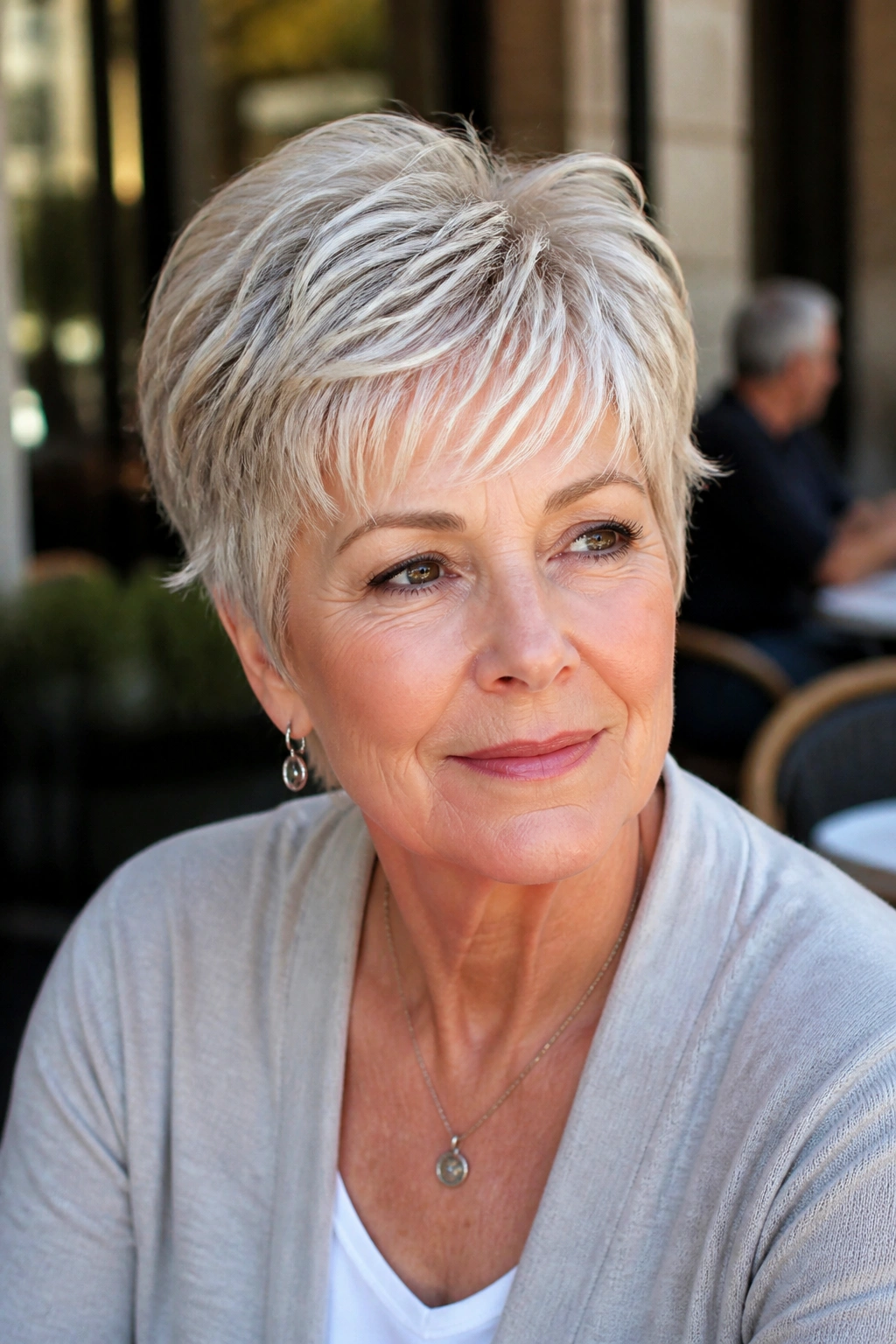
Can short hair still feel gentle? Absolutely. A feathered pixie cut proves it, and it does the job with less styling than almost any longer shape.
How to Wear It
The feathering should live at the top and around the crown, not all over the head. That is how you get lift where you need it and keep the sides neat. A soft fringe, swept forward or slightly to one side, keeps the cut from looking severe.
A pixie like this suits women who want their hair off the neck and away from the face but do not want a harsh crop. There is a difference. A good feathered pixie has air in it; it does not sit flat like a cap.
A pea-sized amount of matte paste is enough. Rub it between your fingers, touch the roots at the crown, and pinch a few pieces near the forehead. Stop there. Too much product turns the whole thing sticky and heavy, which is exactly what you do not want.
If your hair is fine, this cut gives it backbone. If your hair is thick, the feathering removes bulk without making the shape messy.
4. Curly Crop That Lets Natural Texture Breathe

If your curls spring up around the ears and collapse at the shoulders, they probably need less length, not more. A curly crop gives the pattern room to do its thing without dragging it down.
The key is shape, not volume for volume’s sake. A good crop keeps the curl cluster close to the head and leaves enough softness around the hairline so the style still feels human, not sculpted. I prefer this on women whose hair has a little bend even when it is cut short. That bend brings the whole look to life.
What to Ask For
- A dry cut, if your stylist is comfortable with it.
- Shorter pieces around the crown to keep lift.
- A rounded outline near the ears.
- Face-framing curls that stop above the chin.
The styling part is easy if you keep it simple. Scrunch in curl cream on damp hair, let it air-dry halfway, then use a diffuser for the last stretch. Do not keep touching it while it dries. That is how curl turns into frizz.
A crop like this can be a relief. Less weight. Less fuss. More actual curl.
5. Shoulder-Grazing Lob with Face-Framing Pieces
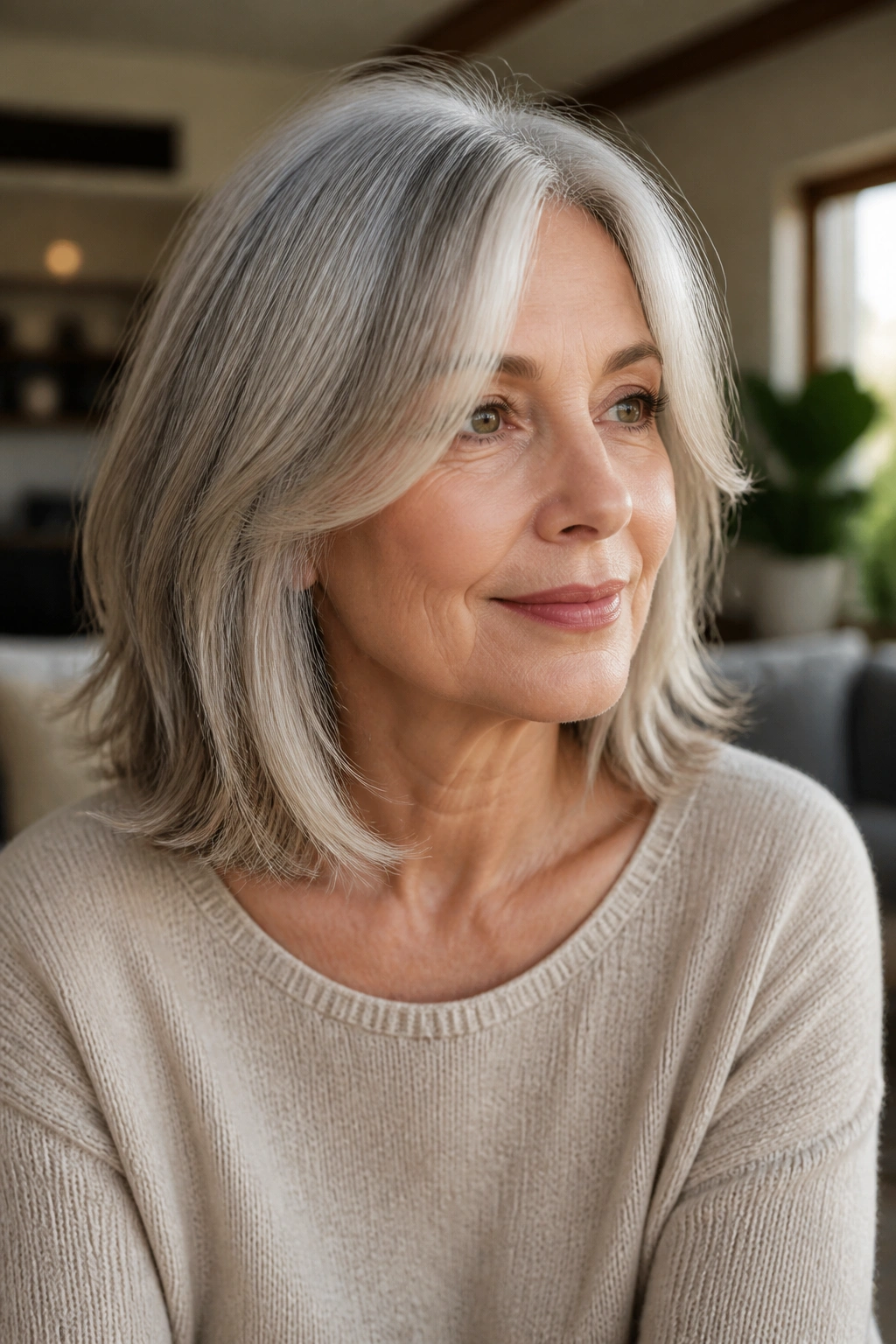
A shoulder-grazing lob is the cut for someone who likes the safety of length but hates hair that feels dragged down. It sits in that useful middle ground where the hair still moves, still brushes the collarbone, and still goes up into a clip when the mood strikes.
What I like most is the face-framing. A few pieces that start around the cheekbone and fall toward the jaw can soften the face without hiding it. That matters with gray hair, because silver strands tend to reflect light, and a strong line of color around the face can sometimes feel too severe. These lighter moving pieces break that up.
This shape also handles waves well. Straight hair gets a little bend from a round brush, wavy hair can air-dry with a light cream, and fine hair gets a modest lift if the layers are kept long and soft. No heavy stacking. No busy texture.
If your hair has always been shoulder length and you are wary of going short, this is the safest move. It looks intentional, not tentative.
6. Soft Shag with Wispy Bangs
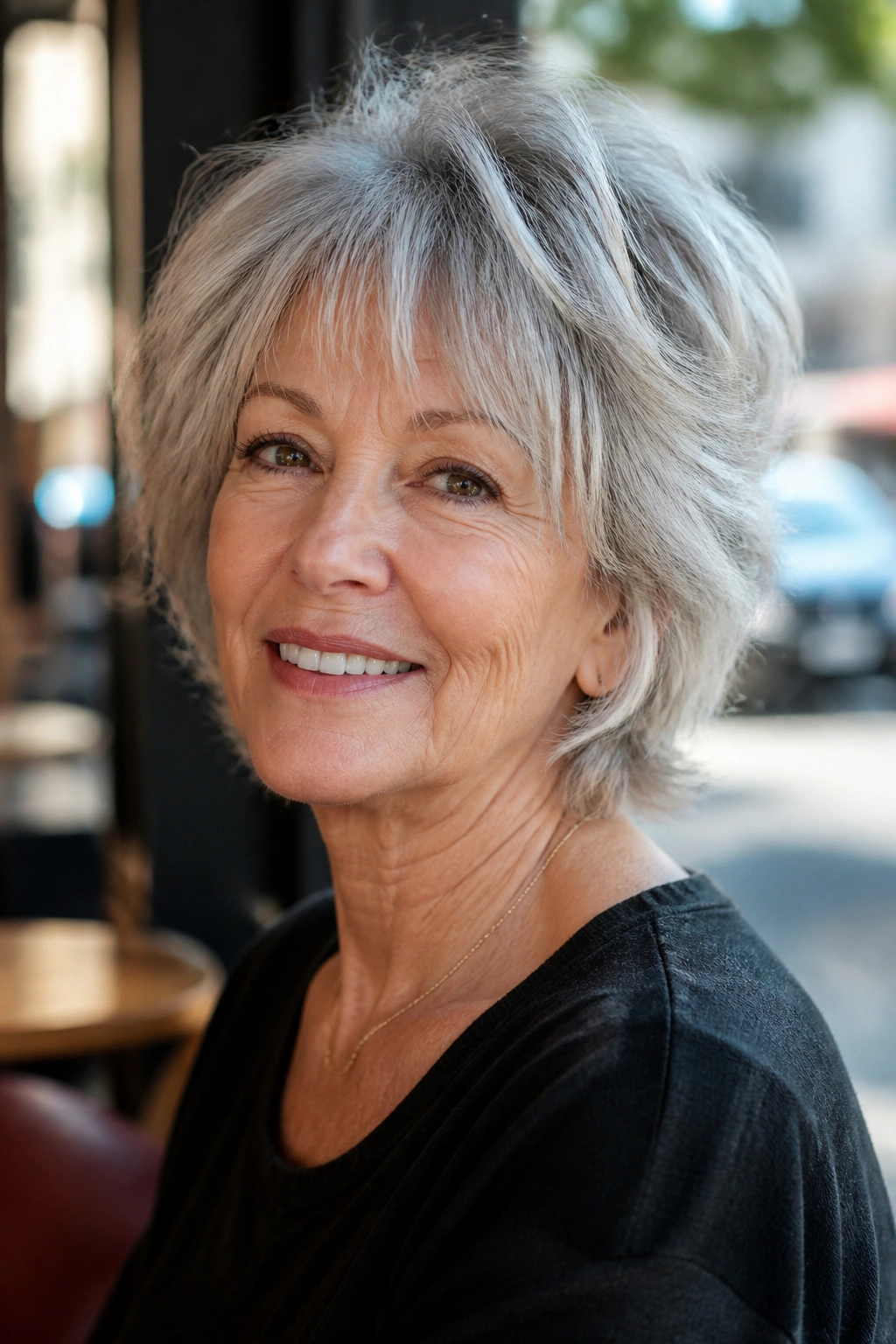
A soft shag is not the wild, rock-and-roll shag people picture from old photos. Done well, it feels airy and modern without making the hair look like it has been chopped at random.
The difference is in the layers. A good shag keeps texture through the crown and sides, while the bangs stay wispy enough to skim the forehead instead of sitting like a curtain. That gives thin hair a bit of lift and thick hair a way to lose bulk without losing shape.
This style is especially kind to wavy hair that has become less predictable over time. One day it bends easily, the next day it puffs. The shag gives it room to settle into something useful. If you want a bit of edge without sacrificing softness, this is the one I’d look at first.
What Makes It Different
The layers are shorter around the top and longer around the sides, which means the shape feels lively instead of bottom-heavy. It also lets gray hair show off its texture, especially when the silver strands have a little shine.
A small dab of mousse at the roots and a quick scrunch through the ends is often enough. That’s the appeal. The haircut does a lot of the work.
7. Swept-Back Crop with Crown Lift
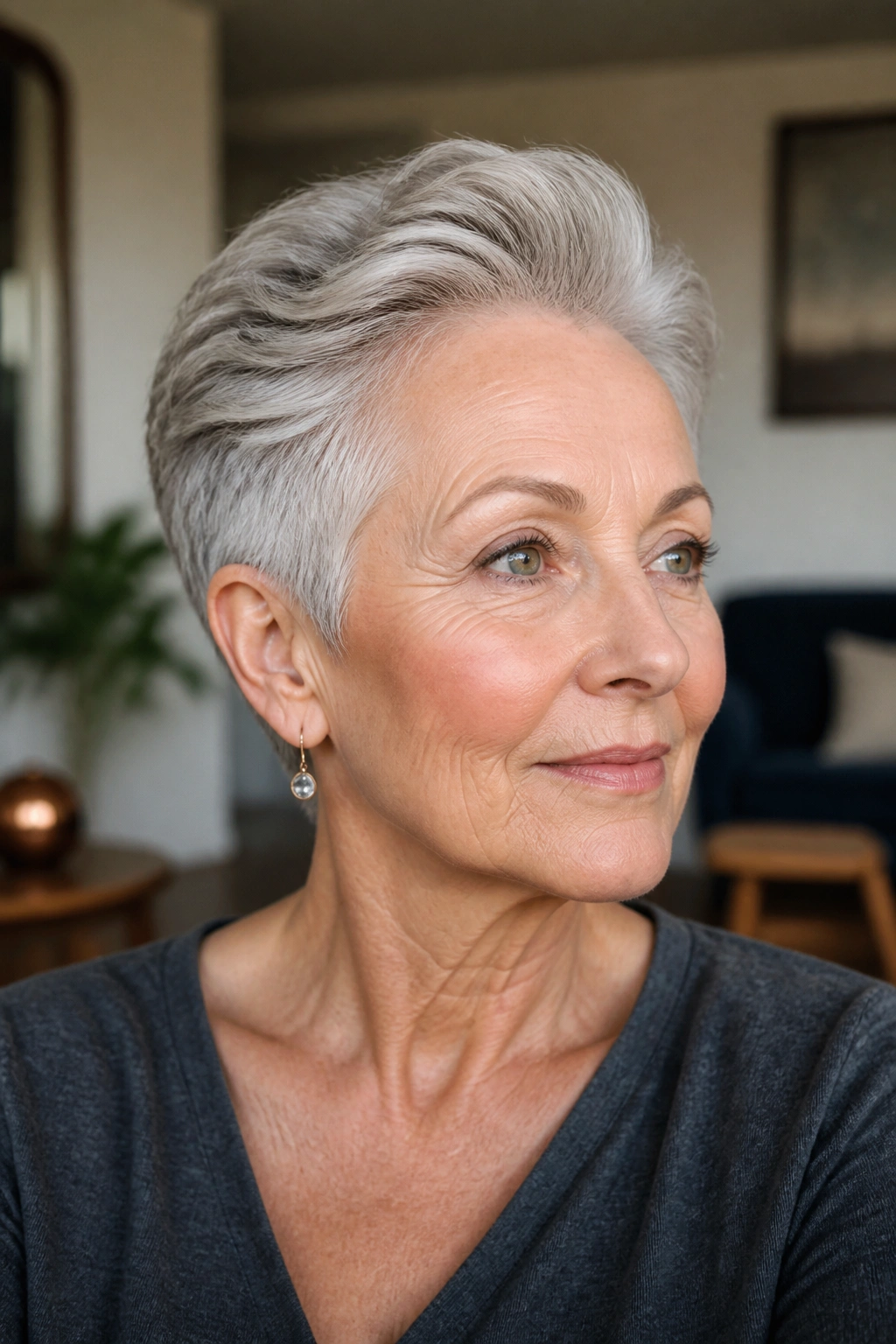
The swept-back crop is a small miracle for anyone whose hair lies flat at the front. It shifts the eye upward, opens the face, and leaves the neck visible in a way that feels fresh.
Why It Stays Neat
This cut keeps the sides tidy and leaves a little length on top so you can brush the hair back with your fingers or a small vent brush. The shape looks especially good with earrings, and it makes glasses stand out instead of competing with them. That sounds minor. It is not.
The styling needs are simple, which is part of the charm. Dry the roots in the opposite direction of your part, then sweep the top back and over slightly. A light cream or paste gives the top enough grip to stay in place without turning stiff.
- Best for hair that falls flat at the crown.
- Good if you want your ears and neckline visible.
- Works with straight, fine, or softly wavy hair.
- Needs only a quick trim to keep the silhouette clean.
Quick tip: ask for the top to be left a touch longer than you think you need. Short top layers can lose the sweep too fast.
8. Shoulder-Length Layers for Women Over 70
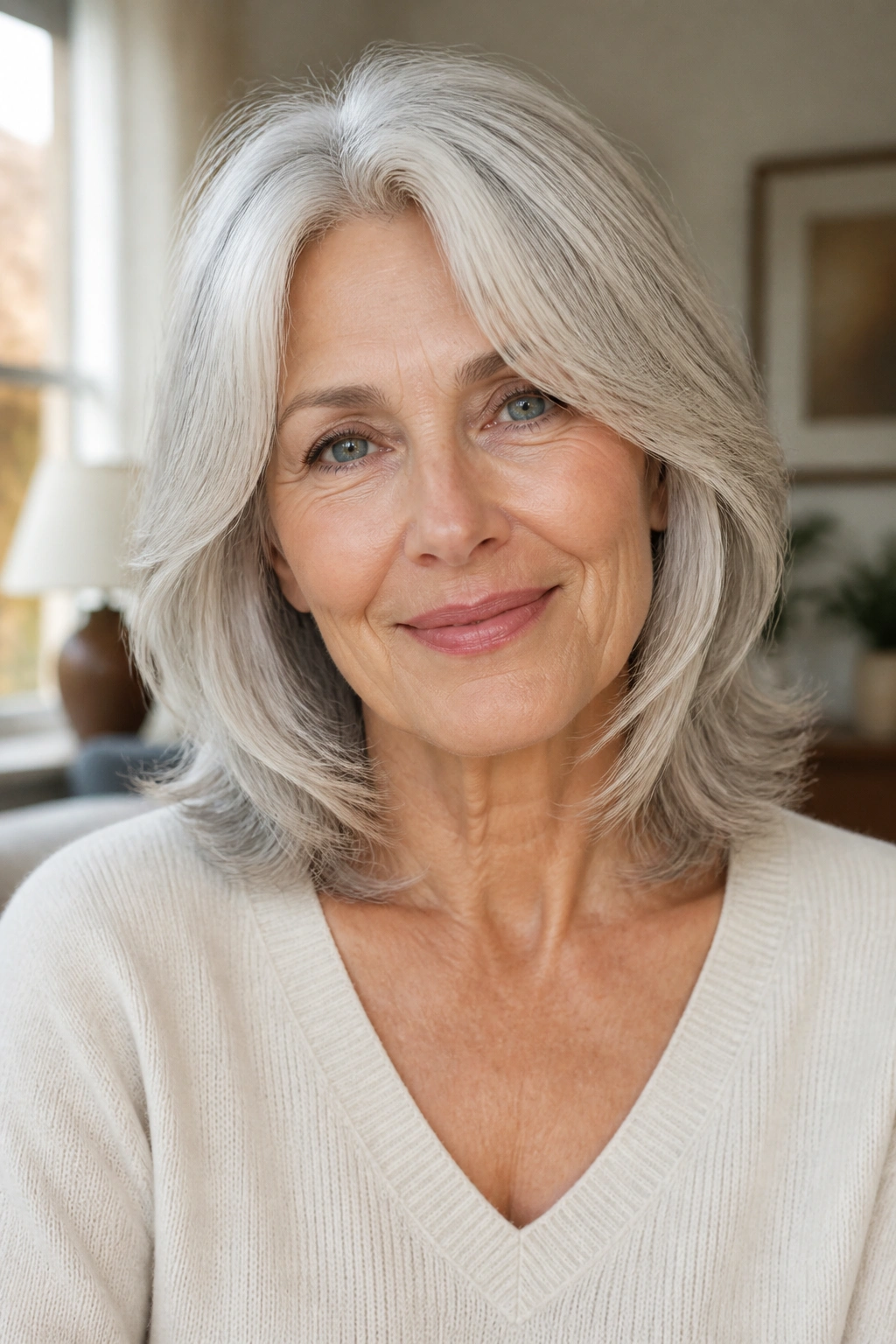
Not every woman over 70 needs to go shorter. A shoulder-length cut with clean layers can look richer than a short style, especially when the hair still has decent density.
What gives this cut life is movement at the ends. If the layers are cut too high, the whole shape can puff out in the middle and leave the bottom looking thin. If the layers stay long and the face-framing pieces begin around the cheekbones, the hair falls in a way that feels calm and polished. That is the sweet spot.
I like this for gray hair that still holds a bit of wave. You can blow it smooth with a paddle brush one day and add loose bends with a large curling iron the next. Same cut. Different mood. No drama.
It is also one of the easier options for women who wear their hair up half the time. A small twist, a clip, a low ponytail, all of it works because the length is there. It just does not feel bulky.
9. Tapered Cut That Follows the Neckline

Why do some short cuts look neat even after a long day? Because the back is tapered properly. The hair follows the neckline instead of hanging off it, and that makes the whole style feel tidy without extra effort.
How to Ask for the Taper
Tell the stylist you want the nape to sit close to the neck, with the top left long enough to keep some shape. The sides should blend, not flare. If the cut is too square, it can make the head look wider than it is. If it is too soft, it loses its clean edge.
A tapered cut works especially well when hair grows in slightly uneven patterns at the back, which happens more often than people expect. The taper hides that. It also keeps collars, scarves, and high necklines from fighting the hairstyle.
There’s a nice practicality to it. You can air-dry, add a touch of styling cream, and go. No round-brush marathon. No wrestling with the back of the head.
Short, neat, and dependable. That is the appeal here.
10. Soft Ringlet Bob for Natural Curls
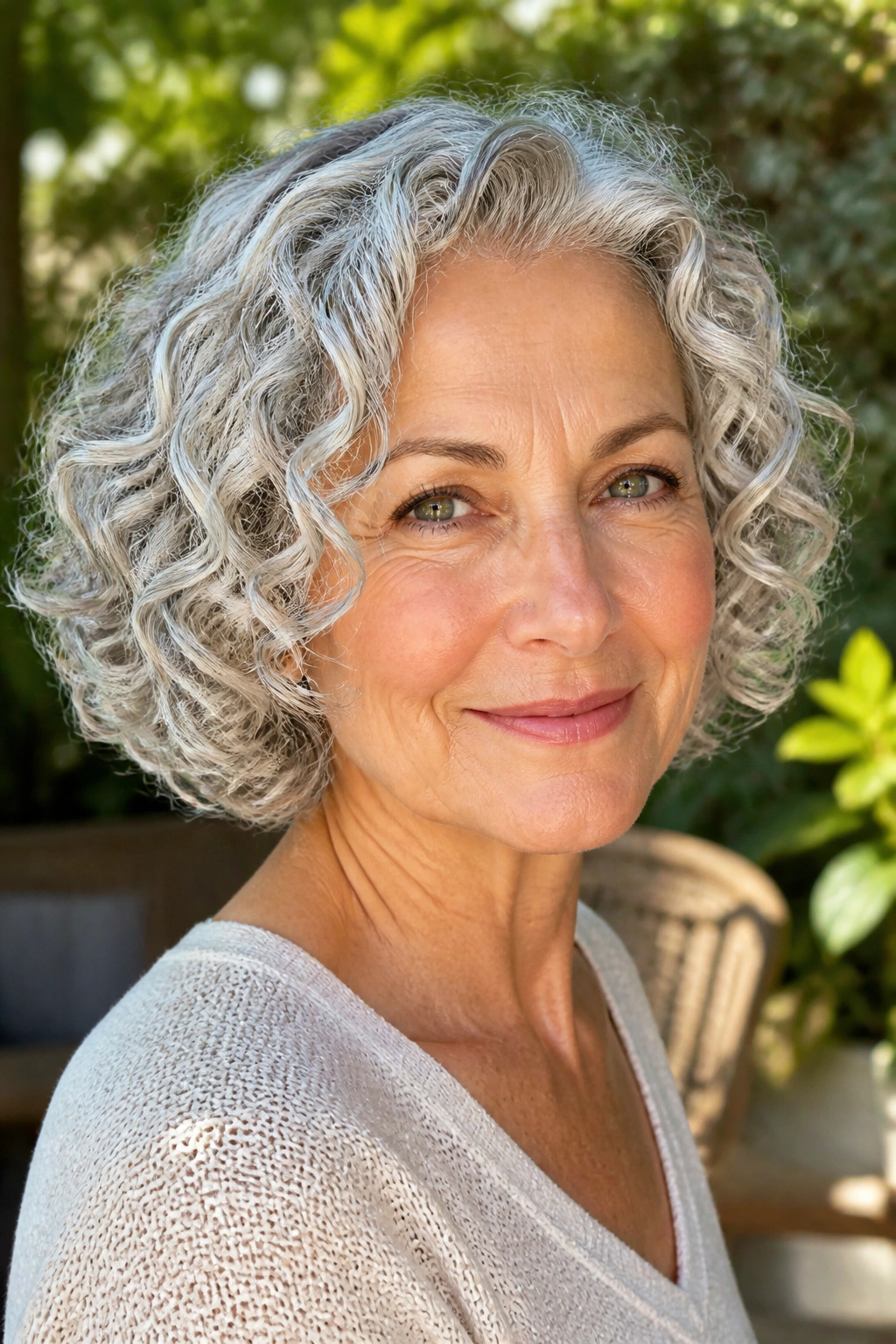
I keep coming back to ringlet bobs because they solve a familiar problem: curls that look nice when they are long enough to drag, but frizzy when they are cut too short. A bob lands in the middle and lets the shape hold.
The important part is not to over-layer the cut. Too many layers can make curls spring out in odd places, especially around the temples. A softly rounded bob gives the curls a home. They stack together instead of scattering.
Key Details to Ask For
- Cut it when the hair is dry, if possible.
- Keep the silhouette rounded, not triangular.
- Leave a little extra length at the crown.
- Avoid heavy thinning shears near the ends.
Moisture matters here. A curl cream or leave-in conditioner should go on damp hair, followed by a diffuser on low heat. If you rough it up with a towel, the curl pattern starts fighting back. Better to blot with a microfiber towel and stop there.
A bob like this can look cheerful, elegant, and easy in the same week. That’s not a bad trio.
11. Side-Swept Pixie with a Longer Fringe
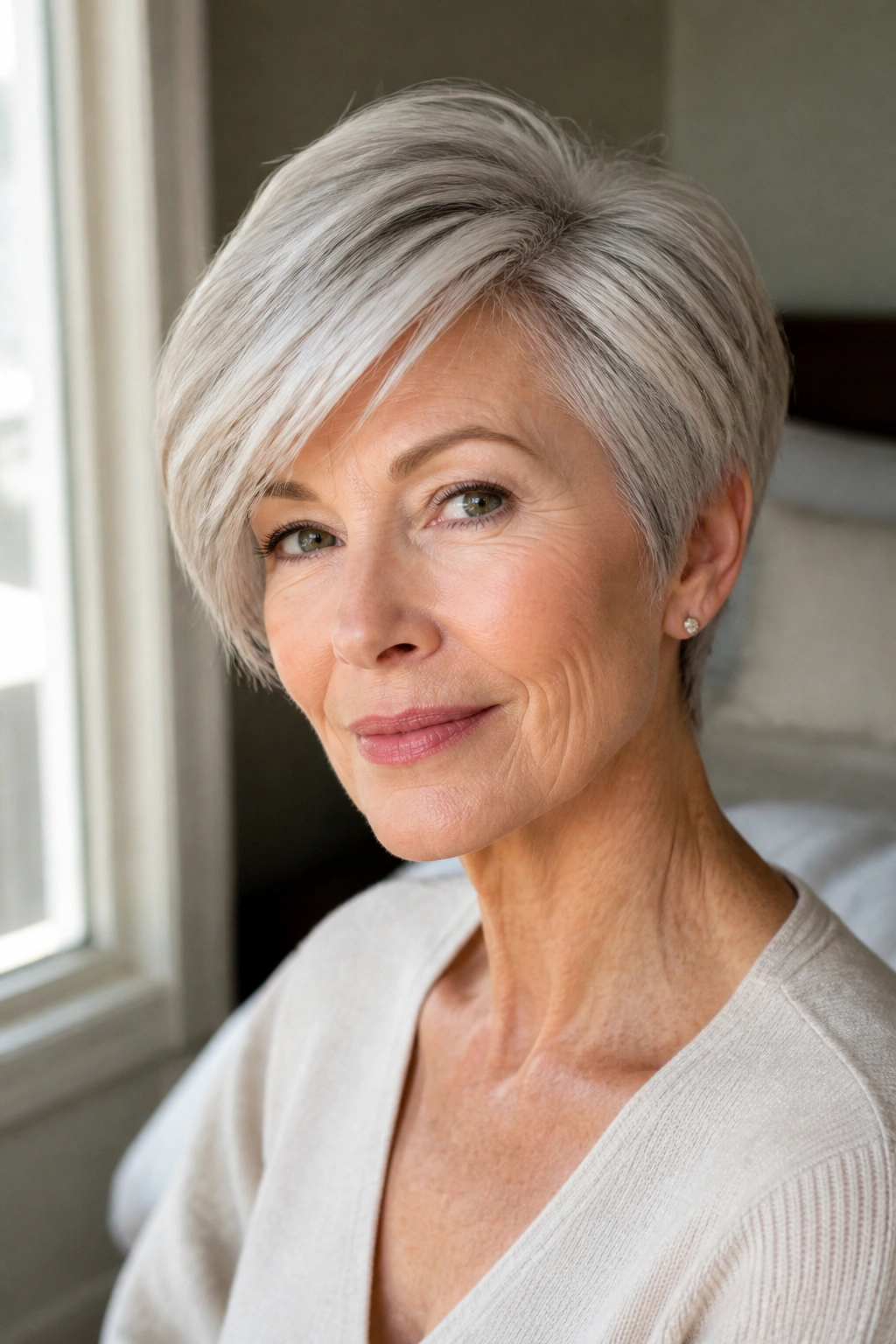
A side-swept pixie is one of the most forgiving short cuts for mature faces. The longer fringe softens the forehead, the side sweep creates movement, and the close back keeps the style from feeling bulky.
What makes it work is contrast. The top has enough length to play with, while the sides stay neat and controlled. That gives the face shape without making the cut feel severe. If your hair has a cowlick at the front, the longer fringe can also help tame it instead of letting it stick up in the morning like a warning sign.
This is a good one for women who wear glasses, because the fringe can sit just above the frames or sweep away from them. It also plays well with strong brows and silver hair that has a little shine. The line of the cut does the work.
A quick trim every few weeks keeps the fringe from dropping into the eyes. Past that, a light cream or wax on the front is enough. No big routine. That may be the real charm.
12. Elegant Low Chignon with Volume at the Crown

A tight bun can look harsh on older hair. A low chignon with a little lift at the crown feels softer, smarter, and far less severe.
Unlike a slick bun pulled flat against the head, this version leaves a small cushion of volume above the forehead and gathers the hair low at the nape. That tiny bit of height changes everything. It stretches the face, keeps the style from looking severe, and gives room for earrings, earrings especially. Pearls, studs, dangling pieces — all of them look better when the hair is not crowded up high.
This is the style I would pick for a dinner, a wedding, or any event where you want polish without looking like you tried to become someone else. It is neat, but not stiff. There is a difference.
A few hidden pins and a soft side part help it hold. If the hair is slippery, texture spray at the roots gives the chignon more grip. If the hair is dry, a touch of cream keeps the crown from looking dusty.
Simple. Dressy. Very usable.
13. Feathered Shoulder Cut with Flipped Ends

A feathered shoulder cut gives you motion without asking for a lot of length. It is a good answer for hair that feels too heavy in one season and too flat in another.
What Makes It Different
The feathering starts around the mid-lengths, and the ends can flip out a little rather than hanging straight. That small turn at the bottom keeps the hair from sitting like a curtain. It also makes gray hair look lively, because the lighter strands catch and separate in a way that reads as texture.
This cut is especially useful if your hair has some body but not enough to support a full blowout every day. A medium round brush at the ends is usually enough. The rest can air-dry with a bit of mousse or leave-in spray.
- Best for hair that feels too plain in a single-length cut.
- Good if you want shoulder length without heaviness.
- Works with a soft side part or a center part.
- Needs a trim before the ends start to flip in odd directions.
Pro tip: keep the bottom edge light. Heavy ends kill the feathered effect fast.
14. Curly Bob with a Diffused Shape
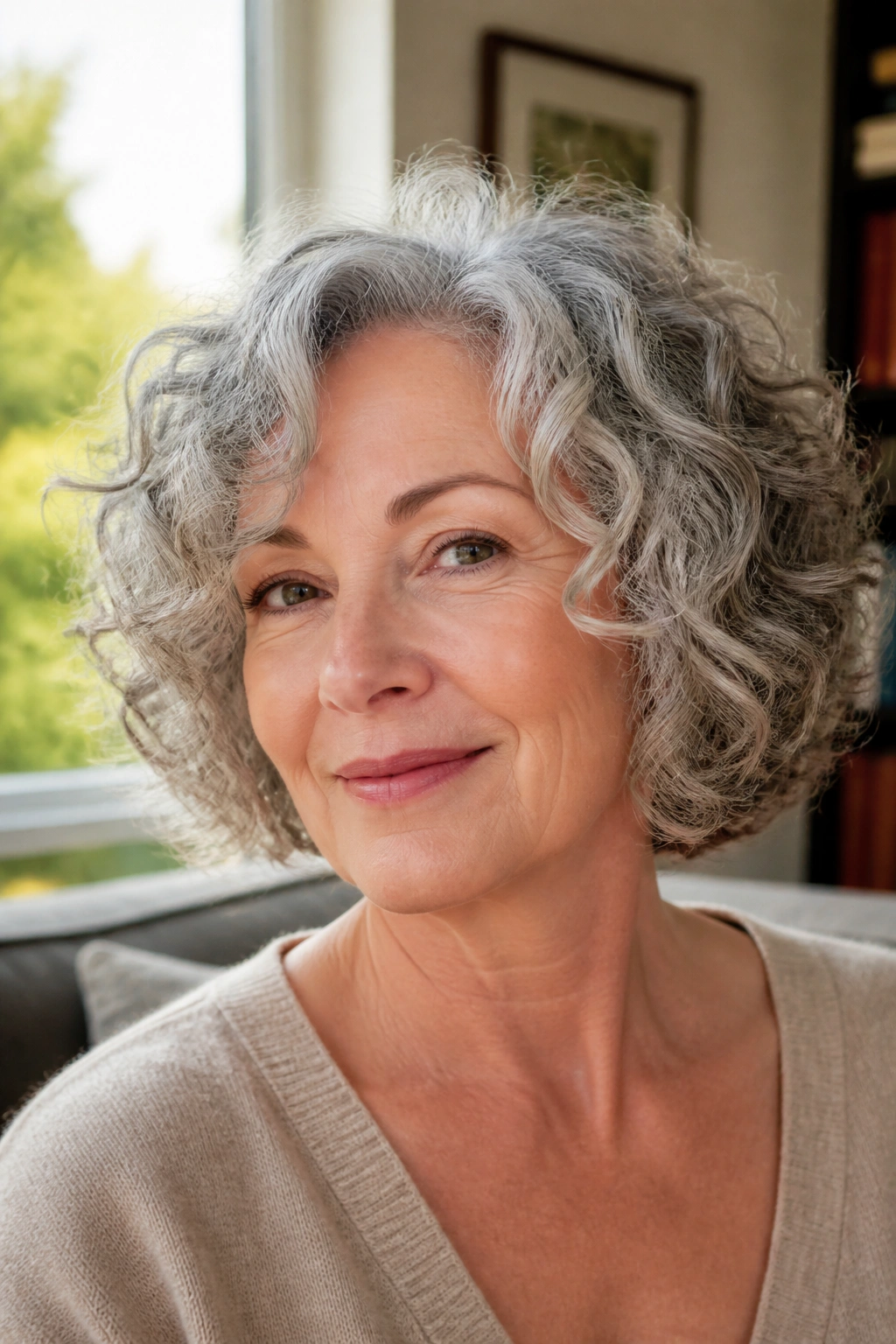
A curly bob with a diffused shape gives natural texture some breathing room. It is one of the best answers for hair that has become drier, more fragile, or simply less willing to lie flat.
The big mistake with curly hair at this age is trying to force it into a smooth sheet. That usually creates puff at the crown and frizz at the ends. A diffused bob does the opposite. It lets the curl pattern stay visible while keeping the outline soft around the chin and cheeks.
I like an off-center part here because it breaks the symmetry in a flattering way and stops the hair from sitting too stiffly on the face. If the curl pattern varies from one side to the other — and it often does — the part can help balance that out.
Use a cream designed for curls, not a heavy butter. Heavy products can make the bob droop by midday. A light diffuser pass with low heat is usually enough, then hands off. The less you disturb it, the better the shape holds.
15. Rounded Crop with Full Crown Shape

Why do some short cuts make thinning hair look fuller without any obvious tricks? Because the crown is shaped on purpose. A rounded crop builds height in the right place and keeps the outline soft at the edges.
How to Use It Well
This cut works best when the top has enough length to be lifted with a small brush or even your fingers. The back stays tapered, the sides stay smooth, and the top gently curves up and over. That rounded profile helps fill out the head shape, which can be a blessing when hair has gotten finer at the top.
There is a quiet confidence to this style. It does not shout for attention. It just makes the hair look settled, which is harder to do than it sounds.
A root-lifting spray at the crown helps, but do not spray the whole head. Keep the product where the lift matters. Too much anywhere else will flatten the sides and make the shape lose its curve.
This one is especially useful if you like short hair that still feels feminine. The line is tidy. The effect is gentle. The styling takes minutes.
16. Long Silver Layers with Soft Waves
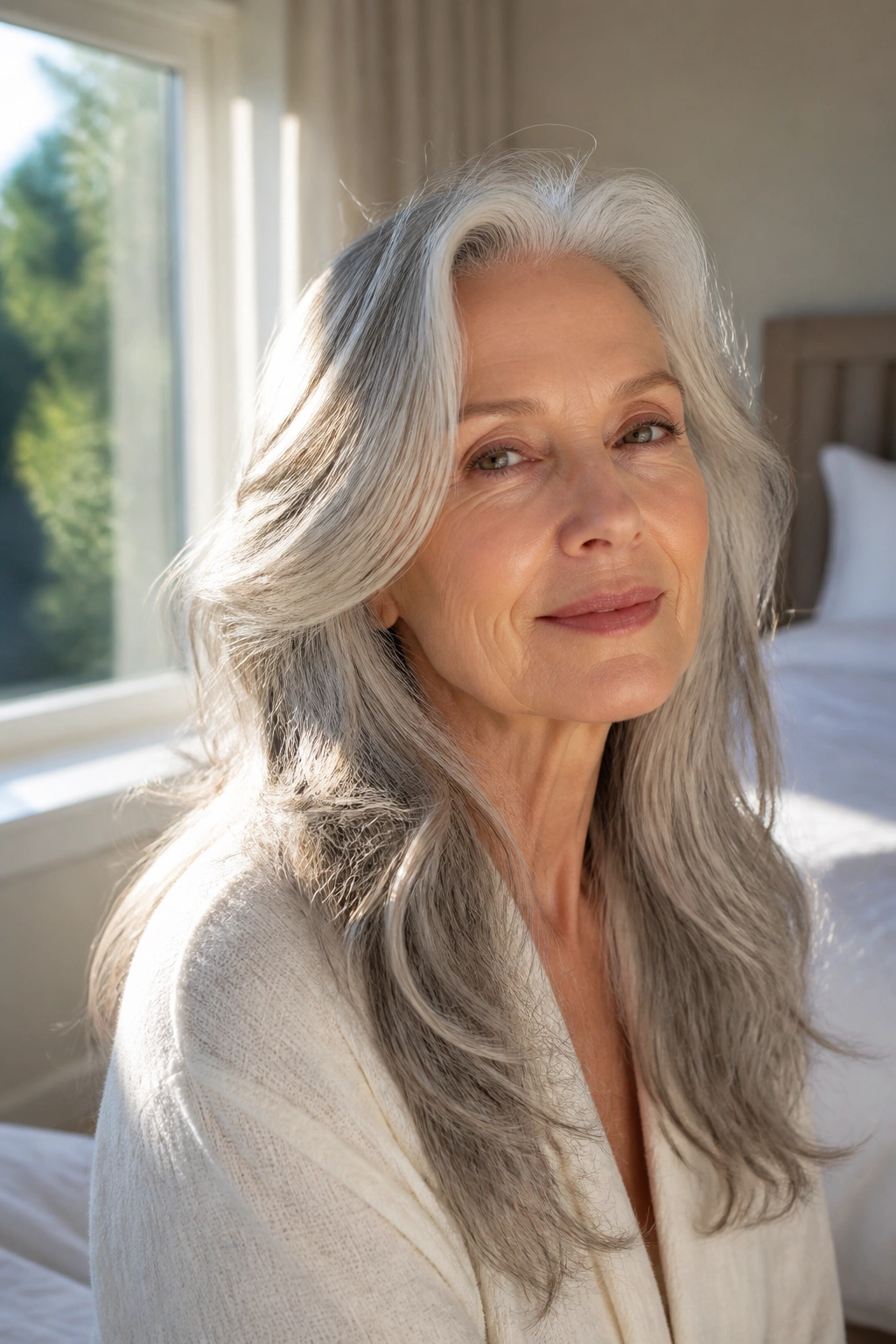
Some women never want to cut their hair short, and honestly, they should not be forced to. Long silver layers can look graceful if the shape is managed well and the ends are kept healthy.
I think the trick here is restraint. Too many layers make long hair look thin at the bottom. Too few make it heavy and flat. A few long layers around the face and through the lower half keep the length moving without stripping it bare. Soft waves help even more, because they break up the outline and give the silver strands a bit of life.
What to Keep in Mind
- Trim the ends often enough that they stay blunt enough to look full.
- Use large rollers or a 1.25-inch iron for loose waves.
- Part the hair slightly off center for lift.
- Finish with a light mist, not a heavy spray.
Long hair can look especially lovely when it is white, silver, or a mix of shades. The color itself does some of the visual work. The cut just needs to stay honest.
17. Sleek Blunt Bob with a Clean Line

A sleek blunt bob can look expensive in the best sense of the word — neat, deliberate, and free of fuss. The clean edge gives the hair a thicker appearance, which is useful if the strands are fine or the density has slipped a bit.
This style works best on straight or softly wavy hair that can sit smooth without constant heat. The length can hit the jaw or the collarbone, but the line should stay clear. If the perimeter gets too textured, the whole thing starts to lose its snap.
I like this on silver hair because the color shows off the cut line. White and gray strands reflect light well, and a blunt bob uses that shine instead of fighting it. There is no need for heavy layers here. In fact, layers can work against the point.
A flat brush blow-dry and a little smoothing cream are enough. If the ends start to flip under badly, the cut is probably too short for the hair’s natural bend. Leave a little more length next time.
18. Asymmetrical Bob with a Longer Front Section
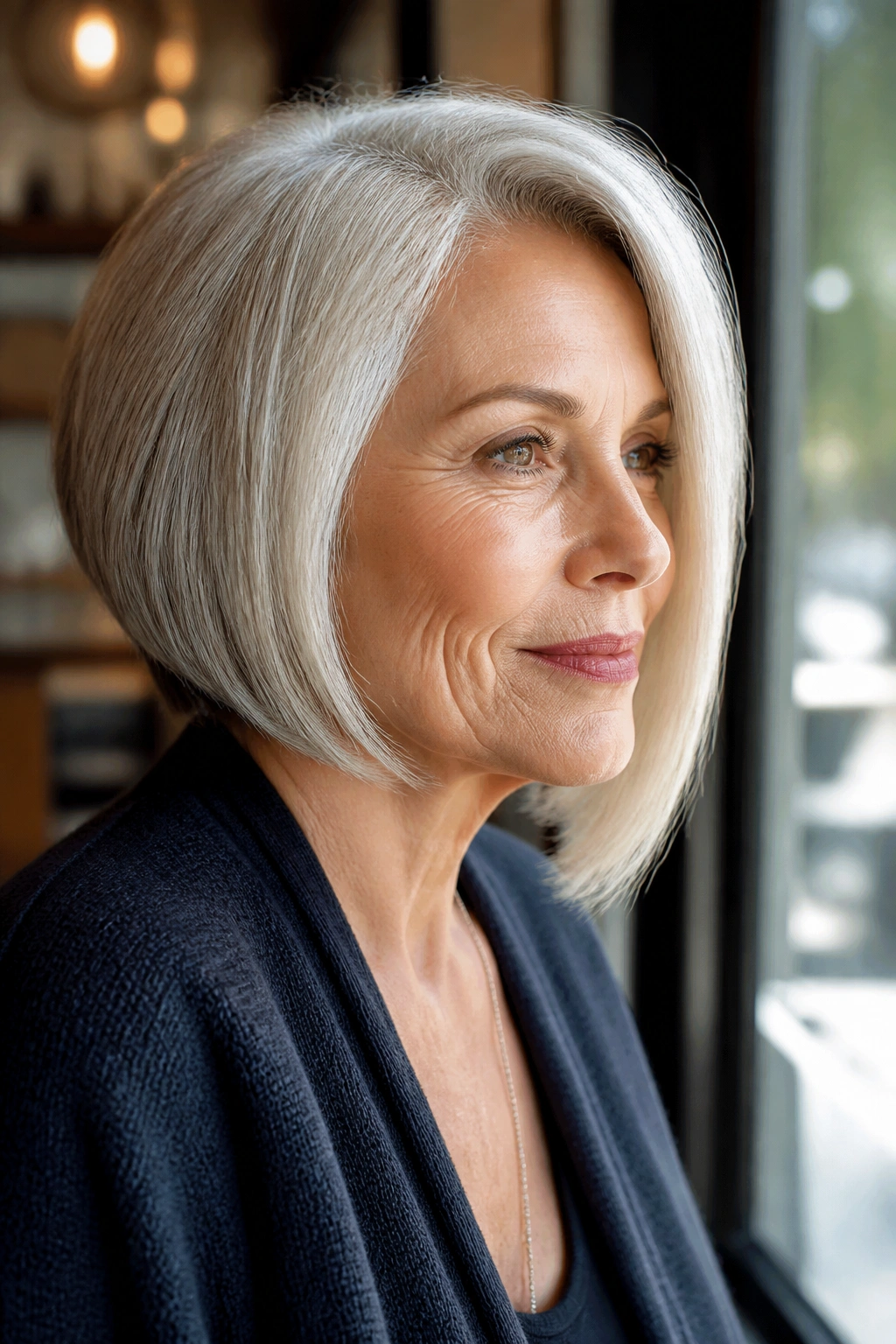
A symmetrical bob can be lovely, but an asymmetrical one brings a little edge without getting loud about it. The longer front section pulls the eye downward and slightly forward, which can soften a strong jaw or balance a face that feels wider through the cheeks.
Unlike a standard bob, this cut gives you a clear point of interest. One side may skim the chin while the other sits a touch higher or lower, and that small difference changes the whole mood. It also works well with a side part, which many women find more forgiving than a strict middle part.
This style suits women who want shape, not stiffness. It feels current without trying hard. If your hair is straight, the line will look sharp. If it has wave, the asymmetry becomes softer and more casual.
Ask for the difference in length to be subtle, not dramatic. Too much contrast can feel costume-like. A gentle angle is easier to wear and easier to grow out if you change your mind.
19. Half-Up Twist That Lifts the Crown

A half-up twist is one of the simplest ways to get height without pinning every strand off your face. It’s useful on days when the top has gone flat but you still want some length down the back.
How to Get the Most From It
Start by taking the top section from temple to temple, then twist or loosely gather it at the back of the crown. Leave a little looseness around the front so the style doesn’t look severe. That small puff at the top gives the face more lift, and it can be flattering with silver hair because the twist shows off the color variation in the strands.
This is a practical style, not a fussy one. A clip, two pins, or a small barrette can hold it. If the hair is slippery, a bit of dry texture spray at the roots makes the twist behave. If the hair is curly, even better — the texture helps it stay put.
- Good for lunch dates, church, family gatherings, or travel.
- Works on bob length and longer cuts.
- Keeps the neck cool without losing all the hair’s shape.
- Takes under 5 minutes once you know the hand motion.
Tip: twist the section loosely. A tight twist makes the crown collapse.
20. Braided Crown for Special Days

A braided crown can look too sweet if it is done tightly, but a loose, low braid around the hairline has real presence. It keeps hair off the face, shows the neck, and gives silver strands a woven look that feels elegant without feeling fussy.
The version I like best is soft and imperfect. A braid that starts at one side and wraps around the head, or two loose braids pinned into a crown shape, can frame the face in a way that feels dignified rather than precious. That matters. You want texture, not a school-pageant vibe.
This style is best when the hair has some length to work with, even if it is shoulder length. A little spray and a few pins make a big difference. If the ends are thin, tuck them under instead of letting them stick out.
It is a lovely choice for a formal event, but it can also work for a day when you want your hair out of the way and still want it to feel special. Not every polished look has to be stiff.
21. Brushed-Out Waves with a Soft Side Part

Why do brushed-out waves look softer than tight curls? Because the pattern relaxes into broad bends instead of small loops, and that makes the hair feel fuller without turning busy.
How to Use It
Set the hair with large rollers, a curling iron with a 1.25- to 1.5-inch barrel, or even a blowout brush if your hair cooperates. Let the curls cool, then brush them gently with a paddle brush or wide-tooth comb. Stop before they get too fluffy. You want movement, not a cloud.
A soft side part helps the front stay lifted. It also gives gray hair a lovely sweep, especially when the color shifts from silver at the top to white near the ends. That contrast can look rich when the wave is loose.
This style is good when you want a little occasion without much drama. It suits dinner, a portrait, or any day when you want the hair to look finished but not rigid. A light mist of flexible spray keeps the wave from falling flat while still letting it move.
22. Easy Ear-Skimming Cut for Women Over 70
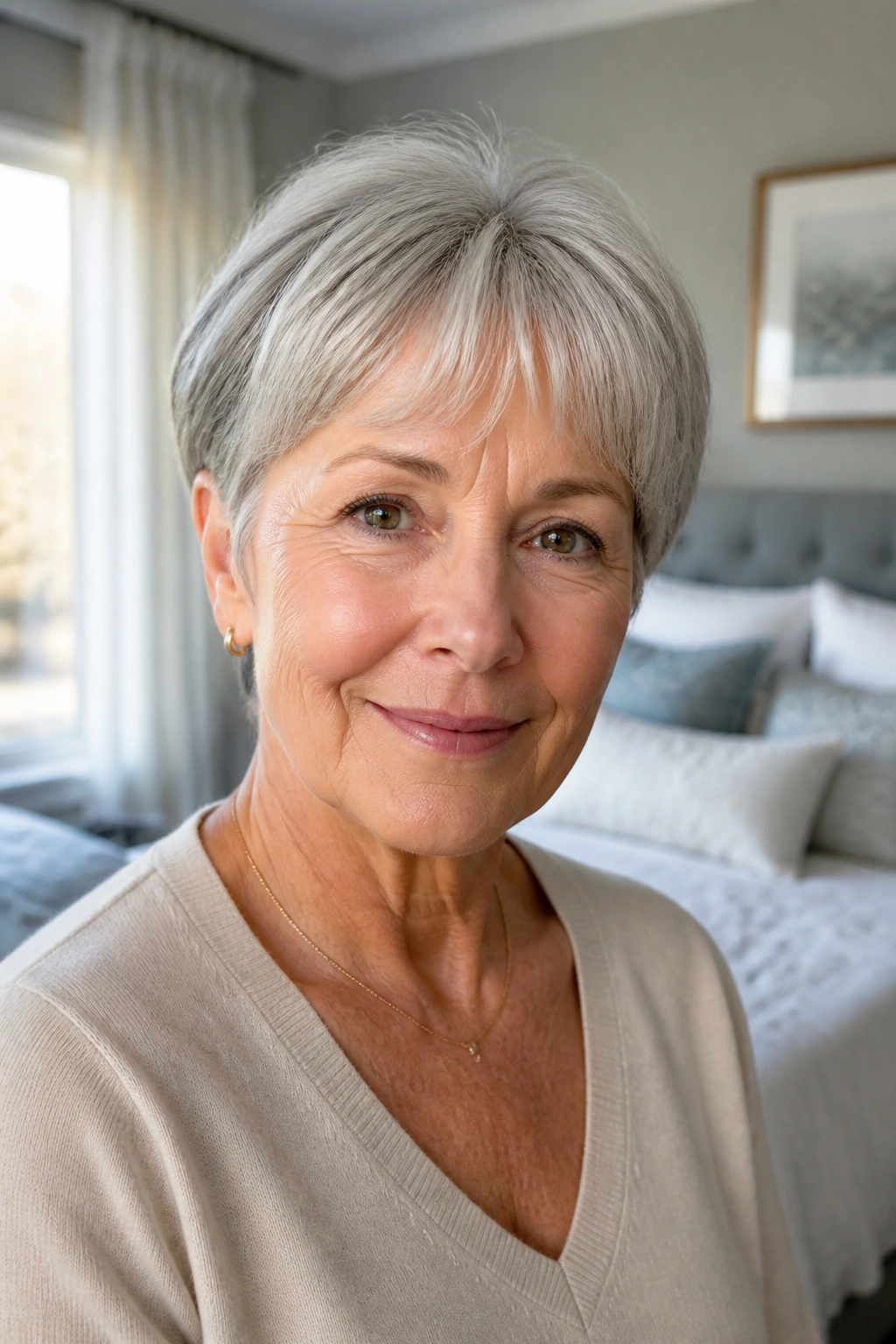
An ear-skimming cut is one of the most useful shapes for women who want hair that stays light around the face and neck. It keeps enough length to feel feminine, but it trims away the drag that can make older hair look tired.
This one works especially well if you like to tuck hair behind the ears and let a few pieces fall forward. The shape is clean, the styling is quick, and the whole cut can be dressed up or down without much effort. A tiny bit of side fringe helps if your forehead feels more exposed than it used to. If not, leave the front open and let the lines stay simple.
The best version has soft layers through the top and sides, with the ends stopping just where the ear begins. That gives you the freedom to push it back, clip one side, or let it sit naturally. It is one of those styles that quietly makes life easier, and those are the ones people end up loving.
A light cream or a touch of mousse is enough. Keep the routine short. Hair at this stage usually looks better when it is touched less, not more.
