



The best medium length hairstyles for women over 50 do one thing first: they make the hair look like it belongs on your head, not on a magazine cover. That sounds obvious, but a lot of cuts miss the point. They chase trendiness, or they sit too flat, or they keep too much length in the wrong places and end up dragging the face down.
Medium length hair sits in a sweet spot. It can skim the collarbone, hit the shoulders, or sit right between the two, which is long enough to feel polished and short enough to move. That range matters even more when hair texture changes. Gray strands can feel wirier. Fine hair can lose lift. Thick hair can puff out at the sides if the shape is wrong.
The good news is that the right shape solves more than one problem at once. A blunt line can make fine hair look fuller. Soft layers can keep dense hair from turning into a triangle. A fringe can take pressure off a high forehead, and a side part can soften a strong jawline without hiding your features behind a curtain of hair.
Gray hair deserves a special mention here. It does not need “fixing.” It needs structure, shine, and a cut that respects its texture. Some of the best-looking medium hairstyles for older women are the ones that let silver, white, and salt-and-pepper tones do the interesting part while the cut quietly handles the rest.
1. Soft Layered Lob With Face-Framing Movement
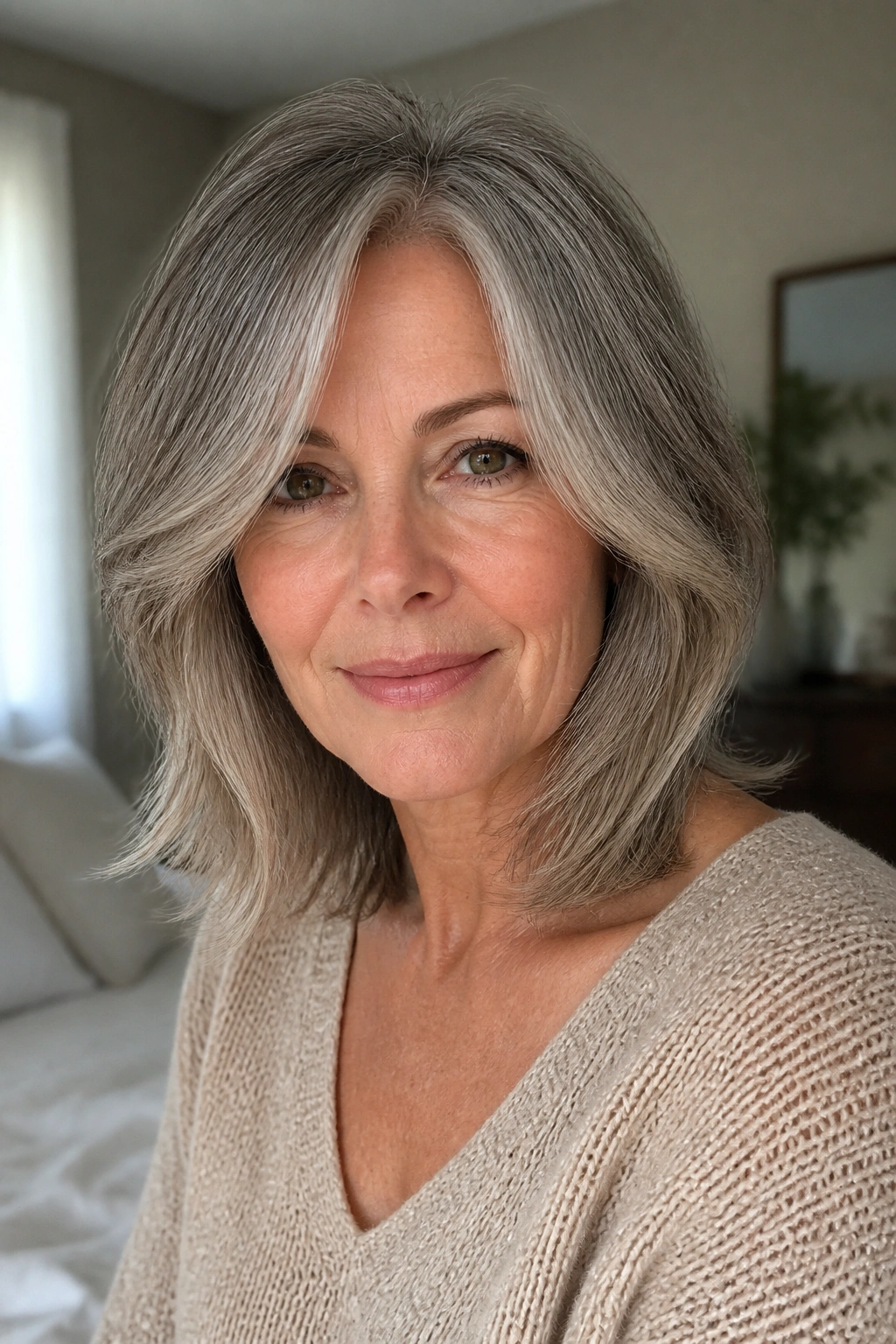
A soft layered lob is one of those cuts that makes people think you did more styling than you actually did. The length usually lands somewhere between the collarbone and the top of the shoulders, and the layers start around the chin or cheekbones so the face gets a little lift without looking chopped up.
I like this cut for women whose hair has lost some body at the ends. The layers keep the shape from collapsing, but they do it gently, which matters if you want a grown-up look instead of something overly feathered. On gray hair, the movement around the face keeps the color from reading flat.
Ask for face-framing pieces that are soft, not razor-thin. That part matters. Thin slices can look wispy in a hurry, especially on fine hair. A better request is a rounded front that bends away from the jaw and falls back toward the shoulders.
2. Blunt Collarbone Cut With Clean Ends
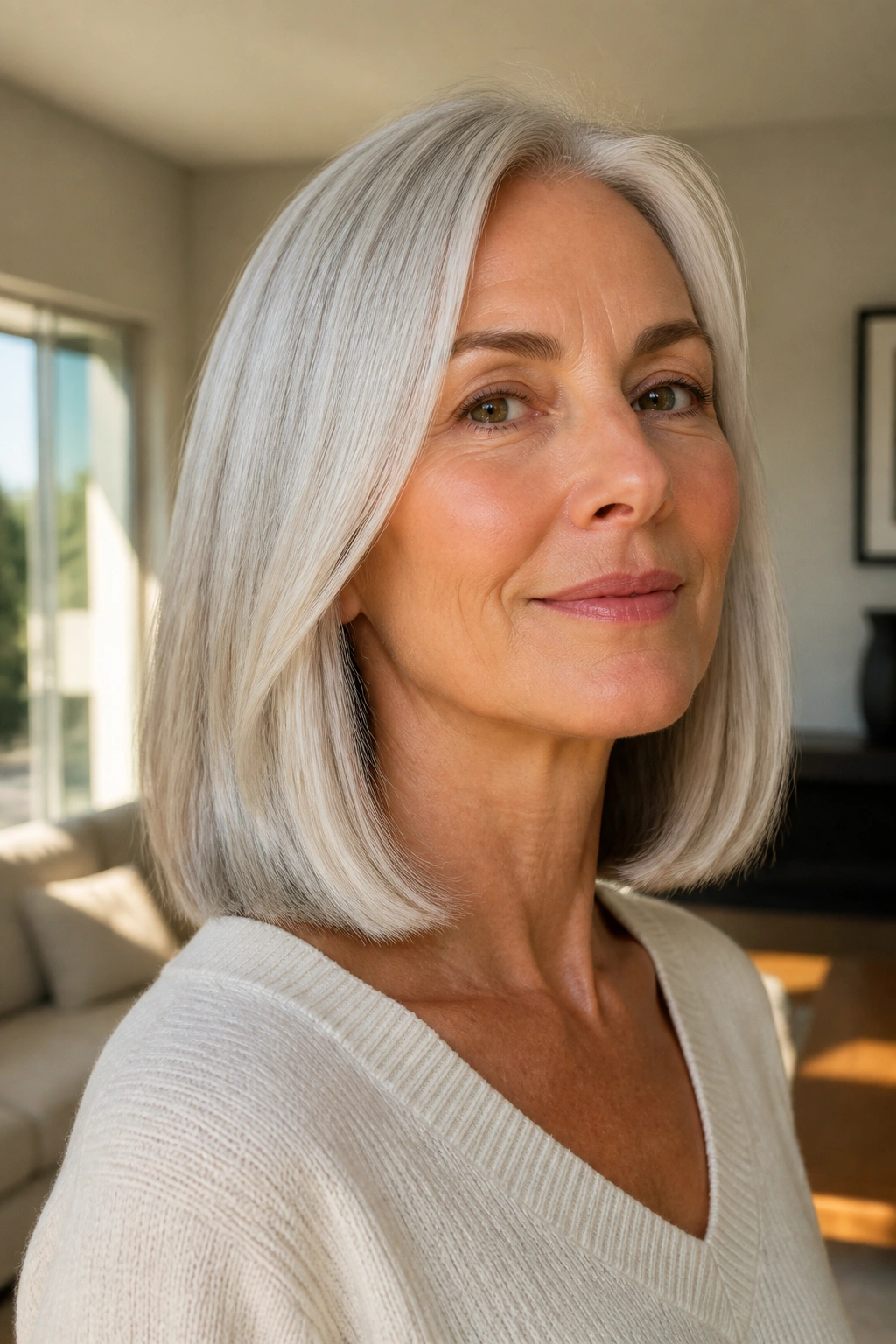
Why does a blunt collarbone cut look so good on women over 50? Because it acts like a frame. The line is clean, the ends look full, and the whole style gives the impression of thicker hair even when the actual density is modest.
This is the cut I reach for when someone tells me their hair has gone limp at the bottom. One straight edge can do more for fullness than five random layers. It also plays nicely with silver hair, which tends to show shine better when the outline is crisp. If the hair is very thick, the stylist can sneak in a touch of interior weight removal so the ends do not feel like a shelf.
How to Ask for It
- Keep the length at the collarbone or just above it.
- Ask for minimal layering through the ends.
- Request a slight bend with a round brush, not a hard flick.
- Trim every 6 to 8 weeks so the line stays sharp.
A little smoothing cream goes a long way here. Too much product makes the ends piecey, and that ruins the whole point.
3. Feathered Layers With Side-Swept Bangs
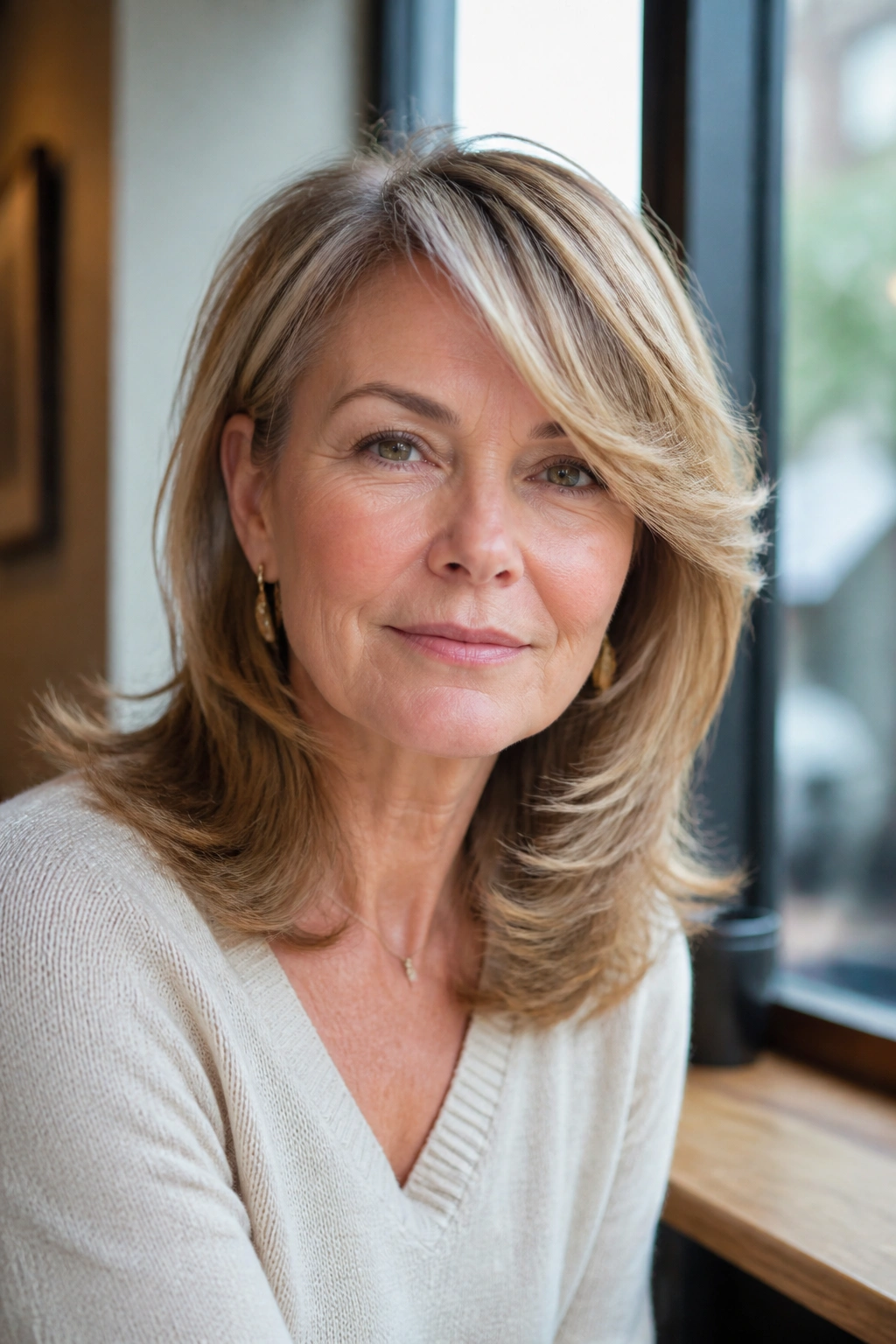
Feathered layers can go wrong fast if they’re overdone. Done well, though, they soften the whole face and make medium length hair feel lighter without looking thin. Side-swept bangs help even more, especially if you wear glasses or prefer a cut that doesn’t sit heavily across the forehead.
The trick is keeping the feathering modern enough to look fresh. The layers should move, not fray. I like them starting around the cheekbones and drifting down through the shoulders. That shape works on straight hair, wavy hair, and gray hair that has a little bend to it.
A side-swept bang should be long enough to tuck behind the ear on a bad day. Short bangs are a commitment. Long bangs are forgiving. If your hairline likes to split in the middle, blow-dry the bangs in the opposite direction first, then sweep them over once they cool.
4. Angled Lob That Lifts the Jawline
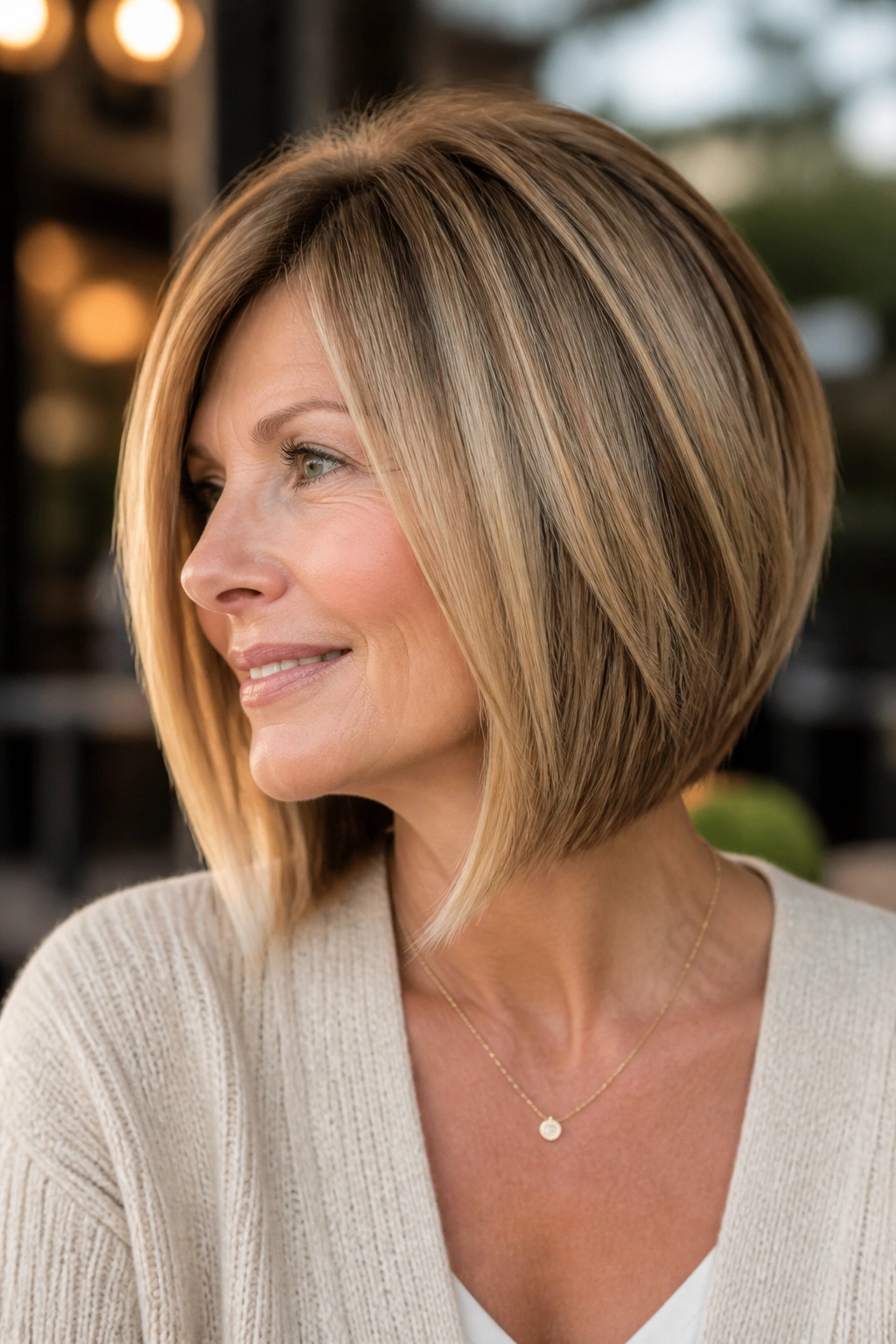
If your hair tends to flip out at the shoulders, an angled lob can fix the shape instead of fighting it. The back sits a touch shorter, the front angles forward, and the eye naturally follows that clean downward line toward the collarbone.
That angle does a sneaky bit of work. It makes the neck look longer and the jaw a little cleaner. On fuller faces, that can feel lighter. On square faces, the front softness keeps the cut from looking severe. Thick hair especially benefits from the longer front pieces because they pull some of the bulk out of the sides.
A good angled lob should not look dramatic from across the room. If the front is six inches longer than the back, it starts to read as a statement cut. One to two inches of difference is usually enough. That’s the sweet spot.
5. Soft Shag With A Wispy Fringe
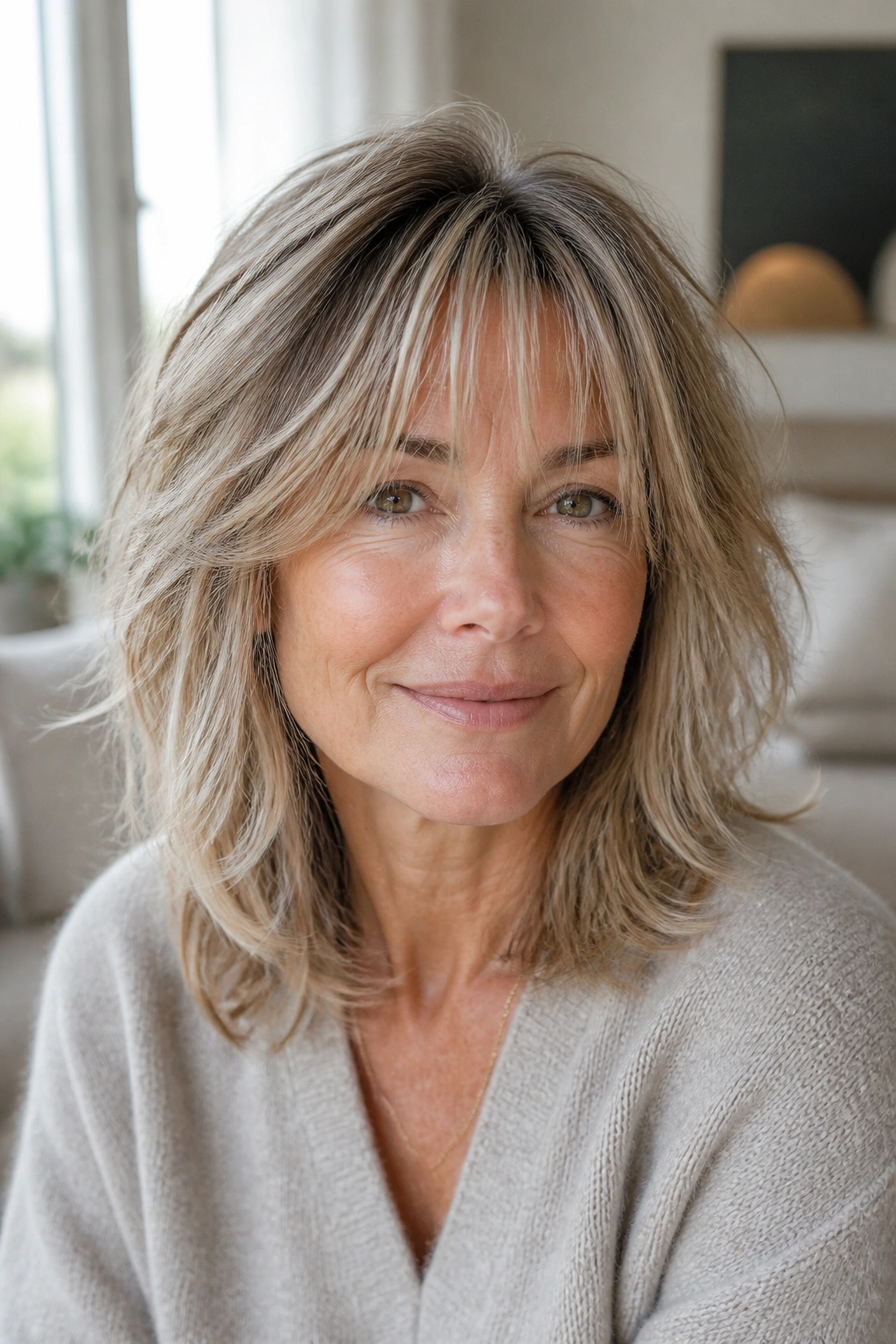
A shag sounds bold, but a soft shag is one of the easiest ways to bring life back into medium length hair after 50. The reason is simple: the cut creates movement at multiple levels, so the hair doesn’t hang in one heavy curtain.
Why It Works On Wavy Hair
Loose waves pick up the layers and show them off. Straight hair gets texture without needing a huge amount of heat styling. Gray strands, which can sometimes feel coarse, get broken up by the piecey ends, so the color looks more dimensional. The fringe should stay light and a little broken up — not chunky, not blunt.
How to Style It
- Scrunch in a light mousse on damp hair.
- Air-dry for a looser finish or use a diffuser on low heat.
- Use a 1-inch curling iron only on the front pieces if the fringe falls flat.
- Finish with a tiny bit of texture spray at the ends.
A soft shag is not for someone who wants a sleek, polished sheet of hair every day. It wants a little roughness. That’s the point.
6. Wavy Shoulder Cut With A Loose Finish
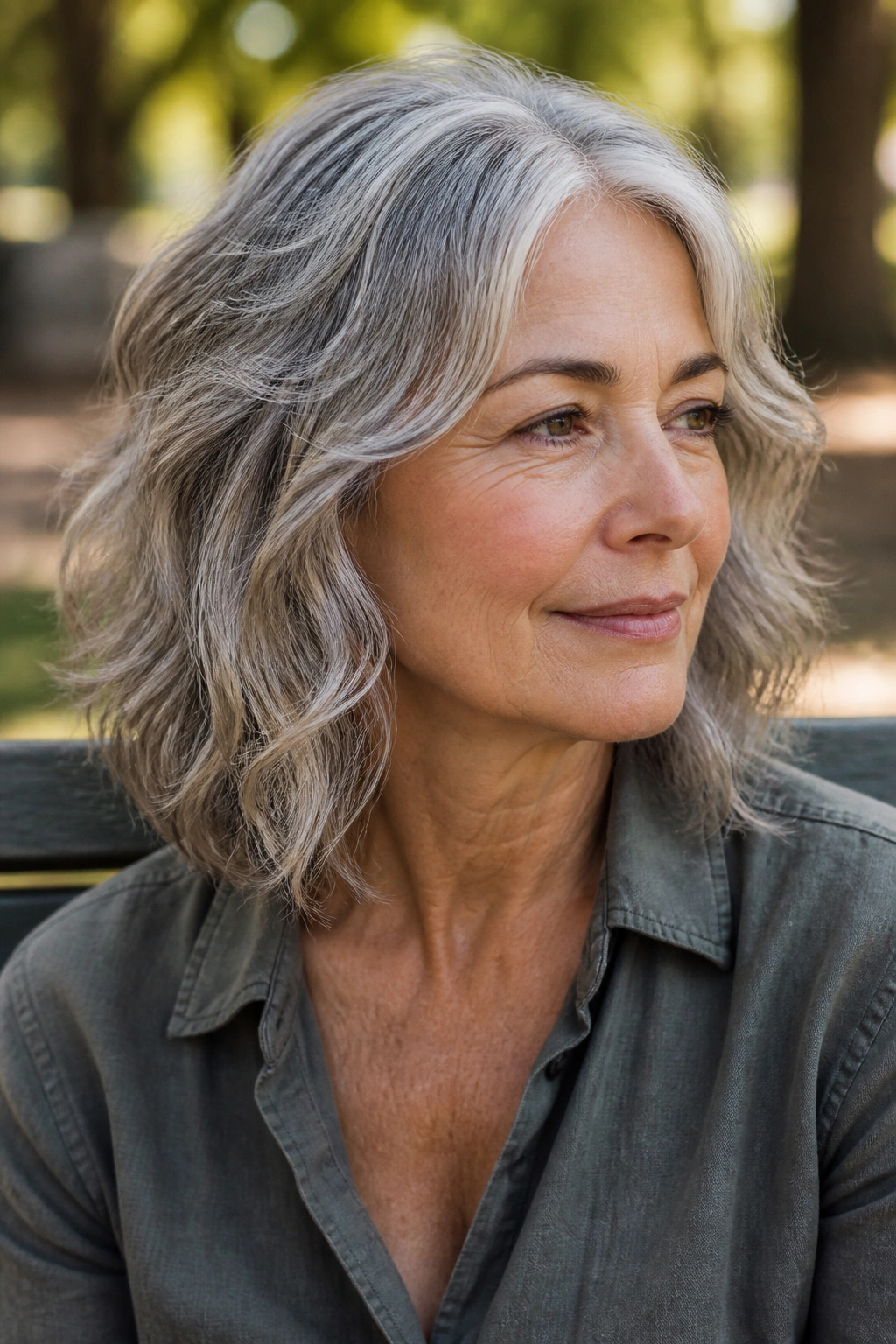
There’s something especially flattering about a shoulder-skimming cut that still moves like it has air under it. The ends brush the shoulders, the wave bends softly instead of snapping into a curl, and the whole look feels lived-in without looking messy.
This style is a good fit for women whose hair has a natural bend but not enough wave to behave like a full curl pattern. A little mousse, a heat protectant, and a 1.25-inch iron are usually enough. The goal is a bend, not a barrel curl. If you curl every piece in the same direction, it starts to look too set. Alternate the directions and brush it out once it cools.
Gray hair often looks especially good with this kind of finish because the loose movement breaks up any stiffness in the color. The cut lets the silver read as part of the texture, not just as a color change. And yes, that matters more than people admit.
7. Sleek Middle-Part Lob With Shine
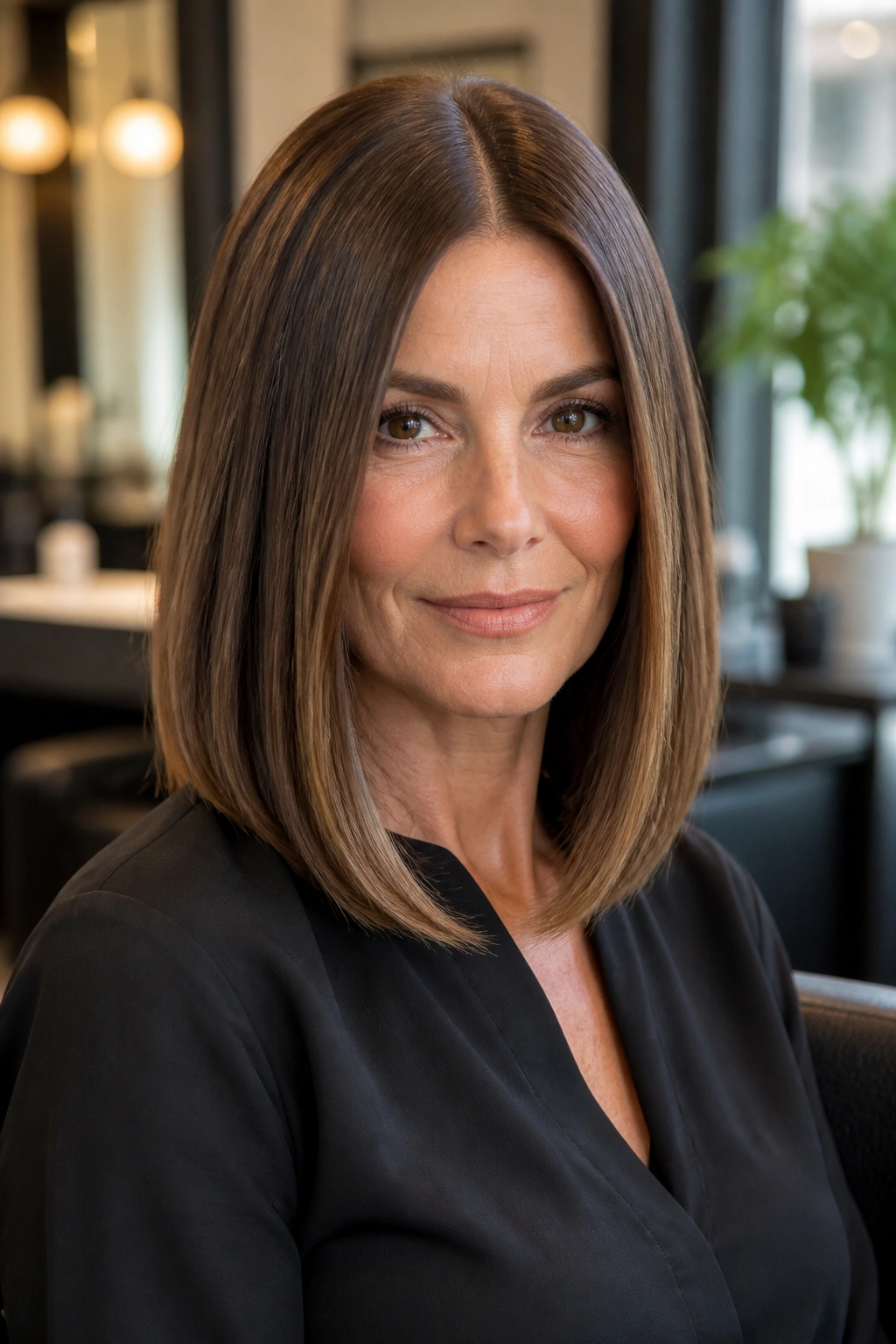
Not every medium cut needs movement. A sleek lob with a middle part can look sharp, calm, and surprisingly soft at the same time, especially when the hair has decent density and the ends are kept blunt.
This style depends on one thing: shine. A smooth surface makes gray and silver strands look intentional. The middle part draws the eye down the center, which can work beautifully on oval and heart-shaped faces. If your face is more round, a middle part still works, but the part can sit a half inch off center so it doesn’t feel too symmetrical.
I like this cut for women who hate fussy styling. Blow-dry with a flat brush, tuck the ends under just a touch, and stop there. No teasing. No stiff hairspray helmet. The only catch is that it asks for regular trims. A blunt line loses its charm fast once the ends start looking see-through.
8. Curly Layered Cut That Keeps Shape
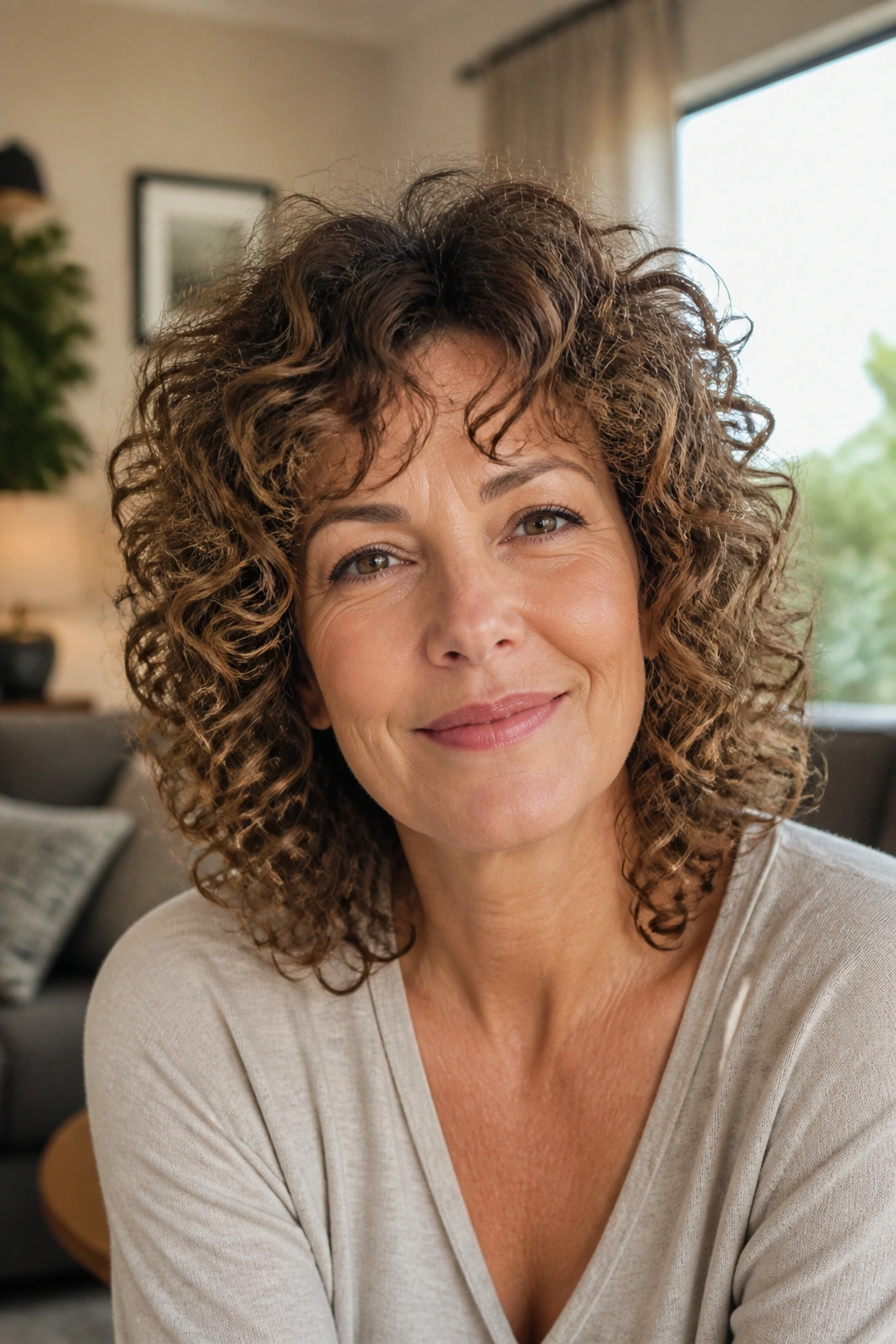
Curly hair after 50 can be gorgeous at medium length, but it needs a cut that respects the curl pattern. Chop it bluntly and the shape can balloon at the sides. Add the right layers, though, and the whole thing springs into place.
The best version of this cut is usually done with the hair dry or at least mostly dry, because curls shrink in ways that surprise people. Layers should support the curl, not scatter it. Ask for them to be placed where the curls naturally bend, which keeps the silhouette from getting pyramid-shaped.
What To Ask The Stylist For
- Layers that follow the curl pattern.
- Length that sits between the chin and shoulders.
- Face-framing pieces that open the cheekbones.
- Minimal thinning with scissors; too much can create frizz.
If your curls are tight and springy, a medium cut can actually make them look fuller than longer hair does. The shape gets rid of drag. That’s the whole trick.
9. Bob-Lob Hybrid With Face-Framing Pieces
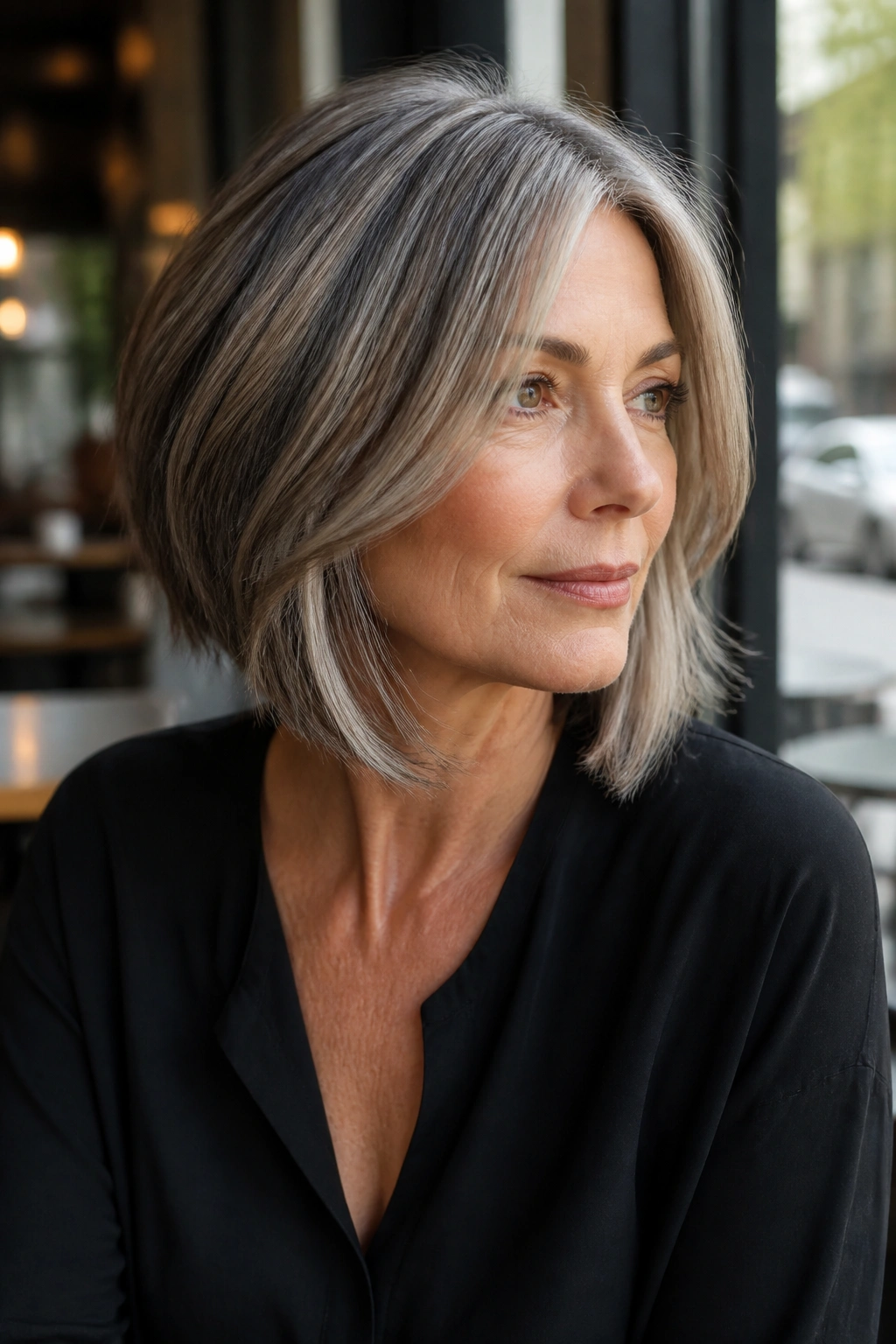
What if you can’t decide between a bob and a lob? Get the shape that borrows from both. A bob-lob hybrid usually sits just below the chin in the back and skims the collarbone in front, which gives you the neatness of a bob with a little more room to move.
This is a smart cut for women who want structure but don’t want a severe line around the jaw. The face-framing pieces can start around the lips or cheekbones, depending on how much softness you want. That small front shift changes everything. It pulls attention upward and keeps the cut from feeling boxy.
Best For
- Fine to medium hair that needs shape.
- Women who wear glasses and want the temples to stay clear.
- Anyone growing out a shorter bob.
- People who want easy half-up styling.
A round brush and a fast bend at the front are usually enough. It does not need to be blown out to perfection every single day, which is part of its charm.
10. Silver Asymmetrical Cut With A Quiet Edge
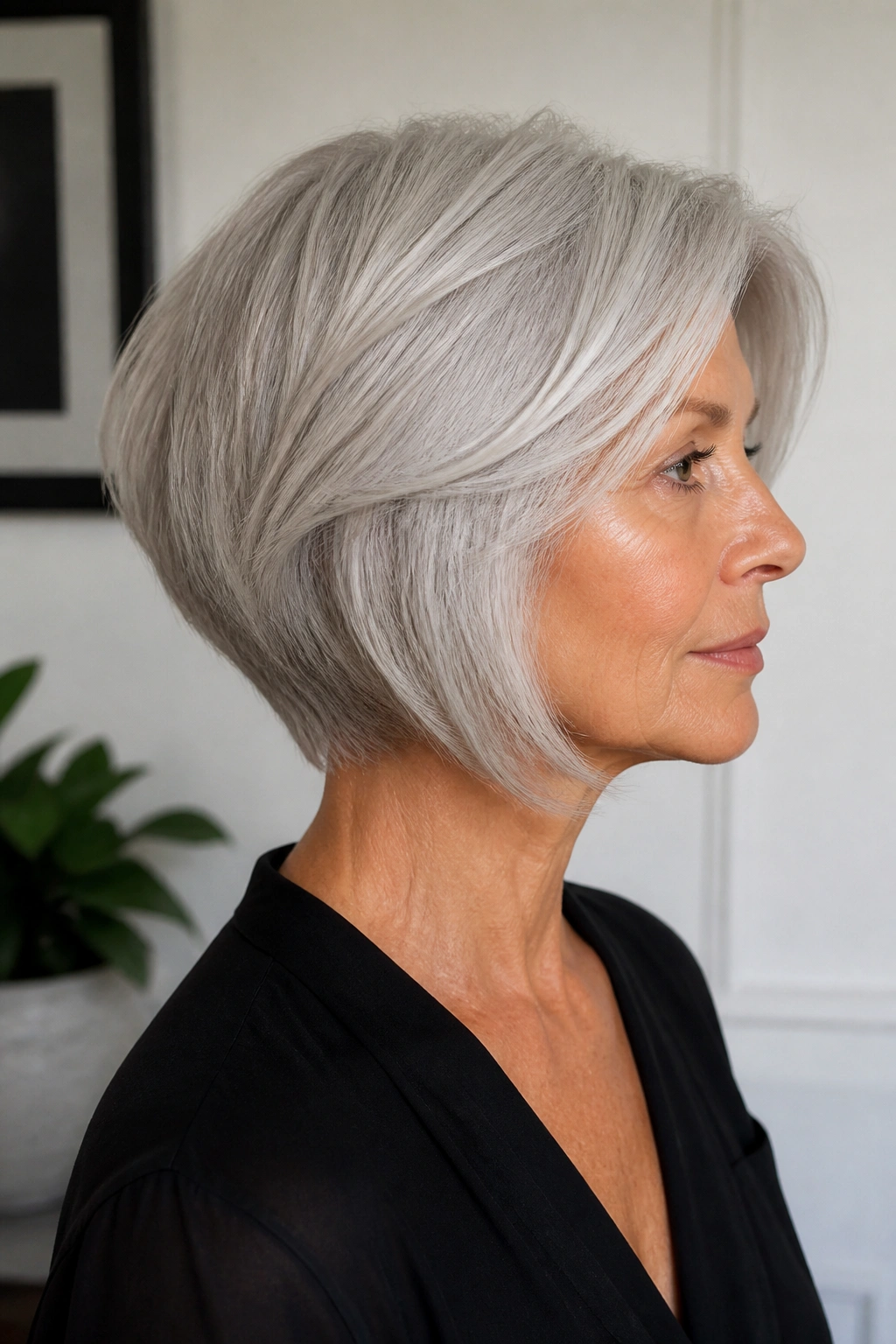
An asymmetrical cut can sound edgy in a way that scares people off, but it doesn’t have to feel dramatic. On medium length hair, a slight asymmetry — one side a bit longer than the other — gives gray or white hair a sharp, modern outline without turning it into a costume.
This cut works best when the difference is subtle. A half-inch to an inch is enough. More than that, and you start chasing attention instead of shape. The softer side can skim the jaw while the longer side brushes the collarbone, which creates a line that feels deliberate and easy to wear.
I like this one on women with strong cheekbones or a confident style. It pairs well with silver hair because the color already has presence. The haircut just gives it a better frame. If you want low drama but not boring, this is a solid place to land.
11. Shattered Layers For Thin Hair
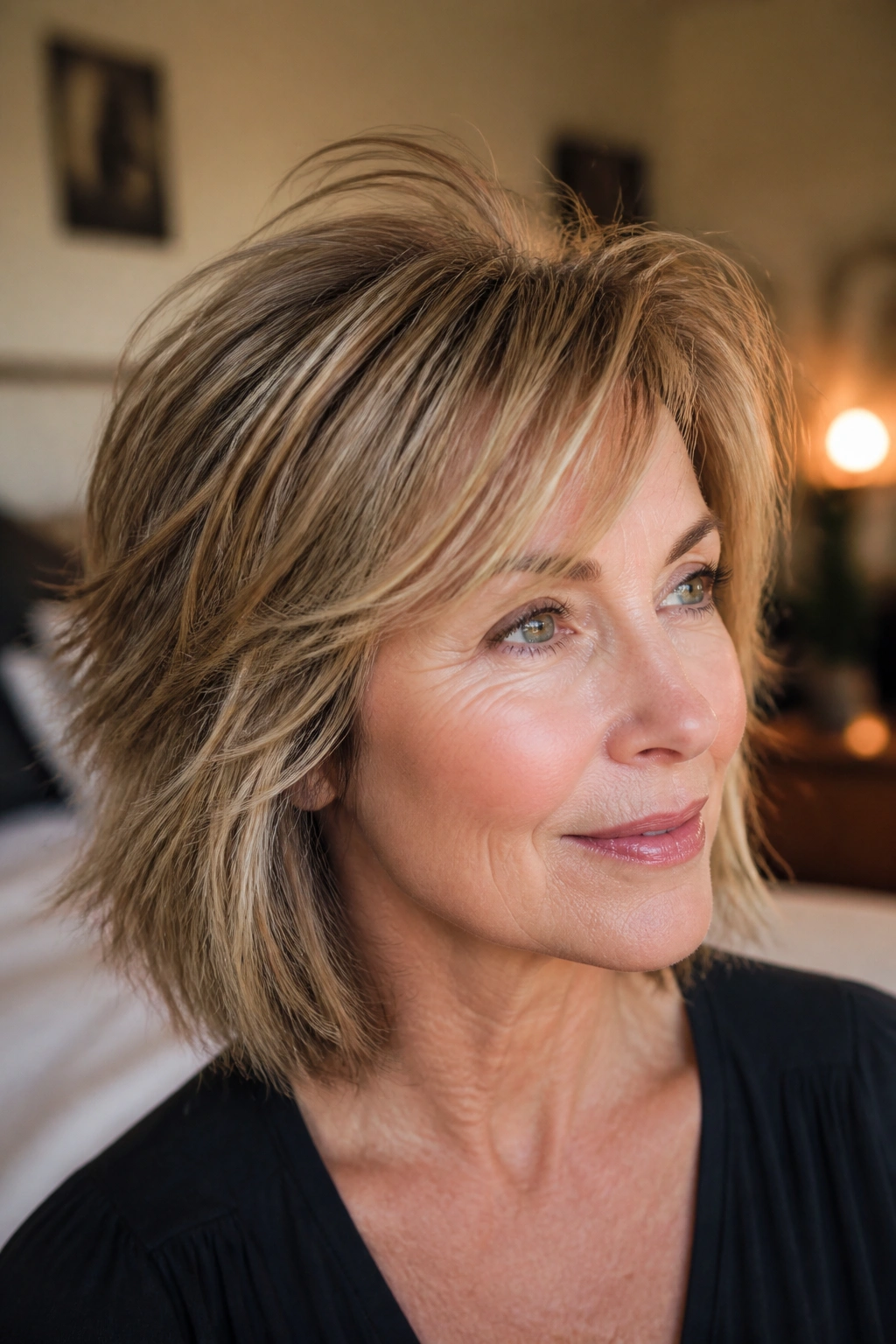
Thin hair needs a careful hand. Too many short layers and you end up with see-through ends and a puff at the crown. Too few layers and the whole thing lies flat. Shattered layers sit somewhere in the middle, breaking up the density just enough to give the hair lift and shape.
The key is where the texture is removed. Bulk should come out inside the cut, not at the perimeter. That keeps the outer edge looking full. On medium length hair, especially around the over-50 range where strands can become finer, this makes a big difference.
Watch For These Mistakes
- Over-thinning the ends.
- Cutting too many short layers around the crown.
- Skipping a styling product with light hold.
- Leaving the length past the shoulders if the hair is already sparse.
A small root-lifting spray can help, but the haircut has to do most of the work. If the cut is wrong, no amount of product fixes it for long.
12. Rounded Cut With Inward Ends
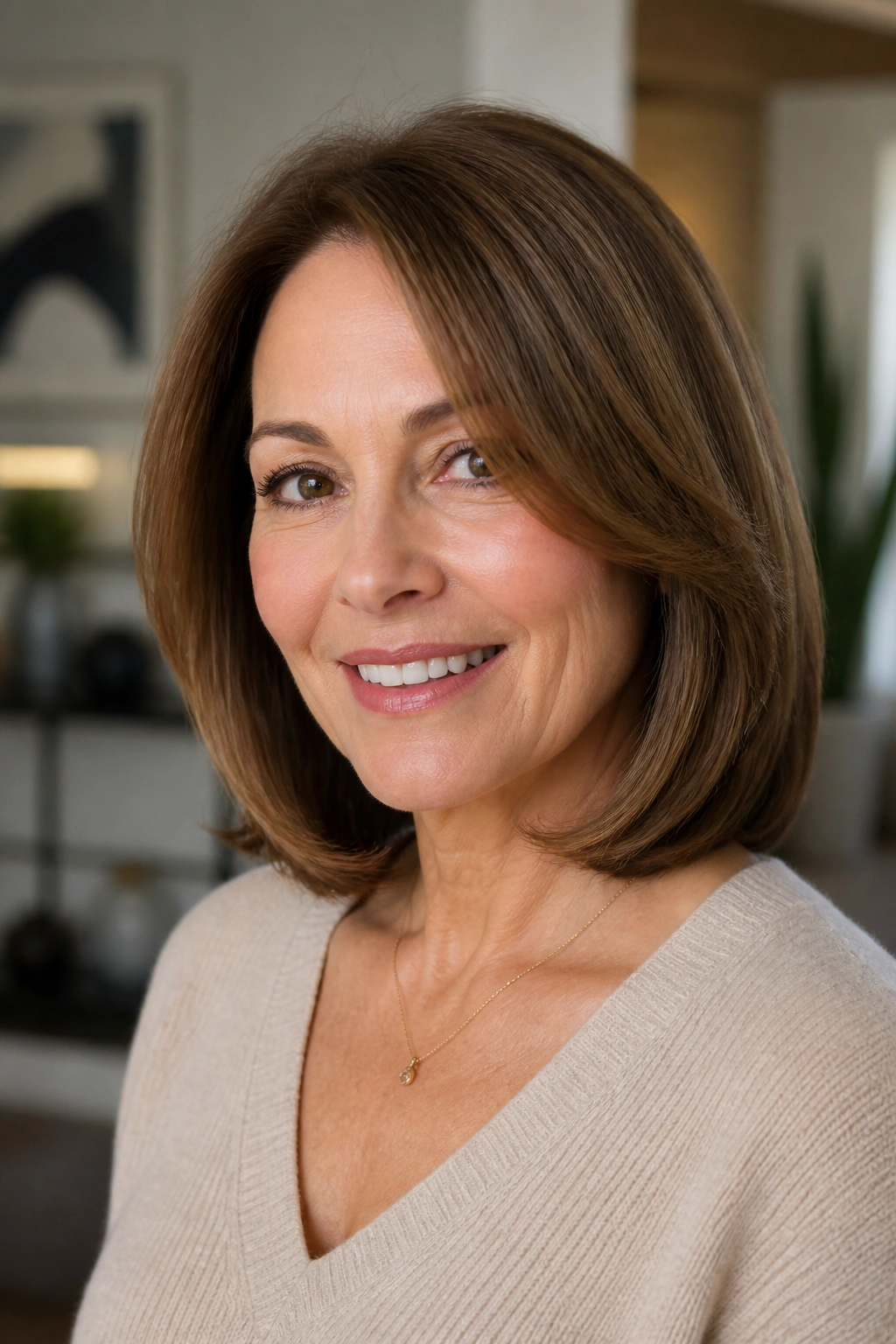
A rounded cut has a softer mood than a blunt one. The edges curve inward a little, usually with the help of a round brush or a blow-dry using a brush that hugs the ends under the chin or collarbone.
This shape flatters women who want the face to look a little more lifted. The inward bend pulls the eye up instead of out. It also keeps medium length hair from kicking out at the sides, which can happen after a few weeks of growth. If your hair tends to flare away from the neck, this cut reins it in without looking stiff.
The style is especially useful on straight or slightly wavy hair. On tighter curls, the inward shape can fight the pattern too much. A stylist can still give you a rounded outline, but the styling method needs to match the texture. That part gets overlooked all the time.
13. Long Layers With Curtain Bangs
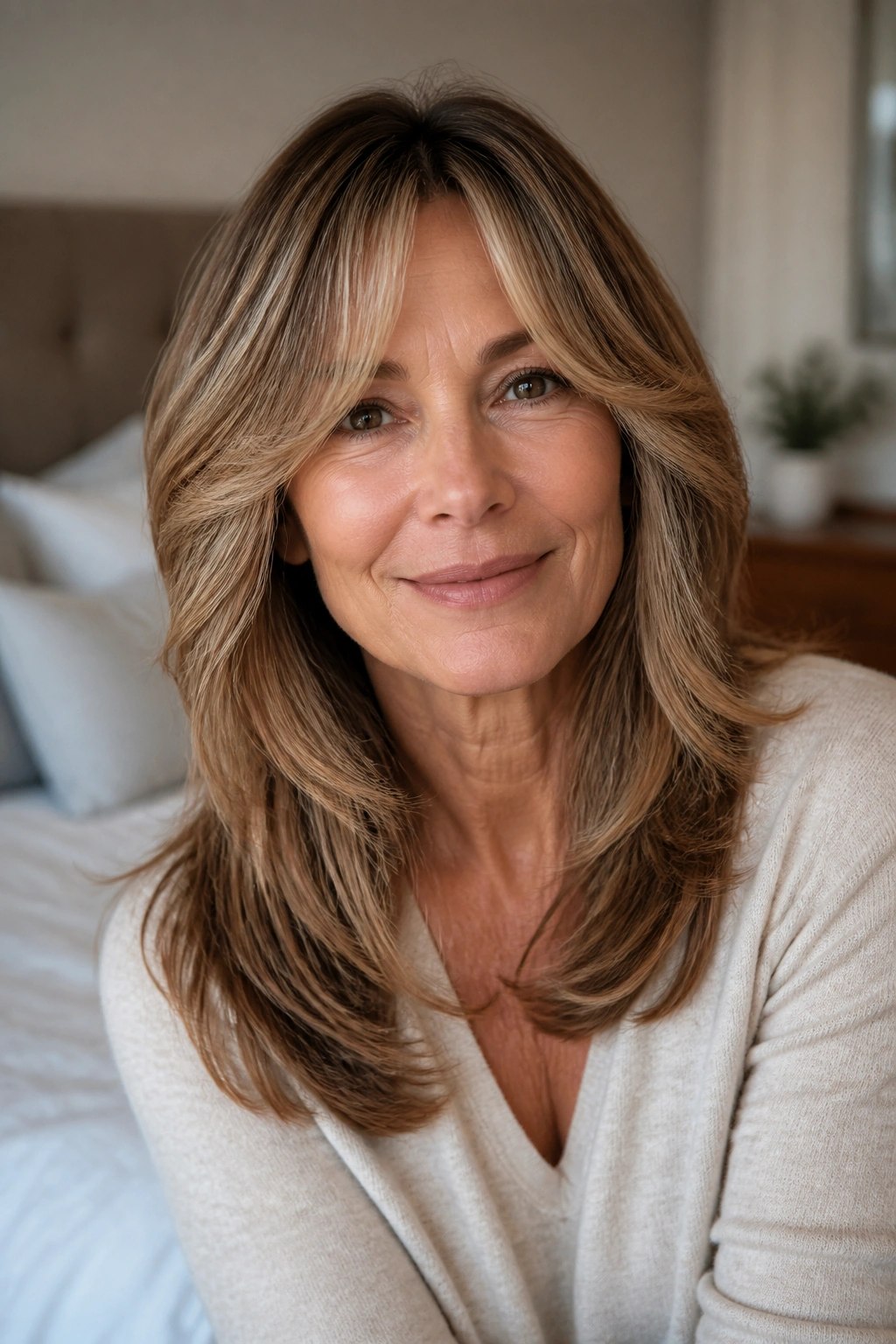
Curtain bangs still work because they solve a real problem: they soften the forehead without trapping the face behind a thick fringe. On medium length hair, the bangs melt into long layers and keep the whole cut feeling open.
The starting point matters. Most curtain bangs should begin around the cheekbone or lip line, depending on face shape and how much forehead you want to cover. Shorter starts feel younger and more obvious. Longer starts feel quieter. If you wear your hair tucked behind one ear often, longer curtain bangs usually behave better.
How To Keep Them Lying Right
- Dry the bangs side to side first.
- Set them with a round brush or Velcro roller.
- Avoid heavy oils near the roots.
- Trim before they fall into the eyes.
The rest of the cut can be loose and layered, which gives the bangs a place to disappear when you want them gone. That’s the beauty of the style.
14. Salt-And-Pepper Tousled Waves
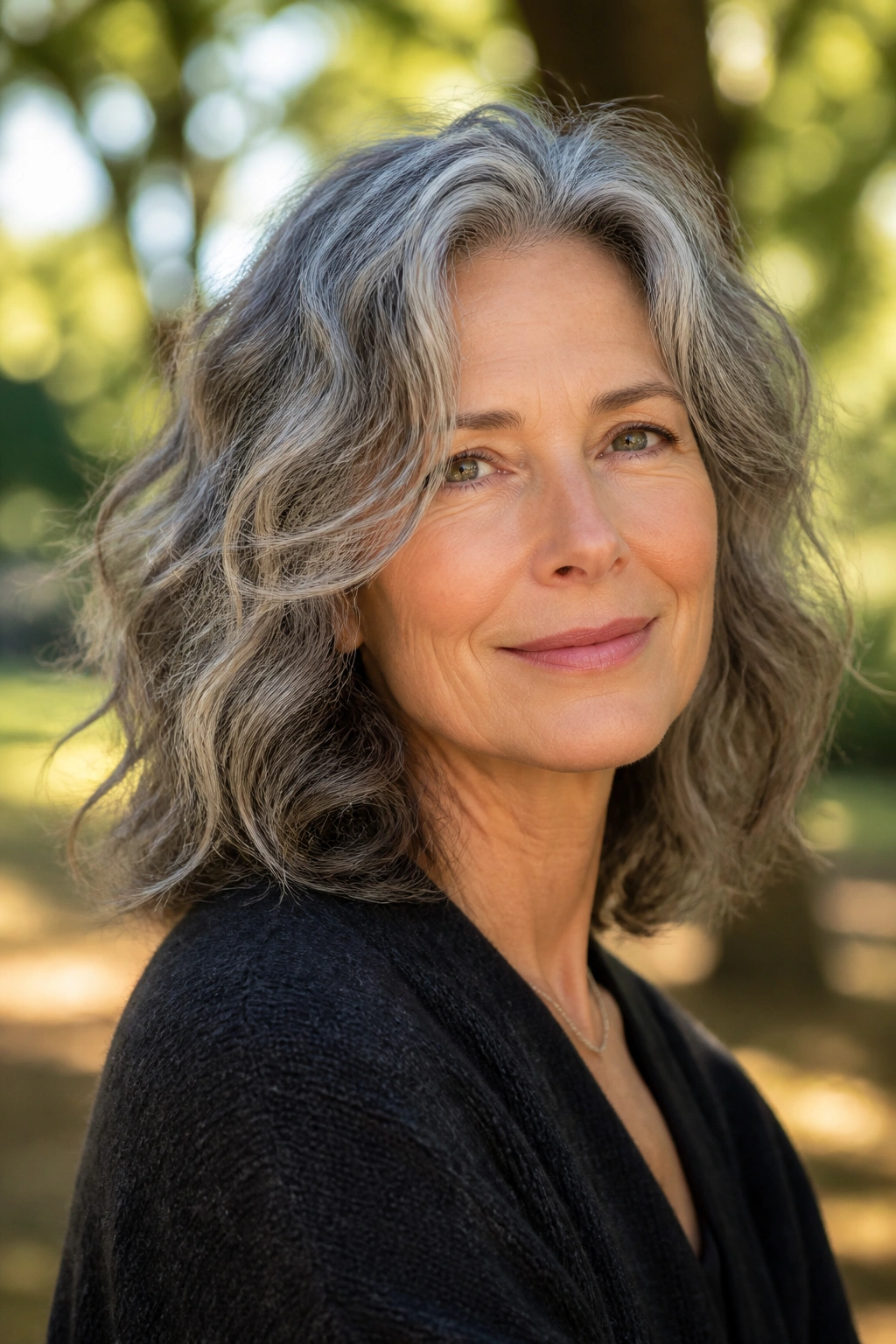
Salt-and-pepper hair looks especially good when the waves aren’t too perfect. A little bend, a little lift, a little roughness at the ends — that combination makes the mix of dark and silver strands read as texture instead of transition.
This is one of those styles that can be ruined by overcurling. Too much uniform curl makes gray streaks blur together. Uneven waves keep the color visible, and that’s where the interest lives. I prefer a medium cut with a few longer layers so the waves can fall in different directions instead of stacking into one repeated pattern.
A sea-salt spray can help, but use a light hand. Too much and the hair feels gritty. A single pass with a 1-inch iron on random sections is often enough. Let some pieces stay straighter. The contrast is what makes it look real.
15. Brushed-Out Blowout Layers
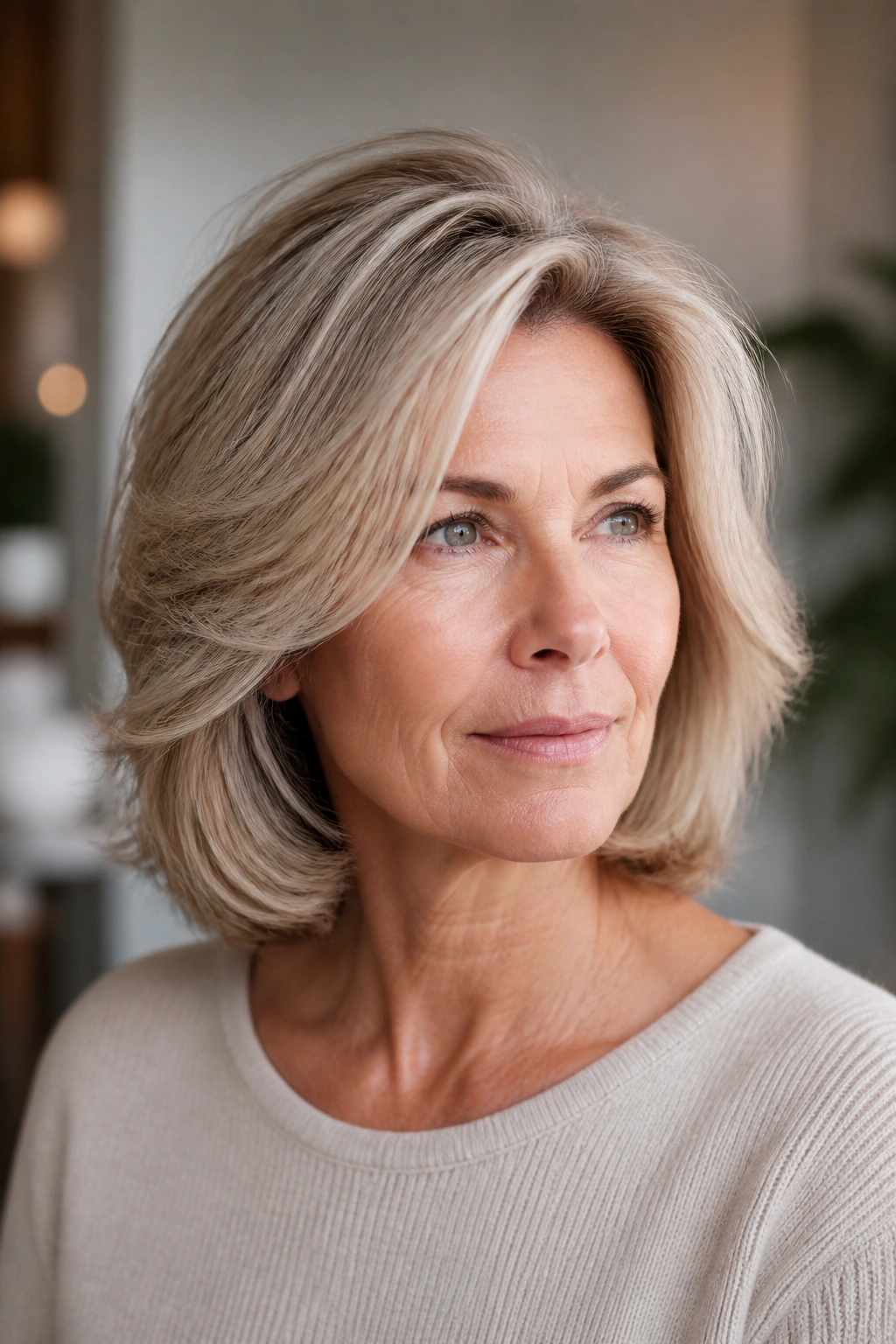
There’s a reason a good blowout still has a loyal following. The shape looks expensive, yes, but more than that, it gives medium length hair a clean swing that feels polished without being stiff. Layers are what keep the blowout from turning helmet-like.
The best version lands just above the shoulders or right at them, with layers around the crown and cheekbones. Those shorter support pieces keep the top from collapsing. A big round brush — 1.5 to 2 inches — helps smooth the ends while giving them a soft curve. After drying, clip the front pieces for a few minutes so they cool in shape.
This style is especially nice for special events, but it does not need to be saved for them. If you like hair that looks done with only moderate effort, this is a good one. The drawback? Humidity will bully it. I wish that were not true. It is.
16. Low-Maintenance Air-Dry Cut

Not every haircut should depend on a blow-dryer. A good air-dry cut has shape built into it, which means the hair looks finished even when you rake in a little cream and walk away.
That means avoiding a flat, heavy perimeter and asking for enough layering to encourage natural movement. The hair should fall into place, not need to be dragged there. If your texture is a mix of straight and wavy, this kind of cut is usually kinder than something that demands daily heat. Gray hair can love it too, since many silver strands dry with a bit more body than the pigment-covered hair did.
Styling Rules That Help
- Use a leave-in conditioner on damp hair.
- Work in a palm-sized amount of curl cream or smoothing cream.
- Scrunch only where the hair wants movement.
- Do not touch it too much while it dries.
Air-dry cuts are not lazy cuts. They are planned cuts. There’s a difference.
17. Soft A-Line Lob With Gentle Length In Front
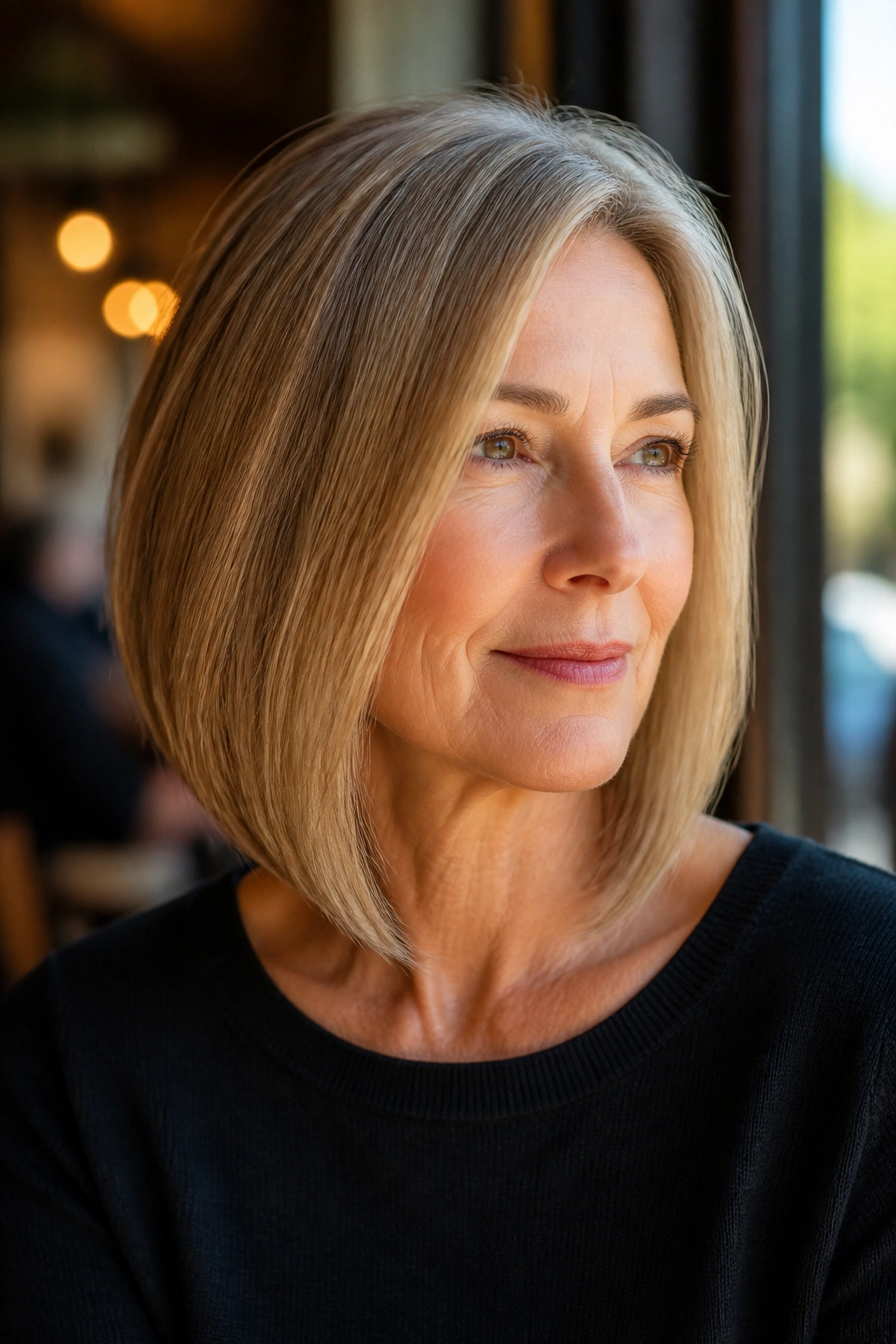
A soft A-line lob gives you the shape of an angled cut without the sharpness of a strong diagonal. The back is a touch shorter, the front is a touch longer, and the whole cut feels easy to wear from week to week.
This works especially well if you want a little neck exposure without going short. The slightly longer front pieces soften the jaw and keep the face from feeling boxy. It’s also one of the easier mid-length shapes to grow out, because the angle can get longer without losing its outline. That matters if you only want to trim every 8 to 10 weeks.
Compared with a dramatic asymmetrical cut, the A-line is calmer. Compared with a blunt lob, it feels less static. That middle ground is why I recommend it so often. It doesn’t shout. It just sits well.
18. Grown-Out Pixie To Bob Transition Cut
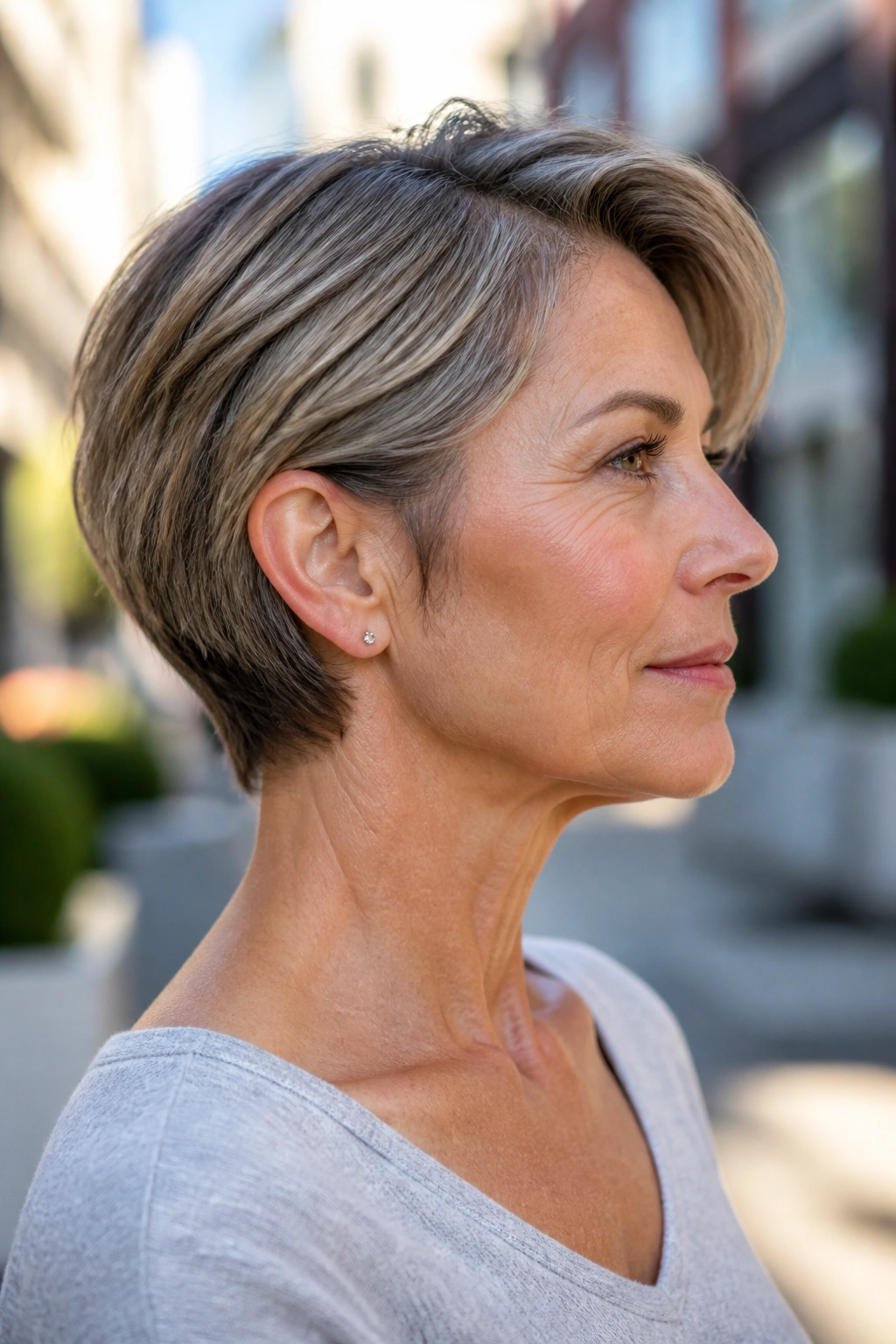
Growing out a pixie can be awkward unless the cut is shaped on purpose. The goal is to make the in-between stage look intentional, not like you gave up halfway through.
A medium length transition cut usually keeps the nape tidy, lets the top layers fall toward the ears, and leaves enough length around the front to tuck or sweep. The secret is balance, not uniform length. You want the back to catch up without letting the whole head turn into a puffball.
How To Ask For It
- Keep the neckline clean and tapered.
- Leave the top long enough to sweep forward.
- Add softness around the temples.
- Trim every 5 to 7 weeks while growing it out.
This kind of cut can be a relief for women who want medium length hair but are starting from something much shorter. It takes patience, though. Hair grows at its own pace. Annoying, I know.
19. Glam Side-Part Waves
A deep side part changes the whole mood of medium length hair. It adds lift at the crown, opens one side of the face, and gives waves a more dressed-up shape without needing a complicated cut.
I like this style when hair needs a little drama in a very wearable way. The part creates height, and the waves fall in soft S-shapes that skim the shoulders. That offset line is doing more work than people realize. It can make the face look longer and the cheekbones look sharper, especially when the hair has shine and the waves are brushed through rather than left crunchy.
If you want the style to last, set the part while the hair is still warm. Use a clip at the crown if you need extra lift. A light mist of flexible hairspray is enough. Too much and the movement disappears. That would be a waste.
20. Tapered Layered Cut For Thick Hair
Thick hair over 50 often needs the opposite of what people think. It doesn’t need to be thinned into submission. It needs weight removed where the bulk builds up and left where the shape should sit.
A tapered layered cut does exactly that. The layers shorten near the crown and lengthen toward the ends, which keeps the volume controlled. Done well, it reduces the triangular look that thick hair can get at medium length. Done badly, it turns the ends fuzzy. That’s why blunt slicing and aggressive razor work are risky here.
Best Styling Approach
- Blow-dry the roots first for control.
- Use a medium round brush, not a tiny one.
- Finish with a smoothing balm on the ends only.
- Avoid piling on mousse near the crown unless the hair is flat.
This cut can look polished even when it air-dries a bit imperfectly. Thick hair is forgiving in that way. The shape just has to be right.
21. Wispy Bangs With Shoulder Length
Wispy bangs can soften a medium length cut without stealing the show. They skim the forehead, break up a strong hairline, and give the face a lighter feel than a full fringe does.
This look works well on straight and slightly wavy hair. On dense hair, the bangs need to stay thin enough to move. Heavy wisps are not wisps. They are just bangs pretending. Ask for fringe that is feather-light through the ends and long enough to blend into the side layers. If you wear glasses, this shape tends to sit more comfortably than a blunt bang line.
A Few Things To Know
- Trim bangs every 3 to 5 weeks.
- Dry them first before the rest of the hair.
- Keep the roots clean; product buildup shows fast.
- Skip this if your cowlick is aggressive and refuses to cooperate.
I’m picky about bangs, and for good reason. When they’re wrong, you see them all day. When they’re right, you barely think about them.
22. The Shoulder-Skimming Cut That Stays Polished
If I had to pick one medium length shape that keeps making sense, it’s a shoulder-skimming cut with soft internal layers and a clean outer line. The length gives you movement. The outline keeps the hair from drifting into chaos. That combination is hard to beat.
This is the cut I recommend when someone wants ease more than drama. It suits gray hair, fine hair, thick hair, and hair that has gone a little dry at the ends. The shape grows out gracefully, which saves you from that awkward stretch where every extra week starts to look accidental. A small face frame around the cheekbones keeps it from feeling plain, and a one-inch bevel at the ends is enough to stop the cut from sitting dead straight.
I keep coming back to this one because it works in real life. Not just on wash day. Not just after a salon blowout. Real life. The kind where you tie it back for errands, wear it down for dinner, and still want it to look like you meant it.
A trim every 8 to 10 weeks keeps the line tidy. After that, the style does the heavy lifting on its own.
