



Fine flat hair over 40 usually does not need more length. It needs shape. The right cut can make the crown sit higher, keep the ends from looking see-through, and turn gray strands into something crisp instead of limp.
That’s the part people get wrong most often. They keep the hair long, then ask for layers because they want movement, and the whole thing ends up softer in the wrong places. Fine hair rarely wants endless thinning. It wants a clean outline, a little lift at the root, and enough weight at the edges to stay visible all day.
Gray hair changes the equation a bit, too. Silver strands often feel drier or a touch coarser, and that can be a gift if the haircut has structure. A blunt edge, a smart fringe, or a short crop can make the hair look deliberate instead of accidentally airy.
The good news is that the smartest cuts do most of the styling work for you. A few inches can change everything. So can the angle at the jaw, the way the crown is layered, and whether the perimeter is blunt or feathered just enough to move.
1. Chin-Length Blunt Bob

If fine hair is collapsing at the crown, a chin-length blunt bob is one of the fastest fixes. The blunt edge gives the eye a solid line to follow, which makes the hair look denser even when the actual strand count is modest. On gray hair, that clean edge looks especially sharp because silver reflects light so clearly.
What I like about this cut is how little it has to do to look good. It does not rely on heavy layers. It does not need a lot of round brushing. It just needs a strong perimeter and a little bend under the chin so the ends do not flare out like a broom.
Shorter does not mean severe.
Ask for the bob to hit right at the chin or a hair below it, with the ends kept blunt and only the lightest internal removal if the back feels bulky. If your face is a little wider at the jaw, a tiny curve around the jawline softens the look without stealing the fullness. If your hair sticks flat against your head, a root-lifting mousse at the crown and a quick blow-dry with a small round brush can give you a lift that lasts through the day.
2. Soft Pixie With a Longer Crown
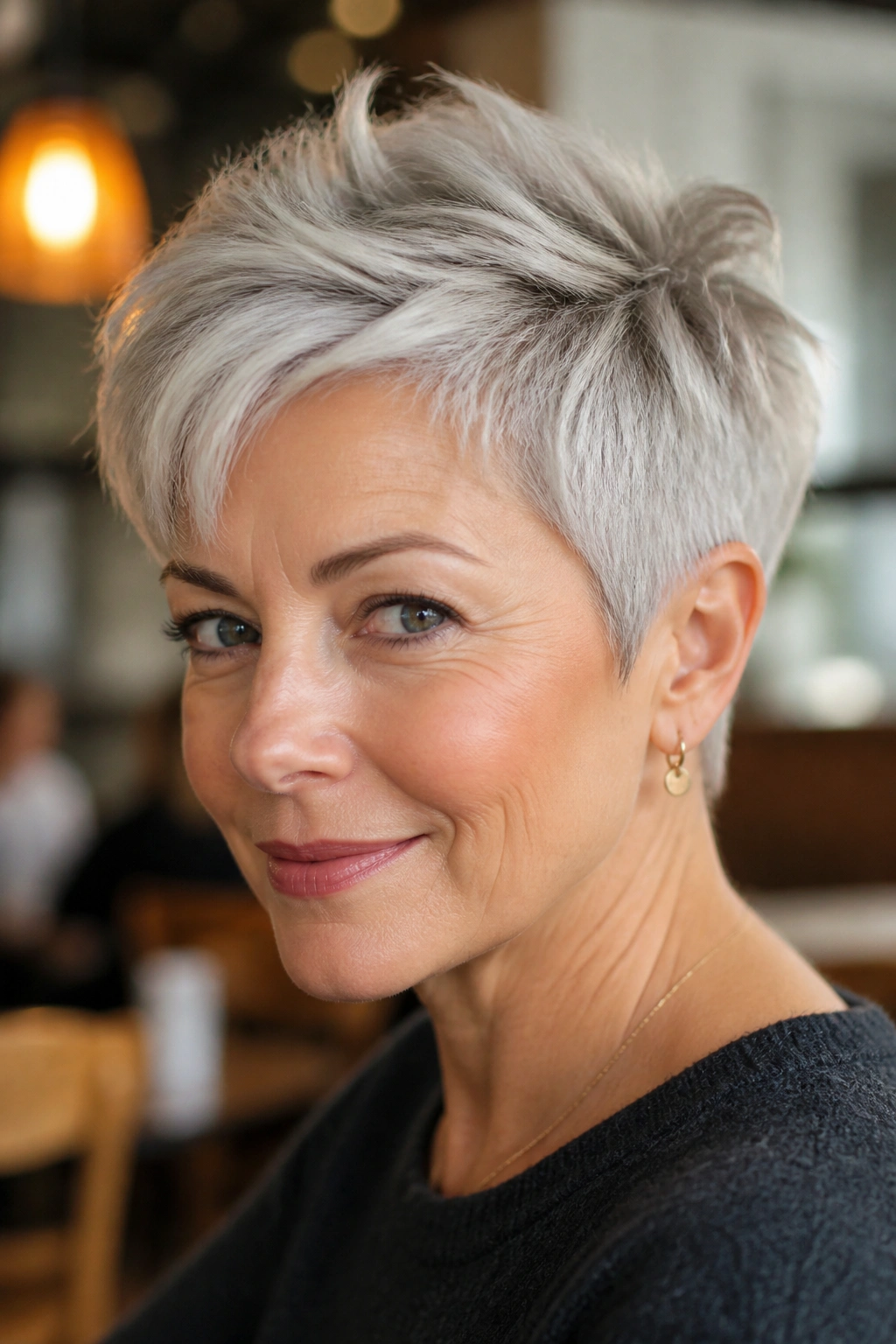
Why do some pixies make fine hair look fuller while others make it look like it disappeared? The difference is usually the crown. A soft pixie with a longer top keeps enough length up there to create height, while the sides and nape stay neat so the whole cut feels tidy, not fuzzy.
Why the Crown Matters
A pixie works on fine hair when the crown has room to move. If the top is cut too short, the hair just lies down and shows scalp. If the top is left a little longer, you can lift it with your fingers, a vent brush, or a dab of styling cream and get actual shape instead of a helmet.
Gray hair often loves this kind of cut. The texture can be a bit more resistant, which means the hair stands up better when it has a little length to work with. That is useful. It gives you body without making the style puff out.
How to Ask for It
- Keep the top long enough to pinch between your fingers, usually around 2 to 3 inches.
- Leave the fringe soft and side-swept, not blunt and heavy.
- Taper the nape close to the neck so the back does not bulge.
- Avoid aggressive texturizing through the crown; that is where fine hair needs its strength.
A soft pixie is not fussy. It just needs a good cut once every 5 to 7 weeks and a light product, not a sticky one. Too much wax turns fine hair greasy in about ten minutes.
3. Collarbone Lob With Ends That Flip In
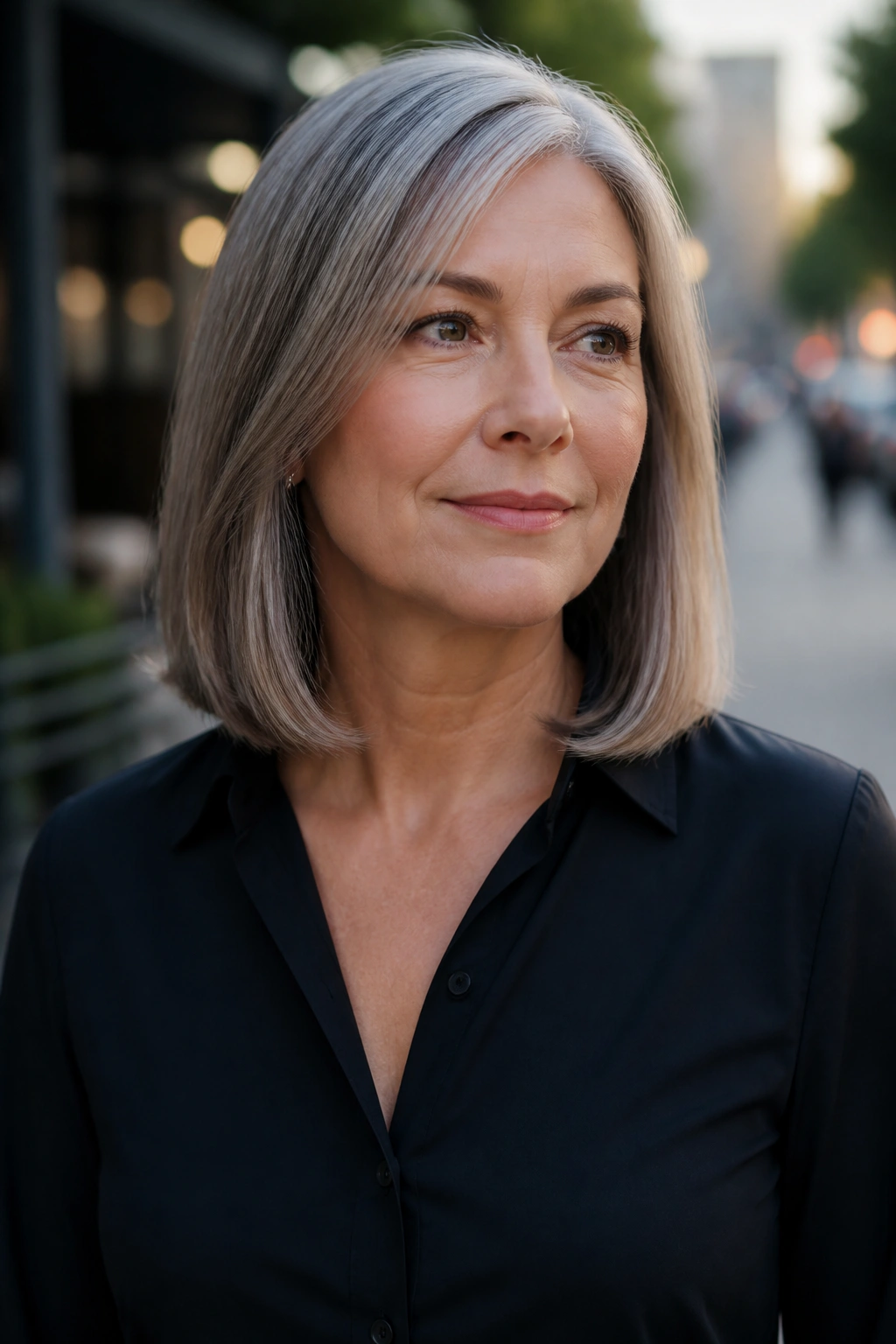
If you hate short hair but your ends look see-through at shoulder length, a collarbone lob is the sweet spot. It gives you enough length to tuck behind the ears, enough weight to keep the hair from floating away, and enough room for a tiny inward bend at the ends so it does not fall flat.
The collarbone is useful because it acts like a shelf. Hair sitting there does not drag the way longer lengths do. It also does not sit so high that the style feels choppy. That makes this cut especially good for hair that is fine but still has a decent amount of density at the back.
A small inward flip matters more than people think.
What Makes It Work
- Keep the base mostly blunt so the ends look full.
- Use only light layering near the front if you need face framing.
- Blow-dry with a 1.25-inch round brush or bend the ends under with a flat iron.
- If your hair is straight and slippery, a bit of mousse at the roots helps the crown hold shape.
This cut is one of my favorites for gray hair that has gone a little wiry at the ends. The longer line keeps it elegant, and the inward movement keeps it from looking boxy. If your hair tends to collapse by lunch, this length is usually a better bet than anything past the shoulders.
4. French Bob With Eyebrow-Grazing Fringe
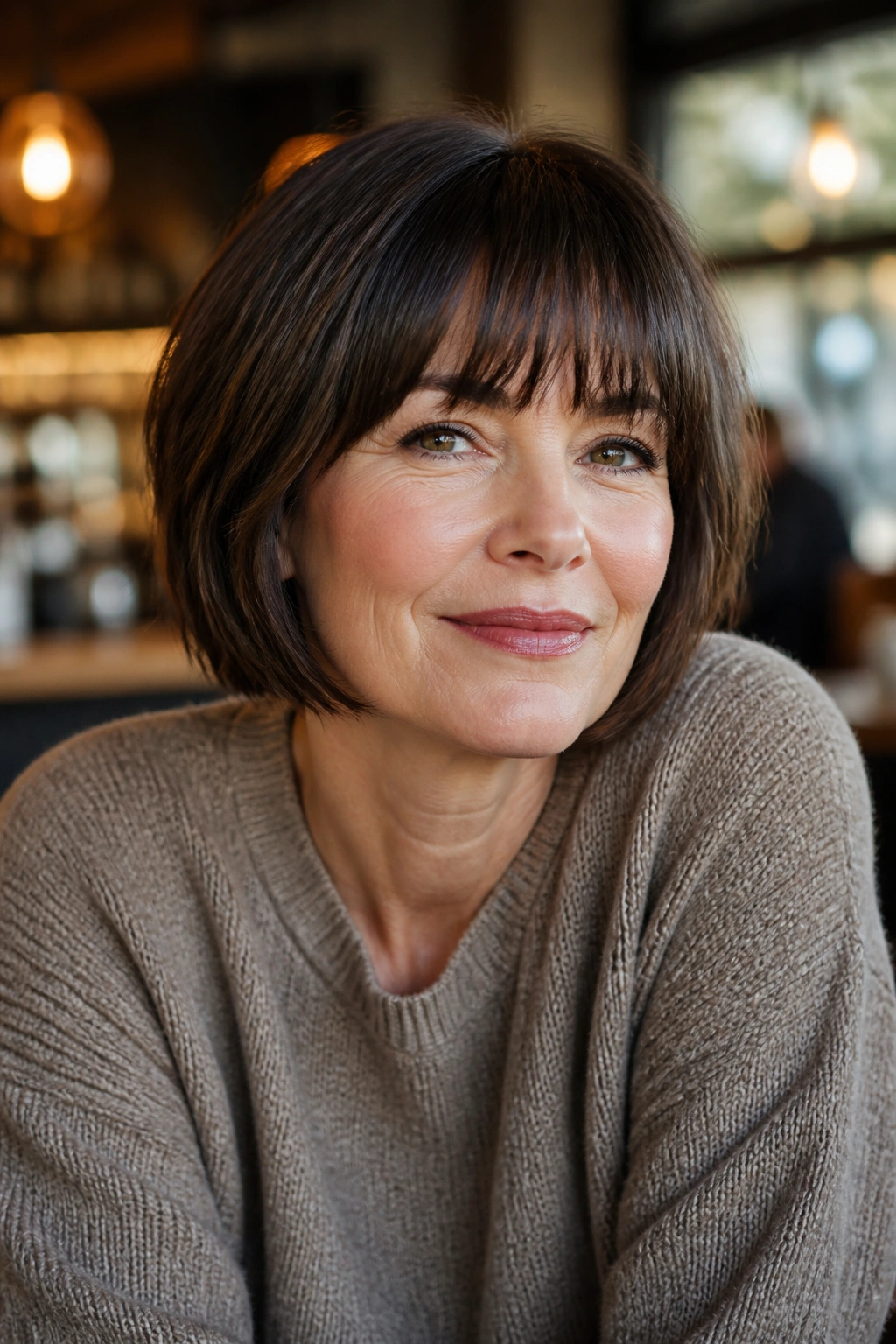
A French bob can be a gift for fine hair because it cuts the dead weight right out of the style. The line sits higher, the fringe shifts attention upward, and the whole cut looks intentional even when you have not done much to it. On gray hair, the contrast between a neat bob and a soft fringe can look especially clean.
The fringe is the part that people either love or fear. I get it. Bangs are a commitment. But a short, soft fringe that brushes the brows does a sneaky bit of work: it breaks up forehead length, adds density at the front, and makes the rest of the hair look fuller by comparison.
You do not want a thick wall of bangs here. That gets heavy fast on fine strands.
Best Details to Ask For
- Keep the bob around lip to chin length.
- Ask for a fringe that is light and slightly piecey.
- Leave the outline blunt, with a soft bevel only at the very ends.
- Trim the fringe every 4 to 6 weeks so it stays off the eyes.
This one suits women who like a little polish without looking overdone. It also works nicely with glasses, especially if the fringe stops just above the frames. If you prefer to air-dry your hair, keep the bob slightly shorter than you think you need; long French bobs can lose their charm when they start grazing the collar and flattening out.
5. Bixie Cut
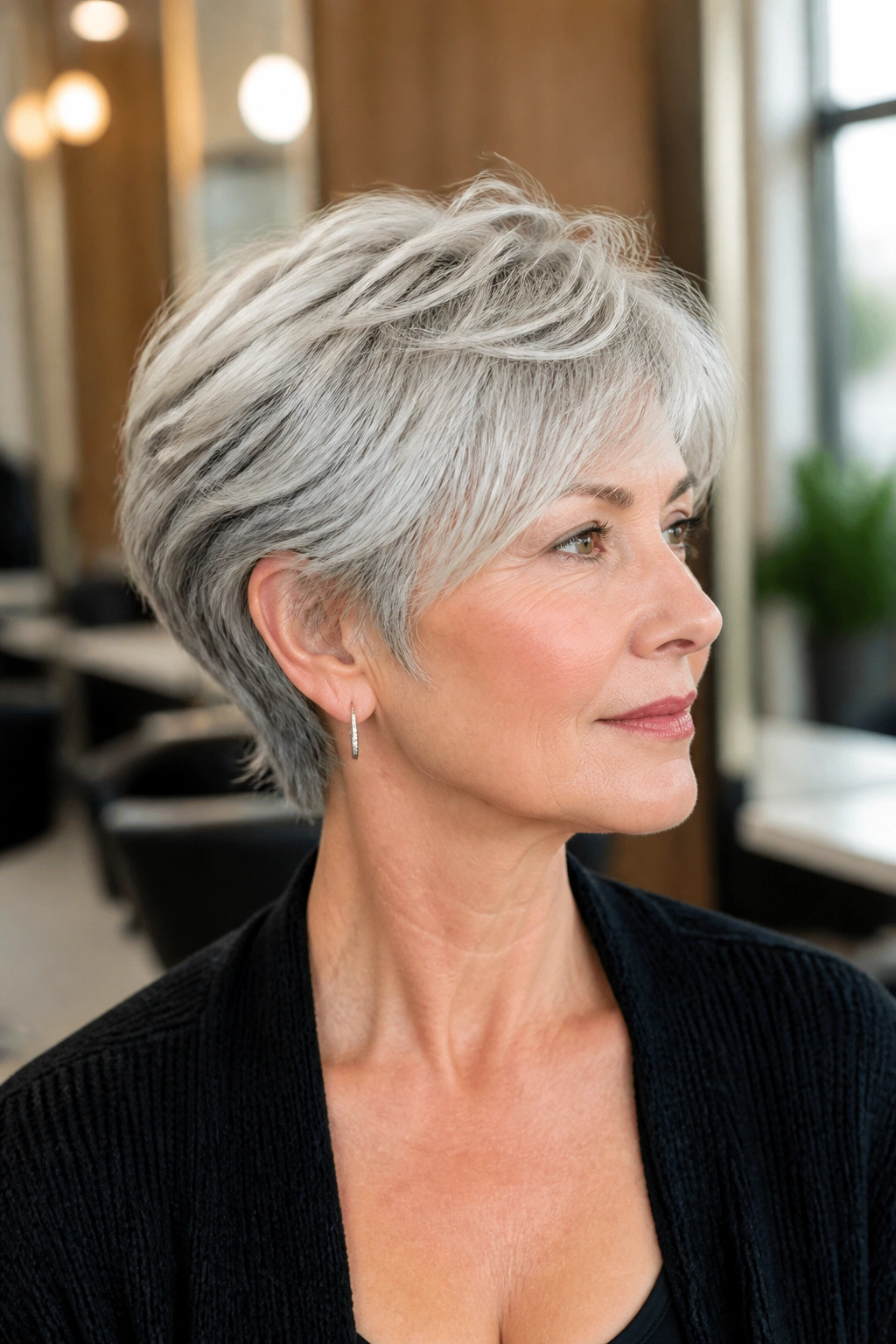
A bixie sits between a pixie and a bob, and that middle ground is exactly why it flatters fine hair. Unlike a strict pixie, it leaves more softness around the ears and sides. Unlike a bob, it does not carry all its weight at the bottom. That balance keeps the shape light without making it sparse.
It is one of those cuts that sounds modern but is really practical. The top has enough length to fluff up with a quick blow-dry. The sides can tuck in around the cheekbones. The nape stays short enough that the style does not feel heavy when the hair gets a little oily on day two.
Good cut. Easy life.
A bixie suits someone who wants movement but does not want to fight long hair every morning. It also flatters gray hair nicely because the short length lets the silver tones show in layers of light instead of hanging in one flat sheet. If your hair is fine but your face likes a bit of softness, this is a smart option.
Ask your stylist to keep the crown mobile, not choppy. That matters. Too many tiny layers make the cut look fluffy in a bad way, and then you are back to square one.
6. Layered Shag With Soft Crown Lift
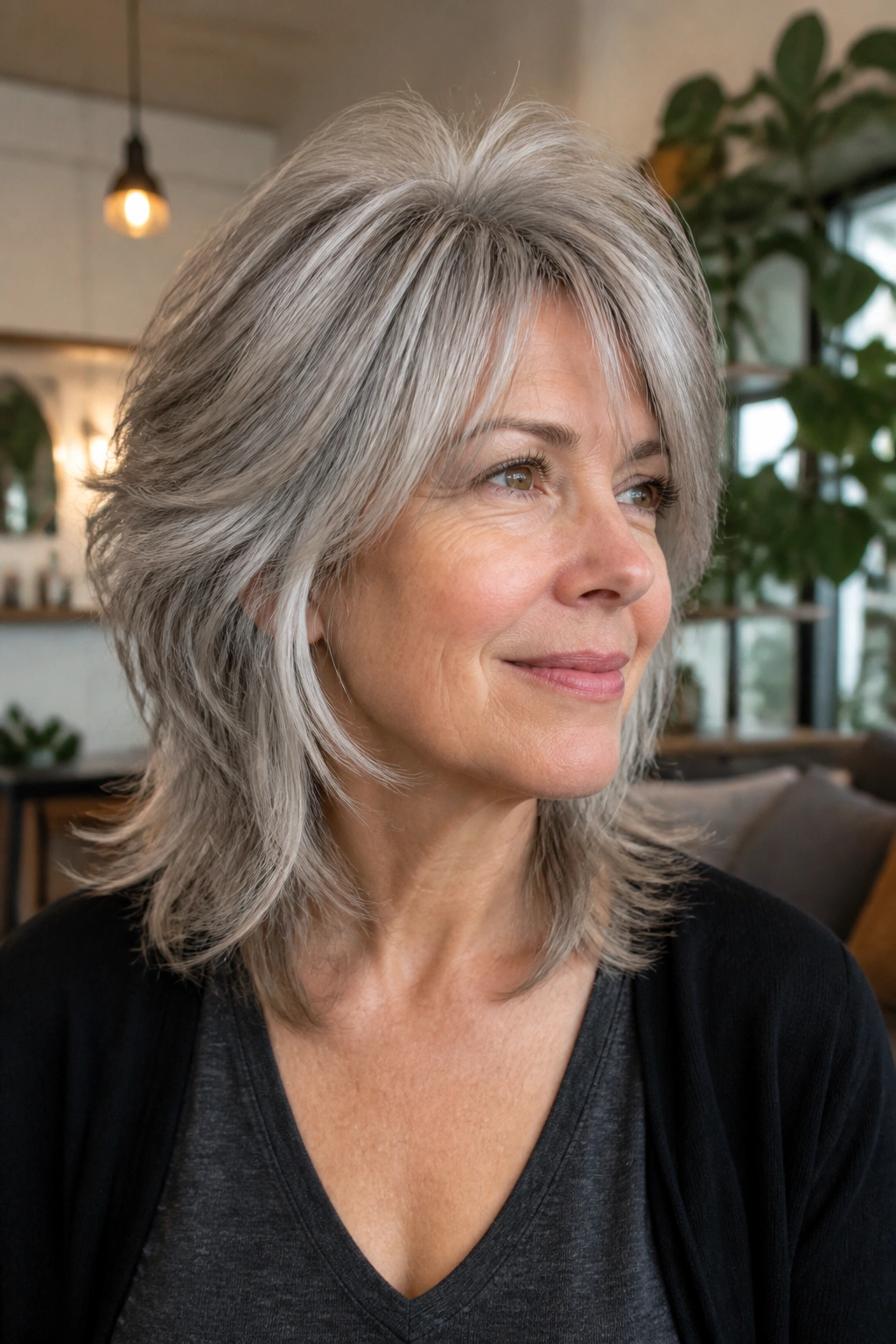
Can a shag work on fine hair? Yes, but only if the layers are controlled. The sloppy version of a shag is a disaster on thin strands. The right version gives you just enough lift at the crown and around the cheekbones to make the hair move without losing its body.
Where the Lift Should Happen
The best shag for fine flat hair keeps the shortest layers near the crown and the front, where they can create the illusion of volume. The lower lengths stay a bit heavier so the ends do not disappear. That way, you get swing and shape instead of wispy ends that fray out by noon.
Where It Should Not Happen
Do not let the stylist carve the whole head into short pieces. That is the fastest way to make fine hair look exhausted. Keep the ends soft, not shredded. If the hair is gray and a little coarse, a light shag can be lovely; if the hair is very fine and soft, the layers need to be subtle or the cut will lose its outline.
A little mousse at the roots, then a diffuser on low heat, usually does the trick. I like this style for women who want texture but still want the cut to sit close to the head. It has more personality than a plain bob, but it still behaves.
7. Side-Parted A-Line Bob
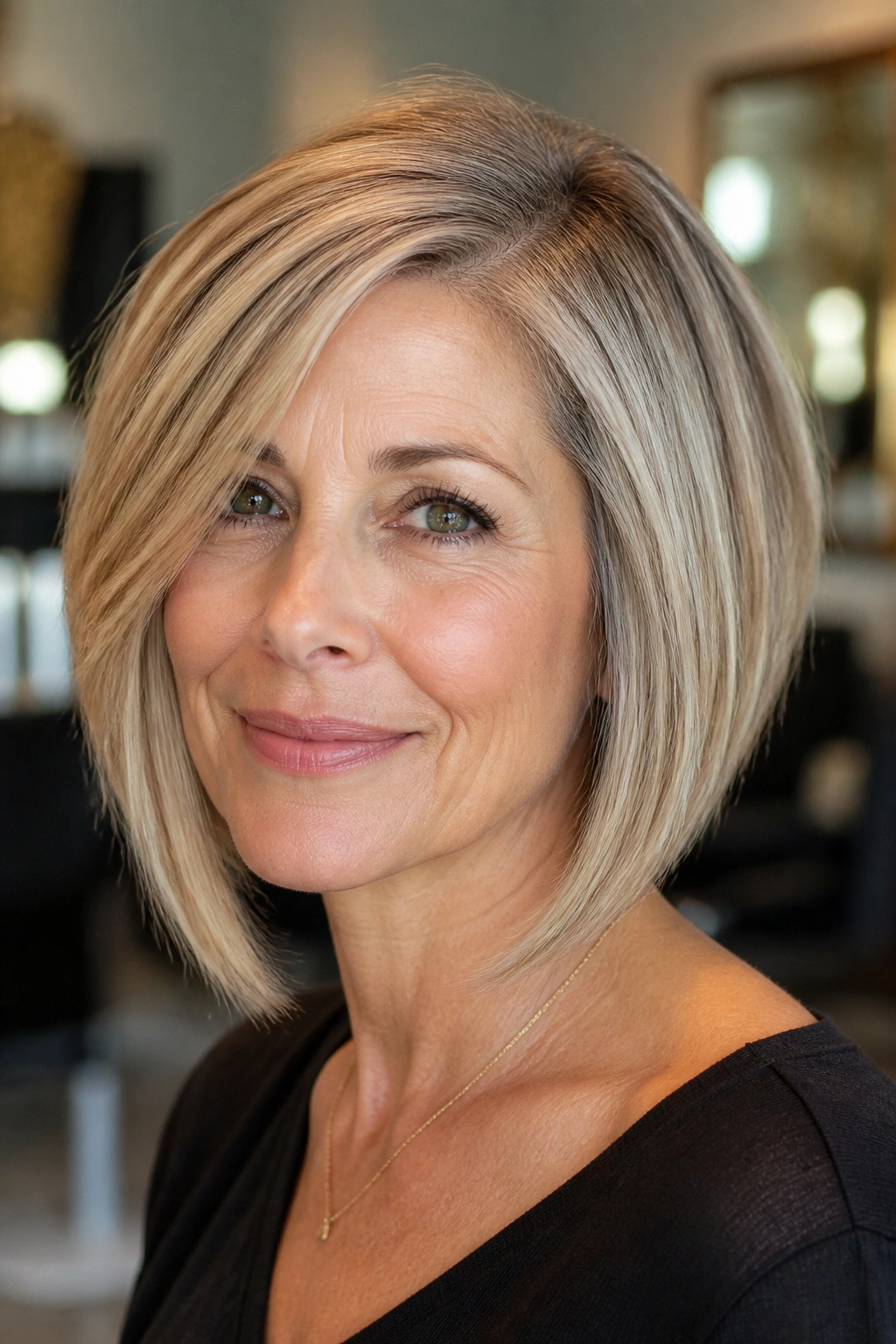
A side part changes the whole mood of a bob. It lifts one side, loosens the flat spot at the crown, and gives the haircut a diagonal line that feels more dynamic than a center part. On fine hair, that small shift can be enough to make the style look fuller without adding a single inch.
The A-line shape helps too. A slightly shorter back keeps the neckline neat, while the front pieces skim forward and give the eye something to follow. That slant makes the hair look thicker because the perimeter is not sitting in one straight line across the face.
It is a good cut if you like structure but do not want anything too severe.
I especially like this shape on gray hair that has started to come in with a few different textures. The side part softens the transition from crown to front, and the longer front pieces make the cut feel modern without chasing trends. If your hair is very straight, ask for a gentle bevel at the ends so the front does not hang like a ruler.
A tiny root lift spray at the part line helps a lot. So does switching the part every few days.
8. Tapered Crop With a Tucked Nape
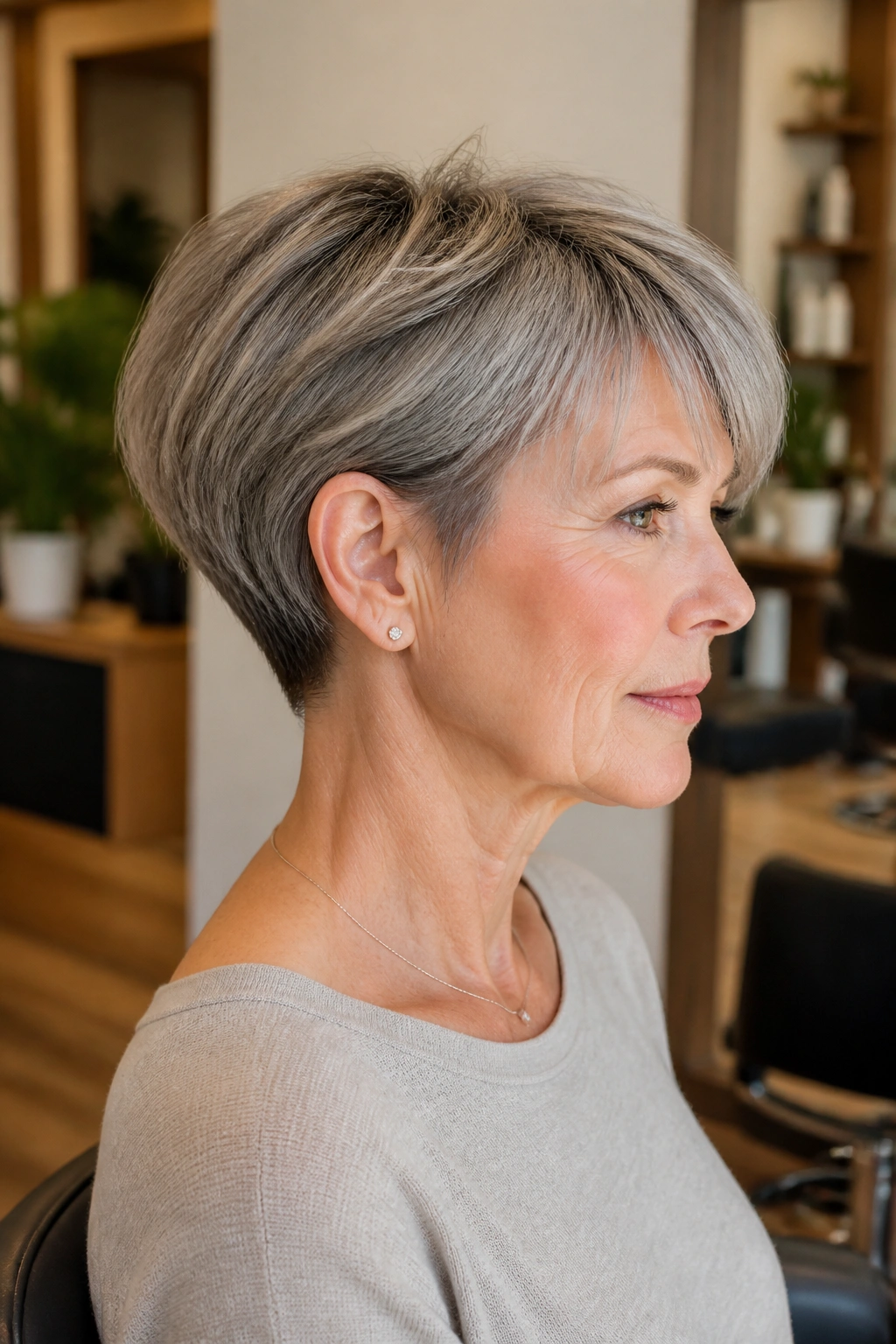
Picture this: you want a cut that looks neat with glasses, dries fast, and does not make your neck feel covered in hair. That is where a tapered crop earns its keep. The nape stays tucked in close, the sides are softened, and the top keeps just enough length to create movement when you run your fingers through it.
The shape is especially useful for fine hair because it removes the heavy back section that can pull everything downward. With less bulk at the nape, the top has a chance to stand up. That alone can make the whole head look lighter and more alive.
A smart crop is clean, not choppy.
- Ask for the nape to be tapered with scissors, not aggressively thinned with a razor.
- Keep the top long enough to brush forward or sideways.
- Let the sideburn area stay soft around the ears.
- Use a pea-size amount of paste or cream, then stop. More product only weighs the hair down.
This cut works beautifully on gray hair that grows in a little wiry at the neckline. It keeps the shape controlled, which means less frizz around the collar. If you are after a low-fuss haircut that still looks deliberate, this one is hard to beat.
9. Shoulder-Length Cut With Invisible Layers
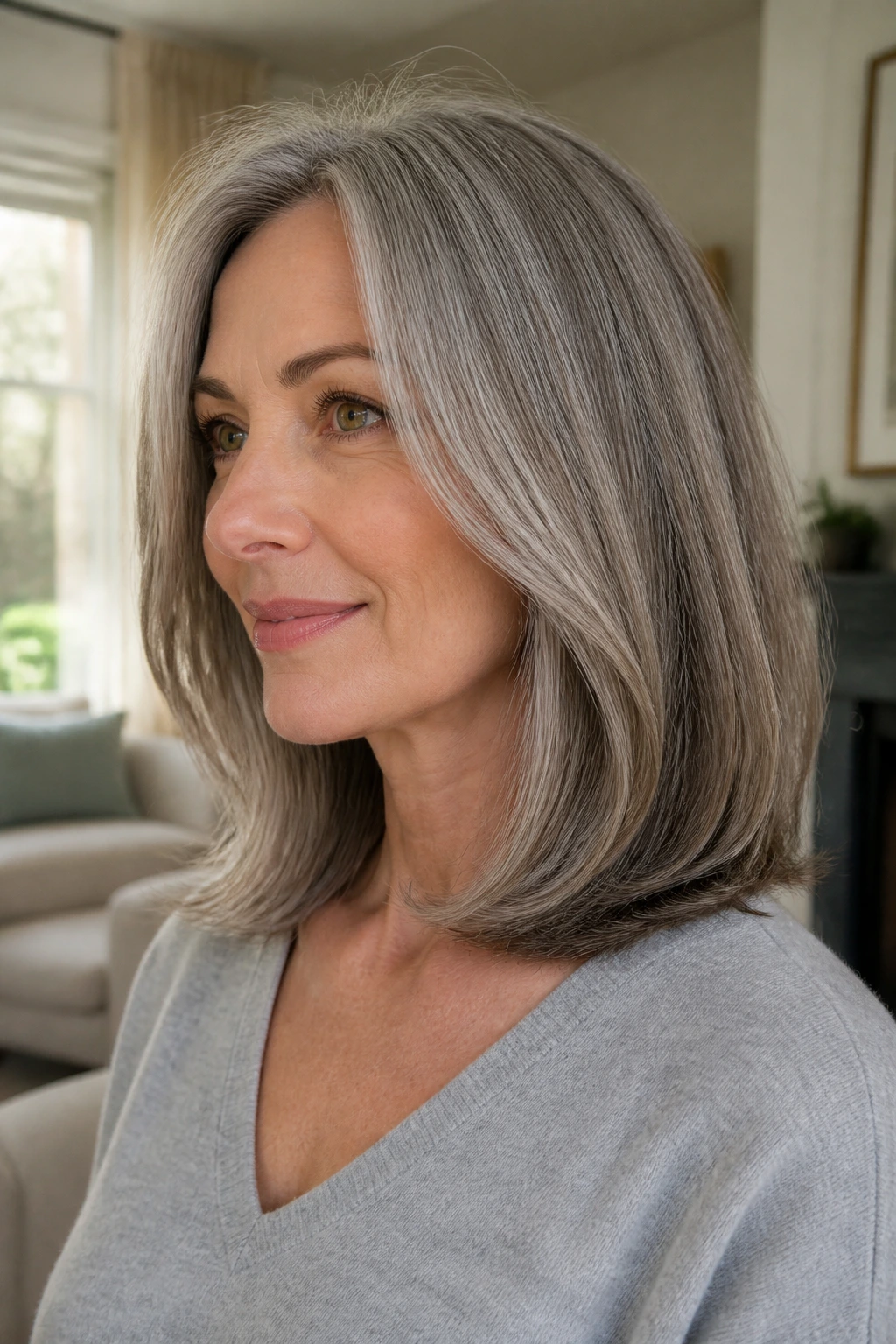
Shoulder length can work for fine hair, but only if the shape is disciplined. If the ends are too wispy, the whole cut looks tired. If the layers are too obvious, the hair loses its outline. Invisible layers solve that by removing weight from the inside while leaving the outside line looking full.
That is the whole trick.
The hair still lands around the shoulders, so you keep enough length for a ponytail or a clip. But the inside is carved just enough to stop the hair from hanging like a sheet. On gray hair, this can be a very elegant option because the length lets the silver tones shimmer, while the hidden layers keep the style from looking flat.
This cut is better for fine hair that still has decent density than for hair that has become very sparse. If your ends are already see-through, go a little shorter. Collarbone length usually wins in that case. If your strands are fine but plentiful, though, this can be a flattering middle ground that does not feel too short.
Ask for soft movement around the face, not a lot of disconnected layers. You want swing. Not scraps.
10. Rounded Bob With a Soft Underbevel
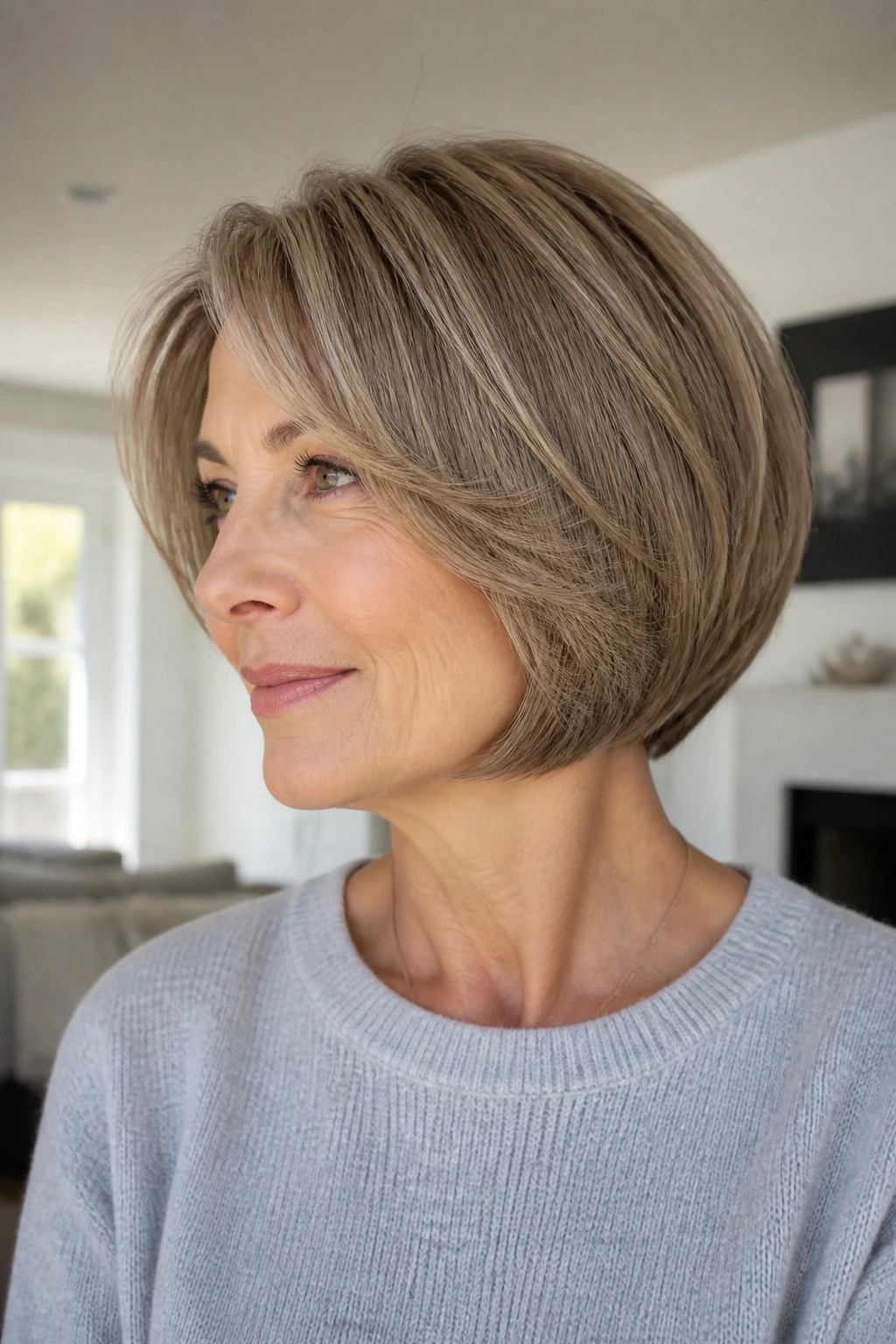
Unlike a pin-straight bob, a rounded bob follows the shape of the head and gives the eye a little lift around the sides. The soft underbevel at the ends nudges the hair inward, which makes the perimeter look denser. On fine flat hair, that inward curve matters a lot more than people expect.
The rounded shape is quietly flattering. It softens the profile, gives the crown a more lifted look, and keeps the back from feeling boxy. Gray hair often looks especially good in this cut because the shape shows off the color change. There is nowhere for the strands to hide, which sounds harsh, but in practice it makes the cut look cleaner.
This is the haircut I recommend to women who like a polished finish and do not want a lot of fuss with texture sprays or beach waves. You can blow it smooth and still have body. That matters when your hair falls flat the minute humidity enters the room.
If your face is long, the rounded bob can bring balance. If your jaw is strong, ask for a little softness at the front so the shape does not sit too bluntly.
11. Long Pixie With Side-Swept Fringe
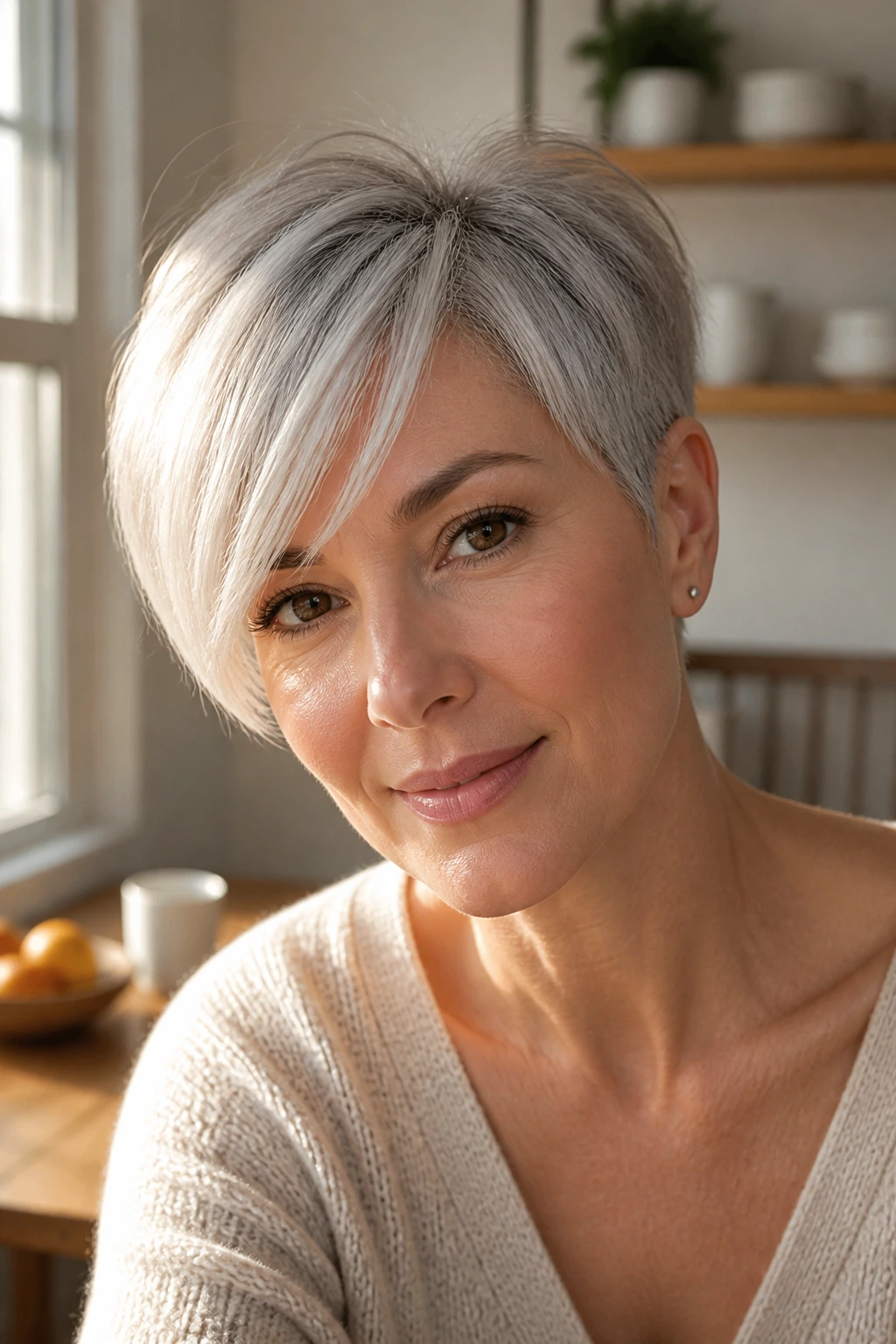
Want short hair, but not too short? A long pixie gives you that middle zone where the haircut feels light without exposing every line of the scalp. The side-swept fringe adds movement at the front, which is useful if your forehead area tends to look sparse or your crown needs a little visual distraction.
The fringe is doing more than decorating the face. It also creates a diagonal line that breaks up flatness. Hair that falls straight down the forehead can make fine strands look thinner. Hair that sweeps across the face gives the style a bit of lift and motion, even on days when you barely style it.
How to Wear It With Glasses
- Keep the fringe long enough to brush just above the frames.
- Let the temples stay soft so the cut does not press hard against the sides of your glasses.
- Dry the fringe first, while it is damp, so it sets in the right direction.
- Use a small round brush or your fingers; a big brush often overworks fine hair.
This cut has a nice range. It can look polished with a little smoothing cream or more casual with a rough-dry finish. Gray hair especially benefits from the side sweep because the contrast between silver and skin is softened just enough to feel flattering, not severe.
12. Clavicle Cut With Curtain Bangs
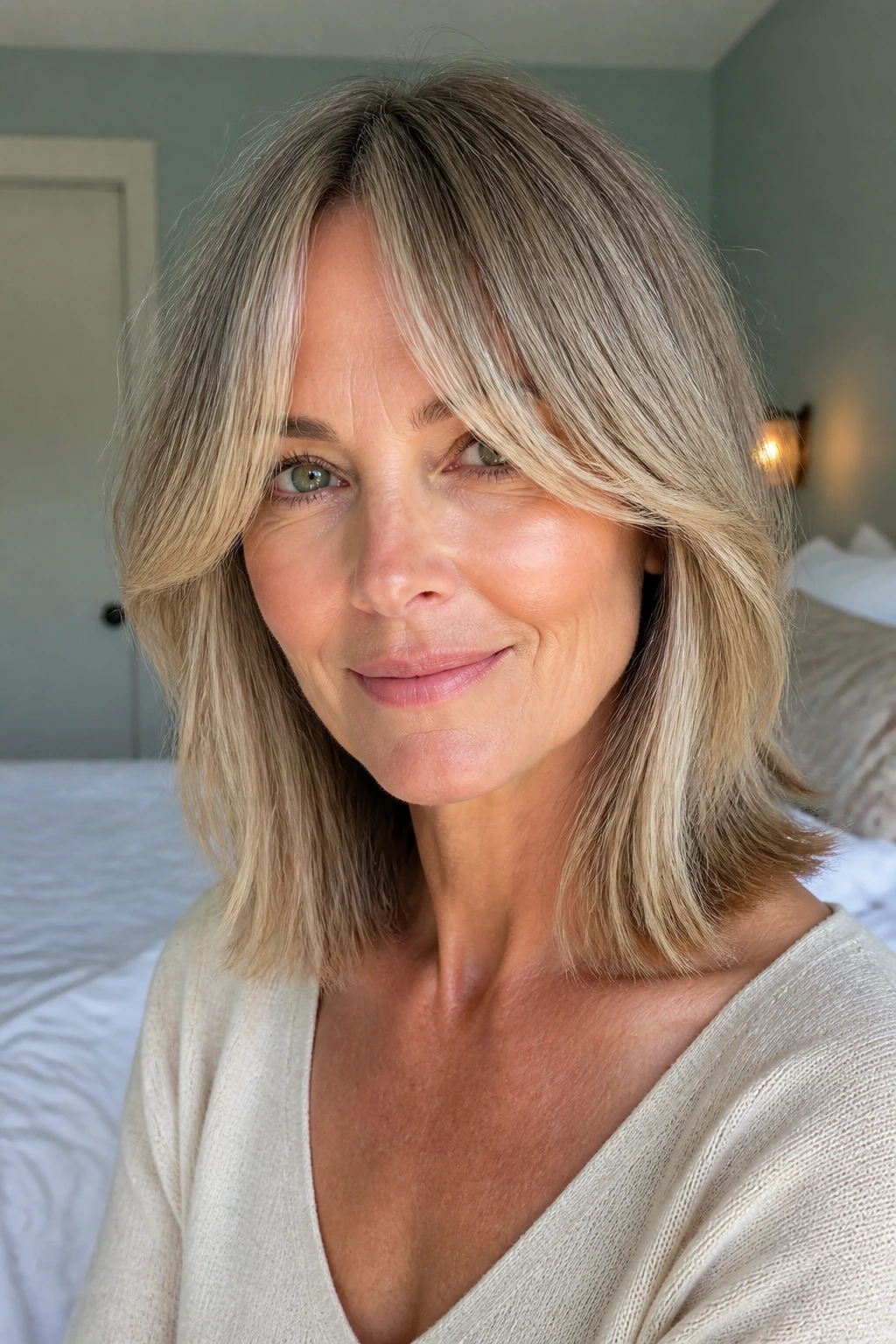
A clavicle cut sits right where a shirt collar brushes the hair, and that placement is useful. It gives the hair enough length to feel feminine and easy, but not so much that it drags the roots down. Add curtain bangs, and you get movement through the front without committing to a heavy fringe.
Curtain bangs work because they split the weight in the middle and travel down toward the cheekbones. That creates softness around the face and keeps the top from looking too solid. On fine hair, a little softness up front goes a long way. It can make the whole head look more alive.
This is also one of the easier long cuts to grow out.
If you are trying to move away from short hair, the clavicle length gives you room to adjust. If you are already gray, the bangs help blend different textures near the front, which is often where the grow-out looks roughest. Ask for the bangs to start high enough to open the face, but not so short that they sit like a curtain rod.
A round brush and a quick bend at the ends is enough here. No need to chase perfect waves. A little swing is the point.
13. Wedge Bob
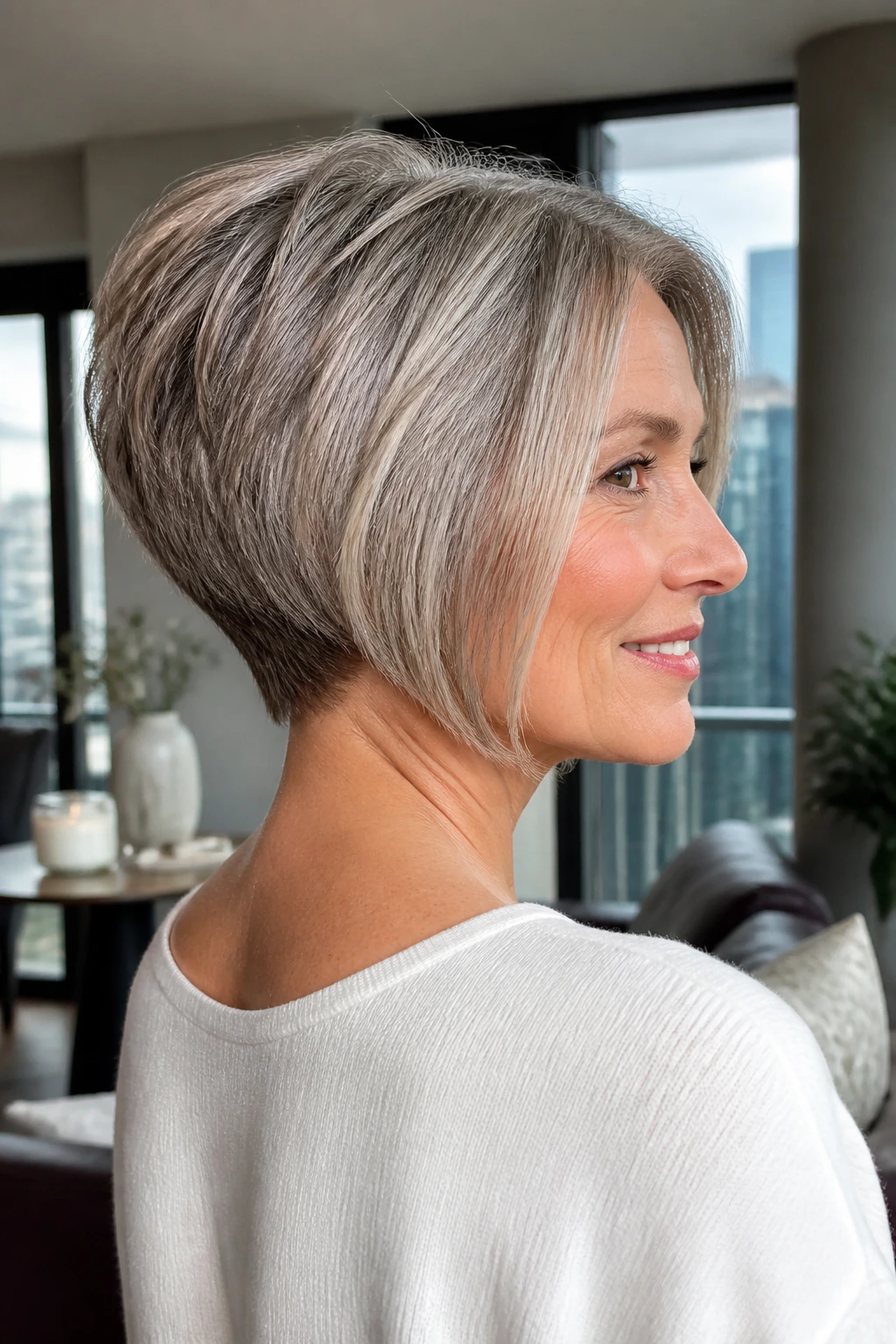
People forget the wedge bob, which is a shame, because it does something fine hair loves: it builds support at the back. The stacked shape under the crown gives lift where flat hair usually caves in, and the front keeps enough length to soften the effect.
A modern wedge should not look like a helmet. That old, stiff version is not what we want. The cleaner approach keeps the graduation subtle, the sides soft, and the top airy enough to move. The haircut still has structure, but it does not feel frozen in place.
What to Ask For
- Keep the stack visible but soft.
- Leave the front pieces slightly longer than the back.
- Avoid razor thinning through the ends.
- Ask for a side part if your crown needs extra lift.
This cut is especially handy for gray hair that has a little natural bend. The shape does half the work, and the color makes the graduation easier to see. It is also a good choice if you wear earrings or glasses and want the hair out of the way around the face.
Some people overlook the wedge because they think it is dated. The truth is that a well-cut wedge can be one of the smartest shapes for thin hair. It just needs a modern hand.
14. Feathered Crop With a Soft Neckline
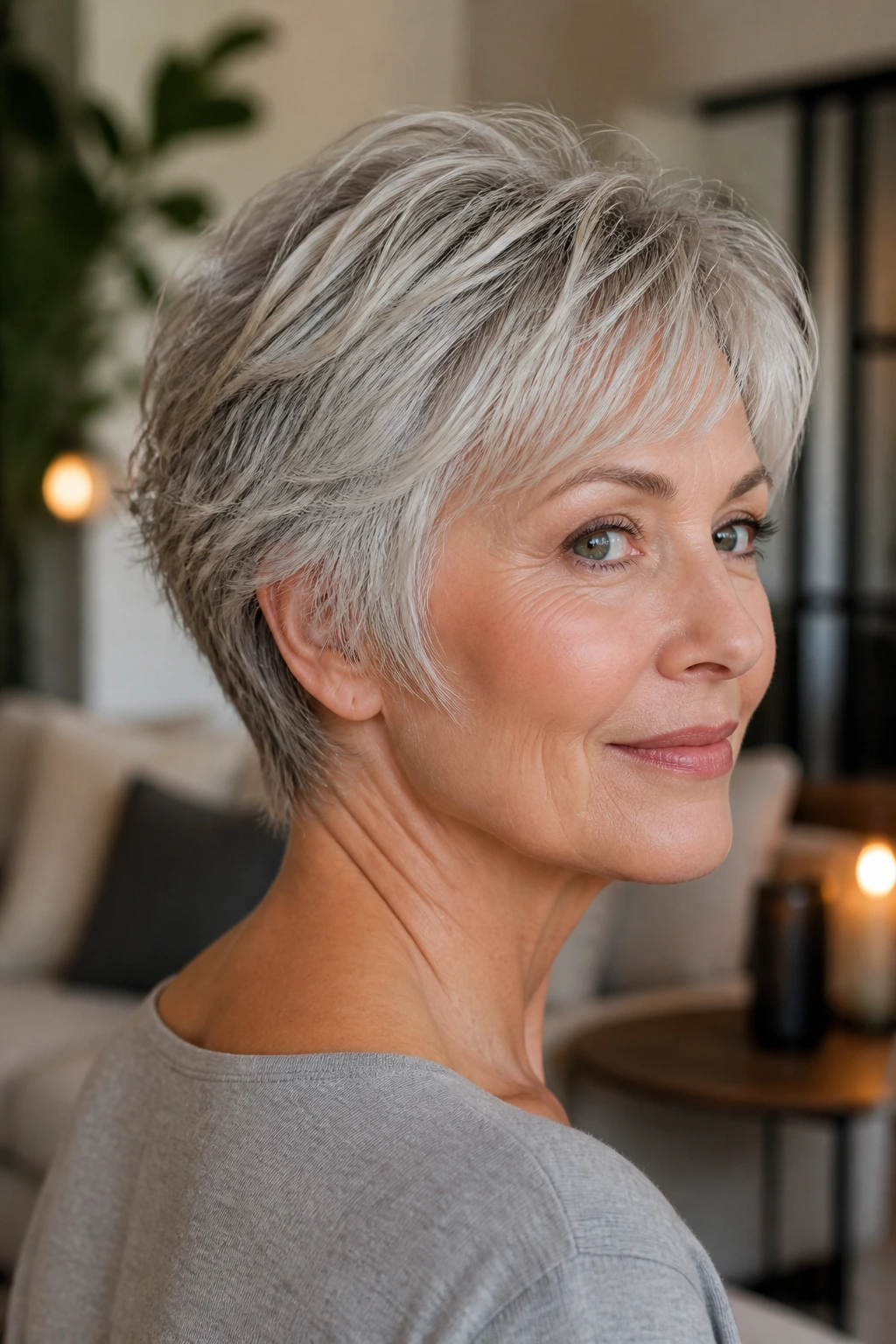
Feathering is helpful on fine hair only when it is used sparingly. Too much feathering and the ends look ragged. A soft feathered crop keeps the texture light around the neckline and ears while preserving enough body through the top to keep the cut from collapsing.
The neckline matters here. A soft neckline stops the hair from bunching up under collars and scarves, which is one of those small annoyances that makes short hair easier to live with. The crop itself can be a little longer on top so you can brush it forward, side to side, or back with your fingers.
Gray hair often looks especially nice in this shape because the feathering breaks up any bulky spots without making the cut look thin. That said, if your hair is already wispy at the ends, be careful. A crop like this needs enough density to carry the texture.
I like it for women who want something short, airy, and quick to style in under 5 minutes. If that sounds like you, ask your stylist to feather only the edges that touch the neck and ears. Keep the body intact. That is the difference between light and stringy.
15. Soft Rounded Bob

If you cannot decide between a bob and a lob, the soft rounded bob sits in the middle and does a lot of quiet work. It keeps enough length to tuck behind the ears or wear with a barrette, but it is short enough that the ends still have weight. For fine flat hair, that balance is gold.
The rounded shape gives a little body without forcing the hair into a stiff outline. The sides curve gently, the back stays neat, and the perimeter lands with enough density to look full even when the hair is air-dried. On gray hair, this cut looks especially clean because the silver tones highlight the shape instead of getting lost in it.
This is the one I reach for when someone says, “I want my hair to look better, but I do not want to fuss with it every morning.” Fair enough. Not every haircut needs a dramatic statement. Some just need to behave.
A soft rounded bob can be worn sleek, tucked, or with a small wave at the ends. Ask for a blunt base with a gentle roundness through the line, then decide how much face framing you want based on your jaw and cheekbones. If your hair is so fine that shoulder length drags it down, stop here rather than pushing longer. If you want the simplest rule in the whole list, it is this: keep the perimeter strong, keep the layers light, and keep the shape close to the head. That combination tends to win more often than anything fancier.
