



Box braids can look like five different hairstyles before lunch, and that is exactly why they stay in rotation. When people search for box braid styles for Black women, they are usually trying to solve two things at once: how to look polished and how to keep their hair calm, tucked, and not begging for daily handling.
The base is familiar. Square parts, extension hair, a steady hand, and enough patience to sit through the install. The real personality comes later. A middle part can read sharp and clean, a side sweep can soften the face, and a chunky updo can turn the same braids into something that feels completely different.
Weight matters.
A braid that hurts on day one is not a good braid. Tight edges, clumsy parting, and heavy extensions can turn a protective style into a problem you spend weeks trying to manage. The styles below are the ones I keep coming back to because they do something useful, not just cute: they make life easier, flatter different face shapes, and give you room to move without fussing with your hair every five minutes.
1. Waist-Length Classic Box Braids
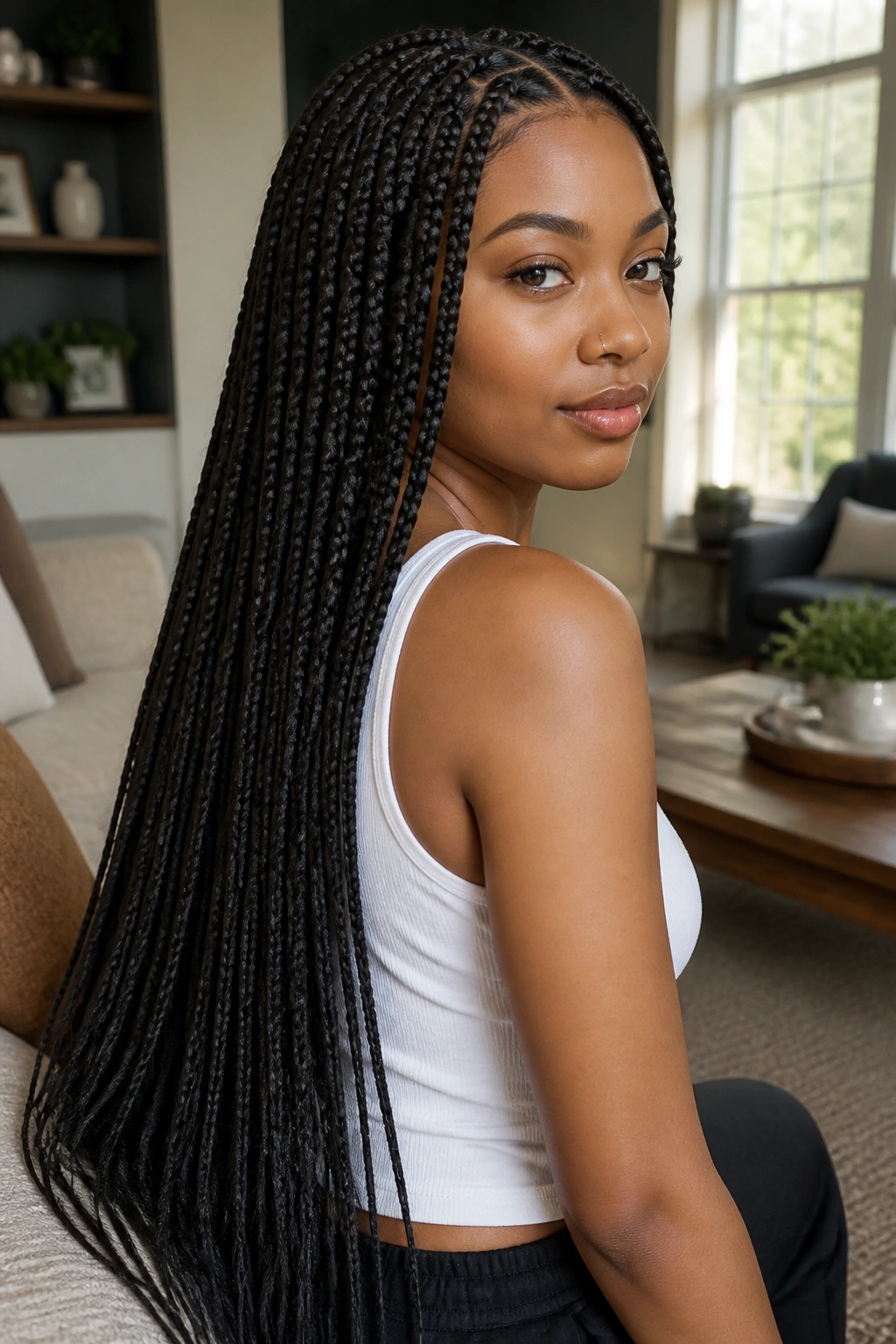
If one braid style has the range to handle work, brunch, and a last-minute night out, it is this one. Waist-length classic box braids give you enough length to wear them down, braid them into a ponytail, or twist them into a bun without the ends looking awkward or unfinished.
Why the Length Keeps Working
The reason this style stays popular is simple: it gives you options. Medium parts keep the look neat, while the extra length gives the braids a softer swing than shorter styles.
A set like this can lean sleek or full, depending on the thickness of the braids and the finish on the ends. I like them best when the install is clean at the root and the length is balanced enough that you do not feel every ounce of hair on your shoulders.
- Ask for parts that are clean and consistent, usually around ½ inch to 1 inch depending on the look you want.
- Pre-stretched braiding hair helps the ends lay flatter and feel less bulky.
- A loose braid or scarf at night keeps the length from tangling into a sad little knot.
Best move: keep the front braids a touch lighter than the back. Your neck will thank you later.
2. Knotless Box Braids That Sit Flat

Why do knotless braids feel easier on the scalp? Because the extension hair is fed in gradually instead of starting with a heavy knot right at the root. That small change makes a big difference when you want a style that looks neat without that stiff, anchored feeling some installs create.
What to Ask For
- Ask your braider to start with your own hair and feed the extension in slowly.
- Choose medium or small sections if you want the braids to stay light around the hairline.
- Pre-stretched hair keeps the finish smoother and cuts down on bulky ends.
Knotless braids are one of my favorite choices for anyone who wears braids often. They sit flatter under hats, feel kinder on tender edges, and move more naturally when you turn your head. They also grow out in a softer way, which means the style can keep looking tidy even after a few weeks.
That said, they are not magic. If the feed-in is too tight, you will still feel it. A comfortable braid should feel secure, not angry.
3. Jumbo Box Braids With Bold Parting
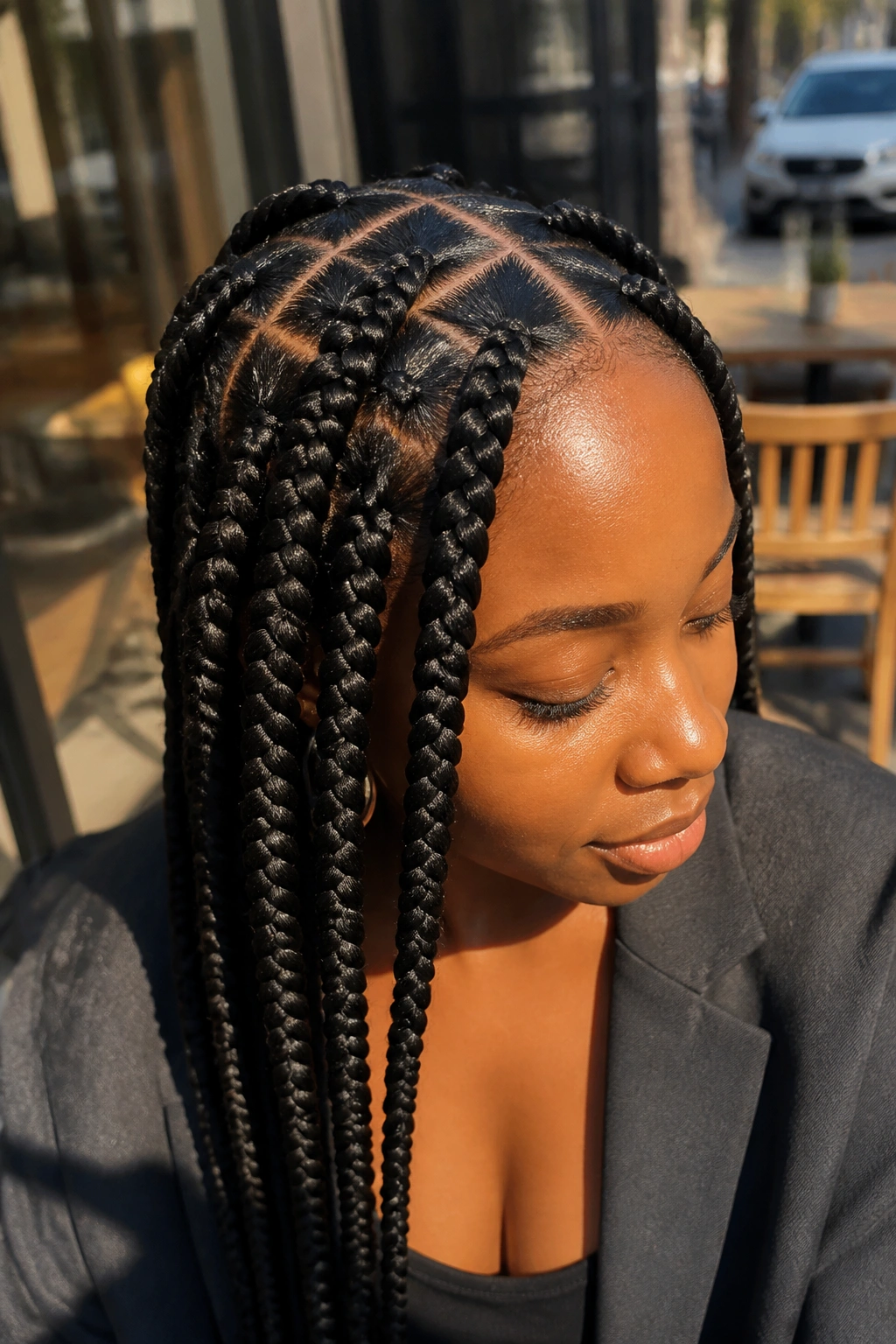
A few thick braids can change the whole mood of a head of hair. Jumbo box braids read bold the second you walk into a room, and they cut install time down compared with tiny braids, which is useful if you do not want to spend all day in the chair.
The parting matters here. Clean squares or even crisp rectangles make the style look intentional, while messy sections make jumbo braids look unfinished. I also think this style works best when the length stays moderate rather than dragging too far down your back. Heavy plus long is where the neck starts complaining.
If you like accessories, this is the style that takes cuffs, rings, and a few gold accents with almost no effort. Jumbo braids do not need a lot of decoration. They already have enough shape on their own.
A small warning: huge braids can feel heavy near the front if the install is too dense. Keep the roots light and let the size do the talking.
4. Shoulder-Length Medium Box Braids
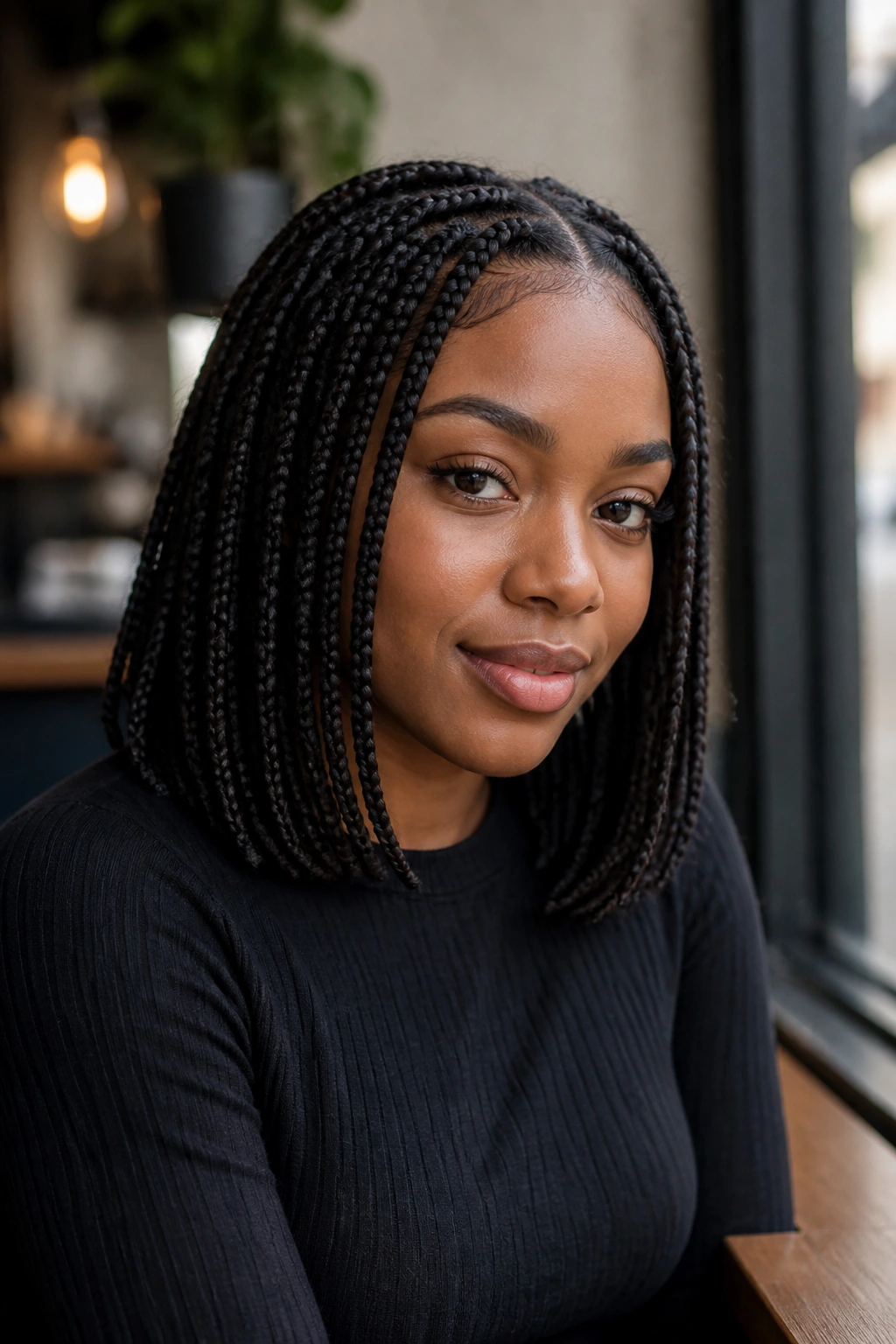
Shoulder-length medium box braids are the workhorse style. They are long enough to tuck behind the ears, short enough not to catch on everything, and light enough that wash day does not feel like a full-body event.
Some people skip this length because it sounds plain. I think that is a mistake. Plain is not the same as boring. This length gives you the cleanest balance of movement and control, especially if you wear glasses, hoops, or collar-heavy clothes that tend to tangle with longer hair.
The best part is how easy they are to refresh. A quick mist of braid spray, a little mousse at the frizzier roots, and a tidy wrap at night can keep them looking good without much effort.
If this is your first braiding appointment, start here. The style gives you the feel of box braids without forcing you to handle a lot of extra weight.
5. Box Braids With Curled Ends
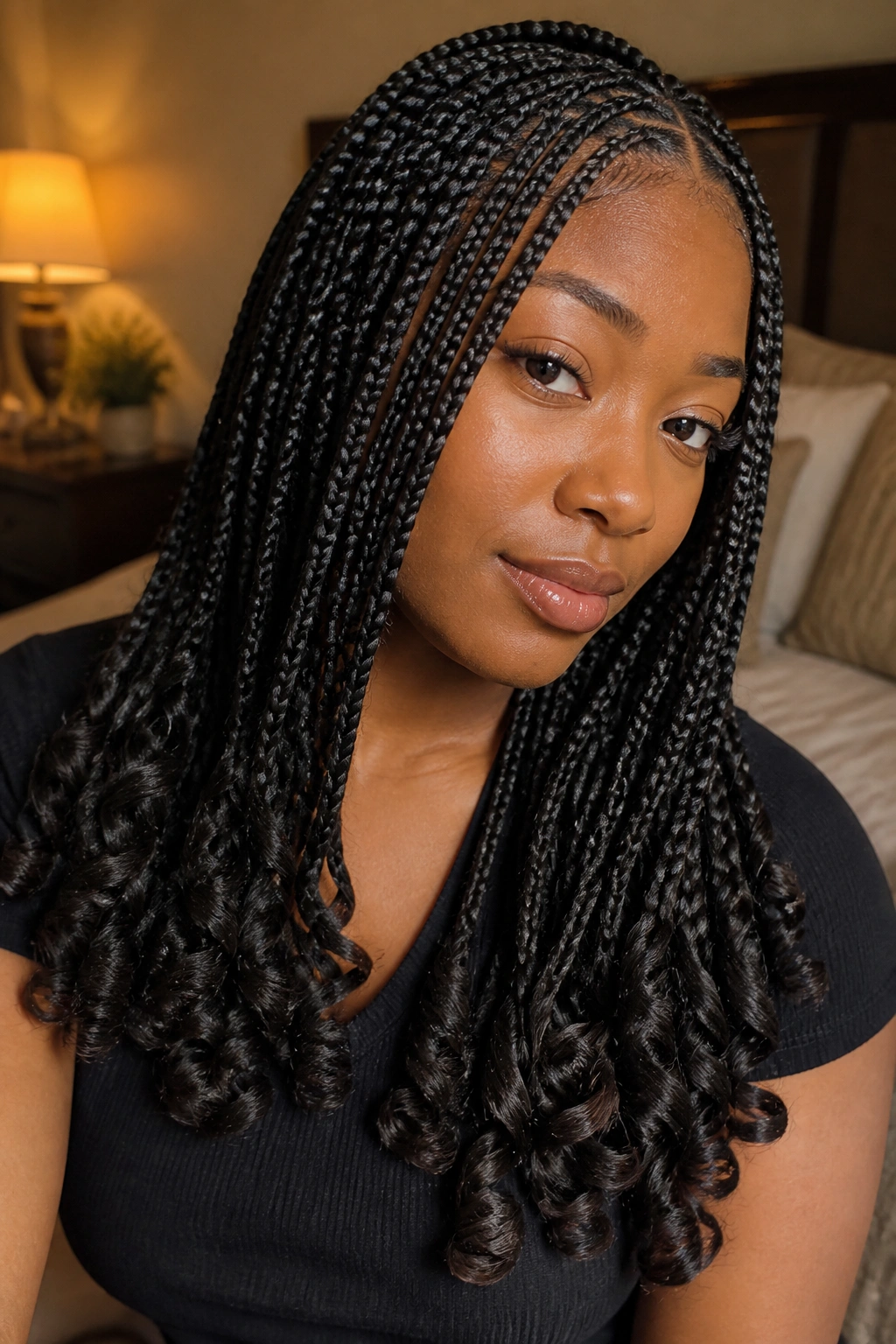
The curled-end version feels softer the second you see it. Straight braids have their place, but curls at the bottom add movement and a little swing, which can make the whole style look less rigid and more alive.
How to Keep the Curl From Going Flat
The ends usually get curled with rods, flexi rods, or hot water if the hair is heat-safe. Once the style is set, treat the curl like the fragile part it is. Sleep with the ends tucked away, and do not keep brushing them out with your fingers just because they feel fun.
- Use mousse sparingly to keep the curl shape without making the hair damp for hours.
- Wrap the length before bed so the ends do not fuzz up.
- If the curls start looking tired, re-rod the bottom few inches instead of redoing the whole style.
This look is especially nice when you want braids that feel dressy without looking stiff. It works for birthdays, dinners, and any day when you want a little movement around your shoulders.
The catch is maintenance. Curled ends need a bit more care than blunt ends, and that is the trade-off. Worth it, though.
6. Chin-Grazing Box Braid Bob
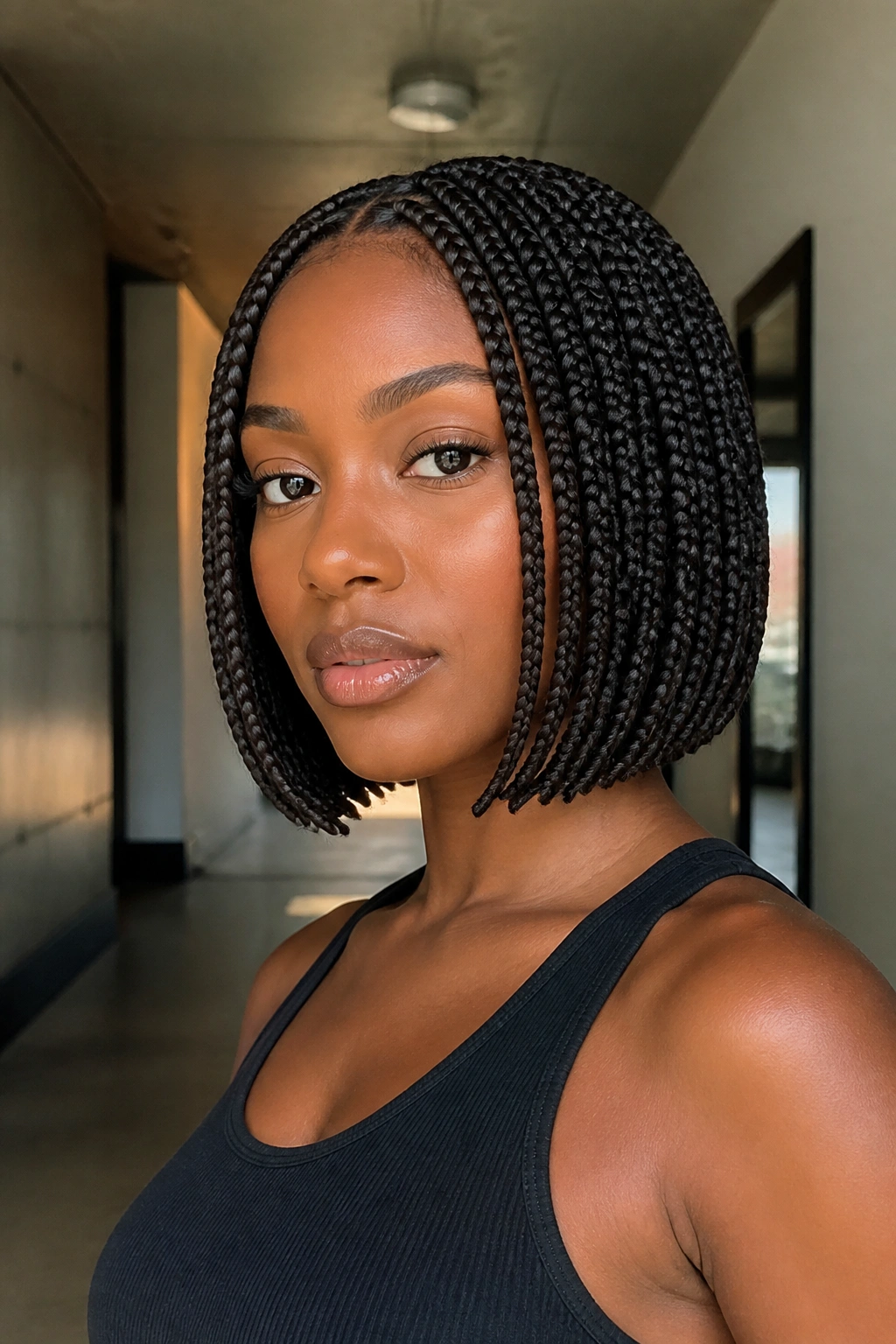
A box braid bob cuts right to the point. It frames the face, clears the neck, and gives you that neat shape that looks deliberate even when the rest of your outfit is simple.
The exact length matters more than people think. Chin-grazing or jaw-skimming braids can sharpen the jawline and keep the style from feeling heavy. If the bob lands too low, it loses that crisp edge and starts acting like a longer set that forgot its purpose.
What Makes It Different
Unlike waist-length braids, a bob asks for precision. The ends should fall in a tidy line, not flap around at random. That means the braider has to pay close attention to section size and finishing.
This style is a good choice if you want box braids that dry faster after washing and do not spend all day brushing your collarbone. It also works well with side parts, deep parts, and a few cuffs near the front.
If one side flips out a little, I would not fight it too hard. That small bend gives the cut some life.
7. Half-Up, Half-Down Box Braids

Half-up, half-down braids do a lot of work for a style that looks almost effortless. The top section pulls the hair away from the face, while the rest stays loose enough to keep the braids swinging and visible.
How to Wear It Without Pulling Too Hard
The base should sit at the crown or just above it, not yanked straight back from the temples. That front area is too precious to treat like a tug-of-war rope. A soft tie or a wrapped braid at the base keeps the look tidy without creating a sore spot.
This style gives you a nice middle ground. It is polished enough for a meeting, casual enough for errands, and flexible enough to dress up with hoops or a bold lip.
Try it with medium or long braids, since very short braids do not always drape well after the top section is pulled up. And if you are wearing curls at the ends, the half-up shape gives those curls a chance to show off instead of hiding in the back.
8. High Ponytail Box Braids
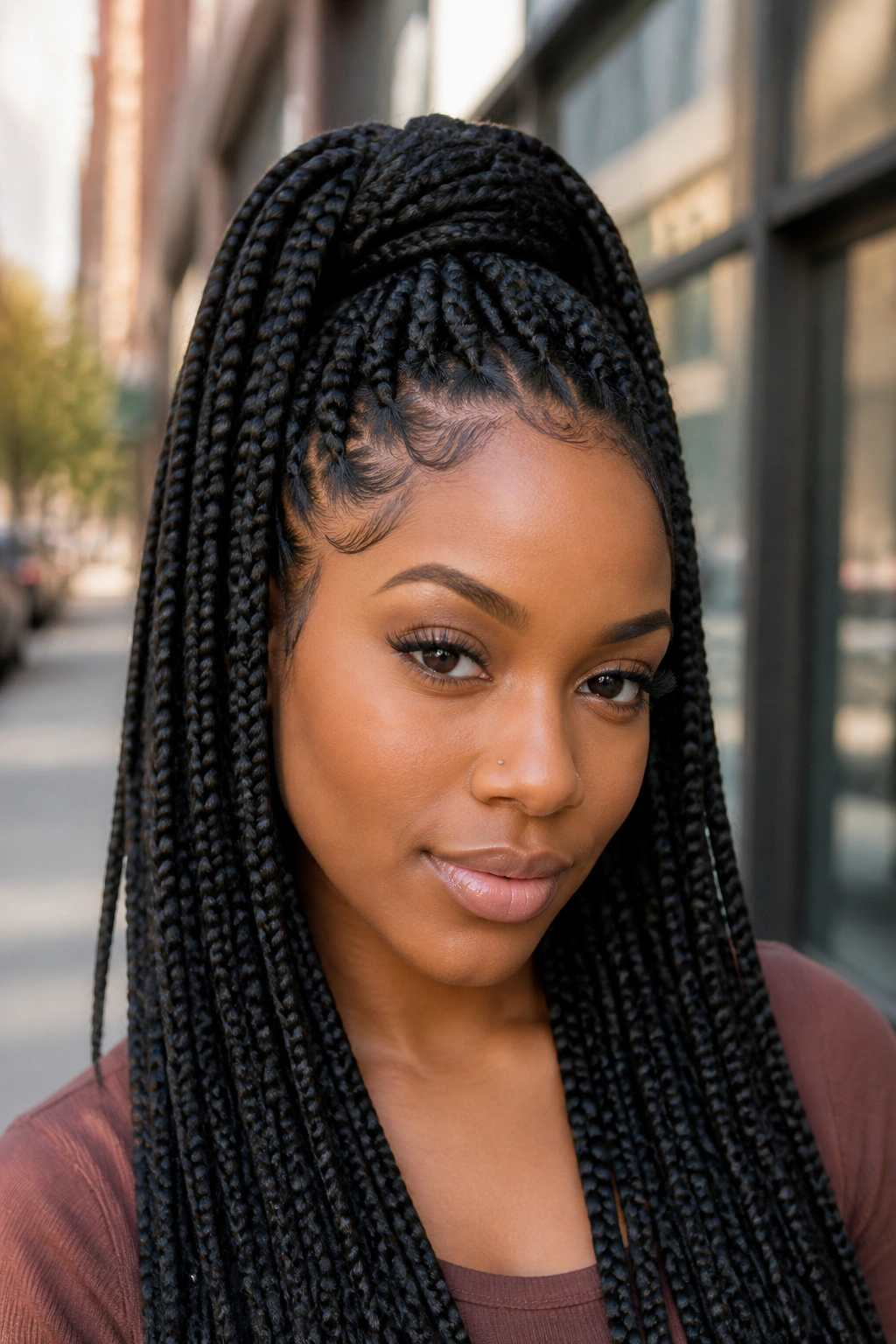
A high ponytail changes box braids from relaxed to sharp in one move. The whole style lifts, the face opens up, and the braids suddenly feel more athletic, more polished, and a little more intentional.
The base has to be strong. Not tight. Strong. There is a difference. A high ponytail should sit snug at the crown, but if the tension is too aggressive, the front of your scalp will tell on you within an hour.
The real trick is weight distribution. Heavy braids pull hardest when they all sit at the very top of the head, so I like this style better with medium-length or medium-size braids. If the braids are long, pulling them into a pony that sits a bit lower at the crown usually feels better.
This one works when you want your face fully visible and your hair completely out of the way. It is clean. It is practical. It also looks good with a braid wrapped around the base to hide the tie.
9. Low Sleek Ponytail Box Braids

Low ponytails give box braids a calmer, more elegant line. Instead of stacking weight on the crown, the style settles at the nape, which makes it easier on the scalp and less fussy when you sit back in a chair.
Picture a neat center part, a smooth front, and the braids falling straight down the back like a clean curtain. That is the vibe here. It is simple, but not plain.
What Makes the Shape Work
The base has to be smooth, especially around the temple area. A little edge control goes a long way, but do not drown the hair in product. A sticky front with crunchy baby hairs is not a finish I trust.
- Tie the pony low enough to keep the weight from fighting your edges.
- Wrap one braid around the elastic if you want a cleaner finish.
- Let the pony hang straight or sweep it over one shoulder for a softer line.
This style suits heavier, longer braids because the low placement takes pressure off the top of the head. If you wear braids often, you will probably keep coming back to this one.
10. Braided Bun Box Braids

A braided bun is one of those styles that quietly solves a lot of problems. Hair off the neck. Ends tucked away. No braids brushing your cheeks while you eat. It is the style I reach for when I want the hair to disappear without looking like I gave up.
The bun can sit high for a sharper look or low for something calmer. Either way, the secret is to avoid making it too tight and too perfect. A slightly fuller bun looks better with box braids than a tiny knot that shows every pin.
Do not cram all the weight into one point. Spread the braids around the base, pin as you go, and stop once the shape feels secure. If the bun starts hurting, it is already too tight.
This style works for formal events, busy workdays, and long stretches when you just want your hair out of the way. It also pairs nicely with large earrings, since the neck and jawline stay open.
11. Side-Swept Box Braids
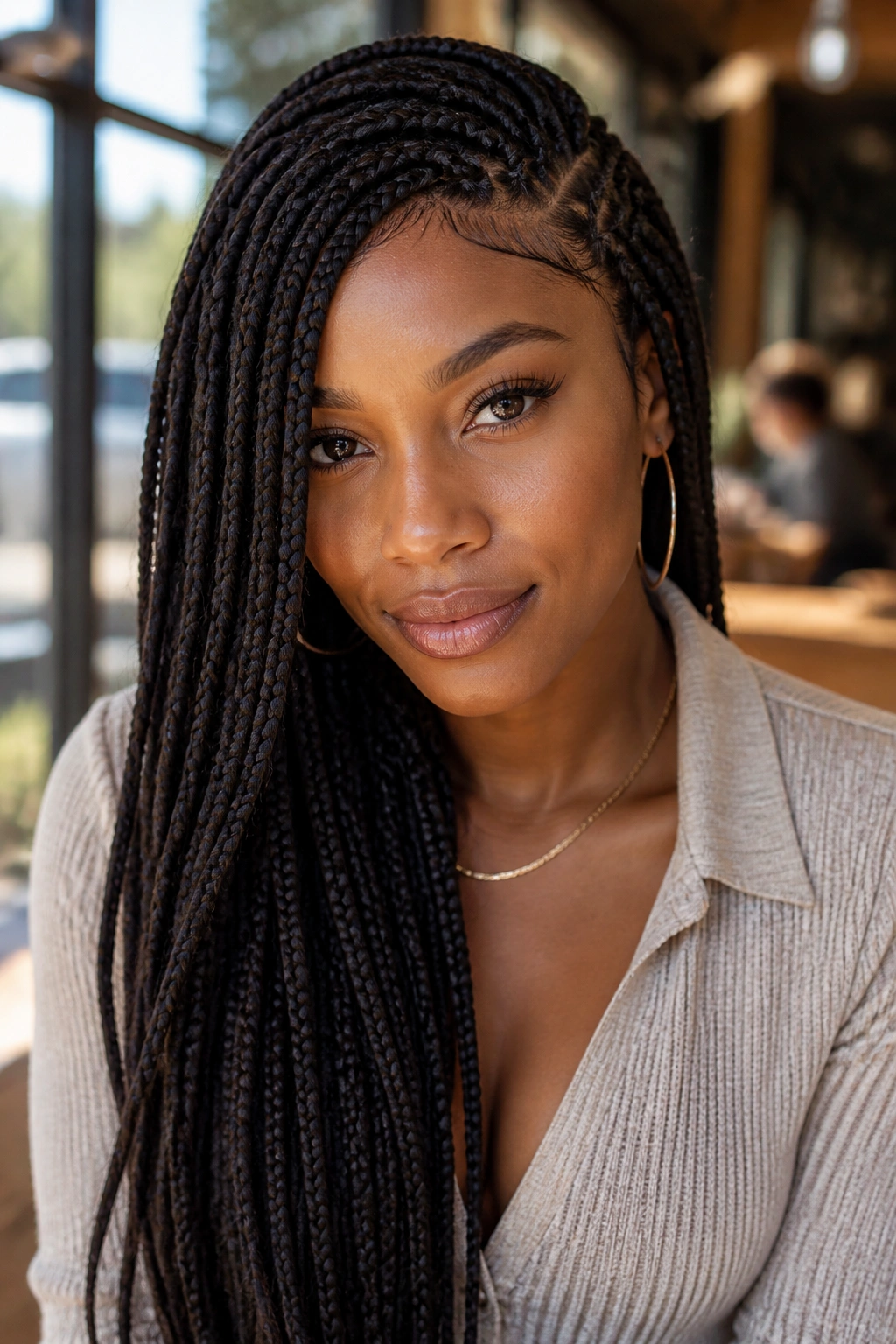
Side-swept braids give you movement without giving up length. A deep side part shifts the whole shape of the style, which can soften stronger features or add drama to a look that feels too straight down the middle.
The appeal is in the drape. Braids swept over one shoulder create a diagonal line, and that line changes everything. The face looks less boxed in, the hair has more motion, and the style feels less formal than a center-parted set.
Why It Works on Different Face Shapes
A side sweep can open up the forehead, balance a strong jaw, or add width where a face needs a little more softness. It also gives you a nice place to show off braid cuffs, since the braids are clustered where people can actually see them.
This is a good pick if your braids are medium or long enough to hold the shape without sliding back. If they are too short, the whole idea gets lost.
One small detail matters here: keep the side with less hair neat and smooth, or the part will look accidental. A deliberate side part is the whole point.
12. Triangle-Part Box Braids

Triangle parts are one of those small changes that make the whole style feel sharper. Instead of the usual square parting, the scalp pattern uses triangles, which gives the roots a geometric look even before the braids start moving.
The style reads especially well in medium sizes because the parting is visible enough to matter. Tiny parts can hide the shape, while jumbo braids can swallow it. Medium size is where the pattern gets to show off.
Triangle parts are also one of my favorite ways to make a simple color feel richer. A single-tone braid looks more dimensional when the parting has that extra edge. The scalp becomes part of the design.
This style needs a careful braider. The lines should meet cleanly, and the triangles should not drift into weird, lopsided corners. When it is done well, it looks crisp even after a few weeks of wear.
13. Boho Box Braids With Loose Curls

Boho box braids have a softer, messier feel, but in a good way. Loose curls are left in the mix, usually around the ends or threaded through the length, so the style moves a little more and feels less rigid than a classic set.
What Needs More Care
The loose pieces need moisture and a light hand. Pulling on them, brushing them out hard, or sleeping on them with no protection will make them frizzy fast.
- Refresh the curls with a little mousse and finger-coiling.
- Keep a satin bonnet or scarf on at night.
- Separate the curls gently instead of yanking them apart.
This look is great when you want box braids that feel a little more romantic and less structured. It has a relaxed finish that works for dinners, photo days, or any time you want the braids to look airy rather than sharp.
The trade-off is upkeep. Boho braids need more attention than plain braids, and that is the cost of the softness.
14. Box Braids With Color Pops

A little color can change everything. Not a full neon takeover unless that is your thing, but even a few well-placed burgundy, copper, honey, or auburn strands can make box braids look richer and more lively.
You do not have to go loud to use color well. Peekaboo color underneath darker braids gives a more subtle effect, while face-framing color pulls the eye toward the front. The right placement matters more than the brightness level.
Color is strongest when it has a job. Maybe you want warmth near the face. Maybe you want the ends to feel lighter. Maybe you just want the braids to read a little softer against your skin.
If you are using synthetic hair, choose hair that feels soft and not stiff. Some colored braiding hair feels rougher than the natural shades, and that can make the install less pleasant. A quick test in your hands tells you more than the package does.
15. Box Braids With Beads and Cuffs
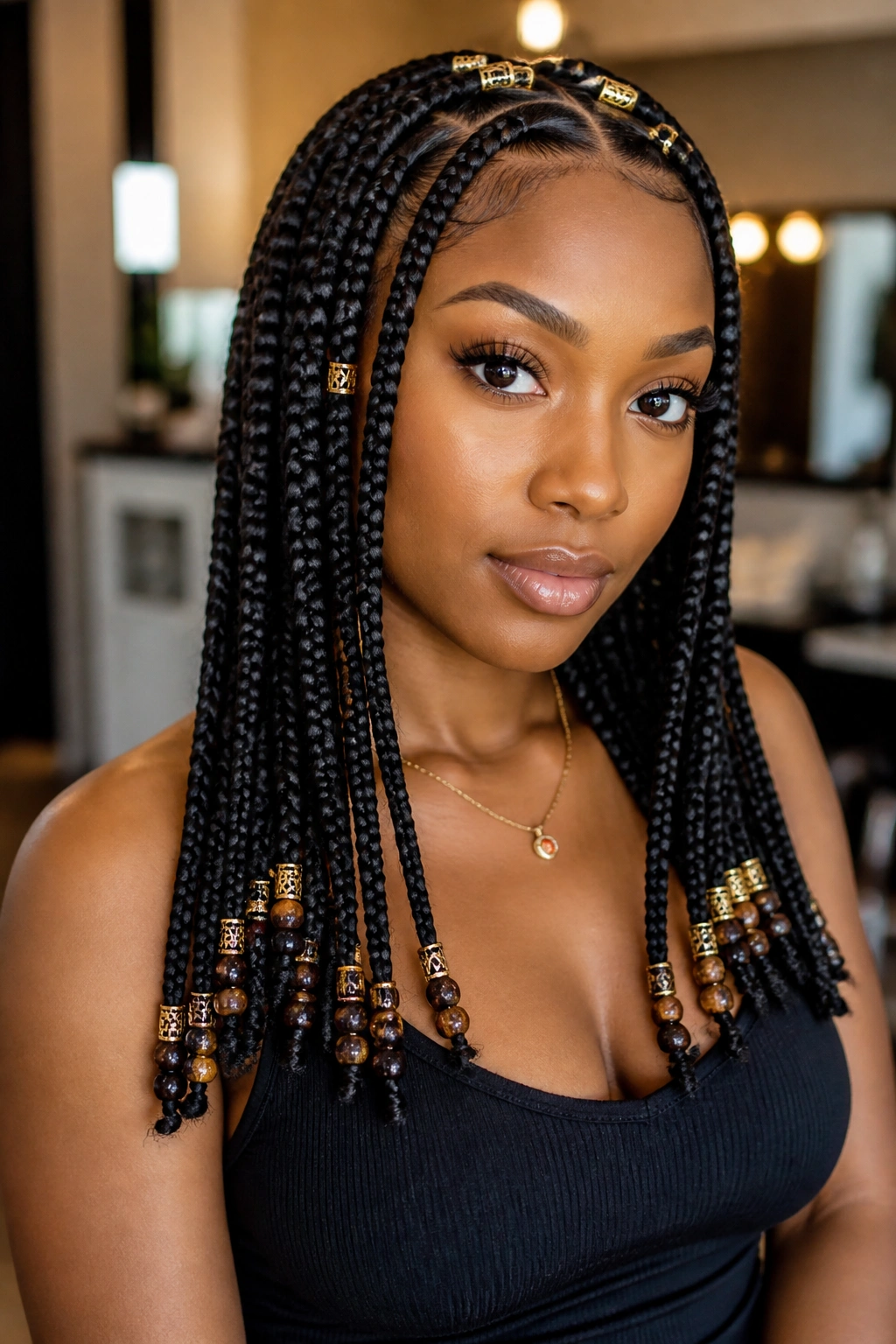
Beads and cuffs turn braids into jewelry. The style shifts from plain to personal with just a few small details, and you can decide whether you want a clean finish or something with a little sound and movement.
Beads work best on the ends, especially with medium or jumbo braids that can carry the extra weight. Put too many beads too high up, and the front gets heavier than it needs to be. A few well-placed cuffs near the crown or around the face usually do the job.
A Small Styling Rule That Helps
Keep the number of accessories in check. One or two beads per braid can look intentional. Ten per braid starts to feel crowded.
This style is good when you want the braids to look dressed up without changing the parting or the length. It also gives you a way to shift the mood of the same set of braids from casual to event-ready in a minute.
I like cuffs more than people admit. They slide in fast, they catch the eye without adding much weight, and they let the braids keep their shape.
16. Layered Box Braids for More Movement
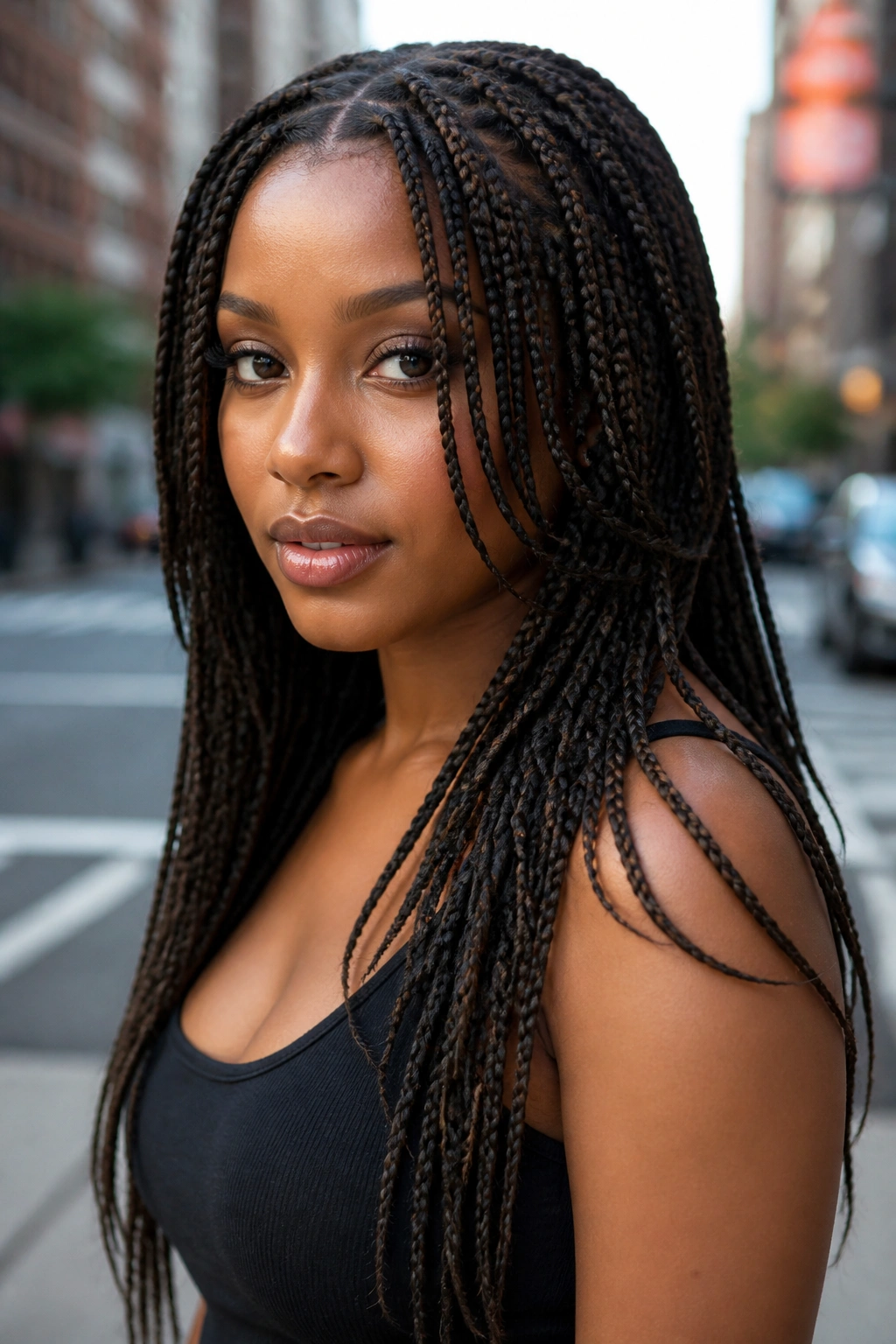
Layered braids solve a problem that long sets sometimes create: the curtain effect. When every braid ends in the same place, the style can sit too flat and too uniform. Layering breaks that line up and gives the braids more swing.
Ask for slightly shorter pieces around the face and fuller length through the back. That staggered shape makes the whole set look softer and lighter, especially if you like wearing your braids down most of the time.
The best thing about layers is how they move. The front catches your cheekbones, the middle shifts when you turn your head, and the back keeps the length without weighing everything down. It is a small haircut idea applied to braids.
Layered braids work especially well when you wear oversized earrings or glasses, because the front no longer crowds the face. If your previous sets felt too blocky, this is the fix.
17. Mini Box Braids for a Lightweight Feel

Mini braids are for patience. Lots of it. The payoff is a style that moves beautifully, feels lighter at the scalp than some heavier sets, and gives you a very neat, detailed finish that looks polished from every angle.
What to Ask Your Braider
- Keep the sections small and even so the braids do not feel lumpy.
- Ask for clean roots, because tiny braids make uneven parting obvious.
- Plan for a longer install. Small parts take time, and rushing them is how you get sore spots.
Mini braids can be a dream if you like styling your hair into intricate buns, half-ups, and pin curls. They also make it easier to tuck hair away neatly without a lot of bulk.
They are not the style for someone who wants a quick chair session. And they are definitely not the style for anyone who hates sitting still. Still, if you want the most movement and the most detail, mini braids have a strong case.
18. Extra-Long Box Braids for Big Drama
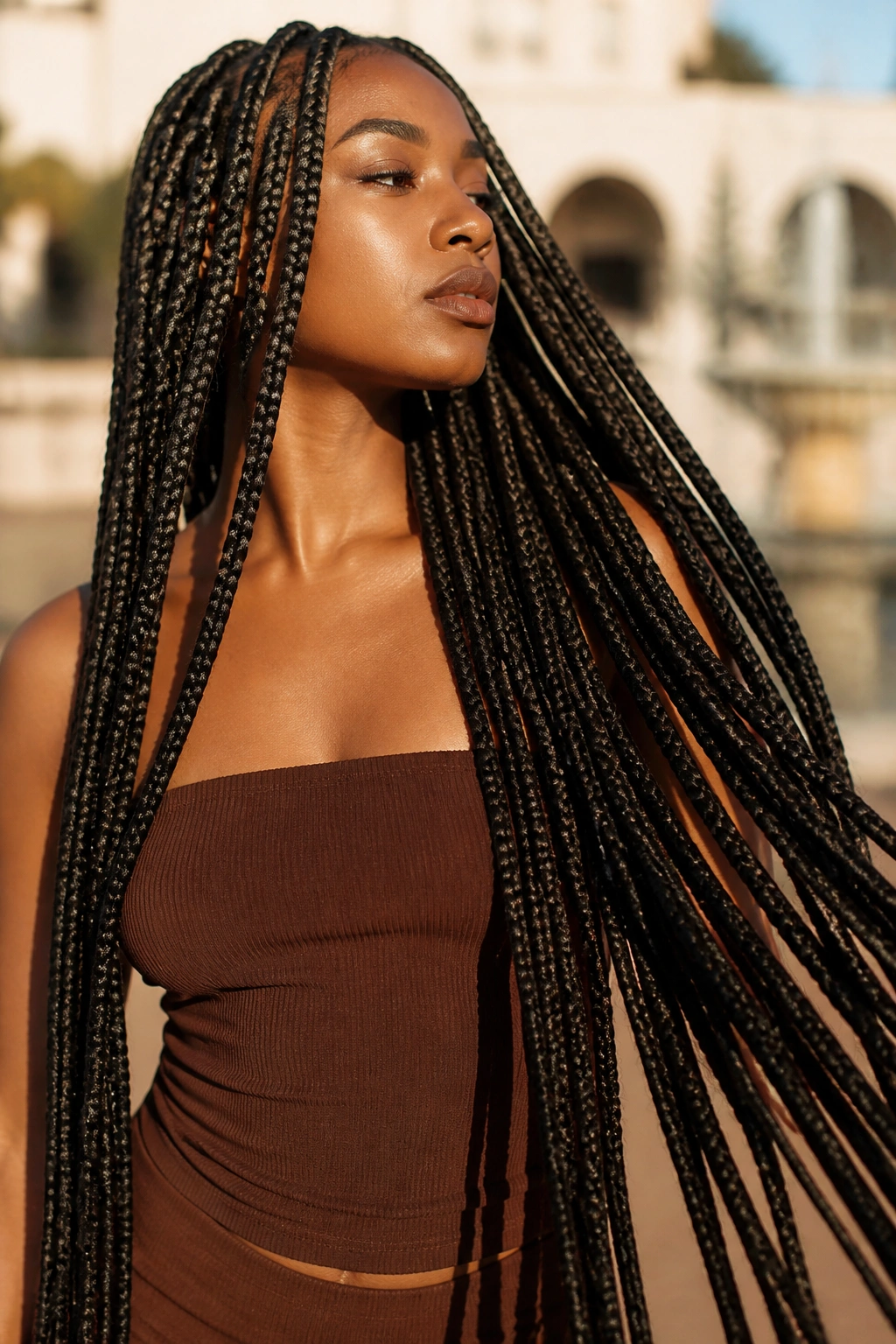
There is no pretending here. Extra-long box braids are about drama, and they know it. The length can fall past the waist or farther, and the whole style becomes a statement the moment you turn around.
The important part is keeping the weight under control. Long braids look impressive, but if the install is too thick at the root, your neck will feel it after the first day. Medium-sized sections and knotless techniques help here because they spread the pressure more evenly.
The style is gorgeous when the ends are clean and the length is maintained. I would rather see slightly fewer, better-finished long braids than a dense set that looks tired the second you walk out the door.
This is also a style that benefits from a strong nighttime routine. Two loose braids, a satin scarf, and a little patience when detangling can save you from frizz that creeps in at the ends.
19. Goddess Box Braids With Face-Framing Pieces
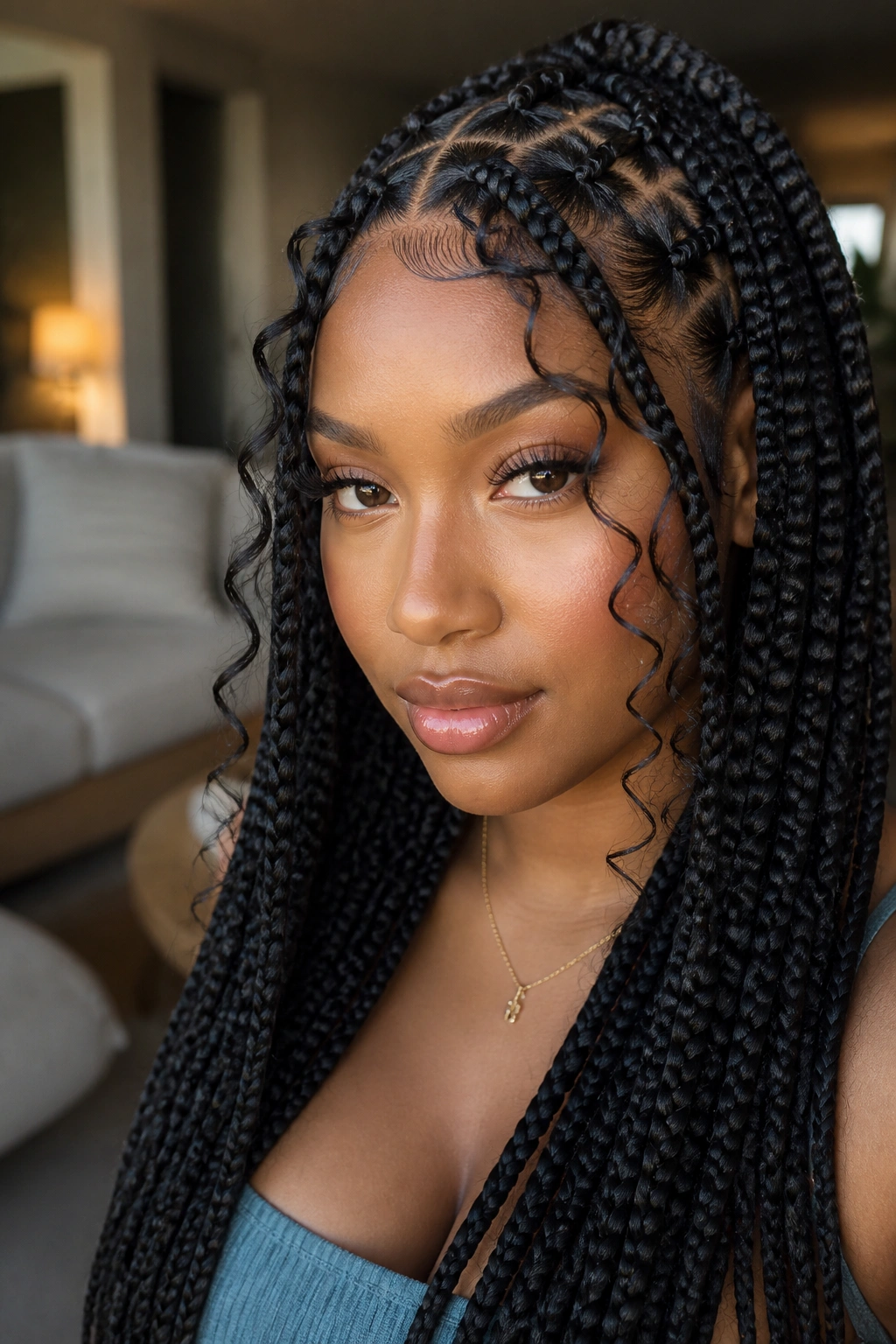
Goddess box braids borrow the softness people love from boho styles but keep the shape more controlled. Instead of leaving loose curls everywhere, you get a few face-framing pieces or curled accents that shape the front and soften the outline.
That small touch changes the feel of the whole style. The face opens up, the front moves a little, and the braids no longer read as straight lines only. A few curls in the right place do a lot more than a lot of curls in the wrong place.
This is a good style for special events because it looks styled without needing much else. It can also help if you feel plain with standard braids but do not want a full curly set.
The face-framing pieces should sit where they flatter, not where they flop. Around the temples and along the cheekbones usually works well. A little mousse keeps them from turning into fuzzy little springs.
20. Asymmetrical Side-Part Box Braids

A strong side part with more braids falling on one side gives the whole style a sharper shape. It feels slightly unexpected, which is the point. The asymmetry adds tension and movement without changing the actual braid pattern.
This style is especially nice when you want your braids to feel styled even on a plain day. One side can tuck behind the ear while the other side carries the volume, and the contrast makes the face look framed instead of hidden.
Why the Uneven Shape Works
Unlike a centered part, an asymmetrical shape gives the eye somewhere to travel. That can soften a round face, lengthen a shorter face, or add interest to a set of braids that would otherwise sit very evenly.
Keep the smaller side neat. Seriously. If that side gets frizzy or drifts too far back, the whole style loses its edge and starts looking accidental.
I like this look with medium to long braids because the shape shows up best when there is enough length to drape.
21. Crisscross Part Box Braids
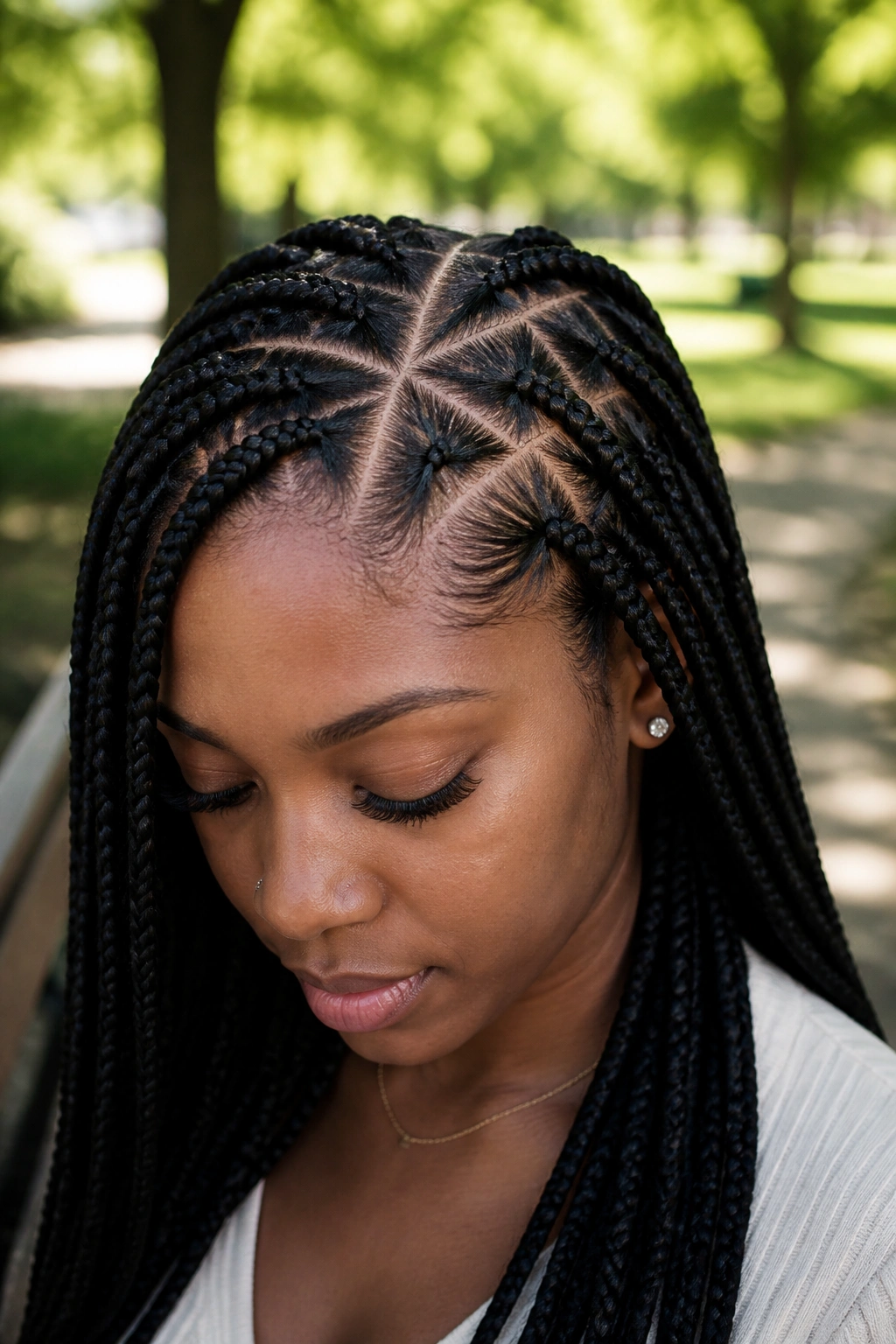
Crisscross parts are for the person who wants the parting itself to do the styling work. The sections overlap in a pattern that looks more intricate than standard squares, and even when the braids are plain, the scalp design carries the style.
Do not rush this one. The parting has to be mapped cleanly or the whole effect falls apart. The pattern is the point. If the lines are sloppy, there is nothing left to carry the look.
How to Get the Most From It
- Keep the braid size medium so the scalp pattern stays visible.
- Choose a braider who enjoys detailed parting, because this look depends on it.
- Wear the braids back or half-up if you want the crisscross design to show.
This style works well when you want a set that looks custom without relying on color or accessories. It is quietly detailed, and that is what makes it strong.
22. Box Braids Styled Into Space Buns
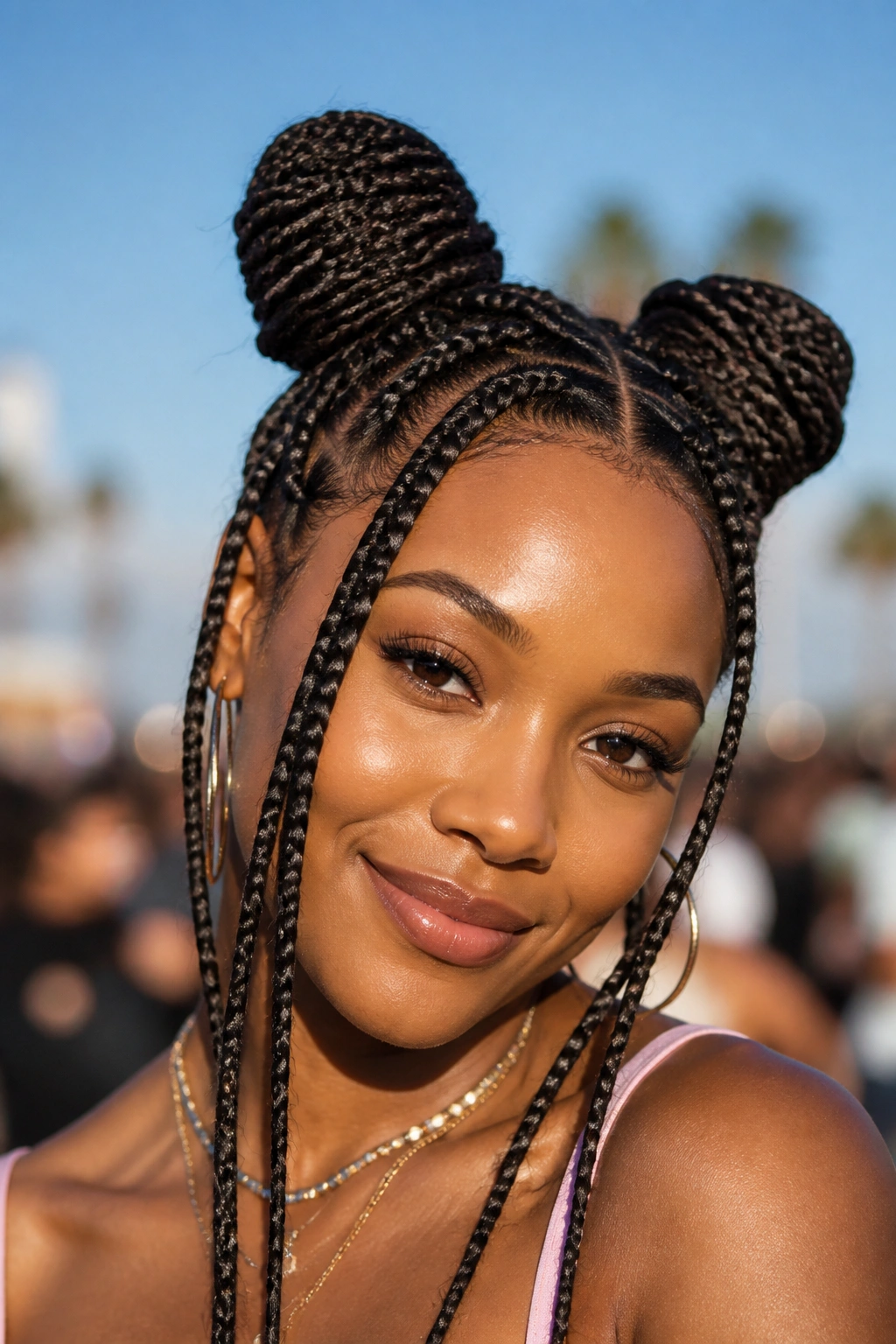
Space buns make box braids feel playful in the best way. Two buns, high on the head or slightly off-center, turn the braids into something lighter and more casual without changing the actual install.
The shape works best with medium-length braids. Too short, and the buns do not hold their shape. Too long and the weight starts to pull on the scalp unless you pin carefully and keep the buns loose.
A little mess is fine here. Actually, it looks better that way. Perfectly tight buns on braids can look stiff, while softer buns keep the style from feeling overworked.
This is a good choice for weekends, concerts, and any day when you want your hair out of your face but still visible. If you like a playful shape without sacrificing protection, space buns are a solid pick.
23. Braided Crown Box Braids

A braided crown wraps the braids around the head like a halo, and the result feels tidy, elegant, and protective at the same time. The style clears the neck, keeps the ends tucked away, and puts the focus on the face.
The crown shape works especially well when you want a formal look without needing heat or loose curls. It can be pinned tightly for a clean finish or left a little fuller for softness. Either way, the braid line around the head should look deliberate.
The best versions use a few hidden pins placed under the braid instead of jammed where everyone can see them. A strong pin placement keeps the crown from slipping while still looking smooth from the front.
This is one of those styles that looks more complicated than it is. That is part of the appeal.
24. Scarf-Wrapped Box Braids
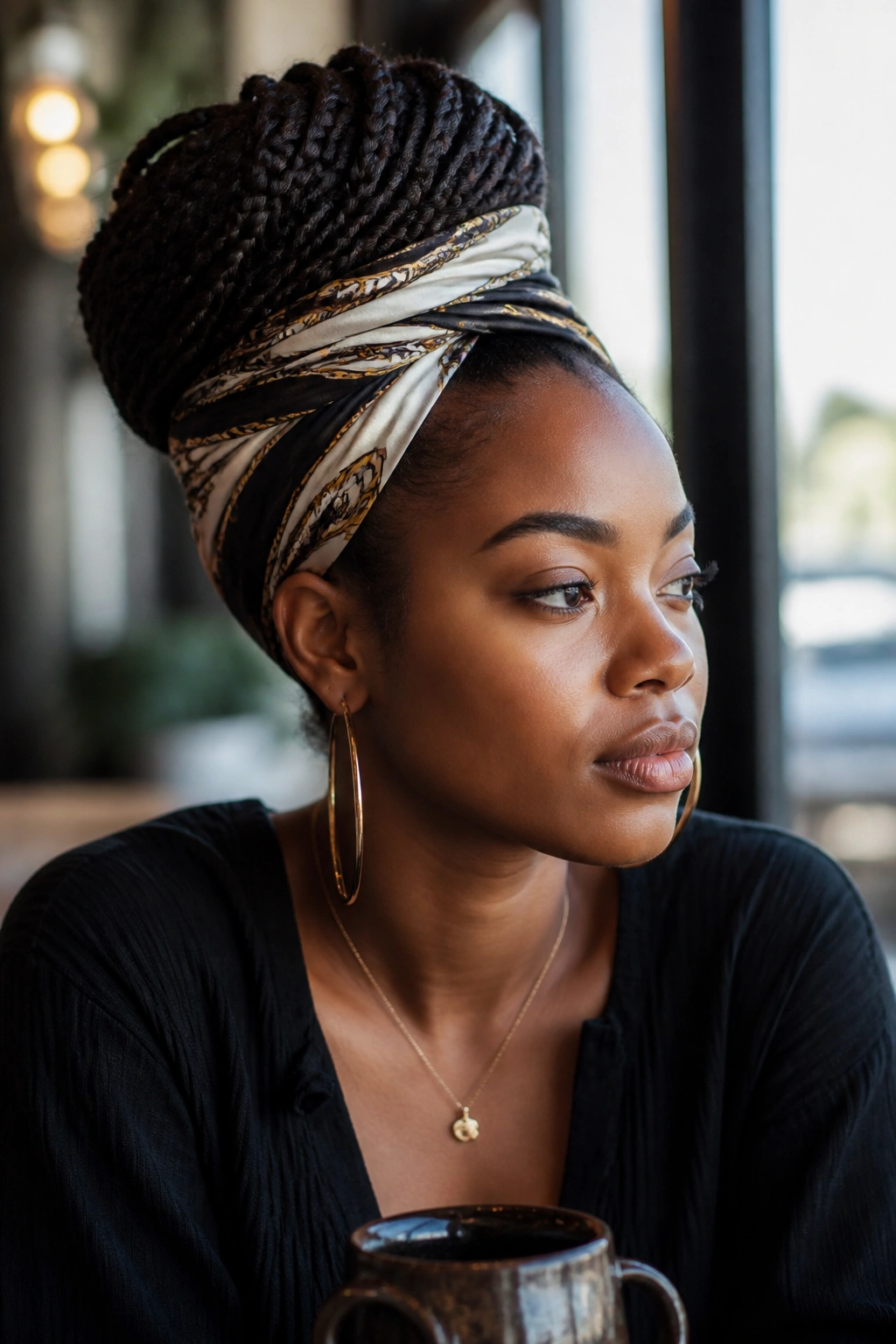
A silk or satin scarf can change a braid style without changing the braids at all. Wrapped around the base, tied at the crown, or woven through the lengths, it adds color and protects the hair in one move.
Cotton scarves are a different story. They grab at the hair and can rough up the surface if you wear them often. Smooth fabric matters. Satin and silk slide instead of snagging, which is exactly what you want on braided hair.
Why the Scarf Does Two Jobs
It keeps the style looking fresh while also giving your edges a little break from constant exposure. That makes it useful on low-key days, wash days, and travel days when you want a quick fix that still looks intentional.
A patterned scarf can also solve the problem of braids that feel a bit too plain after a couple of weeks. Tie it low, fold it wide, or wrap it like a headband. Any of those moves can make the whole style feel new again.
25. Pinned-Up Box Braids for Busy Days
Pinned-up braids are the quiet hero of the list. No big shape, no special parting, no drama. Just a style that gets the hair off your shoulders, keeps the ends tucked in, and lets you move through the day without fighting your own hair.
The best version usually starts with a low tuck or a loose roll at the back of the head. From there, a few strong pins hold the shape in place. If you want more polish, smooth the front and let the back sit clean. If you want less fuss, leave a little fullness near the crown and call it done.
This is the one I keep coming back to when the goal is simple: look neat and stay comfortable. It works for errands, travel, workouts, and long stretches where wearing the braids loose would get in the way.
Not every braid style needs to announce itself. Sometimes the smartest move is the one that stays out of your way and still looks good from every angle.
