



A good haircut should survive a missed wash day, a rushed shower, and one of those mornings when you have exactly nine minutes to get out the door. That is the whole test. If a style only looks good under perfect conditions, it is a headache, not a haircut.
That is why low maintenance haircuts for busy women are less about going short for the sake of it and more about choosing a shape that holds itself together when you barely touch it. The right cut can make air-drying look intentional, cut down on flat-iron time, and save you from fighting your own hair every single morning.
Texture matters. A blunt line can make fine hair look fuller. A few smart layers can stop thick hair from turning into a triangle. Curly hair needs a shape that respects the curl pattern, not one that gets hacked into submission. And yes, the difference between “easy” and “annoying” can be as small as half an inch in the wrong place.
The styles below are the ones I keep coming back to when people want hair that looks polished without living at the mirror. Some are short. Some are shoulder-length. Some keep the length but remove the drama. All of them are built for real life, not a photo shoot.
1. The Collarbone Lob
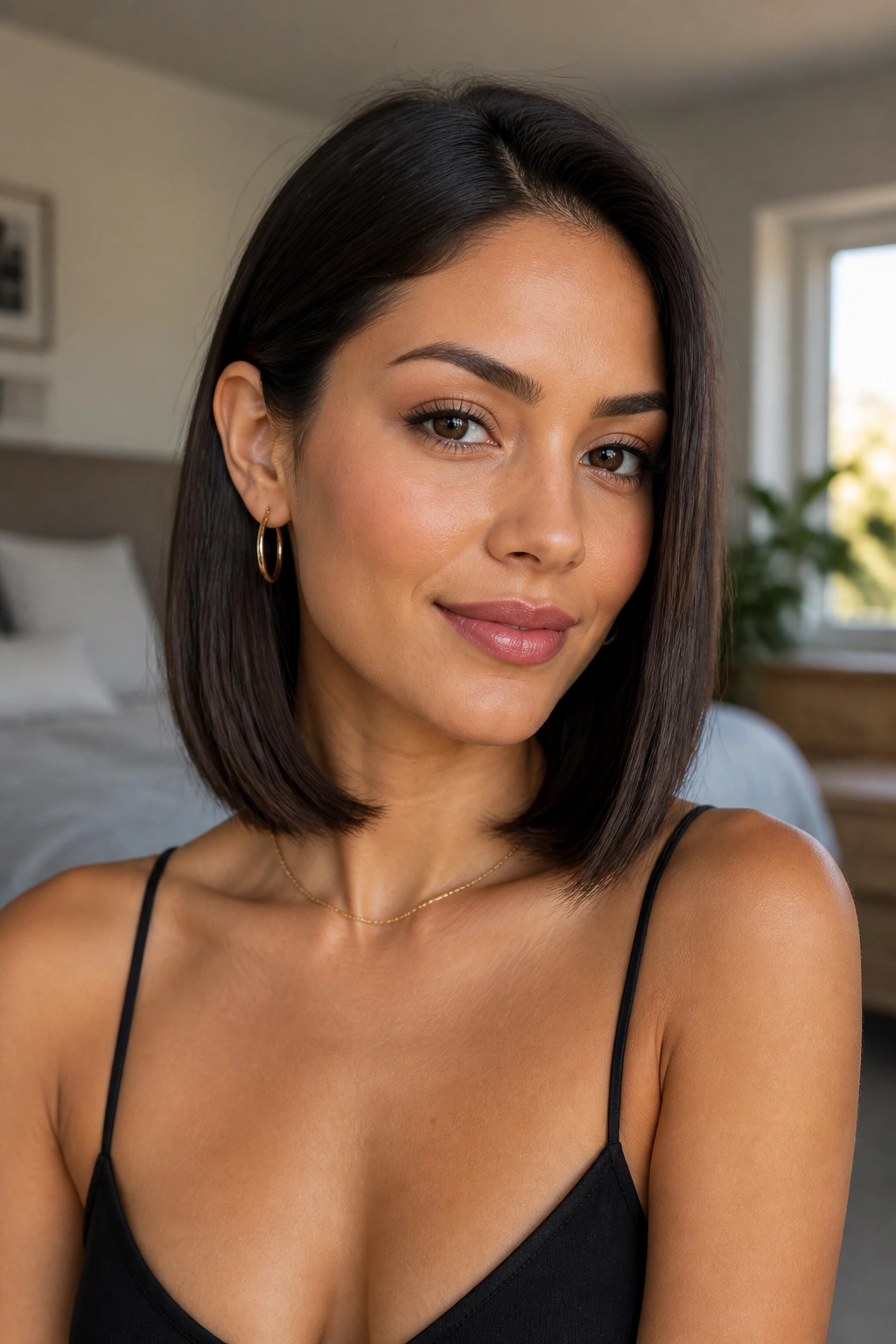
The collarbone lob is the haircut I recommend when someone wants polish and doesn’t want to think about it before coffee. It sits at a length that still tucks behind the ear, still fits into a low ponytail, and still dries faster than long hair. That alone saves time.
What to ask for
- A blunt or slightly soft line that lands right at the collarbone
- Very light internal layering, or none at all
- Ends that are clean, not wispy
This cut works because it has enough weight to lie down on its own. You can air-dry it with a little cream, rough-dry it with your hands, or give the ends a small bend if you feel like it. No daily round-brush routine required.
It’s a smart choice if your hair gets puffy when it’s too short and limp when it’s too long. A trim every 8 to 10 weeks keeps the line fresh.
2. The French Bob

A French bob does one thing well: it looks finished with almost no styling. The cut usually lands around the jaw or just below it, which means the ends dry fast and don’t drag your face down. It has that neat, slightly undone feel that works even when you let the hair fall where it wants to.
Short hair is easier to manage, but only if the shape is good. That’s the part people miss. A French bob needs a clean outline and a little texture through the ends, not a pile of choppy layers that stick out in weird directions.
Best on straight or softly wavy hair, though a good stylist can adapt it for more texture. If your mornings are chaotic, this is one of the few short cuts that still looks deliberate after a quick finger-comb and a dab of styling paste.
3. The Classic Pixie
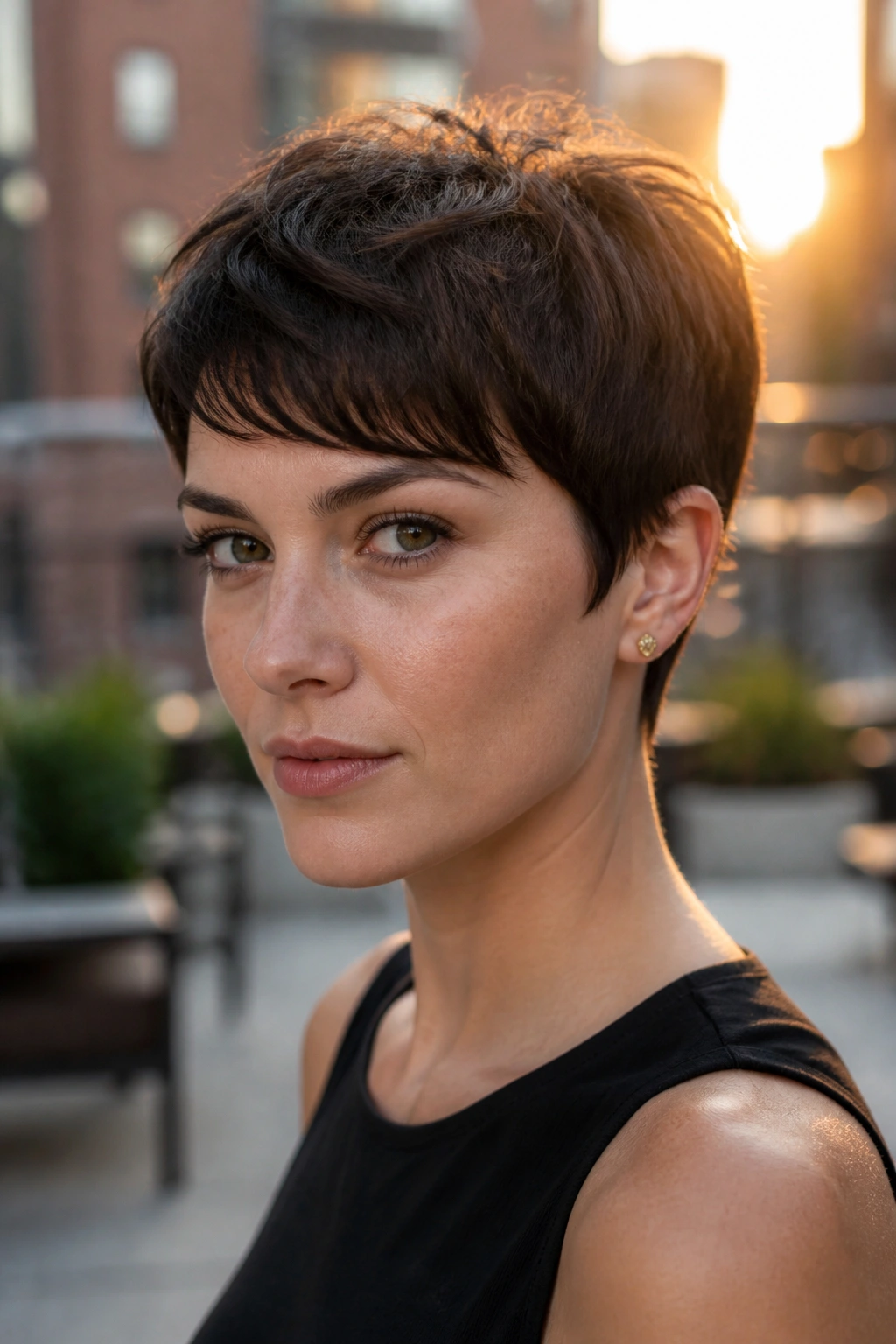
Need the shortest cut on this list? The classic pixie earns its spot. It’s fast to wash, fast to dry, and fast to style. For some women, that is the entire appeal. There is no negotiating with shoulder-length sections that flip out or ends that tangle into a knot before lunch.
Why it stays easy
- The silhouette is short enough to dry in minutes
- The top has enough length to move, but not enough to become heavy
- The sides and nape stay neat with regular trims
The trick is leaving a little length on top so the cut does not feel severe. Ask for softness around the ears and nape if you want it to grow out more cleanly. A pixie is low maintenance in daily life, but it does ask for salon upkeep every 4 to 6 weeks if you want it to stay sharp.
It suits busy women who hate styling more than they hate trims. Simple trade. Fair enough.
4. The Bixie
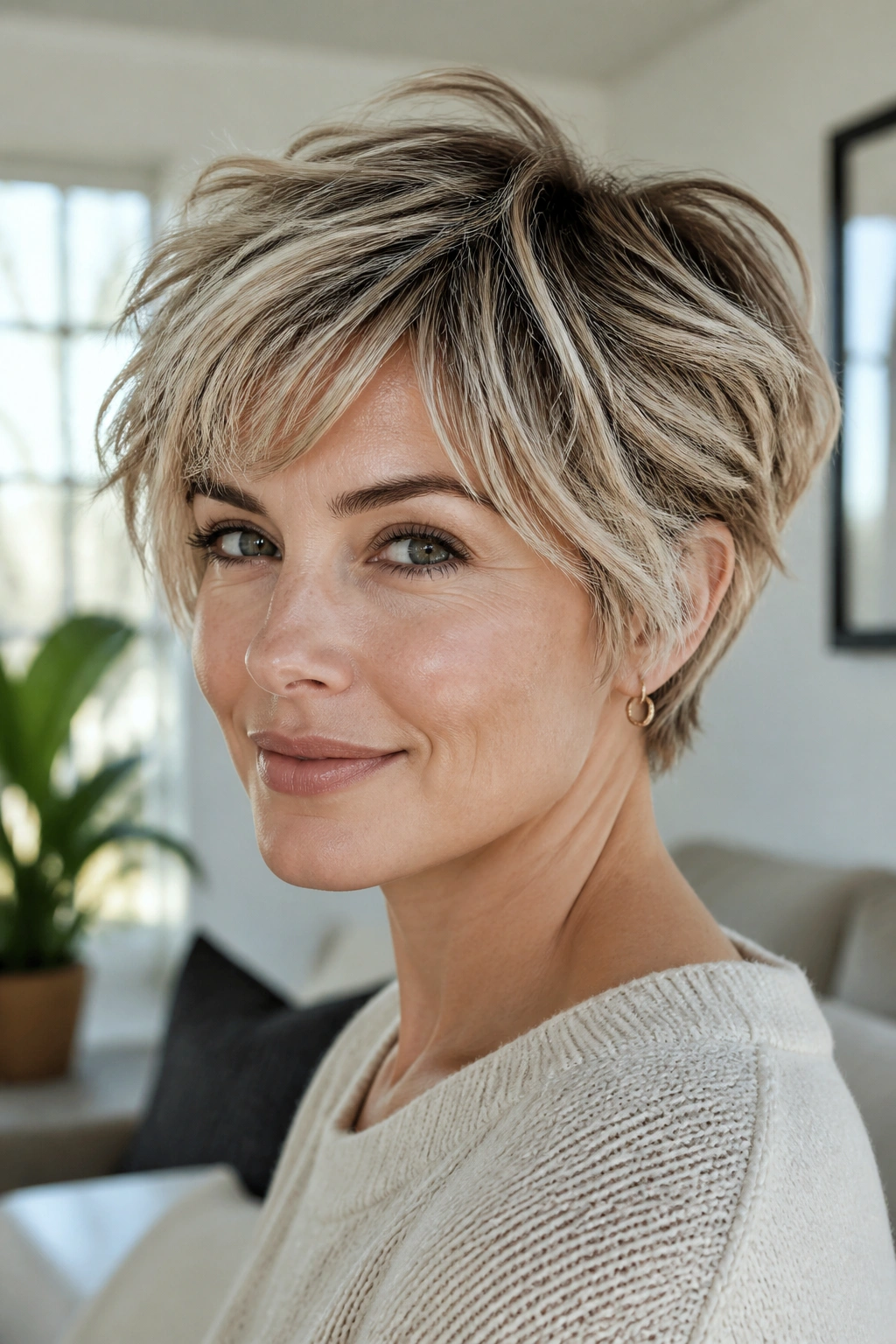
The bixie is what happens when a bob and a pixie meet halfway. It has the shortness and quick drying time of a pixie, but enough shape around the jaw to feel less bare. That makes it a good stepping-stone if you want shorter hair without the full commitment of a cropped cut.
What makes the bixie forgiving is the movement in the top and crown. You can wear it a little messy, tuck one side behind the ear, or smooth it down for a cleaner look. It does not need a perfect finish to make sense.
This cut is especially kind to fine hair, because the layered top keeps the style from lying flat all day. Keep the layers soft, though. If the cut gets too choppy, it starts asking for more styling than a busy schedule wants to give.
5. The Blunt Bob
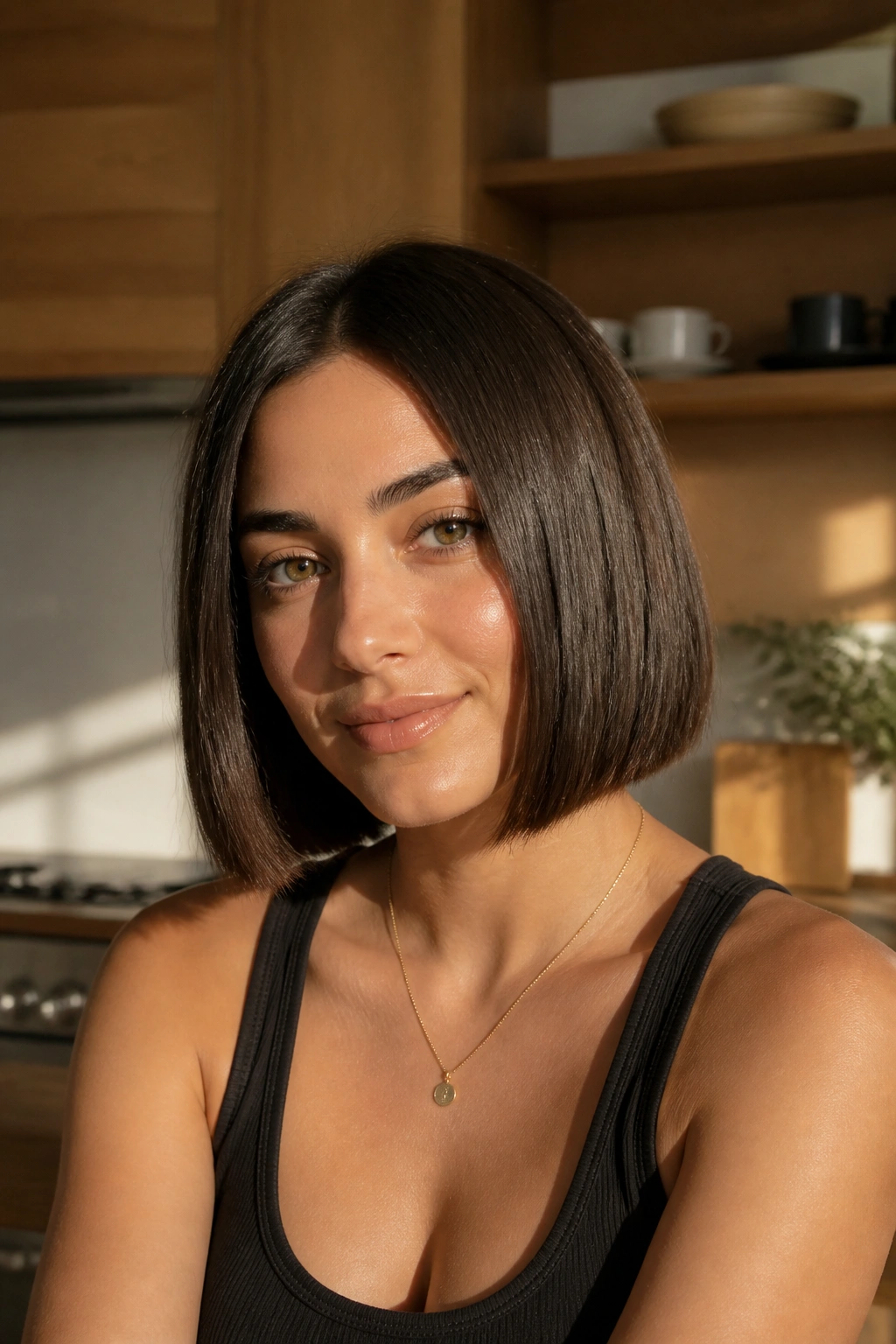
A blunt bob sounds plain, and that’s exactly why it works. One clean line at the ends makes the hair look thicker and neater, especially if your hair is fine or medium in density. There’s no extra fluff to tame.
It also grows out in a tidy way. That matters more than people think. A heavy layered bob can turn uneven fast, but a blunt shape stays readable for weeks because the outline remains strong even when it’s a little longer than planned.
If you want a style that air-dries into something decent on most days, this is a strong bet. Add a side part, tuck one side back, or leave it straight and simple. The cut does the work. You do not need to.
6. The Textured Crop

If your hair gets flat by noon, a textured crop fixes the problem at the cut level. This is a short, piecey style with movement through the crown and soft separation at the ends. It works because it never tries to look too perfect.
How to style it fast
- Scrunch in a light mousse on damp hair
- Let it air-dry for a more relaxed finish
- Use a pea-sized amount of paste on dry hair if you want definition
The textured crop is good for women who want a short cut that still has personality. It suits straight to wavy hair best, and it can be especially useful for fine hair that needs a little lift at the roots. You will probably want a trim every 6 to 8 weeks so the shape stays clean.
This is not a “wash, brush, and go” haircut in the old-school sense. It’s better than that. It still looks good when you barely touch it.
7. The One-Length Bob
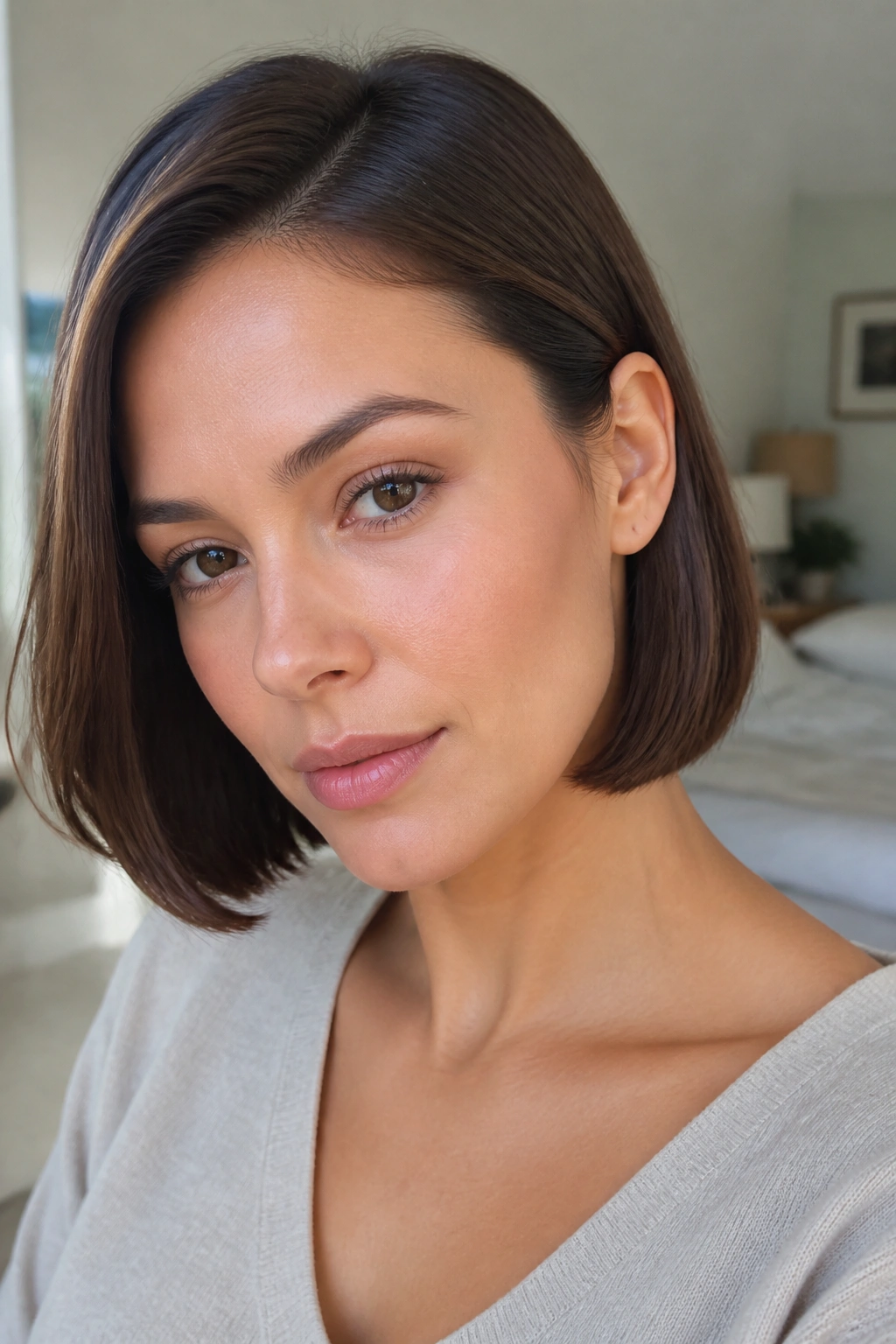
One-length bobs are the cleanest haircut in the room. No built-in drama. No hidden layering. Just a solid shape that falls where it should and doesn’t ask for much back from you.
That simplicity is the point. Hair that has the same length all around tends to behave more predictably, which is a gift if you’re not interested in wrestling with round brushes or curling tools. It also makes thick hair look more controlled and fine hair look denser at the ends.
A side part changes the feel right away, and a tuck behind one ear makes it look intentional in about three seconds. If your hair is the type that frizzes when over-layered, this is the safer bet. The cut stays crisp longer than people expect.
8. The Shoulder-Length Cut with Invisible Layers

Shoulder-length hair with invisible layers is the quiet overachiever of this list. It keeps the security of length, but the hidden layering takes out just enough bulk so the hair moves instead of sitting like a helmet. You get softness without a lot of visible fuss.
This is a good option if you want hair you can still pull back, clip up, or twist into a quick bun. That flexibility matters on days when you don’t have time to think. The shape should look full, not hacked apart, which is why the layers are best kept subtle and blended.
Ask for layers that start low and stay inside the shape rather than cutting big steps into the surface. That keeps the haircut easy to live with. It’s one of those styles that quietly makes your hair less annoying.
9. Long Layers with Face-Framing Pieces
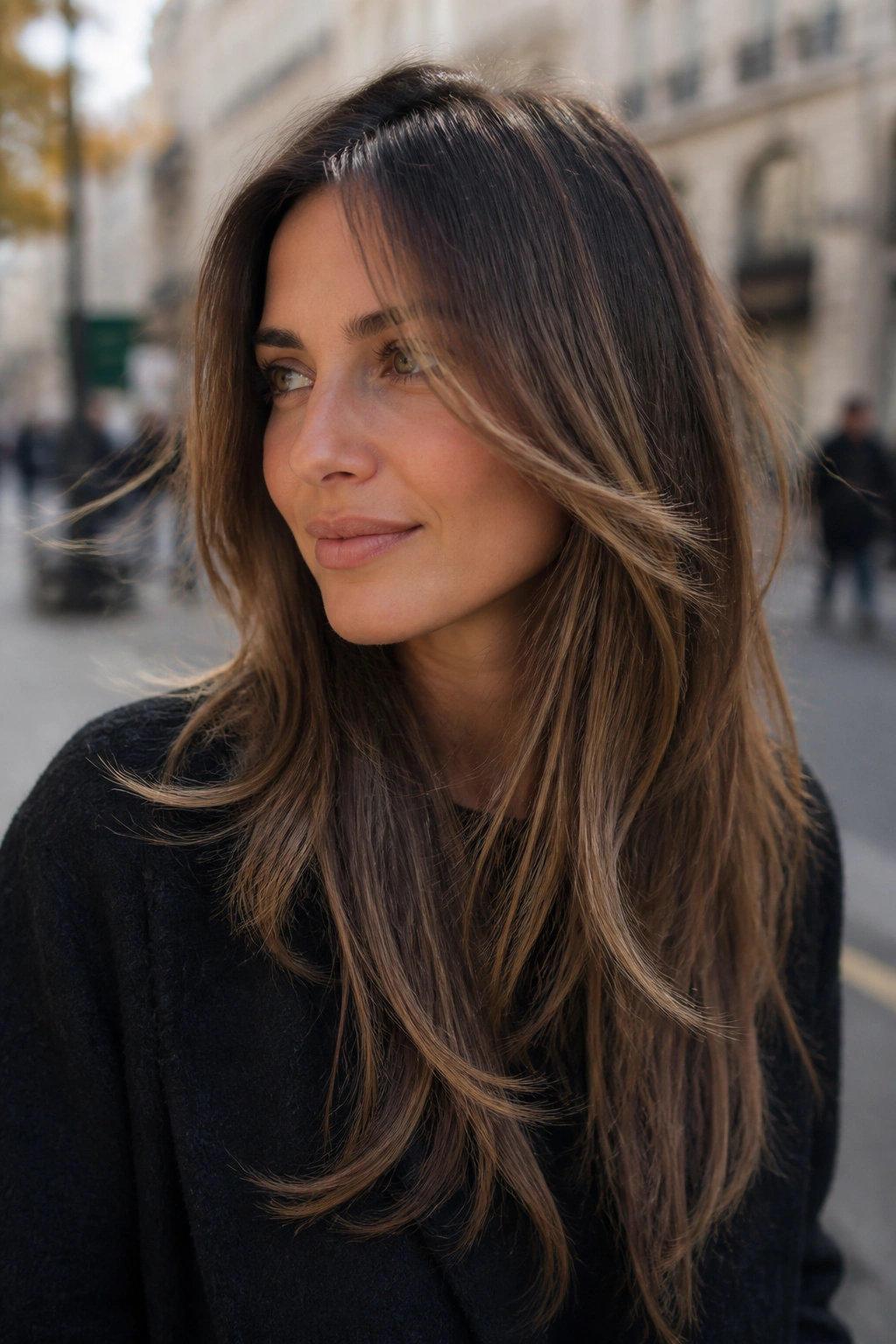
Long layers can be low maintenance, but only when they’re cut with a clear plan. If the layers start too high, the ends get thin and stringy. If they start too low, you don’t get much help at all. The sweet spot is usually below the chin.
The part that matters most
- Keep the face-framing pieces around the cheekbone or jaw
- Leave the longest layers heavy enough to fall smoothly
- Avoid too many short pieces around the front if your hair is fine
This cut is good for women who want to keep their length but lose some of the weight and flatness. It works especially well when hair is worn in waves, braids, or a simple ponytail. You can also let it air-dry and still get shape from the layers.
The useful part is not just how it looks down. It’s how it behaves when it’s tied up, clipped back, or left half-finished because the day got messy.
10. The Modern Shag

A modern shag is for women who like movement more than perfect lines. It builds texture through the mid-lengths and ends, so the hair falls in a softer, more lived-in way. That means less fighting with a brush and more letting the cut do what it was built to do.
The best shag is not a pile of random layers. It should have a shape. If the cut gets too broken up, styling turns into a job. Keep the length in a range that still brushes the shoulders or collarbone, and the haircut stays wearable.
What to ask for
- Soft, blended layers rather than sharp choppy ones
- Some movement around the crown
- Ends that can air-dry with a bit of texture cream
This cut works best if your hair has some natural wave. Straight hair can wear it too, but you may need a little help with a diffuser or a few quick bends.
11. Curtain Bangs with Mid-Length Hair

Curtain bangs scare people because they sound fussy. Good ones aren’t. The trick is keeping them long enough to split around the face instead of sitting as a blunt fringe that needs constant trimming. They should blend into the rest of the hair, not fight it.
Mid-length hair with curtain bangs gives you shape around the face without a full haircut overhaul. That’s useful if you want to change the look but keep your routine basically the same. A little round-brush work on the bangs can make the whole style look done, even if the rest of your hair is left alone.
If your cowlick pushes bangs in strange directions, ask for them a touch longer. They’re easier to live with that way. Short bangs are cute for about ten minutes. Long, soft curtain bangs stay useful.
12. The Wavy Lob

Wavy hair and a lob are natural partners. The length is long enough to show movement and short enough to dry before you get bored. That makes this one of the easiest low maintenance haircuts for busy women who already know their hair has a bit of bend in it.
The cut should support the wave pattern, not flatten it. Too much thinning can make wavy hair frizzier, and too much weight can pull the curl out. A good lob sits in the middle: enough shape to keep the wave visible, enough length to stay calm.
Use a little mousse or curl cream on damp hair and leave it alone. That is often enough. If your hair looks nice when it air-dries with a touch of texture, this haircut will probably become one of those cuts you keep returning to.
13. The Subtle Asymmetrical Bob

A subtle asymmetrical bob gives you shape without turning your mornings into a project. One side is slightly longer than the other, usually by a small amount — half an inch to an inch is plenty. Anything more starts to feel like a statement instead of a practical haircut.
The best part is that it creates interest without a lot of styling effort. A side part emphasizes the angle, and the slight imbalance helps the cut look intentional even when the hair is not perfectly smooth. That’s useful when you’re rushing.
This is a good choice for straight or lightly wavy hair. If the angle is kept gentle, it grows out without a dramatic line of demarcation. You still want trims, but not obsessive ones.
14. The Rounded Bob
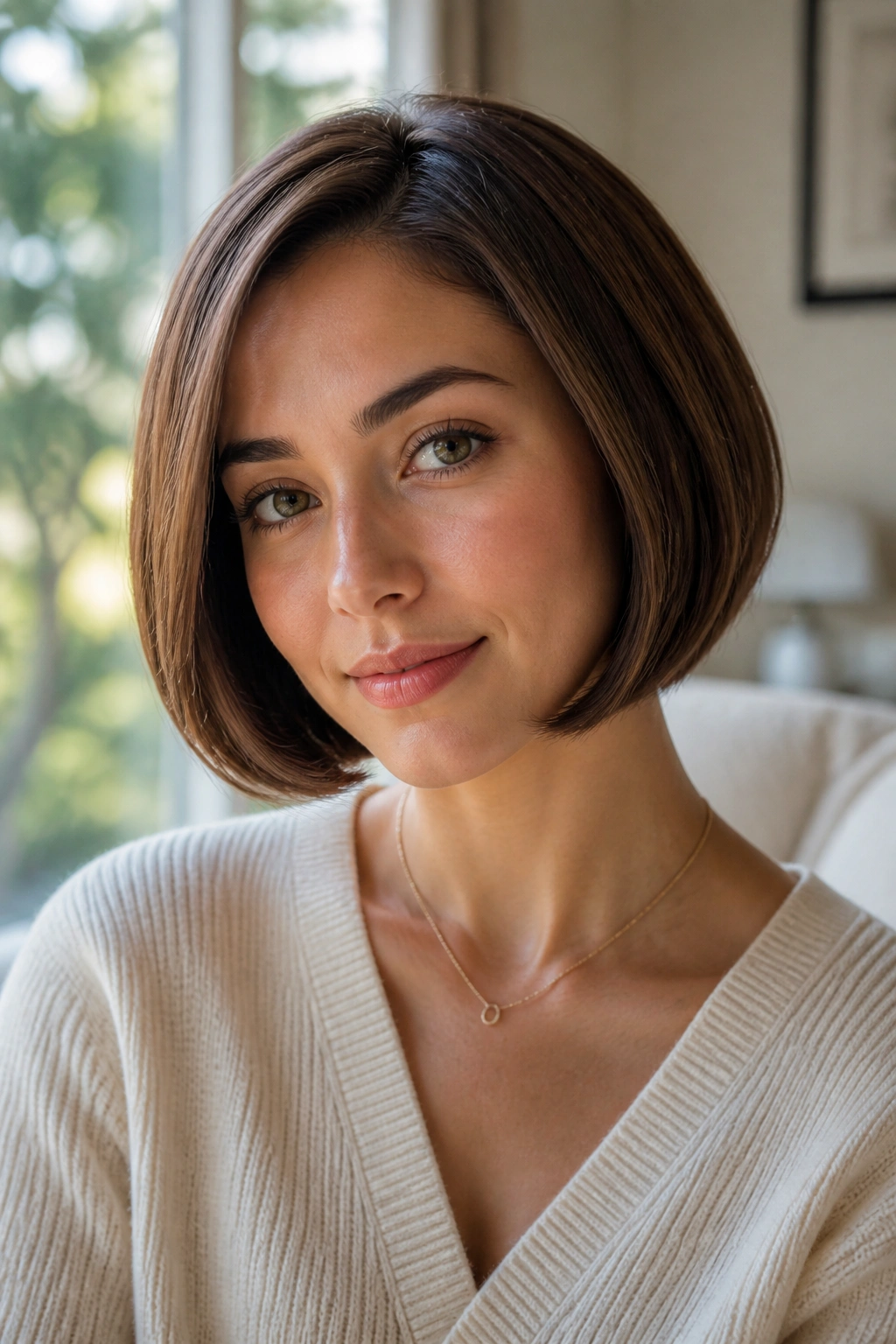
A rounded bob sits close to the jaw and makes thick hair behave. The shape curves in softly instead of hanging straight down, which keeps the ends from fanning out or looking bulky. It’s tidy without feeling stiff.
This cut is especially good if your hair has a bit of body and likes to puff at the sides. The rounded shape controls that. A quick blow-dry with a brush can polish it up, but on many hair types you won’t need much more than a little smoothing cream and a rough dry.
If you’ve spent years trying to flatten thick hair into submission, this bob is a nicer solution. It uses the hair’s density instead of fighting it. That’s usually the smarter move.
15. The Clavicut
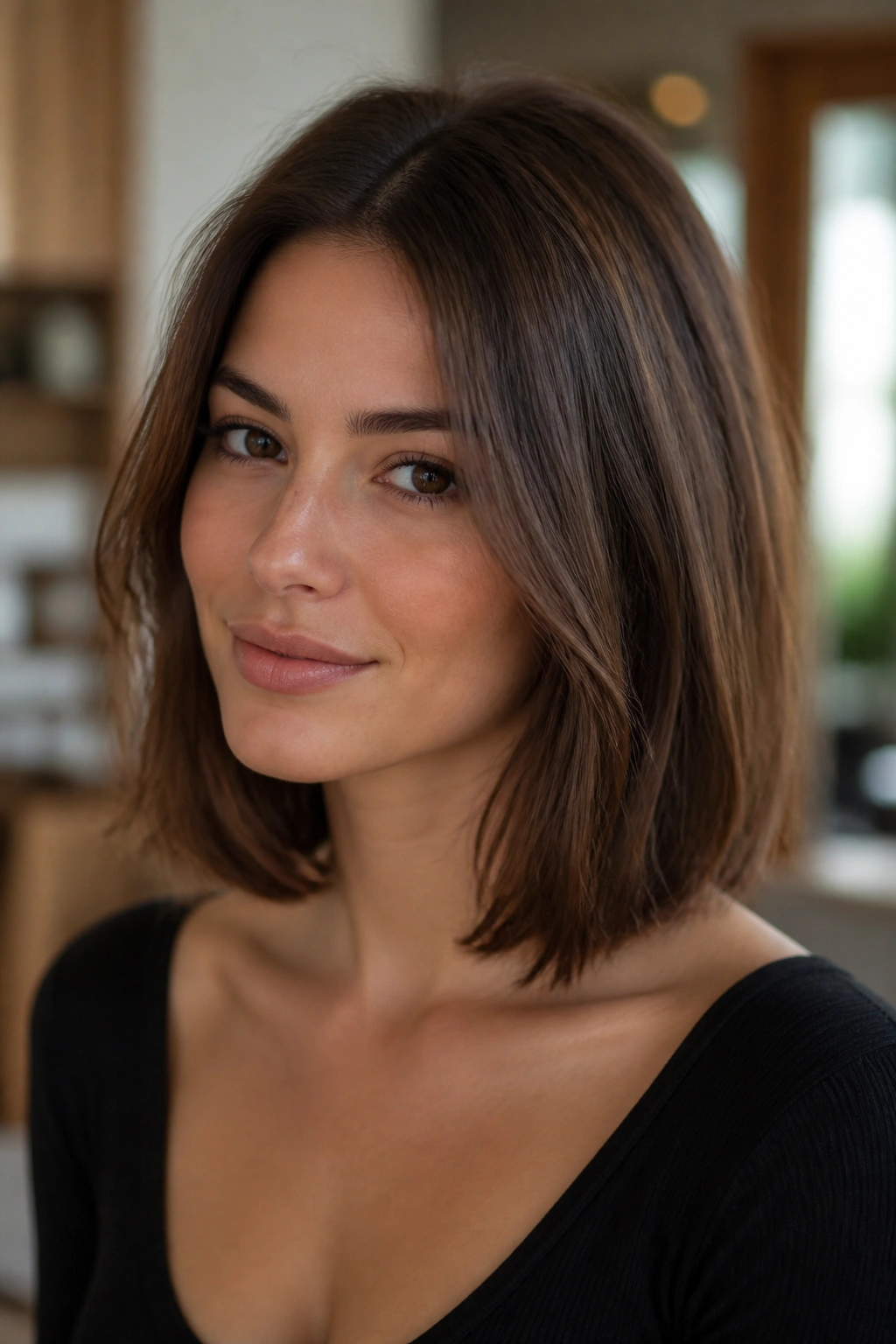
The clavicut lives right at the collarbone, where hair can still be tied back in a hurry. It sounds almost too simple, and that simplicity is part of the appeal. You get length, but not so much length that every wash day becomes a half-hour event.
Why it works so well
- It avoids the awkward flip that can happen at shoulder length
- It fits into clips, low buns, and half-up styles
- It looks neat even when the ends are not freshly styled
Compared with a shorter lob, the clavicut gives a little more versatility. Compared with longer hair, it cuts down on drying time and tangles. It is one of the easiest shapes to live with if you want hair that still feels feminine and practical.
Ask for a soft, blunt end with minimal layering unless your hair is very thick. That keeps the outline clean and the upkeep low.
16. The Curly Lob

Curly hair needs a different kind of easy-care cut. A curly lob lands in that sweet spot where the curls have room to spring up, but the length is still manageable. It also keeps the shape from turning triangular, which is the problem with too much bulk at the bottom.
The key is cutting for the curl pattern, not against it. That usually means shape-building layers placed where the curls need room, not random thinning at the ends. A stylist who understands curls will often cut the hair dry or mostly dry so they can see what the curls actually do.
Use a leave-in conditioner or curl cream and stop fussing. Really. If the cut is right, you shouldn’t need a long routine just to get through a weekday. Trim it often enough to keep the shape balanced, usually every 8 to 12 weeks.
17. The Tapered Curly Cut
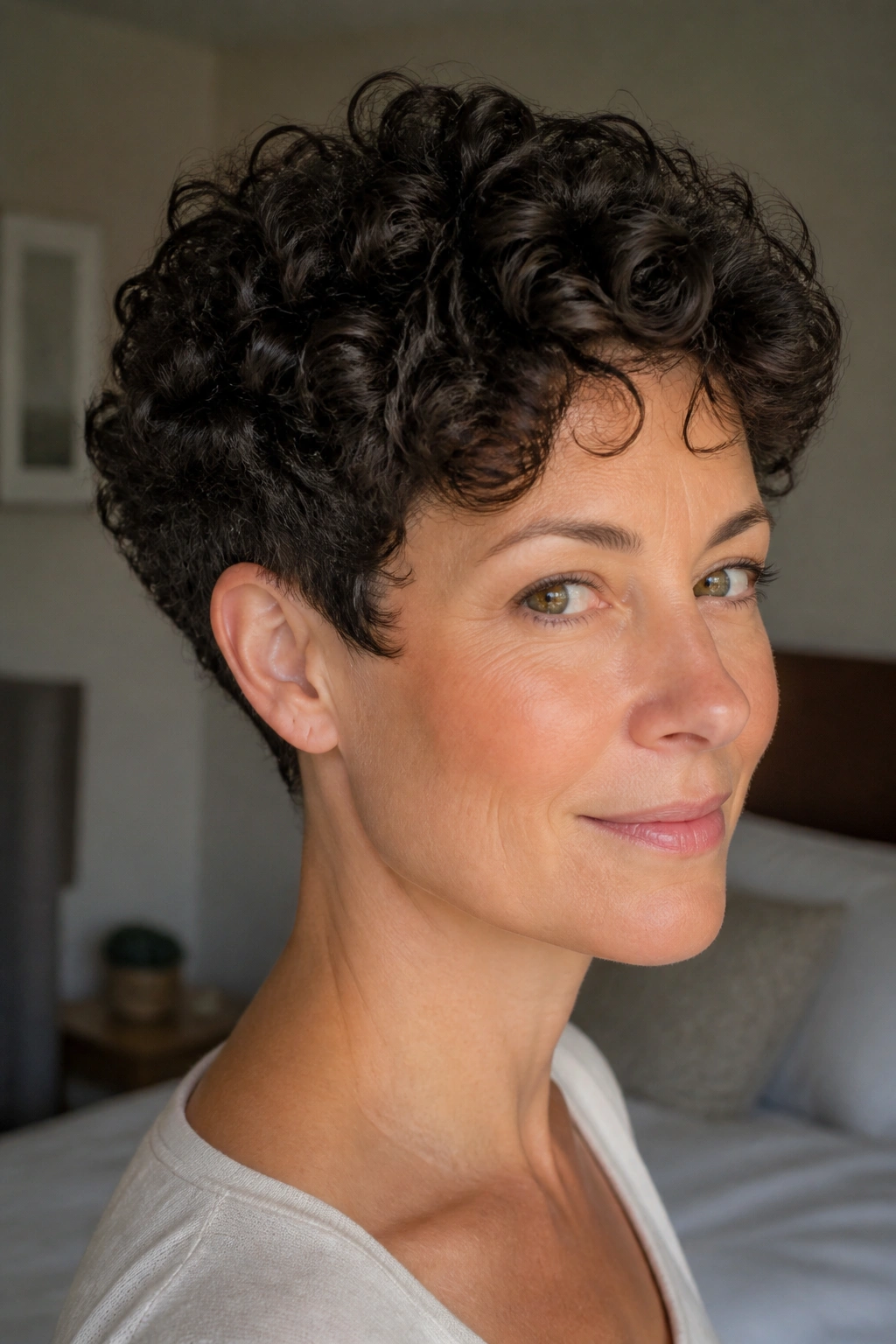
A tapered curly cut removes bulk where you don’t want it and leaves shape where you do. That usually means shorter volume near the nape and sides, with more length and lift toward the top or crown. On the right hair, it looks clean and full at the same time.
This is not a one-size-fits-all cut. It shines on coils and tighter curls that can get heavy at the bottom. If your hair takes forever to dry because there’s too much weight, tapering can help. It can also make styling easier because the shape stays visible without a lot of product.
Best use case
- Coily or dense curly hair
- Anyone who wants less bulk around the neck
- People who like definition without a lot of daily shaping
A good tapered cut can make your hair feel lighter the moment it’s done. That’s not a small thing.
18. The U-Cut for Long Hair
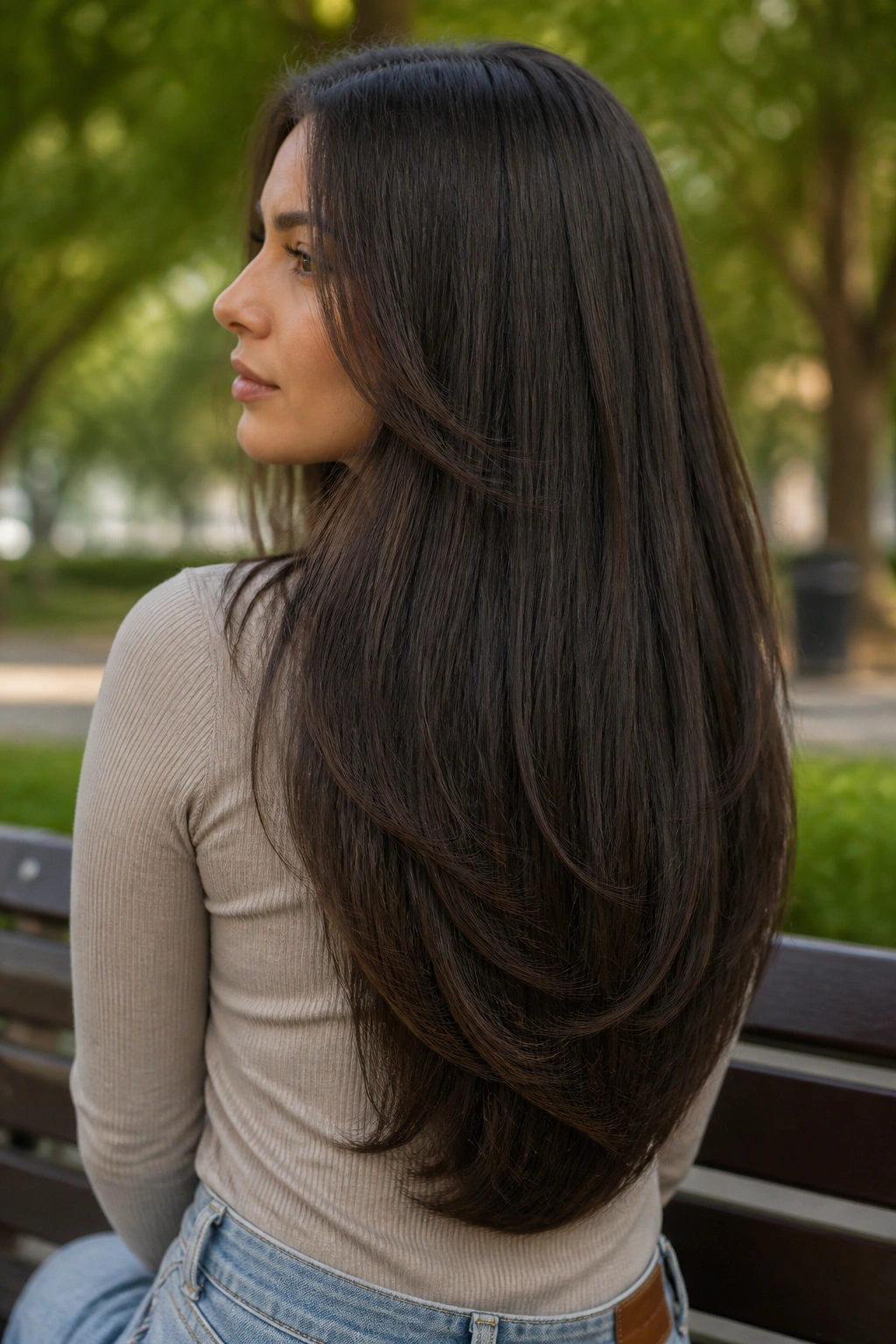
Long hair can still be low maintenance if the outline makes sense. A U-cut keeps the length full at the back while creating a softer curve instead of a hard straight line. That curve helps the hair move better and can make thick hair feel less heavy.
This is one of the better long-hair options if you want to keep your hair past the shoulders but stop it from feeling like a blanket. It also looks nice in braids, ponytails, and loose waves. Because the perimeter is shaped, the hair doesn’t rely on daily styling to look deliberate.
If your hair is dense, ask for the curve to be gentle and the layers to be minimal. If it’s fine, keep the cut even cleaner so the ends don’t look thin. Long hair is beautiful, sure, but beautiful hair that takes two hours to handle is a poor trade.
19. The Butterfly Cut
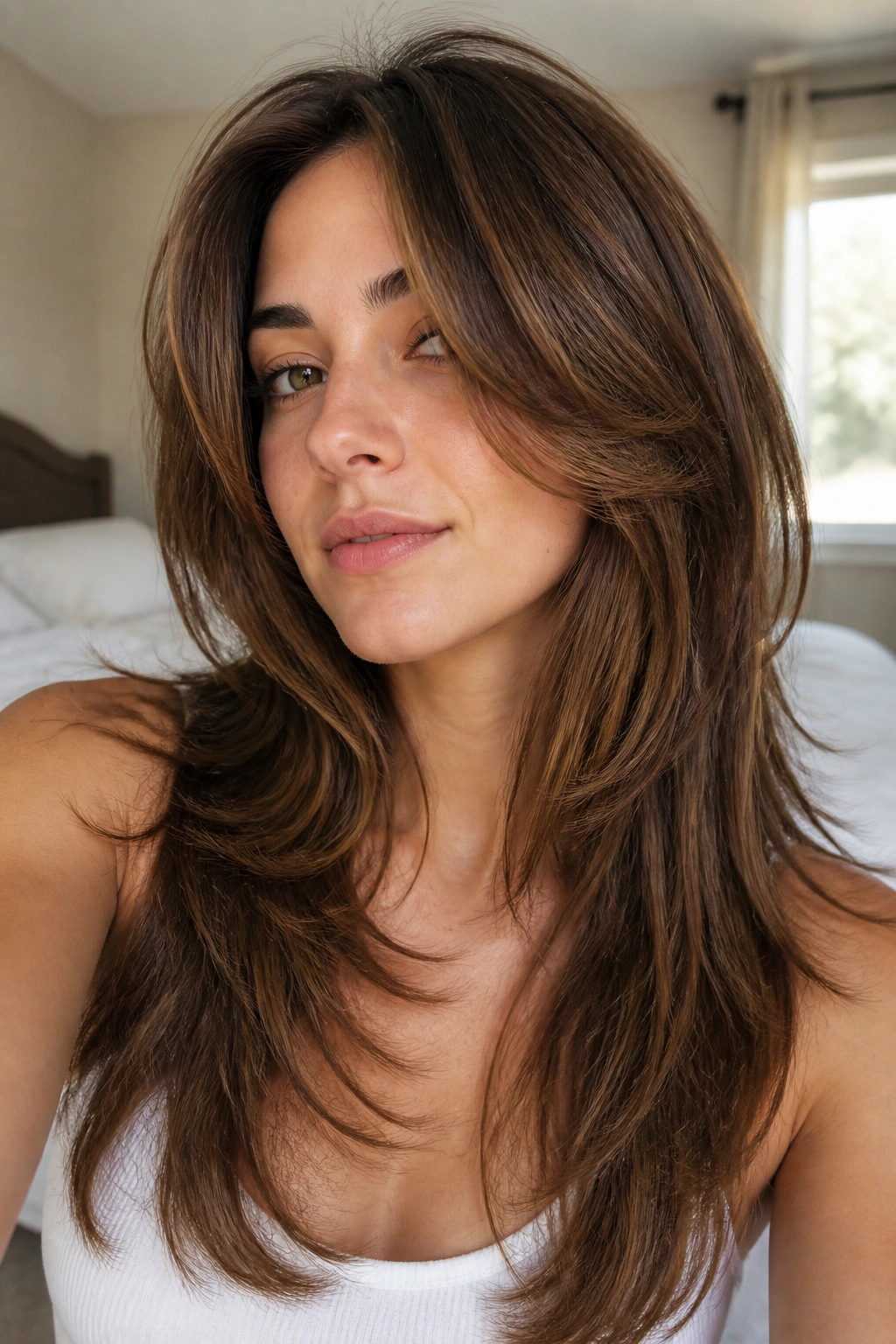
The butterfly cut is the one long-hair option that gives movement without chopping everything off. The shorter top layers fall around the cheekbone or jaw, while the longer bottom layer keeps the overall length. That setup gives you shape around the face and some lift at the crown.
It is a smart compromise if you like the idea of volume but still want to put your hair up. The top layers can be styled a little, or left alone for a more relaxed feel. The longer section carries the rest, so the haircut doesn’t disappear into fluff.
This cut does ask for a bit more styling than a blunt long cut. I would not call it the lowest maintenance on the list. But if you want your hair to feel lighter, look fuller, and still fit into a clip, it earns its place.
20. The Graduated Bob
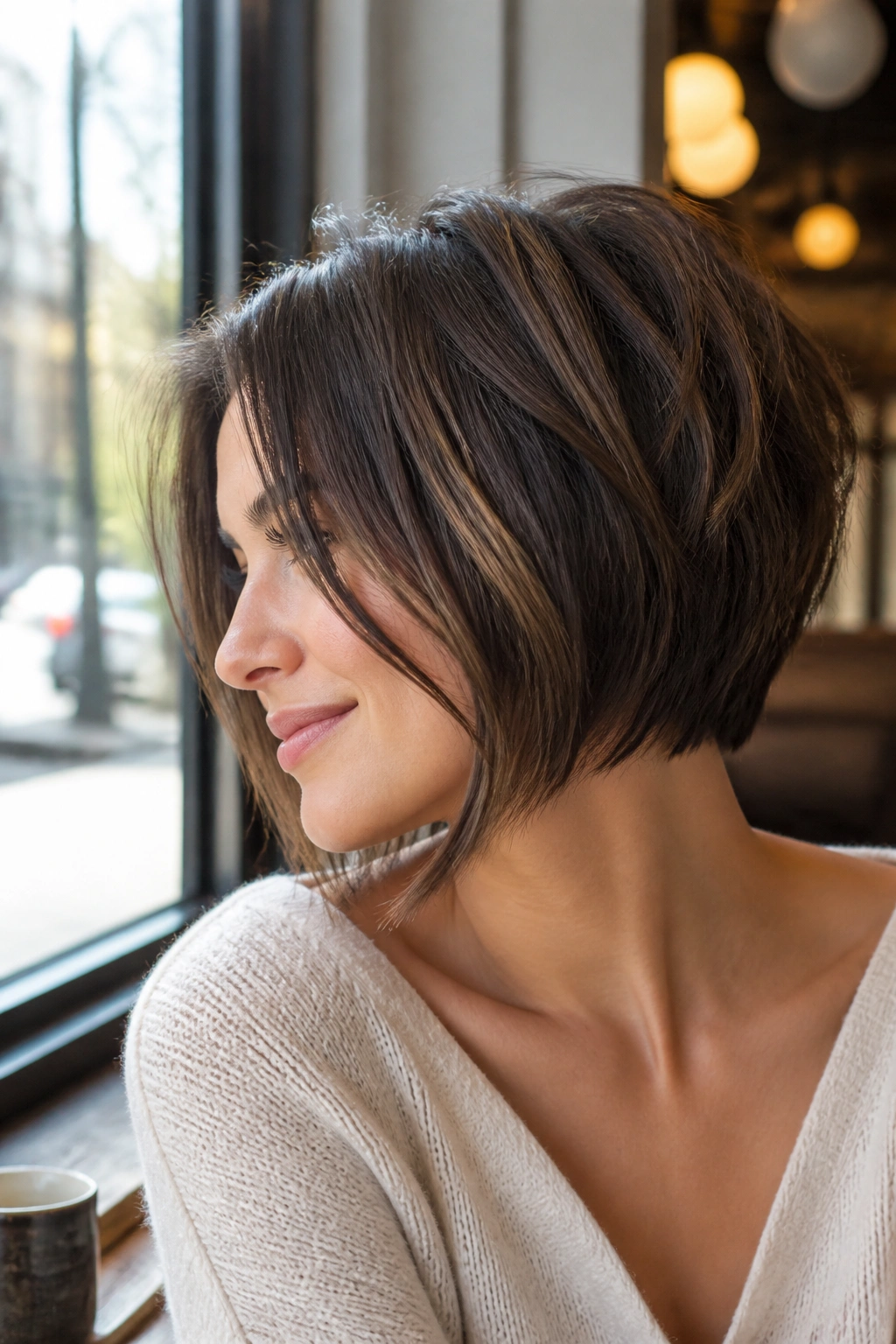
Graduated bobs do a neat trick: they keep the back tidy and the front flattering. The stacked shape at the nape adds lift, while the slightly longer front pieces keep the cut from looking too boxy. It’s precise, but not fussy.
This is a strong option for fine hair because the graduation gives the back some body without requiring much styling. You can blow-dry it with a round brush if you want to polish it, but the shape itself already carries a lot of the work. That’s the whole point of a good cut.
What to watch for
- Keep the stacking soft if your hair is thick
- Don’t let the back become too short unless you like frequent trims
- Ask for a front length that still feels wearable tucked behind the ear
It grows out best when the graduation is subtle. Too much angle, and the upkeep jumps.
21. The Razor Bob
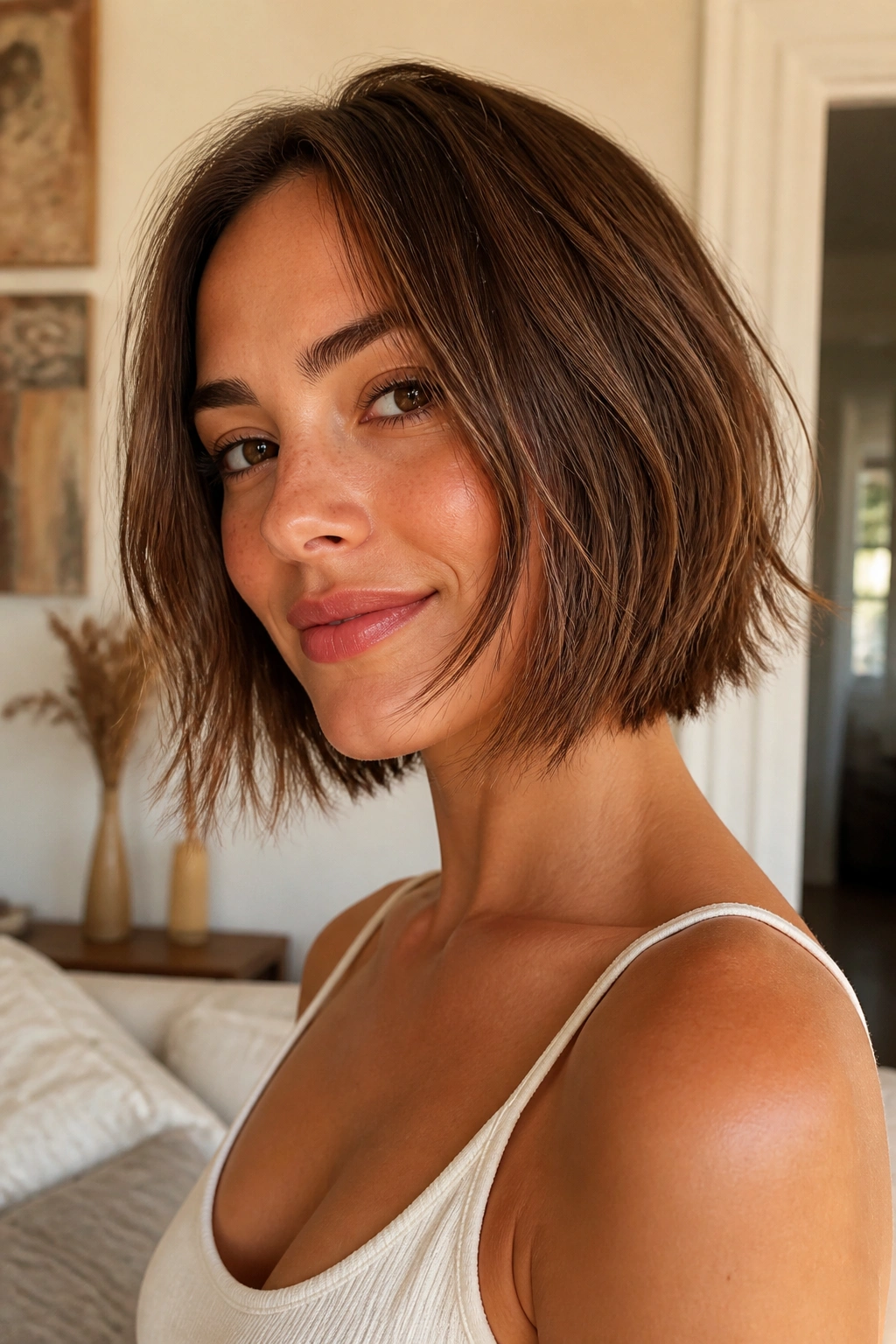
A razor bob is softer than a blunt one and a little less precious. The ends are sliced or shaped to create movement, which can be useful if your hair tends to feel stiff at the perimeter. The result is piecey and light, not heavy and blocky.
This cut works nicely on straight to wavy hair. It can keep fine hair from looking too severe, and it can help thicker hair feel less chunky at the bottom. The downside is that the razor has to be used with care. On very frizzy or damaged hair, too much razor work can make the ends look rough.
So ask for softness, not shredded layers. A good razor bob should still have a shape. It just won’t look as hard-edged as a blunt cut, which is useful if you like something that feels a little less formal.
22. The A-Line Bob
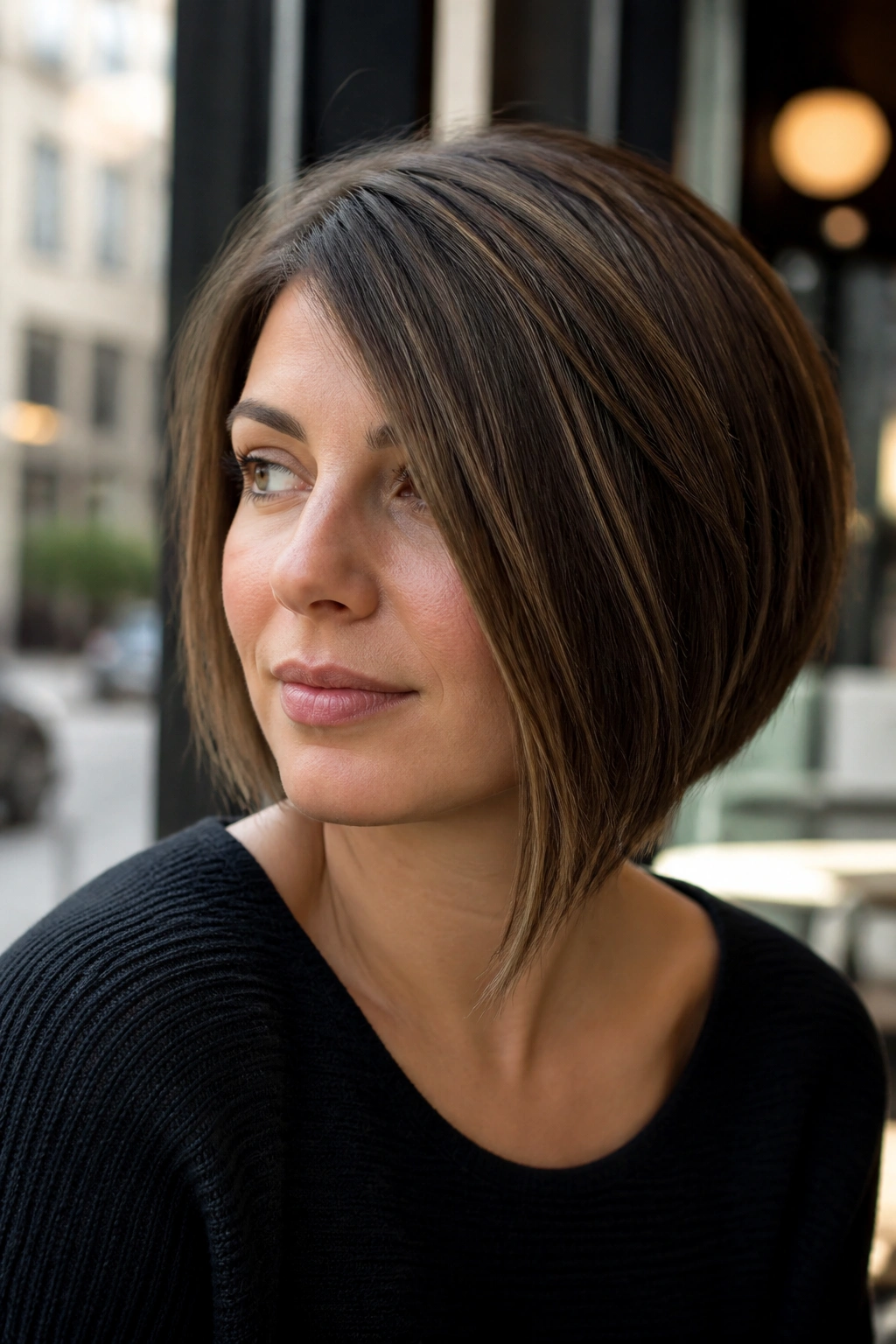
An A-line bob is the haircut equivalent of a tailored jacket. Shorter in the back, longer in the front, it creates a clean angle that looks polished even when you barely style it. The front pieces frame the face while the back stays neat and easy.
This shape is especially helpful if you want a bob but don’t love the heavy feeling that can happen with one length all around. The angle gives the hair some forward movement, which can be flattering on many face shapes. Keep the slope subtle if you want it to stay practical.
A dramatic A-line can be high-maintenance because it needs regular trimming to keep the angle crisp. A softer version is much easier to live with. That’s the one I’d point busy women toward first.
23. The Soft Wolf Cut
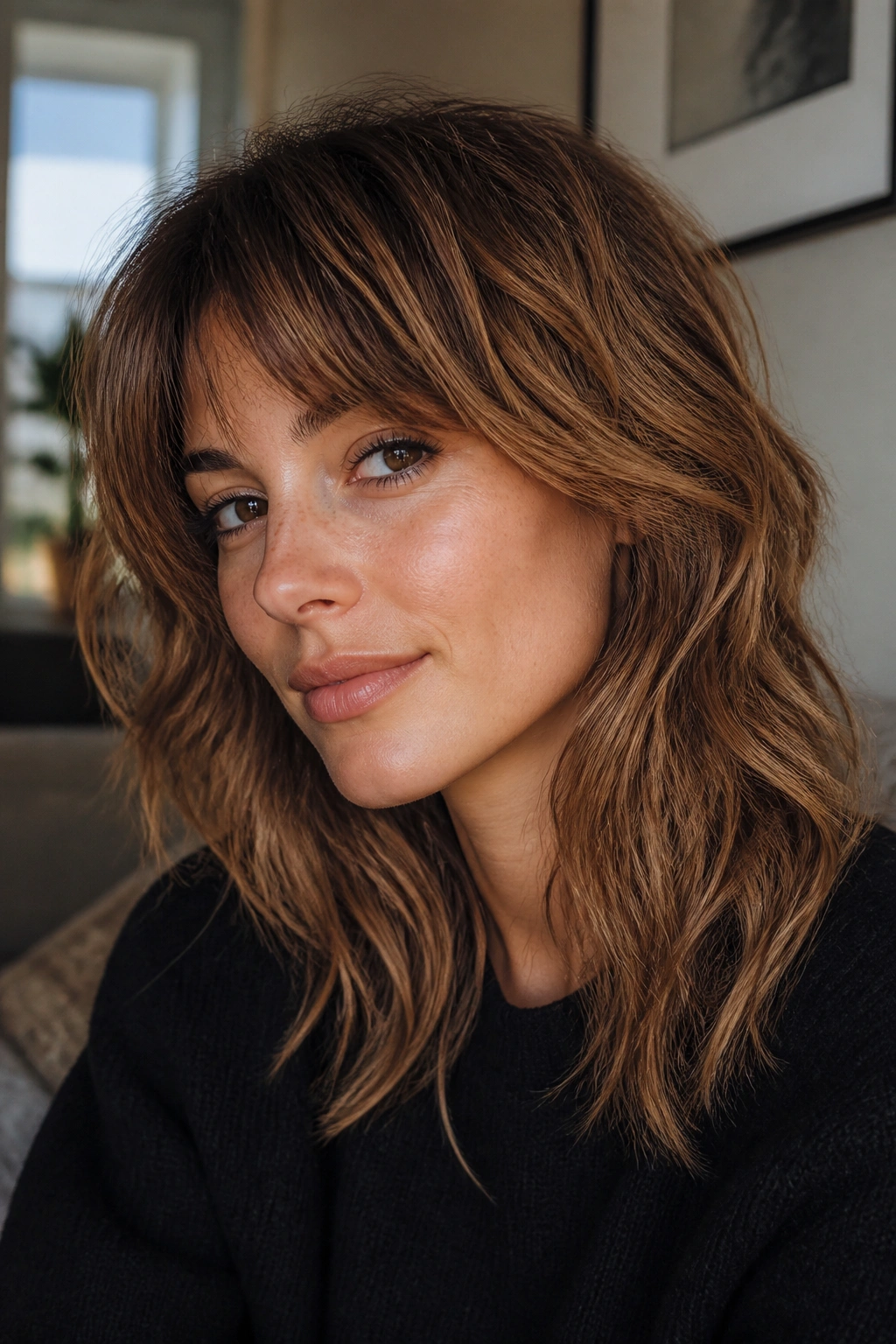
A soft wolf cut only works when the layers are kept under control. That’s the difference between a style that feels cool and one that just feels overgrown. The best version keeps the shaggy shape but tones down the extremes so the haircut still behaves on a normal Tuesday.
It suits wavy and curly hair especially well, because those textures help the layers blend. Straight hair can wear it too, but it may need more product or a little bend at the ends. The good news is that the cut is built to look lived-in, so a perfect finish is not the goal.
Why people like it
- It gives movement at the crown
- It removes bulk from thick hair
- It can be worn messy on purpose
Ask for long layers, soft face-framing, and a perimeter that still feels solid. That keeps the look wearable.
24. The Ear-Grazing Crop
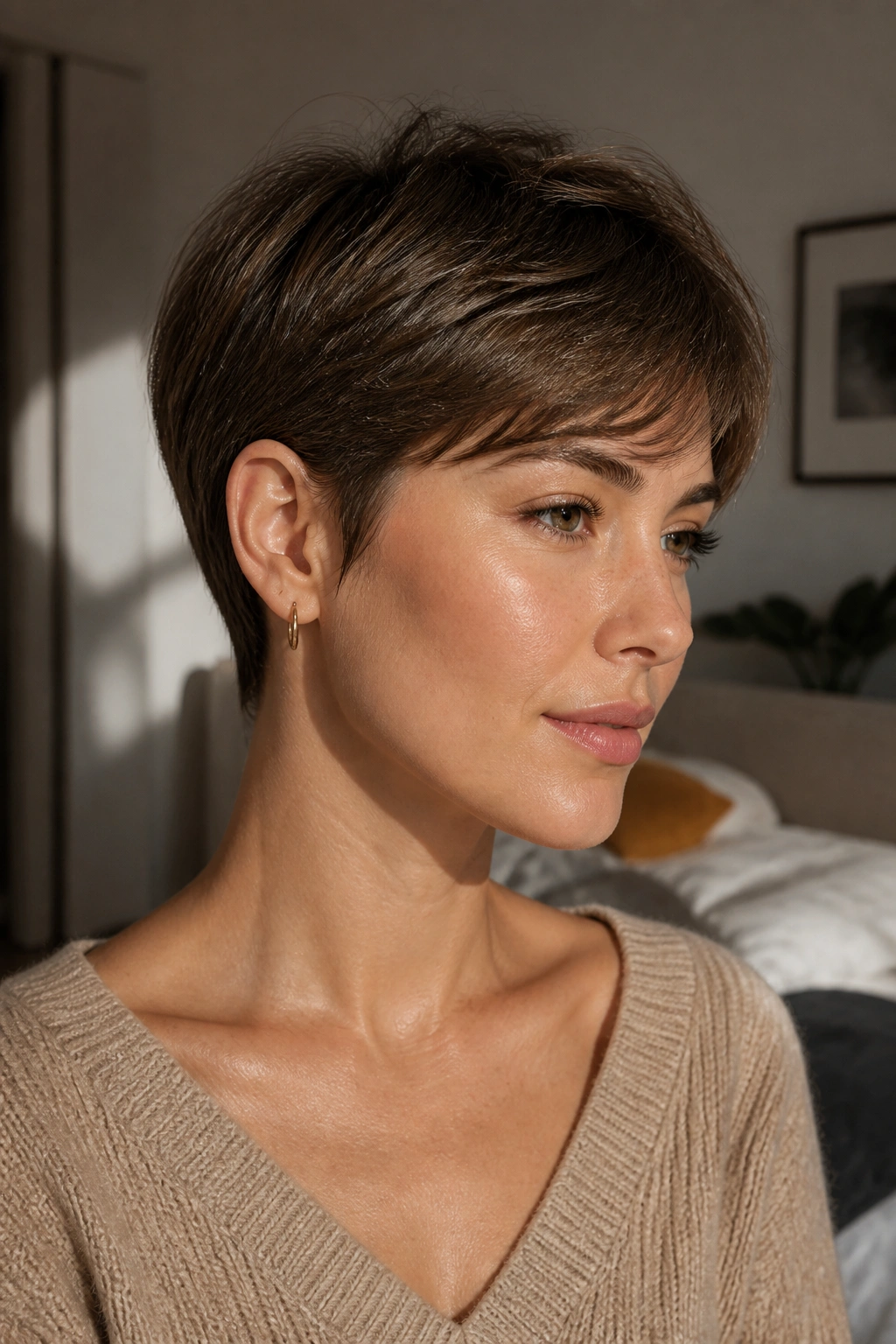
An ear-grazing crop gives you short-hair ease while keeping enough shape around the face. It lands between a bob and a pixie, which is useful if you want something easy but not too severe. The hair dries quickly, sits neatly under hats, and doesn’t demand much in the morning.
This is a good cut if you’re tired of fighting your hairline or the bulk at your neck. It can be tucked, pushed forward, or worn a little piecey. The best version has soft edges and enough length on top to avoid looking choppy.
A few useful details
- Keep the neckline clean but not shaved close
- Leave some length around the ears for softness
- Use a tiny amount of cream or paste, not a heavy product
If you want short hair but are nervous about the upkeep of a full pixie, this is a smart middle ground. Small cut. Big relief.
25. The Grown-Out Pixie
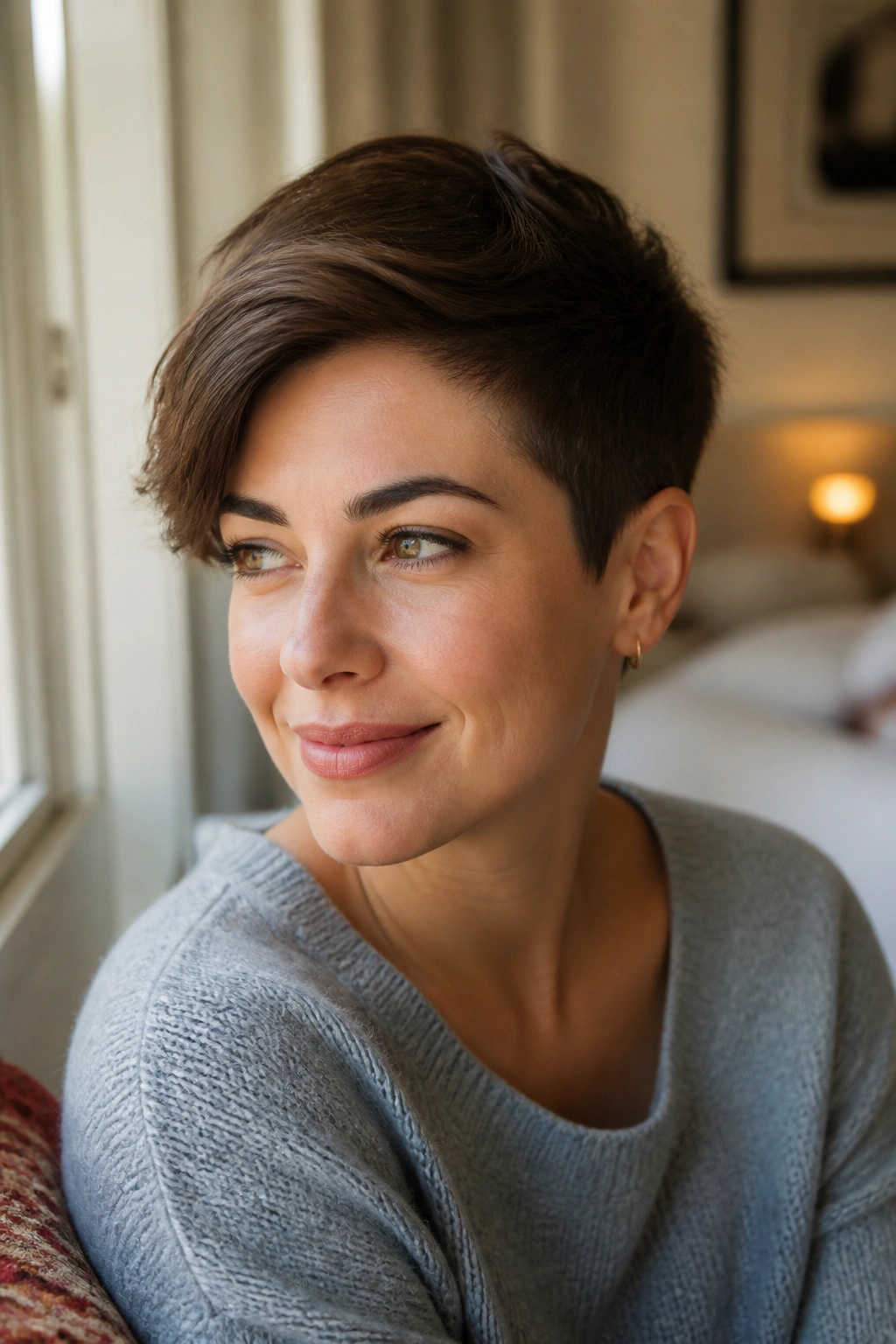
A grown-out pixie is the shortcut to looking intentional during the awkward months. Once the shape has enough length to sweep to one side or tuck behind the ear, it becomes surprisingly easy to wear. The trick is letting the top, sides, and back grow with some plan instead of all at once.
This is the stage where many people panic and try to “fix” the cut by trimming everything short again. Don’t. The better move is to shape the top, clean up the neckline, and let the front pieces keep a little length so the cut can move into a soft crop, a bixie, or a short bob.
It is one of the most practical low maintenance haircuts for busy women because it can evolve. You are not stuck in one look. You are just moving through the awkward stretch with a haircut that still behaves.
Bring a photo of the shape you want, not just the length. Hair texture changes everything, and a cut that looks effortless on one person can sit totally differently on another. The right stylist will know that immediately.
