



Thick hair looks rich on a good day and like a heavy blanket on a bad one. By noon, it can sit at the nape like it has its own opinion. That is where undercut designs for women with thick hair earn their keep: they take out bulk in the places that trap heat and puff, while leaving the outside length intact.
Weight is the enemy.
Not every undercut needs to shout. A hidden panel under the crown can make a ponytail swing lighter, shorten drying time a little, and stop that boxy shape dense hair gets when it piles up at the sides. The smartest versions are not about shaving more. They’re about shaving the right spot.
I’ve always liked the cleaner job clippers do on coarse, dense hair. Thinning shears can be useful, sure, but on some textures they leave a frizzy halo and a weird half-there softness that still feels bulky. A well-placed undercut, though, removes weight with intent. It changes how the hair falls, not just how it looks in a mirror.
Some of these designs stay almost invisible until you tie your hair up. Others are there to be seen the minute you tuck one side behind your ear. The right choice depends on how you wear your hair on ordinary Tuesdays, not on the one night you feel like making a statement. The useful part is that every design below solves a different problem: bulk at the neck, side puff, ponytail heaviness, awkward grow-out, or a bob that keeps flipping out instead of lying smooth.
1. Hidden Nape Undercut for Women With Thick Hair
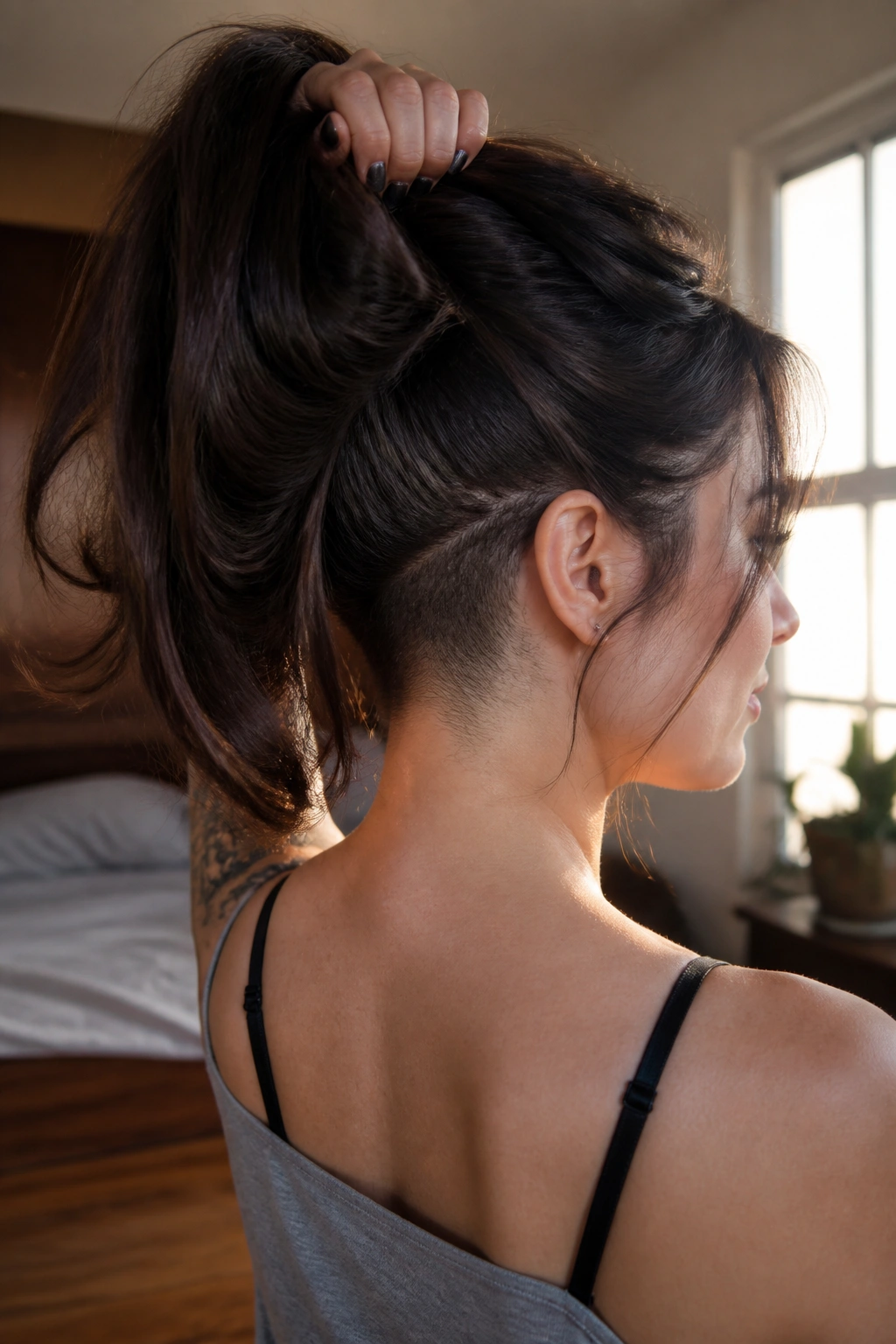
This is the quiet workhorse of the bunch. A hidden nape undercut sits low enough that the top layers cover it completely, which means you get the weight removal without advertising the cut from the front. On thick hair, that little pocket of shaved space can make a ponytail feel like it lost a pound.
Why It Works
The nape is where dense hair tends to stack up and create a hard ridge. Shaving just the bottom panel lets the upper layers drape more cleanly, and that matters if your hair swells at the neck when it’s humid or if you wear low buns a lot. The cut is also forgiving during grow-out, because the rest of the hair hides most of the line.
A good version usually sits below the occipital bone, with the top section left long enough to cover it when worn down. If you ask for a guard length between #1 and #3, your stylist can adjust for how much bulk you want gone.
- Best for low ponytails and loose buns
- Works well on straight, wavy, or coarse textures
- Easiest to hide when your hair is down
- Usually needs a tidy-up every 4 to 6 weeks if your hair grows fast
Keep the panel low if your hairline at the neck is soft or uneven. A high nape undercut can show through more than you expect once the hair starts to move.
2. Temple Undercut That Keeps the Sides Flat
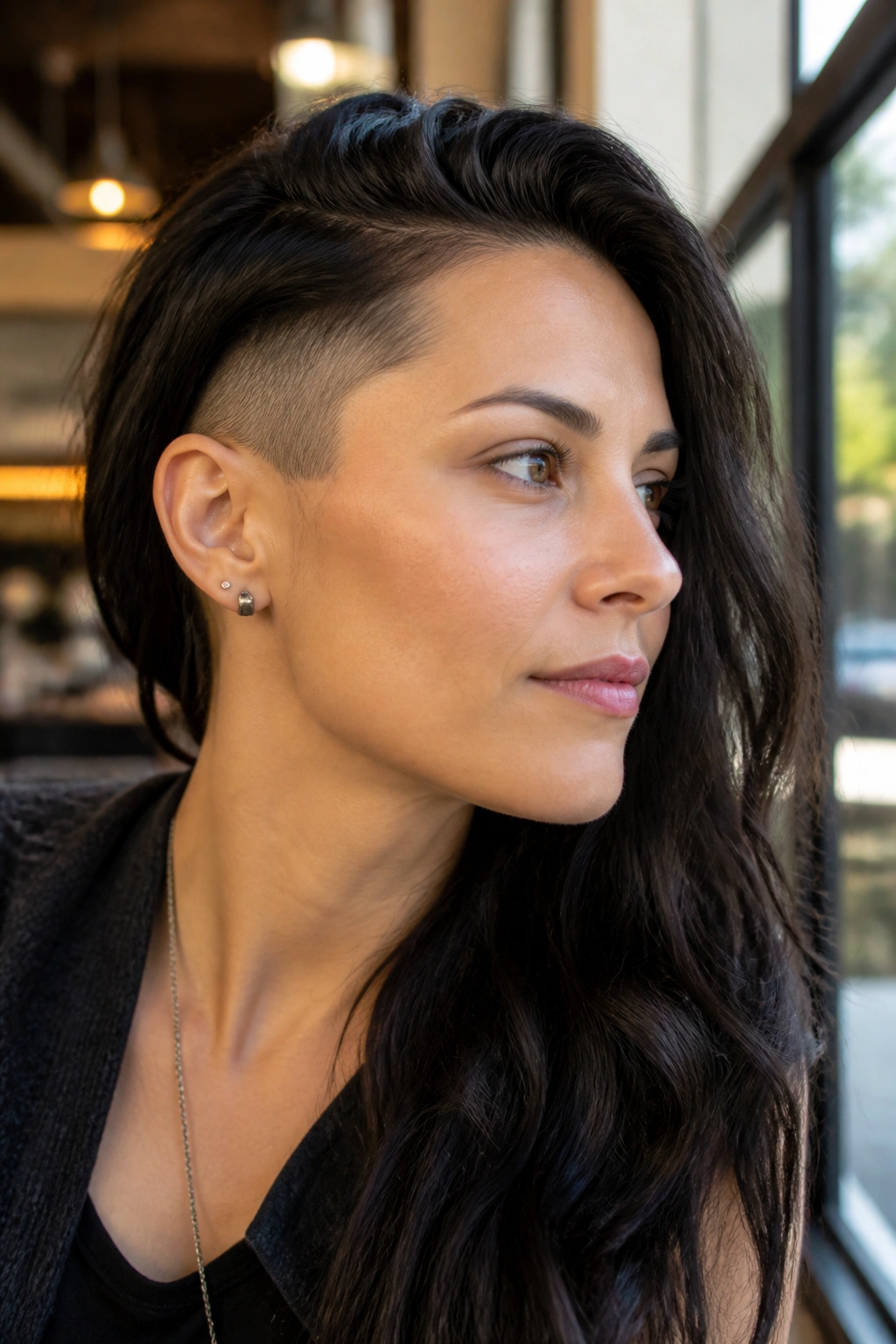
A temple undercut is the sneaky fix for thick hair that balloons around your face. If you tuck hair behind your ears, wear glasses, or hate the way the sides puff out under a knit hat, this design pays for itself fast.
It works because the temples are a trouble spot. That’s where dense hair can feel bulky without looking obviously heavy, which is annoying because the haircut seems fine until you try to wear it sleek. Shaving or clipping just that area creates room around the ear and makes the whole side profile sit flatter.
It also changes how earrings and frames sit. Small detail, big payoff. The hair stops fighting your accessories.
I like temple undercuts for women who want flexibility. Hair down? The design disappears. Hair tucked or pinned? The undercut shows up as a clean edge and makes the styling feel deliberate instead of accidental. If your hair is coarse, ask for the temple section to be short but not stripped bare. A tiny bit of length grows out softer and looks less stark.
3. Deep Side-Panel Undercut for a Swept Part
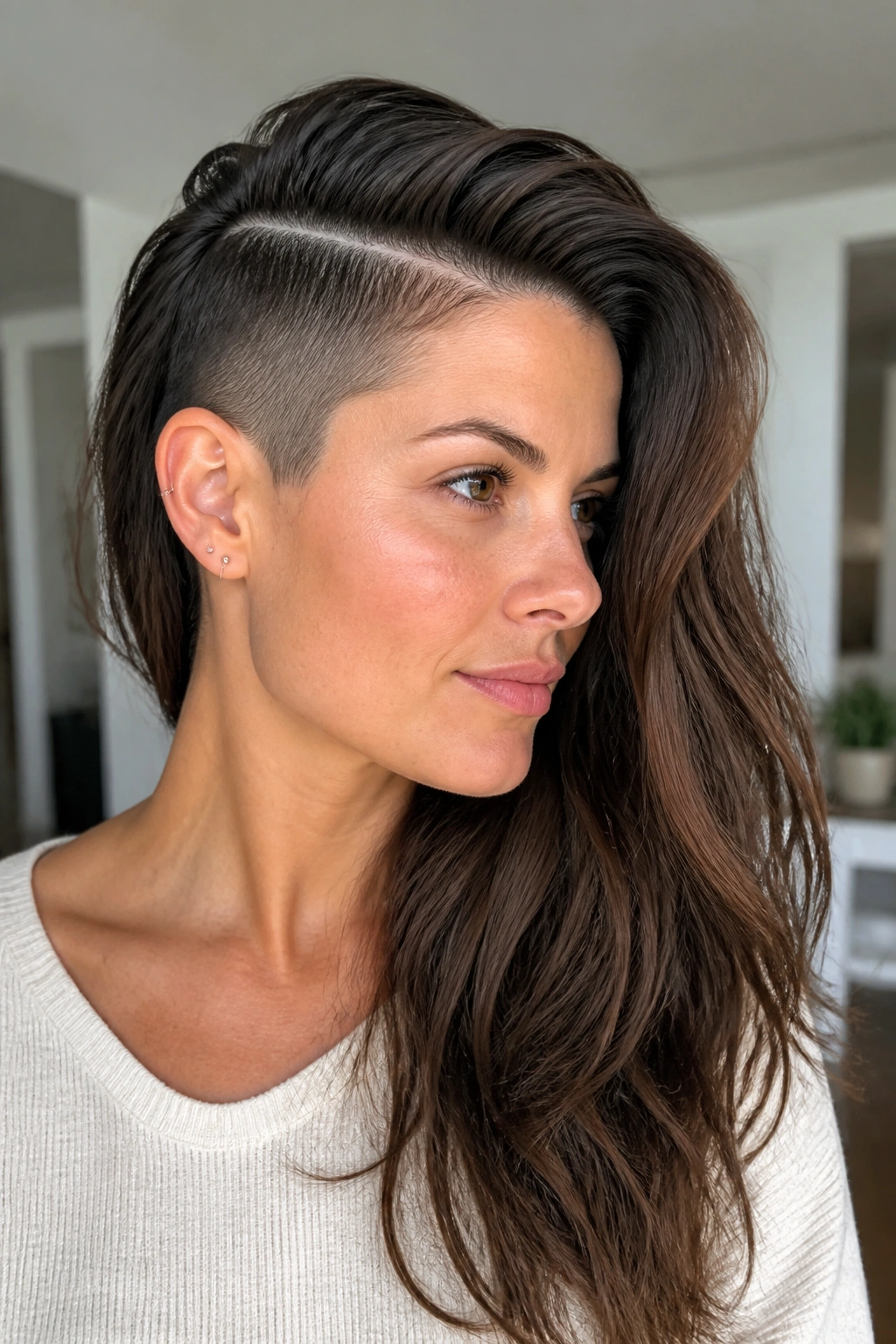
Why does a deep side part sometimes feel like a battle with your own hair? Because thick hair has a habit of pushing back, especially near the ear and upper side of the head. A side-panel undercut removes the bulk under that heavier side so the part can actually stay where you put it.
How to Wear It
This is one of those cuts that looks calm until you flip the hair over. Then it has a little drama. The panel usually sits under the longer side, starting just above the ear and tapering into the back section. If you wear one side swept over the other, the undercut keeps the top from getting too puffy and helps the shape stay sleek through the day.
A side-panel undercut works especially well if your hair has a bend or wave that likes to collapse at the roots. The shorter section gives the longer layers somewhere to lie without building a ridge. Ask your stylist to follow the head shape, not carve a hard rectangle, unless you want the side to read more graphic.
- Best for deep side parts and side-swept fringe
- Helpful if one side of your hair feels much heavier than the other
- Can be hidden under long layers when worn down
- Looks sharp with a low tuck behind the ear
4. Peekaboo Undercut That Hides Under Loose Waves
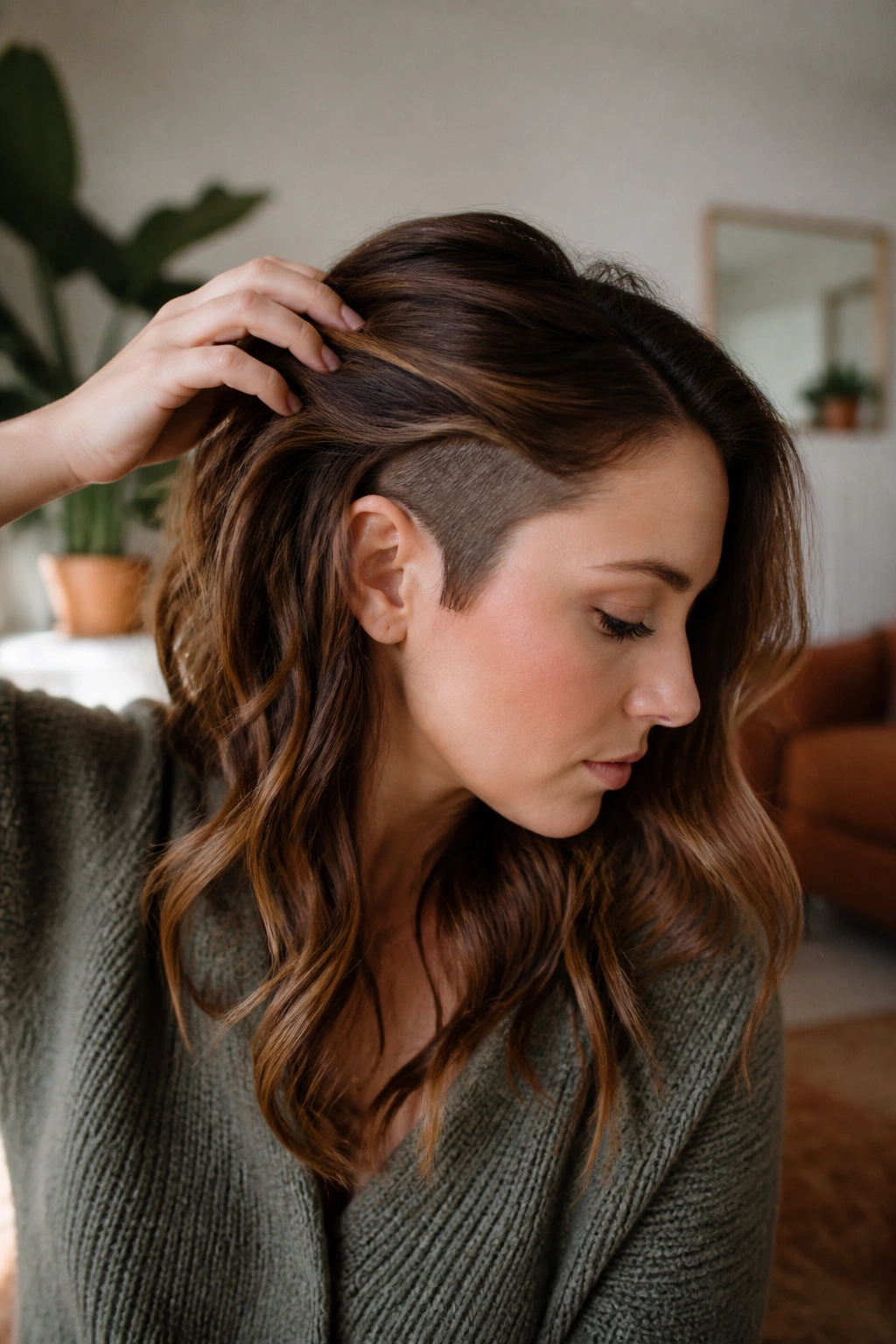
I’ve seen this one save more than one haircut that was starting to feel too heavy. A peekaboo undercut is the kind of design that lives under the surface until your hair moves, and then it flashes through in a way that feels a bit rebellious without going full shave-buzzed.
The trick is placement. Instead of taking a large panel, the stylist cuts a smaller hidden zone under the top layers, often near the nape or just behind the ears. The visible hair stays long enough to cover it, so you get movement without broadcasting the undercut every time you walk into a room.
It suits women who want two moods in one haircut. Hair down looks soft and normal. Hair up shows a cleaner, lighter shape. That’s a useful split if you work in a place with a conservative dress code but still want a little edge when the day is over.
A peekaboo undercut is only worth it if you actually wear your hair both down and up. If your hair never leaves a bun, you may want a bigger weight-removal panel instead.
5. Curved Nape Undercut That Follows the Hairline
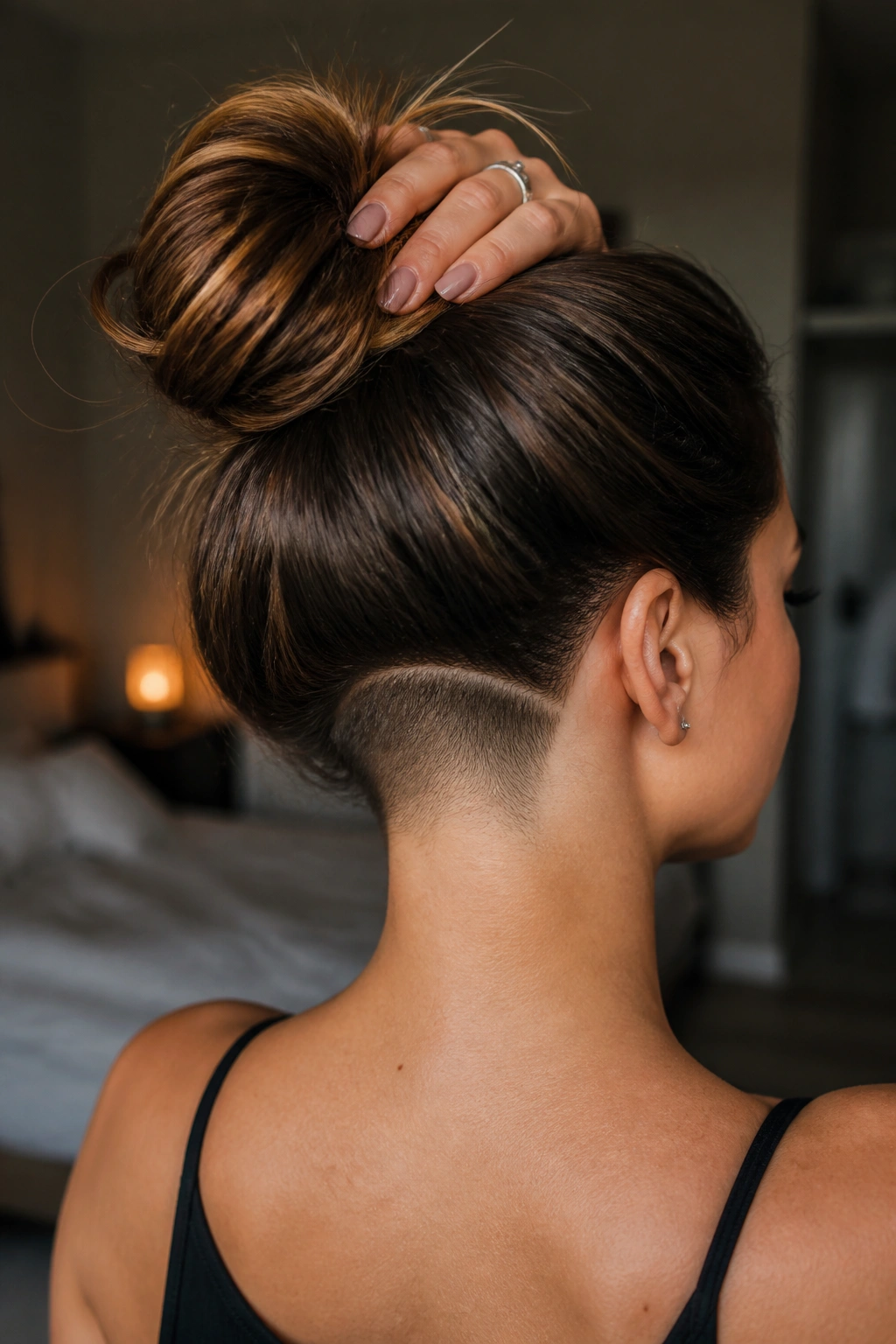
Straight lines can look harsh on thick hair. A curved nape undercut softens that problem by following the natural arc of the hairline instead of fighting it, and the result tends to look smoother during grow-out.
This shape matters more than people think. A boxy nape line can peek out in odd ways when thick hair shifts, especially if your neck is narrow or the hairline dips at the center. A curved cut sits closer to the body, so the transition from shaved area to long layers feels less abrupt. It also works nicely with low ponytails, because the curve matches the way the hair gathers.
One sentence is enough here: the curve makes the grow-out easier to hide.
I like this version for anyone who wants an undercut but does not want a tough, graphic outline every time the wind moves. If you ask for a low arc that hugs the neck, the shape can remove the same amount of weight as a straight panel while looking much softer from the side. It is one of those small choices that changes the whole mood of the haircut.
6. Mohawk-Inspired Center Strip for High Ponytails
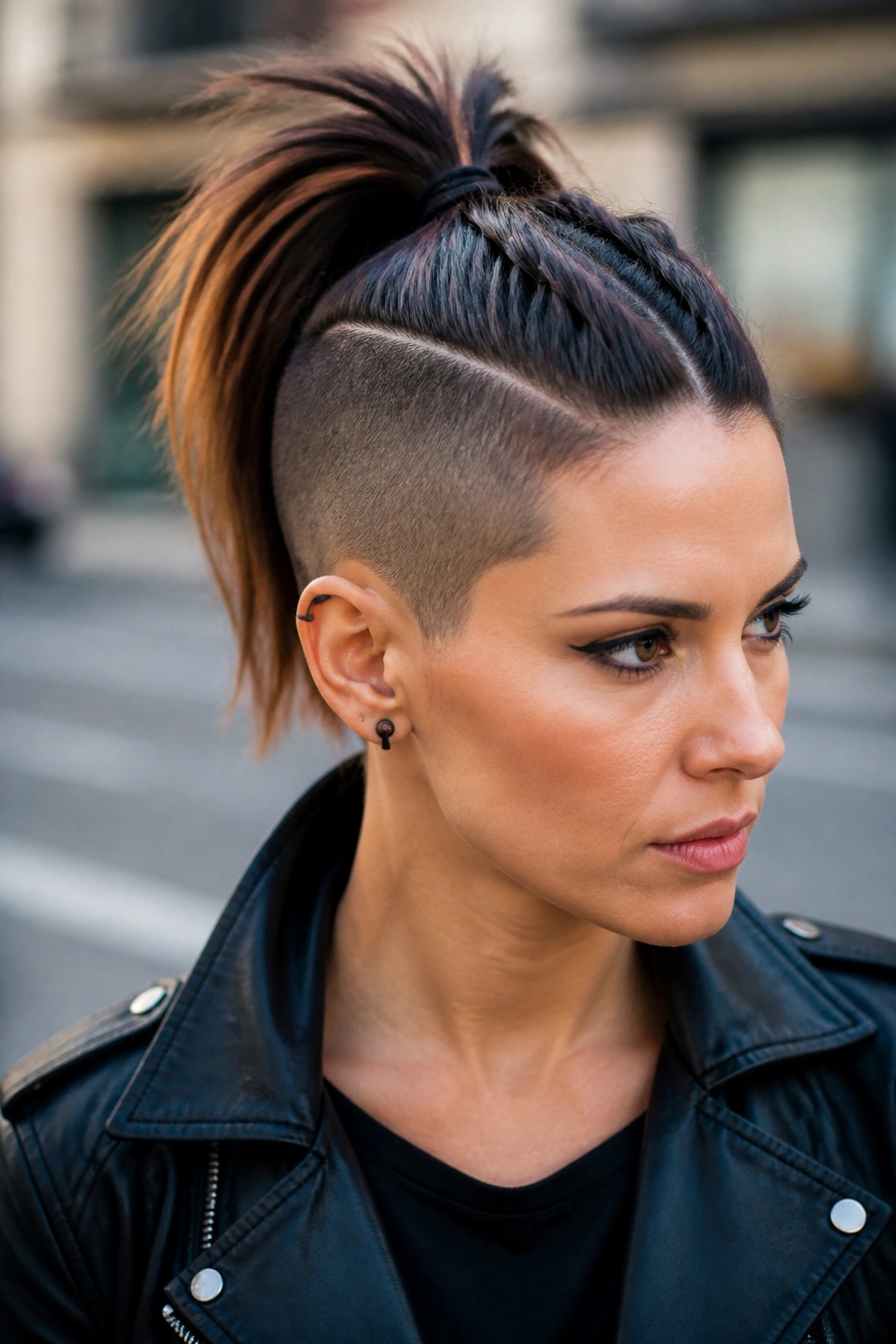
Unlike a full shaved side, a center-strip undercut keeps the sides shorter while leaving a strong strip of length running down the middle. That makes it a good pick for women who live in high ponytails, gym buns, and top knots.
The point is not to imitate a mohawk in the loudest way possible. The point is to clear space on both sides so thick hair stops mushrooming out at the temples and ears. When the sides are lighter, the center section can lift cleanly instead of pulling everything outward. It also helps if your crown is dense and your ponytail feels like it drags at the scalp by the end of the day.
This cut works best when the strip is wide enough to keep balance. Too narrow, and the top can feel flimsy. Too wide, and you lose the lightness that makes the style worth doing. Ask for a test section first if you’re unsure; a good stylist can show you how much bulk comes off before taking the clippers all the way through.
- Best for high ponytails and top knots
- Good for heavy, coarse hair that feels dense on both sides
- Needs regular clean-ups if you want the shape crisp
- Looks strongest when the top is long enough to cover the shorter sides
7. Soft Taper Undercut for Wavy Hair
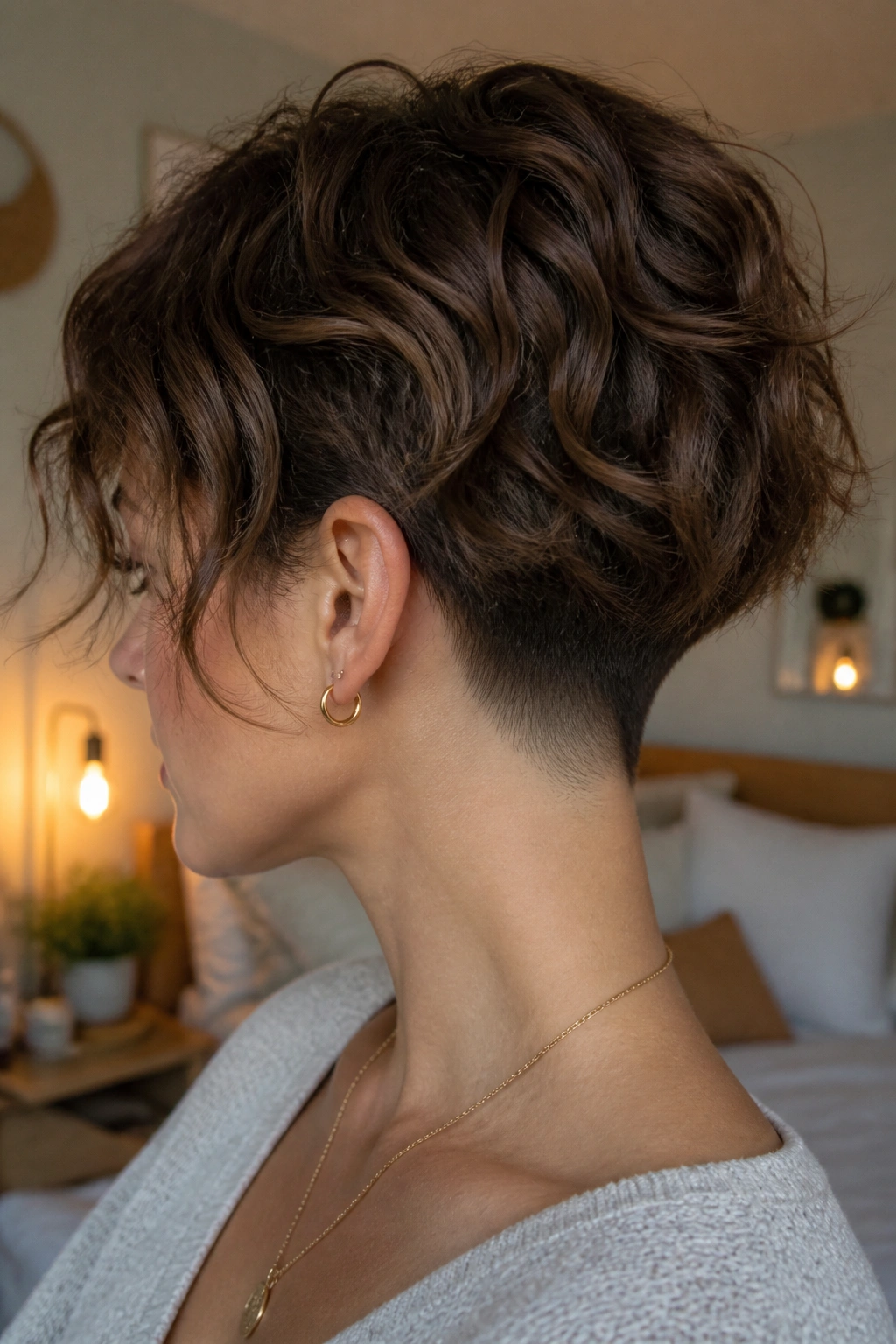
Can an undercut still look soft? Absolutely. A soft taper undercut uses a gentle transition instead of a hard shaved block, and that makes it a nice fit for thick wavy hair that needs help but not a dramatic edge.
The taper usually starts low and blends upward, with the shortest part tucked near the nape or side and the longer hair feathered into it. The difference is subtle when the hair is down, but the weight drops enough that the waves spring instead of collapsing into a wide triangle. That matters if your hair tends to expand more than it falls.
Where to Ask for the Taper
Tell your stylist you want the shortest area hidden under the top layers, not a visible fade up the side. The goal is to remove bulk while keeping the silhouette round. A good taper works with the natural wave pattern instead of forcing it into a slick shape that will fight back the minute you step outside.
I like this option for people who want easier dry time and less frizz around the neckline. It is not the loudest cut in the room, which is exactly why it works.
8. Undercut Bob That Keeps the Jawline Sharp
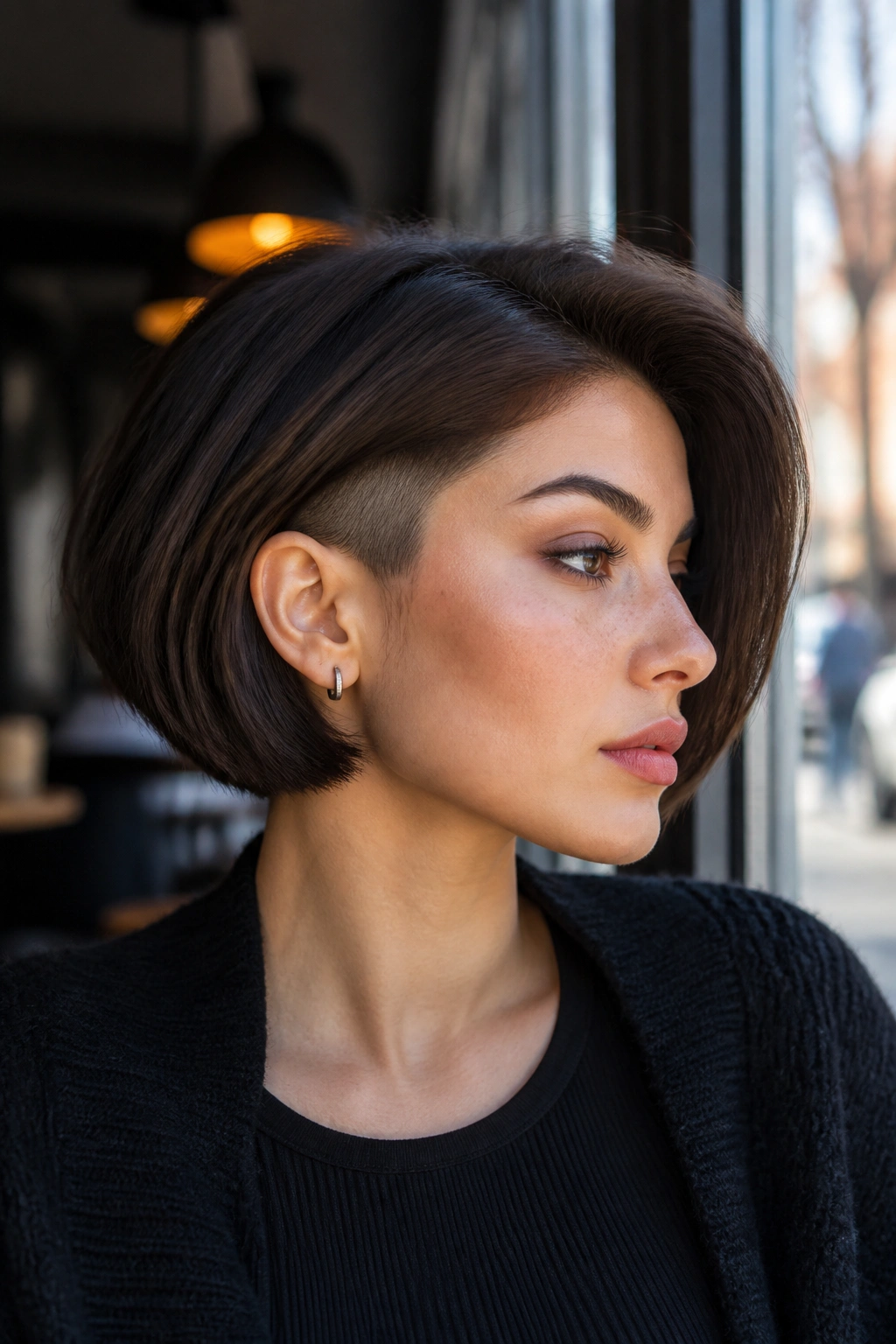
A thick bob can go triangular in a hurry. One minute it looks sleek, and the next it’s sitting out from the head like a helmet. An undercut bob fixes that by removing interior weight, usually at the nape and lower sides, so the shape can stay close to the jawline.
I keep coming back to this cut because it solves a problem blunt bobs create on dense hair: the bottom gets too heavy while the top still wants to fall flat. Once the hidden underlayer is shortened, the line of the bob sits cleaner, and the ends don’t kick out as much. It’s especially good if your hair has some bend and you want the outline to look crisp.
If you wear a jaw-length bob, the undercut can keep the neck from feeling boxed in. If you wear a longer bob, it stops the shape from looking too wide through the back. Either way, it buys movement.
- Best with straight or softly bent hair
- Good for chin-length and lob-length bobs
- Helps a bob lie flatter under scarves and collars
- Needs precision; too much removal can make the top look thin
9. Pixie Undercut That Removes Bulk Fast
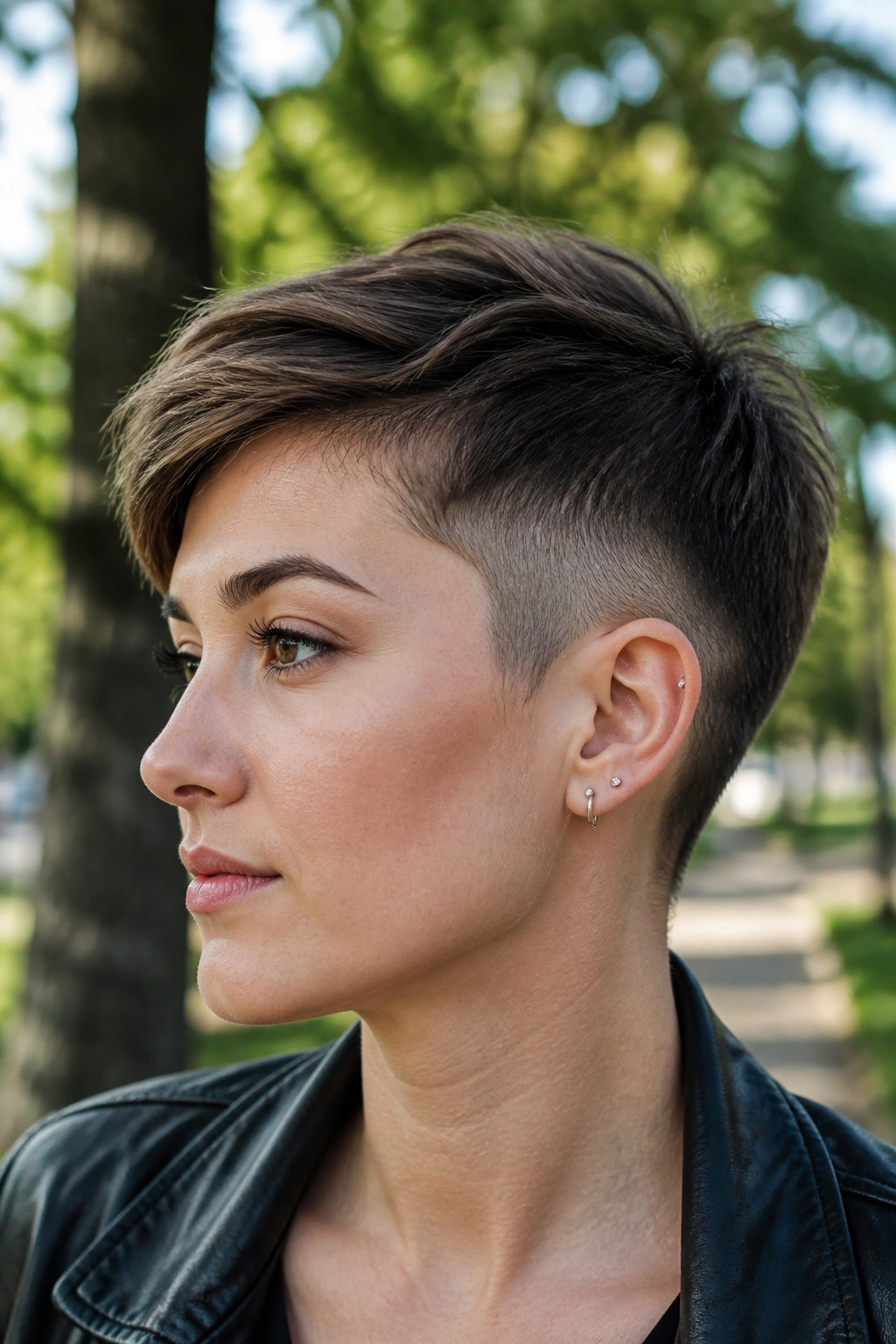
A pixie on thick hair can be a delight or a disaster. Without some undercut work, it can mushroom at the crown and puff at the sides before the week is over. With the right undercut, though, the same haircut turns crisp and easy to shape.
This is the most practical cut on the list if you want short hair and you’re tired of fighting dense strands. The underside is clipped short, sometimes very short, while the top is left long enough to flip, piece out, or sweep across the forehead. That balance matters because thick hair needs space to collapse into shape; otherwise, every strand seems to stack on top of the next one.
A good pixie undercut is not about taking everything off. It’s about leaving enough top length for movement and enough side control so the cut doesn’t swell outward. Ask for point cutting on the top if the hair feels blunt after the undercut is done.
If your hair is coarse, do not let the top get over-thinned. You want texture, not fuzz.
10. Geometric Line-Shaved Undercut With Graphic Detail
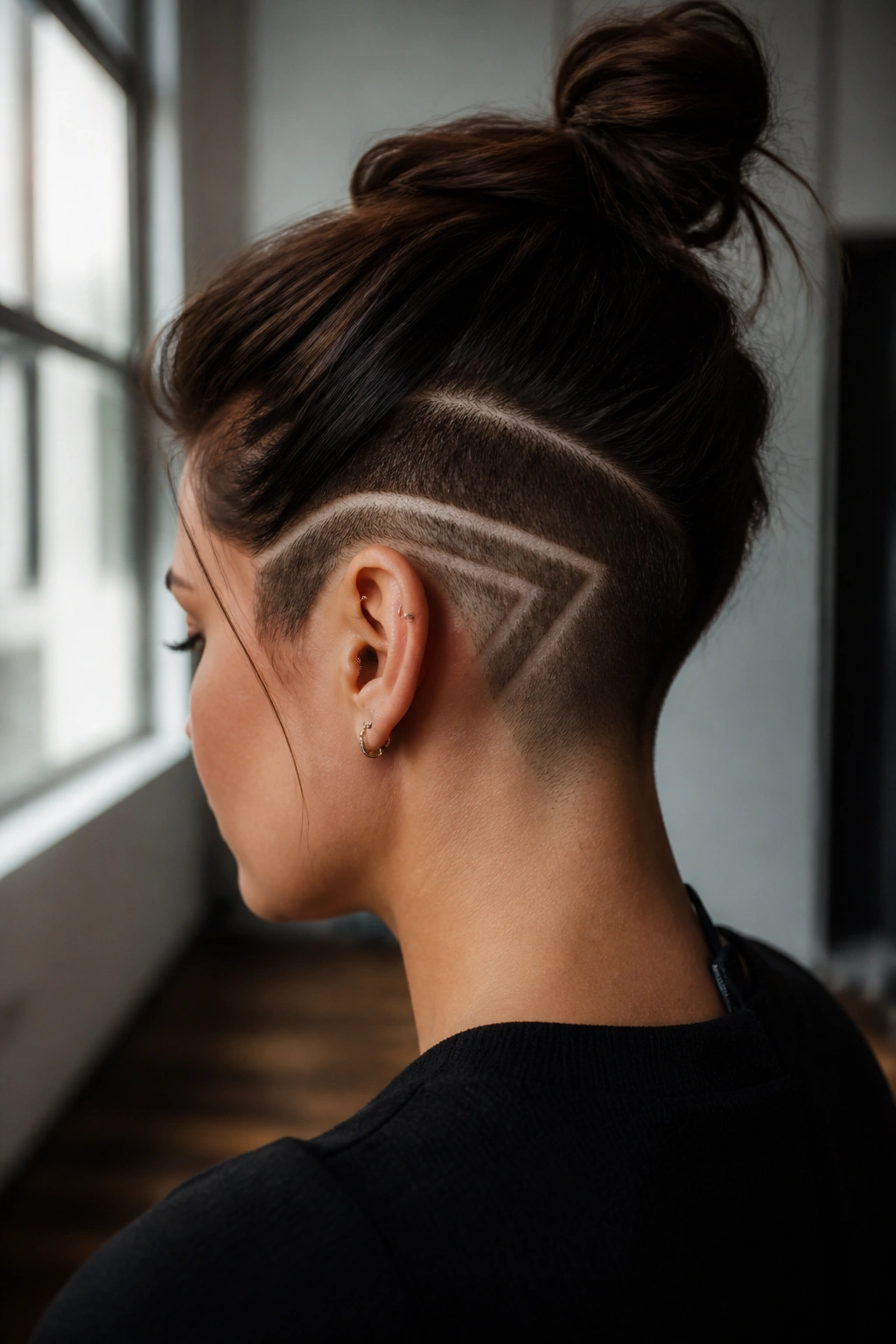
A line-shaved undercut is for the days you want the haircut to speak up. It can be a single clean line behind the ear, two slashes at the nape, or a sharper geometric shape tucked into the hidden section. Thick hair gives the design a better canvas because there’s more contrast between the shaved area and the longer mass above it.
This style is not subtle. That is the point. It works best when the rest of the haircut is simple enough to let the design breathe—straight hair, sleek buns, or a low tuck that reveals the pattern on purpose. If you choose this route, keep the shape clean. A crowded pattern can look messy once it starts growing out.
What to Ask For
- A single line if you want the lowest maintenance
- Two parallel lines if you want something more visible
- A chevron or angled nape shape if you like sharper edges
- A hidden placement if your job or routine needs the design to stay covered most of the time
One short line can do more than a full decorative pattern. It grows out with less fuss and still gives the haircut a clear point of view.
11. Underlayer Color Contrast for Women With Thick Hair
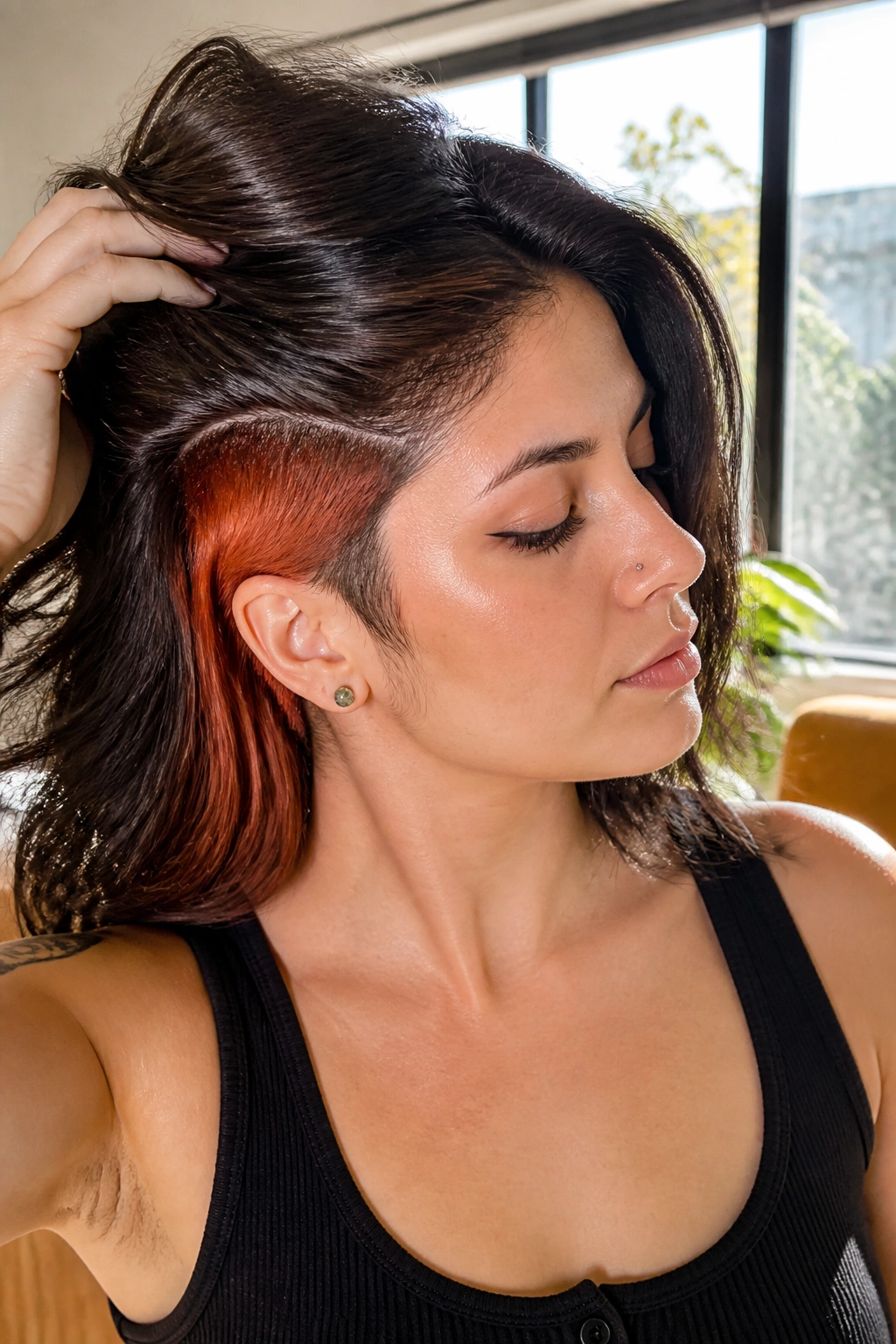
Sometimes the cut is only half the story. If you want an undercut that shows when you move, an underlayer color contrast can turn the hidden section into something intentional instead of merely shorter.
Unlike a shaved pattern, this approach depends on the difference between the top and the bottom. Dark hair over a blonde, copper, or silver underlayer can flash when you tuck the hair up or twist it into a knot. On thick hair, that contrast reads better because the volume gives the color room to peek through in slices instead of one flat block.
I like this option for people who want the undercut to feel playful without leaning too hard on a graphic shave. The cut can stay modest. The color does the talking. That also makes it easier to live with if you work in a place where a bolder undercut would feel like too much.
The catch is maintenance. The haircut may be easy, but the color asks for toner, gloss, or touch-ups if you want the contrast to stay clean. If you’re fine with a softer, lived-in grow-out, that isn’t a problem.
12. Braided Crown Undercut for Easier Updos
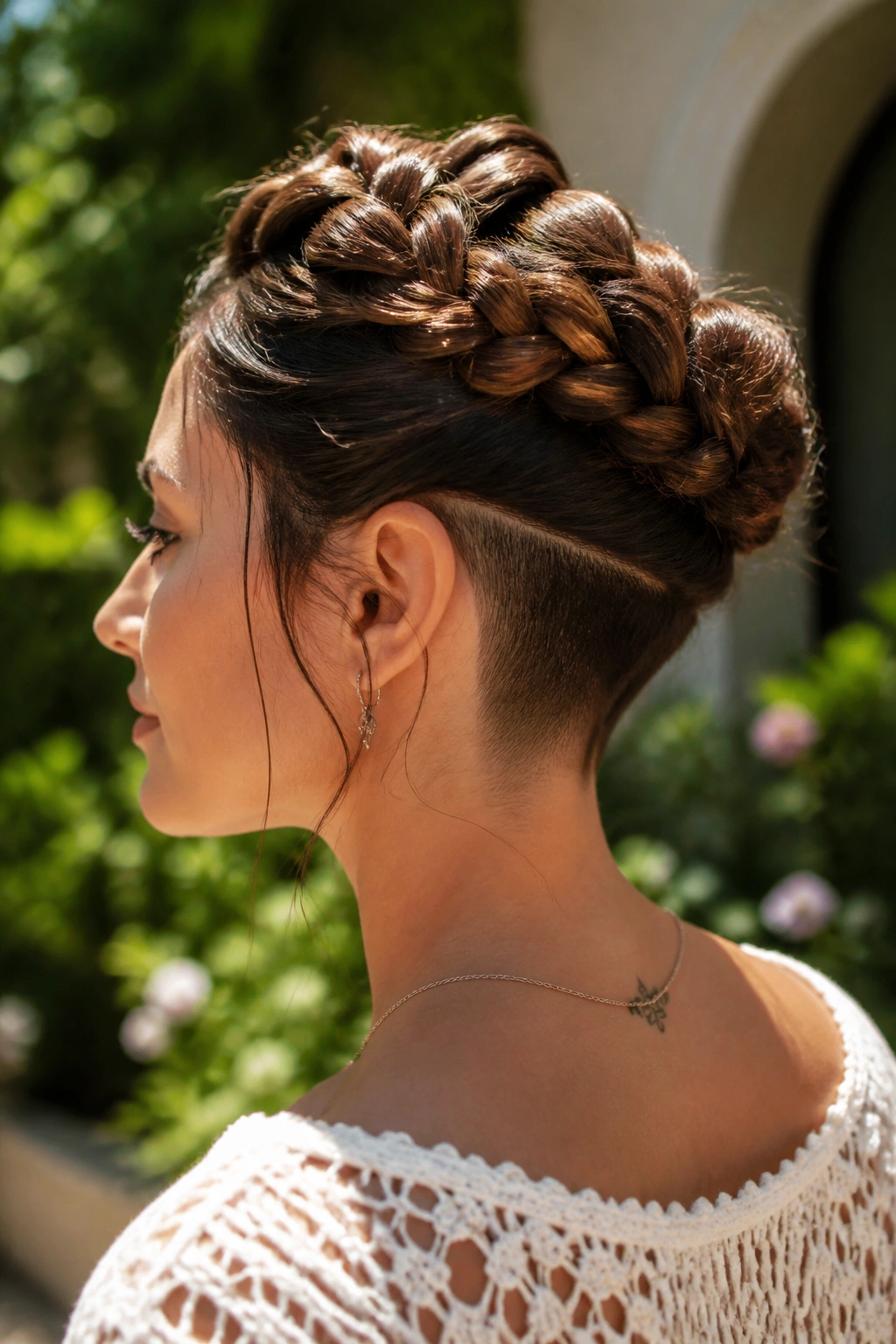
Why do braids feel so heavy on thick hair? Because every extra strand adds drag, and by the time you’ve crossed the third section, your hands are doing more work than they should. A braided crown undercut takes some of that load off by removing bulk where the braid gathers at the nape or temples.
This style is smart for women who wear halo braids, Dutch braids, or thick pinned crowns. The undercut keeps the braid closer to the head and helps the style stay neat instead of bulging out from the sides. It can also make the braid look cleaner at the base, which is one of those details that separates a nice braid from one that feels handmade in the wrong way.
Where to Shave
Keep the shaved area low enough that the braid covers it when worn down, but high enough to lighten the section that keeps stacking against your scalp. If you braid often, tell your stylist where your hands naturally pull the hair first. That spot usually needs the most help.
A braiding undercut is practical, not flashy. I love that about it.
13. Curly Top Undercut That Keeps the Shape Round
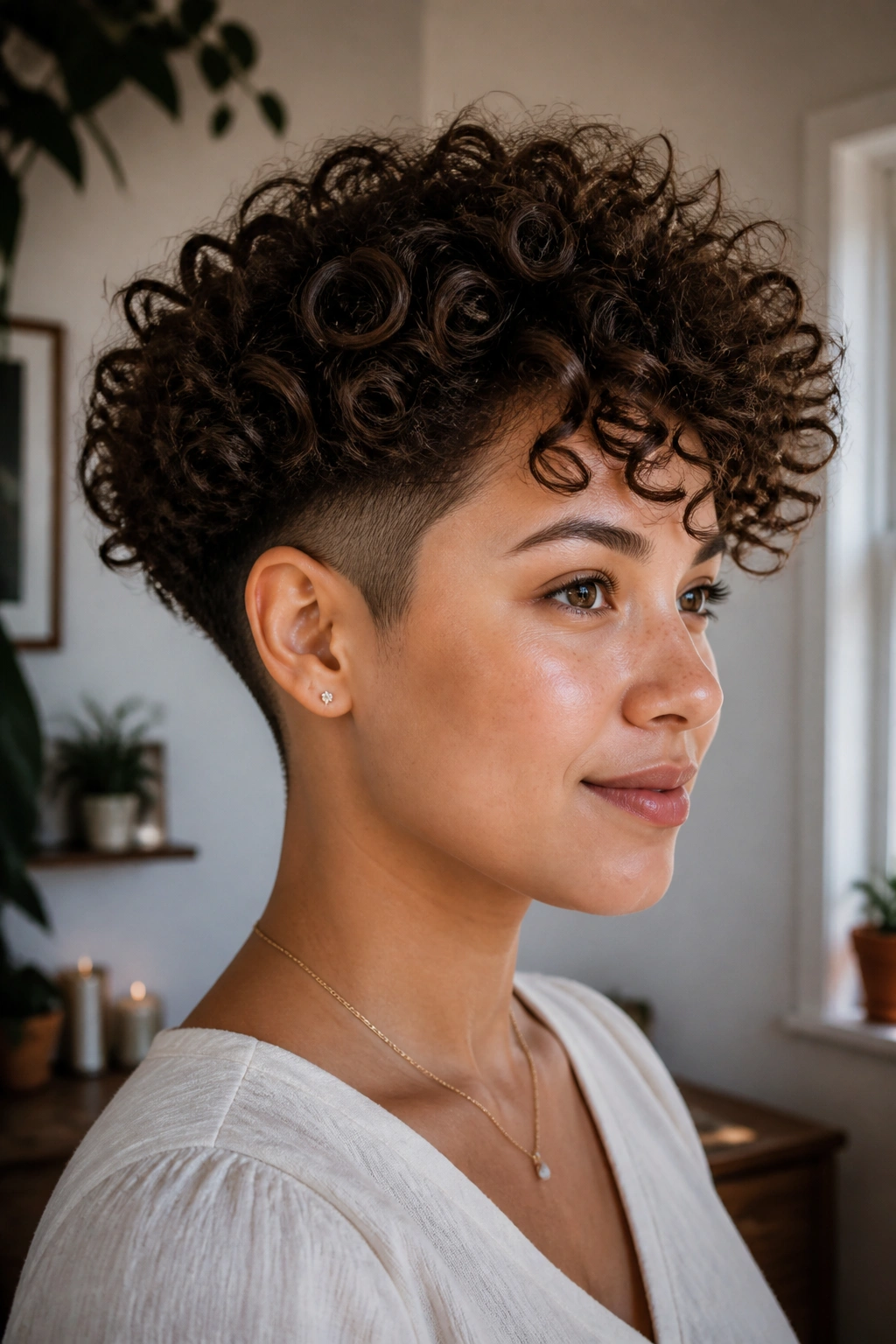
A thick curly top with an undercut can feel like opening a window. The neck gets air, the curls sit lighter, and the whole shape stops ballooning into that wide triangle so many curly cuts fall into when the base is too dense.
The texture matters here. Curls have shrinkage, which means a panel that looks hidden when wet can show more once the hair dries. That is why placement is everything. A low undercut under the crown or at the nape usually gives the best balance for curly hair, because the top curl pattern keeps its roundness while the bottom bulk gets out of the way.
One-sentence truth: curly hair often needs less width, not less curl.
I’m fond of this design for people who want shape without flattening the curl pattern. The undercut should support the curl, not fight it. If the top remains long enough to spring and the underside is clipped carefully, the haircut feels lighter on the head and much easier to refresh on wash day. It also cuts down on that hot, padded feeling at the back of the neck.
14. Asymmetrical Undercut With One-Side Drama
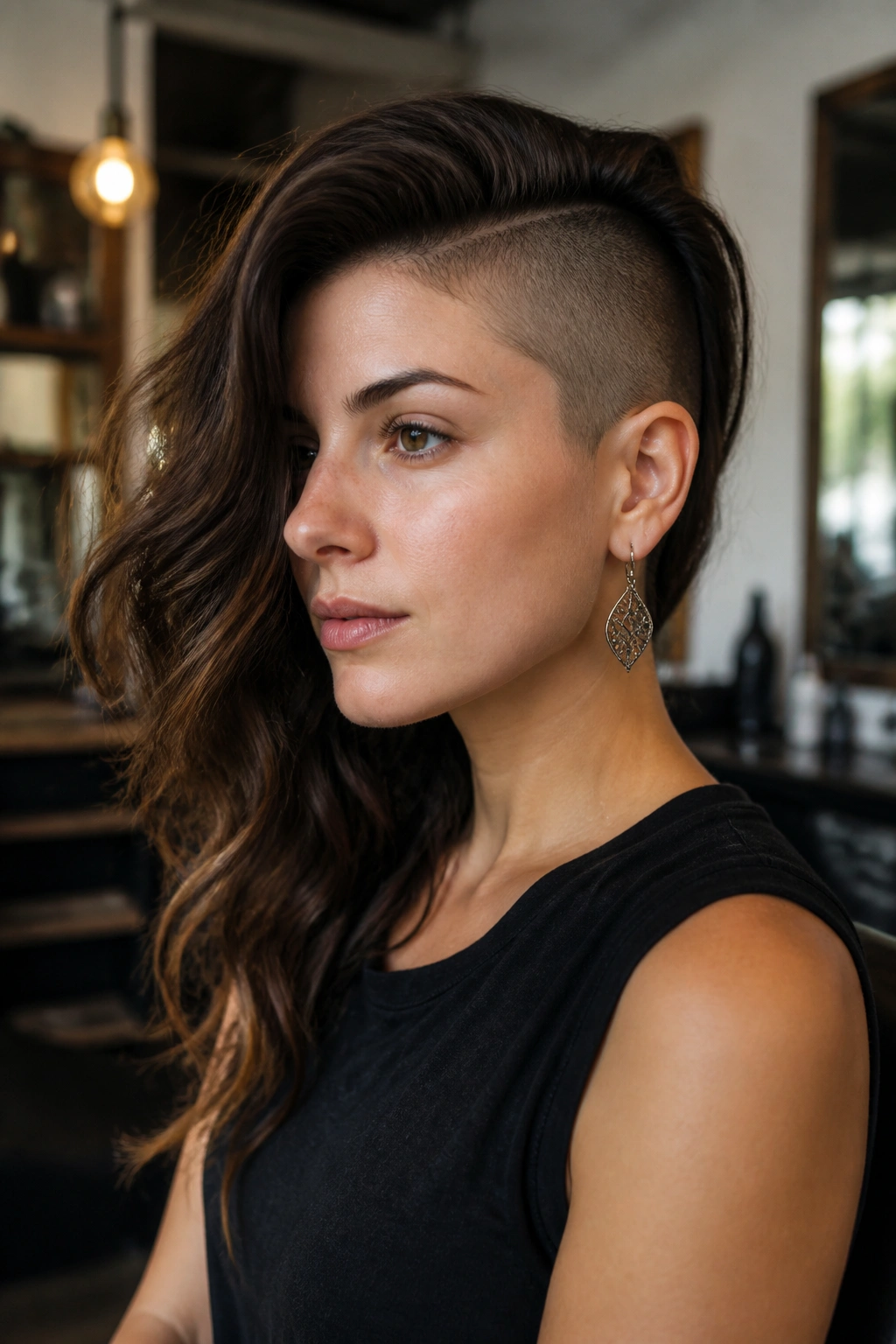
An asymmetrical undercut is what happens when one side wants attention and the other side is fine staying calm. It’s a good choice for thick hair that falls unevenly anyway, because the unevenness becomes the design instead of a problem.
This style usually keeps one side longer while shaving or shortening the other side more aggressively. The longer side can sweep across the face, tuck behind the ear, or fall in a deep part. The short side gives the haircut room, which helps dense hair stop fighting itself around the head.
It works especially well if you like to change the mood of your hair with a simple tuck. Wear it loose and the asymmetry feels soft. Pull the longer side back and the contrast pops. That flexibility is the part people underestimate.
- Good for side parts and long bangs
- Helpful if one side of your hair is naturally denser than the other
- Lets earrings and glasses show without crowding the face
- Needs a steady hand during grow-out so the shape doesn’t drift
If you hate symmetry but still want structure, this is the one to try.
15. Low Fade Undercut for Sleek Styling
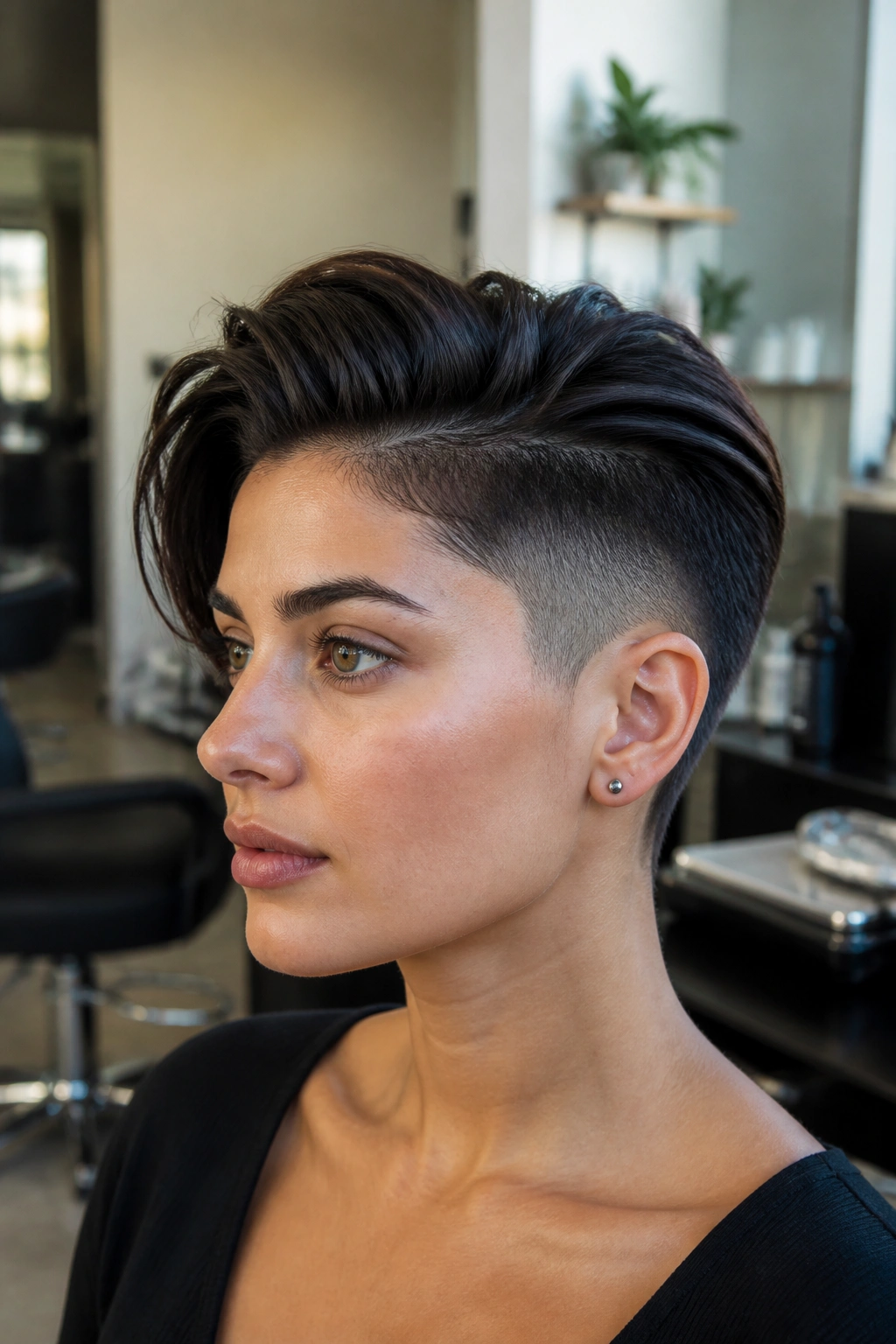
A low fade undercut is not just for short men’s cuts. On thick hair, it can be one of the cleanest ways to slim the sides without creating a hard shelf or a harsh disconnect.
The fade starts low and blends upward, which means the transition feels smoother than a solid shave. That matters if you like straight styles, smooth buns, or polished ponytails, because the fade disappears under the longer top instead of drawing a hard line across the head. It also gives the grow-out a softer look, so you are not staring at a sharp edge every time you skip a salon visit.
Why the Fade Matters
A fade gives you a little more room to fine-tune the bulk. You can keep the shortest area very low at the neck and let the transition stretch up just enough to slim the side without exposing the scalp too much. On thick hair, that can be the difference between a cut that looks intentional and one that feels too shaved for everyday life.
I’d pick this if you want sleekness first and edge second.
16. Disconnected Lob With Interior Weight Removal
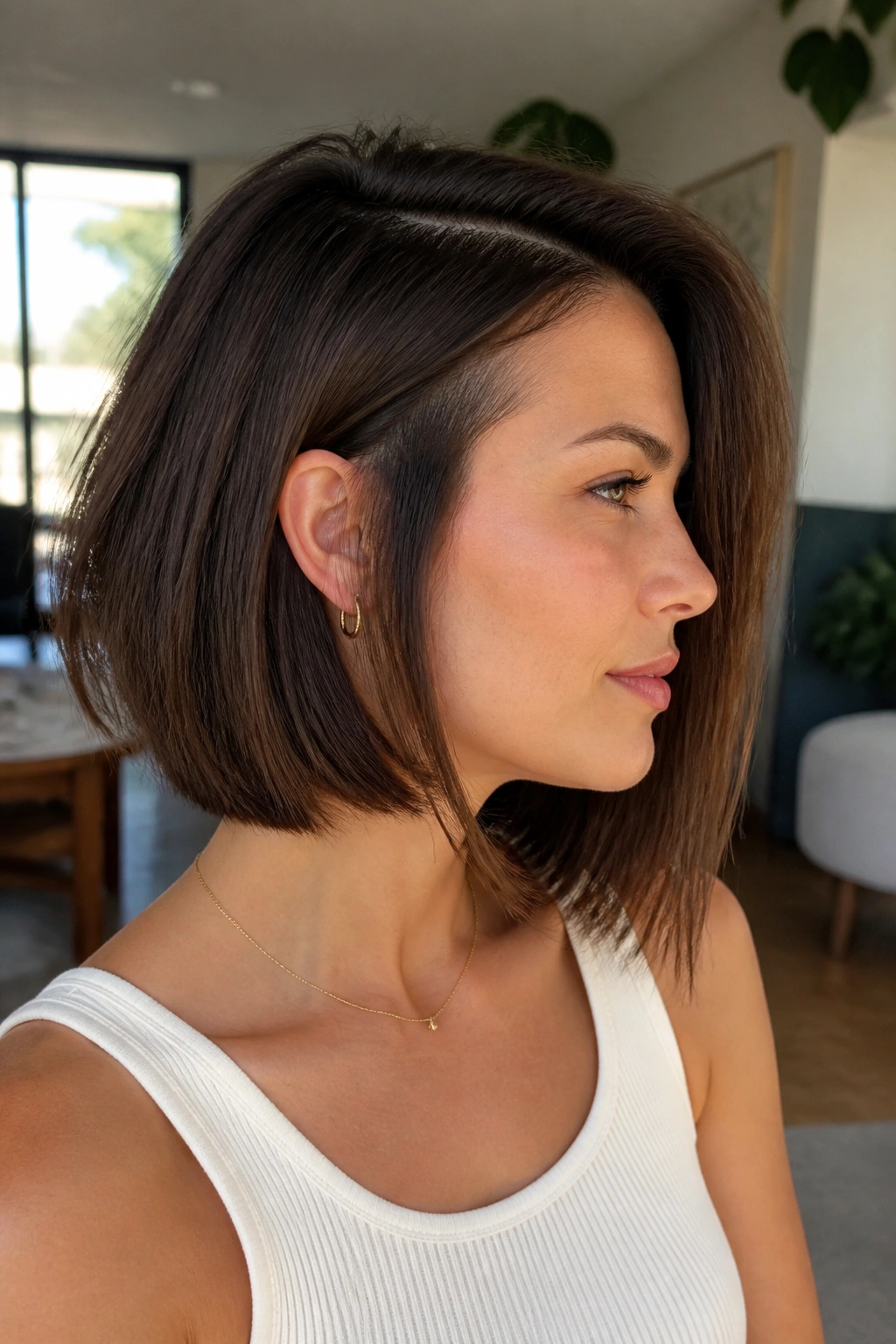
A disconnected lob is a favorite of mine because it looks straightforward from the outside and smarter underneath. The top stays blunt and polished, while the interior loses enough weight to keep thick hair from puffing out at the back.
That disconnect is the whole point. A standard lob on dense hair can grow wide through the mid-lengths, especially if the hair bends at the ends. Removing some of the hidden bulk lets the lob drop in a cleaner line and keeps the hair from flipping in strange directions at the shoulders.
This is a good middle ground for anyone who wants an undercut effect without seeing a clearly shaved section. The cut still feels professional and neat. It just behaves better. If you like to wear your hair half-up or clipped back for part of the day, the hidden interior removal makes the style feel lighter in your hands.
A lot of people think they need a dramatic shave when what they really need is less volume in the right place. This is that haircut.
17. Textured Shag With Hidden Undercut Panels
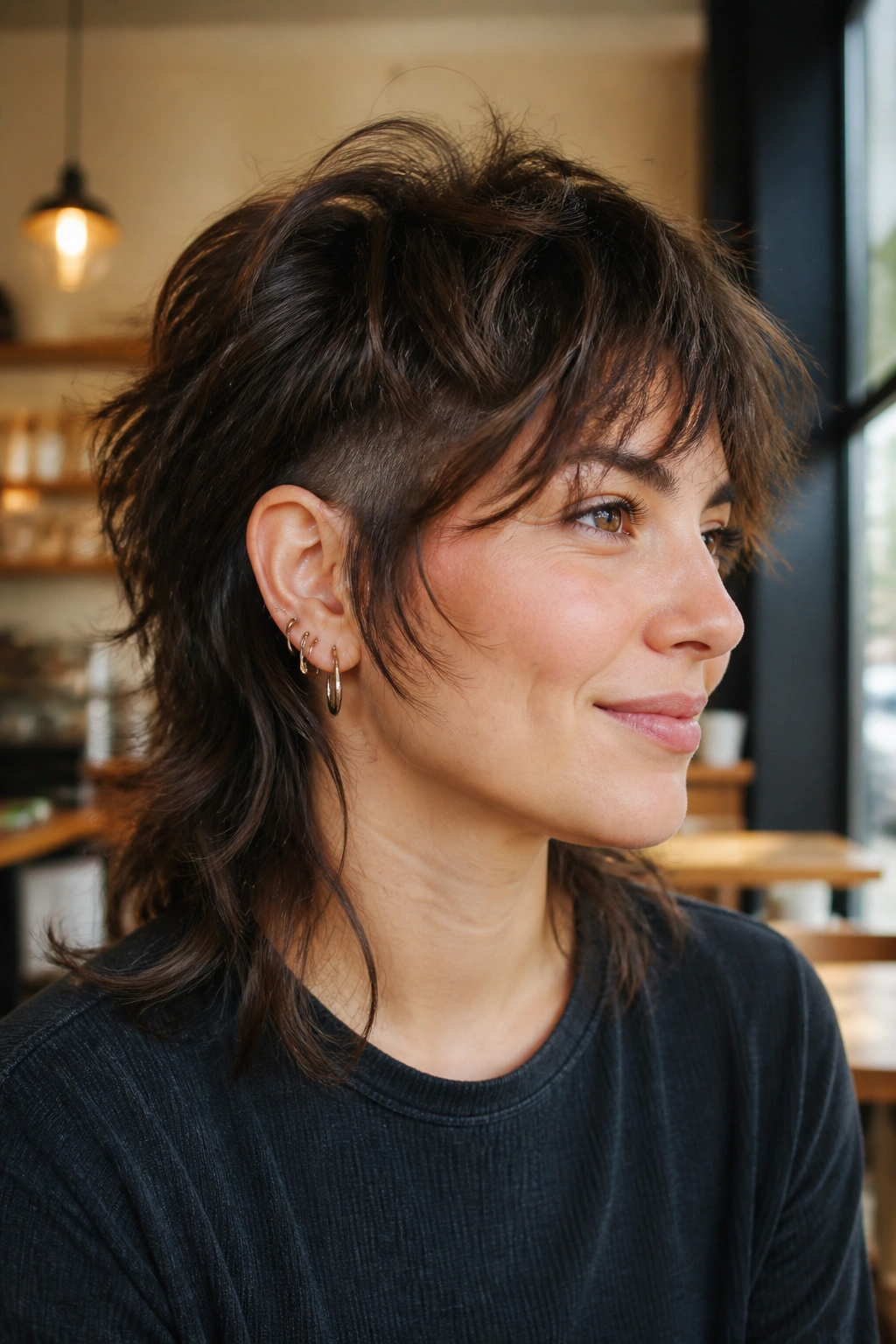
Why does a shag sometimes feel too wide on thick hair? Because all those layers can stack into a halo that looks cool in theory and bulky in real life. Hidden undercut panels fix that by removing some of the weight under the top layers, especially behind the ears and at the nape.
The shag still does the visual work. The undercut just stops it from becoming a puffed-out cloud. That’s especially helpful if your hair is wavy or curly and you want piecey movement without the bottom section dragging the whole shape down. If the stylist leaves the layers soft and uses the undercut only where the hair collapses too heavily, the result looks lived-in rather than hacked up.
Where to Remove the Bulk
The best spots are usually the low side panels and the neck area. That lets the top layers keep their swing while the hidden bulk disappears. I would not go too high with this one unless you want the shag to read more rebellious than soft.
A textured shag plus undercut is one of the smartest pairings for thick hair that loves movement but hates stiffness. It is messy in a good way.
18. Patterned Undercut for a Bold Finish
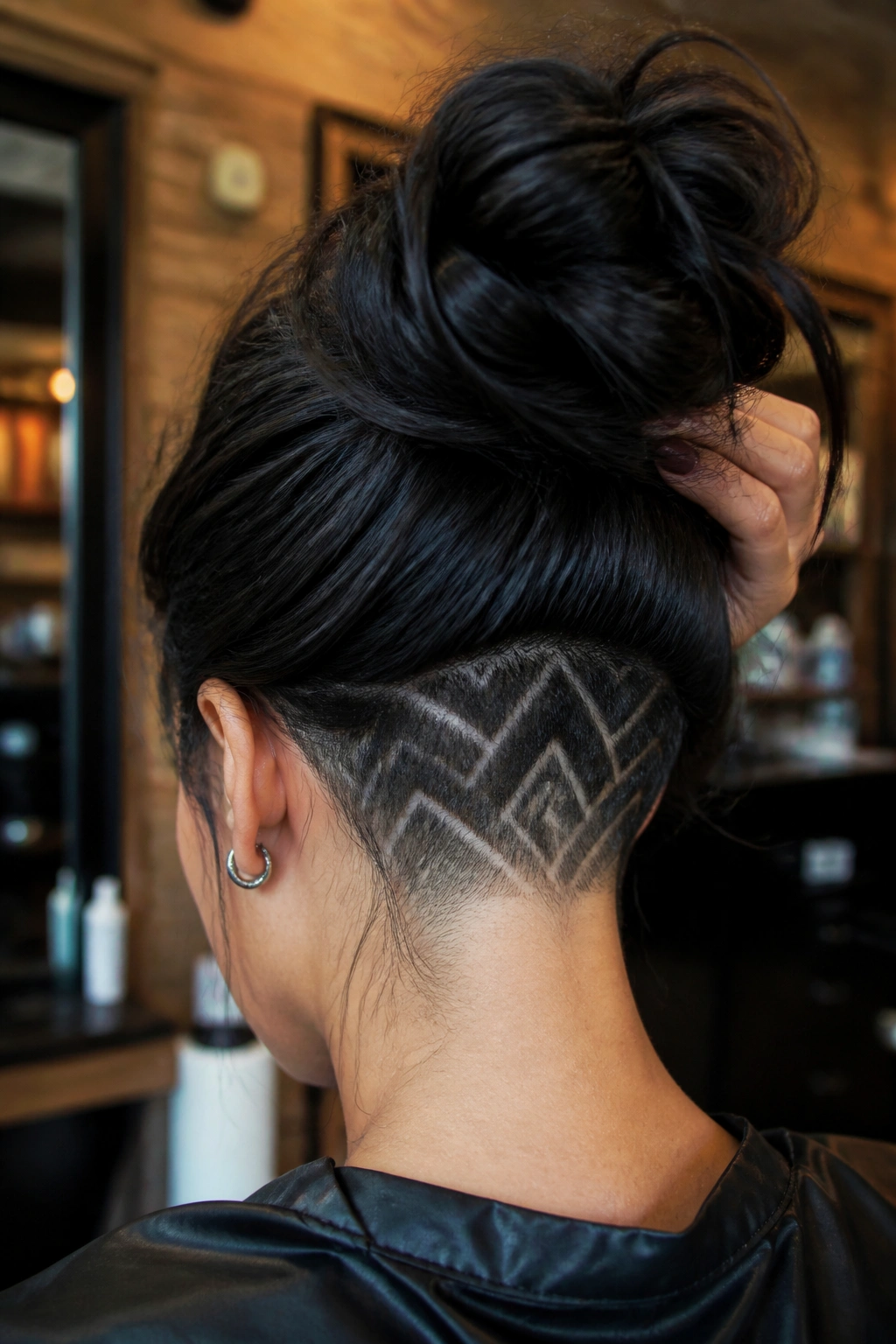
A patterned undercut is the one that gets the room to look twice. Lines, arcs, chevrons, or a small curved motif at the nape can turn a hidden cut into something with real personality, especially on thick hair where the contrast reads cleanly.
This is the design I’d choose only if you enjoy upkeep and do not mind seeing it grow out. Thin lines blur first, so simpler patterns usually age better than crowded ones. A single geometric mark can stay sharp long enough to feel worth the effort. A busy design, on the other hand, can start looking muddy before the rest of the haircut has even settled.
A good rule: keep the pattern where it can be covered when you want, and revealed when you don’t. That way the haircut still works at the office, at dinner, or in a plain low bun. You get the fun part without giving up control.
- Best if you like a clean, graphic finish
- Simpler lines last longer than detailed artwork
- Works well on dense hair because the contrast shows clearly
- Needs regular clean-ups if you want the pattern to stay crisp
A cleaner pattern beats a fussy one every time. Thick hair already gives you enough visual weight; the design should sharpen it, not crowd it.
Final Thoughts
The best undercut for thick hair is the one that solves a real annoyance. Maybe it’s the nape bulk that makes buns wobble. Maybe it’s the side puff that ruins a straight blowout. Maybe it’s the feeling of carrying too much hair at the back of your neck on a warm day.
Start with the problem, not the photo.
If you’re nervous, begin with a hidden nape or temple version. Those are the easiest to cover, and they give you a clear sense of how much lighter your hair can feel without committing to a loud shape. Bring your stylist a picture of how you wear your hair most days, not just the glam version you save on your phone. That makes the cut make sense.
And if you do want the bolder version, go for the one that still fits your life. Thick hair can carry a lot of design. It just looks best when the shape has a job to do.
