



Ash brown hair can go flat fast. One tone all over, and the cool brown starts looking dusty instead of clean.
Highlights and lowlights fix that problem by making the color move. The light pieces catch your eye; the darker ones give the shade some body, so the finish reads smoky rather than washed out.
The sweet spot is balance. Too much ash and the hair can drift gray or green, especially on porous ends; too much warmth and you lose the whole point. A good colorist watches the undertone at the root, in the mid-lengths, and on the ends, because those three zones never behave the same.
That is why the best ash brown hair looks with highlights and lowlights feel deliberate without looking stiff. Some are soft and beige, some are mushroomy and muted, and some lean deep and glossy. Start with the first look, and the rest of the ideas will make more sense.
1. Smoky Ash Brown With Beige Ribbons
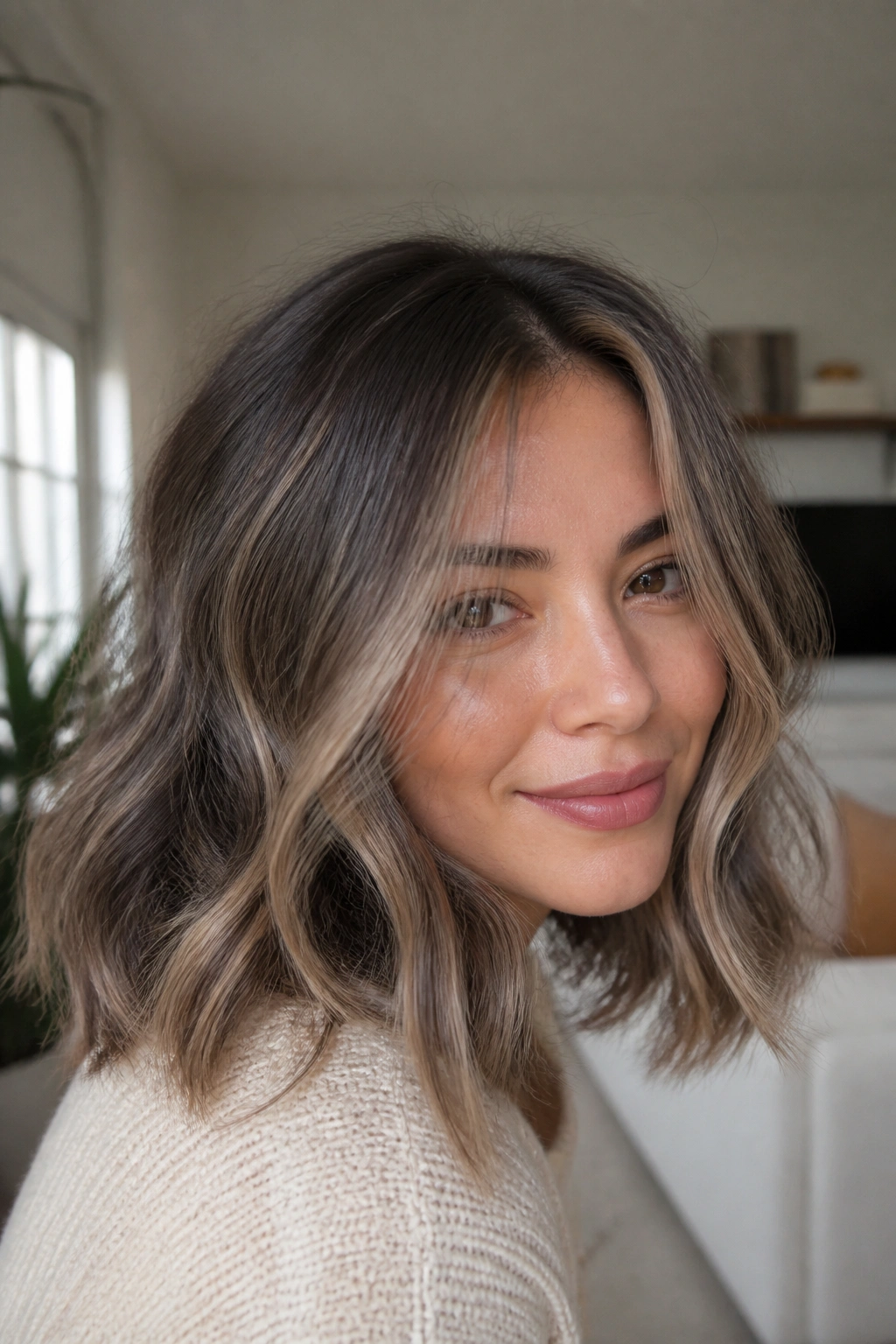
This is the version I think of when someone wants ash brown hair that still feels soft around the edges. The base stays cool and smoky, but the beige ribbons keep the whole thing from turning too flat or too gray. On loose waves, the lighter strands slip in and out of view instead of sitting on top like stripes.
Why It Feels So Soft
Beige is doing the quiet work here. It sits between ash and warmth, so you get light without drifting into gold or orange.
Ask for fine ribbons that start a shade or two away from the root and get a little denser through the mid-lengths. That keeps the grow-out easy and gives the hair some bend when it moves.
- Best on hair that falls at the shoulders or longer
- Works well with layered cuts and soft waves
- Ask for a neutral-beige gloss, not honey
- Keep the base around level 5 or 6 ash brown
Tip: If the beige pieces look too yellow in the bowl, stop there. You want soft light, not blonde.
2. Mushroom Brown With Face-Framing Highlights
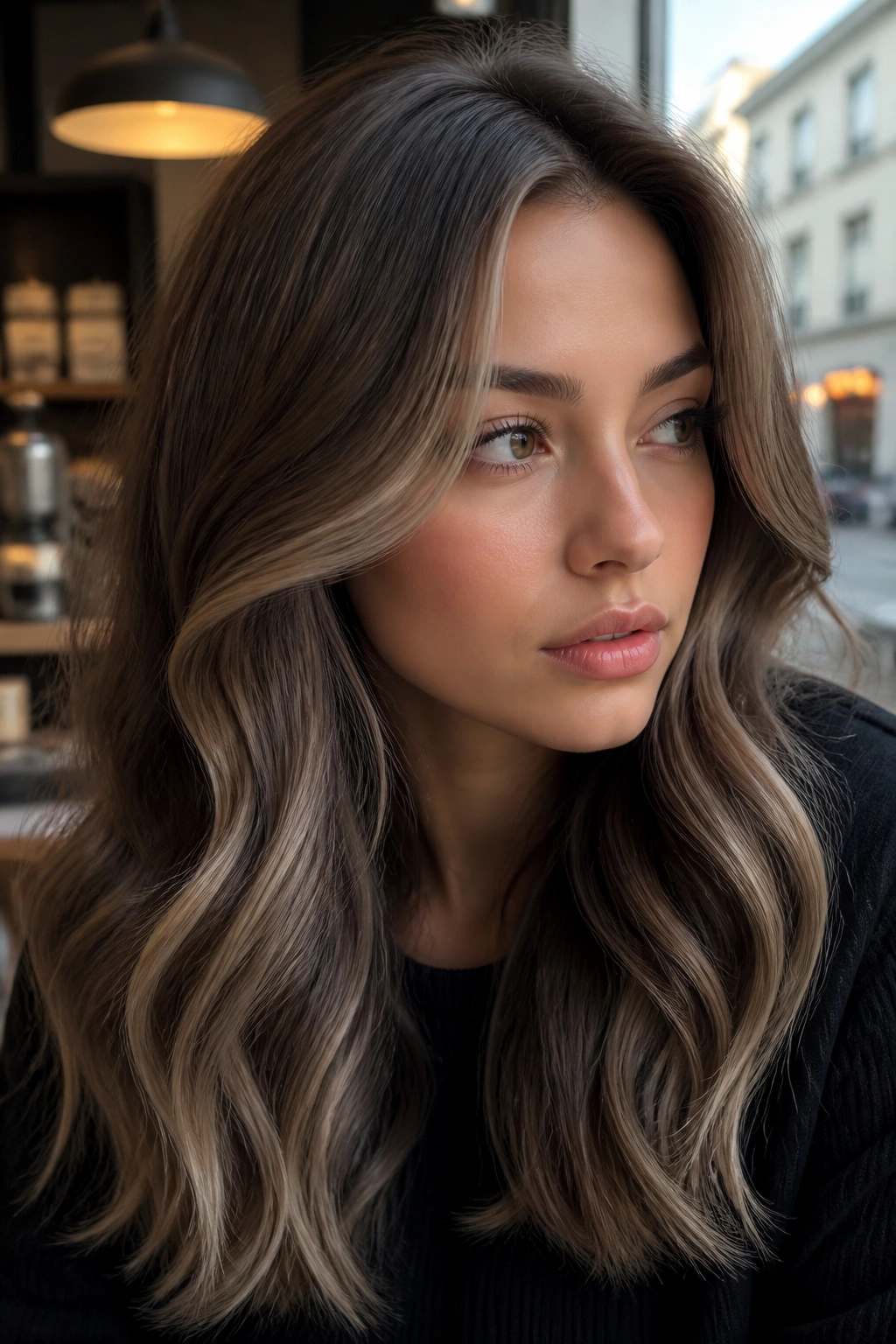
This is the look I reach for when the face needs more light without a loud color change. Mushroom brown has that cool taupe feel that sits right between brunette and ash blonde, and the face-framing highlights keep the front from disappearing into the rest of the hair.
The trick is placement. The brightest pieces should start around the cheekbone or just below it, then soften as they drop toward the collarbone. That gives you lift near the face while the back stays grounded and darker. Too much brightness at the root makes the whole thing look busy, and that is exactly what ruins the effect.
I like this on round and heart-shaped faces because the lighter front sections pull the eye downward a little. It also works on straight hair, where you can see every line of color, and on big curls, where the lighter front pieces peek through instead of shouting. Clean, cool, and a little moody. That combination works.
3. Cool Chocolate Ash Brown With Espresso Lowlights
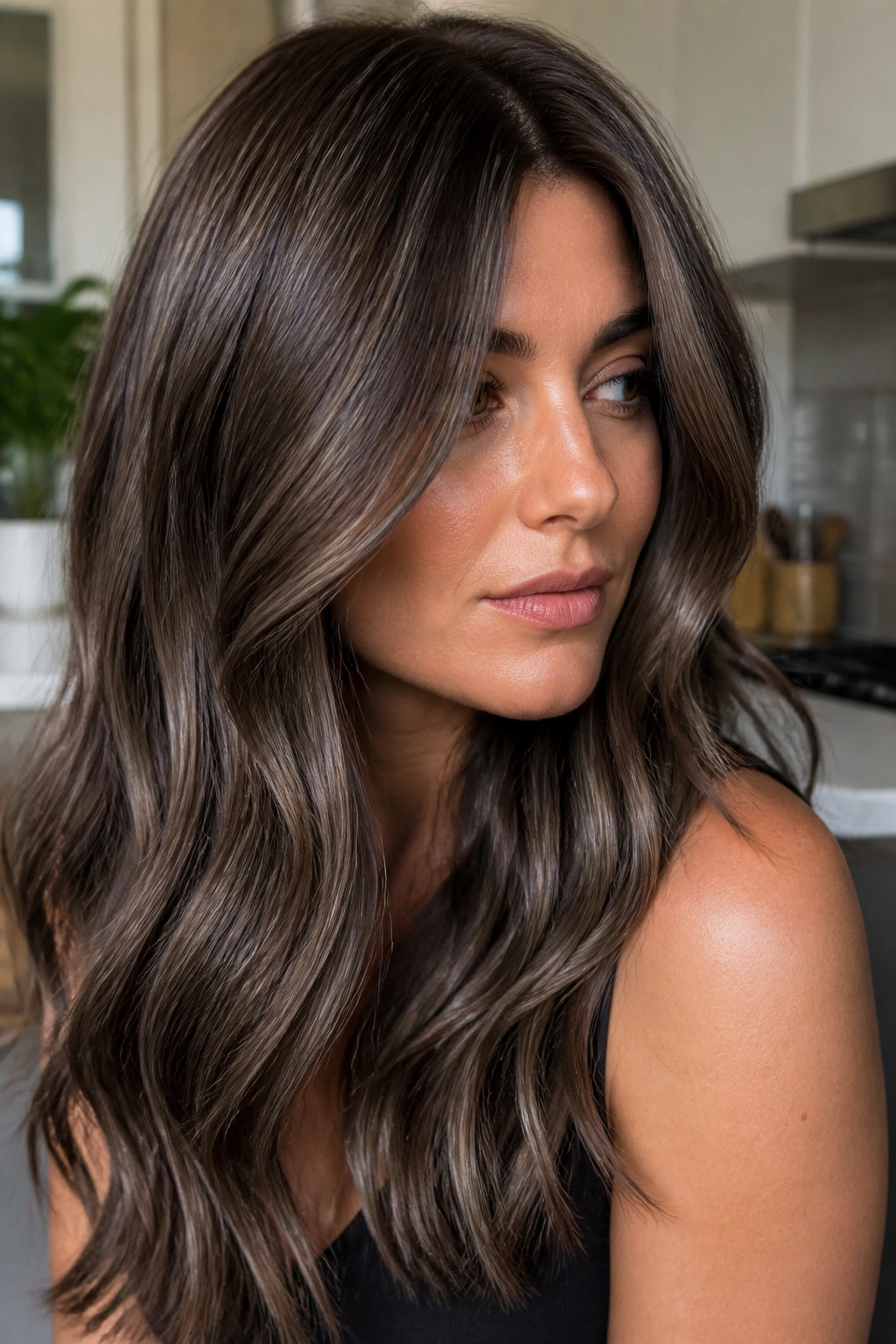
If your brown hair keeps turning orange, this is the look that brings it back under control. Cool chocolate ash brown gives you a rich base, while espresso lowlights add enough shadow to make the color feel deep instead of chalky.
The important part is contrast, but not too much. You want the lowlights to sit only one or two levels deeper than the base, usually tucked through the interior layers and near the nape. That gives the hair a thicker look when it moves, which is useful if your strands are fine or your cut is blunt.
Quick Notes to Tell Your Colorist
- Keep the highlights narrow, not chunky
- Use espresso or neutral brown lowlights, not black
- Place darker pieces under the top layer for depth
- Finish with a cool gloss to keep the ash tone clean
This is the kind of ash brown that looks expensive even when the styling is simple. Air-dried hair still works. So does a blowout. The color carries the whole thing.
4. Ash Brown Balayage On Long Waves
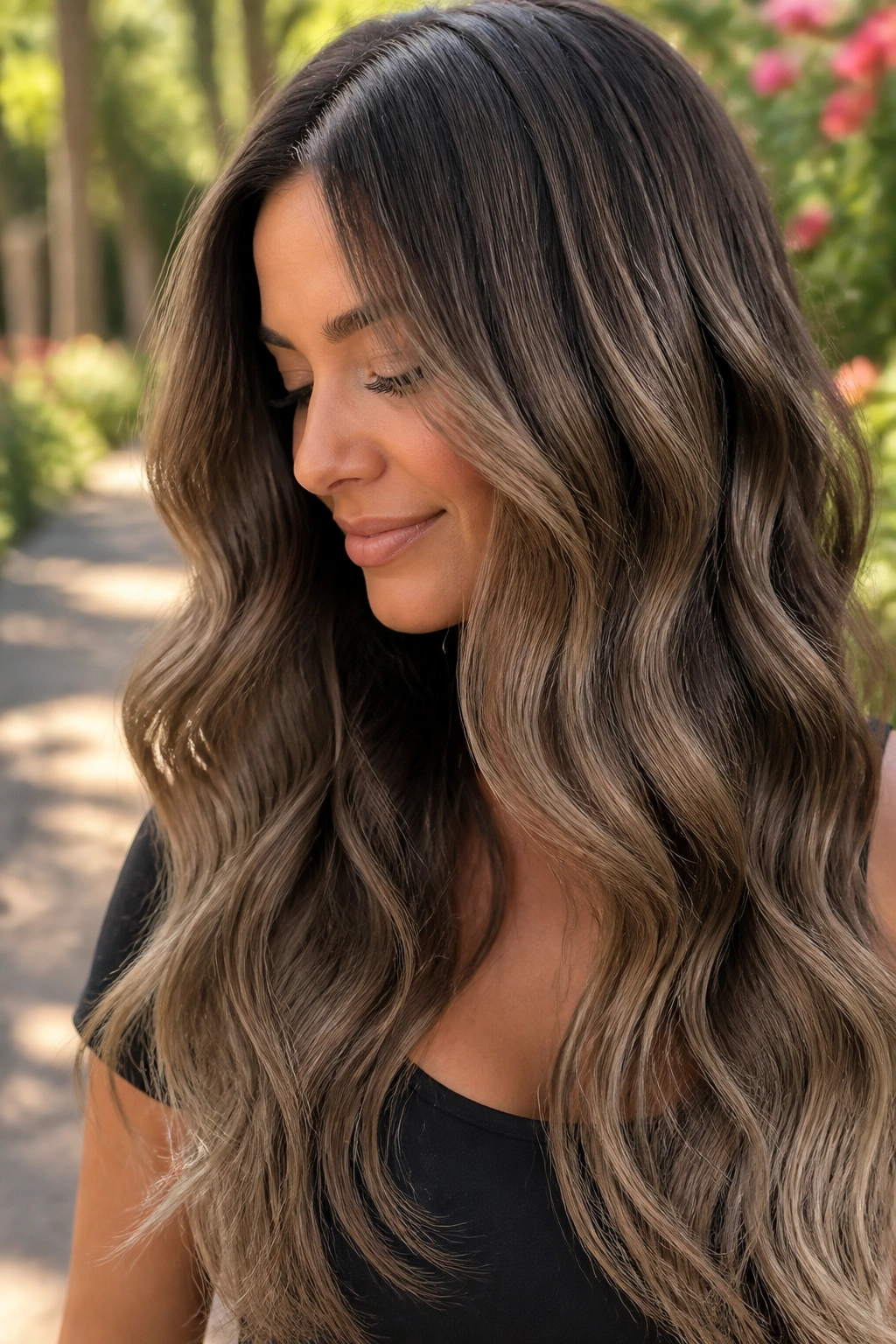
Why does balayage work so well with ash brown hair? Because the hand-painted placement keeps the cool tone from looking rigid. The lighter pieces drift through the waves, and the darker sections underneath keep the color from reading like a single, thin ribbon of brown.
On long hair, this is where ash brown gets its movement. The balayage should be spaced out enough that you can see dark space between each painted section. If the pieces sit too close together, the color loses shape. If they are too far apart, the ends can look heavy. There is a narrow middle ground, and it is worth aiming for.
How to Ask for the Placement
- Start the lightening around the cheekbone or collarbone
- Keep the root area shadowed for 1 to 2 inches
- Blend the highlights down into the ends instead of stopping sharply
- Ask for cool beige or smoky taupe pieces, not golden ones
Long waves are the best partner for this look because they break up the color in a natural way. Straight hair shows everything too plainly. Waves hide the seams. That is the whole game here.
5. Rooted Ash Brown Bob With Icy Ends
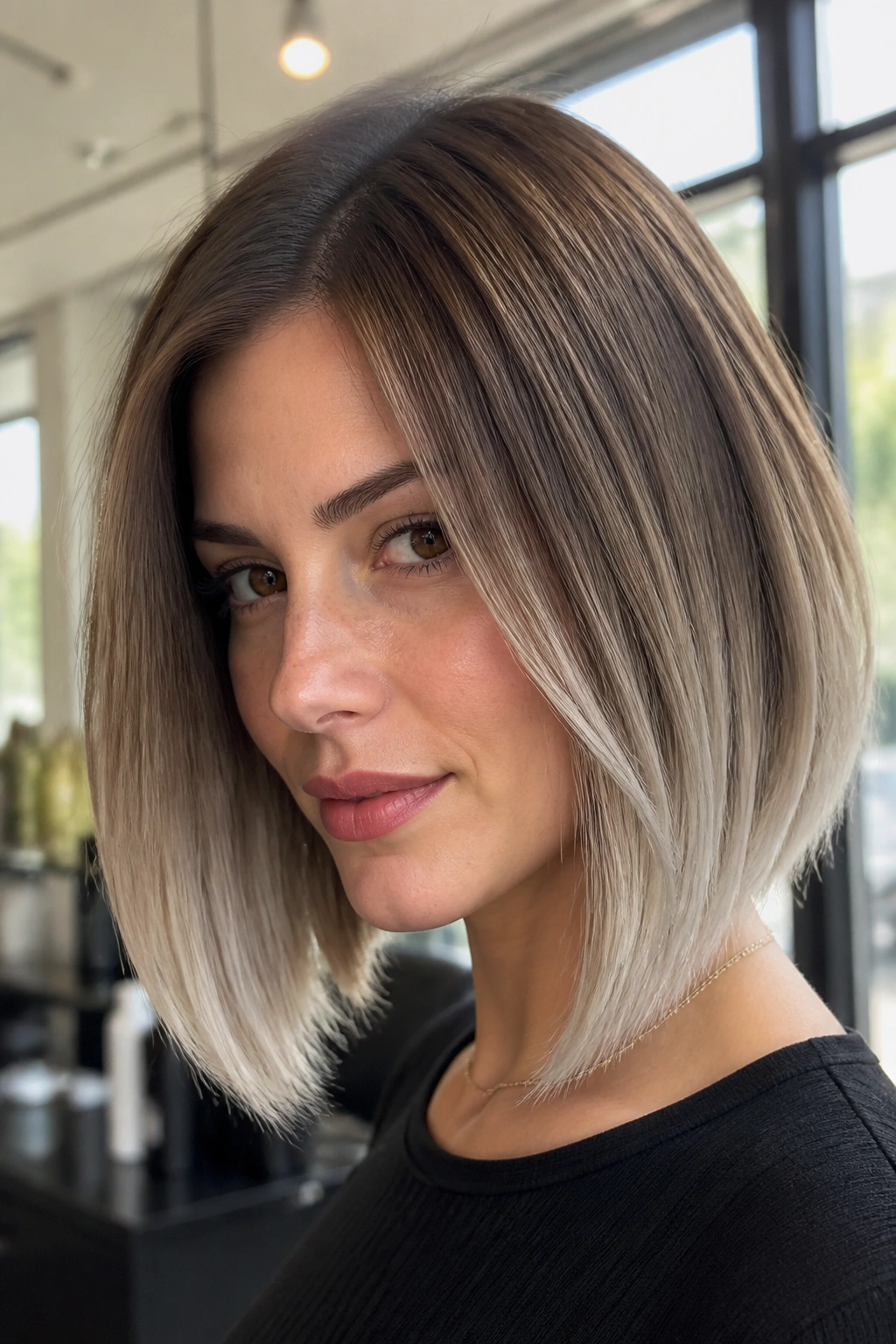
A blunt bob changes everything. Once the hair is short, every inch of color matters, so the rooted ash brown base has to be clean and the icy ends have to be placed with care. I like this look because it feels sharp without looking severe.
The root shadow gives the bob some weight, which matters when the cut sits around the jaw or just below the chin. The ends can then go a touch lighter and cooler, almost frosted, so the line of the cut stays crisp. One-sentence truth: the shape does the heavy lifting.
This is one of the few ash brown hair looks that can handle a stronger contrast without losing polish. Short hair shows color changes fast, and icy ends can look expensive when they are kept narrow and glossy. But there’s a catch. If the ends are lightened too far, the bob starts to look patchy as soon as it moves.
A neutral gloss every few weeks keeps the cooler pieces from going dull. If you want a short cut that still has dimension, this is a smart place to land.
6. Dimensional Ash Brown With Soft Sand Highlights
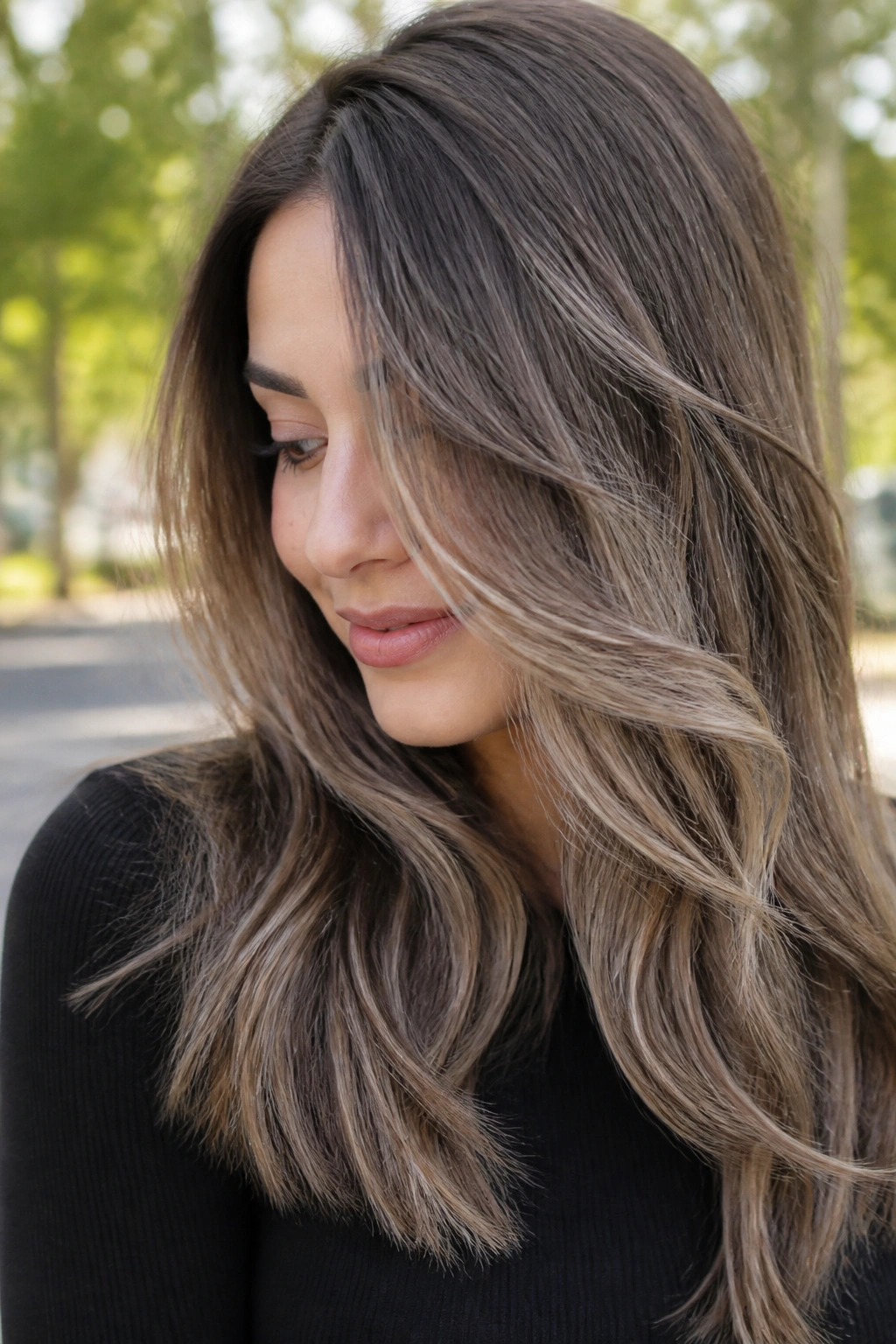
Unlike caramel highlights, soft sand pieces stay inside the cool family. That matters more than people think, because a warm ribbon can drag ash brown hair toward beige-orange in one appointment. Soft sand keeps the tone clean, and the result feels calm instead of sweet.
This version works best when the contrast stays low. You want a brunette base with highlights that are only a shade or two lighter, placed through the mid-lengths and ends where the hair catches light naturally. On straight hair, the dimension looks polished. On loose curls, it turns a little softer and more worn in.
What to Ask For
- Soft sand or mushroom-beige highlights
- Fine placement through the outer layer
- A cool gloss at the bowl or at the sink
- No golden toner, no copper warmth
I recommend this look for people who want movement without obvious streaks. It grows out quietly, and the color still looks deliberate two months later. That is a nice thing to have.
7. Ash Brown Money Piece With Shadowy Depth
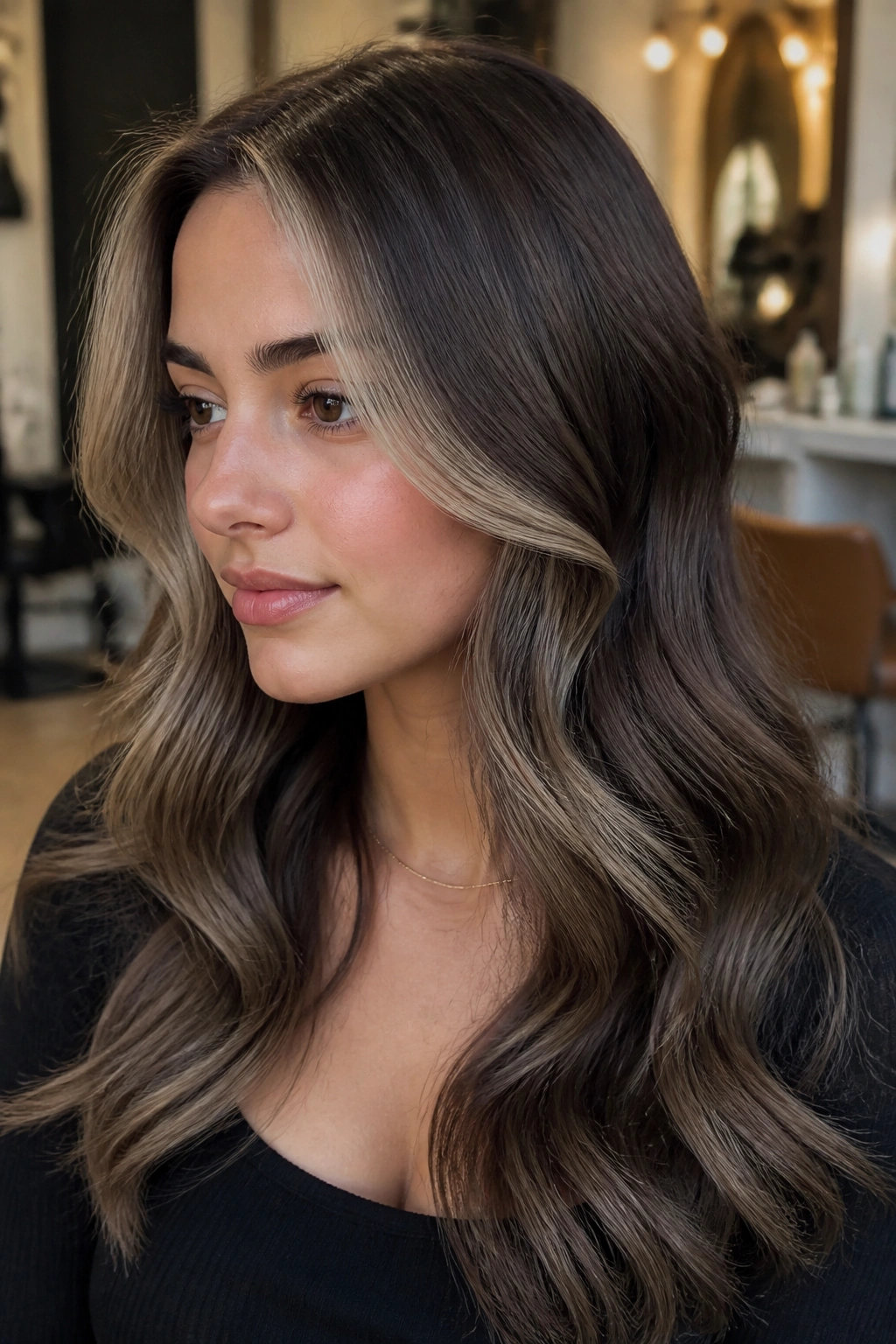
The money piece can do more work than six inches of overall lightening. A bright front section against ash brown hair changes the whole face, especially when the rest of the color stays smoky and deep.
The key is restraint. The money piece should be brighter, yes, but not pale blonde. A cool beige or ash-beige panel around the face gives you lift without making the front look disconnected from the rest of the head. Keep the back and crown shadowy so the bright front pieces have something to bounce against.
Where the Money Piece Should Start
- Begin at the temple or just behind it
- Feather the lightest color through the first two inches
- Let the brightness soften into the side layers
- Keep the root area slightly deeper for contrast
This look shines on ponytails, clipped-up styles, and loose waves. It also saves time if you want impact without full-head lightening. Frankly, that is the appeal. You get the punch of a lighter face frame, but the grow-out stays manageable.
8. Curly Ash Brown With Scattered Babylights
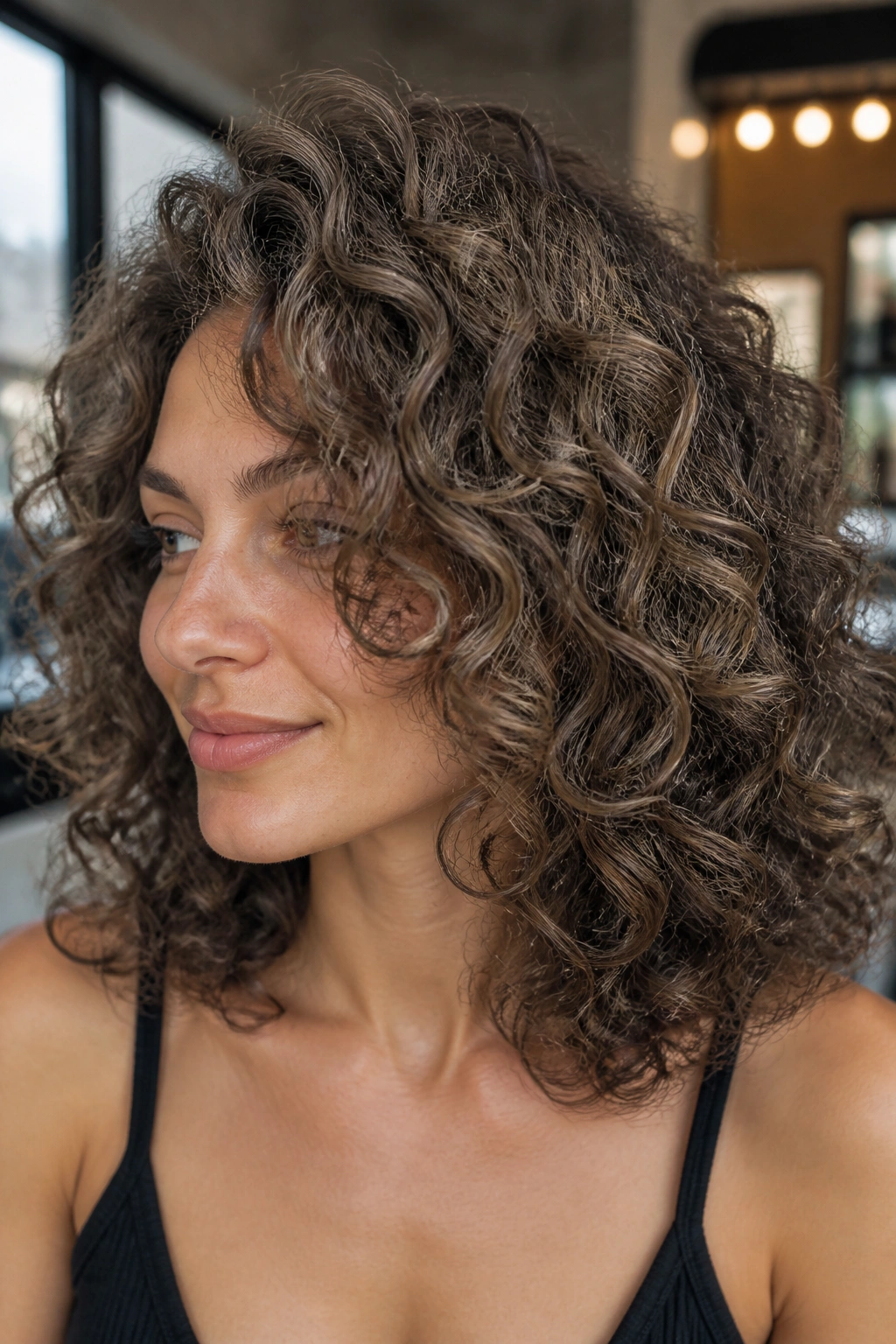
Curly hair changes the rules, so how do babylights work on ash brown curls? They have to be scattered in a way that follows the curl pattern instead of fighting it. Otherwise the color lands in stripes, and nobody wants that.
The best version uses tiny, barely-there light pieces painted through the outer curve of the curls and a few lowlights tucked underneath for depth. The top layer gets just enough brightness to show movement, while the interior stays darker so the curls look full. A good stylist will also avoid over-lightening the ends, because curls tend to look dry fast if the color pushes too light.
How Babylights Move Through Curls
- Use very fine sections rather than wide panels
- Paint where the curl opens, not across the whole ringlet
- Keep some darker strands near the crown
- Finish with a cool toner that does not flatten shine
This look is especially nice if your curls are medium to tight and you want dimension without a harsh highlight map. It feels airy, but not fussy. And that’s the charm.
9. Soft Ash Brown With Micro-Highlights
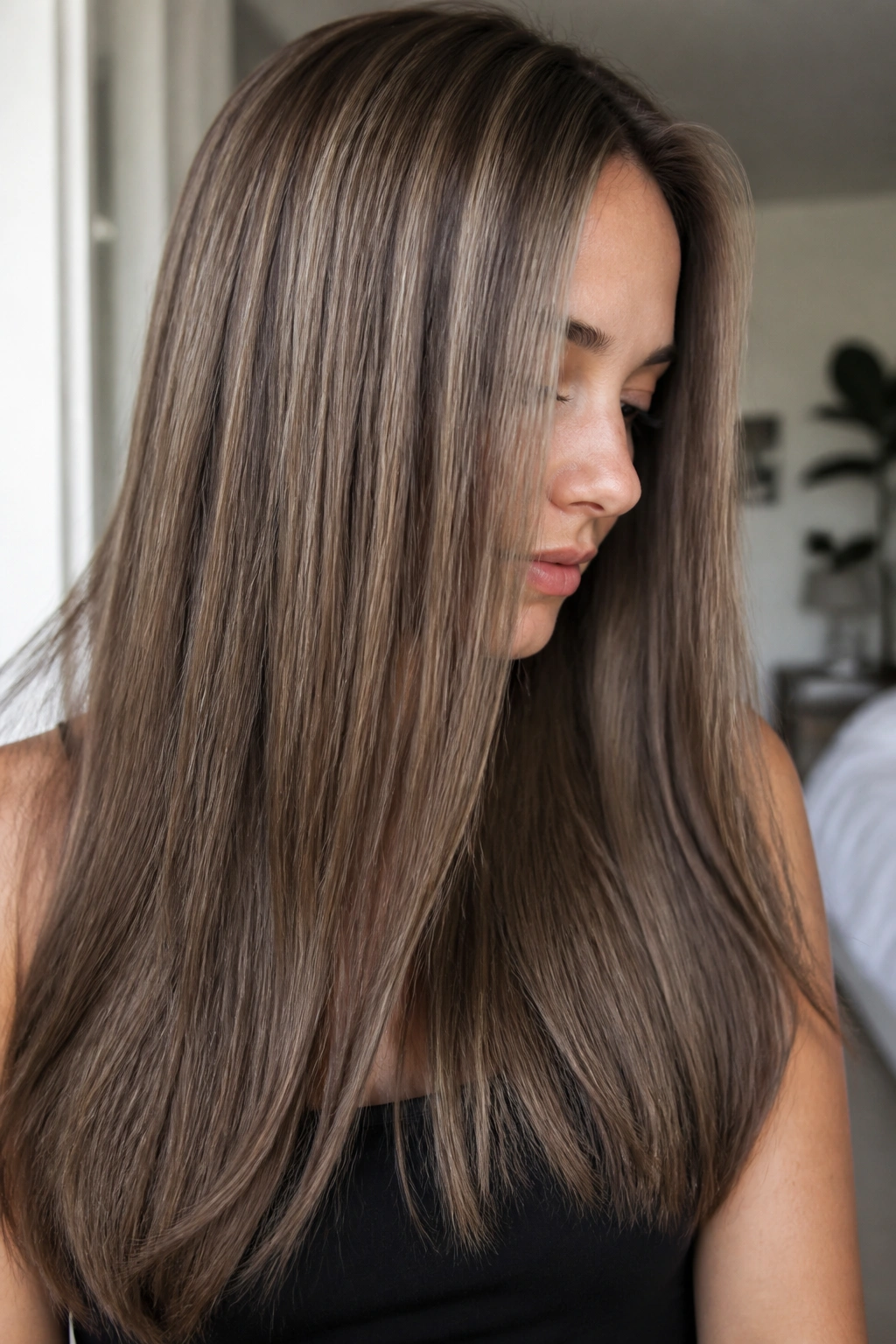
This is the look for someone who wants people to notice shine before they notice color. Micro-highlights are tiny, almost whisper-thin pieces that break up a solid ash brown base just enough to make it gleam when it moves.
The biggest mistake here is asking for too much contrast. That ruins the whole point. Micro-highlights should sit only a shade lighter than the base, with a few lowlights tucked in to keep the color from sliding pale. On fine hair, they make the strands look denser. On straight hair, they give the surface a smooth, expensive kind of finish.
It’s subtle. That is the point.
I like this on long layers, soft blowouts, and blunt cuts that need a little motion without obvious streaking. It also grows out with almost no drama, which is useful if you hate the look of root lines. If you want ash brown hair that feels polished rather than loud, this is a very good lane to stay in.
10. Deep Ash Brown With Smoky Lowlights
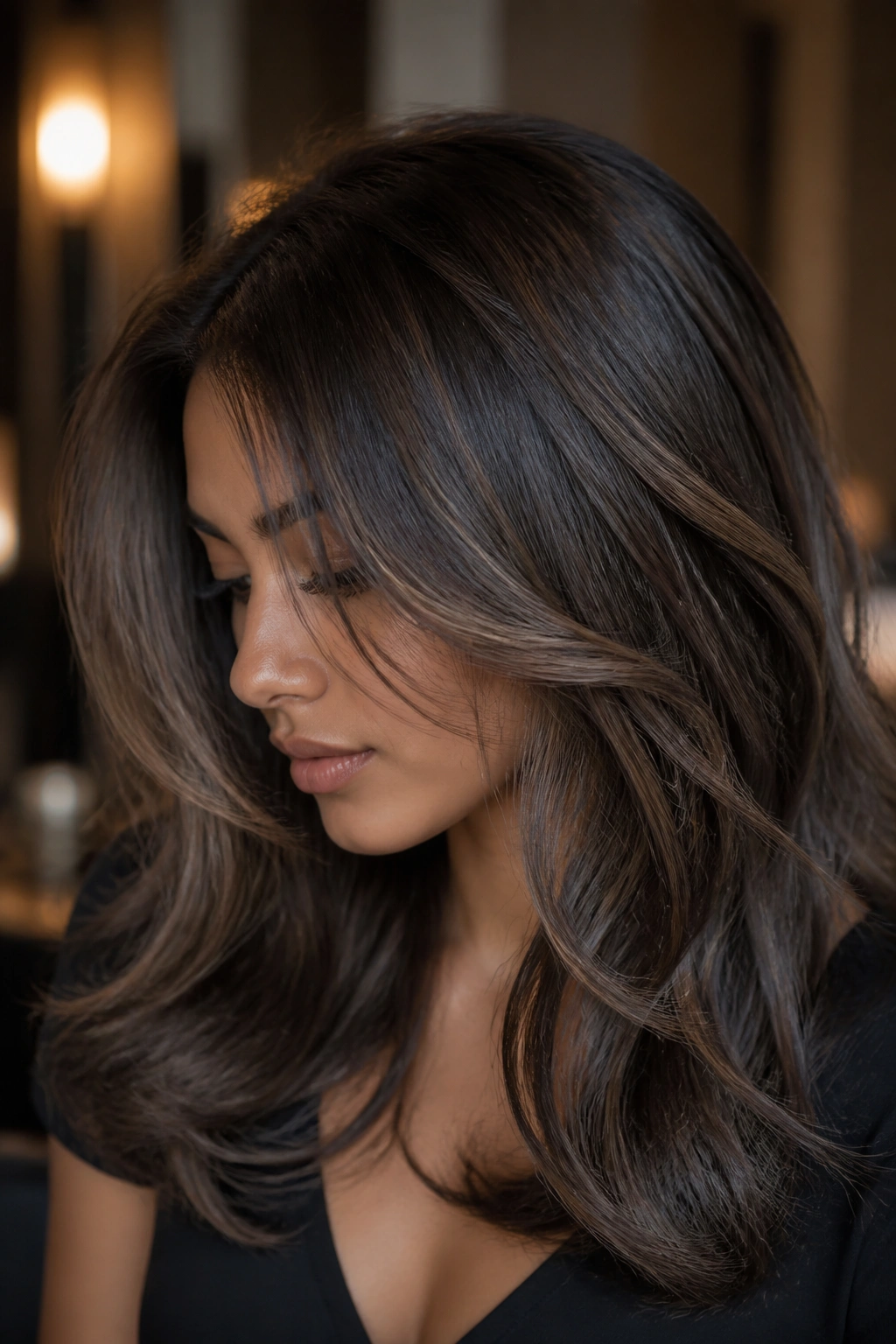
Deep ash brown with smoky lowlights is what I reach for when the top layer feels too flat. The added depth changes the way the hair sits, especially if it’s fine or one-length. Suddenly the color has layers, even before the cut does.
Why the Depth Matters
Lowlights are not there to make the hair darker for the sake of it. They create shadow in the places light normally skips, which makes the ash brown read richer and less washed out. Usually, the best lowlights are only one level deeper than the base, maybe two if the hair is thick and naturally light.
Where to Place Them
The crown, the underlayers, and the nape are the places that usually need help. Those spots hide the depth until the hair moves, which is exactly what makes the color feel alive.
One-sentence reality check: the underside usually gets neglected.
That is why this look works so well on medium-length cuts with movement. The top stays cool and clean, while the darker notes underneath stop the whole thing from going flat under indoor light. If you like brunette color that feels full and slightly moody, this is one of the strongest choices on the list.
11. Ash Brown Lob With Frosted Ends
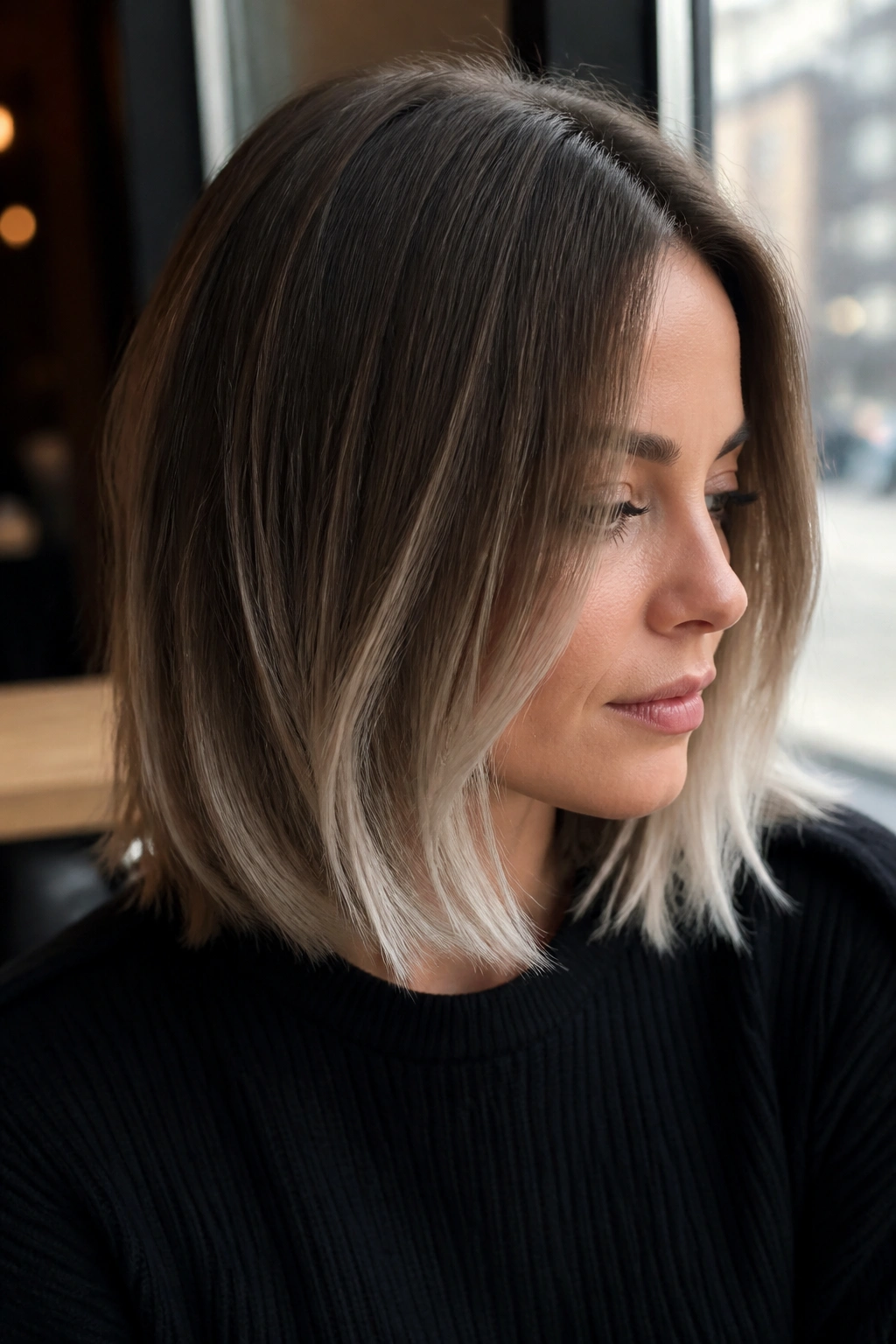
A lob with frosted ends is not the same thing as ombré. The transition is cleaner, cooler, and usually narrower, so the cut still reads as a sharp shoulder-length style instead of a dramatic fade.
This look works because the lob already has a strong shape. Add ash brown roots, then soften the ends with frosted pieces that are only a little lighter and definitely not golden. The result is a cool gradient that keeps the bottom from disappearing into the haircut. That matters on straight hair, where every edge shows, and on loose bends, where the lighter ends peek through as the hair swings.
I’d call this one especially good for people who wear their hair tucked behind the ear or half-up. The lighter ends show up in a neat way, not a messy one. It also photographs well under indoor light, where warm colors can look brassy fast. If you want something crisp but not severe, this is a strong pick.
12. Mushroom Brunette With Barely There Dimension
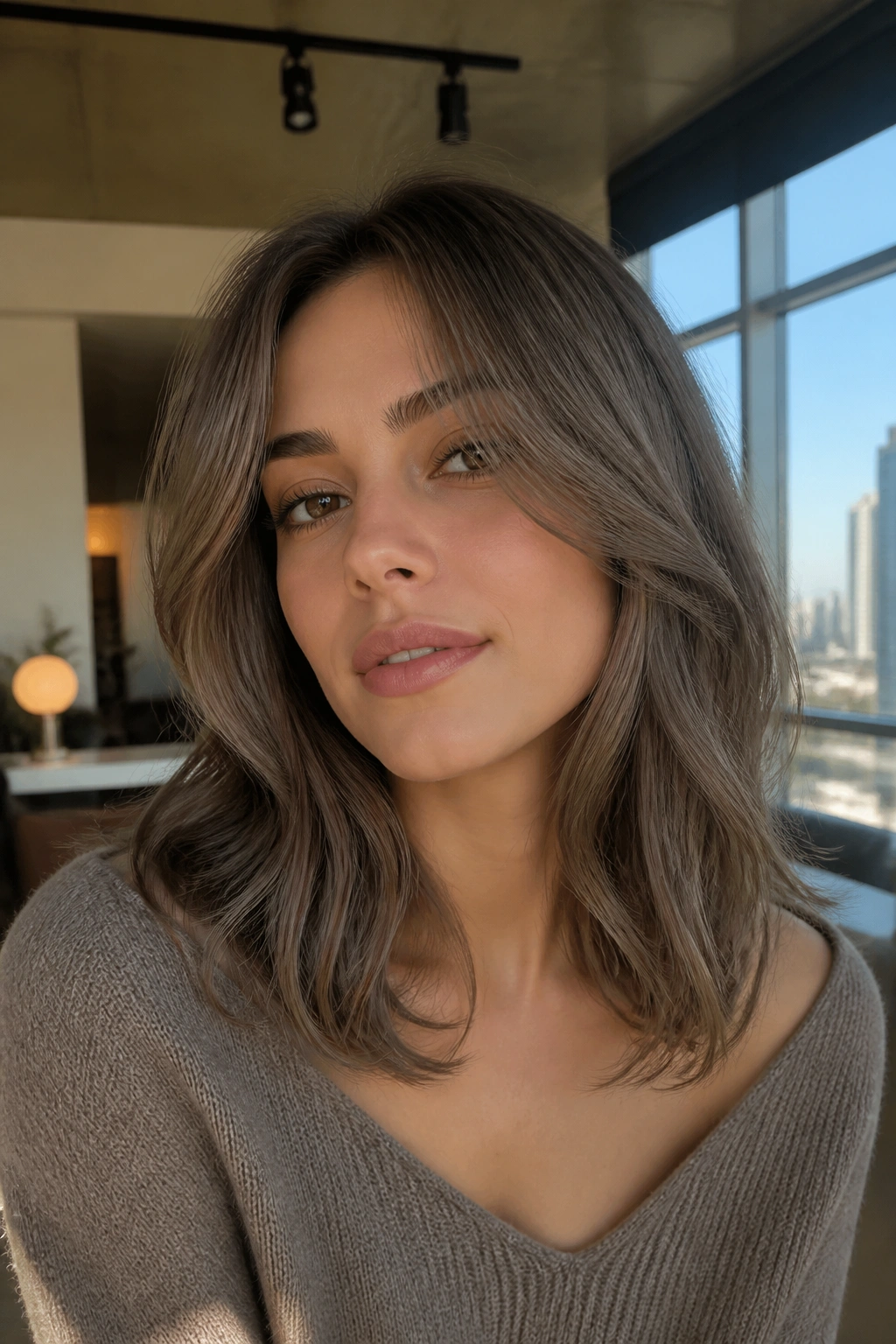
Mushroom brunette is for people who want strangers to think the color came from nature. It sits right in that cool, earthy zone where brown, taupe, and ash all blur together, and the dimension is so soft you almost miss it at first glance.
The secret is keeping the contrast low. Instead of obvious streaks, you want a few barely lighter pieces through the mid-lengths and a couple of deeper lowlights underneath so the color has shape. The whole thing should look like one tone from a distance and several tones up close. That’s harder to get right than it sounds.
This look works best on medium-thick hair that can hold a polished shape, especially if the cut has some layering. Too much lift can break the mushroom effect and make it look streaky. Too little, and it turns flat. So the placement has to stay soft and close to the base.
It is not the loudest color here. It may be the most elegant one.
13. Glossy Ash Brown Pixie With Hidden Highlights
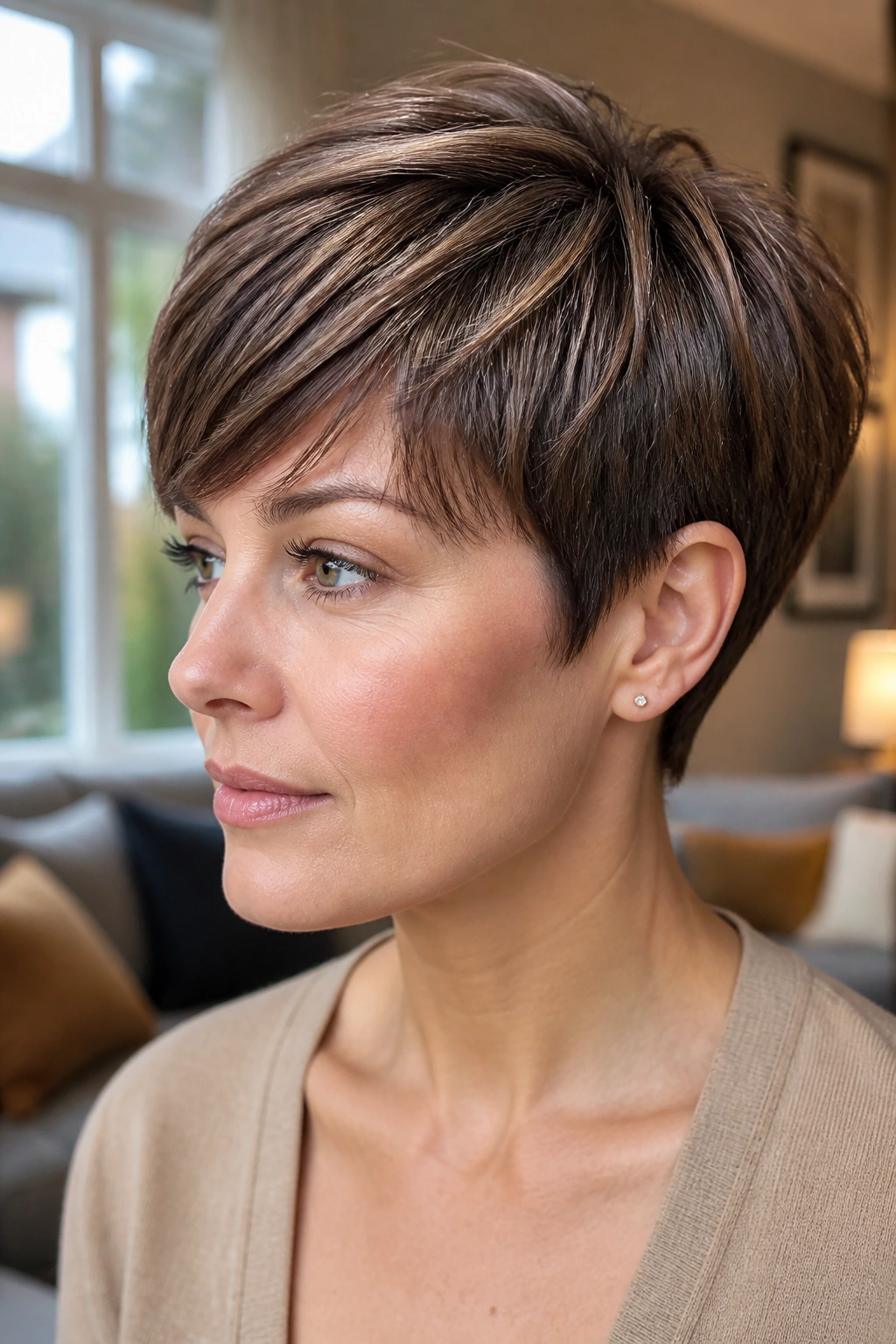
Can a pixie wear ash brown without looking heavy? Absolutely, but the highlights have to be hidden in the right places. Short hair shows every line, so the lighter pieces need to live on the crown, fringe, and top layer, where they catch movement instead of sitting in plain sight.
How the Color Moves on Short Hair
The sides stay deeper. That keeps the shape crisp and prevents the cut from looking fuzzy. On top, tiny cool-beige highlights can sit under the surface so they appear when the hair lifts or separates. A few lowlights near the crown help the top stay dense, which matters more on short cuts than people expect.
- Keep the light pieces narrow and soft
- Use a neutral ash gloss, not a flat gray toner
- Leave the nape and sides deeper for shape
- Style with a little texture cream or paste so the dimension shows
This is one of those looks that gets better when it is touched and moved a little. On a pixie, restraint reads as polish. Too much contrast will make the cut look choppy, and the whole point is to keep it sleek.
14. Ash Brown Ombré With Shadow Root
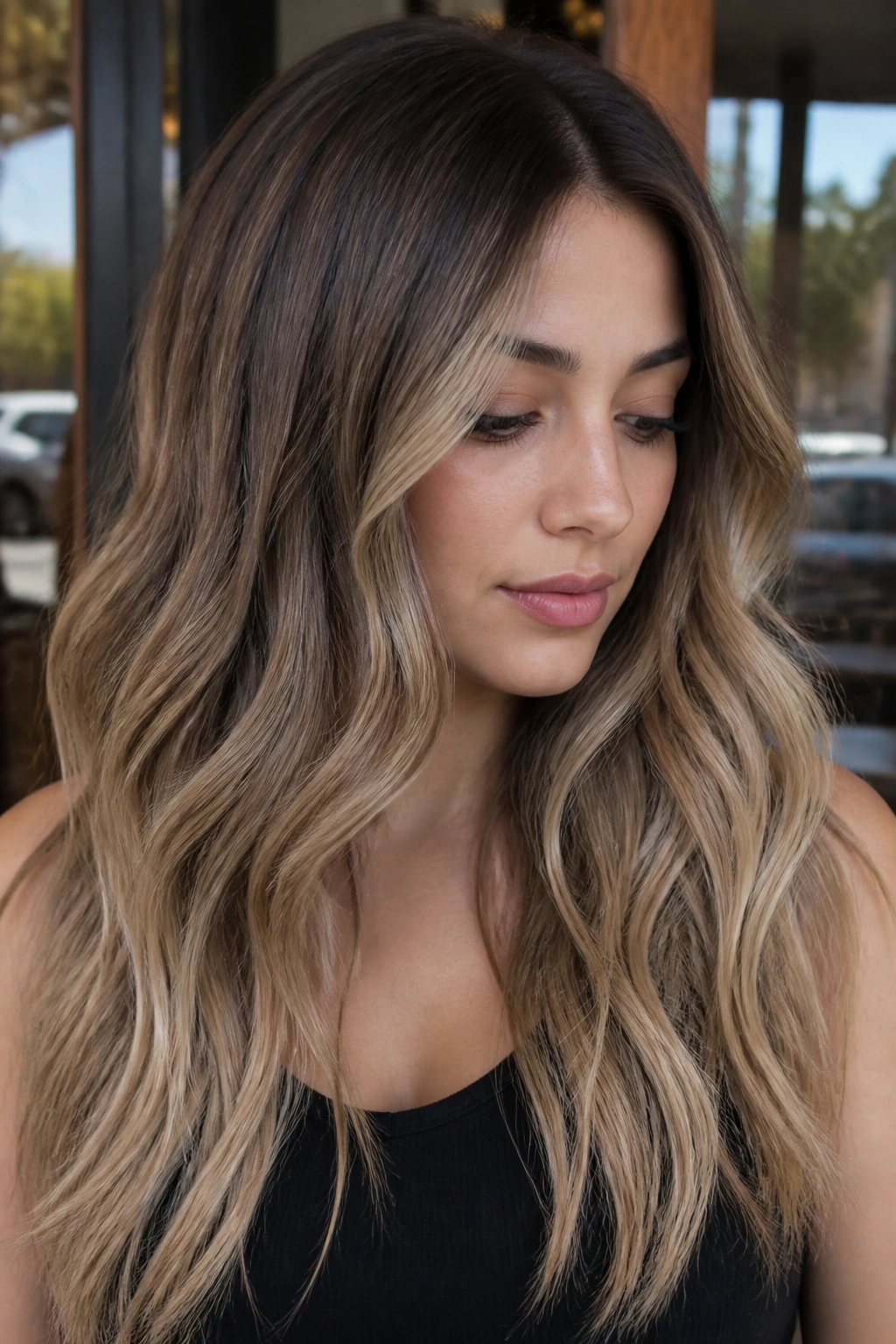
If your roots are growing out and you do not want to fight them, ash brown ombré with a shadow root is the escape hatch. The darker root sits in place, the mid-lengths soften into cooler brown, and the ends pick up just enough light to keep the shape from feeling heavy.
The important thing is that the transition should not be striped. A good shadow root is melted, not dropped on top. The root area stays about one to two levels deeper than the rest, then the color opens up slowly through the lengths. That gives the hair a lived-in look without making it sloppy.
This works especially well on long layers and wavy textures. The darker crown keeps the grow-out forgiving, while the lighter ends catch movement and stop the style from going dull. If you like to stretch salon visits a little longer, this is one of the safest ash brown choices. It is forgiving, and that is no small thing.
The only real mistake is pushing the ends too light. Keep them cool, but not pale.
15. Silver-Leaning Ash Brown With Pewter Threads
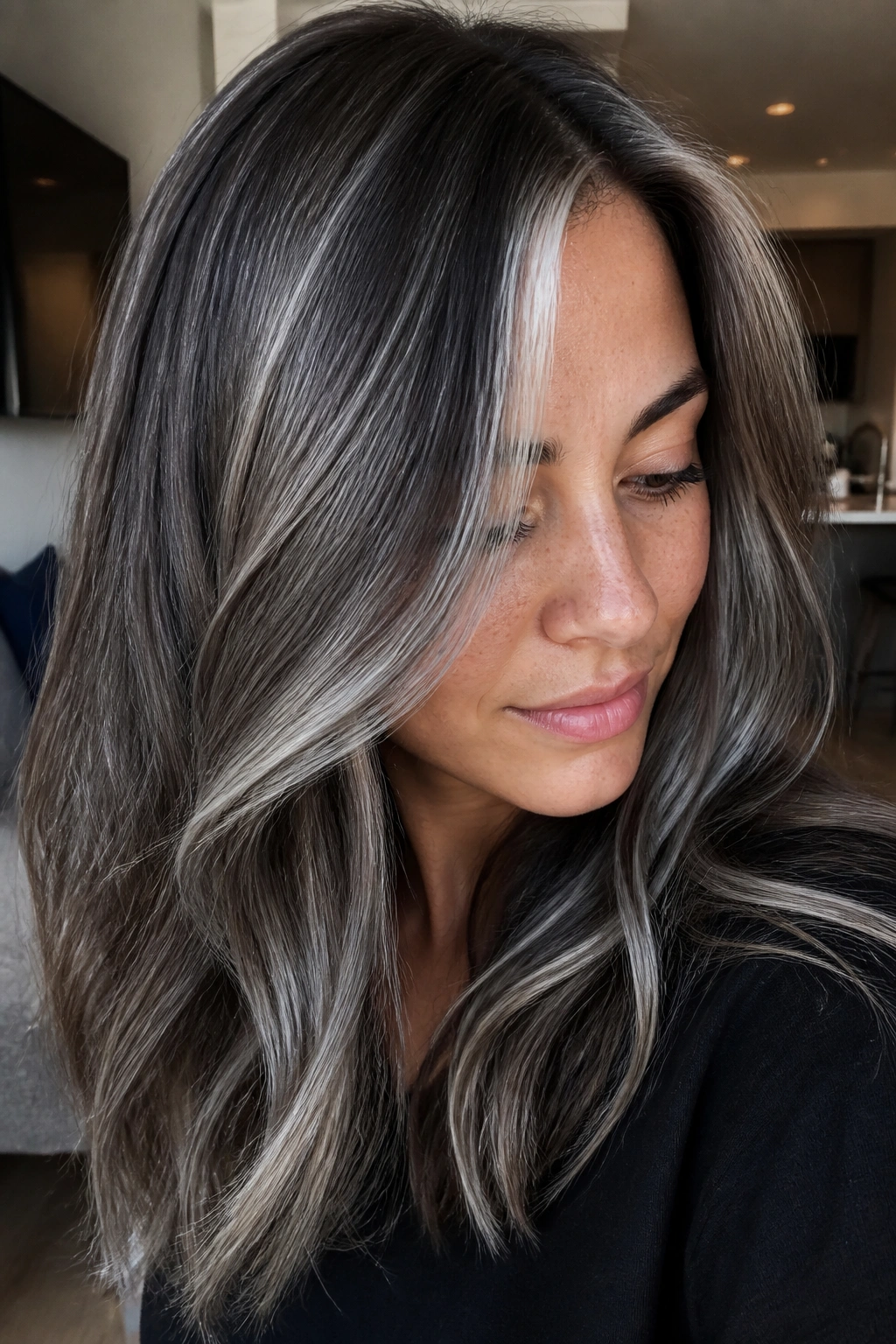
Pewter threads are what happens when silver goes wearable. Instead of turning the hair icy blonde, this version keeps the base in ash brown territory and threads in cool metallic pieces that look more smoky than bright.
This is a good match for people who like cool tones and do not mind a bit of maintenance. Silver-leaning pieces can fade fast if the hair is porous, so a color-safe shampoo and a cool gloss matter here. But the payoff is strong: the hair picks up a gray-blue sheen in certain light, then settles back into brown when the light changes. That shifting quality is part of the charm.
I like this on medium to dark bases because the contrast stays elegant rather than stark. It also flatters layered cuts, where the pewter threads can break up the shape without looking striped. If platinum feels too sharp and beige feels too soft, this sits in the middle. It is cooler, quieter, and a little more modern in feel.
16. Chunky Ash Brown Highlights With Cool Beige Panels
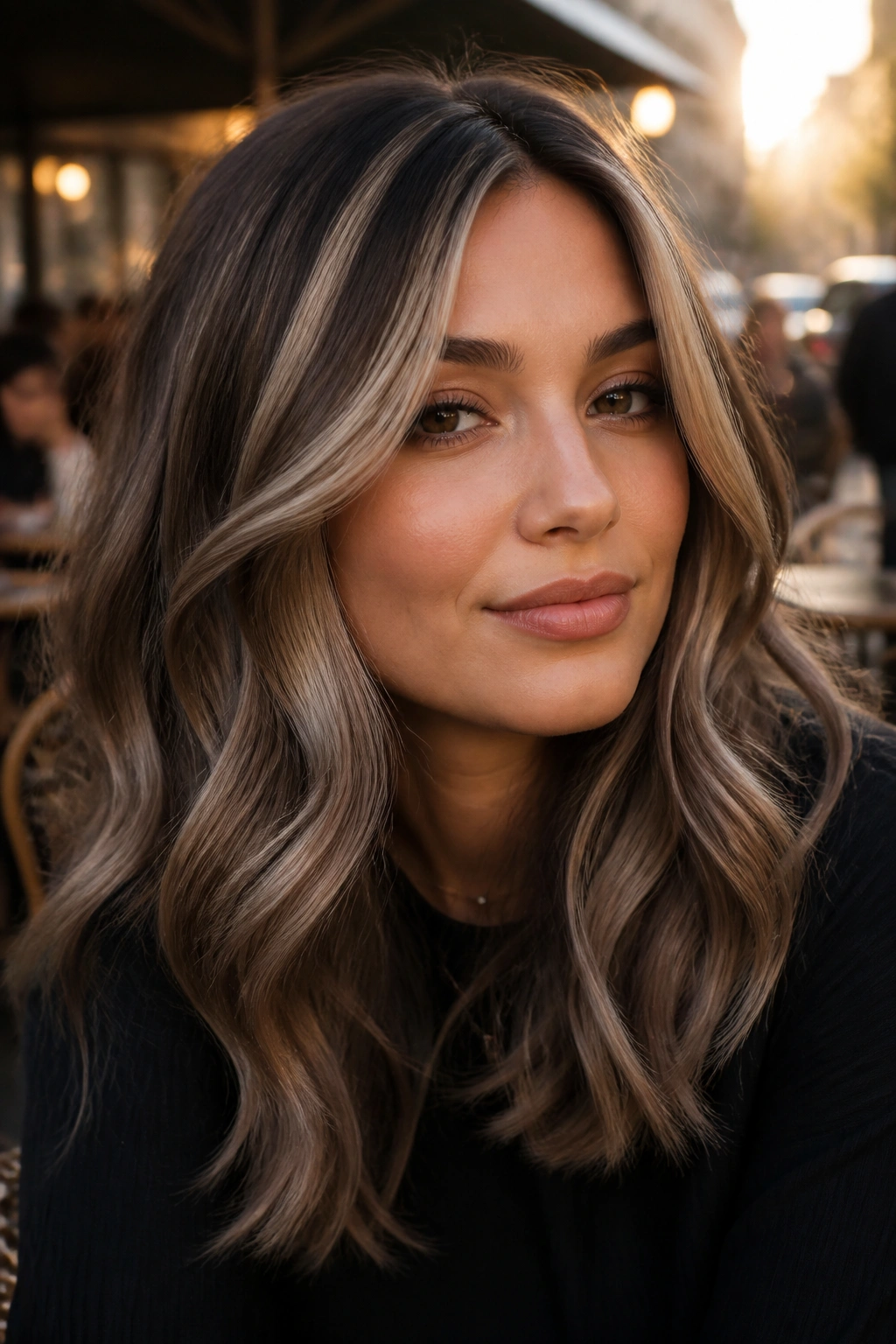
Want chunky highlights without the brass? Keep the panels in the ash-beige family and the whole look gets a lot easier to wear. The shape can still be bold, but the tone stays smoky instead of loud.
How to Keep It Modern
- Use wider panels around the face and crown
- Keep the base color deep enough to hold contrast
- Choose cool beige or mushroom tones, not gold
- Soften the blend at the root so the stripes do not look harsh
This look works best on layered cuts and big waves, where the larger pieces can bend with the hair instead of sitting flat. On straight hair, the color reads more graphic, which can be fun if that is what you want. On curls, it softens and becomes more dimensional.
A lot of people assume chunky highlights have to look warm or very 90s. They do not. The tone does the heavy lifting here. Keep the beige cool, keep the root shadowed, and the result feels intentional rather than costume-like.
17. Ash Brown With Mocha Lowlights For Contrast
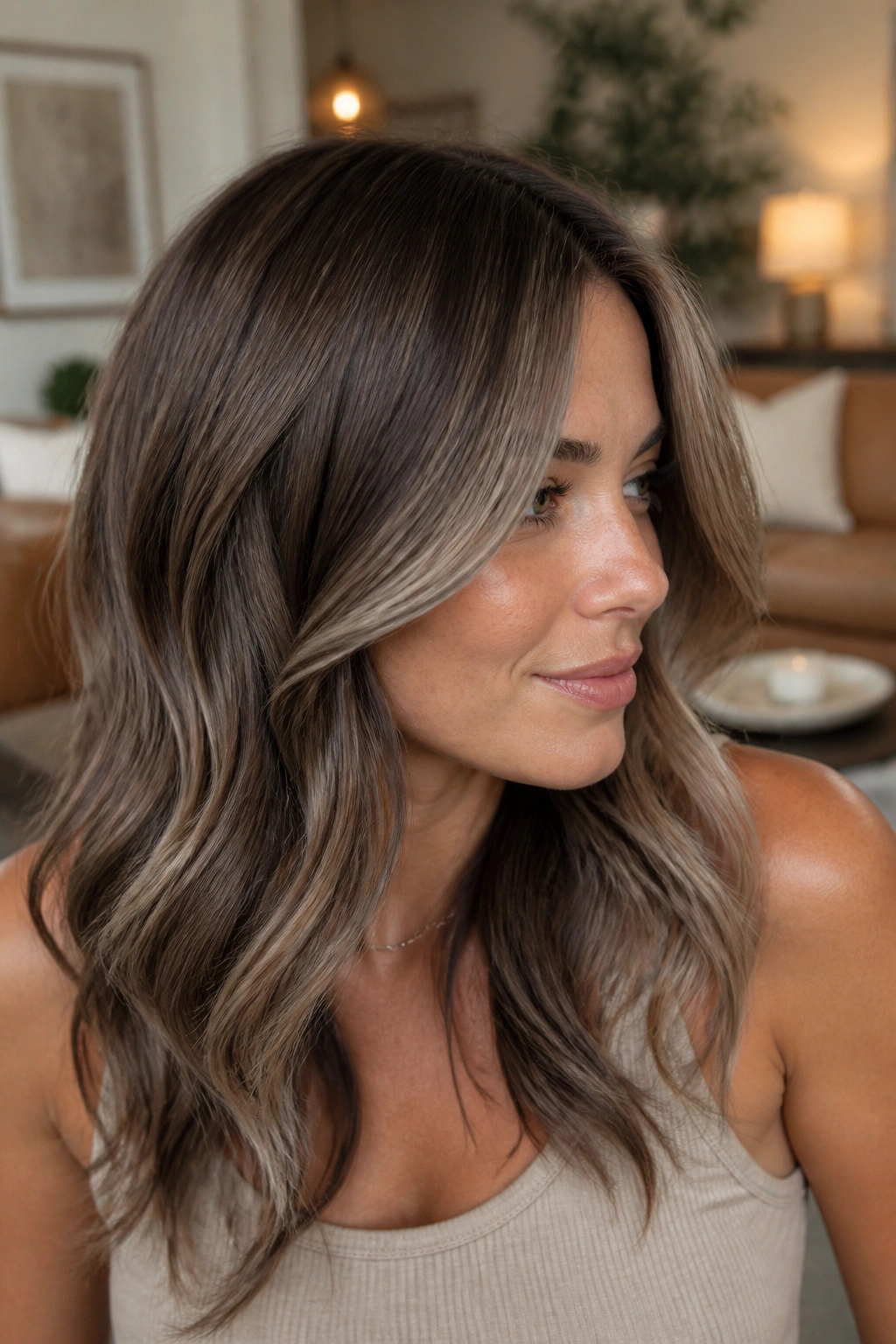
If ash brown keeps fading flat, mocha lowlights are the fix. Not because mocha is warm for the sake of warmth, but because it gives the base something to push against. The color stops looking dusty and starts looking full.
This works best when the lowlights are tucked into the interior layers and around the crown. That way, the top still reads cool, but the hair has a darker note underneath that comes through when you move. On thick hair, this is especially useful because it helps the cut feel lighter and more broken up. On fine hair, a few strategic lowlights can make the strands look denser without darkening the whole head.
Where to Sneak the Depth
The perimeter can stay lighter. The hidden sections below should carry most of the mocha. That contrast makes the ash tone on top feel cleaner, not heavier.
A neutral gloss after the color settles helps the two tones sit together without fighting. I would also avoid overusing blue shampoo here; too much can leave brunette hair looking dull instead of cool. This look is for people who want ash brown with a little backbone. It has one.
18. Light Ash Brown With Lived-In Dimension
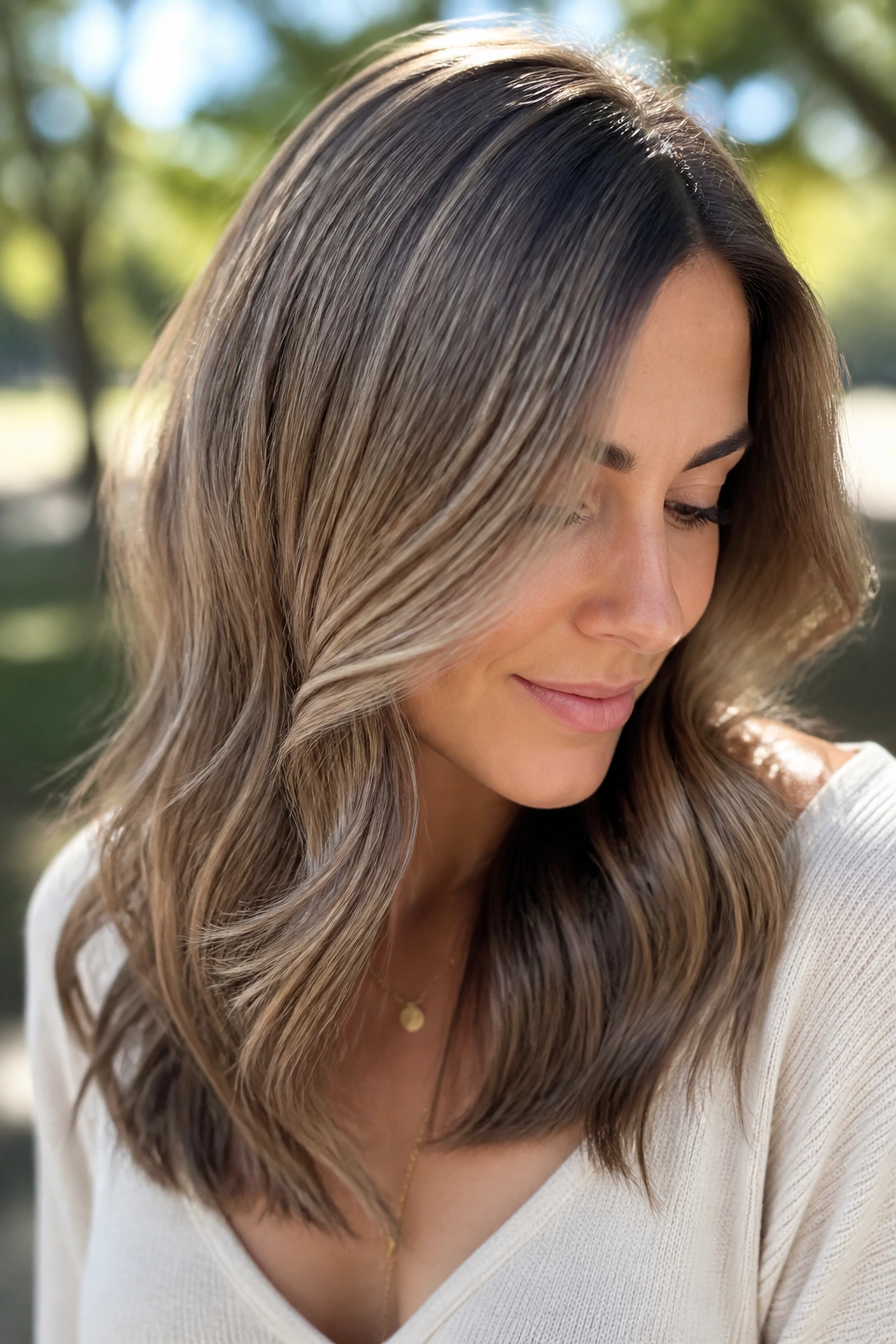
Light ash brown sits in a sweet spot. It is pale enough to feel airy, but still brunette enough to keep the color from turning icy or thin. Add a few soft highlights and lowlights, and the whole style starts to look like it has been worn for months in the best possible way.
The best version uses a soft root shadow, lighter mid-lengths, and a few darker lowlights near the ends. That keeps the color moving without making any one section shout for attention. If your hair is naturally medium brown, this is one of the easiest ash looks to maintain because the grow-out stays gentle. If your base is darker, you will need more lift first, and that is worth planning for before you sit in the chair.
I like this look on almost every length, from collarbone cuts to long layers, because it does not depend on a dramatic haircut. It just needs decent placement and a gloss that keeps the tone clean. That is the whole point, really. Ash brown hair looks best when the color has places to breathe.
Keep the contrast soft, keep the finish cool, and let the hair move a little. That’s where this color earns its charm.
