



Brown hair gets underestimated. People treat it like a middle ground, as if the only real choice is darker or lighter, and that’s a lazy way to think about color. Brown hair can carry caramel, honey, ash, copper, beige, rose, plum, and smoky taupe without losing its depth.
The best hair highlight ideas for brown hair don’t fight the base color. They work with it. A good highlight should soften the cut, shift the mood, and make movement show up when the hair swings, bends, or catches a little side light.
I always think the smartest color choices are the ones that look like they belong there. Not loud. Not striped. Just enough contrast to make the hair feel alive again. The trick is picking the right tone and putting it in the right place, because a few inches of placement can matter more than the shade itself.
1. Caramel Ribbon Balayage

Caramel ribbon balayage is the safe bet for a reason. It gives brown hair warmth and shine without pushing it into obvious blonde territory, and that makes it one of the easiest ways to refresh a base that feels flat. On medium and dark brown hair, caramel usually reads as rich rather than brassy, which is the sweet spot.
Why it works so well
The ribbons should be painted through the mids and ends, not packed tightly at the root. That keeps the grow-out soft and makes the color look blended instead of chunky. If your hair is straight, the ribbons show as clean streaks; if it’s wavy, they break up into that softer, glossy movement people always ask for.
Ask for 1 to 2 levels lighter than your base if you want a natural result. Go a little lighter only if your hair already has warmth in it. Too much lift can make caramel turn orange fast.
A light beige-gold gloss after the service helps a lot. Without it, caramel can lean too yellow.
2. Honey Babylights
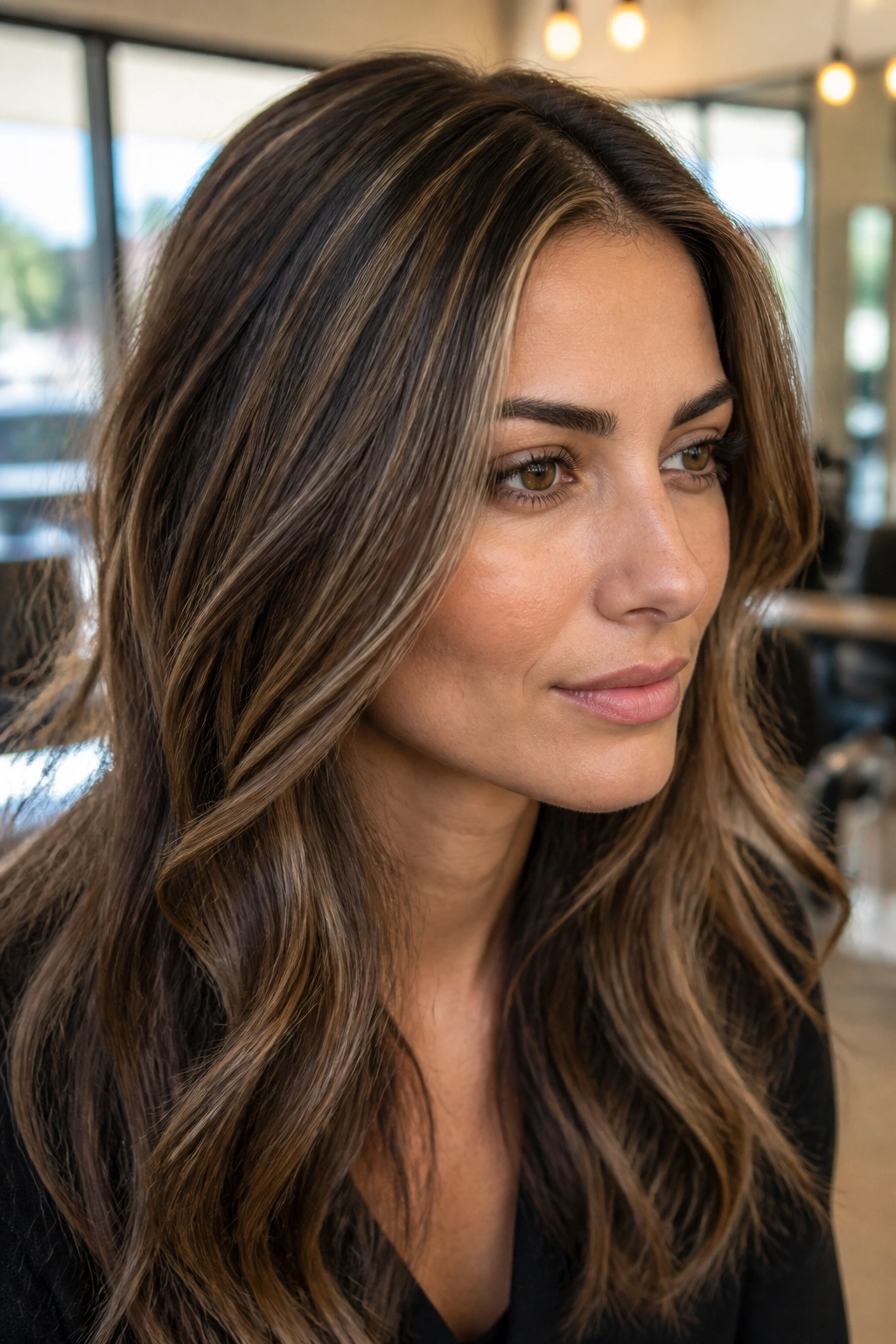
Honey babylights are tiny, fine highlights that look like the sun touched them one strand at a time. They’re one of my favorite choices for brown hair that needs brightness but not drama. The effect is delicate, and that’s the whole point.
What makes them different
Babylights are woven in very small sections, so the base still does most of the talking. On a brunette, that creates a soft shimmer instead of obvious streaks. They’re especially nice on fine hair because the tiny pieces make the hair feel fuller without looking busy.
You can place them around the crown, along the part, and lightly through the front hairline. If you want a calmer result, keep them a shade or two lighter than your base and stay in the honey-beige family. If you want more lift, add a few brighter strands near the face.
- Best on layered cuts and soft waves
- Works well for people who hate stripey color
- Usually needs toning every 6 to 8 weeks
- Looks best when the root is left a touch deeper
Tiny doesn’t mean boring. It usually means smarter.
3. Face-Framing Money Pieces

Want the fastest visual change with the least commitment? Face-framing money pieces do that job better than almost anything else. A few lighter strands around the front can wake up brown hair instantly, especially if the rest of the color stays deep and glossy.
Where the brightness should sit
The best placement usually starts near the cheekbone or jawline, then softens as it drops toward the ends. That keeps the face opening up without creating a harsh stripe at the part. If your hair is parted down the middle, the money pieces can sit symmetrically; if you wear a side part, one side can be a little brighter and that can look lovely.
I like this option for people who are nervous about full-head highlights. It gives you the effect of brighter color when your hair is down, but it does not lock you into constant upkeep everywhere else. The roots grow out quietly, which matters more than people think.
What to ask for
Ask for a soft blend, not a block of blonde. That one line saves a lot of trouble. If you want extra warmth, keep the pieces caramel or beige. If you want contrast, try a cooler beige-blonde.
4. Chestnut Lowlights

Not every highlight idea has to lighten the hair. Chestnut lowlights add depth back into brown hair, and that matters when the color has started to look washed out or one-note. A few darker strands can make everything around them look richer.
How lowlights change the shape of the hair
Lowlights are usually painted underneath the top layers, around the interior, or in pieces that sit between brighter sections. That gives the hair more movement because your eye sees light and dark together. On thick brown hair, chestnut lowlights can stop the color from ballooning into one big sheet of brown.
They also help if your ends are too light from old color. Instead of trying to lift everything again, a colorist can tuck deeper chestnut pieces in and restore contrast. That often looks better than chasing brightness.
- Good for thick or heavily layered hair
- Helps over-lightened brunette lengths look healthier
- Blends well with natural brown roots
- Keeps the finish looking fuller, not flat
A lot of people skip lowlights because they sound minor. They’re not.
5. Toffee Ombré

Toffee ombré is the slow fade brown hair likes when you want brightness without a hard line. The shade usually starts deep at the root and melts into warmer, lighter toffee through the mids and ends. Done well, it looks like the color has gently warmed up over time.
Long hair shows this best. So do curls. The gradient has room to breathe, and that’s what makes it feel expensive rather than obvious. On shorter hair, the fade can feel abrupt unless the transition is kept very soft.
The trick is not to start the lighter part too high. Once the ombré begins around the lower cheekbone or below the ears, the color has a chance to look gradual instead of striped. A toner in the beige-gold family helps the ends stay sweet rather than brassy.
If you want a low-maintenance change, this is a good place to start. It grows out cleanly and usually needs less panic than a full set of traditional highlights.
6. Mushroom Brown Dimension

Mushroom brown is for people who want cool, smoky color instead of warmth. It sits in that taupe-beige zone that can make brown hair look softer and more modern without turning it ashy in a dry, chalky way. When the tone is right, it has a plush, velvety look.
Why it looks expensive
The reason mushroom brown works is that it borrows from several shades at once: beige, soft taupe, muted mocha, and a little gray-brown. That mixture keeps the hair from looking flat. It also keeps orange tones in check, which is useful if your brown hair tends to warm up too fast in sunlight.
This color looks especially good on medium brown hair with a neutral or cool undertone. It can also calm down overly red brunette color. A gloss every 6 to 8 weeks helps keep the shade soft, because cool browns fade faster than warmer ones.
For a cleaner finish, ask for thin, diffused ribbons rather than chunky panels. The whole look depends on subtlety. If the pieces are too bold, the mushroom effect disappears.
7. Cinnamon Copper Pieces
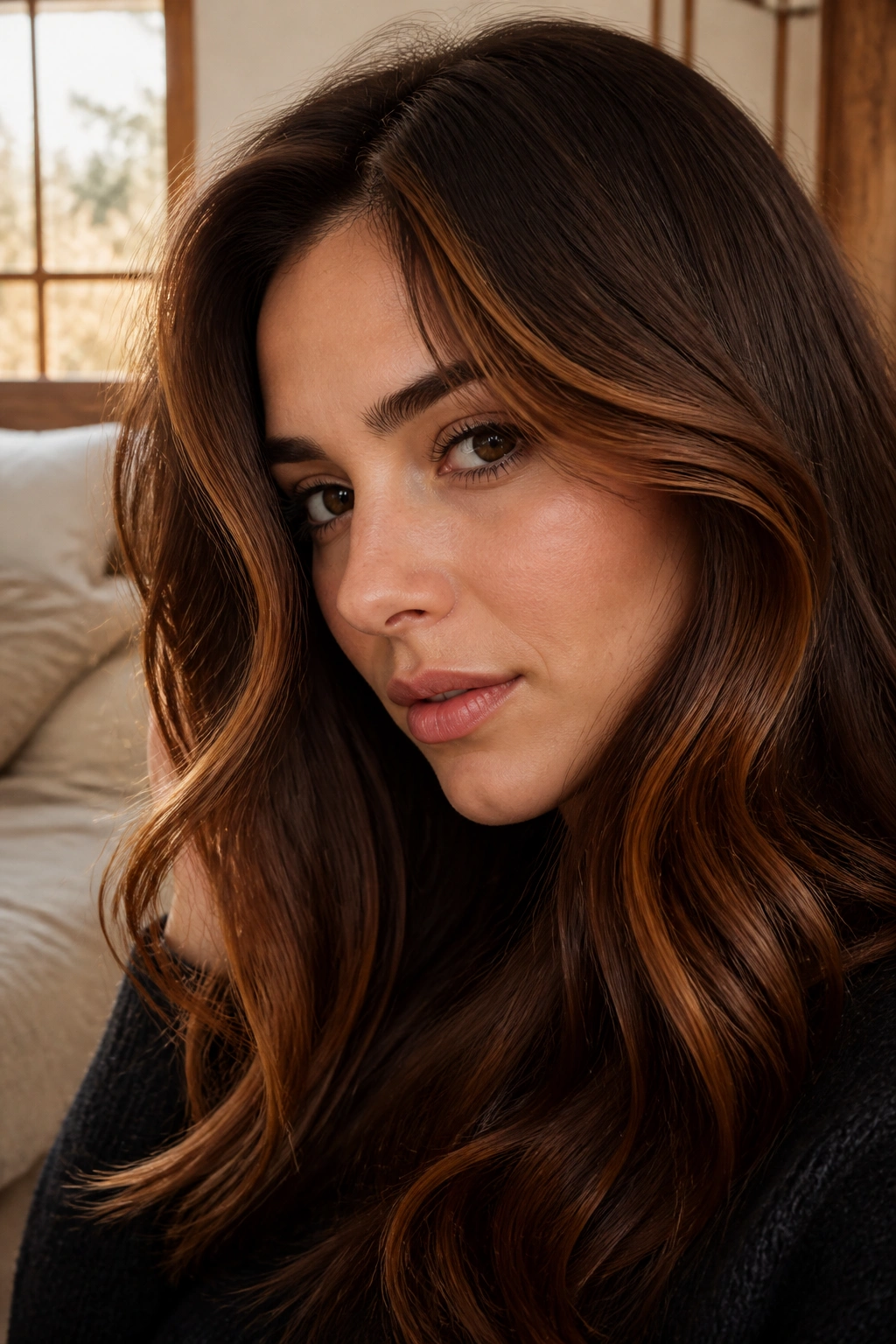
Cinnamon copper pieces add energy fast. Brown hair can handle warmth, and this is the kind that feels lively instead of loud when it’s placed in small doses. The color sits between red and copper with a little brown in it, which makes it easier to wear than a full-on bright copper.
A few cinnamon pieces near the front, through the top layer, or tucked into ends can make brown hair feel warmer and more dimensional. I like this on layered cuts because the movement helps the color flash in and out instead of sitting there all at once. Curly hair is good here too. The texture makes the warm tones look intentional.
- Best on medium brown and light brown bases
- Needs color-safe shampoo, since copper fades quickly
- Looks richer when paired with a dark root
- Brings warmth to olive and golden skin tones
Cinnamon copper is a good pick if plain caramel feels too safe. It has more bite.
8. Bronde Melt

Bronde is the middle lane between brunette and blonde, and on brown hair it often solves the problem people don’t know how to name: they want brightness, but they do not want to look like they’re chasing blonde. A bronde melt keeps the base brown and blends in lighter beige and honey tones through the lengths.
How to keep it from looking striped
The melt part matters. A real bronde should move from darker root to lighter ends with no obvious line where one shade stops and the next starts. That means using at least two or three tones, not one flat blonde paint job. If the hair is dark brown, a root shadow helps keep the transition believable.
This look is especially good on layered hair because the layers give the color places to rest. On blunt cuts, the contrast can be a little more obvious, which is fine if that’s what you want. If not, keep the brightest pieces farther from the root.
Bronde is one of those colors that can go soft or glam depending on the styling. Air-dried waves make it relaxed. A round-brush blowout makes it polished. Both work.
9. Beige Blonde Ribbons

Beige blonde ribbons are softer than bright blonde and less warm than honey. That in-between tone is useful on brown hair because it brightens without screaming for attention. The result feels airy, clean, and a little more neutral than a caramel look.
This is a smart option if your brown base has a lot of red or orange in it already. Beige helps cool that down. It also works well if you wear your hair in loose waves, because the ribbons catch along the bends instead of sitting in a line.
What to ask for
Ask for fine to medium ribbons placed through the top and around the face. That creates lift where people look first. If the colorist uses chunks that are too wide, the look can go dull fast, almost like beige stripes sitting on top of brown hair instead of moving through it.
Keep purple shampoo light and infrequent. Too much and the beige can go flat or gray in a hurry.
10. Espresso Lowlights

Espresso lowlights are underrated. They sound simple, but they can make brown hair look fuller, darker at the right spots, and more intentional. If your color is growing out unevenly or your ends are too light, a few deeper espresso strands can reset the whole head.
Why the deeper pieces matter
People think lowlights are only for making hair darker. Not true. Used well, they create contrast that makes the lighter pieces look brighter by comparison. On thick brown hair, espresso lowlights can also break up the bulk so the haircut shows better.
They work especially well when tucked under the top layer or placed around the nape. That hidden depth gives the surface color a richer finish. It’s a trick that sounds small and ends up doing a lot.
If your hair has become a little too sun-faded, this is the practical fix. Not glamorous. Useful.
11. Auburn Peekaboo Pieces
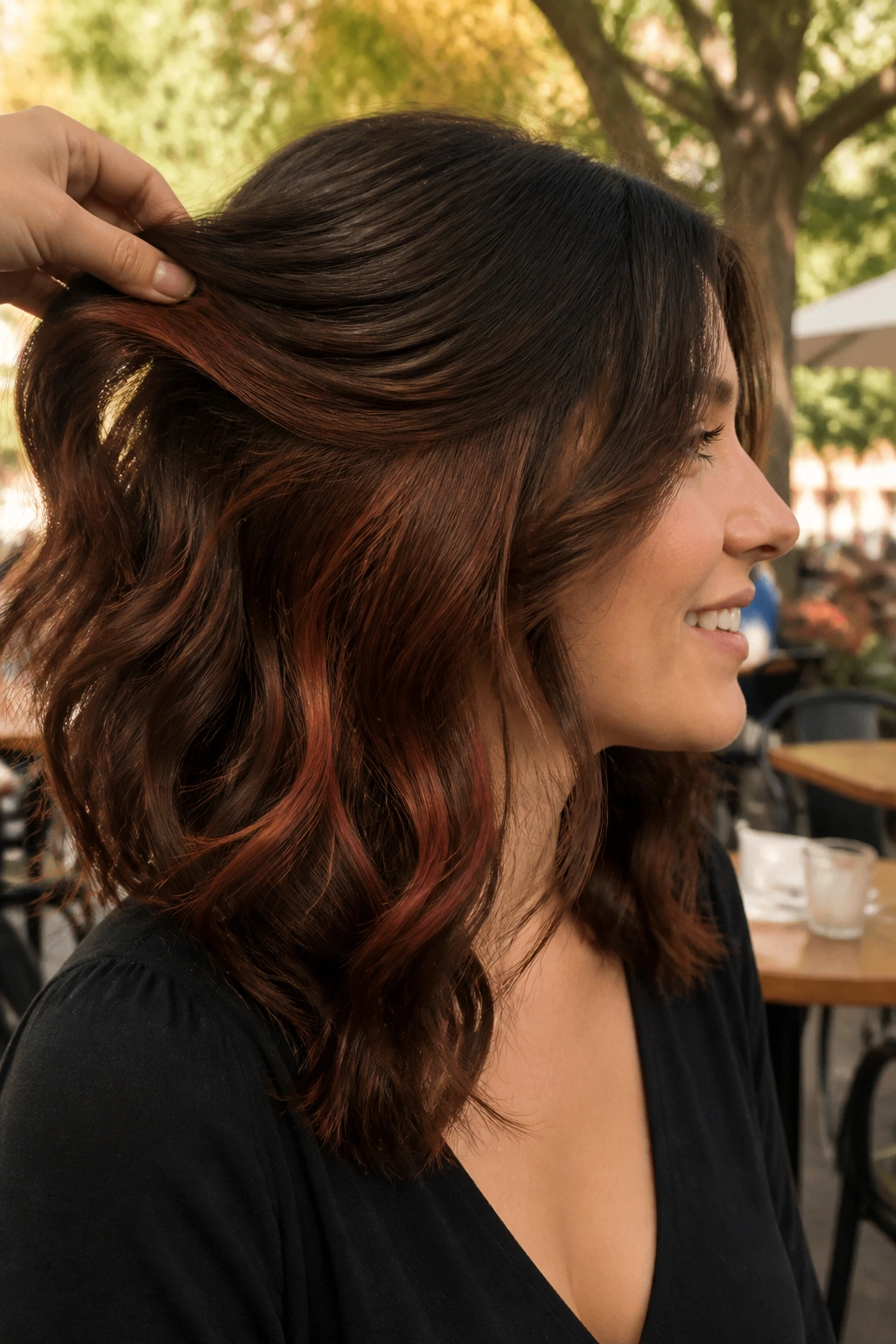
Auburn peekaboo pieces are for anyone who wants warmth with a little secret built in. The color sits under the top layers, so you see it when the hair moves, flips, or gets curled. Brown hair holds auburn well because the base already gives the red some depth.
Why it stays hidden until you want it to show
Placement is everything. Put the auburn under the crown, around the nape, or through interior sections, and it stays subtle in everyday wear. Add curls or a half-up style, and the red-brown color flashes through in the best way. It feels playful without needing full commitment.
I like this option on shoulder-length cuts and long layers. The movement helps the hidden color peek through naturally. On very straight hair, the effect is quieter, which may be exactly what you want.
- Good for someone who wants color at work but wants fun at home
- Easier to grow out than full red highlights
- Looks stronger on dark brown hair
- Needs a gloss refresh to keep the auburn from going muddy
It’s a clever choice. Not loud. Just sly.
12. Maple Glaze Highlights

Maple glaze highlights are less about visible stripes and more about warming the whole brunette surface. Think of them as a soft caramel-brown gloss that sits across the hair and catches light in a syrupy way. They’re especially nice if you want shine before you want brightness.
This is one of the better ideas for porous or thirsty brown hair because a glaze can make the cuticle lie flatter and look smoother. The color itself usually lands one shade lighter than the base, with amber and golden undertones. The lift is subtle. The payoff is that the hair looks healthier.
What makes it different from regular highlights
A standard highlight creates contrast. A maple glaze creates tone. That means less obvious placement, less visible regrowth, and more of an overall color shift. If you’ve ever wanted your brunette to look deeper and glossier instead of lighter, this is the lane.
It can be refreshed often without much drama, which is handy. Some colors ask for attention every few weeks. This one usually behaves better.
13. Chocolate Cherry Gloss
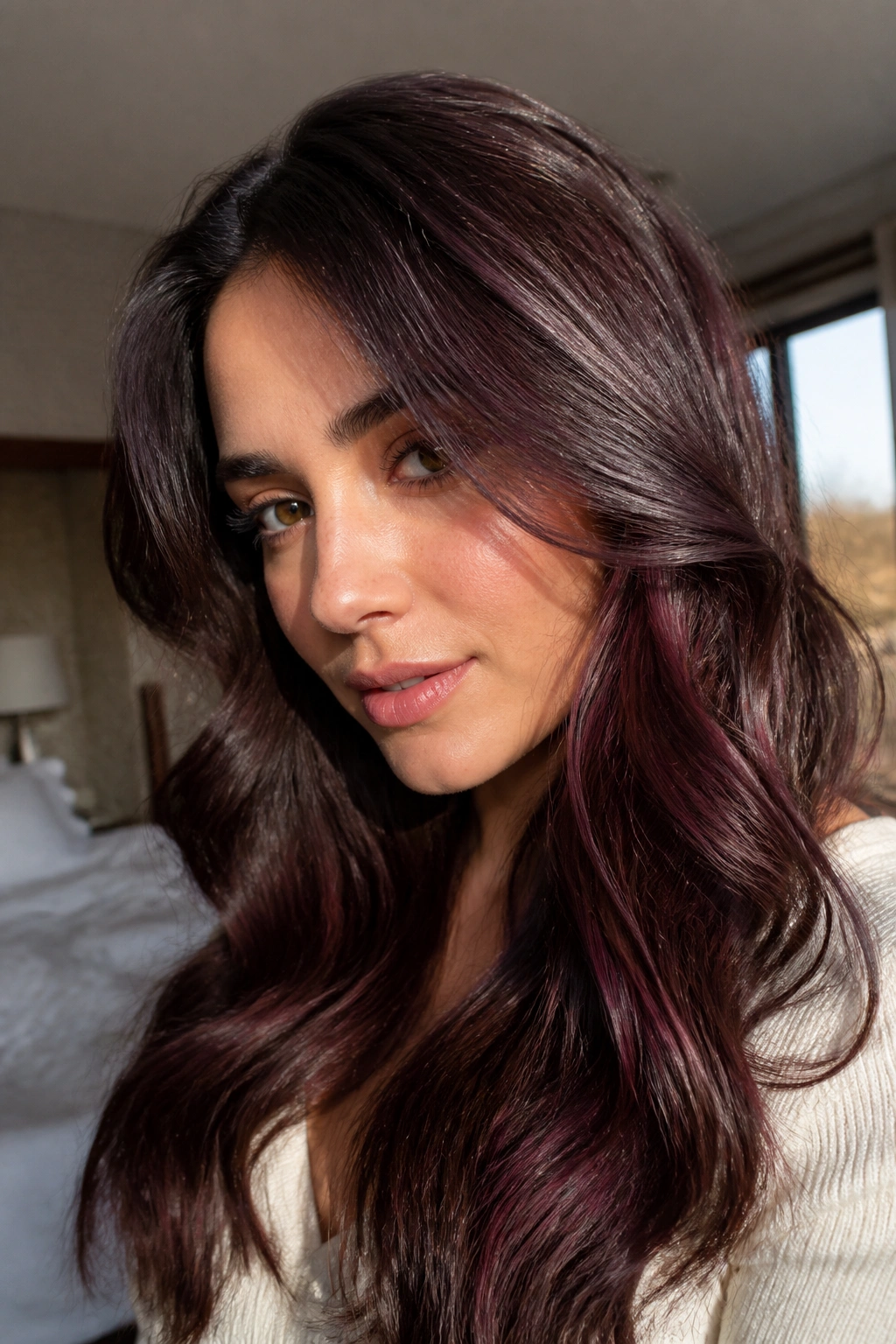
Chocolate cherry gloss is one of the prettiest ways to add dimension to dark brown hair without lightening it much. The red-violet reflect sits inside the brown, so the hair looks deeper in shade and richer in sunlight. It’s a moody color, but not a heavy one.
Why the red undertone works
The cherry note gives movement to a chocolate base, especially if your hair is naturally very dark. Under indoor light, it reads as a dark brunette. Outside, the warmer red tones wake up and you get that glossy, wine-dark shimmer. That shift is the whole point.
This idea is especially good if you want something more interesting than plain brown but less obvious than copper. It works on straight cuts, but I think it looks even better on waves where the red-violet reflect can move around.
A cool-tone shampoo can be a mistake here. It may dull the cherry. Use color-safe cleansing and let the warmth stay warm.
14. Golden Contour Highlights

Golden contour highlights are placed where the face and haircut need structure. Instead of scattering brightness everywhere, the colorist concentrates lighter pieces around the temples, cheekbones, front layers, and the outer edges of the cut. On brown hair, that gives shape and glow at the same time.
The best part is how targeted it feels. You can leave the back deeper and keep the brightness around the front, which gives the whole style a lifted look without a full commitment. It’s a smart move if you like your brown base but want the haircut to stand out more.
Where the gold should sit
The gold should be soft, not yellow. That means beige-gold or honey-gold rather than bright brass. The front pieces can start a little higher near the part if you want more impact, or lower if you want a quieter finish.
- Works well on layered cuts
- Good for framing round or square face shapes
- Keeps the focus near the face
- Lets the rest of the hair stay deeper and easier to maintain
This is one of those ideas that looks small on paper and polished in real life.
15. Mocha Latte Ribbons

Mocha latte ribbons are for the brunette who wants movement, not drama. The highlight tone stays within the brown family, so the hair looks richer rather than lighter. I like this one because it respects the base instead of trying to drown it out.
The ribbons are usually a soft mix of mocha, beige-brown, and a little milky warmth. They’re placed through the mids and ends in fine sections, which gives the hair a soft, stitched-together dimension. On long hair, the effect is elegant. On shoulder-length hair, it feels a bit more modern and fresh.
This color works best when the root stays close to the natural base. The point is not obvious contrast. The point is that the hair looks like it has more than one note. A blunt one-tone brunette can look heavy fast, and this solves that cleanly.
16. Sunlit Ends

Sunlit ends are exactly what they sound like: the lower part of the hair gets the lightest touch. Brown hair with sunlit ends feels easy and undone, especially on long layers or loose waves. The roots stay deeper, so the grow-out is simple and the brightness lives where it reads as movement.
Why the ends matter
Bright ends make the hair feel longer. That sounds small, but it changes the whole silhouette. When the ends are lighter, the eye moves downward and the shape feels softer. It’s a useful trick for thick brown hair that can sometimes look boxy at the bottom.
Keep the lift concentrated on the last 4 to 5 inches, sometimes a little higher if the haircut is very long. If you drag the light too far up, the effect stops looking airy and starts looking overdone. A soft beige or caramel tone works better than stark blonde here.
Trim the ends on schedule. Lightened ends show dryness faster than dark ones, and that’s the one drawback.
17. Ash-Brown Ribbons

Ash-brown ribbons are for people who like cooler color and hate orange. They can make brown hair look clean, smoky, and a little sharper. The shade usually sits in the taupe-gray-brown family, which gives dimension without warmth.
When ash works best
If your base brown has a lot of red in it, ash ribbons can calm that down. If your hair is naturally cool, they can deepen the tone without making it muddy. The key is thin placement and a soft toner, because too much ash on brown hair can go flat if it’s applied in big blocks.
This style is especially good on straight hair, blunt bobs, and sleek lobs because the cool tone reads crisp. On curly hair, it can look softer and more diffuse. Both are good; they just feel different.
People often think ash means dull. It doesn’t have to. If the placement is fine and the gloss is fresh, ash-brown can look very polished.
18. Bronze Balayage

Bronze balayage sits in that warm metallic lane between brown and gold. It has more glow than caramel and more depth than blonde, which makes it a strong choice for brown hair that needs life without a hard color contrast. The finish can feel sunlit and rich at the same time.
This is a color that likes movement. Waves show the bronze pieces best because the light catches the gold-copper reflect as the hair bends. On curls, it can look especially full, since the highlights break up the shape and stop it from reading as one solid block.
- Good for olive and golden skin tones
- Works well on medium brown and light brown bases
- Usually looks best through the mids and ends
- Needs glossing to keep the bronze from turning flat
Bronze is warmer than ash, cleaner than copper, and easier to wear than a bright blonde. That’s a useful middle ground.
19. Almond Face Frame

Almond face-frame highlights are softer than a classic money piece. The shade sits in a beige-brown lane that brightens the front without calling attention to itself. On brown hair, that can be a relief. Not everyone wants the front of their head shouting.
Why it feels softer
The almond tone keeps the brightness close to the natural brunette family, so the change reads as polish rather than contrast. That makes it a good first step if you’ve never lightened your hair much. You get the face-brightening effect, but the grow-out stays calm.
Ask for a few fine pieces near the part and a soft veil around the face, not a thick slab of light. That keeps the effect flattering instead of harsh. If your haircut has face layers, those pieces will show the color in a nice way even when the rest of the hair is tucked back.
This is the sort of highlight that looks expensive because it doesn’t try too hard.
20. Rose Gold Shimmer

Rose gold shimmer is one of the more playful highlight ideas for brown hair, but it works best when the pink stays muted. Think blush-gold, not candy. On brunette hair, rose gold usually needs a little pre-lightening first, then a soft glaze to give it that warm pink sheen.
Who it’s for
If your hair is medium brown or already has lighter pieces, rose gold can sit on top beautifully. On darker brown, it reads better as a ribbon or a tint over selected sections. The goal is a whisper of color that shows up when the light moves, not a full pink statement.
This shade fades into peachy gold, which is often flattering in its own right. If you enjoy a color that changes a little as it softens, that’s part of the charm. Keep it too saturated and it starts to feel costume-y. Keep it dusty and it looks chic.
It’s a fun option, but I’d still keep the placement controlled. A little goes a long way.
21. Plum Peekaboo Strands

Plum peekaboo strands are one of the best ways to add edge to brown hair without changing the whole head. The dark violet-red tone hides beneath the top layers and flashes when the hair shifts. It’s moody, rich, and a little unexpected.
Why the hidden placement matters
Plum can be gorgeous on brown hair because the base gives it a grounded look. If you put the color on top of everything, it can take over fast. Hidden placement keeps the effect controlled. Under curls, it looks deep and dimensional. On straight hair, it comes out in narrow flashes that feel more interesting than obvious.
This option is especially good if you like wearing your hair up half the time. Tie it back, and the plum becomes visible right away. Leave it down, and it stays understated. That flexibility is why people keep coming back to it.
You may need pre-lightening if you want a true plum instead of a nearly black violet. That depends on your base and how bright you want the color to be.
22. Sandy Beige Balayage

Sandy beige balayage gives brown hair a lighter, beachier mood without pushing it into yellow blonde. The color sits in a soft neutral zone, which makes it look relaxed and expensive at the same time. It’s brighter than mushroom brown, but softer than a crisp blonde ribbon.
Why it looks softer than blonde
The trick is in the tone. Sandy beige has enough warmth to feel natural, but not so much that it turns orange. It also has enough coolness to avoid going brassy too fast. That balance is what keeps the hair wearable.
It works well on medium brown hair, especially if you wear it wavy or textured. On very straight hair, the contrast shows a little more, which can be good if you like a cleaner finish. A soft root shadow keeps the grow-out from getting obvious, and a beige toner helps the ends stay calm.
- Good for layered cuts
- Best when the lightest pieces stay around the face and mid-lengths
- Usually needs toning more than lifting
- Looks strongest in loose, undone styling
It’s a subtle upgrade, not a dramatic one. That’s the appeal.
23. Copper Penny Slices
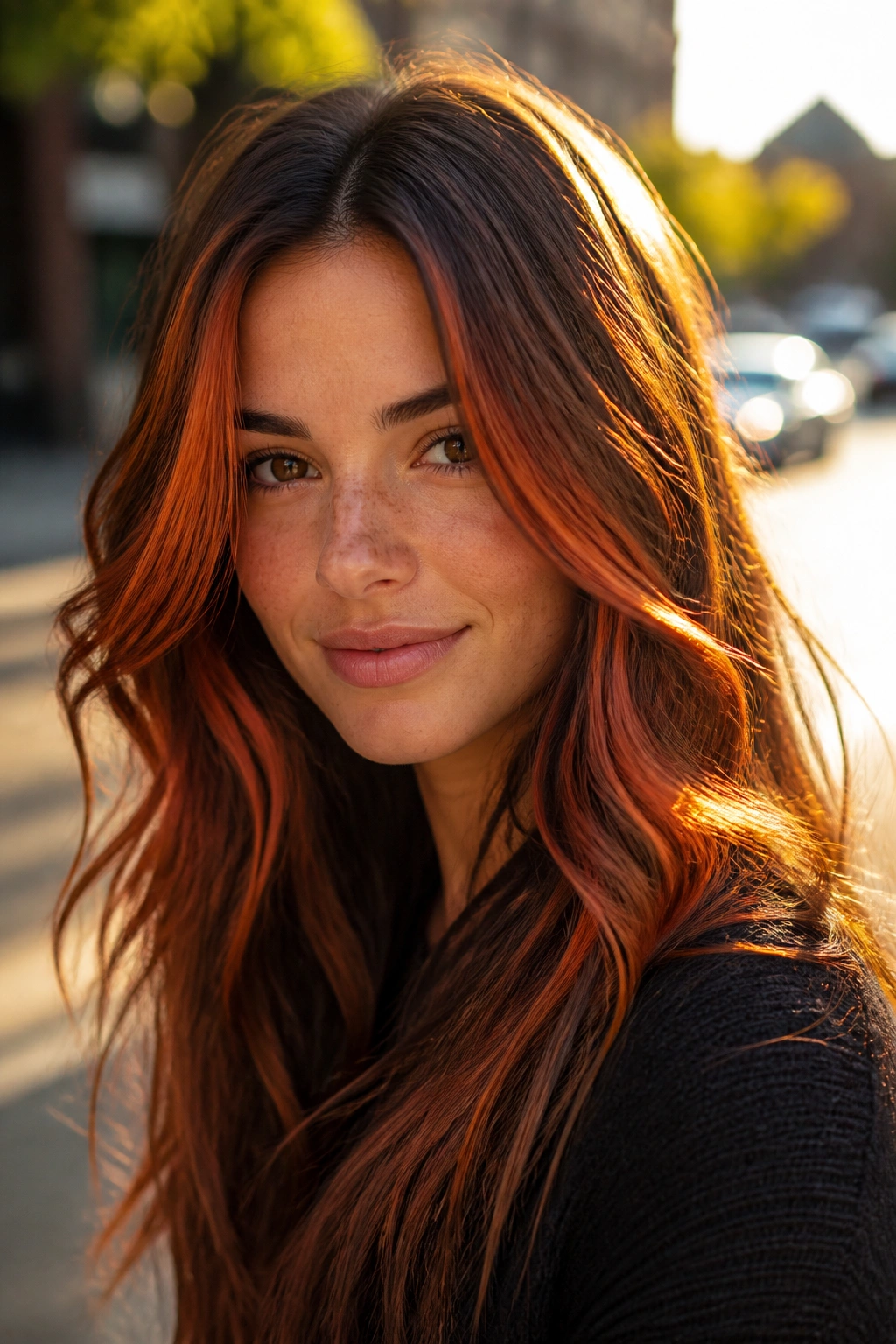
Copper penny slices are brighter and bolder than cinnamon pieces. They have more shine, more red-orange reflect, and a little more attitude. On brown hair, especially deep brown, they create a vivid contrast that still feels grounded because the base is dark.
This look works well when the slices are placed with intention. A few wider panels through the front, some tucked into the mid-lengths, and a couple around the ends can make the hair flash copper as it moves. If the slices are too many, it can start to feel busy. Keep them strategic.
Best use cases
This is a strong choice for blunt cuts, one-length bobs, and layered shags. The copper catches on clean lines and breaks up heavy shapes. It also wears well on wavy hair because the movement makes the slices appear and disappear.
Copper fades fast, so plan for refreshes. That’s the honest part. If you love warm color and do not mind upkeep, it’s worth it.
24. Smoky Taupe Ribbons
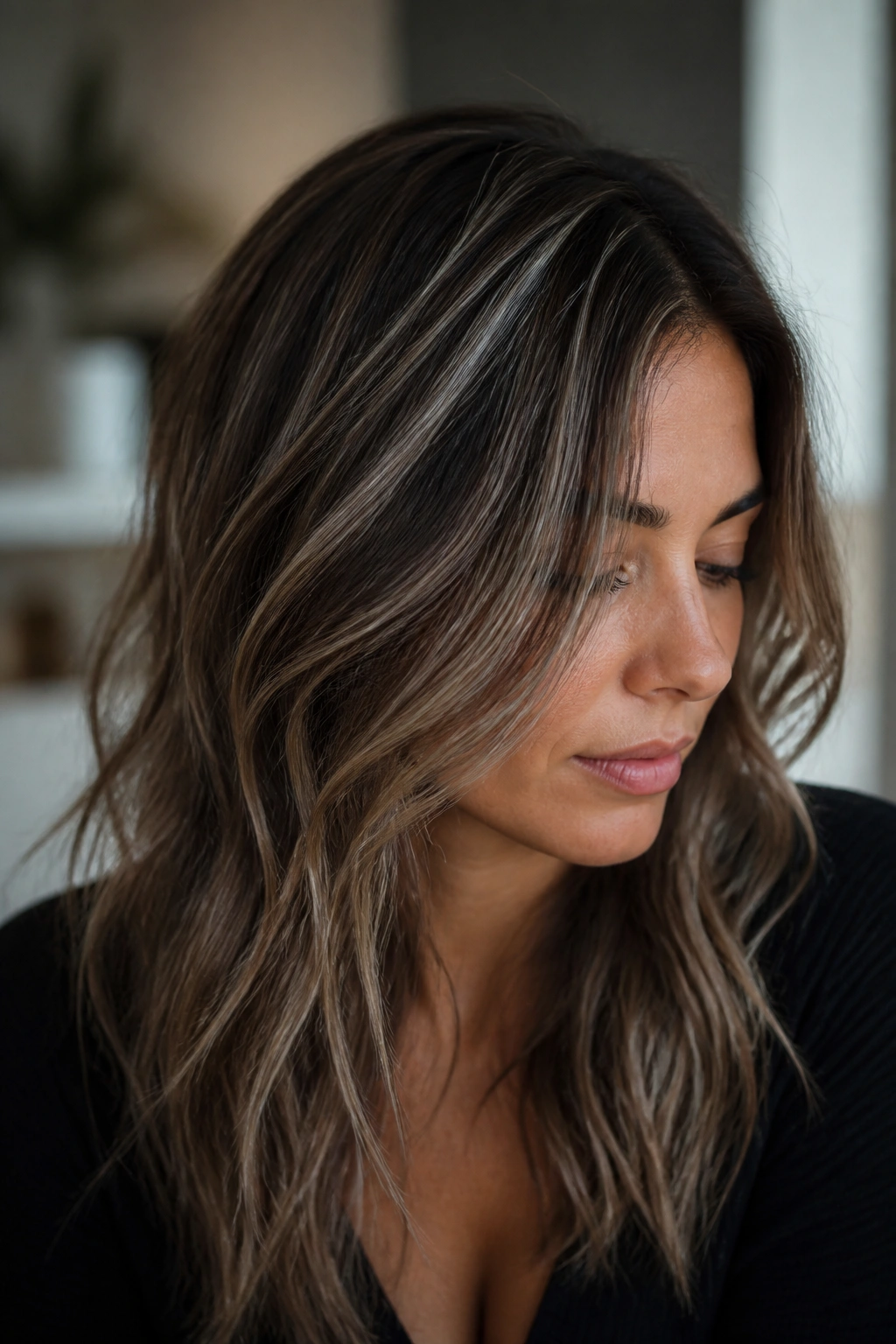
Smoky taupe ribbons are for the brunette who wants cool dimension without obvious blonde. The shade lives between ash-brown and gray-beige, which gives brown hair a quiet, smoky softness. It’s one of the more understated ideas here, and I like that about it.
When taupe is the right call
Taupe works best when you want the hair to look denser and more layered, not brighter. It can calm warm undertones and give dark brown hair a muted, modern finish. If your style is sleek or architectural, the cool tone can make the cut look even cleaner.
The ribbons should stay fine and soft. Wide taupe panels can look flat. Thin ones, especially when placed through the top layer and around the crown, build texture without shouting. This also pairs well with shorter layered cuts, where heavy warmth can sometimes make the shape feel bulky.
If you’re tired of gold, honey, and caramel, taupe is a smart left turn.
25. Champagne Halo Highlights
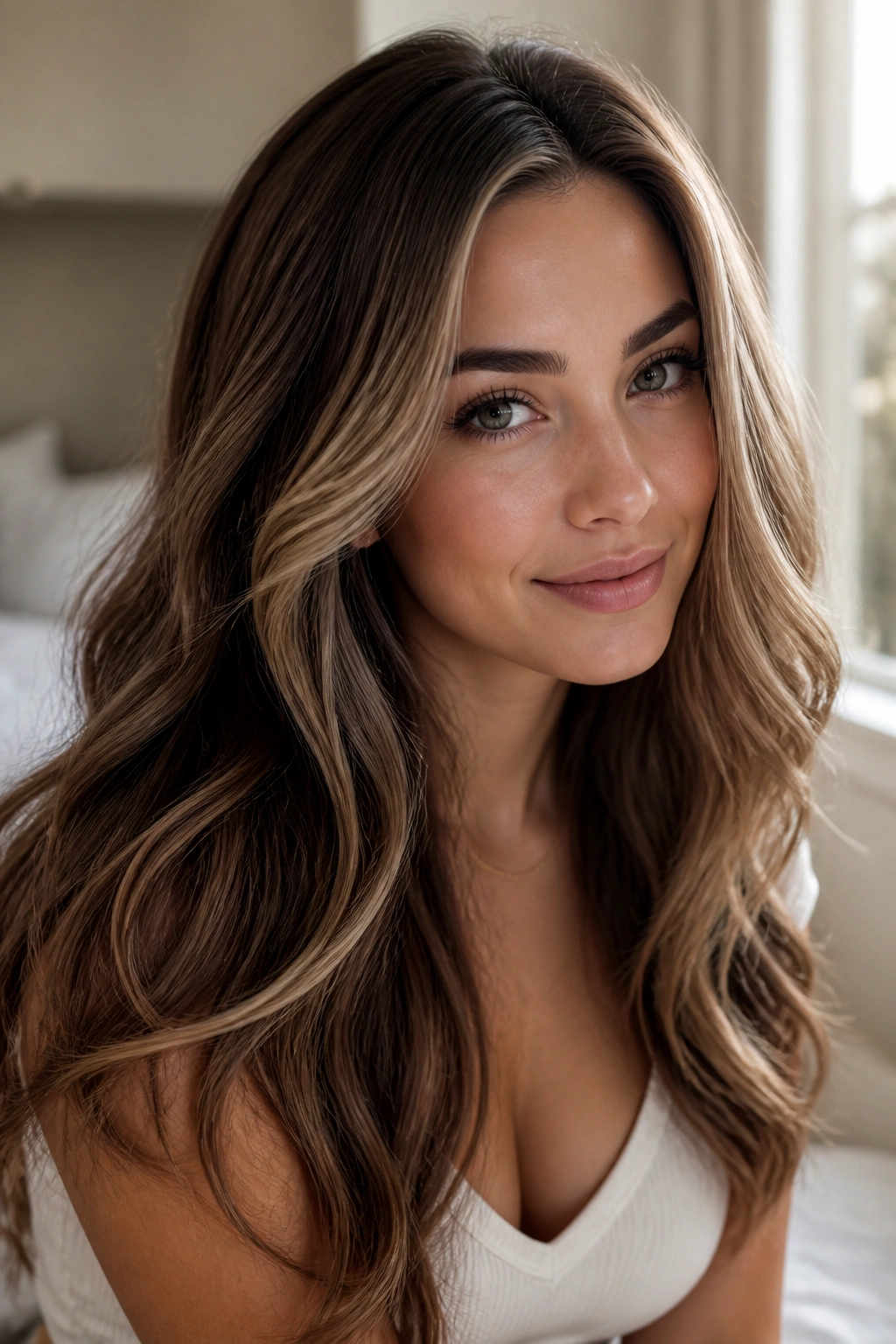
Champagne halo highlights give brown hair a light, lifted finish without turning the whole head blonde. The color sits around the top layers and face line, then softens toward the back. The result is bright but still controlled, which makes it a nice final choice if you want polish more than drama.
The champagne tone should stay beige with a soft pearly glow, not icy and not yellow. That middle zone is what keeps it flattering on brunette hair. If the pieces are placed too densely, the look loses that airy feel, so the halo should stay thin and diffused. Around the crown and hairline is usually enough.
This is the shade I’d point to if someone said, “I want brightness, but I want to still look like a brunette.” It opens the face, softens the style, and leaves enough depth underneath that the hair still feels like itself. Pretty useful.
