



Chunky blonde highlights on brown hair have a way of making brunette look expensive without trying too hard. That sounds a little smug, I know, but I mean it. A good set of chunky highlights gives brown hair shape, contrast, and movement in a way fine, whisper-thin pieces often can’t quite manage.
The reason they work is simple: brown hair gives the blonde something to push against. On a darker base, even a medium blonde panel can read as bright and deliberate, while a few well-placed foils can change the whole mood of a cut. The mistake people make is assuming “chunky” means harsh. It doesn’t have to. It only turns dated when the placement is sloppy, the toner is wrong, or the pieces are too evenly spaced.
There’s also a very practical side to this look. Chunky highlights can be bold and edgy, soft and creamy, face-framing, low-maintenance, or full-on high contrast. Brown hair gives you room to choose how loud you want to go. Some of these looks need a strong lift and a good toner. Others are more forgiving and grow out with a little grit still in them, which I like a lot more than styles that fall apart the second your roots show.
1. Platinum Money Piece at the Hairline
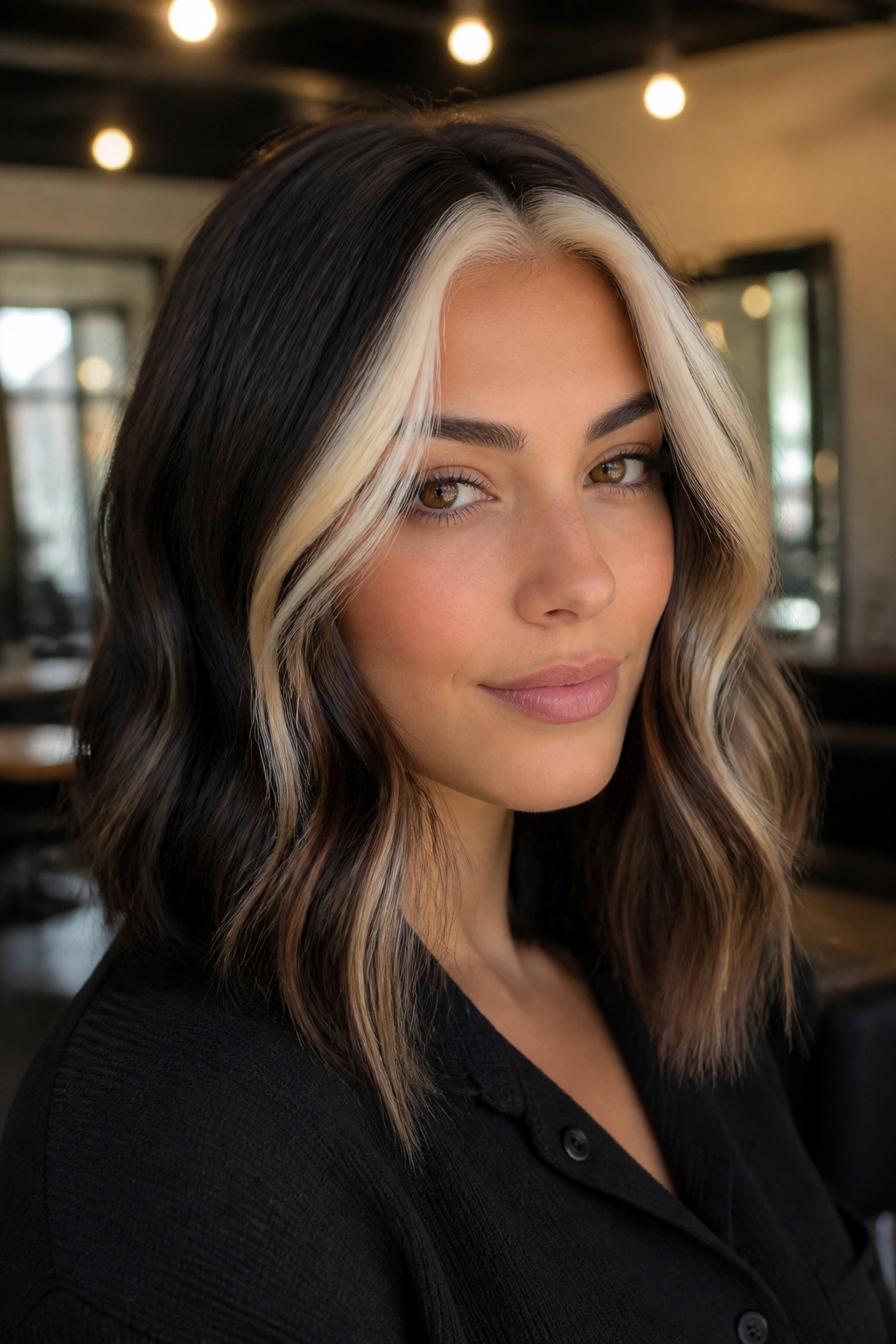
The fastest way to wake up brown hair is a thick platinum money piece right at the front. It puts the light where your eye lands first, so even if the rest of the hair stays deep brunette, the whole style looks brighter and more lifted. On a shoulder-length cut, this can do more than a full set of thin highlights ever could.
Why It Works at the Hairline
Two thick panels around the face create a clean frame. That frame makes cheekbones look sharper, and it gives long brown hair a little more attitude without dragging color through every inch of it. I like this look most when the blonde is a true pale beige or platinum, not yellow and not chalky.
- Best on center parts and curtain parts
- Ask for 2 chunky foils on each side
- Keep the back darker for contrast
- Tone with beige, pearl, or a soft neutral blonde
My rule: if the front piece is bright, keep the transition behind the ear soft so it doesn’t look like a stripe pasted on the head.
2. Honey Blonde Panels on Chocolate Brown Hair
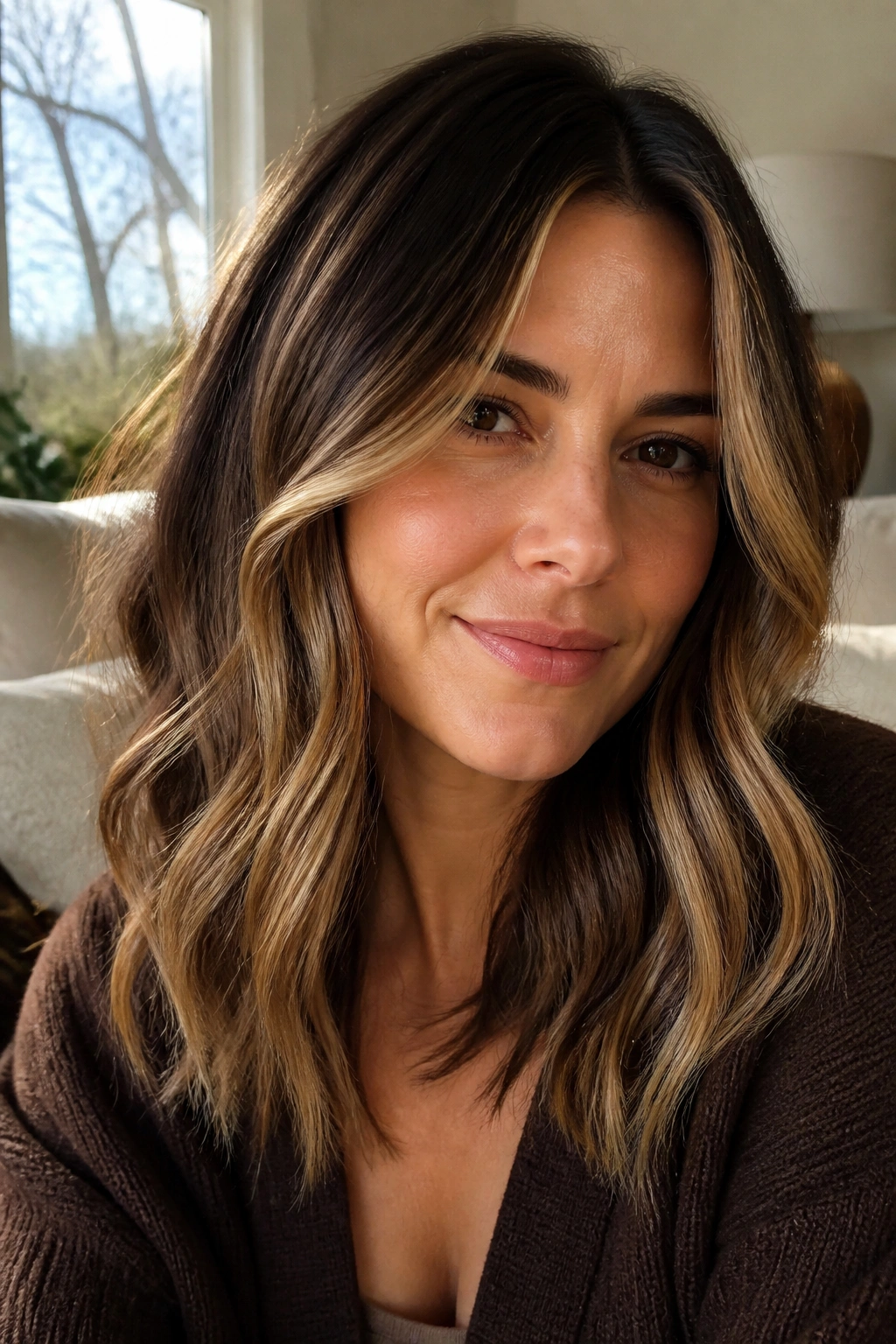
Honey blonde is the friendliest version of chunky highlights for brown hair. It keeps the warmth of the base intact, so the result feels rich rather than icy. On chocolate brown hair, thick honey panels can look like sun exposure that decided to stay for dinner.
This version works well when you want people to notice your hair, but you do not want that sharp, high-contrast salon snap. The blonde reads golden, soft, and a little glossy, especially if the cut has layers that let the lighter pieces move. It also flatters warm and olive undertones without fighting them.
It’s a good choice if your brunette base is already warm or chestnut. The grow-out is easier than a platinum look, and the regrowth line tends to blend more naturally after a few weeks. A gloss every so often keeps the honey from turning brassy or dull, which is the only part of this look that gets annoying.
3. Ash-Blonde Strips for a Cooler Brunette Finish
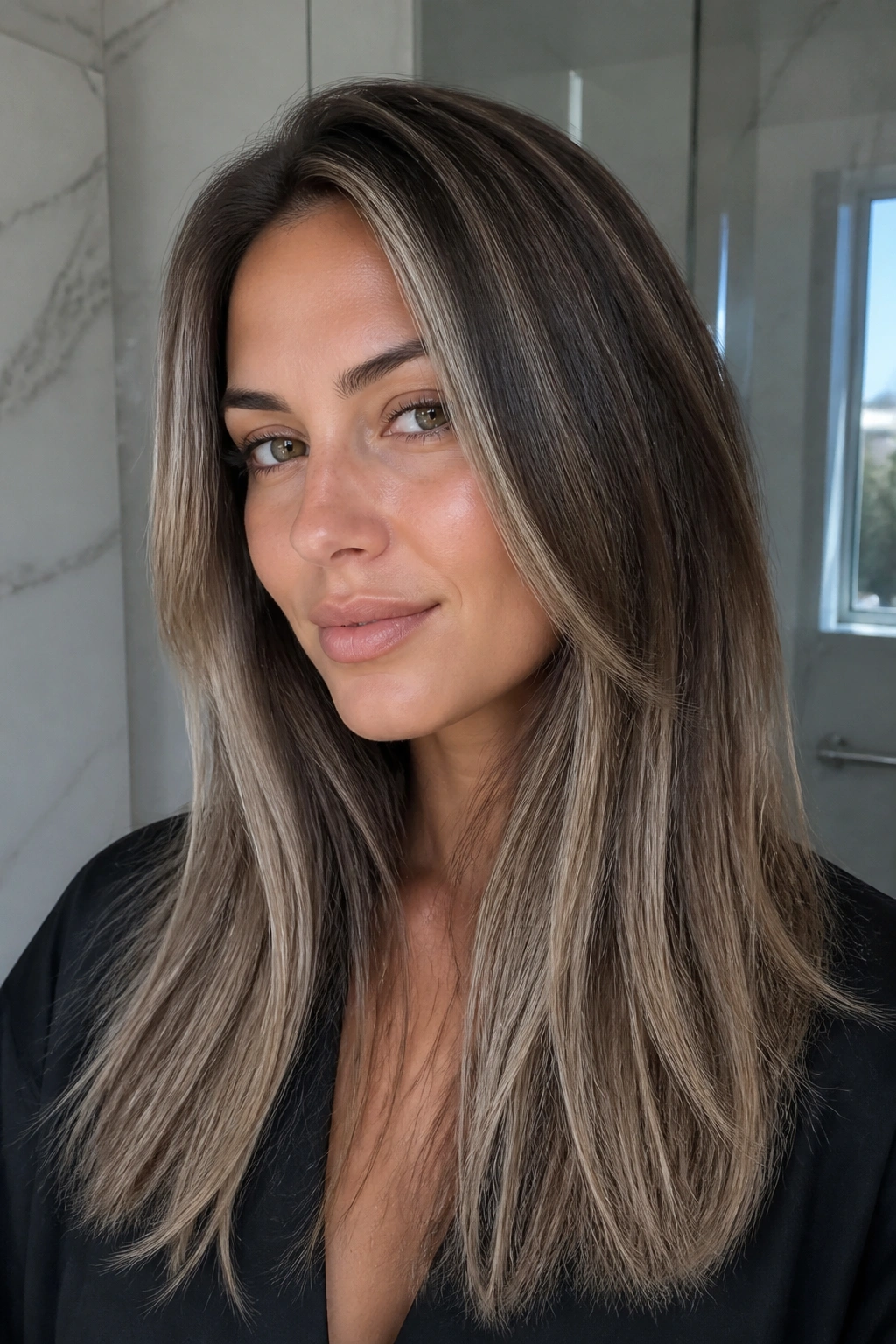
Why do ash-blonde strips look so good on brown hair that already leans cool? Because the cooler tone keeps the blonde from shouting over the base. Instead of golden warmth, you get a smoky, beige-silver feel that looks sharp on ash brown, mushroom brown, and cooler mocha shades.
The main thing to watch is brass. Ash blonde can look classy on day one and muddy a few washes later if the hair isn’t toned well. A violet or blue-violet shampoo helps, but it is not magic, and I would not rely on it alone. The real work happens in the salon bowl.
How to Keep the Tone Clean
A colorist usually needs to lift the hair enough to reach a pale yellow before toning it down to ash. That step matters. If the blonde is lifted too little, the result looks orange-beige instead of cool and crisp.
- Best for cool or neutral skin tones
- Works well on straight or softly waved hair
- Needs maintenance every 6 to 8 weeks
- Looks strongest with a blunt cut or long bob
4. Zebra Stripe Highlights for High Contrast
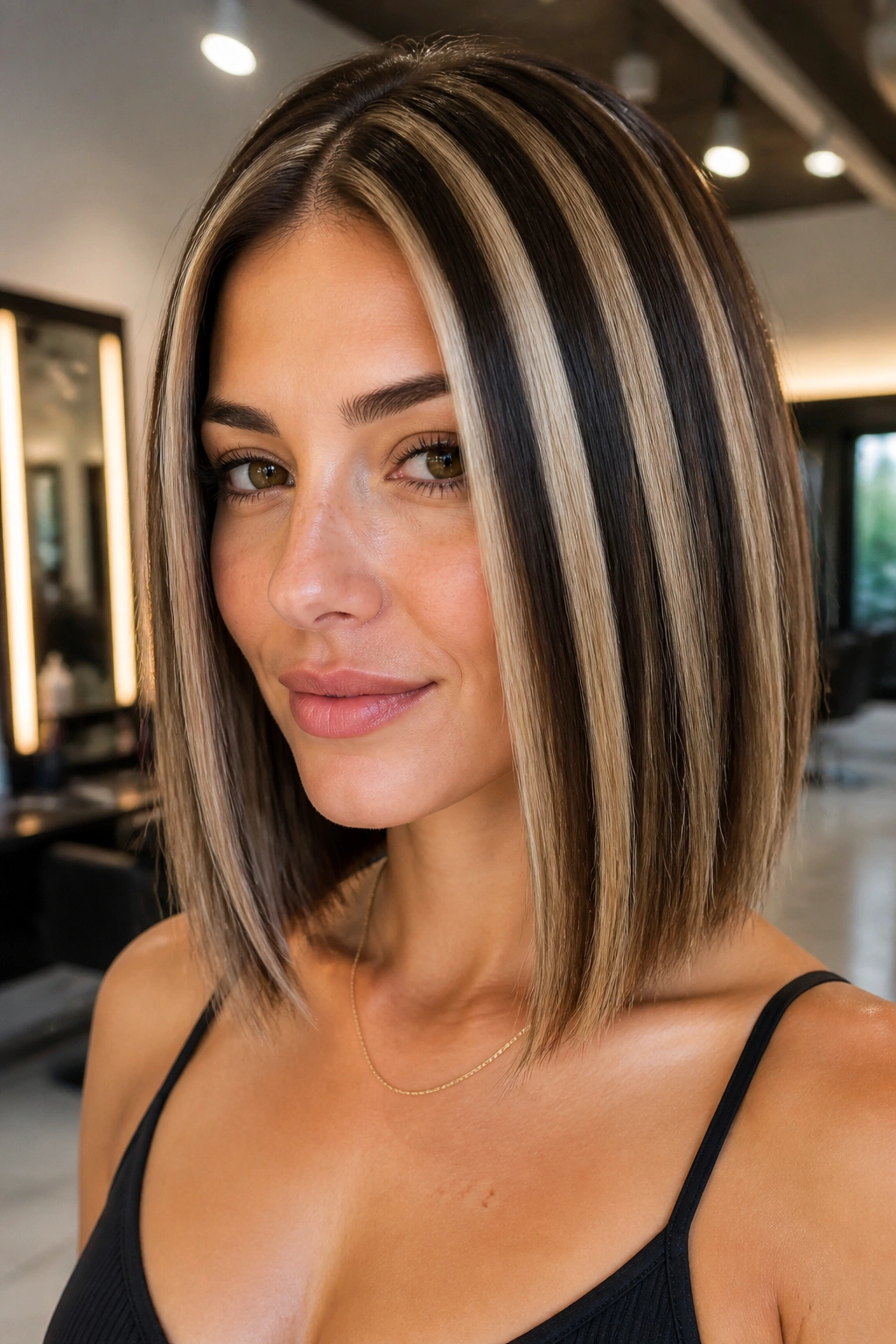
Zebra stripe highlights are not shy, and that is the appeal. Thick blonde bands sit beside darker brown sections in a way that reads loud, graphic, and a little rebellious. On the right haircut, the result feels deliberate. On the wrong one, it can look like an old reunion photo from the wrong decade.
A blunt bob, a sleek lob, or a long straight style gives these stripes the structure they need. Wavy hair softens the contrast, which can help if you want the look to feel less severe. But if you really want the pattern to show, straight styling is the move. The lines are the point.
This is the style I’d pick for someone who wants their hair to do some of the talking. It is not subtle. It also isn’t hard to wear if the blonde pieces are placed with intention rather than evenly all over the head. Keep the blonde bands wide, but vary the spacing a little. Too much regularity makes it look flat.
- Strongest on straight or lightly textured hair
- Needs a confident colorist
- Best with a sharp haircut
- Not ideal if you want a soft grow-out
5. Buttercream Blonde on Medium Brown Hair
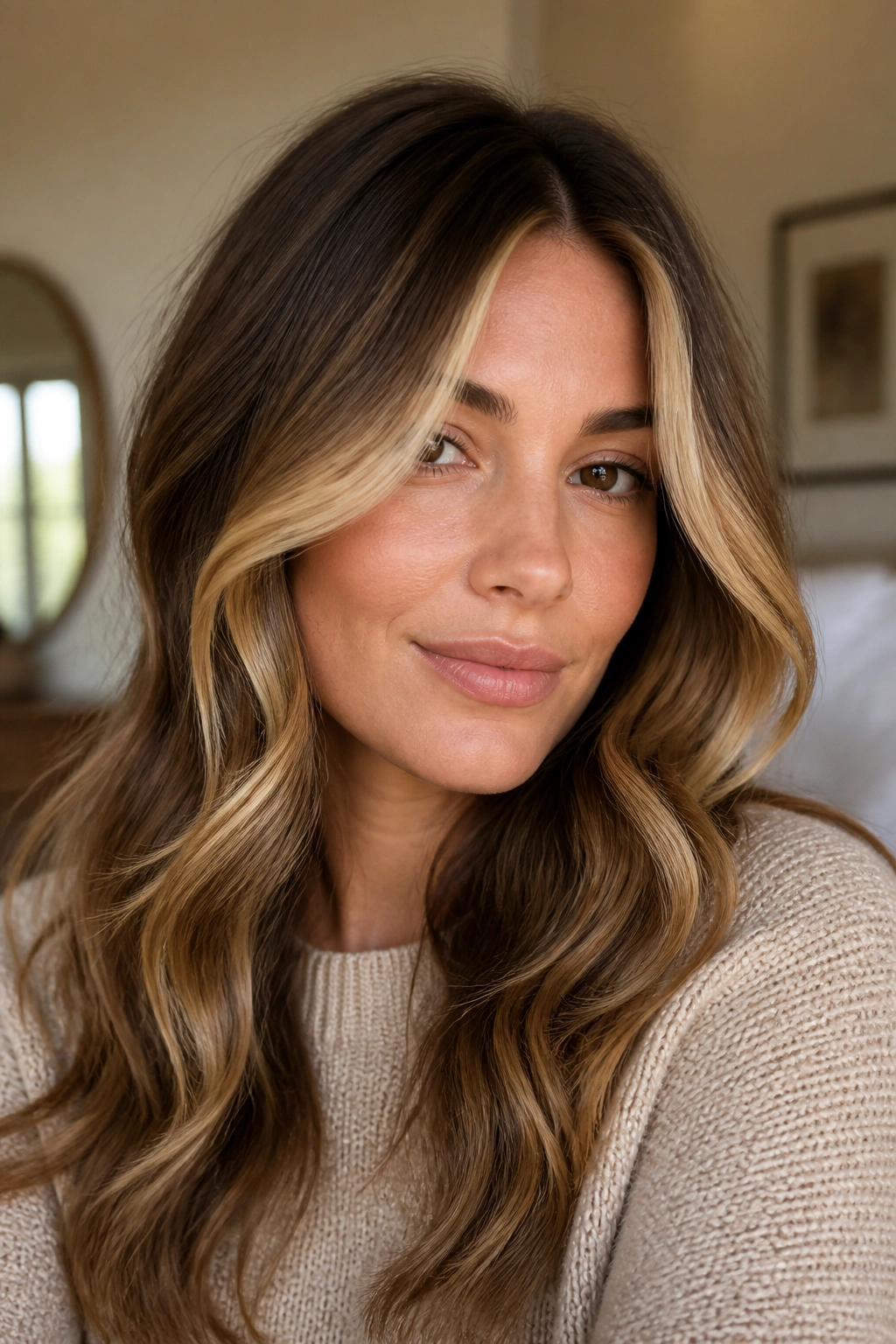
Buttercream blonde sits in that sweet spot between warm and creamy. It is lighter than honey, softer than platinum, and less yellow than gold. On medium brown hair, chunky buttercream panels can brighten the whole head without making it look like you borrowed someone else’s hair.
I like this look because it feels friendly. That sounds vague, but it’s true. It doesn’t fight the brunette base. Instead, it adds a pale, buttery lift that still leaves the brown visible, which keeps the hair from looking over-processed or flat. If your hair has a little wave, the effect gets even better because the lighter pieces bend with the shape instead of sitting there like marks on a page.
A middle-of-the-road blonde like this also makes upkeep less fussy. You can let the roots grow a bit before the style falls apart. A beige toner keeps the cream tone fresh, and a good conditioner helps the lightened pieces stay soft instead of rough at the ends.
6. Bronde Ribbons That Grow Out Softly
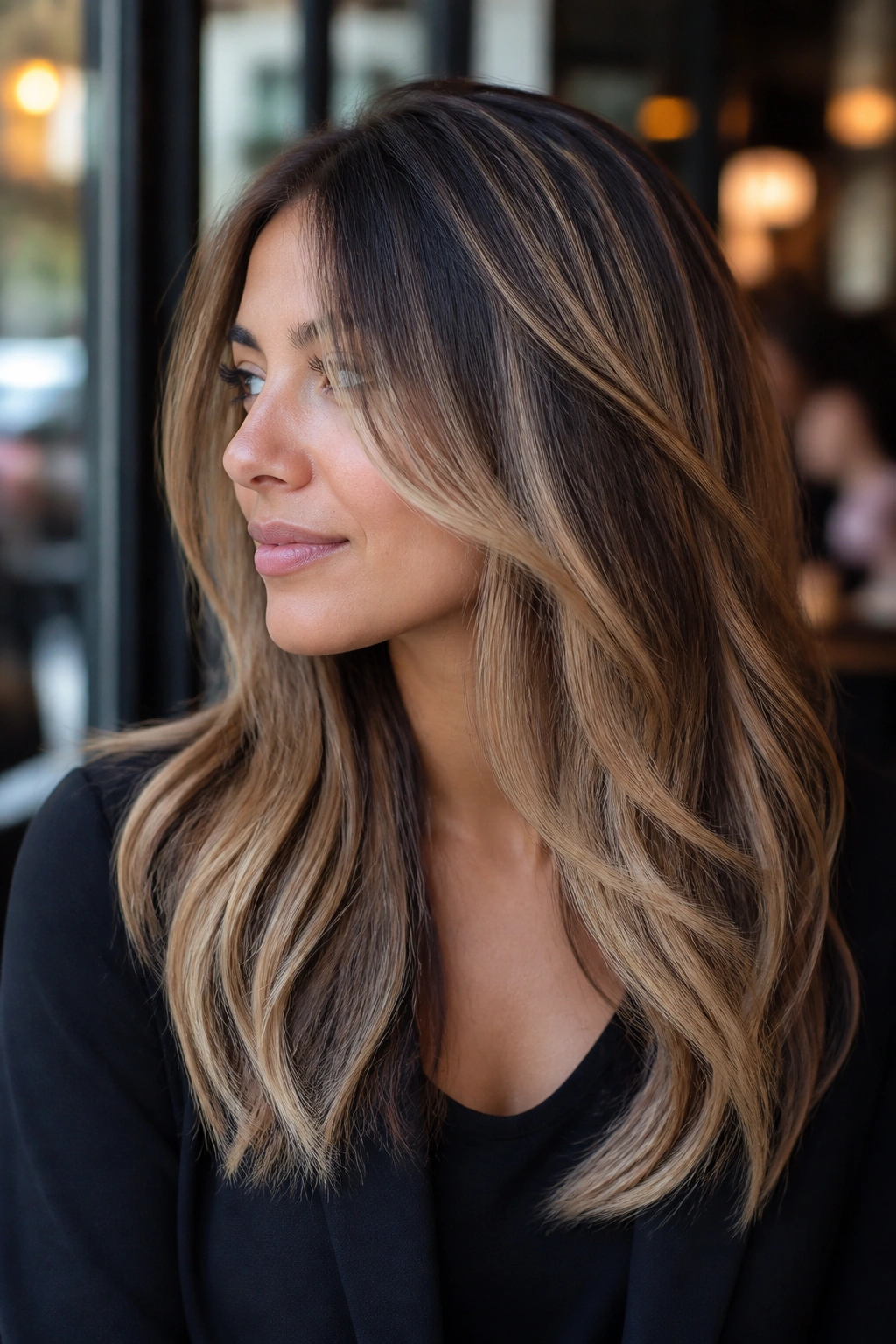
Bronde ribbons are what I suggest when someone says they want chunky blonde highlights but worries about regret. The blonde is still visible, still clear, but the shift from brown to blonde is gentler. You get contrast without the hard edge of a pure platinum stripe.
The word “ribbon” matters here. These pieces should feel like thick threads moving through the hair, not blocks cut into it with a ruler. A colorist can place them through the mid-lengths and ends, then leave some darker brown near the root so the grow-out has a natural shadow. That shadow is doing real work.
This style is especially good for layered hair, because the blonde catches on the movement and creates dimension when the hair swings. It looks polished enough for straight styling and relaxed enough in waves. If you like a style that still looks decent after a few weeks, this one earns its keep.
7. Chunky Blonde Highlights on Curly Brown Hair
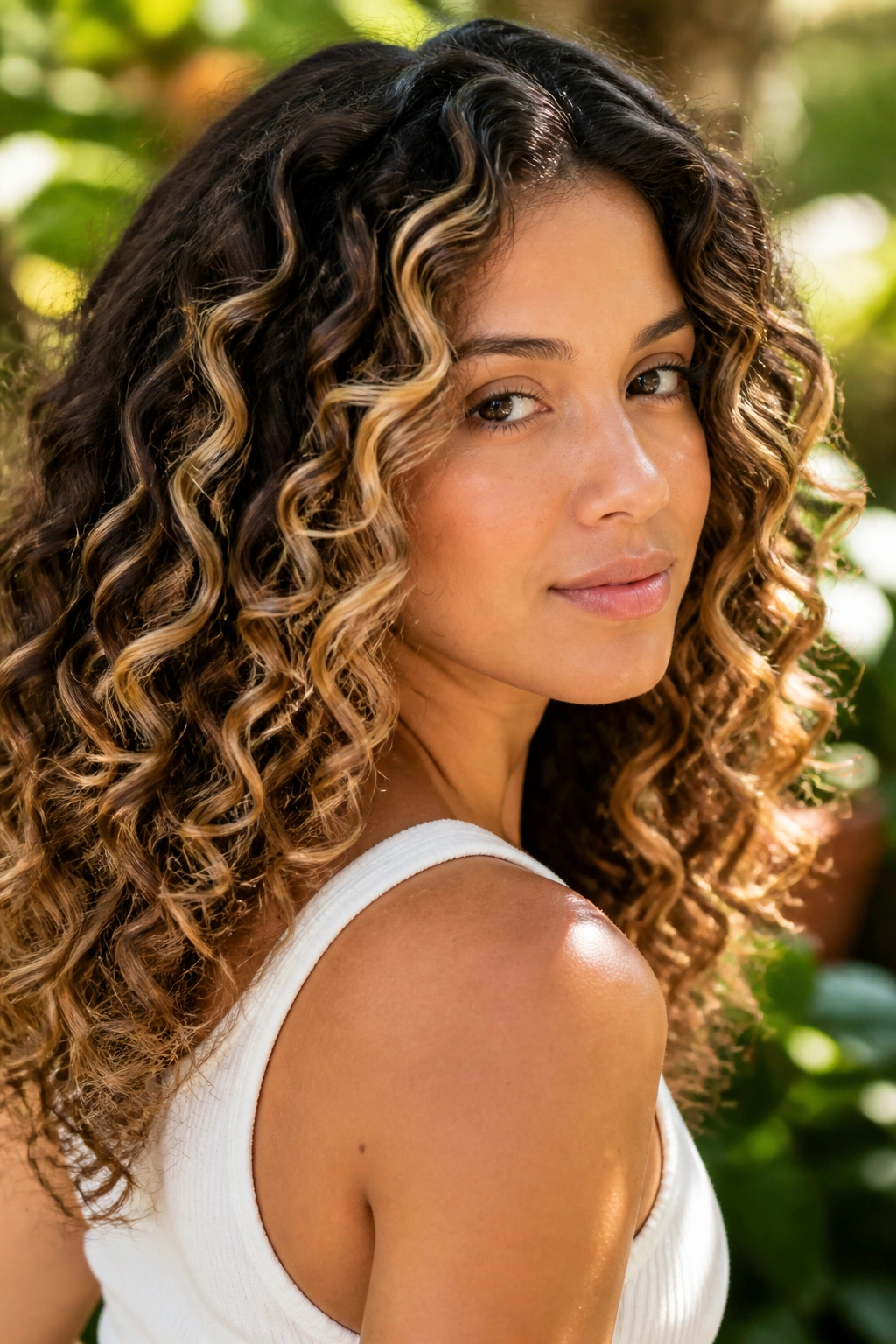
Curly brown hair handles chunky blonde differently, and that’s part of the fun. The curls break up the light into little flashes, so the blonde does not sit there as one solid stripe the way it can on straight hair. It moves. It bounces. It looks alive.
The trick is placement. Curly hair needs larger sections than fine, straight hair, but the foils or painted areas should still follow the curl pattern. If the blonde is dropped into every curl cluster in the same way, the result gets busy fast. A better approach is to place the brightest pieces where the curls naturally separate around the face and crown.
What to Ask For
Tell your colorist you want thickness, not blanket coverage. That usually means fewer panels with more visible width, plus careful toning so the lighter pieces stay creamy, not orange.
- Keep the lift slightly softer near the ends
- Use curl cream and a diffuser
- Avoid over-lightening fragile curl patterns
- Refresh tone with a gloss when brass shows up
Curly hair can make chunky highlights look expensive. It can also make them look messy if the lift is too aggressive, so the line between gorgeous and fried matters here.
8. A Blunt Bob with Thick Blonde Panels
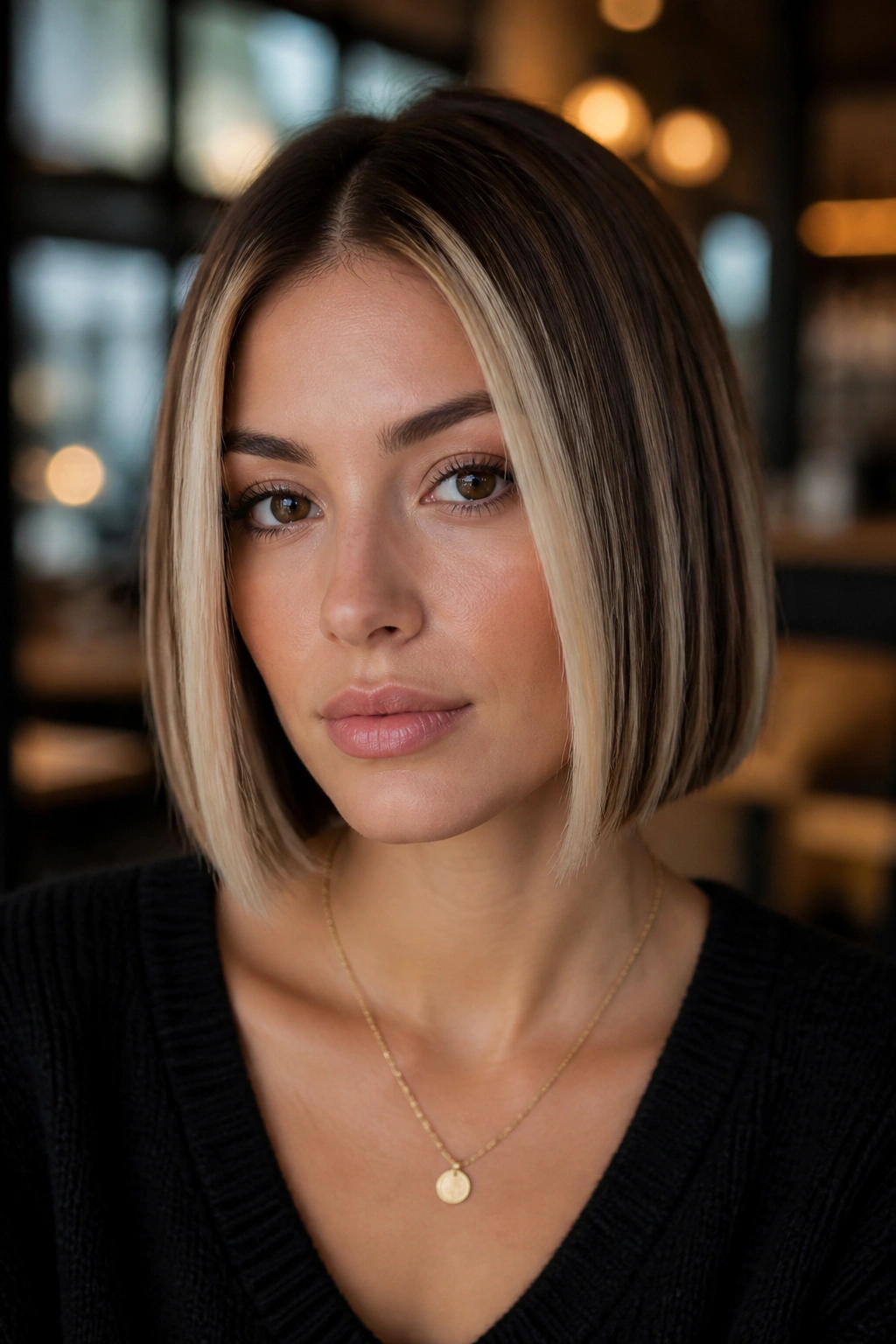
A blunt bob and chunky blonde panels are a strong pair because both shapes are clear. The haircut has a hard edge, and the highlights echo that line instead of fighting it. On brown hair, this can look clean, bold, and a little bit fashion-editor without trying to be precious about it.
The best versions keep the blonde panels fairly wide and place them in a way that shows off the cut’s geometry. If the bob is tucked under at the ends, the lighter pieces should be placed so they still show when the hair moves. If the bob is glassy and straight, the contrast gets even sharper.
This is not the place for delicate, blended baby lights. Those disappear into the blunt cut and waste the whole point. You want the blonde to read in chunks, especially near the front and the outer layers. A straight iron or a round-brush blowout can change the mood fast, which makes this style more flexible than people think.
9. Rooty Beige Blonde for a Lower-Maintenance Look
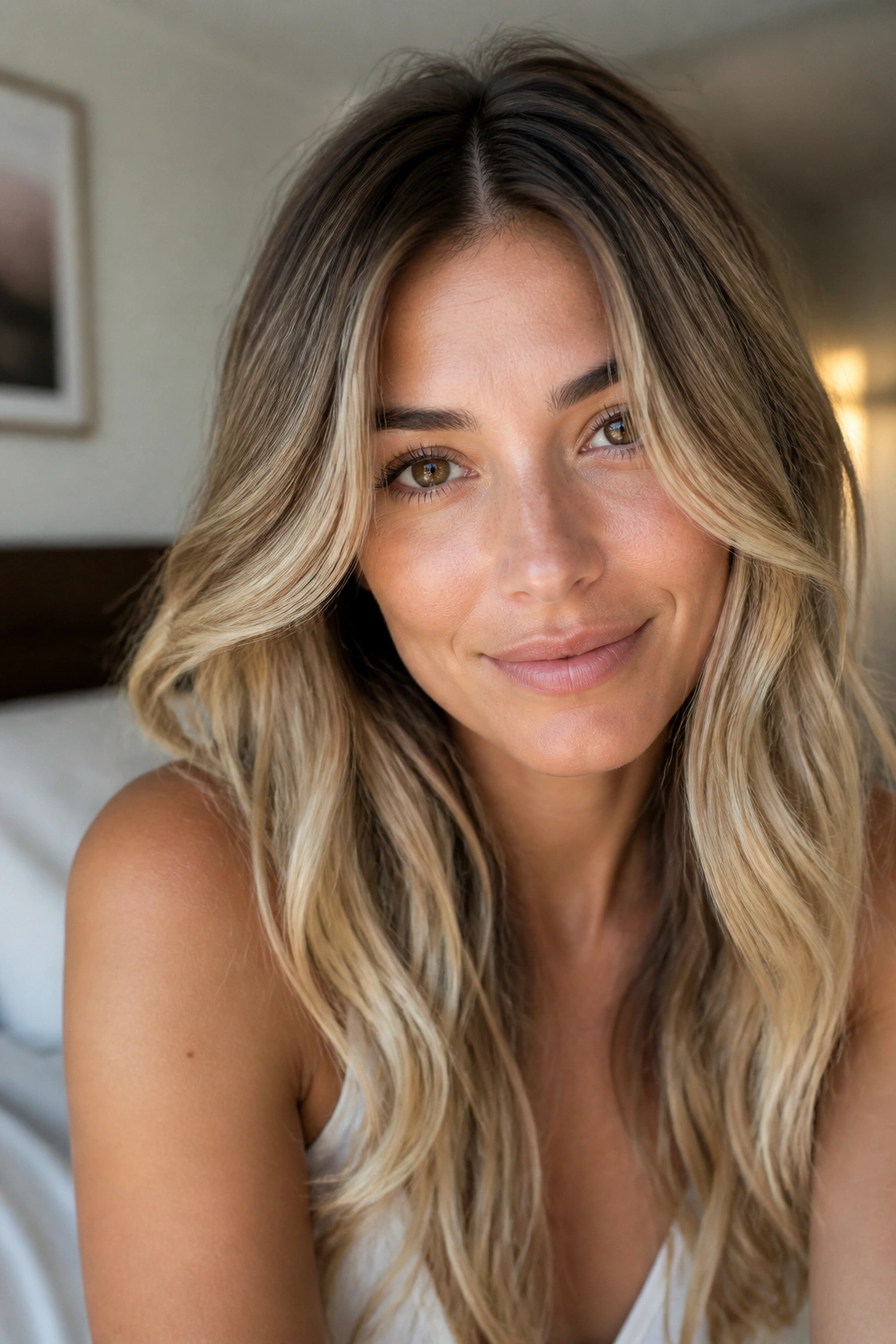
A rooty beige blonde look is the one I reach for when someone wants the chunky effect but hates constant salon appointments. The root stays deeper, often one or two shades darker than the blonde panels, and that darker base softens the grow-out line from the start. Beige blonde keeps the light from turning too yellow or too silver.
This works well on brown hair because the contrast is there, but it is not screaming for attention every day. You still get dimension. You still get brightness. You also get a little mercy when your roots come in, which matters more than people admit.
Ask for a soft root smudge and a beige toner through the mid-lengths. That keeps the blonde from looking disconnected from the brown base. If the pieces are placed around the face and through the top layers, the grow-out stays believable. That’s the whole trick. No hard line. No fake-looking stripe. Just a brunette that keeps getting better as it settles.
10. Golden Blonde Streaks on Warm Brown Hair
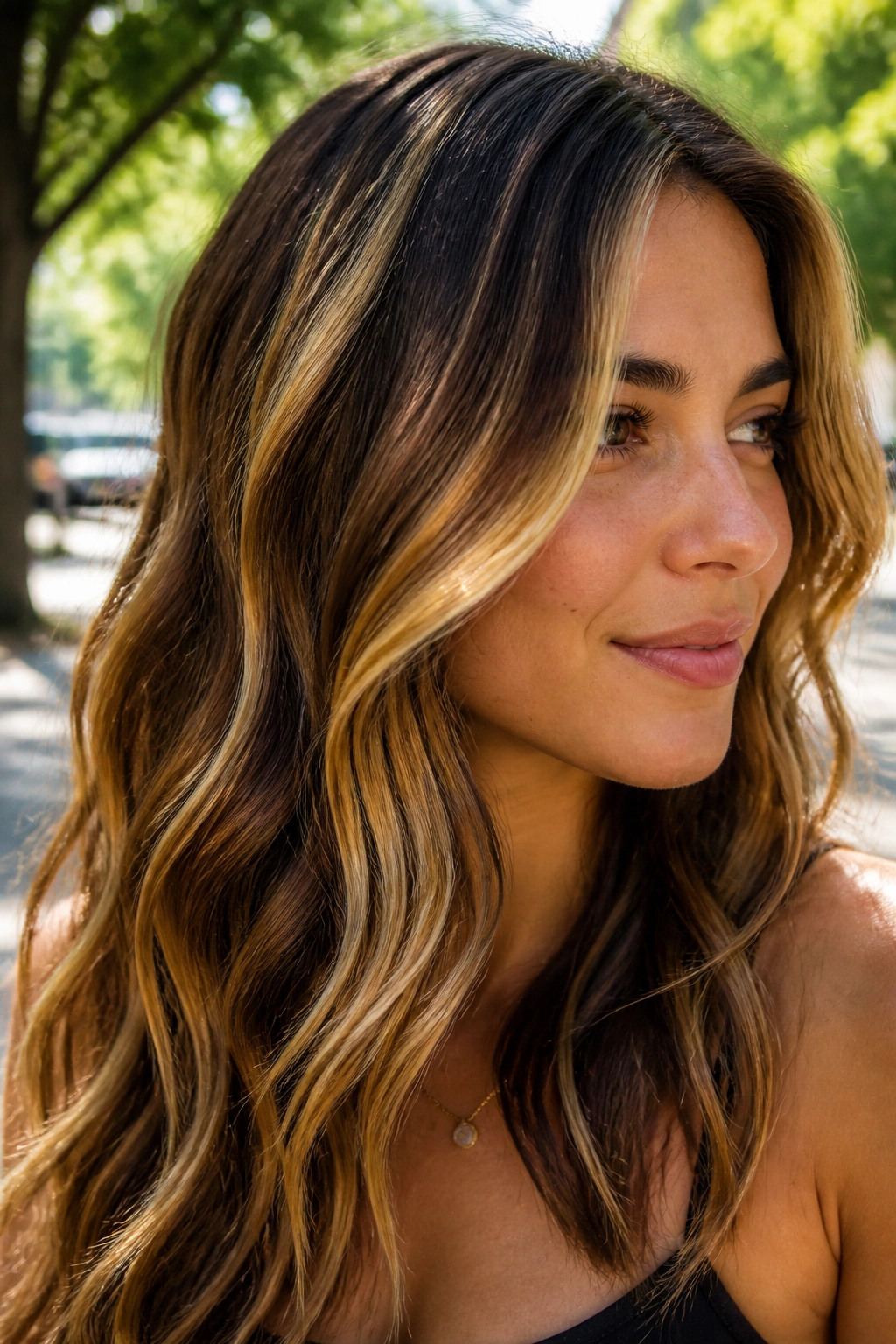
Golden blonde streaks on warm brown hair have a sunlit quality that feels easy to wear. The blonde is bright enough to stand out, but the gold tone keeps it in the same family as the base. On cinnamon, chestnut, and caramel brown hair, the blend can look rich rather than stark.
This is the version I like when the goal is warmth. Not orange warmth. Not brass. Real gold, the kind that sits between honey and pale amber. It works best when the lighter pieces are wide enough to notice but not so many that the brown disappears. Leave some deeper sections between the blonde panels. That spacing gives the hair depth.
A gloss helps a lot here. Golden blonde can go flat if it loses shine, and brown bases need that shine to keep the whole thing from reading dull. Wear it with loose waves if you want the highlights to catch movement. Wear it smooth if you want the color contrast to stay crisp.
11. Hidden Underlayers That Peek Through When You Move
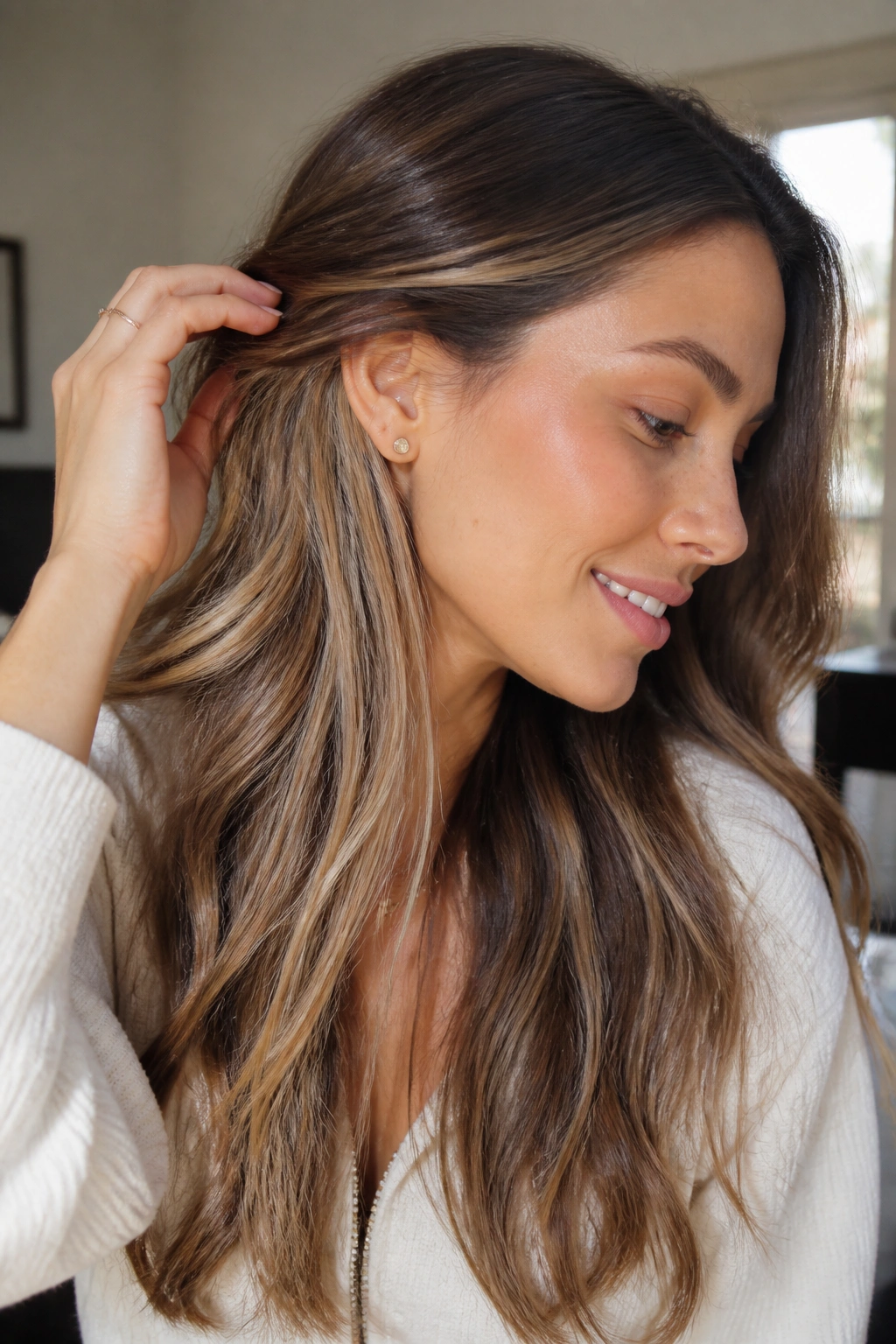
Hidden underlayer highlights are a smart way to wear chunky blonde without handing the whole room a billboard. The blonde lives underneath the top sections, so it shows when you tuck your hair behind your ears, sweep it into a half-up style, or move your head in daylight. It’s a quieter trick, but it lands hard when the hair moves.
This works especially well on brown hair that you want to keep looking rich from the top. The darker surface layers protect the blonde a little from overexposure, while the lighter underlayer gives you surprise brightness. That contrast feels cool and a bit playful.
It’s also a good option if your workplace or school prefers hair that doesn’t scream from across the room. The color can be as chunky as you want underneath, while the top stays calmer. A lot of people forget that hidden highlights still need maintenance, though. If the underlayer gets dry or the toner goes off, you will notice it when you tie your hair up.
12. Chunky Balayage and Foils Mixed Together

Foils and balayage are not enemies. Mixing them is often the smartest way to get chunky blonde highlights on brown hair without losing softness around the edges. Foils give you lift and brightness. Balayage softens the placement so the blonde doesn’t look cut and pasted onto the head.
That hybrid approach is especially useful if your hair is medium to dark brown and you want bright pieces without dragging color through the whole length every few months. The foils can sit where the light needs to pop most, while the hand-painted sections blur the transition. It’s a cleaner grow-out and a more natural movement pattern.
I like this style on layered cuts because the layers help the different light pieces show up at different depths. You get a richer effect than a single row of foils can give. Also, the mix gives the colorist more control over warmth. If one section lifts too fast, they can adjust the tone without flattening the whole head.
13. Mushroom Blonde Panels on Ash Brown Hair

Mushroom blonde is the cooler cousin of beige blonde, and it looks especially good on ash brown hair that already leans muted. The tone sits between taupe, beige, and soft gray-beige, which keeps the blonde from looking yellow against the brunette base. The whole thing feels dry in a good way — not dull, just quiet and expensive-looking.
This is a clever pick if you hate gold tones. Some people do. They want blonde that stays neutral and smoky, and mushroom blonde gives them that. The chunky panels still show, but the color reads more editorial than sunny. Straight hair makes the shade look sleek; waves make it look softer and more lived-in.
Best Places to Put It
The coolest effect usually comes from placing mushroom blonde through the front pieces, the crown, and the upper sides. That keeps the color visible without scattering too much light through the ends.
- Ask for a soft beige-gray toner
- Avoid lifting too far past pale yellow
- Use a sulfate-free shampoo
- Refresh with gloss, not heavy purple shampoo
14. Long Layers with Vertical Blonde Ribbons
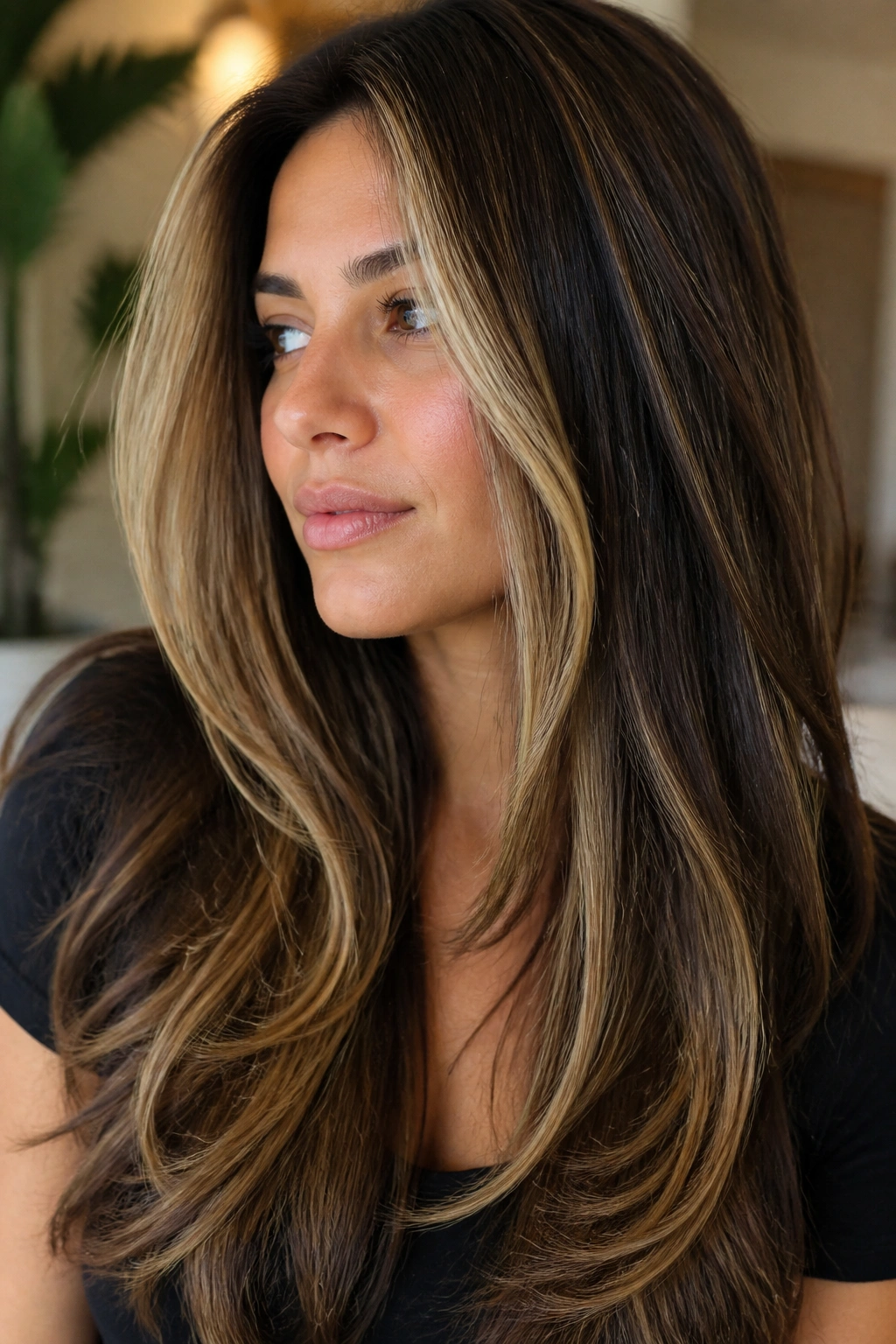
Long brown hair loves vertical blonde ribbons because the placement works with gravity instead of against it. The lighter pieces run through the length of the hair, so they stretch the shape out and make the cut feel longer and more fluid. Thick horizontal panels can look blocky on long hair. Vertical ones feel cleaner.
This is one of the best ways to keep chunky blonde highlights from turning into a stripey mess on long waves. The ribbons can start around the cheekbones or collarbone and travel downward, which gives the hair a sense of movement even when it’s still. A center part helps the pieces frame the face, but a side part can make the contrast hit harder.
I’d use this style on hair with actual layers, not one blunt sheet. The layers catch the blonde at different lengths and stop it from looking too uniform. If the highlights are placed too evenly from root to tip, the look gets heavy. Break the line up a little. That’s the part that makes it work.
15. Curtain Bangs with Bright Face-Framing Pieces
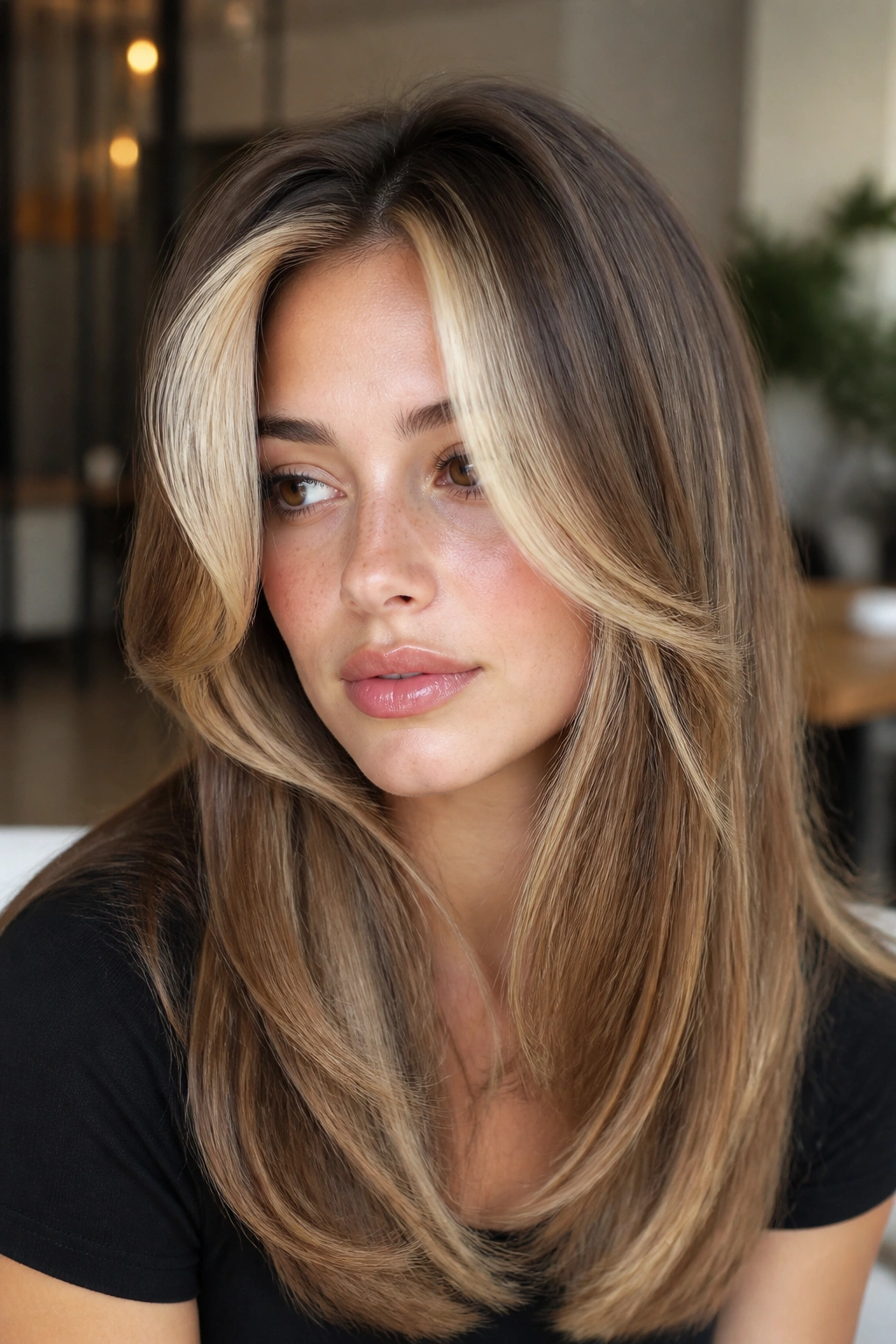
Curtain bangs and bright front pieces are a lovely match because both shapes pull attention to the face. The bangs soften the forehead, and the blonde pieces brighten the sides without needing a full-head transformation. On brown hair, that can be enough to change the whole read of the cut.
The trick is keeping the blonde on the sides a touch wider than the bangs themselves. If the blonde is too thin, it disappears into the fringe and loses the point. If it’s too broad, it can take over the haircut and make the bangs look disconnected. Balance matters here more than drama.
This look works with straight blowouts, loose bends, and that slightly undone style people keep pretending they woke up with. The bangs should still feel airy. Heavy blonde at the front can make curtain bangs look bulky if the cut is already thick. A light root shadow helps, since curtain bangs grow fast and root lines show sooner than people expect.
16. Short Crop with Bright Blonde Sections
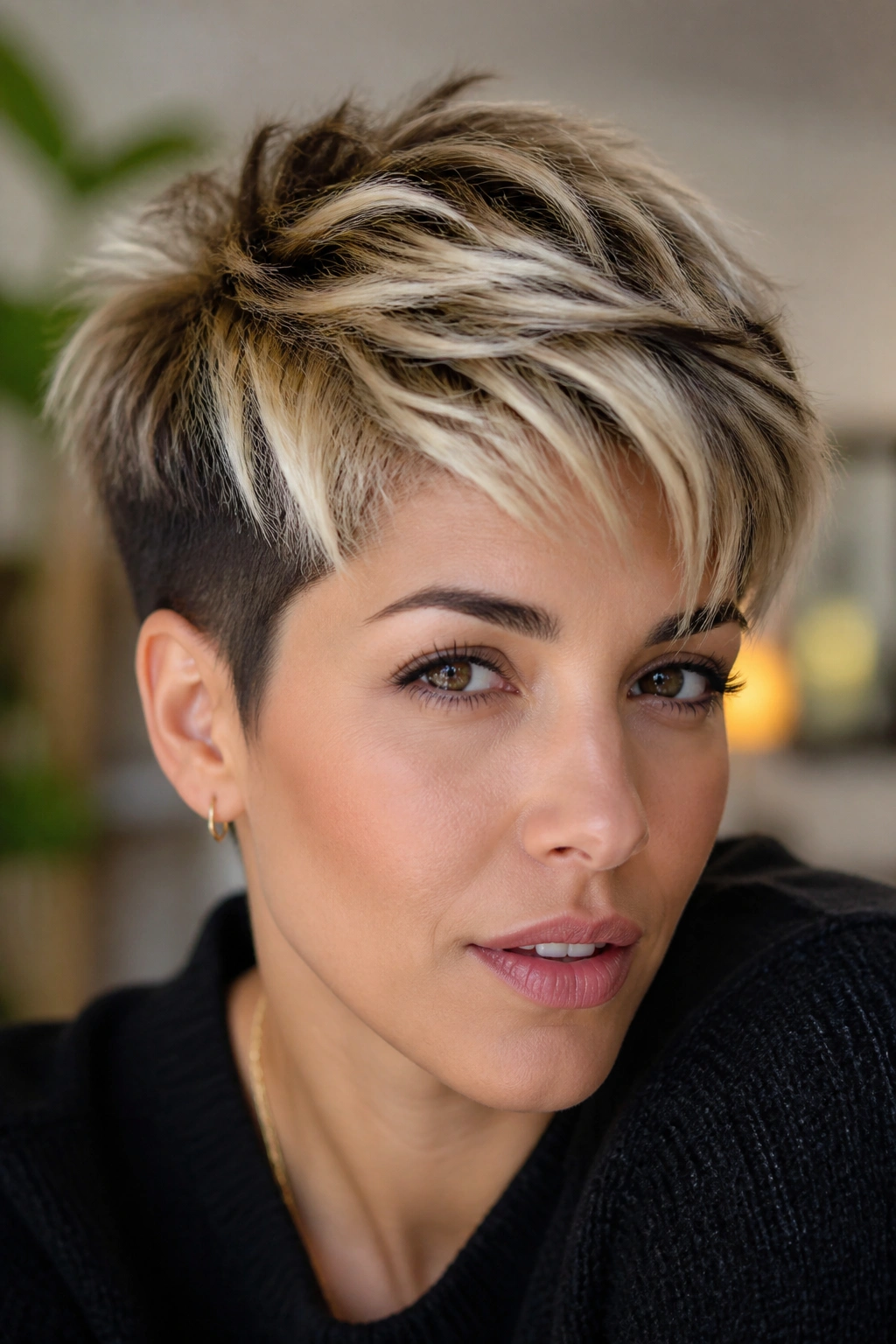
A short crop with bright blonde sections is a bold little haircut with teeth. Brown hair that sits close to the head has no room to hide, which is exactly why thick blonde panels can look so sharp on it. The contrast gives the crop shape from every angle.
This version works best when the blonde is placed on the top, fringe, or front corner areas, rather than scattered everywhere. Short hair does not need many pieces to make a point. A few bright panels can be enough, especially if the sides stay deeper. That contrast makes the top look fuller and gives the cut a bit of edge.
Maintenance is a mixed bag. The color itself grows out fast because the hair is short, but the cut also keeps things looking fresh even when the roots show. That makes it a good option for anyone who likes frequent shape-ups more than endless color touch-ups. And yes, a short crop can still feel feminine, polished, or messy depending on how you style it. The color just changes the mood.
17. Champagne Highlights on Light Brown Hair
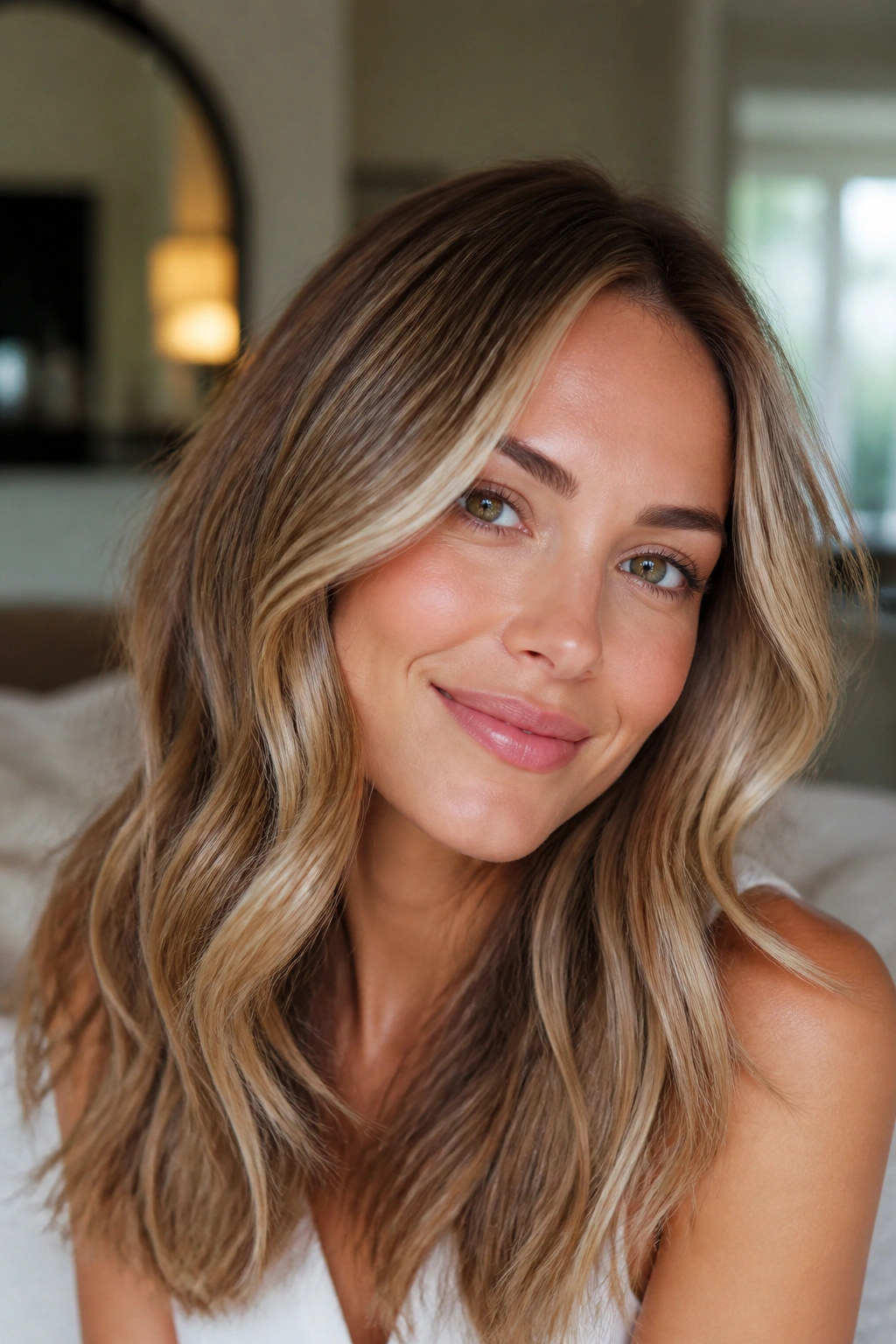
Champagne blonde sits in a narrow, useful space. It is pale, but not icy. Soft, but not washed out. On light brown hair, chunky champagne highlights can look polished because the contrast stays moderate while still giving the hair a brighter lift.
I like this choice for people who want something lighter without the commitment of strong platinum. The blonde pieces read creamy and a little sparkling, which suits light brown bases that already have some warmth or neutrality. If the hair is very golden underneath, a champagne toner can help keep the finish from going too yellow.
The Details That Matter
Placement matters more than people think here. With a lighter brown base, too many champagne panels can flatten the dimension. You want enough brown left between the lighter sections to keep the style grounded.
- Best for medium-fine to medium-density hair
- Works well with a soft wave
- Needs a gloss to keep the finish shiny
- Grows out more softly than high-contrast blonde
18. Bright Front Pieces on Dark Brown Hair

Dark brown hair needs a little more courage to go bright at the front, and that is exactly why the result can be so good. Extra-lift face-framing pieces break up the heaviness of a deep base and make the whole cut look less solid. On very dark brunette hair, the front blonde can feel almost theatrical in the best way.
This approach is useful if you do not want to lighten the whole head. The back and underside stay dark, which keeps the hair looking rich, while the front sections get enough lift to show shape and movement. A couple of thick pieces near the temples and cheekbones can do a surprising amount of work.
The only caution is the lift. Dark brown hair often wants to hold warmth underneath, so a beige or pearl toner usually looks cleaner than a naked blonde shade. If you skip the toner, the front pieces can turn orange-gold fast, and that is not the same thing as warm blonde. Not even close.
19. Wavy Mid-Length Hair with Soft Chunky Blocks
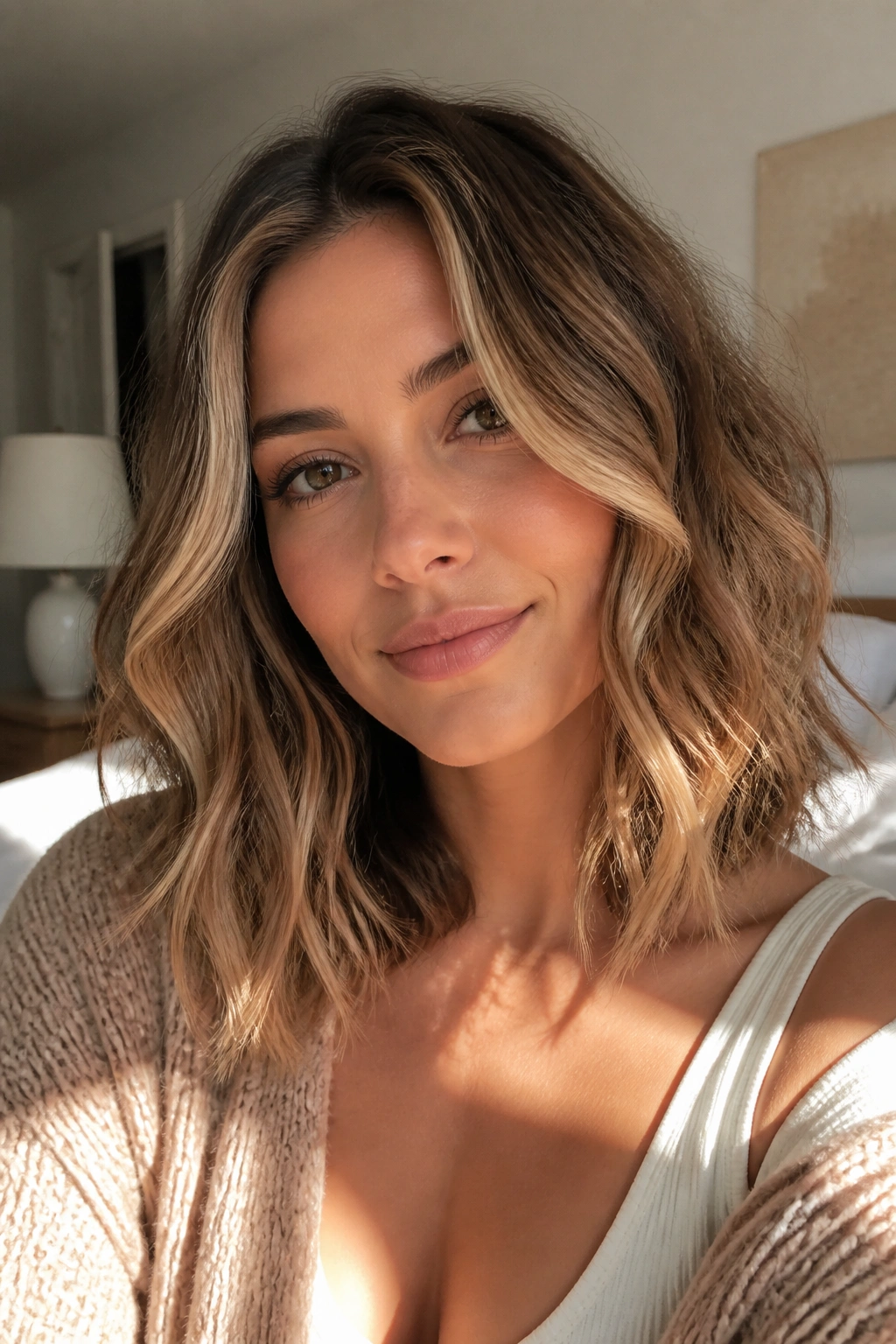
Wavy mid-length hair is one of the easiest places to wear chunky blonde highlights because the texture softens the edges. The blonde can still be thick and visible, but the waves break it up so it doesn’t look rigid. That gives you the high-contrast effect without the stiff stripe feel.
This style shines on hair that lands somewhere between the shoulders and collarbone. There is enough length for the blonde blocks to show, but not so much that the color gets lost in the ends. A few thicker panels through the front, crown, and outer layers can create enough movement to make the hair feel fuller.
I think this is one of the most wearable options on the whole list. It has presence, but it does not need a dramatic haircut to support it. You can air-dry it with a little cream, bend it with a flat iron, or blow it out smooth and it still makes sense. The waves do the smoothing for you.
20. Grown-Out Chunky Blonde That Still Looks Intentional
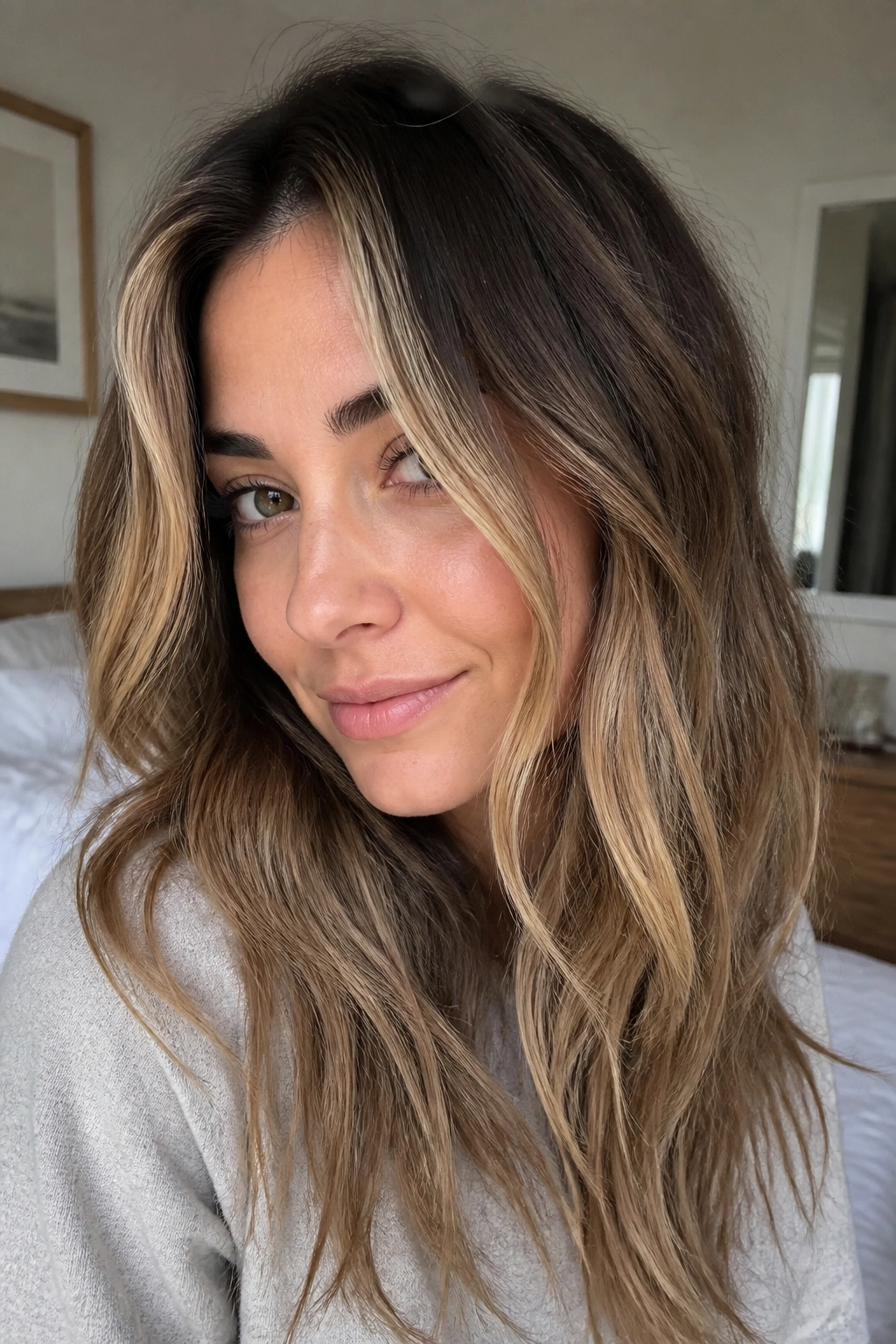
A grown-out chunky blonde look is what happens when you stop treating roots like a problem and start treating them like part of the design. The blonde still reads clearly, but the root stretch and regrowth soften the whole thing so it feels lived-in instead of overworked. On brown hair, that darker base at the root can actually make the blonde look richer.
This is the style I’d pick for anyone who likes bold color but hates a strict maintenance schedule. The best versions keep the blonde brighter around the face and through the visible top layers, then let the root deepen a little between appointments. That means the style holds its shape longer and looks less panicked when it starts to grow.
A good toner helps a lot here, because the grow-out exposes every mistake in the blonde tone. If the blonde is too yellow, the root contrast gets messy. If the blonde is too gray, it can look dusty against brown hair. Keep the tone creamy, the root soft, and the spacing uneven in a good way. That last part matters more than people think. Hair looks more natural when every panel is not asking for attention at the same volume.
