



A good haircut after 50 does not try to erase age. It makes gray hair look sharp, keeps the neck from disappearing under too much length, and stops you from spending twenty minutes fighting your own hair before breakfast.
The cuts that flatter women over 50 usually do one of three things: open the face, move the weight to a better spot, or give fine hair enough lift that it stops collapsing by noon. Gray strands often behave differently from pigmented hair — they can feel wirier, expand a little at the ends, and show every blunt line if the shape is sloppy. That is why a good bob, pixie, or layered cut matters more than chasing some vague idea of “softer” hair.
I keep coming back to the same truth. The haircut has to match the way you actually live, not the way you wish your hair behaved in a magazine photo. If you air-dry, if you wear glasses, if one side falls flatter than the other, those details matter.
So the smartest move is to start with shape.
1. Chin-Length Blunt Bob

The chin-length blunt bob is the haircut that tells gray hair to sit up straight. A clean line at the jaw makes silver strands look deliberate, and the length is short enough to stay light but long enough to tuck behind one ear when you want less fuss.
Why the blunt line matters
A blunt edge gives the hair a stronger outline, which helps when density starts to thin at the temples or crown. It also keeps fine hair from looking wispy at the ends. On thick hair, ask for a tiny bit of internal removal near the bottom so the shape does not flare out like a triangle.
- Best for straight to slightly wavy hair.
- Easy to style with a round brush or a flat brush and a quick bend at the ends.
- Needs a trim every 6 to 8 weeks if you want the edge to stay crisp.
- Works especially well with silver or salt-and-pepper hair because the line looks clean against lighter tones.
Ask for: a blunt perimeter, light point-cutting only where the hair feels bulky, and a length that lands right at the chin or just below it.
2. Soft Layered Lob

If you want hair that still slips into a low ponytail but no longer drags on your shoulders, the soft layered lob is a smart middle ground. It sits around the collarbone, which gives you movement without the awkward in-between length that can feel heavy and boring.
Gray hair often looks especially nice in this cut because the layers let the light hit each section a little differently. That matters more than people admit. A flat, one-length shoulder cut can make silver hair look stiff, while a lob with soft layers keeps it from hanging like a curtain.
What to tell your stylist
Ask for layers that start low, not all the way up near the cheekbones. You want shape, not a choppy mess.
- Keep the front a touch longer than the back if your face feels round.
- Keep the layers subtle if your hair is fine.
- Go slightly piecey at the ends if your hair is thick and puffy.
- Dry it with a large round brush if you want a polished bend, or scrunch it with mousse if you wear it wavy.
A lob like this is honest hair. It does not pretend to be high drama. It just behaves.
3. French Bob with Light Bangs

Why do some short cuts look sharp while others feel fussy? Usually it comes down to length and fringe. The French bob lives around the lip to jaw line, and that short little swing keeps the whole cut feeling light, especially when gray hair has a little texture of its own.
The magic is in the bangs. Not heavy ones. Not helmet bangs. Light, airy bangs that skim the forehead and break up the face without taking over. On older women, that softness can be a relief. It gives structure without shouting for attention.
How to wear it well
A French bob works best when it’s not overdone. The line should be neat, but the finish can be a little undone. That mix is what keeps it from looking stiff.
- Blow-dry the bangs first so they set in the right direction.
- Use a pea-sized amount of smoothing cream through the ends if your hair frizzes.
- Let the back sit naturally instead of curling every piece under.
- If your hair is very curly, ask for a dry cut so the shape lands where it should.
This cut looks especially good with glasses and strong brows. It frames the face without crowding it.
4. Shoulder-Grazing Shag

The shag is not messy when it is done well. It is controlled movement, and that difference matters. A shoulder-grazing shag adds softness around the face and keeps thick gray hair from turning into one dense block.
This is the cut for women who want shape but do not want their hair ironed flat into obedience. The layers should be visible, but not shredded. Think feathered movement around the cheekbones, a little lift at the crown, and ends that flick instead of hanging straight down.
Gray hair often picks up extra texture as it loses pigment, and the shag uses that to its advantage. Air-dried waves look relaxed here. So does a quick diffuser session. If you like hair that looks better after a little lived-in roughness, this is a strong choice.
What to watch for
A bad shag gets too thin at the ends. That leaves the hair looking stringy. A good one keeps enough weight in the perimeter so it still feels full.
It also needs a stylist who understands where to stop with the layers. Too much chopping near the top and the whole thing gets puffy. Too little and you just get a long cut with a few random pieces cut in.
5. Pixie with Side-Swept Fringe

Unlike a cropped pixie that exposes everything at once, the side-swept version keeps a little softness around the forehead. That one detail changes the whole feel of the cut. It looks easier to wear, and it often flatters women over 50 who want short hair without a severe edge.
The fringe can hide a deep forehead crease, soften a strong brow, or just make the haircut feel less tiny. The sides stay neat. The top keeps some length for movement. And if your gray hair is thick, the short shape can remove a lot of bulk fast.
Why it works in real life
A good pixie should take only a small amount of styling. Finger-dry it, add a touch of wax or cream, and push the fringe where you want it. That is enough most mornings.
- Best for straight to wavy hair with some natural lift.
- Easy on the neck and ears during warmer weather.
- Needs regular trims, usually every 4 to 6 weeks.
- Looks especially good when the crown has a little height.
If you wear bold earrings, a pixie gives them room. It also makes gray hair look bright instead of heavy.
6. Long Layers with Face-Framing Pieces
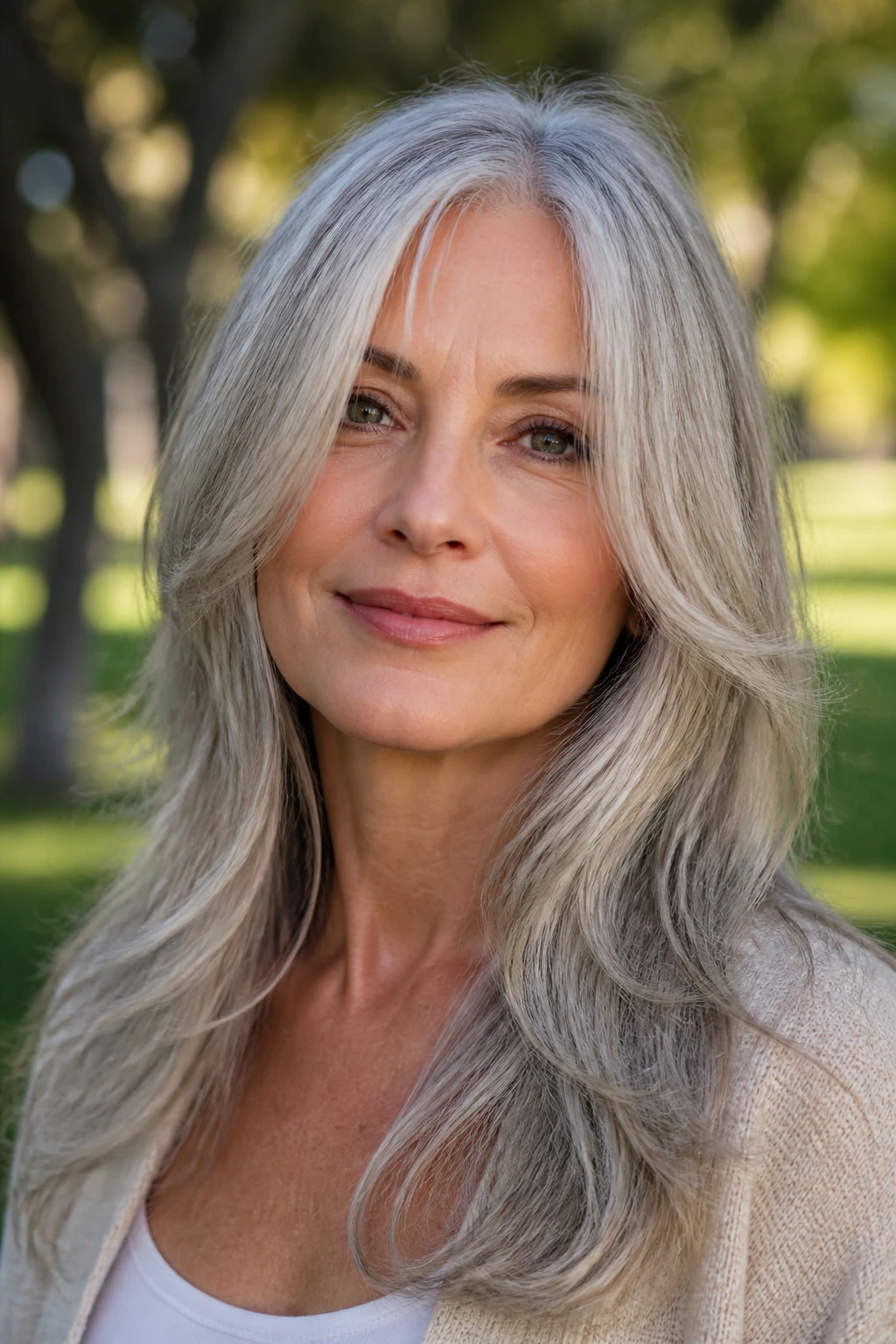
When long gray hair swings well, it feels graceful rather than heavy. The trick is not letting it become one flat sheet. Long layers with face-framing pieces bring motion back into the cut, and they can make shoulder-length or longer hair feel lighter without forcing you to go short.
Why the shape matters
Face-framing pieces should start around the cheekbone, jaw, or collarbone depending on your face shape. Too short and they slice awkwardly into the sides. Too long and they disappear. The best version has a gentle slope that softens the front while keeping the back strong.
This cut is useful if your hair is naturally thick, or if your gray strands have gone a little coarse. Layers remove some of the weight that can make long hair pull downward. They also help curls and waves fall in separate pieces instead of one big lump.
How to ask for it
- Keep the shortest front pieces at cheekbone level if you want lift.
- Keep layers long and blended if you want to preserve thickness.
- Ask for face-framing that does not start too high on the head.
- Use a leave-in conditioner on the ends so the hair stays smooth and not crunchy.
A cut like this can feel understated, but it is never lazy. It gives long hair a reason to keep showing up.
7. Collarbone Cut with Soft Ends

A collarbone cut is the haircut I keep coming back to for women who want choice. It is long enough to pin up, short enough to feel fresh, and it lands at a spot that flatters the neck and shoulders without making the face look swallowed.
The soft ends are the whole point. A hard, blunt collarbone line can look boxy on some hair types. Softening the ends with a little point-cutting or very light texturizing lets the hair move instead of sitting in one block. Gray hair often benefits from that because the strands can look brighter when they shift a little in the light.
If you like switching between straight and wavy styles, this cut gives you room. It also grows out nicely, which matters more than people think. Nobody wants a haircut that looks great for ten days and awkward for the next six weeks.
One more thing: it plays well with side parts, center parts, or a loose tuck behind one ear. That flexibility is half the appeal.
8. Textured Crop with Crown Volume
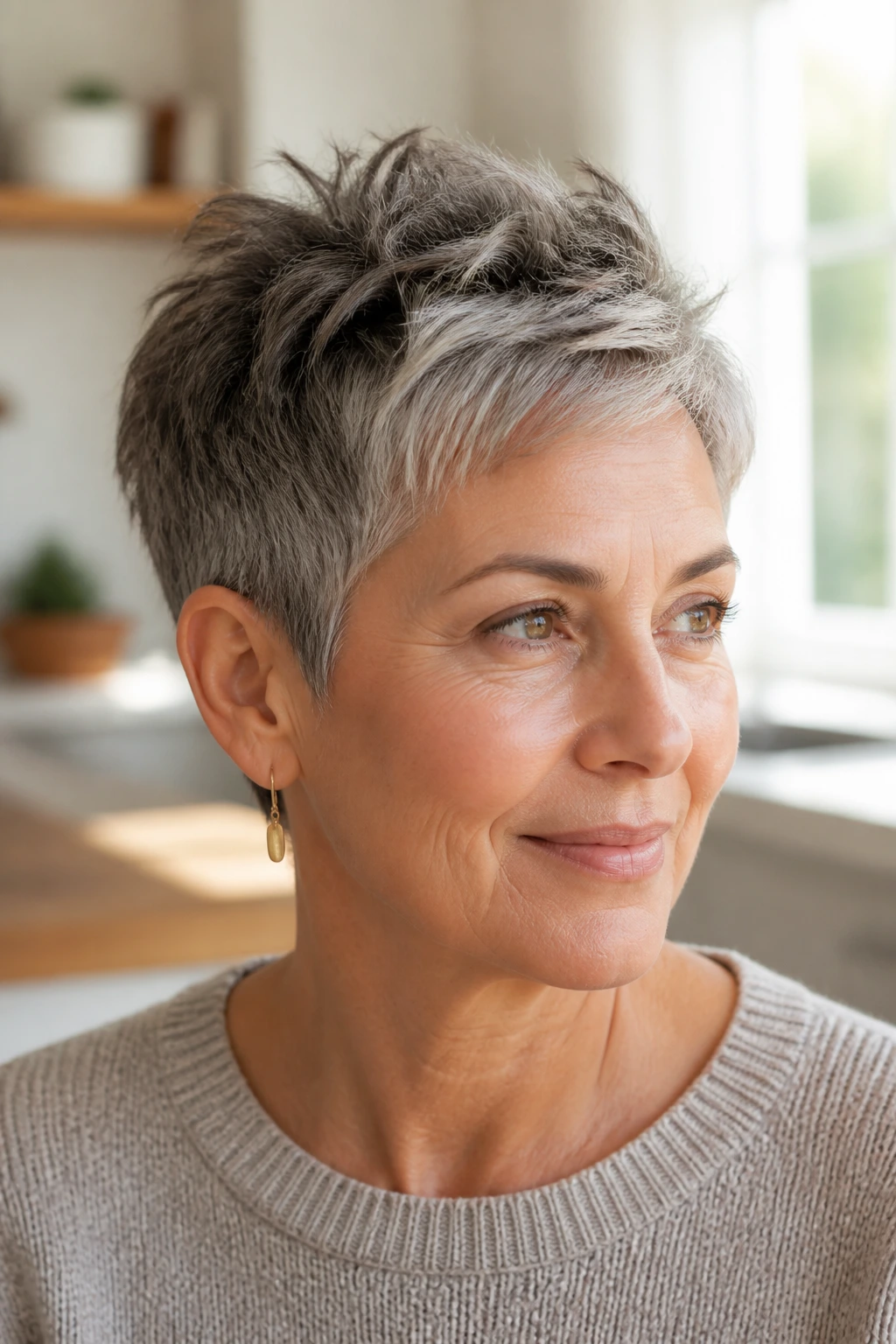
What if your hair has started lying flat at the top? Then the textured crop is worth a serious look. This cut keeps the sides neat and adds lift through the crown, which can make the whole face seem a little more awake.
The key word here is textured. Not spiky. Not crunchy. Just broken-up pieces on top that create height without stiffness. A small amount of mousse at the roots and a quick blast from the blow-dryer can do a lot. For gray hair that tends to sit low or grow in with cowlicks, this cut brings the top back into the conversation.
Best styling habits
- Blow-dry the crown first while lifting the roots with your fingers.
- Use a lightweight mousse instead of a heavy cream.
- Keep the sides close so the volume stays on top, where you want it.
- Ask for soft piece separation, not sharp points.
This is a good cut for women who want short hair but do not want it to feel flat or old-fashioned. The shape has energy. It also makes earrings and glasses stand out in a nice, clean way.
9. Sleek Angled Bob
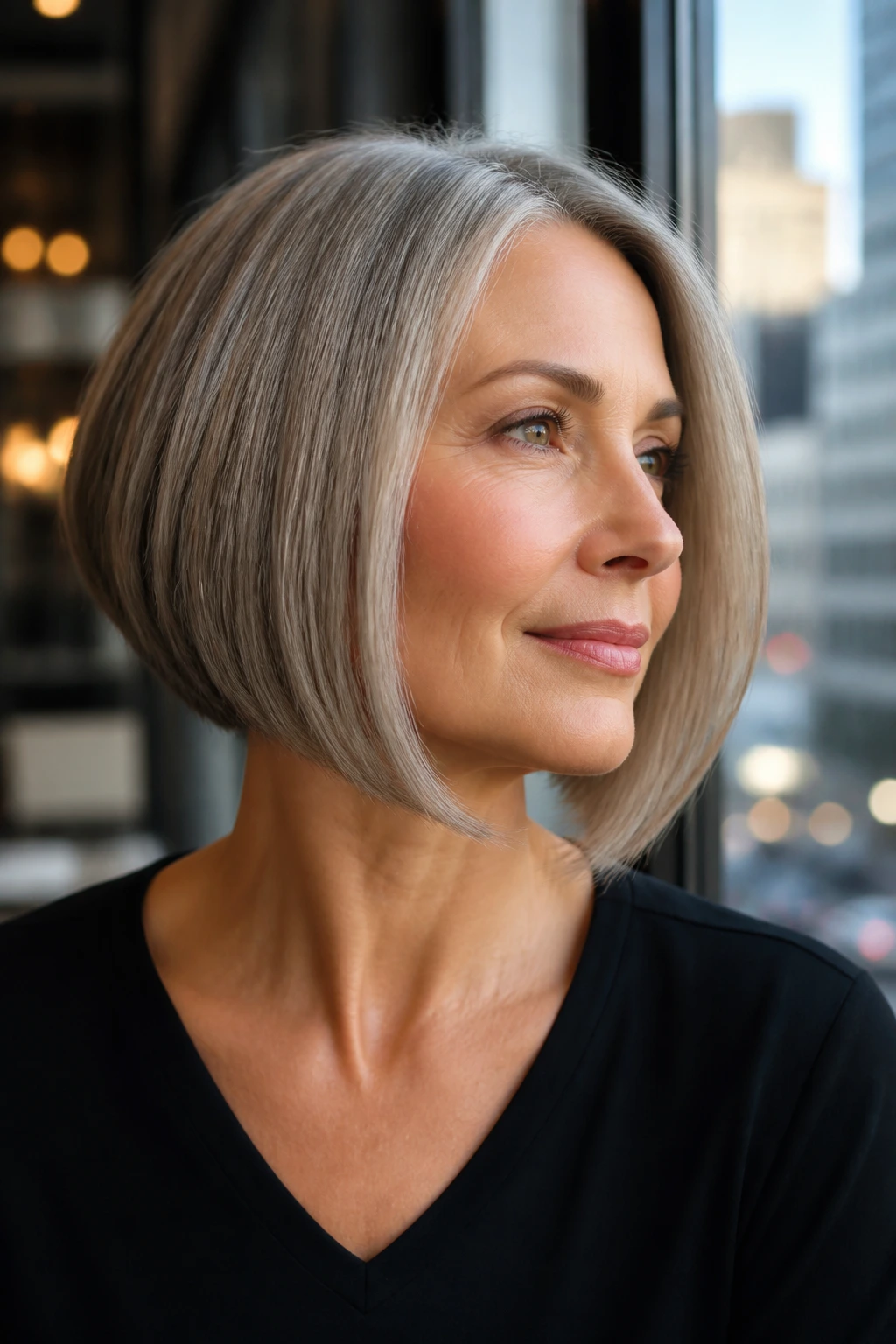
An angled bob can sharpen an entire face in one haircut. Shorter in the back, longer in the front, it creates a diagonal line that makes the neck look longer and the jaw look cleaner. That line is especially useful when hair starts feeling heavy around the sides.
Gray hair looks gorgeous in this shape when it is smooth. The reflective quality of silver strands shows off the angle, and the cut itself gives the eye a clear path from back to front. If your hair is straight or only slightly wavy, this one can look polished with not much effort.
The part people miss
The angle should be visible, but not extreme. If the front drops too far, the haircut can feel dated fast. Keep the difference subtle unless you want a bolder look.
A flat iron or a paddle brush blow-dry can make the shape obvious. A touch of heat protectant is enough. You do not need a ton of product. Too much and the hair loses that smooth line that makes the cut work.
This one suits women who like a neat finish and do not mind seeing the shape every day. It is tidy. That is the appeal.
10. Curly Bob with Tapered Shape
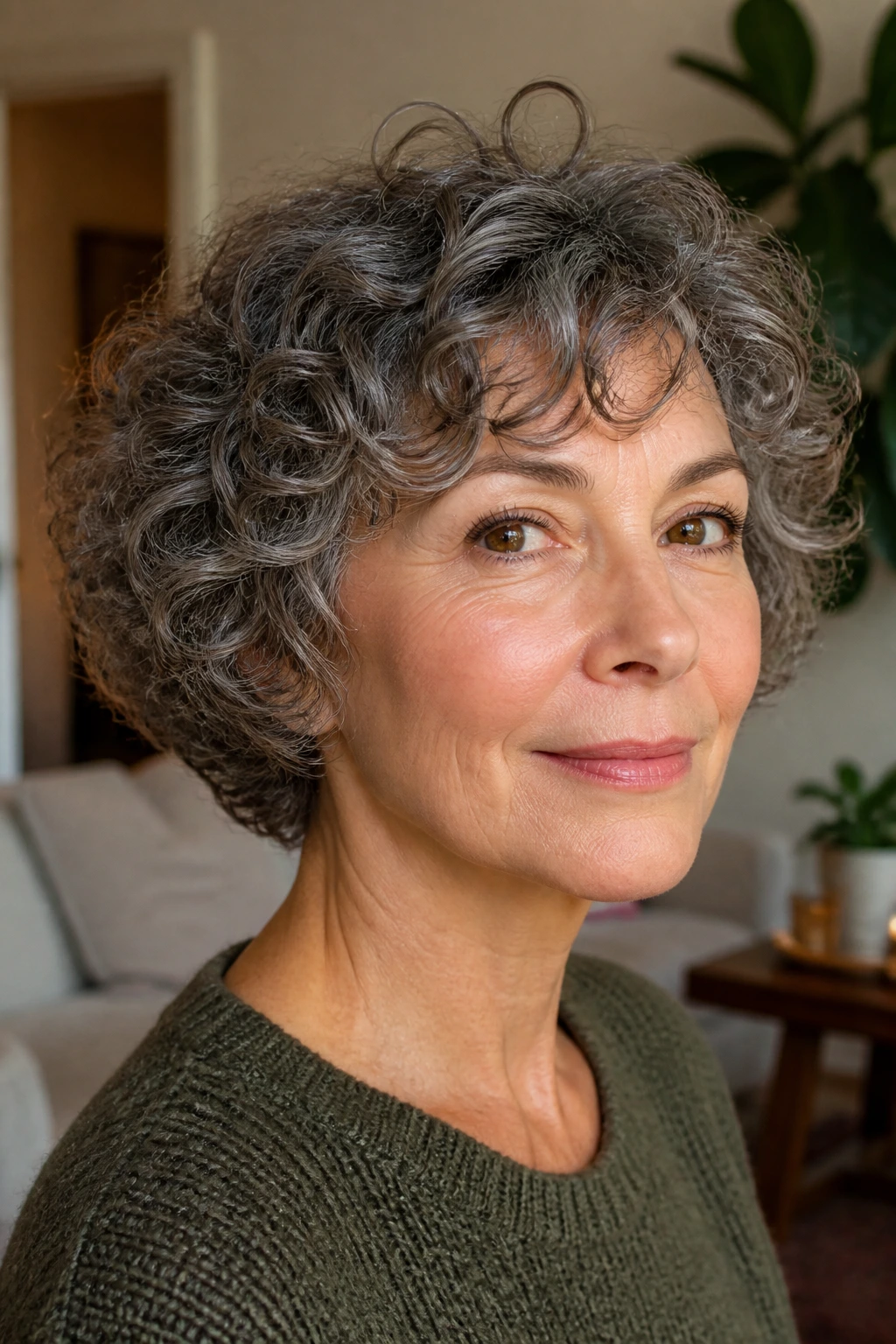
If your curls expand at the ends and collapse at the crown, the shape is the problem, not the curl pattern. A curly bob with a tapered shape fixes that by keeping the bulk where it helps and trimming away the parts that drag the silhouette down.
This cut should usually be done dry, or at least with the curls respected as they are. Wet curls lie. They shrink, spring, and twist in ways that can fool even a good pair of scissors. A stylist who cuts curl by curl can make the bob sit at a better length and avoid the awkward mushroom look.
What makes it different
- The tapered shape keeps the base neat around the neck.
- The top stays rounded enough to hold lift.
- The sides can be left a bit longer if you want a softer frame.
- Gray curls often look brighter when they have shape, because light hits each coil more clearly.
Use a diffuser, not a rough towel rub. And skip heavy oils near the roots. That just weighs the curls down.
A curly bob does not have to be tame. It only needs a shape that respects the curl instead of fighting it.
11. Feathered Cut with Wispy Layers

Remember when feathered cuts got a bad reputation? A lot of that came from overdoing the layers and flipping the ends out too much. A modern feathered cut is lighter and smarter. It uses wispy layers to keep the hair moving, not to make it look sprayed into place.
This is a nice option for fine or medium hair that needs a little air around the face. The layers should blend into each other, and the finish should feel soft. On gray hair, that softness keeps the cut from looking heavy at the top or stringy at the bottom.
How to keep it modern
Ask for feathering mostly through the crown and sides, not throughout the whole head. You want enough structure left in the perimeter so the haircut still has shape when it grows out.
A round brush can give the ends a gentle bend. A little mousse at the roots helps too. But the real secret is restraint. Too much backcombing, too much spray, too much flip — that is when the haircut starts looking stuck in the past.
Best for: women who want light movement, a softer forehead area, and a cut that dries fairly fast.
12. Neck-Length Graduated Bob
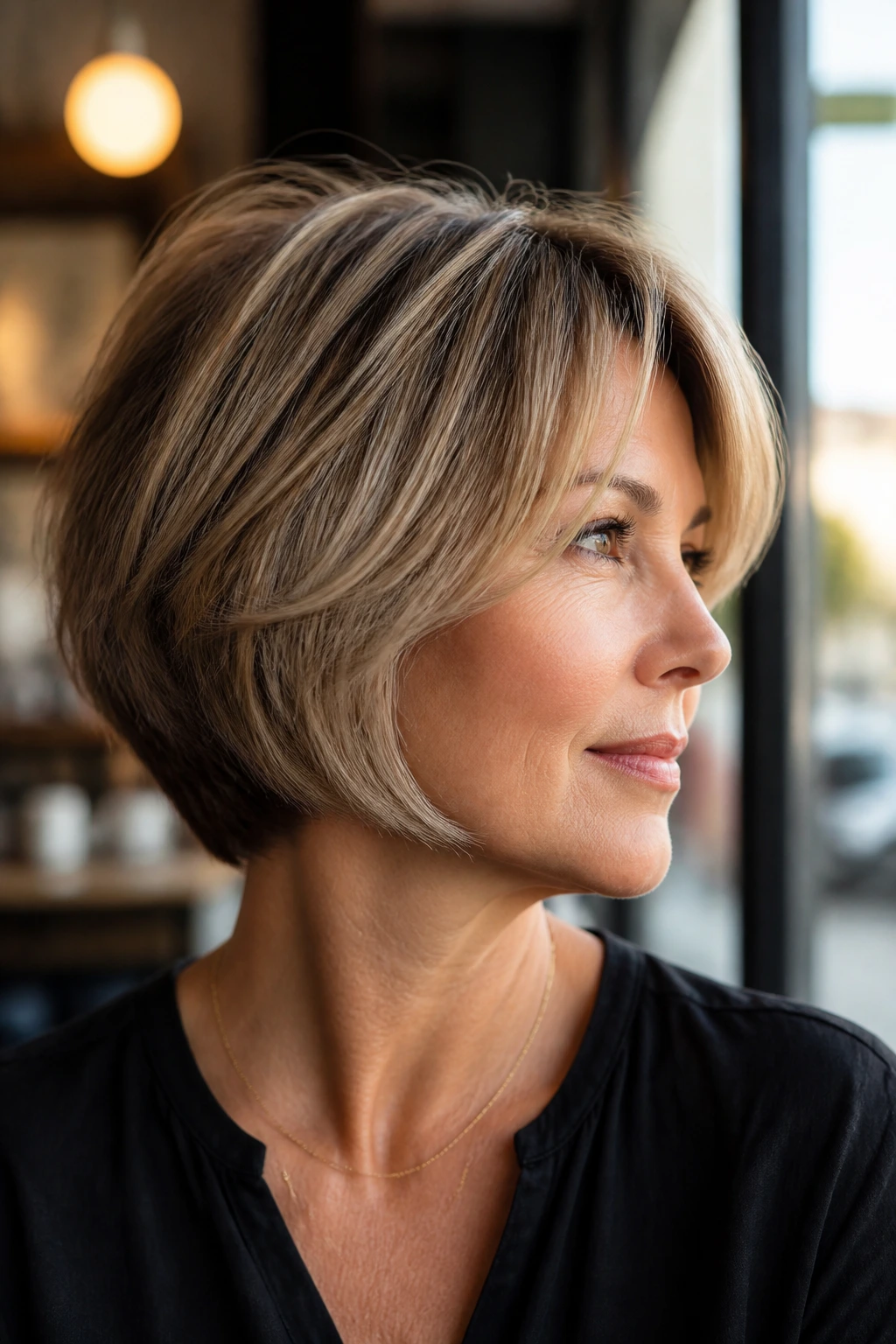
Somewhere between short hair and a classic bob sits the neck-length graduated cut. It is shorter in the back, gradually longer toward the front, and it gives the crown a little lift without stacking the back too high.
That graduation matters. It helps fine gray hair look fuller at the nape and keeps thicker hair from hanging flat against the neck. You also get a nice clean shape that works with earrings, scarves, and open necklines.
The cut is neat without feeling severe. That is harder to get than people think. A very blunt bob can feel boxy, and a long layered style can lose all structure. The graduated bob sits in the middle, which is why so many women keep returning to it.
A good version should move easily when you turn your head. If it sticks to the neck like a helmet, the layering is off. Keep the back stacked, but not bulky.
13. Bixie Cut

A bixie is not a compromise. It is a style with its own shape. Part bob, part pixie, it keeps the soft length of a bob on top while trimming the sides and nape into a shorter, cleaner line.
That mix works well for women who want something fresh but are not ready to go full pixie. Gray hair can look especially lively in a bixie because the short pieces lift and separate instead of lying flat. The shape has texture built in.
Who it suits best
- Women with fine hair that needs a little lift.
- Women with thick hair who want less bulk around the ears.
- Women who like short cuts but still want a few inches on top.
- Women who do not want to spend long styling every morning.
A little styling paste goes a long way here. Rub it between your fingers and twist a few pieces at the top. Done.
The bixie can look edgy, but it does not have to. Keep the edges soft and the crown piecey, and it stays wearable.
14. Curtain Bang Lob

Curtain bangs soften the forehead in a way a full fringe cannot. They split in the middle, skim the cheekbones, and slide into a lob so the whole cut feels easy rather than blocked in.
This is a strong choice for women over 50 who want change without losing length. The bangs draw attention to the eyes and cheeks, which can be helpful if you feel your face has lost some definition over the years. They also take the pressure off the rest of the cut. The lob can stay simple while the fringe does the interesting part.
How to style at home
Dry the bangs first, and guide them away from the face with a round brush or a small flat brush. They should bend, not curl into a hard swoop.
- Part the fringe while it is damp.
- Aim the dryer from above, not straight on.
- Keep the rest of the lob loose and touchable.
- Trim the bangs often enough so they do not fall into your eyes.
On gray hair, curtain bangs can frame the lighter pieces near the front in a flattering way. The cut feels soft, but not timid.
15. Rounded Bob with Tapered Nape
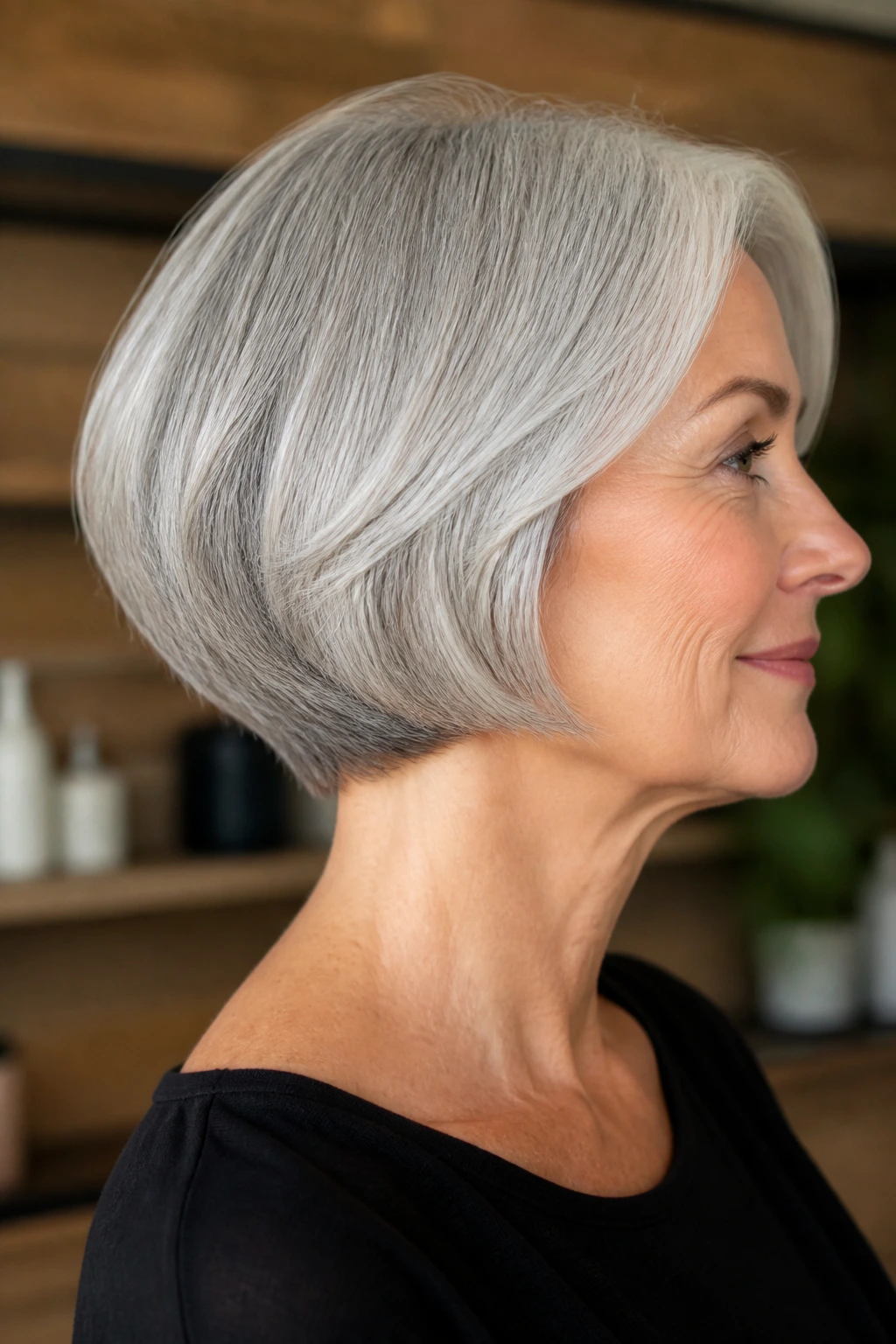
If you like a softer outline, the rounded bob is a quiet winner. The curve follows the shape of the head, and the tapered nape keeps the back neat so the haircut does not puff out or sit awkwardly under collars.
This shape does especially well with silver hair because the round contour looks clean and intentional. It also works nicely with glasses. The curve around the face prevents the sides from feeling boxy, which can happen with a blunt cut on thicker hair.
The rounded bob is not flashy. That is part of its charm. It looks polished on its own and does not need much more than a blow-dry or a quick smoothing pass with a brush. If your hair grows out with a lot of side volume, the tapered nape keeps the cut under control.
A softer round shape can also make the jawline appear smoother without hiding it. That balance is harder to get than it sounds.
16. Long Pixie with Tapered Sides

Need short hair but hate the helmet effect? Then a long pixie with tapered sides might be the answer. It keeps enough length on top to brush forward, sweep sideways, or tuck back, while the sides and nape stay close and clean.
The tapered sides matter because they stop the haircut from feeling puffy. That is a common problem with short styles on thicker gray hair. A lot of volume can build at the sides if the shape is not cut carefully. Tapering fixes that and gives the head a slimmer outline.
The top should still have a little softness. Not every piece needs to be identical. A few longer strands make the cut feel modern and keep it from looking too neat.
This cut suits women who like short hair but still want styling options. One day it can look brushed and tidy. The next, a little paste can rough it up and make it feel more casual.
17. U-Shaped Mid-Length Cut
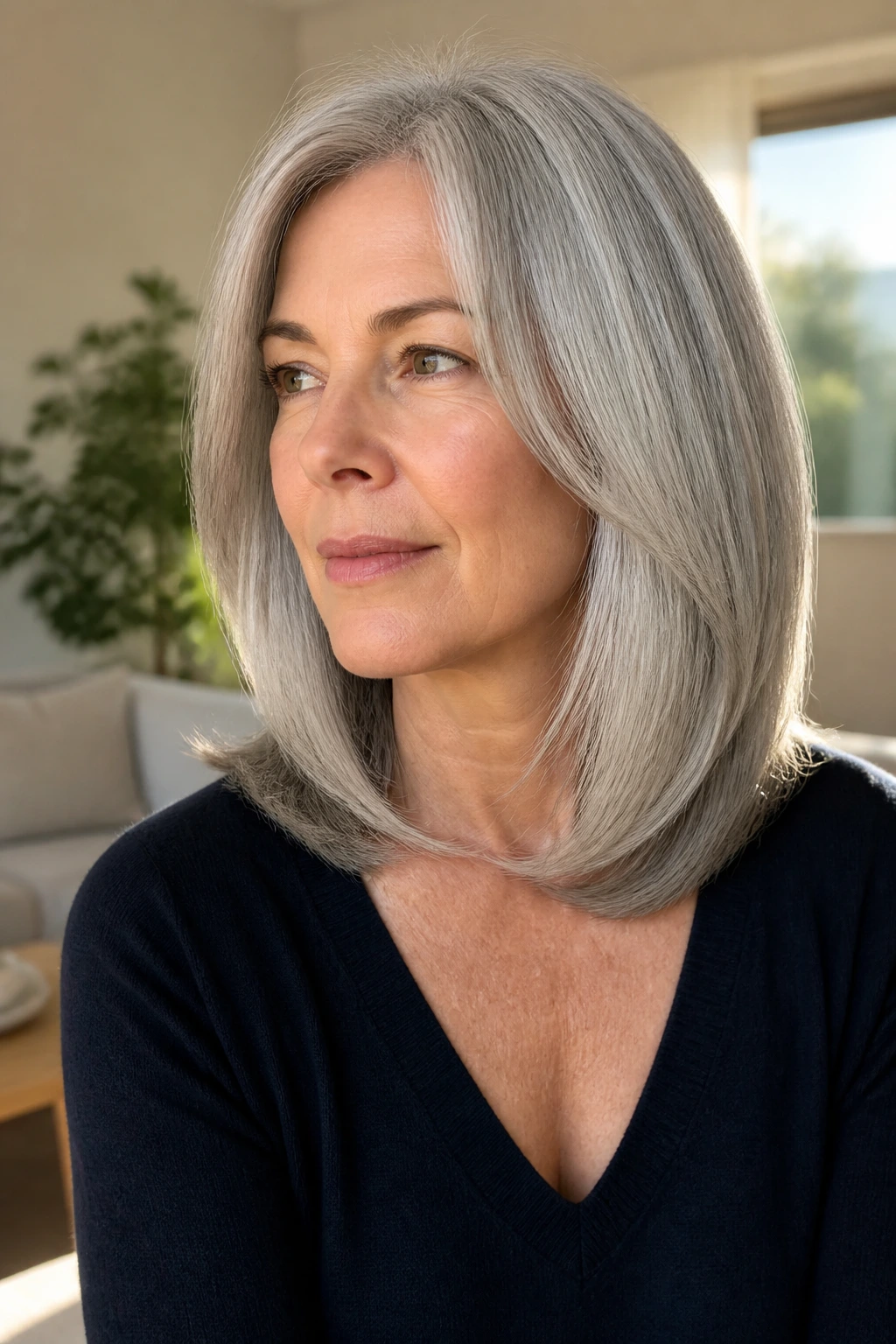
A U-shaped cut is one of the easiest ways to keep length from looking heavy. The back sits in a gentle curve instead of one hard line, and the front pieces can angle slightly forward to frame the face.
That shape is especially useful for thicker gray hair, which can get blunt and bulky at the bottom if all the length is cut straight across. The U shape releases some of that weight while keeping the hair long enough to feel feminine and versatile.
The simple appeal
It does not need a lot of styling to make sense. That is the best part. If you air-dry, the curve still reads. If you blow-dry, it looks even cleaner. The cut gives the hair direction without forcing it into a rigid style.
Ask your stylist to keep the layers minimal unless your hair is extremely thick. Too many layers can break the line and make the ends look thin. The goal is movement, not a chopped-up finish.
This is a useful cut for women who like shoulder-length hair but want a shape that feels less blocky.
18. Side-Parted Shoulder Cut

Unlike a center-parted cut, a side part can lift the face with almost no effort. It changes the balance of the haircut right away, and on shoulder-length hair that change can be enough to make everything look fresher.
The side-parted shoulder cut works because it uses asymmetry in a subtle way. One side gets a little more height at the root, the other side falls softer along the cheek. That slight tilt can help a round face feel slimmer or give a flat crown a much-needed boost.
Gray hair often looks especially bright when it is parted off-center. The light hits the strands differently, and the cut feels less uniform in a good way. If your hair is fine, this is a strong trick. If it is thick, a side part can also help break up the mass.
Don’t overthink the styling. A little root lift spray, a round brush, and a deep side part are enough.
19. Razor-Textured Crop

When hair feels stiff at the ends, blunt lines can work against you. A razor-textured crop softens the edge and gives the cut a little air, which is useful for women whose hair has become coarse or resistant over time.
This cut is not for everyone. If your hair is very curly or frays easily, scissors may be kinder. But on straight to wavy hair, razor work can lighten the shape and keep short styles from feeling blocky. The result is a crop that moves when you move.
Who should ask for scissors instead
- Women with fragile, splitting ends.
- Women whose hair already frizzes a lot in humidity.
- Women with very tight curls that need a gentler hand.
- Women who want a cleaner, smoother line.
That part matters. A razor is a tool, not a magic trick. Used well, it softens. Used carelessly, it can make the ends look ragged.
The best version of this cut should still have shape around the ears and crown, not random shredded pieces everywhere.
20. Asymmetrical Bob
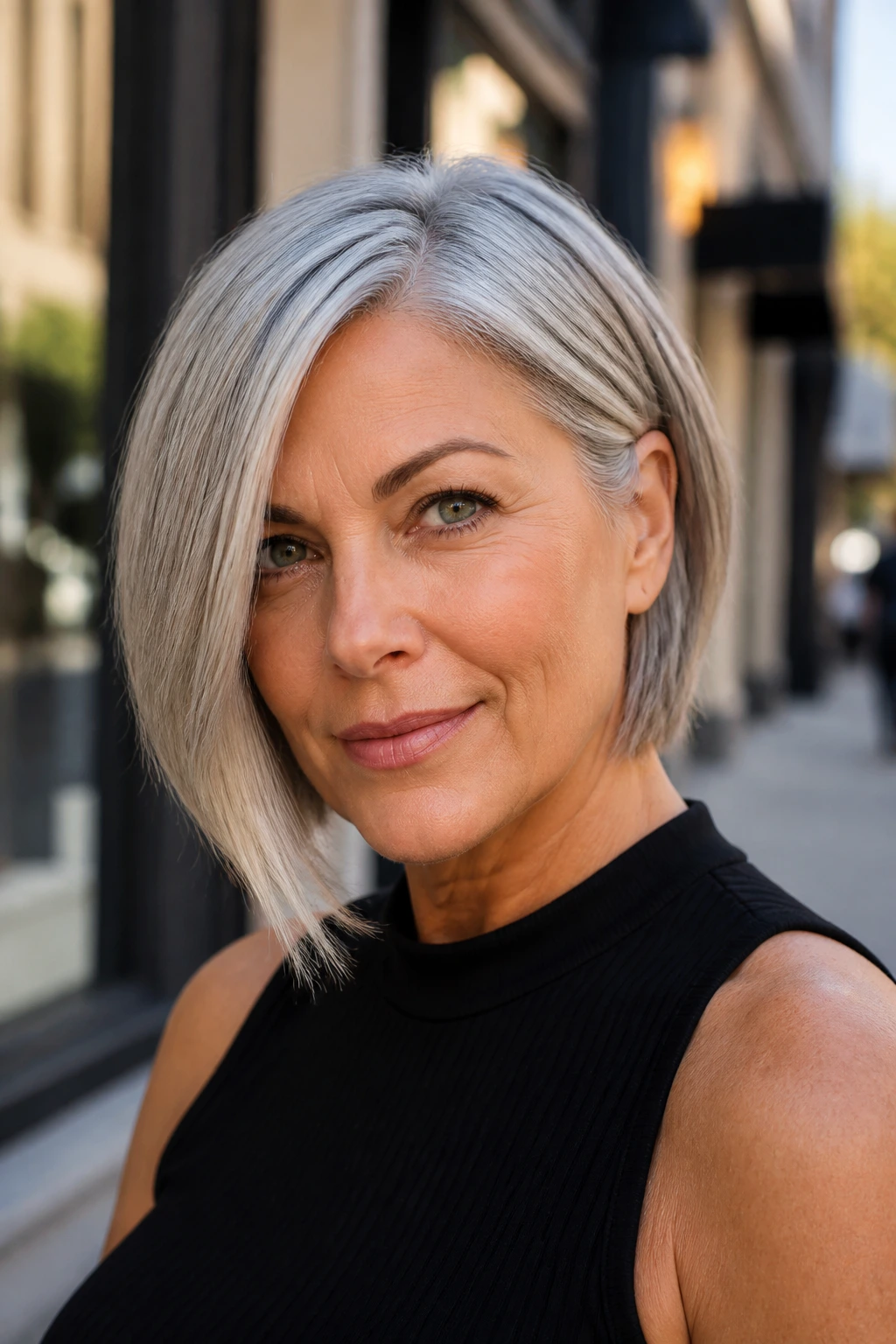
An asymmetrical bob makes a simple haircut feel deliberate. One side is left slightly longer than the other, and that small difference gives the shape a bit of attitude without turning it into a stunt cut.
It is a good option for women who want their hair to look styled even on ordinary days. Gray hair looks especially clean in this shape because the line is easy to read. The eye notices the angle right away, which gives the cut a strong presence.
Where it shines
This bob works well when the hair is straight or lightly wavy. Too much curl can blur the asymmetry unless the stylist builds the shape with that in mind.
It can also be a smart pick if your face feels a little wider and you want one side to skim closer while the other side falls longer. The effect is subtle, but it matters. Small changes at the edge of the haircut can change the whole mood.
Keep the styling smooth. A little bend at the ends is fine, but the shape should remain clear. If the sides puff out too much, the asymmetry gets lost.
21. Soft Wolf Cut for Wavy Hair

If your waves have a mind of their own, this cut lets them keep it. A soft wolf cut uses layers to build movement through the crown and sides, but it tones down the exaggerated shape so it feels wearable for women over 50.
The trick is softness. You do not want harsh disconnection or a mullet-like edge unless that is the look you are after. A softer version keeps the top airy, the ends feathered, and the face frame gentle. Gray waves often look lively in this shape because the layers let them spring up instead of hanging straight down.
This cut is for women who like hair with personality. It is less polished than a lob, more relaxed than a classic shag, and a little bit rebellious without trying too hard.
Air-drying usually works well here, as long as you use a light curl cream or mousse. Too much product and the wave loses its bounce. Too little and the layers may frizz.
22. One-Length Lob with a Clean Center Part

Is there a simpler haircut than a one-length lob? Sure. But very few cuts carry this much quiet strength. The clean center part keeps the look modern, and the one-length outline gives gray hair a crisp frame that can look very put together with almost no drama.
This cut works best when the hair has decent density. Fine hair can wear it too, but the perimeter needs to be sharp so the ends do not look thin. On thicker hair, the one-length lob keeps the shape controlled and stops it from spreading out into too much width.
Why it stays appealing
- It air-dries well if your hair has a little natural bend.
- It looks neat with glasses and simple jewelry.
- It can be tucked, pinned, or left loose without losing the shape.
- It grows out in a clean way, which saves you from awkward middle stages.
A center part is not mandatory, but it gives the cut its strongest line. If your face shape prefers a side part, the same cut still works. The point is the perimeter, not the part.
The Bottom Line
The best chic haircuts for women over 50 do one job well: they make your hair look like it belongs to you. Not to a trend. Not to a younger version of yourself. To you, with your texture, your gray streaks, your glasses, your cowlicks, and the amount of time you actually want to spend styling in the morning.
Short, medium, and shoulder-grazing cuts can all work. What matters is where the weight sits, how the ends are finished, and whether the shape holds up after a normal day of living.
Bring photos, yes, but bring plain language too. Tell the stylist how often you blow-dry, whether your hair frizzes at the ends, and how much length you need to tuck behind your ears. That conversation does more than any trendy reference shot ever will.
