



Hair after 60 should not feel like a compromise. It should feel like a decision. A good cut makes silver strands look intentional, puts some lift back at the crown, and stops you from spending twenty minutes fighting the same stubborn sections every morning.
That matters because hair changes. It can get finer at the temples, coarser through the ends, flatter at the roots, or curlier in places that used to stay straight. Gray hair can also behave differently from pigmented hair; it often feels wiry, shiny, or drier depending on the person. The right style works with that shift instead of pretending nothing changed.
I have little patience for the old advice that tells women over 60 to “just go short.” Short can be wonderful, sure, but so can collarbone length, a soft bob, or a cut that keeps enough length for a low chignon on the days you want one. The real question is shape, not age. Shape matters. A lot.
1. Soft Layered Pixie

A soft layered pixie is one of those cuts that earns its keep fast. It lifts the hair at the crown, clears weight off the sides, and keeps gray or silver hair from collapsing into a flat sheet by noon.
Why It Works
The trick is in the layers. Ask for short, airy layers through the top and a slightly softer edge around the ears and nape. That keeps the cut from looking severe, which is where a lot of pixies go wrong. A tiny bit of length around the temples also helps if you wear glasses.
- Best for fine to medium hair that needs height
- Easy to style with a pea-size dab of mousse or paste
- Grows out cleanly if the neckline is kept neat
A quick blast with a blow dryer and a round brush is often enough. If you like a little movement, use your fingers instead of a brush and let the fringe fall where it wants.
Ask for point-cutting, not a blunt clip line. That tiny detail makes the difference between “short hair” and a cut with softness.
2. Chin-Length French Bob
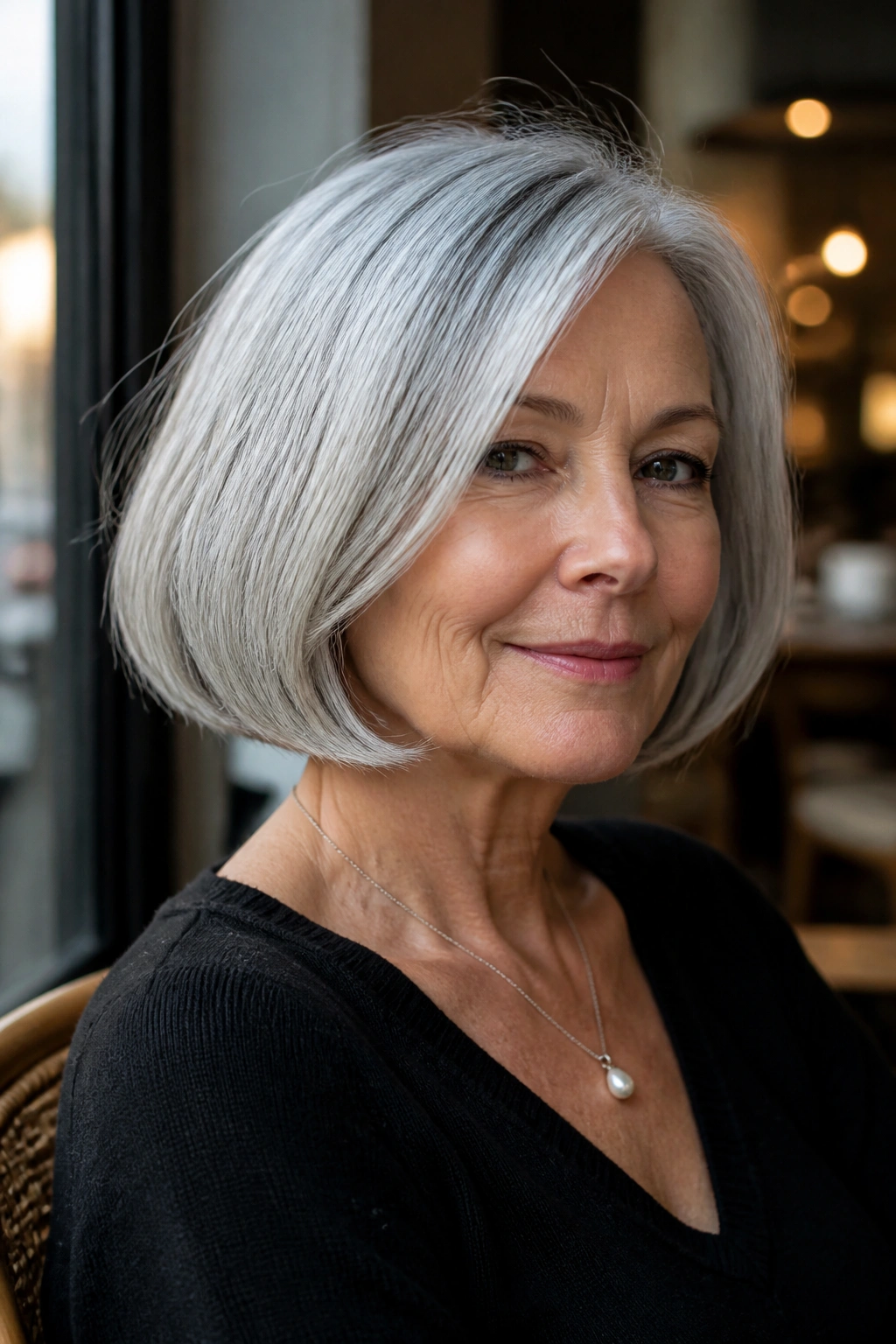
A chin-length French bob has a neatness that never feels fussy. It sits right at the jaw, which gives the face a clean frame and keeps the whole look crisp even when you air-dry it and go.
The real strength here is proportion. If your hair is straight or slightly wavy, a chin-length bob can make the ends look fuller than they would at longer lengths. It also works well with gray hair because the line of the cut gives the color some structure. Without that line, some silver hair starts to look wispy in a way that is not flattering.
Keep the ends a touch beveled under the chin rather than hanging straight like a ruler. That tiny bend softens the shape and saves it from looking stiff. If you want a little extra polish, tuck one side behind the ear and let the other side fall forward.
3. Feathered Crop

Why does a feathered crop work so well on older hair? Because it removes bulk without making the head look clipped down to nothing. That matters if your hair is dense, coarse, or thick at the back but softer on top.
What to Ask For
A good feathered crop has texture through the crown and lightness through the edges. The stylist should use slicing or point-cutting to break up the surface, not shred the ends into frizz. A little lift near the front gives the face more energy, which is useful when the cheeks and jawline have changed a bit over time.
How to Style It
- Blow-dry with a small round brush for 2 to 3 minutes
- Use a light mousse at the roots, not a heavy cream
- Finish with a touch of flexible hairspray if the front tends to fall flat
This cut is especially kind to silver hair that has a little wiry texture. It turns that texture into movement instead of fighting it.
4. Shoulder-Length Lob
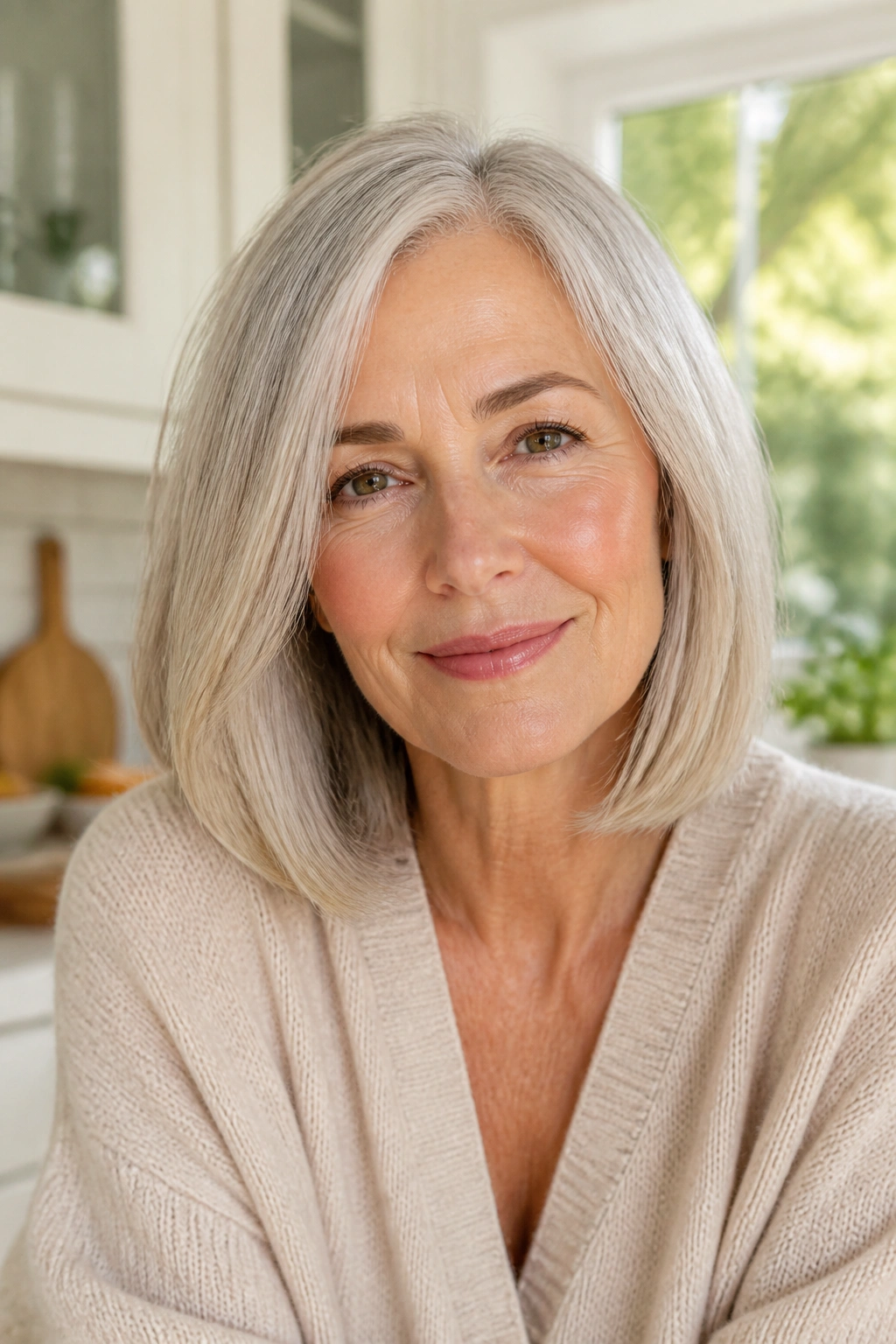
A shoulder-length lob is for the woman who is not ready to go short and does not want to wrestle with long hair every day. It gives you enough length to tuck, pin, or pull back, but it still feels lighter than waist-length hair that has gone thin at the ends.
Think of it as the quiet workhorse of haircuts. It can be smooth, wavy, flipped under, or worn with a side part. The cut also plays nicely with gray hair because the length lets you keep some softness around the collarbone while the shape stays tidy.
- Ask for long layers no higher than the chin
- Keep the ends blunt enough to hold fullness
- If your hair is fine, avoid too much thinning near the bottom
A lob like this is one of the easiest styles to live with. It does not need a perfect blowout to look finished. It just needs a little shape.
5. Curly Shag

A curly shag can make silver curls look lively instead of heavy. The style works because it builds shape where curls need it most: around the crown, the cheekbones, and the top of the shoulders.
The biggest mistake with curly hair is over-layering the wrong spots. Too much removal at the bottom can leave you with a triangle, and nobody wants that. The better move is to keep the perimeter soft and let the layers rise and fall through the interior so the curls stack in a more natural way.
Air-drying with curl cream or a light gel usually gives the best result. If you diffuse, use low heat and stop before the curls are bone dry; a little humidity left in the hair helps the shape stay softer. And yes, this style can look polished. It does not have to look wild unless you want it to.
6. Side-Swept Bob with Long Bangs
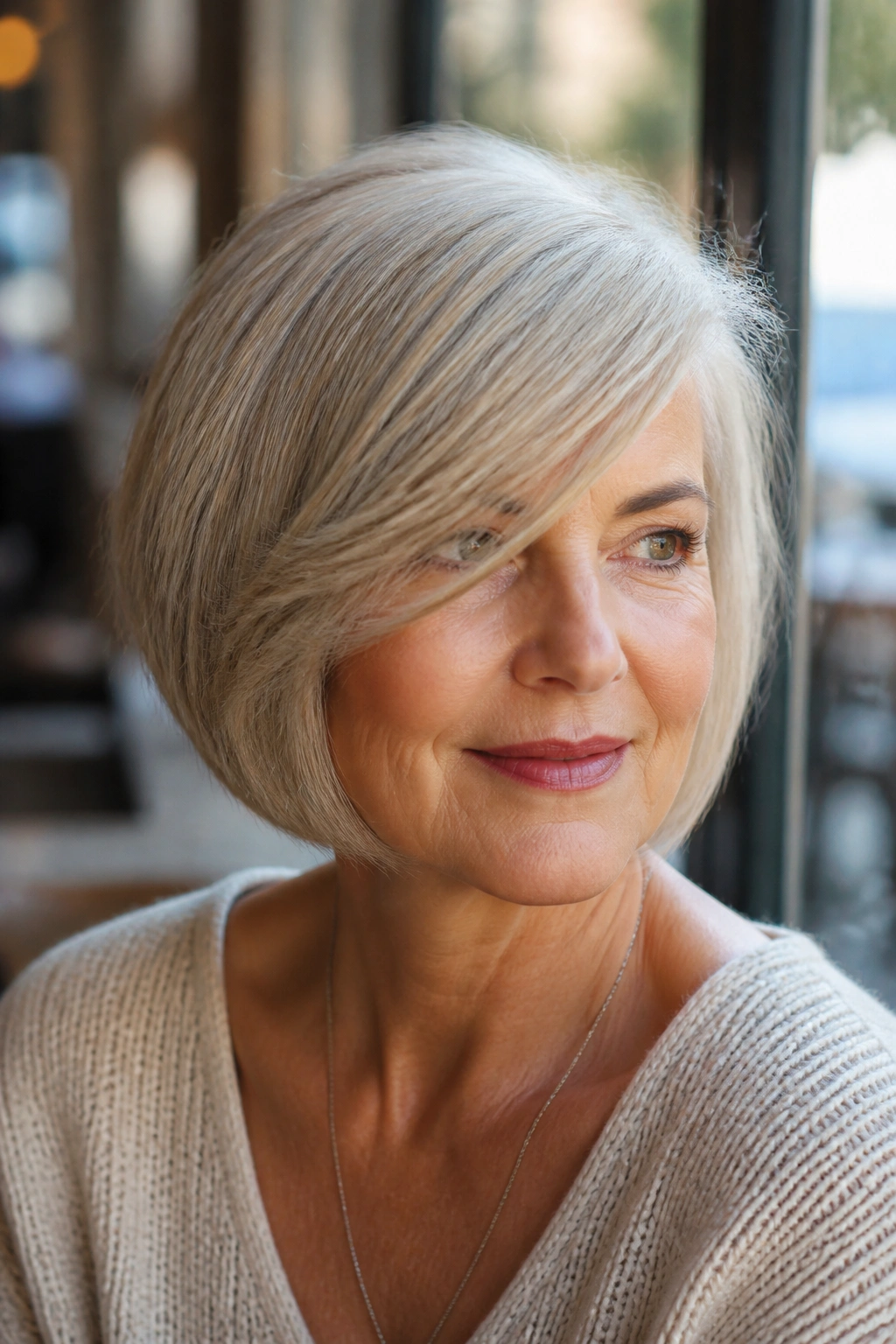
A side-swept bob changes the whole mood of the cut. Instead of drawing a hard line across the forehead, the longer fringe moves the eye diagonally, which softens the face and gives the style a little more lift.
Unlike blunt bangs, side-swept bangs grow out more gracefully. That is one reason they work so well for women over 60. You are not locked into a strict shape, and the cut does not look ruined if you skip a trim by a couple of weeks.
This style is especially useful if your hairline has thinned a little or if you want to balance a stronger jaw. A round brush and a quick bend at the front usually do the job. Keep the bob itself at cheekbone or chin length so the bangs have a place to land. If the fringe gets too heavy, the whole cut loses its air.
7. Tapered Natural Curl Cut

A tapered curl cut is one of the smartest choices for natural curls that need shape without extra fuss. The hair is cut closer at the sides and nape, then left fuller on top so the profile looks clean and rounded instead of bulky.
The Shape Matters More Than the Length
For coily or tightly curled hair, the taper keeps the neck area neat and makes daily styling easier. It also gives the curls a better outline, which matters a lot once the hair turns silver and the texture becomes more visible. Gray curls can look stunning when the shape is controlled.
What Helps It Look Good
- Keep the top slightly longer than the sides
- Use leave-in conditioner on damp hair
- Scrunch in a gel or cream while the hair is still wet
- Refresh with a spray bottle instead of rewetting the whole head
This cut is a win for anyone who wants definition without spending an hour styling. It is tidy, but not severe.
8. Blunt Bob with Soft Ends
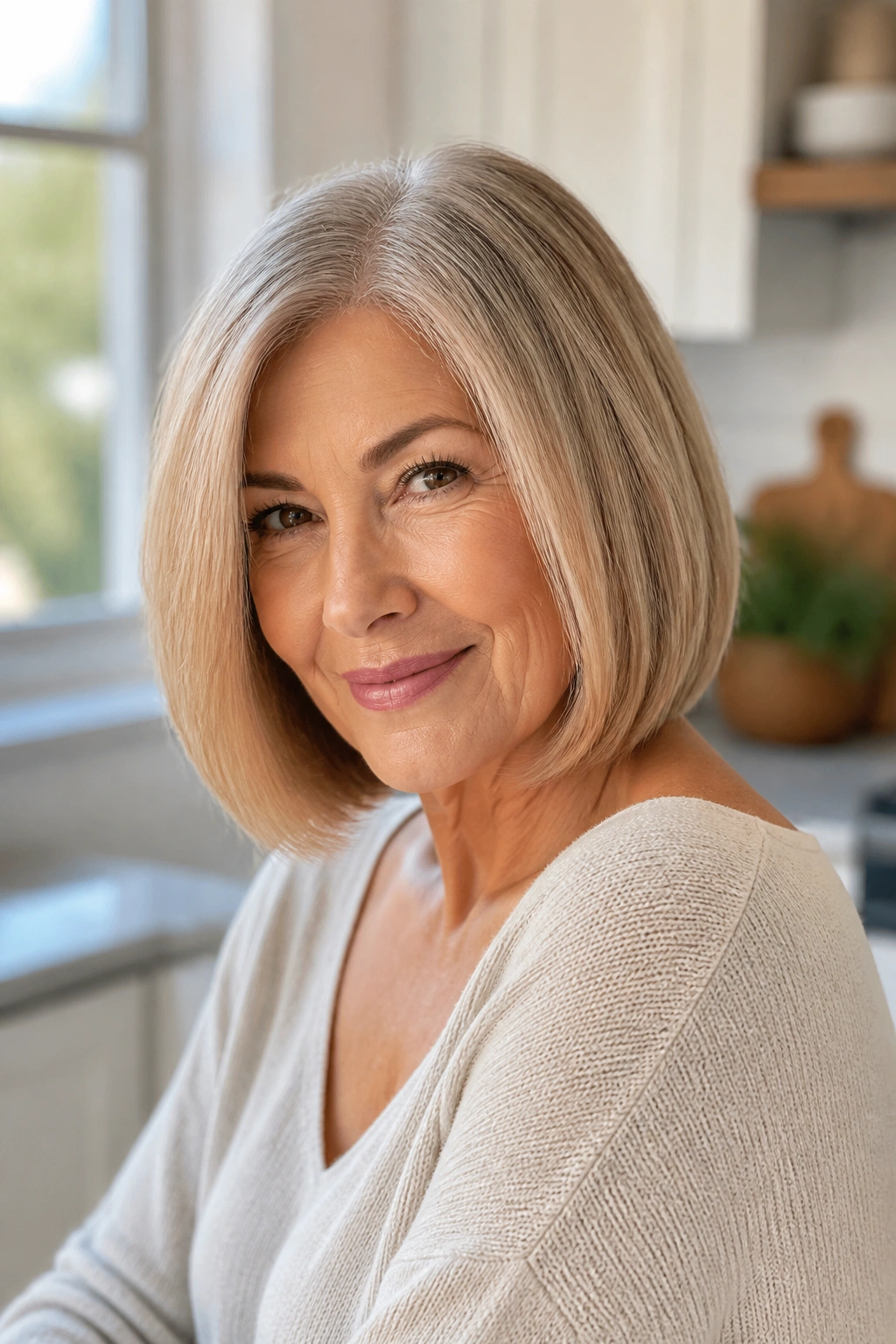
A blunt bob can be kinder to thin hair than a cut packed with short layers. That sounds backwards until you see it in a mirror. Clean ends make the hair look fuller because the line stays solid all the way across.
The key is to keep the bob blunt at the perimeter and soft at the very tips. A tiny bit of texturing at the ends stops the style from feeling boxy, which is the main risk with a sharper bob on older hair. If your hair is straight and fine, this shape gives you density where you want it most.
A center part can make the look feel modern, but a side part softens it if you prefer something less precise. Either way, keep the length around the chin or just below it. Anything much longer starts to lose the point of the cut. A blunt bob is not about drama. It is about clean lines and a fuller-looking finish.
9. Long Layers with Face-Framing Pieces

Long layers after 60 are not a mistake. Bad long hair is a mistake. There is a difference, and it shows up in the ends.
If you like length, keep it on purpose. The best version of this cut uses long layers that start below the chin and face-framing pieces that begin around the cheekbones. That keeps the hair moving without turning it into a thin curtain. It also helps if your hair naturally parts in one place and refuses to behave anywhere else.
The face-framing pieces do a lot of work here. They soften the jaw, bring attention to the eyes, and make longer hair feel less heavy. Trim the ends regularly so the line stays fresh, because long hair with see-through ends is never a flattering trade. A little serum on the bottom half of the hair can keep the finish smooth without making it greasy.
10. Wispy Fringe Crop
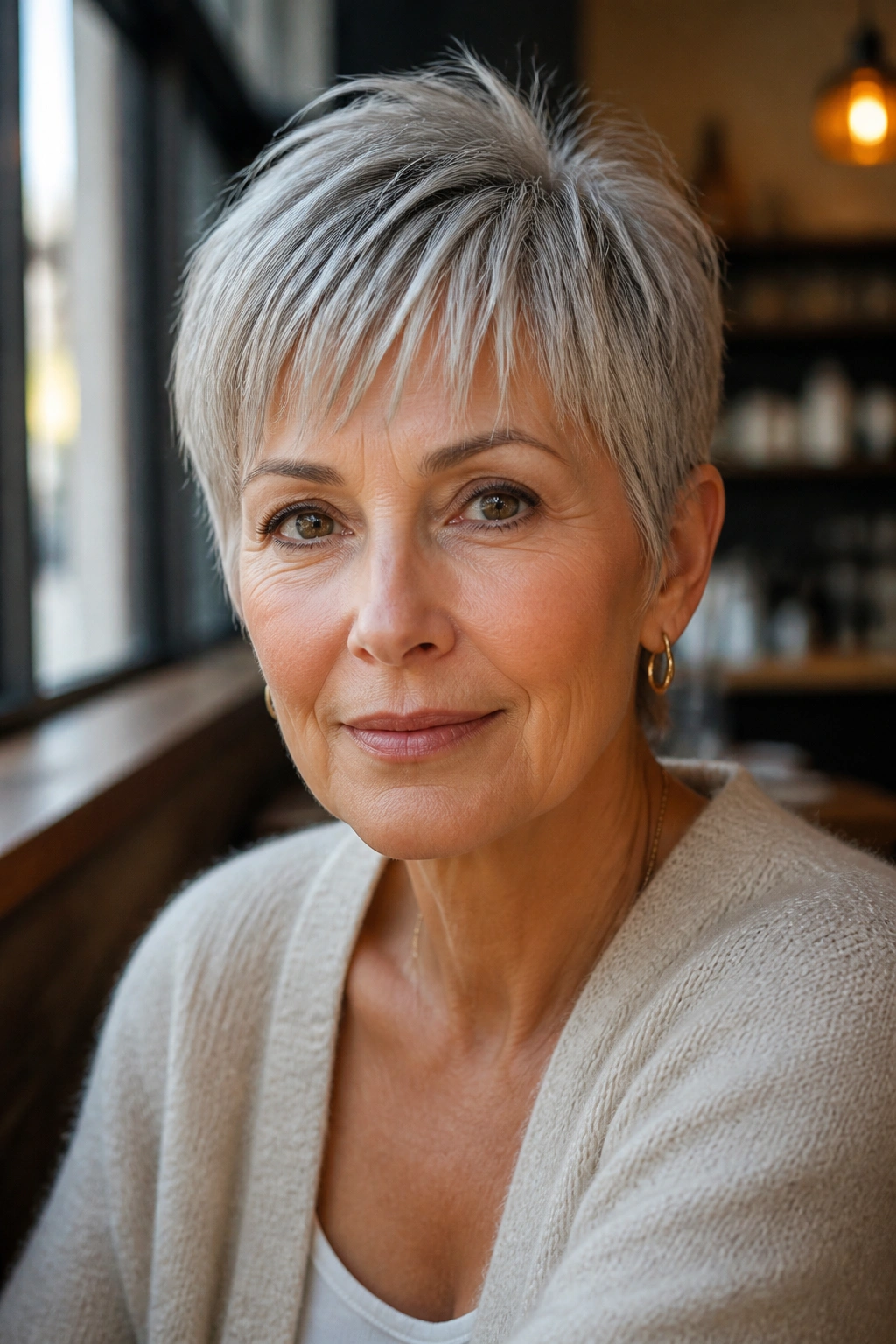
A wispy fringe crop is a small haircut with a big effect. The fringe softens the forehead, the crop keeps the head shape neat, and the whole style gives the face a little more brightness.
Where It Works Best
This cut is a good fit if you like short hair but want less exposure around the hairline. It also plays well with glasses because the fringe can sit above the frames without getting in the way. The key is to keep the bangs light, not thick. Heavy fringe can drag the face down. Wispy fringe does the opposite.
Keep the Fringe Light
- Ask for piecey bangs, not a heavy block
- Keep the crop soft around the ears
- Use a small round brush or your fingers to separate the fringe
The style is easiest to wear when the bangs skim the brow rather than sitting in the eyes. That little bit of air keeps the cut from feeling dated.
11. Wedge Cut
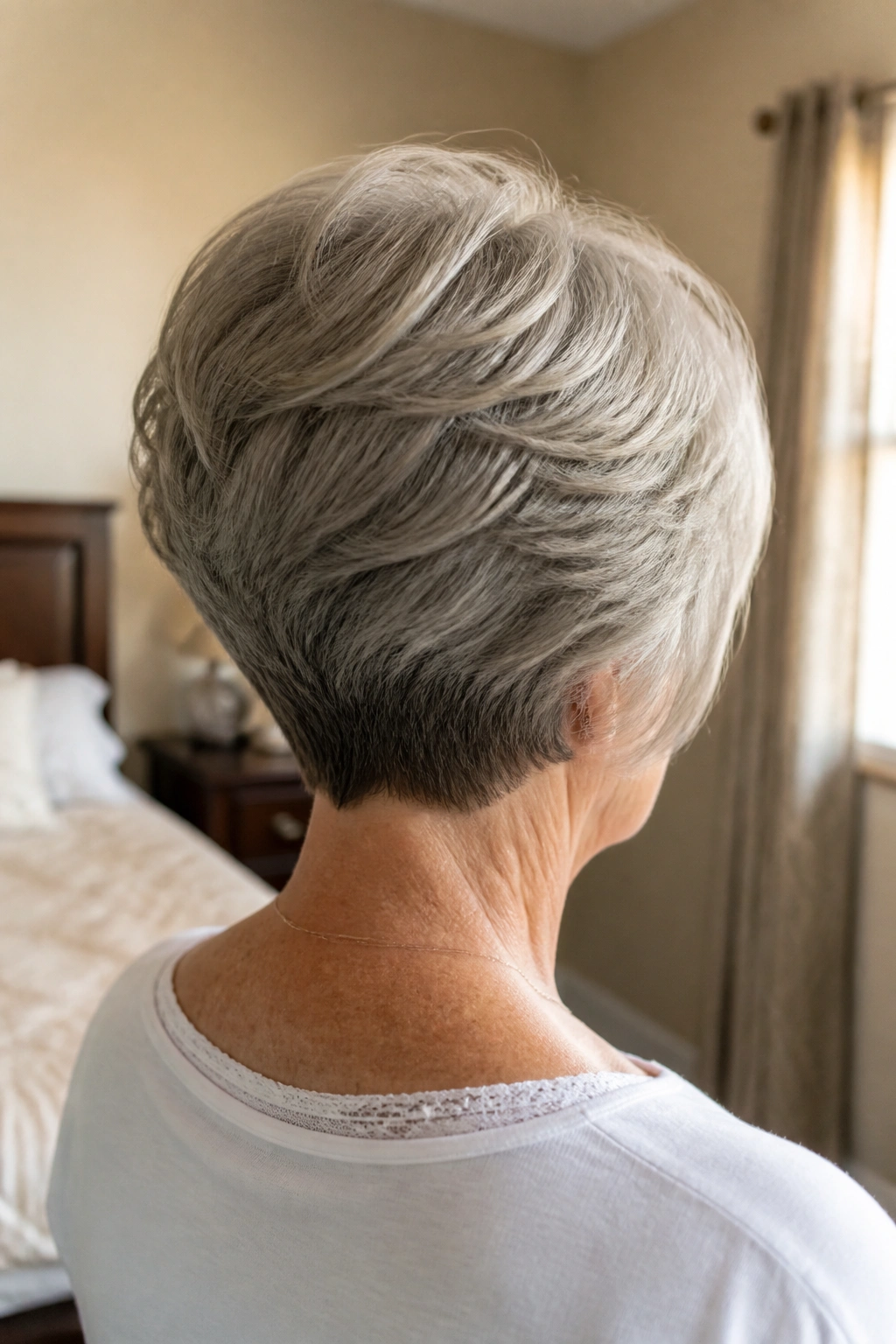
The wedge cut has survived for a reason. When it is softened a little, it gives the back of the head shape, the crown some lift, and the neckline a tidy finish that lasts between appointments.
People sometimes think wedge cuts are rigid or old-fashioned. They can be, if the layers are too harsh. But a modern wedge is gentler. The top is left with enough length to move, and the stacked back is blended instead of carved. That makes it a good choice for straight or slightly wavy hair that needs volume at the back without too much fuss.
It also works well if your hair sits flat where the crown meets the occipital bone — that little bump at the back of the head where hair often collapses. A wedge fixes that better than most people expect. It is a precise cut, though. If the shape is off by even half an inch, you feel it every time you look in the mirror.
12. Collarbone-Length Cut with Curtain Bangs

Curtain bangs do more for a collarbone-length cut than most people realize. They open up the face without the hard commitment of full bangs, and they grow out in a way that does not force an emergency salon visit.
This length is useful if you want hair that can move between polished and casual. Blow it smooth and the bangs frame the eyes. Let it dry with a bend, and it turns into something softer and more relaxed. The collarbone length also gives the ends enough weight to stay healthy-looking, which matters if your hair has thinned a little over time.
Unlike a one-length mid-length cut, this version gives you a little shape around the cheekbones. That means you can keep some softness near the face without losing the feeling of length. If your hair is wavy, the curtain bangs should be cut a touch longer so they do not spring too high once dry.
13. Textured Pixie with Longer Crown
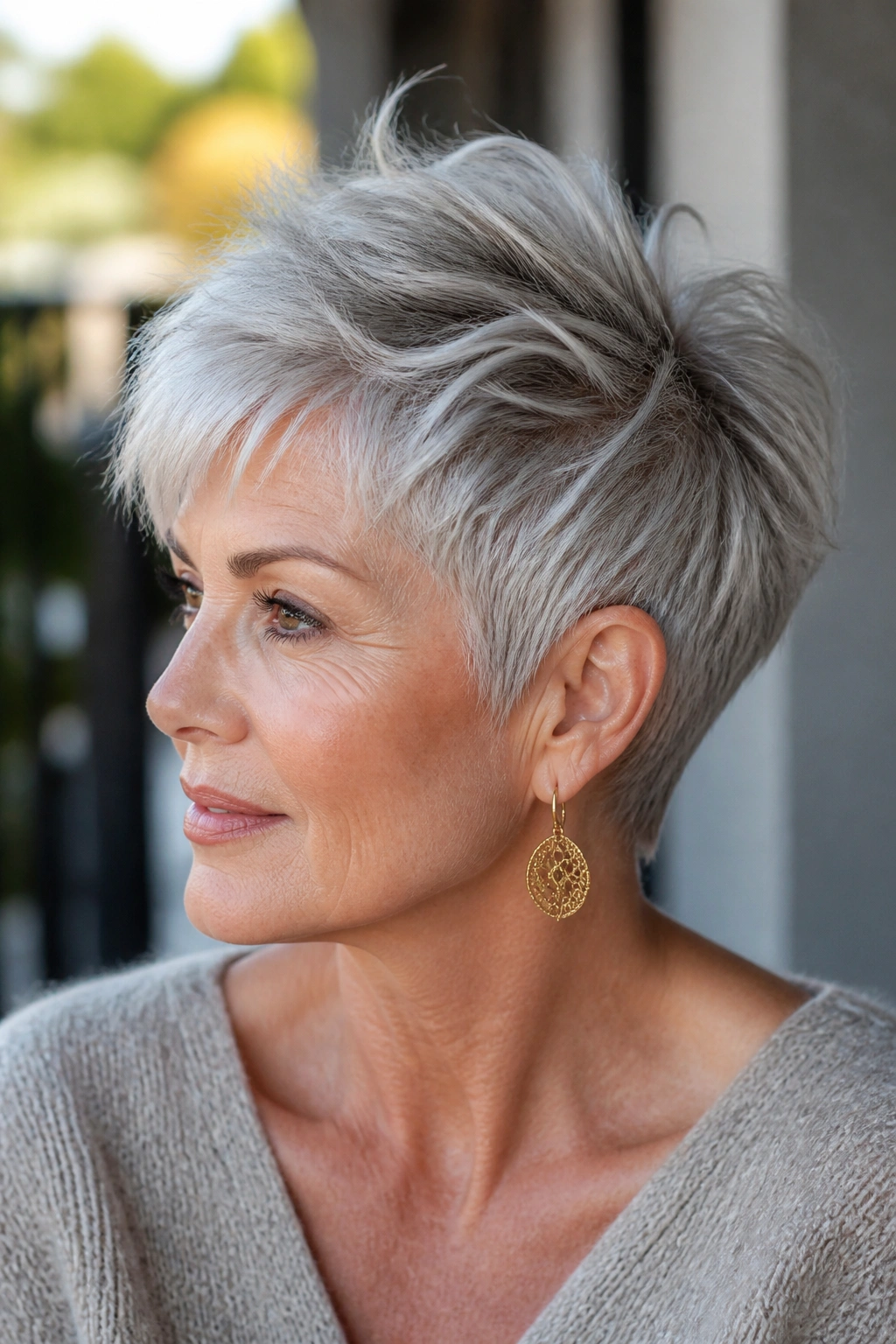
A textured pixie with a longer crown has a different energy than a classic close crop. It gives you height where the eye wants it and keeps the sides clean so the style does not spread outward.
Why the Crown Matters
The extra length on top is the whole point. It lets you sweep the hair to one side, create lift with a small brush, or mess it up a little with matte paste. That kind of movement is especially helpful for gray hair, which often looks best when the cut gives it shape instead of trying to force it flat.
Styling Notes
- Use a matte paste or light wax on dry hair
- Push the crown up with your fingers, not a brush
- Keep the sides and nape trimmed every 5 to 7 weeks
This version is a good fit if you want short hair with a little attitude. Not loud. Just enough edge to keep it interesting.
14. Rounded Curly Bob

A rounded curly bob can make natural texture look deliberate, which is a nicer word for what many curly-haired women are trying to achieve. The rounded shape keeps volume balanced all the way around the head instead of leaving the sides wide and the top flat.
That shape matters more than length. A curly bob that is cut too long at the bottom can pull the curls down and stretch the outline into something saggy. A rounded bob stays lively because the hair is cut to support the curl pattern. If your curls are silver, the shape can catch the light in a way that looks crisp rather than fuzzy.
Diffusing upside down can help at the roots, but don’t overdo it. Too much drying upside down can make the crown collapse later. Let the curls set a little before you scrunch them out. The result should feel soft in the hand, not crunchy.
15. Sleek Straight Lob

Want something neat without going short? A sleek straight lob is the answer that keeps showing up because it works. The cut sits around the collarbone or just below, so it has enough length for a low ponytail while still looking polished when worn down.
The main job here is smoothness. The ends should be clean, and the front can angle very slightly longer if you want the face to look a touch slimmer. Gray hair often looks especially good in this shape because straight lines let the color shine without distraction. A center part gives the cut a modern feel, while a side part softens it.
A blow dryer and a flat iron can both work, but keep the heat moderate. Hair that has become drier with age does not like being blasted at the highest setting. A little heat protectant goes a long way. And if your hair flips out at the ends, a quick pass with a round brush can tame that without making it stiff.
16. Asymmetrical Bob

An asymmetrical bob gives a bob some personality without asking for a dramatic overhaul. One side sits slightly longer than the other — usually by an inch or two — and that tiny imbalance creates movement right away.
Why It Feels Fresh
The shape draws the eye across the face instead of stopping at a straight line. That can soften a strong jaw or add interest if your features are more angular. It also lets you tuck the shorter side behind the ear while letting the longer side fall forward, which is a neat trick with earrings and glasses.
What to Keep in Mind
- Keep the length difference subtle, not extreme
- Ask for a smooth internal blend so it grows out well
- Style with a side part for the cleanest effect
This is a good choice if you want a little edge but do not want a haircut that announces itself from across the room. It whispers. That is enough.
17. Soft Shag with Layers
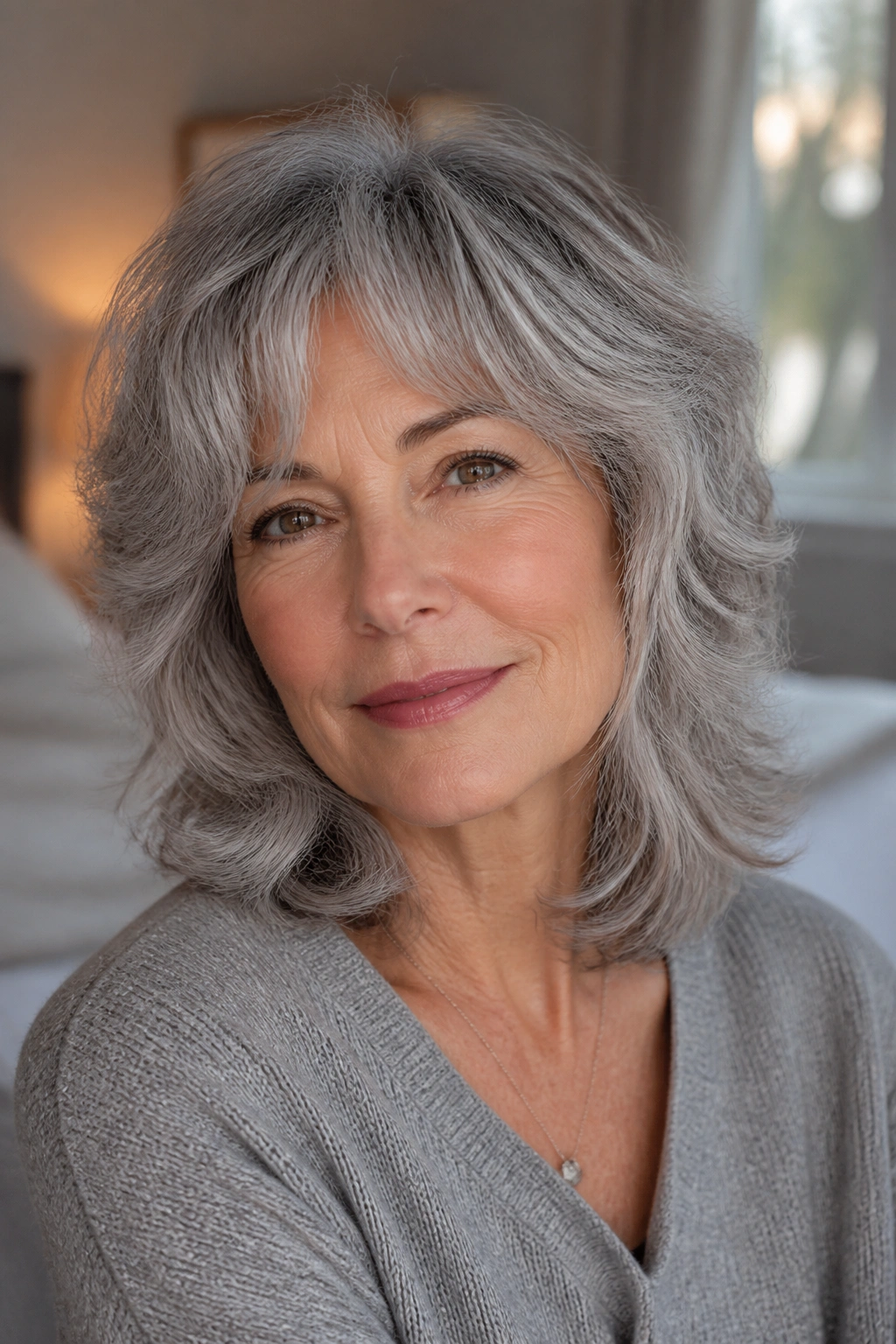
A soft shag is one of the few cuts that can make hair look fuller and lighter at the same time. That sounds contradictory, but it is exactly what the layered structure does when it is cut with restraint.
The best shag for women over 60 is not choppy to the point of chaos. It uses soft layers around the face, a little movement through the crown, and enough length at the ends to keep the hair from fraying out. Wavy hair loves this shape. Straight hair can wear it too, but the styling has to be a little more deliberate, usually with a bend from a round brush or hot rollers.
Gray hair tends to show texture more clearly, which is one reason this cut can look so alive. The layers create shadows and light through the strands. That is the whole point. If the cut is too thin or too broken up, it loses the softness and starts looking ragged.
18. Short Crop with Tapered Nape

A short crop with a tapered nape is for the woman who likes her neckline clean and her mornings simple. The cut stays close at the back, then softens a little as it moves up the head, so it feels neat without looking severe.
Compared with a pixie, this crop usually sits a touch fuller on top and tighter through the nape. That makes it practical for hot weather, active days, and anyone who hates hair brushing against the neck. It is also a sharp look with glasses because the face stays open.
The main thing to watch is balance. If the top is left too flat, the cut loses shape. If it is puffed up too much, it can look dated. A little paste or a lightweight cream is enough. This is not a style that needs a lot of product. It needs a clean outline and a good cut.
19. Voluminous Blowout Cut

A voluminous blowout cut is for women who like hair with body. Not helmet hair. Body. There is a difference, and you can spot it at once when the roots rise a little and the ends curve smoothly around the face.
The Structure That Helps
This cut usually sits at shoulder length or just above, with layers placed to support a round brush blowout. The top should have enough lift to avoid flattening at the crown, and the ends should curve inward or outward depending on what flatters your face more. Thick or medium-density hair handles this well, but fine hair can use it too if the layers are not too short.
A Few Practical Details
- Use a root-lifting spray on damp hair
- Blow-dry in sections with a medium round brush
- Clip the crown for 5 minutes while it cools
That cooling step matters more than people think. It helps the hair hold shape instead of collapsing the minute you step outside.
20. Layered Cut for Thick Hair
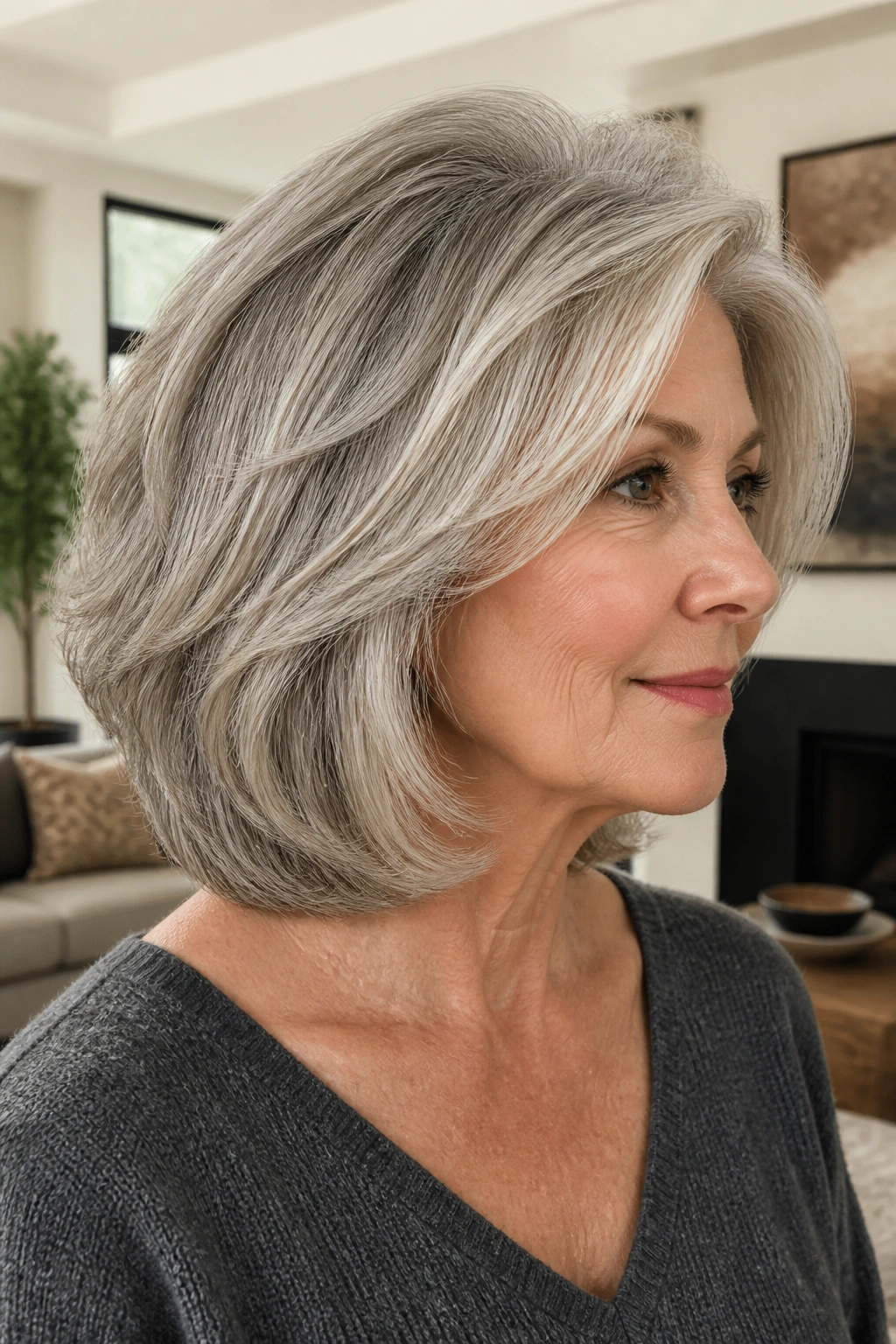
Thick hair needs control more than it needs more layers. That is the part many stylists get wrong. If the hair is over-thinned, it can puff up in the humidity and lose the solid shape that makes thick hair look expensive and easy.
The better approach is to remove bulk where it builds up, not everywhere. That often means soft internal layers, a stable perimeter, and careful blending around the temples and nape. When thick hair is cut well, it falls instead of standing out from the head. It also shows off gray or salt-and-pepper color because the shape is clean enough to let the color read clearly.
This cut works at bob length, lob length, or just below the shoulders. The styling can be simple. A smoothing cream, a paddle brush, and a quick dry are enough on many days. Skip the extra thinning if your hair already has a loose, airy texture. Sometimes the missing piece is restraint, not more cutting.
21. Salt-and-Pepper Pixie with Side Part
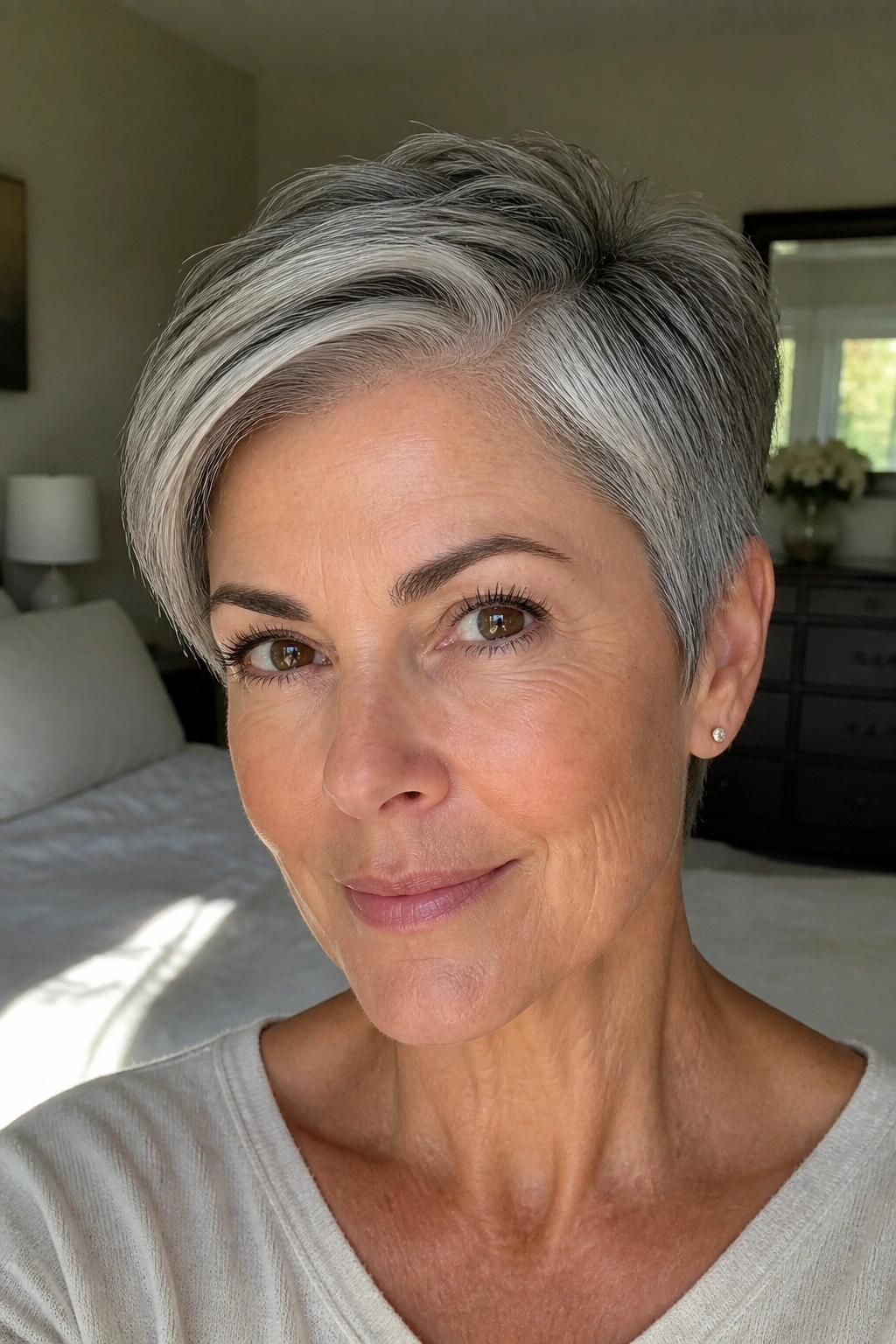
Why fight the natural color shift? A salt-and-pepper pixie with a side part leans into the mix of dark and silver strands, and the side part gives the cut lift exactly where it needs it.
The best thing about this style is how honest it looks. The color variation brings texture to short hair without you having to do much at all. A side part keeps the top from sitting dead flat, and a little sweep at the front can soften the forehead. If your hair is coarse, this cut can look especially good because the strands show their texture instead of hiding it.
A small amount of styling cream is usually enough. Work it through the top and separate the pieces with your fingers. If the part starts to close up during the day, a quick comb-through resets it. No drama. No big routine. Just a short cut that looks like it knows what it is doing.
22. Mid-Length Flip with Ends Turned Under

A mid-length flip with ends turned under has a clean, familiar shape that still feels fresh when it is cut well. It lands around the collarbone or just below, and the inward bend at the ends gives the whole style a polished finish.
What Makes the Shape Work
The flip is not about huge volume. It is about direction. The hair moves away from the face, then turns back under at the ends so the line stays controlled. That shape can flatter fine or medium hair because it gives the illusion of density without needing extra layers everywhere.
Styling It Well
- Use a round brush while the hair is still warm from the dryer
- Bend the ends under for a soft, neat finish
- Keep the crown lifted, not puffy
This is one of those styles that looks put together on a grocery run and still works for dinner out. You do not need a curling iron to make it behave.
23. Silver Curls with Rounded Shape
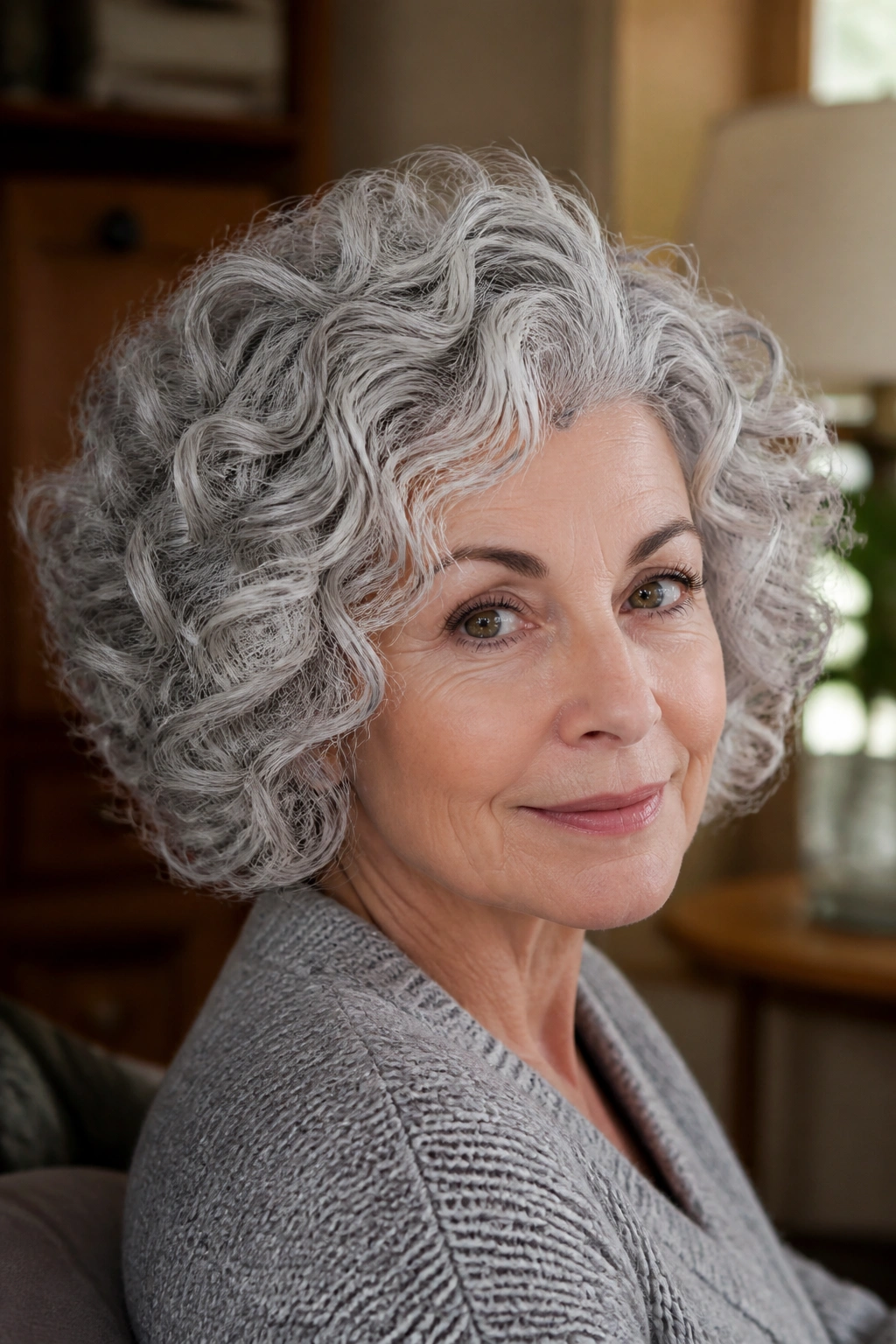
Silver curls look best when the cut respects the curl pattern instead of forcing it into a shape it never wanted. A rounded outline helps the curls stack evenly, which keeps the style from going wide at the sides or flat on top.
This is where a lot of women get frustrated. They think they need to tame the curls, when what they actually need is a better shape and more moisture. Dry curls separate, frizz, and lose their form. Well-shaped curls hold together and show off that silver tone in a way that feels lively, not fuzzy.
A wide-tooth comb, leave-in conditioner, and a diffuser on low heat are often enough. Never brush dry curls if you want the shape to stay intact. That sounds basic, but it is the thing people ignore most. A rounded curly cut can be one of the most flattering hairstyles for older women because it frames the face without hiding the texture.
24. Soft Undercut Pixie
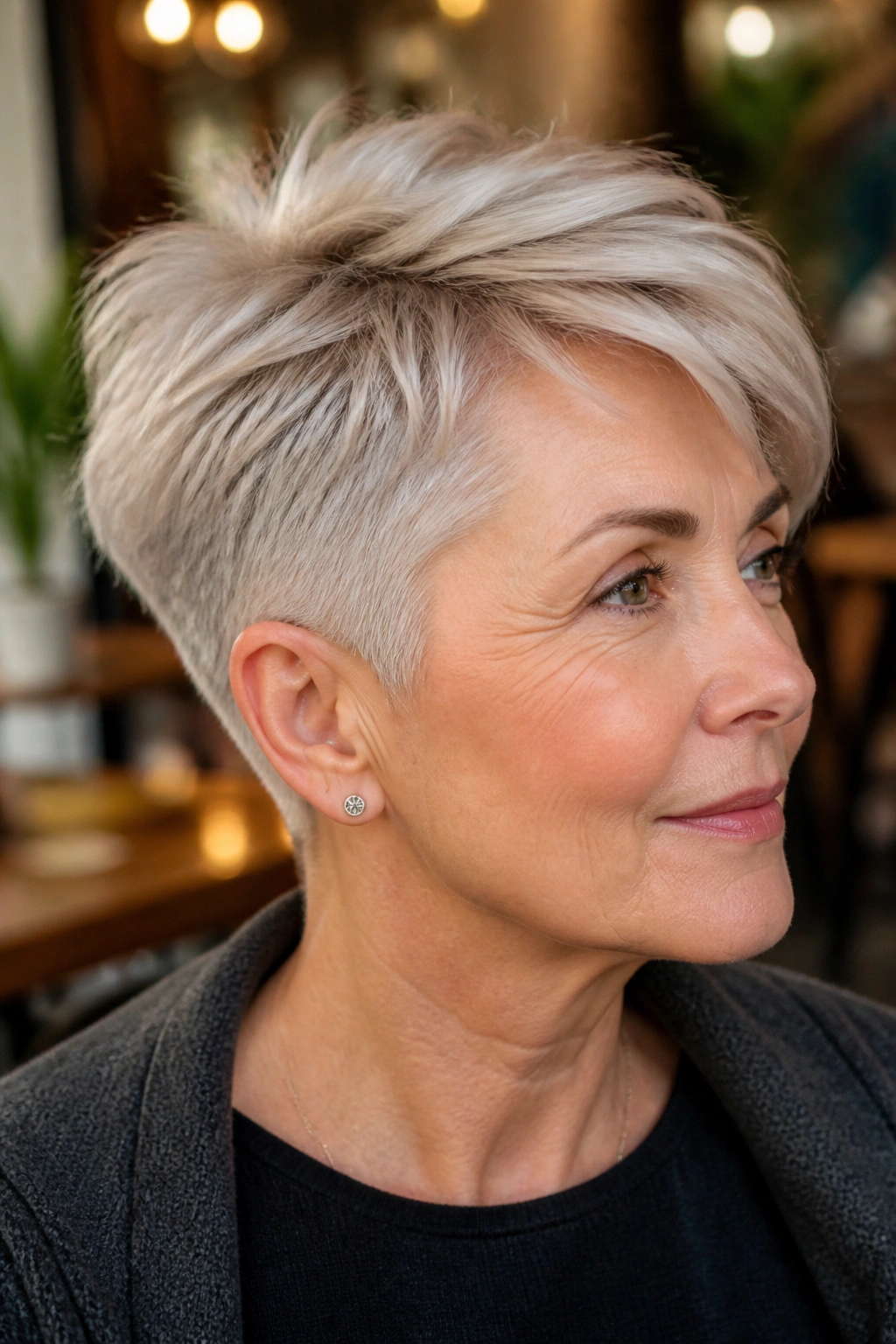
A soft undercut pixie is a good option if you want short hair with less bulk at the sides and back. It is not the shaved, high-contrast version some people picture. The soft version keeps the lines wearable and lets the top stay feminine and flexible.
Compared with a classic pixie, the undercut takes weight out of the areas that tend to swell out the most, especially if the hair is thick or grows heavy around the ears. That means less fighting with the shape in the morning. It also helps if you wear scarves, turtlenecks, or statement earrings, because the neckline stays clean.
The grow-out is easier than people expect if the cut is blended well. Keep the top long enough to sweep forward or sideways, and avoid going too close with the clippers unless you really want that look. A soft undercut should feel controlled, not harsh. That is the whole trick.
25. Blended Layers for Fine Hair

Fine hair needs help, but not the wrong kind. Too many short layers can make it look thinner, especially at the ends. Blended layers are better because they keep the outline strong while still giving enough movement to stop the cut from hanging limp.
The Right Kind of Layering
Ask for layers that start lower, often around the chin or below, so the hair keeps some weight at the bottom. That weight is what makes fine hair look fuller. A strong perimeter line helps too. The idea is to create lift without turning the hair into feathers that disappear by lunchtime.
A Few Smart Moves
- Keep the ends blunt enough to look dense
- Use mousse at the roots, not heavy oil at the scalp
- Blow-dry with the head slightly forward for lift
This style works especially well at bob or lob length. It gives fine hair a little swing without taking away the substance it has left.
26. Low Chignon with Face-Framing Pieces
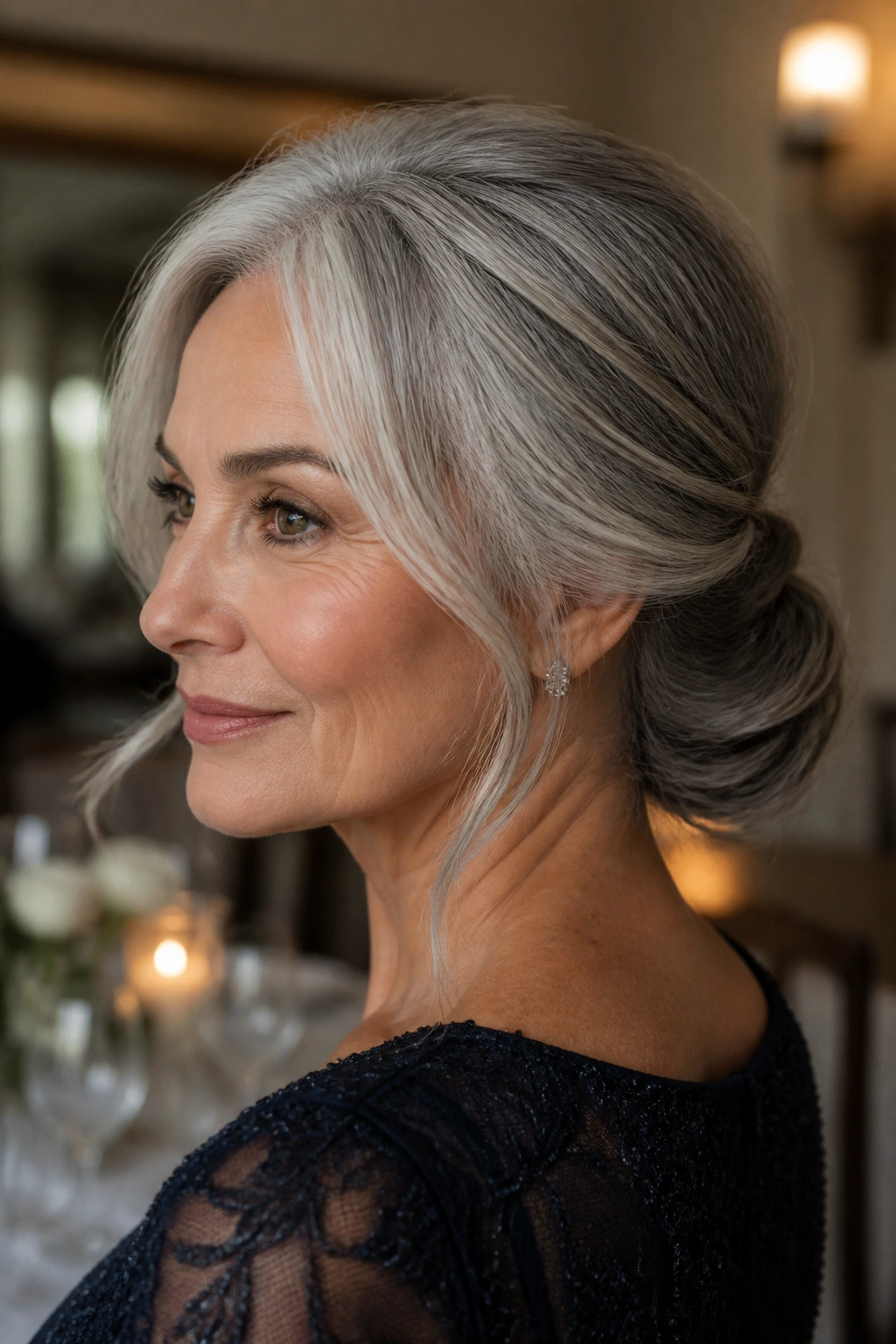
A low chignon is proof that older hair can look elegant without looking stiff. Set it at the nape, twist it loosely, and leave a few face-framing pieces out so the style feels soft instead of severe.
This is a useful hairstyle for events, dinners, or those mornings when your hair refuses to cooperate and you want something that still looks deliberate. It works well with gray hair because the low bun shows the color clearly and the loose pieces keep the face open. If you have earrings you like, this is the style that lets them do their job.
Use pins rather than a tight elastic if you want the bun to sit flat and low. A tiny bit of texture spray helps the hair grip without slipping, which is much better than piling on more hairspray and hoping for the best. The loose pieces around the cheeks should feel soft, not wispy to the point of disappearing.
27. Tucked-Behind-Ears Sleek Style

A tucked-behind-ears style can look sharper than a lot of more complicated hairdos. The ears become part of the shape, the cheekbones show up, and the haircut itself gets a chance to speak.
This works especially well with a bob or lob that has enough length to stay tucked but not so much that it falls out every ten minutes. A little smoothing serum through the mid-lengths keeps the surface calm, and a side part adds some softness if a center part feels too plain. If you wear glasses, the tuck keeps the arms of the frames from fighting the hairline.
The charm of this look is that it does not try too hard. It gives you a clean neck, visible earrings, and a cut that feels neat in two minutes. That is a pretty good trade.
28. Natural Coils Shaped Close to the Head
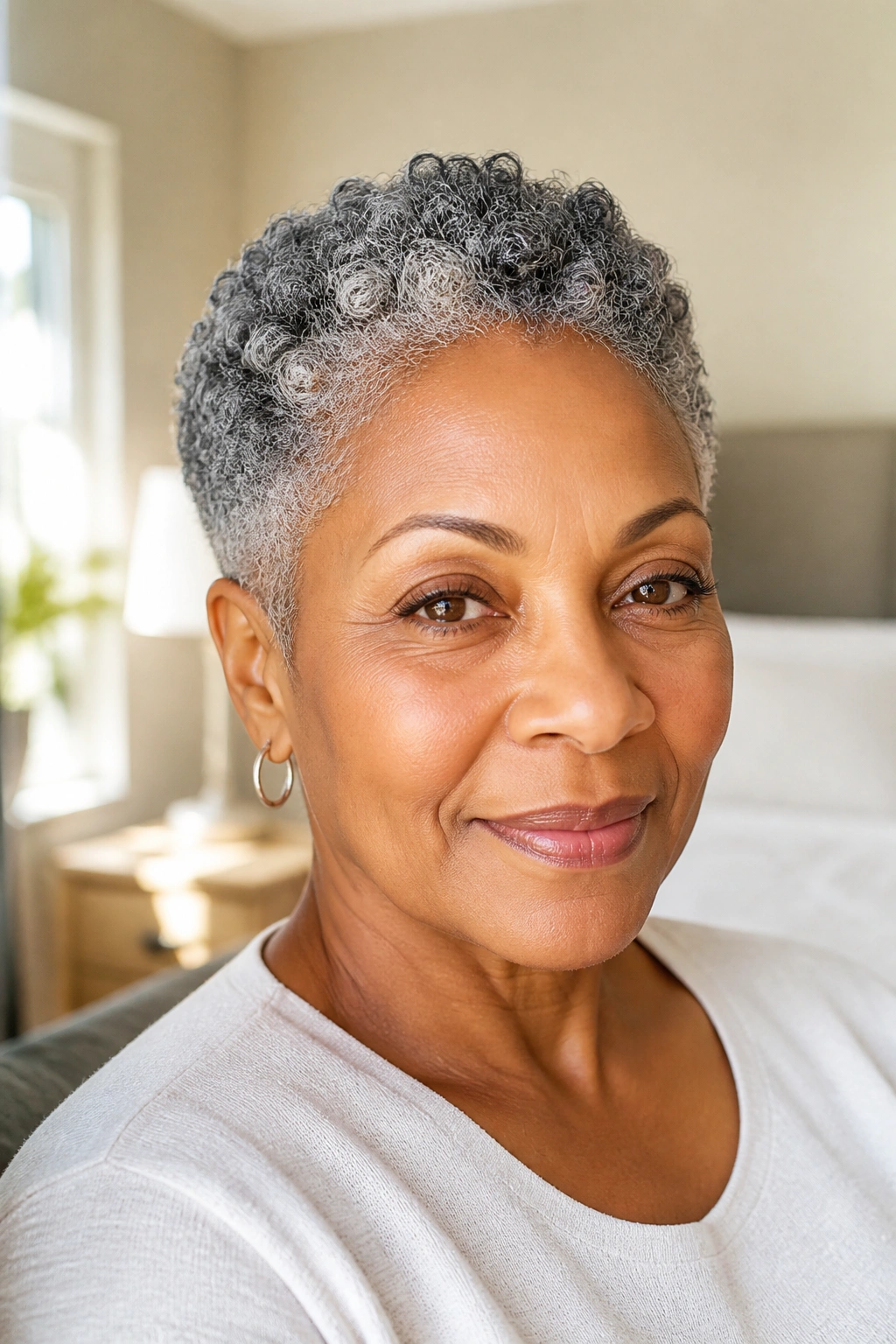
Natural coils do not need to be stretched into something they are not. A shape that follows the head gives coils room to shine while keeping the outline neat and balanced.
How the Shape Helps
A close shape is especially useful if your coils are dense at the sides or have a lot of shrinkage. The cut keeps the silhouette tidy and lets the texture sit where it wants to sit. Gray coils can look especially striking because the color variation shows off every bend and loop.
What to Ask For
- Keep the shape rounded, not boxy
- Leave enough length for moisture and movement
- Avoid cutting too high into the crown if you want height
Daily care matters here, too. Coils usually look best with leave-in conditioner, a cream, and regular trimming to stop the ends from getting fuzzy. The style is bold in the best way. It lets the texture be the point.
Final Thoughts
The best hairstyles for women over 60 are the ones that respect the hair you actually have. Not the hair you had at 35. Not the hair you think you should still have. The one in the mirror, with its own texture, its own silver, and its own habits.
Short cuts can feel liberating. Mid-length shapes can be easier than people expect. Long hair can still work if the ends are healthy and the structure is there. What matters most is that the haircut gives you shape, saves time, and stops the daily battle with flat roots or unruly ends.
If you are stuck, start with the one thing your hair needs most: lift, softness, or control. That answer usually points to the right cut faster than any trend ever could.
