



A good haircut after 40 should make your hair easier to live with, not harder. That sounds obvious until you sit in the chair and realize how many cuts still seem designed for hair that’s thick at the roots, glossy from a color glaze, and willing to behave for a blowout you don’t have time to do.
The best haircut ideas for women over 40 do something more useful than chase youth. They give hair shape when density starts shifting, they keep gray strands from looking fuzzy at the ends, and they make your face look more awake without pretending you’re someone else. I care a lot about that last part. A cut should fit the life you actually have — school runs, meetings, glasses, humidity, growing-out color, the whole messy deal.
Gray hair changes the conversation, too. It often feels drier, bends in odd places, and shows every line of a cut more clearly than dyed hair does. That can be a gift. A blunt edge looks sharper. A soft fringe looks calmer. A layered shape can stop the whole head from turning into a triangle by noon.
So let’s stay practical. The cuts below are the ones I keep coming back to because they work on real heads, not just in salon photos. Some are short, some keep length, and some sit in that middle ground where you can still tuck hair behind your ears and call it a win.
1. Chin-Length Blunt Bob
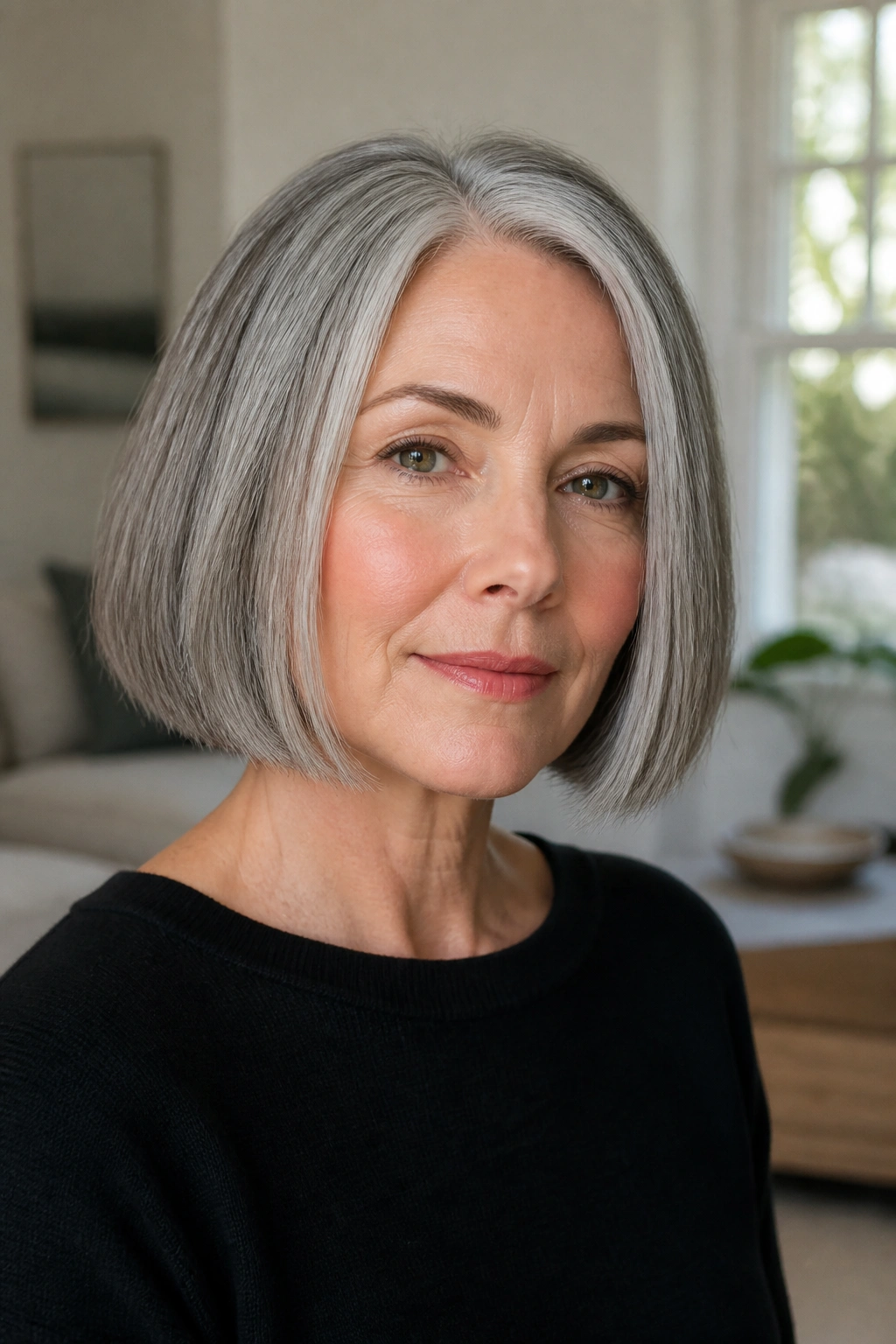
A chin-length blunt bob is one of the fastest ways to make fine hair look fuller. The straight edge gives the eye a clear finish line, and that makes the ends look denser than they really are. It also does something nice for gray hair: it shows off the silver instead of hiding it in layers that can go a bit fluffy.
Why It Works
This cut sits close to the face, so it sharpens the jaw and keeps the style from drifting downward. If your hair has started to lose body at the ends, that solid line brings some backbone back. It’s neat without feeling stiff.
What to Ask For
- Keep the perimeter blunt and clean.
- Let the length hit right at the chin or a touch below it.
- Add only a little internal shaping if your hair is thick.
- Style with a flat brush and a slight bend under the ends.
Best tip: skip heavy layering here. The bluntness is the whole point.
2. Collarbone Lob with Soft Ends

The collarbone lob is the safest haircut with the least drama. It gives you length for a ponytail, enough weight to keep frizz down, and enough movement to avoid that heavy, curtain-like look some medium cuts get.
Soft ends matter here. A tiny bit of point cutting keeps the hemline from looking boxy, especially if your hair is straight or only slightly wavy. It’s a smart choice if you like to wear your hair tucked, clipped, or half-up without fighting a short shape.
I also like this cut for women whose color is growing out. Silver at the ends, darker roots, salt-and-pepper streaking — all of it sits nicely in a lob because the cut doesn’t compete with the color. Blow it out smooth, or bend the ends with a 1-inch iron. Both work.
3. Feathered Shoulder Cut

Why does a feathered shoulder cut still flatter so many faces? Because it takes weight away from the places that can drag the face down — around the cheek and lower jaw — and puts a little lift where you want it. It’s a classic for a reason.
How to Wear It
A feathered cut is best when the layers are soft, not shredded. You want movement that looks airy, not a shape that collapses after lunch. On gray or silver hair, those light layers can make the cut look lively instead of heavy.
Use a mousse at the roots and blow-dry with a medium round brush. That tiny bit of lift changes everything. If your hair is thick, ask for the layering to start below the cheekbone so the top doesn’t puff out.
4. French Bob with Soft Fringe
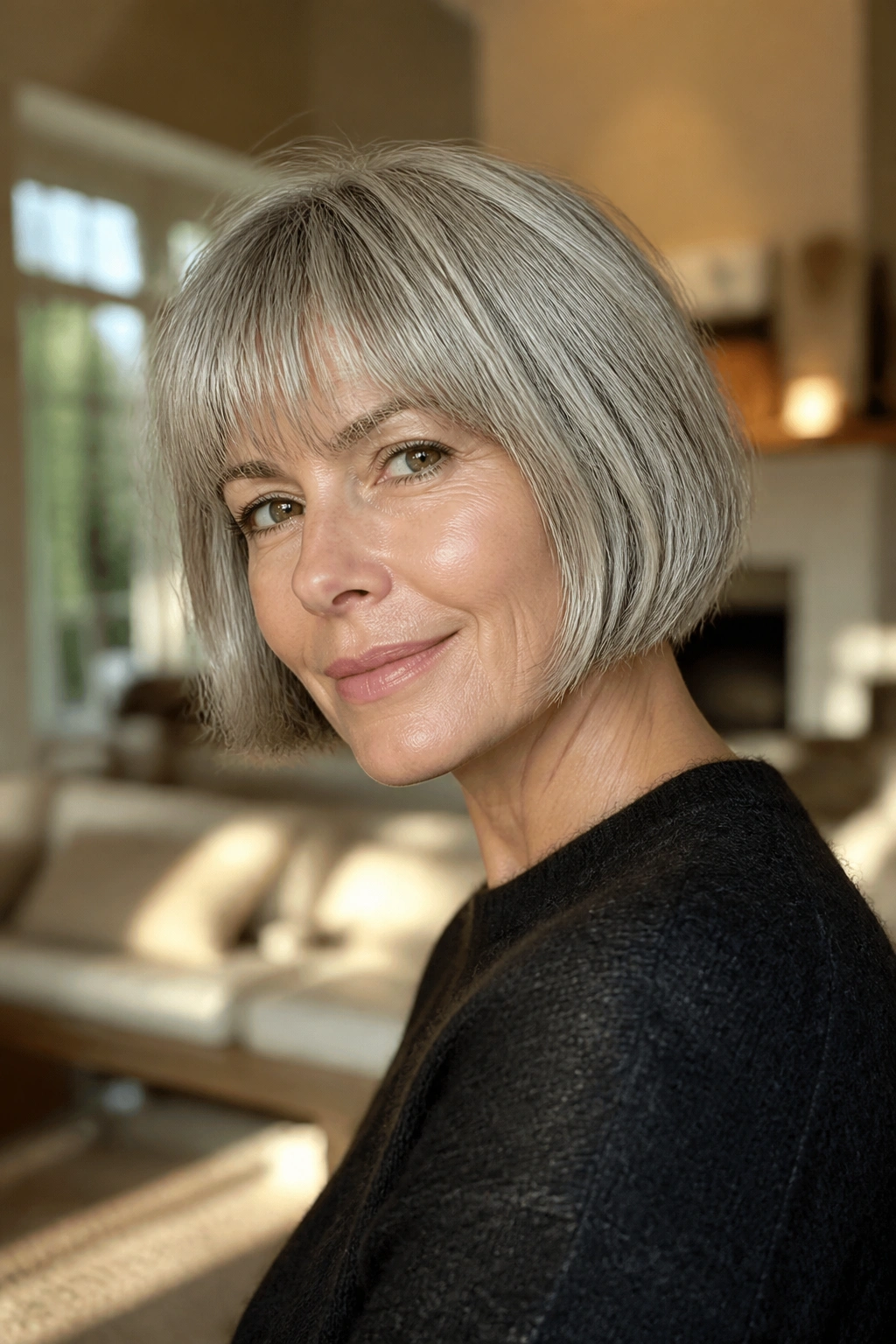
Picture a bob that kisses the cheekbone and stops there. That’s the French bob feeling — crisp, a little chic, and not trying too hard. With a soft fringe, it loses the severity that scares people off and turns into something wearable for everyday life.
The fringe is the key. Keep it light enough to move when you blink, not heavy enough to sit like a shelf. On gray hair, this cut looks especially clean because the shape reads immediately. There’s no hiding behind length. The line does the work.
I like this cut on women who want personality without a lot of styling time. Air-dry it with a dab of cream, or rough-dry it and leave a few bends in place. Either way, it holds its character.
5. Modern Pixie with Tapered Sides
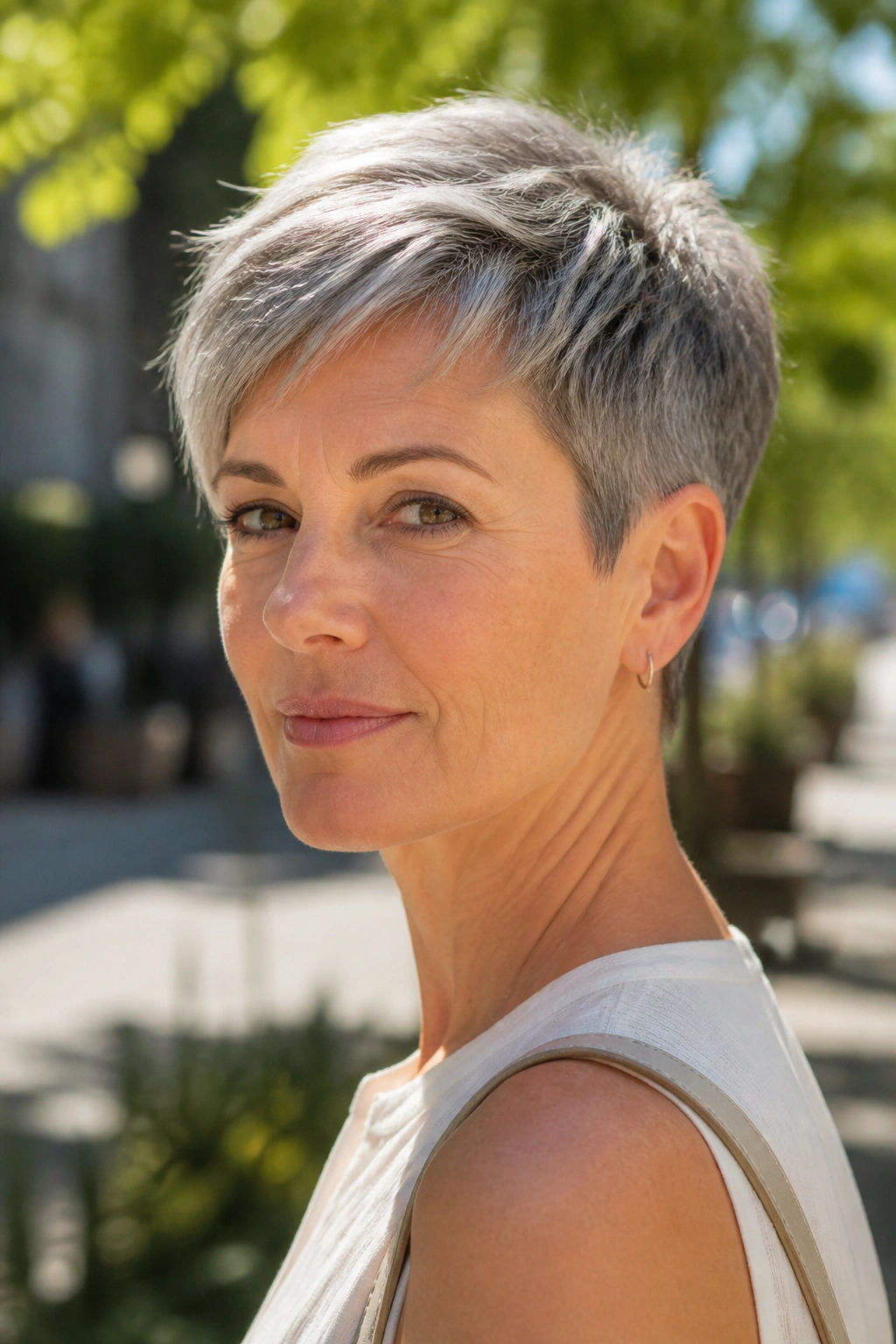
Unlike a severe crop, this pixie keeps softness around the ears and neckline. That makes a huge difference. It keeps the cut from looking stern, and it gives you room for earrings, glasses, and a little movement at the temples.
A tapered side length also helps if your hairline has thinned a bit. The shape frames the face without exposing every edge. That’s the part many short cuts miss. They go short, then go harsh.
This is a strong pick if you want low fuss in the morning. A pea-sized amount of styling cream is often enough. Work it through with your fingers, push the fringe where you want it, and let the texture show.
6. Bixie Cut
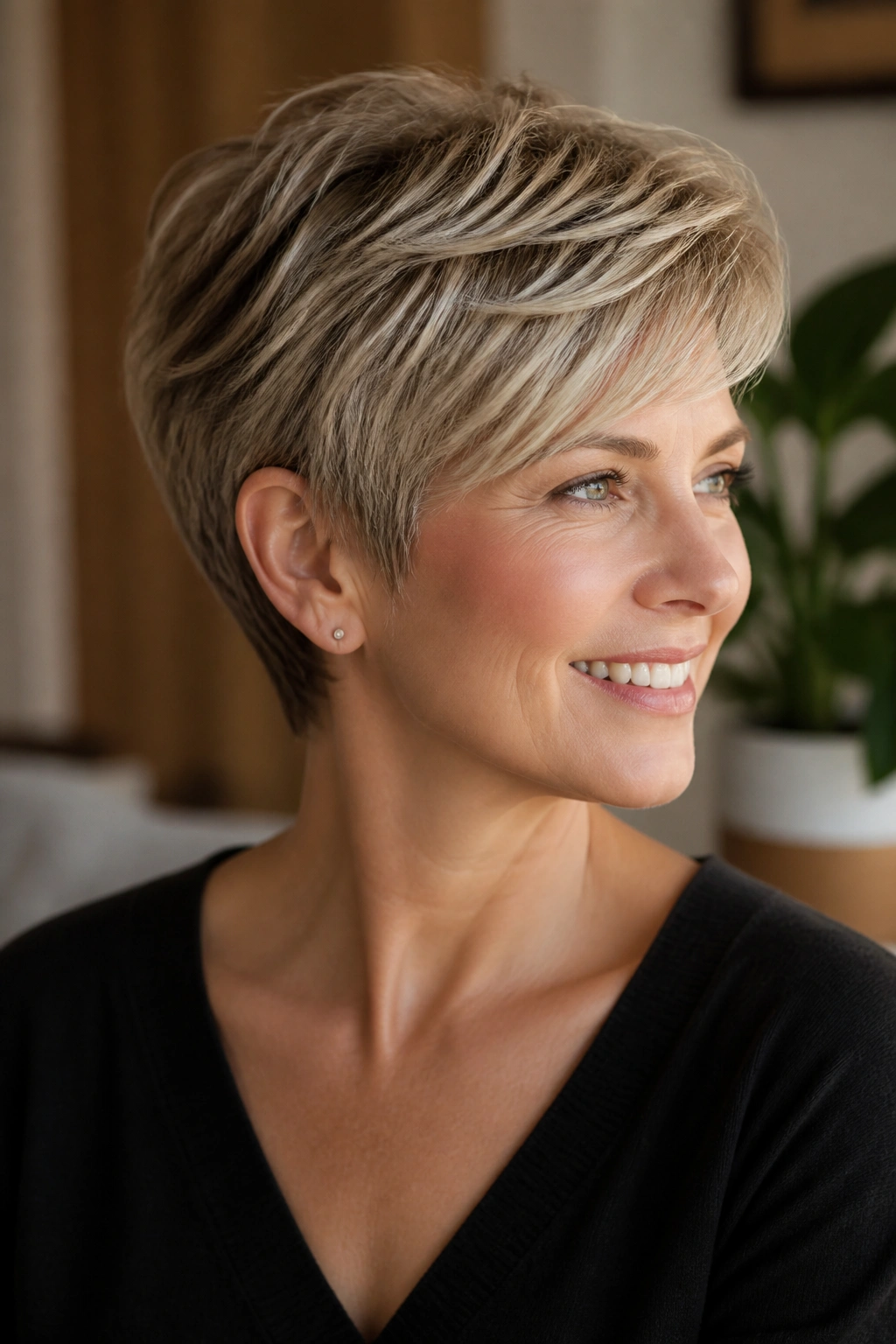
The bixie sits in the middle of a bob and a pixie, and that middle ground is why it keeps showing up. You get shortness at the back, some swing through the sides, and enough length on top to tuck, sweep, or rough up with your hands.
What to Ask Your Stylist
- Leave the top long enough to move sideways.
- Keep the back shorter, but not shaved tight.
- Let the sides skim the cheek rather than sit flat.
- Add piecey texture near the crown for lift.
Who It Suits
A bixie works well on straight, wavy, and lightly curled hair. It’s especially good if you want to grow out a pixie without jumping straight to a bob. That in-between phase can look awkward unless the cut has shape built in.
One warning: if the crown gets thinned too much, the whole cut can puff up. Keep the top controlled.
7. Long Layers with Face-Framing Pieces
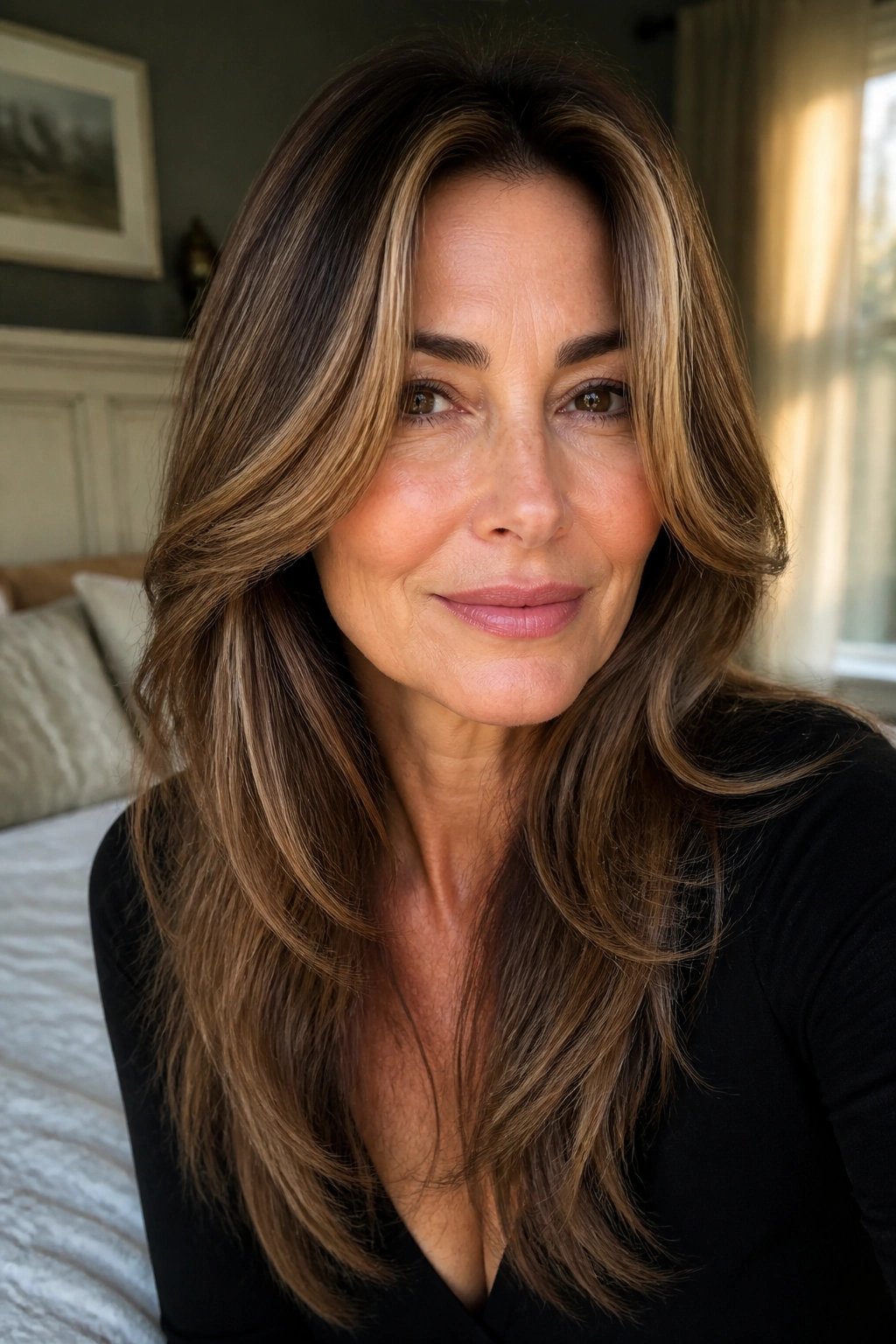
Not everyone wants to cut hair short, and that’s fine. Long layers with face-framing pieces are the answer when you want to keep length but lose the heavy curtain effect that can happen after 40, especially if the ends are dry or the hair has gone a little flat.
The face-framing bits should start where your features need the most help. Around the cheekbone, around the jaw, sometimes just below the chin. That placement matters more than fancy layering. A good cut here moves with the face instead of hanging beside it.
This shape is useful for thicker hair, but it can work on finer hair too if the layers stay modest. Keep the shortest pieces from getting too short, or the result starts to look disconnected. Smooth it with a round brush, or let it air-dry with a touch of cream.
8. Shoulder-Length Shag

A shoulder-length shag earns its keep on wavy hair and gray hair because it builds movement where flatness tends to show up first: the crown, the sides, and the area around the mouth. It’s one of the few layered cuts that can look relaxed without looking messy.
The trick is softness. A good shag has breaks in the outline, not random chunks hacked out of the hair. The ends should move, not fray. Gray strands often have more bite and texture, which makes a shag feel alive instead of limp.
I’d reach for this cut if you like a little edge and do not want to spend ten minutes making your hair behave. Scrunch in mousse, diffuse for a few minutes, and stop while the hair still has some bend. Over-drying is where the shape gets tired.
9. Curtain Bang Lob
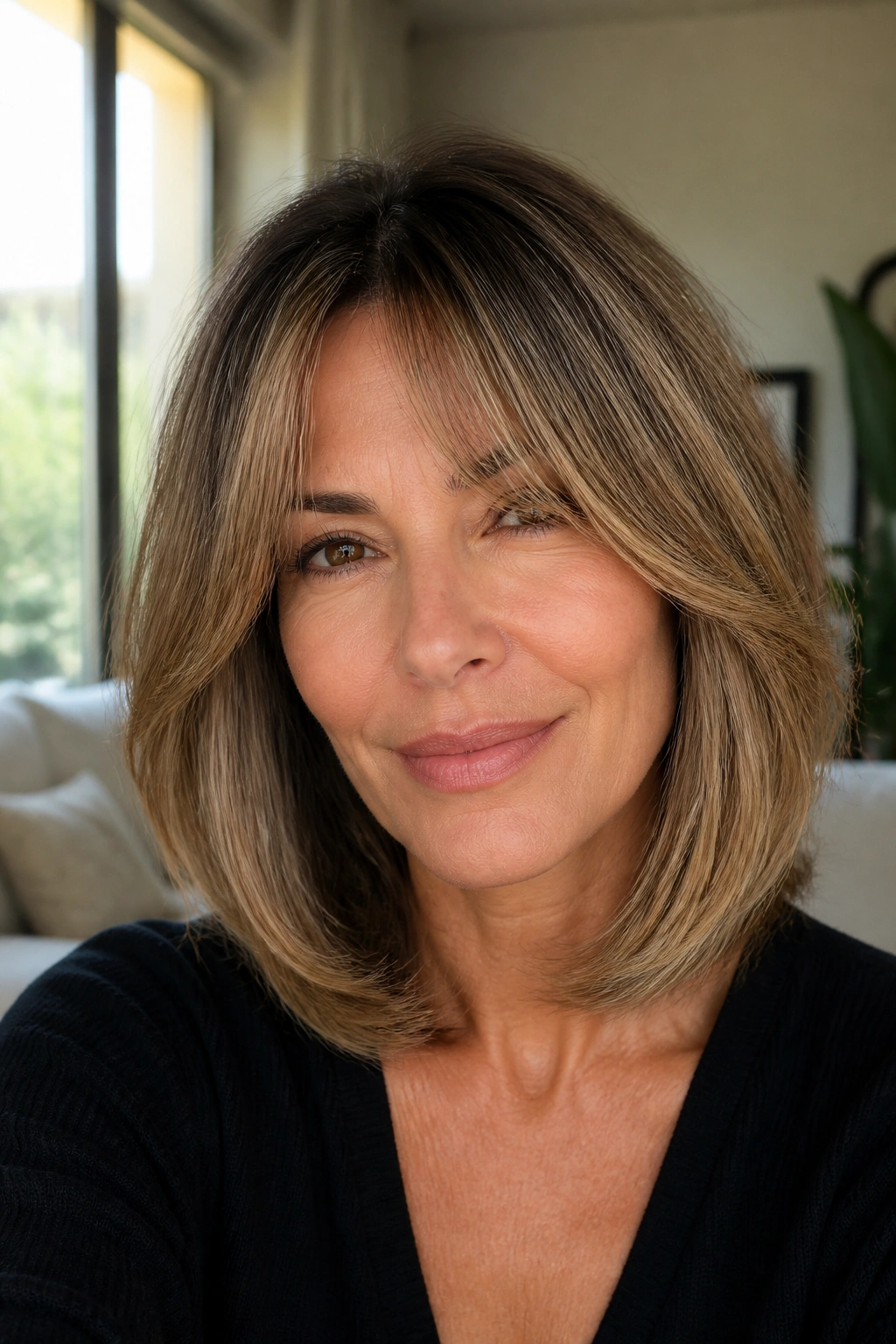
Why do curtain bangs work so well with a lob? Because they split the difference between coverage and openness. You get softness across the forehead without the heaviness of a full fringe, and the long sides blend into the rest of the cut instead of sitting there like a separate part.
How to Style the Fringe
Curtain bangs need a little direction. Blow-dry them side to side with a small round brush, then let them fall apart naturally in the middle. That keeps the shape loose. If they dry straight down, they can look stubborn.
This is a good cut if you want to soften strong brows, a long forehead, or a face that needs a little width near the cheekbones. The lob keeps the style easy, and the bangs keep it from feeling plain. A smart combo.
10. Rounded Bob

A rounded bob has a softer outline than a blunt bob, and that curve can be lovely on fine hair. Instead of ending in a hard shelf, the hair bends inward and creates the sense of fullness through the sides. The shape looks polished in a way that feels calm, not rigid.
I like this cut on women who want fullness around the cheek and jaw without going layered all over the place. It gives the head a neat, rounded silhouette that works especially well with silver or white hair. The color and shape end up helping each other.
The one catch: it needs some styling. A quick blow-dry with a paddle brush or a medium round brush keeps the outline smooth. If you air-dry it without any help, the curve can disappear and the whole thing loses its point.
11. Tapered Curly Cut
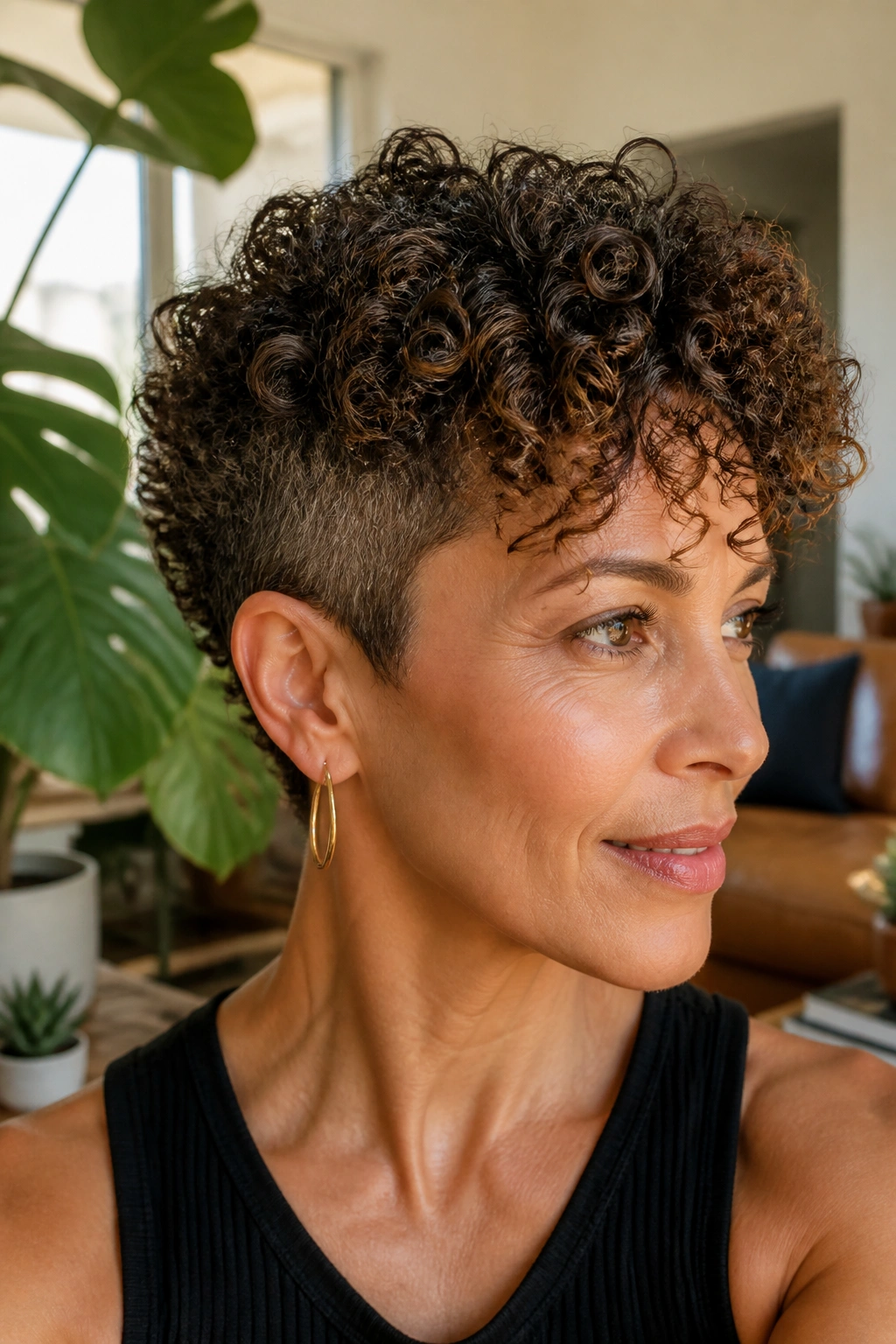
A tapered curly cut respects the curl pattern instead of forcing it into one flat shape. The sides and nape stay tighter, while the top carries a little more length. That balance keeps curls from ballooning out at the edges.
Why Curly Hair Loves This Shape
Curly hair shrinks. Everyone knows that in theory, but the surprise is how much the shrink changes the outline once the hair dries. A tapered cut accounts for that by putting shape where you need it and removing bulk where you don’t.
Dry cutting is often the cleaner choice here because you can see the curl fall in real time. Moisture, cream, and a diffuser help, but the cut itself has to do the heavy lifting. If you’ve ever had a curly cut that turned into a triangle, you know why this matters.
12. Asymmetrical Bob
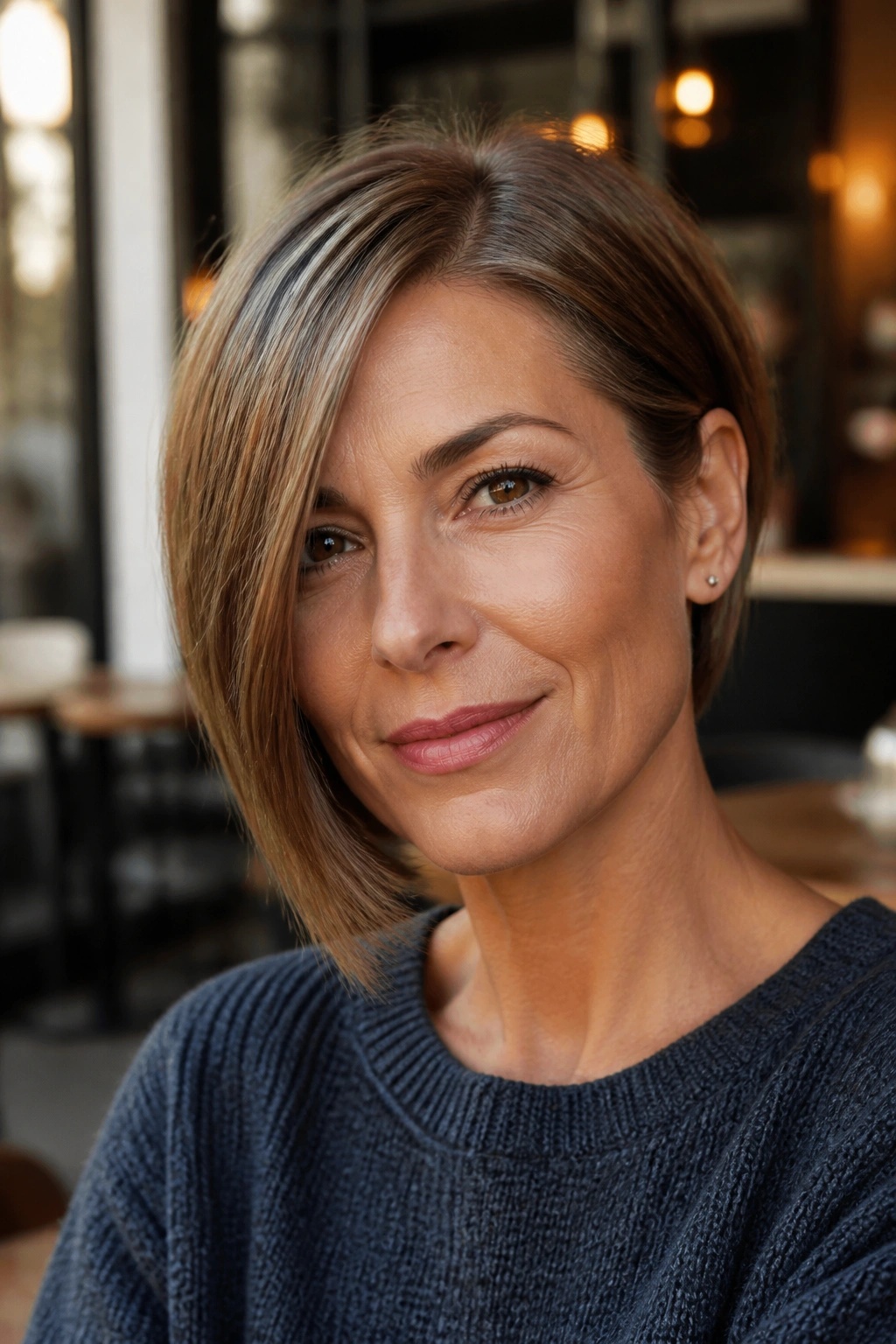
A small asymmetry can wake up a bob that might otherwise feel too neat. One side sits a little longer than the other, and that tiny shift adds movement without turning the style into a stunt. It’s subtle enough for everyday life.
What Makes It Different
- One side usually drops ½ to 1½ inches longer.
- The line should still look intentional, not accidental.
- Straight hair shows the angle best.
- A side part can make the shape even sharper.
This cut works well if you like clean edges but want a little personality built in. Gray hair looks especially crisp with an asymmetrical line because the difference in length becomes easy to see. It’s a quiet cut with a sharp idea behind it.
13. Side-Swept Crop
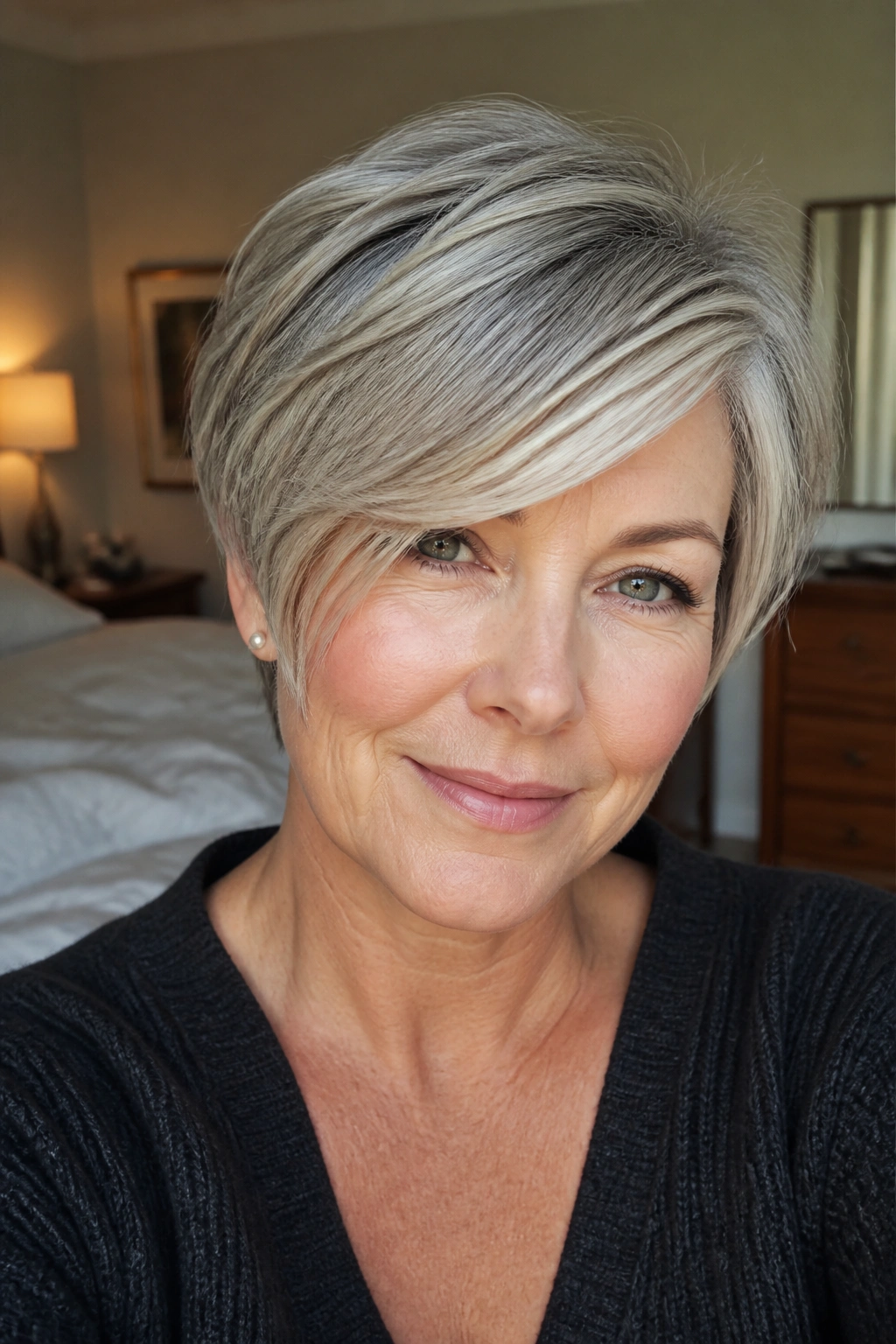
A side-swept crop is one of the kindest short cuts for thinning temples. The fringe drapes across the forehead, the sides stay soft, and the overall effect is gentle instead of exposed. That matters when you want short hair but don’t want your face fully framed by nothing.
The side sweep gives you options. Push it low for a softer look, or lift it a little higher when you want more shape at the crown. Either way, the cut stays easy. A tiny bit of root spray can help the top stand up without feeling stiff.
I like this style for glasses wearers too. It leaves room around the frames and keeps the forehead from looking too open. That sounds small, but it changes how the whole face reads.
14. Blunt Midi with Invisible Layers
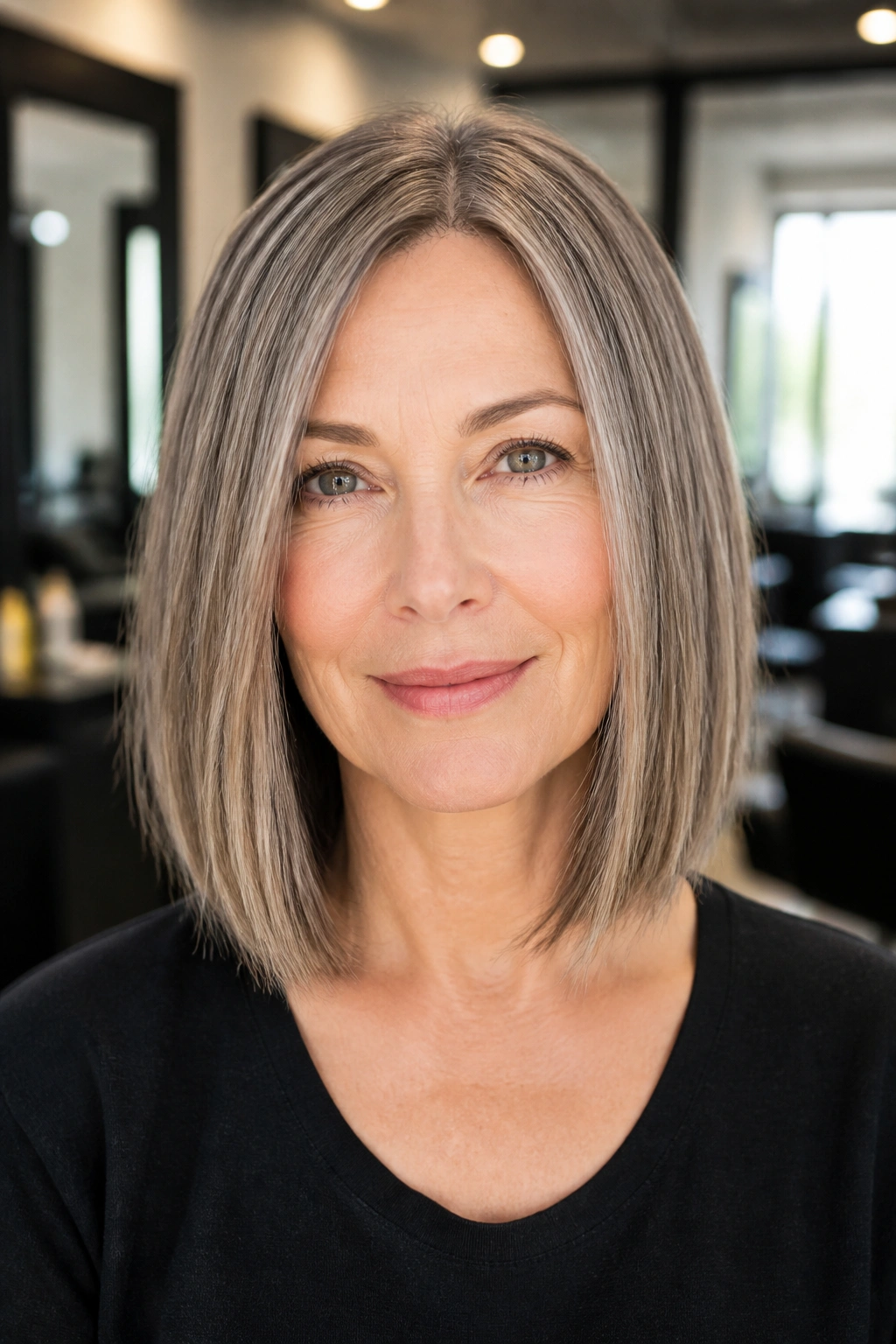
Can a blunt cut still move? Absolutely. The answer is hidden layers, placed inside the shape where they won’t break the outline. From the outside, the midi looks solid and smooth. Inside, it has room to breathe.
This is a strong option for thick hair that wants to swell at the sides. The blunt edge keeps the length from looking fuzzy, while the internal layers stop the mid-length bulk from turning into a triangle. Gray hair tends to show these lines beautifully because the shape reads so clearly.
Ask for the perimeter to stay clean and the movement to stay underneath. That’s the balance here. Too many top layers, and the cut loses its sleek feel. Too few, and it drags.
15. Soft Wolf Cut
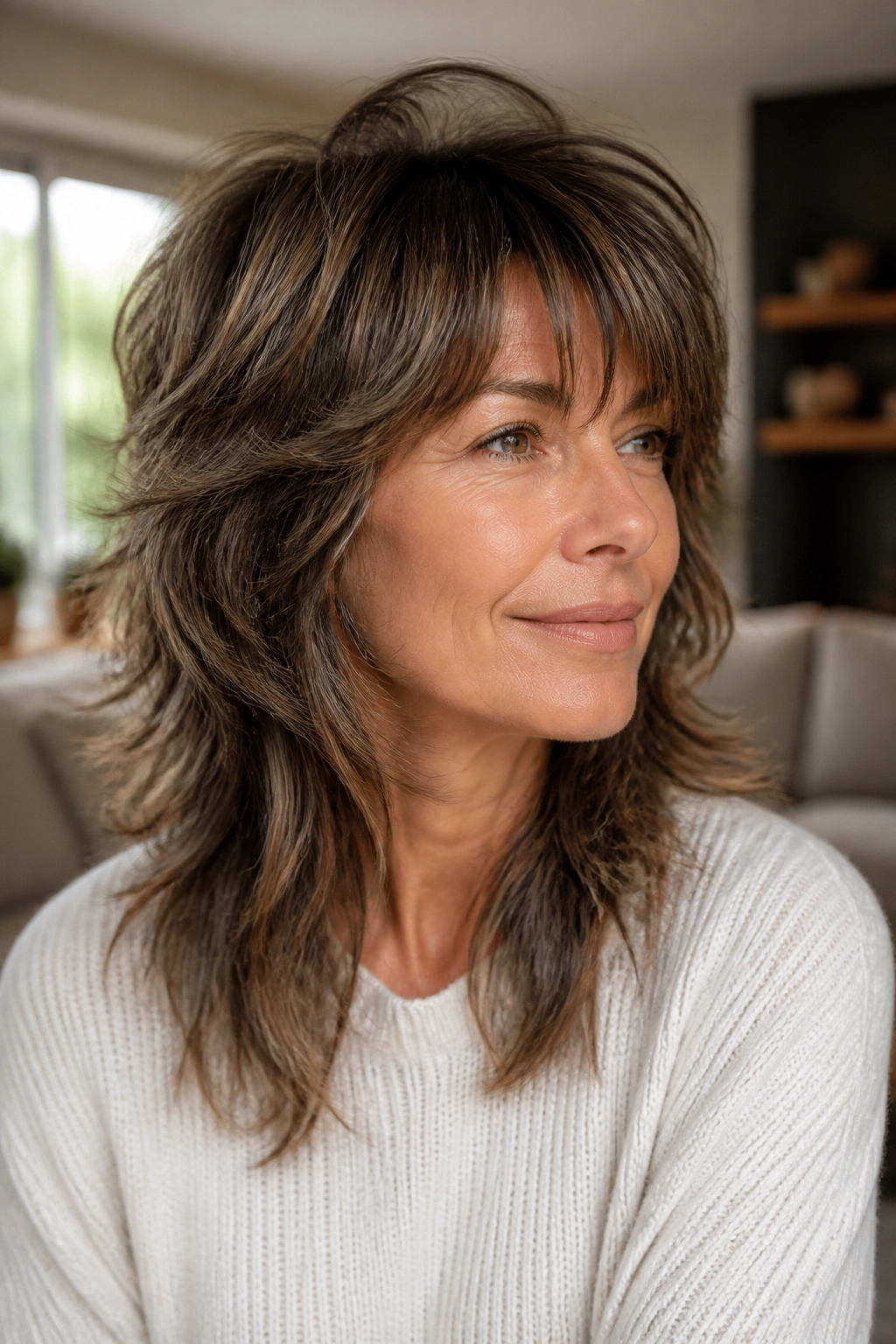
A soft wolf cut keeps the attitude of the original shape and leaves out the parts that can feel too extreme. You still get layers that start higher up, a looser crown, and movement through the ends, but the overall look stays wearable.
Where It Works Best
This cut loves thick, wavy, or slightly curly hair. It gives those textures room to break apart without getting heavy. On finer hair, it can work too, but the layers need to stay long enough to avoid that wispy, over-thinned finish.
What to Watch For
- Keep the top layers soft, not jagged.
- Leave enough length around the face.
- Use a cream or mousse, not heavy oil.
- Let some natural texture show.
It’s a cut with personality. If you like your hair to look lived-in, this one has a lot to offer.
16. Ear-Length Crop with Volume on Top
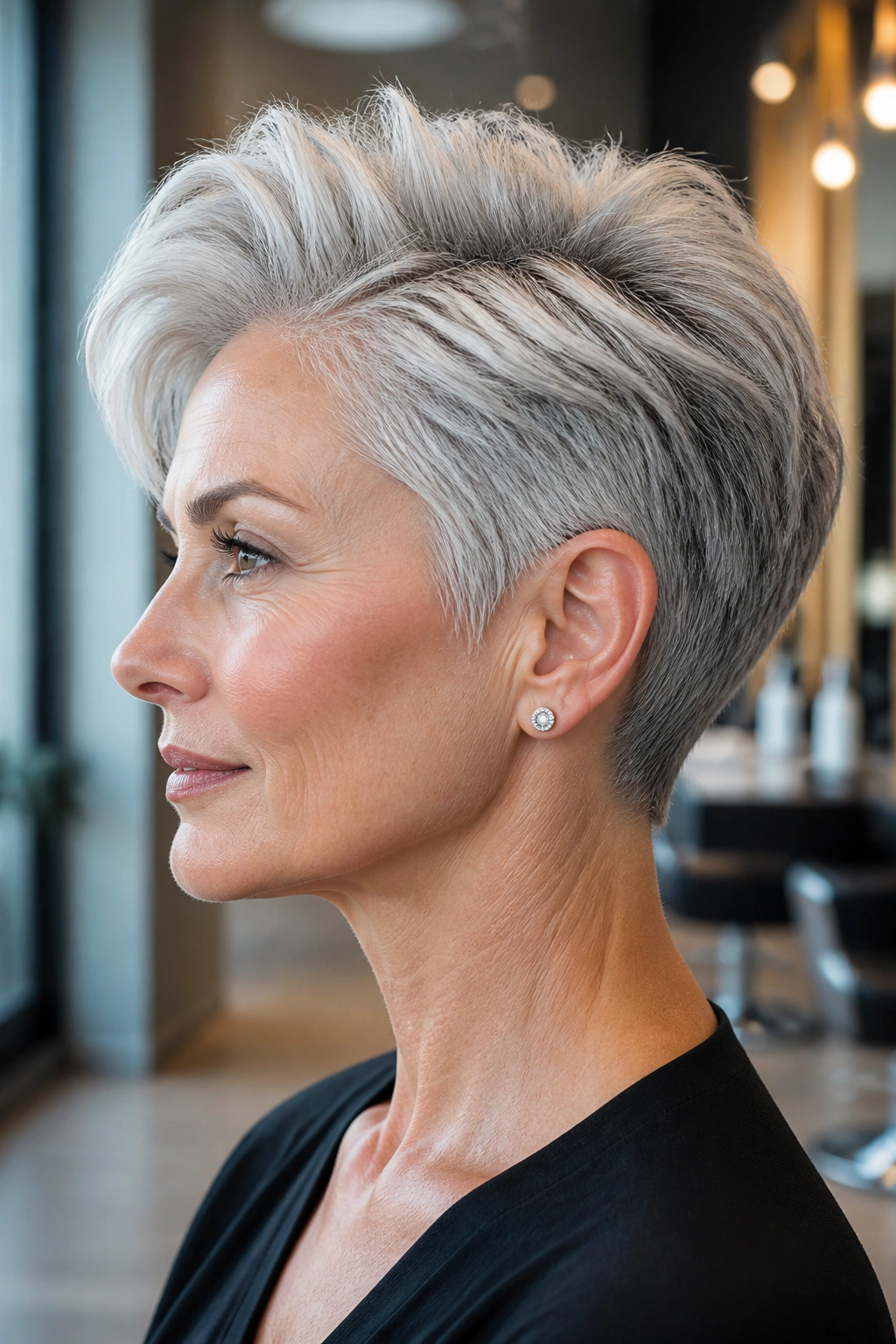
An ear-length crop opens up the face in a way longer cuts never quite do. The ears are visible, the neck looks longer, and the volume on top gives the whole style some lift. That lift is what keeps it from looking flat or severe.
This cut works especially well with silver hair because the shape is easy to read from across the room. There’s no mistaking it. The outline does the talking. And if your hair is straight, a bit of piecey texture at the top helps keep the shape from feeling too tidy.
I’d call this a good choice for someone who likes a sharp neckline and doesn’t want hair brushing the jaw all day. A little pomade or styling paste goes a long way. Use less than you think, or the top starts to look greasy fast.
17. Layered Cut for Wavy Gray Hair
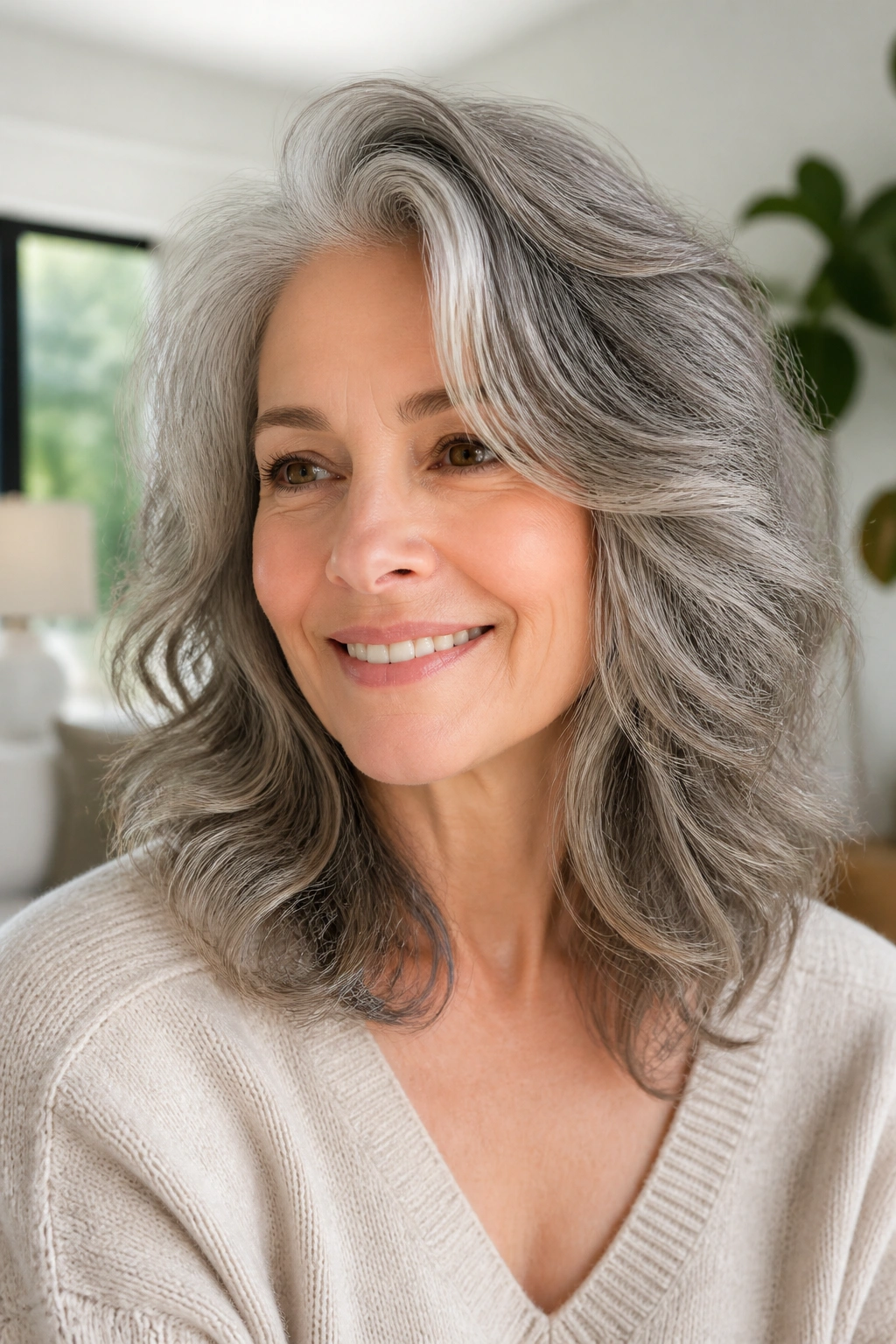
Unlike a one-length cut, a layered shape lets wavy gray hair stack instead of balloon. That’s the whole reason this cut works. Waves need space to sit on top of each other, but they also need enough weight to keep the bottom from flaring out.
The best version keeps the layers long and soft, starting below the cheekbone. That placement lets the wave pattern show without cutting away too much density. Gray hair often needs this kind of respect because it can be drier and a bit more springy than hair with pigment.
I’d pair this cut with a lightweight cream and a diffuser, or with air-drying if your wave is calm enough. Avoid over-layering the crown. Once that area gets too short, the whole head can pop up in a way that’s hard to smooth.
18. Neck-Length Bob with Nape Taper
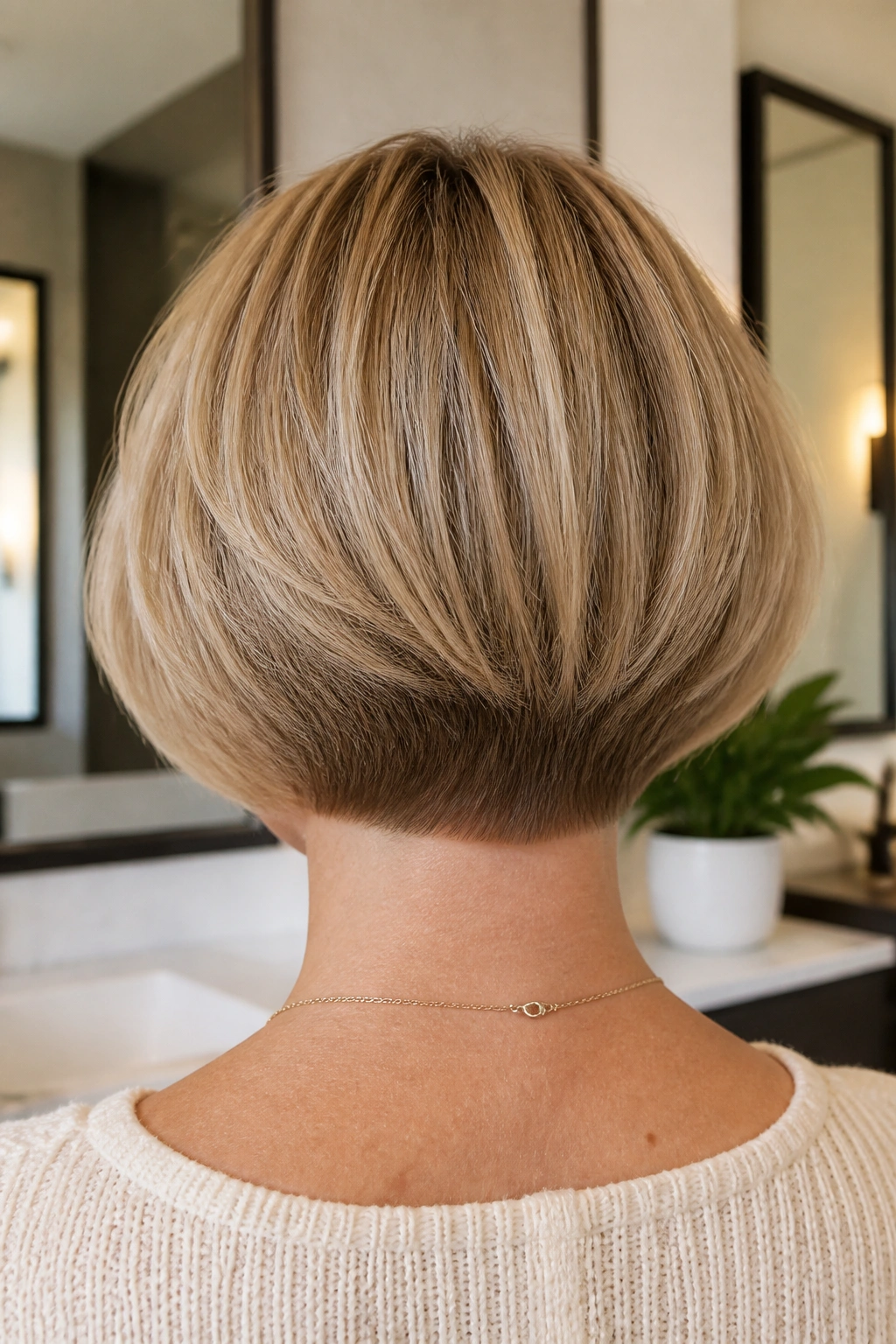
A neck-length bob with a nape taper gives you the clean look of short hair without leaving the back bulky. The nape sits tucked in and neat, while the front keeps enough length to skim the jaw or tuck behind the ear.
Why It Feels So Easy
The taper at the back removes the thick shelf that can happen in shorter bobs. That means less flipping, less puckering at the neckline, and less work with a brush in the morning. It also keeps the cut cooler and lighter, which matters if you dislike hair touching your neck.
A Few Good Rules
- Keep the front slightly longer than the back.
- Ask for a soft taper, not a shaved undercut.
- Wear it smooth or lightly bent under.
- Trim every 6 to 8 weeks to keep the line crisp.
19. Long Pixie with Sweeping Fringe
If you want short hair without the hard edge of a classic pixie, the long pixie is the sweet spot. It keeps enough length on top and in the fringe to play with, but the sides and back stay compact and easy.
The sweeping fringe is what makes it feel flattering rather than spiky. You can direct it across the forehead, separate it with your fingers, or tuck one side behind the ear. That flexibility helps a lot when your hair has changed texture and you want options without growing everything out.
This cut is good with glasses, good with silver hair, and good for women who want something that still looks polished after a quick finger-style. A little wax at the ends is enough. More than that, and it turns heavy.
20. Classic Shag with Airy Bangs
What makes a shag feel wearable instead of wild? Softness around the face and bangs that move instead of sitting in a block. That’s the difference between a cut with shape and a cut that looks like it lost a fight with scissors.
Airy bangs do a lot of work here. They break up the forehead, soften the eyes, and keep the cut from feeling top-heavy. On gray or salt-and-pepper hair, the layers can look especially lively because the mix of tones shows every change in length.
This is a good cut if you like texture and don’t mind a little styling. A diffuser, a round brush, or even a quick rough-dry can all work. The mistake is over-smoothing it. The shag wants some air in it.
21. Box Bob with Center Part
A box bob has a straight, squared-off feel that can look fantastic on hair with enough density to hold its shape. The center part gives it balance, and the boxy outline makes the style feel deliberate rather than soft-edged.
Why It Stands Out
Gray hair looks striking in this cut because the line is so clear. The shape lands like architecture. If your hair is straight or only slightly wavy, the bob holds its form with very little fuss.
Who Should Try It
- Women who want a strong, modern line.
- Fine-haired readers who need the illusion of thickness.
- Anyone who likes a center part and clean edges.
- People who don’t mind regular trims to keep the corners sharp.
It’s not a floppy cut. That’s the charm.
22. Sleek Shoulder Cut with Hidden Movement
A sleek shoulder cut with hidden movement gives you polish on the outside and softness underneath. From the front, it reads smooth and tidy. Underneath, a few carefully placed layers keep the ends from hanging like a curtain.
I reach for this style when someone wants hair that works with a blazer, a T-shirt, or a dress without changing the cut every time. It’s one of those rare shapes that can look neat in a meeting and relaxed at dinner.
The key is restraint. Too many layers and the sleek line disappears. Too little and the hair gets heavy. A blow-dry brush or a paddle brush with a bit of serum is usually enough to keep it moving without frizz.
23. Curly Bob with Shape at the Jaw
Unlike a triangular curly cut, this bob keeps the shape rounded near the jaw and lighter through the sides. That matters because curls don’t fall like straight hair. They stack, they spring, and they need a cut that understands that.
A curly bob at jaw length gives the face a frame without dragging the curls down. If the cut is too short at the top, the shape can puff out. Too long, and the curls lose energy. The sweet spot is usually where the jaw can still peek through.
Dry cutting is often the best route here, especially if your curls are tight or inconsistent. You want the stylist to see the real shape, not the damp guess. Then use a curl cream with enough hold to keep the ringlets separate.
24. Layered Lob with Deep Side Part
A layered lob with a deep side part gives you instant lift at the root and a little drama around the face. It’s a good answer when the middle part feels too flat or too severe. The side part shifts the weight and keeps the shape from sitting dead center.
What to Ask For
- Layers that start below the cheekbone.
- A side part that creates height at the crown.
- Ends that stay soft, not shattered.
- Length that still brushes the collarbone.
This cut works especially well if your hair has lost some fullness at the top. The part does some of the heavy lifting, and the layers keep the ends from dragging. It’s a simple move, but it changes the whole mood of the cut.
25. Soft Crop with Tucked Sides
A soft crop with tucked sides is one of the easiest short cuts to live with when you want polish and not a lot of fuss. The sides stay neat enough to tuck behind the ears, while the top keeps enough length to move and soften the face.
This shape is especially nice for gray hair because the edges look clean. It also plays well with glasses. Nothing fights the frames, and the ears can stay visible without the cut feeling bare. That balance is harder to get than it sounds.
If you want it to stay soft, avoid over-trimming the top. A little length through the crown gives the style some breath. Use a light cream, sweep the sides back, and let the outline stay relaxed rather than sculpted.
Final Thoughts
The smartest haircut ideas for women over 40 do not hide the hair you have. They shape it. That can mean a blunt bob for more density, a lob for flexibility, or a cropped cut that makes silver strands look deliberate instead of unfinished.
If you’re stuck between lengths, choose the one that makes your hair easier on a dull Tuesday morning. That’s a better test than how it looks under salon lights. Those lights forgive a lot.
A good cut should still behave after a long day, a quick workout, or a windy car ride with the windows down. If it does that, you’ve probably found the right one.
