



Fine hair can look flat in a bad bob, but the right one changes the whole story. A sharp perimeter, a smart part, and a little lift in the right place can make hair read fuller without turning it into a helmet.
That’s the part people miss. Volume in a bob usually comes from shape, not from piling on products or carving the cut to pieces. Too many layers can make the ends look see-through. A blunt line, a tucked-in nape, or a smart angle often does more for fullness than any can of spray ever will.
Bob haircuts for fine hair that add volume also have one thing in common: they respect where the hair gets weak. They keep density where the eye lands, keep movement where the head needs it, and avoid dragging the whole shape down with extra length. A good bob on fine hair should look intentional from the back, not just cute from the front.
The cuts below are the ones that actually give the illusion of body after the salon blowout wears off. That’s the real test.
1. Chin-Length Blunt Bob
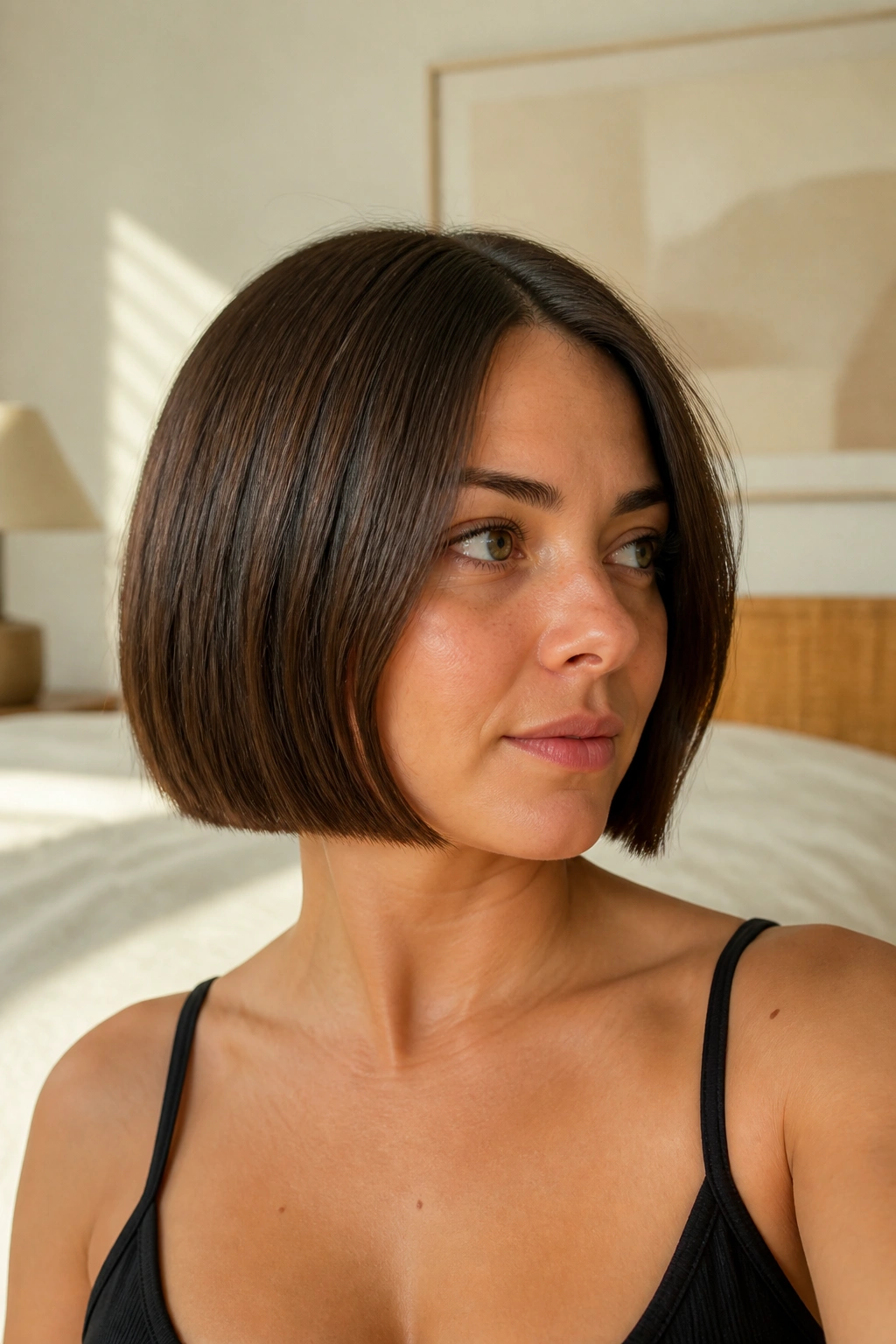
A chin-length blunt bob is the cleanest way to make fine hair look thicker fast. The edge sits right where the jaw gives it some visual support, so the hair looks denser instead of stringy.
Why it works for fine hair
The magic is in the perimeter. When the ends all land on the same line, your eye sees a fuller edge, and that edge matters more than people think. A blunt bob also keeps the weight from slipping too low, which is the part that makes fine hair collapse.
Ask for a cut that lands about ½ to 1 inch below the jawline. That little bit of length keeps it from flipping too sharply while still holding a strong silhouette. Keep internal layers minimal. Too much carving at the inside can make the cut look airy in a bad way.
- Best for: straight to slightly wavy fine hair
- Styling move: blow-dry with a round brush and tuck the ends under
- Cutting note: ask for a blunt perimeter, not razor-thin ends
- Extra lift: mist a root spray only at the crown
One good blunt line can do more than three products.
2. Stacked Bob With Crown Lift
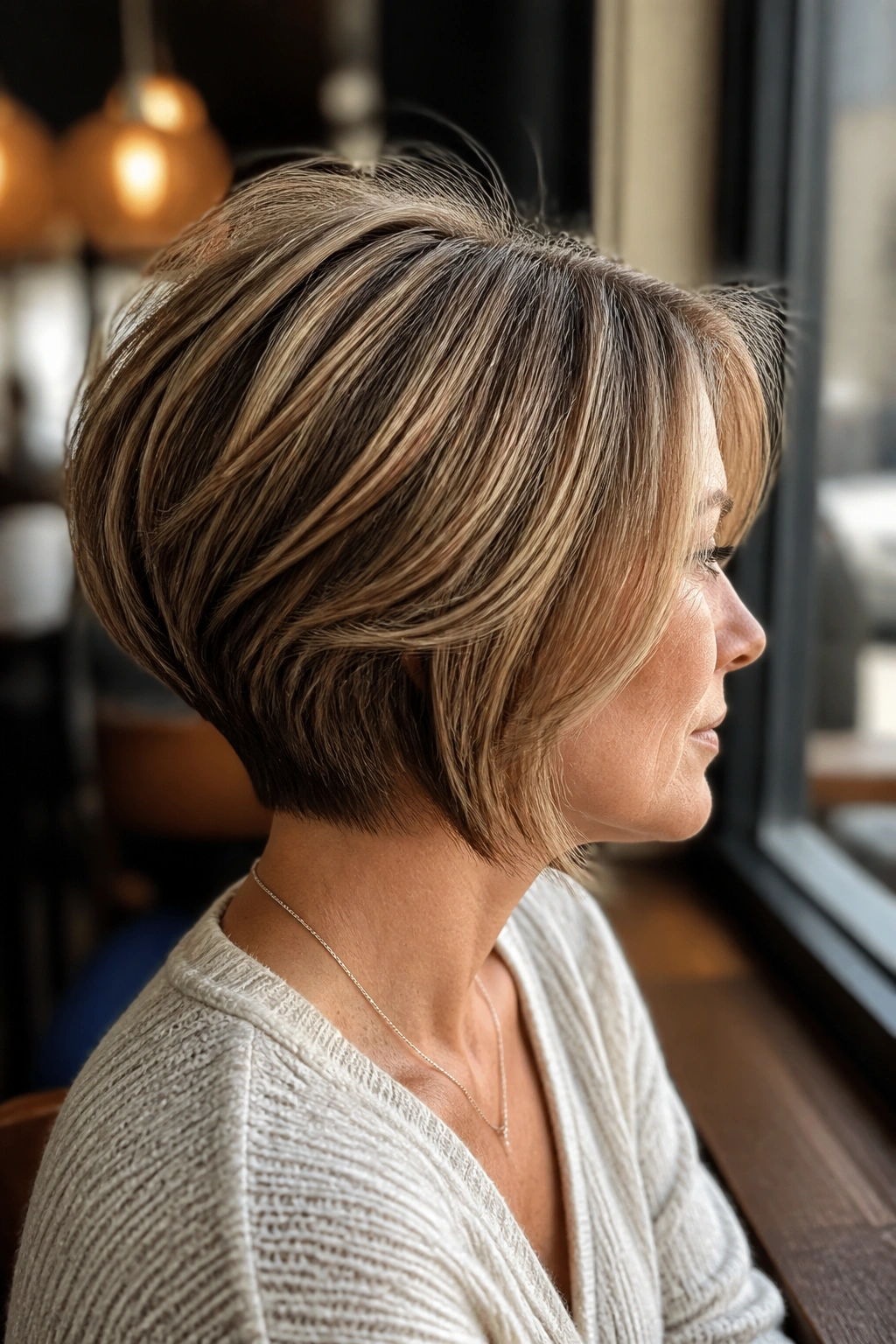
If the back of your hair lies flat first, a stacked bob is the blunt answer. It builds lift where fine hair usually surrenders, especially at the crown and upper nape.
The cut is shorter in back and gradually longer as it moves forward, so the shape naturally pushes up instead of hanging down. That graduation gives the back a fuller look from the side, which is where flat hair gives itself away. It also keeps the silhouette neat, which matters when your hair has less density.
A good stacked bob is not about chopping the back to bits. It’s about controlled graduation, usually beginning around the occipital bone and moving down toward the nape. Ask for softness at the transition, not a hard shelf. When the stack is too aggressive, fine hair can look narrow at the bottom.
And that’s the trap. Keep it tidy, not severe.
A light mousse at the roots and a round-brush blow-dry are enough. The haircut already did most of the work.
3. French Bob With Micro Fringe
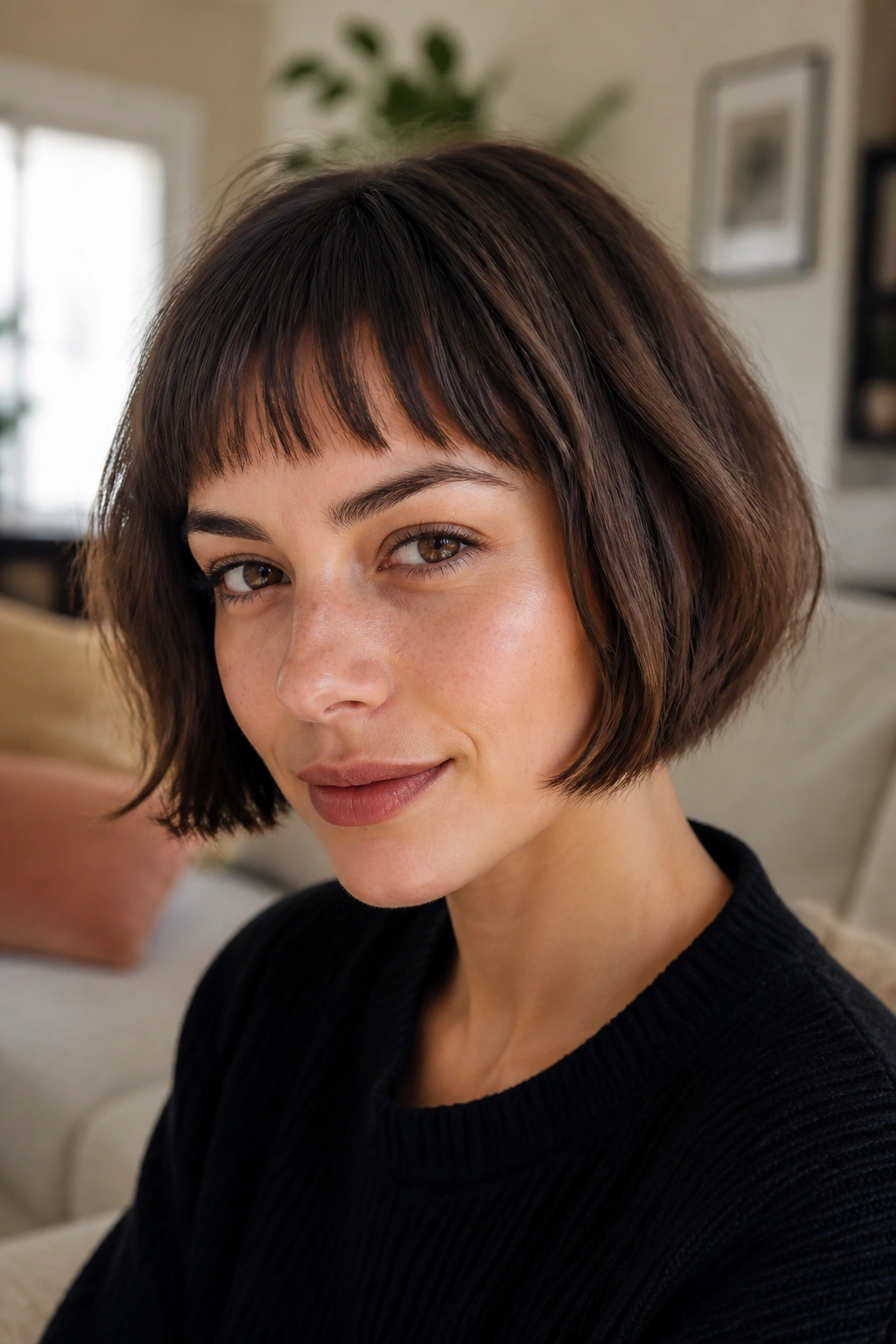
Why does a tiny fringe change the whole haircut? Because it pulls the eye upward and shortens the visible length of the hair in the front, which helps fine strands look denser.
A French bob usually sits around the jaw or slightly above it, and the micro fringe or short wispy fringe gives it an easy, lived-in feel. The trick is restraint. The bangs should skim the brows or sit just above them, not swallow the forehead or steal too much density from the front.
How to wear it
This cut looks best when it’s a little imperfect. Air-dried texture, soft bend at the ends, maybe one tuck behind the ear. You want the fringe to feel light, not chopped into bits.
A few things matter here:
- Keep the fringe soft and piecey, not heavy
- Ask for jaw-length or just-slightly-above-jaw length
- Use a pea-sized amount of styling cream, no more
- Let the ends bend naturally instead of forcing them pin-straight
If your forehead is small, the fringe should stay wispy. If your hairline is sparse, a denser fringe can actually help balance the face. It’s a small cut, but it carries a lot of visual weight.
4. A-Line Bob
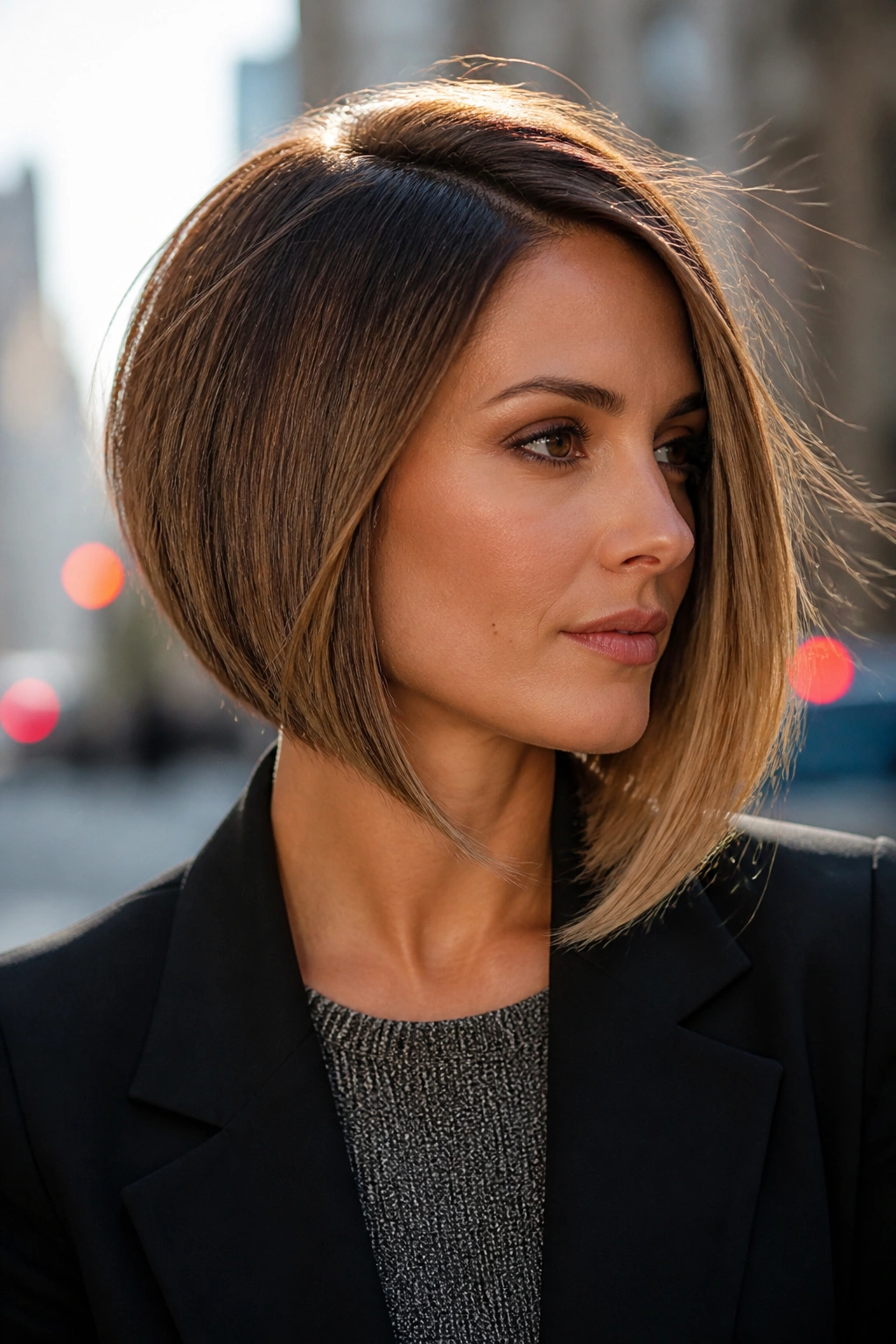
Picture hair that looks flat at the back but a little stringy once it gets too long in front. An A-line bob fixes that by using angle as the main volume trick.
The back is shorter, the front is longer, and the line slopes forward in a clean diagonal. That shape gives the illusion of movement even when the hair is fine and still. The eye follows the angle, so the bob feels fuller than a straight, one-length cut of the same length.
The shape to ask for
Ask your stylist for a front length that is 2 to 3 inches longer than the nape, with a smooth transition through the sides. The angle should be visible, but not so dramatic that the hair starts looking like two different cuts. Fine hair needs cohesion.
- Best if: your hair loses body at the nape
- Good styling tool: a paddle brush for the top, then a round brush on the ends
- Part placement: slightly off center for a softer lift
- Avoid: heavy serums that flatten the front
The A-line bob is one of those cuts that looks crisp even on day two. That counts.
5. Textured Bob With Shattered Ends
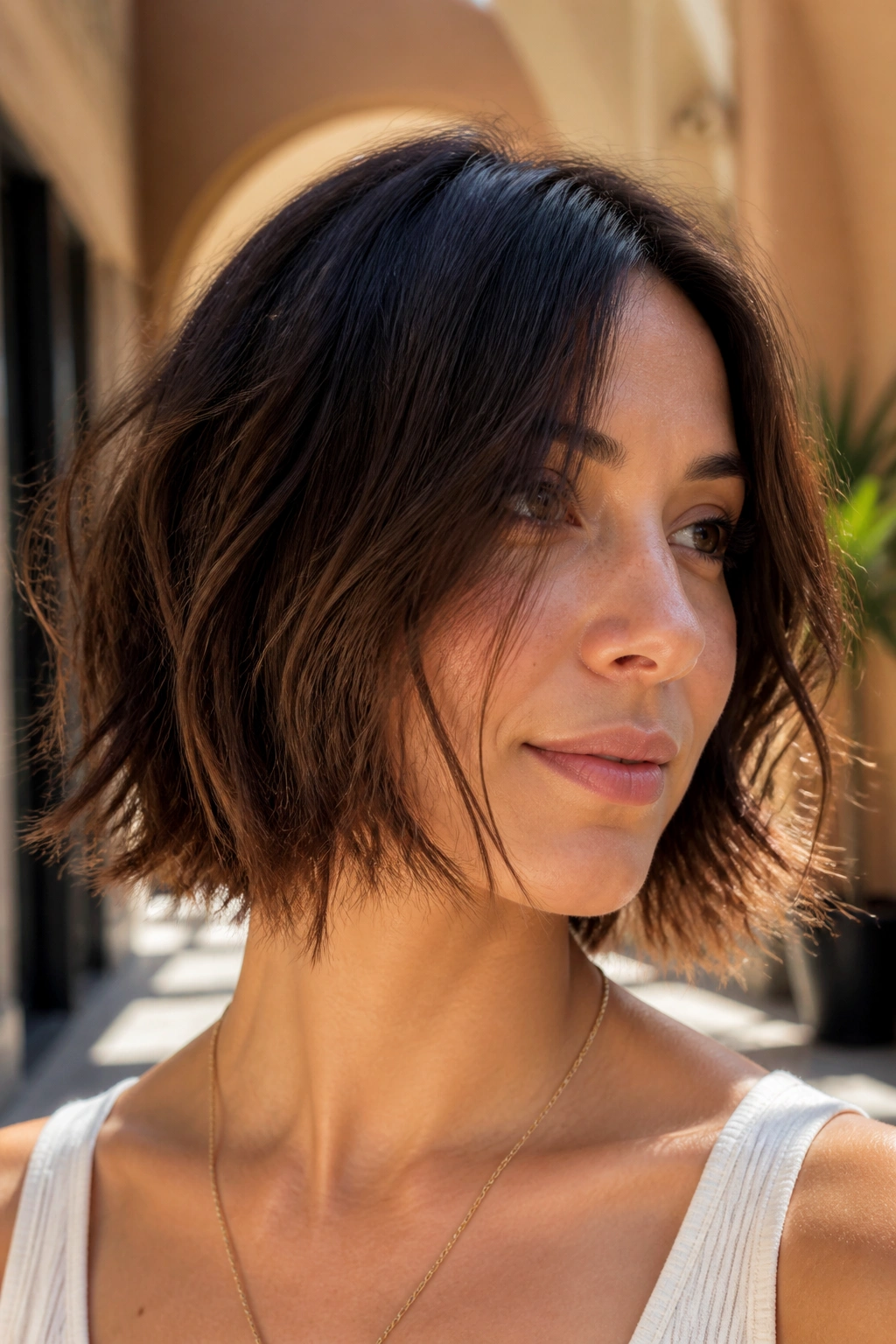
Soft texture can help fine hair, but only if the texture is controlled. A textured bob with shattered ends should look airy, not frail.
The important part is the ends. A stylist can point-cut the outer edge so the bottom line still has some strength while the tips move a little. That tiny bit of break-up keeps the haircut from looking like one flat sheet. It also helps the bob catch air when you move, which creates the illusion of volume from the side.
Do not let anyone go wild with thinning shears here. Fine hair can turn see-through fast. I mean fast. The goal is a soft edge, not a bowl of frayed threads.
A mousse or volumizing foam on damp hair helps this cut come alive. Scrunch the lengths, then rough-dry the roots first so the shape doesn’t dry stuck to the scalp. If you want a little polish, wrap the ends around a medium round brush for ten seconds and stop there.
Soft movement, not scraps.
6. Italian Bob
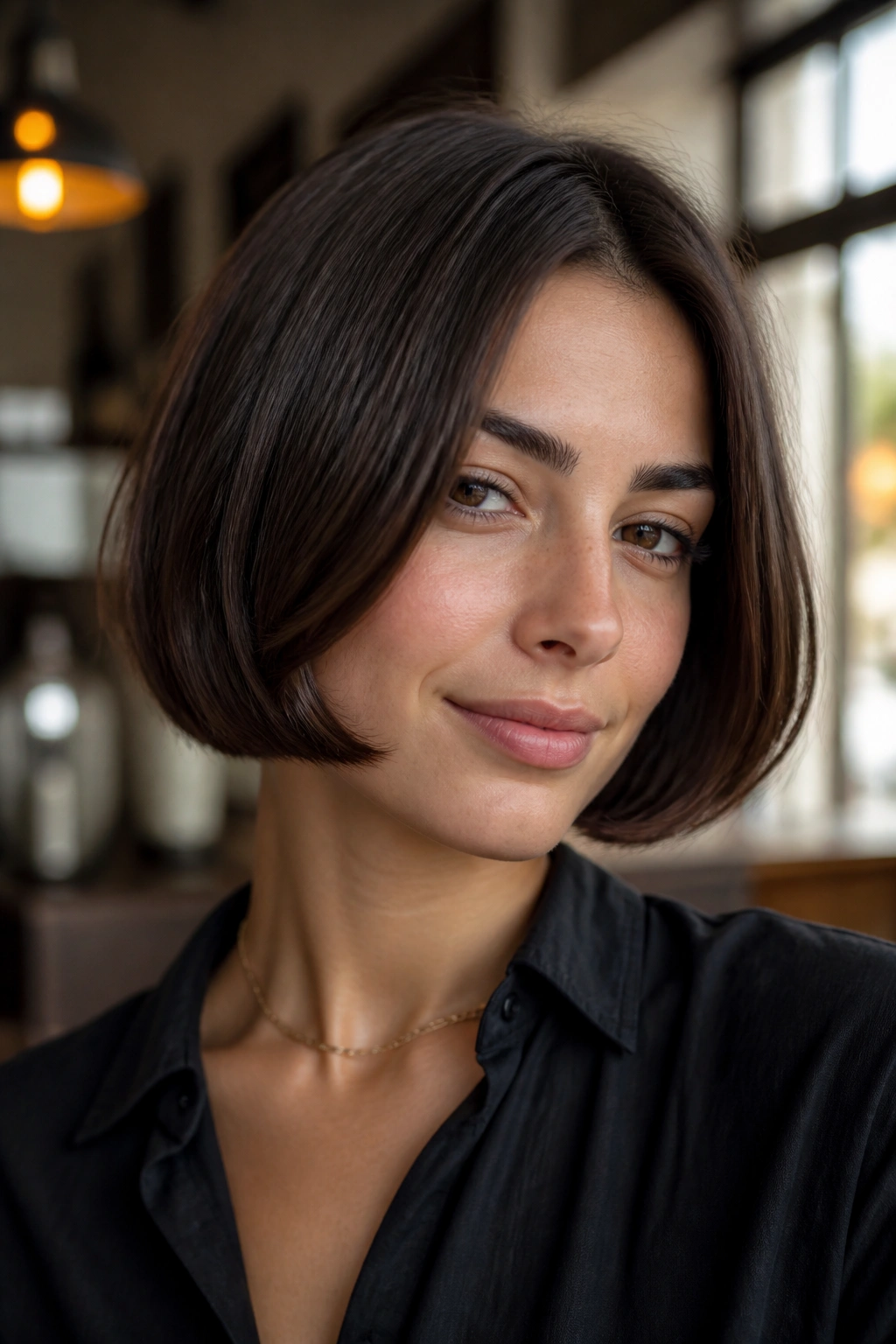
The Italian bob is the version of a blunt bob that looks a little richer, a little softer, and a lot less severe. It usually sits at the chin or just below it, with ends that curve inward instead of sitting like a hard line.
That bend matters. Fine hair often looks thinner when the edge is too sharp and too straight, especially if the hair is naturally smooth. The Italian bob keeps a solid perimeter but uses a gentle round-brush finish to make the shape feel plush around the cheeks and jaw.
It also has a nice trick: it makes the hair look heavier without making it look bulky. There’s a difference. Bulky hair just sits there. Fuller-looking hair has shape.
This cut works well when you want polish but not stiffness. Ask for a blunt base with soft internal weight removal, then style with a large round brush and a little root lift at the crown. If your hair bends easily, this bob is a gift. If it’s pin-straight, it still works — you’ll just need a stronger blow-dry.
7. Layered Lob That Skims the Collarbone
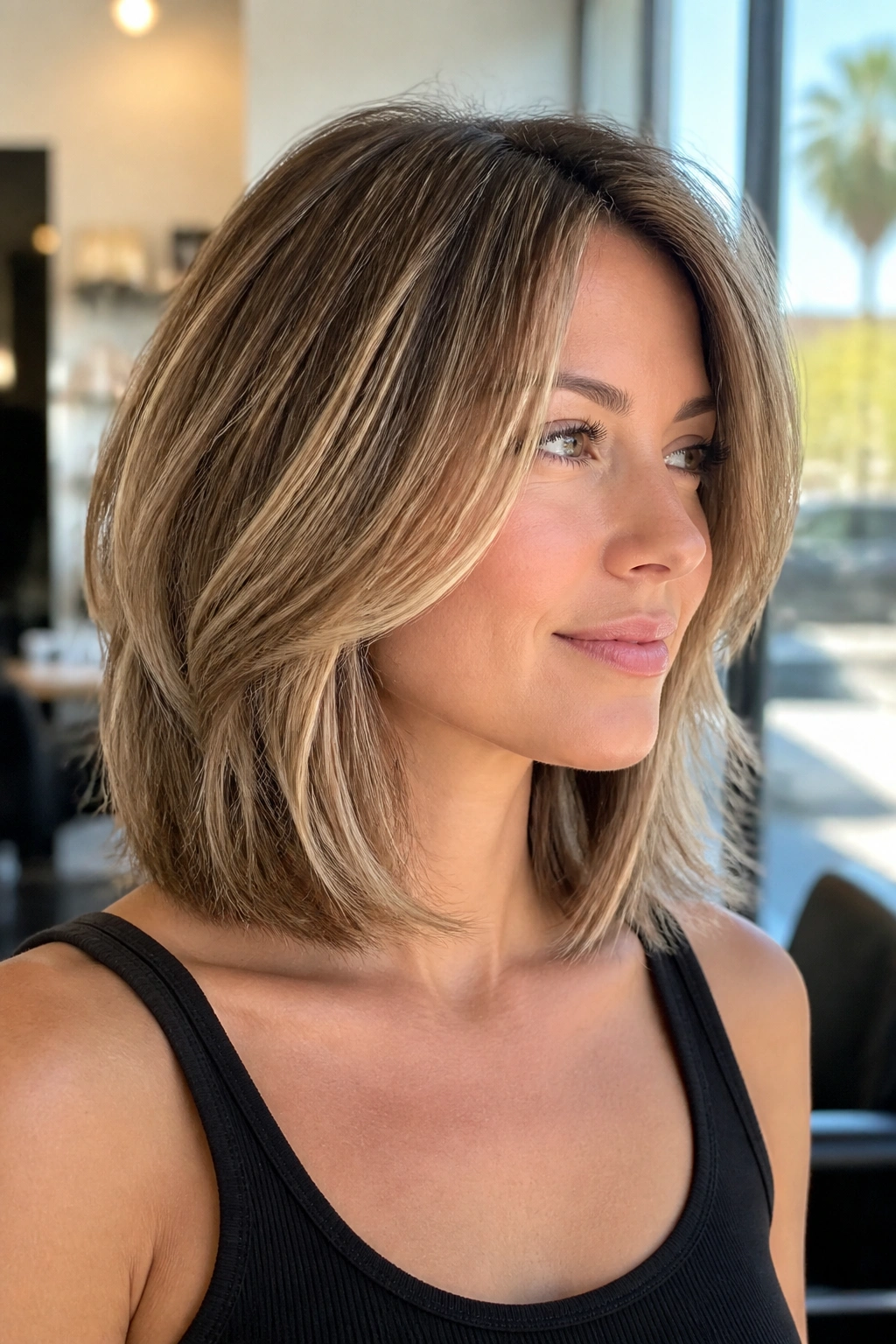
A layered lob gives fine hair a little more breathing room without taking the length so short that you panic in the mirror. It lands around the collarbone, which is long enough to tuck, pin, or curl, but short enough to avoid dragging everything down.
Where the layers should start
The layers should start soft, usually around the chin to lower cheek area, not all the way up at the temples. That keeps the top from looking sparse. A good lob has movement through the mid-lengths and a perimeter that still feels full.
- Length target: collarbone or slightly above
- Layer amount: 2 to 3 soft layers, not a choppy stack
- Best tools: 1.5-inch curling iron or large hot rollers
- Style finish: bend the ends inward or outward, not both
This is the cut for someone who wants volume but still likes options. You can wear it sleek on Monday and wavy on Friday without looking like you changed your identity.
The collarbone is a sweet spot.
8. Asymmetrical Bob
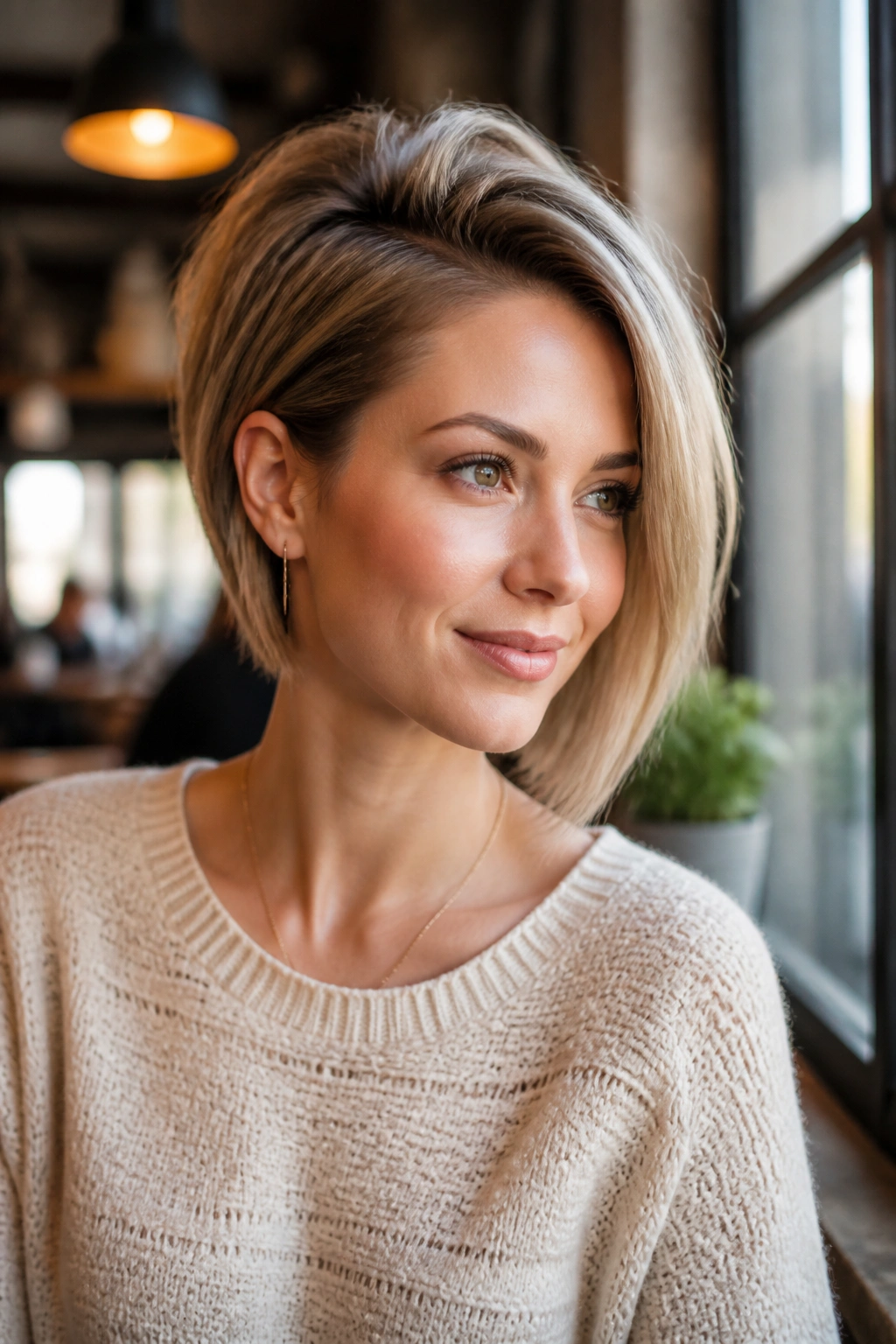
A small mismatch can make fine hair look denser. That is the whole appeal of the asymmetrical bob.
One side is cut slightly longer than the other, usually by 1 to 2 inches, and that difference creates a diagonal line that keeps the eye moving. It also gives the hair a little built-in attitude, which helps distract from places where density is weaker. On fine hair, that visual movement matters more than symmetry ever will.
This cut is at its best when the longer side is tucked behind one ear or paired with a side part. That pushes the shorter side up and gives the crown a little lift. You do not need a huge length gap to make it work. Too much difference starts feeling costume-y, and the haircut loses its ease.
It’s especially smart if one side of your hair naturally lies flatter than the other. Rather than fight that, the asymmetry makes it part of the design. Clean, modern, a little unexpected. Good stuff.
9. Rounded Bob With Curved Ends
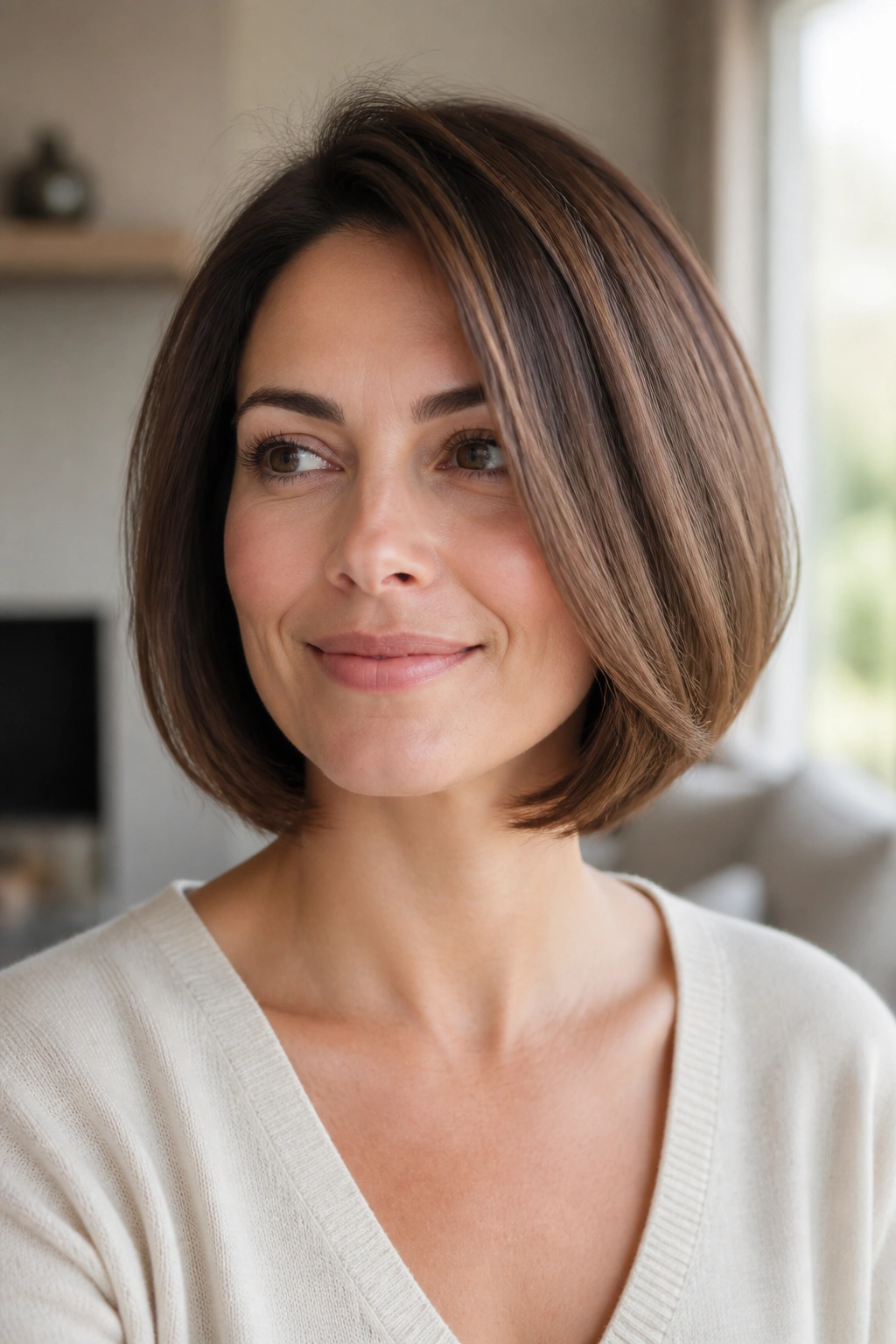
Why does a rounded bob feel fuller even when the hair itself is fine? Because the curve mimics the head and keeps the shape from collapsing into a flat curtain.
The sides come in slightly toward the jaw, and the crown is left with enough length to avoid that spiky, over-layered look. This gives the bob a soft dome shape, which reads as density from every angle. It’s one of the most flattering choices if your hair has some natural bend but not much bulk.
How to style the curve
Use a round brush that matches your hair length. A 1¼-inch brush works well for chin-length hair, while a bigger brush suits a lob. Blow-dry the roots up and away from the scalp, then wrap the ends inward for a few seconds. Finish with a cool shot so the bend holds.
A few people try to flatten this cut with a flat iron. Bad idea. You lose the roundness that makes it work.
- Set the crown with clips while it cools
- Keep product light
- Use fingers, not a brush, to break up the shape
- Skip heavy waxes near the ends
The rounded bob has a soft charm, but it is more strategic than it looks.
10. Box Bob
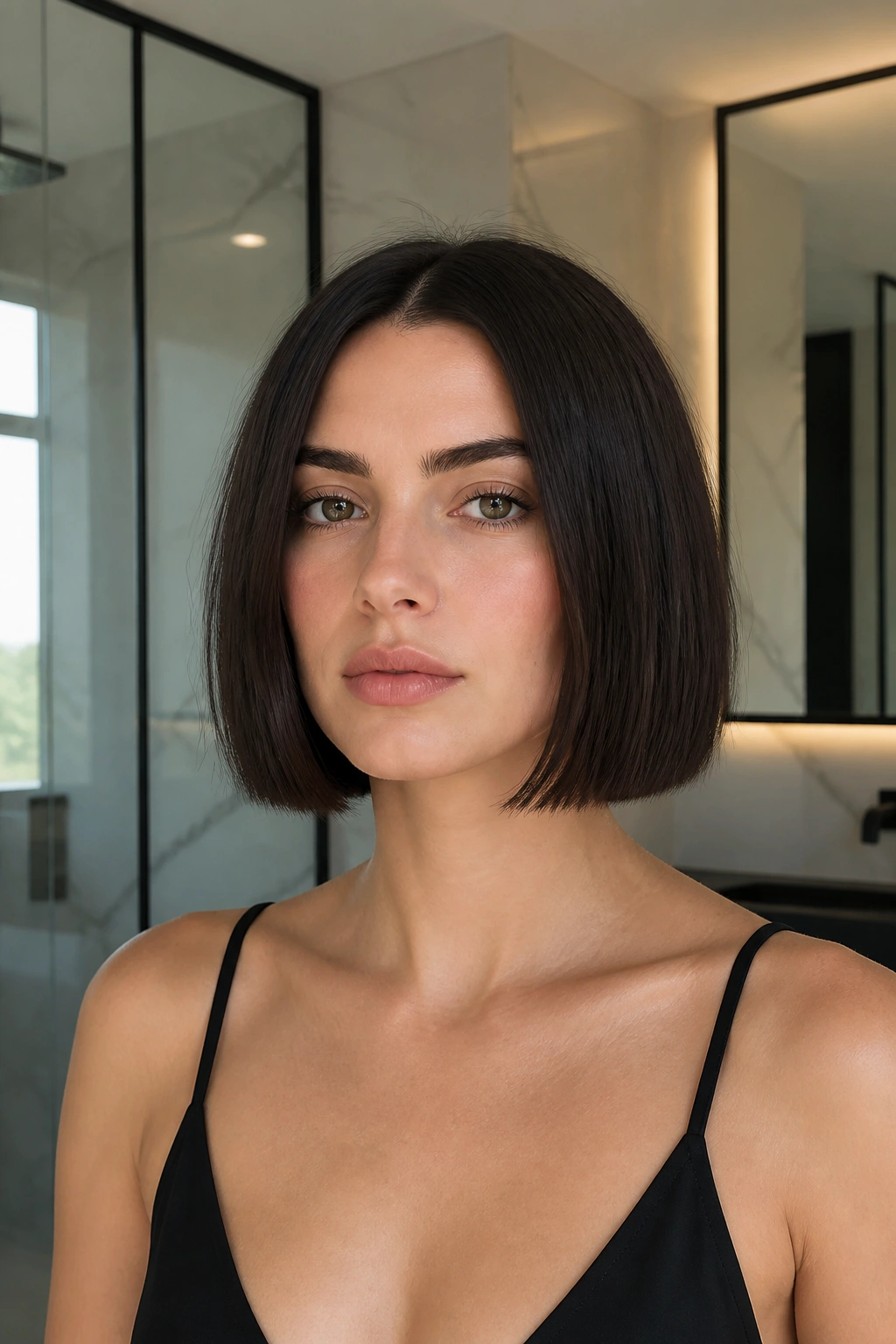
If your hair goes straight down and refuses to puff up, a box bob can be a gift. The square outline makes the hair look thicker at the bottom, which is exactly where fine hair often feels weak.
The cut is blunt, but not soft. That’s the point. The sides usually fall in a straight line around the jaw or cheekbone, and the corners stay a little sharper than in a rounded bob. That hard edge creates the illusion of density, especially from the front.
- Best for: straight or lightly wavy hair
- Length: chin to just below chin
- Styling: flat brush at the roots, then one pass of a straightener if needed
- Finish: tiny bit of serum only on the last 2 inches
A box bob is not for someone who wants movement everywhere. It’s for someone who wants the hair to look fuller and cleaner, with no fuss. The shape does not apologize, and honestly, that’s why it works.
11. Deep Side-Part Bob
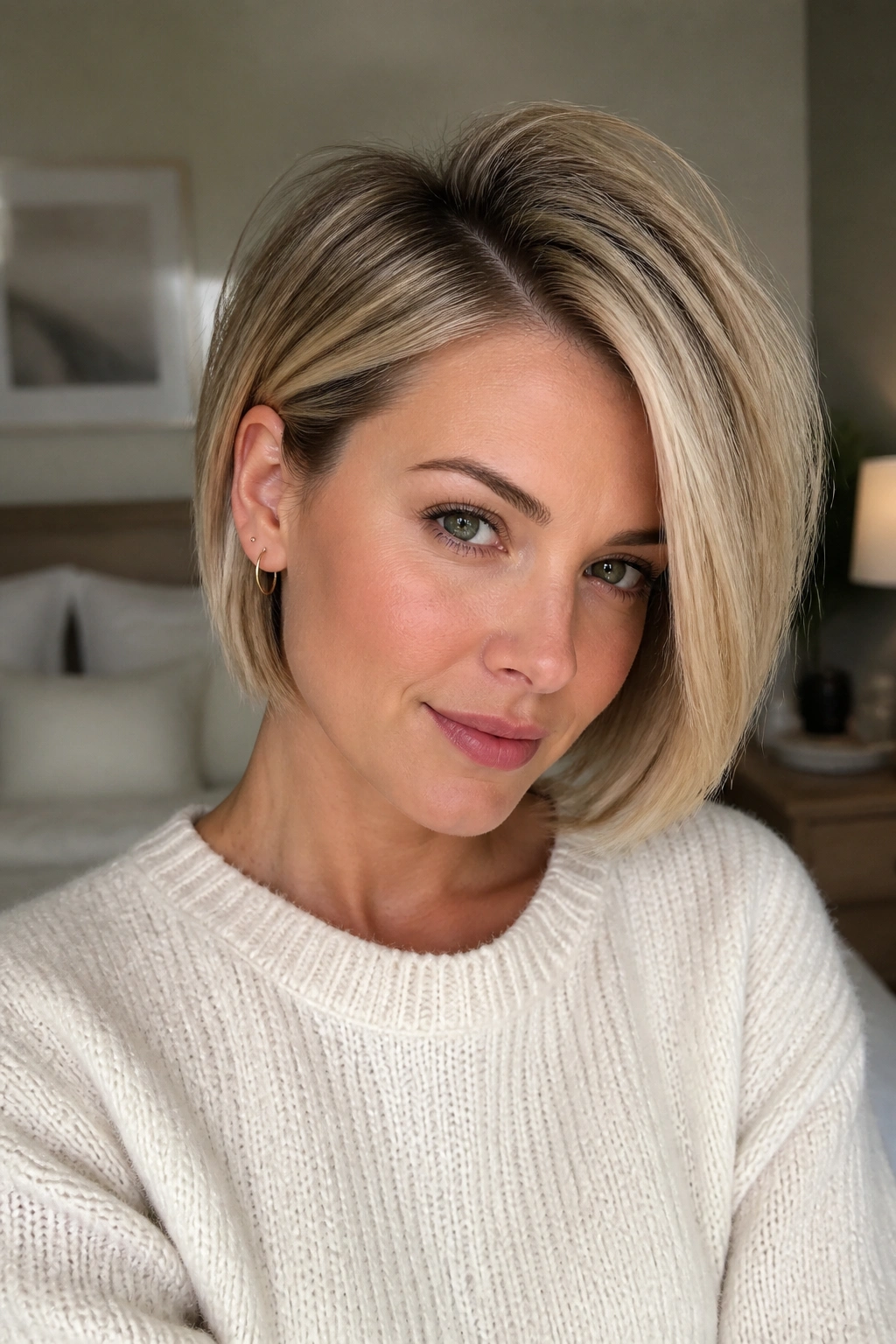
A deep side part is the cheapest volume trick in the book, and I mean that in the nicest way. It works because gravity can only flatten hair so much, and changing the part line forces the roots to rise in a new direction.
Fine hair loves this. A part that sits 2 to 3 inches off center creates instant lift at the crown, especially when the roots are blow-dried in the opposite direction first. Once the hair cools, it tends to keep more height on top, which gives the bob a fuller silhouette without a single extra layer.
Too much product can ruin the trick. If you use a powder or spray, keep it concentrated at the roots and part line. A dusty scalp is not the look. You want lift, not grit.
This style pairs well with just about any bob length, but it feels especially good on chin-length or collarbone cuts. One small shift. Big payoff.
12. Curtain-Bang Bob
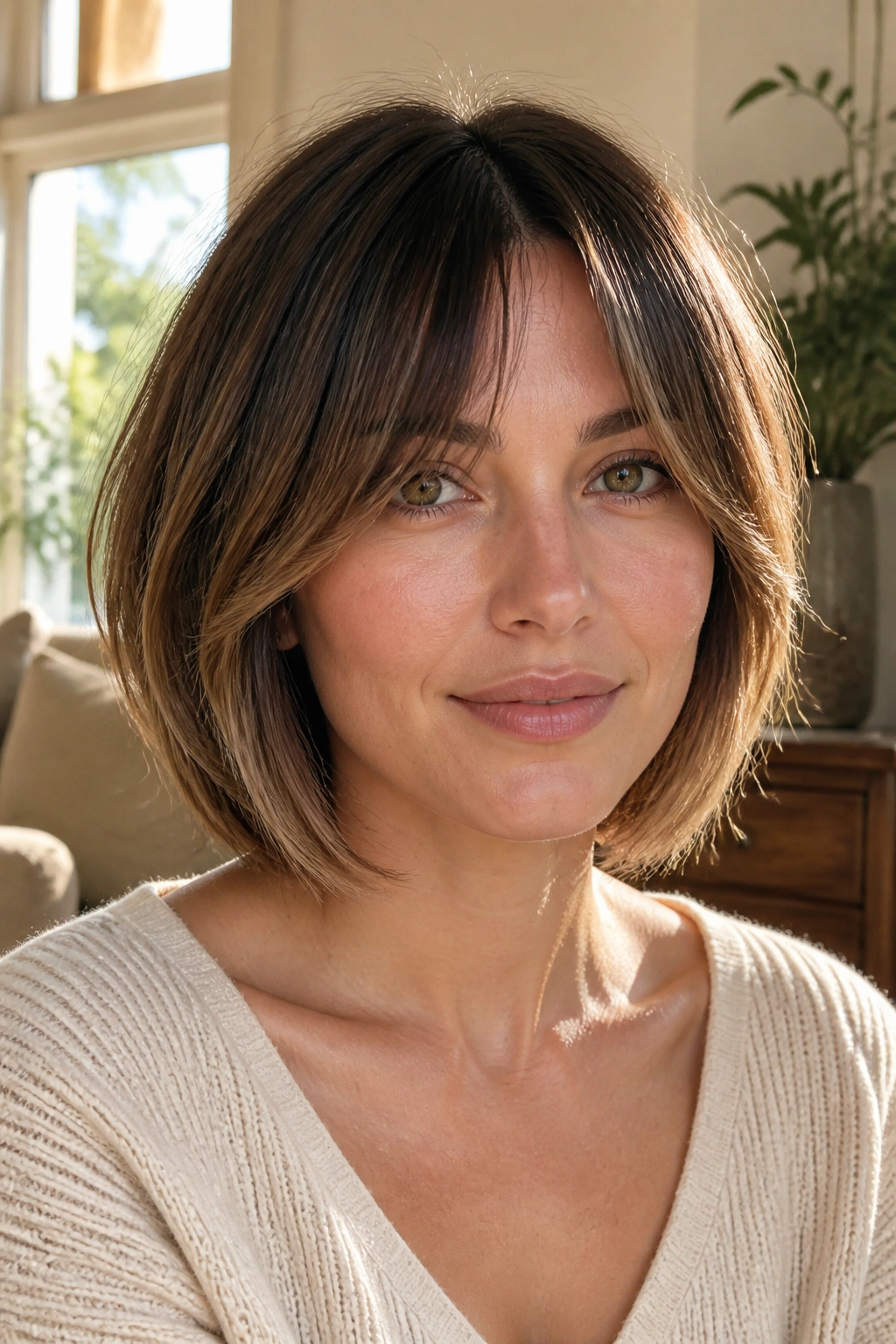
If the front of your hair feels flat or too open, curtain bangs can fix that without taking away too much density. Unlike a full fringe, they split softly at the center and frame the face in a way that makes the top half of the haircut feel fuller.
The shortest point usually sits around the brow or just below it, then the bangs blend into the bob around the cheekbones. That shape gives you movement at the front and keeps the eye from dropping straight to the ends. Fine hair benefits from that redirection.
What makes it different
Curtain bangs do not have to be heavy to make a difference. A little length at the sides gives the cut softness, while the middle gap keeps it from swallowing the forehead. This matters on fine hair because heavy bangs can steal too much from the rest of the cut.
- Blow-dry the bangs with a small round brush
- Direct them away from the face first, then let them fall open
- Keep the bob between chin and collarbone
- Use a lightweight cream, not a thick paste
If you like softness more than sharp lines, this is an easy one to wear.
13. Inverted Bob
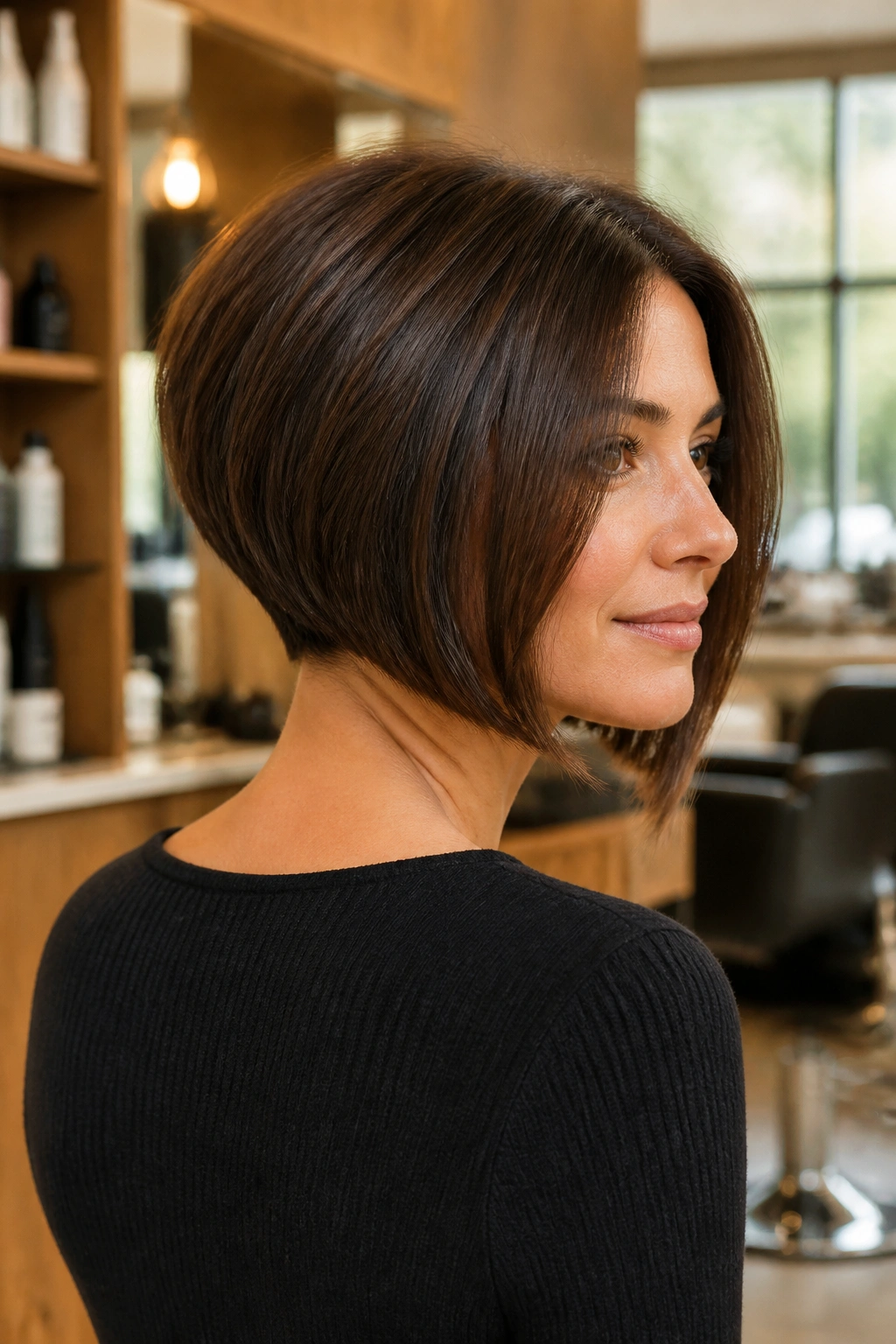
The inverted bob is stacked bob’s sharper cousin. The back is cut shorter, the front stays longer, and the whole shape angles down in a way that makes fine hair look more deliberate and more full.
That angle does a lot. It creates forward movement, keeps the nape neat, and adds the feeling of body even when the actual density is modest. The front pieces can fall toward the chin or lower cheek, which gives the hair a little swing without making the back drag.
What to ask the stylist
- Keep the front 2 to 4 inches longer than the nape
- Build the angle gradually from behind the ear
- Leave the crown clean, not chopped up
- Avoid over-thinning the sides
This cut is especially useful if your hair gets flat at the back but still has decent shape in the front. It is tidy. It is strong. And it does not need much styling once the shape is right.
14. Collarbone Bob
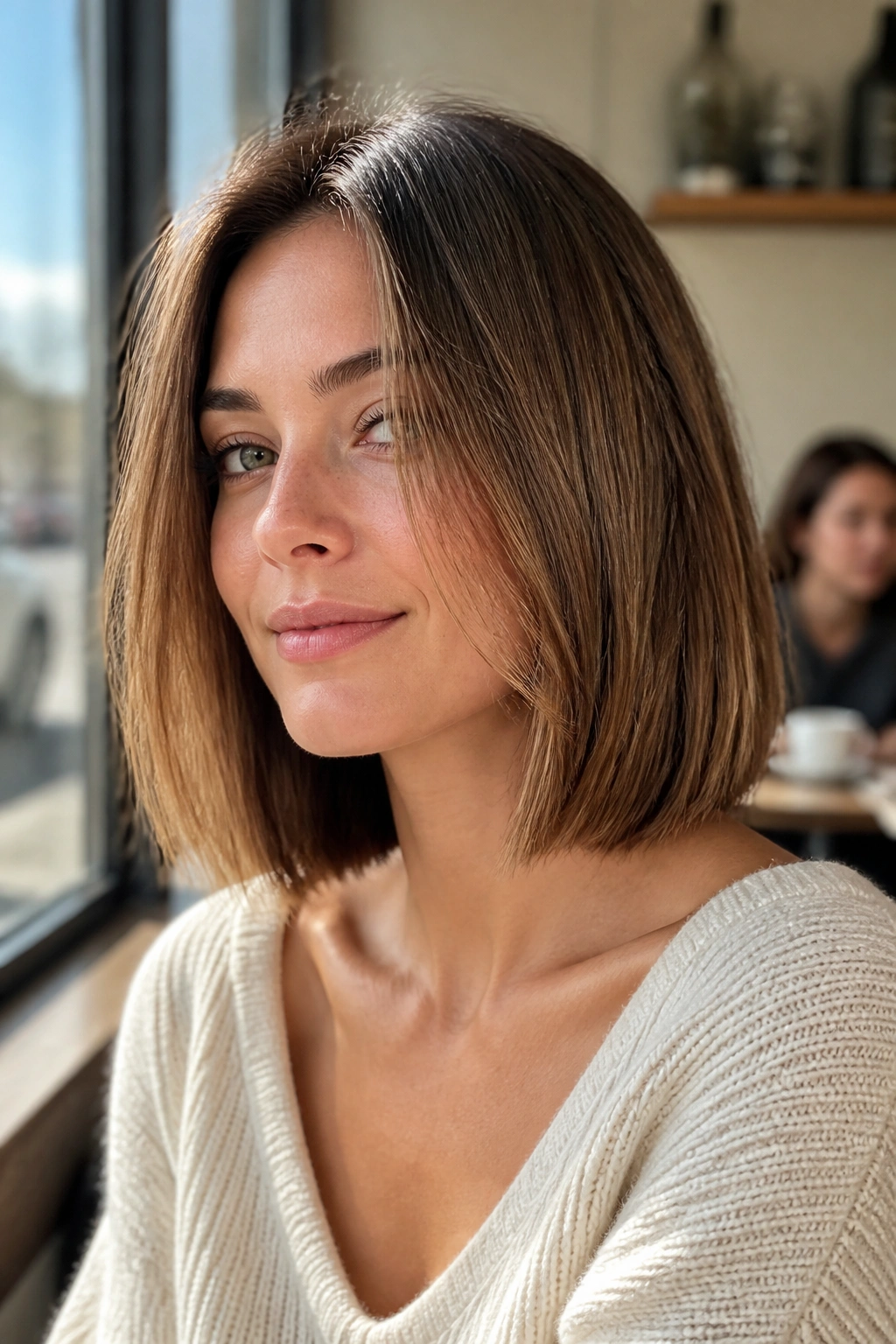
Long doesn’t have to mean limp. A collarbone bob gives you the breathing room of a longer cut while keeping enough bluntness at the ends to stop fine hair from looking stringy.
The length matters here. Hair that lands right at the shoulders can flip out in awkward ways and start to feel thin at the ends. Moving the cut to the collarbone usually fixes that. The line looks cleaner, the hair tucks easier, and the silhouette feels fuller because the perimeter stays visible.
This is a smart choice if you are nervous about going too short. You still get enough length for a low ponytail, a claw clip, or a quick tuck behind the ear. You also get more movement than a strict chin-length bob, especially if your hair has a bit of natural bend.
A blunt edge keeps it from feeling wispy. If you want softness, add it with styling, not with heavy layering. That way the haircut can still do its job on lazy mornings.
15. Wavy Bob
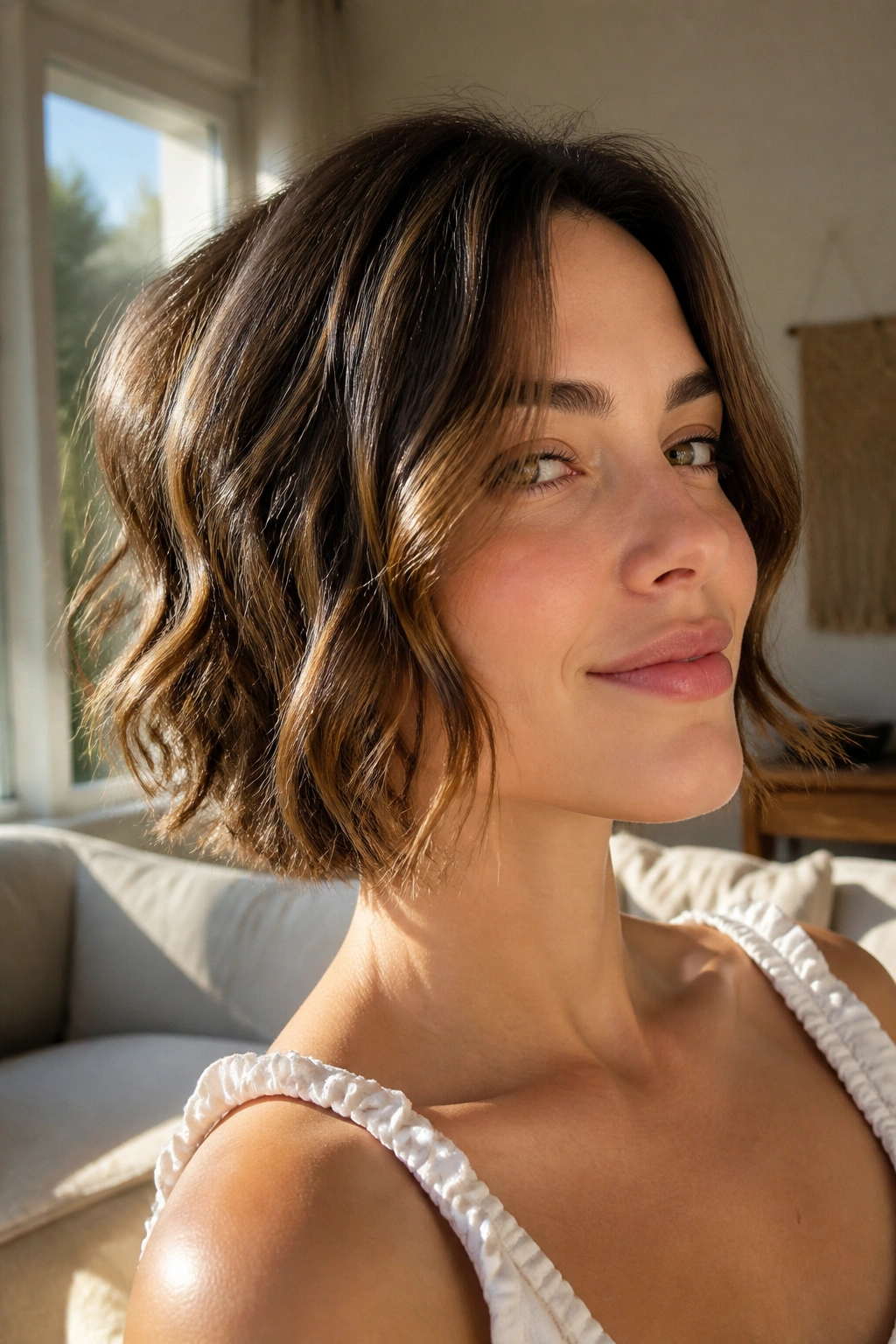
Why do loose waves make fine hair look fuller than tight curls? Because the wave creates space, shadow, and separation instead of clumping every strand together.
A wavy bob works when the movement is relaxed, not uniform. You want bends that look like they happened on the way to lunch, not ringlets that were planned down to the millimeter. Fine hair looks fuller when the strands aren’t all lying in the same direction.
How to get the right wave
Use a 1-inch curling iron or wand and leave the last inch of each section straight. Alternate the direction of the curls so the texture doesn’t fall into one pattern. Once the hair cools, slide fingers through it rather than brushing it out.
- Use mousse on damp hair
- Mist salt spray only through the mid-lengths
- Leave the ends a little straighter
- Pin the crown for 10 minutes if you need extra lift
This version is best if your hair already has some natural texture. If it is poker-straight, you’ll need a little more work, but the result is worth it.
16. Jaw-Grazing Bob With Internal Layers
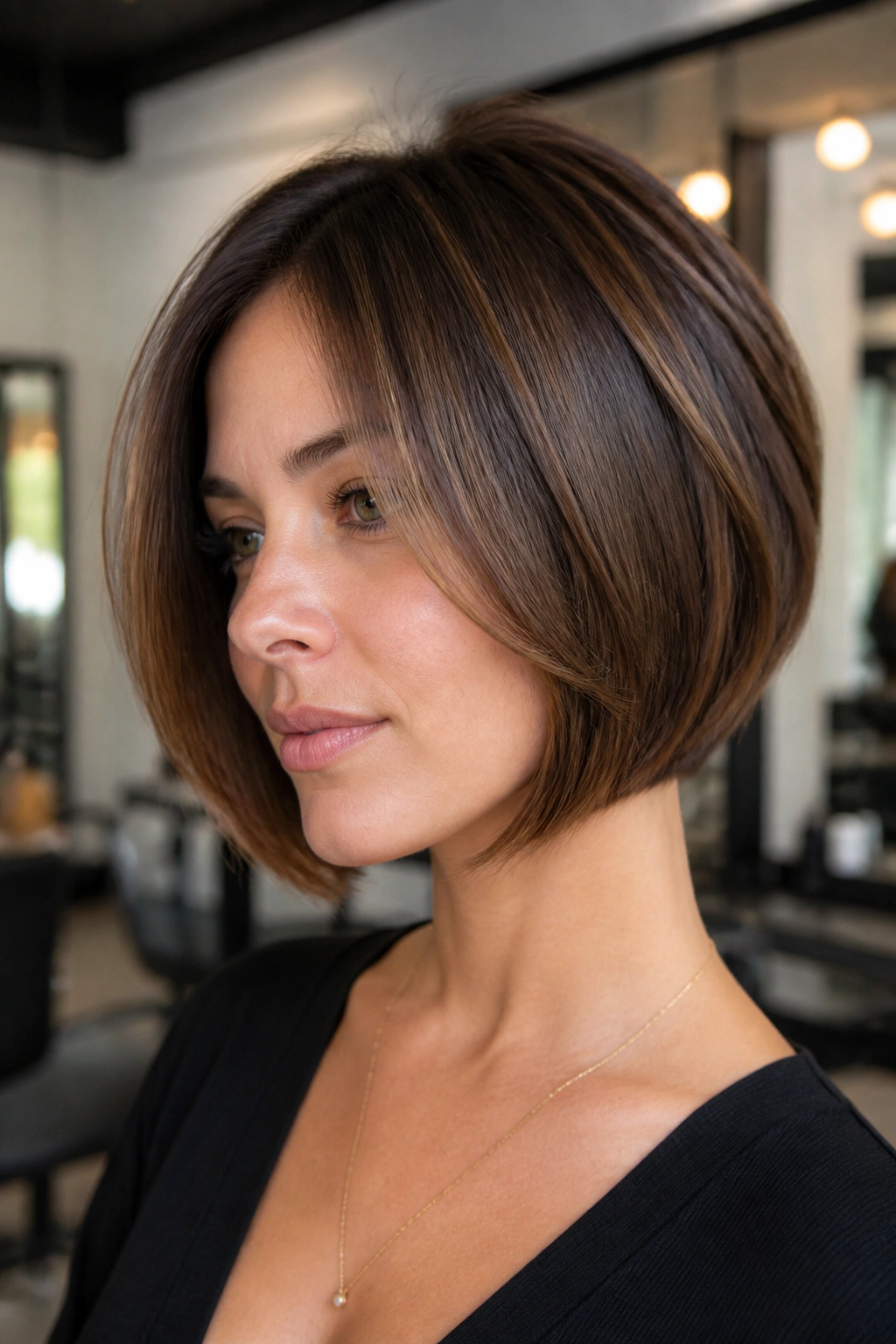
There is a sweet spot at the jaw where fine hair suddenly looks more alive. A jaw-grazing bob lands right there, and internal layers keep it from feeling heavy without stripping away the fullness at the edge.
The trick is that the layers stay hidden. They live inside the cut, under the top surface, so the outer line still looks solid. That is exactly what fine hair needs. You get lift where the roots want to lie flat, but the perimeter keeps its shape.
Key details to ask for
- Length that sits right at the jawline
- Internal layers, not shredded ends
- Slight lift in the crown area
- Soft face-framing only if needed
This cut is especially useful if your hair feels thick at the roots but weak at the ends. It gives the illusion of a stronger body without making the bottom edge fray out. A little styling cream and a round brush are enough.
If you like a bob that looks crisp but not severe, this one hits the mark.
17. Bubble Bob
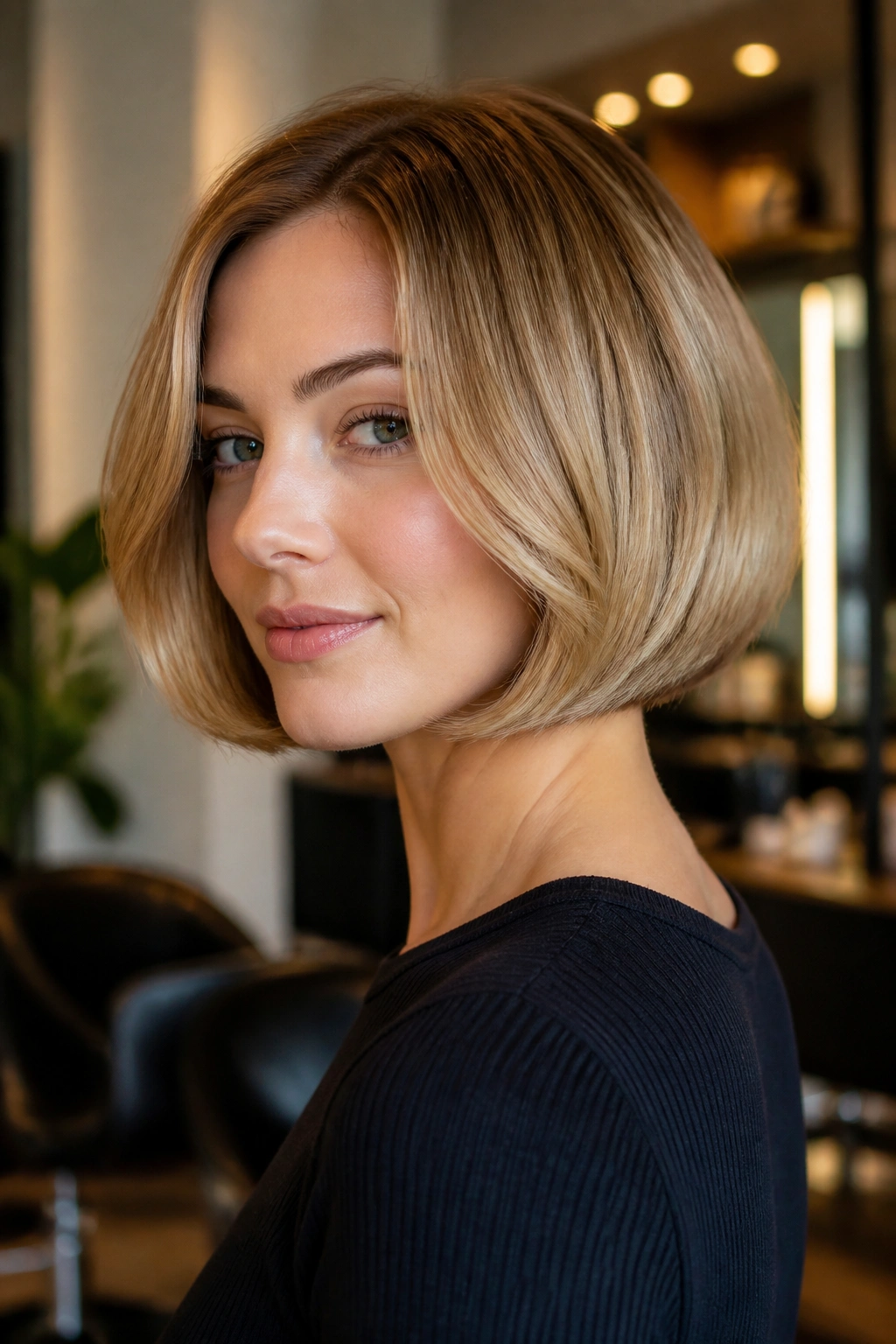
The bubble bob is not for people who want sharp corners. It is for people who want a rounded, full shape that feels plush from the nape to the ends.
The silhouette curves inward at the bottom, almost like the hair is gently tucked under itself. That creates a soft “bubble” effect, which makes fine hair look fuller than a flatter shape would. It also keeps the outline from getting too wispy at the perimeter, which is a common issue when density is low.
The style works best with a rounded blowout and a little lift at the crown. Use a medium or large round brush, depending on length, and finish the ends with a cool shot so the curve stays in place. Don’t drown it in spray. Too much product makes the roundness sticky instead of soft.
This cut has a polished feel, but it can still look easy if you leave a little bend in the front pieces. That little looseness keeps it from feeling too formal.
18. Air-Dried Tousled Bob
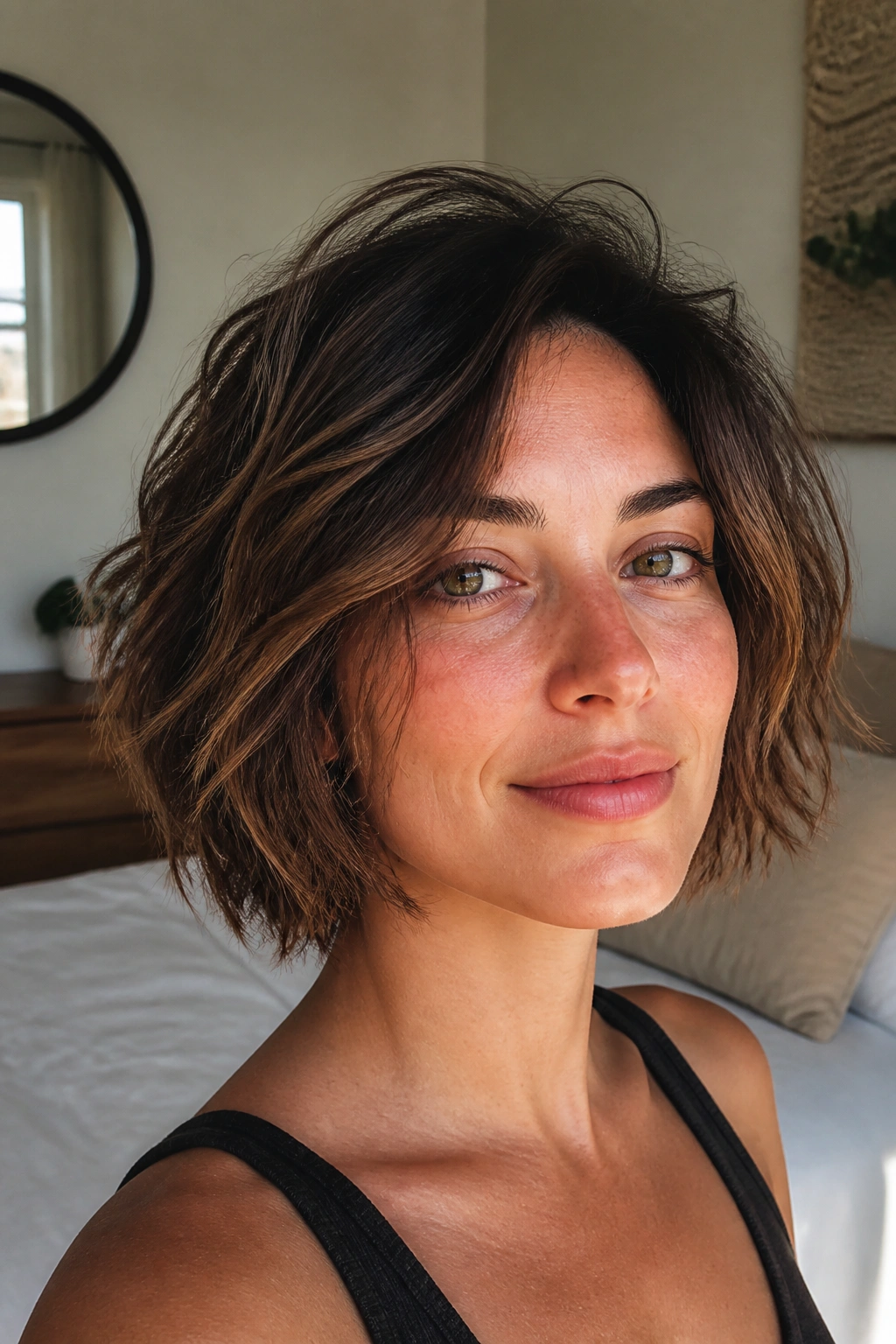
If a smooth blowout feels like too much work, an air-dried tousled bob can make fine hair look fuller in a way that feels honest and low-maintenance. The texture gives the strands separation, and separation is your friend when the hair is thin.
This cut tends to work best on hair that already has some wave. You can help it along with foam or a light mousse on damp hair, then scrunch the ends and clip the roots for a bit while they dry. If you need a nudge, diffuse for 5 to 7 minutes just to wake the shape up. That is usually enough.
A big mistake is letting the hair dry in one heavy clump. That leaves the top flat and the ends stretched out. Break the hair into sections with your fingers while it’s drying, and do not touch it too much after that. Fine hair can go from tousled to frizzy fast.
This is the cut for people who like movement more than polish. It has a little grit to it. In a good way.
19. Sleek Center-Part Bob
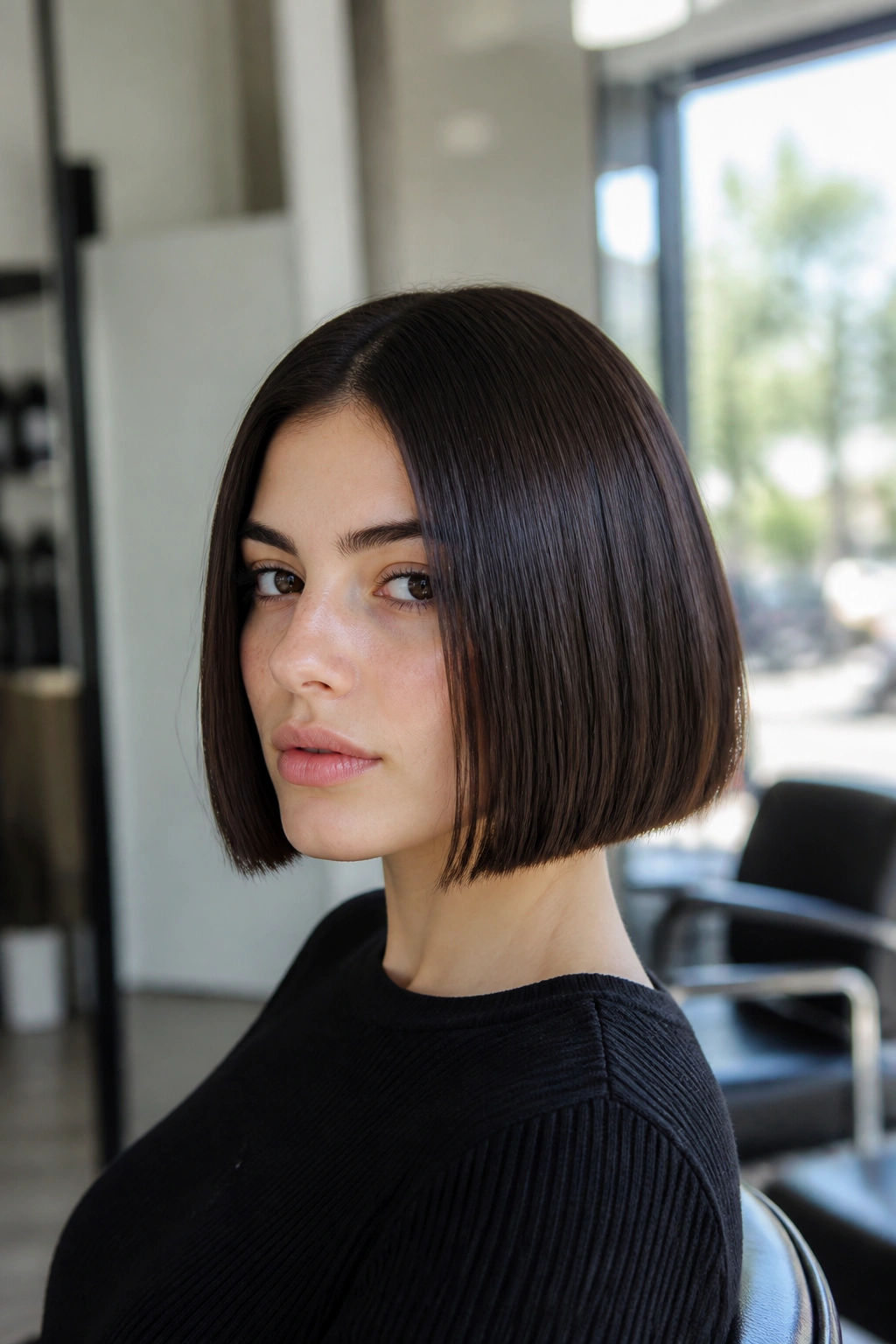
A sleek center-part bob can look thinner on a hanger and thicker on a head. That sounds backward, but the symmetry makes the outline feel deliberate, and the blunt ends keep the hair looking dense.
The center part works especially well when the hair is cut with a strong perimeter. The middle line creates balance, while the ends do the heavy lifting. If the bob sits at the chin or just below, the shape can feel sharp and modern without losing softness around the face.
The middle-part trick
Part the hair straight down the bridge of the nose, then blow-dry each side flat at the roots before smoothing the ends inward. If you want a cleaner finish, run a flat iron through the last 1 to 2 inches only. That keeps the root area from collapsing.
- Keep the part precise
- Use lightweight heat protectant
- Tuck one side behind the ear for a quick shift
- Finish with a light shine spray, not oil at the scalp
Do not load the roots with heavy product.
That’s the whole game here. Clean, sharp, and denser-looking than it first appears.
20. Feathered Bob With Soft Ends
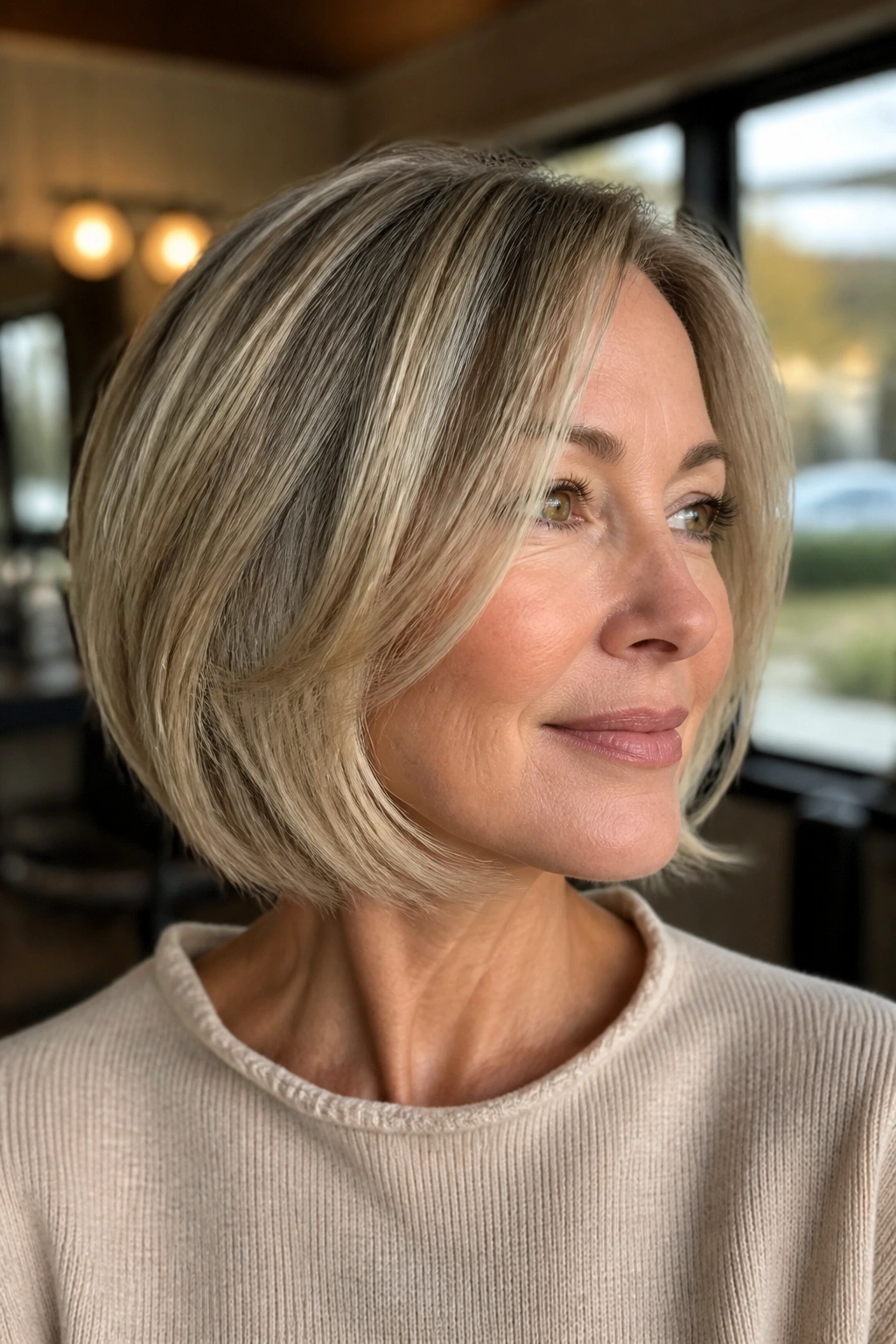
Feathering is lovely when the feathers are tiny. Big feathering can make fine hair look scraped away, but a controlled version softens the edge just enough to add movement without stealing fullness.
This bob usually keeps a blunt-ish base while the top layers and face-framing pieces get a light taper. The ends should still feel present. You want air around the face, not holes through the whole cut. That distinction matters more on fine hair than almost anything else on this list.
A feathered bob is a solid choice if you dislike harsh lines but still want shape. It feels lighter than a blunt bob, yet it does not have to look sparse. Ask for the softest feathering around the outer perimeter and the front pieces only. Leave the middle of the cut strong.
If your ends are already fragile, keep the feathering minimal. If your hair has a bit of bend and you want movement without a fussy style, this one earns its place. It’s one of those cuts that looks good on day one and still makes sense when you wake up and do almost nothing to it. That restraint is the trick.
