



Thin hair needs shape more than it needs length, and that is exactly why bob haircuts for thin hair keep earning their place in the real world. A good bob can make the ends look denser, give the crown a little lift, and stop that limp, stringy feeling that long layers can create when they start separating by midday.
A lot of people use “thin hair” to mean two different things, and the distinction matters. Fine hair means each strand is small in diameter. Low-density hair means there are fewer strands on the head. A bob can help both, but the fix is not the same: fine hair usually wants a cleaner edge and less aggressive texturizing, while low-density hair needs a shape that keeps the eye on the line, not the gaps.
The best part is that bobs are not one-note. A chin-length blunt cut, a soft French bob, a stacked shape, a collarbone lob, a rounded bob — each one changes how the hair falls, how much lightness you see at the ends, and how much effort you need in the morning. Some of them are sleek and tidy. Some are a little airy. Some give the illusion of more hair with nothing more than a smarter perimeter.
Start with the cuts that protect the bottom edge first. That is where the fullness lives.
1. Chin-Length Blunt Bob for Thin Hair

This is the cut I reach for first when someone says their hair feels flat, wispy, and too fine to hold a style for long. A chin-length blunt bob keeps the perimeter solid, which makes the ends look heavier than they really are. That dense-looking edge does a lot of the work for you.
Why the blunt edge matters
A blunt line gives the eye one clean place to land. No shredded ends. No airy, see-through finish. Just a firm edge that makes thin hair look more deliberate and a little thicker.
- Ask for the length to sit right at the chin or a hair below it.
- Keep the layers minimal, especially through the bottom half.
- Style with a small round brush and lift the roots straight up while drying.
- Skip heavy razor texturing if your ends already look sparse.
My best tip: if your hair is very fine, keep the perimeter blunt and let the movement come from styling, not from the cut itself.
2. French Bob with Soft Micro Bangs

A French bob is short, cheeky, and far less precious than people think. On thin hair, that shorter length helps because the ends stop looking stretched out. Add micro bangs, and the cut suddenly has a little architecture up front, which keeps the whole thing from reading flat.
This cut works best when it stays a touch imperfect. The fringe should be light, not helmet-like, and the bob should skim the jaw or sit just below it. If it is too polished, the whole effect can feel severe. If it is too layered, you lose the clean shape that makes thin hair look fuller in the first place.
I like this on straight or softly waved hair. It has a natural bend to it, and the short length gives you more bounce with less effort. Dry it with your fingers, then finish the ends with a flat iron only if they kick out in odd directions. Tiny tweaks. That is all it needs.
3. Side-Parted Jaw-Length Bob

Can a side part really make thin hair look thicker? Yes — and not in a dramatic, fake sort of way. A side part pushes some hair over the crown, which creates instant lift where flat hair usually sits hardest.
How to ask for it
A jaw-length bob with a side part should keep the ends full while shifting the weight slightly to one side. That little imbalance makes the style feel more alive, and it helps if your hair clings to the scalp.
You want the stylist to keep the perimeter clean and avoid over-layering near the temples. A tiny bit of face framing is fine. Too much will open up the sides and make the cut look light in the wrong way.
- Move the part about 2 to 3 inches off center.
- Keep the length around the jawline.
- Ask for soft internal shaping, not choppy slices.
- Use root-lifting spray only at the part line.
Best for: people whose hair goes flat at the crown no matter what they do.
4. A-Line Bob with Longer Front Pieces

If your hair tends to disappear at the front, an A-line bob can be a smart fix. The front sits longer than the back, so the eye follows a stronger diagonal instead of focusing on wispy ends. That shape gives thin hair a little drama without making it look heavy.
The trick is keeping the angle gentle. A steep A-line can expose too much neck and make the front look straggly, especially if the hair density is low. A soft angle, though, gives you movement, a little swing, and a more polished outline.
Here’s what I’d tell a stylist in the chair:
- Keep the back slightly shorter, but not stacked high.
- Let the front graze the chin or sit about 1 inch below it.
- Leave the face-framing pieces longer than the center line.
- Use a round brush or a big curling iron to bend the front under.
That shape feels clean. It also grows out well, which is worth something.
5. Collarbone Lob with Clean Ends
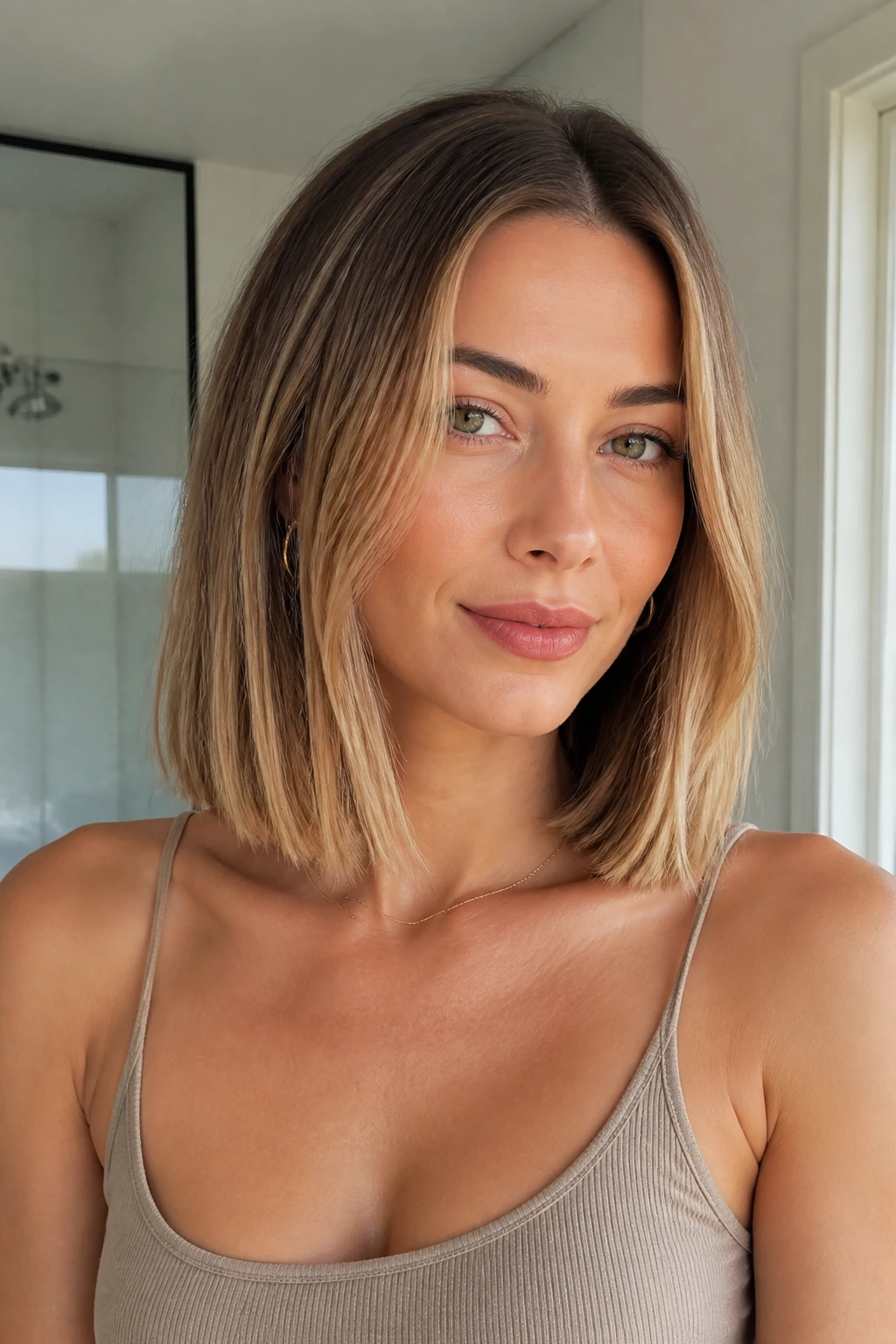
Not everyone wants to go short-short, and I get that. A collarbone lob gives thin hair a little breathing room while still keeping enough weight at the bottom to avoid that see-through finish that longer hair can develop. The collarbone is a sweet spot because the ends can graze the body without looking stringy.
This cut is especially useful if you wear your hair up sometimes. You still have enough length for a small tie-back, but the overall shape is lighter and easier to move around. Keep the ends blunt or only barely beveled. A lot of layering here defeats the point.
I also like this length for people who like changing their style from week to week. Straight one day. Soft wave the next. Tucked behind the ear when you’re in a hurry. It has range without asking for much. And when thin hair is cut cleanly at the shoulders, it often looks fuller than a longer style that hangs with no shape at all.
6. Stacked Bob with Gentle Graduation
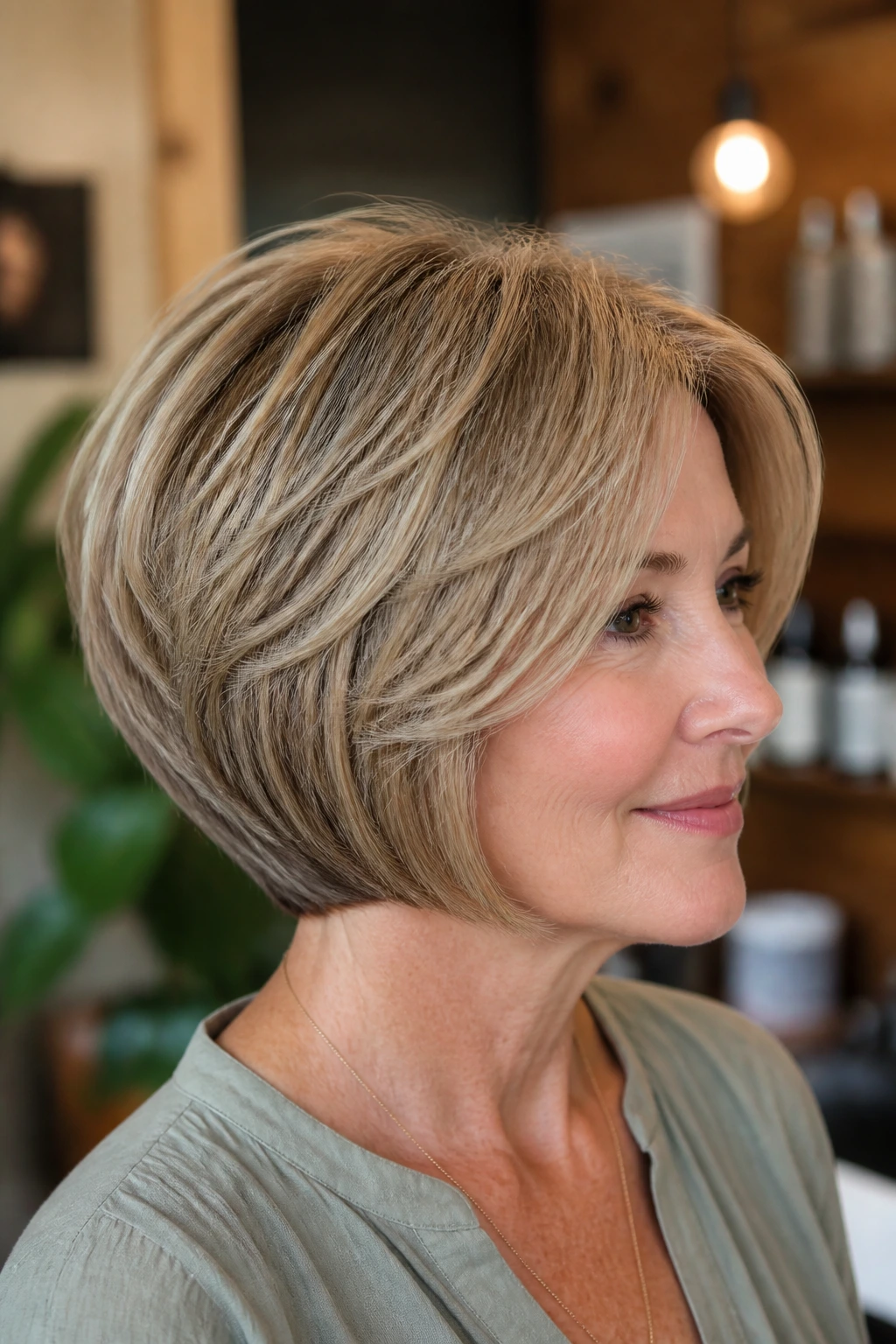
A stacked bob builds volume where thin hair usually needs it most: at the back of the head. Unlike a one-length cut, it uses graduation to create lift near the nape, so the shape stands away from the scalp instead of hugging it.
What makes it different
The back is shorter, and the top layers are allowed to sit a little longer. That creates a soft rise through the crown. Not a puff. Just enough lift to keep the style from collapsing.
I like this version better than a sharp, old-school stack. Too much height in the back can look dated fast, and on very fine hair it can expose the scalp if the layers are cut too aggressively. A gentle stack gives you the volume without the stiffness.
This cut is a strong pick if your hair goes flat from the back forward. Blow-dry with a round brush, lifting the crown at a 45-degree angle, and direct the nape downward so the shape stays neat. A little root spray helps. A lot is overkill.
7. Textured Wavy Bob with Piecey Ends

A little wave can rescue thin hair from looking lifeless, but only if the texture is kept under control. A textured wavy bob works because the bend breaks up the flat sheet effect. The hair catches itself in small sections, which makes the whole style look fuller and softer.
What you do not want is frayed ends. That is the trap. If too much hair is sliced away, the bob stops looking airy and starts looking scarce. Keep the texture in the mid-lengths and around the face, not across the whole bottom edge.
How to wear it
A damp styling cream, a bit of sea salt spray at the roots, and a loose scrunch with your hands can be enough. If you diffuse, use low heat and stop when the hair is about 80 percent dry. Then let the rest finish on its own.
This style is best when it looks touched, not overworked. The more you fuss with it, the more it risks turning dry and fuzzy.
8. Invisible-Layer Bob for Thin Hair
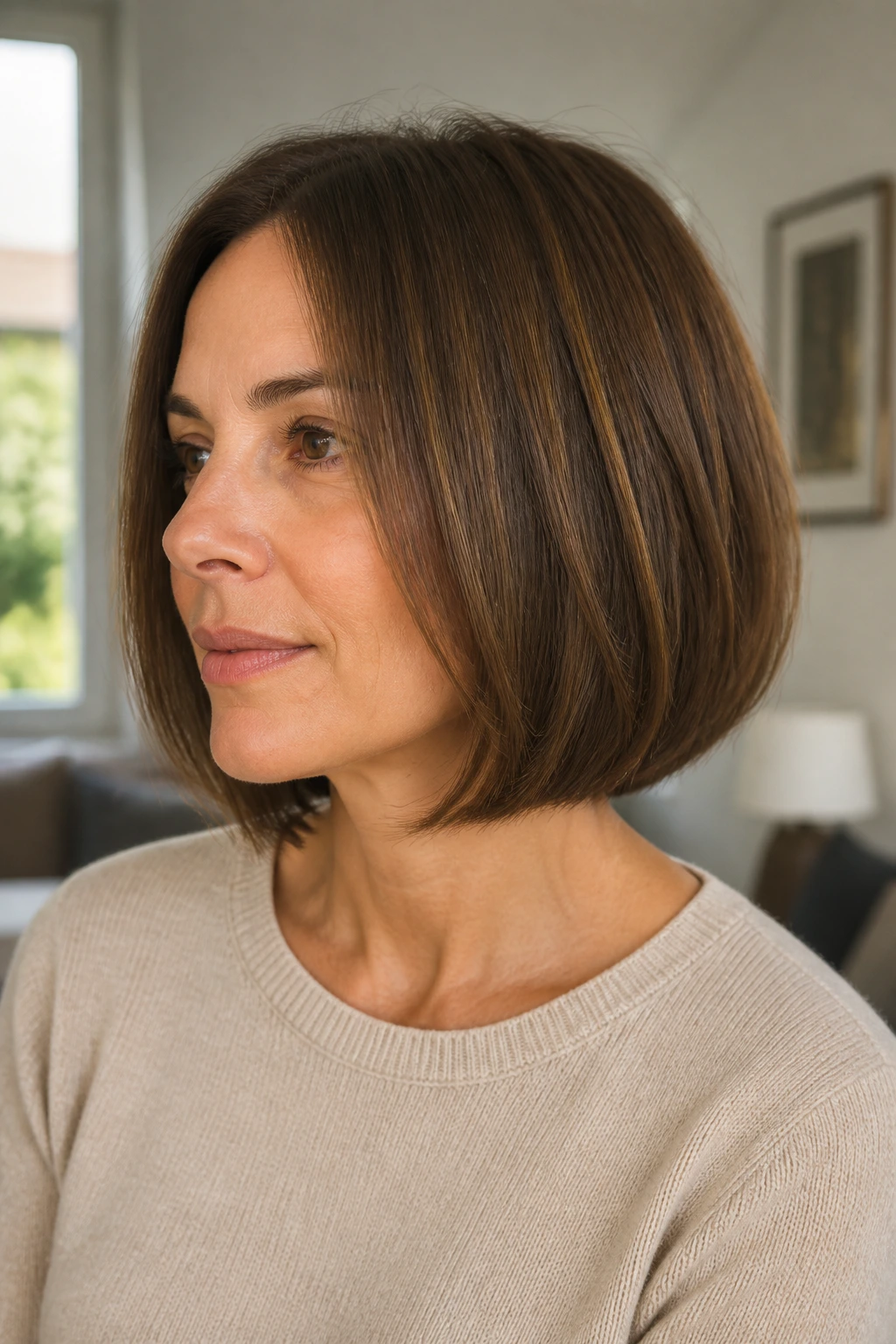
If you hate the look of obvious layers but still want movement, this is the cut to ask about. Invisible layers sit underneath the top canopy, so the silhouette stays clean while the inside loses a little weight. That is a smart move for bob haircuts for thin hair because the perimeter still looks strong.
The effect is sneaky. The hair moves better, yet nobody sees the mechanics. That matters more than people think. A lot of thin-haired clients get talked into visible layers that make the ends look airy in the wrong way. Internal shaping avoids that problem.
- Ask for layers that start below the ear, not near the jaw.
- Keep the outside line blunt or softly beveled.
- Dry with a paddle brush if you want smoothness, or a round brush if you want lift.
- Use just enough mousse to support the roots, not to stiffen the ends.
One good rule: if you can spot the layers from across the room, they’re probably too heavy for fine hair.
9. Curly Bob with a Dry Cut Shape

Curly hair and thin hair can absolutely live in the same head, but the cut has to respect the curl pattern. A curly bob should be shaped when dry or nearly dry so the stylist can see where the curls spring and where they collapse. Wet cutting alone often hides the real length.
For thin curls, the danger is over-thinning. That leaves curls with no support, and suddenly you get airy roots with weak ends. Not a good trade. A good curly bob keeps enough mass at the bottom to hold the shape while trimming away only the frizz and uneven spots.
I like this best at jaw length or slightly below. That length gives curls room to spring without creating a mushroom shape. A curl cream with light hold helps, but the haircut does the heavy lifting. If the shape is right, the hair looks fuller even when it dries naturally and a little imperfect.
10. Sleek Tucked-Behind-Ear Bob

Sometimes the smartest thing you can do is keep the haircut clean and let the styling do the talking. A sleek bob tucked behind the ear makes thin hair look neat, polished, and more intentional than a half-done blowout that keeps falling apart.
The tuck opens up one side of the face and gives the other side a little more visual weight. That imbalance is useful. It keeps the eye moving, which makes the hair feel less sparse. On very fine hair, a center part can sometimes expose the scalp more than you want. A side tuck softens that.
Use a lightweight serum through the ends and smooth the top with a flat brush while drying. Then tuck one side behind the ear and let the other side fall. That’s enough. If you try to over-style it, the finish can get too slick and start showing every little gap.
11. Curtain-Bang Bob

Curtain bangs are a nice middle ground when you want face framing but do not want a heavy fringe. On thin hair, they break up the forehead area without stealing too much density from the sides. That matters. A thick fringe can eat the fullness you were trying to keep.
This bob works best when the bangs start around the cheekbone and taper into the sides. The length should stay long enough to blend, because abrupt bangs can make thin hair feel chopped up. The bob itself can sit at the jaw or a little below it, depending on how much neck you want to show.
I like this cut on people who wear a round brush blowout or soft bends. The bangs move away from the face, the sides still look full, and the whole shape has a nice bit of swing. It’s not stiff. It’s not fussy. It just gives the haircut somewhere to go.
And that is often the missing piece.
12. Box Bob
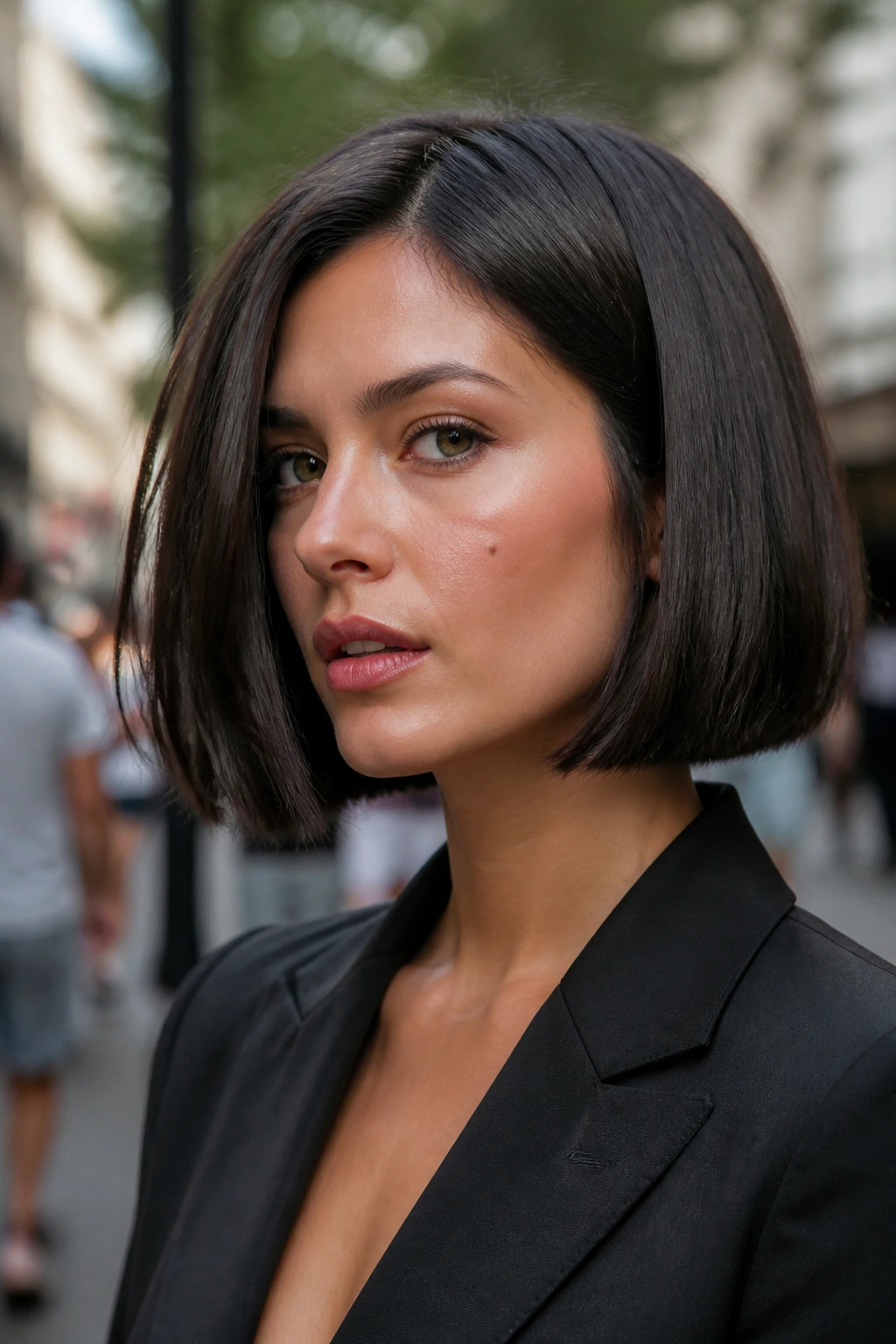
A box bob looks simple, but the shape does something useful for thin hair: it creates strong edges on both sides. Unlike a rounded bob that curves in gently, the box bob keeps the sides straighter and the corners more defined. That square outline makes the hair read thicker.
Why it suits fine strands
The cut depends on a firm perimeter. If the ends get too wispy, the box effect falls apart. So the goal is to keep the outline clean and let the thickness come from the structure, not from a pile of product.
This is a good choice if your hair is straight or only slightly wavy. It does not need a lot of styling, but it does need regular trims to protect the line. If you let it grow too far past the jaw, the shape can soften too much and lose its punch.
I’d recommend it for anyone who likes a tidy look and doesn’t want a lot of visible layers. It’s not trying to be playful. It’s trying to make thin hair look stronger.
13. Graduated Bob with a Soft Stack
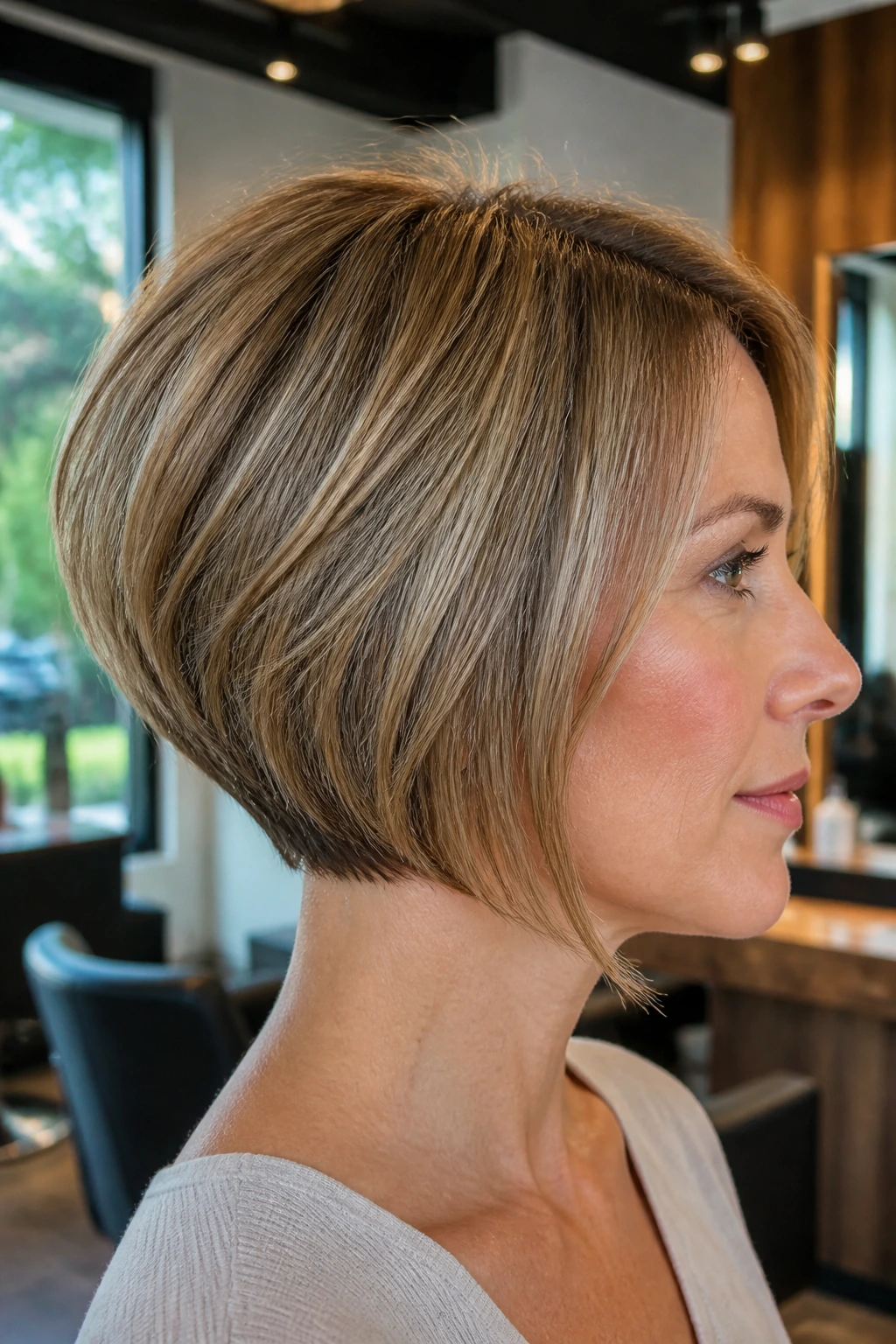
A graduated bob sits somewhere between a classic bob and a stacked cut. The back is shorter, the top carries more length, and the line from nape to front stays smooth. On thin hair, that extra lift in the back can stop the shape from drooping after a few hours.
The softer version is the one I prefer. Too much graduation can make the cut feel bulky in the back and hollow at the sides. A clean, gradual shift keeps the head shape balanced and still gives that nice rise at the crown.
This cut works especially well if your hair is straight and likes to lie flat. It also grows out in a forgiving way, which is a relief if you do not get to the salon every six weeks. Ask for the stack to stay subtle, not steep. A good graduated bob should move when you turn your head, not sit there like a triangle.
14. Razor-Soft Bob

A razor can be a good tool, but it is not a free pass. On thin hair, razor work can either soften the ends in a flattering way or strip away too much weight and leave the perimeter frayed. The difference is tiny, which is why this cut needs a careful hand.
The version worth having is a razor-soft bob with a strong base line and just a little softness at the tips. That gives the hair movement without making it look shredded. I would only ask for this if your hair is healthy, not overly bleached, and not already weak at the ends.
What to watch for
- Keep the razor work at the bottom inch only.
- Avoid heavy razoring through the crown.
- Pair the cut with a blunt outline, not a broken one.
- Use a smoothing cream if the ends start separating too much.
If your hair is already fragile, scissors are safer. A razor is a tool, not a magic trick.
15. Shaggy Bob with Controlled Ends

Can a shag work on thin hair? Yes — if it stays controlled. That is the part people skip. Too much shagging turns the ends into dust, and then the hair looks even finer than before. The right shaggy bob keeps the bottom dense and adds the movement higher up.
How to keep it from going wispy
The crown and face-framing pieces can carry more texture, while the perimeter stays stronger. That gives you some edge without destroying the base. On wavy hair, this cut is especially nice because the natural bend keeps the layers from falling flat.
You’ll want light mousse at the roots and a quick scrunch through the mid-lengths. If you have to blow-dry it, use a diffuser or a small round brush and stop before the ends get overworked. The best shaggy bob still looks like hair, not frayed thread.
I’d pick this for someone who likes a bit of mess and does not want to spend half the morning smoothing every strand into place.
16. Asymmetrical Bob

A subtle asymmetrical bob gives thin hair a point of interest, which matters more than people expect. One side sits a little longer than the other — maybe half an inch, maybe an inch and a quarter — and that small shift changes the whole shape of the cut.
The eye reads the diagonal line first, not the density. That is the trick. Thin hair can look more intentional when the haircut has a clear design choice built in, and asymmetry does exactly that. It also lets you tuck one side back while keeping the other side full enough to frame the face.
I would keep the difference modest. A huge asymmetry can make the cut feel gimmicky and can expose sparse spots if the hair is very fine. Subtle is better. The hair should still feel balanced when you turn your head, even if it is not perfectly even on paper.
This one is for people who want a little edge without giving up the neatness of a bob.
17. Wedge Bob
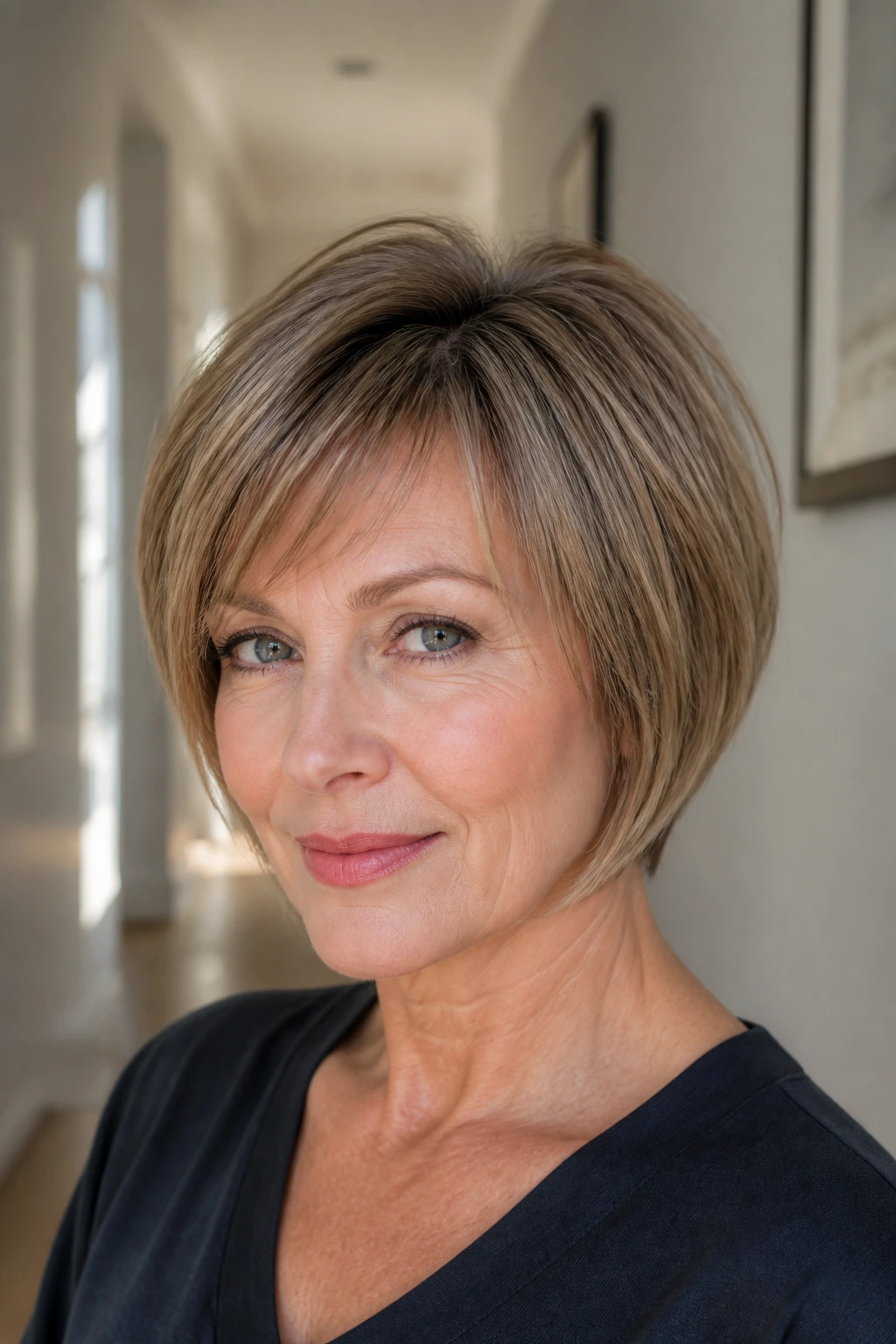
The wedge bob is a cousin to the stacked bob, but it feels a touch sleeker and more geometric. It is shorter in the back, fuller through the crown, and angled so the shape looks lifted even when the hair is not freshly blown out. That makes it a strong choice for thin hair that tends to lie close to the head.
What I like about the wedge is how efficiently it uses shape. You get volume without a lot of extra length or fluff. That means the haircut can look styled even on a plain day. For people with slippery straight hair, that matters a lot because volume often disappears the minute humidity enters the room.
A wedge does best when the neckline is neat and the top is not over-layered. If the back is cut too short or the crown too hollow, the whole thing can tip into helmet territory. Keep it soft, keep it clean, and it works.
18. Long Bob with a Deep Side Part

A long bob with a deep side part is a quiet workhorse. It gives thin hair enough length to feel flexible, but the side part injects lift at the crown and keeps the style from settling flat across the top. That little shift makes a bigger difference than people expect.
This is one of the easiest cuts to wear if you like options. You can bend it with a large-barrel iron, tuck one side behind the ear, or let it air-dry with a small wave. The length at the collarbone still gives the ends enough weight to avoid that stringy look. Not too long. Not too short. Just enough.
It’s also a forgiving grow-out if you are not ready for a shorter bob. The part can change depending on your mood, and the cut still works. I’d keep the layers minimal and focus on the front contour instead. Thin hair likes a good outline more than it likes a pile of texture.
19. French Bob with Side-Swept Fringe

If micro bangs feel too sharp, the French bob still has another lane. A side-swept fringe softens the forehead and blends into the rest of the cut, which helps thin hair keep its fullness around the temples and cheeks.
The fringe should be light enough to move, not heavy enough to split the front into chunks. That balance is the whole point. You want a bit of interest near the eyes without losing the clean bob line underneath. A chin-grazing shape works especially well here because it keeps the style compact and easy to manage.
This is a good pick for straight or softly wavy hair and for anyone who likes a little romance in the cut without going full retro. A blow-dry with a round brush can sweep the fringe away from the face, or you can let it fall loose and slightly undone. Both look good. Both feel easy.
20. Nape-Length Bob with Tapered Neckline
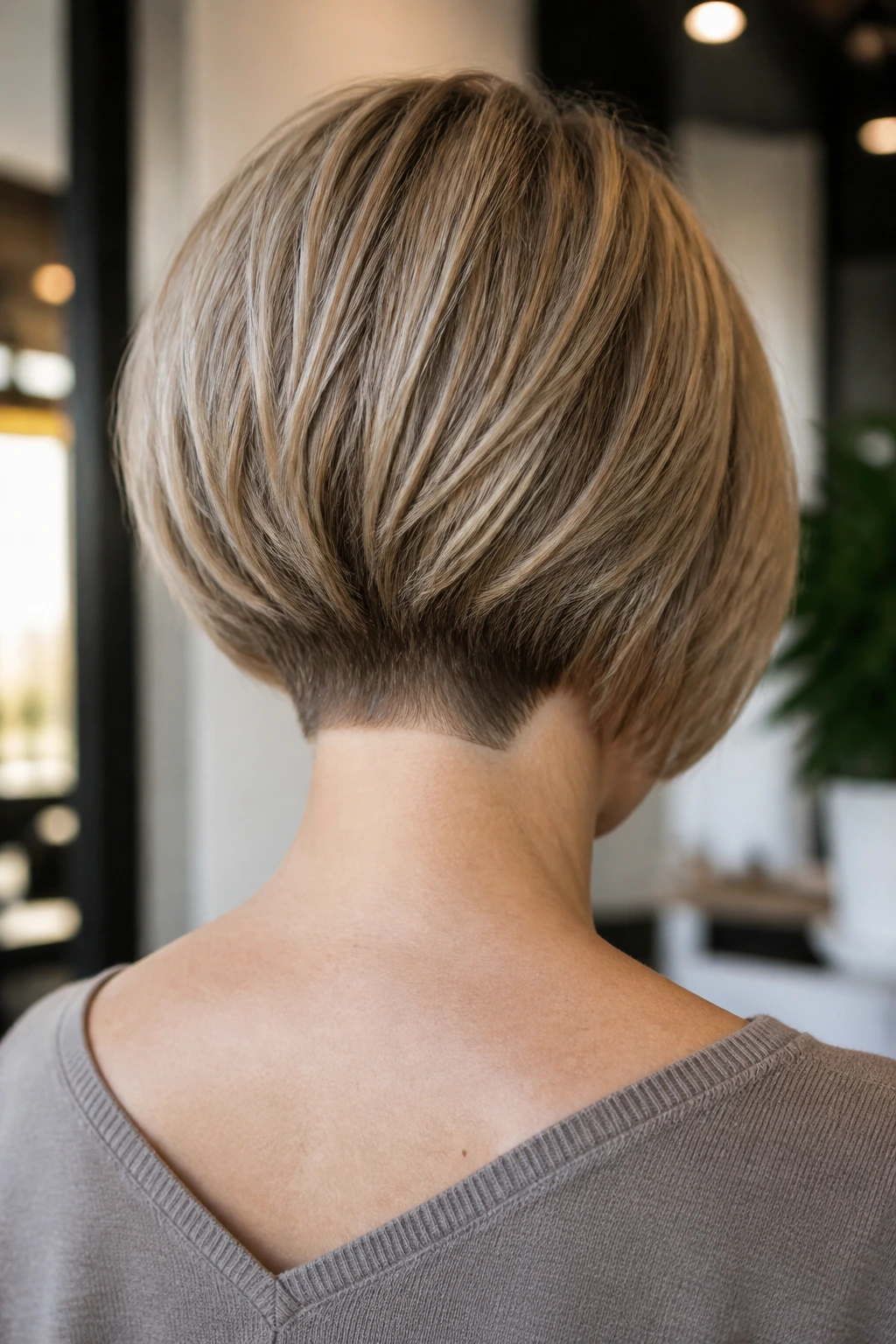
A nape-length bob is short enough to feel crisp but long enough to stay practical. On thin hair, the shorter length can make the ends appear denser because the shape stays compact instead of hanging in a weak curtain. The tapered neckline helps keep the back neat as it grows out.
I like this for people who want a clean neck and minimal fuss in the morning. It can be flattering with straight hair, especially if the hair tends to slide flat against the head. The short back gives a little lift, and the tapered line keeps the whole cut from looking blocky.
This one does need regular trims. Every six to eight weeks is a good rhythm if you want the nape to stay tidy. If you wait too long, the shape can lose its crispness fast. It’s a tidy haircut, and it rewards maintenance.
Still, when it’s fresh, it looks sharp in the best way.
21. Rounded Bob with Face-Framing Corners
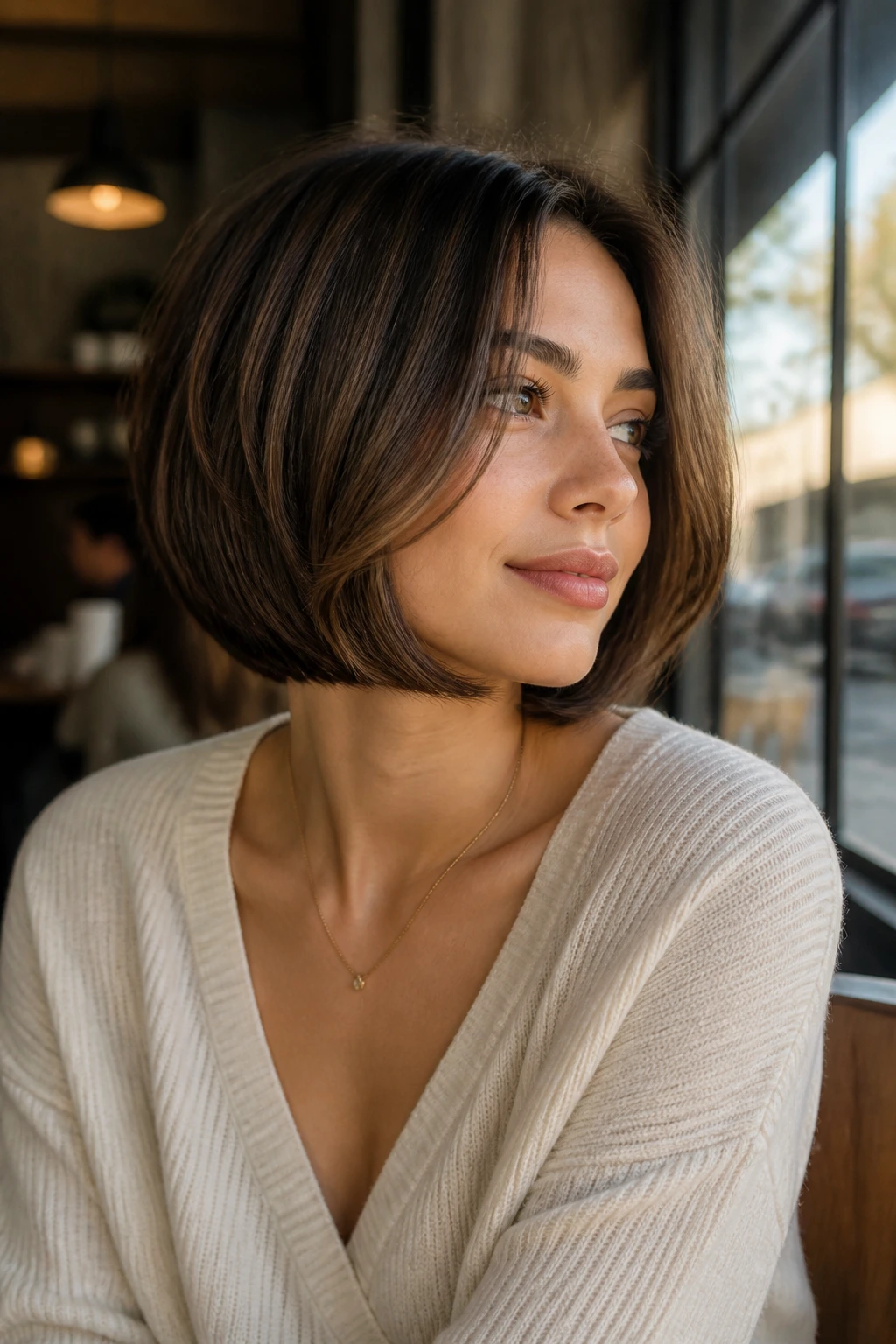
A rounded bob curves inward around the jaw and cheekbones, which is useful when thin hair needs a softer, fuller outline. Instead of letting the ends hang straight, the shape bends them inward a little, so the hair looks like it has more body around the face.
What makes it work
The corners should stay soft. You do not want a harsh bubble shape, and you do not want the ends cut so bluntly that the bob sits like a helmet. The sweet spot is somewhere in between: smooth, rounded, and tidy.
This cut is especially good if your face is long or narrow, because the rounded sides add width where you want it. A round brush and a light blow-dry cream can help the hair curve under without making it stiff. If you like a more natural finish, a quick tuck behind the ear on one side keeps it modern.
It is one of those styles that looks calm but still does a lot of work underneath.
22. Airy Blunt Bob for Thin Hair

If I had to give one cut to someone who wants thin hair to look fuller without making styling a whole project, this would be it. An airy blunt bob for thin hair keeps the perimeter strong, softens the ends just enough to move, and avoids the over-layered look that can make hair seem even finer.
The length can sit at the jaw or just below it. The important part is the edge. Keep that line solid. If you want a little softness, ask for light internal shaping instead of visible choppy layers. That gives the haircut some swing without breaking the outline that makes it look thick.
This cut is easy to live with. It can air-dry into a neat shape, or you can give it a five-minute blow-dry and still look put together. That is the whole appeal. It does not fight thin hair. It works with it.
And honestly, that is the rule that matters most. The best bob for thin hair is the one that still looks full after a windy walk, a long day, and a mediocre blow-dry. If the shape holds, the rest becomes much easier.
