



A good wolf cut on a plus size woman is usually softer than the pictures make it look. The version that flatters most people has a lifted crown, face-framing pieces that land near the cheekbones, and ends that keep enough length to feel balanced instead of chopped up.
That balance matters. A wolf cut that is too short at the top can balloon around the sides, and a cut that is too long can lose the whole point and just turn into regular layers with attitude. The sweet spot sits somewhere in the middle: movement near the face, body through the crown, and enough length around the jaw and neck to keep the shape easy on the eye.
I keep coming back to one rule with this haircut: shape beats drama. A careful wolf cut can make curls spring up, give straight hair some grit, and soften fuller cheeks without making the haircut feel fussy or overworked. The best part is that you can steer it in a lot of different directions, from soft and wearable to a little more punk, depending on how much edge you want.
1. Soft Wolf Cut With Curtain Bangs
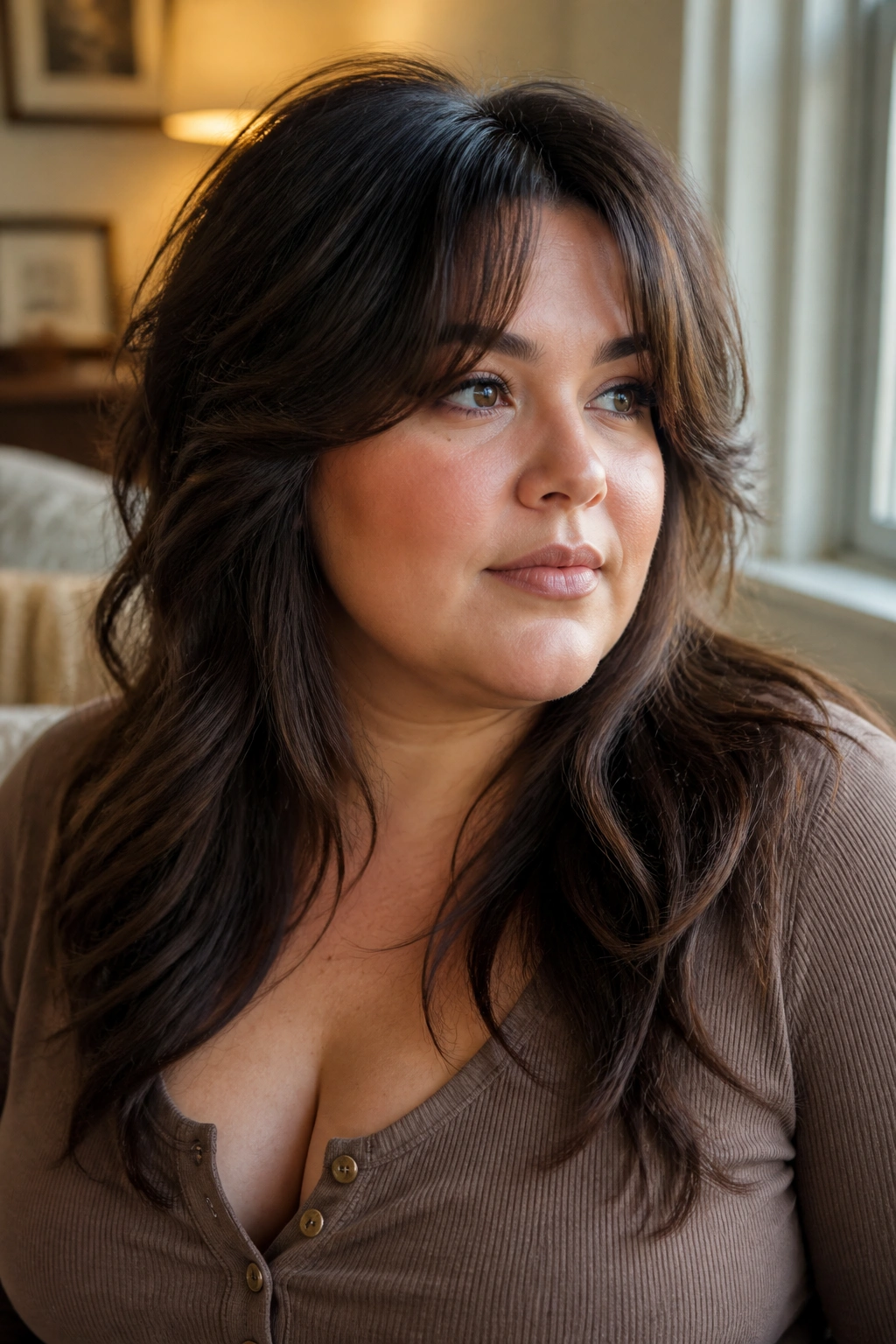
This is the easiest wolf cut to love if you want something flattering without going full rock-and-roll. Curtain bangs break up the forehead and pull attention toward the eyes, while the softer layers around the crown create lift without making the haircut feel spiky.
Why it works so well
The shortest pieces usually sit somewhere between the brow and the cheekbone, which is a nice zone for fuller faces because it opens the center of the face without cutting the length off too high. I like this version on medium to thick hair especially, because the bangs can blend right into the sides instead of sitting like a separate piece.
A good stylist will keep the fringe airy, not heavy. You want the bang to part on its own with a little sweep, not sit in one solid curtain that feels like a helmet.
Ask for:
- Short face-framing pieces that start around the cheekbone
- Crown layers that are soft, not choppy
- Ends that keep length past the shoulders
Best for: rounder faces, soft features, and anyone who wants the wolf cut look without a hard edge.
Quick tip: Blow-dry the bangs first with a small round brush, then use the leftover bend through the sides. It saves time and keeps the shape cleaner.
2. Collarbone Wolf Cut With Face-Framing Layers
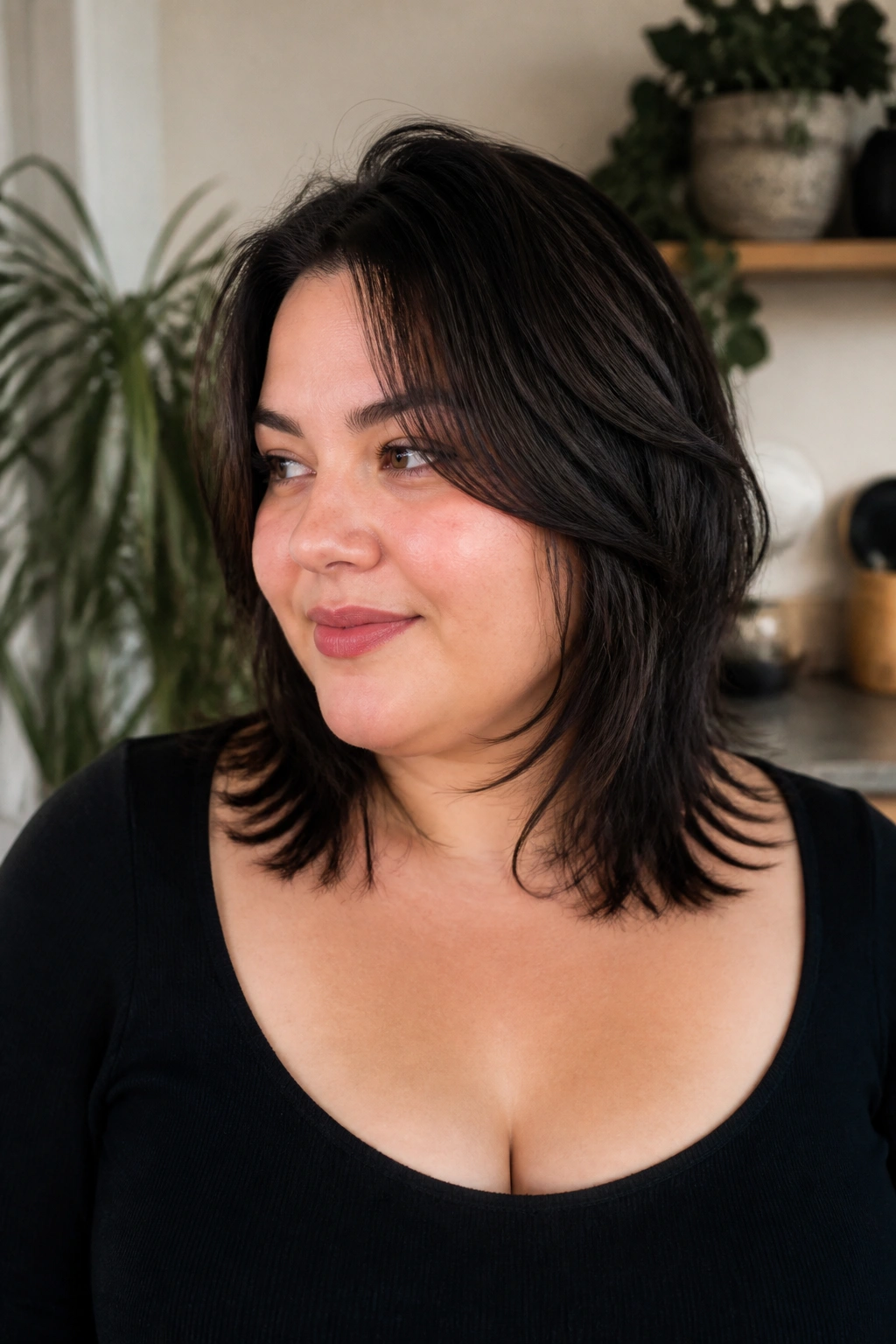
Want movement without giving up length? This is the one I’d point to first. The collarbone length gives you that long vertical line, which is quietly helpful when you want the haircut to feel balanced on a fuller frame.
The face-framing layers do most of the work here. They should fall near the mouth, chin, and top of the collarbone, not all the way up near the temples. That keeps the look soft and avoids the overly layered “triangle” shape that some wolf cuts can drift into.
What makes this version flattering
Because the perimeter stays around the collarbone, the cut still feels polished when you wear it straight. When you curl or wave it, the shorter front pieces kick out just enough to give the haircut life.
This one is also easy to live with. You do not need to style it like your hair is going on stage. A 1-inch curling iron on the front sections and a light texture spray through the ends is usually enough.
If you like a haircut that can go from office-clean to a little messy with one quick shake of the head, this is a strong choice.
3. Long Wolf Cut With Bottleneck Bangs
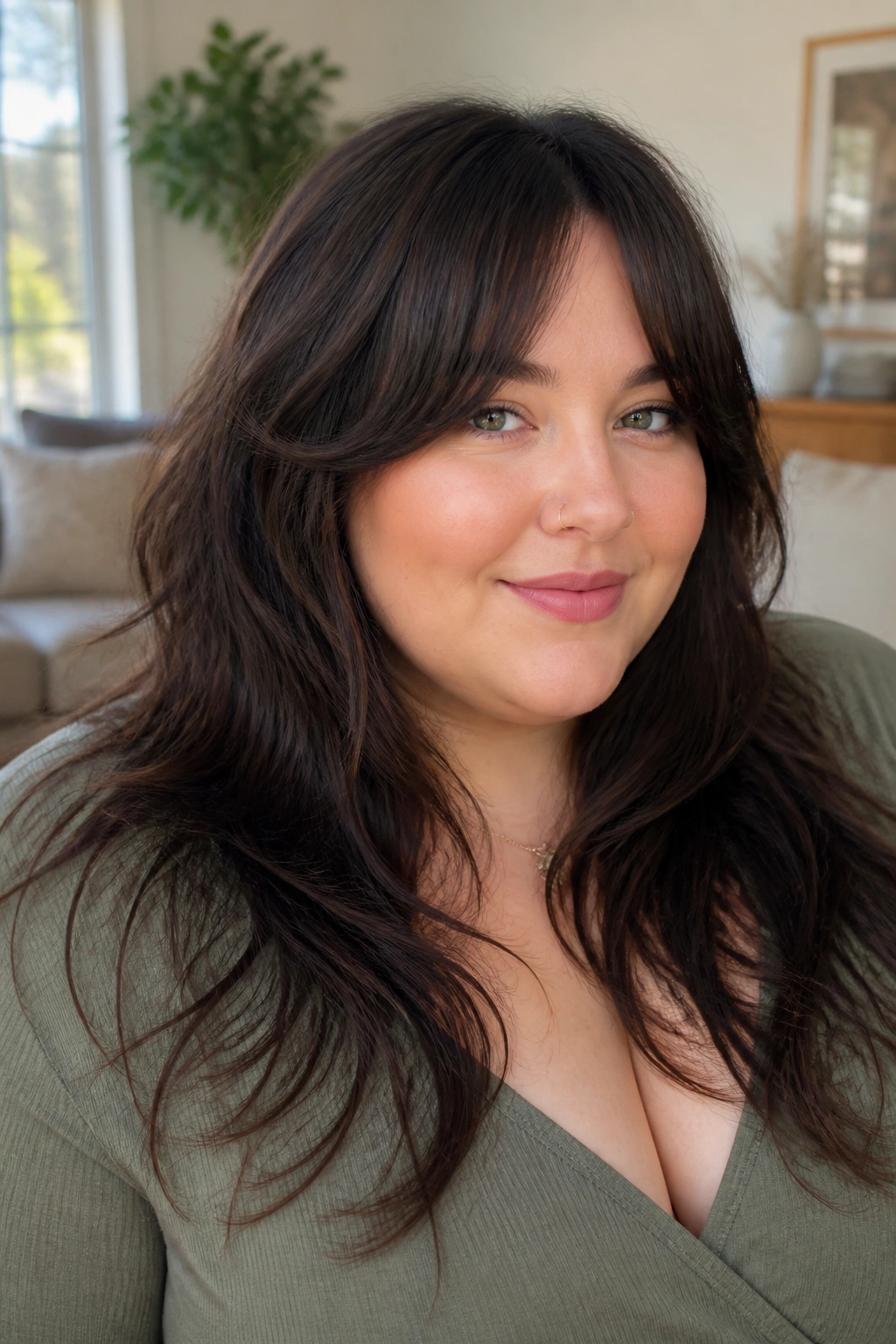
Long hair can absolutely be a wolf cut. People forget that. The trick is keeping the layering high enough to create movement while letting the overall length stay below the shoulders, where it keeps the face looking open and the silhouette long.
Bottleneck bangs work beautifully here because they start narrow in the center and open out through the sides. That shape softens the forehead without swallowing it, which can be a problem with thicker fringe on fuller faces.
Why this version feels different
Unlike a blunt long layer cut, this one has some attitude. The shorter crown sections lift the hair off the head a little, so the style doesn’t sit flat and heavy. Yet the ends stay long enough that the look still feels feminine and grounded.
It’s a strong match for dense straight hair, wavy hair, and even blown-out curls. The extra length gives you room to play with braids, half-up styles, or a messy claw clip on days when you’re done with your hair by 8 a.m.
A little tip that matters: keep the bottleneck bangs cheekbone-grazing, not chin-heavy. That small shift makes the whole cut feel lighter.
4. Shoulder-Length Wolf Cut With Loose Waves
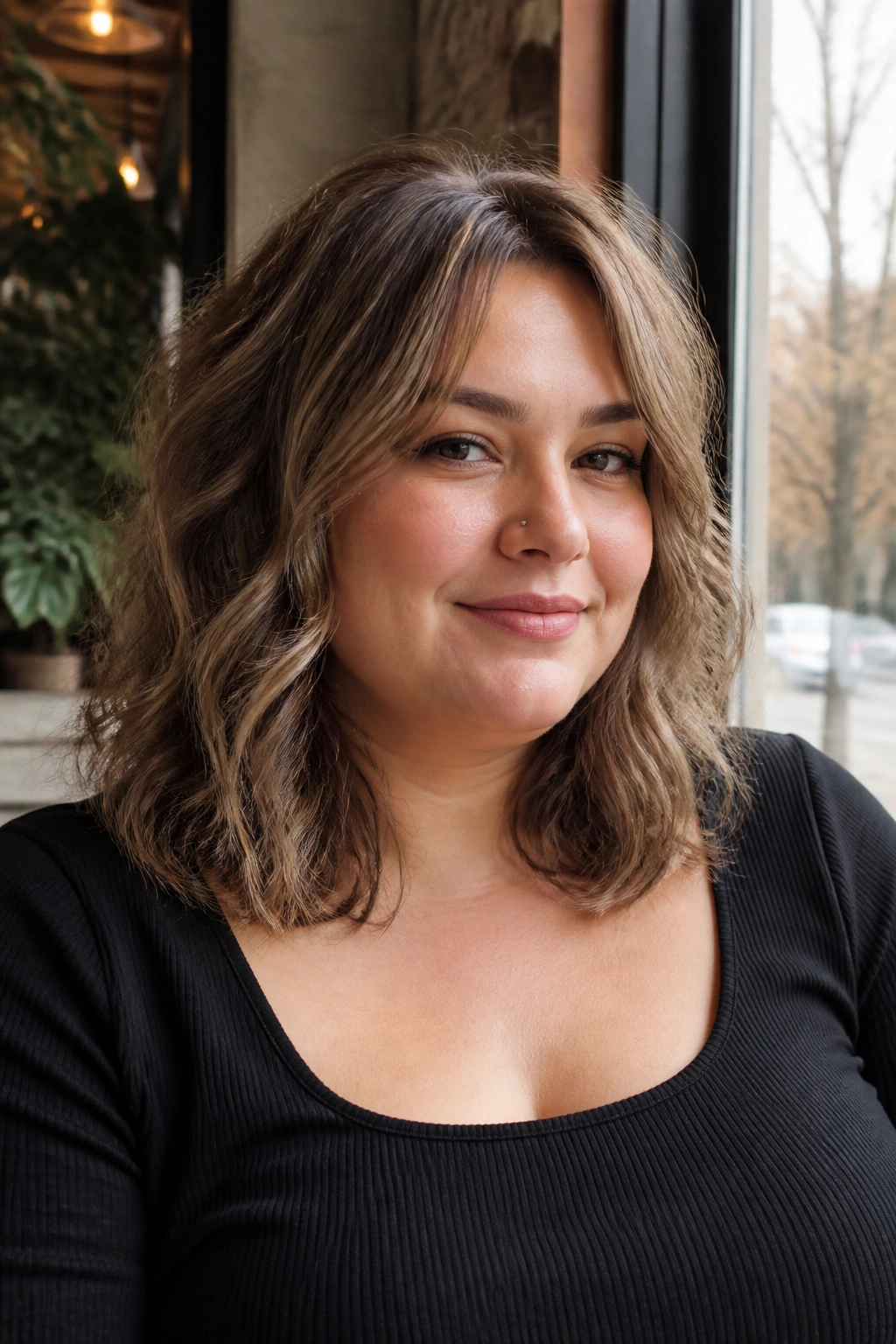
Shoulder length is where a wolf cut starts to feel fun without becoming high-maintenance. The shape gives you enough room for layers to move, but not so much length that the haircut gets weighed down by its own weight.
If your hair already has a wave, this version can look almost effortless on a good day. The layers should bounce around the jaw and the upper neck, which keeps the cut from pulling your face downward.
What to ask for at the salon
- Layers that begin around the cheek or upper lip
- A soft, rounded shape through the top
- Ends that skim the shoulders, not stop right at them
- Texture through the outer layers, not the whole head
That last part matters. Too much thinning can make shoulder-length hair puff up in the wrong places. A cleaner internal shape usually works better than a lot of aggressive snipping.
This is the version I’d choose if you want a wolf cut that still works with a blazer, a T-shirt, and a messy bun the next day.
5. Curly Wolf Cut That Keeps the Crown High
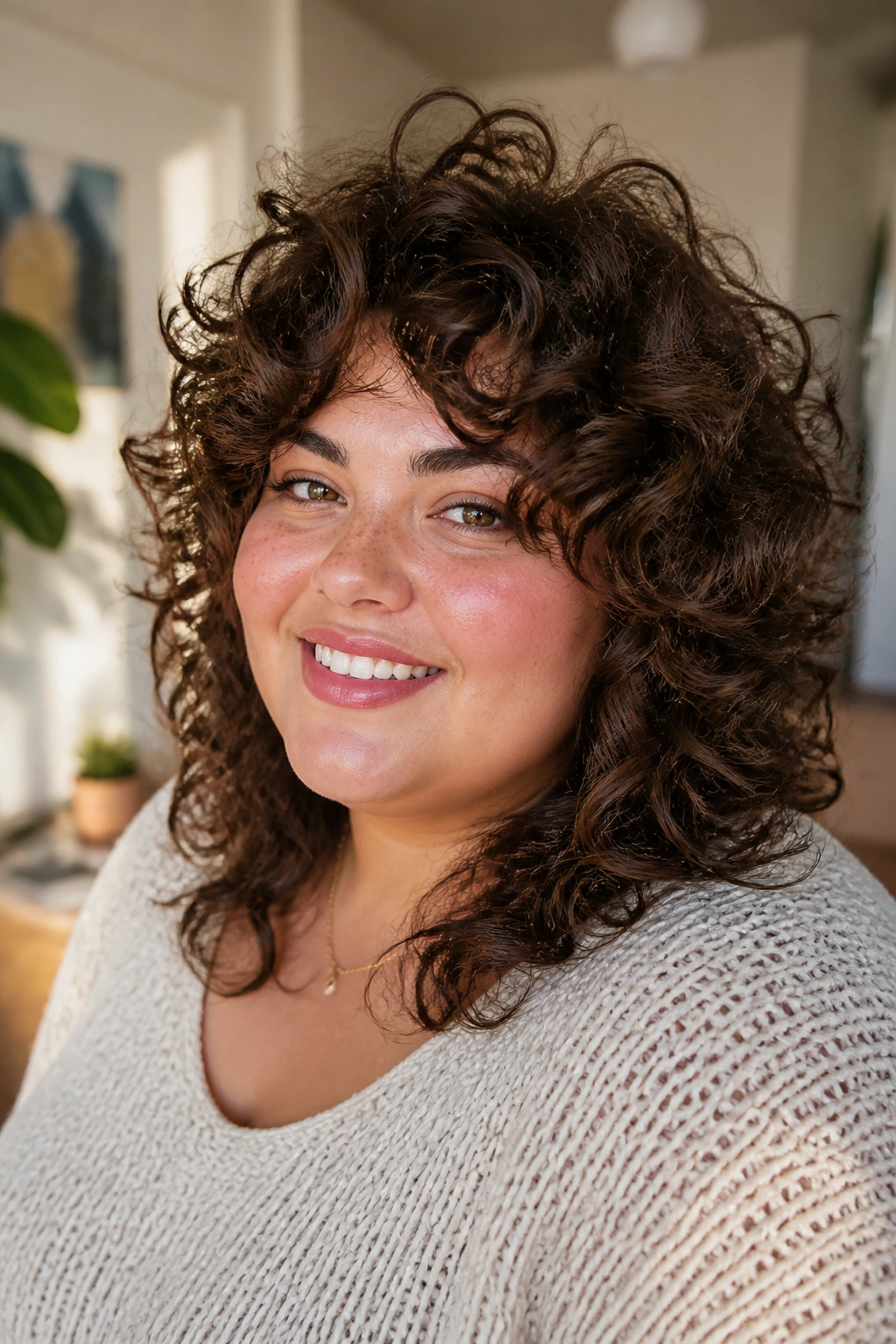
Curly hair and wolf cuts make a lot of sense together, as long as the cut respects the curl pattern. If a stylist cuts curls like they’re cutting straight hair, the shape can collapse or explode in all the wrong places. Neither is fun.
The best curly wolf cut is usually done dry, or at least partly dry, so the stylist can see where each curl lands. That matters because a curl that looks like a 3-inch bend when wet might spring into a 5-inch coil once it dries.
What to watch for
Shrinkage. A lot of it.
If your curls shrink more than you expect, the shortest layers need to start lower than you think. Otherwise the crown can sit too high and the cut can turn puffy instead of lifted. You want shape, not a helmet.
A good curly wolf cut usually uses:
- Rounded layers through the crown
- Longer pieces around the chin and neck
- A fringe that blends into the side curls
- Minimal razor work on fragile ends
Styling note: Use a curl cream about the size of a walnut, then scrunch in mousse before diffusing on low heat. That combination gives body without making the curls crunchy.
6. Chin-Length Wolf Cut Bob
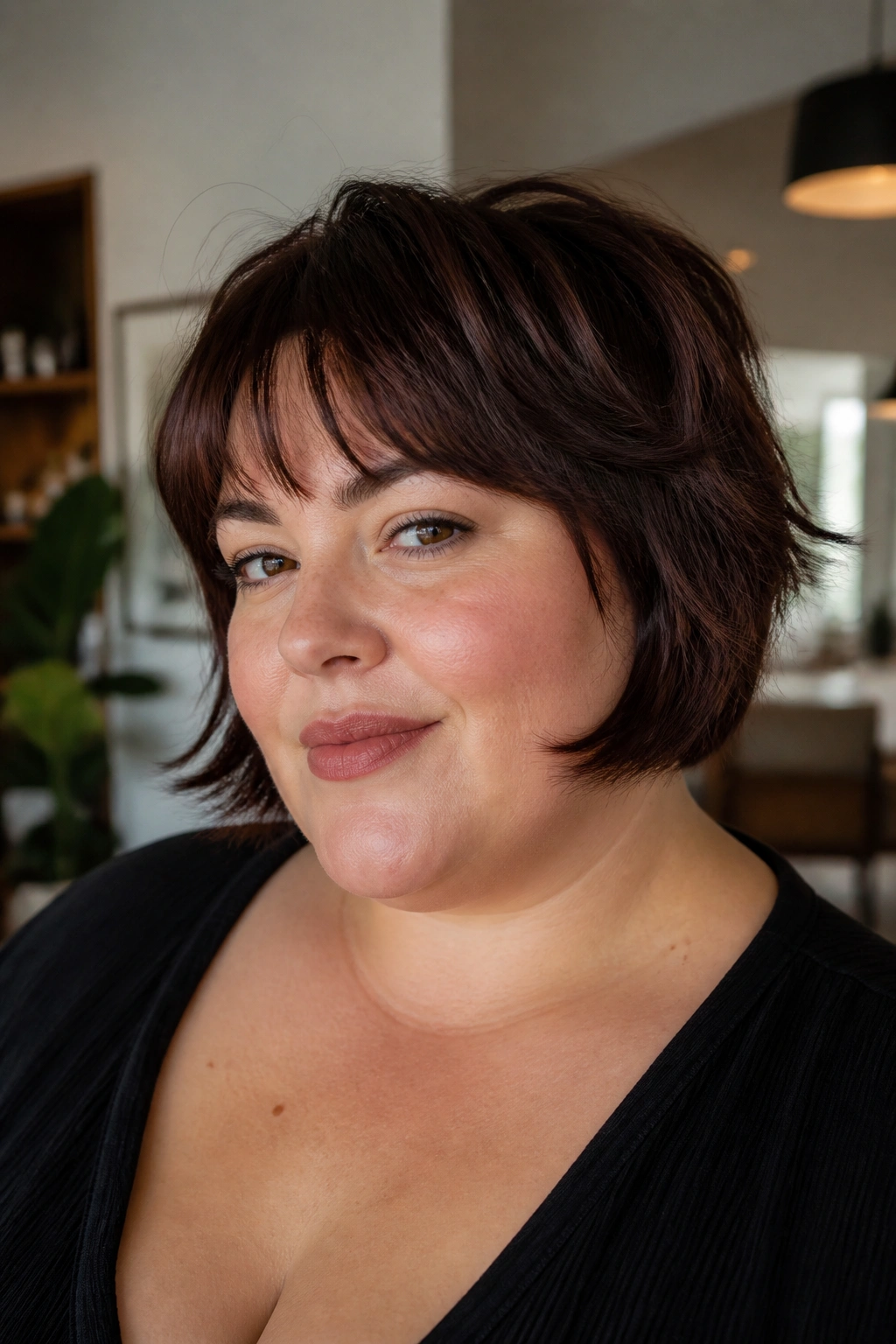
This one surprises people. A wolf cut does not have to be long or shaggy past the shoulders to work. A chin-length wolf cut bob can be sharp, playful, and a little bit daring while still feeling easy to wear.
The secret is the contrast. The bob line gives structure, and the wolf-cut layers break up the heaviness so the shape doesn’t sit like one solid block. That’s especially useful if you have a round face and want a cut that adds movement without stacking bulk at the cheeks.
It also works well with glasses. The layers keep the haircut from crowding the face, which is a small thing until you actually live with the style every day.
If you go this short, ask for soft internal layers instead of a harsh chop. The ends should feather out, not sit in one blunt rim. That little bit of softness is what keeps the bob from looking severe.
7. Side-Part Wolf Cut With Sweeping Fringe
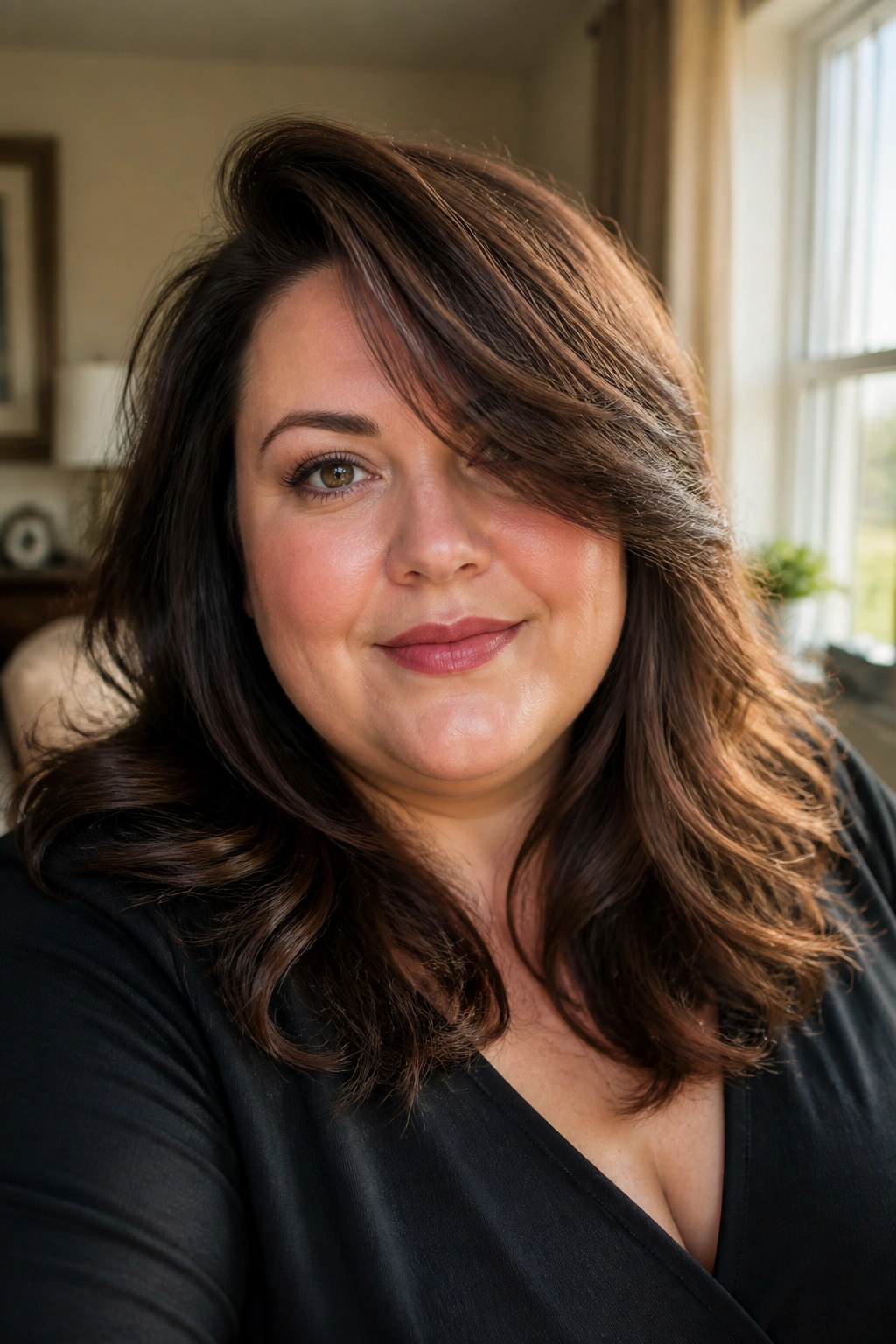
A deep side part changes the whole mood of a wolf cut. Suddenly the haircut feels a little softer, a little more dramatic, and a lot better at breaking up fullness around the middle of the face.
The diagonal line of the part does a lot of visual work. It pulls the eye across the face instead of straight down the center, which can be useful if you like a little asymmetry. A sweeping fringe can also be easier than curtain bangs for people whose hair naturally falls one way anyway.
Why it flatters fuller features
The volume sits higher on one side, not all the way around the head. That means you get lift without the round puff that some layered cuts create when the roots are blasted evenly on both sides.
This style is especially good if you have straight or softly wavy hair and want a little more shape at the front. A round brush, a blow dryer, and a small amount of mousse at the roots are usually enough to get it going.
And yes, it can look polished. Not stiff. Polished. There’s a difference, and this cut knows it.
8. Shaggy Wolf Cut for Thick Hair
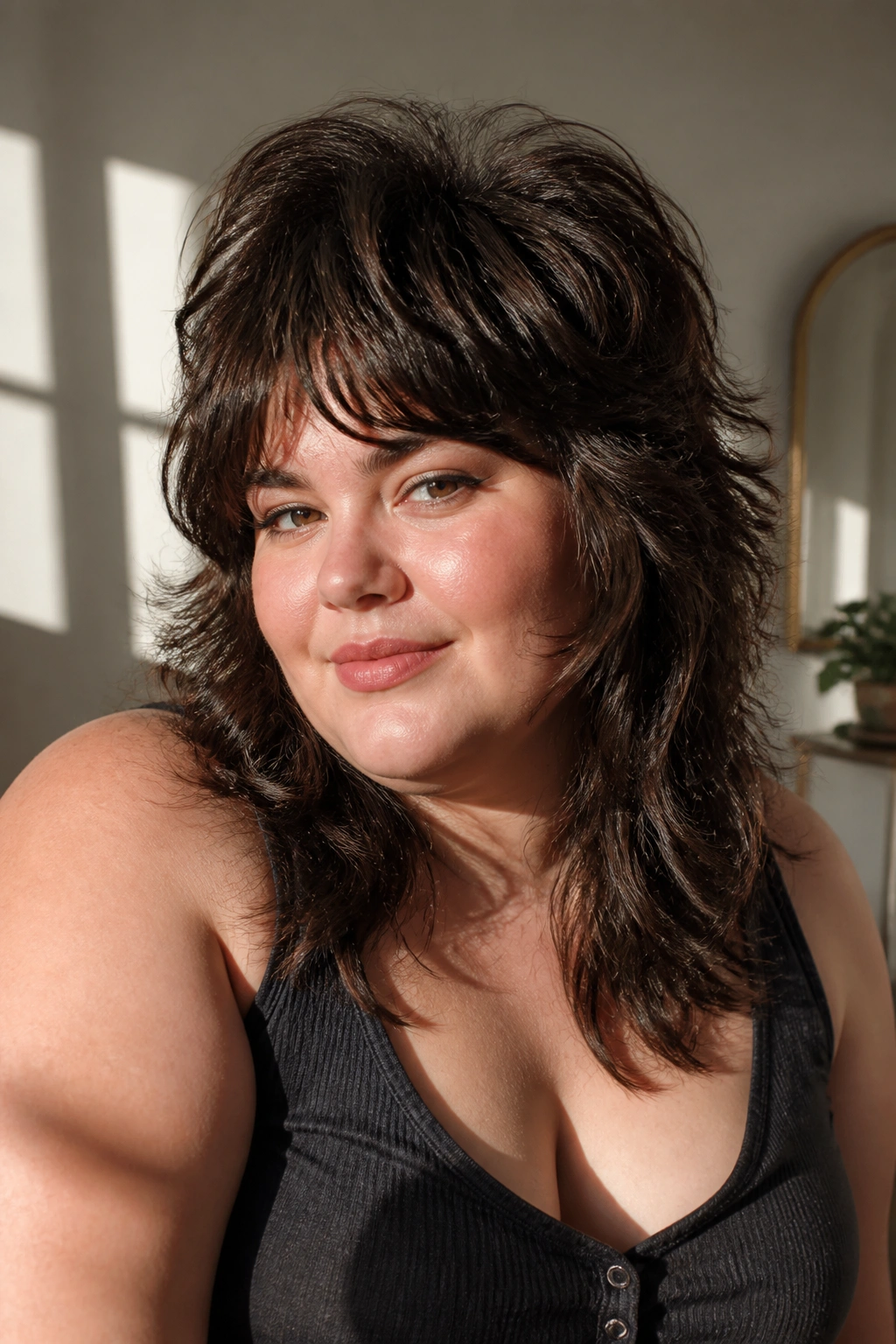
Thick hair can wear a wolf cut beautifully, but only if the cut removes weight in the right places. If the layering is lazy, thick hair turns into a heavy mushroom. I’m not being dramatic. I’ve seen that happen more times than I’d like.
The answer is controlled texture. You want internal layers that free up the crown and top sides, plus point-cut ends that keep the perimeter from looking too chunky. A good stylist will also look at how your hair grows around the nape and jaw, because that’s where thick hair tends to pile up.
Tell your stylist this
- Keep the top layers light and movable
- Remove bulk from the sides, not just the bottom
- Leave enough length in front to frame the face
- Avoid over-thinning the ends
That last one is the trap. Too much thinning on thick hair can make the surface frizz faster, especially if your hair has any wave or bend to it.
This version is a gift if your hair takes forever to dry. Once it’s shaped well, you can rough-dry the roots, twist a few front pieces, and walk away.
9. Soft Wolf Cut for Fine Hair
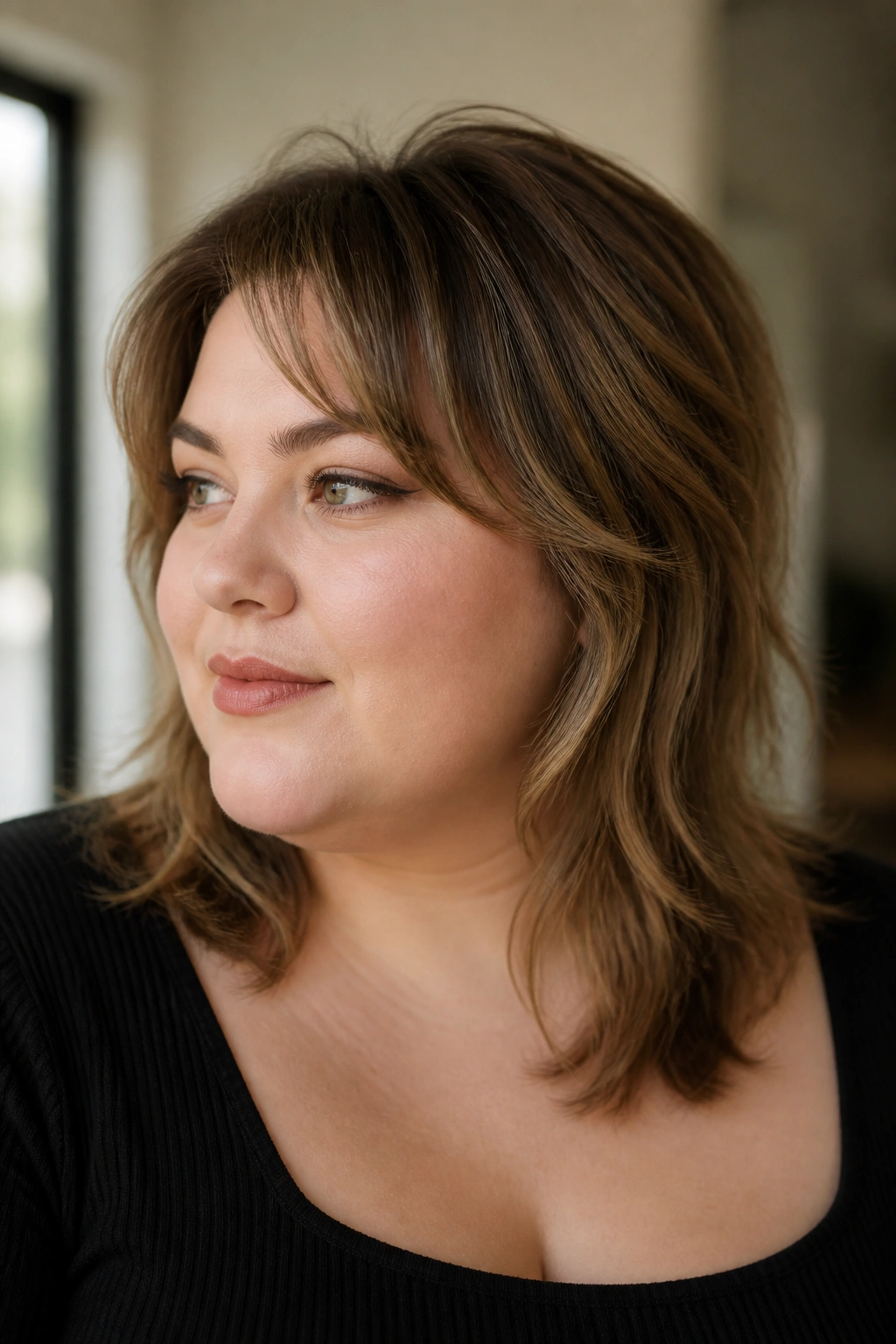
Can fine hair pull off a wolf cut? Yes, but the cut needs restraint. If you take too much out of the body, the hair can look see-through and wispy in a way that feels accidental rather than stylish.
The best fine-hair wolf cut keeps a cleaner perimeter and uses lighter layering only around the crown and face. That gives you movement without making the ends vanish. It’s a smarter move than hacking in layers all over the head and hoping texture spray does the rest.
The trick
Use fewer layers than you think.
Fine hair usually looks best when the shortest face-framing pieces are blended, not chopped sharply. A slight bend through the front can fake thickness, and a root-lifting mousse can help the crown stand up without backcombing.
If your hair is pin-straight, ask for soft, invisible layering rather than obvious chunks. You want the illusion of fullness, not a cut that looks unfinished in bright daylight.
This is one of those styles that improves if you keep the styling simple. A blow-dry with a paddle brush, then a tiny bit of texture cream on the ends, is often enough.
10. Asymmetrical Wolf Cut for More Edge
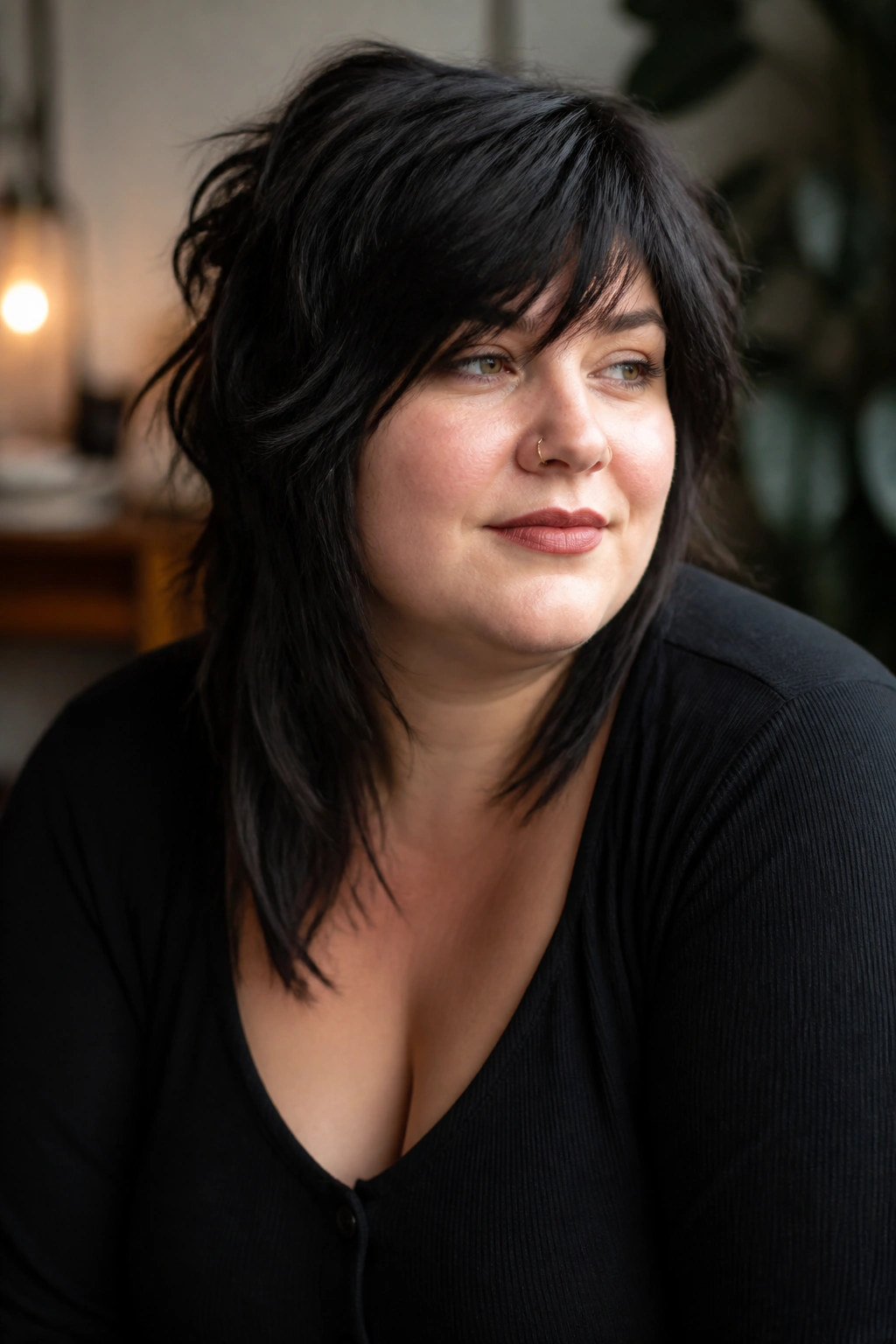
A small asymmetry can make a wolf cut feel much more modern without turning it into a fashion-school experiment. One side can sit a little longer, or the fringe can sweep harder in one direction, and the whole cut suddenly has more movement.
That diagonal shape helps on fuller faces because the eye follows the line instead of stopping at the widest point. It also keeps the haircut from looking too symmetrical, which can be a little static on thicker or broader features.
This cut works best when the asymmetry is subtle. You want “noticeable when you look twice,” not “my haircut is arguing with me.”
A side section that’s only an inch deeper than the other side can be enough. Add a few flipped pieces around the cheekbones and the style wakes up fast. If your hair is naturally wavy, even better. The uneven movement helps the asymmetry feel intentional.
11. Feathered 70s Wolf Cut
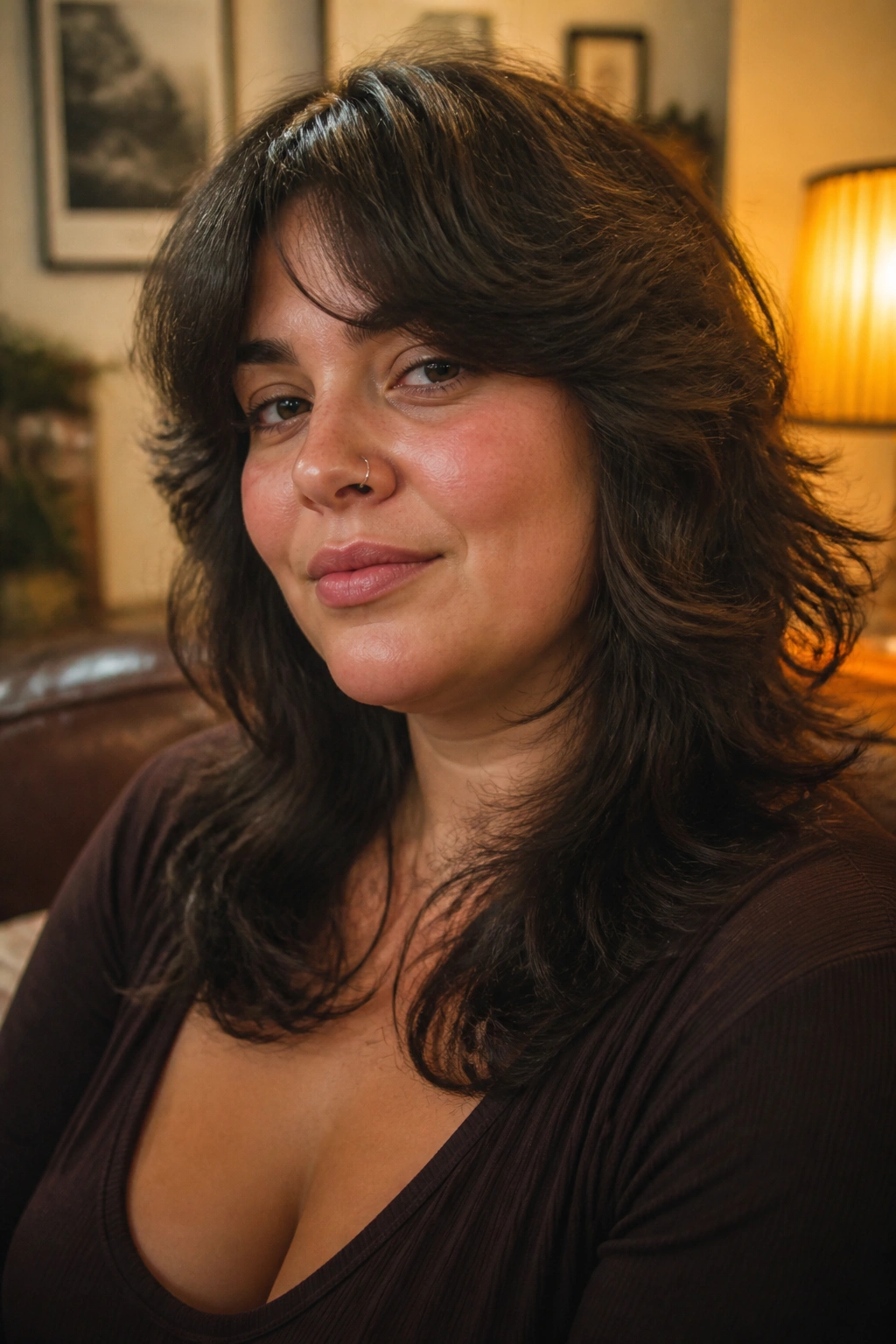
There’s a reason feathered hair keeps coming back. It softens the sides of the face without flattening the shape, and a wolf cut can borrow that feathered movement without becoming a costume.
This version works especially well with a round brush blowout. The ends should flick away from the face, not tuck under it. That outward movement keeps the layers airy and stops the haircut from collapsing into one solid shape by lunchtime.
What makes it different
The feathered version is less choppy than some of the rougher wolf cuts. You still get texture, but the finish is smoother and a little more polished. That makes it a good pick if you like the idea of a shaggy cut but do not want your hair to look intentionally messy every day.
It also plays well with a little volume spray at the roots. Spray under the crown, lift with a brush, and let the front pieces curve away from the cheekbones. Clean, but not stiff.
If you love a blowout and hate spending half your life flat-ironing, this one has your name on it.
12. Mullet-Lite Wolf Cut
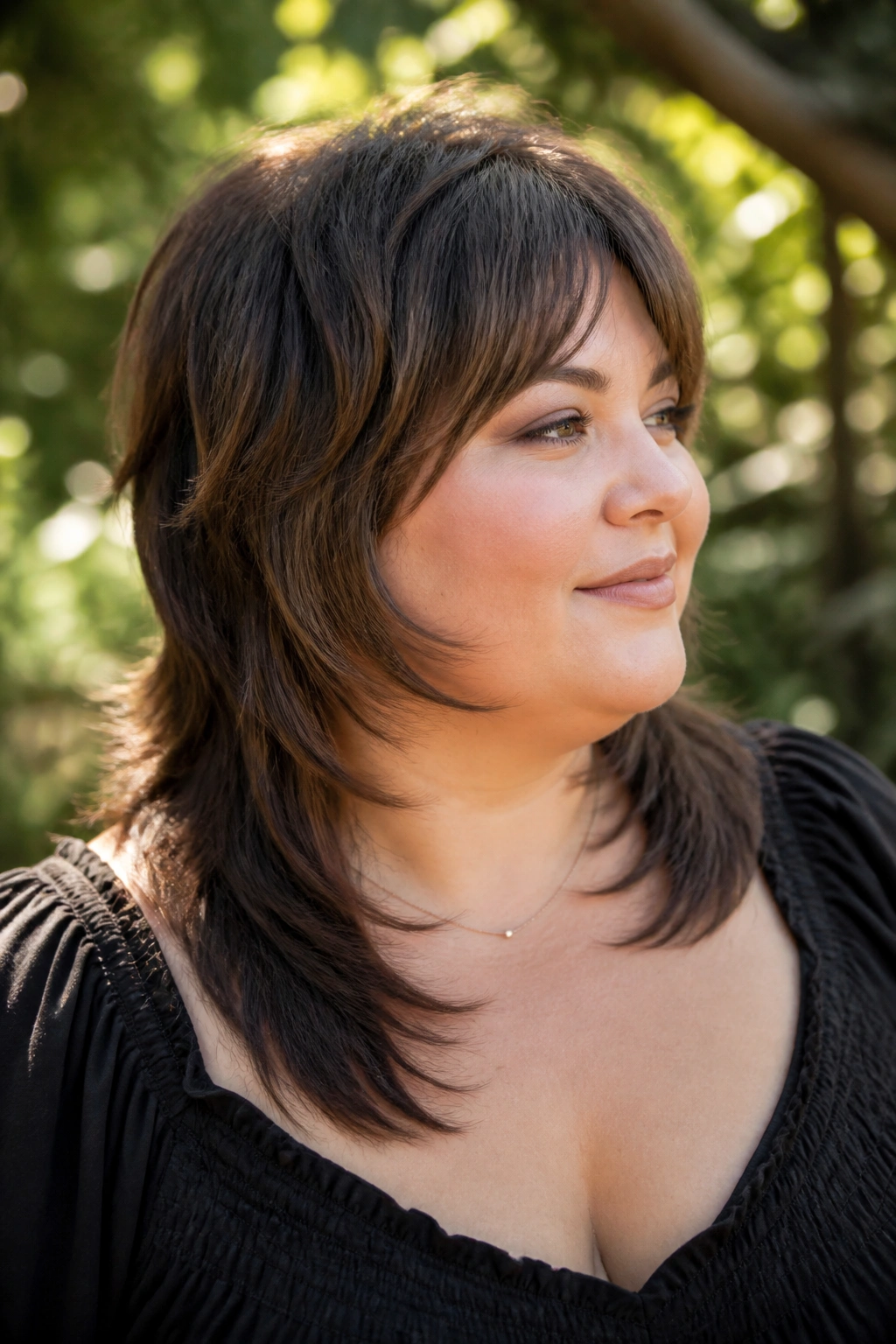
You do not need a harsh mullet to get the wolf-cut vibe. In fact, on a lot of plus size women, the softer mullet-lite version looks better because it keeps the drama in the layers, not in the shape itself.
The back stays longer, yes, but not sharply disconnected. The front still frames the face. The whole cut feels more wearable because the transition from short to long is gradual enough that it does not scream for attention.
How to ask for it
Tell your stylist you want:
- A soft crown with lift
- A gentle taper toward the nape
- Face-framing pieces that stay around the cheek and jaw
- No hard disconnect between the top and back
That last line matters. The harder the disconnect, the more edgy the cut feels. That can be fun, but it is not always the most flattering if you want something easier to live in.
I like this version on people who want personality in their haircut and don’t want to look overstyled. It has a little bite. Not too much.
13. Wolf Cut With Heavy Full Bangs
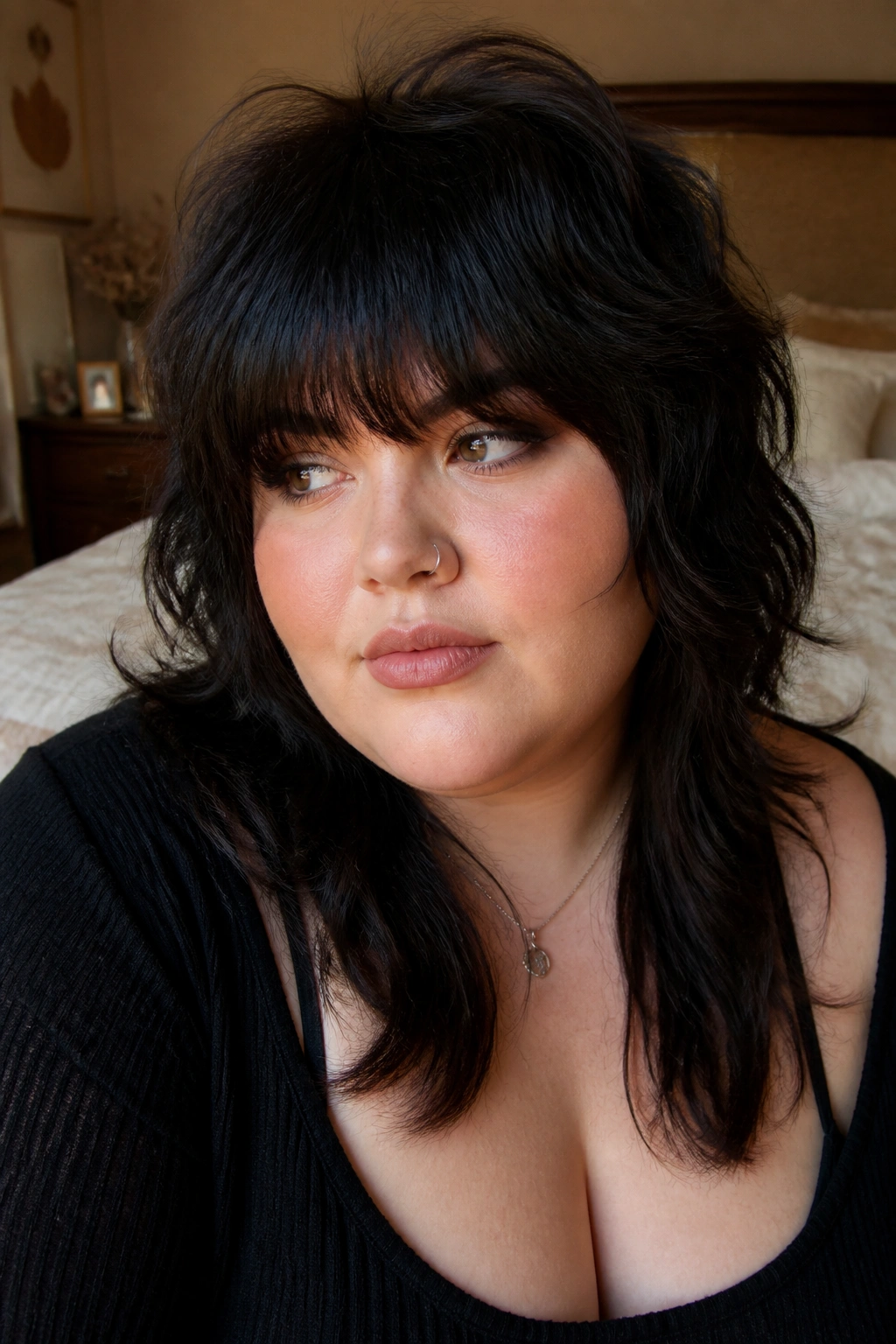
Full bangs can absolutely work with a wolf cut, even though people often assume curtain bangs are the only safe choice. When the rest of the cut stays airy, a heavier fringe can actually balance the face nicely.
This is especially useful if you like the look of bangs but want more coverage across the forehead. Full bangs can make the eyes stand out and create a strong top line, which keeps the haircut from feeling too diffuse.
The key is not making the bangs too thick at the ends. They should have some texture, some bite, and a little separation so they do not fall as one solid wall.
This style does ask for more upkeep. Bangs need drying and trimming, and they can get oily faster than the rest of the hair. But if you like a defined fringe and a layered body, the tradeoff can be worth it. It looks great with straight hair, and it can be striking on wavy hair too.
14. Textured Lob Wolf Cut
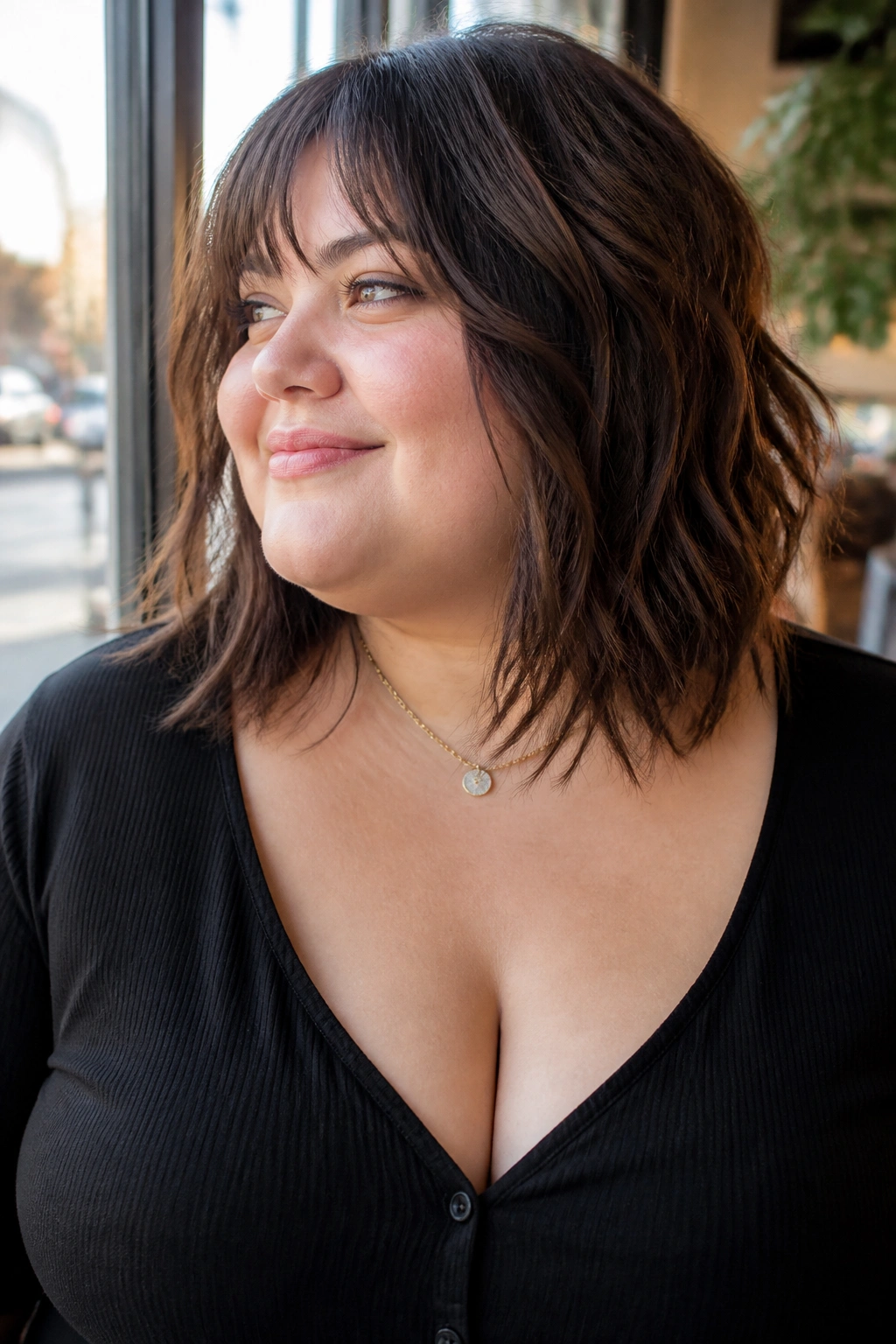
A lob is a nice middle ground when you want a haircut that feels grown-up but not boring. Add wolf-cut texture to it, and you get a shape that moves well, sits nicely on the shoulders, and does not require a dramatic styling routine.
The length usually lands between the collarbone and upper chest. That’s a smart zone because it gives the front pieces room to drape while keeping the back from feeling heavy. The texture through the mid-lengths keeps the lob from becoming one flat sheet of hair.
Why it’s such an easy wear
Unlike a very short wolf cut, this one behaves. It goes into a clip, a low bun, a half-up twist, all of it. At the same time, the layers make it look more deliberate than a plain lob.
If you’re nervous about going too short, start here. You still get the wolf-cut personality, but the overall effect is softer and more grounded. A curling wand on the front pieces and a little dry texture spray at the ends is enough for most days.
15. Low-Maintenance Air-Dry Wolf Cut
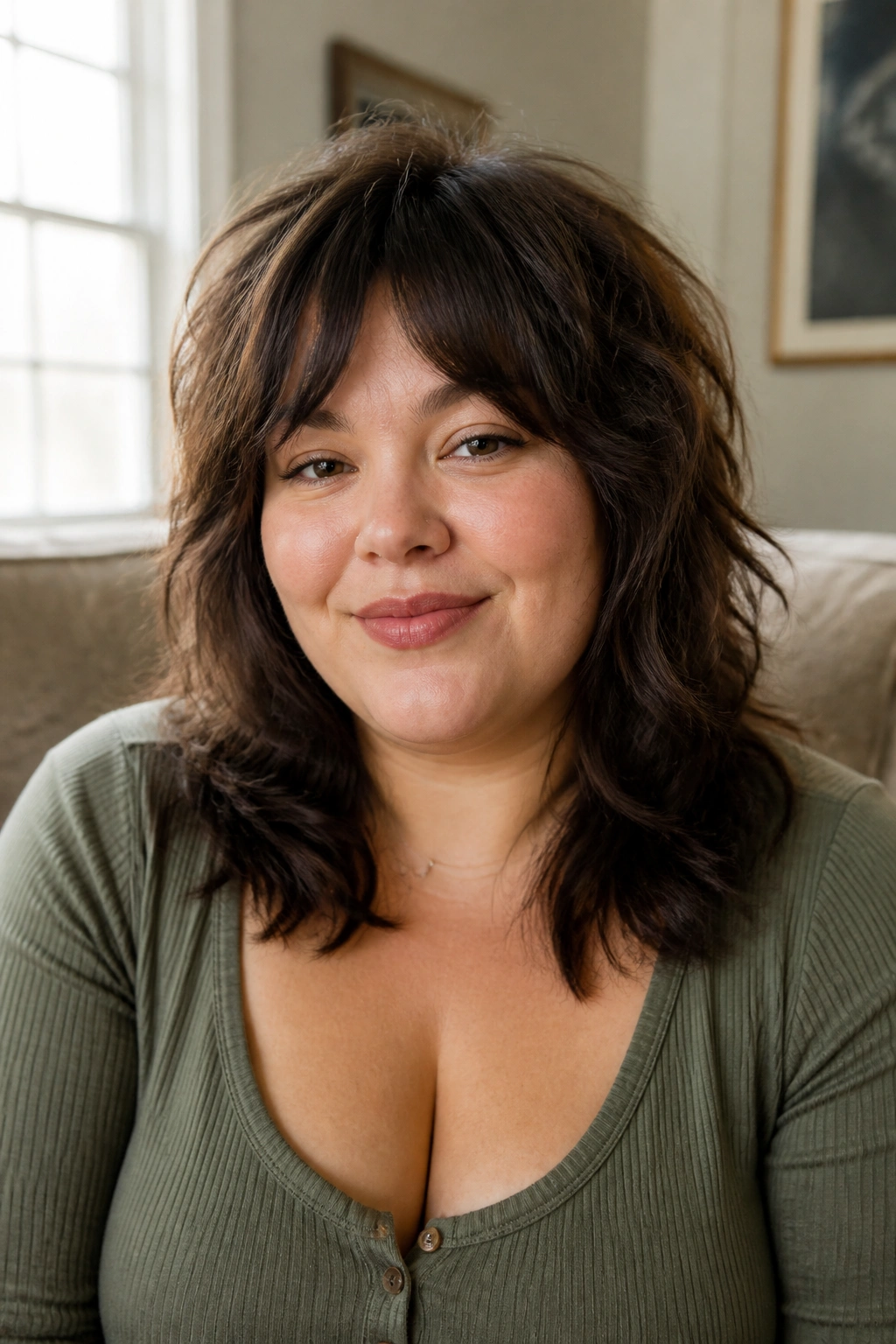
Some haircuts ask for a blow dryer and a prayer. This one does not have to.
An air-dry wolf cut works best on wavy hair, loose curls, or straight hair with a bit of bend. The point is to build a shape that looks good when it dries on its own, with the layers doing the heavy lifting instead of heat styling.
The crown should be light enough to lift, but not so chopped up that the top frizzes while the ends stay flat. That balance is what makes air-dry cuts hard to get right. They look easy only after someone with scissors did the careful part.
A simple air-dry routine
- Work a quarter-size amount of lightweight mousse through damp roots
- Add a pea-size cream to the ends if they get frizzy
- Scrunch the hair upward 6 to 8 times
- Leave it alone while it dries
That last step is the one most people skip. Touching it too much breaks the wave pattern and makes the layers look messy instead of soft.
This is the wolf cut for busy mornings, lazy Sundays, and anyone who wants texture without a full styling session.
16. Wolf Cut for Round Faces
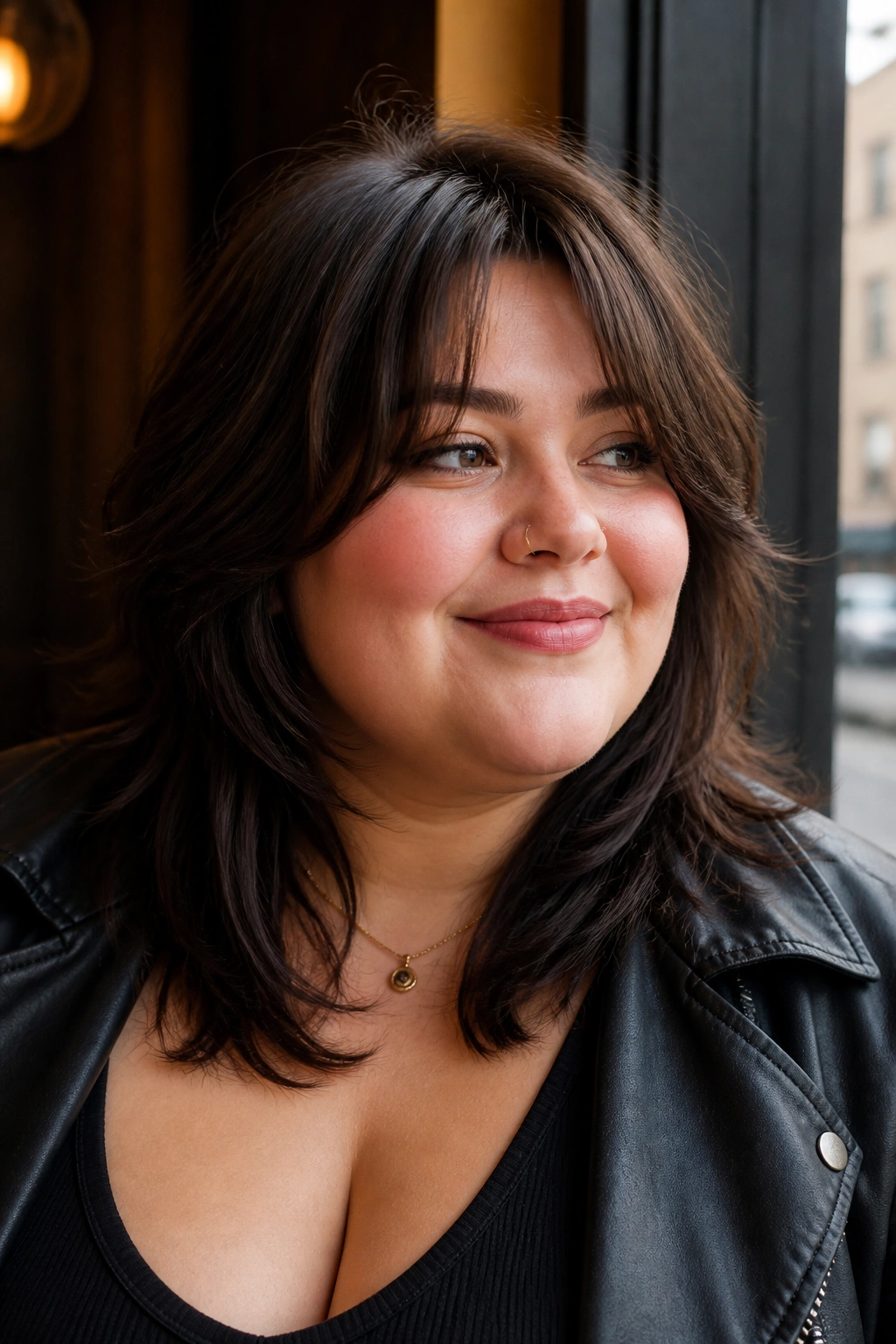
A round face and a wolf cut can be a great match if the layers are placed with some care. The goal is not to hide the face. It’s to give it vertical movement and a little softness around the cheeks.
The best version usually keeps the shortest layers below the widest part of the cheeks. That way, the cut adds lift where you want it and avoids packing more volume right beside the face. Longer front pieces help pull the eye downward in a flattering way.
Center parts can work, but a slight off-center part often gives the style a little more shape. It keeps the front from feeling too symmetrical, which matters when you want the haircut to look balanced rather than circular.
I’d skip very short top layers if your hair is also very full. Too much height on top can make a round face look shorter. A cleaner crown with longer face-framing pieces usually lands better.
17. Wolf Cut for Square or Angular Faces

Sharp jawlines and strong angles can look fantastic with the right wolf cut. The trick is softening, not hiding, those lines.
Wispy front pieces, curved bangs, and feathery layers around the temples help break up a square shape without making it feel blurred. You want movement around the jaw, not a hard horizontal line that fights with it.
This is one of the few times where a slightly uneven finish can help the cut. A few bent pieces near the cheekbones and a softer nape keep the whole style from looking too strict. The effect is relaxed, not sloppy.
A lot of people with angular faces worry that layers will make things too busy. Usually the opposite happens. If the layers are cut with enough softness, they take the edge off in a nice way and make the haircut feel more wearable.
18. Wolf Cut With Tapered Nape
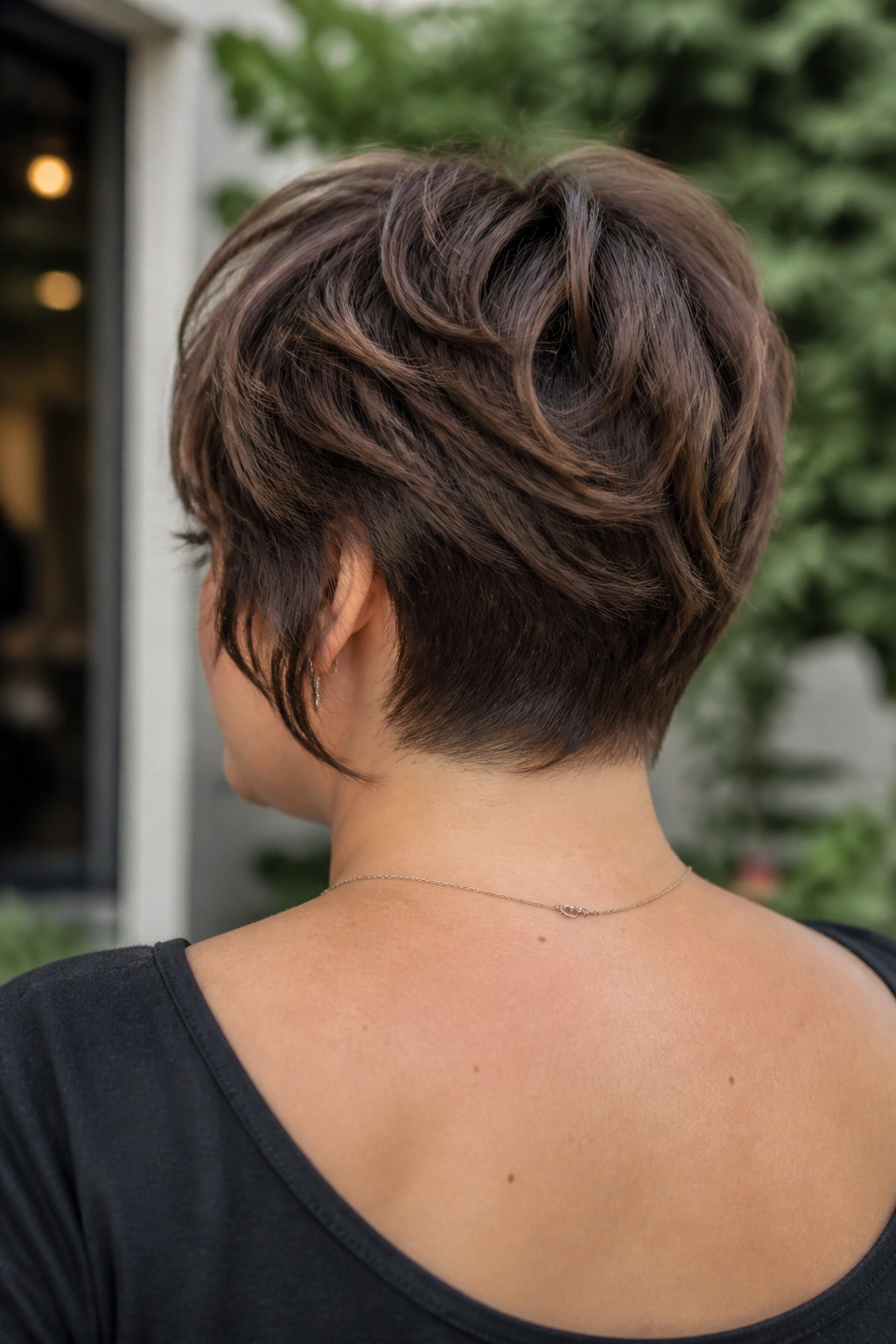
The nape is the part of the haircut people ignore until it starts puffing out under a jacket collar. A tapered nape solves that. It cleans up the back of the neck and gives the wolf cut a neater finish, which can make the whole shape look more expensive, even if that word annoys me a little.
This version is especially useful if you wear your hair up often or if your hair tends to collect bulk at the back. Tapering removes some of that weight so the neckline sits closer to the head.
Good reasons to choose it
- It keeps the silhouette cleaner under sweaters and coats
- It helps thick hair lie flatter at the neck
- It gives short-to-long layers a smoother transition
- It makes the cut look intentional from behind
A tapered nape does not mean ultra-short. It can still be soft and feminine, just more disciplined where the hair meets the neck. That small detail can change the whole feel of the cut, especially from the side profile.
19. Wolf Cut With Razor-Shaped Ends
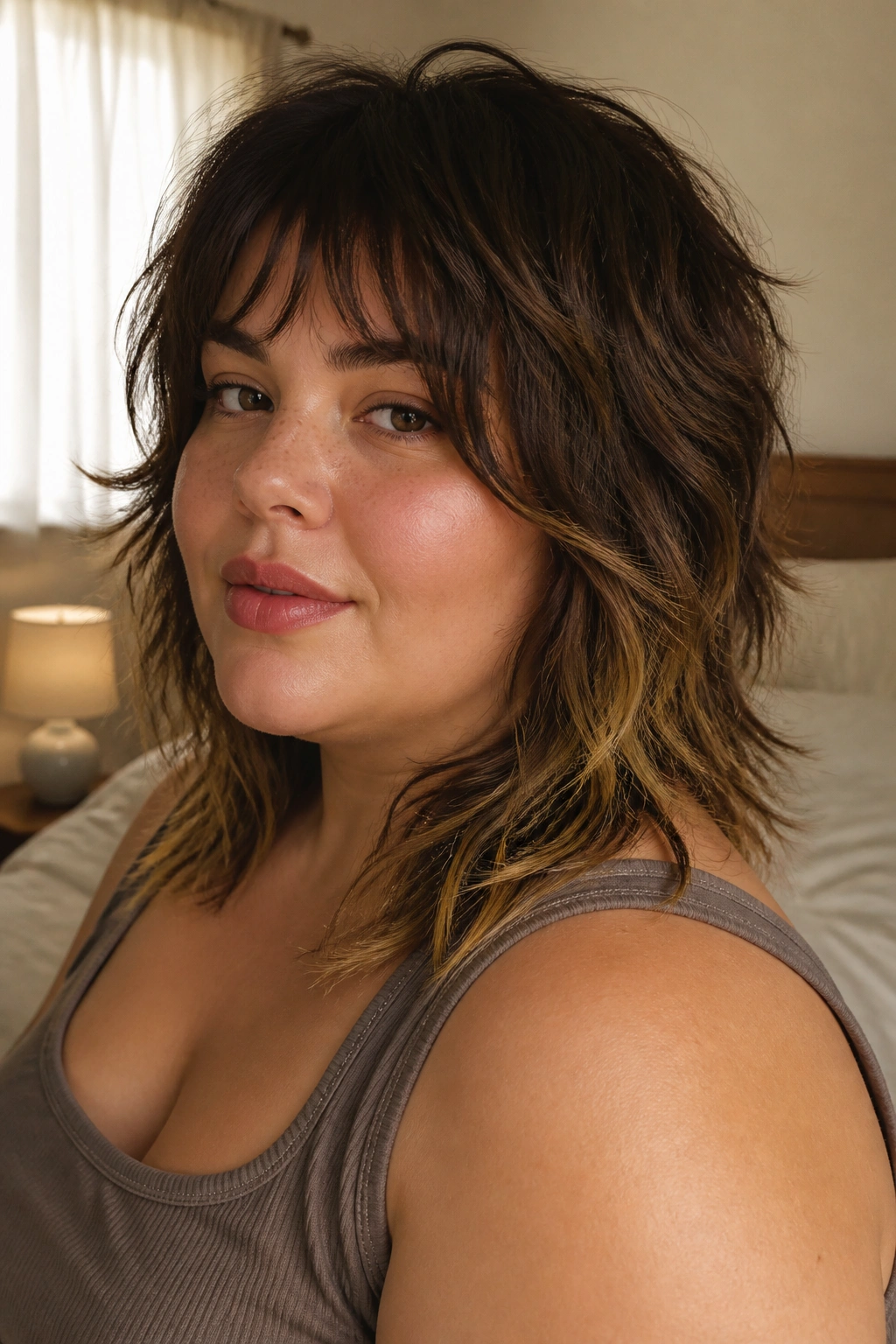
Razor cutting has a specific look: airy, piecey, and a little undone. On the right hair, it can make a wolf cut feel lighter and more lived-in. On the wrong hair, it can make the ends fuzzy fast. So this one needs a careful hand.
I like it most on medium-density hair that already has some movement. The razor can soften blunt ends and create little swings through the layers, which makes the haircut look like it moves when you walk. That sounds dramatic, but it’s really just about motion.
If your ends are dry or your hair frizzes easily, be cautious. A razor can make that texture more obvious. In that case, point cutting with scissors may be the safer choice.
This version suits women who like a little edge and do not mind a haircut that looks best when it has some texture spray in it. Clean and tidy is not the goal here. Soft and slightly wild is.
20. The Everyday Soft Wolf Cut
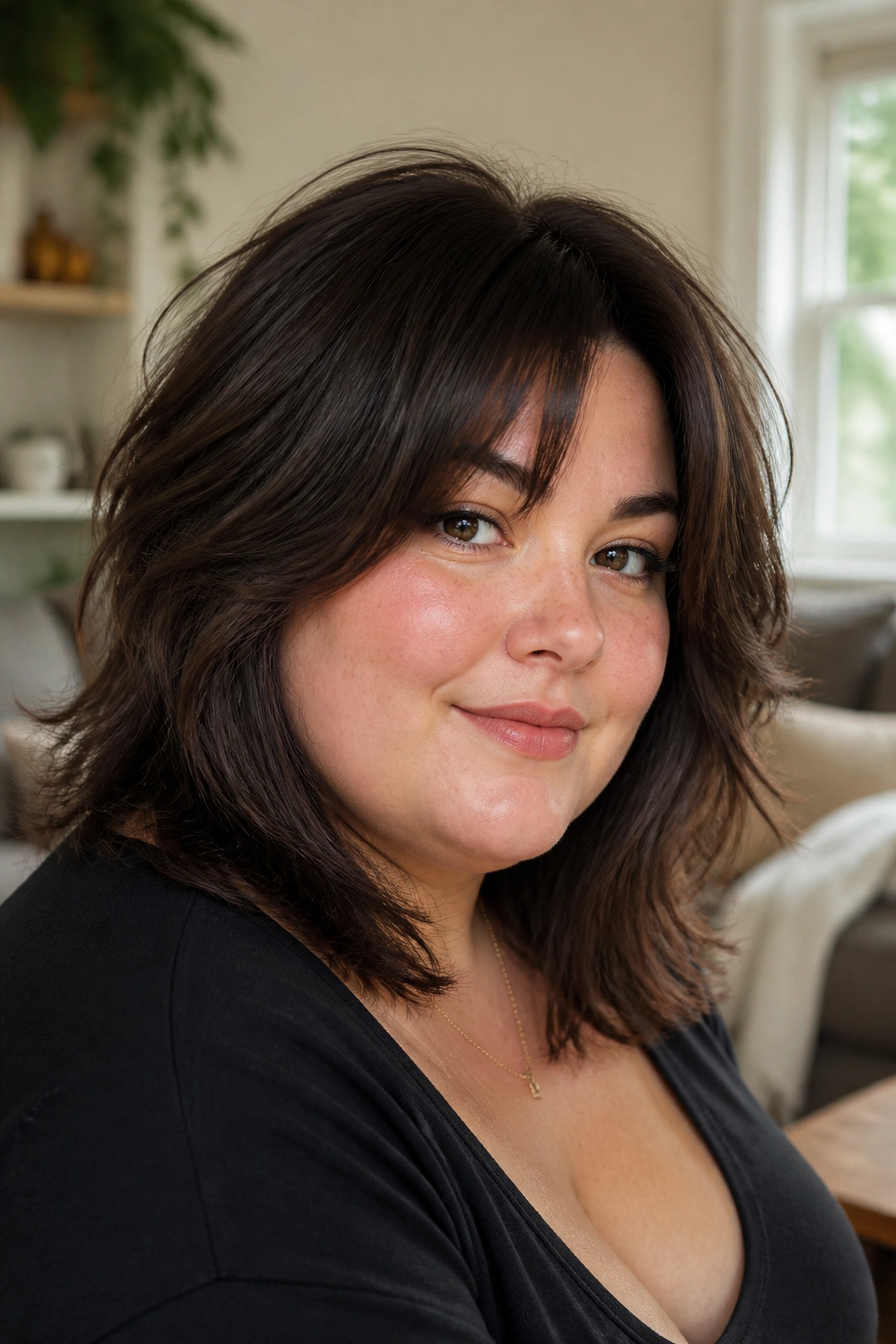
This is the wolf cut I’d recommend to someone who wants the look without the fuss. Shoulder to collarbone length, soft crown layers, face-framing pieces that start near the cheekbones, and a fringe only if you actually enjoy styling bangs.
It works because it doesn’t try too hard. The shape gives you movement and a little lift, but the overall haircut still feels like hair you can live in, not just hair you can photograph. That matters more than people admit.
The nicest part is how forgiving it is. A little wave, a little bend, a little root lift — the cut does most of the heavy work. If you have fuller features and want a wolf cut that feels flattering without looking overdone, this is the version I’d hand you first.
Bring it to your stylist with one clear instruction: keep the softness, keep the movement, and do not over-chop the top. That one line will save you a lot of regret later.
