



A butterfly haircut for plus size women works because it changes where the eye goes. The shortest layers open around the face, the longer layers keep the shape soft, and the whole cut can make hair feel lighter without losing the length that gives it presence. That sounds simple. It isn’t always.
Cut the face frame too high and the style can puff in the wrong place. Cut it too low and you lose the lift that makes the whole thing feel like a butterfly cut instead of an ordinary layered haircut. The sweet spot is usually somewhere between cheekbone and collarbone, depending on hair texture, density, and how much forehead or jaw you want to soften.
My favorite versions are the ones that look good on day one and on day three, after the blowout has calmed down a little. That is where the shape earns its keep. A good butterfly cut should move when you turn your head, not sit there like a helmet with a few decorative pieces cut into it.
Placement is everything.
1. Classic Butterfly Haircut With Curtain Bangs
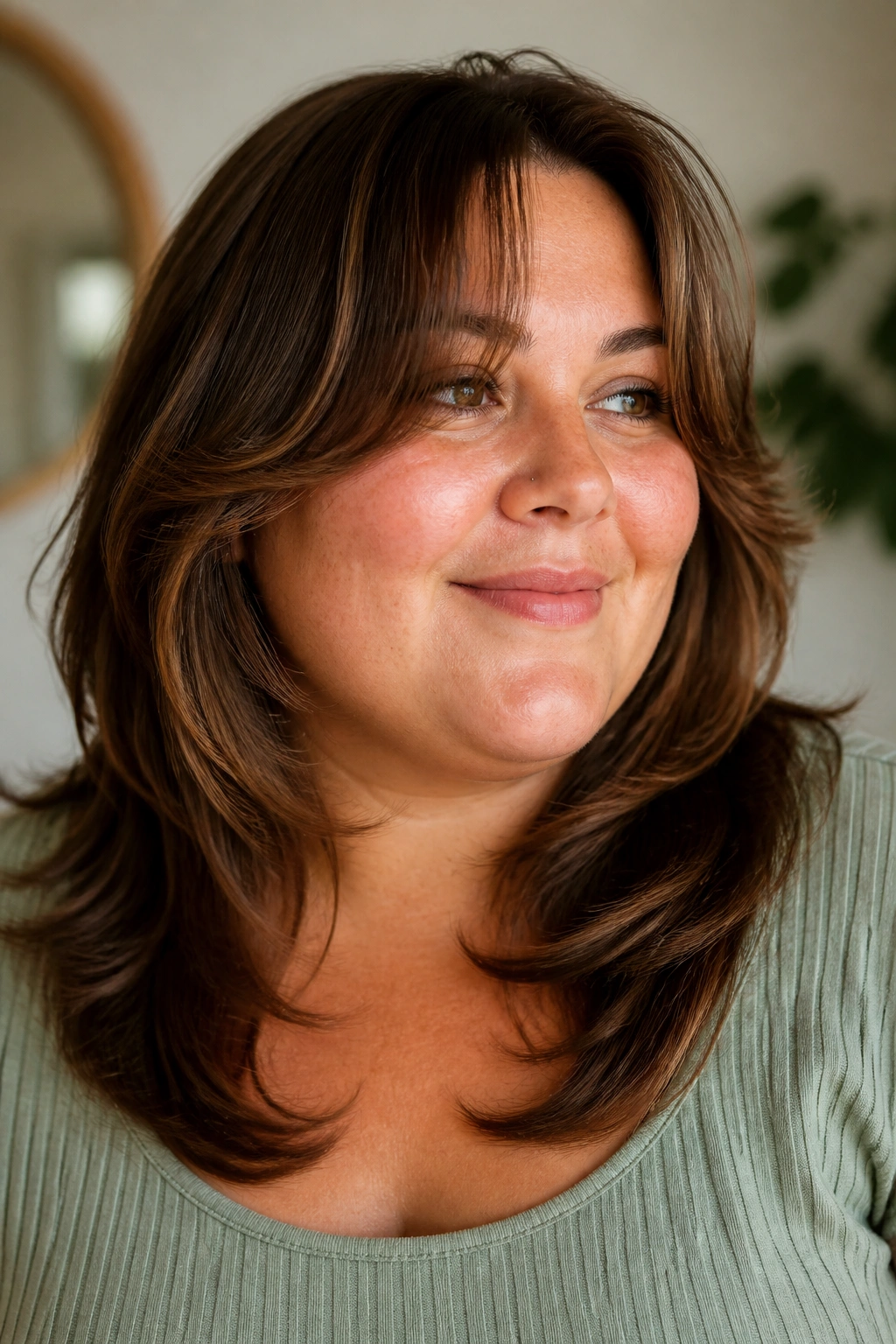
This is the version most people picture first, and for good reason. Curtain bangs open the forehead, the shortest face-framing layers land around the cheekbone, and the longer layers keep the cut from feeling chopped up. On plus size women, that balance matters because the eye gets a soft vertical line instead of a hard block across the face.
Why It Flatters the Face
The classic butterfly cut works when the front pieces are short enough to matter and long enough to move. If they sit right at cheek level, they create that fluttery, blown-out look people want from this haircut. Too short and the style gets busy. Too long and the “butterfly” effect disappears.
The curtain fringe also helps if you like a little softness around the forehead without going all the way to full bangs. It opens in the middle, then sweeps back toward the temples. That shape can make the face look a little longer and a little lighter at the center.
- Ask for the shortest layers to hit at the cheekbone or just below it.
- Keep the longest layers below the collarbone so the silhouette stays long.
- Use a 1.5-inch round brush to bend the fringe away from the face.
- Finish with a light mist of flexible-hold spray, not stiff lacquer.
Best tip: blow the front pieces away from the face first; if you start in the wrong direction, the whole cut loses its swing.
2. Shoulder-Grazing Butterfly Lob
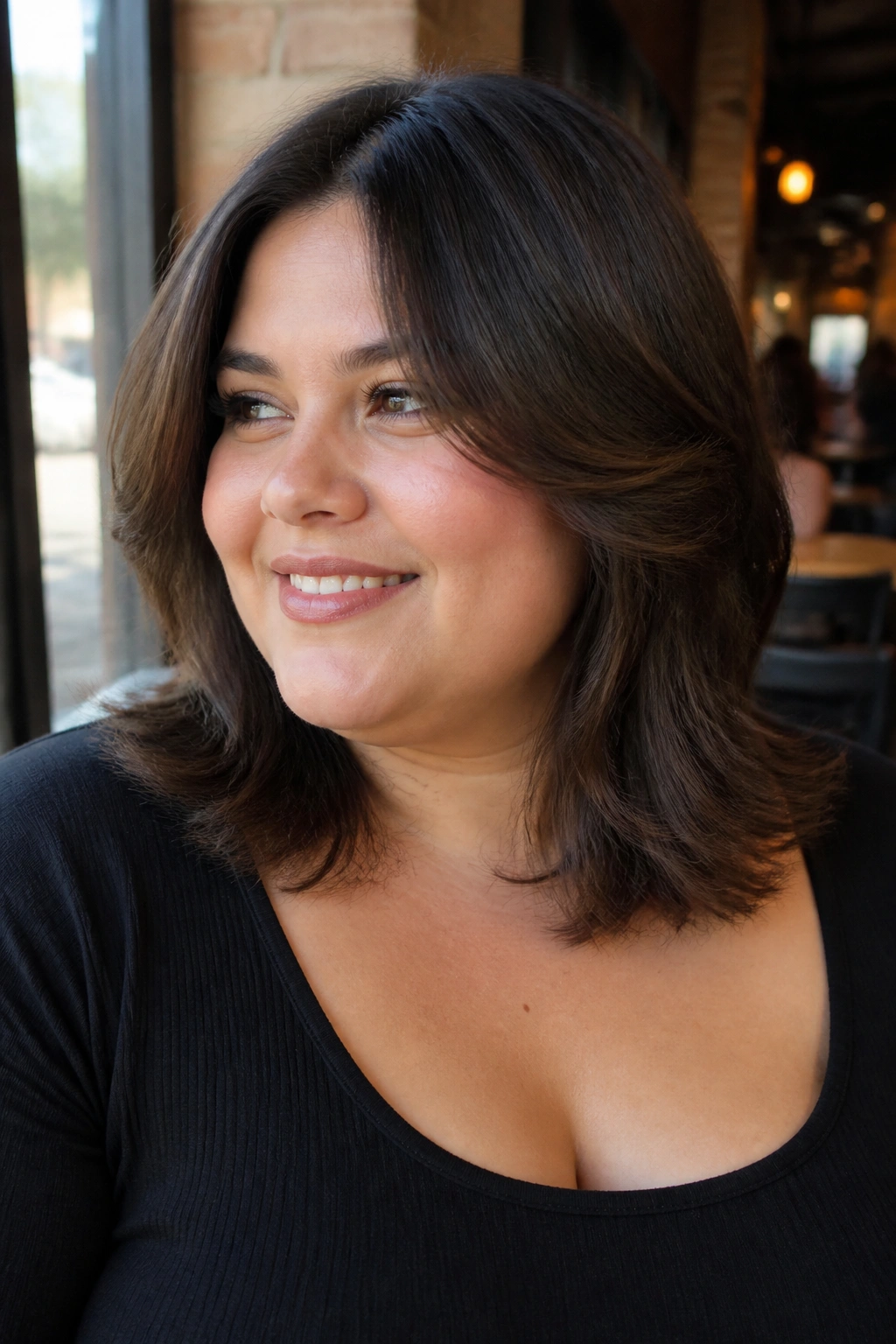
A shoulder-grazing butterfly cut can feel lighter than hair that hangs past the chest. That surprises people. They assume shorter means fuller, but the right lob removes weight from the right places and keeps the outline clean near the shoulders.
This version works especially well if you wear your hair up a lot or hate hair getting caught under bag straps, seat belts, and coat collars. The ends sit close enough to the body to feel modern, but the layers keep it from looking blunt. It has a clean line, then a little movement underneath.
I like this one for women who want shape without a long styling session. The shoulder acts like a natural stopping point, so the haircut looks neat even when you let it air-dry a bit rough. If you want to ask for it properly, tell your stylist to keep the shortest front layers around the lip or chin and let the back skim the shoulders. That tiny shift changes everything.
3. Side-Part Butterfly Cut With Swooped Layers
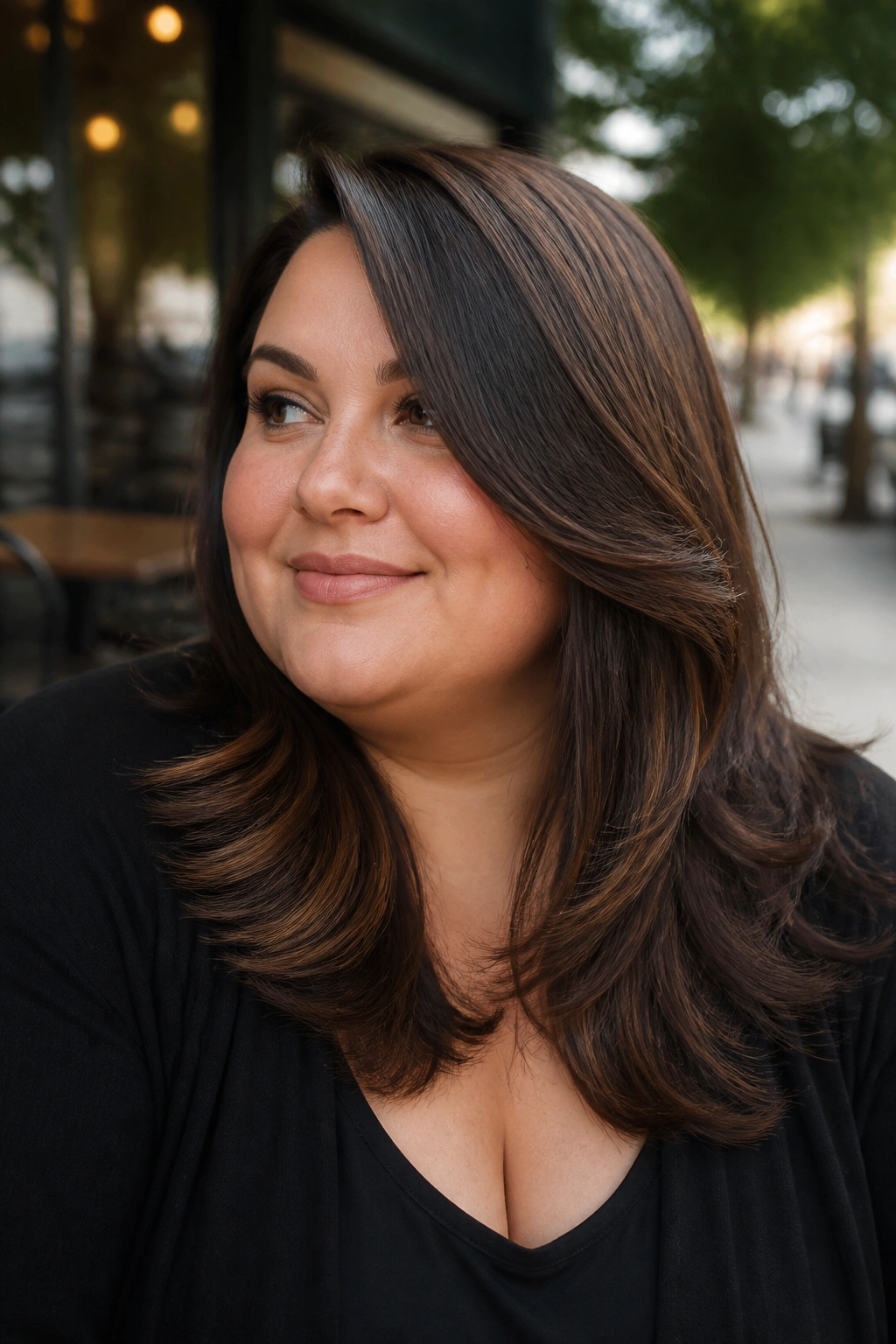
Why does a side part matter so much here? Because it draws the eye diagonally. That diagonal line softens fullness around the cheeks and gives the crown a little lift without asking you to tease the roots into a cloud.
The side-part butterfly cut is the one I reach for when someone wants softness but does not want bangs touching their forehead. The front pieces sweep across the face, then fall away from the jaw instead of sitting flat against it. It feels a touch more polished than a center part, and a little less expected.
How to Wear It
Ask for the heavier side to start near your natural part, then have the shortest layer angle down toward the cheekbone. A 2-inch curling iron or a round brush can give the front a bend, but the shape works even if you only tuck one side behind your ear. That asymmetry is doing the work.
If your hair tends to collapse on top, this version gives you a lift where you need it most. And if your face is round or oval, the diagonal front line can make the haircut feel longer without looking severe.
4. Curly Butterfly Cut With Dry Layers
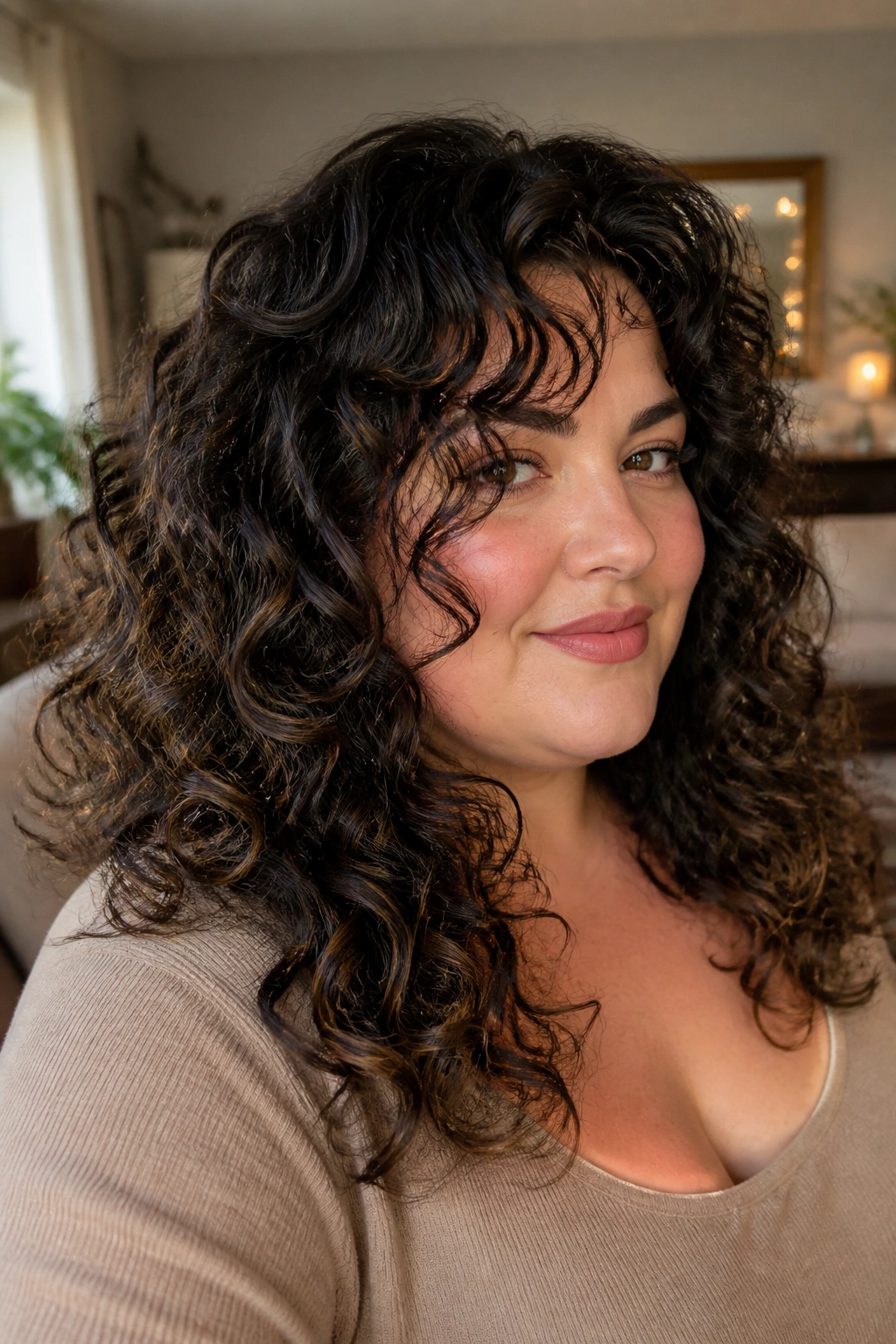
Picture curly hair that gets big at the crown, heavy at the ends, and triangular by midday. Annoying, right? A curly butterfly cut fixes that better than most people expect, but only if the layers are cut with the curl pattern in mind.
Dry cutting matters here. Curly hair shrinks, bends, and surprises you in all the usual ways, so a wet cut can be misleading. The stylist should see how the curls sit in their natural state and place the face-framing pieces where they will land once the hair settles. That’s how you get movement instead of a row of disconnected little curls around the face.
- Ask for longer internal layers instead of heavy thinning.
- Keep the shortest face frame around the cheekbone or lip.
- Use a diffuser on low heat to protect the curl pattern.
- Scrunch in mousse while the hair is damp, then leave the curls alone.
The mistake to avoid: too much razoring can make curly ends look frizzy and thirsty. Better to keep the shape airy and let the curls do the talking.
5. Wavy Butterfly Cut With Cheekbone Movement
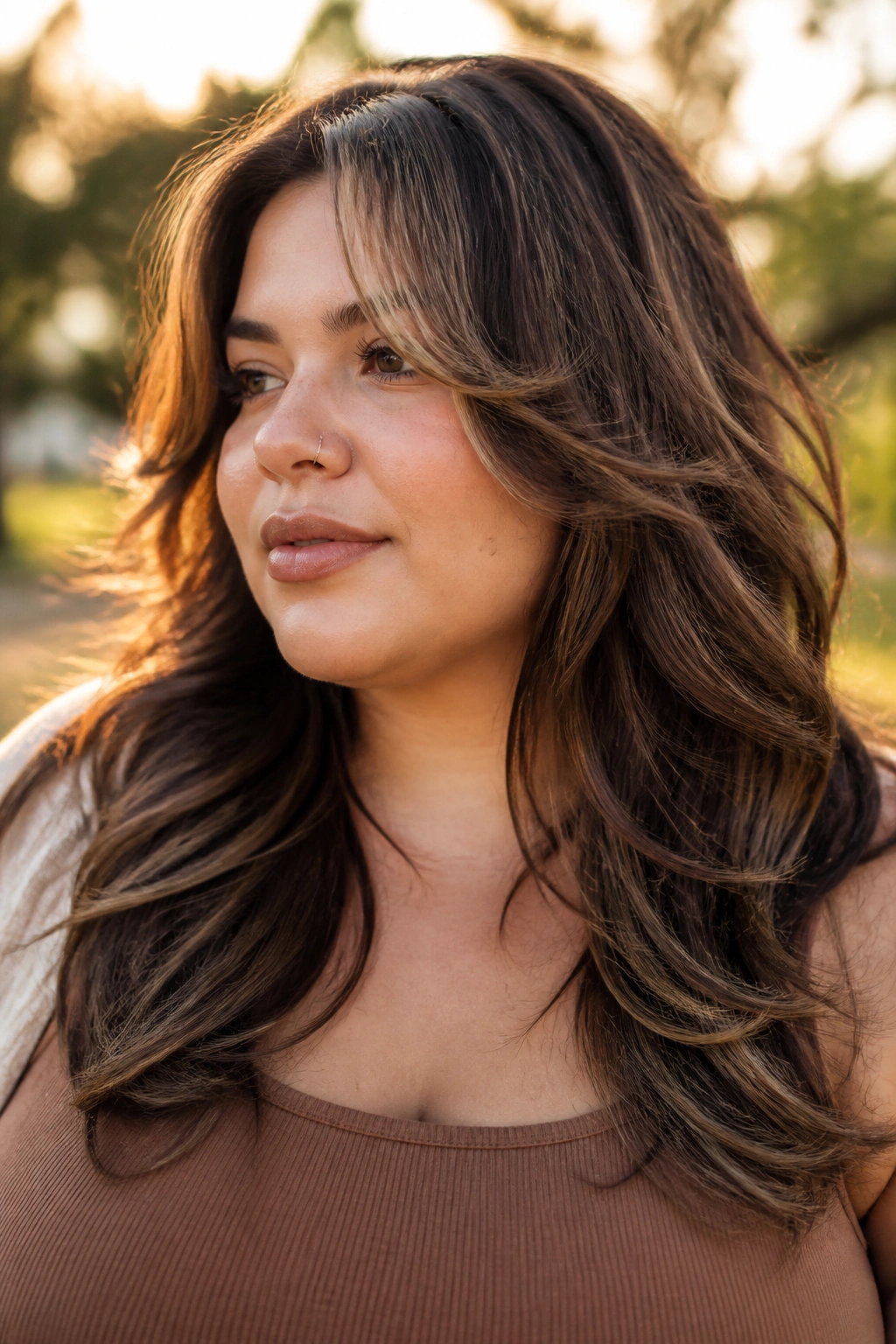
Wavy hair and butterfly layers get along fast. The bend in the hair catches the layers and gives them life, so the cut does not need much help to look good. That is one reason this version is so forgiving on busy mornings.
The best part is the way the shortest pieces skim the cheekbone while the longer layers swing underneath. It feels soft, not fussy. If you like a haircut that looks slightly better after a little wind or a few hours of wear, this is the one to keep in mind. The shape doesn’t collapse the way some blunt cuts do.
I’d ask for a medium round brush blowout or a rough dry with a large-barrel iron, depending on how much polish you want. A sea-salt spray can work, but don’t drown the hair in it. The goal is bend, not crunch.
It also plays nicely with fuller cheeks because the side pieces create motion away from the center of the face. That tiny outward swing makes the style feel lighter.
6. Butterfly Bob With a Rounded Perimeter
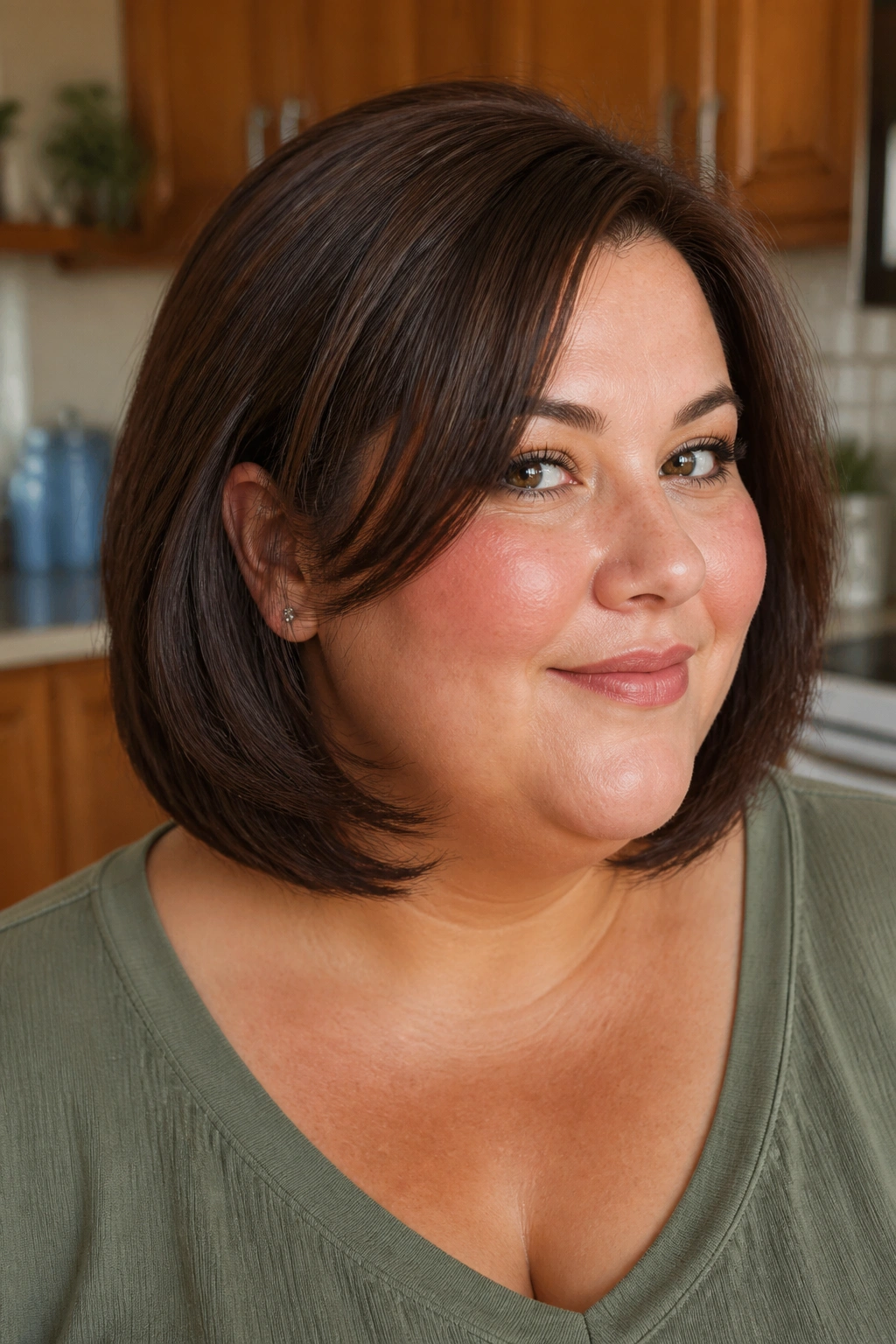
Unlike a blunt bob, a butterfly bob leaves air between the layers. That is the whole point. You still get the clean edge of a bob, but the top section lifts a little and the front pieces feather out instead of stopping cold at the jaw.
This cut is a good match if you want shorter hair that still feels soft around the face. The rounded perimeter keeps the shape from looking boxy, which can happen when a bob is cut too straight or too heavy through the sides. It’s a neat cut, but not a stiff one.
I’d recommend this version to anyone who likes the idea of a butterfly cut but does not want all that length. The shortest layer should hover around the chin, and the back should be kept full enough to swing without puffing out. If your stylist starts chopping too aggressively at the ends, the shape turns into a stacked bob instead of a butterfly variation.
This one looks especially good with a side tucking habit. You know the move—push one side behind the ear, let the other fall. It gives the cut a little personality.
7. Fine-Hair Butterfly Cut for Plus Size Women
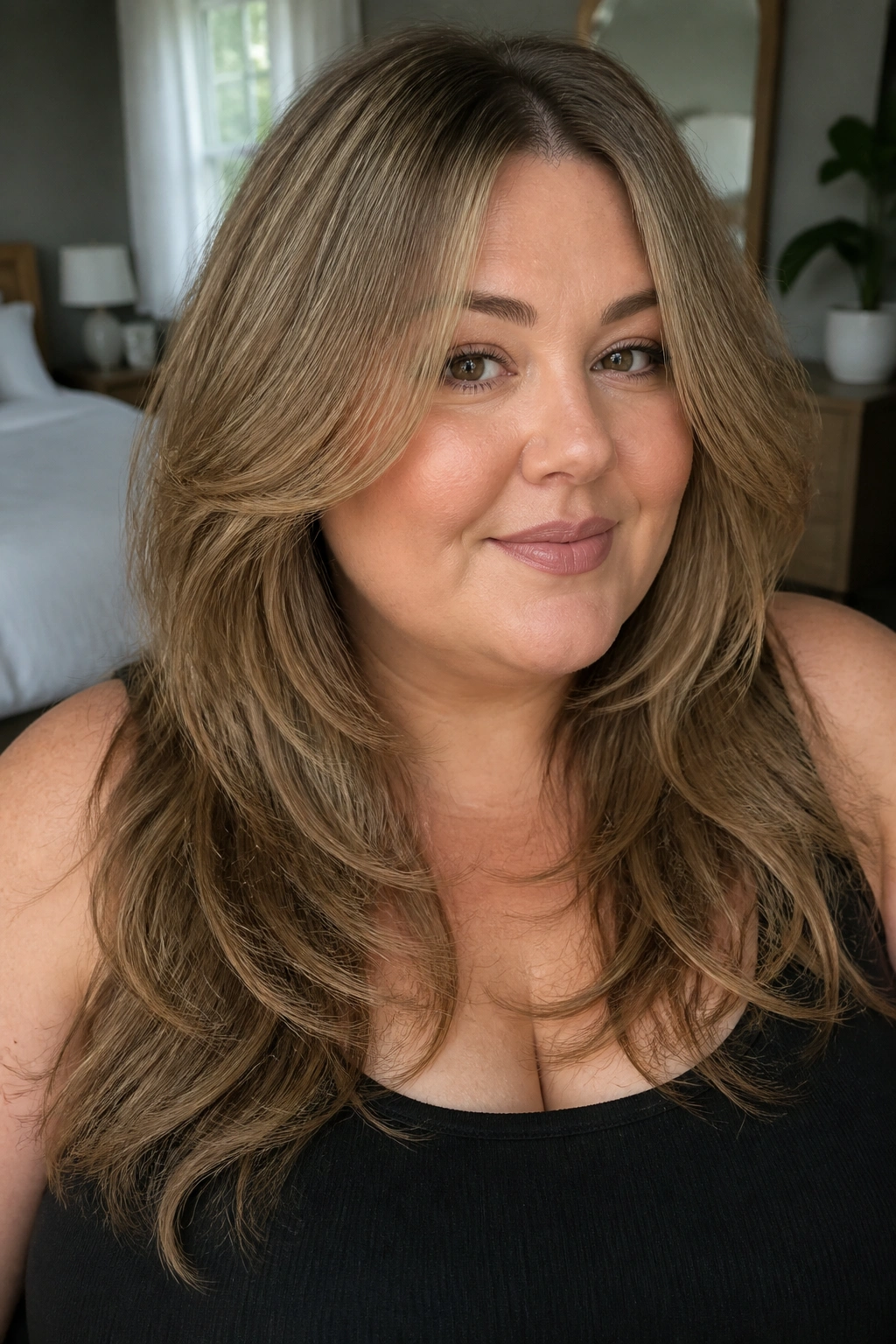
Fine hair needs careful layering. Too many short pieces and the ends go see-through; too few and the butterfly shape barely shows up. That is why this version should feel soft, almost restrained, rather than heavily chopped.
The trick is to keep the shortest face-framing layers close to the chin or lip, then let the rest of the shape stay long and airy. You want movement at the front, not a dozen tiny layers scattered through the whole head. Fine hair already loses density at the ends, so over-layering is a bad bargain.
What to Ask Your Stylist
- Keep the face frame longer, not shorter.
- Use light internal layering through the mid-lengths.
- Avoid aggressive thinning shears near the ends.
- Style with volumizing mousse at the roots and a round brush at the crown.
A one-sentence truth: fine hair looks fuller when the haircut preserves weight in the right places.
If you love a blowout, this version can look expensive with very little product. If you air-dry, it still needs a bit of root lift, or the layers can vanish into the rest of the hair.
8. Thick-Hair Butterfly Cut With Internal Weight Removal
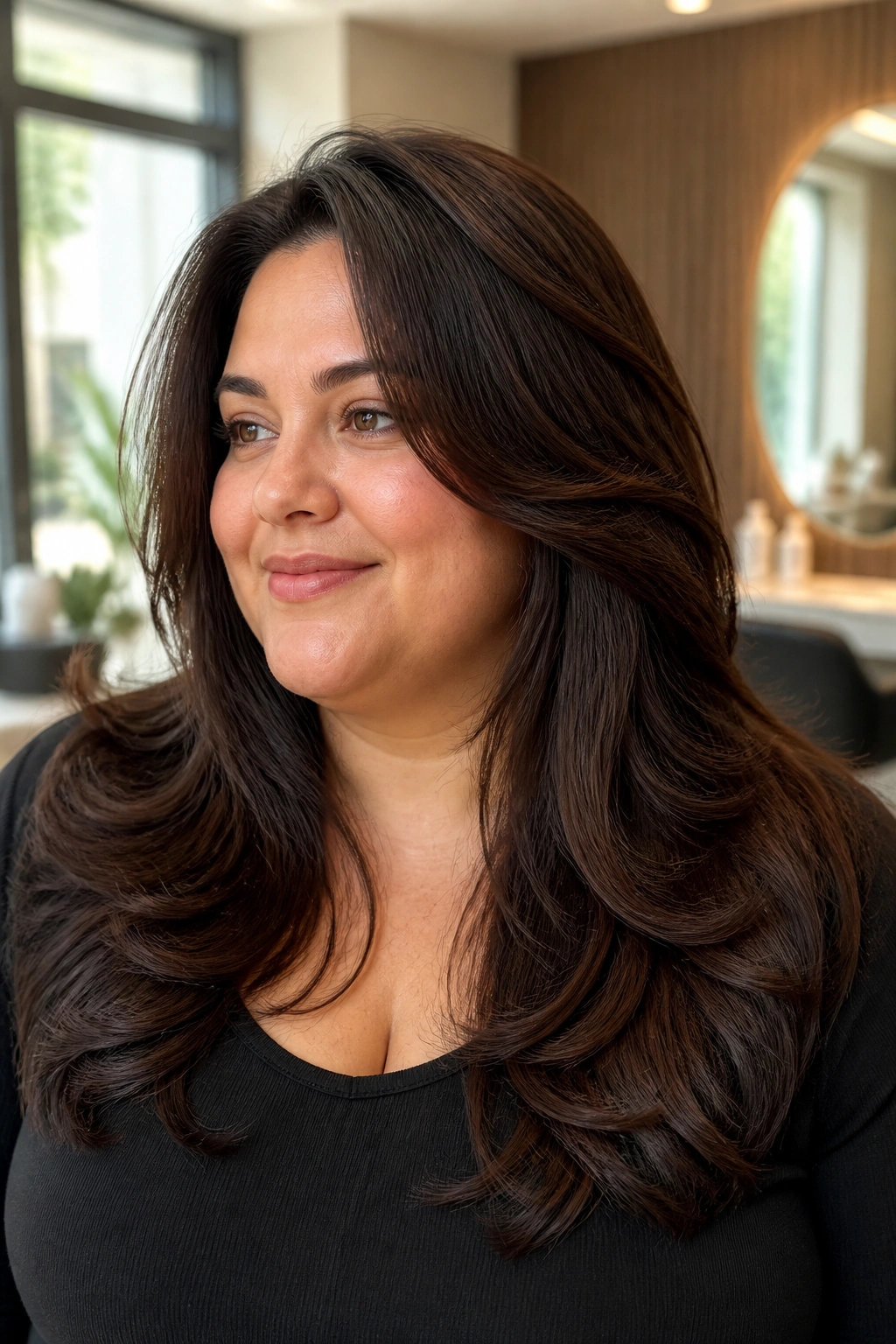
Thick hair loves a butterfly cut when the inside is cleaned out and the outline stays strong. That sounds technical, but it’s simple in practice: remove bulk where it piles up, not at the ends where the hair needs weight to swing.
Thick hair can handle more dramatic layering than fine hair, and that’s useful here. The front pieces can start a little higher, the crown can be lightened, and the back can keep enough heft to move without turning puffball-shaped. If you’ve ever had hair that feels great for the first ten minutes after a cut and then grows into a triangle, you know why this matters.
I’d ask for internal weight removal rather than razor slicing. There’s a difference. Internal removal takes bulk out from the middle of the haircut while preserving the outer line, which is what makes the butterfly shape look clean instead of shredded. That helps the style sit closer to the head while still bouncing when you move.
This is the version for people who want a lot of hair, but not a lot of hassle.
9. Round-Face Butterfly Cut With Longer Front Pieces
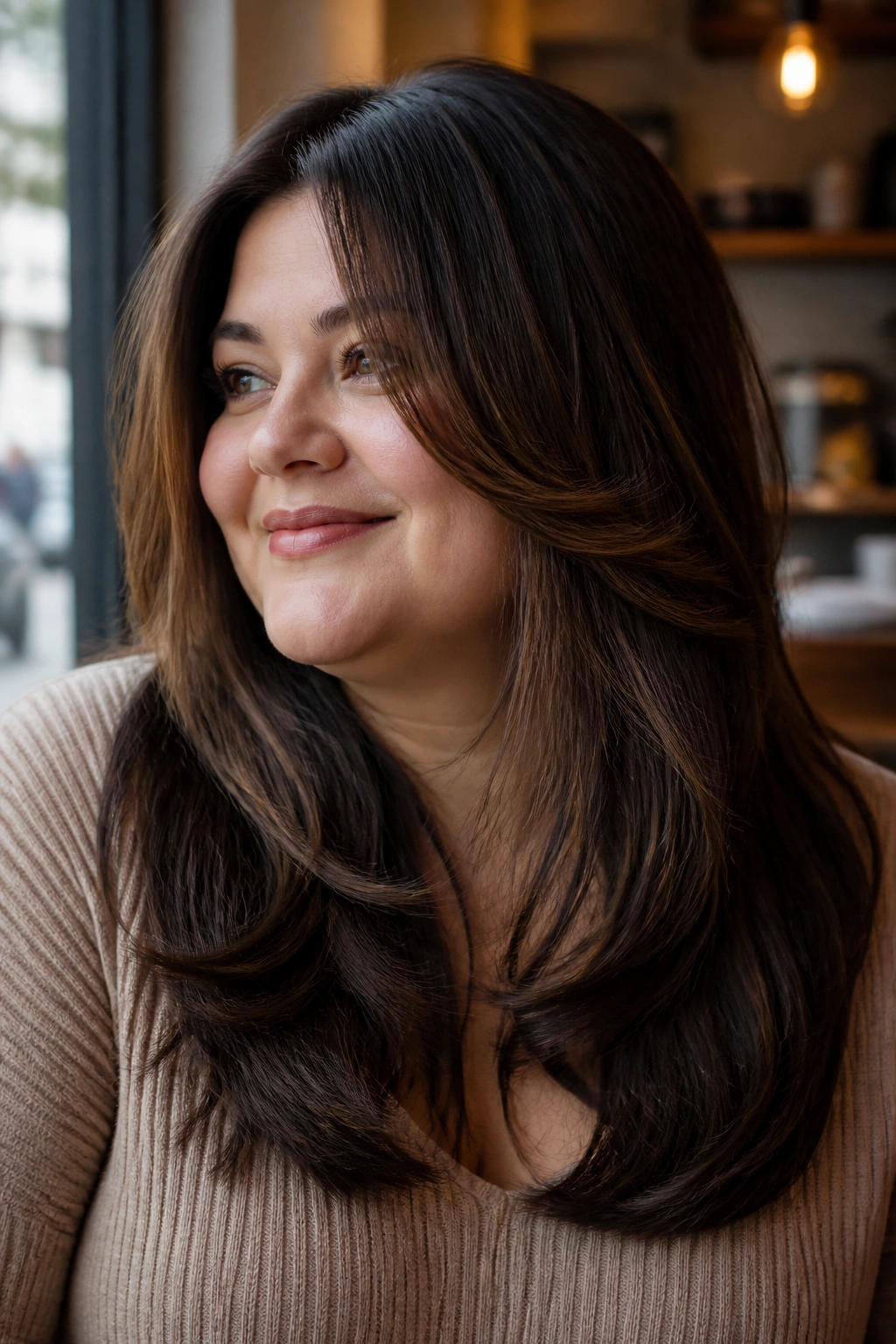
Why does this version work so well on rounder faces? Because it keeps the shortest pieces below the widest part of the cheeks. That one detail changes the whole read of the haircut.
The front layers should sweep past the jaw rather than stopping right at the cheek. That gives the face a longer frame and keeps the style from emphasizing width at the center. A center part can work here, but a soft off-center part often feels easier because it breaks up the symmetry just enough.
What to Ask For
- Shortest face-framing pieces at the lip, chin, or just below.
- Long layers through the back to keep the outline vertical.
- A soft bend away from the face, not toward it.
- No blunt shelf at cheek level.
A short sentence, because it matters: jaw-length pieces are usually better than cheek-length pieces here.
If you like bangs, curtain bangs can still work. Just keep them open and airy so they don’t create a heavy band across the middle of the face. The goal is to make the haircut feel elongated without looking fussy or overworked.
10. Square-Jaw Butterfly Cut With Soft Floating Layers
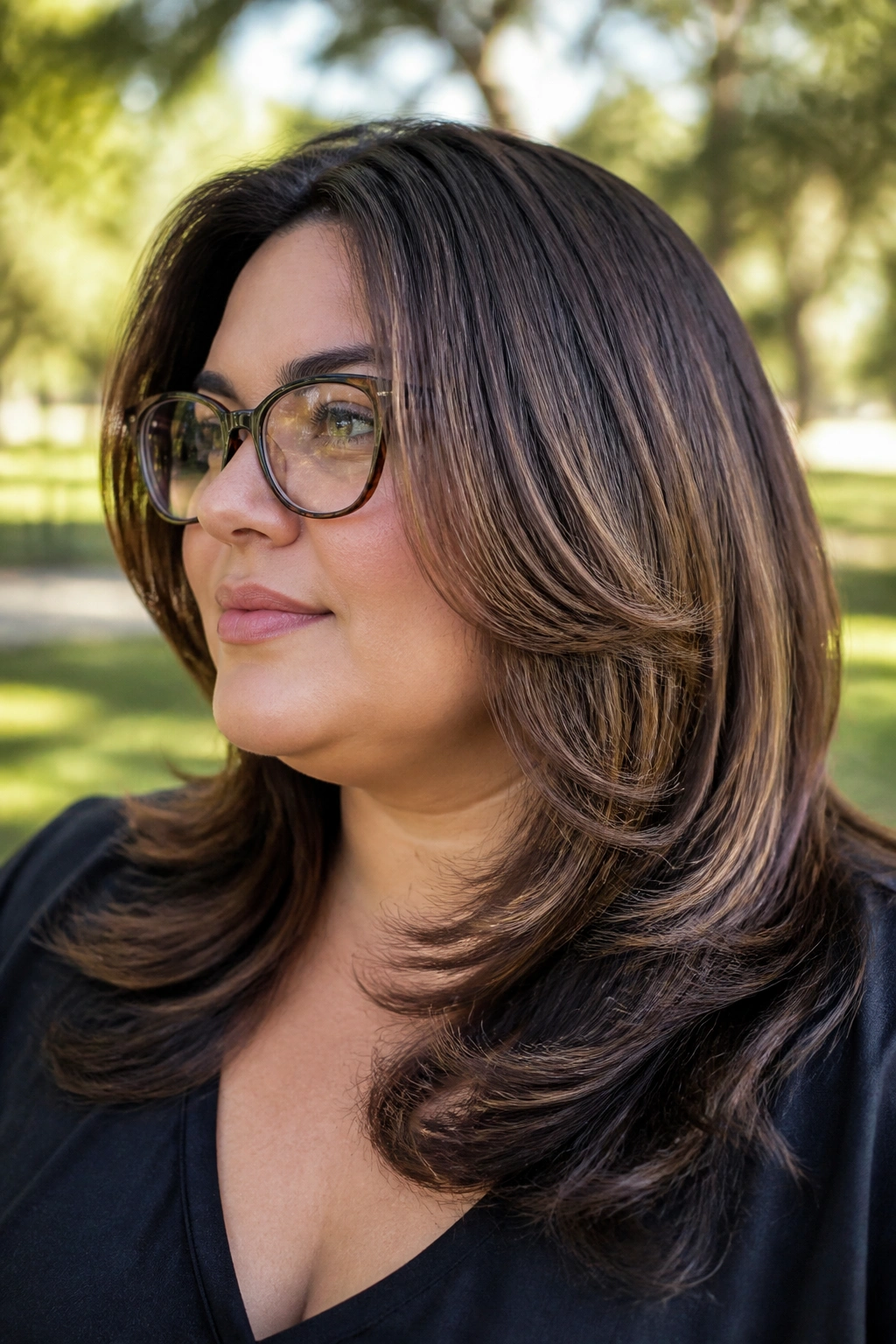
Strong jaws look beautiful with butterfly layers, but the cut should soften the angles, not fight them. That means the front pieces need to float, not land with a hard stop right at the jawline.
I like this shape because it gives a little give around the lower face. The shortest layers should start above the chin and curve away from the corners of the jaw. When the ends are textured just enough, the whole haircut feels smoother around the edges. Not flat. Just smoother.
A square jaw can take a lot of structure, so don’t be shy about keeping the back full. What you want to avoid is a boxy front section that mirrors the jaw too closely. That can make the face look wider than it is, which is not the point. The butterfly effect should soften the outline and keep the energy moving.
If you wear glasses, this shape can be especially nice because the layers frame the frames without crowding them. Small thing. Big difference.
11. Butterfly Cut With Bottleneck Bangs
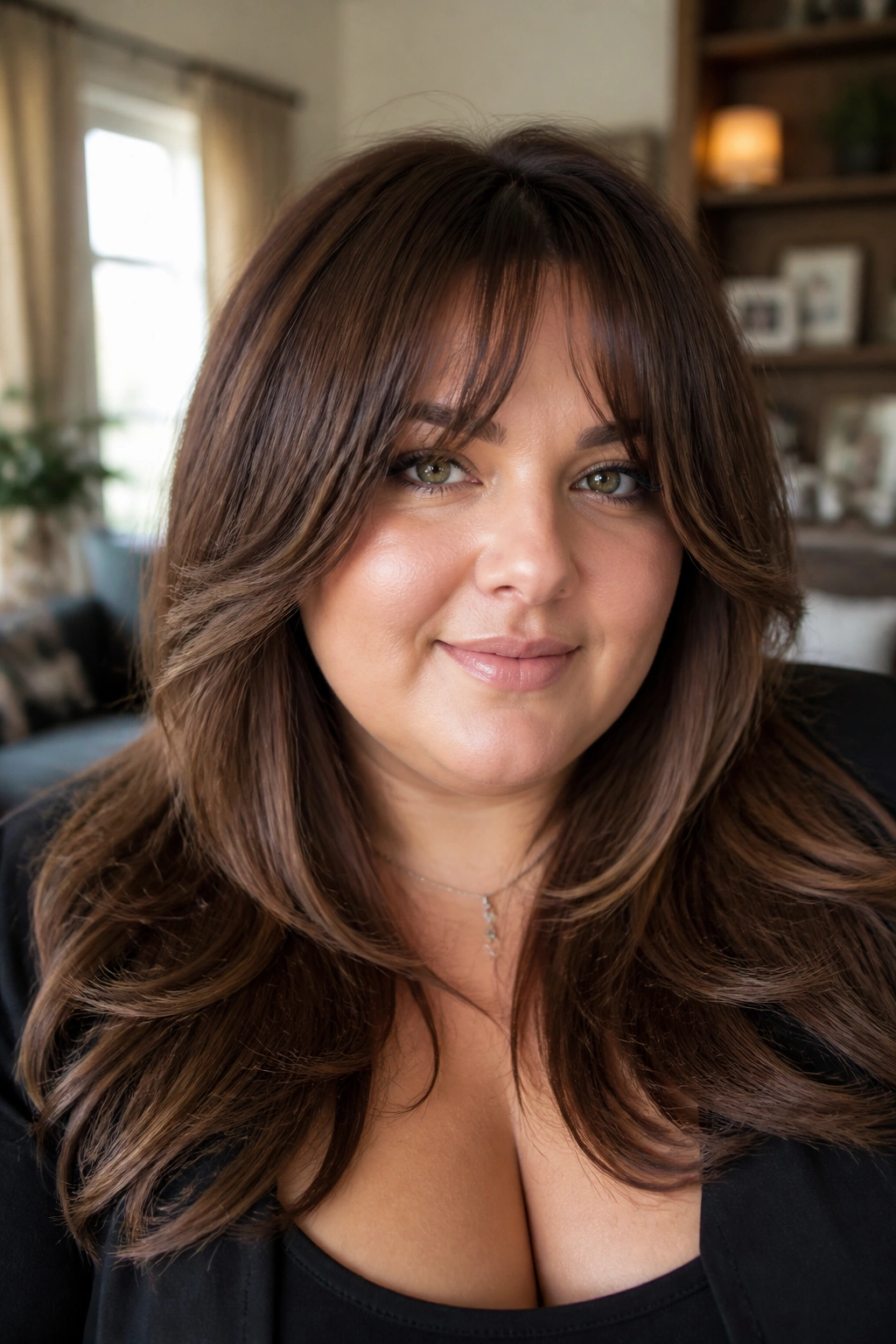
Bottleneck bangs are a smart match for a butterfly cut because they give you forehead coverage without trapping the face. They start narrow between the brows, then widen as they move into the cheek area. That shape echoes the butterfly layers underneath, which is why the whole haircut feels cohesive.
This version works when you want bangs but don’t want a thick, heavy line across the forehead. The fringe softens the center, the side pieces open around the temples, and the longer layers keep the rest of the look balanced. It can be a nice choice for fuller faces because it creates movement around the eyes and cheeks without closing off the face.
The upkeep is a little higher than a no-bang version, though not wild. You’ll need a quick round-brush bend or a flat-iron curve near the front so the bangs sit the right way. Let them dry in the direction you want; fighting them later is a waste of time.
One-sentence verdict: If you want fringe with room to breathe, this is the sweet spot.
12. Feathered Butterfly Cut With Flipped Ends
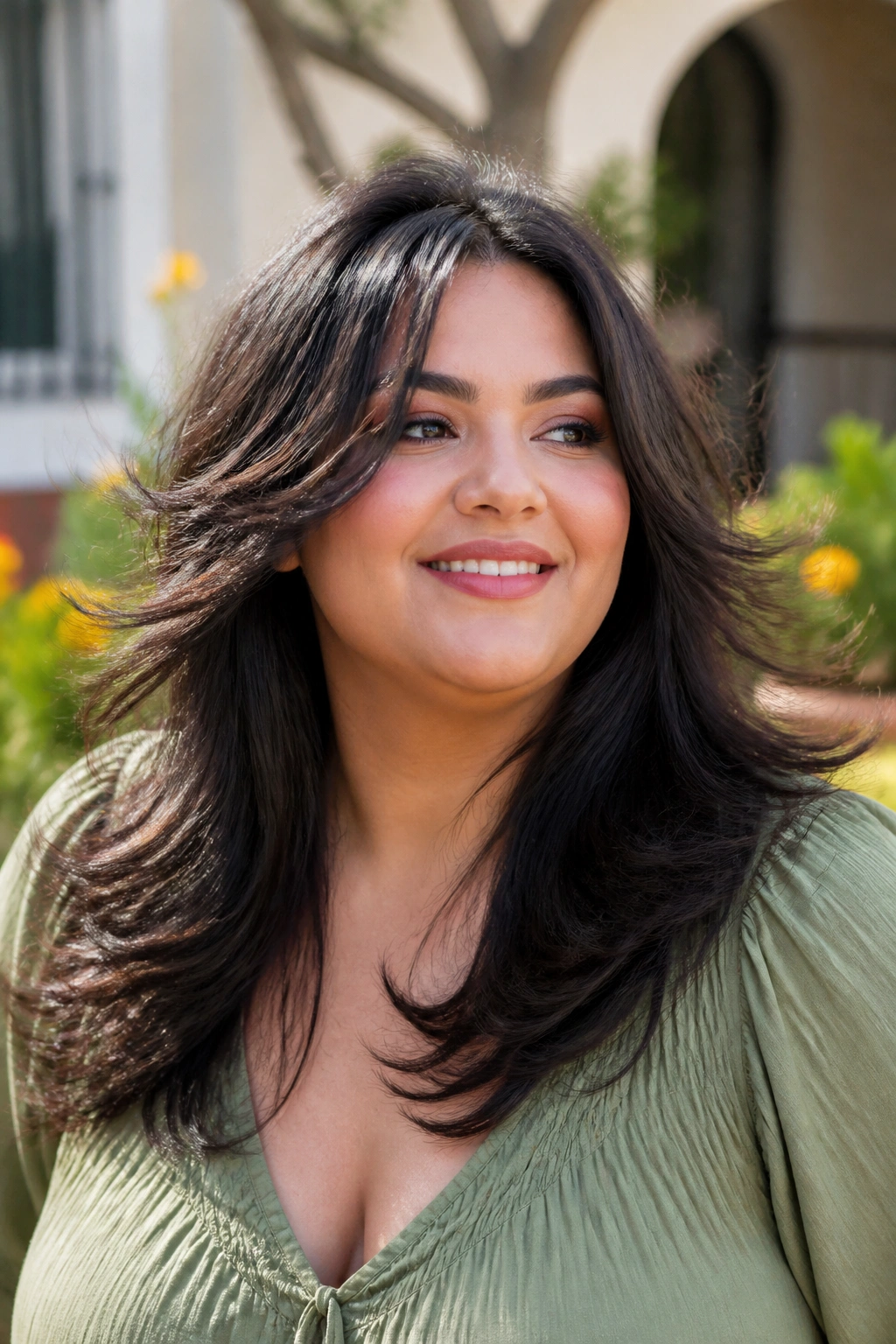
Feathered ends give the butterfly cut that airy, blown-out feel people chase in salon photos. The layers taper instead of dropping bluntly, so the ends look lighter and a little more lifted at the edges.
This cut has a retro note to it, but not in a costume-y way. The flip at the ends creates motion, and motion is what keeps the haircut from sitting heavy around the shoulders. It works nicely on medium to long hair, especially if the hair naturally bends a little at the ends.
How to Get the Most From It
- Use a 2-inch round brush or a large barrel iron.
- Flip the ends away from the face for a softer frame.
- Keep the shortest layers around the cheekbone.
- Finish with a light oil only on the tips, not the roots.
If you like a polished blowout, this is a strong choice. If you want a rough, lived-in look, it can still work, but you’ll want to soften the finish so the feathering doesn’t turn into random flips. There is a line there, and it is thinner than people think.
13. Air-Dry Butterfly Cut With Soft Texture
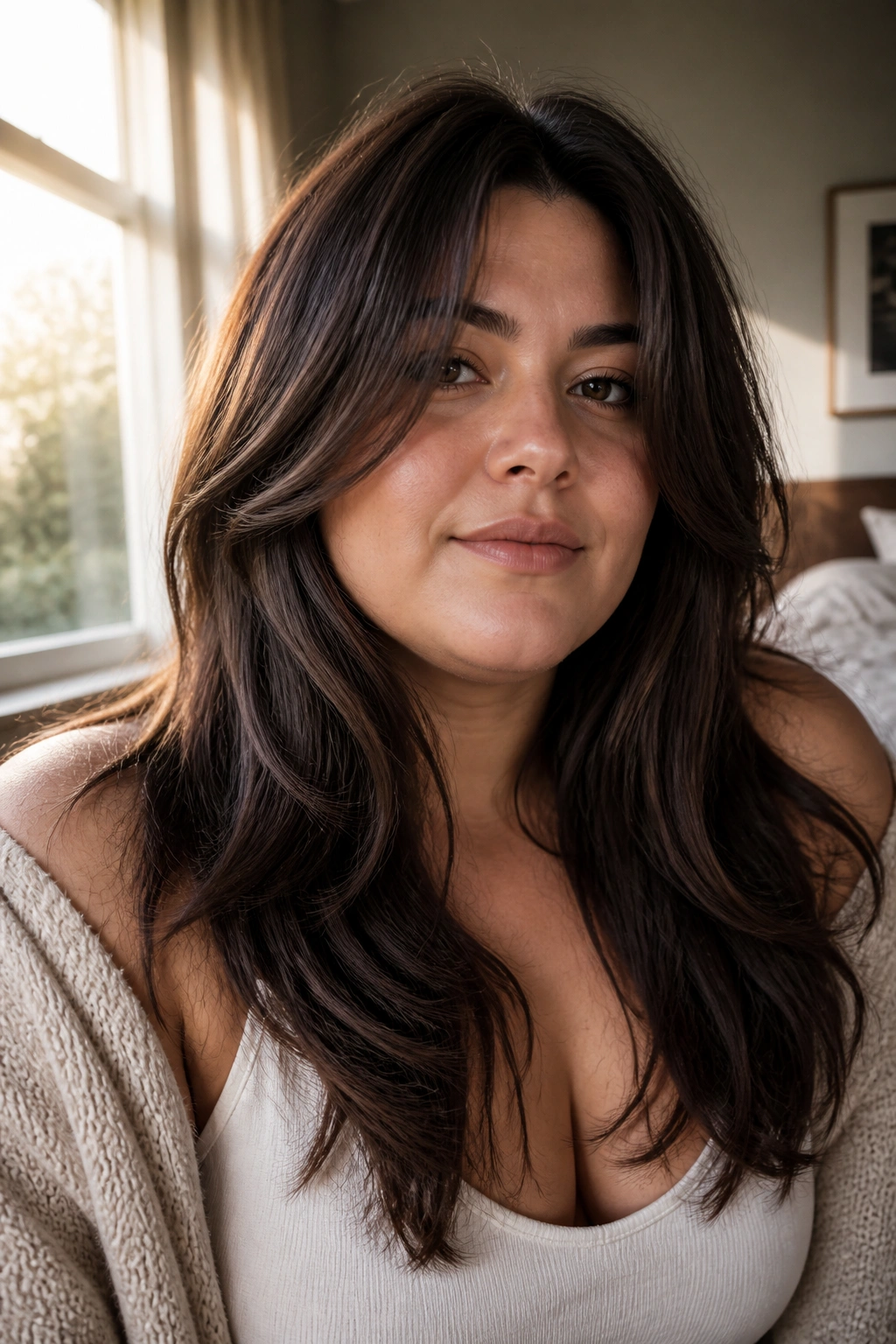
Not every butterfly haircut needs a blow dryer. That’s the good news for anyone who likes a lower-effort routine or simply does not want to spend twenty minutes holding a brush over their head every morning.
The air-dry version depends on cut placement more than styling tricks. The face frame should be long enough to fall nicely without heat, and the layers should be blended so the hair can dry into a soft shape instead of a bunch of separate chunks. Wavy and slightly textured hair do especially well with this version.
I’d keep the ends blunt enough to look healthy, then let the upper layers do the moving. A lightweight cream or mousse, scrunched through damp hair, can help the layers settle into place without turning them stiff. If your hair dries flat at the crown, clip the roots up for the first 20 minutes while it dries. That little lift helps more than people admit.
This is the butterfly cut for people who want shape, not ceremony.
14. Glam Blowout Butterfly Cut With Big Volume
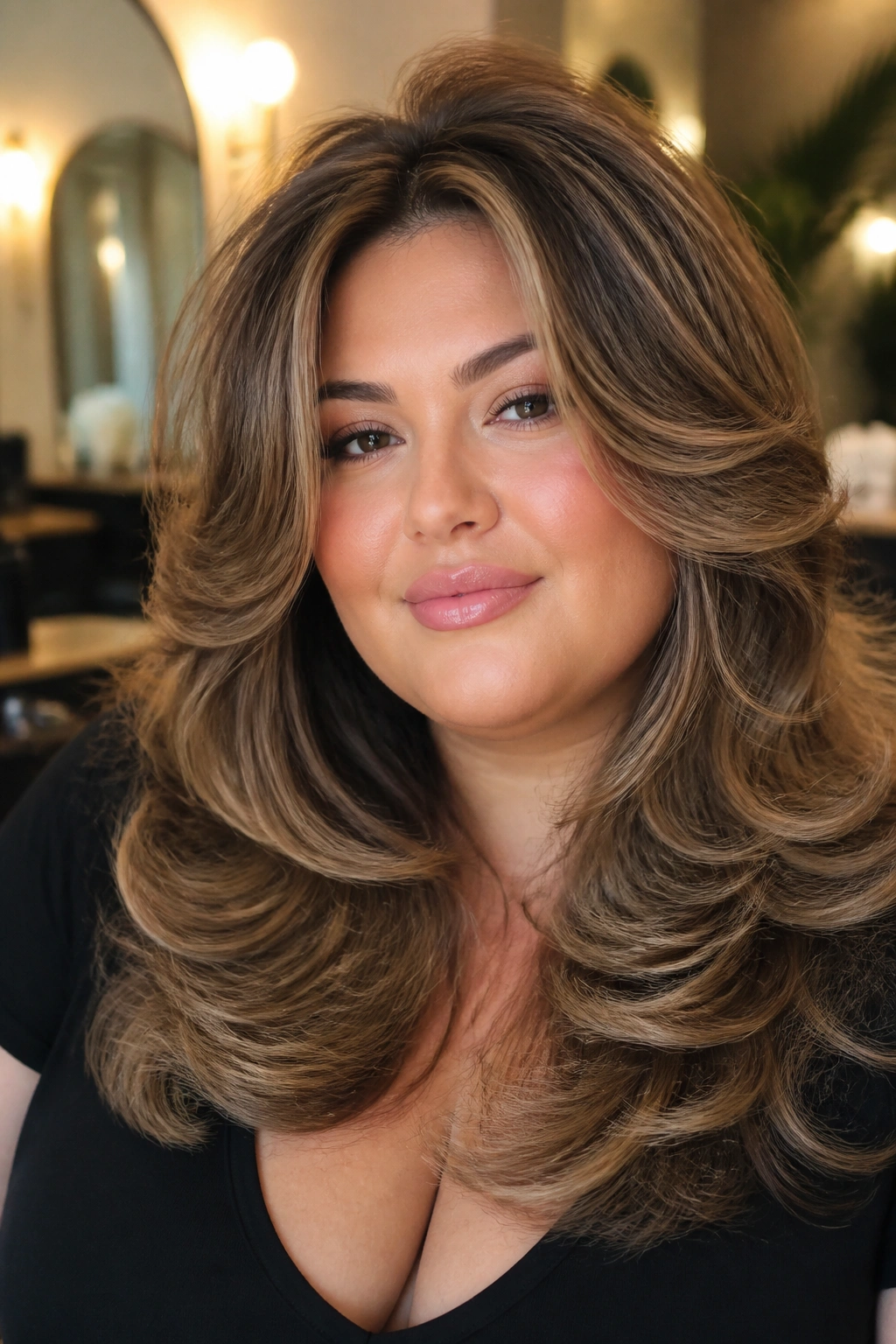
There’s a reason this version keeps showing up in salon chairs: it looks expensive in the nicest, least snobby sense of the word. The big blowout version of a butterfly cut gives the face a soft frame, then sends the ends out with enough lift to make the whole style feel polished.
The style depends on volume at the roots and movement through the front pieces. That means a round brush, a heat protectant, and a little patience. You do not need every strand to obey. The charm is in the swing. If the crown stays a little lifted and the ends flip under or away from the face, the haircut reads as full and airy instead of heavy.
I especially like this on medium to thick hair because the shape holds better. Fine hair can wear it too, but you’ll need more root support and probably a setting spray before the brush comes out. Otherwise the volume falls too fast.
One practical note: this look is easier to wear when the layers are not cut too high. If the shortest bits are too short, the blowout can start to look too busy around the face.
15. Extra-Long Butterfly Cut With Seamless Layers
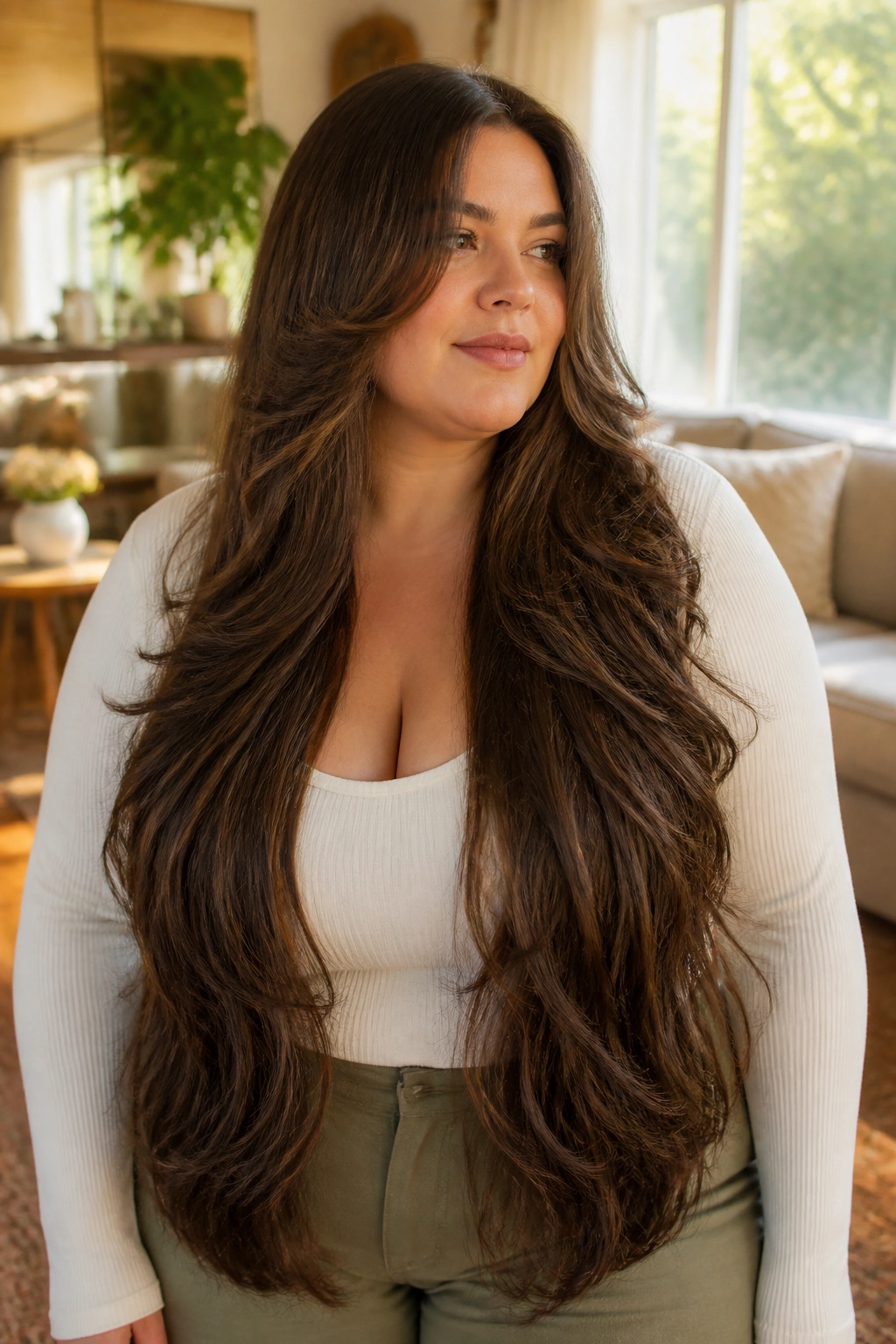
Can a butterfly cut stay dramatic when the hair is waist length or close to it? Yes, but only if the shortest layer starts high enough to matter and the rest of the shape stays smooth enough to preserve the length.
This version is for people who want movement without giving up the feeling of long hair draped down the back. The trick is to build the layers into the shape instead of stacking them visibly. You want the front to flutter, the mid-lengths to soften, and the ends to keep their line. Seamless is the right word here, even if I usually hate that word in beauty writing. In this case, it fits.
How to Keep It Balanced
- Start the shortest layer around the cheekbone or lip.
- Leave the lower lengths full enough to swing.
- Keep the ends blunt-ish so the hair does not look wispy.
- Blow-dry with a large round brush only through the front third of the hair.
This style flatters plus size women who like long hair but want the face to feel lighter. It does not erase length. It frames it.
16. Collarbone Butterfly Cut for Plus Size Women
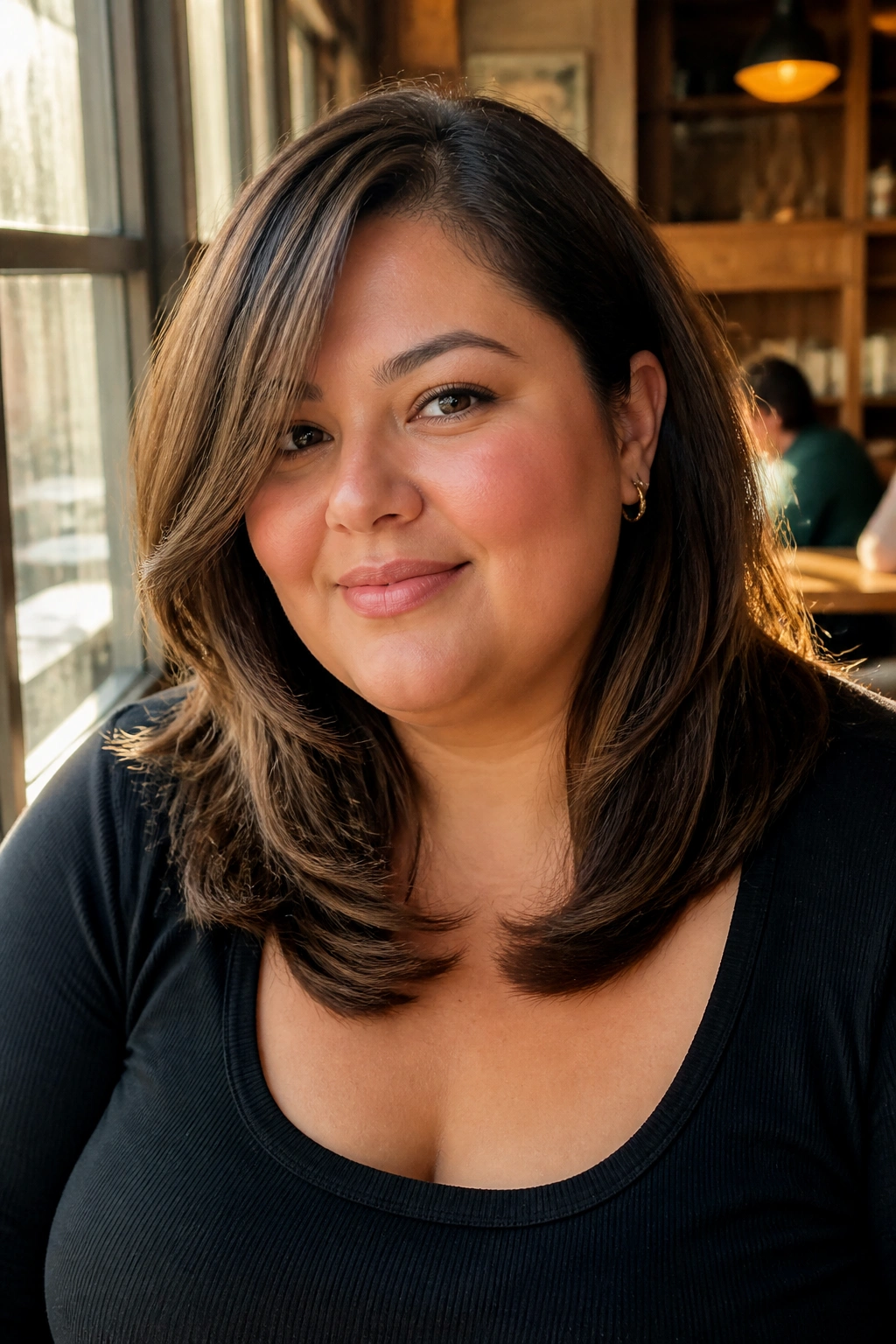
A collarbone-length butterfly cut is the one I recommend when someone wants movement without a lot of upkeep. It sits in that easy zone where the hair still feels long, but it does not overwhelm the shoulders or get trapped under everything you wear.
This cut is flattering because the collarbone acts like a natural stopping point. The eye reads the line, then follows the layers upward to the face frame. That gives the haircut structure without making it feel severe. The shortest pieces can live around the chin or mouth, which is enough to create the butterfly shape without a dramatic chop.
What to Ask Your Stylist
- Keep the base around the collarbone.
- Place the shortest face layers between the chin and lip.
- Blend the back so it moves, but do not over-thin it.
- Ask for a cut that still looks good tucked behind one ear.
This is a nice middle ground if you like a haircut that can go from work to dinner with the same brush-out. It’s tidy. It’s soft. And it does not demand much.
17. Choppy Butterfly Cut With Textured Ends
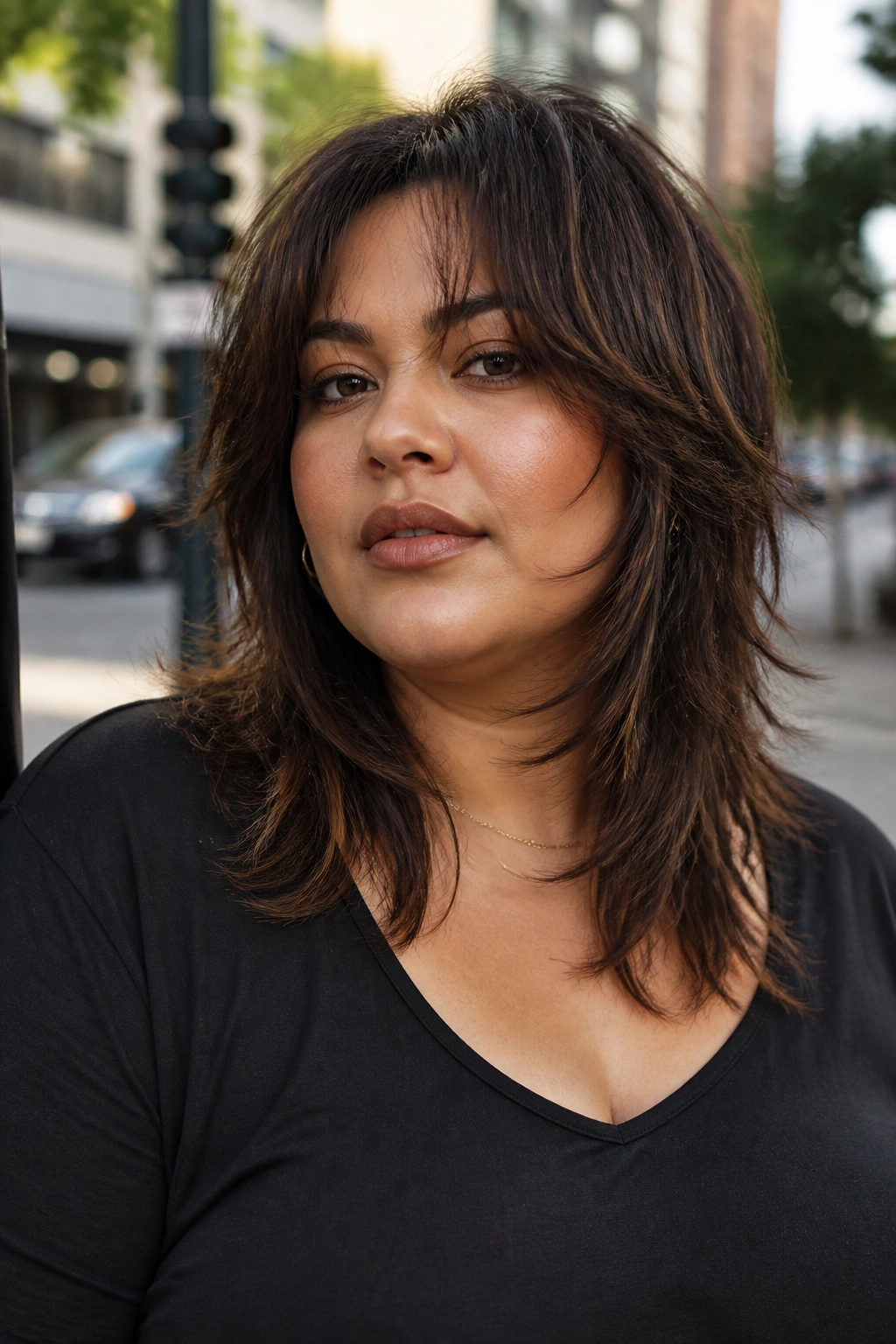
This is the edgier cousin in the group. The choppy butterfly cut keeps the same face-framing idea, but the ends have more separation and texture, so the whole thing reads a little cooler and less polished.
I’d use this on hair that already has some natural movement or on anyone who likes a piecey finish. The layers should still be planned, not hacked in. There is a difference between texture and mess. Texture gives the haircut energy; random chopping just makes the ends look thin and unhappy.
The shorter front pieces can sit at the cheekbone, but the perimeter should keep enough strength that the style doesn’t fray out. That matters more on plus size women than a lot of salon talk admits, because a balanced shape around the shoulders can make the cut feel intentional instead of accidental.
If you like a bit of product, a dry texture spray or a tiny bit of paste on the tips can make this one come alive. Go easy. Too much and the movement gets sticky.
18. Butterfly Cut Without Bangs for Plus Size Women
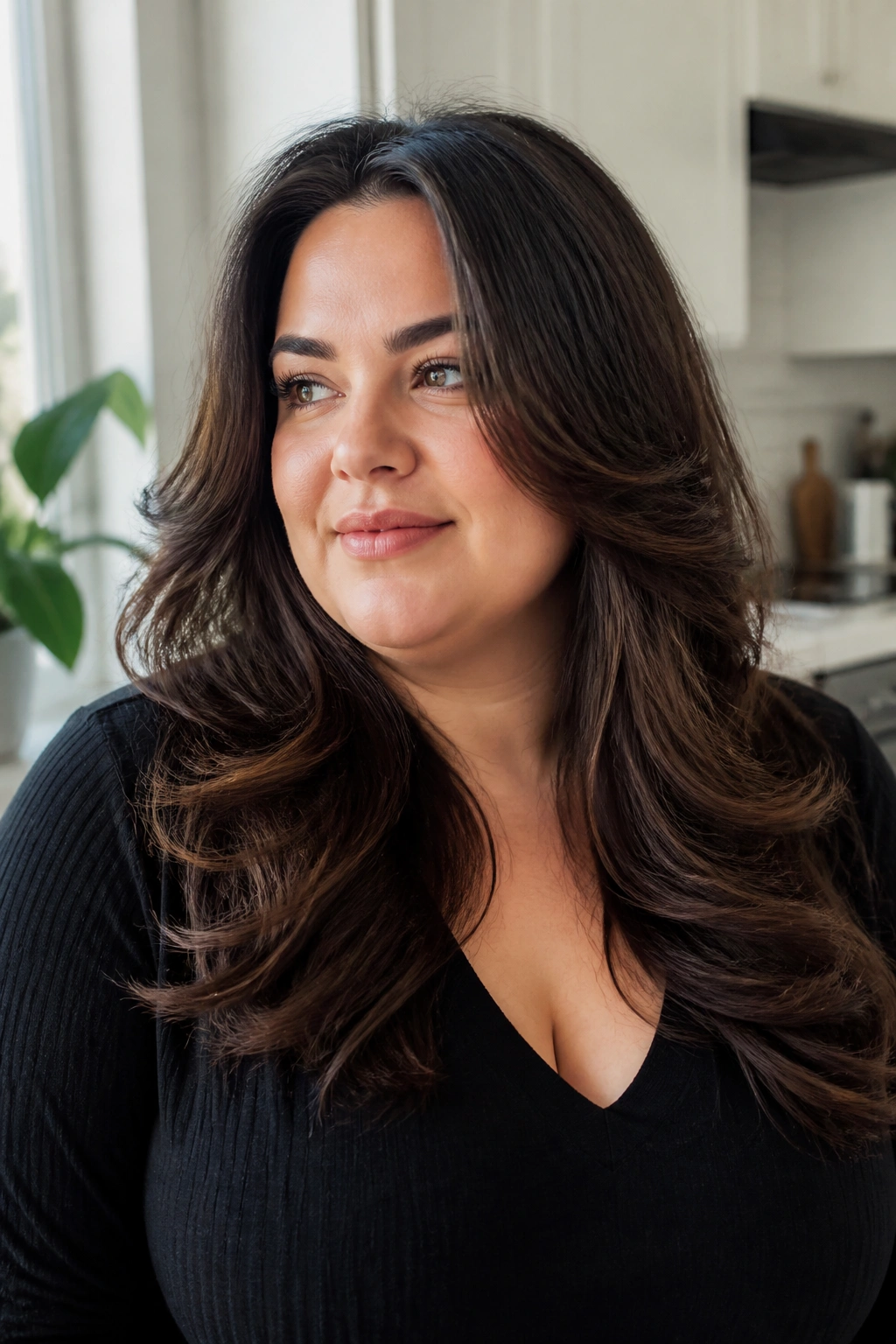
If you hate bangs touching your forehead, this is the version to keep. A butterfly cut without bangs still gives you the face-framing lift, but it leaves the forehead open so the whole look feels cleaner and easier to live with.
The shape depends on the front pieces carrying the softness. That means the shortest layers should start around the cheekbone or lip, then sweep back into longer layers that fall below the shoulders or collarbone. The result is calm, not flat. It’s the kind of haircut that works with glasses, works with clips, and works when you just brush it and leave the house.
I like this version for women who want the butterfly effect but don’t want to babysit fringe every morning. Bangs can be lovely, but they are a job. This cut gives you the movement without that extra commitment.
If I were sending one butterfly haircut to a stylist with no other notes, I’d probably start here: open face, soft sides, long layers, no fussy fringe. It’s a smart, low-drama finish to the list, and it’s the one most likely to make you feel like your hair is working with you instead of asking for another 20 minutes.
