



A short cut can do more for a fuller face than a long curtain of hair ever will. The right face framing short cuts for plus size women draw the eye up, soften the jaw, and keep the whole look from feeling boxed in.
That does not mean you need a dramatic chop or a high-maintenance salon style. In practice, the best short cuts rely on shape: a longer fringe, a side part, a bit of height at the crown, or a bend around the cheek instead of a blunt line sitting right at the widest point of the face.
I’ve always had a soft spot for short cuts that move. Flat, helmet-like hair can make even a nice haircut feel stiff. A little lift, a little curve, a few well-placed pieces — that is what keeps the look lively.
Some of these cuts are polished. Some are messy in a good way. All of them frame the face instead of just sitting around it, and the first one is the easiest place to start if you want something short and flattering.
1. Side-Swept Pixie With a Long Fringe

A side-swept pixie gives you two things at once: a clean neck and a soft line across the forehead. That long fringe is doing real work here. It cuts diagonally across the face, which breaks up width and gives the cheekbones somewhere to lead the eye.
The trick is keeping the sides neat but not stripped bare. Ask for a little length around the temples, then leave the fringe long enough to graze the brow or even touch the top of one eye. That extra length makes the cut feel feminine and easy to shape, not harsh.
What to ask your stylist for
- Short back and sides with 2 to 4 inches of length in the fringe
- Soft point cutting at the front so the ends do not sit in a blunt line
- A side part that drops the fringe across the forehead instead of straight down
- Light texture at the crown so the cut does not collapse flat
Best for: round faces, soft jawlines, and anyone who wants a short cut that still feels gentle around the face.
One small styling note. Push the fringe in the opposite direction while it is damp, then flip it back once it dries. That gives you a little bend instead of a stiff sweep, and that bend makes all the difference.
2. Jawline Bob With Soft Internal Layers

A bob can sit right at the jaw and still look flattering. The reason is simple: internal layers keep the shape from turning boxy. The outline stays clean, but the inside of the haircut has enough movement to soften the line where the hair ends.
This cut is especially good if you like structure. It has a little polish to it, which can feel nice when you want something tidy rather than tousled. The ends should skim the jaw, not sit exactly on the widest part of it. That tiny shift matters more than people think.
The best version uses subtle layering inside the bob, almost like a hidden pocket of movement. You do not want choppy ends everywhere. You want the hair to curve in toward the chin and away from the cheeks, almost like it is following the shape of the face on purpose.
If your hair is thick, this cut can feel lighter without looking thin. If your hair is fine, it can look fuller when the perimeter stays blunt and the inside does the softening.
3. Angled Lob With Cheekbone Pieces
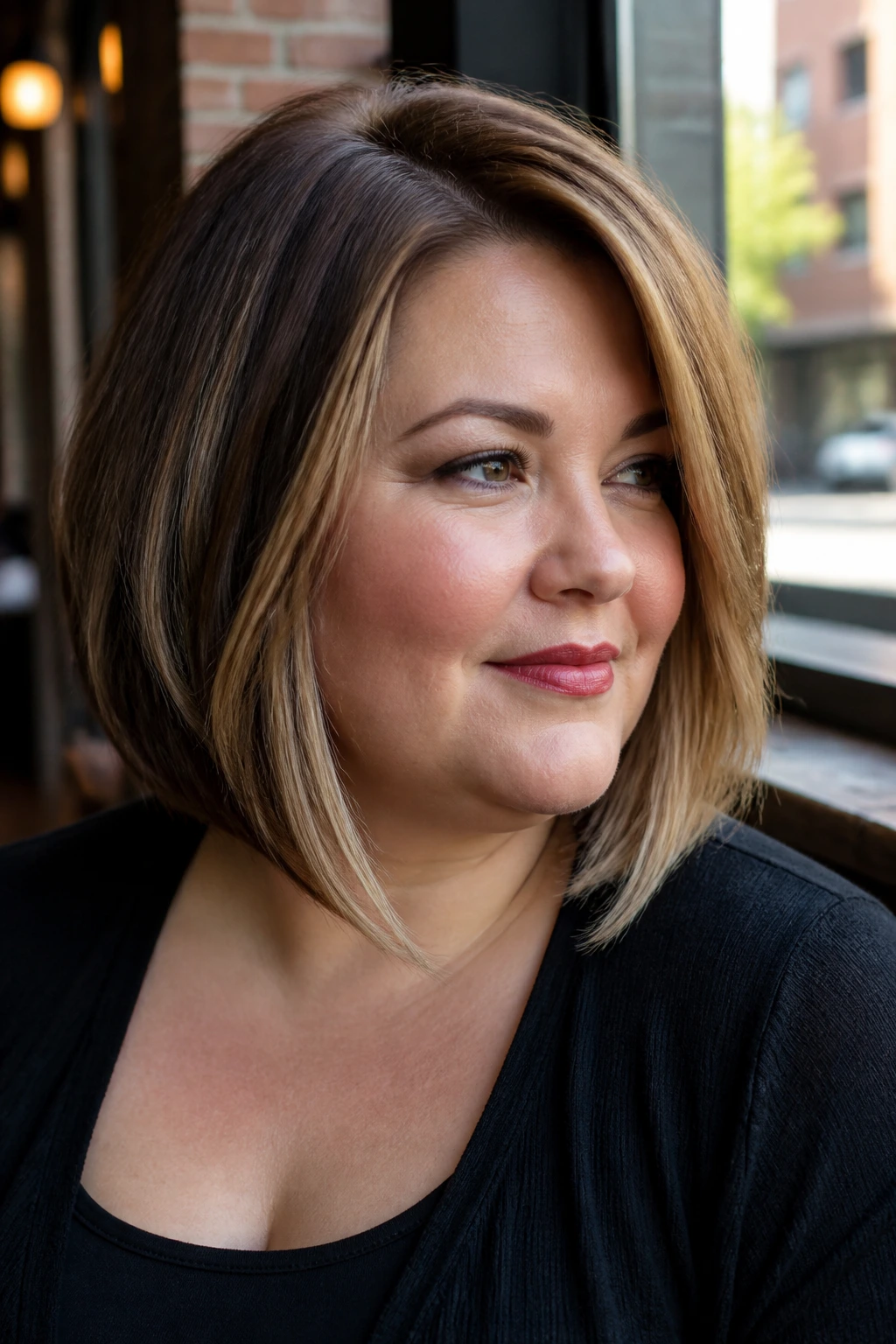
Why does this one work so well? Because the angled lob gives the face a built-in line to follow. The front is a touch longer than the back, so the eye moves down and forward instead of stopping at one wide point.
The cheekbone pieces are the part that people remember. They should start somewhere around the mouth or upper cheek and angle toward the collarbone. That shape pulls attention to the middle of the face, which is usually where you want the focus.
How to wear it
A deep side part gives the cut more shape. A center part makes it feel softer and more relaxed. Both work, but the side part adds a little edge and a little lift at the crown.
For styling, use a round brush or a large curling iron to bend the front pieces under just a bit. Not a tight curl. Just enough curve to keep the edges from hanging straight and heavy.
This is one of those cuts that looks expensive when the line is crisp. It also grows out well, which is a relief if you do not want a trim every few weeks.
4. French Bob With Airy Bangs

There is a reason the French bob keeps coming back. It has a crisp shape, but it never feels severe when the bangs are light and the ends are a little undone.
This version works best when it stops around the cheekbone or just below the ears. That shorter length keeps the focus on the eyes and lips, and the airy fringe softens the top of the face instead of drawing a hard line across it.
A blunt fringe can feel heavy on a fuller face. Airy bangs do the opposite. They let the forehead peek through, which keeps the haircut from closing in around the features. The result feels airy, not fussy.
- Keep the bangs wispy, not dense
- Ask for a slightly beveled edge at the ends
- Style with a quick bend, not a perfect curl
- Leave a few pieces loose around the ears for softness
I like this cut most on people who want something chic with very little daily effort. It still needs a trim to keep the line clean, though. If the shape drops too far, the whole thing loses its charm.
5. Curly Bixie With a Face Halo
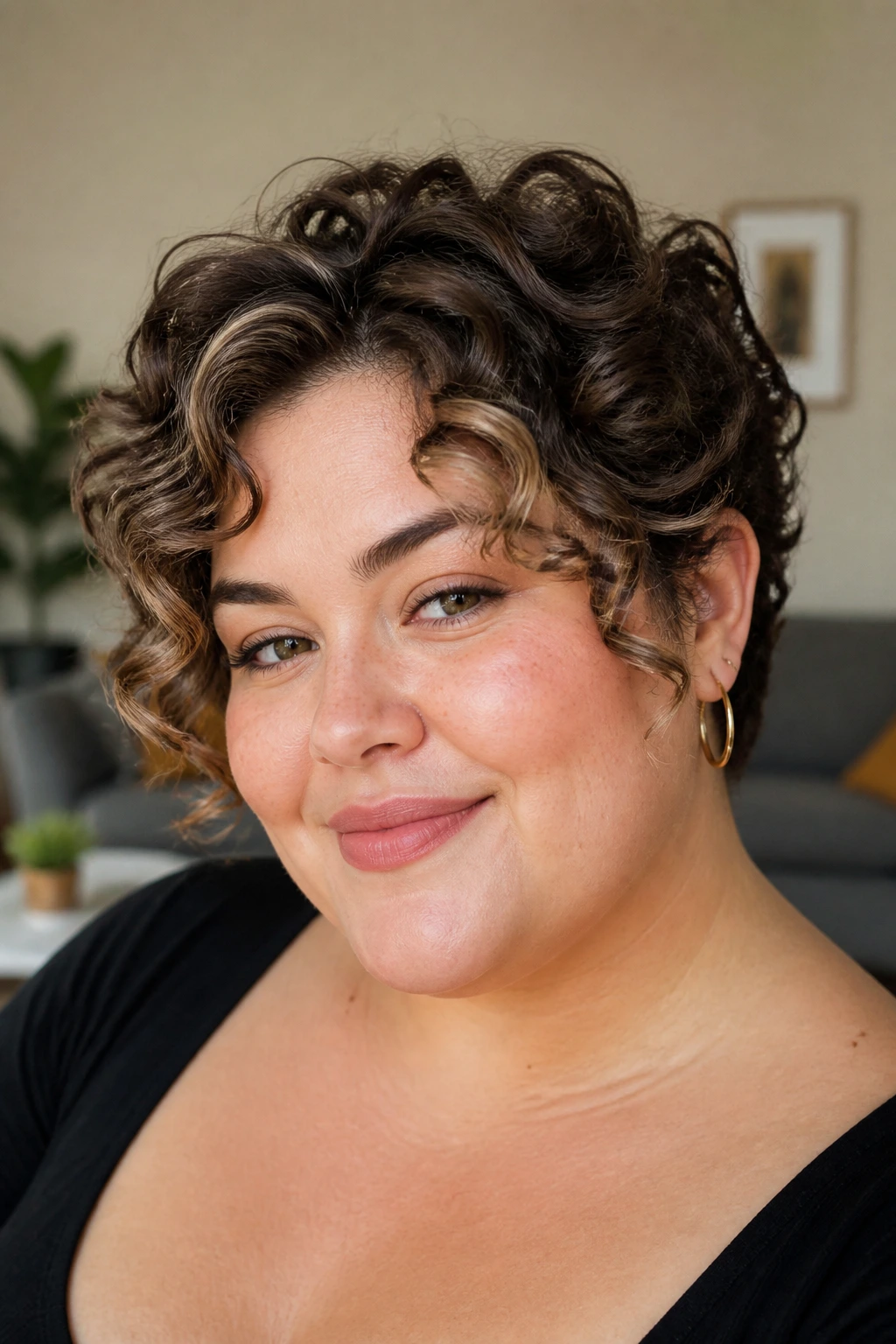
Curly hair and short cuts can be a dream together when the shape is planned well. A bixie — that middle ground between a bob and a pixie — gives curls room to spring up without turning the sides into a puffed-out triangle.
The face halo is the important part. You want curls or waves left a little longer around the temples, cheeks, and upper jaw so they frame the face instead of crowding it. On curly hair, that framing happens naturally if the cut respects the curl pattern.
Dry the hair with a diffuser on low heat and stop before it gets too airy. That soft halo around the face should feel like a frame, not a cloud. The difference is subtle, but you see it in every mirror glance.
A bixie is good when you want texture more than polish. It is also forgiving on busy mornings. Scrunch in a light cream, let the curls settle, and do not over-touch them. Too much fuss pulls the shape apart.
6. Tapered Pixie With Height at the Crown

A flat pixie can make the head look wider than it is. A tapered pixie fixes that by shifting the volume upward instead of outward. That is the whole game.
The sides and back stay close to the head, while the crown keeps a little extra length — often 1 to 2 inches longer than the edges. That lift creates a vertical line, and vertical lines are your friend when you want the face to feel longer.
This cut is a smart pick if your hair grows thick around the ears or neck. The taper removes bulk where you do not want it, then the crown brings the eye up. Simple. Effective. No drama.
It also looks good with a little mess. In fact, a tiny bit of separation at the top keeps it from feeling too neat. Use a pea-sized amount of matte paste, pinch the crown, and move on.
Best for round or square faces. The height opens the profile and gives the haircut a cleaner outline.
7. Deep-Side-Part Chin Bob
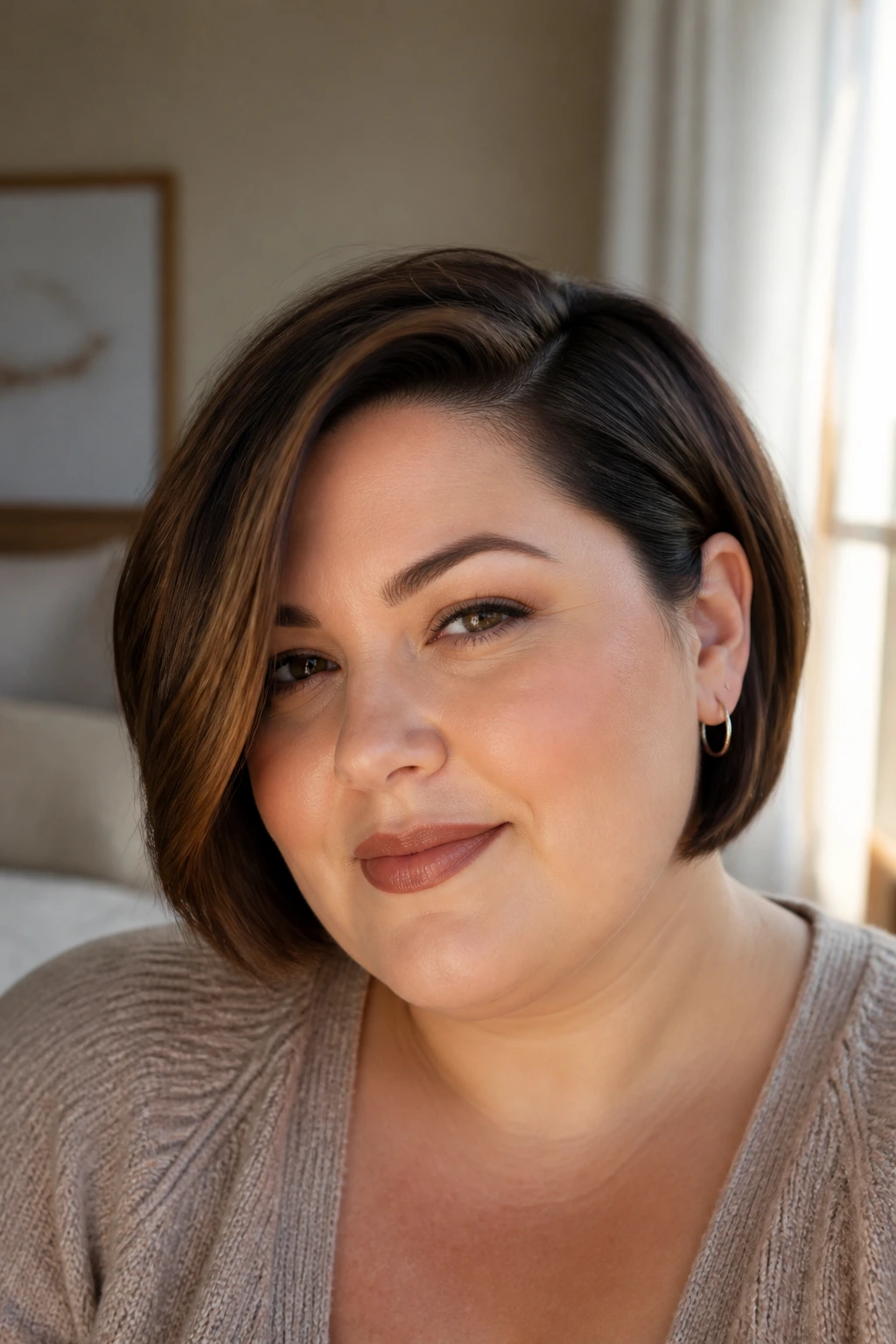
A chin-length bob can be surprisingly flattering when the part is deep. The part itself shifts the visual weight, and that alone can change the whole mood of the haircut.
One side drops across the forehead. The other side tucks behind the ear. That asymmetry keeps the cut from sitting like a solid block around the face. It also gives you a nice line from temple to chin, which helps define the jaw without making it look sharp.
What makes it different
- The line sits at the chin, not below it
- The part begins well off-center, usually above the outer brow
- The front pieces are long enough to tuck or sweep
- The back stays blunt so the shape does not get fuzzy
This is a good choice if your hair is straight or lightly wavy. Strong curls can fight the clean outline unless the cut is adjusted for texture. And if your hair is fine, the deep part helps create lift where you need it most.
It is one of the easiest short cuts to style with a round brush. A little bend at the front. A little tuck at one side. Done.
8. Feathered Shag Crop
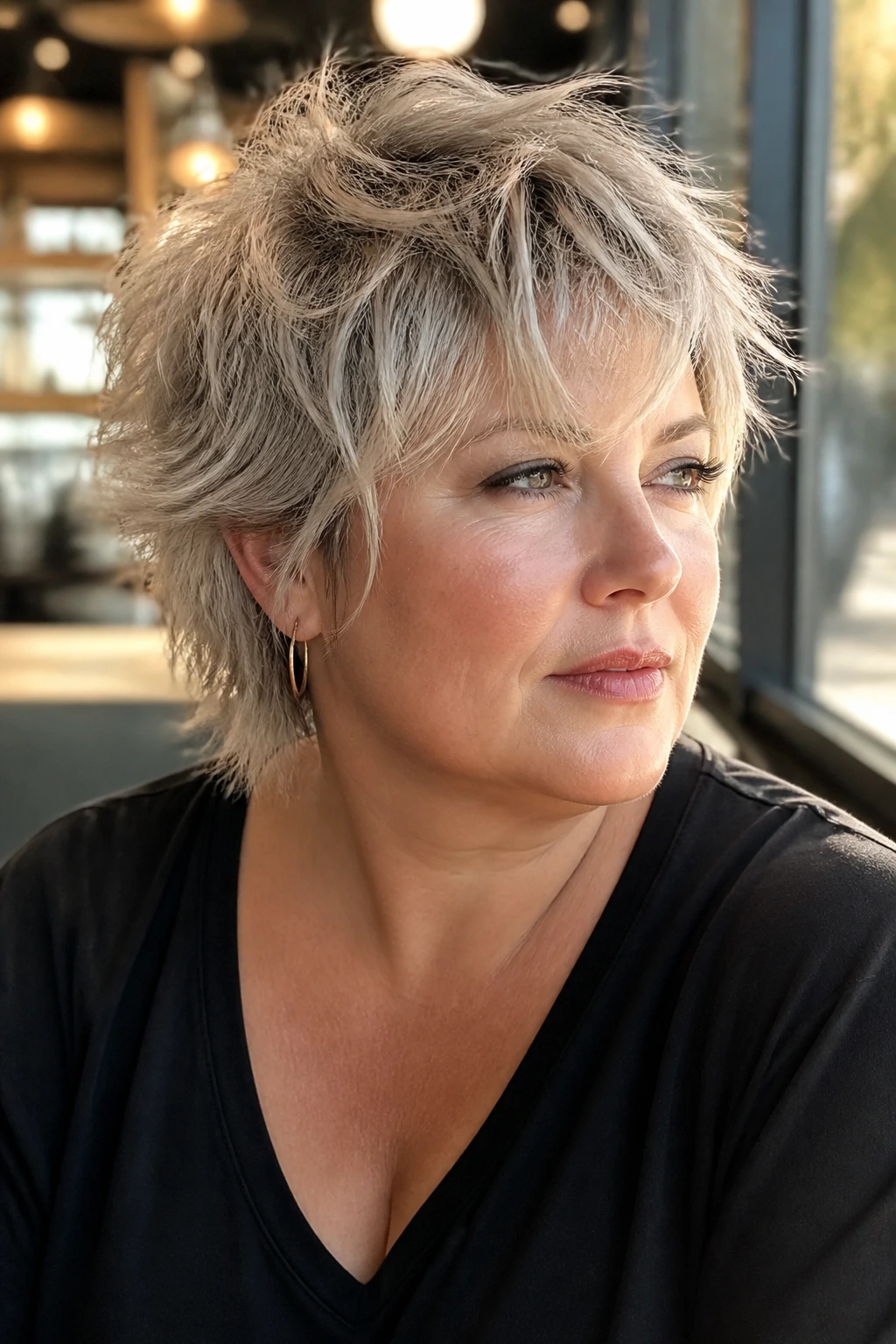
Not every short cut needs crisp edges. A feathered shag crop can look softer and more flattering precisely because it is a little broken up at the ends.
The feathering keeps the hair from sitting in one hard shape around the cheeks. Instead, the layers fall in tiny pieces that move when you walk. That movement is what keeps the haircut from feeling heavy on a fuller face.
This cut is especially useful for fine or medium hair that needs life at the top. A few shorter layers around the crown, temples, and cheekbones can keep the shape from falling flat by lunchtime. If the layers are cut too short at the bottom, though, the whole thing can get fluffy. So the balance matters.
How to get the most from it
Use a light mousse on damp hair. Rough-dry it first, then finish with your fingers or a small round brush. The goal is a soft outline with broken texture, not a perfect blowout.
This is one of my favorite cuts for people who want a short style that does not look stiff in photos or in real life.
9. Asymmetrical Bob With a Tucked Side
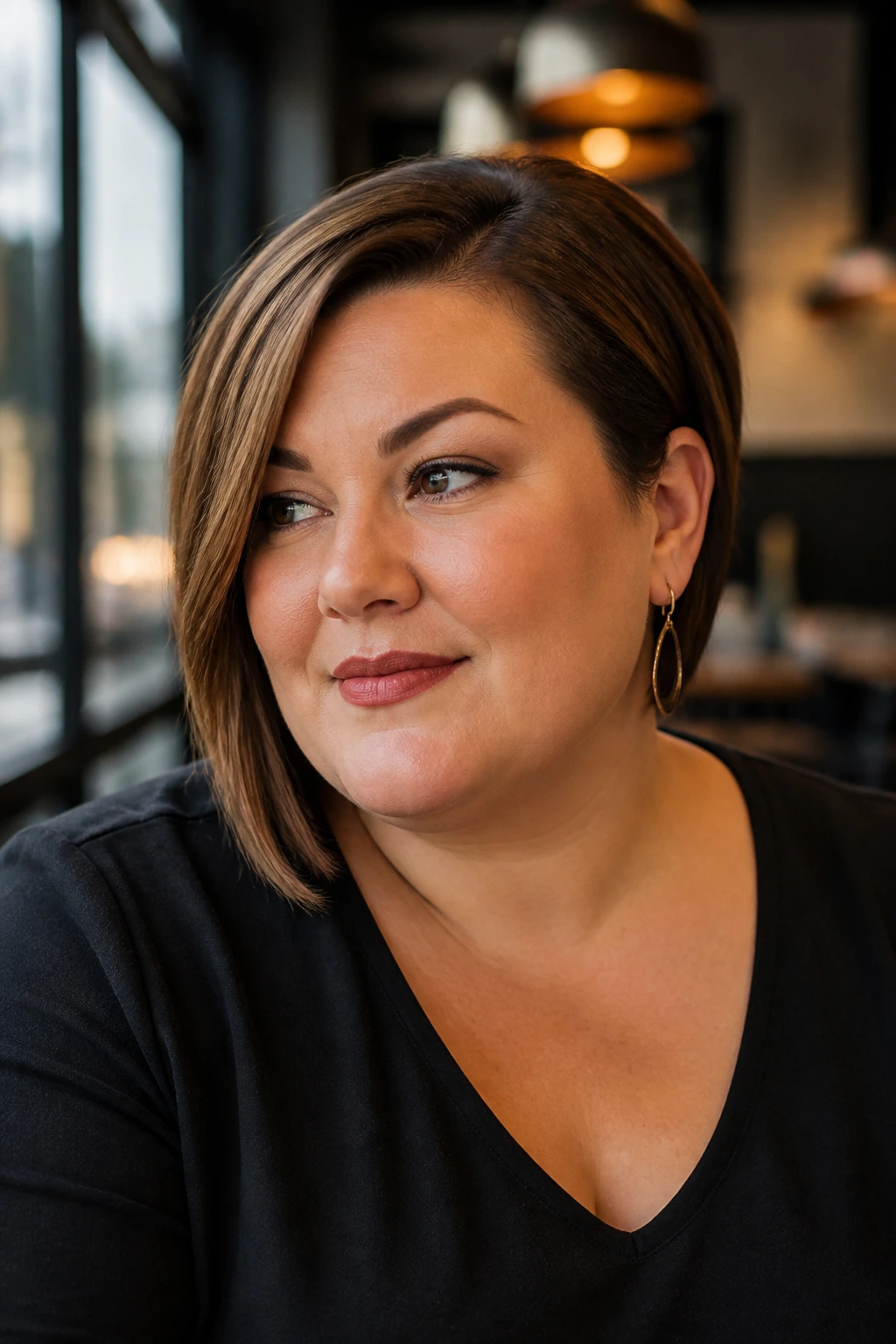
The asymmetry is the point here. One side sits longer, often by 1 to 2 inches, and that slight difference changes how the face reads. The longer side draws the eye down. The shorter side opens the cheek and ear.
It is a sharp look, but not a hard one. When the longer side skims the jaw and the shorter side is tucked back, the cut feels modern without needing much styling. You get shape from the line itself.
I like this cut for women who want a little edge and do not mind being noticed. It has a bit of confidence to it. It also gives you a built-in styling trick: tuck the shorter side behind the ear and let the longer side fall forward. That simple move adds contour around the face.
Keep the ends slightly beveled, not chopped bluntly. A harsh edge can feel too severe. A soft bevel keeps the geometry clean and livable.
10. Wedge Cut With a Soft Nape

If your hair grows thick at the back, a wedge cut can be a lifesaver. The stacked nape removes bulk, while the longer top and front pieces keep the face open.
The old-school wedge had a hard shape. This version is softer. The back is still shorter and rounded, but the front pieces are left long enough to frame the cheek and chin instead of stopping at the ear. That softens the whole cut a lot.
A good wedge has a smooth curve from crown to nape. No shelf. No helmet. Just a tidy slope that gives the haircut shape from every angle.
- Keep the nape close and neat
- Leave the top long enough to move
- Ask for side pieces that brush the jaw
- Add a side part if you want more lift at the front
This cut works well on straight or slightly wavy hair. It can be a little fussy if your hair is very curly, since the stack at the back may puff out faster than you want. For the right hair type, though, it is neat, flattering, and easier to maintain than it looks.
11. Curtain-Bang Lob

Can a lob count as short? Absolutely, if it clears the shoulders and gives the face room to breathe. A curtain-bang lob does that with almost no effort once the cut is in the right place.
The bangs part in the middle and sweep out toward the cheekbones. That middle opening is the whole reason the style feels soft. It breaks up the forehead line and sends the eye down the face instead of straight across it.
This is a nice pick if you want to keep some length while still getting the benefits of a shorter shape. The lob gives structure. The bangs give motion. Together, they feel balanced in a way that flat, one-length hair rarely does.
Styling note
Blow-dry the bangs with a small round brush, curling each side away from the face for a few seconds. Then let them cool before touching them. That cool-down helps them hold the bend instead of falling flat by noon.
It is a forgiving cut, too. If the bangs grow out, they slide into layers instead of turning awkward.
12. Modern Wolf Cut on Short Length

A short wolf cut is a lot softer than the name sounds. The best versions keep the layers choppy at the crown and around the cheeks, then let the lower section stay a bit cleaner so the shape does not spiral into chaos.
This cut is a strong option if you want texture around the face. The crown layers create lift. The face-framing pieces land around the cheekbone or mouth, which gives the haircut a forward sweep. It looks better when it moves.
Unlike a heavy mullet-style shape, a modern short wolf cut should not feel stringy at the ends. The layers need enough weight to keep the outline from getting wispy. That matters a lot on fuller faces, where too much fray can make the cut look unfinished.
Best for wavy hair, and decent for straight hair if you are willing to style it with a bit of bend. Use a texture spray, then pinch a few pieces around the front while they dry. That keeps the shape lively.
13. Blunt Bob With Curved Ends

A blunt bob can work. The trick is bending the ends inward instead of leaving them straight and flat. That tiny curve changes the whole effect.
When a blunt edge sits right at the jaw, it can make the face feel wider. When the same edge curves under toward the chin, it starts to frame instead of flare. The haircut still looks clean, just less rigid.
What to watch for
- Ask for a blunt perimeter with a subtle bevel at the ends
- Keep the length just below the jaw or right at it, not mid-cheek
- Use a round brush or flat iron to turn the ends under a touch
- Avoid bulky styling creams that make the outline collapse
This is a good cut for thick, straight hair because it keeps the weight line strong. Fine hair can wear it too, but the ends need enough density to hold the shape. If the bob is too thin at the bottom, it starts to look stringy fast.
I like this style when someone wants polish without fuss. It is clean. It is tidy. It also has enough edge to feel deliberate.
14. Rounded Pixie With Long Sideburns
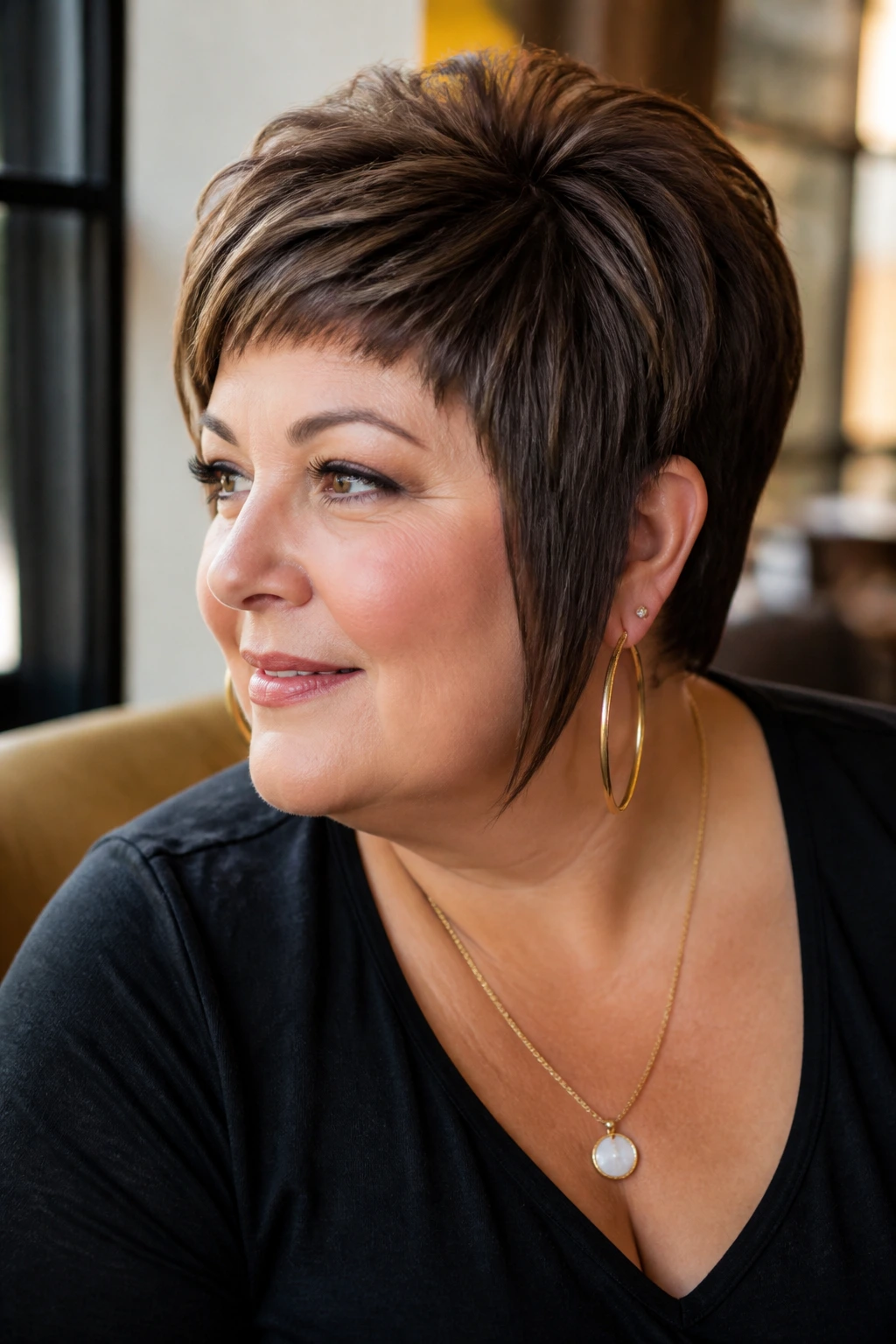
A rounded pixie is softer than a spiky one, and those long sideburns are the part that really frame the face. They draw a thin vertical line beside the cheek, which helps narrow the visual width without making the haircut look severe.
The top should have a gentle dome, not a hard spike. Think soft curve, a little lift, and plenty of movement around the temples. The sideburns then anchor the look and give the front a shape to land on.
Why the sideburns matter
They add a little shadow beside the face, and shadow is useful. It gives the eye a place to pause. Short cuts can look too open if everything is cut away at once, but long sideburns keep the haircut from feeling bare.
This cut is especially nice if you wear glasses. The sideburns and frames can work together instead of fighting for attention. It also grows out in a pleasant way, which is not true of every pixie on earth.
Keep the product light. Too much gel flattens the top and makes the cut lose its roundness. A small bit of cream or soft wax is enough.
15. Layered Crop for Wavy Hair

Wavy hair gives you a head start, honestly. The bend already wants to frame the face, so the job of the cut is mostly to guide that movement instead of forcing it.
A layered crop for wavy hair should start with softness around the temples and cheekbones. If the layers begin too high, the shape can puff. If they begin too low, the waves hang like a blanket. The sweet spot is usually around the upper cheek or just above the jaw.
This cut shines when the hair is air-dried with a little product and left alone. A cream for wave definition, then a light scrunch, then hands off. That is enough most of the time. If you keep touching it, you break up the shape and lose the face framing effect.
I like the slightly undone look here. It feels casual, but not careless. The layers create a moving edge around the face, which keeps the haircut from reading as one heavy mass.
If your waves are loose, this can be a very low-drama cut. If they are stronger, ask for fewer layers at the bottom so the shape stays controlled.
16. Inverted Bob With Longer Fronts

An inverted bob gives you a cleaner back and a longer front, which is a nice trade. The back sits shorter and stacked, while the front drops forward past the jaw and sometimes toward the collarbone.
That forward angle is doing the framing. It guides the eye toward the center of the face and creates a nice diagonal line from cheek to chin. The shape feels sharper than a standard bob, but not harsh when the ends are softened a little.
This cut is a solid pick if you want neck exposure without giving up the feeling of length in front. It also suits thick hair, since the stacked back can take out weight that would otherwise sit too heavy at the nape.
Best for
- Women who like a strong shape
- Hair that needs weight removed at the back
- Faces that look better with a diagonal line instead of a straight one
Ask for the front to stay long enough to tuck behind the jaw, and keep the angle gradual. A steep angle can look dated fast. A softer slope feels easier to wear.
17. Tousled Pixie-Bob

A pixie-bob sits in that nice middle space where the hair is short enough to feel fresh but long enough to play with. Toss in a little tousle, and the whole cut gets softer around the edges.
The face framing comes from the longer top and the front pieces that sit near the cheek or ear. The back stays cropped enough to keep the neckline open. That gives you a mix of lift and softness that works well on fuller faces.
I like this cut for people who want something that looks deliberate but not stiff. It is also a good “first short haircut” because it is not as bare as a pixie and not as expected as a bob.
A small amount of dry texture spray at the roots can help. Use your fingers to lift the front, then tuck one side if you want a bit of asymmetry. That little adjustment changes the mood fast.
It wears best when the ends are pieced out, not curled under into a perfect circle. Perfection is not the point here. Shape is.
18. Short Shag With Micro Layers
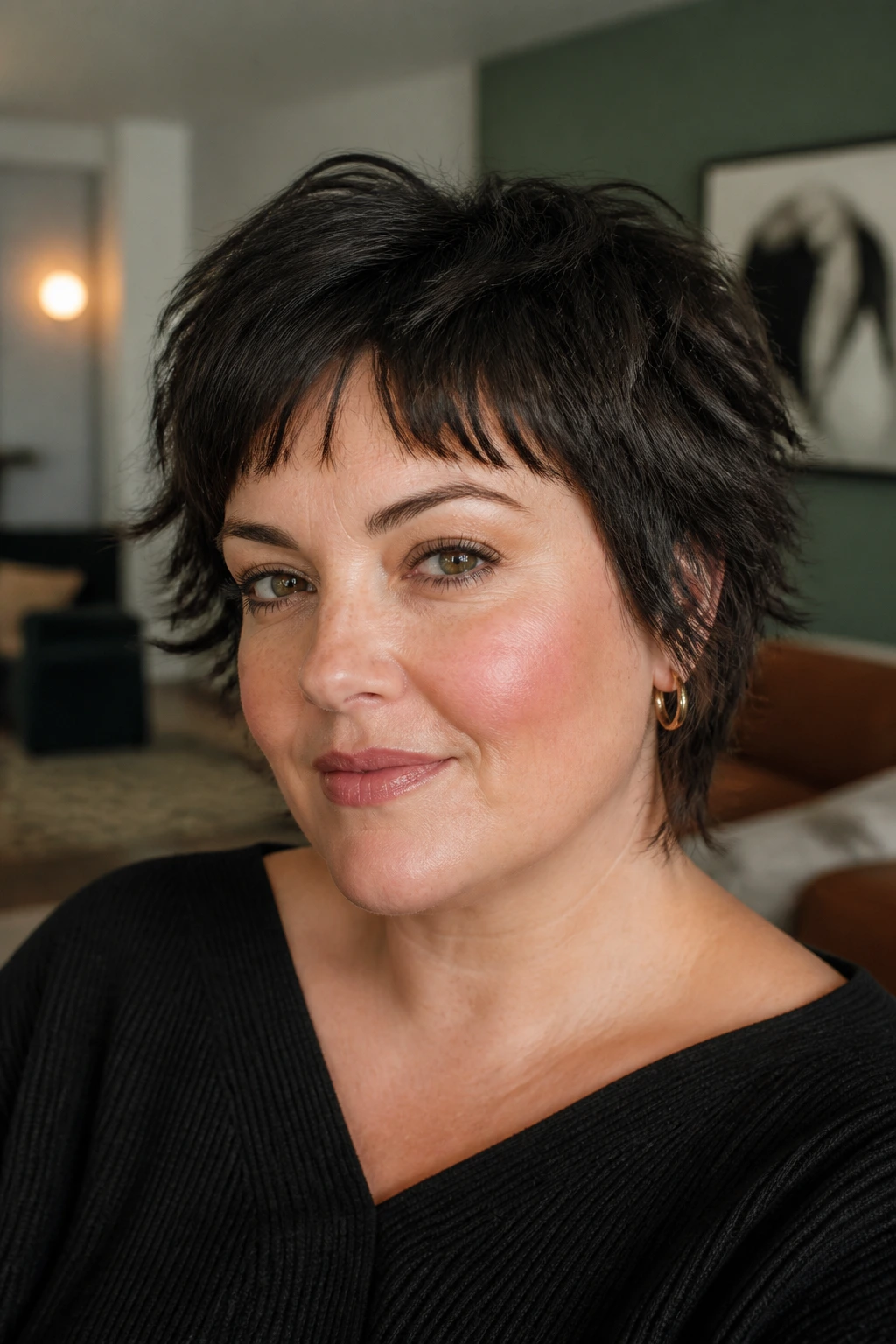
A short shag can save thick hair from turning into a triangle. The micro layers are tiny, but they matter. They break up bulk around the crown, temples, and outer edges so the cut can move instead of sitting like a block.
The best version keeps the layers close enough together to create texture, but not so short that the hair starts to frizz out. That is the mistake people make with shaggy cuts. They take out too much weight, and the shape turns fuzzy.
The details that matter
- Layers near the cheekbone to soften width
- Crown texture for lift
- A soft fringe or broken bang to frame the top of the face
- Ends that still hold some density
This cut is a good match for women who like an easy, slightly rock-and-roll look. It is not polished in the usual sense. It is better than that. It has movement and a little bite, and the face framing happens almost on its own once the layers are cut right.
Use a diffuser or a rough dry if your hair is wavy. On straight hair, a little bend with a flat iron helps the pieces separate.
19. Curly Bob With Face-Framing Ringlets

What if your curls do the framing for you? Then the best move is to cut them in a shape that lets those front ringlets land where they should — around the cheek, mouth, or just under the jaw.
A curly bob can look especially flattering on plus size women because the shape stays soft while still giving the face a clear outline. The trick is keeping the length controlled. Too long, and the curls drag the face down. Too short, and the roundness can crowd the cheeks.
How to get the shape right
Cut the hair dry or almost dry, so the curl pattern shows where it actually sits. Ask for the front pieces to be left a little longer than the sides. That lets the ringlets fall like a frame instead of a puff.
Use a curl cream and a small amount of gel, then diffuse until the curls set. Do not shake them apart too soon. Let them dry fully before separating any clumps, or the definition gets lost fast.
This is one of the easiest cuts to wear once it is shaped well. The curls handle most of the styling for you.
20. Ear-Length Crop With Swept Bangs

The shortest cut on this list is also one of the most interesting. An ear-length crop with swept bangs leaves the ears open, which keeps the face from feeling crowded, and the bangs create a long diagonal line across the forehead.
That diagonal is what saves it from looking severe. Short hair can go very blunt very fast. Swept bangs soften the top edge and give the eye a place to travel before it reaches the cheek and jaw.
This cut is a smart choice if you like bold shapes and do not mind showing your features. It can look especially good with glasses, strong brows, or a defined lip color, because the haircut stops competing and starts supporting.
Ask for the fringe to begin near the high point of the brow and angle toward the cheekbone. Keep the sides close, but not shaved down to nothing. A little softness around the temple keeps the crop from looking too hard.
It is the cut I’d pick when someone wants the shortest possible shape and still wants the face to stay open, bright, and easy to read.
