



Short hair is not a size test. On plus size women, the right cut can sharpen the line of the jaw, lift the eyes, and make the whole face feel more awake without leaning on length for safety.
Not every short style does that. Some bob cuts sit too heavy at the cheek, some pixies puff out at the sides, and some shapes make the face look wider only because the cut was drawn in the wrong place. The problem is usually the shape, not the fact that the hair is short.
The best short haircuts for plus size women tend to do one of three things: build height at the crown, keep a little length in the front, or soften the cheeks with movement. Hair texture matters too. Fine hair needs a cleaner edge so it does not collapse; thick hair often needs internal removal so it does not balloon; curly hair needs room to spring without turning into a triangle.
That is why this topic matters more than a lot of salon chatter makes it sound. A good short cut can feel neat on day one and still behave on day three. A bad one can make you fight your own mirror every morning. The difference is in the shape, the balance, and a few small choices that sound boring until you see them in real life.
1. The Chin-Length French Bob

A chin-length French bob has a cleaner line than most people expect, and that is exactly why it works so well. The cut lands right around the jaw, which gives the face a crisp frame without dragging everything downward.
Why It Works at the Jawline
The beauty of this cut is the restraint. It does not pile on layers or try to do too much, so the eye reads the face first and the hair second. For many plus size women, that feels flattering because the cut creates a tidy border around the lower face without adding bulk at the sides.
Keep the ends blunt or only lightly textured. Heavy layering can make a French bob lose its shape and turn into a puffy little cloud, which is not the goal.
- Best for straight to slightly wavy hair
- Looks especially good with a side part or soft middle part
- Works with glasses because the line stays neat
- Needs only a round brush or quick flat-iron bend
Pro tip: ask your stylist to leave a whisper of length in front, so the cut lands just below the cheekbone instead of cutting straight across the widest part of the face.
2. The Layered Pixie with Side-Swept Bangs
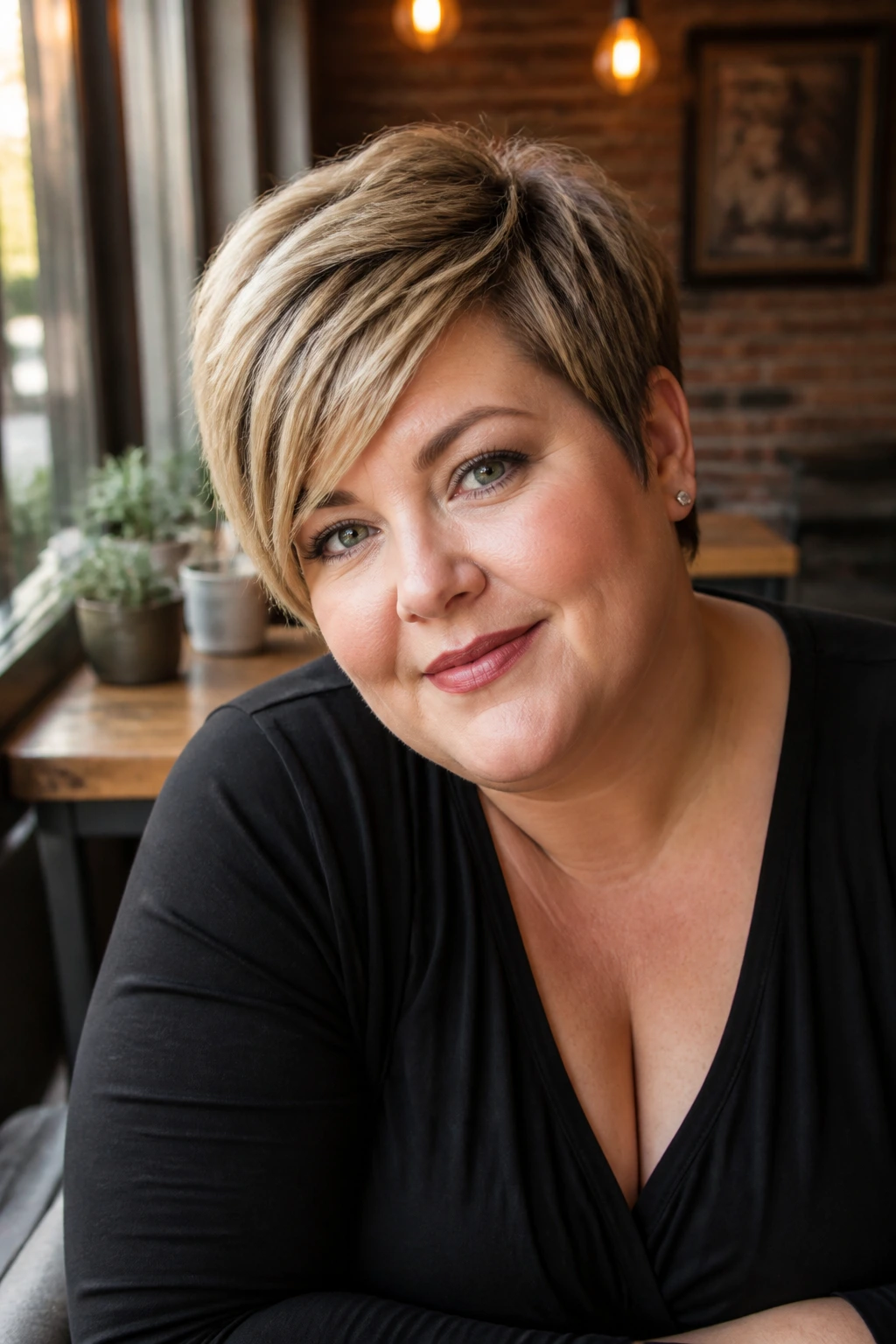
Want short hair that feels light but not severe? This is usually the first cut I think of. A layered pixie with side-swept bangs softens the forehead, adds lift at the crown, and keeps the edges around the ears tidy.
The side bang matters more than people realize. It breaks up the face in a diagonal line, which keeps the cut from feeling too boxy or too cute. A straight-across fringe can work too, but side-swept bangs are easier if you want movement and a little softness.
This cut also plays well with fine hair, because the layers can create the look of more body without making the shape bulky. A dab of lightweight mousse at the roots and a small amount of styling cream on the ends is often enough.
I like this cut on women who want to look polished without spending 20 minutes fighting a blow-dryer. It wakes up fast.
3. The A-Line Bob with Longer Front Pieces
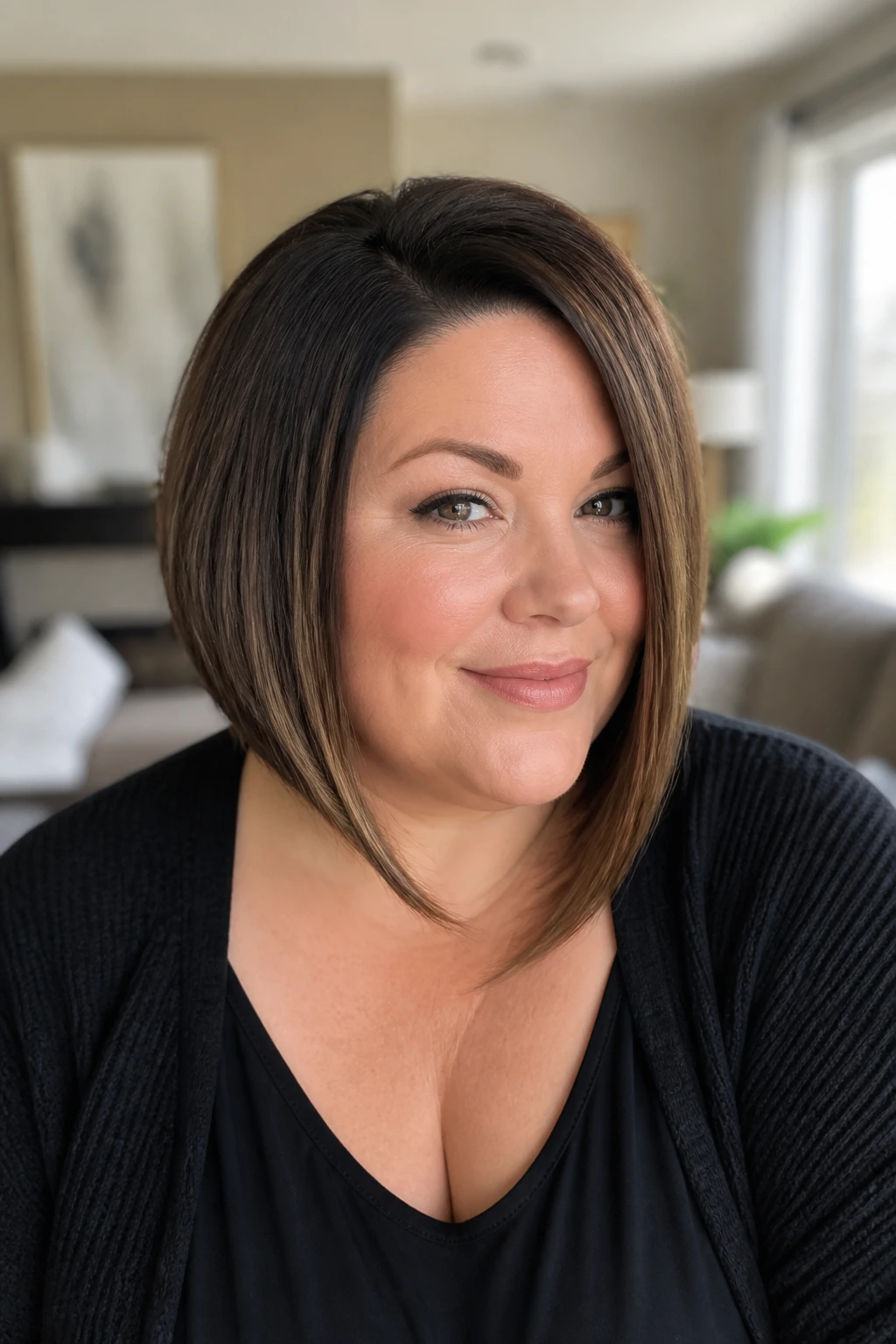
Why does an A-line bob work so well on fuller faces? Because the angle does part of the visual work for you. The back sits a little shorter, the front hangs a little longer, and that forward sweep pulls the eye down and in.
The result is subtle but useful. Instead of stopping right at the jaw, the front pieces can fall just below it, which makes the face look more vertical. That is a small thing on paper. In the mirror, it changes everything.
How to Wear It
Ask for a smooth graduation from the nape to the front, not a dramatic wedge. Too much angle can look stiff. You want the hair to swing, not stand at attention.
A side part usually helps this shape the most, especially if your hair is naturally straight or only slightly wavy. The longer front pieces can be tucked behind one ear when you want a cleaner look, or left loose when you want softness around the cheek.
If you have a round face, this is one of the safer choices. If your face is more oval or heart-shaped, it still works; the angle just reads a little more sleek.
4. The Curly Crop with Rounded Shape

Curly hair has a way of waking up after the cut is dry. That is why a curly crop has to be shaped with the curl pattern in mind, not against it. A rounded silhouette keeps the volume controlled while still letting the curls do their thing.
The biggest mistake with short curly cuts is over-thinning the sides. That can leave the top puffy and the bottom wispy, which is a fast route to triangle hair. A good curly crop keeps enough weight at the perimeter so the curl cluster looks full and clean.
What to Ask For
- A dry cut, or at least a stylist who knows how your curls behave when they shrink
- Length left at the temples so the face stays soft
- Rounded layers, not choppy random snips
- A diffuser-friendly shape that does not need brutal heat
The best part is the grow-out. Curly crops often age well for weeks because the shape is forgiving. If your curls are medium to tight, this can be one of the easiest short haircuts for plus size women to live with.
5. The Asymmetrical Bob with a Deep Side Part

An asymmetrical bob is one of the easiest ways to add length without adding inches. One side is a little longer, the part sits deeper, and the whole cut creates a diagonal line that keeps the face from feeling too square.
That diagonal matters. Hair that falls evenly on both sides can sometimes sit like a frame with no movement. An asymmetrical shape makes the eyes travel, which gives the face more lift and less width.
It also has a slightly sharper mood than a soft bob. I like that. Not every flattering cut needs to be sweet. Sometimes the clean edge is the whole point.
If you want this look to feel modern rather than severe, keep the ends softly textured. A blunt asymmetrical bob can be striking, but it can also feel heavy if your hair is thick or if the length lands exactly at the jaw. Ask for the longer side to skim below the chin, not stop right on it.
6. The Textured Pixie Cut

Unlike a sleek pixie, a textured pixie cut survives a windy day. It has small, broken-up layers on top, a tighter nape, and enough piecey movement to keep the shape from going flat by lunch.
That texture is useful on fuller faces because it keeps the cut from looking helmet-like. A smooth pixie can be elegant, but it needs the right head shape and the right styling hand. Texture is more forgiving. It gives you softness where the eye needs it and lift where the hair wants it.
This style is especially good if you like low-maintenance mornings. A pea-sized amount of paste or cream, rubbed between the fingers and pushed through the top, is often all it takes. The trick is not to smear product everywhere. Put it where the shape needs a little separation and leave the rest alone.
Best for: fine to medium hair, strong cheekbones, and anyone who wants short hair that looks intentional even when it’s a little messy.
7. The Jaw-Length Shag Bob

A jaw-length shag bob sits in a sweet spot between tidy and casual. It has the shape of a bob, but the movement of a shag, which keeps the cut from looking stiff or overly round.
What Makes It Different
The layers are the whole story here. Instead of one heavy line, you get soft breaks through the body of the hair. That helps reduce bulk at the sides and gives the face a little air.
A good shag bob should still have a shape. Too many layers can make it frizzy or uneven, especially if your hair is thick. The best version keeps the perimeter controlled and uses the interior layers to create lift.
- Ask for layers that start below the cheekbone
- Keep the fringe soft, not blunt
- Use a texturizing spray on dry hair, not soaking-wet hair
- Let the ends bend a little instead of forcing them straight
I like this cut on women who want a little edge without going full rocker. It has personality, but it still behaves in daylight.
8. The Tapered Crop with Soft Crown Volume

How do you keep a short cut from widening the face? Start with height at the crown and softness at the sides. A tapered crop does exactly that.
The sides and nape are kept close, while the top is left a little longer so you can lift it with a round brush, fingers, or a touch of mousse. That vertical movement pulls the eye upward. It is a simple trick, but it works because the haircut itself creates the shape.
This is a strong choice for women with shorter necks, because the clean taper keeps the profile neat. It also works well if your hair tends to puff at the ears; the close sides keep that bulk under control.
How to Style It
Blow-dry the crown first, lifting the roots up and slightly forward. Then smooth the side sections down and back with your hands. You do not need a perfect finish here. A little lift and a little softness are enough.
9. The Ear-Length Rounded Bob

If you like earrings, clean necklines, and hair that sits where you put it, this cut is worth a serious look. An ear-length rounded bob gives you a polished little shape around the face without dragging the style down.
The rounded edge is what keeps it from feeling severe. A blunt ear-length cut can read almost retro, which is fine if that’s your thing, but the rounded version is softer and easier on fuller cheeks. It hugs the head a bit more, especially if your hair is naturally straight.
This cut is also one of the best short haircuts for plus size women who want something neat without looking severe. It can be made sleek for work or a little tousled for weekends, which makes it more flexible than people expect.
Be careful with heavy side bulk. If the hair sticks out near the ears, the face can look wider. A good stylist will clean up that edge and keep the silhouette close.
10. The Undercut Pixie with Longer Top
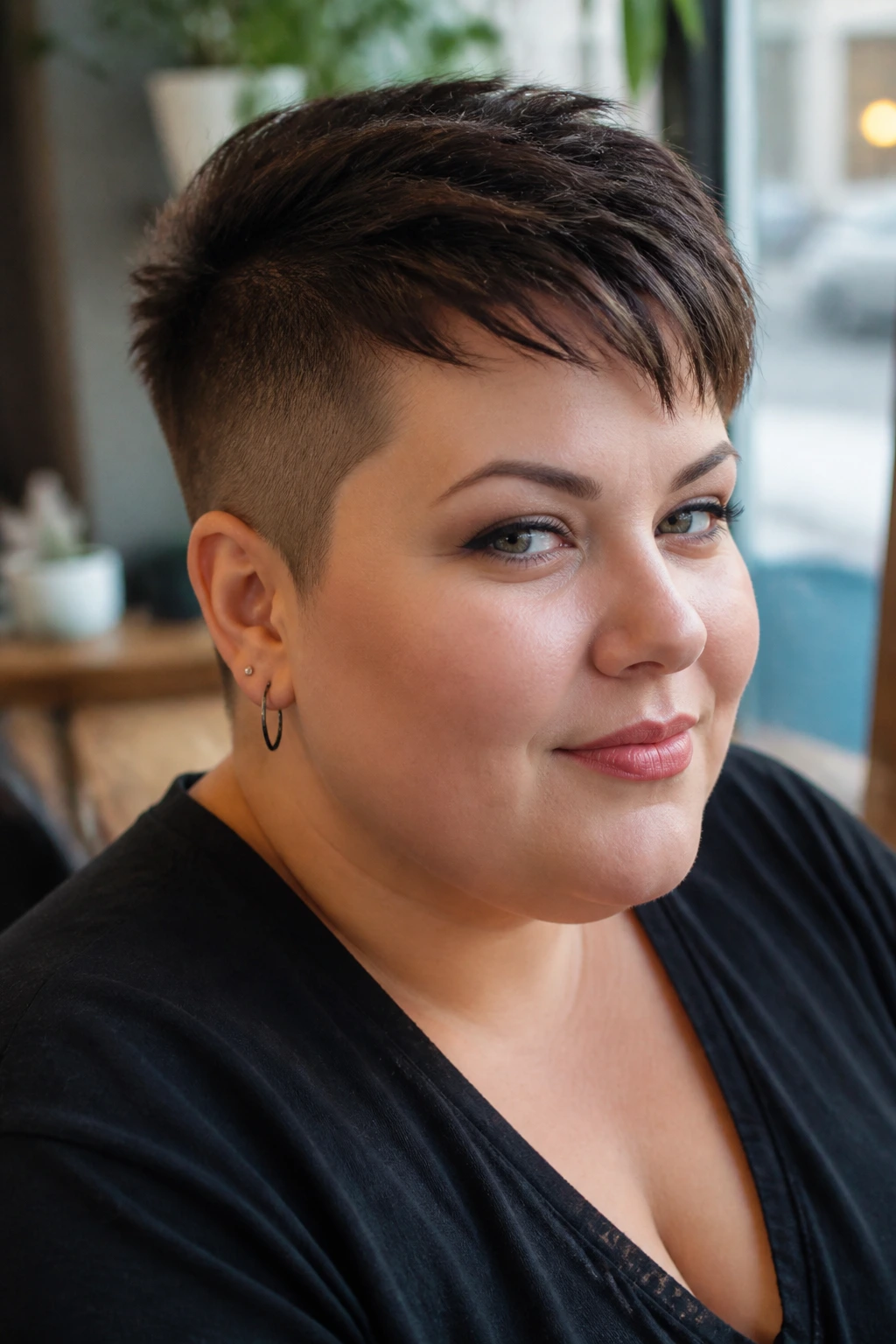
The undercut pixie is not shy. It takes bulk off the sides and back, leaves the top longer, and creates a strong contrast that looks clean and deliberate.
That contrast is useful if your hair is thick, coarse, or curly, because the undercut removes weight where it tends to swell. The longer top gives you styling room, so you can wear it brushed forward, pushed to the side, or lifted with a little height for a sharper profile.
This cut works best when the nape is really tidy. Half measures make it look accidental. If you go this route, commit to the shape. Tight sides, enough length on top to move, and a bit of styling product to keep the pieces separated.
It is a bold cut, but not a hard one to live with once it is shaped properly. That is the appeal. Strong outline, easy morning.
11. The Bixie with Soft Texture
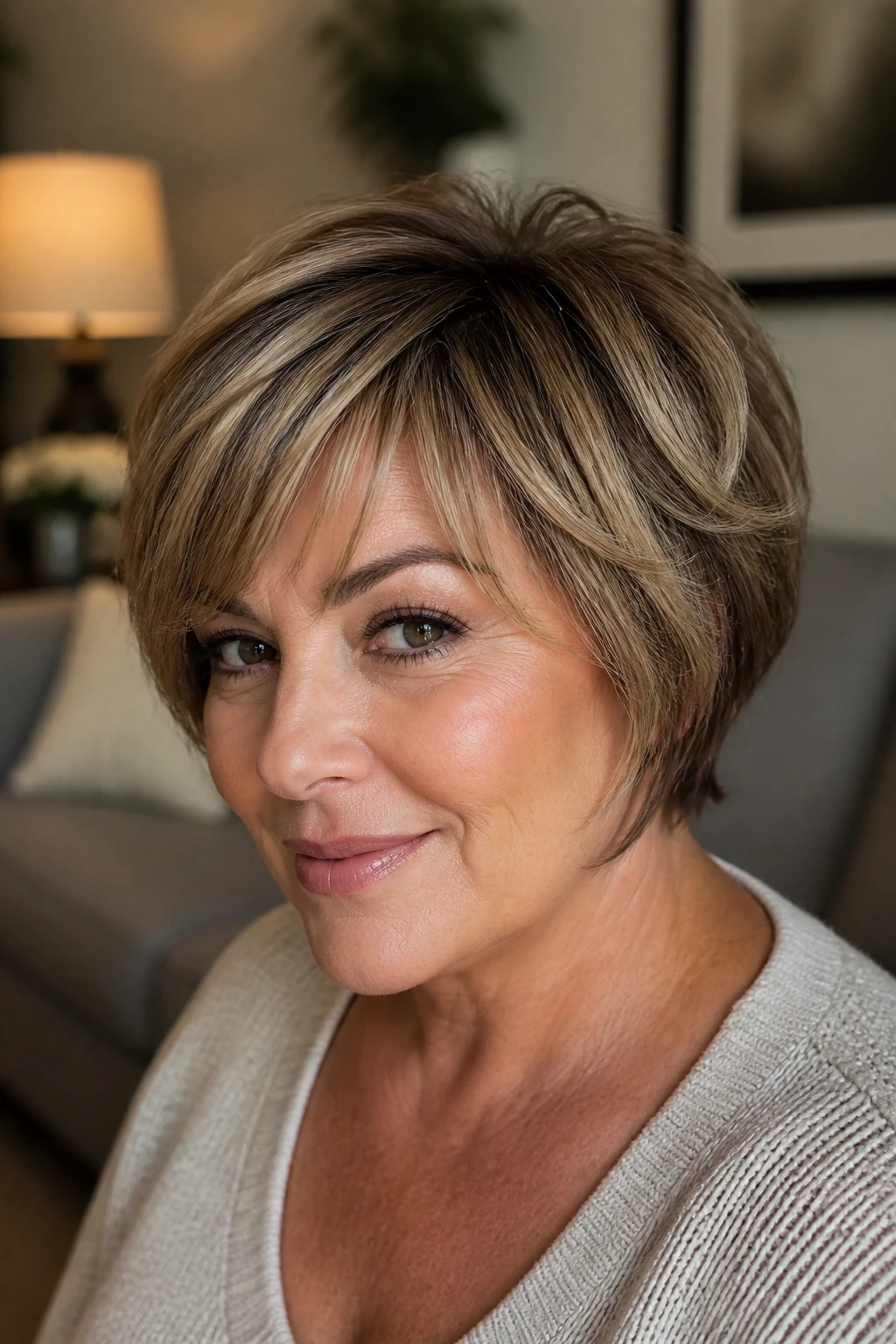
The bixie is what happens when you want a pixie without losing the softness of a bob. It has the shorter back and ears of a crop, but enough length around the face to keep it from feeling exposed.
That middle ground is why so many women end up loving it. A pure pixie can feel too short the first time. A bob can feel too familiar. The bixie gives you both moods in one cut.
It also flatters a lot of face shapes because the front pieces can be customized. Leave a little length at the cheekbone if you want more frame. Keep the crown airy if you want lift. Ask for the ends to be point-cut rather than sliced into heavy, blunt chunks.
This is one of those cuts that looks even better after a day or two. The texture settles in, the edges relax a bit, and the whole thing feels less staged. Good sign.
12. The Curtain Bang Crop

Can bangs make short hair softer? Yes, if they are the right bangs. Curtain bangs split away from the center and fall to each side, which opens the face instead of boxing it in.
On a short crop, that matters. You get the lightness of short hair with a little movement around the eyes and cheekbones. The bangs can start near the brow and taper into the sides, which creates a soft frame without stealing the whole show.
This cut is especially nice if you like a middle part but do not want your forehead fully exposed. It also works well on straight or wavy hair that can bend under a brush or flat iron in a few seconds.
A small warning: heavy curtain bangs need a bit of upkeep. If they grow too long, they can collapse into the eyes. Keep them trimmed and slightly airy, not dense and shaggy.
13. The Blunt Neck-Length Bob

A blunt neck-length bob looks strict on purpose, and that is exactly why it can be so flattering. The line is clean, the edge is solid, and the shape gives the hair a full, healthy feel.
This cut is best for women who like structure. It does not rely on lots of layers or messy texture. Instead, it uses the strength of a single line to create polish. On thicker hair, that line can look expensive without trying too hard. On finer hair, it can make the ends look fuller.
The placement matters. Keep it just above or just below the widest point of the jaw, not right at it. That small shift makes the whole cut feel more balanced. If the hair ends exactly where the face is broadest, the line can box things in.
I like this cut with a side part or a slightly off-center part. Straight hair shows it best, but a gentle bend at the ends keeps it from looking flat and hard.
14. The Tousled Crop with Piecey Fringe
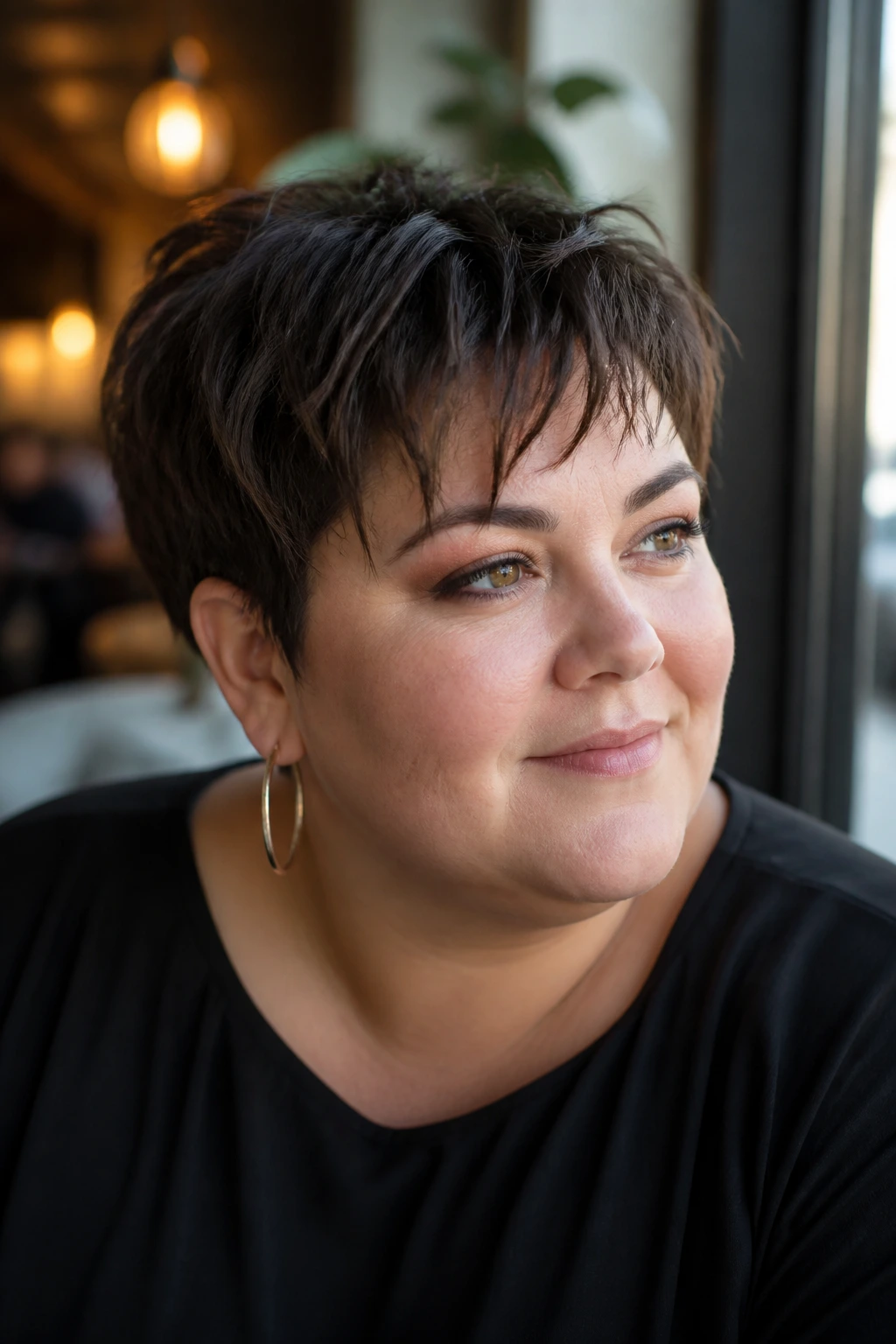
This is the cut for mornings when you want to run your fingers through your hair and leave. A tousled crop with piecey fringe looks relaxed, but it still needs a good shape underneath so it does not collapse into chaos.
The fringe is important here. Piecey bangs break up the forehead and keep the crop from feeling too short around the front. They also soften the overall outline, which helps on fuller faces that look best with some movement near the eyes.
Styling Notes
- Work a small amount of salt spray or light mousse through damp hair
- Scrunch or finger-dry until about 70 percent dry
- Finish with a diffuser or air-dry if your texture is already wavy
- Separate a few pieces at the end with wax or paste
The charm of this cut is that it looks casual but not careless. There is a difference. If the top is left too short, the style can feel spiky and odd. If it’s cut with enough length to bend, it lands in that easy, lived-in place people keep trying to fake.
15. The Silver Pixie with Defined Edges
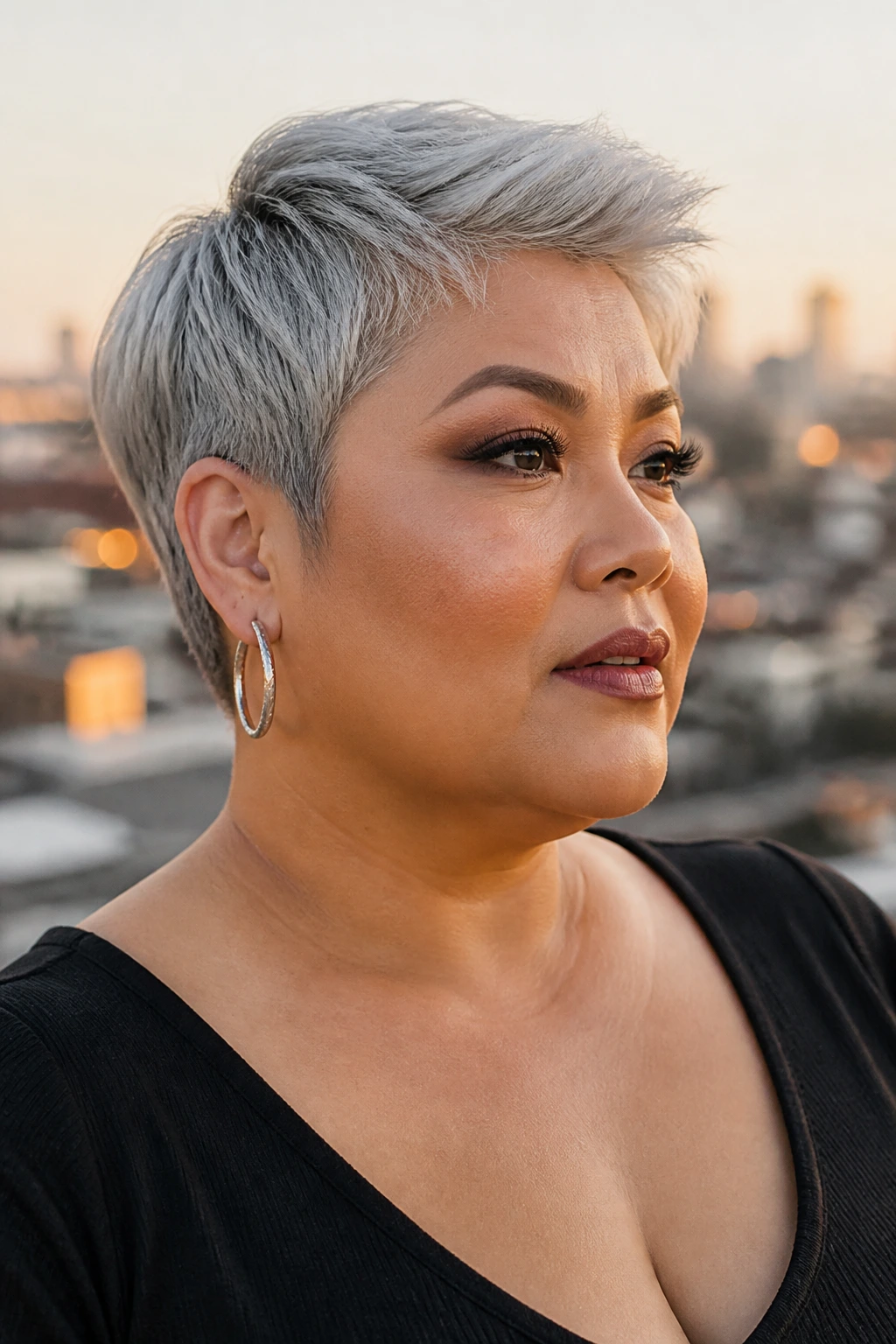
Silver hair looks especially sharp in a cropped cut. The color shows off the shape, and the shape gives the color a cleaner story to tell.
A silver pixie with defined edges works well because it removes the weight that can make gray hair feel wiry or puffy. The close sides keep things neat, while the top can stay slightly longer to create lift and movement. That balance matters more once the hair starts to feel coarse.
The defined edge around the ears and nape is what keeps this from looking fuzzy. Gray hair can catch the light in a beautiful way, but it can also blur if the cut is too loose. A precise perimeter solves that fast.
This cut has a certain confidence to it. Not loud confidence. Just clean, direct, and a little modern. If you wear glasses or statement earrings, even better. The short shape gives them room to breathe.
16. The Graduated Bob with Nape Stack
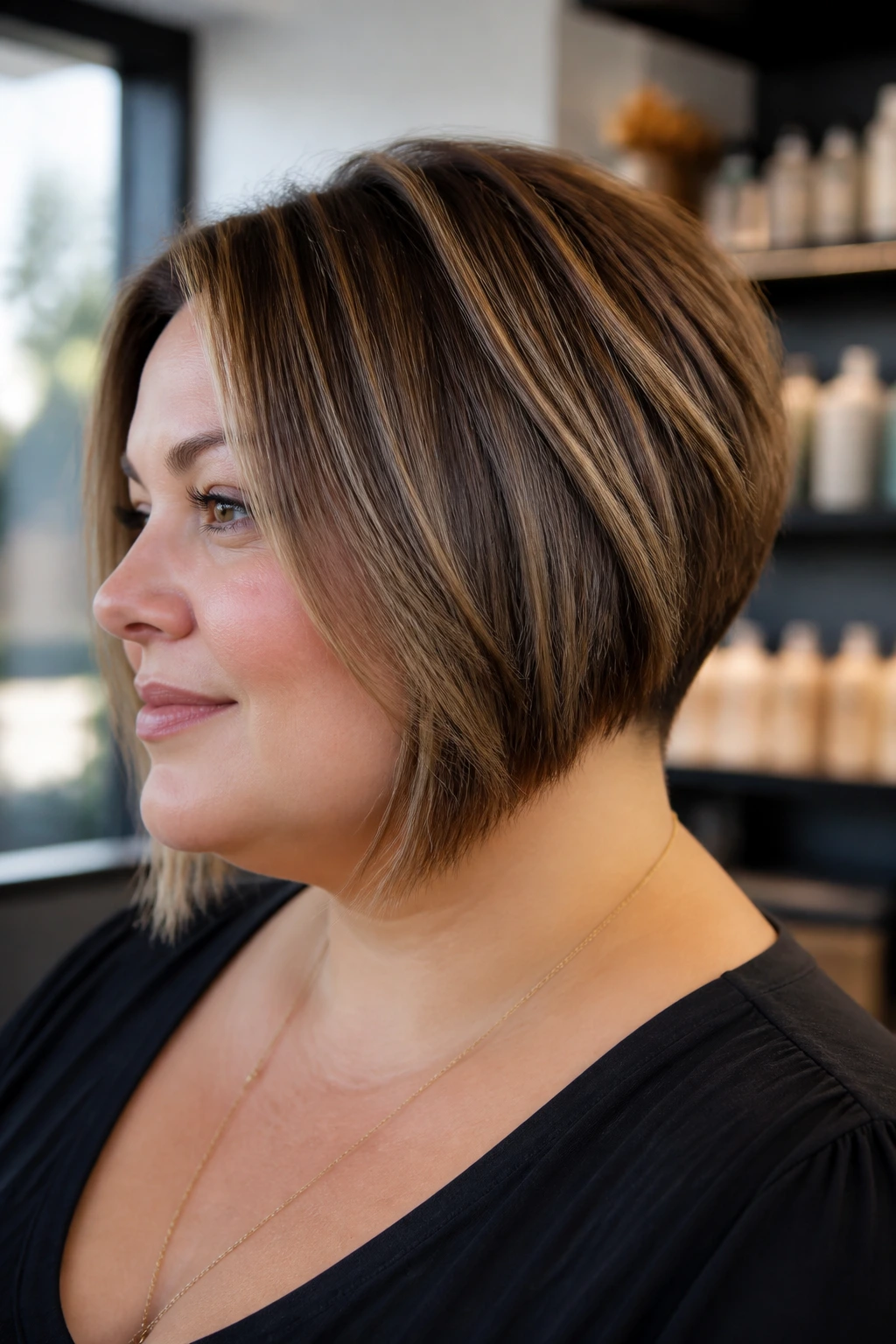
Why do so many stylists stack the back of a bob? Because it lifts the profile without forcing the front to get too wide. A graduated bob does that job neatly.
The back is cut shorter and built up in layers near the nape, while the front stays longer and smoother. That stacked shape gives the crown a little boost, which is a smart move if your hair lies flat where it meets the head. It also makes the neckline look tidy, which helps the whole style feel crisp.
How to Ask for the Shape
Ask for a soft graduation, not a heavy wedge. You want lift, not a hard shelf.
- Keep the front pieces grazing the chin
- Ask for a clean nape line
- Leave enough weight at the perimeter so the bob does not puff
- Style with a round brush at the back and a flat brush through the front
This is a strong option for women who like structure and do not mind a little salon maintenance. The shape looks best when it is kept tidy, but it is worth it if you want a bob that holds its form.
17. The Choppy Bob with Airy Layers

A choppy bob is not about chaos; it is about tiny, deliberate breaks in the line. That difference matters. When the layers are too chunky, the hair can look ragged. When they are cut with a light hand, the result feels airy and easy to move in.
This style works well on medium-density hair, because it gives the cut motion without stripping away too much body. The ends can be point-cut or razor-finished depending on the texture, but the goal stays the same: remove the heavy block feeling and keep the silhouette alive.
It is a good fit if you want a bob that does not sit still. A slight bend with a curling iron, a quick tousle with texture spray, or even air-drying with a little cream can bring it to life. The cut does half the work. The rest is tiny styling.
Too much layering can backfire on fine hair, though. If your strands are sparse, keep the layers soft and minimal. Otherwise the bob loses its shape faster than you want.
18. The Pompadour-Inspired Pixie
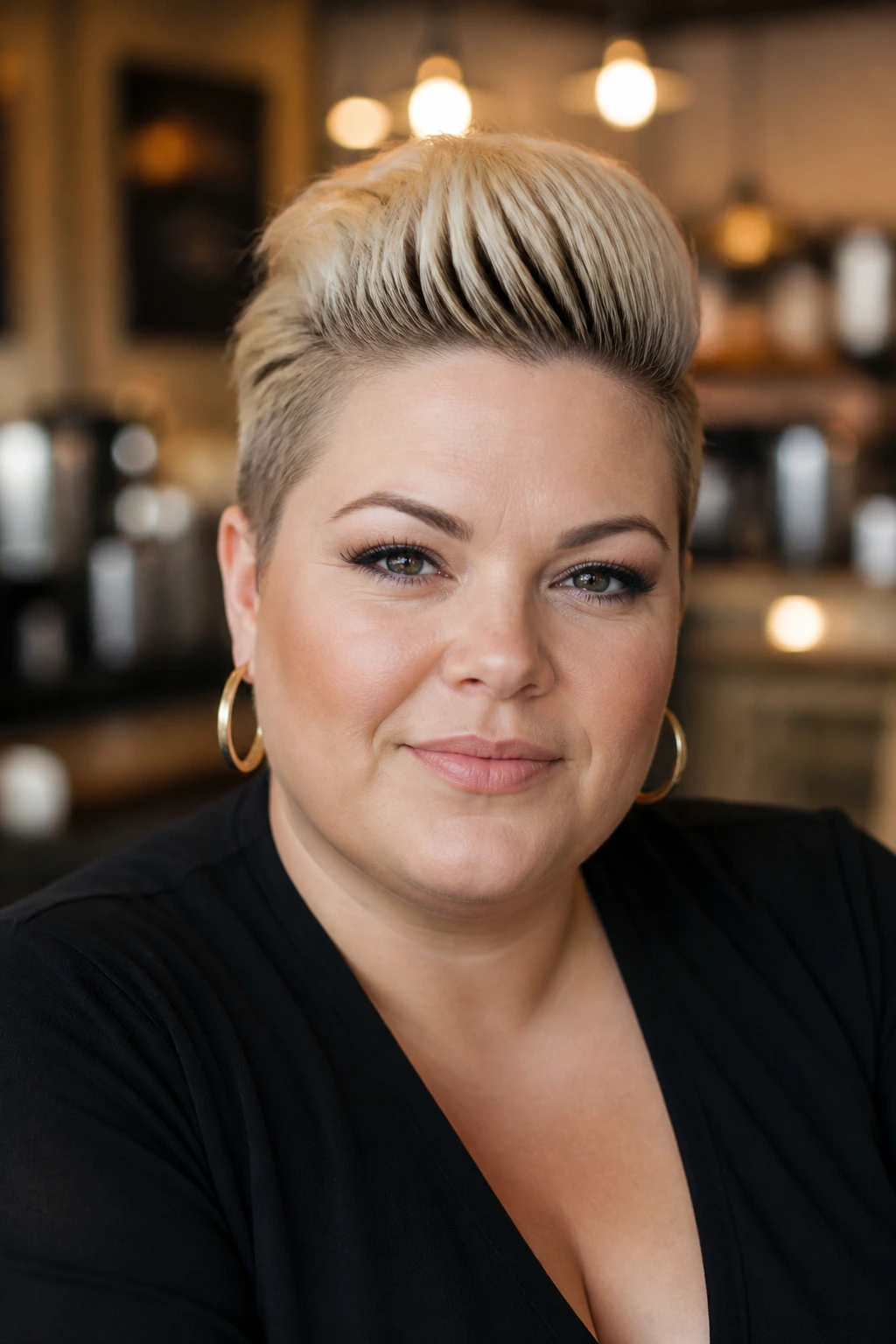
A pompadour-inspired pixie brings height where it counts. The front is brushed up and back, the sides stay close, and the shape creates a lifted line through the center of the face.
That upward movement can be gorgeous on fuller faces because it redirects attention vertically. The cut feels a little bolder than a standard pixie, but not theatrical if it is kept balanced. The key is not to overdo the height. A little lift is stylish; a giant top can throw the proportions off.
This cut suits women who like a stronger look and do not mind styling the front with a blow-dryer or a small round brush. A touch of mousse at the roots gives the front memory, and a light pomade keeps the shape from falling flat.
It is also a smart choice if you wear glasses. The upward front keeps the frame of the glasses from competing with the haircut. Clean, strong, done.
19. The Mini Shag Crop

The mini shag is for people who hate the idea of hair looking too done. It has a little wildness, a little softness, and enough shape to stay intentional.
Unlike a traditional shag that runs long, this cropped version stays above the shoulders and keeps the layers concentrated near the top and around the face. That gives you movement without weighing the look down. It can be especially good on wavy or curly hair because the texture fills in the shape naturally.
The fringe can be feathered, side-swept, or split in the center. What matters is that it does not sit as a heavy curtain. A short shag needs air around the front, or it starts to look flat and sleepy.
If you like a low-fuss finish, this is a strong candidate. Scrunch in a little cream, let it air-dry, and move on with your day. It is the kind of cut that looks better when it is slightly imperfect.
20. The Soft Tapered Crop for Easy Grow-Out

If you want one short cut that grows out politely, start here. A soft tapered crop keeps the nape neat, leaves enough length on top for movement, and avoids the harsh edge that can make some short cuts feel high-maintenance.
The taper is what makes it so wearable. The sides stay controlled, but the top is left with just enough length to brush forward, sweep to the side, or lift at the crown. That gives the face a nice upward pull without making the haircut feel stiff.
This is a sensible choice if you do not want to visit the salon every three weeks. The shape holds up well between trims because the edges stay soft and the growth does not distort the whole look at once. It also works across a lot of textures, from straight hair to loose curls.
The best version has a gentle fringe or side sweep, not a blunt wall of hair in front. That keeps the eyes open and the overall shape light. Clean at the neck. Soft at the front. Easy to live with.
A good short haircut should make ordinary days simpler. That is the real test. If the cut looks tidy after a quick comb-through, still feels like you after a long afternoon, and does not fight your natural texture, you are in the right place.
