



A haircut can change how your face reads before anyone notices the outfit. The best plus size women’s hairstyles do one simple thing well: they create balance, lift, and movement in places that make the whole face feel more open. That does not mean hiding anything. It means using shape on purpose.
Hair that ends at the wrong spot can work against you fast. A blunt line that lands right at the widest point of the cheeks can make the face look broader, while layers that start below the chin, a bit of crown lift, or a side part with some sweep can change the whole feel of the style. That’s the part people miss. It is not about chasing one “correct” cut. It is about where the eye goes first.
Texture matters too. Thick hair, fine hair, curls, waves, and pin-straight strands all fall in different ways. A lob that looks soft and airy on one head can sit flat and boxy on another, and a pixie that looks polished on straight hair may need a different top length to stay flattering on curls. I keep coming back to the same idea: the haircut should work with your face, not compete with it.
So here’s the practical part. These 15 styles lean on length, lift, and framing in different ways, and each one gives you a different kind of shape to play with.
1. Long Layers for Plus Size Women
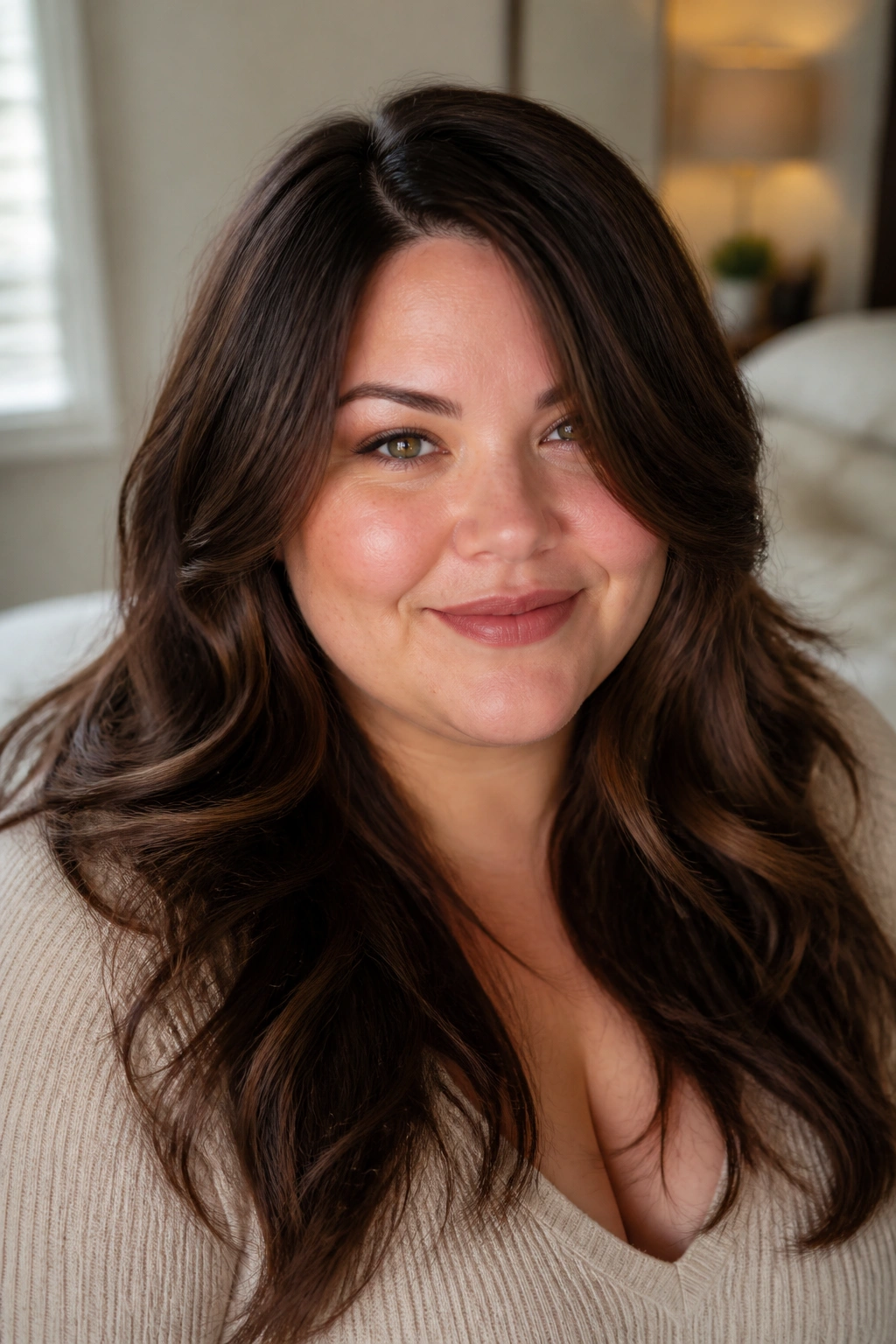
Long layers are the safest smart bet when you want movement without losing length. They give the eye a path to follow, which matters more than people think. When the hair falls in one heavy block, the face can look shorter and wider. Layers break that line up and let the shape breathe.
Why the shape works
The best long layers do not start too high. If the shortest pieces begin around the cheekbone, they can pull attention straight to the widest part of the face. I prefer layers that begin closer to the chin or just below it, then fall longer through the ends. That keeps the silhouette vertical and soft at the same time.
A middle part can work here, but a slight side part usually feels kinder around fuller cheeks. You get a little asymmetry, a little sweep, and a cleaner line from forehead to shoulder. Straight hair, loose waves, and curly hair can all wear this cut; the real trick is leaving enough weight in the bottom so the ends do not look thin.
- Ask for face-framing pieces that start below the chin.
- Keep the longest layer past the collarbone.
- Use a round brush or a 1.25-inch iron to bend the mid-lengths, not the roots.
- Skip heavy thinning if your hair is already fine.
Best tip: if your hair tends to puff up at the sides, keep the upper layers longer than you think you need. Shorter is not always lighter.
2. A Collarbone Lob With Soft Movement
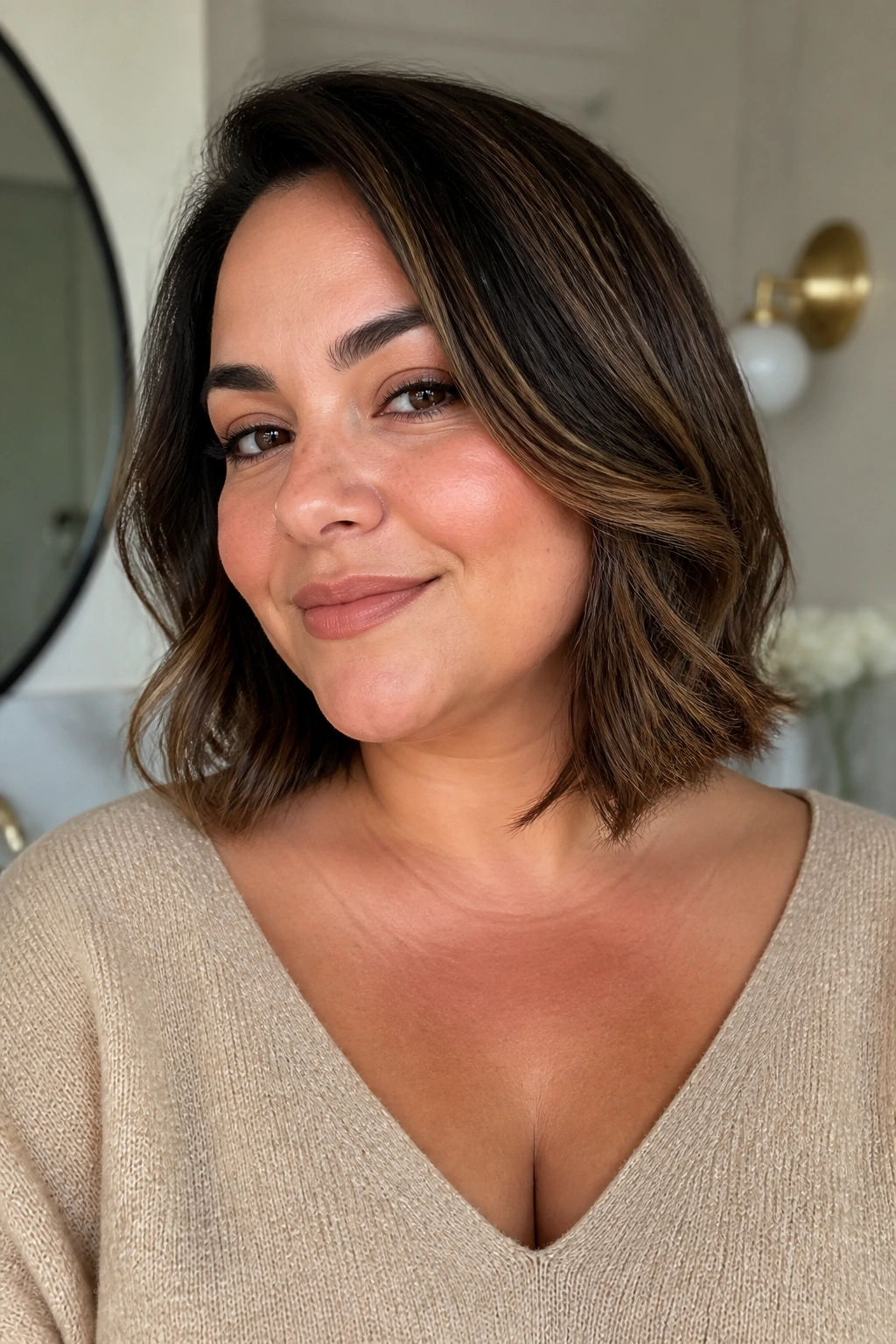
Why does a collarbone lob keep showing up as a flattering cut? Because it lands in that sweet spot where the hair has shape, but it does not stop right at the jaw. The collarbone gives you a natural line that feels long and open. It also keeps the neck from disappearing under too much bulk.
That length does a lot of work.
A lob that sits a touch below the chin can slim the face without looking severe. The secret is movement at the ends. If the cut is too blunt and too still, it can feel heavy. If it is too layered, it loses the clean line that makes a lob special in the first place. I like a soft bevel at the bottom and a slight off-center part so the front pieces sweep across the cheek just enough.
This cut is especially good if you want something polished that still dries well with minimal effort. A quick blow-dry with a medium round brush gives the hair a bend at the ends, and that bend matters. On wavy hair, a little leave-in cream and air-drying can be enough. Straight hair may need a quick pass with a flat iron just at the front to keep the line from flipping out in random spots.
3. Curtain Bangs and a Soft Shag
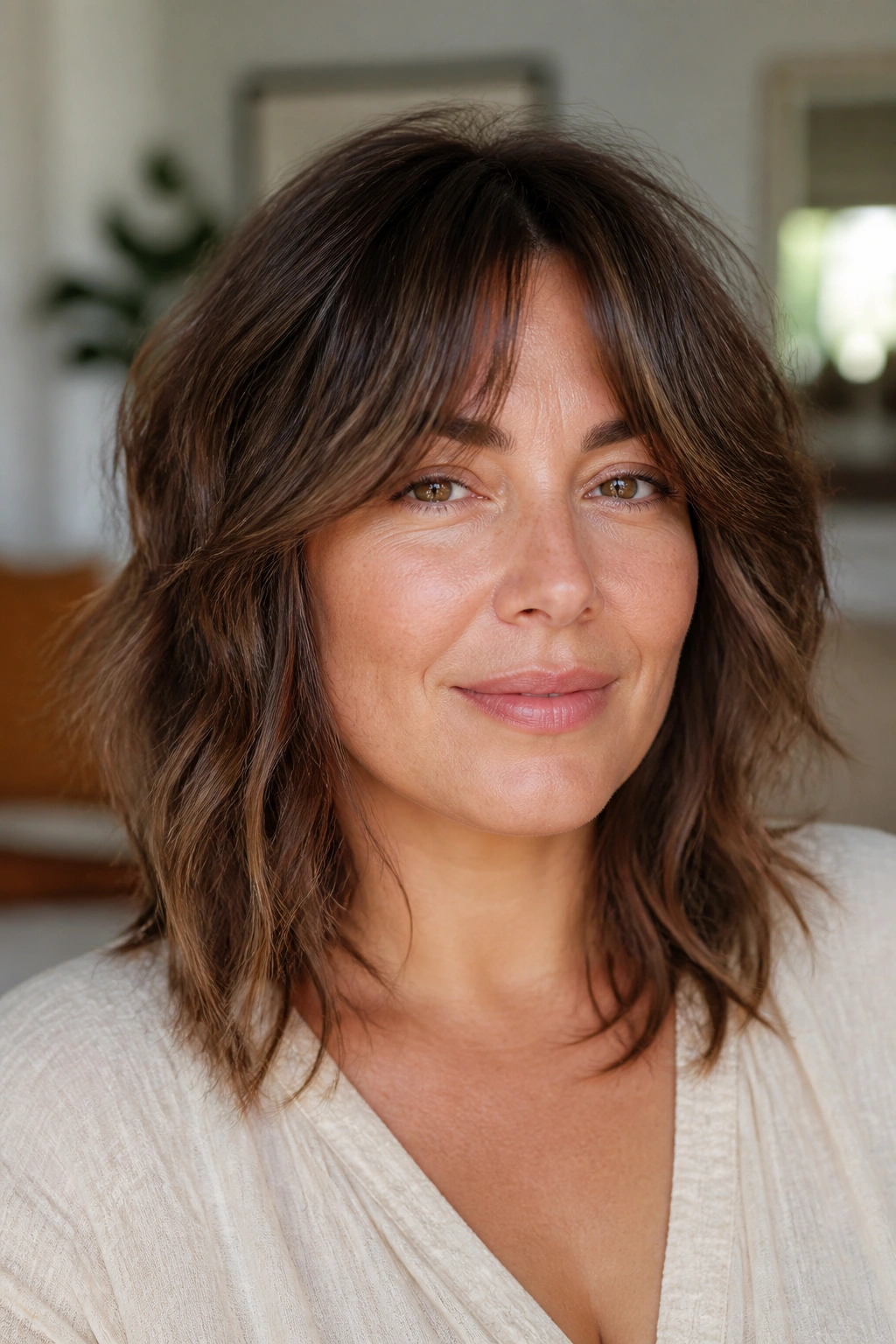
I like a shag when a cut needs to feel lighter without turning into a helmet. Curtain bangs do half the job by opening the forehead and breaking up the top line of the haircut. The rest comes from soft, uneven layers that keep the hair from sitting like one solid shape around the face.
This style works best when the bangs are not cut too short. You want them to split around the eyes or cheekbones, not hover awkwardly above them. That small detail changes the whole mood. The bangs draw attention inward, then the layers push the eye downward along the sides. It is a neat little trick, and it works especially well on thick hair that needs weight removed in the right places.
What to ask for
- Curtain bangs that start near the cheekbone or eyebrow arch.
- Long, broken layers through the crown and sides.
- A soft perimeter, not a harsh edge.
- Texture that comes from cutting, not from overusing thinning shears.
A shag can look a little wild if the styling is off, so I prefer a rough-dry with a diffuser or a hands-on blowout using texture spray. Too much polish kills the point. Too little shape, though, and it turns into bedhead. The sweet spot is somewhere between the two.
4. Shoulder-Length Waves for Plus Size Women

Shoulder-length waves are where a lot of faces wake up. The cut gives you enough length to create vertical line, but it still sits close enough to the face to frame the cheeks and jaw. That makes it useful for fuller features, especially when you want softness around the sides instead of a hard edge.
The wave itself matters more than the curl pattern. A loose bend that starts below the cheekbone looks gentler than a curl that starts right beside the mouth. Too much width near the top can make the face read broader than it is. A bend lower down pulls the eye down the hair shaft, which creates a longer line.
Where the first bend should sit
I like the first wave to begin around the top of the shoulder or just under the cheekbone. That keeps the volume in the right zone. If the hair is layered, the shorter pieces can frame the face, while the longer pieces fall past the shoulders and give the whole style some movement.
Ask for this at the salon
- A shoulder-length cut that grazes the collarbone.
- Long face-framing layers that start below the mouth.
- Ends that are softly textured, not shredded.
- Enough weight left in the lower half so the wave holds its shape.
A 1.25-inch curling iron gives a softer bend than a tighter barrel, and brushing the waves out makes the whole style feel less formal. A little shine spray on the ends helps too. Keep the roots light, though. Flat roots and fluffy ends is not the look here.
5. An Angled Bob That Skims the Jaw

A bob can flatter a fuller face. The problem is usually the wrong bob. A blunt cut that hits exactly at the jawline can feel too square, while a slightly angled bob gives you a cleaner shape and a little forward motion. That movement changes everything.
What you want is a line that is shorter in the back and a touch longer in the front, with the front pieces skimming just below the jaw instead of stopping on it. That tiny shift keeps the face from feeling boxed in. It also makes the neck look longer, which is never a bad thing.
This cut is strongest on straight or softly wavy hair because the angle stays visible. On curly hair, shrinkage changes the shape a lot, so the stylist needs to cut with that in mind. I would not ask for a super sharp angle unless you like a crisp, polished look and are willing to style it. A tiny bit of bevel through the ends is often enough.
One-sentence truth: that small angle matters more than the word bob does.
If you want a style that feels neat but not severe, this is one to keep on the short list. It has structure, but it does not shout.
6. A Pixie With a Longer Top
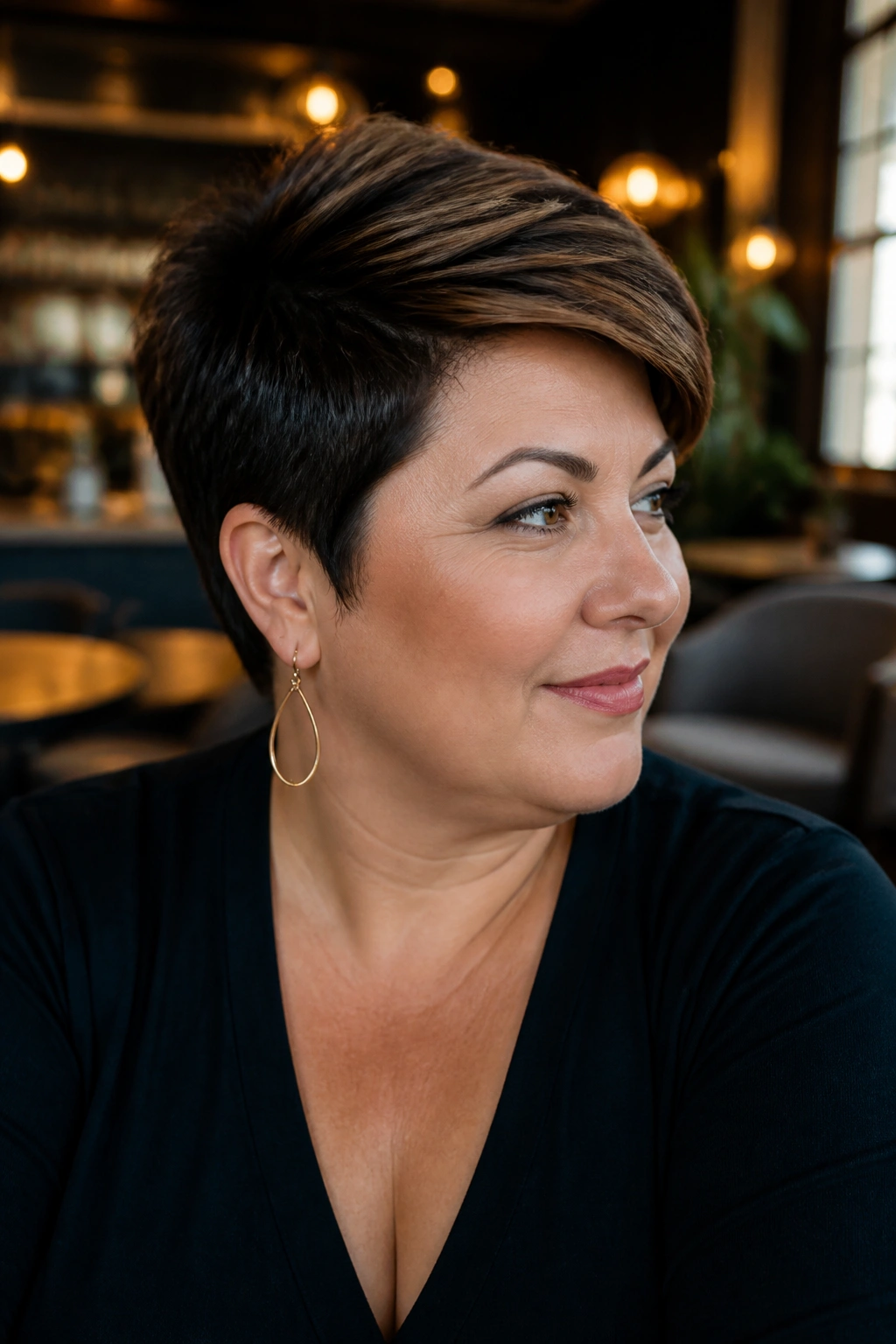
Can a pixie flatter a fuller face? Yes, if the top has enough length to build height and the sides stay controlled. A short crop that hugs the head too tightly can feel harsh. A pixie with a longer top, though, gives you lift where it counts.
The most important part is the fringe. A side-swept front piece softens the forehead and keeps the cut from feeling boxy. The top should have enough length to move — usually a couple of inches, sometimes a bit more — so you can push it up, over, or slightly forward depending on your mood. That little bit of control makes the cut feel tailored instead of severe.
How to style it
- Blow-dry the top section upward with a small round brush.
- Keep the sides close, but not shaved flat to the scalp.
- Use a pea-sized amount of matte paste for separation.
- Sweep the fringe diagonally instead of straight across.
If you have strong cheekbones or a defined jaw, this cut can look especially sharp. It also works when you want less hair on your neck and around your face. Just do not cut the top too short. A pixie needs room to move, or it starts looking stiff fast.
7. A High Ponytail With Crown Lift
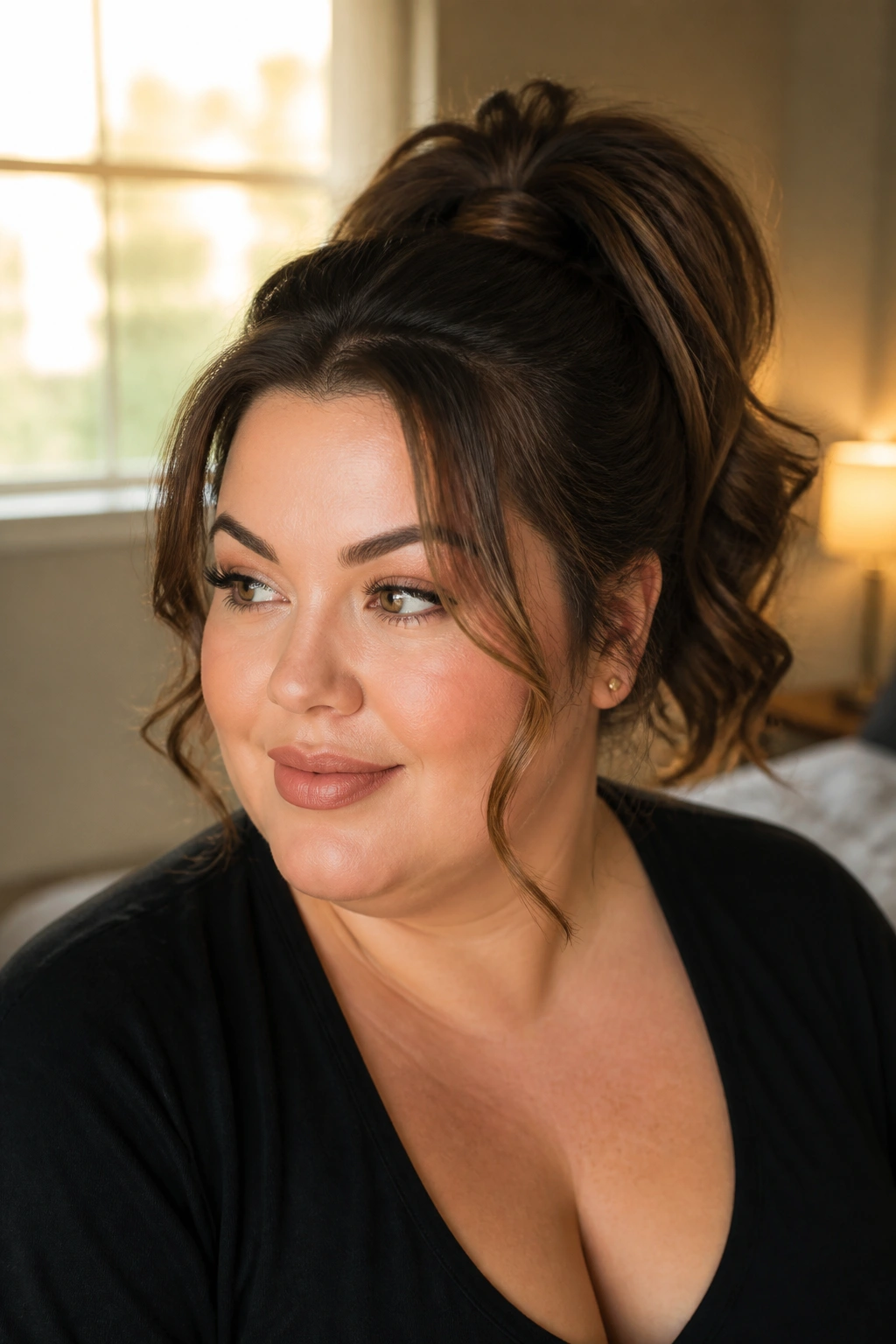
Some mornings you do not need a cut. You need a lift. A high ponytail can change the whole face in two minutes because it raises the eye line, opens the neck, and pulls hair away from the cheeks. That extra height up top is the part that matters.
The ponytail should sit high enough to give lift, but not so high that it turns into a scraped-back style. A little softness at the front makes it far better. I like a slight bump at the crown, either from gentle teasing or from brushing the hair up while it is still warm from the blow-dryer. That keeps the style from lying too flat against the head.
- Place the elastic at the upper back of the head, not right on the crown.
- Pull a 1-inch strand from underneath and wrap it around the elastic.
- Leave a few baby pieces or front tendrils out if you want softness.
- Curl the ends with a 1-inch iron if you want the ponytail to look fuller.
Tight ponytails can be unforgiving. They pull the face back and make every line feel sharper. A looser base with a lifted crown reads softer and more balanced. Loose at the front, firm at the base. That is the move.
8. Half-Up, Half-Down With Soft Volume

Half-up styles work because they split the difference. You get height at the crown, which lifts the face, and you still keep length around the shoulders and jaw. That mix is useful when you want hair off your face without losing the softness that longer hair gives.
The placement matters more than the actual tie-back. If you gather the top section too low, it loses the lift. If you take too much hair, the style starts looking heavy on top. I usually like the top section to begin around the temples and go back just enough to give the crown some height. A small clip, a slim elastic, or a twisted-back section all work.
It also plays well with texture. Straight hair looks polished with a smooth top and soft ends. Wavy hair gets a nice lift from the contrast between the pinned section and the loose length. Curly hair can look especially good here because the style shows off the shape while keeping some volume away from the cheeks.
It is a quiet kind of flattering.
A few face-framing pieces around the temples help even more. Keep them loose, not curled into ringlets unless that fits the rest of your hair. The goal is lift with ease, not a prom-level finish unless that is the whole point.
9. Deep Side-Part Curls for Plus Size Women
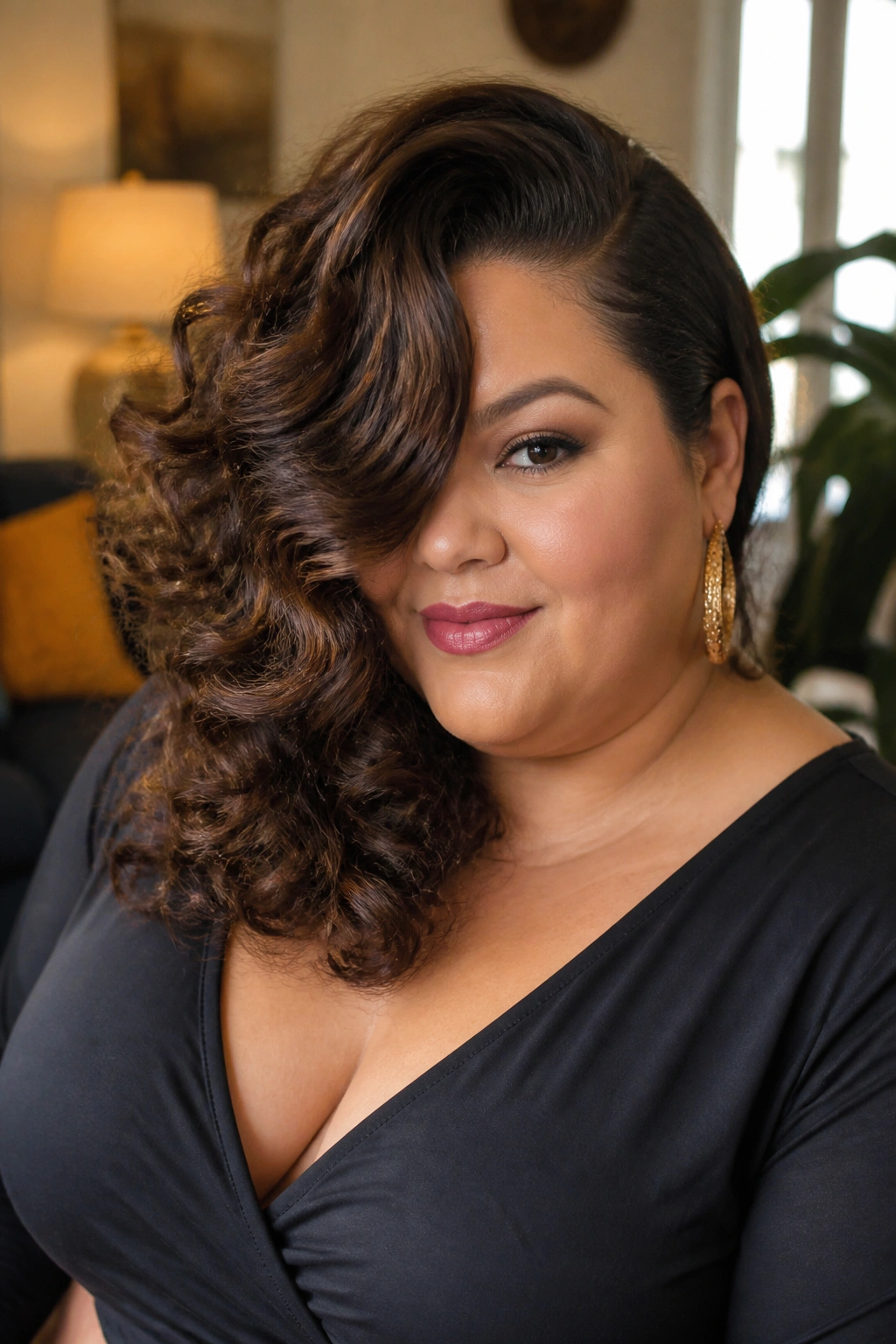
If your hair takes curl well, a deep side part can change the whole proportion of your face in minutes. The part shifts the volume to one side, which breaks up symmetry and creates a longer, more sweeping line. That one move often does more than a haircut alone.
The curl pattern matters, but the part is the star. When curls fall over one brow and sweep down past the cheek, the face gains vertical movement. The eye does not stay stuck at the widest part of the face. It travels. That is why this style can feel so flattering on fuller cheeks and softer jawlines.
The face-shape trick
- Place the part at the arch of the eyebrow, not dead center.
- Curl away from the face with a 1.25-inch iron or wand.
- Pin the first hot curl for 5 minutes so it cools in shape.
- Brush the curls out only after they set.
A little root lift at the part helps too. I like a lightweight mousse or root spray before blow-drying, then a flexible-hold spray at the end. This style can look glam, but it does not need to be stiff. Soft, brushed curls are enough. Hard curls can look dated fast.
10. A Braided Crown With Loose Ends
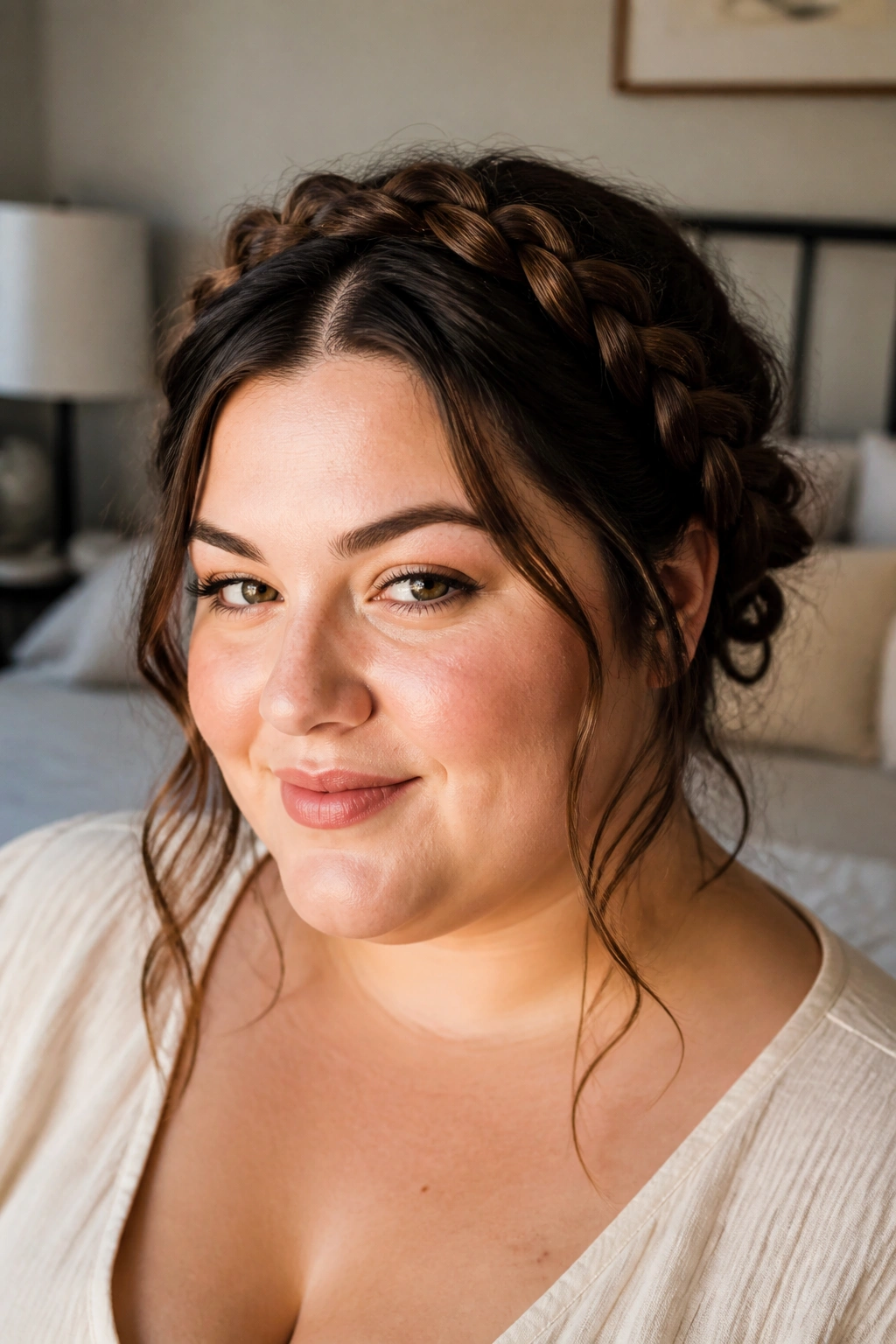
Unlike a tight milkmaid braid, this version keeps a little air around the temples. That is why it works so well on fuller faces. A braided crown lifts the hair away from the face, but the loose ends and softer braiding keep the style from feeling severe or boxed in.
It is a smart choice when you want your hair off your neck, especially for long days, warm weather, or events where you will be moving around a lot. It also plays nicely with second-day hair because a bit of grip helps the braid hold. Clean, silky hair often slips out too fast.
The braid should not sit too low on the forehead. That can drag the eye downward and make the face feel crowded. Keep the braid a touch higher, loosen the edges slightly, and leave a few slim pieces out near the ears or temples if you want a softer finish. If you have layers, pin the shortest ones back instead of trying to force them into the braid.
This one is best for medium to long hair, and it is better than people give it credit for. It looks polished, but it does not need to be perfect. A little looseness gives it life.
11. A Textured Midi Cut With Piecey Ends
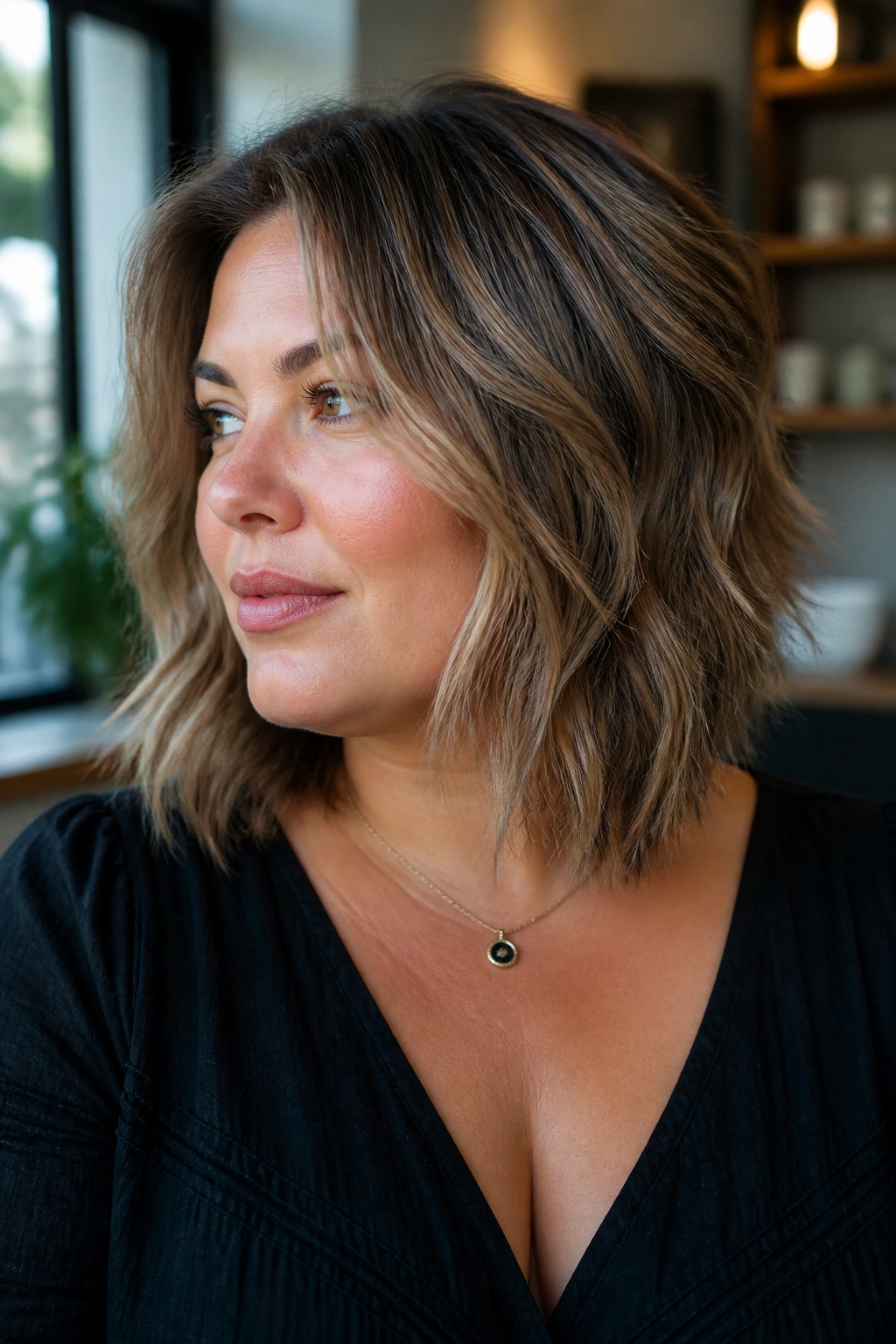
What if you want shape, but not a big styling job every morning? A textured midi cut is the answer I reach for. It sits between the chin and the collarbone, which gives you enough length to feel feminine and enough structure to keep the hair from collapsing into one solid sheet.
The end texture is the whole point. Piecey ends break up bulk and keep the cut from feeling heavy around the jaw. A blunt midi can work too, but it needs a little softening through the front so it does not sit like a rectangle. I prefer a perimeter that feels clean, then a little point-cutting through the ends to take the edge off.
How to ask for it
- Keep the length around mid-neck to collarbone.
- Ask for a blunt base softened with point-cutting.
- Leave the front 1 to 2 inches longer if you want more face-slimming shape.
- Style with a dime-size cream or a light mousse, not a heavy oil.
This cut is good on straight, wavy, and lightly curly textures. It can air-dry with a little scrunching, or you can rough-blow it for extra movement. The main thing is avoiding puffiness at the sides. Too much width around the cheeks makes the shape feel broader than it needs to be.
12. A Chin-Length Curly Bob
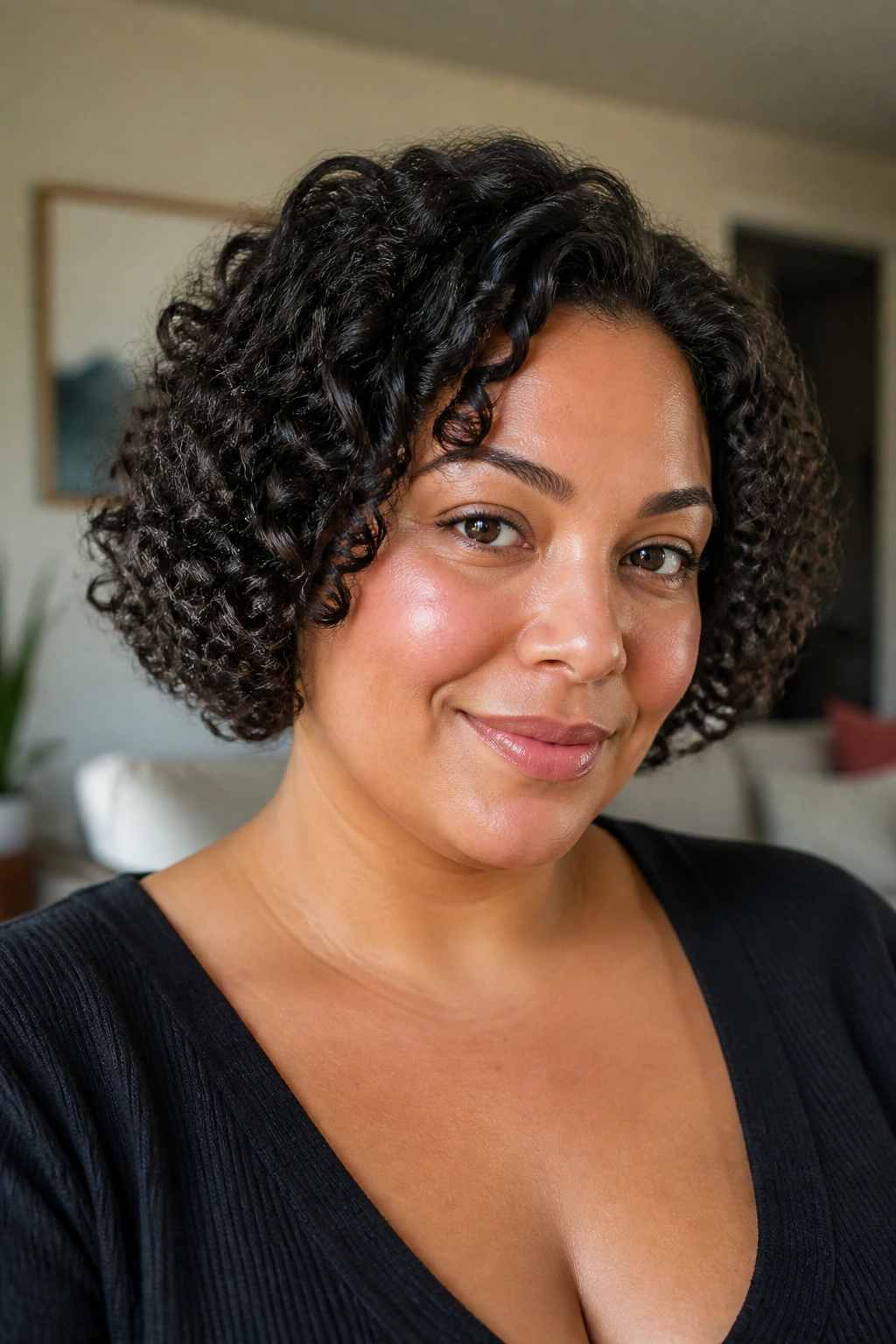
A good curly bob has bounce before it has shape. That is the first thing I notice. The second is whether the length respects shrinkage, because curls can spring up a full inch or more once they dry. A chin-length cut on curly hair can be lovely, but only if the cut accounts for that movement.
The line should sit where the curls naturally want to land, not where they look longest when wet. That usually means cutting a little below the chin if the curl pattern is tight. A curl-by-curl dry cut or a curl-focused shaping session helps too. Wet curly cuts are fine in the right hands, but the hair has to be cut with shrinkage in mind.
- Keep the shape rounded, not boxy.
- Leave enough length for the curls to coil without popping straight up.
- Use a diffuser on low heat and low speed.
- Finish with a cream or gel that keeps the curls separate, not sticky.
What I like most here is the clarity of the shape. The curls frame the face, but they do not drag it down. They sit around the jaw in a way that feels lively. If your curls get puffy at the sides, ask for internal shaping rather than aggressive thinning. Heavy thinning can create frizz, and frizz around the cheeks is rarely the goal.
13. Long Straight Hair With Invisible Layers
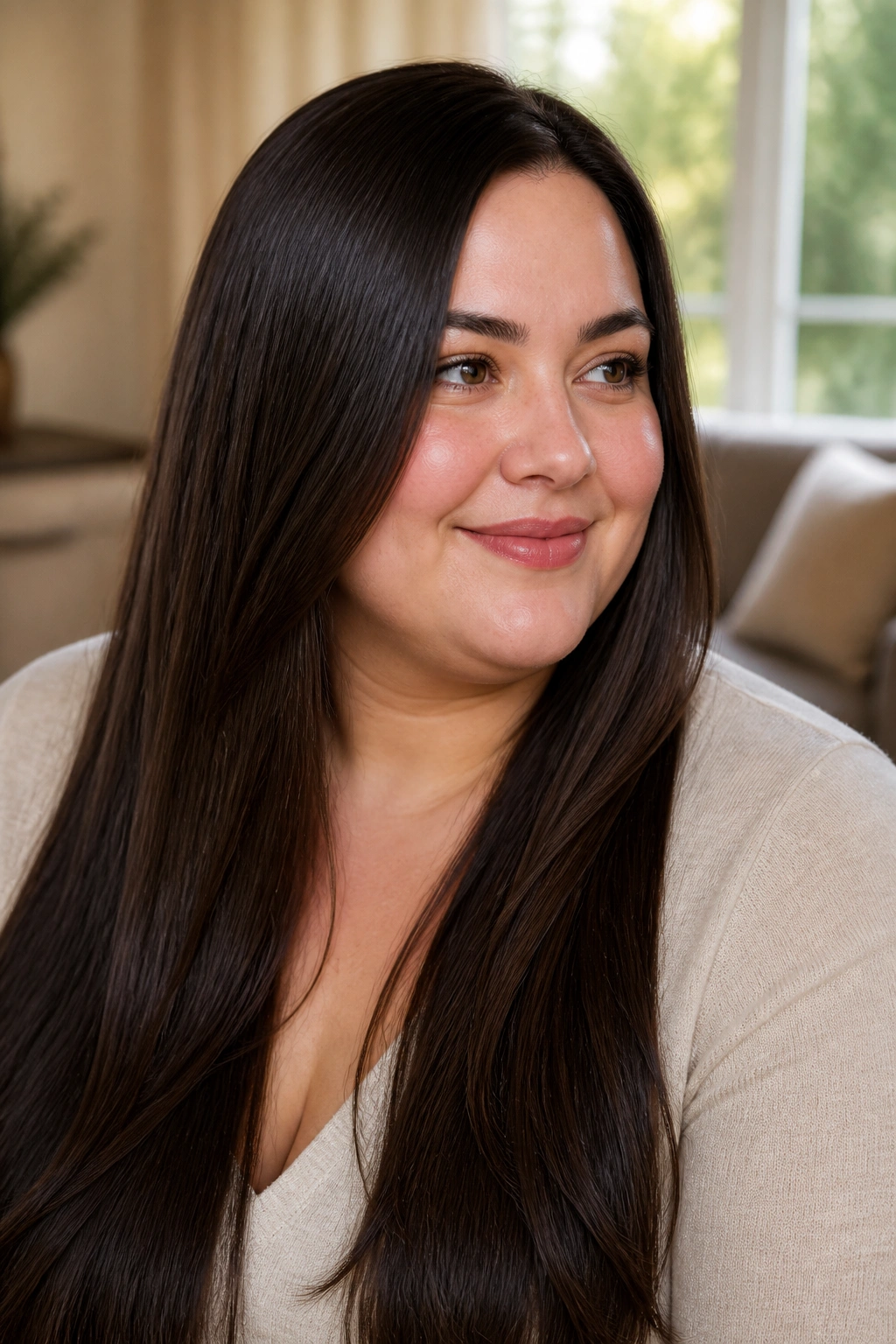
Straight hair can flatter a fuller face, but only when it has movement. If the hair hangs in one blunt curtain from root to end, it can make the face feel boxed in. Invisible layers solve that problem by removing bulk in a way you do not immediately see.
The best version keeps the surface smooth and the perimeter long. The layers sit underneath, so the hair still looks like one clean line when it falls, but it moves better when you turn your head. That matters if you want sleek hair without the dead weight that long, one-length styles can bring.
A soft off-center part usually helps here. It keeps the top from feeling too symmetrical and gives the front pieces a gentle sweep. A center part can work too, but it needs some lift at the crown or the hair can settle flat along the cheeks. That is one of those details that sounds small until you see it in the mirror.
A light shine serum through the mid-lengths and ends can make the style look finished without making it greasy. If your hair is thick, ask for the layers to stay subtle. Too much layering on straight hair can leave the ends wispy. That is not flattering. It just looks thin.
14. A Low Bun With Face-Framing Strands
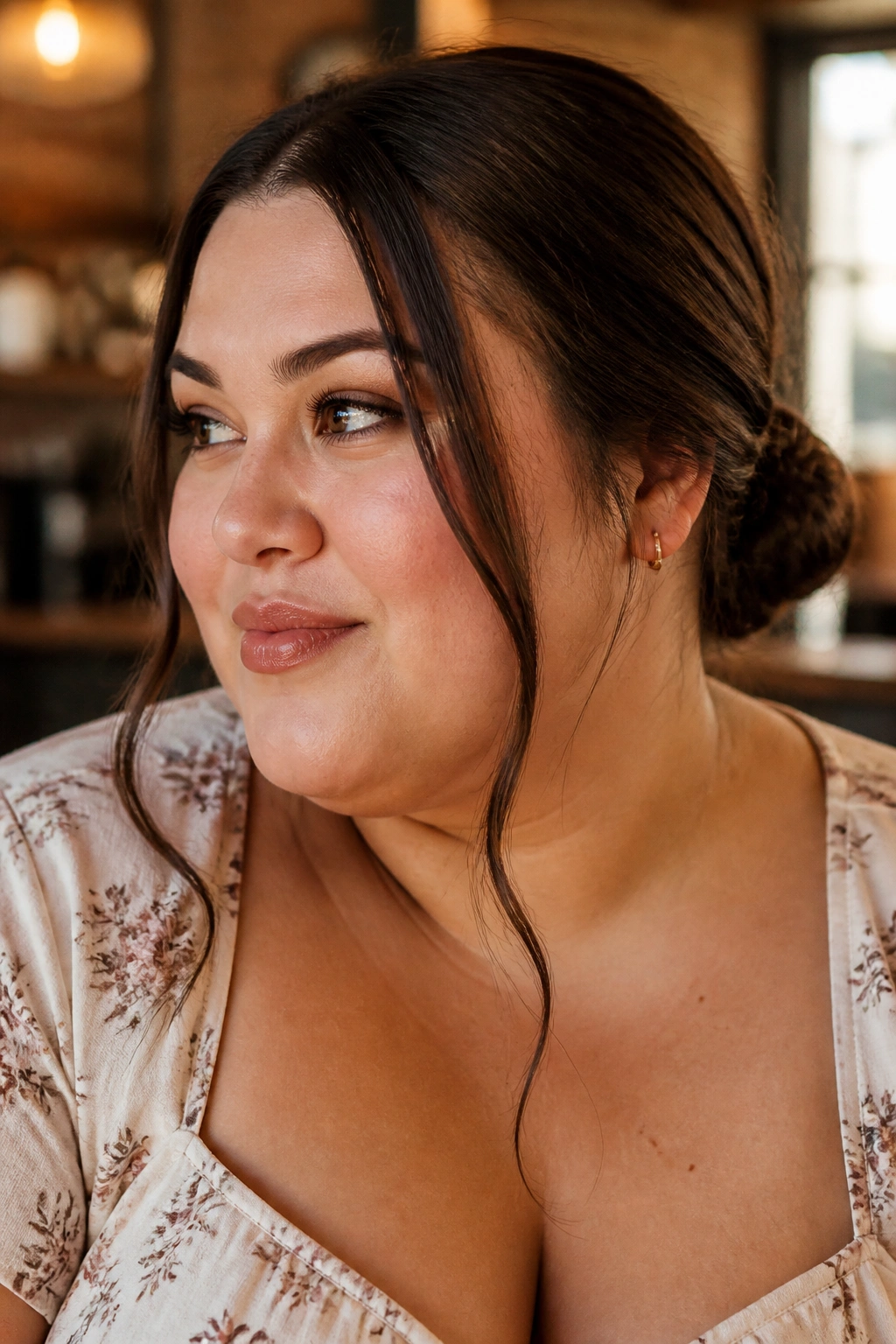
There is a reason stylists reach for a low bun when a client wants polish fast. Placed at the nape, it lengthens the neck and keeps the focus above the shoulders. Add a few face-framing strands, and the style softens right away.
The placement is the part people get wrong. A bun that sits too high can make the head look top-heavy. A bun at the nape feels calmer and more balanced. I also like the bun to be oval rather than a tight ball; that shape looks more natural and less severe. If your hair is thick, twist it into the bun instead of stuffing it in. That keeps the shape cleaner.
Keep these details in mind
- Leave 2 slim pieces out around the temples.
- Curl those pieces with a 1-inch iron, then brush them out.
- Pull the crown slightly loose before pinning.
- Keep the bun low and centered, not high and tight.
A low bun is one of those styles that works for dinner, work, weddings, and the days when your hair refuses to cooperate. It can look elegant, but it does not need to look precious. The bun should look held, not armored.
15. A Soft Blowout With Flipped Ends
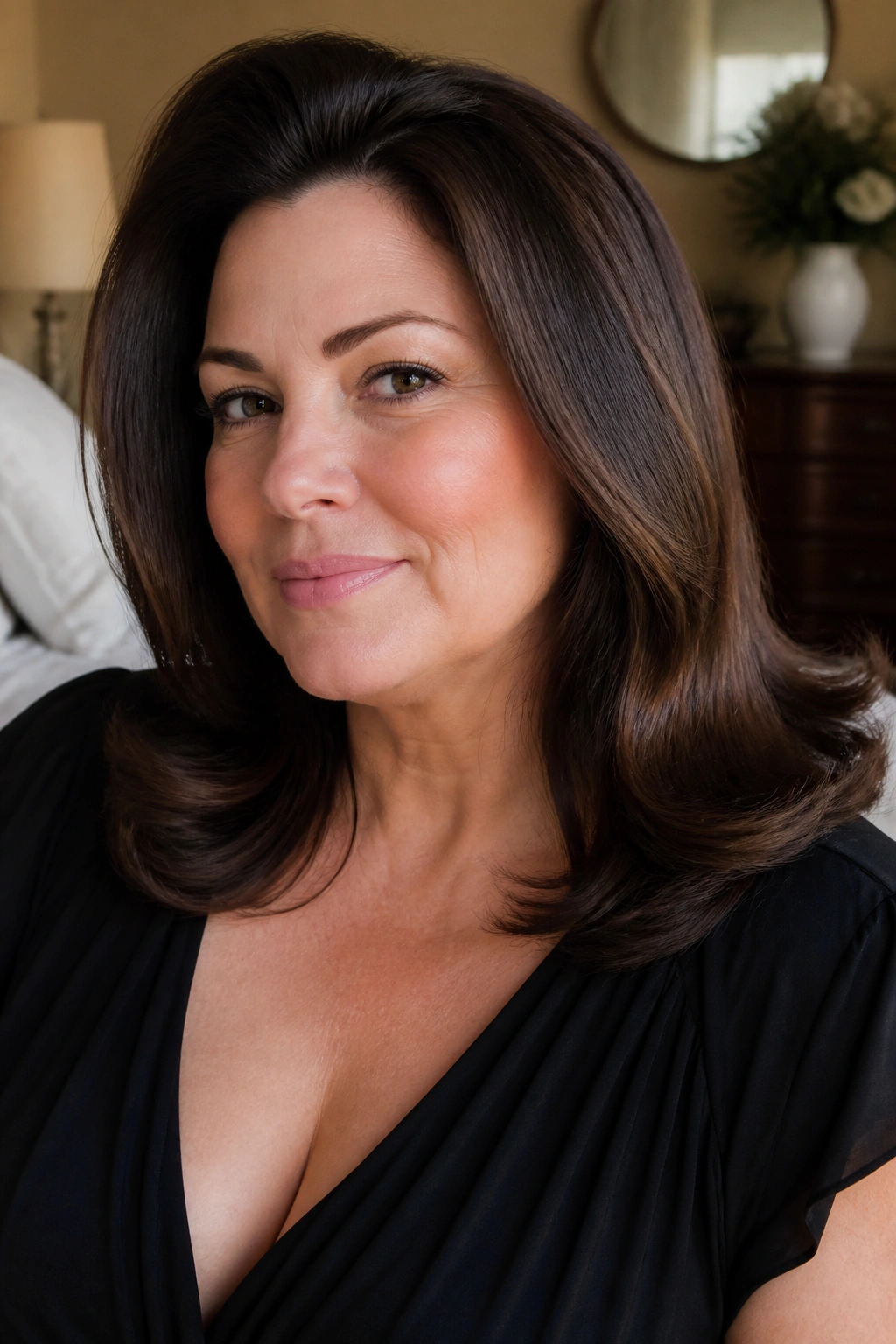
A soft blowout changes the whole feel of hair because it builds lift at the roots and shape through the ends at the same time. That combination is hard to beat. It gives the face room near the cheeks, then sends the ends outward or under in a way that keeps the line moving.
For fuller faces, the real win is control. You want volume at the crown and through the mid-lengths, but not a big triangle around the jaw. A medium round brush, sectioned blow-drying, and a cool shot at the end all help. The roots should sit light and lifted. The ends should bend, not kick out wildly.
I also like this style because it makes everyday hair look finished without making it stiff. You can wear the ends flipped under for a softer line or flick them outward if you want a little more energy. Both versions work. What matters is keeping the shape smooth enough that the style does not bulk up at the sides.
A soft blowout is one of the easiest ways to make plus size women’s hairstyles feel intentional without getting fussy. It flatters because it shows the face, not because it hides it. That difference matters.
When a style gives the face room, everything else feels easier. The mirror looks less crowded. The haircut stops fighting your features and starts working with them, which is the whole point, really.
