



Short curly hairstyles for plus size women work best when they do two things at once: they frame the face and keep the shape from feeling heavy at the sides. That sounds simple, but there’s a lot going on underneath it. Curl pattern, density, neckline, cheekbone width, and how much lift you have at the crown all change the result.
A short cut on curly hair is never only about length. It’s about where the hair stops, where it bends, and how much room you give the curl to spring back after a wash. I’ve seen a two-inch difference turn a puff of shape into a clean, flattering outline. Tiny change. Big effect.
The good news is that short hair and curls are a strong pair when the cut is done with intention. You do not need to flatten everything, and you do not need to hide behind long layers either. The right shape can make the neck look longer, show off earrings, and give your curls a chance to look defined instead of crowded.
The trick is choosing a cut that works with your curl type instead of fighting it. Some styles need height at the crown, some need weight at the bottom, and some look best with a side part that breaks up width just enough. Start there, and the rest gets easier.
1. Curly Pixie With Soft Side Bangs
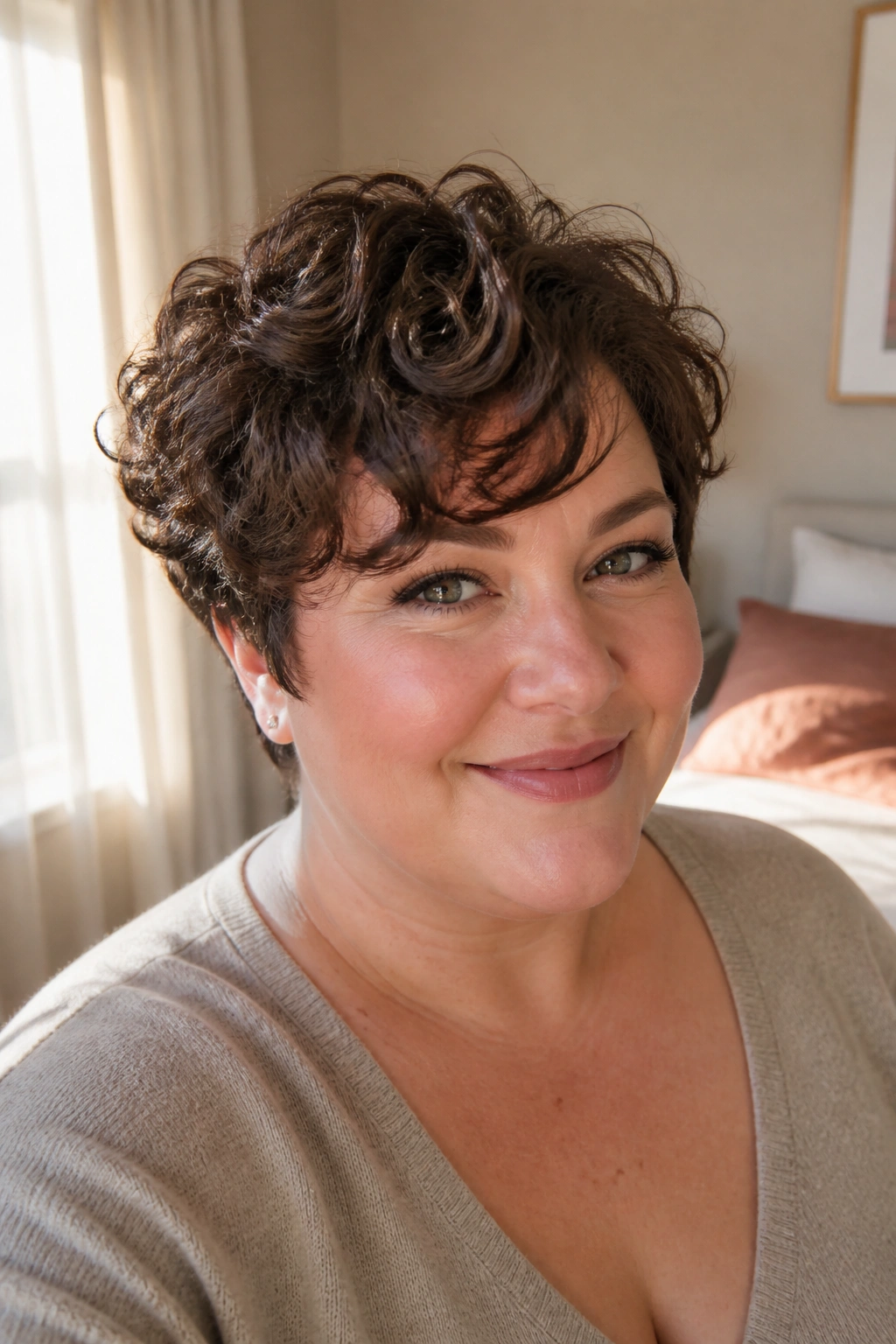
This is the cut I recommend when someone wants short hair but still wants softness around the face. A curly pixie with side bangs keeps the sides neat, gives the crown some lift, and lets the fringe fall in a way that feels easy rather than severe. It’s one of those styles that looks polished without asking for a lot of daily effort.
Why It Works
The side bang is the useful part here. It draws the eye diagonally, which is a nice little trick when you want to keep the shape from looking too boxy around the cheeks. A pixie also keeps bulk off the neck, so the whole look feels lighter.
I like this cut most on curls that have a bit of bounce on top. If your hair shrinks a lot, the stylist should cut it dry and leave enough length for movement. Too short on curly hair can turn into a helmet. Too long can lose the pixie shape. There’s a sweet spot, and it matters.
- Keep the top around 2 to 3 inches if your curls are loose to medium.
- Let the sides sit closer to the head, usually around 1 inch or less.
- Ask for bangs that land near the eyebrow when dry, not when wet.
- Style with a light curl cream and a pea-size gel on the fringe.
Tip: If your bangs split too much, pin them to one side while they dry. That tiny habit saves the whole front of the cut.
2. Tapered Curly Cut With Longer Crown
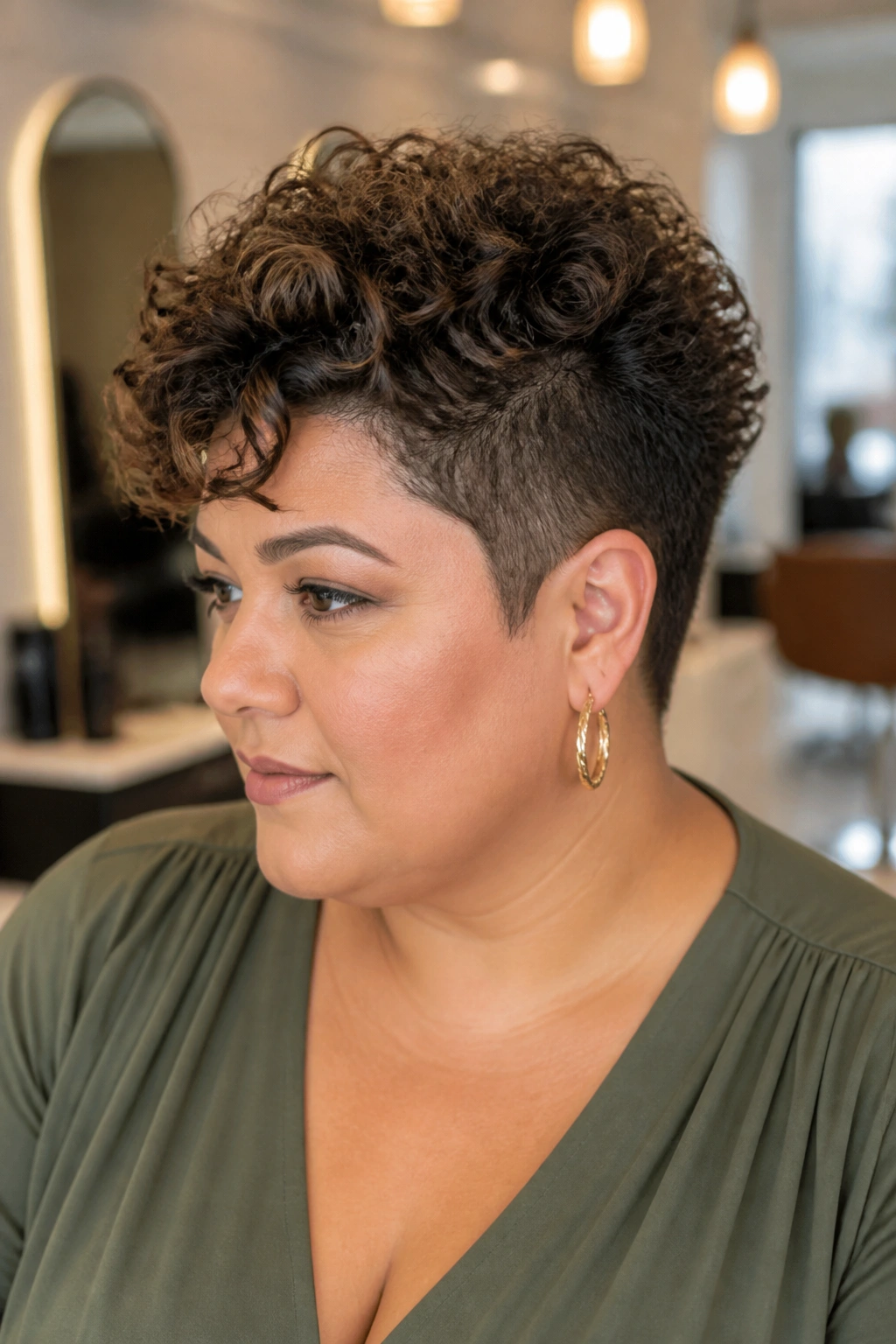
This is the cut I reach for when someone wants shape, but not stiffness. A tapered curly cut keeps the sides and nape close while leaving the crown a little longer, so the silhouette rises instead of spreading out. It feels tailored. Not fussy. Just smart.
The real magic is in the balance. The shorter taper removes bulk where curls can puff out, while the longer top gives the style its soft, rounded height. That extra lift helps the face look more open, and it keeps the cut from sitting too wide at the temples.
When you ask for it, be specific. Tell the stylist you want the back clean, the sides slim, and the top left with enough length to curl naturally upward. On wash day, a mousse at the roots and a diffuser on low heat help the crown stay airy. If you air-dry only, clip the roots at the top for a little lift. It’s a small thing, but it makes the outline look sharper.
3. Chin-Length Curly Bob With Center Part
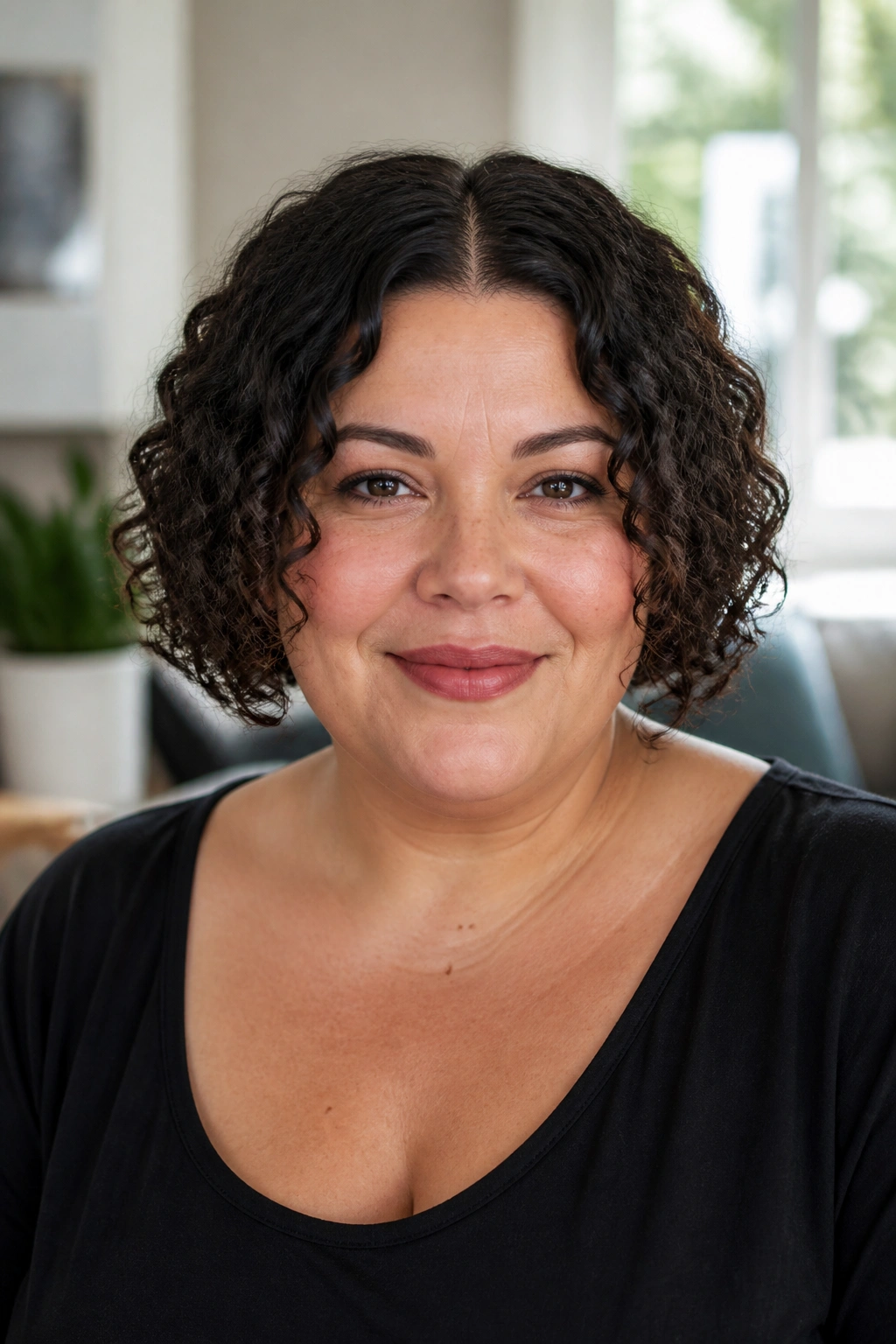
Why does a chin-length curly bob look so balanced? Because it lands right where the face needs definition without cutting the neck line in a harsh way. The center part adds symmetry, which can feel calm and clean when your curls are soft and springy.
This cut works especially well when your curls form neat clumps instead of frizzing into a cloud. The bob shape gives the curls a clear boundary, and the chin length keeps the whole look compact. If your hair is dense, the stylist should remove some interior weight so the bottom does not balloon out.
How to Wear the Part
A center part on curly hair is not about perfect straight lines. It’s about creating a clean opening at the top so the curls can fall in two even panels. That shape can make the face look a little longer and the chin line a little more defined.
Use a curl-defining gel while the hair is still damp, then scrunch from the ends upward. If your curls puff at the roots, clip the top for 10 to 15 minutes while they set. The result should feel soft, not stiff.
4. French Bob With Loose Ringlets
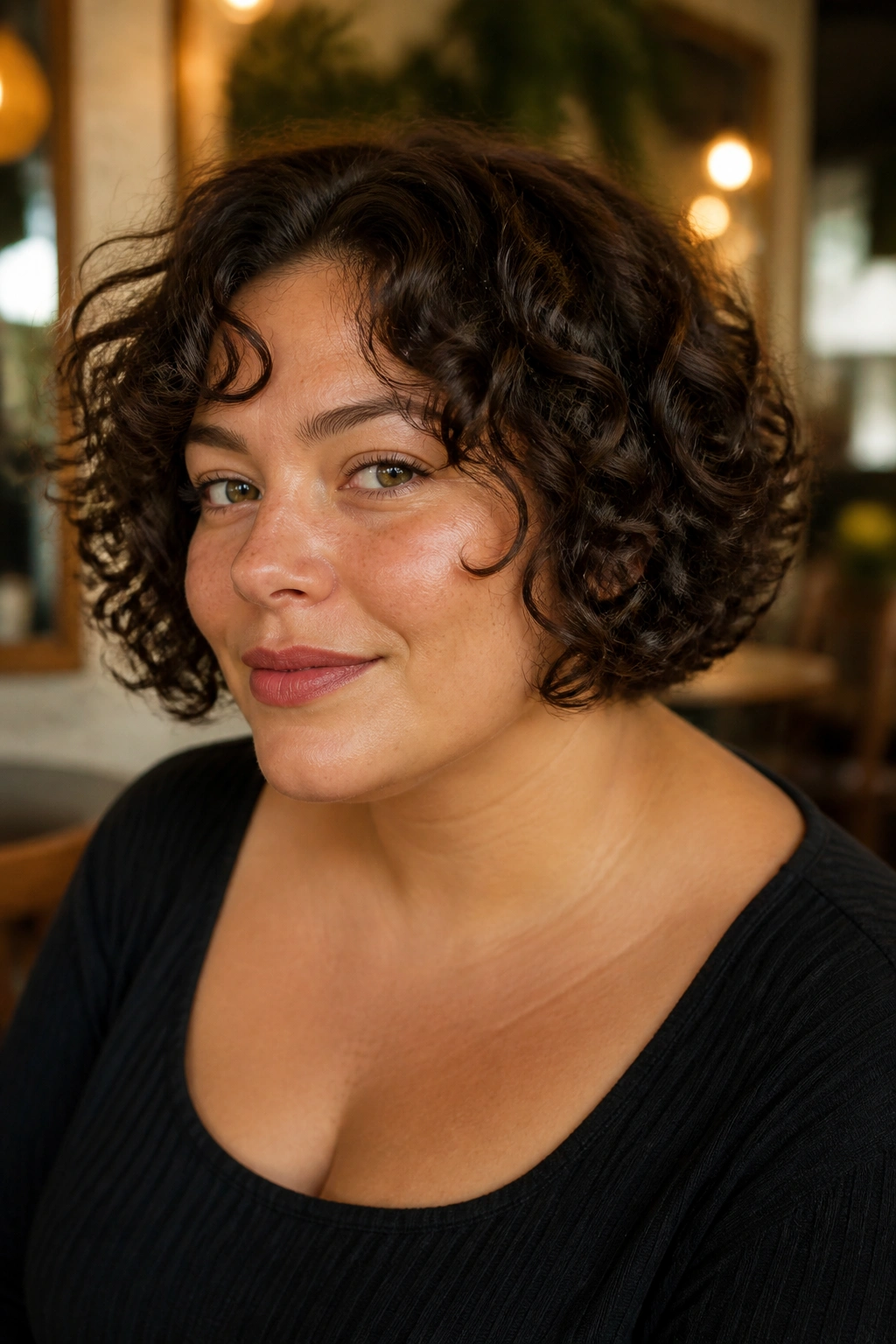
A French bob gives off a neat, cheeky kind of confidence. When the curls are loose and glossy, it sits close to the jaw, and that short line makes the face look instantly more intentional. I love it on women who want something chic without looking overworked.
The key is the length. A curly French bob usually lands just below the cheekbone or right at the jaw, depending on shrinkage. Cut it too high and you lose the softness. Cut it too low and it starts behaving more like a regular bob. That small margin matters more than people think.
- Best with loose curls or soft waves that form ringlets.
- Looks strongest when the ends are lightly layered, not shaggy.
- Works well with a side part or a slightly off-center part.
- Benefits from a light cream plus a touch of gel for clumpier curls.
A good French bob has a little swing when you turn your head. Not too much. Just enough to feel alive.
5. Layered Curly Shag
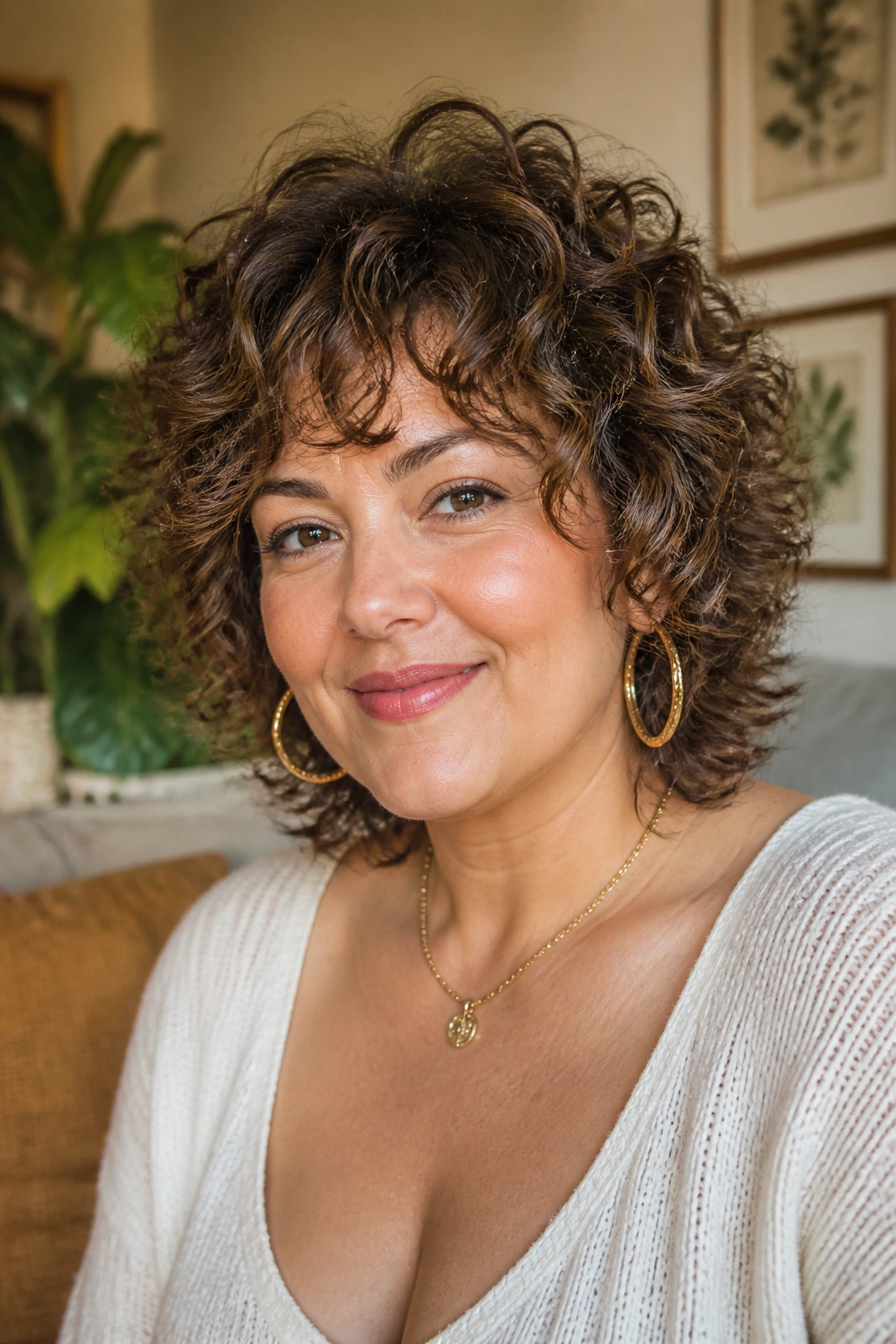
The curly shag is the one that saves a lot of dense, heavy curls from looking stuck in place. Layers break up the bulk, let the curl pattern move, and keep the sides from ballooning into one wide shape. It’s a cut with a little attitude, and I mean that in the best way.
What I like most is how forgiving it is. A shag does not need perfect styling to look good. A few pieces can be a little wild, and the cut still reads as intentional because the whole shape is built around movement. That makes it a strong choice if your curls are thick, mixed-texture, or prone to flattening at the roots.
The best version uses layers that start around the cheekbone and open down toward the collar. If the layers are cut too short, the top can get frizzy and choppy. If they’re too long, the shape loses that lively, feathered look. A mousse at the roots and a light curl cream through the mids usually does the job. Honestly, this is one of the few cuts where a bit of mess looks better than over-styling.
6. Asymmetrical Curly Crop

Unlike a symmetrical bob, an asymmetrical crop gives you a built-in diagonal line. One side sits a little longer, and that shift changes the whole mood of the haircut. It feels modern without being sharp for the sake of it.
This is a smart choice if your curls shrink unevenly or if one side of your face tends to feel fuller than the other. The longer side softens that effect, while the shorter side keeps the cut light and easy around the ear and jaw. There’s also a nice side benefit: it makes earrings and necklines more visible.
What Makes It Different
The asymmetry does the visual work, so you do not need a lot of styling tricks. A clean side part or a deep side part will show off the shape. If your hair is tighter in the back, ask for the nape to stay close so the longer front piece does not get lost.
Who It’s Best For
This cut works well if you like a little edge and do not mind a shape that gets noticed. It’s especially good for rounder faces because the diagonal line naturally breaks up width.
Recommendation: Keep the longer side grazing the jaw, not dragging down toward the shoulder. That’s where the style stays short and crisp.
7. Rounded Afro With Clean Edges
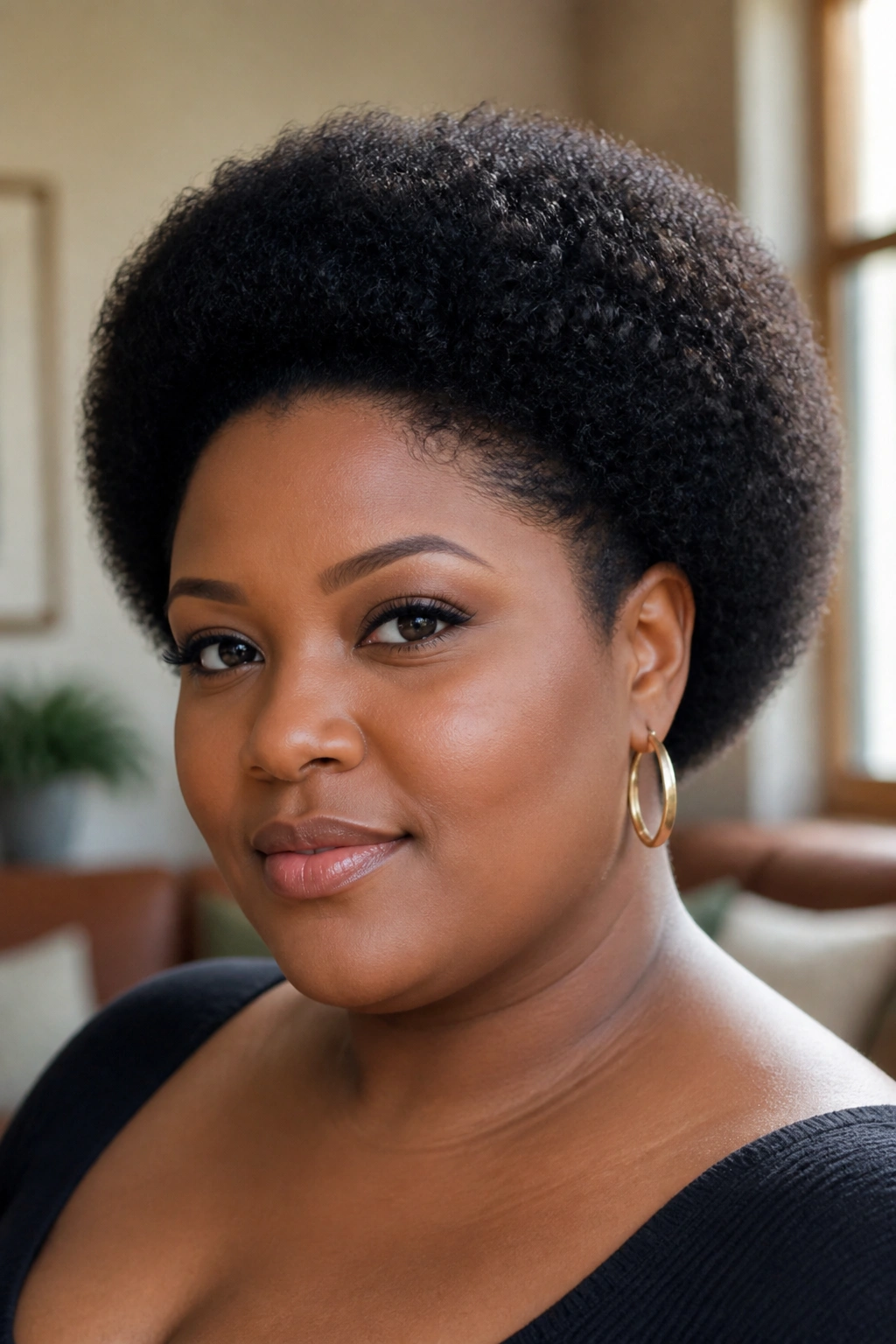
A rounded afro is one of the cleanest short curly looks you can wear. The shape is soft and full, but the outline stays controlled, which is exactly why it works so well. It frames the face without crowding it.
The clean edges matter more than people admit. A tidy neckline, shaped sideburns, and a round top keep the cut from looking unplanned. If the silhouette is too square, the hair can dominate the face. If it’s round and balanced, the curls feel like part of the features instead of a separate mass sitting on top.
What to Ask For
- A rounded shape, not a flat top.
- Enough length at the crown to keep the height soft.
- Clean edges around the nape and temples.
- Interior shaping so the sides don’t puff out too wide.
This style can be beautiful with a little sheen oil on the surface, but do not overload it. Too much product collapses the shape and makes the hair look sticky. A tiny amount spread over the palms is enough. That’s one of those details that sounds small and ends up changing everything.
8. Undercut Curly Pixie
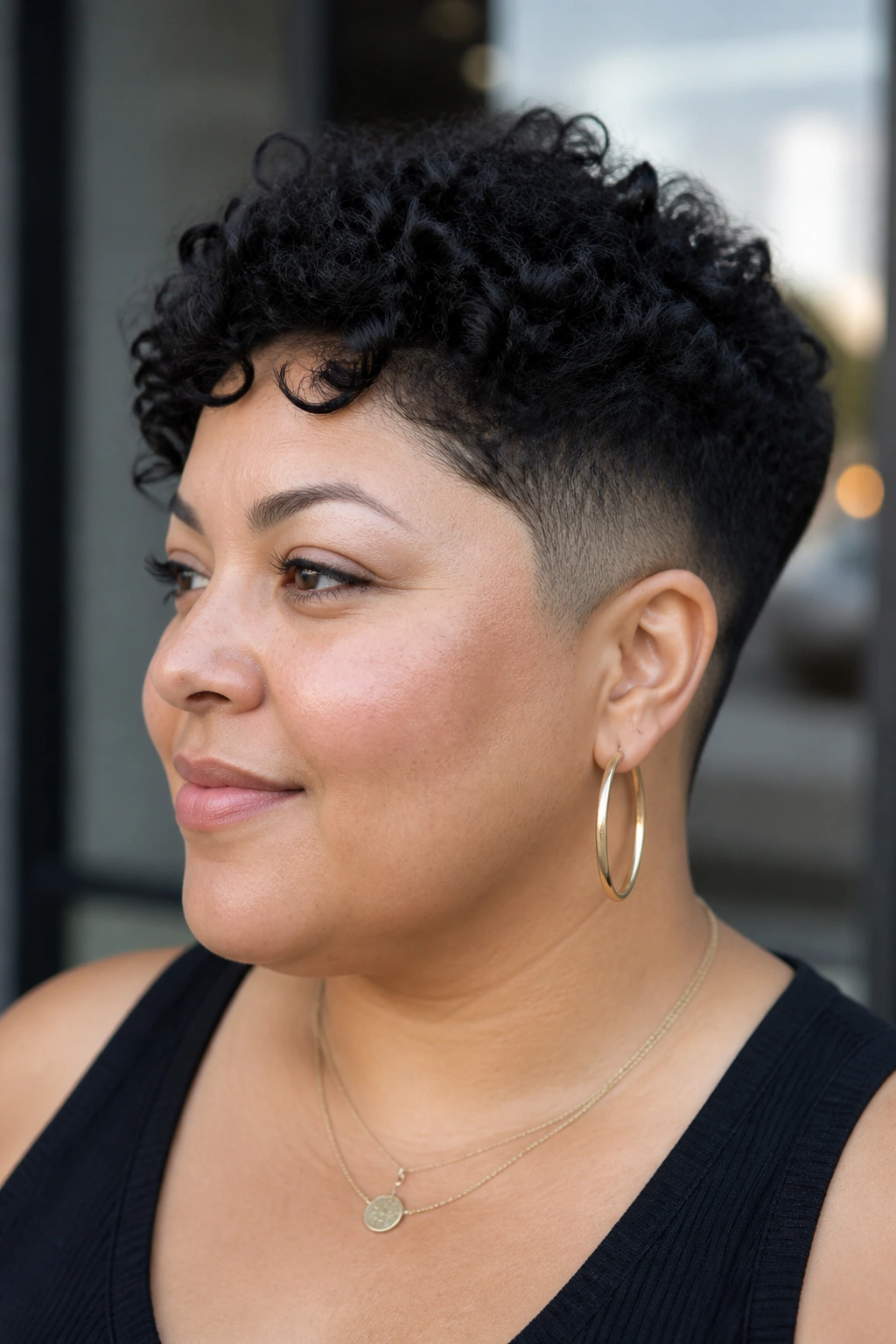
If you have thick curls, this cut can feel like taking a heavy sweater off your shoulders. An undercut curly pixie removes bulk from the nape or sides while leaving enough length on top for the curls to bounce. The result is light, sharp, and a little bold.
The undercut changes how the whole head sits. Instead of the hair spreading outward, the top becomes the star. That gives the face more room, especially around the jaw and neckline. It also cuts down on the time it takes to dry, which is not a small thing if your curls take forever.
This is not the cut for someone who wants a lot of variety every morning. The shape does the talking, and it needs regular trims to stay neat. But if you like a low-maintenance top with a clean underneath, it’s a strong choice. Ask for the top long enough to curl naturally, then decide whether you want the fade hidden or visible. Both work. The vibe changes a lot depending on how much of the undercut you show.
9. Side-Swept Curly Bob
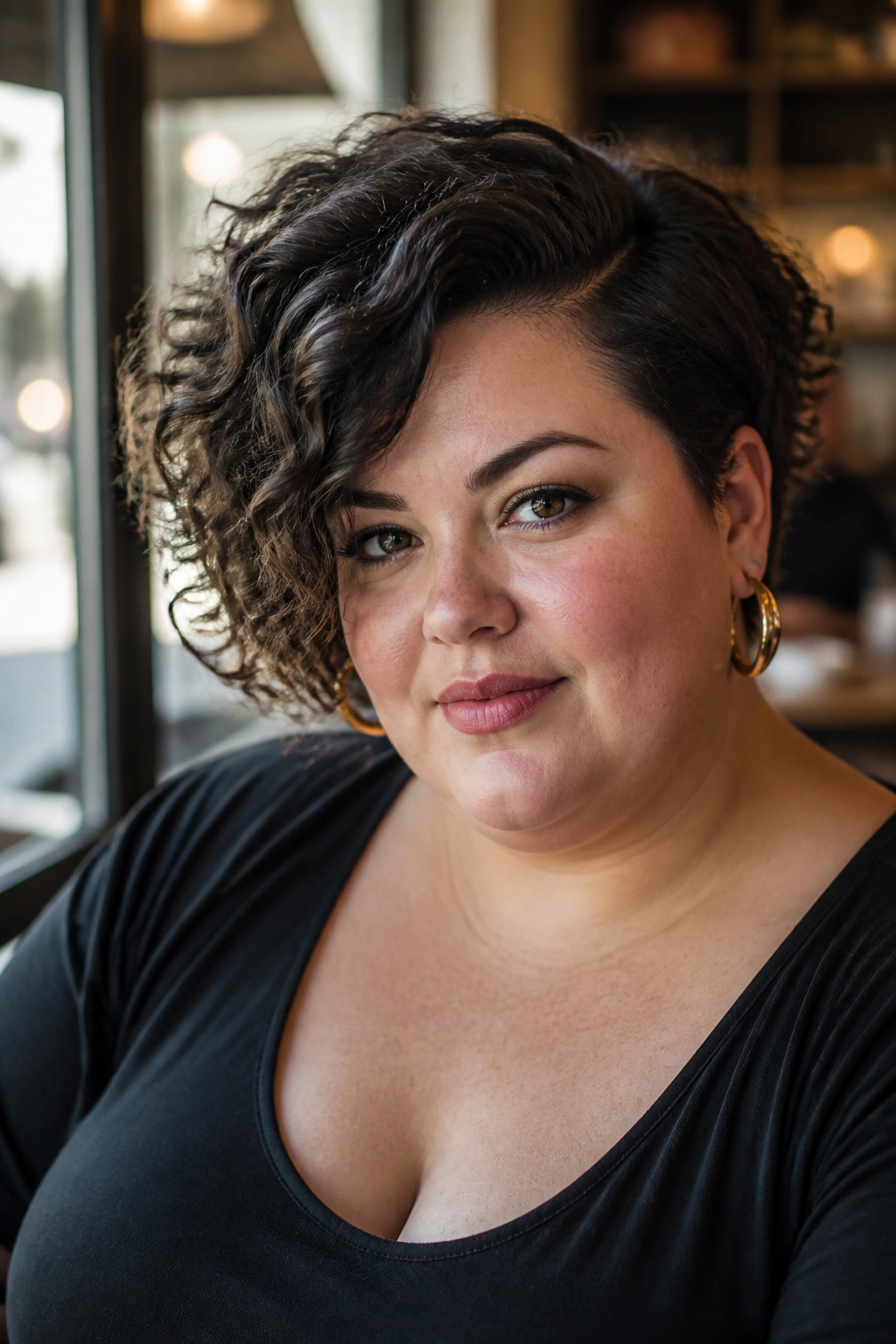
Why do side-swept bobs look so flattering? Because they create movement without making the haircut feel crowded. The deep side part gives the curls a diagonal line to follow, and that keeps the shape from sitting straight across the cheeks.
This style is especially helpful when your curls like to clump on one side anyway. Instead of fighting that habit, you use it. The hair falls with a little sweep across the forehead, one side gets tucked behind the ear, and the face opens up. It sounds plain, but in real life it feels elegant in a low-key way.
How to Style It
Start with a strong part while the hair is damp. Put a little gel at the roots near the part line, then scrunch the mids with a light cream. If you want more lift, clip the heavier side at the crown while it dries. That keeps the root from collapsing.
The side-swept bob works best when the ends hit around the chin or just below it. Shorter than that, and the sweep can feel too dramatic. Longer than that, and it starts reading as a lob.
10. Curly Crop With Full Fringe

A full curly fringe is one of my favorite ways to make a short cut feel playful. It puts the texture front and center, and it gives the face a soft curtain of curls that can hide or highlight the forehead depending on how you wear it. That little bit of control is useful.
The fringe should not be chopped straight across like a blunt line unless the curls are very loose. Most of the time, a curly fringe looks better when it’s cut with some air in it. A few pieces may sit shorter, others longer. That unevenness helps the curls settle naturally instead of forming a hard shelf.
- Keep the fringe long enough to move, usually around eyebrow to eye level when dry.
- Use a small amount of curl cream so the front stays soft.
- Diffuse the fringe separately if it dries flat.
- Ask for face-framing pieces to connect the bangs to the sides.
The best version feels youthful without trying too hard. That’s a hard balance to fake, and curls usually do it better than straight hair.
11. Jaw-Length Curly Bob With Face-Framing Pieces
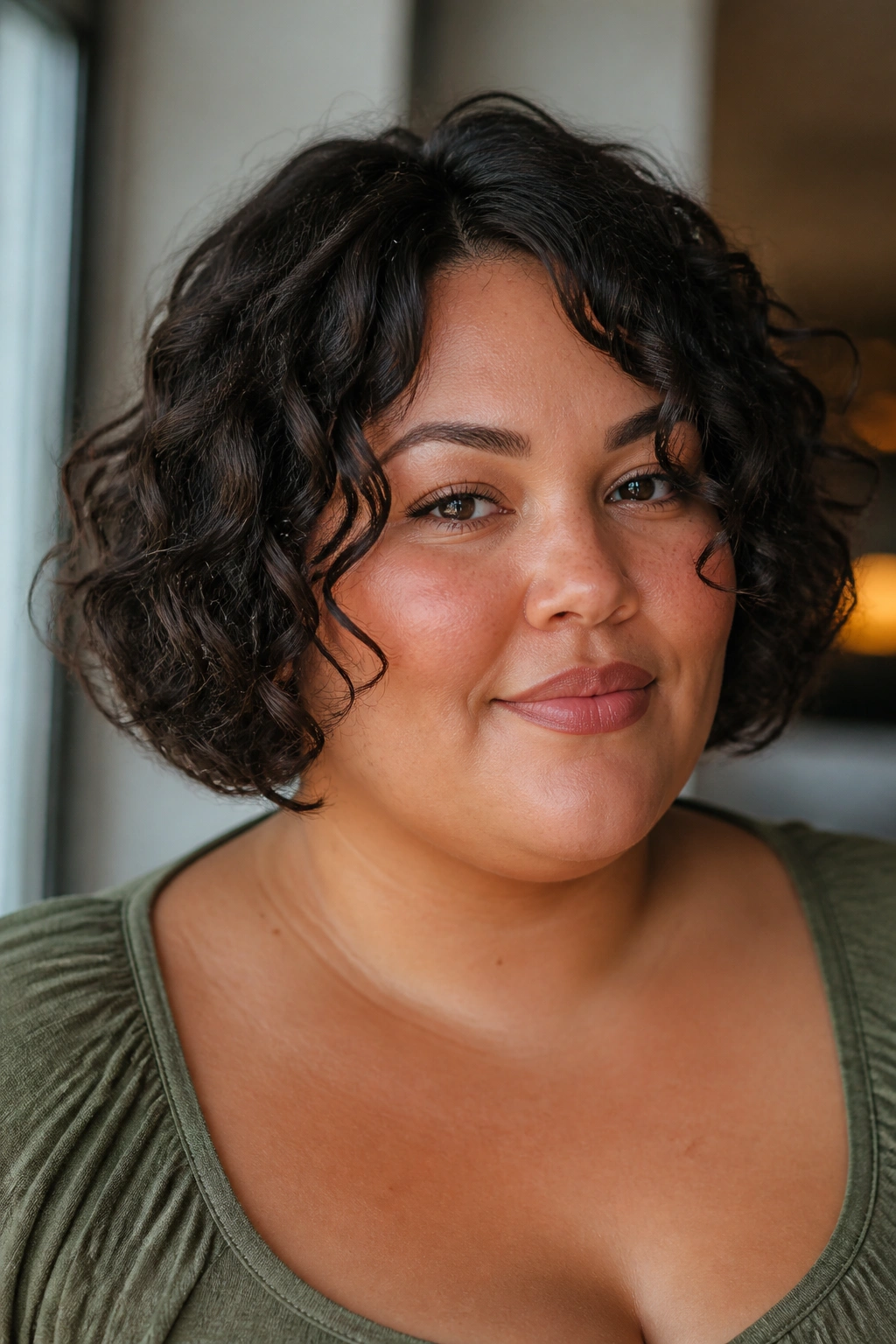
A jaw-length curly bob is a tidy little powerhouse. It sits high enough to show the neck, but not so high that it feels severe. Add face-framing pieces, and the whole cut gets softer around the eyes and cheekbones.
This is the cut I’d point to for someone who wants a shape that feels neat on Monday and still looks good by Friday. The face-framing pieces matter because they stop the bob from becoming a single block of hair. A few slightly longer curls near the front give the eye somewhere to land, and that helps the style feel more open.
The stylist should think in terms of movement, not just length. A curl that lands right at the jaw can be lovely, but if every piece ends there, the line can get too strong. A little variation keeps the shape from hardening. Use a creamy leave-in if your curls are dry, or a foam if they need more bounce than moisture. Either way, this is a cut that likes definition at the front and softness at the ends.
12. Frohawk With Soft Sides
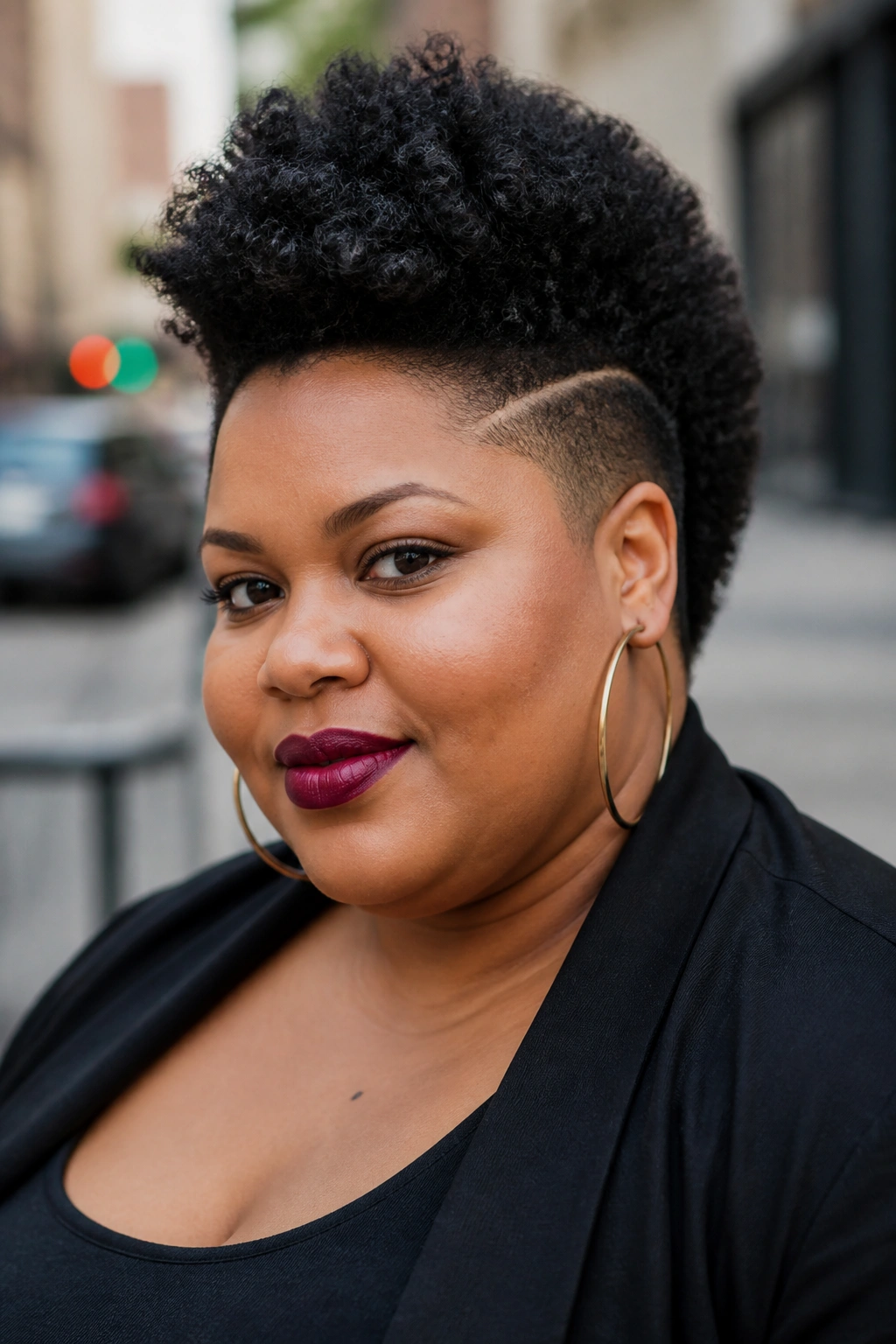
A frohawk is for someone who likes a bit of drama, but not the stiff kind. The sides stay shorter and cleaner, while the center ridge keeps the height and curl. It creates a strong vertical line, which is a nice way to balance fuller cheeks or a broader shoulder line.
What separates a good frohawk from a costume-y one is softness. The top should still look like curls, not like a strip of teased hair. The sides should be tapered or faded enough to show the shape without making it harsh. When it’s cut well, the style looks confident and surprisingly wearable.
Best For
- Thick curls that hold height.
- Anyone who wants a short cut with visible shape.
- People who like a neckline that stays clean.
- Faces that do well with vertical lines and lifted crown volume.
What to Ask Your Stylist
Request a rounded center section with soft tapering at the sides. If the top is cut too short, the style loses its shape fast. If the sides are left too long, the whole idea disappears. It needs contrast. That’s the point.
13. Blunt Curly Bob With Defined Ends

A blunt curly bob is sharp in a way that can look very fresh when it’s done right. The ends sit together, which gives the cut a clear outline, and that can be especially nice if your curls are loose and glossy rather than tight and springy. It feels tidy. Very tidy.
The risk with a blunt bob is bulk. Curly hair loves to expand at the bottom, so the cut has to be precise. The stylist should cut it dry, or at least check the shape dry, because wet curls will always lie to you. They shrink, spread, and change their mind after you leave the chair.
Quick Shape Notes
- Best for loose curls, wave-curls, or polished ringlets.
- Keep the length at chin level or just below.
- Ask for light interior shaping if your hair is dense.
- Use a defining cream to make the ends sit together.
Pro tip: If the bottom looks too thick, do not add more product first. The cut may need a little more weight removed inside. Product cannot fix a shape problem.
14. Mini Shag With Cheekbone Layers
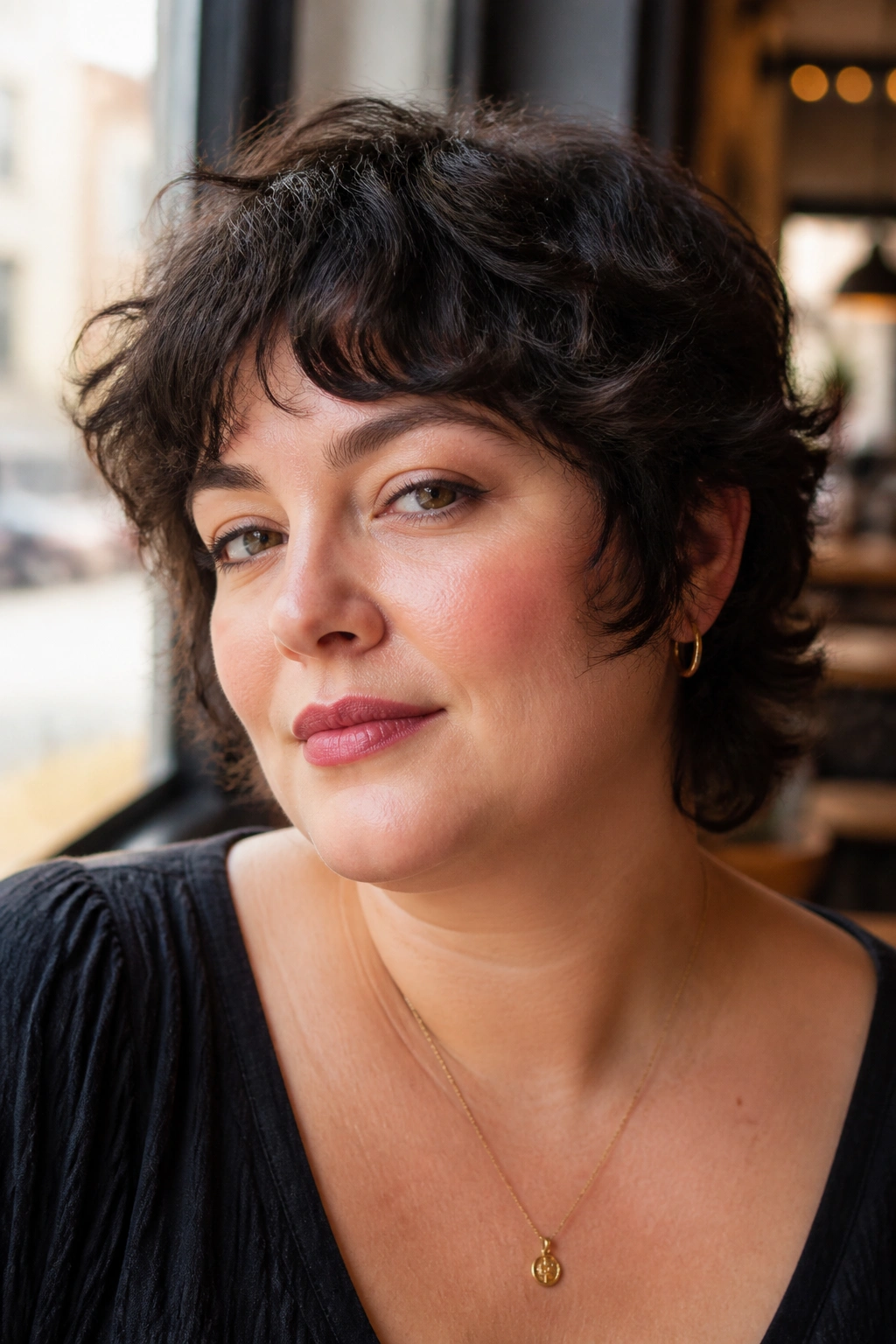
The mini shag is the friendlier, lighter cousin of the full shag. It keeps the layered movement, but it trims the excess so the cut stays compact. That makes it a nice option if you want texture without too much width.
Cheekbone layers are the part that matters most here. They help guide the eye upward and inward, which can soften the whole face. If the layers begin too low, the cut can drop flat around the jaw. If they begin too high, the top may get fuzzy. The cheekbone zone is where this style usually lands best.
I like this cut on curls that need a bit of direction. It gives shape without looking strict, and it works nicely with a side part or a slightly messy middle part. A mousse or foam at the roots can keep the crown from falling flat, while a small amount of cream through the ends keeps the curl pattern from going dry and puffy. The whole point is movement that still reads clean.
15. Tapered Coily Pixie With Finger Coils
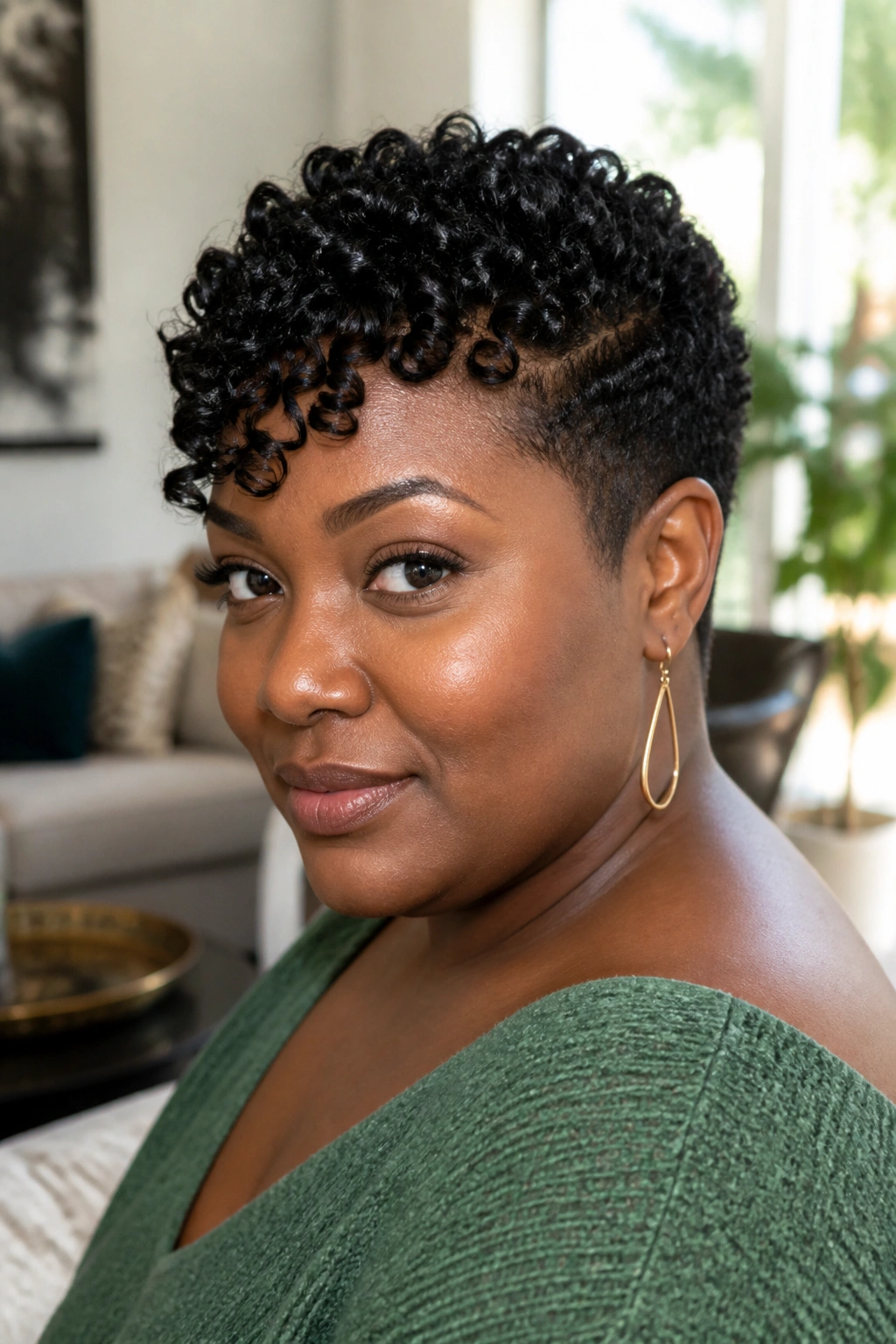
Why does this cut look so controlled even when the curls are tiny? Because the taper gives the outline structure and the finger coils give the top a clean pattern. It is one of the neatest short curly looks you can wear if your coils are tight and dense.
The cut itself should stay short around the ears and nape, with a little more length on top so the coils have room to sit. Finger coils at the front can create a polished frame, especially if you want the forehead area to look more intentional. The style can feel elegant without looking old-fashioned, which is a nicer outcome than people expect.
How to Get the Most From It
Work on damp hair with a leave-in and a light styling gel. Twist small sections with your fingers, then let them dry fully before touching them. If you break the coils apart too soon, they frizz and lose the shape.
This cut suits people who like definition more than volume. If you want a fluffy, airy look, skip it. If you want crisp lines and a neat silhouette, it’s a strong one.
16. Curly Mullet With Soft Back Length
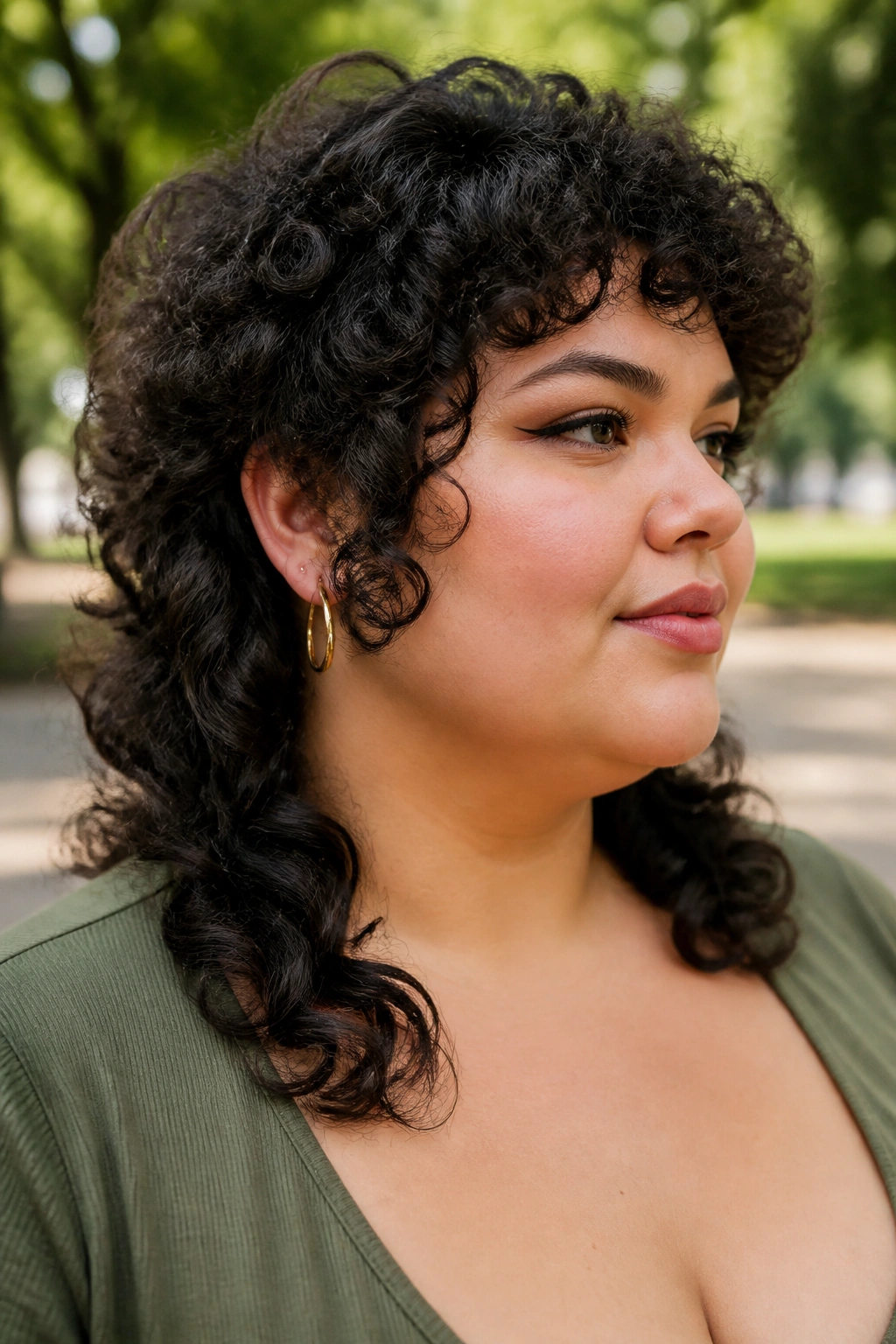
A soft curly mullet sounds more daring than it feels. The front stays shorter and lighter, while the back keeps a little more length, so the cut has movement from both directions. Done well, it looks modern and playful rather than extreme.
The secret is softness. You do not want a hard jump between the front and the back. The layers should melt into each other so the cut feels shaggy and controlled at the same time. That blend works nicely when you want some coverage at the back of the neck but still want lift around the face.
- Keep the front around cheek or jaw length.
- Leave the back slightly longer, not stringy.
- Add layers through the crown to stop the top from flattening.
- Use a diffuser if your curls tend to collapse under their own weight.
This style is not for everyone. Good. It does not need to be. If you like shape with a little edge, the curly mullet can be one of the most interesting short cuts in the room.
17. Short Curly Cut With Deep Side Part
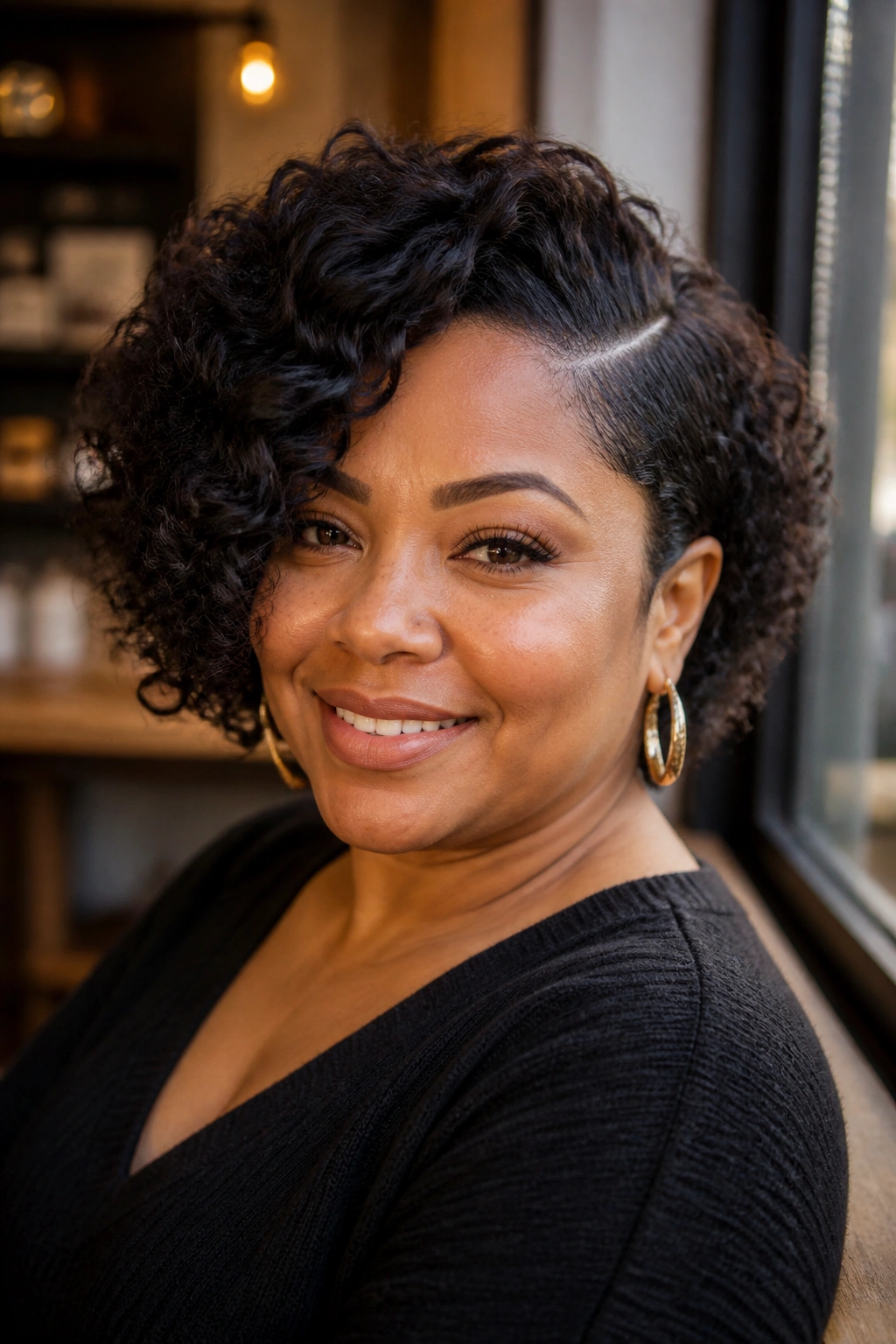
A deep side part can change a short curly cut faster than almost anything else. It shifts the volume, opens one side of the face, and creates a line that feels a little more dramatic without requiring a new haircut. Sometimes that’s all you need.
This style is especially good if your curls grow outward instead of downward. The part gives them a direction. One side can be tucked, pinned, or left to fall over the cheek, while the other side stays lighter and closer to the head. That contrast adds shape without making the haircut look overdone.
The cut itself should stay short enough to show the neck and jaw, but long enough at the top to hold the part. If the top is too short, the part collapses by noon. If it’s too long, the style gets bulky. A small amount of root lift spray or foam can help the front stay raised where you want it. Simple. Effective.
18. Halo Cut With Rounded Volume

A halo cut gives curls a rounded shape that feels soft from every angle. Instead of sitting flat at the top or wide at the sides, the hair wraps around the head in a controlled curve. It’s a lovely option if you want fullness without a heavy outline.
The reason this style works is simple: the shape is intentional. The layers are trimmed to support a rounded outer line, so the hair looks full in a way that still feels neat. That can be especially flattering for fuller faces because the curve mirrors the face without crowding it. There’s a softness to it that I find hard to dislike.
What Makes It Different
Unlike a square bob, the halo cut does not stop at one hard edge. It moves. The top lifts, the sides curve, and the ends stay light enough to avoid a blunt shelf. That’s why it often looks better on dense curls than on very fine ones.
Who It Suits Best
It suits people who want body at the crown and a tidy outline around the jaw. If your curls naturally puff out in a round shape, this cut works with that instead of fighting it. Ask for even shaping and a soft perimeter, not a heavy blunt line.
19. Wispy-Bang Curly Crop

Wispy bangs are the softer answer to a full fringe. They break up the forehead area without taking over the whole front of the haircut, and they let the curls stay light around the eyes. That softness can be a really nice counterbalance to fuller cheeks or a strong jaw.
This cut is especially good if you want your curls to feel airy. The bangs should not sit as one thick block. They need gaps, little variations, a few shorter pieces and a few longer ones. That unevenness is what makes them look natural. The rest of the crop can stay short and rounded, which keeps the overall shape neat.
- Keep the bangs light enough to move.
- Let them dry before trimming more.
- Use a small amount of cream so they do not clump too hard.
- Pair them with a cropped side or a soft nape for balance.
A wispy fringe can be a little fussy on humid days. I won’t pretend otherwise. But when it behaves, it gives a short curly cut a softer, friendlier face.
20. Soft Curly Pixie for Plus Size Women
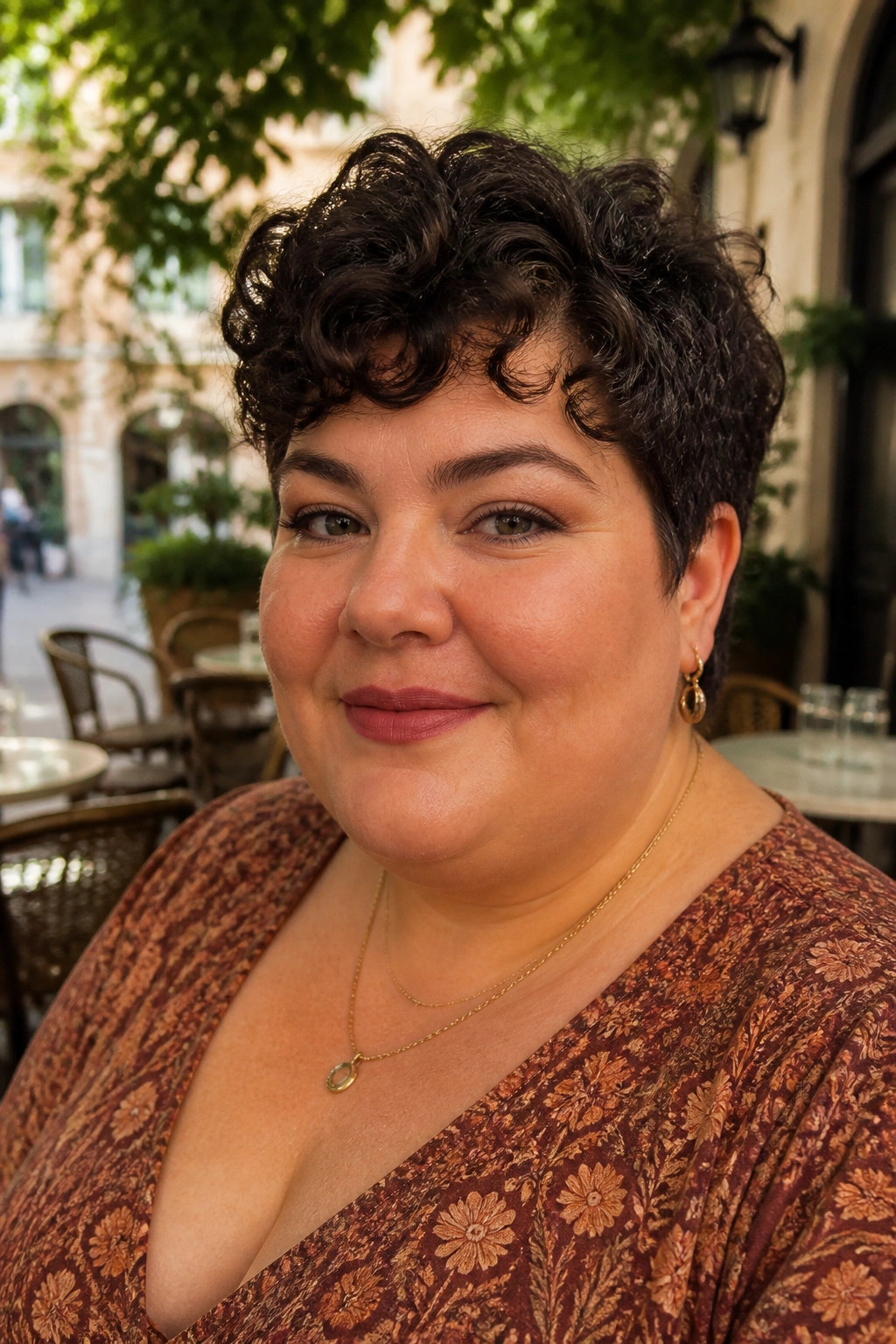
A soft curly pixie is one of the easiest short curly hairstyles for plus size women to wear when you want lift, shape, and a little edge without losing softness. It keeps the sides clean, lets the top show off the curl pattern, and makes the face look open rather than crowded. That last part matters more than people think.
What makes this version work is restraint. The cut should be short enough to feel light, but not so short that the curls lose their shape. A little length on top, a gentle taper at the nape, and some movement around the temples give the style room to breathe. If your hair has a tighter coil, this shape can look especially neat with finger-styled sections. If your curls are looser, a side sweep keeps the front from falling flat.
I like this cut because it does not try to hide anything. It simply puts the texture in the right place. The neck looks longer, earrings show up, and the curls sit where they can be seen. That’s the whole point, really. When a short curly cut is done well, it feels like the hair finally found its shape.
