



A bixie can be the smartest short cut in the chair, especially when you want shape without the helmet effect. For plus size women, the sweet spot is usually somewhere between soft movement at the cheekbones and clean structure at the nape. Too blunt, and the cut sits heavy. Too wispy, and it can lose the line that makes a bixie feel intentional.
That mix of bob and pixie is what gives the bixie haircut its charm. You get lift at the crown, ease around the ears, and enough length to play with fringe, side parts, or a little bend through the front. The trick is choosing a version that works with your face and hair texture instead of fighting them. I’ve seen too many short cuts go wrong because somebody asked for “something cute” and ended up with width right where they didn’t want it.
The best bixie haircuts for plus size women usually do one of three things: create a diagonal line across the face, keep bulk off the sides, or build height at the top. That doesn’t mean hiding anything. It means placing the eye where you want it to go. A good stylist will think about cheekbone length, nape taper, and how your hair falls when it air-dries, because all three matter more than people realize.
If you’re bringing a photo to the salon, bring two or three. Not one. One shot can hide a lot, and the details are what make a bixie sing. The first cut below is the one I reach for when someone wants a soft frame and easy styling without a lot of fuss.
1. Soft Side-Part Bixie with Cheekbone Framing
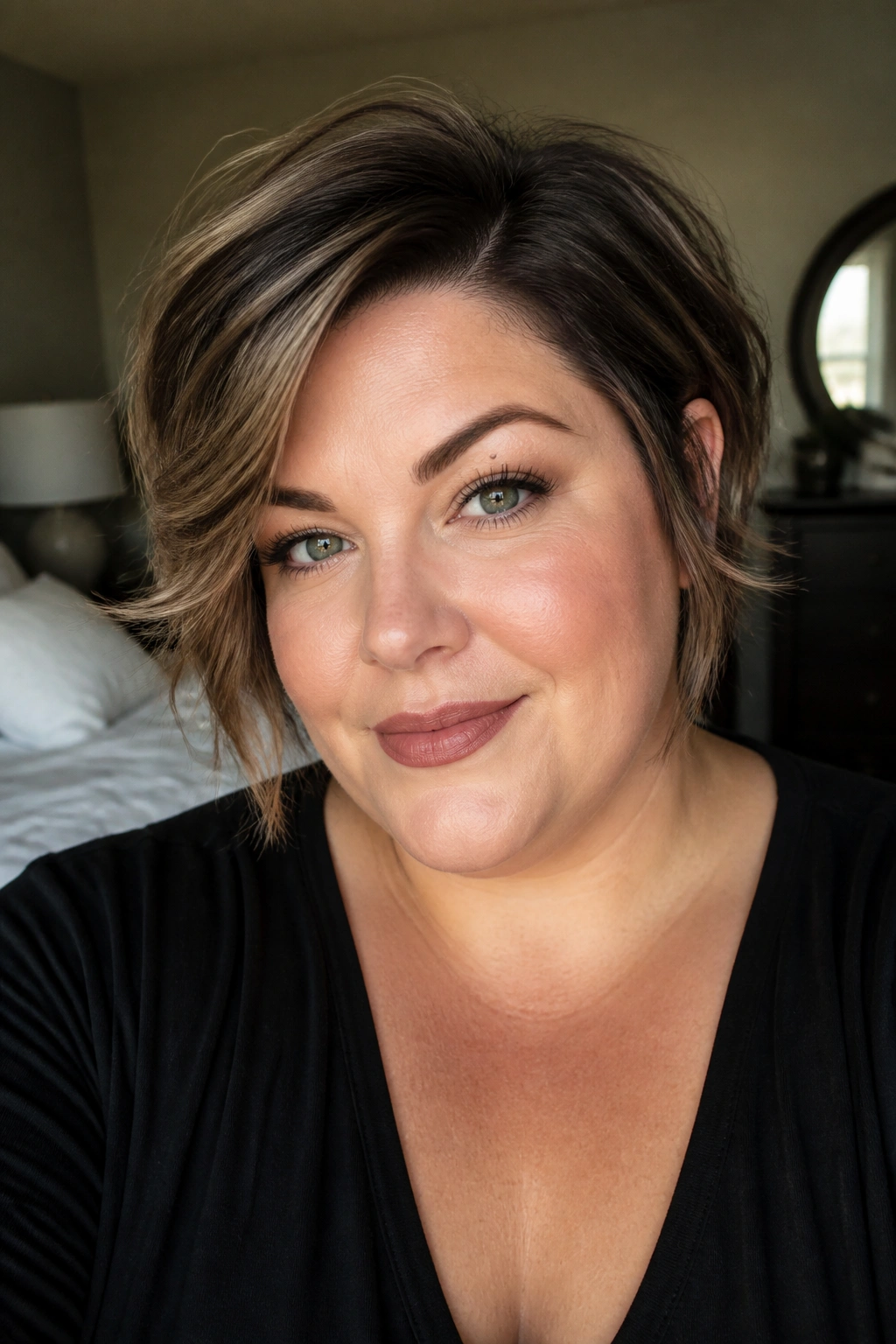
A deep side part changes the whole mood of a bixie. It draws the eye diagonally instead of letting the cut sit flat and wide, which is exactly why this version works so well on fuller faces. The front pieces should skim the cheekbones, not stop at the widest part of the jaw. That one detail makes a bigger difference than most people expect.
Why it works
A side part gives you height on top and a gentle sweep across the forehead. That sweep softens the face without making the style look too sweet or too structured. It also gives the front a little lift, which is handy if your hair tends to lie close to the scalp.
Ask for shorter layers at the crown and longer pieces around the temples. The crown should have enough lift to feel airy, but not so much that it sticks straight up after a rough blow-dry. A 1-inch round brush and a pea-size amount of lightweight cream are usually enough to shape it.
- Part the hair about 2 inches off center.
- Keep the fringe soft, not blunt.
- Ask for point-cut ends so the line looks broken up.
- Blow-dry the front away from the face for movement.
Best tip: tuck the heavier side behind one ear and leave the other side loose. That small asymmetry keeps the cut alive.
2. Curly Bixie with a Tapered Nape
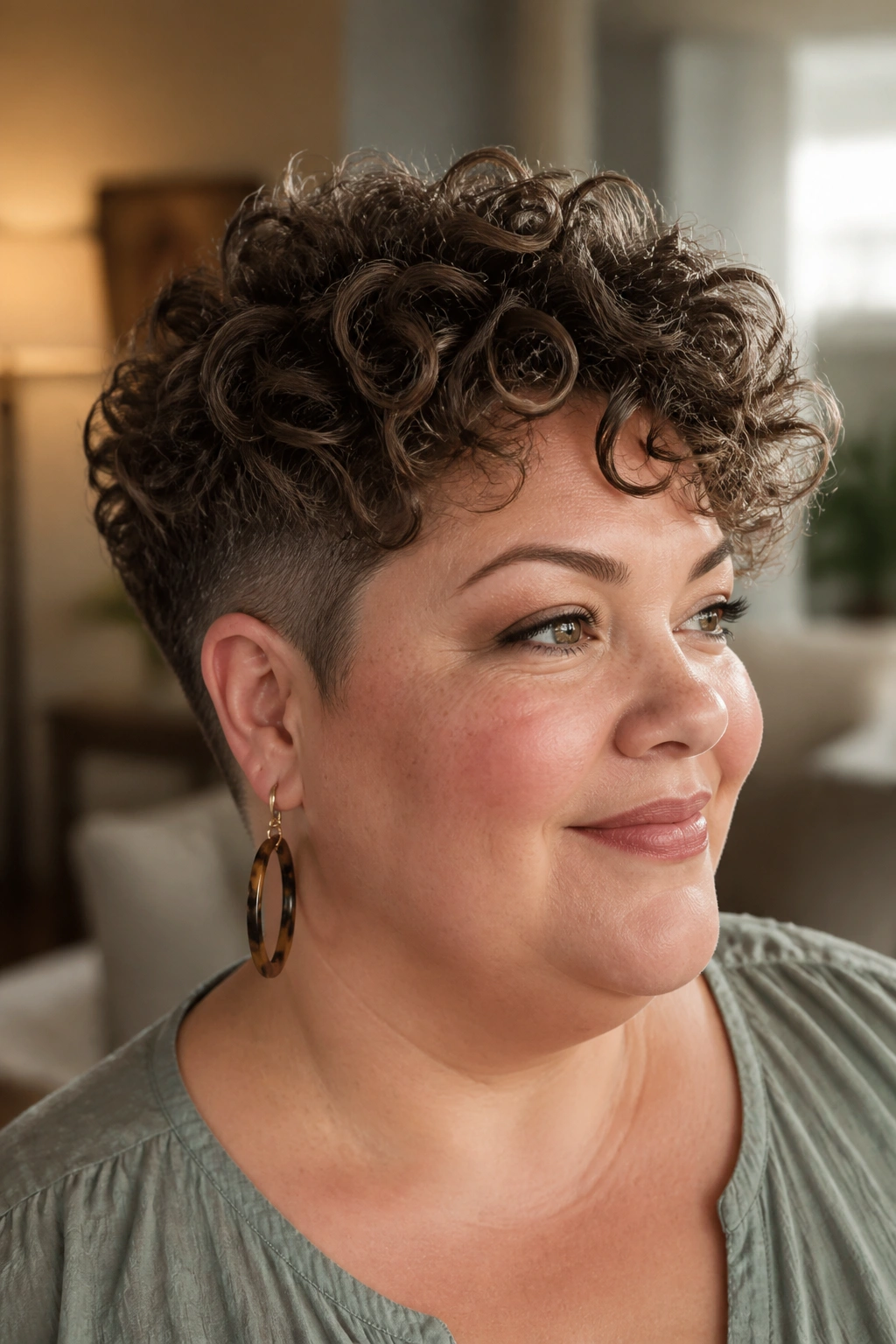
Curly hair and bixie haircuts belong together more often than people think. The shape is lively, the texture does half the work, and the tapered nape stops the back from puffing out in an awkward way. For plus size women with curls, this version can look soft and tidy at the same time.
The biggest mistake is cutting curls too short on the sides while leaving the top heavy. That creates a triangle, and nobody wants that. Keep the top a touch longer so the curl pattern has room to spring, then taper the neckline so the whole cut sits close to the head where it should.
Use a curl cream on damp hair, then scrunch in a small handful-sized amount of gel only where you need hold. If your curls are tight, leave about half an inch more length on top than you think you need. Shrinkage is real. And it can be dramatic.
The nape should feel clean, almost neat, while the top stays soft and touchable. That contrast is the whole point. Without it, the style gets bulky fast.
3. Feathered Bixie with Wispy Bangs
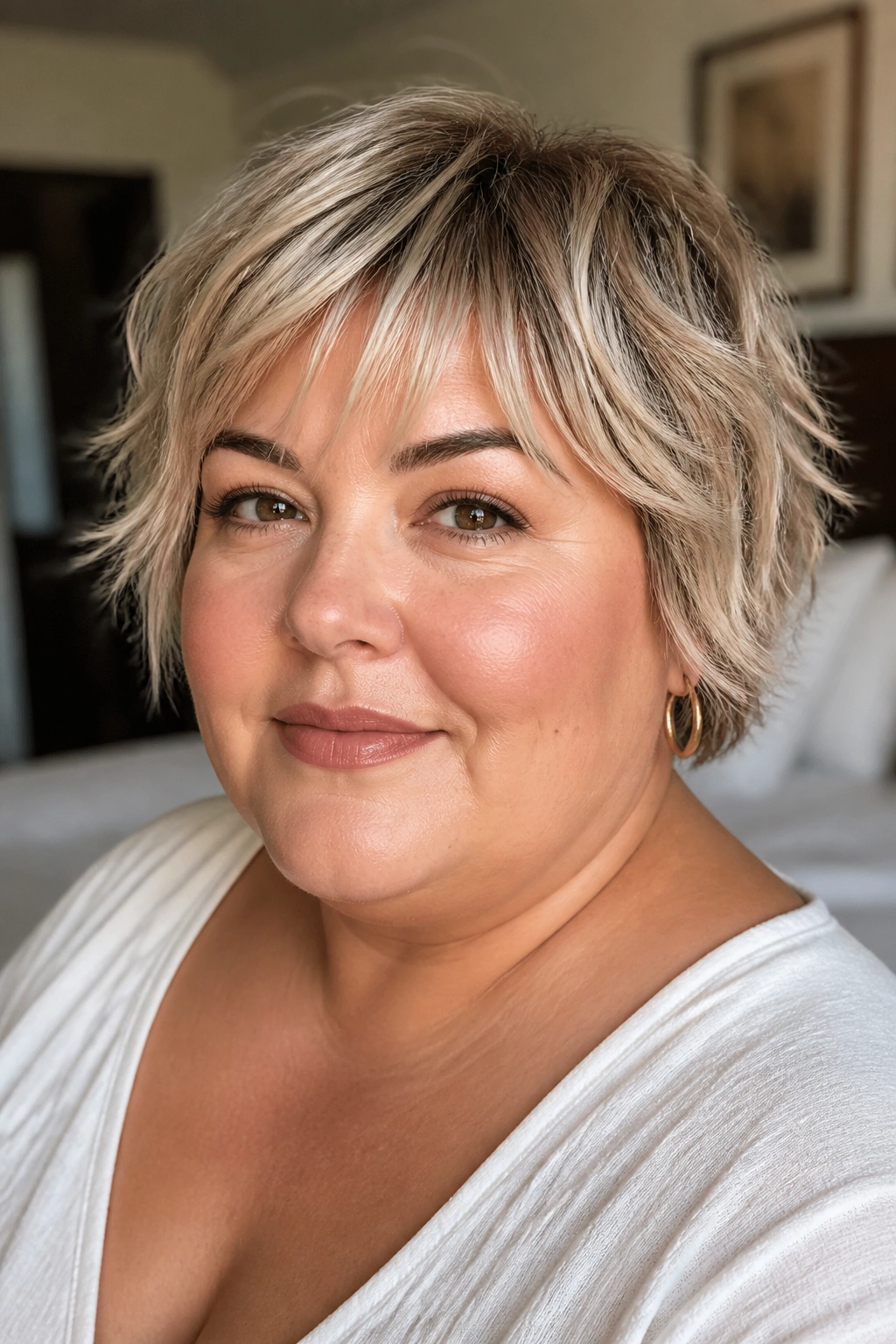
Can a short cut feel soft instead of sharp? Absolutely. Feathering is the answer, and wispy bangs are the part that keeps the haircut from turning boxy around the forehead. This is one of those bixie looks that flatters fuller cheeks without trying too hard.
Feathering works because the ends don’t sit in one heavy line. They break apart. That means the eye sees movement instead of width. Wispy bangs help even more when they’re cut a little longer at the temples and shorter in the center, so the fringe curves gently instead of sitting like a shelf.
How to style it
- Use a small paddle brush or vent brush to dry the bangs first.
- Mist a light texturizing spray through the top, not the roots only.
- Twist tiny sections with your fingers while the hair is still warm.
- Keep the ends soft; crisp edges will fight the whole look.
This cut is good if you like a little polish but do not want to spend twenty minutes fussing with every piece. It needs shape, not perfection. That’s why it works.
4. Choppy Platinum Bixie with Crown Lift
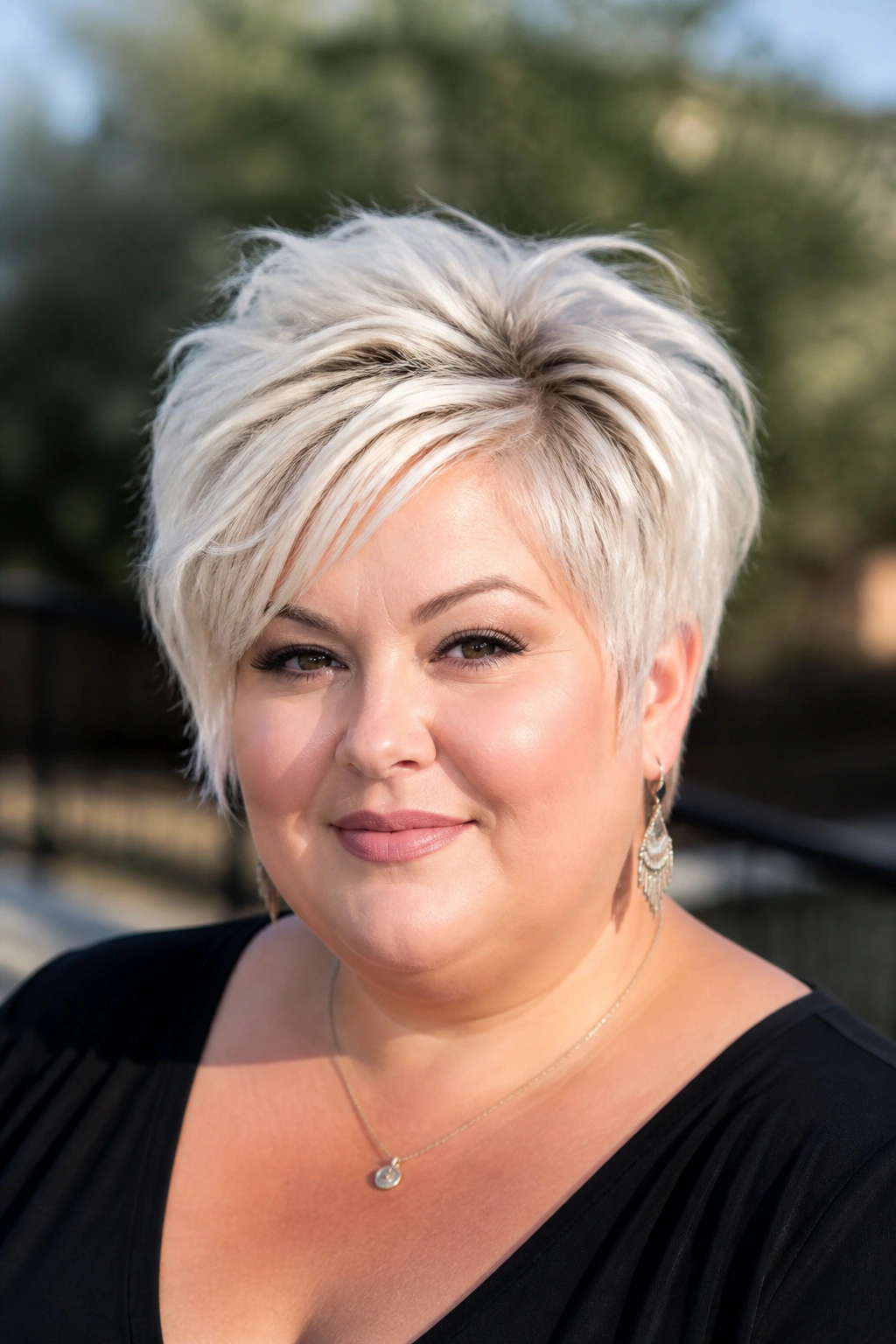
A choppy bixie is a lifesaver when your hair is fine and collapses by lunchtime. Add platinum color, and the cut gets even more edge, but the real star here is the crown lift. Shorter, uneven layers at the top keep the style from clinging to the head, which is exactly what you want if you’re after a lighter silhouette.
Picture this: the sides are snug, the back is neat, and the top has a bit of roughness that moves when you turn your head. That roughness is deliberate. It stops the haircut from feeling too smooth or too severe. On fuller faces, that little bit of lift gives breathing room above the cheeks.
A platinum tone can be gorgeous, but it does ask for care. You’ll want a violet shampoo every one to two weeks, not every wash, because over-toning can leave the hair dull. And if your roots grow fast or your hair is already dry, a soft shadow root can make the grow-out less fussy.
This one is for someone who likes a sharper look. Not stiff. Sharp.
5. Sleek Bixie with a Long Side Fringe
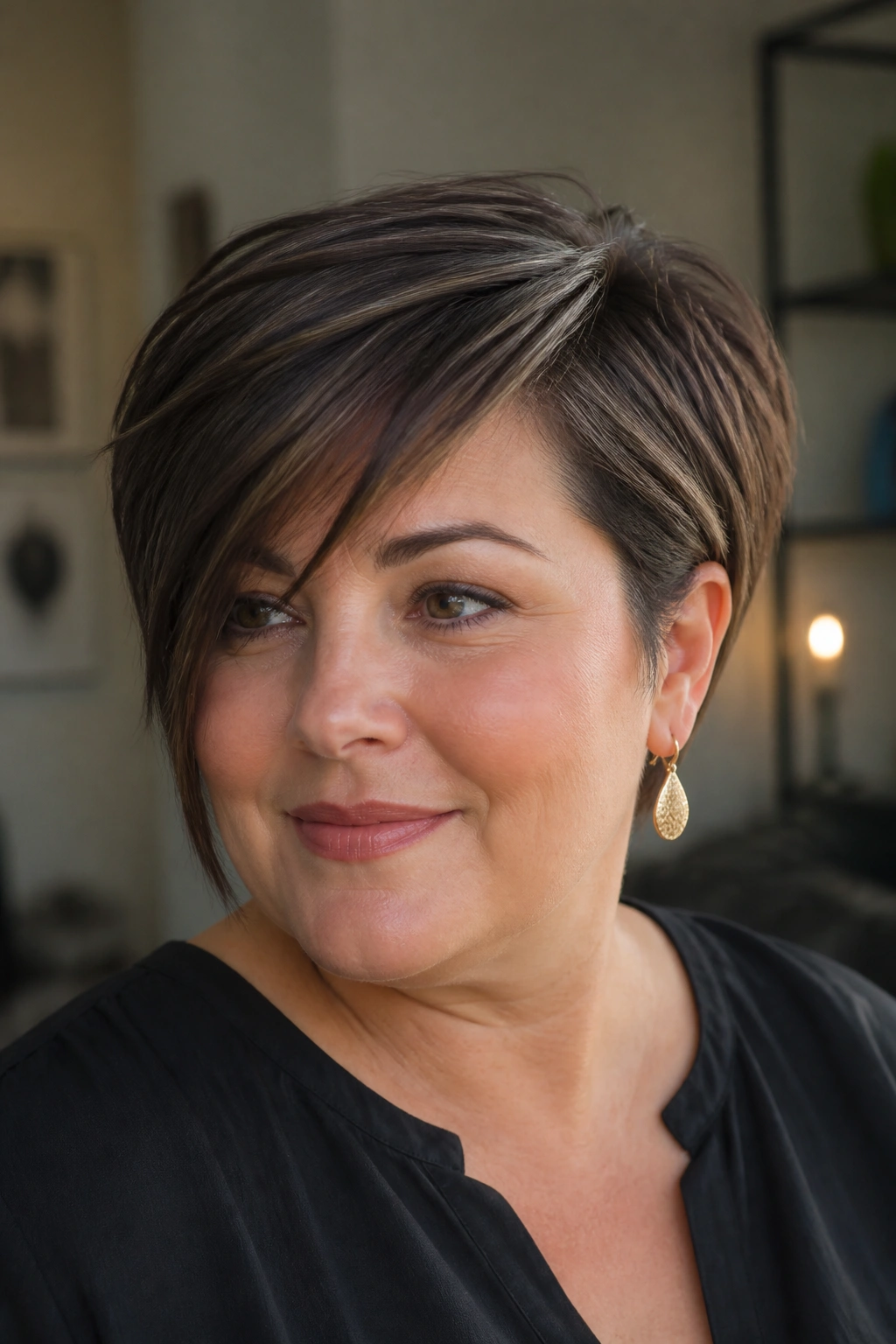
A sleek bixie is one of the easiest ways to make short hair feel grown-up without making it boring. The long side fringe gives the cut its shape, especially if you like a line that crosses the face instead of stopping at the brows. On plus size women, that diagonal is doing quiet work all day long.
The key is control. Not helmet hair. Control. You want the front smooth enough to lie where it should, but not so flat that the scalp shows every part line. A blow-dryer with a nozzle and a medium round brush usually do the job. Keep the brush moving from the roots to the ends, then bend the fringe just slightly under or away from the face.
This style also plays well with glasses. The longer fringe won’t fight the frames, and it won’t make the face feel crowded. If you wear earrings, even better. The side fringe opens the other side enough to let them show.
I like this cut most on straight or softly wavy hair. It can work on thicker textures too, but the stylist should thin the inside, not the outline. That’s the difference between smooth and puffy.
6. Shaggy Bixie with Tousled Layers
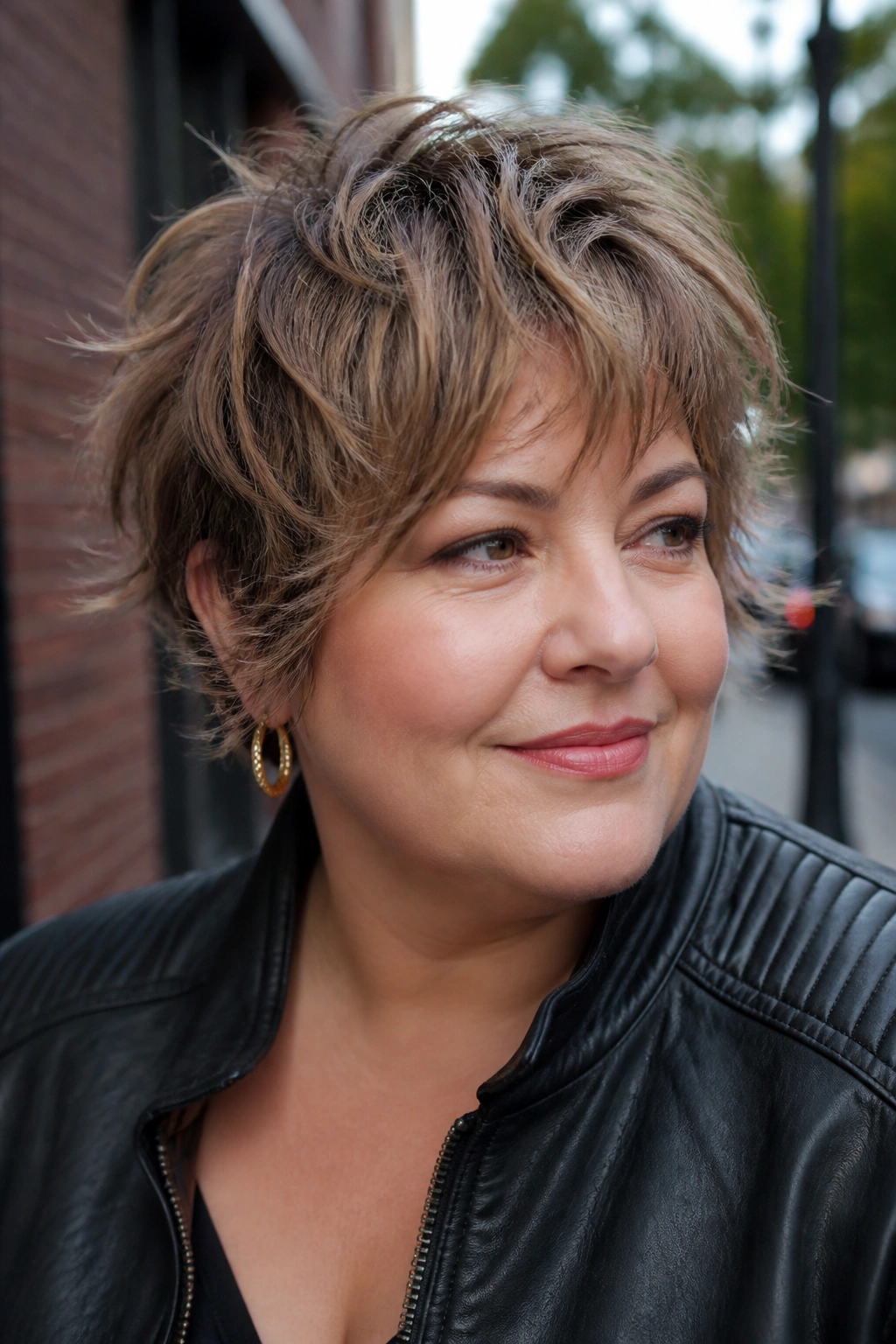
Unlike a blunt bob, the shaggy bixie doesn’t sit there and announce every inch of its shape. It moves. That’s the appeal. The uneven layers break up bulk, and the tousled finish keeps the style loose around the face instead of boxed in.
This is a strong pick if your hair has some natural bend or if you’re tired of flat, obedient short hair. A little chaos helps here. The top can be left a touch longer, then the sides cut into soft, broken pieces that sit away from the cheeks. For thicker hair, ask for interior debulking so the shape stays light without getting wispy at the edges.
What to ask for
- Choppy layers, not razor-thin ends.
- Soft width at the top, not at the jaw.
- A broken fringe that falls in pieces.
- Texture through the crown for lift.
This cut works best with a pea-size amount of matte paste worked through dry hair. Too much product makes it limp fast. A little goes a long way. And if your stylist says the shape needs a tiny bit more length at the nape, listen. That extra quarter-inch can keep the back from kicking out.
7. Rounded Bixie with a Soft Undercut
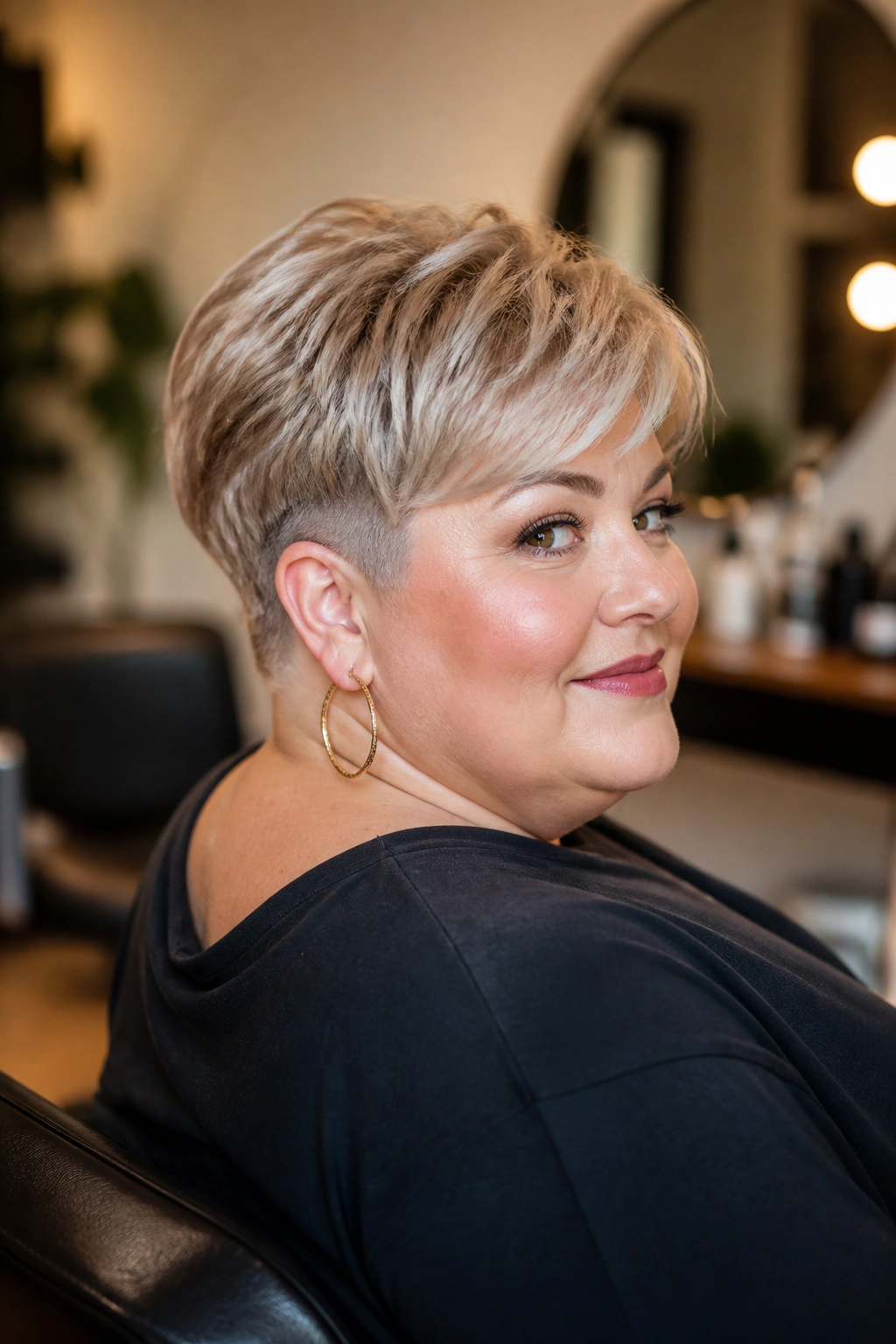
A rounded bixie with a soft undercut is the cut I’d hand to someone with thick hair who wants a cleaner outline. The undercut at the nape or just behind the ears removes bulk where it tends to puff out, while the top keeps a rounded shape that feels friendly instead of severe.
People hear “undercut” and picture something dramatic. It does not have to be that. A hidden undercut can sit low enough to disappear when the hair is down, then quietly stop the back from ballooning. That matters a lot if your hair has a dense texture or if your neckline usually gets crowded.
The rounded top is what keeps this from looking edgy in a harsh way. It should curve gently over the head and fall toward the temples, not spike. A dry wax stick or a touch of pomade helps smooth the sides if the hair wants to spring outward.
This one is for women who like structure and do not mind a bit of upkeep. The shape stays nicest with trims every 6 to 8 weeks.
8. Asymmetrical Bixie with a Deep Side Part
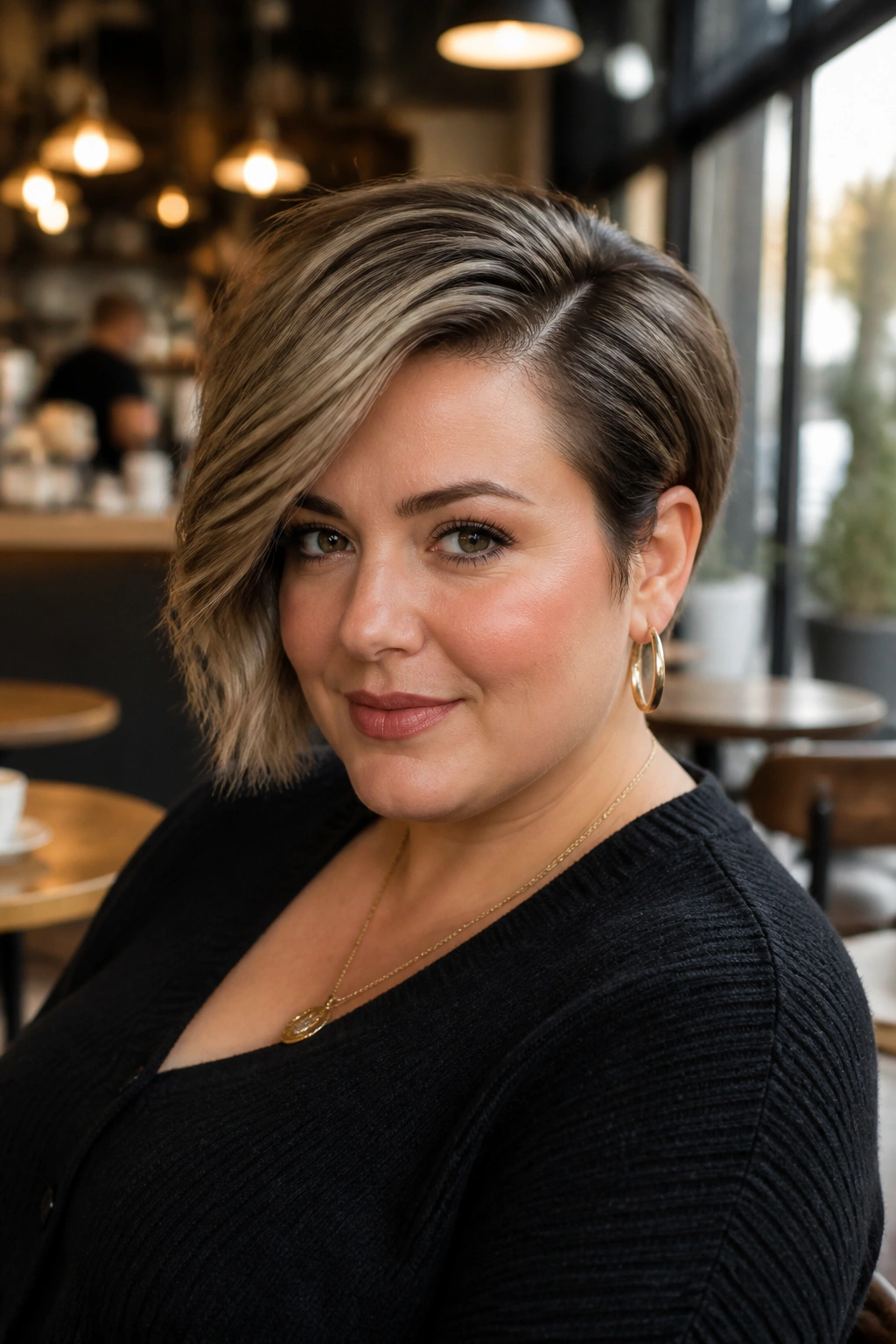
A deep side part with one side left slightly longer changes the whole proportion of a bixie. The asymmetry makes the style feel longer and leaner, especially through the face. It’s one of my favorite moves for plus size women who want something a little bolder without going all the way into dramatic territory.
The longer side should graze the jaw or just below it, while the shorter side sits closer to the ear. That contrast creates a line that pulls the eye downward. It also gives you options. One side can tuck behind the ear, the other can fall forward and soften the cheek.
This cut looks especially good with a little bend in the front. Not curls. Just bend. A flat iron turned once or twice through the ends is enough. Keep the movement subtle, because the haircut itself already has attitude.
If you wear statement earrings, this is a very nice match. The tucked side frames them, and the longer side gives the face some shade. Small detail. Big effect.
9. Curtain Bangs Bixie with Face-Framing Pieces
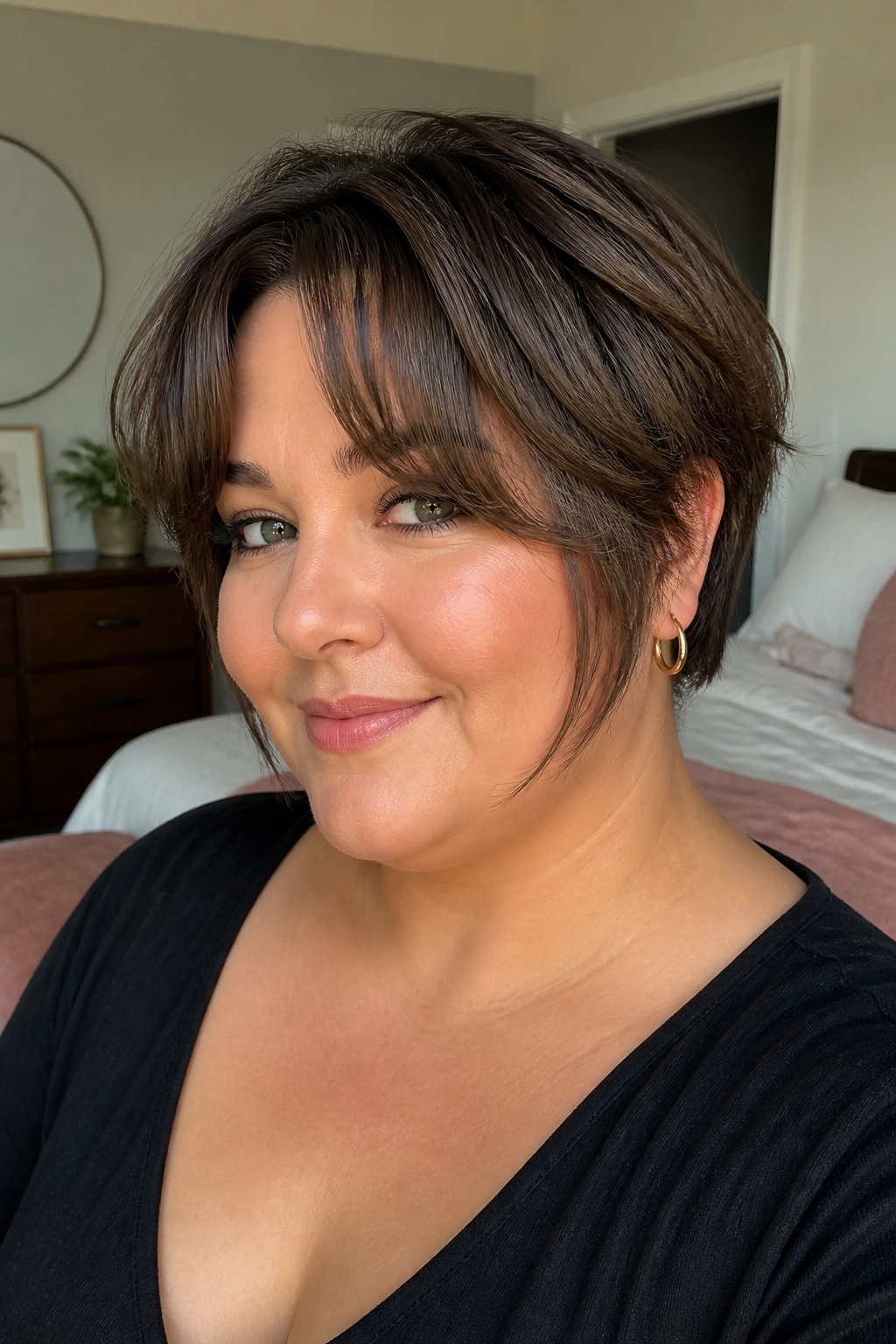
Do bangs have to be blunt? Not even close. Curtain bangs are one of the easiest ways to soften a bixie, and they’re especially kind to fuller cheeks because they open in the middle and fall away at the sides. The face-framing pieces should start around the brow line and drift down to the cheekbones.
That shape matters. If the bangs sit too short, the forehead can look crowded. Too long, and they lose the lift that makes curtain bangs useful. The sweet spot is usually somewhere between the brow and the top of the cheek, depending on your hair density.
A medium round brush helps when you blow-dry the fringe. Pull the hair up and slightly back first, then roll the brush away from the face at the ends. That keeps the curtain shape from collapsing into the eyes. A dab of styling cream is enough; heavy product makes bangs separate in odd little strings.
This is a friendly cut. It does not demand a perfect face or perfect hair. It just gives the front of the haircut a little softness and lets the rest of the bixie stay light.
10. Wavy Bixie with Piecey Texture
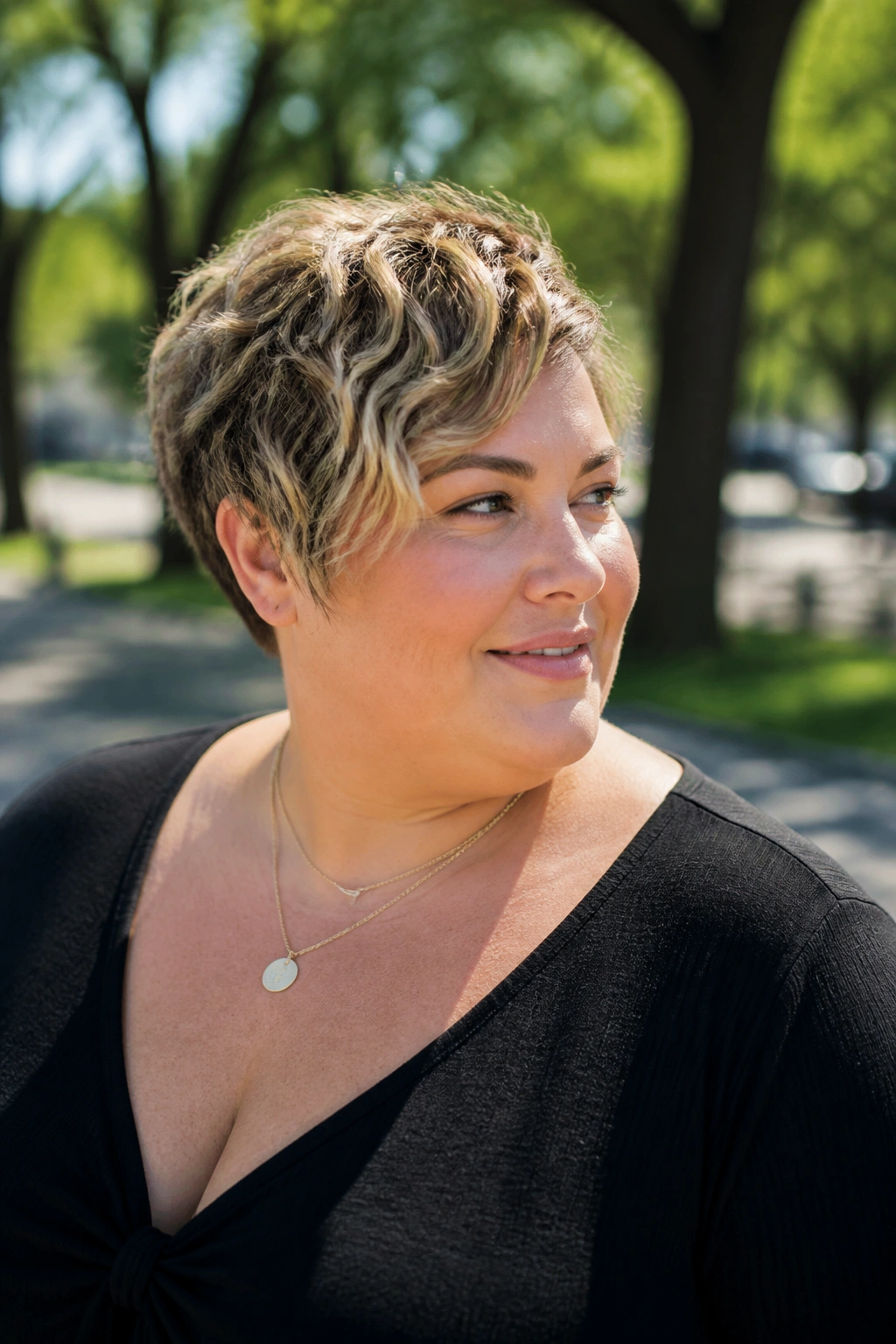
Waves can make a bixie look expensive in the best possible way, but only if the texture stays piecey instead of puffy. That is the whole game. The style should show movement in separate sections, not a big cloud that swallows the outline of the haircut.
A wavy bixie works best when the stylist respects the wave pattern instead of fighting it. Leave enough length on top for the waves to form, then shape the sides so they hug the head a bit more closely. If the hair is very dense, some internal layering will stop it from blooming too wide at the temples.
For styling, try a light mousse on damp hair, scrunching from the ends upward. Then diffuse on low heat for about 70 percent dry before letting it air-finish. That small stopping point keeps the waves from getting frizzy. A tiny bit of serum on the ends can tame the rough spots, but don’t overdo it. The cut needs separation.
This is one of the easiest bixies to wear with casual clothes, but it can look polished too. It depends on how neat you keep the texture.
11. Classic French Bixie with a Tapered Neck
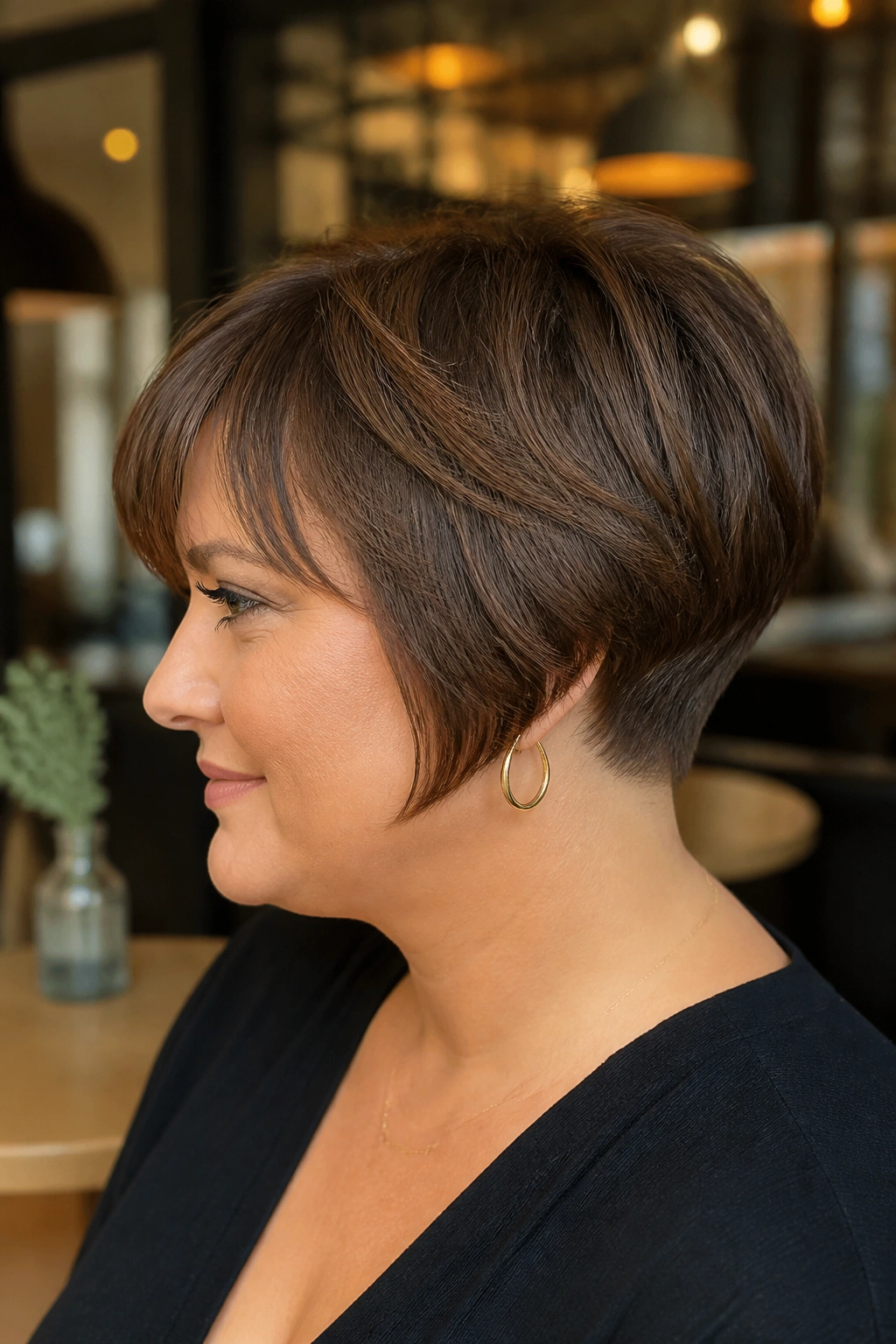
The French bixie sits in a nice middle ground between a pixie and a short bob. It has a little softness at the front, a neat taper at the neck, and enough shape to feel tailored without becoming fussy. On plus size women, that balance is useful because it keeps the cut close where you want neatness and slightly fuller where you want softness.
The tapered neck is the quiet hero. It stops the haircut from flaring out at the back, which is a common problem with shorter styles on thicker or straighter hair. Keep the front a bit longer and let the sides curve inward so the whole cut looks like it belongs on the head, not perched on it.
This one is especially good if your hair is straight and tends to show every blunt line. Ask for soft graduation at the nape and a little weight through the crown. That keeps the shape elegant rather than severe.
It’s not a high-drama cut. That’s the point. It reads clean, intentional, and easy to wear with almost anything.
12. Layered Bixie with Micro Bangs
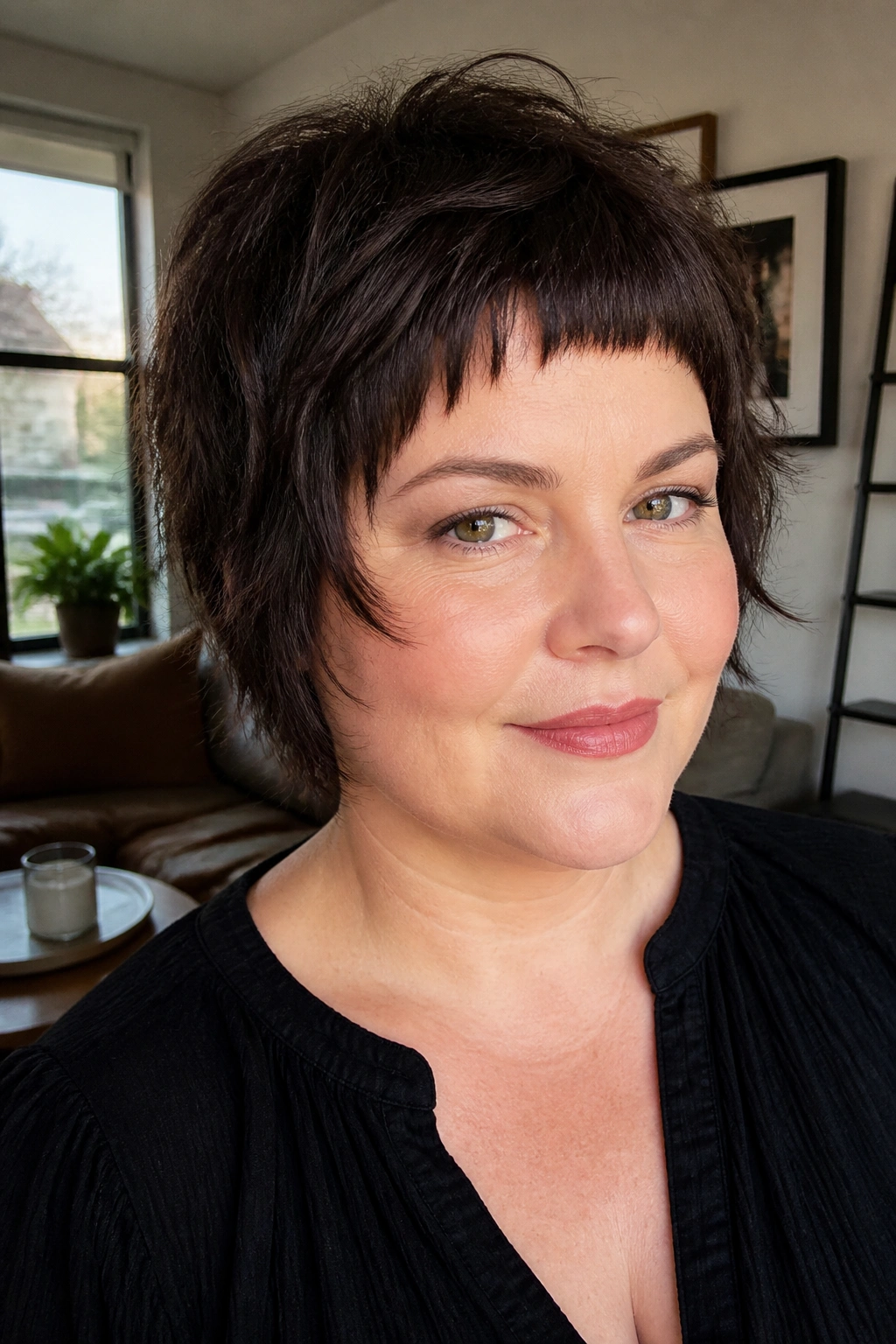
Micro bangs are not shy. They put the eyes front and center, and when they’re paired with a layered bixie, the result can be sharp in a good way. The layers keep the rest of the cut from feeling boxy, which is important because very short fringe can look hard if the sides are heavy.
This style suits someone who likes a bit of edge and does not mind a haircut that makes a statement. The bangs should stay light and slightly broken, not cut like a solid line across the forehead. The layers around the face should soften the transition, especially near the temples.
What to watch for
- Keep the bang length a touch longer if your forehead is very short.
- Ask for soft point-cutting, not a blunt snip.
- Leave enough length around the ears so the cut doesn’t look severe.
- Use a touch of wax only on the ends of the layers.
Micro bangs can emphasize the brows and eyes, which is lovely when the rest of the face-framing is gentle. If you like glasses, bold lipstick, or strong earrings, this cut can hold its own. It’s not a quiet haircut. It knows what it’s doing.
13. Bixie Bob Hybrid with Understated Volume
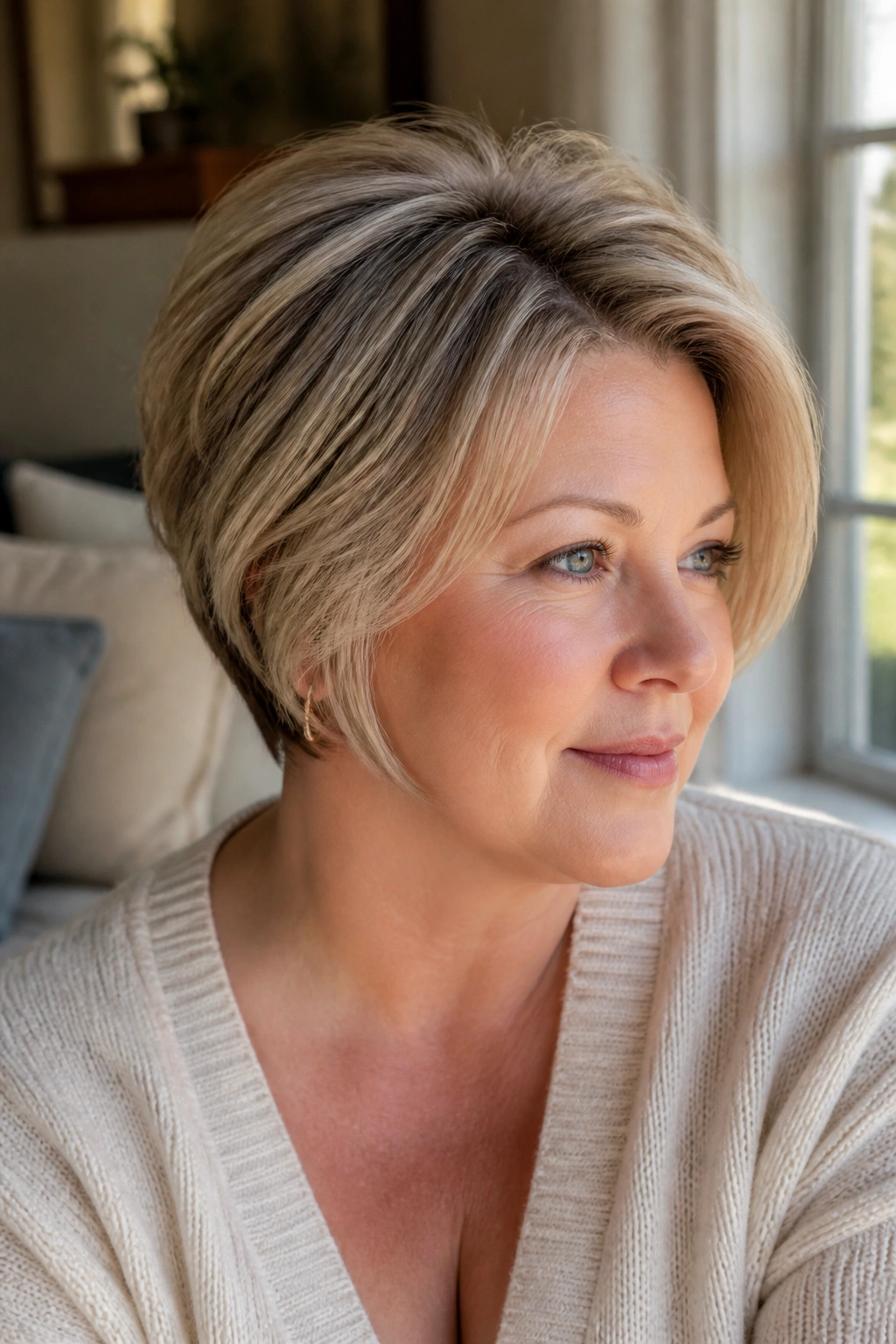
If you are not ready to go fully pixie, this is the smart compromise. The bixie bob hybrid keeps a little more length through the sides and nape, but the top still has the lift and broken texture that make a bixie feel fresh. For plus size women, that extra length can be helpful if you want softness near the jaw without giving up a short shape.
The best part is how wearable it is. You can tuck it, bend it, wear it sleek, or let it air-dry with a touch of wave. The volume should stay understated, meaning the top has body but the sides do not balloon out. That keeps the face open.
This cut usually looks best when the layers are long enough to move but short enough to keep the silhouette compact. A blowout cream and a flat brush can give it a smooth finish without making it look stiff. If you like a little more texture, switch to a lightweight spray and rough-dry the roots.
I like this version for people who want short hair without feeling exposed. It has coverage, but not weight.
14. Razor-Cut Bixie for Thick Hair

Razor cutting can be a gift for thick hair when it’s done by someone who knows where to stop. The razor softens the ends, removes some of the heaviness, and gives a bixie shape that doesn’t sit like a block. For fuller faces, that lighter outline can make the whole cut feel less crowded.
The warning is simple: a heavy hand with the razor can make thick hair frizzy. So the cut needs to be controlled. You want textured ends, not shredded ones. A good stylist will keep enough structure in the top and sides so the shape holds even when the hair dries on its own.
How to ask for it
- Soft razor texture through the interior.
- Clean edges around the nape.
- Enough weight left at the crown for lift.
- Slightly longer pieces near the cheekbones.
This version tends to style well with a leave-in conditioner and a small dab of pomade on the ends. That keeps the texture from puffing out. If your hair is coarse, this can be a very friendly cut. It cuts bulk without making the style look thin.
15. Side-Swept Pixie-Bob with an Ear Tuck
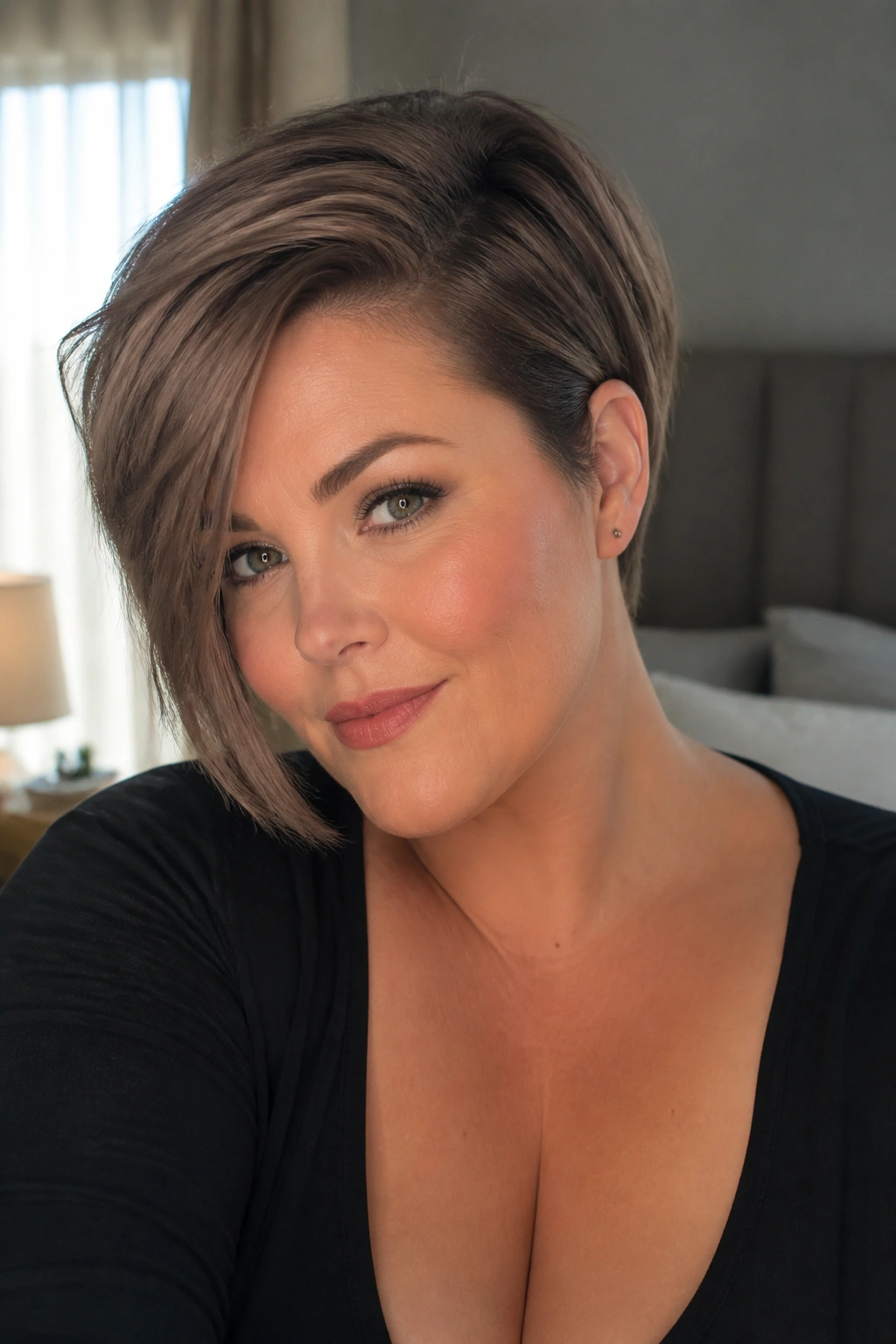
A side-swept pixie-bob gives you a little more length to play with, which is handy if you like tucking one side behind the ear and leaving the other side loose. That tiny bit of asymmetry softens the face and keeps the haircut from feeling too close or too severe.
The longer front can skim just below the cheekbone, then taper toward the neck. That line helps lengthen the face without looking stretched. It also works well with necklaces and earrings, because the tucked side clears space around the jaw and neckline.
This is a nice choice if you want something practical for daily wear. It does not need a perfect blowout. It needs shape. A round brush on the longer side and a quick pass of smoothing cream are usually enough. If your hair flips at the ends, bend them inward with a brush while drying and let them cool that way.
The ear tuck sounds tiny, but it changes the whole attitude of the cut. Suddenly the style looks deliberate instead of simply short.
16. Salt-and-Pepper Bixie with Soft Edges
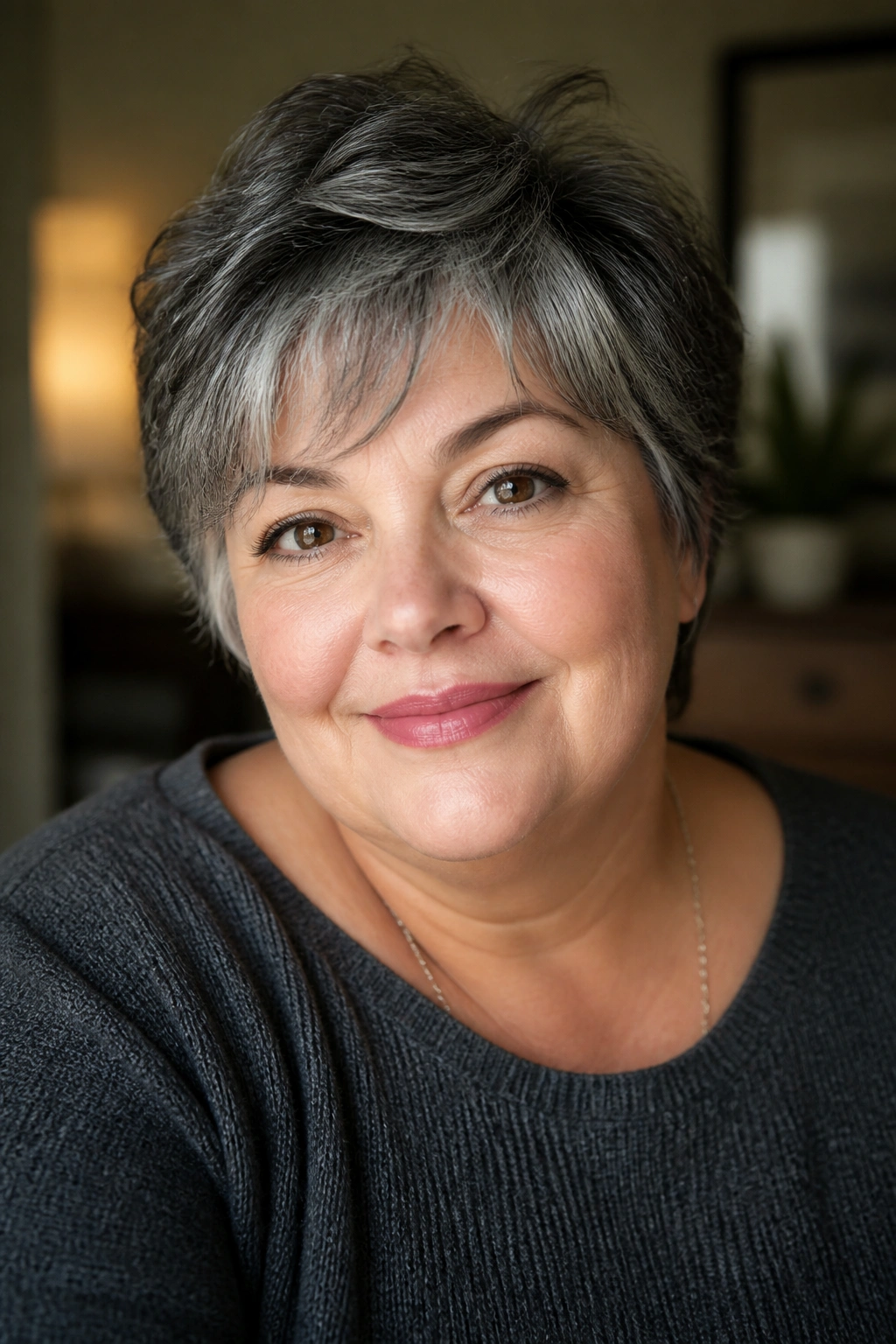
Natural gray, silver, and dark strands mixed together can look fantastic in a bixie when the edges stay soft. The color does half the visual work on its own, so the cut should support it rather than compete with it. Hard lines can make salt-and-pepper hair look stiff. Soft edges keep it alive.
This is a good cut for women who are done fighting every silver strand. The contrast in the color already gives the style depth, especially around the crown and temples. A bixie with gentle layering lets those tones show without needing a lot of styling. If the hair is coarse, a light smoothing balm on the ends can keep the texture calm.
I’d skip heavy toners unless the gray is looking yellow. A gentle purple shampoo once every one or two weeks is usually enough. More than that can make silver hair look flat, and flat is the enemy here.
Soft edges, subtle lift, natural color. That combination is often better than any dramatic cut. It feels honest, and frankly, that suits short hair.
17. Air-Dried Natural Bixie for Coily Hair
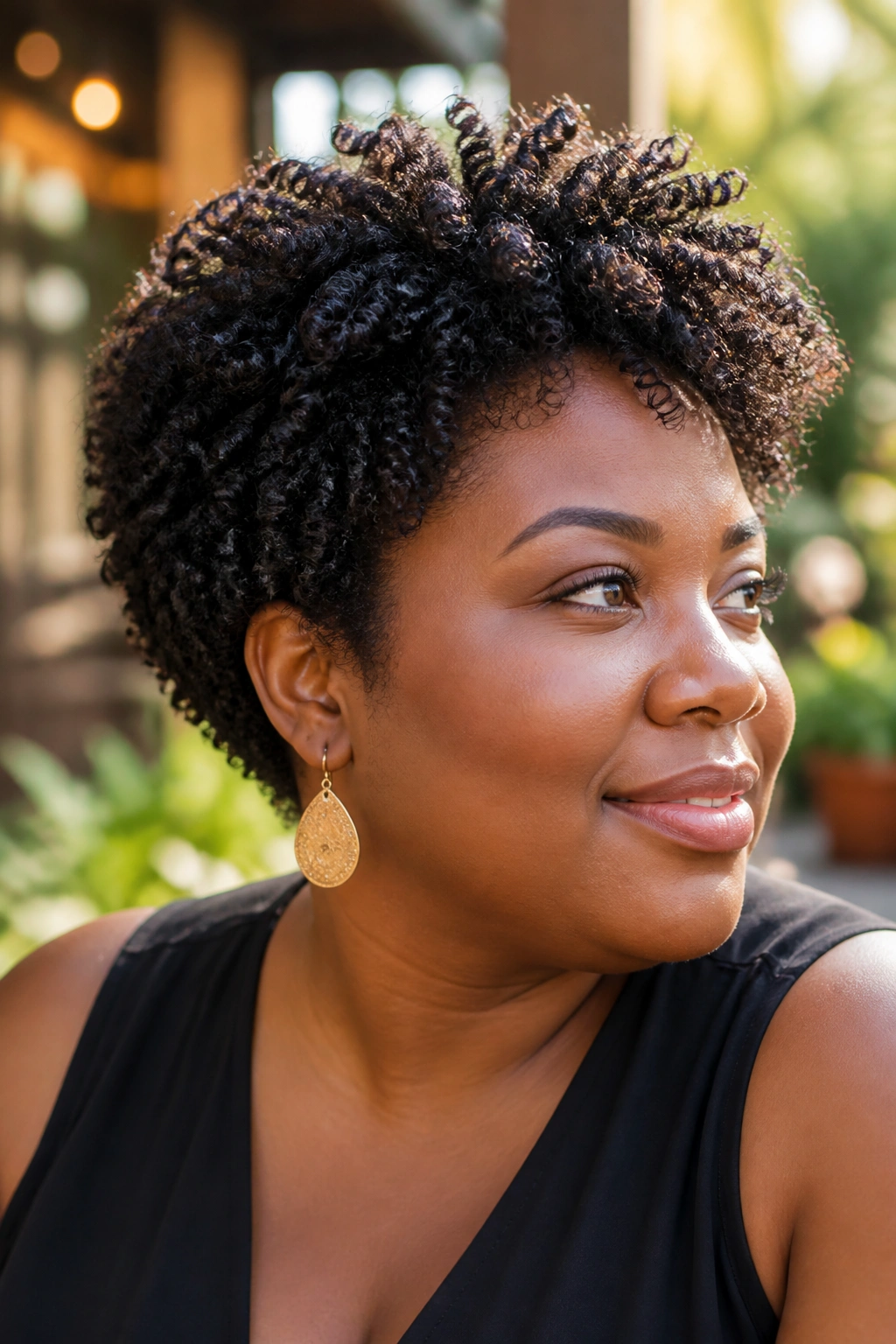
Can a bixie work on coily hair without a long styling session? Yes, but the cut has to respect shrinkage and density from the start. The top should keep enough length to show shape after drying, while the sides and nape stay controlled so the silhouette doesn’t puff outward.
A coily bixie looks best when the stylist shapes it dry or at least checks the curl pattern before finishing. Wet curls lie. Dry curls tell the truth. That means the haircut should leave room for the hair to spring up without becoming too short. If you have tighter coils, leaving an extra half inch to 1 inch in some areas can save you a lot of regret later.
How to wear it
- Apply leave-in conditioner to soaking-wet hair.
- Use a small amount of gel at the perimeter for hold.
- Let the crown air-dry first if you want more lift.
- Fluff the roots only when the hair is fully dry.
This style is especially nice when you want shape without heat. It can look polished with minimal effort, but only if the cut is balanced. A good bixie on coily hair should feel springy, not crowded.
18. Glossy Dark Bixie with Crown Volume

Dark hair can be stunning in a bixie because the shine makes the shape easier to read, but only if the cut keeps enough lift at the crown. If the top goes flat, the whole style can look heavy. A little volume up top fixes that fast.
The best version has soft internal layers and a smooth outer line. That gives the dark strands a chance to reflect light without turning into a heavy cap. Keep the sides close enough to the head that the face stays open, then build the top just enough to give the style height. A round brush and blow-dryer can do that in about 8 to 10 minutes if the hair is already mostly dry.
This cut works especially well with a gloss or shine serum used sparingly. One pump is usually enough for the ends. Too much and the hair starts looking greasy instead of glossy. And no, you do not need to coat every strand. The crown and the front are where the shape lives.
It’s a clean finish to the list because it reminds me of the same thing again and again: a bixie looks best when the silhouette is intentional, not accidental.
Final Thoughts
The strongest bixie haircuts for plus size women do the same thing in different ways: they keep the shape light near the sides, add lift where the eye should travel, and avoid a blunt edge that traps width around the face. That’s the real test. Not whether the cut is trendy. Whether it sits well on your head.
If you’re heading to the salon, bring a photo of the fringe you like, a photo of the nape you like, and one that shows the amount of texture you want. Those three details matter more than the cut name on its own. A bixie can lean polished, shaggy, sleek, curly, or sharp. The good ones all share the same basic habit: they give the face room.
And if your first version isn’t quite right, don’t give up on the cut. Sometimes it only needs another quarter-inch off the sides or a little more lift at the crown. Tiny changes. Big difference.
