



Bangs ideas for long hair are one of the few haircut moves that can change your face without stealing the length you spent ages growing. That’s the appeal, and it’s also the trap. Long hair can carry almost any fringe, but it can also make a weak fringe look stranded, too thin, or oddly disconnected from the rest of the cut.
The right bang on long hair does a few jobs at once. It softens the forehead, adds motion near the eyes, and breaks up all that length so the hair doesn’t read as one heavy curtain from scalp to ends. The wrong one? It needs constant fixing, blows apart the second you step outside, and makes you wish for a clip by lunch.
Cowlicks matter more than most people admit. So does density. So does how much time you’ll actually spend with a round brush in the morning, because a fringe that needs four tools and a prayer is not going to feel charming for long.
The smartest way to choose is to match the bang to your texture, face shape, and tolerance for upkeep—not to the prettiest photo in your saved folder. That’s where the good stuff lives.
1. Curtain Bangs That Melt Into Long Layers

Curtain bangs are the easy favorite for a reason. They split down the middle, skim the cheekbones, and blend into long hair without making the cut feel chopped up. If you want something soft that grows out without drama, this is the cleanest place to start.
Why They Work So Well on Long Hair
The magic is in the transition. A curtain fringe gives you face framing right away, but it doesn’t fight the length behind it. You still get to wear your hair down, in a bun, or half-up without that awkward “my bangs are doing their own thing” effect.
Ask for the shortest point to land around the eyebrow or upper lash line, then let the sides fall longer toward the cheekbones. That shape looks good air-dried, but it looks better with a quick bend from a round brush.
- Best for: wavy, straight, and soft curly hair
- Styling time: 3 to 5 minutes
- Trim schedule: every 6 to 8 weeks
- Good detail to ask for: a soft center part, not a blunt split
Tiny tip: If your hair has a stubborn cowlick, have the stylist cut the fringe a little longer than you think you need. It shrinks when it dries. Annoying, yes. True, also yes.
2. Bottleneck Bangs That Open at the Cheekbones

Bottleneck bangs fix the biggest complaint people have about fringe on long hair: the front can look too heavy at first, then too sparse once it starts growing. This shape stays narrow through the center and widens out around the temples, which gives you a softer, less boxy frame.
The name makes it sound fussy. It isn’t. Think of a slim middle section that flares into longer pieces on either side, almost like a curtain bang that got cleaned up and sharpened a little.
They suit long hair because they echo the shape of the face instead of sitting there like a separate little haircut. That makes them easier to wear with sleek styles and loose waves. The cut needs a hand that can point-cut the edges lightly, not chop a straight line across the forehead.
If you want fringe but hate the idea of a hard grow-out stage, bottleneck bangs are a smart compromise. They stay flattering even when they’re not freshly trimmed.
3. Blunt Bangs Against Waist-Length Hair

Can blunt bangs work with long hair? Absolutely. In fact, the contrast can be gorgeous. A clean, straight-across fringe against waist-length hair gives you a strong front shape and a dramatic frame, and it makes the rest of the hair feel even longer by comparison.
The catch is density. Blunt bangs need enough hair to look full, not see-through. Fine hair can do it, but it needs a careful, narrow section and a cut that avoids that scraggly edge you sometimes get when bangs are too wide for the amount of hair available.
What Makes Them Hold Up
Blunt bangs look best when the line is crisp and the ends are smooth. That usually means a flat brush, a blow-dryer aimed downward, and a smoothing cream or heat protectant before you touch a hot tool.
- Best for: straight to slightly wavy hair
- Maintenance: trim every 3 to 4 weeks
- Styling trick: blow them side to side while drying, then set them flat
- Warning: don’t cut them too wide if your hair is fine
A blunt fringe is not shy. That’s the point. If you want your long hair to feel polished and a little bold, this is one of the cleanest ways to do it.
4. Wispy Bangs That Let the Forehead Peek Through

Wispy bangs are the low-pressure option, and I mean that in a good way. They’re light, broken up, and airy enough that you can see bits of forehead between the strands. That softness makes them forgiving if you’re nervous about committing to full fringe.
They work especially well on long hair because they keep the overall look light. Heavy bangs plus heavy length can feel like too much hair at once. Wispy bangs break that up.
A good wispy fringe should look deliberate, not thin from mistake. That means the ends are point-cut, the center isn’t overpacked, and the sides soften into the rest of the cut. If you want something that can be pushed aside on a bad day without looking strange, this is a safe bet.
They’re also one of the easiest fringe styles to dry quickly. A little root lift, a few passes with a round brush, done. No wrestling match.
5. Side-Swept Bangs With a Deep Part
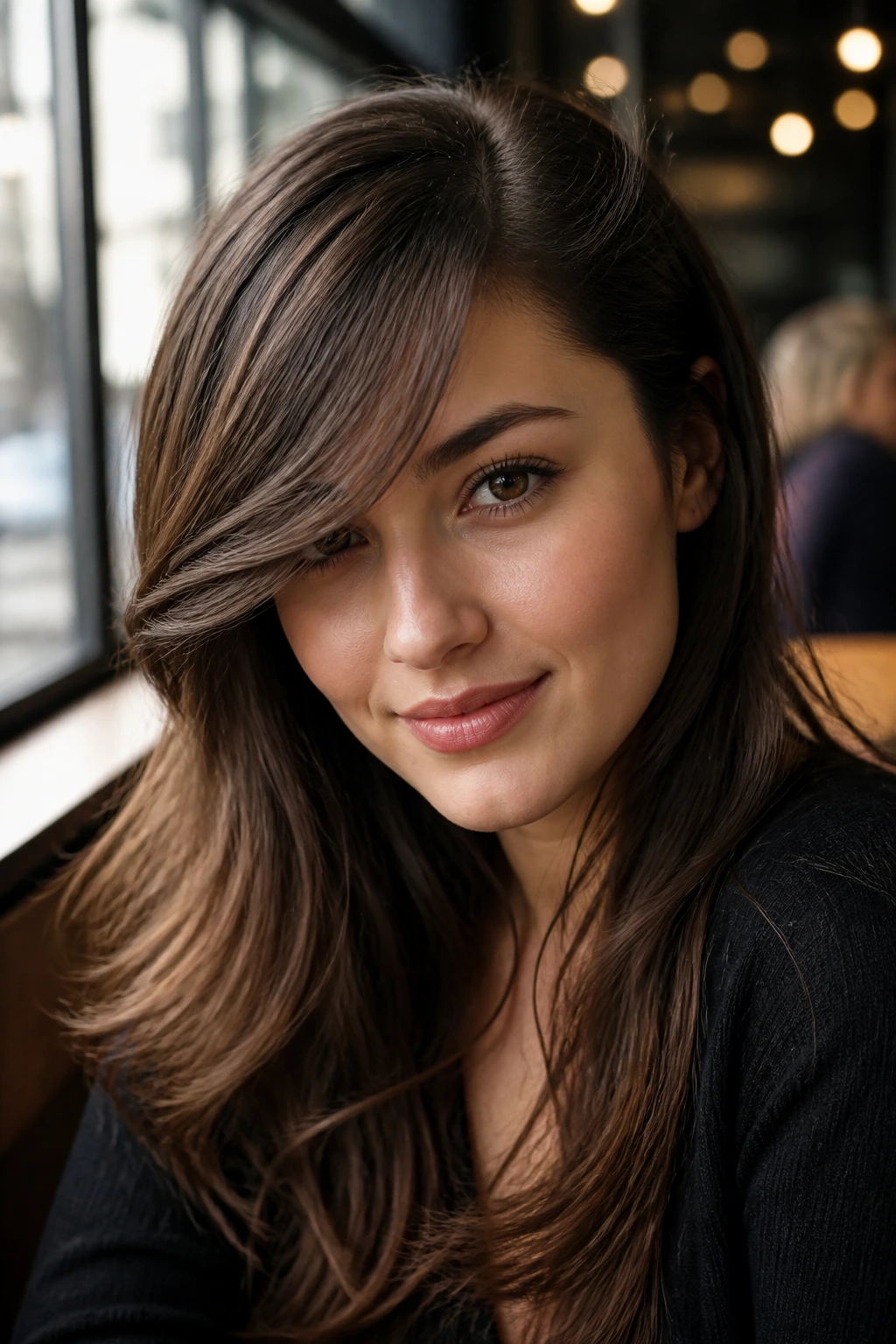
Side-swept bangs are the old reliable of long hair, and honestly, I still think they deserve more credit. They give you motion across the forehead without forcing a center part or a hard line, which makes them feel easy even when the rest of your hair is doing something more dramatic.
They’re also kinder to people who don’t want to trim bangs every few weeks. Because the section is swept to one side, a little growth doesn’t ruin the shape as fast.
How They Compare to Other Fringe Shapes
Compared with curtain bangs, side-swept bangs are more directional. They pull the eye across the face instead of opening the middle. Compared with blunt bangs, they feel softer and less formal.
- Best for: round, heart, and square faces
- Tools: medium round brush, light mousse, flexible-hold spray
- Styling move: blow-dry the bangs in the opposite direction first, then sweep them over
- Maintenance: every 5 to 7 weeks
If you like long hair but want one front piece to do the job of softening your features, this cut has a lot of range. It can look polished, a little messy, or almost old-school glam depending on how you wear the rest of the hair.
6. Birkin Bangs With Soft, Piecey Ends

Birkin bangs sit in that sweet spot between full fringe and a grown-out look. They’re usually eyebrow-grazing, slightly undone, and shaped so the ends don’t sit as one hard line. That gives them a lived-in feel that suits long hair beautifully.
They’re named after a very specific kind of effortless-looking softness, but the truth is more practical than romantic. The cut works because it’s not too dense, not too blunt, and not too long. It hovers right around the lashes and leaves room for the brows to show through.
These are the bangs I’d pick for someone who wants movement around the face without looking styled to death. They do need some morning attention—a quick brush, a bit of dry shampoo at the roots, maybe a tiny bend with a round brush. But they don’t demand the same precision as a straight fringe.
If your long hair already has a little bend or texture, Birkin bangs can look especially good. They look even better when they’re not perfect.
7. Shag Bangs That Feed Into Long Layers

Shag bangs make long hair feel alive. That’s the blunt version, and I stand by it. The cut is choppier, more layered, and more piecey than a classic fringe, so it brings movement to the front without asking the rest of the hair to behave too neatly.
What They Need to Look Right
A shag fringe usually sits somewhere between eyebrow and cheekbone length, with ends that are sliced or point-cut to keep the line broken up. It pairs well with long layers, a wolf cut, or any haircut where the ends already have some texture.
- Best for: wavy hair, thick hair, and anyone who likes a messier finish
- Cutting note: point-cutting helps avoid a shelf-like edge
- Styling note: use texture spray or a bit of mousse, not heavy oil
- Downside: can look flat if over-brushed
The whole point is movement. If you brush shag bangs until every strand sits in place, you lose what made them good. Let them bend. Let them separate a little. That slightly imperfect finish is the charm.
8. Feathered Bangs That Float Away From the Face
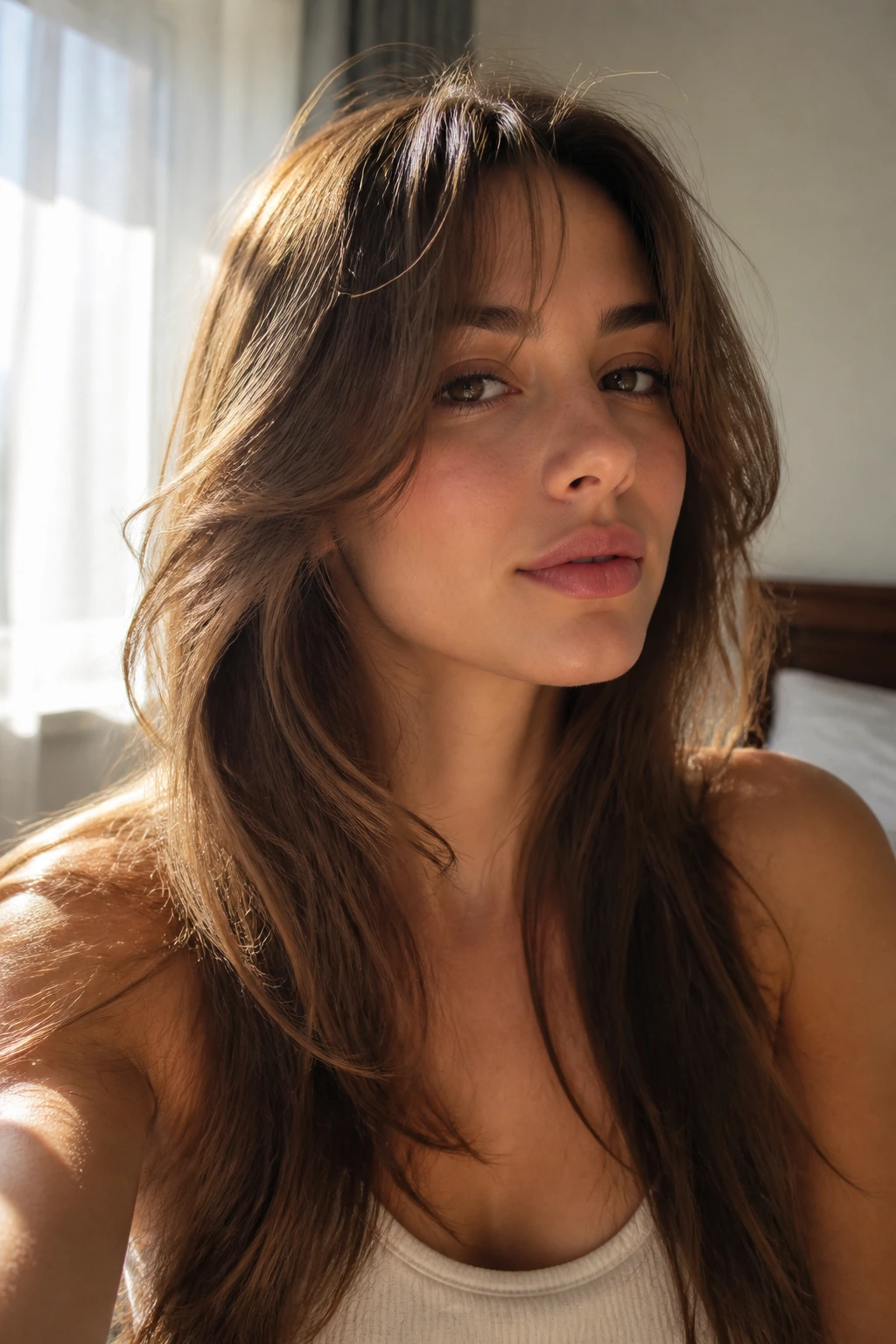
Feathered bangs look soft because the ends are lifted and tapered, not cut into a hard wall. You can usually see a little air between the pieces, and that lightness works nicely with long hair that might otherwise feel heavy around the shoulders.
They also do a nice job of softening strong features without hiding them. A feathered fringe doesn’t cover the forehead completely. It frames it.
The easiest way to style them is with a round brush and a dryer nozzle aimed from root to tip. Pull the bangs forward first, then curve them away from the face at the ends. That little bend keeps them from sticking flat to the skin, which is where a lot of feathered fringes go wrong.
If your hair is thick, this is one of the better choices because it removes visual weight at the front. It’s a practical cut. Pretty, too.
9. Micro Bangs With Long, Sleek Lengths
Micro bangs are the boldest thing on this list. They sit well above the brows, often around the top third of the forehead, and they create a sharp contrast against long hair that falls past the shoulders or lower.
The effect is dramatic, no getting around it. If you like the clean line of a short fringe but want to keep your length, micro bangs give you that tension. Short in front, long everywhere else. Simple. Strong.
They do ask for regular trims, because even half an inch of growth changes the whole look. They also expose more of the forehead and eyebrow shape, which is part of the appeal but not always easy to live with every day.
Micro bangs work best when the rest of the hair has some polish—straight lengths, a blunt cut, or loose waves that don’t compete with the front. If the hair is already very textured, the whole style can start to feel busy.
10. Rounded Bangs That Echo the Brow Line

Rounded bangs curve gently over the forehead instead of sitting flat across it. That curve can soften a strong brow, balance a long face, or give very straight hair a little more shape at the front.
They’re not as severe as blunt bangs, and they’re not as open as curtain bangs. That middle ground is what makes them useful. The line feels finished, but not stiff.
A Small Shape Change That Matters
The arch should follow your natural features, not fight them. A good rounded bang tends to be slightly shorter in the center and a touch longer at the sides, which gives it that soft dome shape.
- Best for: straight hair and loose waves
- Good pairing: long layers or a softly layered one-length cut
- Style tip: dry from side to side to keep the arch even
- Watch out for: cutting too much height into the center on fine hair
I like rounded bangs on long hair because they don’t make the front look chopped off. They sit there with purpose, then let the length do the rest.
11. Arched Bangs That Lift at the Center

Arched bangs are cousins to rounded bangs, but the lift is more obvious. The center rises a little higher, the sides taper down, and the whole shape opens the eye area instead of covering it.
That little difference changes the mood. Rounded bangs feel softer and more romantic. Arched bangs feel cleaner and a touch more graphic, which can be nice if your long hair is already very flowy or very thick.
They’re a good choice when you want fringe but still want to show a lot of the forehead. They also work well with glasses, because the arch gives the frames space instead of crowding them.
Keep the styling simple. A medium round brush, a quick roll at the root, and a cool shot to set the shape. If you overwork them, they collapse. If you underwork them, they split in odd places. A small amount of patience goes a long way here.
12. Choppy Bangs With a Tactile, Broken Edge
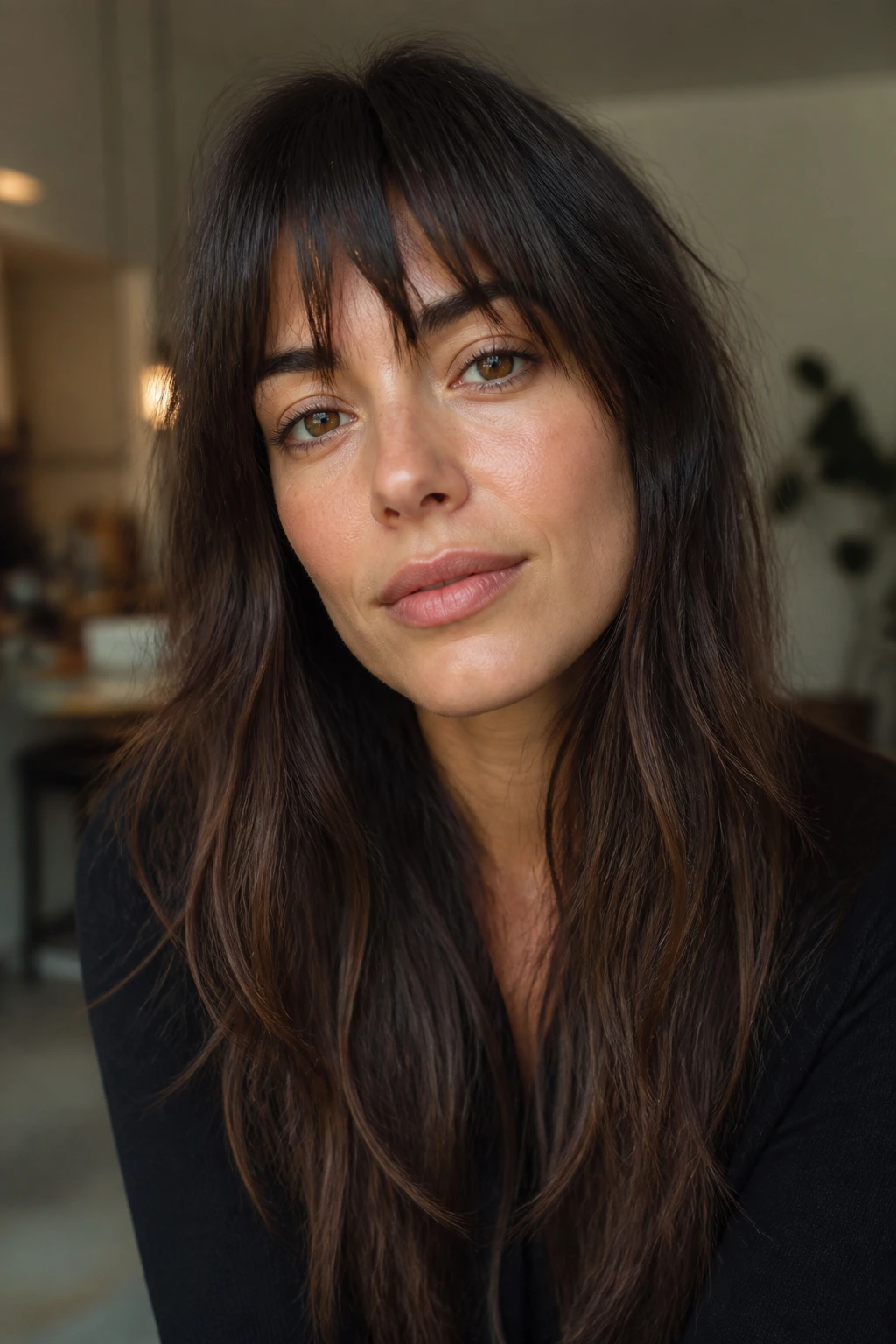
Choppy bangs are for people who don’t want their fringe to look too polished. The edges are uneven on purpose, which gives the cut texture and a little attitude. On long hair, that rougher front piece keeps the overall style from feeling too sweet or too neat.
How to Ask for the Cut
Tell the stylist you want piecey ends, not a blunt line. Point-cutting or razor work can help, but the real goal is controlled irregularity. You want movement, not random damage.
- Best for: medium to thick hair
- Styling product: a pea-size amount of matte paste or light pomade
- Best finish: a slightly tousled, separated look
- Skip if: you prefer a clean, classic fringe
These bangs are good if your hair already has texture and you’d rather work with it than flatten it. They can make long hair feel cooler without needing an entire haircut overhaul. A small change. Big attitude.
13. Curly Bangs That Match Your Curl Pattern
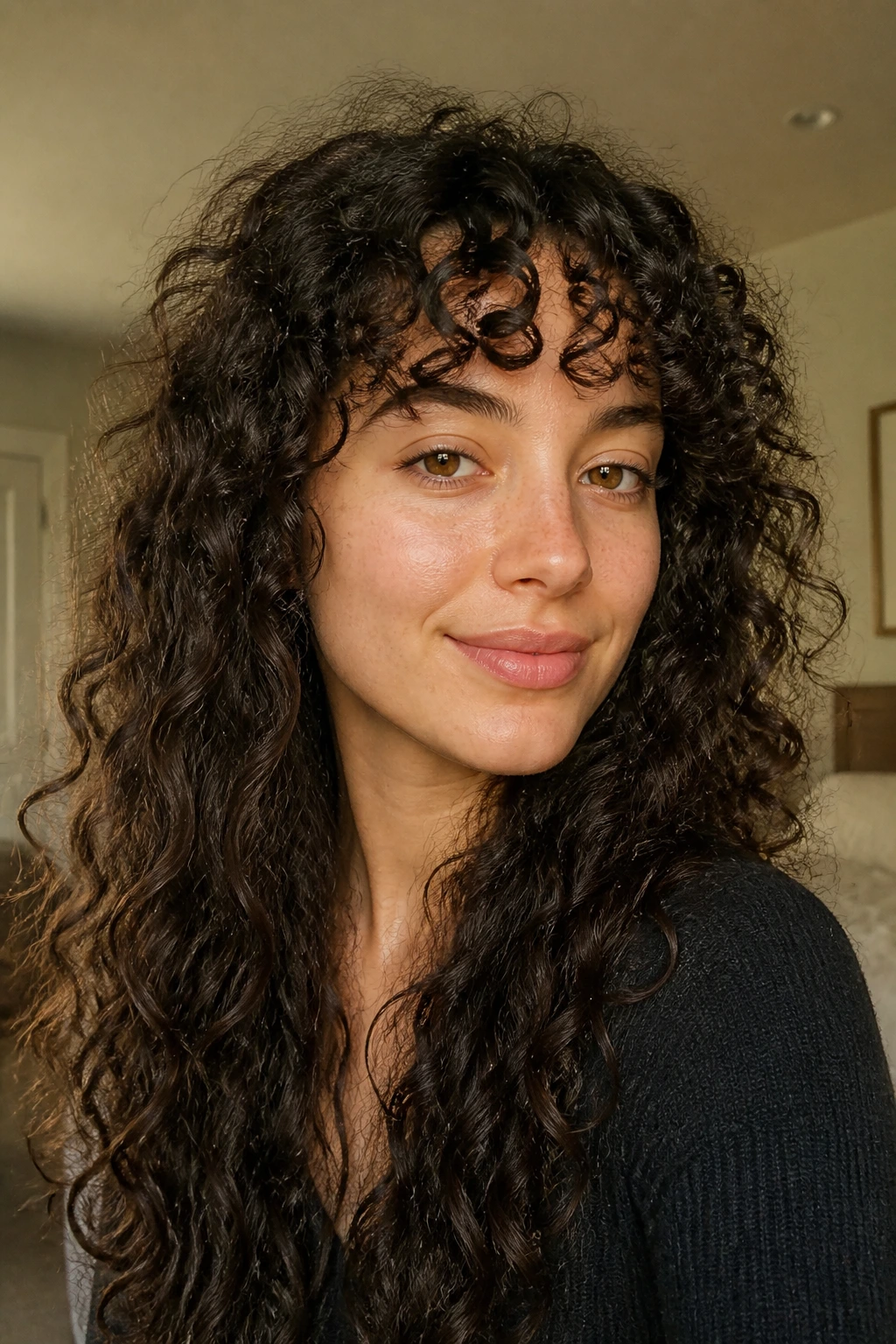
Curly bangs can be excellent on long hair, but only when they’re cut for the actual curl pattern, not stretched flat and hoped for. That’s the part people often miss. Curls spring upward. They also separate differently from one side of the forehead to the other.
The safest move is to cut them dry or nearly dry so the stylist can see where the curls land. If you cut curly fringe too short, it can pop up way above the brow line and stay there. Cute for some people. A headache for others.
What Helps Curly Fringe Sit Well
- Dry-cutting keeps the shape honest
- Longer first cut leaves room for shrinkage
- Diffusing gives lift without frizz
- Finger-coiling can help define a few front pieces
Curly bangs work especially well when the rest of the hair is long enough to balance them. You get shape at the front and length everywhere else, which keeps the cut from feeling top-heavy. And yes, they can be soft. Not every curly fringe has to look wild.
14. Face-Framing Fringe That Starts at the Cheekbones

Face-framing fringe is not quite a full bang, and that’s why people like it. The pieces start lower—usually around the cheekbones or jaw—and they blend into the rest of the cut instead of taking over the forehead.
This is a smart choice if you want the effect of bangs without the maintenance of bangs. You still get movement near the face, but you can tuck the pieces behind your ears, pin them back, or let them fall around a ponytail.
Compared with curtain bangs, face-framing fringe is longer and more subtle. Compared with layers, it’s more deliberate. That makes it one of the easiest long-hair updates to live with, especially if you wear your hair in waves or loose bends.
If you’re unsure about fringe at all, start here. It’s the haircut version of testing the water with one foot.
15. Hime Bangs With Long Side Pieces

Hime bangs are a sharper, more stylized choice. The front sections are cut cleanly, often around cheek level, while the side pieces stay longer and straighter. The shape feels precise, almost architectural, and long hair gives it room to breathe.
This is not the cut for someone who wants the front to disappear into the rest of the hair. It’s the opposite. The contrast is the point.
The best version is very clean. Straight hair helps the shape read correctly, and regular trims matter because uneven growth can make the pieces look accidental instead of intentional. If you like a strong outline and a bit of fashion edge, this is one of the more memorable options on the list.
It can also look surprisingly elegant when the rest of the hair is kept glossy and simple. No fuss. Just shape.
16. Split Fringe That Opens Right in the Middle
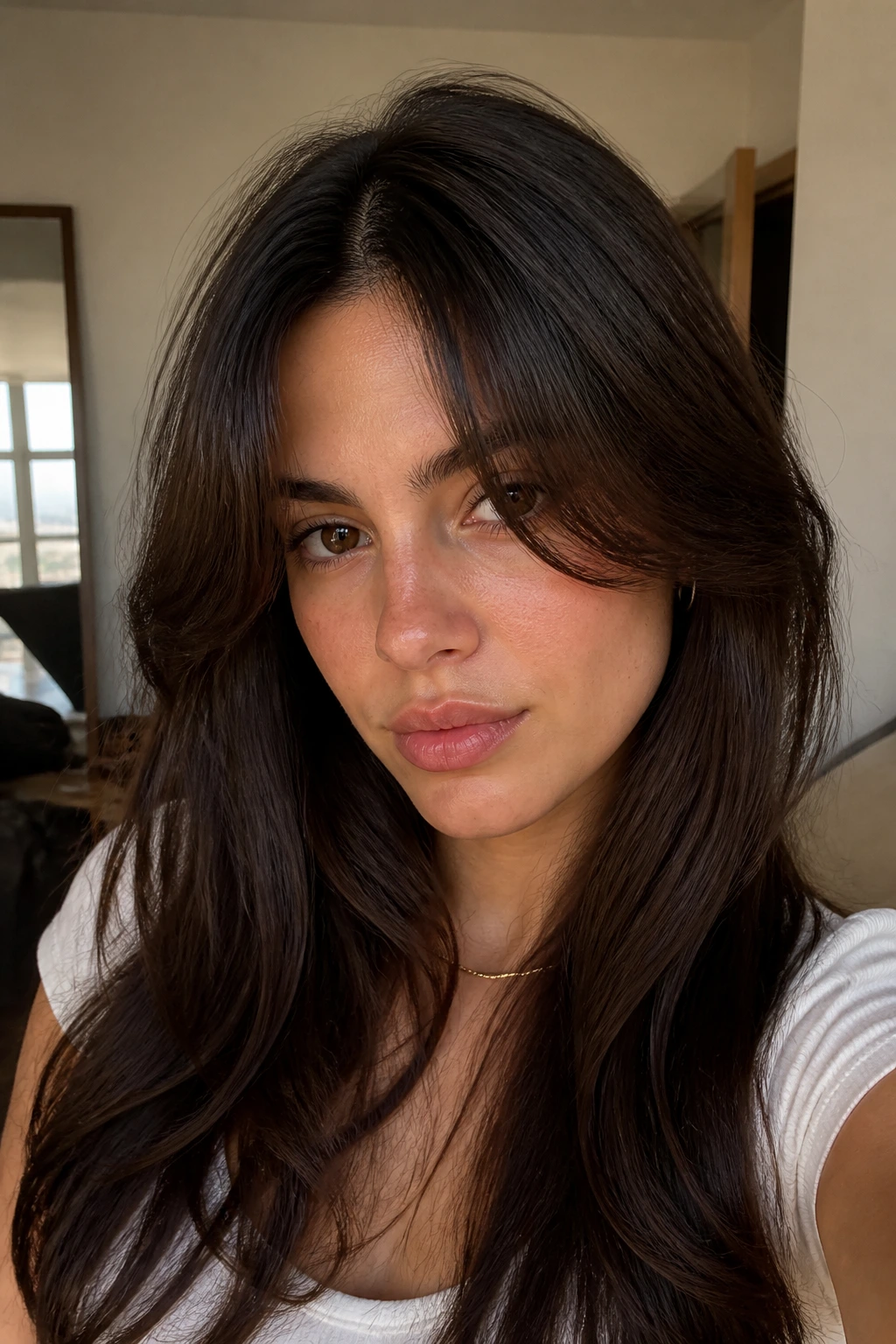
Split fringe is similar to curtain bangs at first glance, but the middle part stays more obvious and the two front sections behave like separate panels. That makes the style feel a little looser and a touch more casual.
I like it on long hair because it doesn’t swallow the face. The opening in the middle lets your features stay visible, while the longer sides guide the eye downward into the length.
Best Way to Wear It
The simplest styling method is to direct the hair away from the center while it’s still damp, then let it fall back into place as it cools. That keeps the split from collapsing into a clump.
- Best for: oval and heart-shaped faces
- Works with: loose waves, blown-out layers, and soft ponytails
- Tool to keep nearby: a small flat brush for the root area
- Look to avoid: a perfect, stiff center gap
Split fringe is useful if you like bangs on some days and a cleaner forehead on others. It bends to the hairstyle instead of bossing it around.
17. Grown-Out Bangs That Blend Into the Rest of the Cut
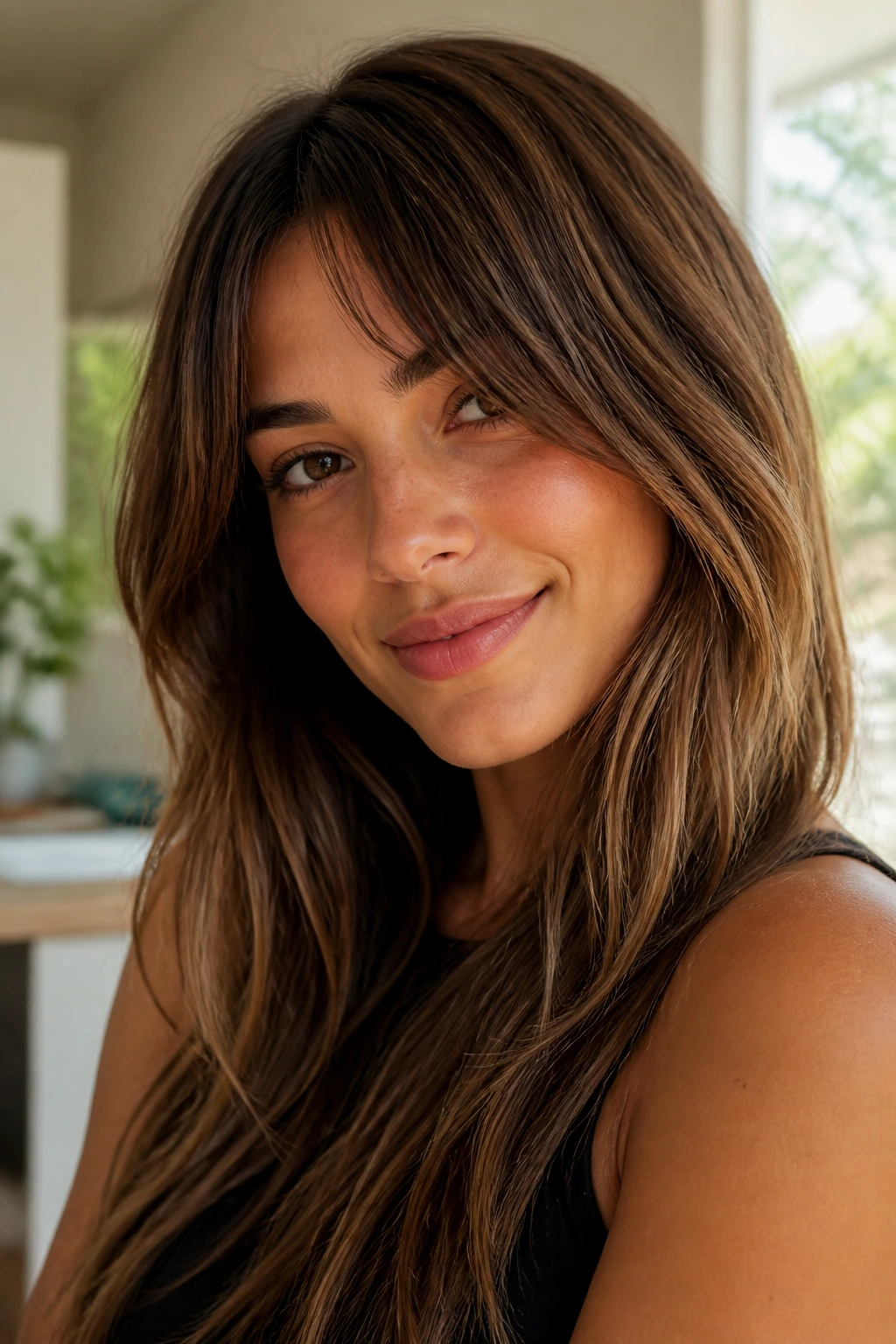
Grown-out bangs are often treated like a phase you survive, but they can be a style in their own right. On long hair, they sit somewhere between fringe and layers, which gives the haircut a relaxed, easy shape.
The trick is to keep the front pieces intentional. If the bangs are left too long without shaping, they can hang in your eyes and look unfinished. If they’re lightly trimmed and blended, they create softness around the face and move nicely when the hair is down.
This is a useful option if you’re growing out a previous fringe and don’t want to chop it back into something new right away. It also suits people who change their part often, because the pieces can shift from center to side without looking odd.
A little texture spray helps. So does tucking one side behind the ear when you want the cut to feel looser.
18. Long Layered Fringe That Skims the Cheekbones

Long layered fringe sits in the sweet spot between bangs and the first layer of the haircut. The pieces are long enough to blend into the rest of the hair, but short enough to do real work around the face.
That’s why it’s so good on long hair. You keep the length, but the front doesn’t feel flat or heavy. It adds movement right where the eye lands first.
You can wear this fringe swept to the side, parted in the middle, or pushed back with a clip when you need it out of the way. It’s flexible without looking indecisive. The shape should be soft, not choppy, and the ends should fall around the cheekbones or just below them.
If you want bangs ideas for long hair that won’t trap you in one styling pattern, start here. It’s one of the most practical choices on the list.
19. U-Shaped Bangs That Stay Fuller in the Center
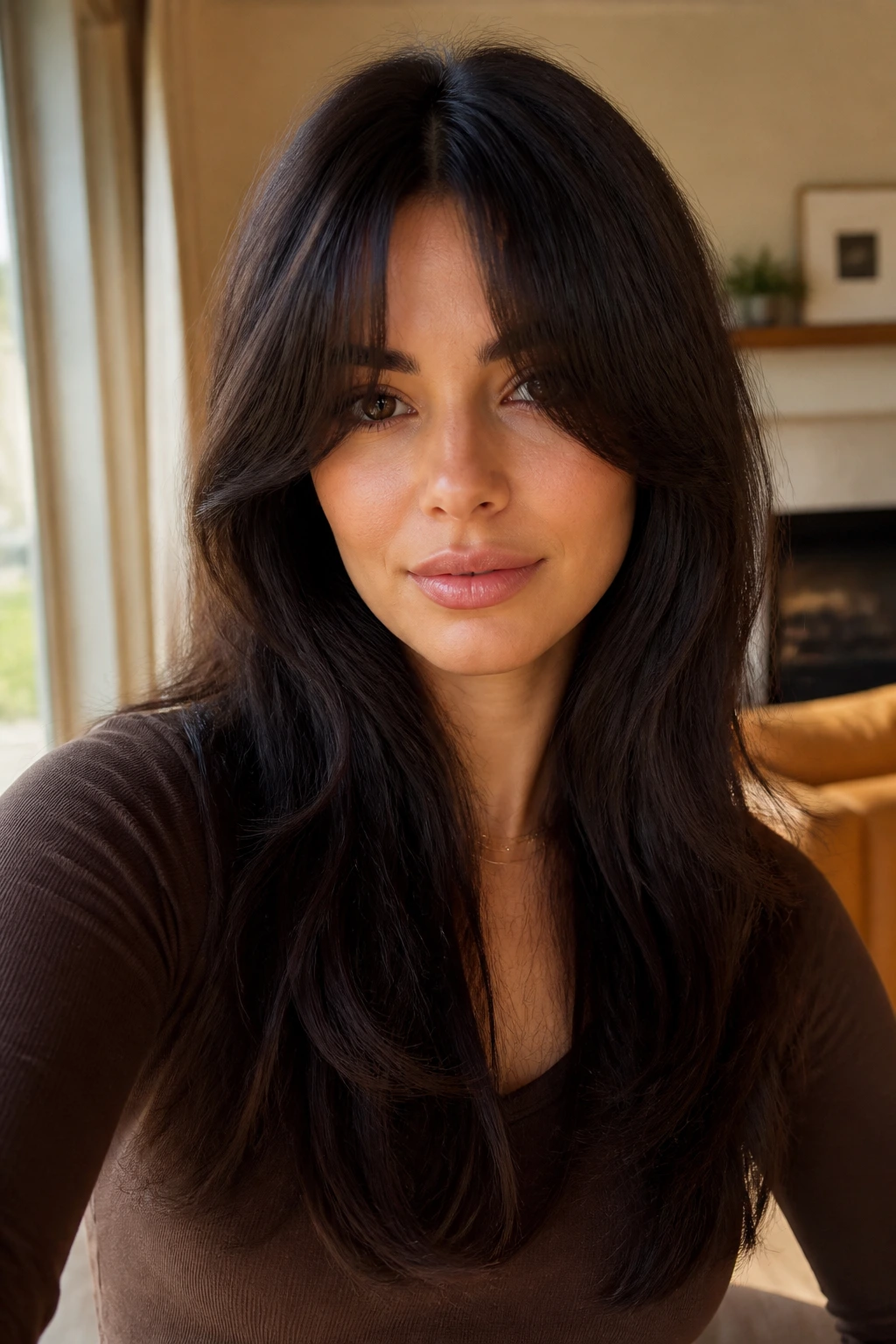
U-shaped bangs are cut so the middle is shorter and the sides gradually lengthen, forming a gentle U. The result is softer than a blunt cut and a little fuller than a curtain fringe.
They’re especially handy for thick hair, because the shape removes some weight from the temples while keeping more presence in the center. That can make the forehead area feel balanced instead of heavy.
Why They Feel Different
Unlike a straight fringe, a U-shape gives the front some depth. Unlike a curtain bang, it doesn’t split as openly. The shape sits in between those two ideas, which is why it works on a lot of long-hair cuts.
- Good match: thick or medium-density hair
- Styling note: keep the center smooth and let the sides curve naturally
- Maintenance: every 5 to 6 weeks
- Best pairing: long layers or soft blowout ends
The shape can also be useful with ponytails, because the sides help frame the face while the center keeps some structure. Small detail. Very useful.
20. Heavy Full Fringe With Serious Density
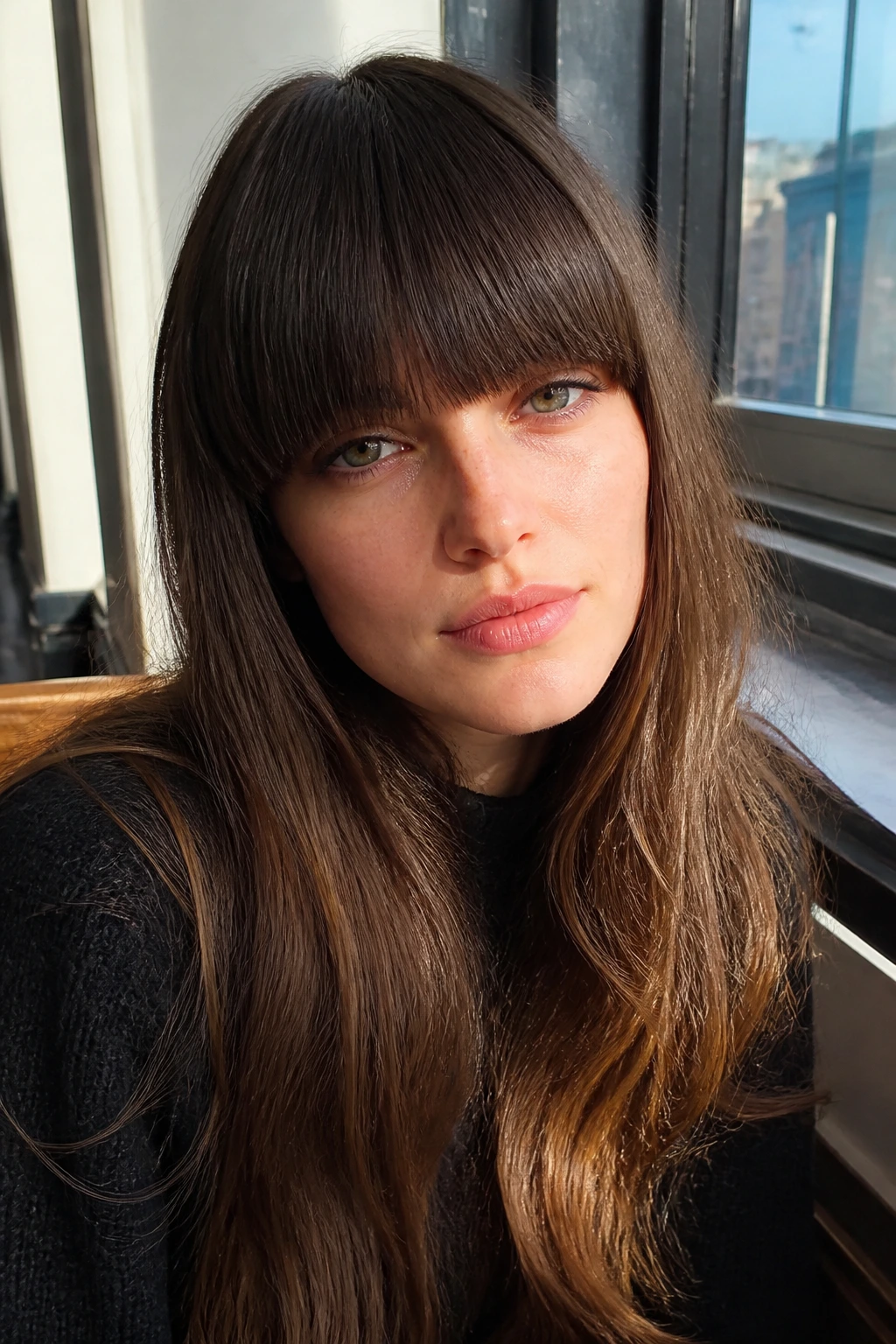
Heavy full fringe is the one people either love or avoid. There’s not much middle ground. The bangs are thick, solid, and full across the forehead, which makes them dramatic against long hair and gives the whole haircut a lot of presence.
They work best when the hair actually has enough density to support them. If the fringe is too sparse, the line looks thin and needs constant coaxing. If the hair is strong and straight enough, though, the result can be gorgeous.
A full fringe takes the most upkeep of this list. It needs drying from the root, occasional smoothing, and regular trims to stay above the eyes. Still, if you want long hair to feel more classic, more polished, or more retro, this cut delivers that mood fast.
It does not whisper. It announces itself.
21. Razor-Cut Bangs With Soft, Airy Ends

Razor-cut bangs are all about softness at the edge. Instead of a blunt scissor line, the razor removes weight and leaves a more feathered finish, which can be lovely on long hair that already has movement.
They’re especially good for wavy hair, because the cut allows the front pieces to shift instead of sitting like a stiff panel. If your hair is coarse or frizz-prone, though, a razor can sometimes make the ends puff more than you want. That’s the catch.
What to Keep in Mind
A razor cut should still look controlled. You want soft edges, not random thinning. Too much razor work can leave the fringe wispy in the wrong way, especially if the hair has a rough cuticle or a strong bend.
- Best for: soft waves and medium texture
- Avoid if: your hair frizzes easily
- Styling product: light cream or smoothing balm
- Visual result: airy, separated ends instead of a hard line
I like razor bangs on long hair when the rest of the cut is also loose and layered. The two pieces of the haircut should speak the same language.
22. Peekaboo Bangs That Hide and Show as You Move

Peekaboo bangs are for people who want fringe but still like the option of hiding it in plain sight. The front pieces are long enough to tuck back, split, or blend into the sides, so they only fully show when you move the hair a certain way.
That makes them a nice entry point if you’re nervous about commitment. You get the feeling of bangs on some days and a cleaner forehead on others. Long hair helps because the rest of the cut gives the front pieces somewhere to disappear into.
They’re also useful if you wear glasses, pins, clips, or headbands. The bangs can sit forward, then shift aside when you need a different look. No awkward line. No hard break.
This is one of the most flexible bangs ideas for long hair, and honestly, flexibility is underrated. A fringe that can vanish when you want it gone is not a small luxury.
The Last Word
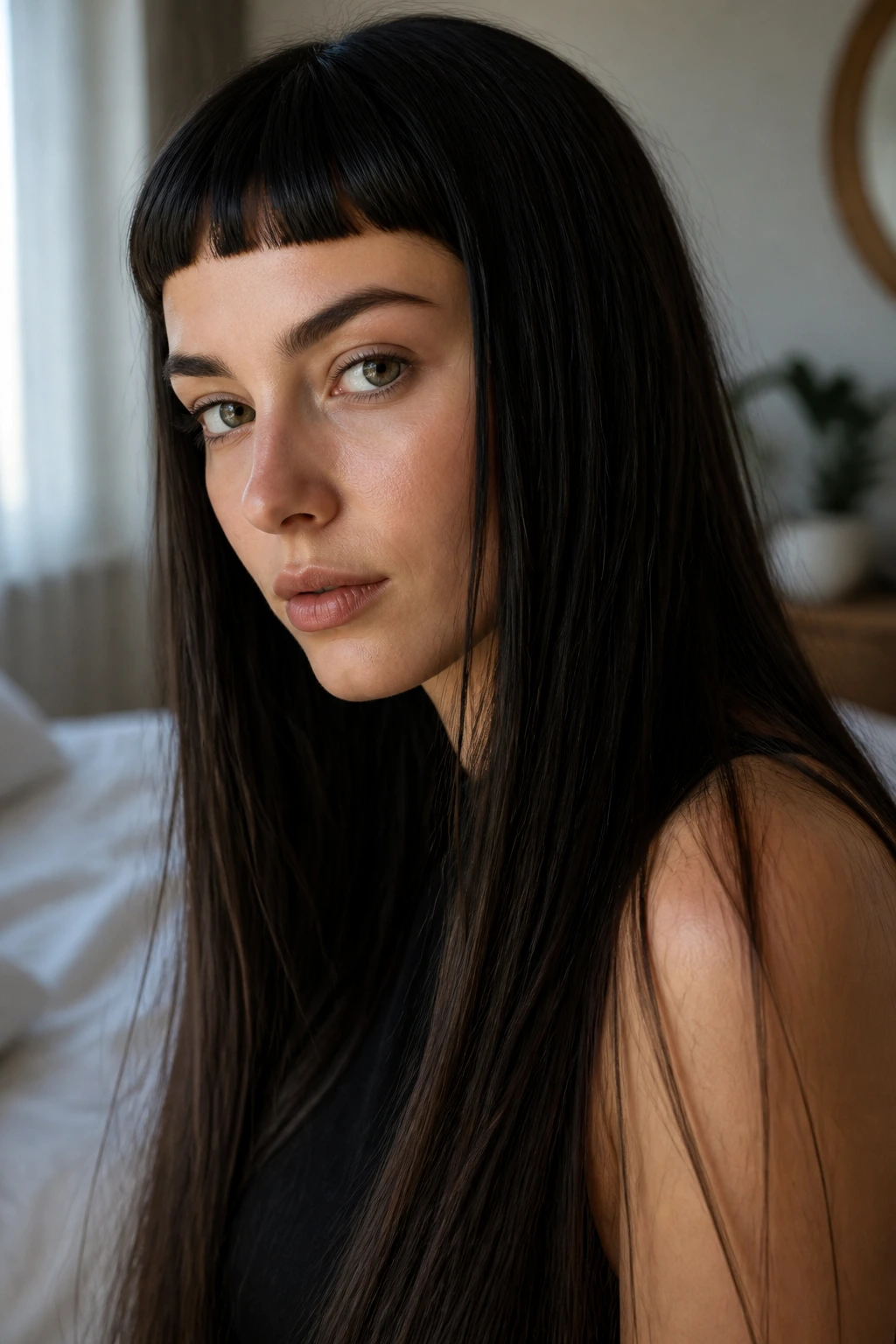
The best bangs for long hair are the ones that fit your daily life, not just your mirror. Some people want the clean punch of blunt fringe. Others need something softer that can grow out quietly. Both are valid. The important part is being honest about upkeep before the scissors come out.
Texture matters more than fantasy. So does density. So does whether you’re willing to spend four minutes with a brush or only forty seconds with a hand mirror and a clip. That’s the real test, and it’s usually the part people skip.
Choose the shape that matches the way your hair actually behaves. That’s where the good cuts live.
