



The appeal of wispy bang styles for long hair is simple: they soften the face without stealing the length you worked so hard to grow.
Heavy bangs can eat the whole haircut. Wispy fringe does the opposite. It gives you movement at the front, hides a high forehead or a stubborn cowlick if needed, and still lets the rest of the hair hang in one clean line.
That balance is trickier than it looks. A good stylist usually point-cuts the ends, checks how the fringe falls when dry, and leaves a little more length at the temples so the shape can breathe; cut too blunt, and the whole thing turns square fast.
Some versions are soft and barely there. Others bring a little attitude. The useful part is knowing which shape fits your hair density, face shape, and daily routine — because bangs you have to wrestle every morning get old in a hurry.
1. Curtain Wispy Bangs That Split Softly at the Center
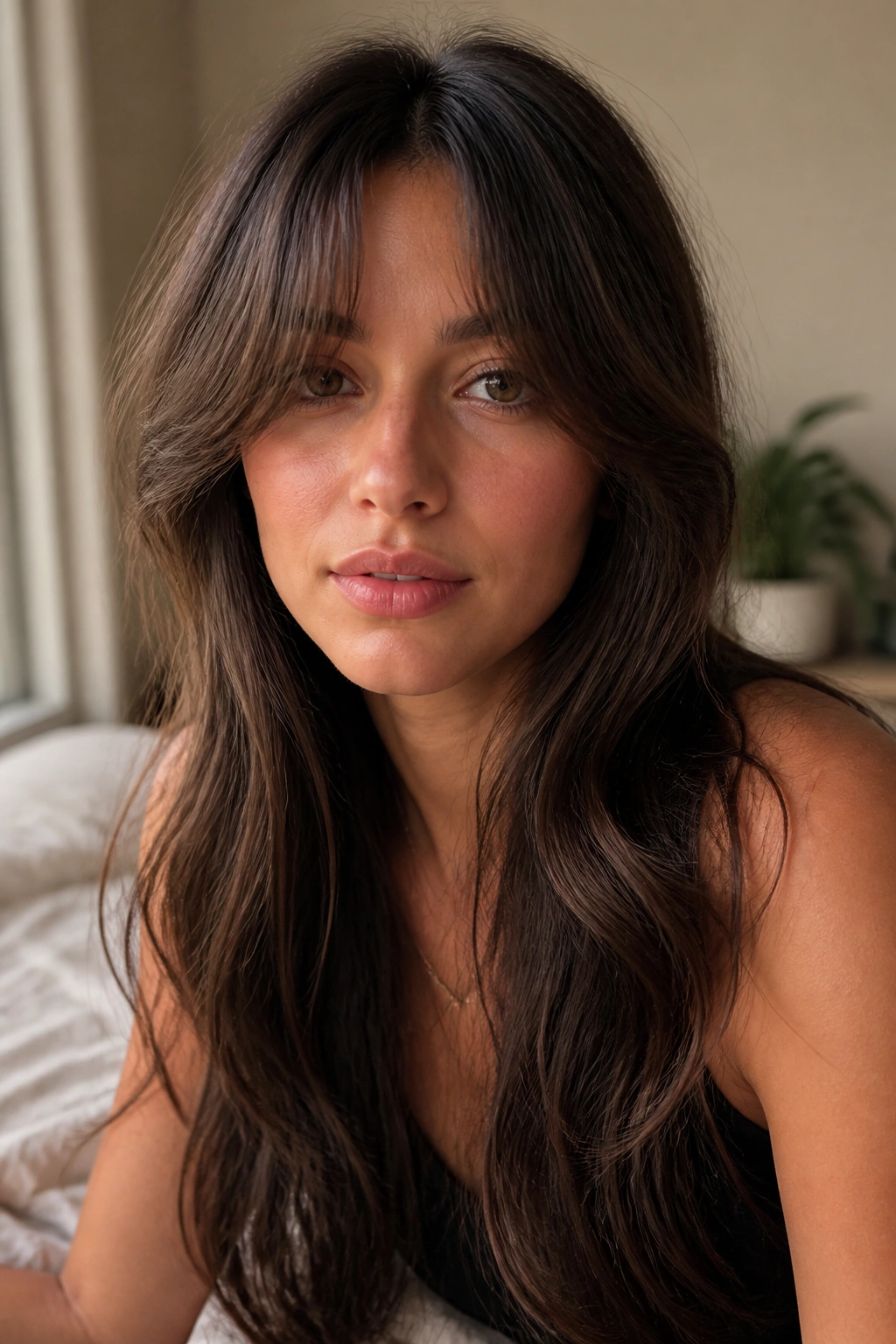
Curtain bangs are the easiest door into fringe territory, and on long hair they make a lot of sense. The middle stays open, the sides sweep away from the face, and the whole cut feels like it belongs with the rest of the length instead of fighting it.
Why It Works on Long Hair
The center part keeps the fringe from looking heavy. The longest pieces usually hit around the cheekbones, which gives you that soft frame without a hard line across the forehead.
Ask for point-cut ends and a slightly shorter center than sides — usually about half an inch to an inch of difference is enough. That tiny change makes the curtain shape fall naturally instead of sitting there like a thick shelf.
- Best on hair that already has some bend or movement.
- Easy to grow out if you change your mind.
- Looks especially good when the front layers connect to shoulder-grazing or longer layers.
Best trick: blow-dry each side away from the face on a 1-inch round brush while the hair is still warm. It sets the curve fast.
2. Brow-Skimming Feathered Bangs With a Light Edge
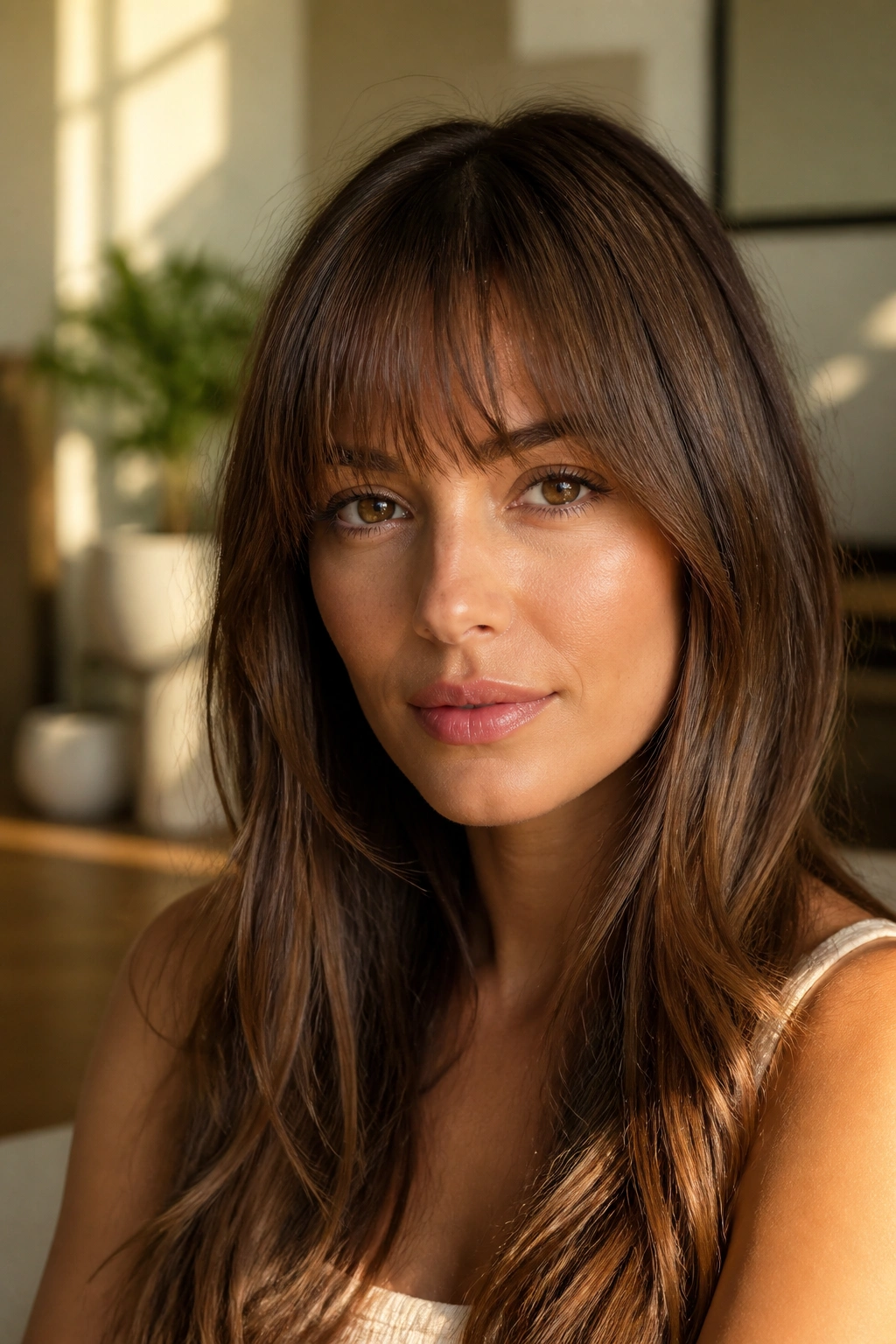
A brow-skimming fringe can make long hair feel polished without adding bulk. That’s the whole charm. The hairline gets a soft frame, your eyes stay open, and the cut still reads airy instead of dense.
What makes this one work is the edge. The best versions barely graze the brows and are feathered at the tips, not chopped in a straight line. That feathering matters more than people think, because it keeps the bang from turning into a heavy bar across the forehead.
I like this shape on straight to slightly wavy hair because it holds the line without fighting frizz. If your hair is very coarse or very curly, the same cut can work, but it needs a little more length than you expect. Bangs shrink. They always do.
Wear it with a soft center part or let it sit just off-center. Both look good. The mistake is making it too perfect.
3. Side-Swept Wispy Bangs for a Softer Forehead Line

Why does a side sweep still work when a full fringe feels like too much? Because it gives you the face-framing effect without closing off the front of the haircut. That little shift changes everything.
The sweep also plays nicely with long hair that already has layers. Instead of drawing attention to a single straight line, the bang travels into the rest of the cut. That makes the whole style feel lighter, and it’s forgiving on days when your hair does its own thing.
How to Wear It Without It Collapsing
A side-swept bang needs a little root help. Not much. A pea-sized amount of mousse at the root and a quick blow-dry with the nozzle pointing across the forehead is usually enough.
- Use a deep side part if your crown is flat.
- Clip the bang in place for 3 to 5 minutes while it cools.
- Keep the longest piece near the cheekbone so it can blend into the front layers.
If you’ve got a cowlick at the hairline, this is one of the kinder cuts. It works with the split instead of arguing with it.
4. Bottleneck Bangs That Narrow at the Middle

If curtain bangs felt too wide on your face, bottleneck bangs fix that problem. The center stays narrower, the sides open out lower, and the whole shape feels more controlled. That small adjustment makes a real difference.
The name makes sense once you see it. The fringe starts narrower at the bridge of the nose or just above the brows, then widens toward the temples and cheekbones. It’s a clean shape, but not a stiff one.
- Good for round, heart, and oval faces.
- A smart pick if you want movement without a full, obvious fringe.
- The longest side pieces should usually land around the cheekbone or just below it.
The upside is balance. The center gives you a little structure, while the side lengths soften the jaw and make the haircut feel finished. It’s one of those cuts that looks intentional even when it’s slightly messy, which is frankly the nicest thing a bang can do.
5. Long Feathered Bangs That Melt Into Face-Framing Layers

Long feathered bangs are for people who like the idea of fringe but do not want a clear “bang moment” every time they look in the mirror. These are softer, longer, and more blended, so the line disappears into the front layers instead of sitting on top of them.
This is the one I reach for when someone says, “I want bangs, but I also want to be able to pin them back.” That’s a normal request. A good cut can absolutely do both.
The shortest point can sit just under the brows, then the hair tapers down toward the cheekbones and jaw. The key is that the front pieces must connect to the rest of the haircut. If they end too soon, they look separate. If they’re cut well, they feel like the haircut was always meant to be that way.
It also grows out politely. That matters more than people admit.
6. Soft Arched Wispy Bangs That Follow the Brows

Unlike straight-across fringe, an arched wispy bang follows the curve of the brow bone and gives the face a gentler frame. It feels a little more classic, a little less casual, and it works especially well if your features are strong and you want the front of the haircut to soften them.
The arch should be subtle. Think one smooth curve, not a dramatic semicircle. When the center sits a touch shorter and the sides angle down toward the temples, the bang reads polished without looking heavy.
I like this shape on people who wear glasses or have a strong brow line. The curve helps the fringe sit with the face instead of cutting across it. It also keeps the eyes visible, which is the whole point if you’re trying to keep things light.
For styling, use a small round brush or a 3/4-inch brush and bend the fringe under just enough to round the line. Too much curl and it starts looking old-fashioned. Too little and it falls flat. There’s a narrow middle ground, and that middle ground is where this cut lives.
7. Shaggy Wispy Bangs With a Little Grit
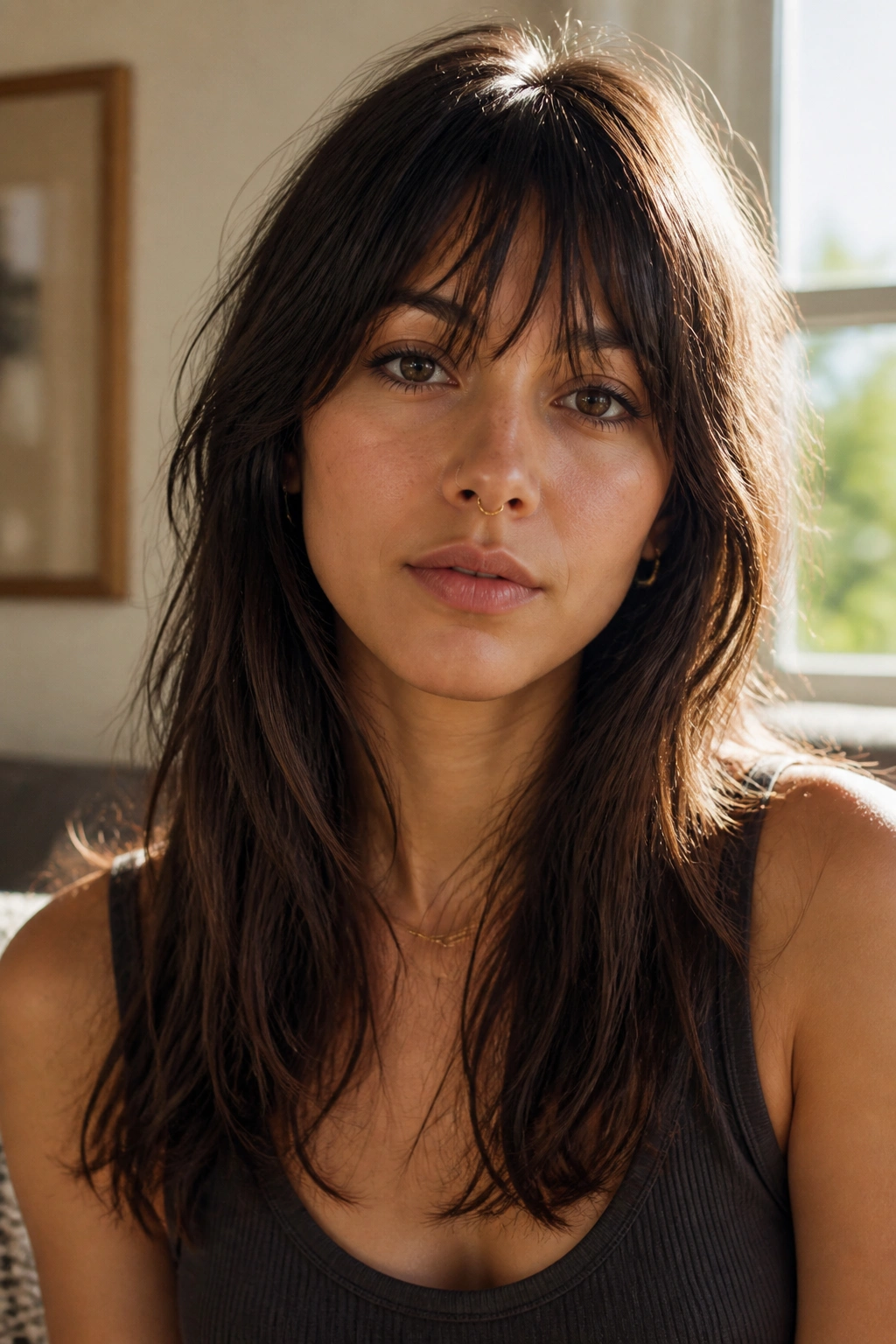
Shaggy wispy bangs bring a bit of texture to long hair, and that texture is the charm. They are not precious. They are not stiff. They look better when the finish is a little broken up, which is a relief if you don’t enjoy spending ten minutes perfecting a bang every morning.
What Makes It Different
These bangs usually sit a touch longer than a classic brow-skimmer, with uneven ends and soft separation. The goal is movement, not neatness. A stylist may use slide cutting or point cutting to keep the line from getting blunt.
- Works well with wave, bend, and natural texture.
- Pairs nicely with long layers and a loose, lived-in finish.
- Needs a light hand with styling cream; too much product turns it stringy.
The best part is the attitude. Shaggy fringe gives long hair a little edge without changing the entire shape. If you already wear your hair with a bend or a rough blowout, this one feels natural fast.
Do not over-brush it smooth. That kills the whole point.
8. Deep Side-Part Bangs for Extra Lift at the Crown
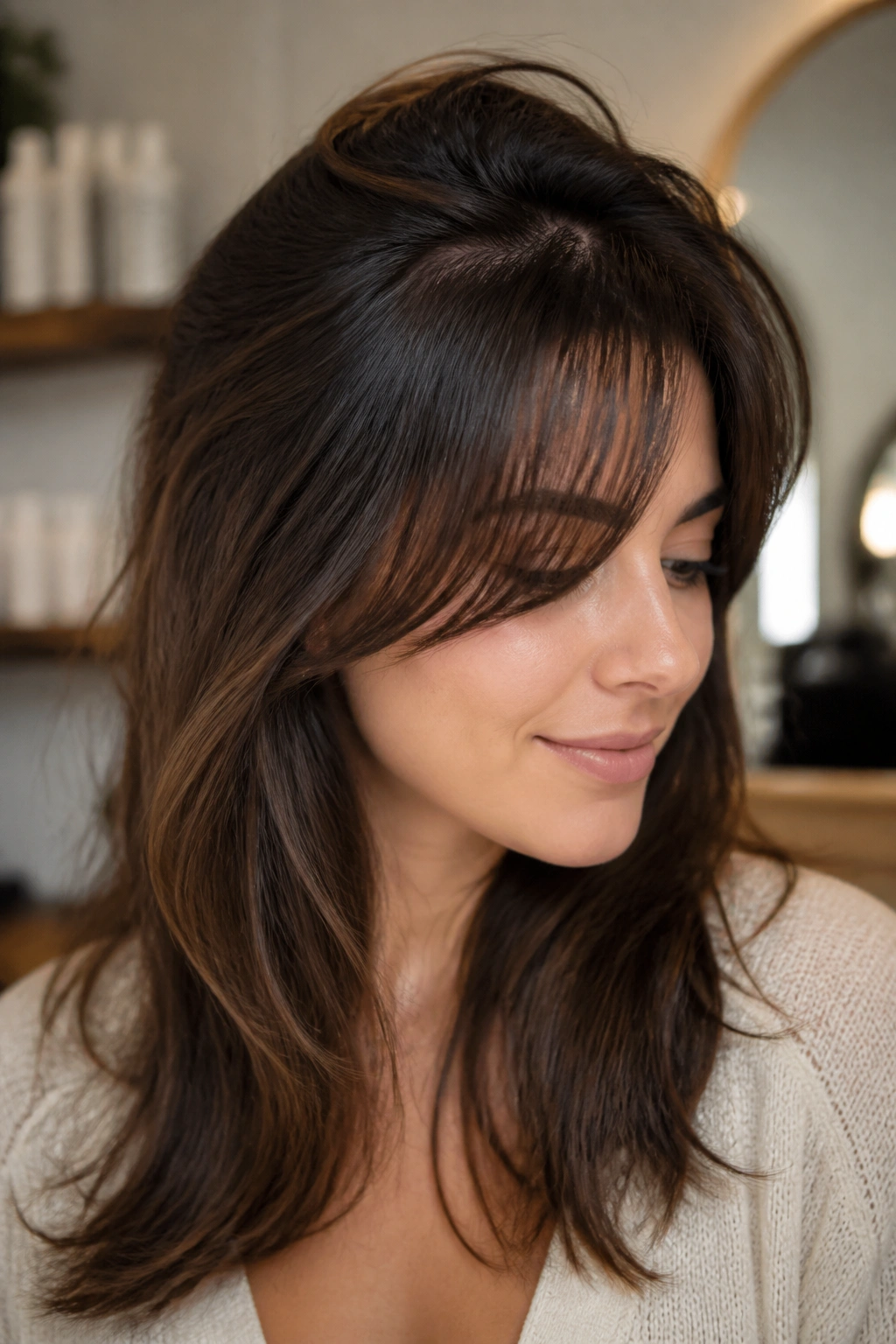
A deep side part can do more for flat roots than most people expect. It shifts the whole line of the haircut, gives the crown a bit of lift, and makes a wispy bang feel like part of the hairstyle rather than an add-on.
This shape is useful when your hair tends to lie close to the head. The part creates height, and the fringe follows that direction so the front doesn’t collapse into your face. It’s especially kind to fine hair, because it gives the illusion of fullness without piling on weight.
The trick is root control. A little volumizing mousse at the roots, then blow-dry the bangs across and slightly back from the face. When they cool, they keep that lift. If you let them air-dry straight down, the shape falls apart.
I also like this style for square faces. The diagonal line softens angles fast. Simple move. Big payoff.
9. Split Fringe With a Narrow Opening in the Center
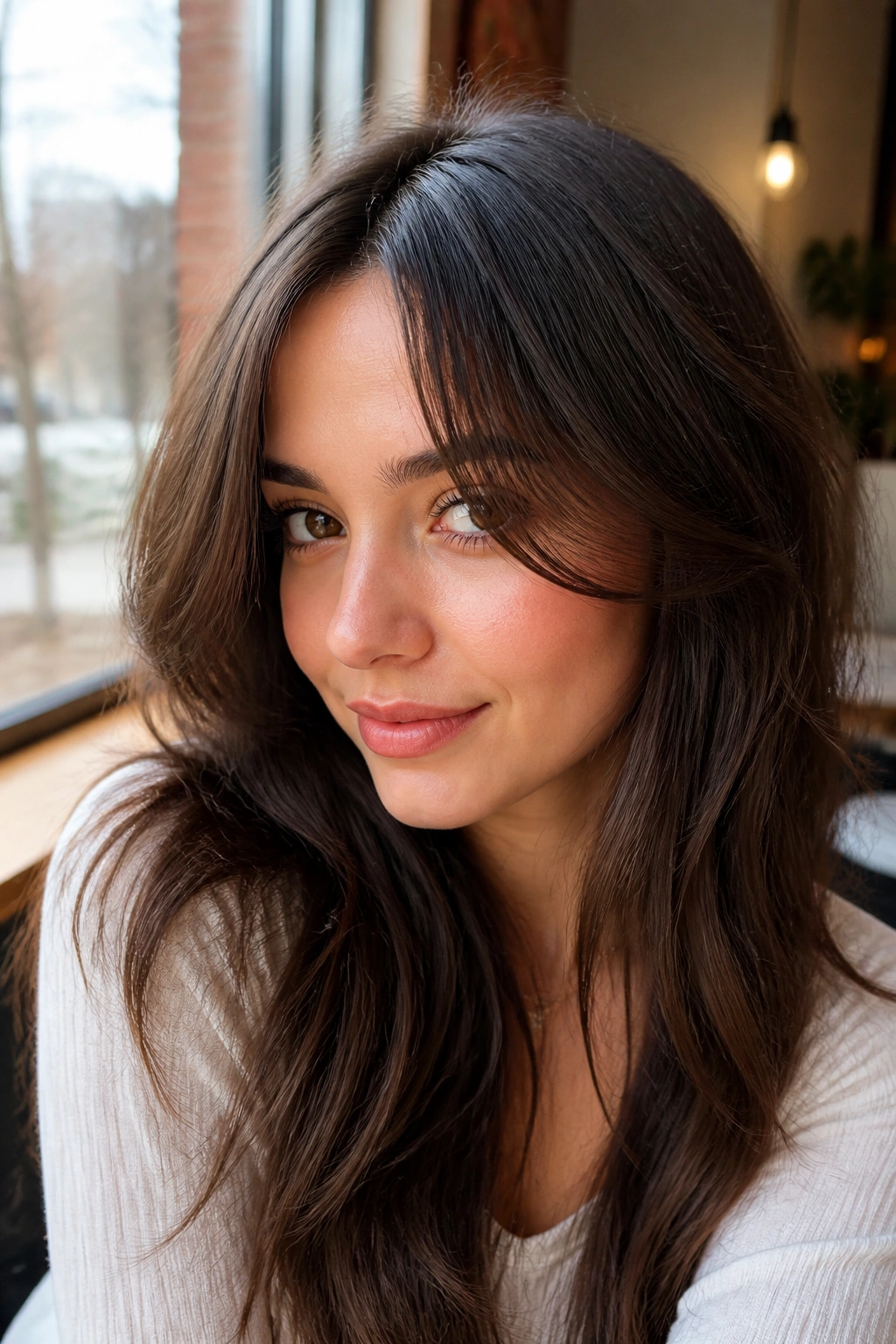
Do you want fringe that still looks open and easy? A split fringe is the answer. It’s not as wide as curtain bangs, and it doesn’t have the same obvious drape. Instead, it leaves a smaller center opening and sends the sides outward in a controlled way.
That tighter split makes the style feel neat. The middle can start around the bridge of the nose, with the sides tapering toward the cheekbones. If the opening gets too wide, it turns into full curtain bangs. If it’s too narrow, it can look like a part that never settled. That middle stretch matters.
How to Style the Split
Use a fine-tooth comb or the tail of a brush to place the center, then dry each side away from the face. A quick hit of cool air at the end helps the pieces stay separated instead of merging together.
This is a strong pick if your hair has natural swing or if you like changing your part. A little shift to the left or right can change the whole mood.
10. Rounded Wispy Bangs for Glasses and Strong Cheekbones

Rounded wispy bangs are quietly smart. They follow the face, soften the front, and play nicely with glasses because they do not fight the frame line. If you wear specs, you already know how annoying a bang can be when it keeps landing on the lenses. This cut avoids that mess.
The shape should curve gently around the eyes, with the shortest point sitting near the brows and the sides dipping just enough to clear the frame. No blunt shelf. No heavy block. Just a soft arc that looks like it was planned.
- Best if your frames are medium or thick.
- Works well when the fringe is cut while wearing your glasses.
- Looks nicest when the ends are point-cut and slightly broken up.
I especially like this style on faces with strong cheekbones. The curve echoes the structure instead of hiding it. That kind of balance is harder to get than people think, and when it works, it looks effortless in the best possible way.
11. Soft Blunt-Edge Wispy Bangs for Thicker Hair
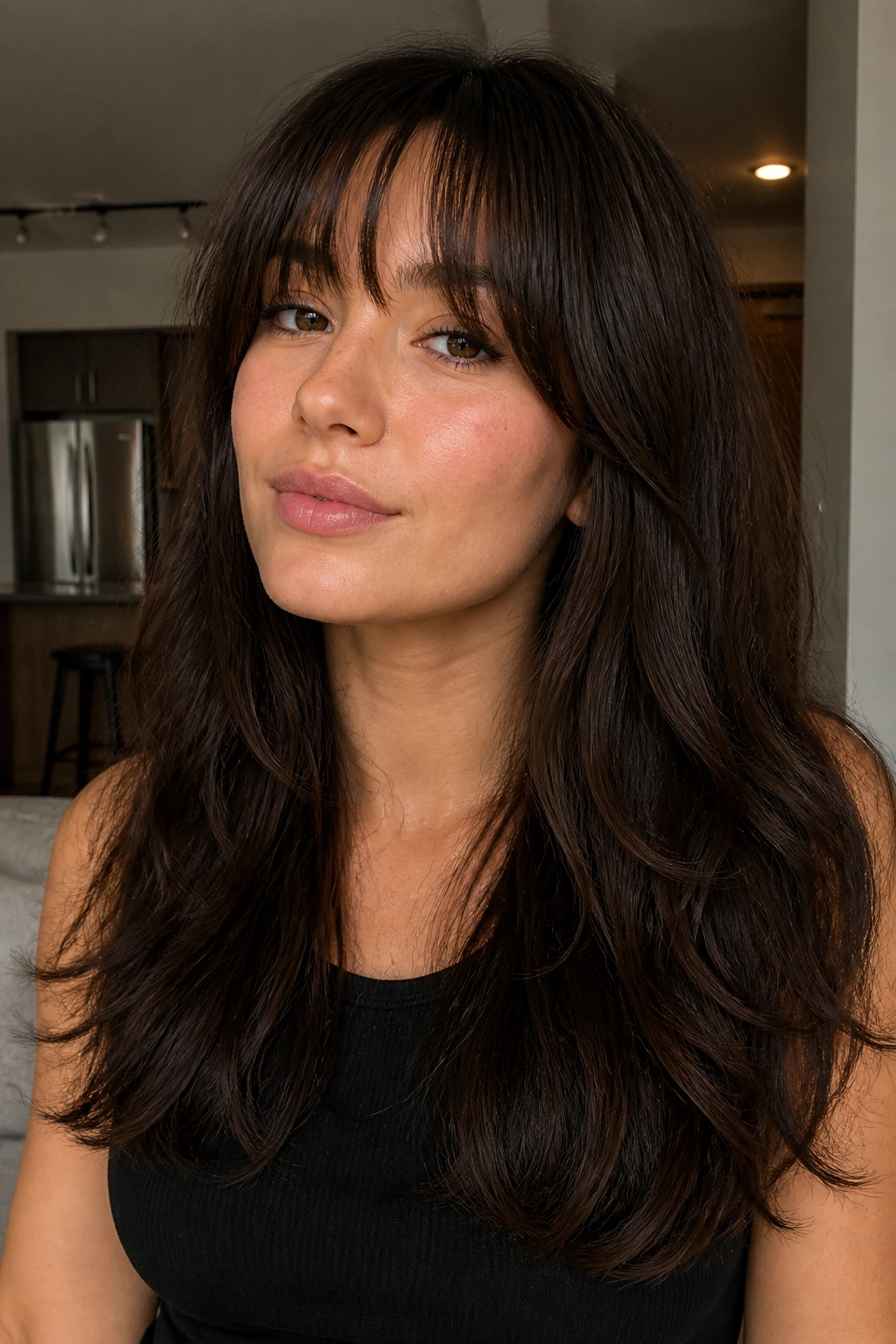
Soft blunt-edge bangs sit in a useful middle zone. They have a bit more presence than a feather-light fringe, but they are still wispy enough to avoid that heavy, helmet-like effect that thick hair can create.
This is a good option when your hair density is high and you want the front to feel controlled. A tiny bit of bluntness keeps the shape readable. The wispy ends keep it from getting boxy. That mix matters on long hair, because the length already brings visual weight; the bang does not need to be feather-thin to balance it.
I’d ask for a fringe that sits around the brows with ends softened by point cutting. If the stylist thins it too much, the fringe can split in weird places and expose too much forehead. If they leave too much weight, it turns dense fast. There’s a narrow line here, and that’s okay.
This is the one that looks like it means business, but in a soft voice.
12. Invisible Fringe That Lives in the Front Layers

An invisible fringe is for people who want the effect of bangs without the obvious bang line. The front pieces are there, but they live inside the layers and only show themselves when the hair moves. Sneaky. In a good way.
Unlike a classic fringe, this version does not demand attention right away. The shortest pieces usually start around the cheekbone or just above it, then melt into longer face-framing lengths. The result is softness around the face without a hard separation from the rest of the hair.
This works well if you’re testing the waters. It also suits anyone who likes to wear their hair up or half-up, since the front pieces can disappear into a ponytail and come back out when you want them.
Ask for long, blended front layers with a few shorter wisps near the brow. That tiny detail keeps the style from reading as “just layers” and gives it enough shape to matter.
13. Wavy Wispy Bangs That Move With Natural Texture
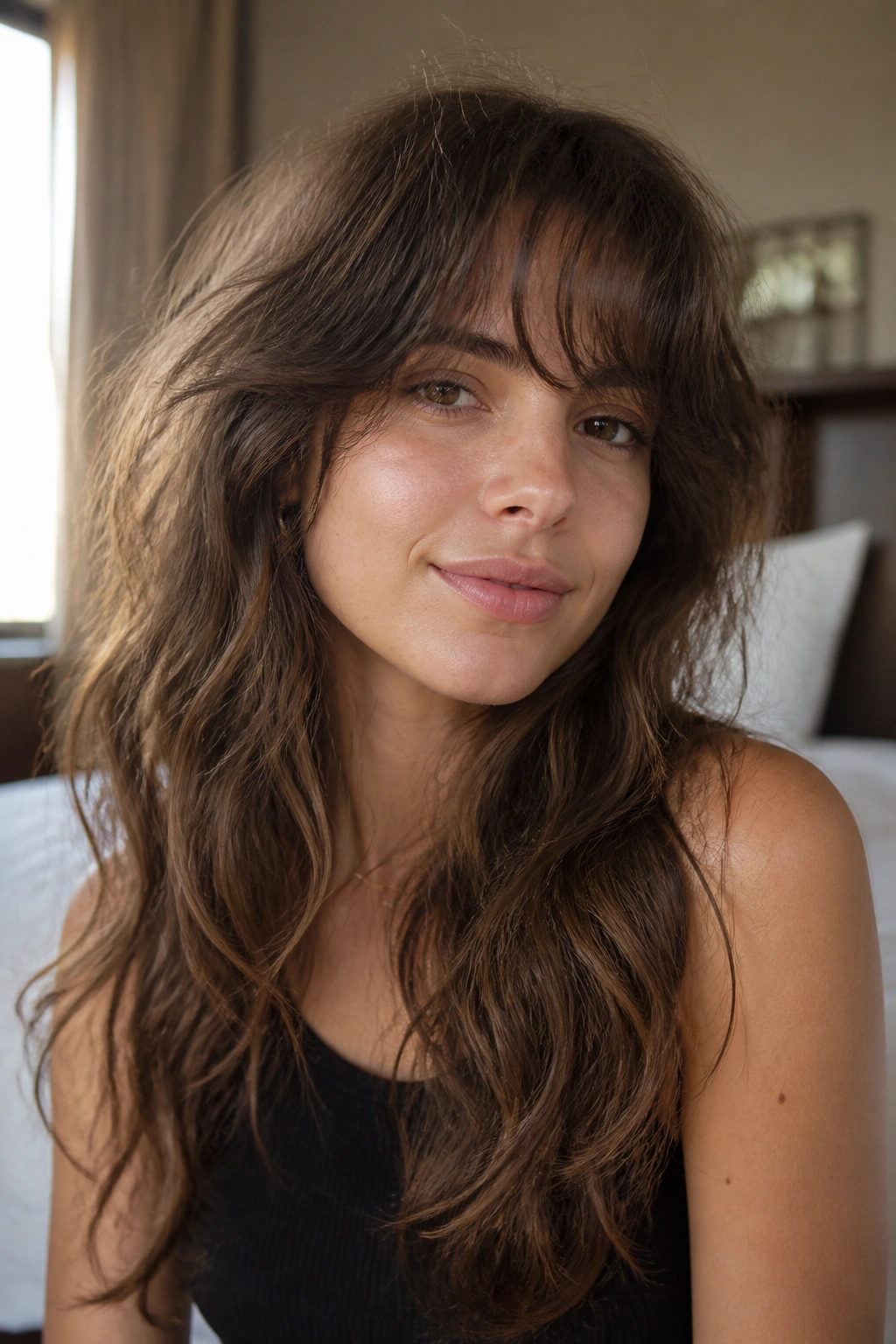
Wavy hair and wispy bangs can be a very good match, provided the cut respects the wave pattern. If the fringe is too short, the waves spring up and the bang disappears. If it is too long, it can hang into the eyes. The sweet spot sits somewhere between those two.
What Makes It Different
The wave itself does some of the styling for you. You do not need a perfectly smooth finish. You need a fringe that bends with the rest of the hair and keeps a little separation at the ends.
- Cut the fringe dry or nearly dry so the wave pattern is visible.
- Use a diffuser on low heat if you want movement without frizz.
- Skip heavy creams that make the front pieces clump.
The nice part is how casual it looks. Wavy wisps give long hair a softer front edge, especially when the rest of the hair falls in loose bends. If your hair already has texture, fighting it is a waste of time. Work with it. Much easier.
14. Curly Wispy Bangs Cut for Shrinkage

Curly bangs do not have to be short to work. In fact, they usually should not be. Shrinkage is real, and curls bounce up more than most people expect once the hair dries.
The best curly wispy bangs are cut with the curl pattern in mind, often while dry or at least mostly dry, so the stylist can see where the fringe will actually land. What looks like chin length when wet can land at the cheekbone when it’s dry. That is not a mistake. That is how curly hair behaves.
Long hair gives curly fringe a nice frame, because the bangs can sit above the curls and still feel connected to the rest of the style. The ends should be broken up a bit so they do not sit in one thick block. A touch of curl cream and light gel can help, but don’t drown it. Curly bangs look best when they move.
If you want softness around the face without flattening your curl pattern, this is one of the most useful options.
15. Micro Wispy Bangs for Long Hair With Attitude
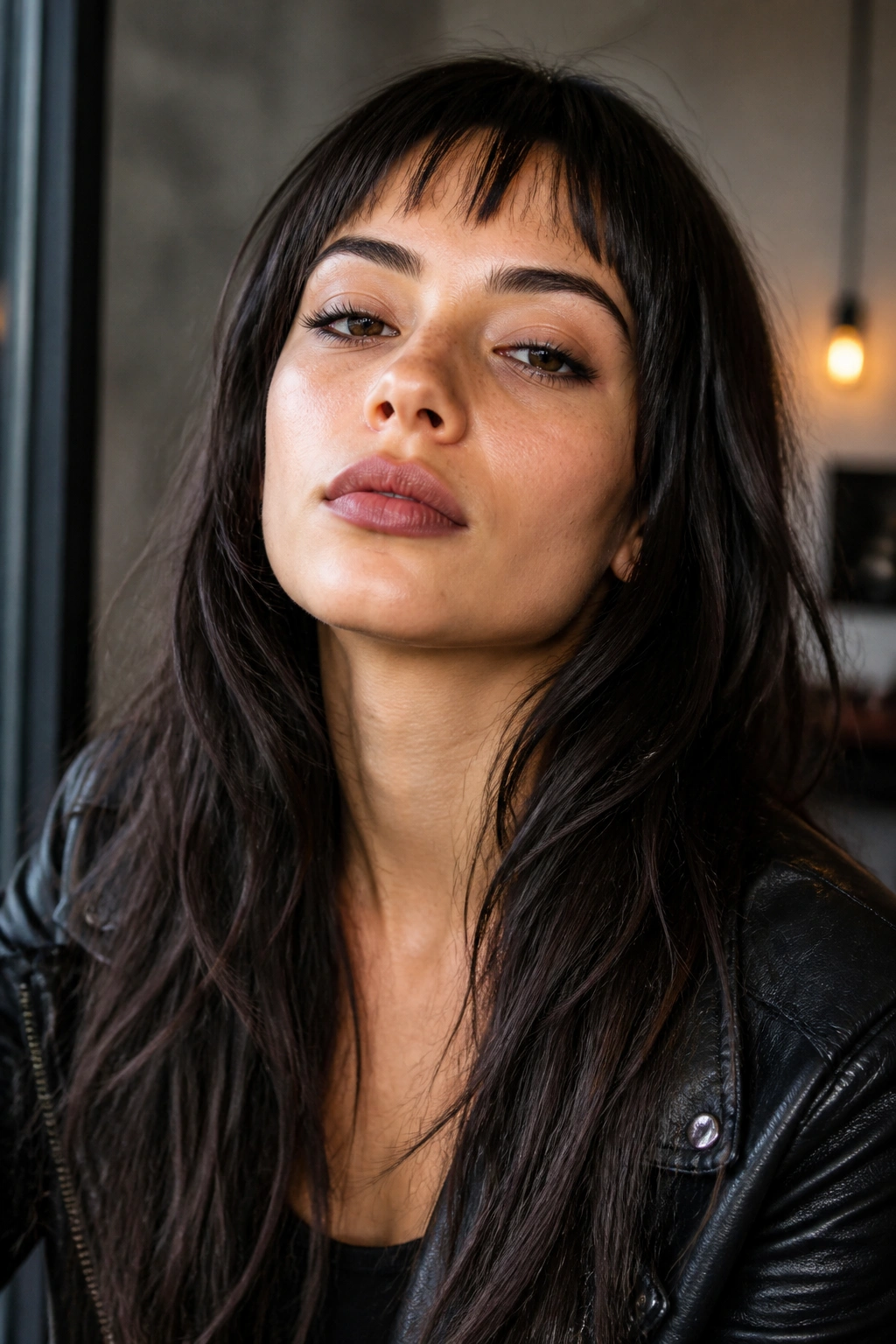
Can micro bangs be soft? Yes, if the cut is handled carefully. The idea is not a hard little block of hair across the forehead. It’s a short fringe with broken ends, a little separation, and enough texture to keep it from feeling severe.
Micro wispy bangs on long hair create a sharp contrast, which is the whole point. The length underneath stays long and flowing while the front grabs attention. That contrast can be striking on straight hair, especially when the fringe sits above the brows and the ends are point-cut to look a little uneven.
How to Make Them Soft
Ask for the fringe to be cut with a light point cut rather than a blunt snip. Keep the edges broken up. If the bang line is too clean, it loses the wispy feeling fast.
This style needs more maintenance than a longer fringe. It grows out quickly, and a trim every 3 to 4 weeks keeps the shape from sliding into awkward territory. If you want a low-maintenance bang, skip this one. If you like a little drama, it’s a fun choice.
16. Peekaboo Fringe That Hides Under the Part

A peekaboo fringe lives in the shadows, which is perfect for people who want softness without a full-on bang commitment. You only really see it when the hair moves or when the front pieces are swept open. Otherwise, it sits under the part and blends in.
That hidden quality makes it easy to wear with long hair. It can disappear into a loose ponytail, a half-up knot, or a simple blowout. The fringe gives the face a bit of framing, but it never feels like the haircut is shouting at you.
- Good for days when you want your forehead partly covered, not completely boxed in.
- Works especially well with side parts and loose waves.
- Ask for the shortest pieces to sit around the brow or upper cheekbone.
This is one of the most practical styles on the list if you change your mind a lot. It is there when you want it and quiet when you don’t.
17. Grown-Out Wispy Bangs That Still Look Intentional

There is a sweet spot in the grow-out phase where bangs stop feeling like a project and start looking cool again. That’s the shape this section is about. The fringe is long enough to move into the front layers, but still short enough to show that it was designed, not neglected.
This style saves a lot of people from the awkward in-between stage. You keep some softness around the face, but you are not stuck trimming every few weeks. A stylist can shape the ends so they taper near the temples and cheekbones, which keeps the grown-out fringe from hanging in one dull curtain.
One trick helps a lot: dry the front away from the face, then tuck the longest pieces behind the ears for a minute while they cool. It gives the fringe a soft bend and stops it from dropping straight down.
This one ages gracefully. That’s not a bad thing to want.
18. Chin-Length Curtain Bangs That Travel Into the Cheeks

Chin-length curtain bangs are the more dramatic cousin of the shorter curtain fringe. They start around the brows or slightly below, then keep going until they brush the cheek and jaw. On long hair, that extra length helps the front blend with the rest of the cut instead of stopping abruptly.
Unlike shorter curtain bangs, this version gives you more styling room. You can tuck it, flip it, bend it under, or wear it loose with soft waves. The length also makes it easier to live with if you are nervous about committing to a shorter bang.
I like this shape for round and heart-shaped faces, where the lower sweep helps balance the front of the face. The styling is straightforward: use a large round brush, about 2 inches, and curve the ends slightly away from the face. Too much curl here looks dated fast. A gentle bend is enough.
If you want a fringe that feels grown-up and flexible, this is a strong one.
19. Feathered Volume Bangs With a Lifted Crown
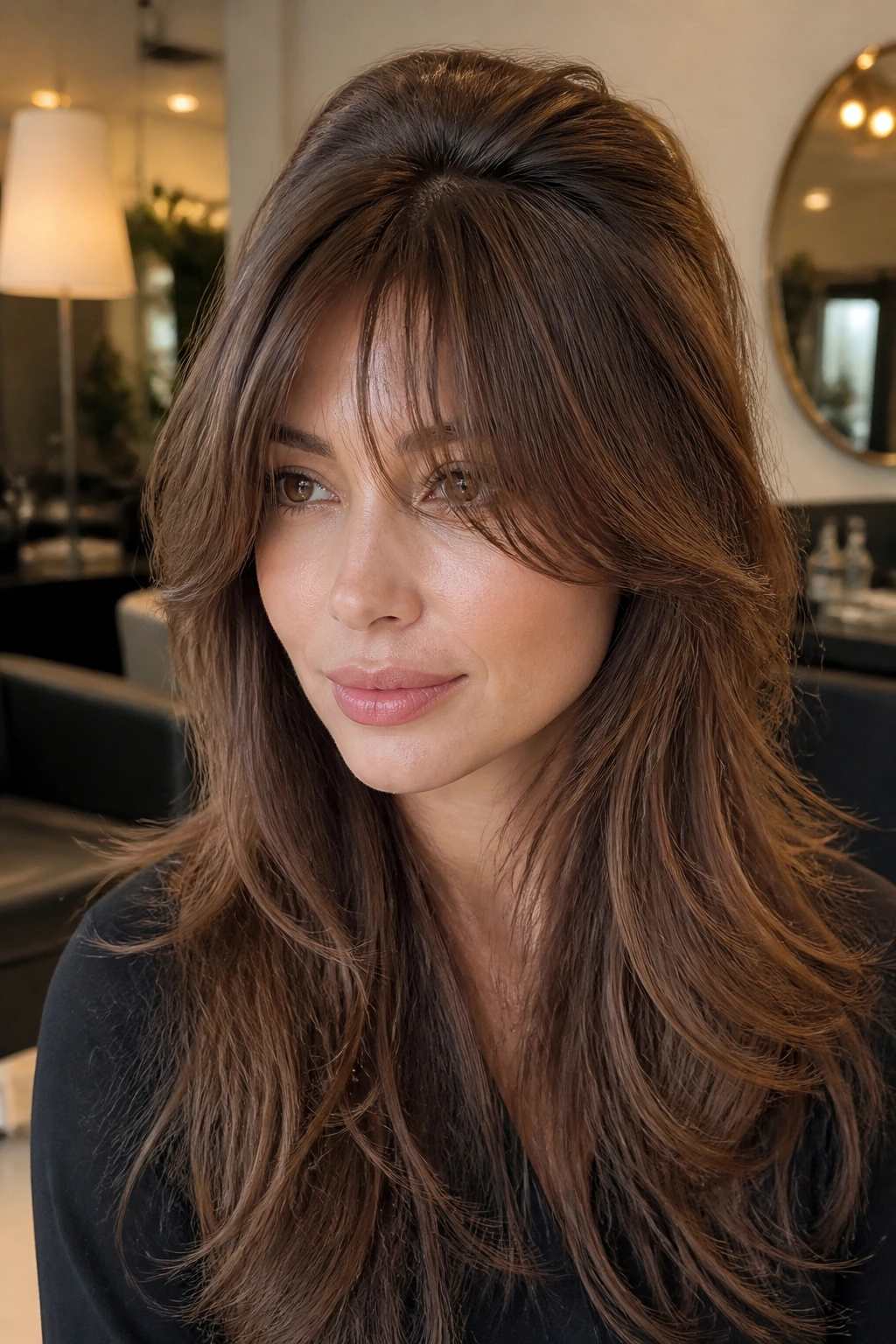
Feathered volume bangs are for people who want lift, not just softness. They add air at the front of the haircut, which can be useful when long hair starts to feel flat around the face. A little height at the crown changes the whole silhouette.
What to Ask For
Ask your stylist to keep the shortest point around mid-brow, then feather the outer pieces so they float into the sides. A small amount of internal layering near the root can help the fringe stand away from the forehead instead of lying down.
- Works well on medium to thick hair.
- Likes root-lift spray and a round brush.
- Needs a gentle blow-dry, not a blast of high heat.
The payoff is shape. The front of the hair looks awake, which sounds dramatic, but that’s honestly what people are trying to get when they ask for “volume” and can’t quite explain it. This cut gives that without turning into a full retro blowout.
20. Romantic Side Fringe With Soft Ends

A romantic side fringe is the easiest way to soften long hair without changing the haircut underneath. It slides across the forehead, brushes the cheek, and gives the whole style a more delicate shape. Nothing severe. Nothing stiff.
This is the one I’d point to if someone wants softness more than a statement. The side fringe should be long enough to move — usually around the cheekbone or a little lower — with ends that are broken up just enough to keep them from looking blunt. The line matters less than the movement.
It also plays well with waves, loose curls, and even a simple low ponytail. If you’re the kind of person who likes to pin your fringe back on busy mornings, this shape makes that easier. One bobby pin. Done.
Long hair can hold a lot of weight on its own. A romantic side fringe lightens the front without asking the rest of the haircut to change its personality. That’s why it works.
Final Thoughts
The best-looking fringe is the one that still behaves on day three. That matters more than the photo that looked good under salon lights.
If you’re choosing between two wispy bang styles for long hair, ask for the longer version. You can always trim another half-inch later. You cannot put it back once it’s gone, and bang regret is a tedious little chore nobody needs.
Bring a photo, yes. Bring two if you can — one for the shape and one for the length. Then point to the exact spot where you want the shortest piece to land. That tiny bit of clarity saves a lot of awkward grow-out time.
