



Long hair can swallow a bad fringe in about ten seconds. Side swept bangs for long hair fix that by putting movement around the face without chopping off the length you fought to keep.
The trick is not choosing any side bang. A soft feathered sweep behaves nothing like a blunt diagonal fringe, and a curly version needs a different cut plan than a straight one. That part gets ignored in salon-chair talk all the time, which is why so many people end up with bangs that look cute for one blow-dry and awkward for the next three weeks.
A good side sweep should do three things at once: open the eyes, connect to the rest of the haircut, and grow out without looking like a mistake. If it fails any one of those jobs, you’ll notice fast.
So the styles below stay practical. Some are polished, some are piecey, some are built for thick hair or fine hair or a life that includes ponytails, hat hair, and the occasional no-shower morning.
1. Feathered Side Swept Bangs That Melt Into Long Layers
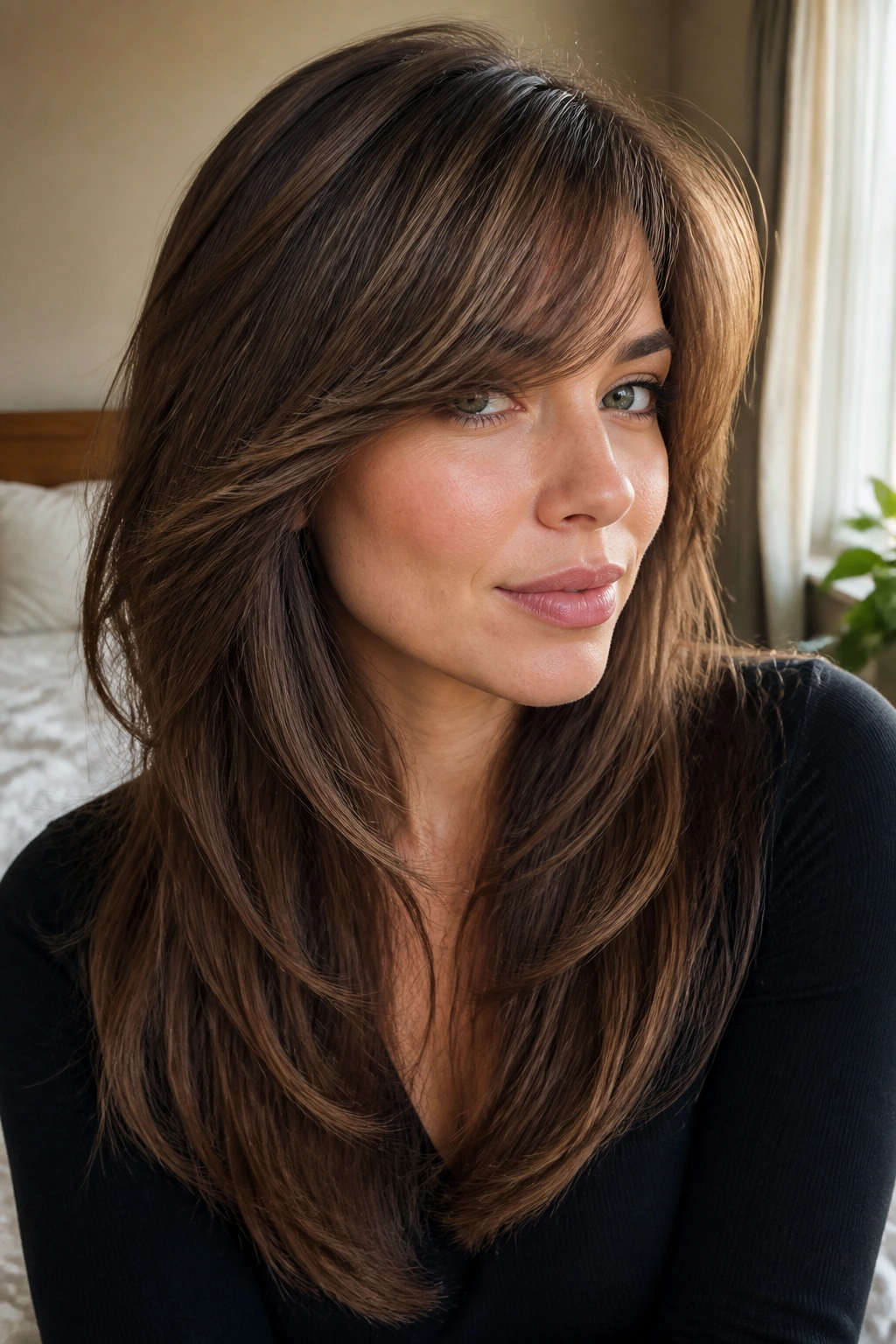
This is the safest place to start if you want movement without drama. Feathered side swept bangs are soft at the ends, light around the temple, and blended enough that they don’t look like a separate haircut sitting on top of your head.
Why It Works
The feathered finish matters more than people think. Instead of a blunt edge, the strands taper as they move across the forehead, so the bang reads as part of the whole haircut rather than a hard line. On long hair, that softness keeps the front from feeling heavy.
It also buys you a little flexibility. If your part shifts during the day, the bang still looks intentional. That’s the part I like most.
How to Ask for It
- Keep the shortest point near the outer brow.
- Let the longest piece reach the cheekbone or just below it.
- Ask for soft point-cutting at the ends, not a harsh slice.
- Keep the layer that connects the bang to the side of the hair long enough to tuck behind the ear.
Best for: oval, heart, and soft round faces.
Styling tip: blow-dry the bang from side to side with a small round brush and finish with a cool shot so the bend stays loose, not puffed up.
2. Deep Side-Part Curtain Bangs For Long Hair
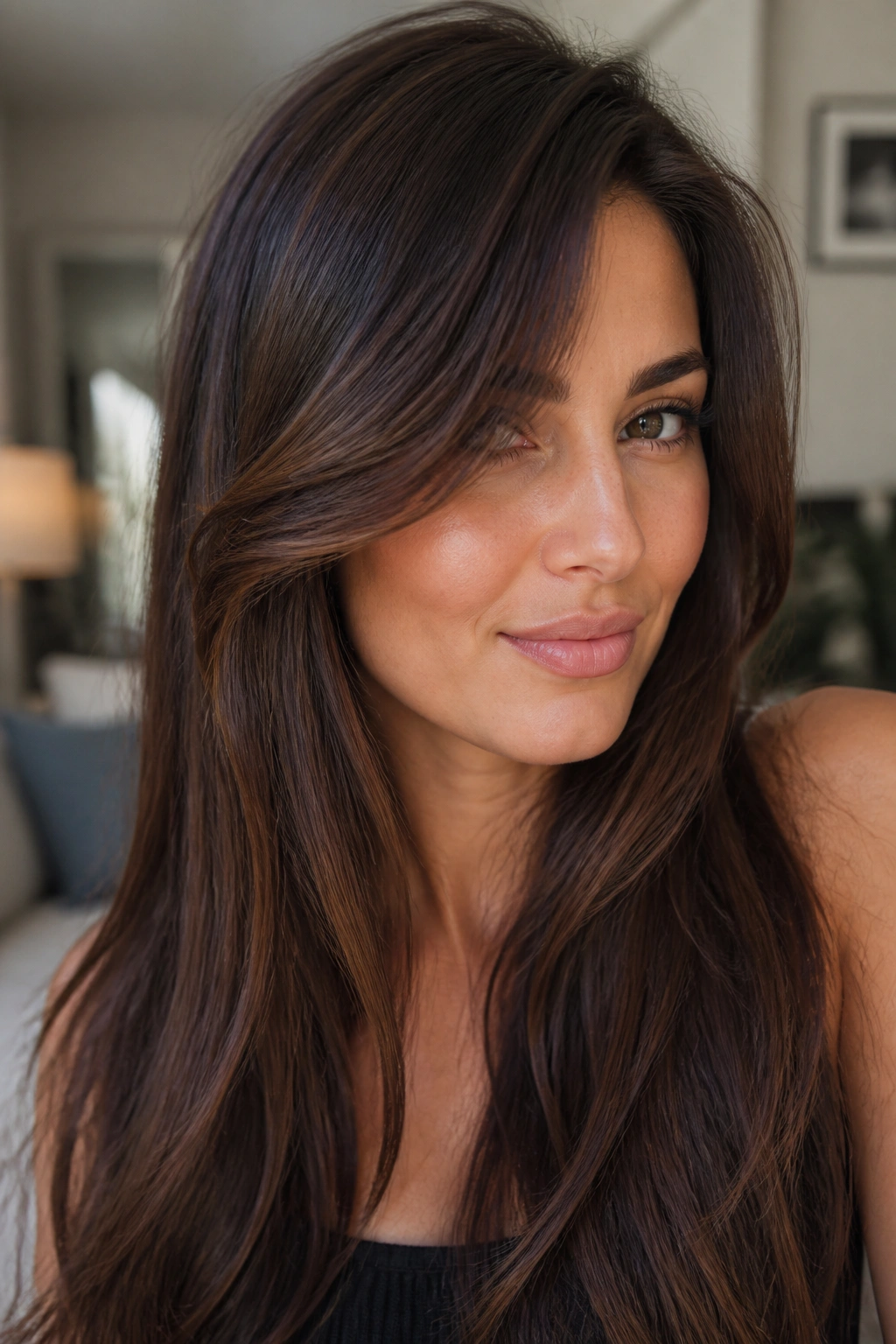
A deep side part changes the whole mood of long hair. Suddenly the bang feels more deliberate, more face-framing, and a lot less like a forehead cover-up.
These work especially well if you like the easy openness of curtain bangs but want the front to sweep harder to one side. The result is a soft diagonal frame that starts near the center and drifts outward, which gives long hair a little lift around the cheeks.
I like this style on people who wear their hair down more than up. The part gives the length some movement at the crown, and that matters. Straight, one-length long hair can sit there like a curtain rod if you don’t break it up somehow.
You’ll want a root-lifting mousse or spray at the front, especially if your hair is fine. Brush the bang away from the face while drying, then let it fall back into place. The bend should look like it happened naturally, not like you spent twenty minutes forcing it.
Quietly elegant. That’s the vibe here.
3. Brow-Skimming Side Bangs With A Cleaner Edge
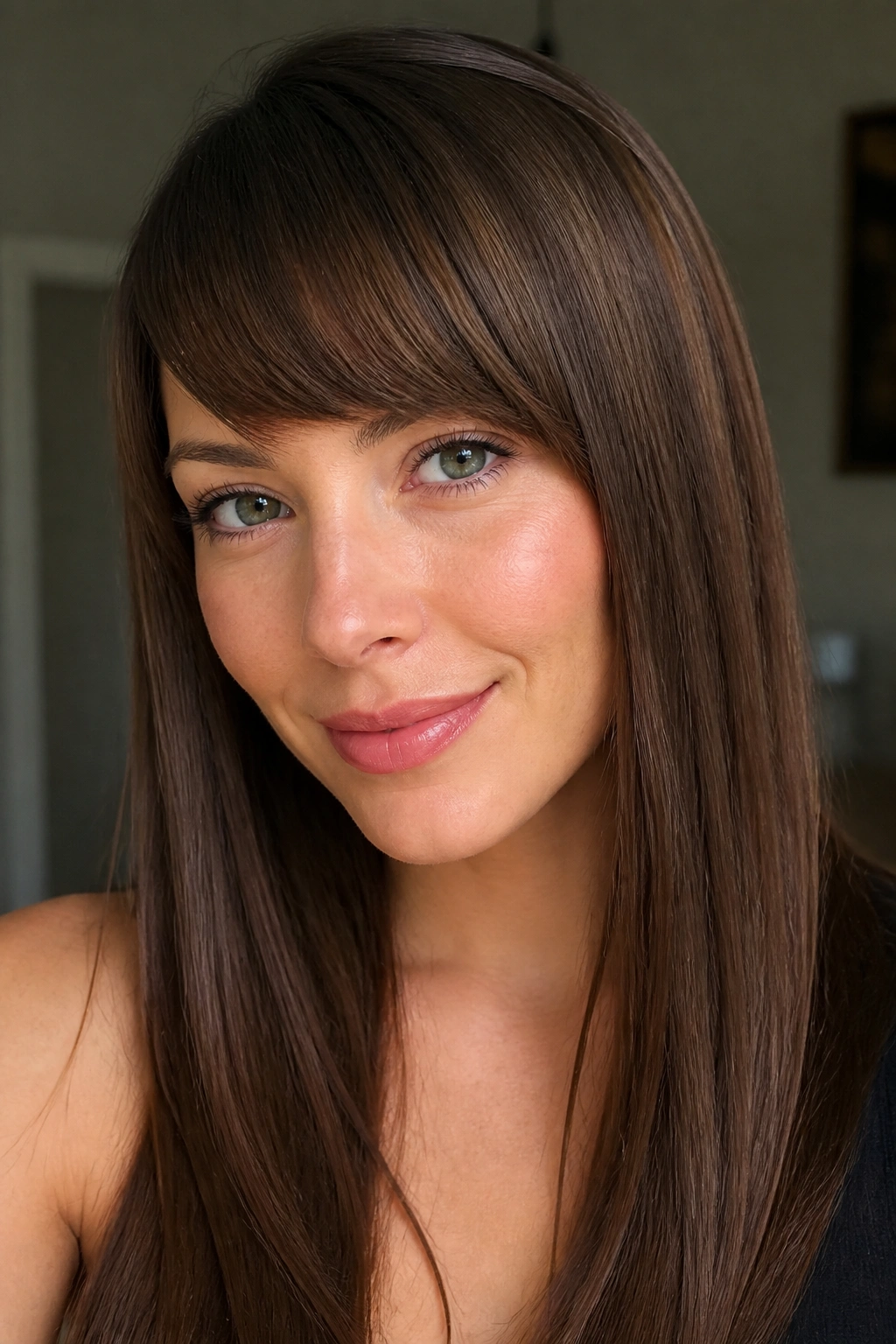
Can a side bang be short and still feel grown-up? Yes, if the line is clean. Brow-skimming side bangs are the sharper cousin in this group, and they can look excellent on long hair when you want the face to stand out a little more.
The key is that these don’t need to be fluffy or broken up at every strand. A cleaner edge gives them more shape, which is useful if your hair tends to get fuzzy in humidity or if your features disappear under softer fringe.
What To Ask Your Stylist
- A shortest point just above the outer brow.
- A diagonal fall toward the cheekbone.
- Enough density that the bang doesn’t split in the middle.
- Minimal thinning at the ends.
This style likes a flat brush and a quick pass with a blow-dryer nozzle. If you have straight hair, that’s even easier. If you have waves, use a touch of smoothing cream and wrap the front section around a brush for a few seconds after drying.
One caution: this shape needs regular trims. If you let it grow too long, it turns into an awkward half-bang faster than people expect.
4. Piecey Side Swept Bangs With Texture And Grit
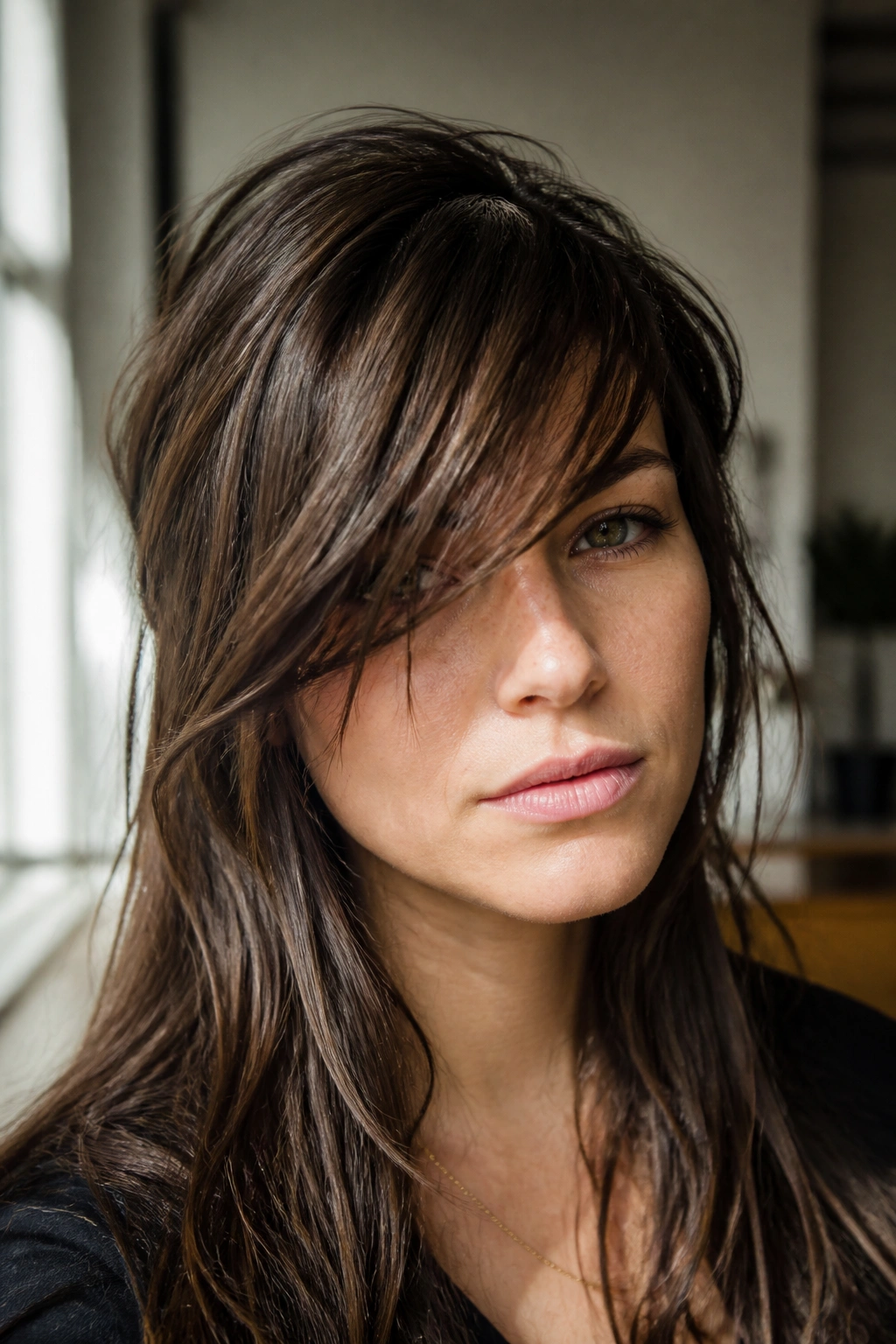
Some bangs should look polished. These are not those bangs.
Piecey side swept bangs are what I reach for when the rest of the hair has movement, layers, and a little lived-in texture. The strands separate on purpose, so you get little visible ribbons across the forehead instead of one solid panel of hair.
That separation changes the mood immediately. It makes long hair feel less formal, and it works especially well with cuts that already have some internal layering. A blunt, dense perimeter can fight this look. A softer cut lets it breathe.
You’ll want a light texturizing spray or a tiny bit of styling paste warmed between your fingers. Nothing heavy. Too much product turns the bang stringy, and that’s a fast way to ruin the effect.
- Blow-dry the front in the direction of the side part.
- Pinch a few strands apart while it’s still warm.
- Mist lightly from 8 to 10 inches away.
- Let the ends stay a little imperfect.
Best for: casual wear, layered cuts, and hair that looks better with second-day texture.
This style has a bit of attitude. Not a lot. Enough.
5. Long Side Bangs Blended Into Face-Framing Layers
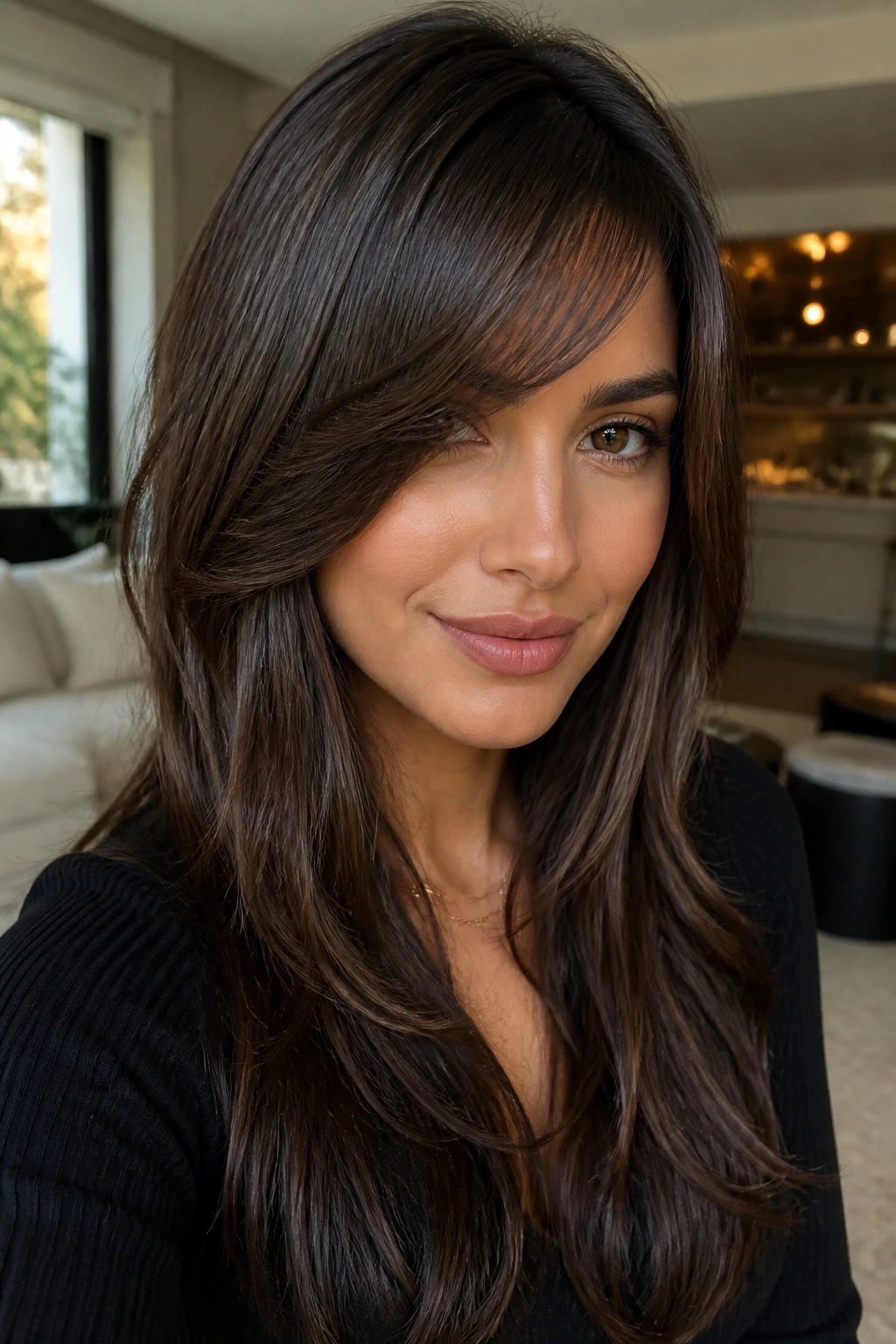
This is the version for people who don’t want anyone to know where the bang stops and the haircut begins. Long side bangs blended into face-framing layers are the most seamless option here, and they’re underrated.
The bang starts as a shorter front piece, then fades into the rest of the layers around the cheek and jaw. On long hair, that creates a soft path for the eye to follow. You get shape without a visible break.
It’s a smart choice if you’re nervous about commitment. The grow-out is gentle, which means you don’t get that weird “my bangs are in the in-between stage” look as fast. And because the length connects so naturally to the rest of the cut, you can tuck it back, pin it, or let it fall forward depending on the day.
This is also one of the easiest side sweep styles to wear with straightening, curling, or air-drying. It doesn’t need a perfect finish. It just needs enough bend to show that the front was planned.
If you like long hair but still want some face structure, this is a very good compromise.
6. Side Swept Bangs For Curly And Coily Long Hair
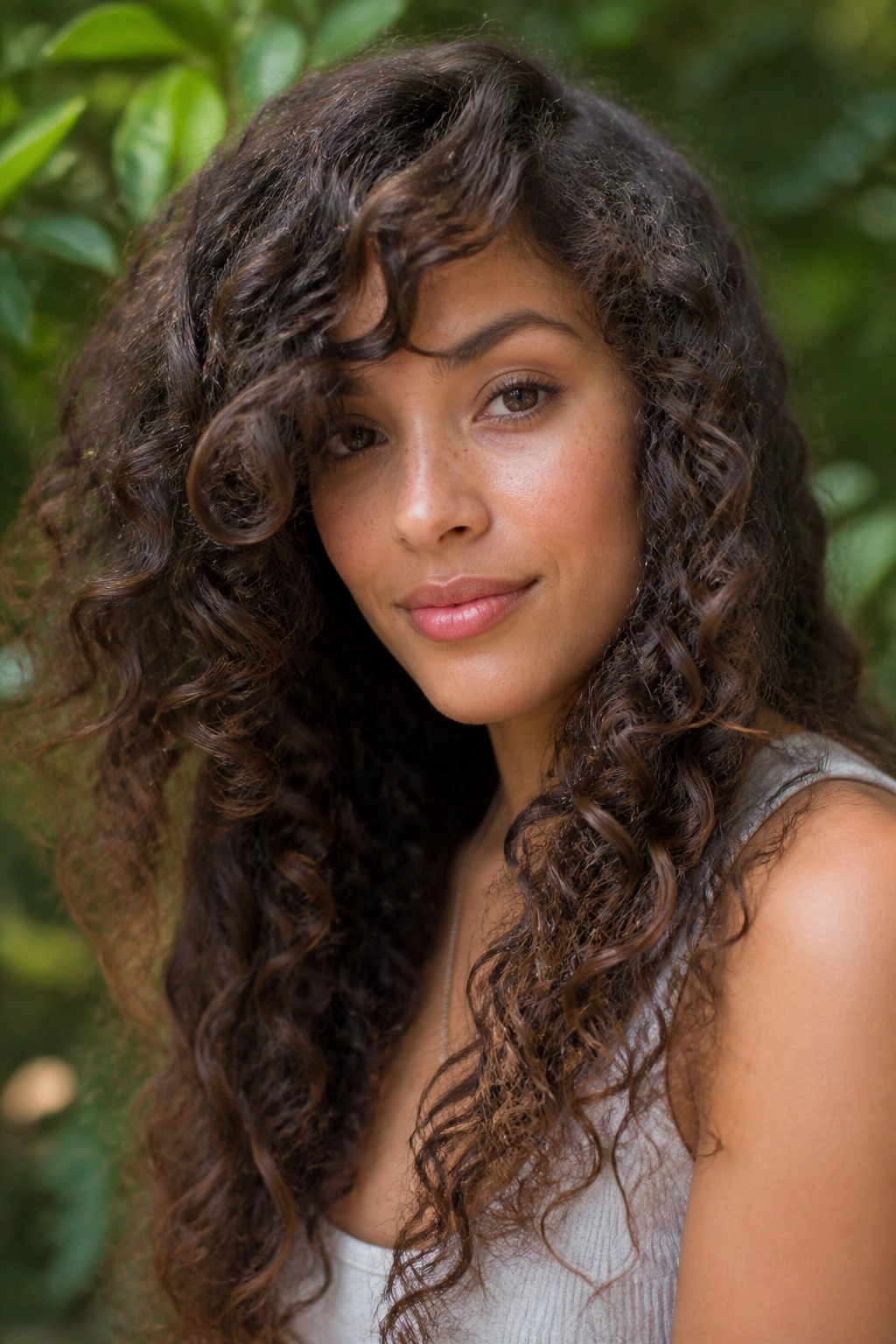
Curly hair needs a different plan. Side swept bangs for long hair with curl cannot be cut like straight hair and expected to behave. They spring up, shift side to side, and often sit shorter than they looked in the chair.
That’s why dry cutting matters so much here. A stylist who cuts curly fringe while the hair is dry can see the real shape, the real shrinkage, and the real direction of the curl pattern. Wet curls lie. They just do.
What To Watch For
- The front should be left longer than you think.
- The shape should follow the natural curl direction.
- A side part often works better than forcing a center split.
- Heavy thinning can make the bang frizzy fast.
Use curl cream and a diffuser, or let the section air-dry with a clip holding it gently to the side. Don’t brush it dry. That part turns into frizz city in about two minutes.
This style is especially good if you wear your curls loose and want the front to open the face instead of hiding it. It gives shape without flattening the curl, which is the whole game here.
7. Soft Wavy Side Swept Bangs That Bend With The Hair
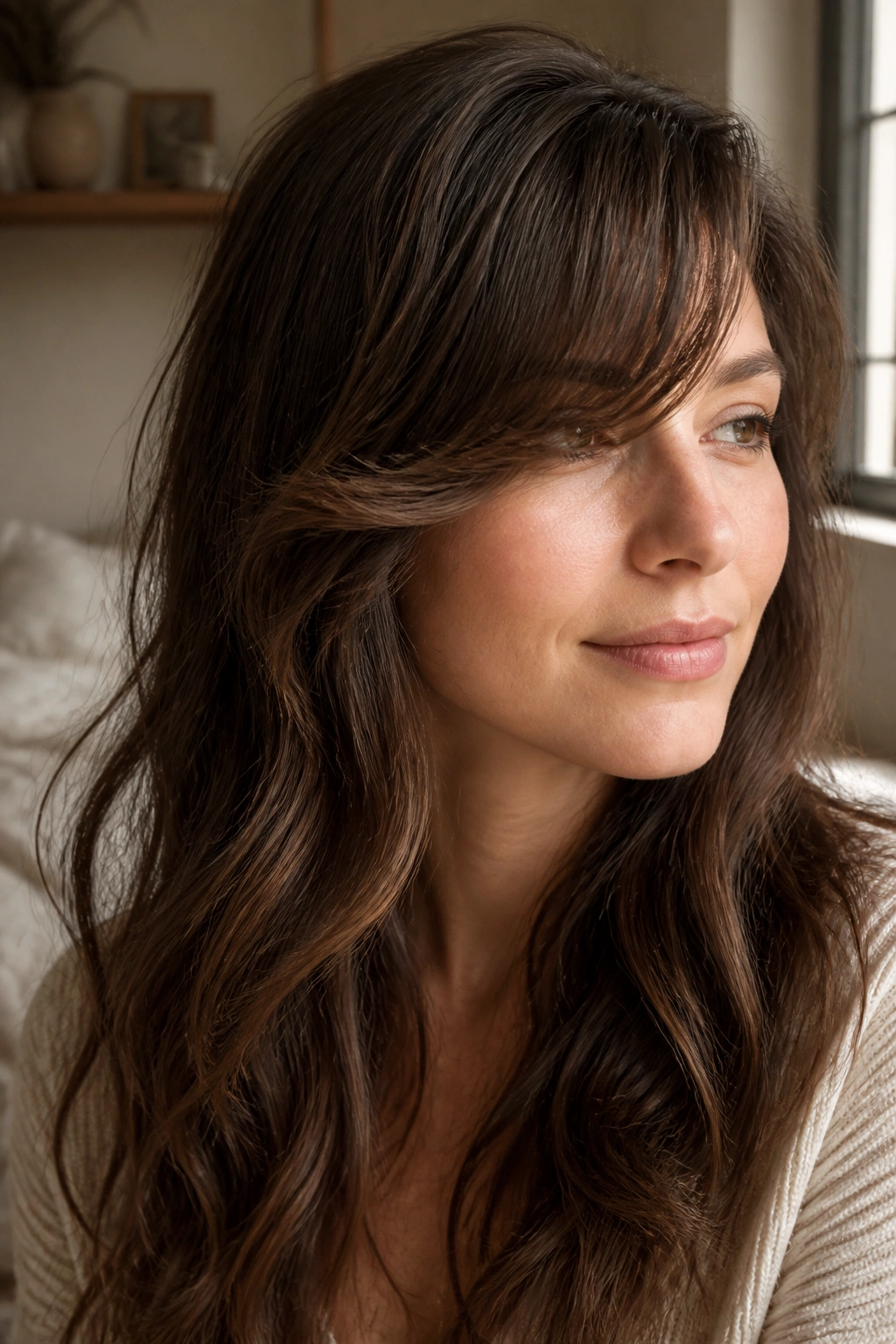
Wavy hair is a sweet spot for side swept bangs. It has enough bend to look lived-in, but not so much shrinkage that the length becomes unpredictable every time it dries.
The best version of this style leans into the wave instead of fighting it. Let the bang sit slightly curved, then guide it to one side while the hair is still damp. If you twist the front section once or twice before drying, it will fall into that soft bend people always pretend happened by accident.
A small barrel wand can help, but it doesn’t have to be a full curl. A loose bend at the ends is enough. The point is motion, not spirals.
How To Style It
- Mist the front with a light heat protectant.
- Dry the roots first so they don’t collapse.
- Wrap only the last 2 to 3 inches around a wand if needed.
- Break the wave apart with your fingers, not a brush.
This look pairs nicely with long layers because the whole haircut already has movement. It feels relaxed in a good way, not messy in a lazy way.
And yes, that difference matters.
8. A Blunt Side Sweep With A Sharp Finish
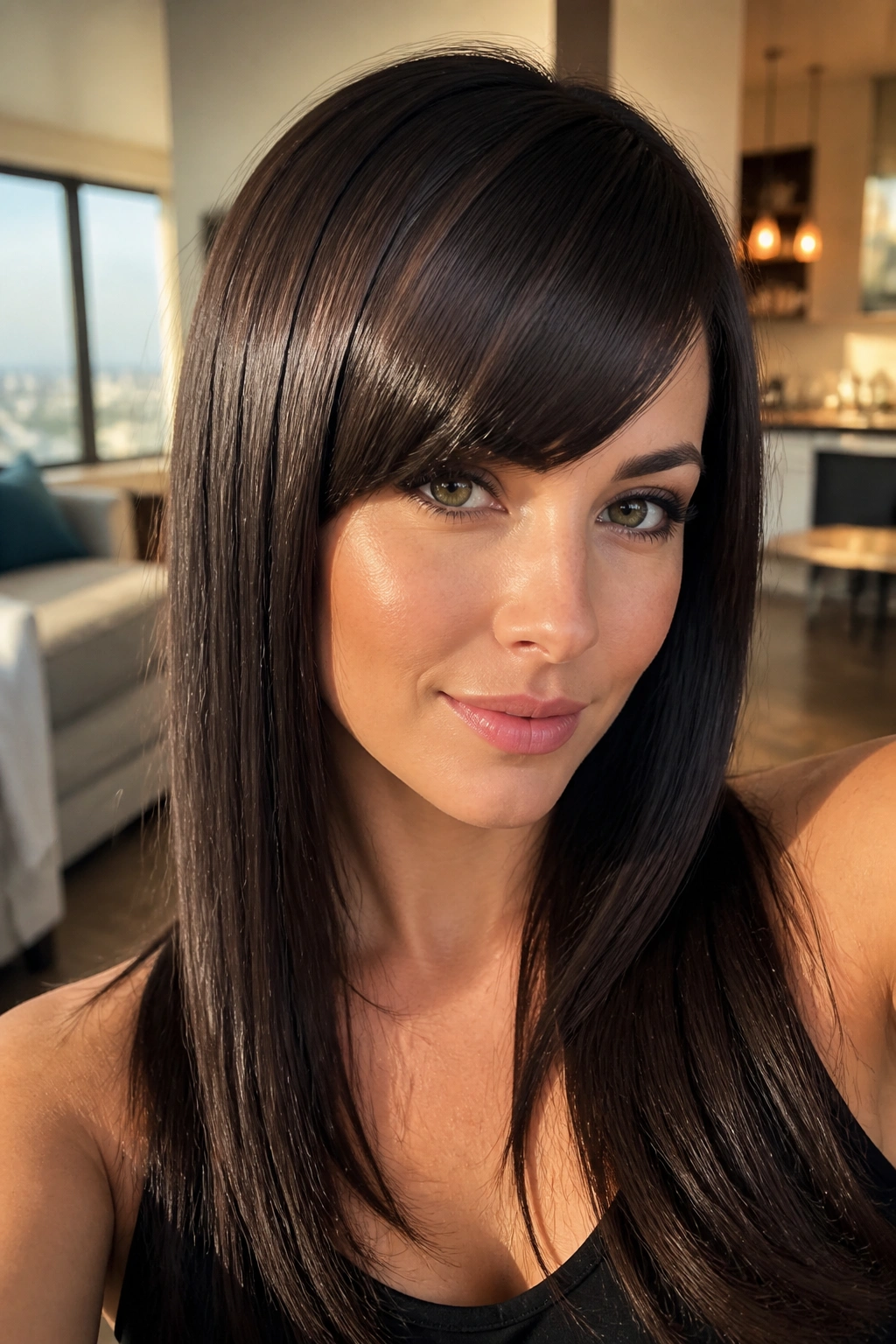
Not everyone wants softness. Some people want a bang that reads from across the room. A blunt side sweep with a sharp finish does exactly that.
The line is denser, the edge is cleaner, and the front has enough weight to hold its shape. On long hair, that can look striking, especially if the rest of the length is sleek or one-length. It gives the haircut a deliberate edge that a feathered bang can’t always deliver.
This style needs a smoother styling routine than the piecey versions. A paddle brush, a controlled blow-dry, and maybe a flat iron pass at a low to medium heat setting are usually enough. Keep the ends clean, not jagged.
It suits people who like strong outlines in a haircut. If you prefer airy, broken-up texture, this will feel too firm. If you like a crisp front and a long clean line through the rest of the hair, it’s excellent.
A blunt side sweep is a little dramatic. That’s the point.
9. Glam Blowout Side Swept Bangs
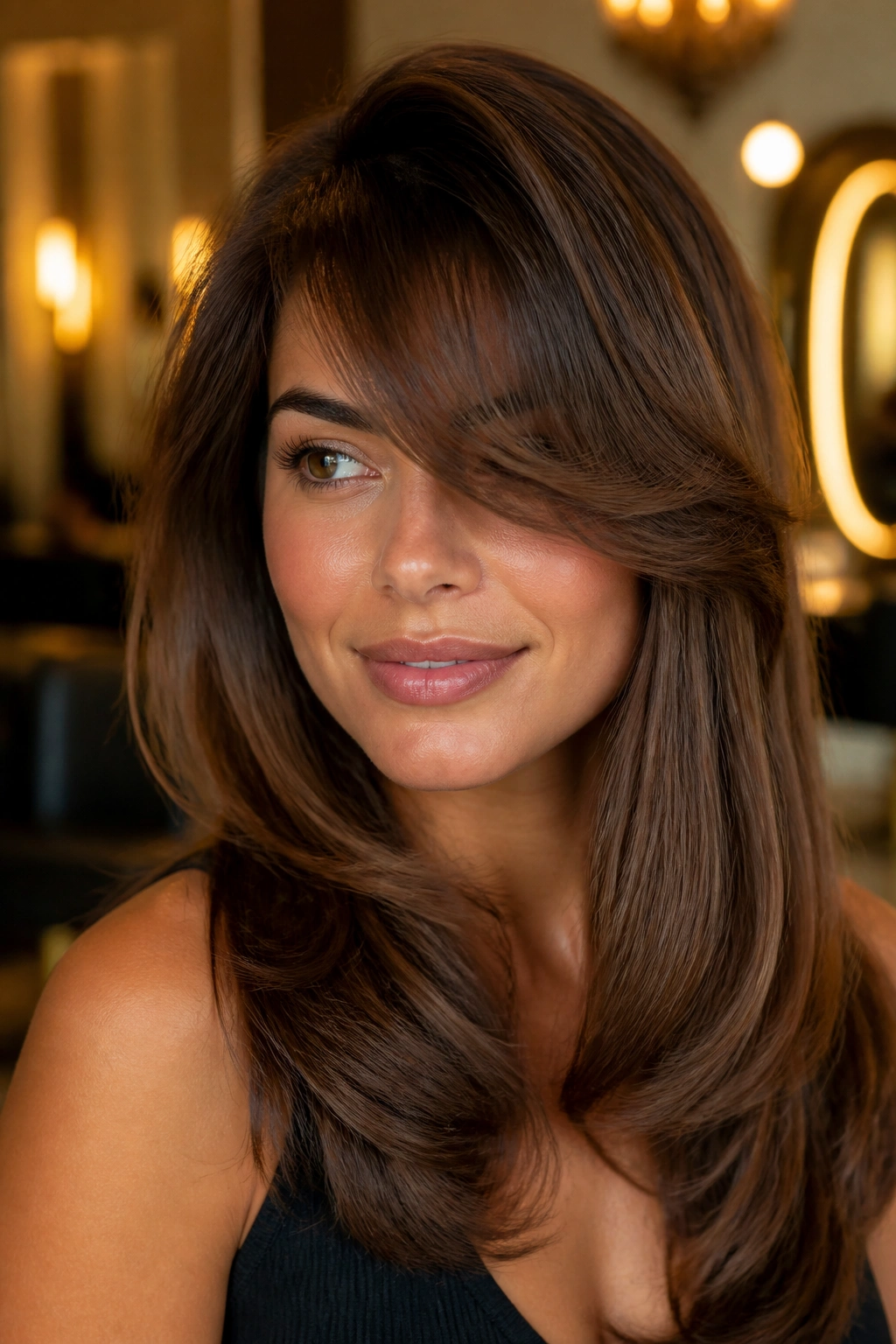
A round brush, warm air, and a good side part can do a lot. Glam blowout side swept bangs are the polished option for long hair, the one that gives you that soft swoop across the forehead and a little lift at the roots.
The bang should curve away from the face, not cling to it. That means you need tension while drying. Pull the section slightly upward and outward with a 1.5- to 2-inch round brush, then roll the ends under just enough to keep them soft. A cool shot at the end locks in the shape.
This style is a favorite for thicker hair because the blowout makes the front look controlled, not bulky. It also photographs well without needing a lot of product, which is useful if you hate that stiff, sprayed-down feeling.
The whole effect is a little old-school in the best way. Full, shiny, and smooth at the front, with long lengths moving behind it.
A good blowout bang should still move when you turn your head. If it stays fixed like cardboard, something went wrong.
10. Side Swept Bangs For Fine Long Hair That Need Lift, Not Weight

Fine hair needs a lighter hand. Side swept bangs for fine long hair should create lift at the front, not collapse under too much length or too much product.
The common mistake is asking for too much thinning. That can leave the bang wispy in a bad way, especially if the hair has little density to start with. A better plan is to keep enough fullness at the root and remove only what the shape truly needs.
What To Avoid
- Over-thinning the ends.
- Heavy creams that flatten the front.
- Bangs that are too short to tuck naturally into the side part.
- Cutting too many short layers around the temple.
A light root mousse, a quick blow-dry with a small brush, and a little lift at the part are usually enough. You don’t need a mountain of product. Fine hair tends to show too much of it anyway.
This style works because it gives fine hair a frame without stealing volume from the rest of the length. That’s the balance.
And if your hair gets oily at the front, a little dry shampoo at the roots helps the bang keep shape between washes.
11. Thick Side Swept Bangs That Keep Dense Hair Under Control
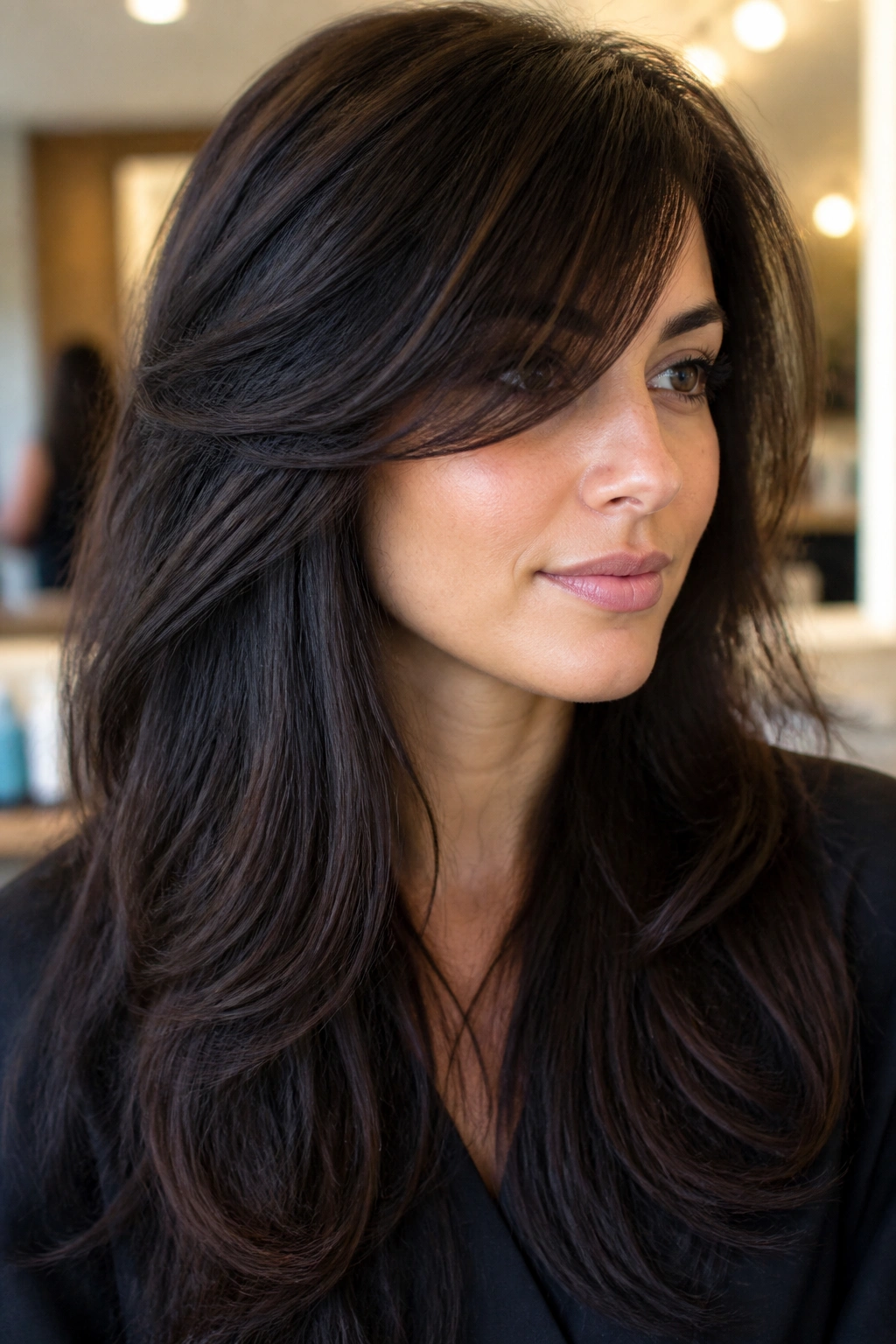
Thick hair can wear a side sweep beautifully, but it needs structure. Thick side swept bangs should be cut with enough weight to stay put and enough internal shaping to keep the front from puffing out.
Unlike fine hair, thick hair usually needs bulk removed from the right places, not just the ends. A stylist may use point cutting or gentle internal layering so the bang sits flatter and bends instead of ballooning. The goal is control, not emptiness.
That’s especially true around the temple. If the side section is carved too aggressively, thick hair can kick out and become annoyingly wide. A softer transition into the rest of the hair keeps the silhouette clean.
- Ask for a longer front section if your hair is coarse.
- Keep the bang heavy enough to hold shape.
- Blow-dry in sections so the roots don’t swell.
- Use a smoothing cream only on the front few inches.
This is one of those situations where less dramatic cutting gives a better result. Thick hair usually looks better with a little more substance in the bang, not less.
12. Shaggy Side Swept Bangs With Airy Layers
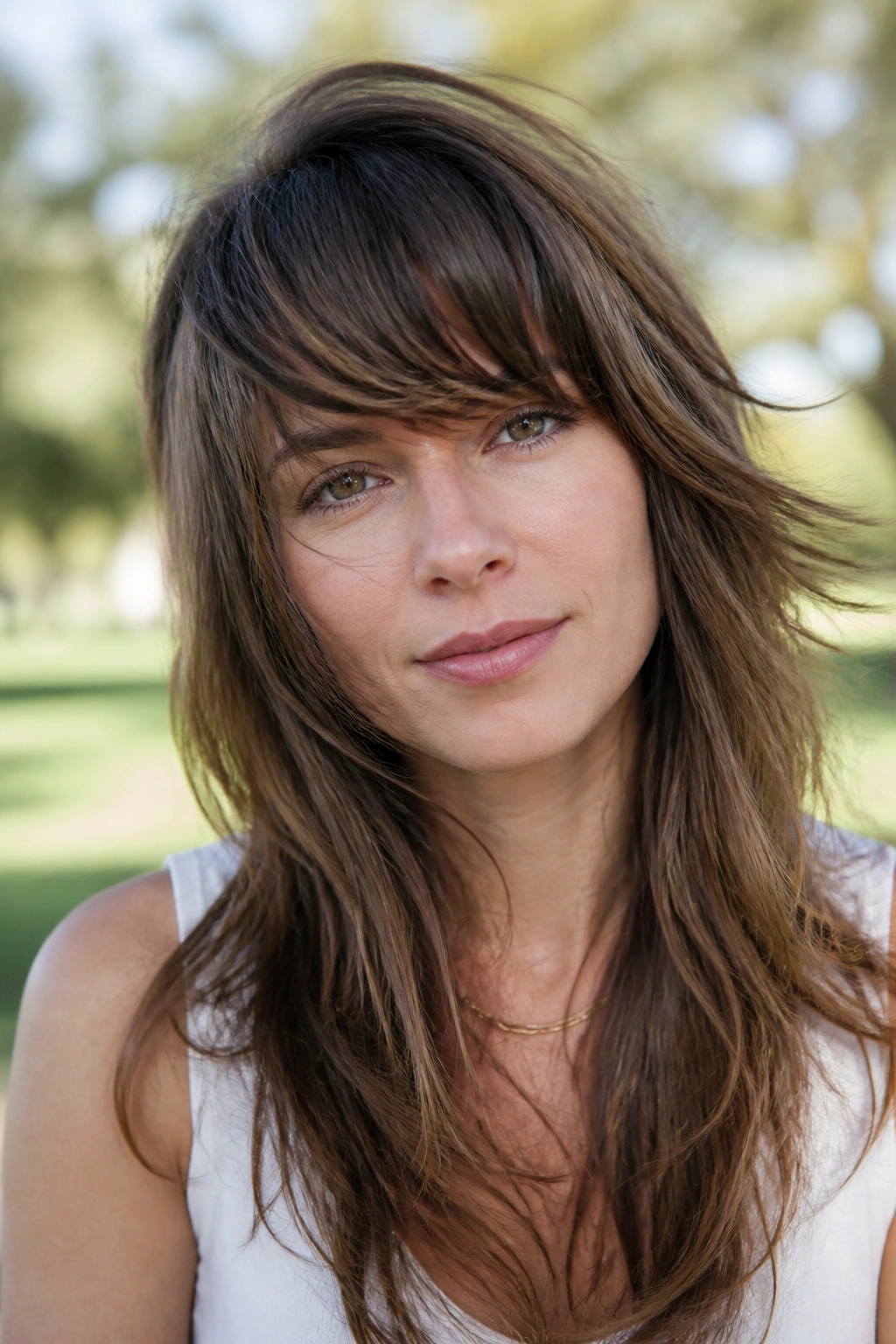
If you like hair that looks a little undone, this is a strong match. Shaggy side swept bangs sit naturally inside a layered haircut, so the front doesn’t feel separate from the rest of the shape.
The beauty here is texture. The bang can be choppy, light, and a little irregular, and that fits the shag instead of fighting it. On long hair, the effect is relaxed but still intentional. You get movement near the face, crown lift, and a cut that doesn’t demand perfection every morning.
This style usually looks better when you stop fussing with it. Air-dry it. Scrunch it. Flip the part and let it settle. A little bend in the front is enough. If you polish it too much, you lose the spirit of the cut.
It’s a good choice if your hair naturally has some wave, or if you like a lived-in finish and don’t mind a bang that moves around during the day.
The shag doesn’t want to be precious. That’s half the charm.
13. Side Swept Bangs That Still Work In Ponytails And Buns
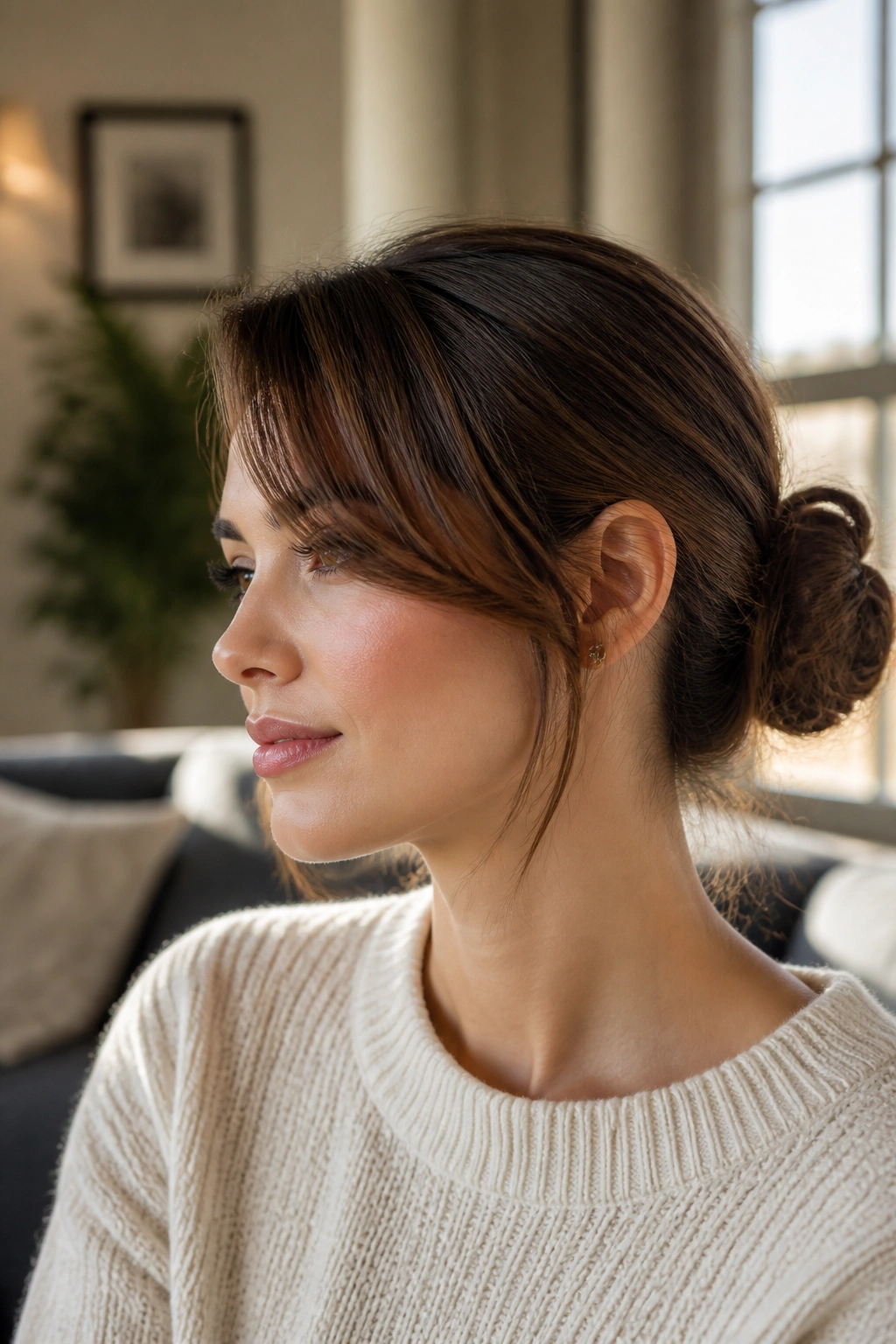
Some bangs are beautiful down and annoying up. These are not those bangs. Side swept bangs that work with ponytails and buns stay useful when the rest of your hair is pulled back, which makes them a real-life choice instead of just a photo choice.
The trick is leaving enough length at the temples so the fringe can be tucked, pinned, or blended into an updo without sticking out like a tiny mistake. If you wear your hair up often, tell your stylist that. It changes where the shortest point should land.
The Useful Part
- Keep the side pieces long enough to tuck behind the ear.
- Let the front sweep into a low ponytail rather than stopping above it.
- Use one bobby pin crossed over another for a cleaner hold.
- Leave a few soft pieces out near the cheekbone if you want movement.
This style is especially good for people who like variety. Down, it frames the face. Up, it still has a job. Not many bangs can say that.
If you’re the kind of person who lives in quick buns, claw clips, and low ponytails, this might be the most practical version on the list.
14. The Grown-Out Side Sweep That Never Looks Awkward
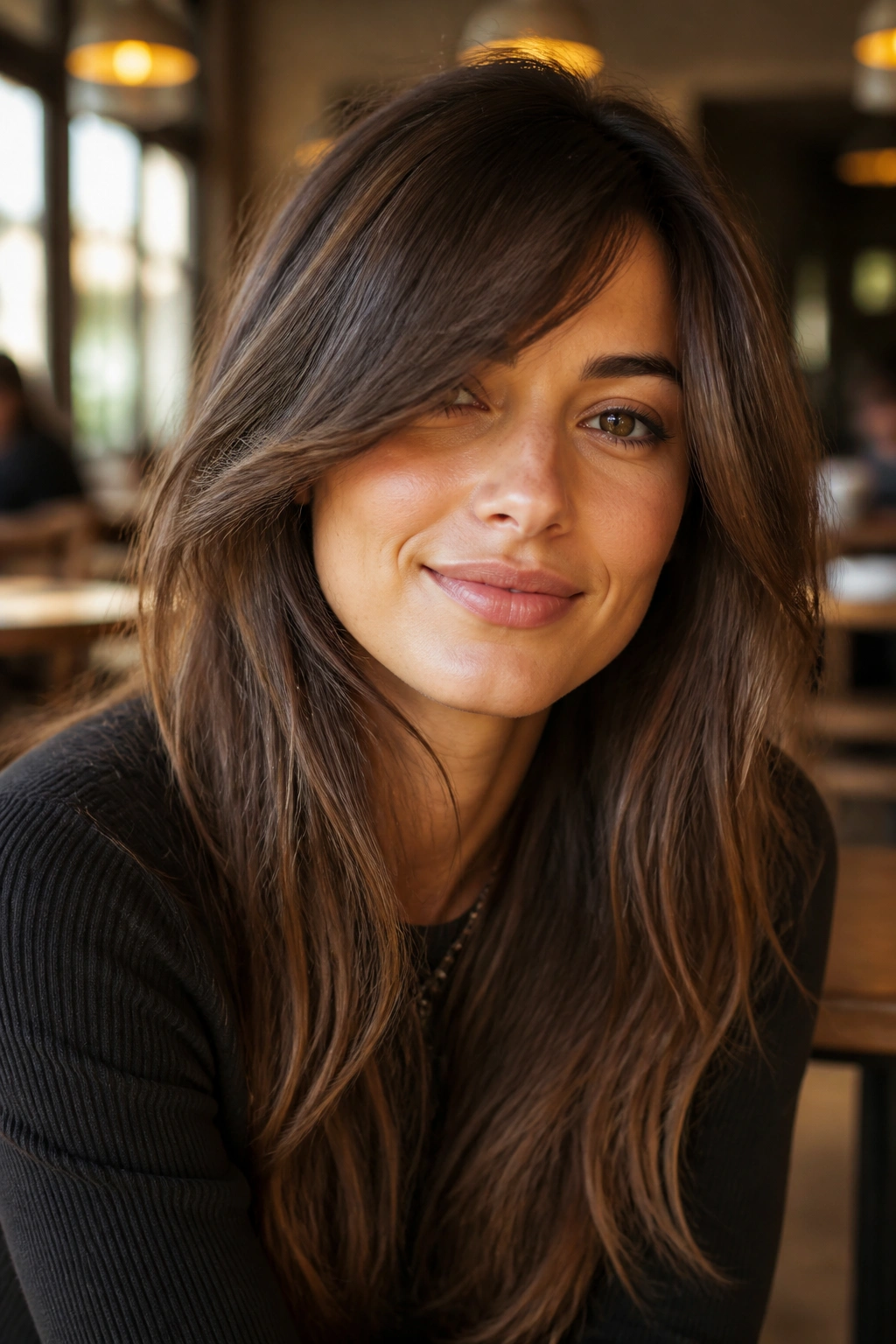
The grown-out stage doesn’t have to be awkward. A grown-out side sweep can look even better than the fresh cut if the shape was built for it from the start.
This version sits between a bang and a layer. It’s long enough to move around the face, short enough to matter, and soft enough that it doesn’t scream “I am between haircuts.” That’s a lovely place to be.
The maintenance is lighter, too. Hair grows about half an inch a month, so a longer side sweep buys you time before it needs shaping again. A small trim every few haircuts keeps the front from dropping into your eyes or splitting into two odd pieces.
This style suits people who hate rigid upkeep. It also works well if you’re growing out a shorter fringe and want the transition to look intentional, not like you gave up halfway through.
The best part? You can change the part, tuck one side back, or wear it loose depending on the day. That kind of flexibility is underrated.
15. The Easy In-Between Sweep

If you’re torn between cutting bangs and keeping all your length, this is the one I’d point you toward first. The easy in-between sweep sits right at the border of a bang and a face-framing layer, so it gives you shape without locking you into one look.
It’s soft at the edge, long enough to grow out well, and flexible enough to wear with straight hair, waves, or a quick blowout. The shortest piece usually grazes the outer brow or temple, then the shape drifts down toward the cheekbone and jaw. Nothing harsh. Nothing fussy.
This is the style that tends to behave on ordinary days, which matters more than people admit. It still looks fine after a hoodie, a windy walk, or an hour of being pinned back while you answer emails. That sort of usefulness is a pretty good test.
If you want one sentence to bring to the salon, make it this: keep the front soft, keep the longest pieces connected to my layers, and don’t make it so short that it needs daily rescue.
That’s the whole game, really. A side sweep should work with your life, not ask for a separate one.
