



Wavy hairstyles for medium hair sit in a sweet spot that long hair and short hair both miss. The length is heavy enough to hold shape, but light enough to show movement.
If your waves collapse by lunchtime, the problem is usually not the wave itself. It’s the starting point — the part, the bend near the cheekbone, and whether the ends were left a little straighter so the style can breathe.
A medium cut also gives you room to play. A 1-inch iron makes tighter bends, a 1.25-inch iron softens the line, and a few face-framing pieces can change the whole mood without a haircut.
That’s the fun part here: one length can do polished, messy, romantic, sharp, and undone without looking like a costume. The easiest place to start is the version that feels clean and low-risk, because once that sits right, the rest get easier fast.
1. Soft Center-Part Waves
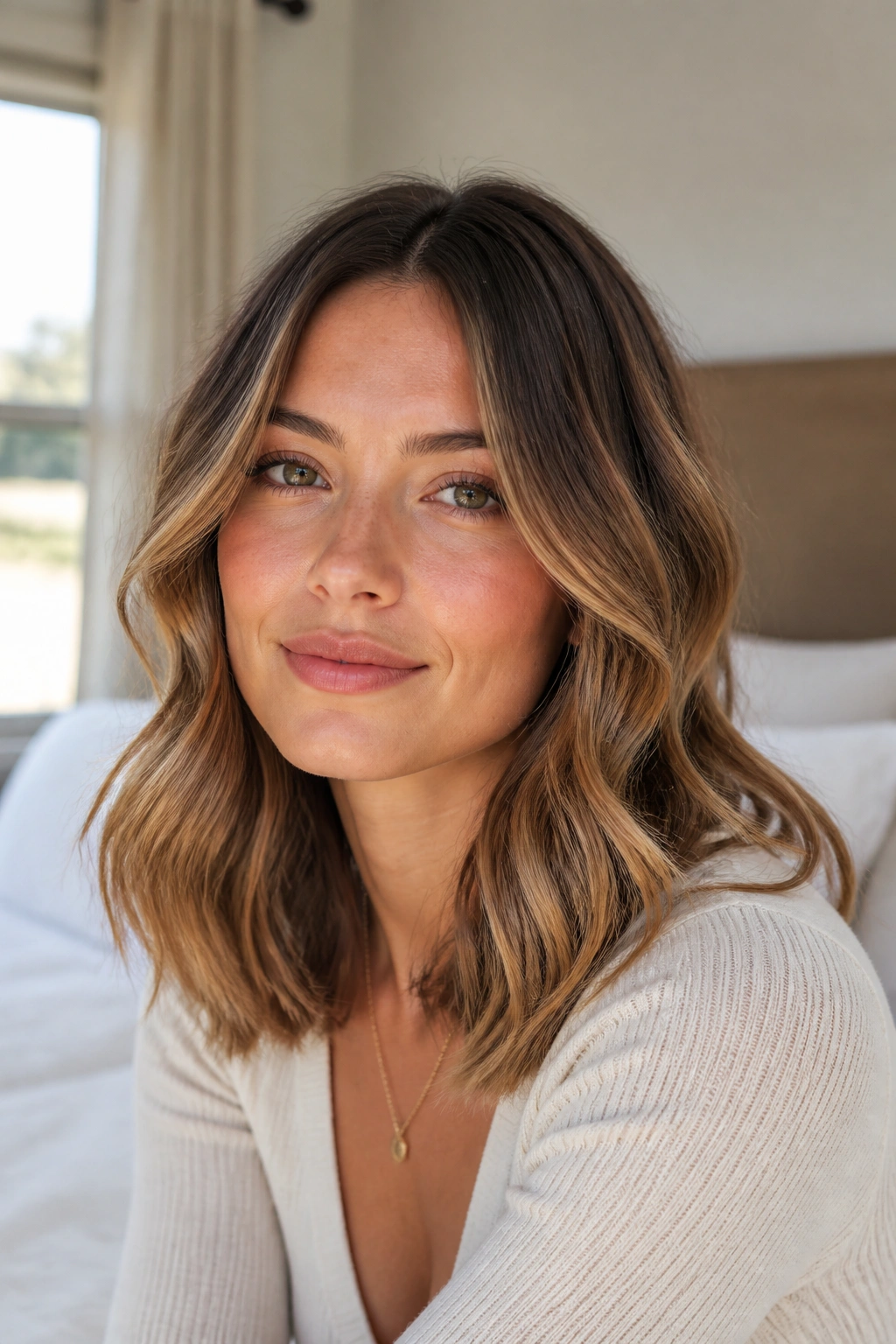
A center part does not have to read flat. On medium-length hair, it can look clean and expensive-looking in the plainest sense of the word: neat, balanced, and easy to wear.
Why It Works
The trick is to keep the wave pattern low and relaxed through the crown. If the bend starts too close to the roots, the hair puffs around the part and the whole style loses shape. Keep the first 1 to 2 inches smooth, then start your bend around the cheekbone.
That tiny shift changes everything.
- Use a 1-inch curling iron for a little more definition, or a 1.25-inch iron for a softer bend.
- Alternate curl directions in the back so the hair doesn’t clump into one heavy ribbon.
- Brush once with a boar-bristle brush or wide paddle brush for a smoother finish.
- Finish with a light mist of flexible-hold hairspray, not a stiff shell.
Best tip: keep the ends a touch straighter than the middle. It makes medium hair look fuller without turning it into a ringlet situation.
2. Deep Side Part Glam Waves
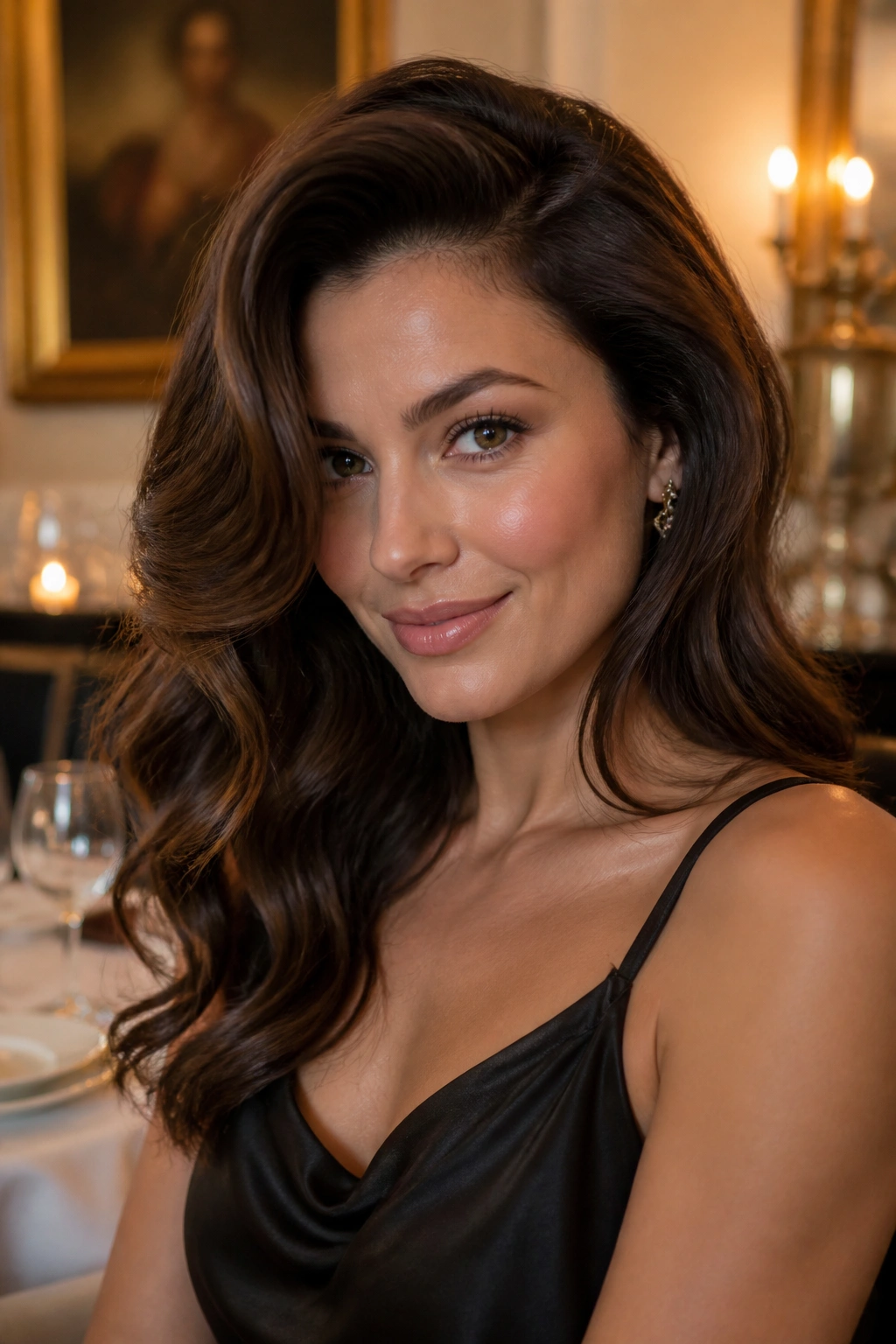
Need volume at the crown without teasing the life out of your roots? A deep side part does that job fast, and it does it without looking like you tried too hard.
The move is simple: shift the part about 2 to 3 inches off center, then direct the heavier side across the forehead in a soft sweep. Medium hair has enough length to keep the shape in place, but not so much weight that the style collapses under itself. That’s why this one works so well for dinner plans, weddings, or any day when you want your hair to look a little more deliberate.
I like this style when the cut has a few face-framing layers. Without them, the sweep can feel too solid, almost helmet-like. With them, it opens up and gives you a clean line at the cheekbone.
A side part also flatters hair that tends to sit too close to the head on one side. One bend. One shift. Different face.
3. Curtain Bang Waves
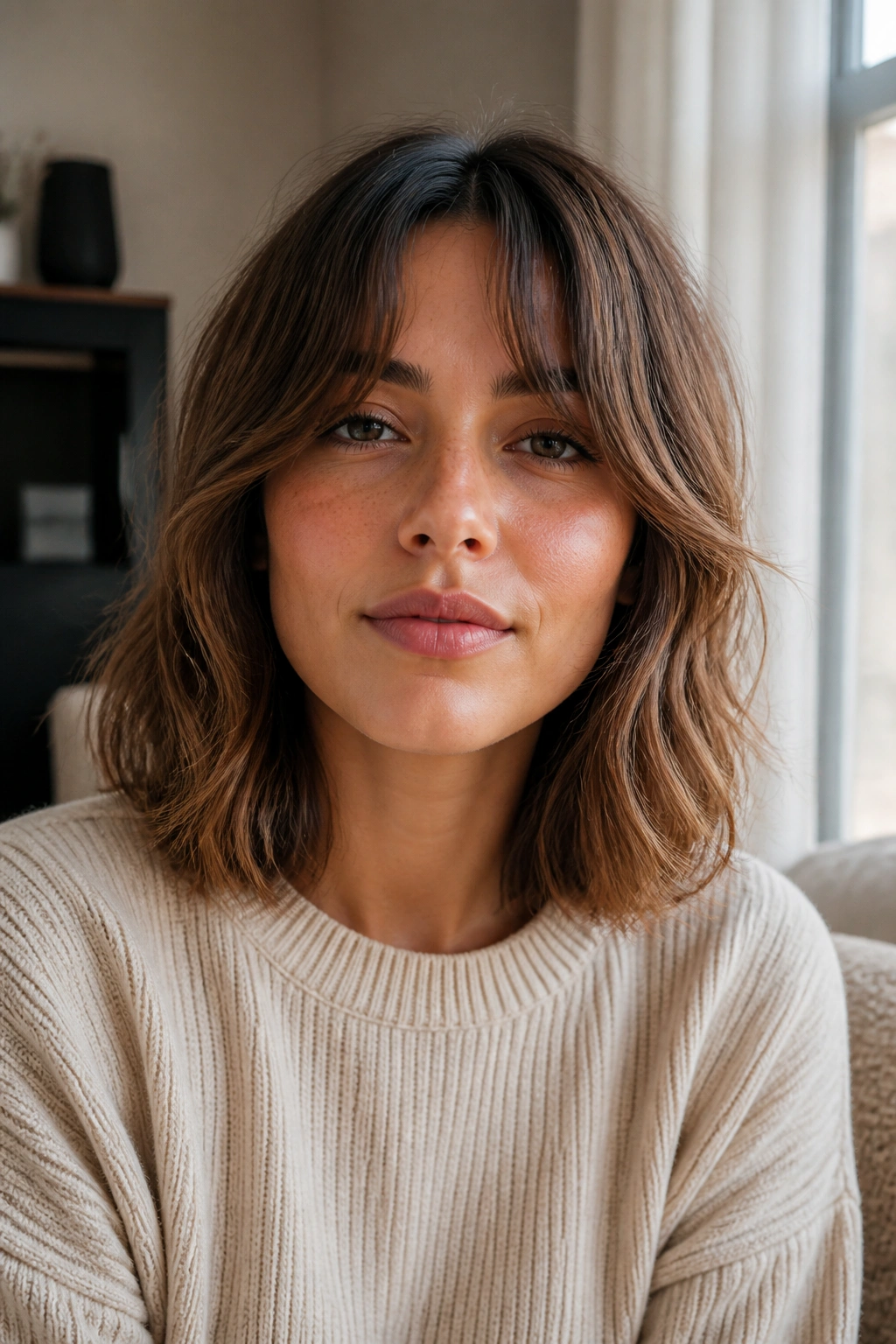
Curtain bangs and waves are friends because they solve each other’s problems. The bangs break up the forehead, and the waves keep the rest of the hair from feeling overworked.
Why do they look so good on medium hair? Because the length gives the bangs somewhere to land. On very long hair, curtain bangs can get swallowed. On shorter cuts, they can take over. Medium length is the sweet spot where the fringe can split and move without looking awkward.
How to Style It
Start the bangs on a round brush or with a quick pass from a blow dryer and medium brush. Bend them away from the face, then let them cool before touching them. That cooling step matters more than most people think.
For the lengths, use loose bends and leave the last inch or so straighter. The bangs should feel soft, not stiff.
- Blow-dry the fringe first.
- Clip the bangs back for 2 minutes while they cool.
- Add a tiny amount of styling cream to the ends if they frizz.
- Keep the wave around the jawline and below.
That jawline detail matters. It keeps the haircut looking intentional instead of fuzzy.
4. Tousled Lob With Invisible Layers
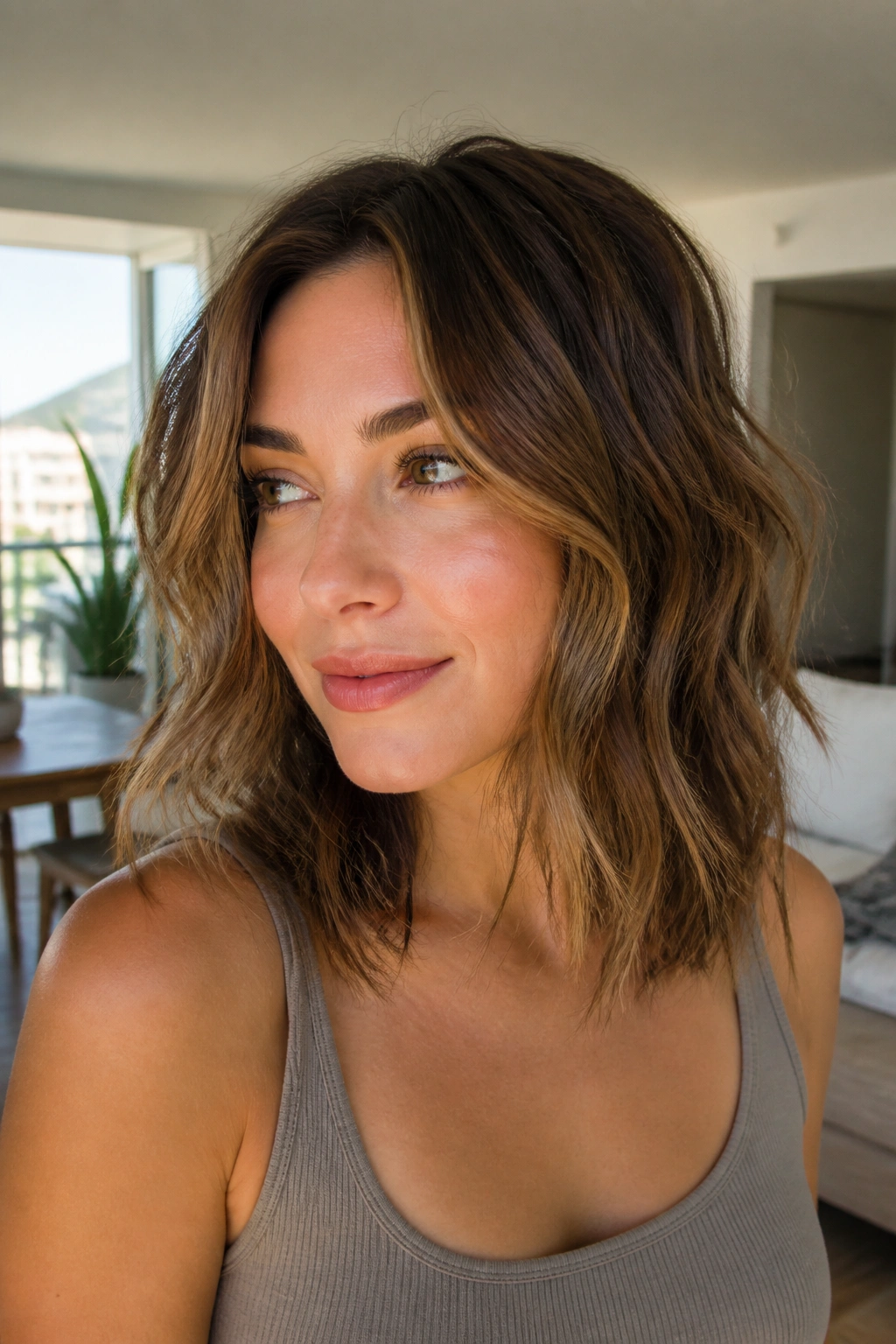
This is the cut that makes medium hair behave.
A lob with invisible layers gives you movement without obvious choppy lines, which is useful if your hair is thick enough to feel bulky but not so thick that you want to lose weight everywhere. The layers sit inside the shape, so the surface still looks clean. The hair bends instead of stacking.
What to Ask For
If you’re talking to a stylist, ask for soft internal layers and a blunt-looking outline. That combination keeps the ends from looking ragged. It also helps waves fall in loose, bendy pieces instead of one heavy block.
What to Watch For
- Too many short layers can make the style springy in a way that’s hard to calm down.
- Very blunt ends can make waves look triangular.
- A light texturizing spray works better than heavy mousse here.
Tiny truth: this cut is doing half the styling work for you. That is the point.
5. Claw Clip Twist and Waves
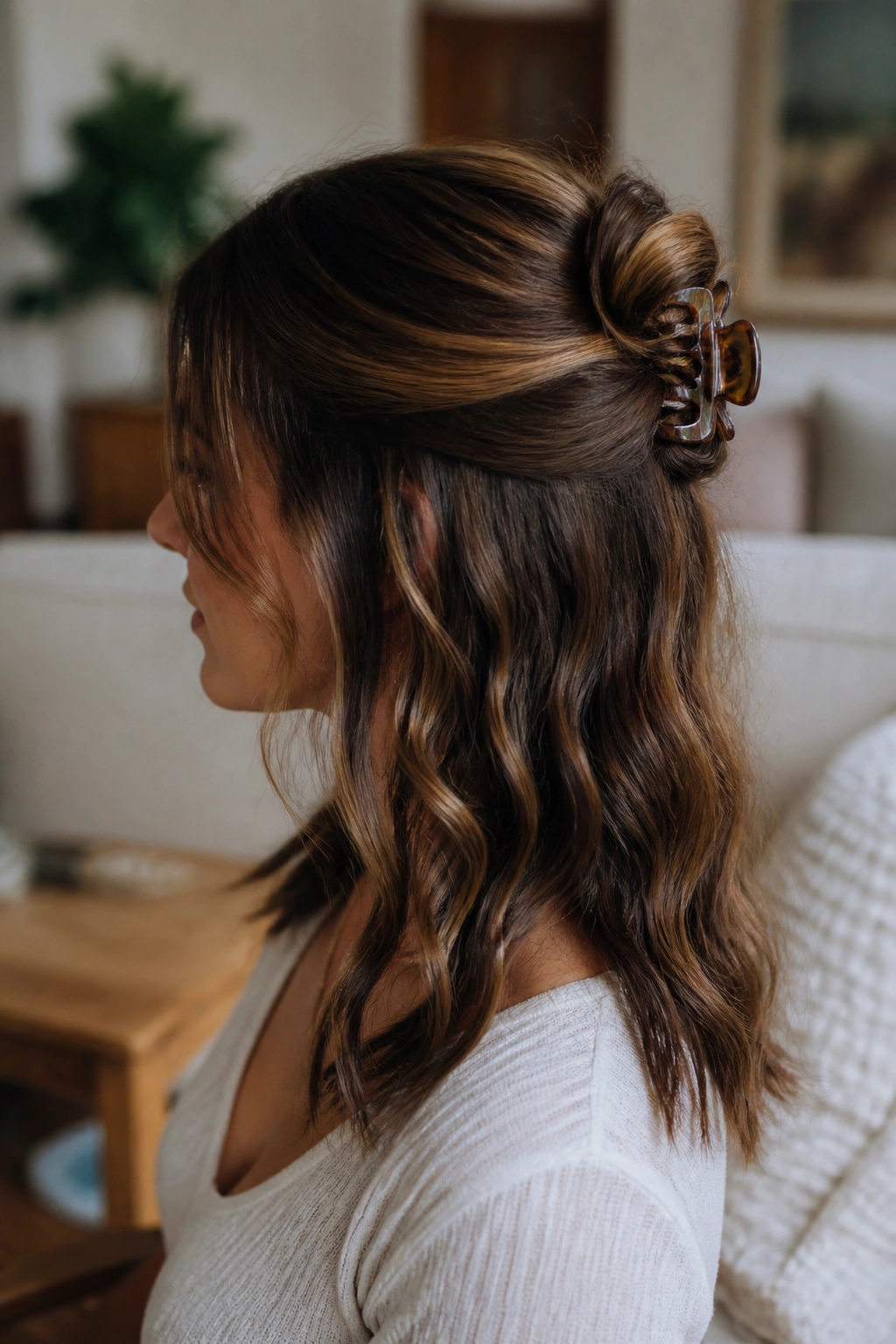
A claw clip can save a wavy style when your hair is not in the mood to cooperate. Messy? Sure. But in a good way.
Pull the top half back, twist it loosely, and clip it at the back of the head so some ends still fall free. The remaining waves around the shoulders keep the style from looking too neat, which is what makes it feel modern instead of office-lunch boring. Medium hair holds this shape better than long hair, because there’s less weight dragging the twist down.
I prefer a medium-sized clip, around 4 to 5 inches, because tiny clips snag and giant ones swallow the shape. Leave a few face-framing pieces out. Not too many. Two slim sections are enough.
The best version of this look has a slightly imperfect twist and soft ends that brush the collarbone. If the clip is hidden under too much hair, the whole point disappears.
6. Half-Up Knot With Loose Ends
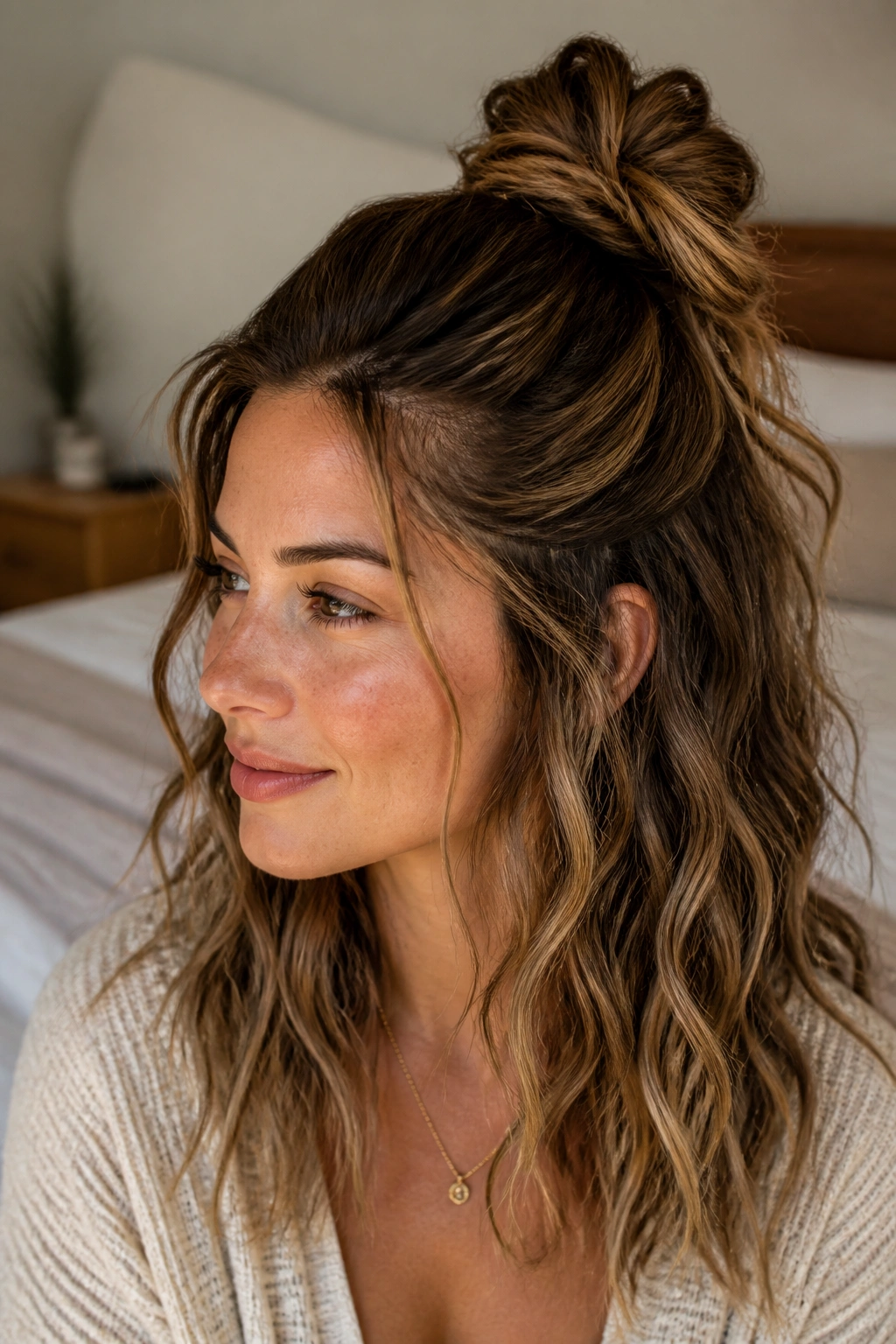
A half-up knot is what I reach for when I want the hair out of my face but do not want to lose the wave pattern. It keeps the top neat and lets the lower half do the talking.
Unlike a full top knot, this version still shows off the medium-length cut. That matters. With waves, length and movement are part of the charm. Hide all of it, and you’re left with a style that feels more practical than pretty.
This one works best when the knot sits high enough to show lift, but low enough that the head shape stays soft. Use your fingers, not a comb, to gather the top section. A comb makes it too precise. Medium hair usually looks better with a little looseness at the hairline.
I’d call this the easiest “good hair day” style in the list. It can handle second-day waves, a little dry shampoo, and a bit of frizz at the temples. That’s forgiving. We need more of that.
7. Braided Crown Accent
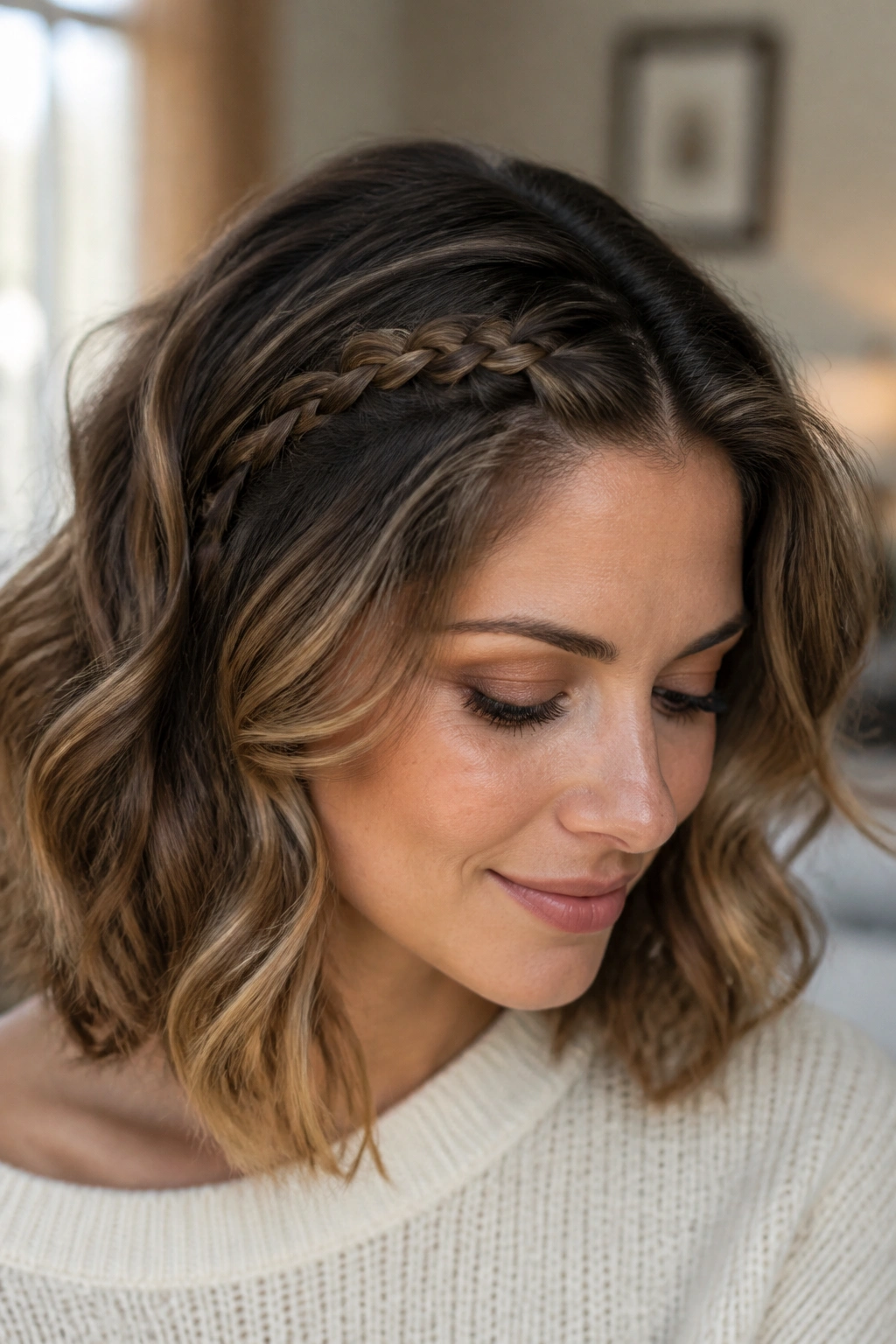
A small braid near the hairline can make medium waves look finished even when the rest of the hair is plain.
Small Braids, Big Payoff
Take a section from one temple, braid it back 3 to 4 inches, then pin it under the top layer. That’s enough. You do not need a full crown braid unless you want the style to feel more formal. On medium hair, a single accent braid keeps the wave pattern visible while giving the front a little detail.
This is especially nice when the hair has a soft bend but not much structure. The braid gives the eye a place to land. It also helps on windy days, which is when loose waves can start acting like they own the room.
- Start on dry hair with a light texturizing spray.
- Keep the braid loose so it blends.
- Pin with a small bobby pin under the wave layer.
- Leave the rest of the hair down and untouched.
Best use: brunch, casual events, or any day you want a little effort to show.
8. Low Messy Bun With Face-Framing Waves
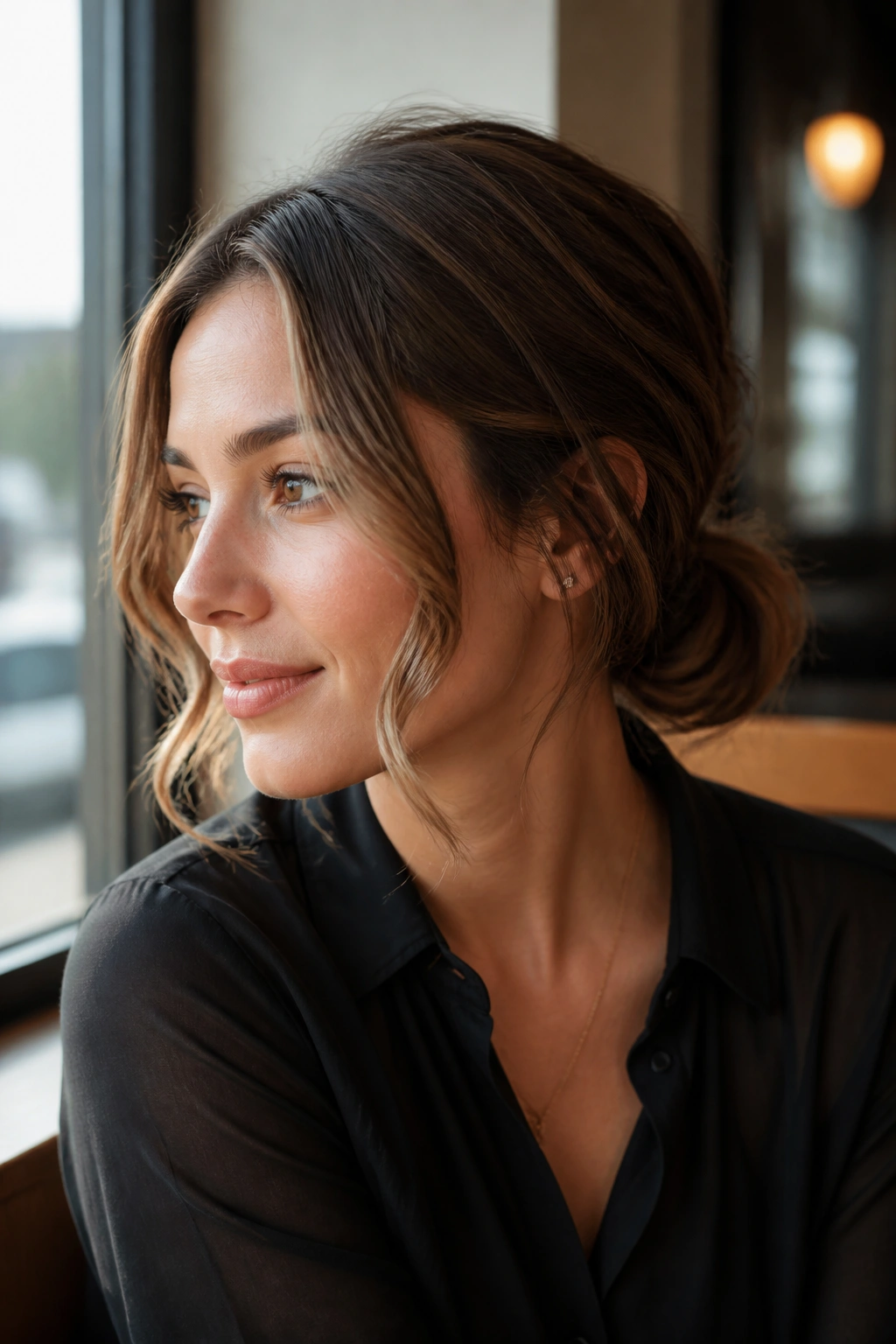
A low bun sounds plain until you leave out the right pieces. Then it becomes one of the best wavy hairstyles for medium hair, because it keeps the texture visible around the face and nape.
The bun should sit low, almost at the top of the neck, and it should not be wrapped too tightly. Medium hair has enough length to form a bun that looks full without needing a giant donut or a pile of pins. Let the ends tuck under, but don’t hide every strand. A few ends sticking out is not a mistake here.
I like two face-framing pieces, one on each side, about 1 to 2 inches wide. They should hit near the jaw or just below it. Any shorter and they can look accidental. Any longer and the style loses its balance.
This is the look I’d choose when the waves are a little rough and you want them to work with you instead of against you. It forgives imperfect texture. That is a rare and useful thing.
9. Old-Hollywood Side Sweep
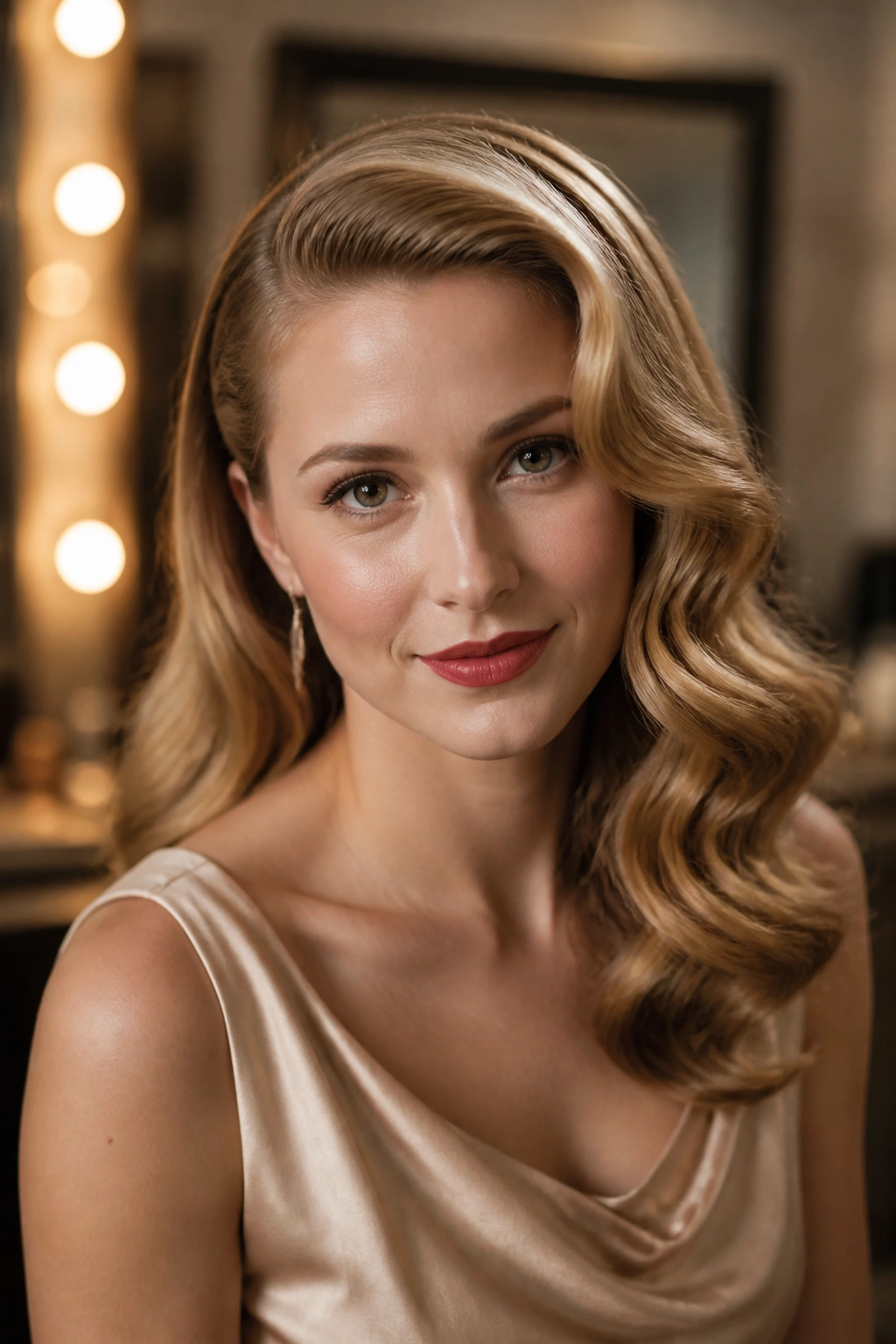
Want a wave style that feels more dressed up without getting fussy? A side-swept shape does that with fewer moving parts than people expect.
The wave is brushed into one direction, usually over a deep side part, so the front section curves across the forehead and into the length. Medium hair is long enough to hold that sweep, but short enough that the shape doesn’t drag. The result is smooth at the top and soft at the ends, which is exactly why it reads as polished.
How to Set the Shape
Use a 1-inch iron and curl all sections in the same direction away from the face. Pin each curl flat to cool for a few minutes. That cooling step helps the wave hold its curve when you brush it out.
Then brush gently, not aggressively. You want movement, not fluff.
A touch of shine spray at the ends goes a long way. Too much near the roots makes the part look greasy. That is the line to watch.
10. Polished Flip-Out Waves
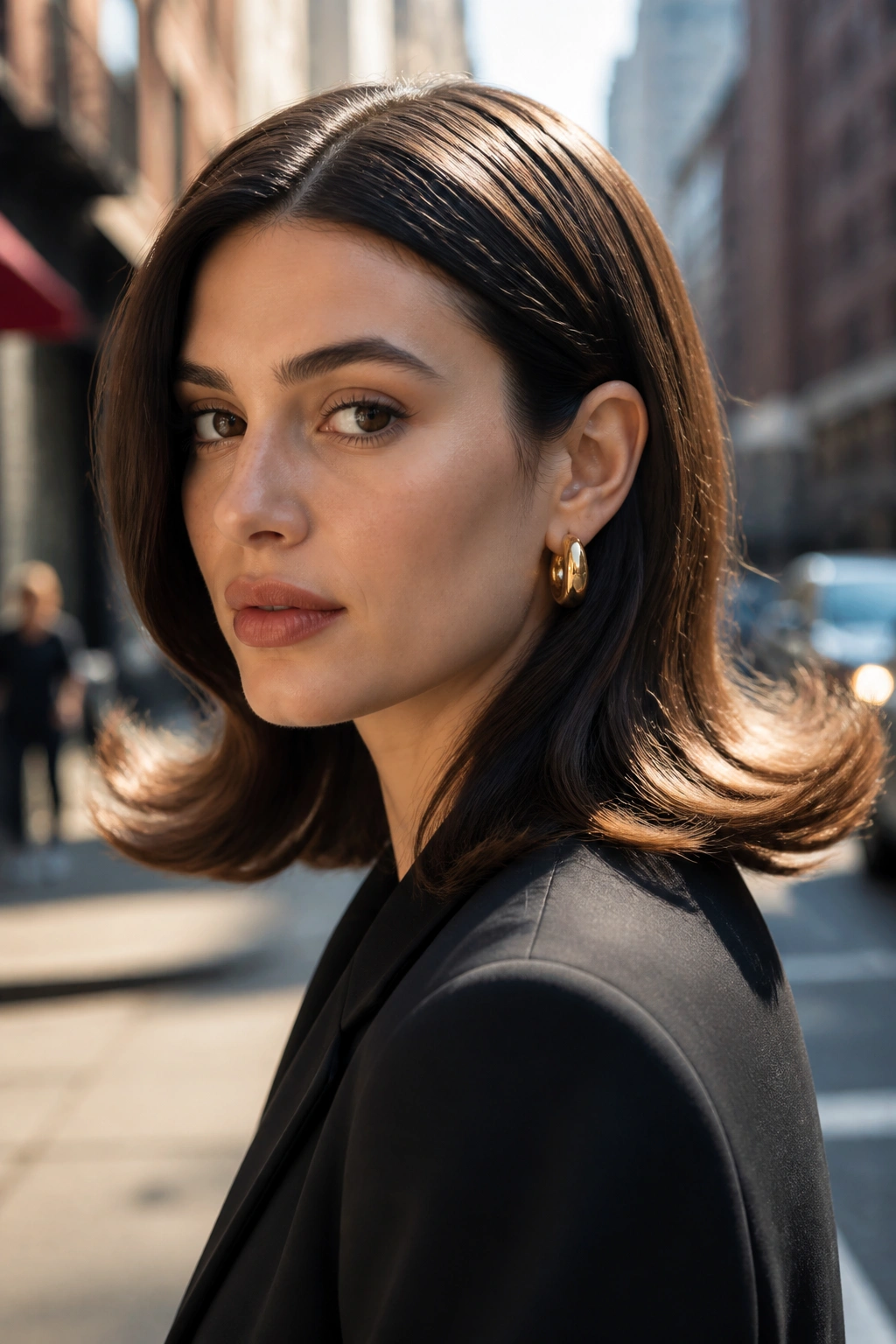
Flip-out ends are underrated. They add shape at the bottom of medium hair, which is where a lot of wavy styles go limp.
The style starts smooth through the top and turns playful at the last 1 to 2 inches. You can create the flip with a round brush while blow-drying, or with a flat iron if you prefer more control. The bend should point outward, not curl under. That outward direction keeps the cut from looking boxy.
- Best on shoulder-grazing cuts and blunt lobs.
- Works well when the hair has a clean middle or side part.
- Looks sharper if the top section is sleek and the ends are loose.
- Takes dry shampoo well on day two.
This one feels a little retro in a good way. Not costume-y. Just enough lift to make the haircut look awake.
11. Bubble Ponytail on Wavy Hair
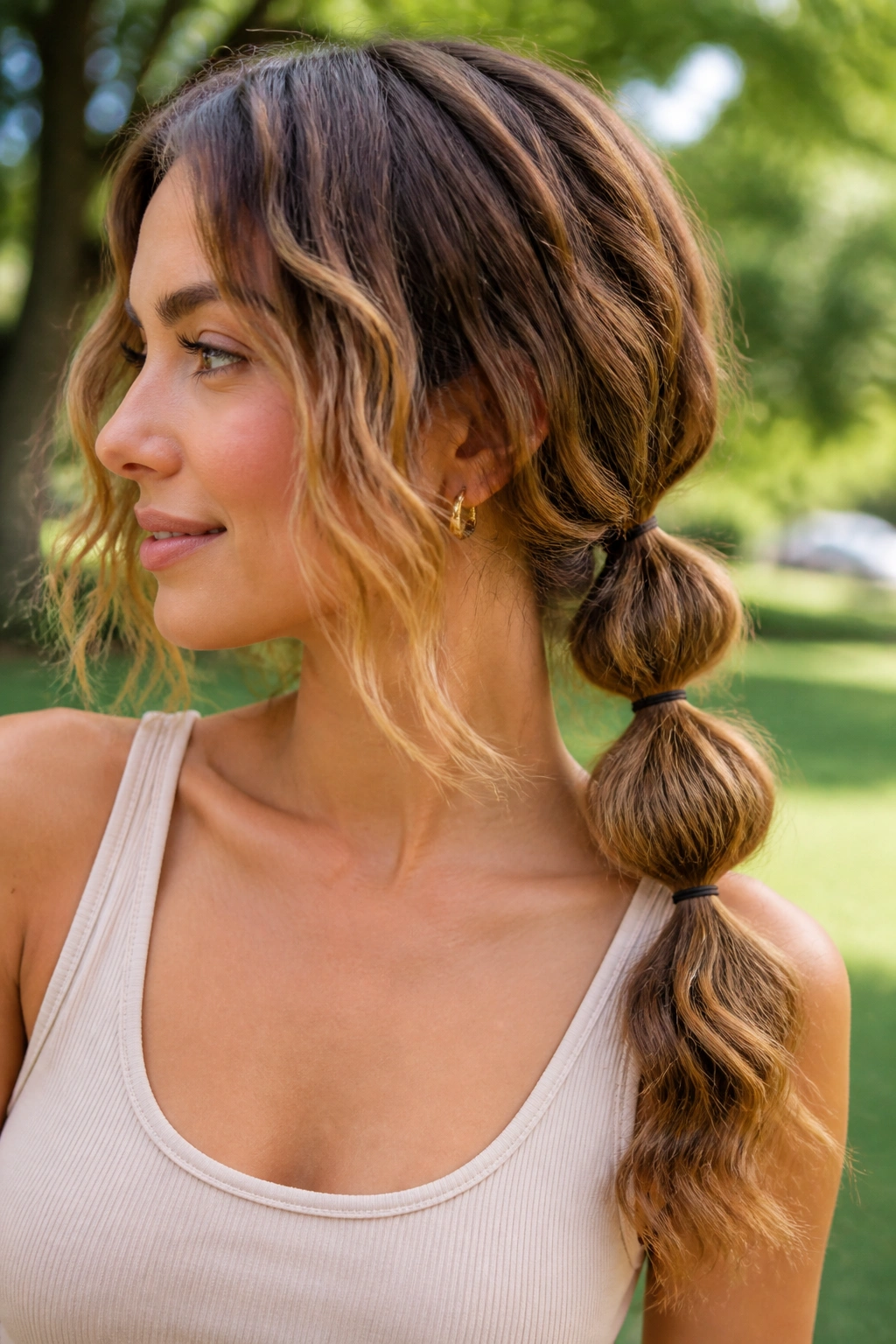
A bubble ponytail sounds playful because it is. On medium hair, though, it can also look neat and grown-up if you keep the bubbles small and the waves soft.
Pull the hair into a low or mid ponytail, then add clear elastics every 2 to 3 inches down the length. Gently tug each section between the elastics so it rounds out into a bubble. The wave pattern underneath gives the ponytail some movement, which keeps it from looking too rigid.
I would not place this too high on medium hair unless you want a bouncy, almost sporty feel. Low placement looks calmer. A little face-framing wave or a side piece can stop the style from feeling too bare around the front.
This is one of those looks that works better with a little texture than with freshly washed hair. Clean hair can slip. Day-old waves grip the elastics better and hold shape longer.
12. Boho Accent Braid
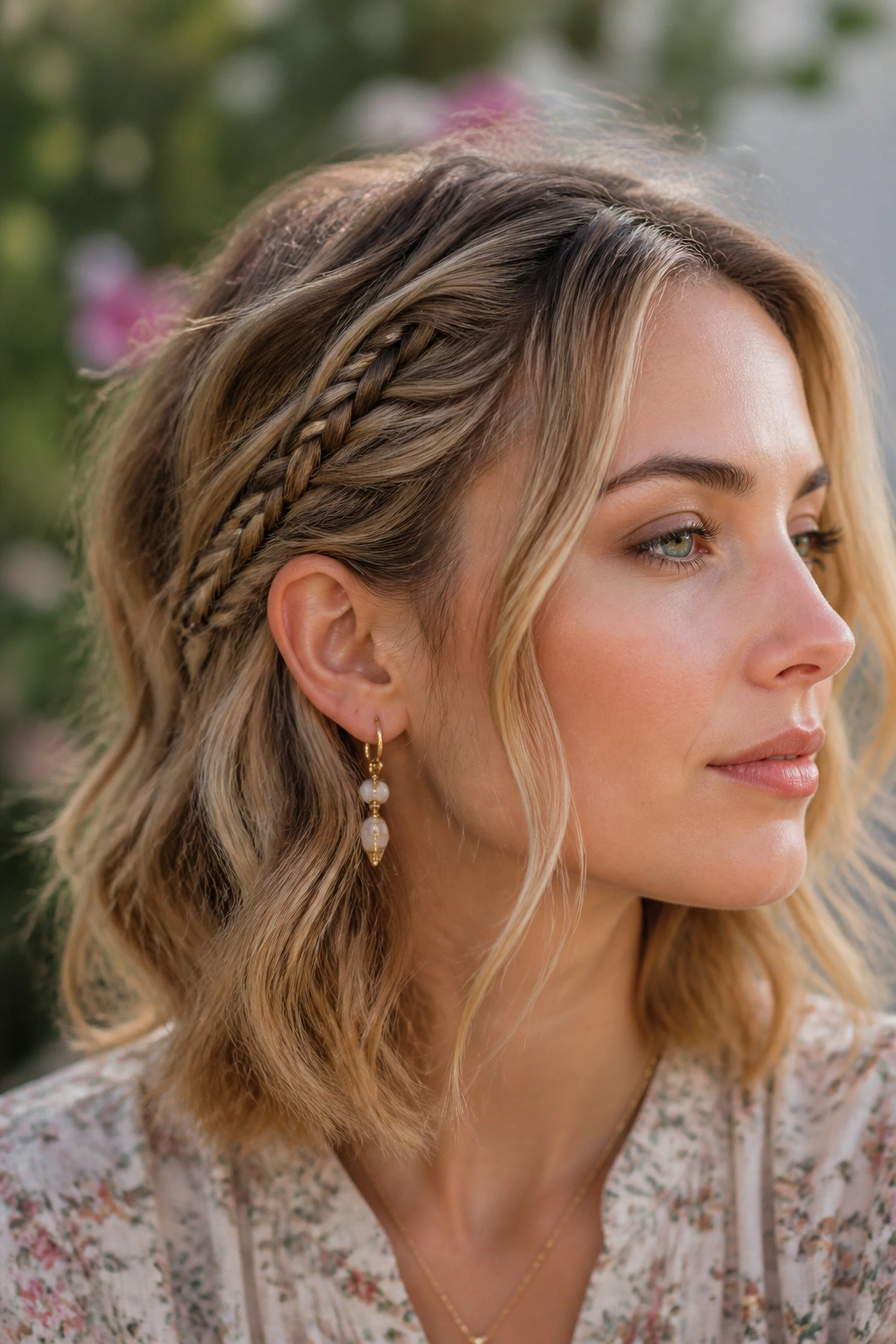
A single accent braid is not trying to be the main event, and that is why it works.
Unlike the braided crown look, this one is more relaxed and less symmetrical. Take a narrow section from one side, braid it loosely, and let it blend into the rest of the waves somewhere around the ear or collarbone. The rest of the hair stays down and loose. No need to overbuild it.
This is a good answer when you want some detail but hate the feeling of too much structure. It works especially well with medium hair that has a little frizz or texture, because the braid gives the hair a place to settle. It also looks nice when the ends are lightly bent rather than curled into tight loops.
The braid should be thin enough to feel like a detail, not a stripe. That’s the whole trick. If it’s too thick, it starts stealing attention from the waves.
13. Slicked-Back Crown and Wavy Lengths
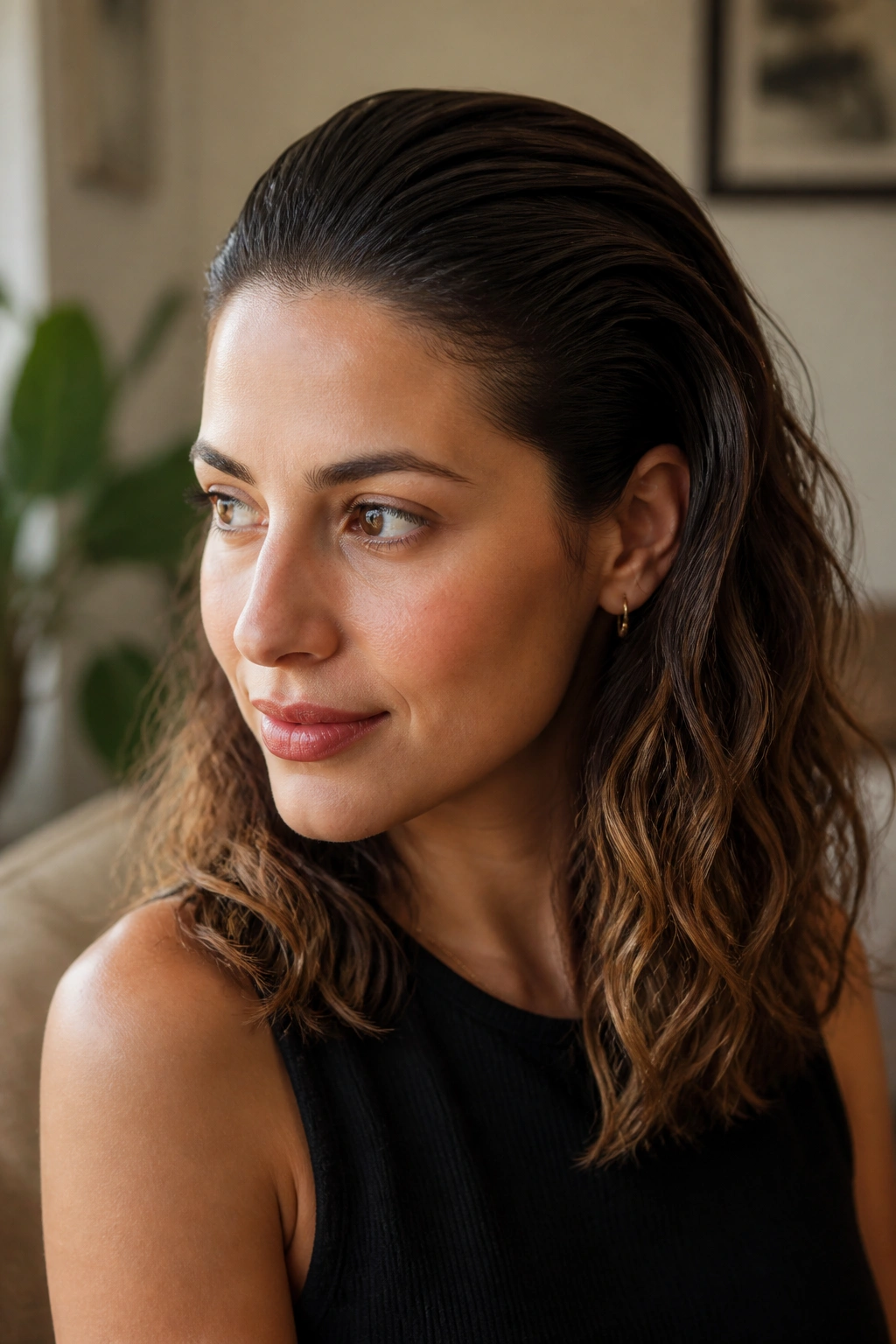
This style has a strong front and a soft back, which is exactly why it looks so clean.
The slicked-back crown keeps the hair away from the face and shows off the texture in the lengths. Medium hair is a good length for it because the wave still drops nicely after the sleek section, instead of collapsing under extra weight. The contrast is the point. Smooth near the scalp, loose through the ends.
What Makes It Different
The product goes only where it needs to go. Use gel or a light styling cream on the top 2 inches, then leave the wave pattern below untouched. If you smear product through the whole head, you lose the texture and the style turns heavy.
A fine-tooth comb can help smooth the top, but I’d stop there. Once the crown is flat, finger-comb the waves so they stay soft.
- Best with a middle part or a severe side part.
- Great for second-day hair.
- Works well when the lengths already have shape.
Do not slick everything back. The dry lengths are what make this look feel finished instead of severe.
14. Scarf-Tied Low Ponytail
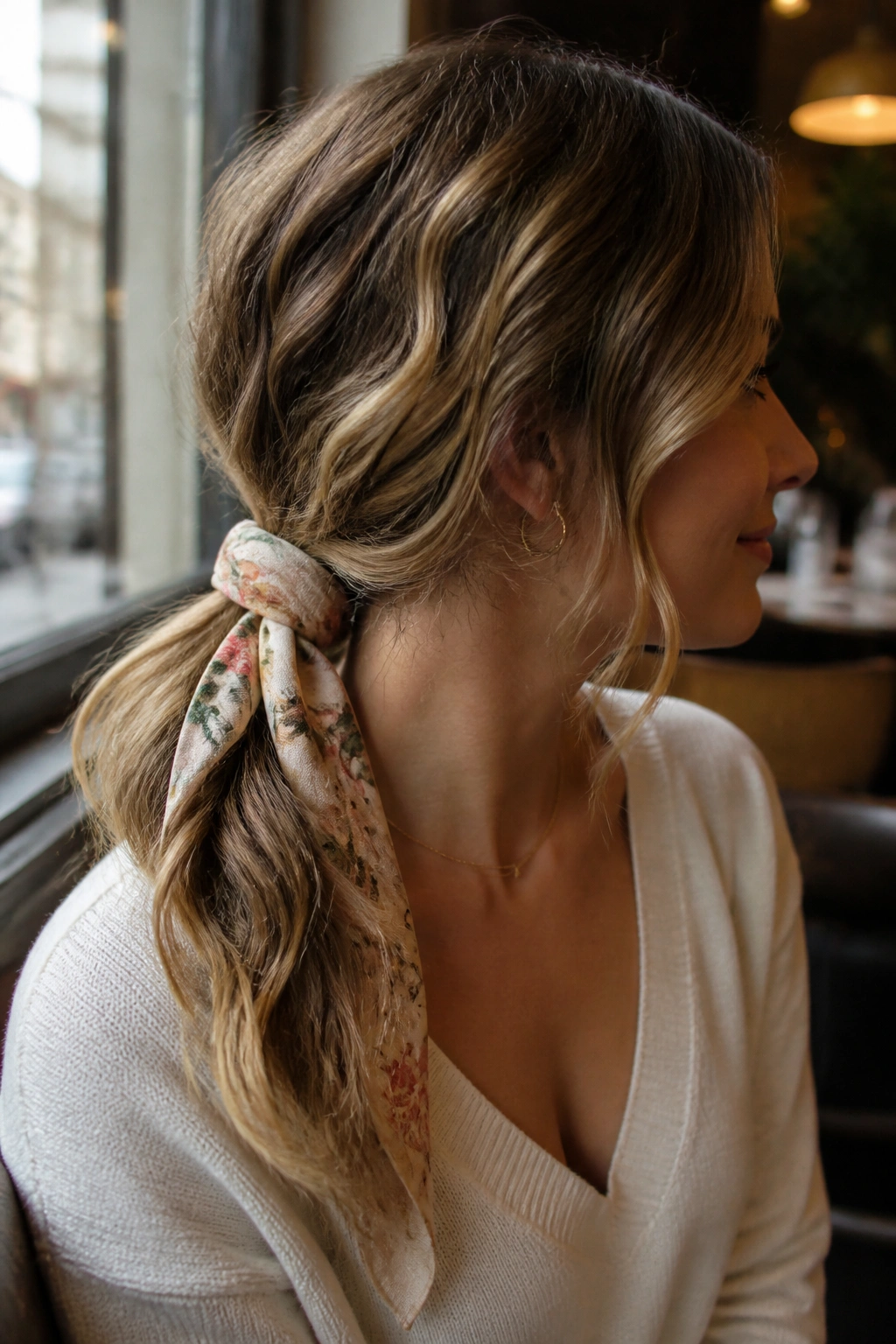
A silk scarf can change a plain ponytail in about ten seconds. That sounds dramatic, but it’s true.
Tie the hair into a low ponytail, then wrap a folded scarf around the base and let the ends trail down the back. Keep the waves in the ponytail loose and soft. If you brush them too much, the whole thing loses its shape and starts reading like a gym hairstyle with a prop attached.
I like this when the hair has soft bends and I want the style to look thoughtful without spending half the morning on it. Medium hair gives the ponytail enough body to show the scarf, but not so much bulk that the tie disappears.
Choose a scarf that is narrow enough to sit neatly at the base, around 2 inches when folded. Too wide and it swallows the ponytail. Too thin and it gets fussy fast.
There’s a nice honesty to this style. It says you wanted something easy, and you weren’t trying to pretend otherwise.
15. Rope-Twist Half-Up
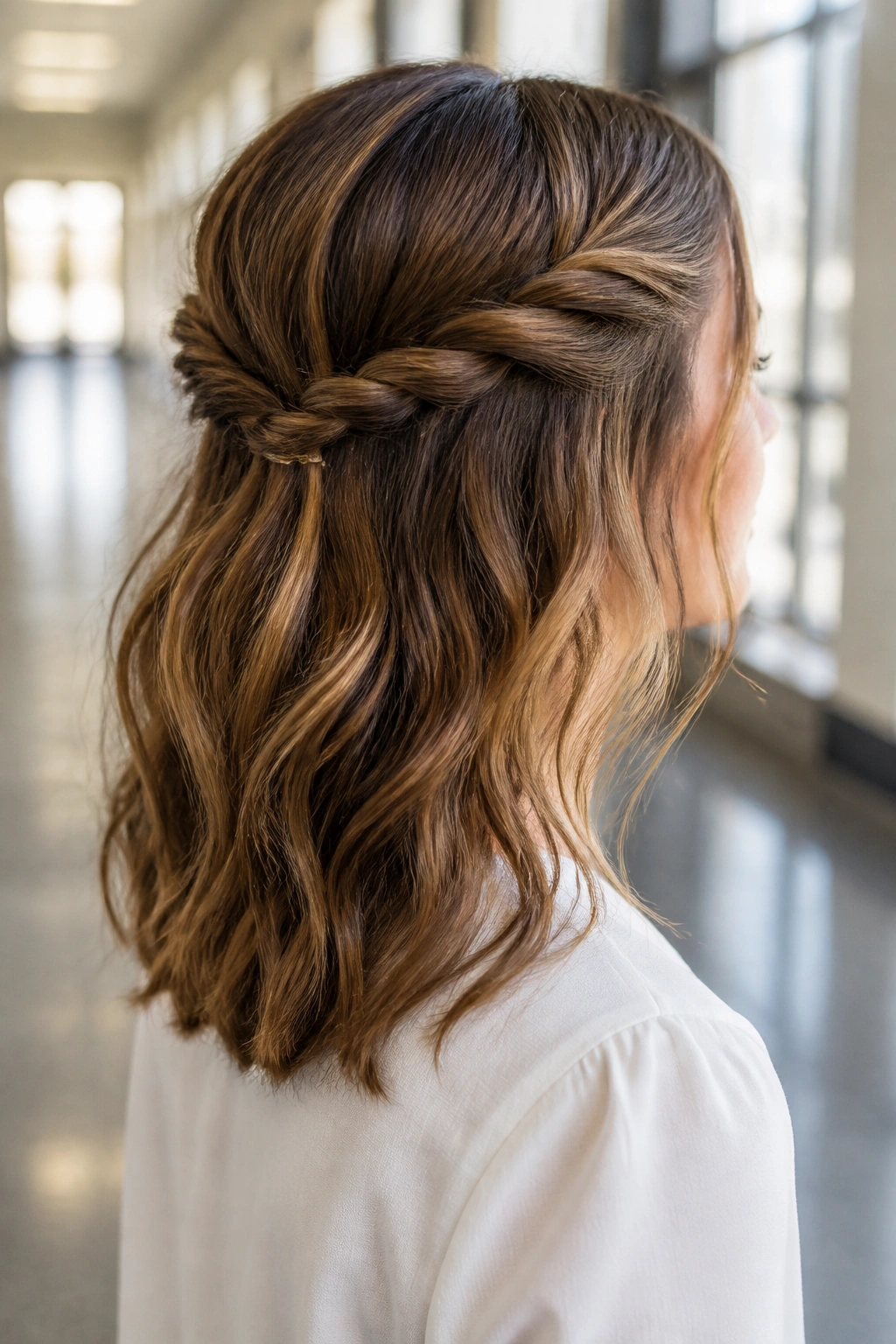
A rope twist is a good choice when braids feel too fussy and a clip feels too casual. It sits somewhere in the middle.
Take two small sections from each side, twist them away from the face, and join them at the back with a pin or clear elastic. The twist should sit loose enough that the waves underneath still move. That matters more than perfection. If the rope is too tight, it starts looking stiff and a little old-fashioned.
How to Get the Twist to Hold
Medium hair usually needs a bit of grip. Dry shampoo at the roots or a light texturizing mist on the sides helps the twist stay put. If your hair is slippery, rough up the sections with your fingertips before twisting.
This style is handy on second-day waves because the texture is already there. You are not fighting the hair; you are just organizing it.
A tiny detail, but a useful one: pin the twist slightly above the back of the head, not too low. The lift keeps the face open.
16. Waterfall Braid Cascade
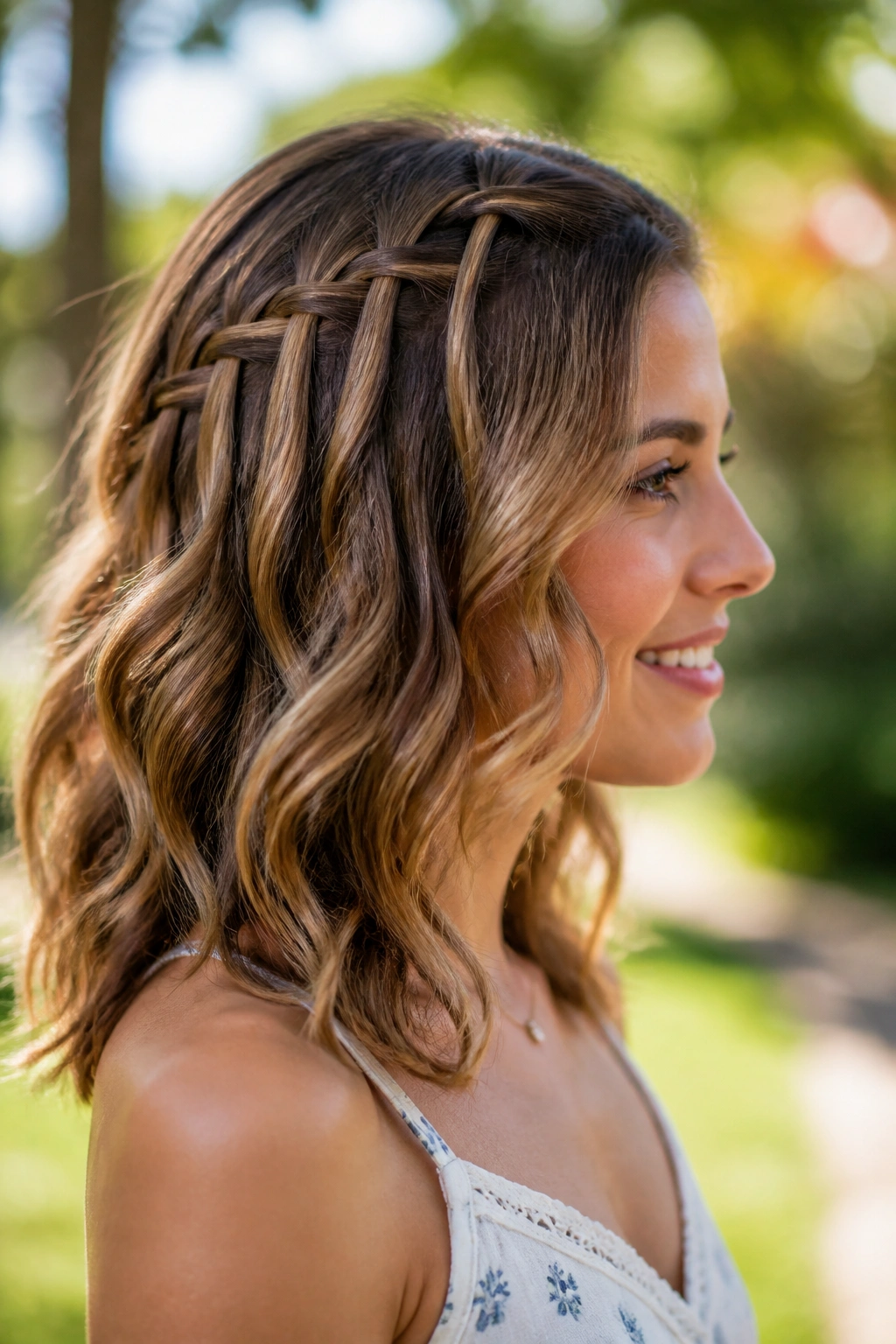
A waterfall braid is one of the few braid styles that lets wavy hair stay the star.
The braid drops pieces as it moves across the head, so the lengths keep flowing instead of getting trapped in the braid. On medium hair, that balance is perfect. You get texture at the top and movement below, which is harder to pull off on shorter cuts.
This style looks its best when the waves are soft and the braid is not too tight. If the hair is fine, use texturizing spray first so the braid has something to hold. If it’s thick, keep the braid loose enough that the cascade doesn’t pull the front section flat.
- Start the braid near one temple.
- Keep the dropped sections roughly the same size.
- Pin the end under the hair with two bobby pins.
- Leave the rest of the waves brushed out, not separated into tiny chunks.
The braid should feel like a frame, not a fence.
17. Wet-Look Tucked Waves
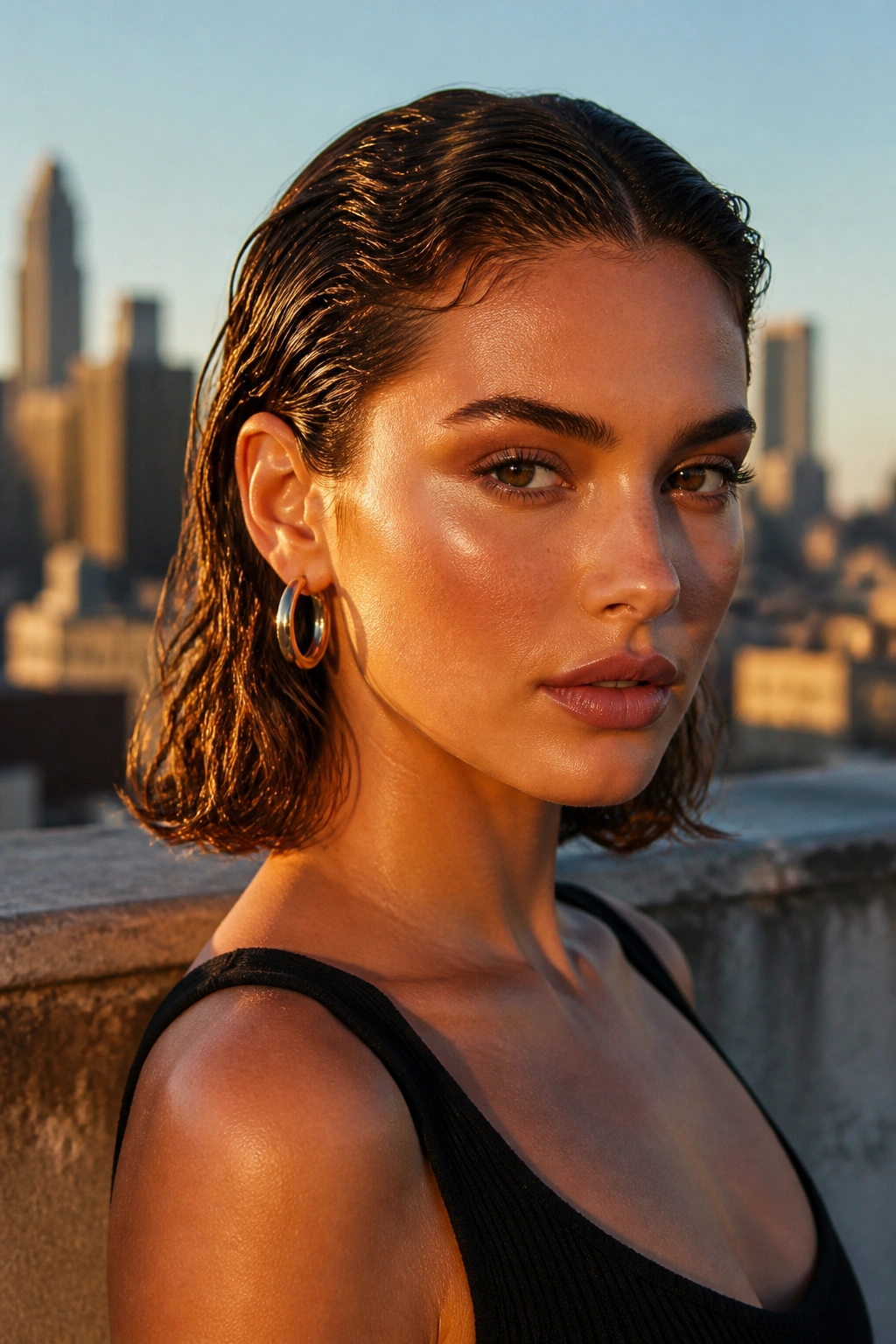
Wet-look waves are not subtle. That is the whole appeal.
The top and mid-lengths look slick and shiny, while the ends stay softly waved and tucked behind the ears or pinned back. On medium hair, this contrast can be striking because the length is enough to carry the shine, but short enough that the style stays controlled. You get drama without dragging the hair past the shoulders.
A little honesty here: this is not the easiest style for every setting. It looks sharp, even bold, and it can feel too glossy if you overdo the product. Use gel or shine cream sparingly on the top section, then stop. The wave through the ends should still show texture.
I like this most when the hair has a deep side part and the ear area is cleanly tucked. It gives the style shape. It also keeps the face open, which matters because the front is already doing a lot.
18. Wrapped Low Ponytail
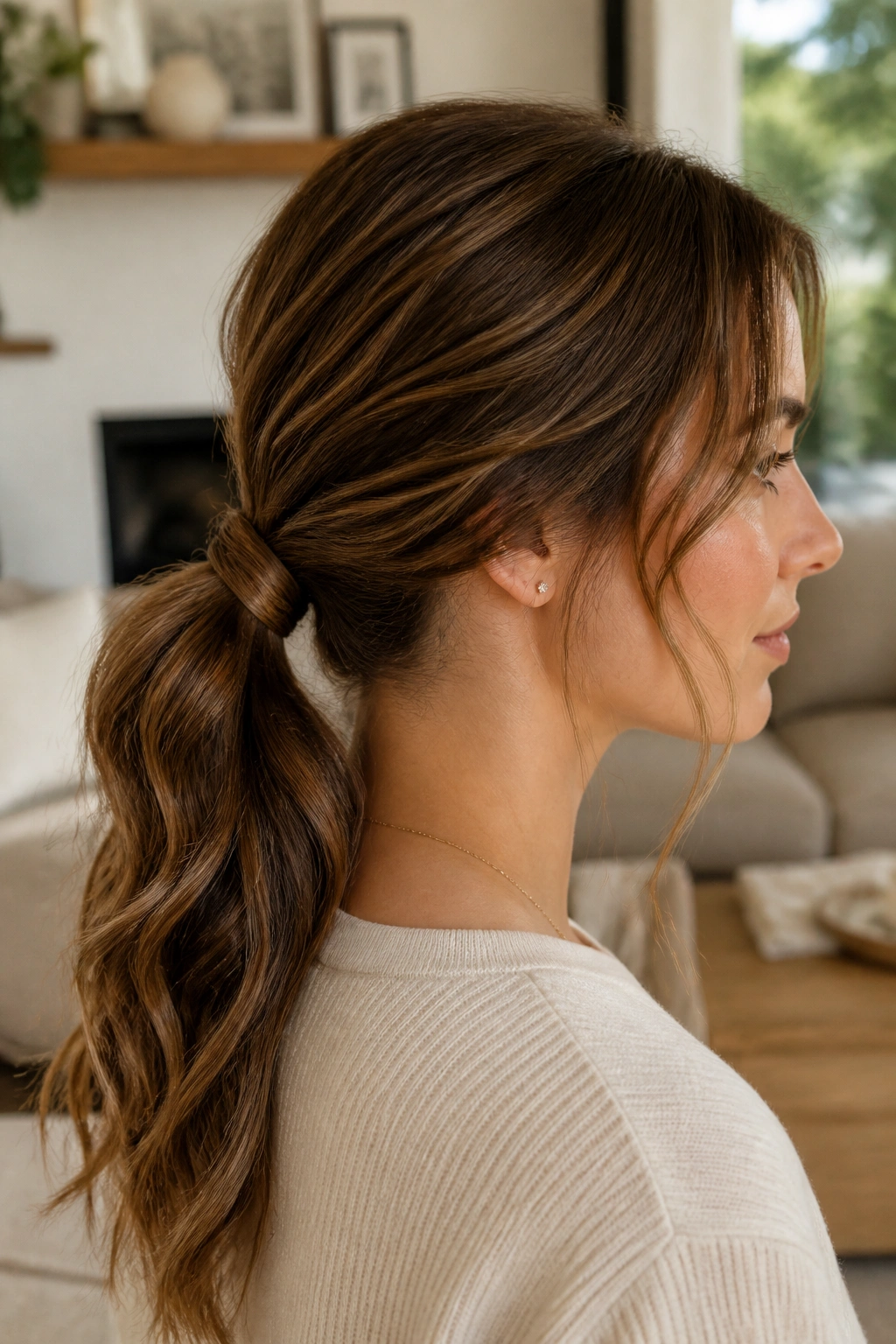
A low ponytail with a wrapped base is the kind of style that looks plain in theory and polished in real life.
The wrap hides the elastic, which sounds small until you see the difference. Suddenly the ponytail looks finished instead of thrown together. On wavy medium hair, the pony itself should stay loose and bendy, with the body gathered low at the nape. A tight pull kills the texture. A soft pull lets the waves show through.
This version works better than a standard pony when you want the hair controlled but not flattened. It is also kinder to medium hair that has a blunt cut, because the bend in the ponytail keeps the ends from hanging like a rope.
Use a 1-inch strand from underneath the ponytail to wrap around the elastic, then pin it under the base. That one move makes the style look cleaner.
19. Air-Dried Defined Waves
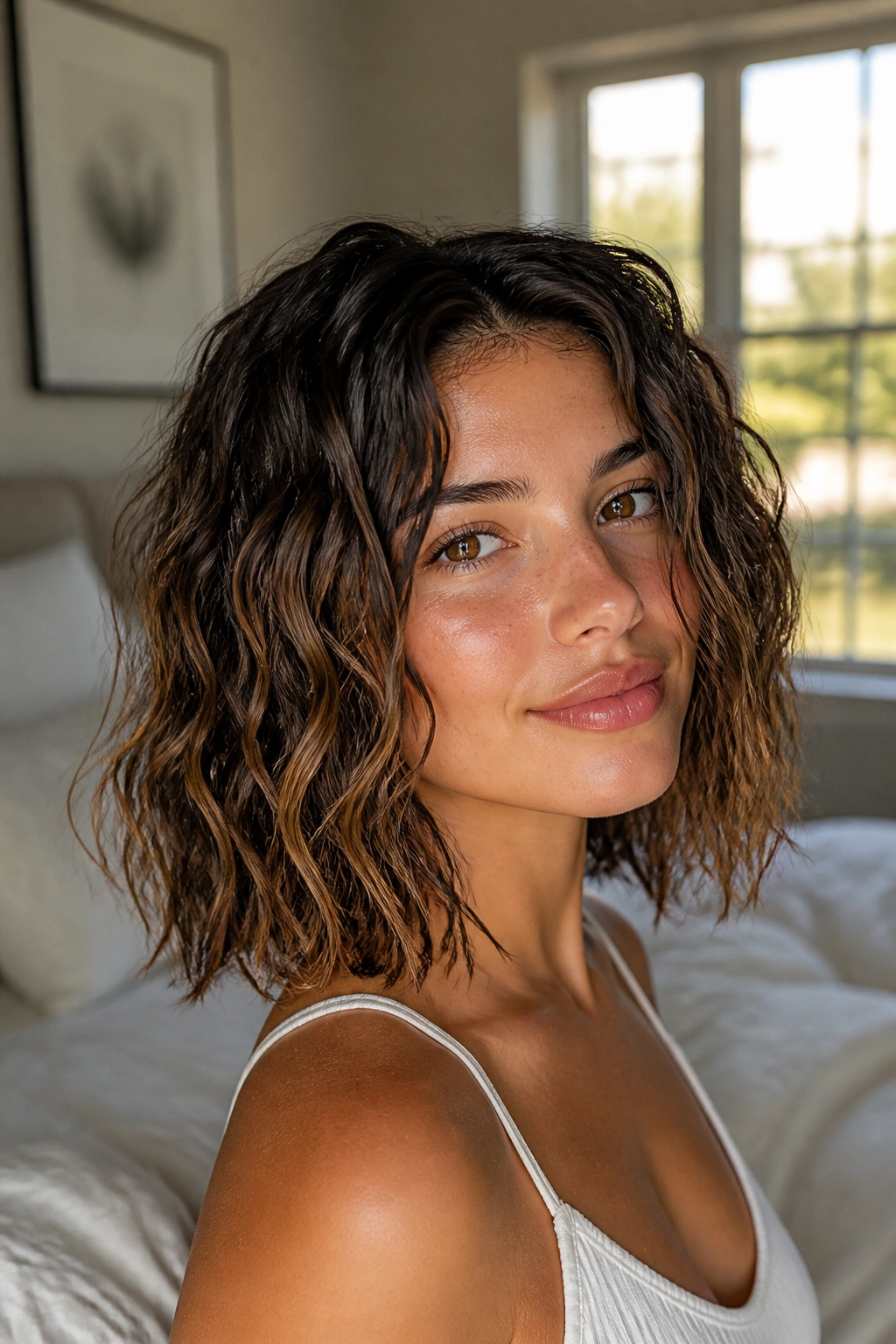
Air-dried waves can look effortless, but only if you give them a little structure first.
How to Make Air Drying Look Intentional
Start with damp hair, not soaking wet hair. Scrunch in a light mousse or wave cream from mid-length to ends, then use a microfiber towel or cotton T-shirt to squeeze out excess water. Rough towels make frizz. This one detail matters more than people want to admit.
Keep your hands off the hair while it dries. Seriously. Touching it too much breaks the wave pattern and makes the finish puffy. If the roots need lift, clip the crown up for 10 to 15 minutes while the hair sets.
- Best for medium cuts with natural bend.
- Works well after a shower when you don’t want heat.
- Needs a light finish spray only if the waves fall apart at the end.
This style can be gorgeous when the cut already knows how to move. If the hair is stubbornly straight, you will need a diffuser or iron to help it along.
20. Soft Shag With Piecey Ends
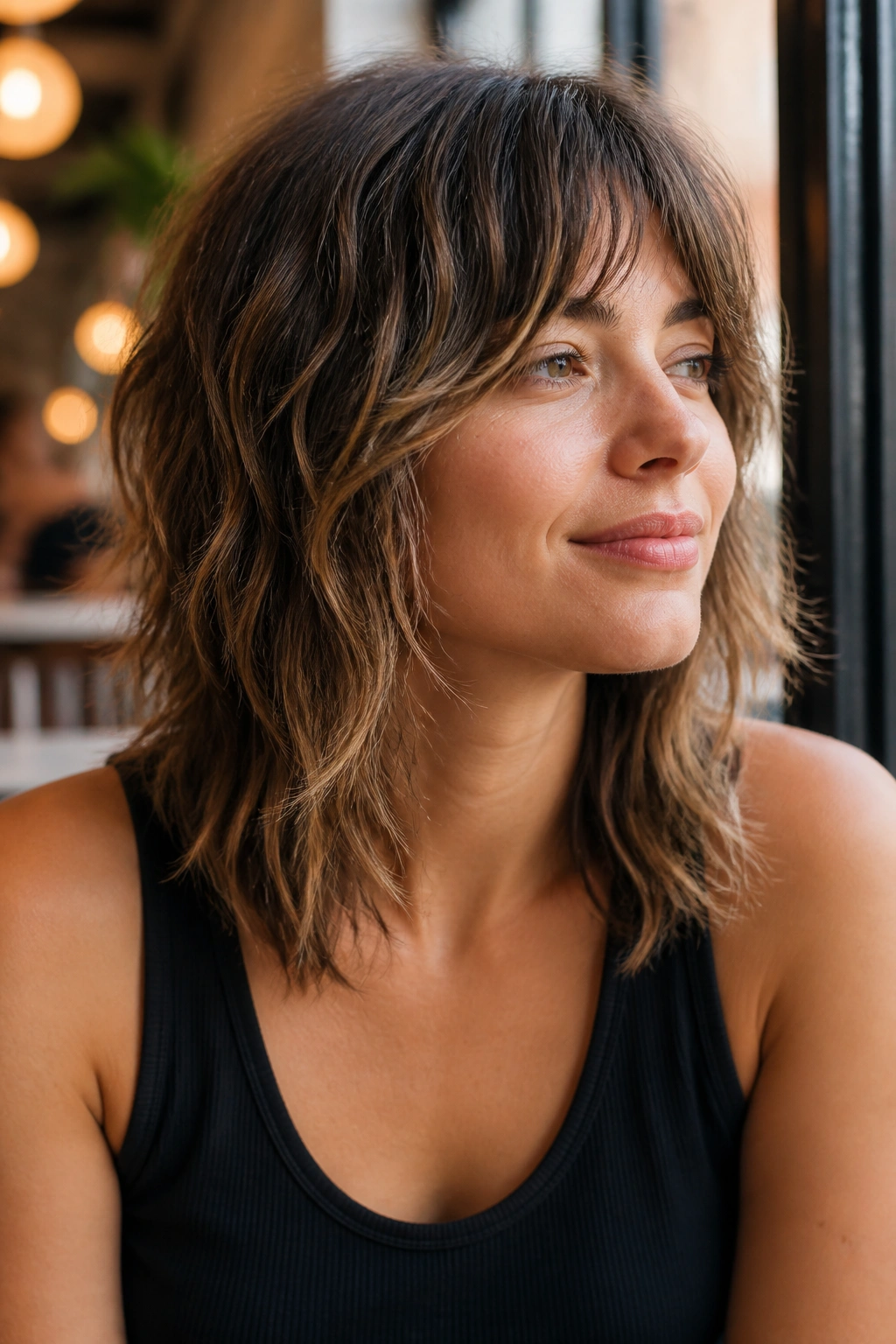
If I had to pick one long-term shape for wavy medium hair, this would be it.
A soft shag does half the styling work before you even pick up a tool. The layers remove weight where medium hair tends to sit heavy, then the face-framing pieces and piecey ends keep the wave pattern broken up in a good way. Instead of one heavy curtain, you get movement all over the head. That is the reason this cut keeps showing up in salons and on real people who actually have to live with their hair.
It also ages well. Not in a dull way — in the sense that it still looks right when the waves are loose, brushed out, or a little imperfect. If the rest of your wardrobe is simple and your hair does most of the talking, this shape earns its place fast.
I’d ask for soft layers, not razor-happy texture, and I’d keep the ends light rather than wispy. Too much chopping at the bottom can make medium hair look thin in daylight. A good shag should move. It should not fray.
And that’s the one I’d keep coming back to.
