



Medium hair is the sweet spot for waves. It has enough length to bend and move, but not so much that the shape disappears under its own weight.
Textured wavy hairstyles for medium hair work because the cut can carry a little mess and still look polished. That middle zone — around the shoulders, collarbone, or a touch below — gives you room for layers, part changes, and pinning tricks without turning the whole thing into a hair project.
The catch is that medium length can go flat fast. Too much curl and it looks stiff. Too little layering and the ends sit there like a shelf. The best looks have a little bend near the face, some lift at the crown, and enough softness at the ends that you can still run your fingers through them.
Some of these styles lean polished. Some are borderline undone. A few rely on the haircut more than the styling tool, which is often the smarter choice anyway. Medium hair rewards movement, not perfection, and that’s exactly where these shapes do their best work.
1. Textured Wavy Lob with Airy Layers

A collarbone lob is where textured waves start looking clean instead of fussy. The length sits in that narrow band between “too short to move” and “long enough to collapse,” which is exactly why the style behaves so well on medium hair.
I like this cut with long layers and a soft, blunt perimeter. The blunt edge keeps the line full, while the layers stop the waves from stacking up into a triangle. If your hair feels thick at the bottom, this shape usually fixes that problem without taking away body.
What to Ask For
- Ask for layers that start around the cheekbone or lower.
- Keep the ends fairly full; do not over-thin them.
- Leave enough weight at the perimeter so the waves do not puff out.
Style it with a 1.25-inch curling iron, wrapping only the mid-lengths and leaving the last inch out. Brush through once, then mist a light texture spray from underneath. That last part matters. Spray on the surface alone can make the top look dusty.
Best move: curl away from the face on the front pieces, then switch directions on the back half so the finish looks lived-in instead of staged.
2. Curtain Bang Waves with a Soft Bend
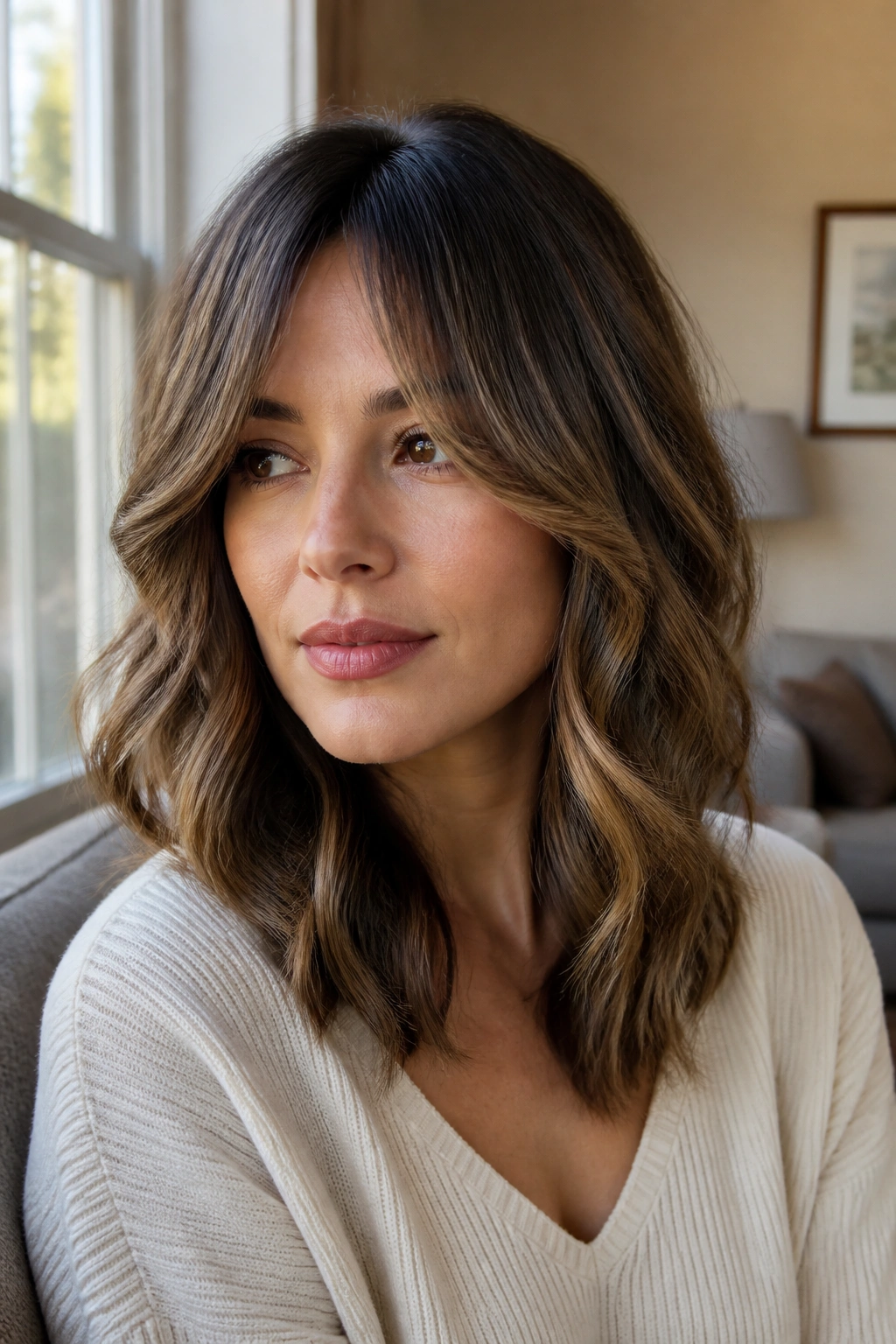
Why do curtain bangs work so well with medium-length waves? Because they break up the face frame before the style has a chance to feel heavy.
The fringe does a lot of the visual work here. A soft bend at the bangs, not a hard curl, makes the hair feel lighter around the eyes and cheekbones. That helps especially if your hair sits at the shoulders and tends to widen out instead of falling straight down.
I’d keep the front pieces longer than most people think they need. Short curtain bangs can look cute, sure, but on medium hair they can fight the rest of the wave pattern. Longer ones blend better and grow out more gracefully. They also give you room to sweep them apart when the style needs to look calmer.
A round brush and a blow-dryer are enough. Lift the bangs up and away from the face, roll just the ends under for a second, then let the rest air-set with a touch of mousse. The wave should look soft, not curled into a shape with hard edges.
3. Shoulder-Grazing Shag with Piecey Texture
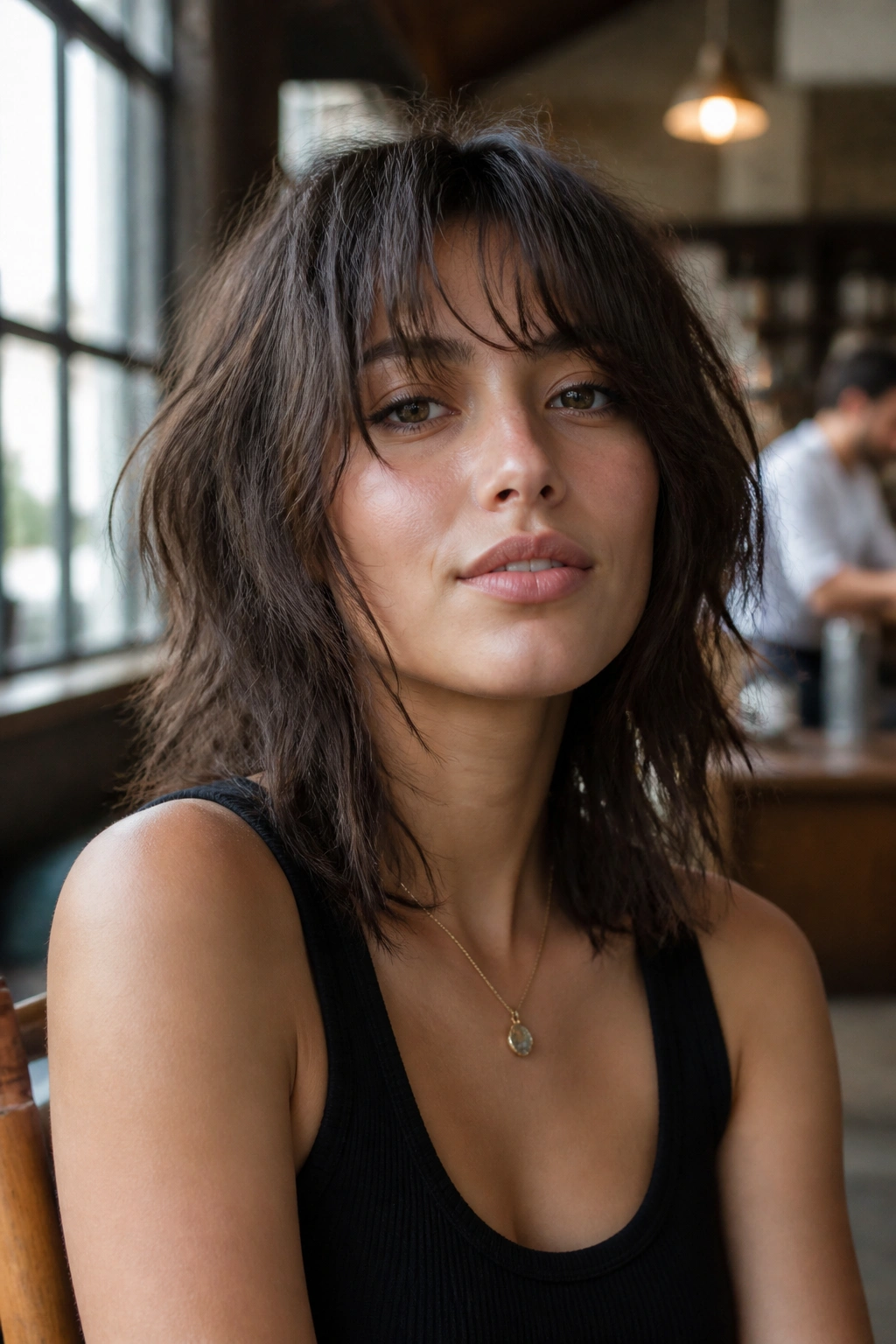
On a humid day, this is the cut that still looks decent in a car mirror. The shoulder-grazing shag does not depend on perfect curl placement; it depends on movement, grit, and a little bit of edge.
The layers are what make it work. You want separation near the crown, some broken-up texture through the sides, and ends that don’t all sit on the same plane. If the cut is too neat, the shag loses its point and starts looking like a regular layered haircut with a lot of styling product.
Where the Shag Helps Most
- Fine hair gets more lift because the layers remove some drag.
- Thick hair loses bulk without losing the shape.
- Straight-to-wavy hair gains definition without a full curl set.
Use sea salt spray on damp hair, then rough-dry with your fingers or a diffuser. When the hair is about 80 percent dry, twist a few random pieces around your fingers and let them cool in place. That gives the style the broken texture that makes it feel lived in.
I would skip heavy curl creams here. They make the layers clump together and kill the point of the cut. This one wants a little roughness.
4. Deep Side-Part Waves That Slide Over One Eye
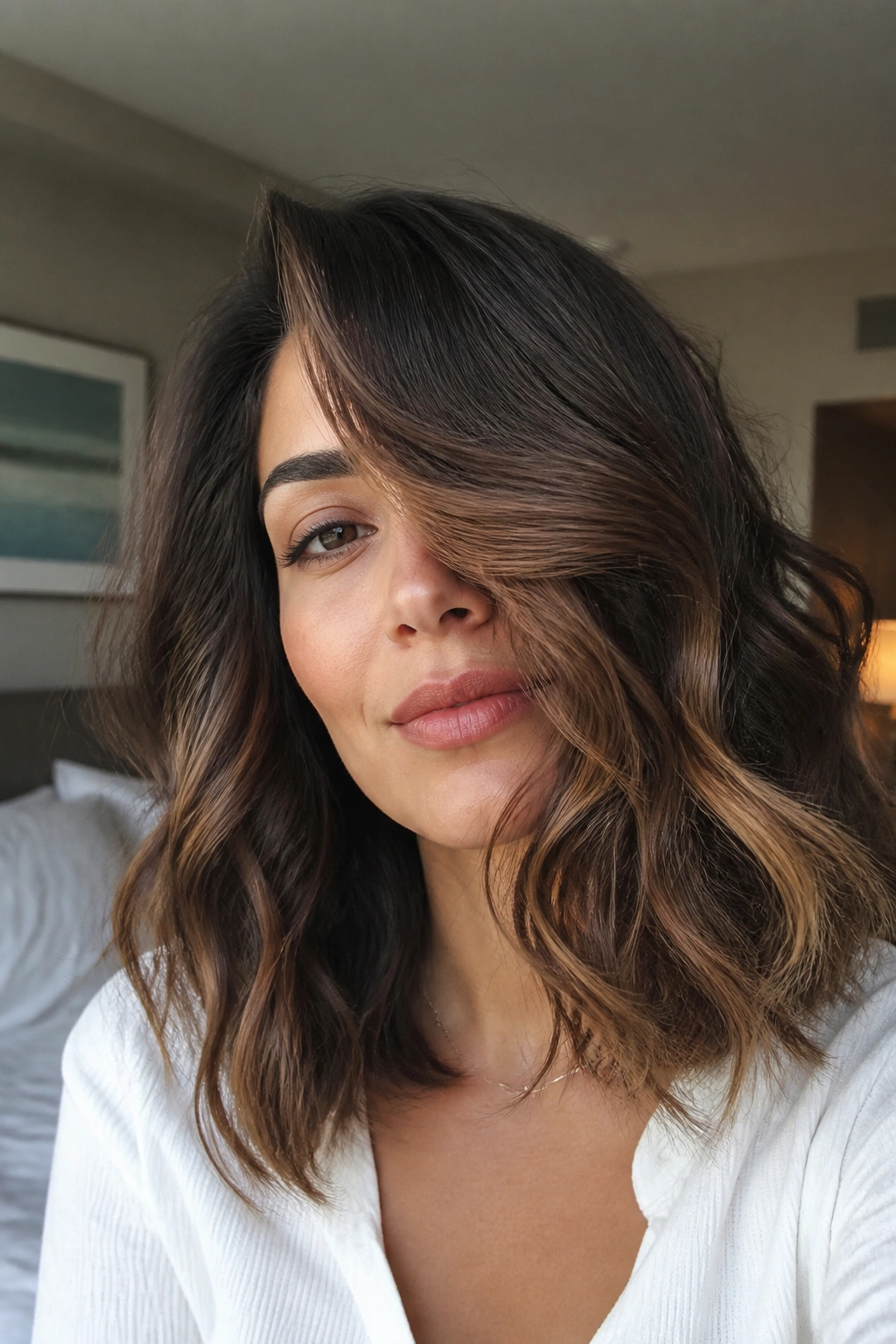
What happens when you push the part far to one side and let the waves fall over the cheekbone? The whole haircut suddenly gets more shape, and medium hair looks longer without actually being longer.
This style has a little old-school drama, but not in a costume way. The deep side part creates height at the crown, and the waves sweep down in one controlled curve. That gives medium hair a cleaner line than a center part sometimes does, especially if your face is round or square and you want a little more vertical movement.
A large-barrel iron — think 1.25 inches or bigger — works best here. Start the curl below the ear, keep the top section smooth, then brush the front pieces just enough to soften the bend. If the crown falls flat, clip it up while the curls cool. That tiny pause can save the shape.
The part makes the mood
The part is not just a detail. It changes where the weight lands, where the eye goes first, and how much volume you get near the roots. A clean side part can make the same haircut feel sharper in five seconds.
5. Half-Up Knot with Loose, Undone Texture

Half-up knots solve the one problem waves have on medium hair: the front can get in your face while the back still looks too pretty to pin up.
I like this version best when the knot sits low and a little loose. High knots can pull the style into cheerleader territory. Low knots feel calmer, especially if you leave two face-framing pieces out and keep them slightly bent instead of curled tight.
The trick is to gather only the top third of the hair. Anything more starts to flatten the wave pattern underneath. Twist once or twice, secure it with a small elastic or a couple of pins, and then pull gently at the knot so it looks soft instead of tight. That tiny looseness matters.
If your hair is freshly washed, add a bit of texture spray first. Fresh hair can be slippery, and slippery hair refuses to stay put. Second-day hair usually gives you better grip, though a dry shampoo at the roots can help if you need some lift.
6. Textured Wavy Cut with Invisible Layers
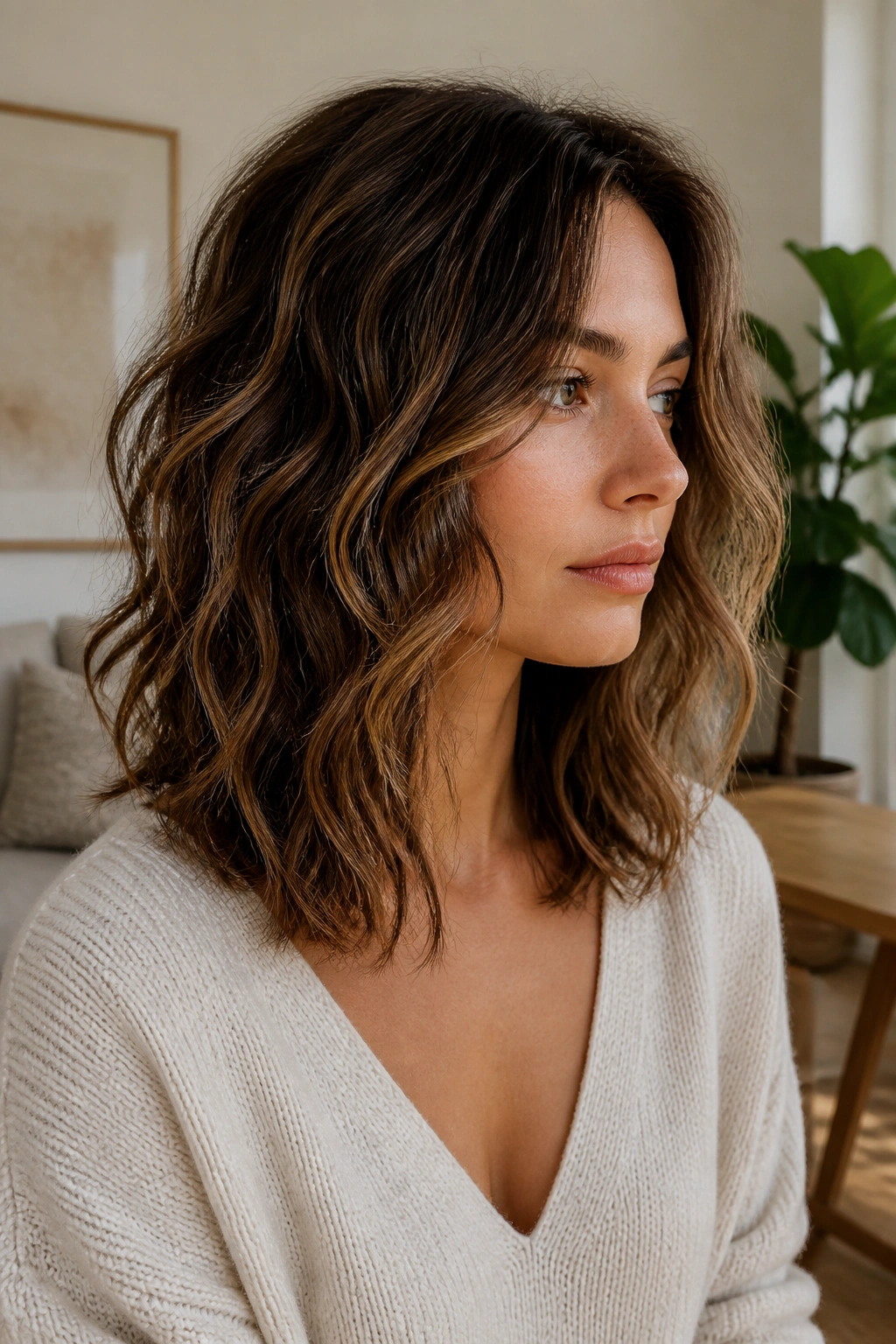
The trick here is not more curl. It’s less weight.
Invisible layers are cut inside the shape rather than sitting on the surface, so the haircut keeps its outline while the waves gain movement underneath. On medium hair, that matters a lot. Too many visible layers can make the style look chopped up, but invisible ones let the hair swing without showing every single cut line.
This is one of my favorite options for people who want waves without the obvious “I had to style this” look. The finish feels softer because the structure is hidden. You still get motion at the ends, but the overall silhouette stays smooth and tidy.
Use a curling wand or flat iron to make loose bends through random sections, then brush everything out with a paddle brush once the hair cools. That step turns the waves from crisp to soft. Finish with a light spray on the mid-lengths only. If you load the roots, the style loses the airy part that makes invisible layers worth it.
7. Braided Crown Accent on Loose Waves

A two-inch braid at each temple changes the whole look. It takes a regular wavy medium-length style and gives it just enough detail to feel finished.
This works especially well when you want your hair out of your face but do not want a full updo. The braid becomes the feature up top, while the waves stay loose through the back and lower sides. It is a good fit for thicker medium hair, but fine hair can wear it too if the braid is kept narrow and relaxed.
How to Keep the Braid Soft
- Start the braid slightly behind the hairline so it does not look glued to the scalp.
- Pull the outer edges of each braid a little wider after securing it.
- Keep the rest of the wave pattern loose, not brushed out to the point of frizz.
I prefer this on hair with a little texture already in it. Freshly washed hair can slip out of the braid before lunch. A touch of dry shampoo or texture powder at the roots gives the braid something to grab.
The look lands somewhere between pretty and practical. That’s a good place to be.
8. Clipped-Back Side Sweep with Soft Waves

Three pins. That’s all.
This is the kind of style that looks like you put in more work than you did, which is half the appeal. Sweep one side back behind the ear or just above it, secure it with a flat clip or a couple of bobby pins, and let the rest of the waves fall freely over the other shoulder.
The shape works because it creates contrast. One side is clean and controlled. The other side stays soft and loose. On medium hair, that asymmetry keeps the style from looking heavy. It also gives the haircut a little edge without needing a full side shave or any dramatic cut.
I like this best with wave patterns that are not too even. If every bend is identical, the clip just looks decorative. If the waves are a little irregular, the tucked side feels more natural and the whole thing comes alive.
Use a matte clip if you want the focus on the hair, not the accessory. Use a shiny one if the outfit is plain and you want the hair to do some of the dressing.
9. Wolf-Cut Lite with Broken Waves

Is this a shag? Not quite.
A wolf-cut lite keeps the roughness around the crown and the broken wave pattern through the lengths, but it softens the extreme contrast that a full wolf cut can have. On medium hair, that makes the look easier to wear day to day. You still get that airy, choppy energy, just without the sharper mullet shape that can overwhelm some faces.
This style needs a little attitude. Not much. Just enough. If your hair is naturally wavy or somewhere near it, the cut helps the texture show up faster. If your hair is straighter, you can still wear it, but the styling becomes more important. A diffuser, a little mousse, and some finger-twisted pieces near the top usually do the trick.
Why It Feels Different From a Shag
- The crown is shorter and airier.
- The lengths stay a bit more disconnected.
- The result feels rougher, not polished.
I would not choose this if you hate visible texture at the roots. That is the whole point here. If you like a haircut that looks a little wild in a good way, though, it has real personality.
10. Flip-Out Ends with Brush-Through Waves
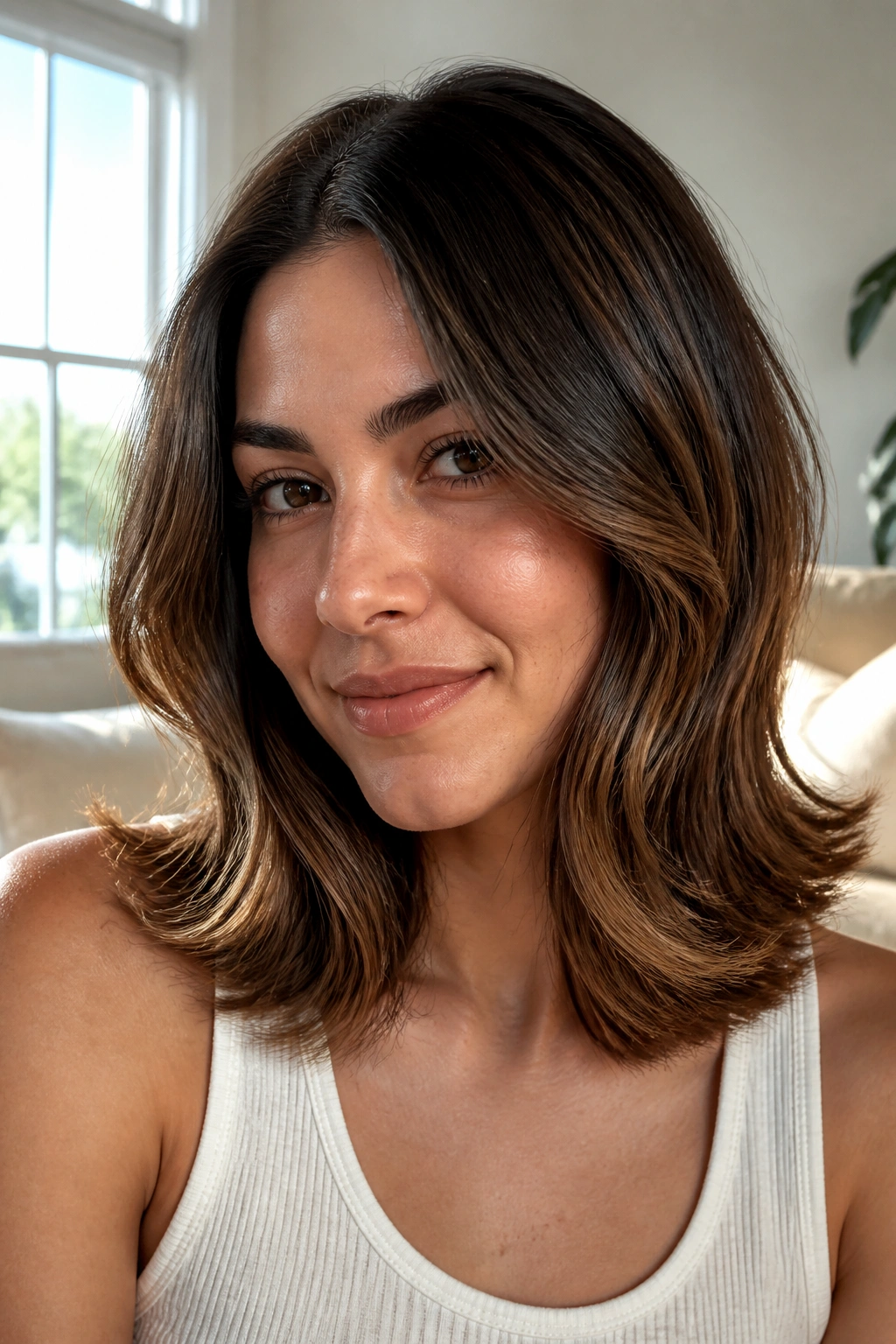
The ends turn outward first. Then the whole shape opens up.
That flip-out finish gives medium hair a breezy, slightly retro shape without needing a full blowout. The root area stays fairly smooth, the mid-lengths get a soft bend, and the ends kick out just enough to keep the haircut from drooping. It works especially well on shoulder-length hair that tends to curl inward on its own.
A round brush or a blow-dry brush can create the flip, but a flat iron can do it too if you bend the last inch away from the face. The key is not to overdo the curve. You want a little swing, not a hard flick. If the ends look too sharp, brush them through once the hair cools.
This style is one of the best options when you want waves but do not want the whole head to feel textured. It keeps the top polished and gives the bottom some lift. That balance makes medium hair look fuller without looking fluffy.
A light mist of flexible spray is enough. Heavy spray kills the movement immediately.
11. Wet-Look Waves with a Glossy Finish

Not every wave needs to look soft.
A wet-look finish turns medium hair into something sleeker and a little more fashion-forward, even when the wave pattern underneath is loose and simple. It is a strong choice when you want definition and shine, not fluff. The style works because the product keeps the hair clumped in place, which makes the wave shape feel deliberate instead of accidental.
I would keep the part clean and the roots smooth. Then work gel or strong-hold cream through damp hair from the ears down, leaving the crown lighter if you do not want it to freeze in place. Comb through once with a wide-tooth comb, then leave it alone. Touching it too much is how the finish goes from sleek to messy in a bad way.
What to Watch For
- Use less product on fine hair, or the style will collapse.
- Keep the ends glossy, not crunchy.
- Let the hair dry fully before you move it around.
This is not a daytime errand style for everyone. It reads more evening, more sharp, more styled. That is exactly why it works.
12. Retro S-Waves with Lift at the Roots

A side part, a few clips, and the front section suddenly looks like it took more work than it did.
Retro S-waves bring a cleaner, more sculpted curve to medium hair. Instead of loose beachy movement, you get smooth bends that move from the roots through the ends in a soft S shape. The style gives the hair a sense of direction, which is useful if your waves tend to scatter and lose form.
This one likes a setting technique. Curl each section in the same direction, let it cool, then brush it into the wave shape you want. Clips at the roots help the front stay lifted while it cools, and that extra height keeps the style from sitting flat against the head. If the hair falls before it sets, the shape gets lazy.
I think this looks best with medium hair that reaches the collarbone or just below. Shorter medium cuts can look too bouncy; longer ones can lose the crisp curve. The sweet spot is where the wave can hold its shape without collapsing under length.
It is a little fussier than a messy bend. Worth it, though.
13. Money-Piece Waves with Bright Front Sections

If the front of your hair is where the shape falls apart, put the emphasis there.
Money-piece waves use lighter front sections to pull the eye toward the face and give the medium cut more contrast. Even without actual highlights, you can fake the effect by styling the front pieces a touch more carefully than the rest. That means a cleaner bend around the cheekbones and a softer fall through the lengths.
The look works because medium hair needs a focal point. When the face-framing pieces are brighter or more defined, the whole haircut feels more awake. It is a simple trick, but a smart one. The rest of the wave pattern can stay loose and casual while those front pieces do the talking.
Why the Front Sections Matter
- They frame the eyes and cheekbones first.
- They make shoulder-length hair look less flat.
- They soften the line between haircut and style.
A 1-inch wand works well for the front pieces because it gives a clearer bend. Leave the ends a touch straighter so the face frame does not look too curled. That tiny difference keeps the style from feeling overdone.
14. Rope-Twist Half-Up Waves

I keep seeing this on medium hair that needs to get out of the neck but still look soft.
The rope-twist half-up is a nice middle ground between a braid and a knot. Instead of weaving strands over and under, you twist two small sections in the same direction, then wrap them around each other and pin them back. It is easy once you’ve done it once or twice, and it gives the top half of the hair a little detail without taking away the wave pattern underneath.
This works especially well on day-two waves, when the hair has a bit more grip. Fresh hair can be slippery, and a rope twist needs some texture to stay put. A small amount of dry shampoo at the roots helps, even if your hair is not oily. The product gives the twist a little friction, which is half the battle.
Leave the lower half loose and brush the ends through with your fingers only. If you use a brush, the twist can start to look too neat compared with the rest of the style. The whole point is that the top feels arranged while the back stays soft.
15. Tucked-Behind-Ear Polished Waves

A clean tuck changes everything.
This is the simplest style in the group, which is part of why I like it. You keep the waves soft and medium in size, then tuck one side behind the ear to open the face and show the line of the cut. On medium hair, that tiny shift makes the shape feel more finished without making it formal.
The tuck works best when the wave is smooth from the part down to the cheekbone. If the front is frizzy or too curly, the tucked side can look accidental. A flat iron pass through the front section, followed by a loose bend through the mid-lengths, usually gives the right balance. You want enough movement to keep it from looking stiff.
How to Make the Tuck Stay Put
- Hide a small pin under the top layer if the hair keeps slipping out.
- Choose an ear-length section that feels a little flatter than the rest.
- Add a barrette only if the haircut needs weight at the side.
This is a good style when you want your earrings to matter, or when the neckline of your outfit is doing most of the visual work. It is quiet, but not plain. That distinction matters.
Final Thoughts
Medium hair does not need much help to look good with waves. It needs the right shape, a little bend in the right places, and a decision about where the hair should carry its weight.
The styles that tend to work best are the ones that respect the haircut. A good lob, a softer shag, or a clean tucked finish can do more than a pile of product ever will. When the cut and the texture are speaking the same language, the whole look settles down.
Pick one shape that fits how you actually wear your hair. Not the version you wear for photos. The real one. That is usually the one worth repeating.
