



Long hair can swallow a curl alive. That’s the first thing people notice when they try to make their waves look soft instead of stiff: the length pulls everything down, and suddenly the style feels heavier than it should.
The fix is not tighter curls. It’s smarter shaping. Light curl hairstyles for long hair work because they keep the movement at the surface—soft bends, loose spirals, face-framing pieces, a little lift at the crown, and ends that still feel free. That’s the sweet spot for curly and wavy hairstyles on long lengths.
I’ve always liked styles that leave room for the hair to move. A big barrel can make long hair look glossy and expensive; a small barrel can make it look fussy. Somewhere in between is where the good stuff lives. You want shape, not helmet hair.
1. Center-Parted Loose Curls

A center part gives long curls a clean line, and that line does most of the work. It keeps the style from drifting into “too much hair, not enough shape,” which is a real problem on longer lengths.
Why It Works on Long Hair
With long hair, a center part lets the curl pattern fall evenly on both sides, so the eye reads the style as balanced instead of heavy. I like this one best when the hair has layers, because the shorter pieces near the front stop the shape from looking flat at the cheeks.
Use a 1.25-inch curling iron or wand and wrap 1 to 1½-inch sections away from the face. Leave the last inch or two straighter if you want that airy, lived-in finish. Once the curls cool, rake through them with your fingers or a wide-tooth comb.
- Best for: oval, round, and heart-shaped faces
- Curl size: loose S-shape, not tight spiral
- Finish: soft shine spray, never a heavy oil at the roots
- Vibe: clean, calm, easy to wear with almost anything
Pro tip: clip the front pieces up for 5 minutes while they cool. That little bend at the cheekbone makes a bigger difference than people expect.
2. Deep Side-Part Hollywood Waves
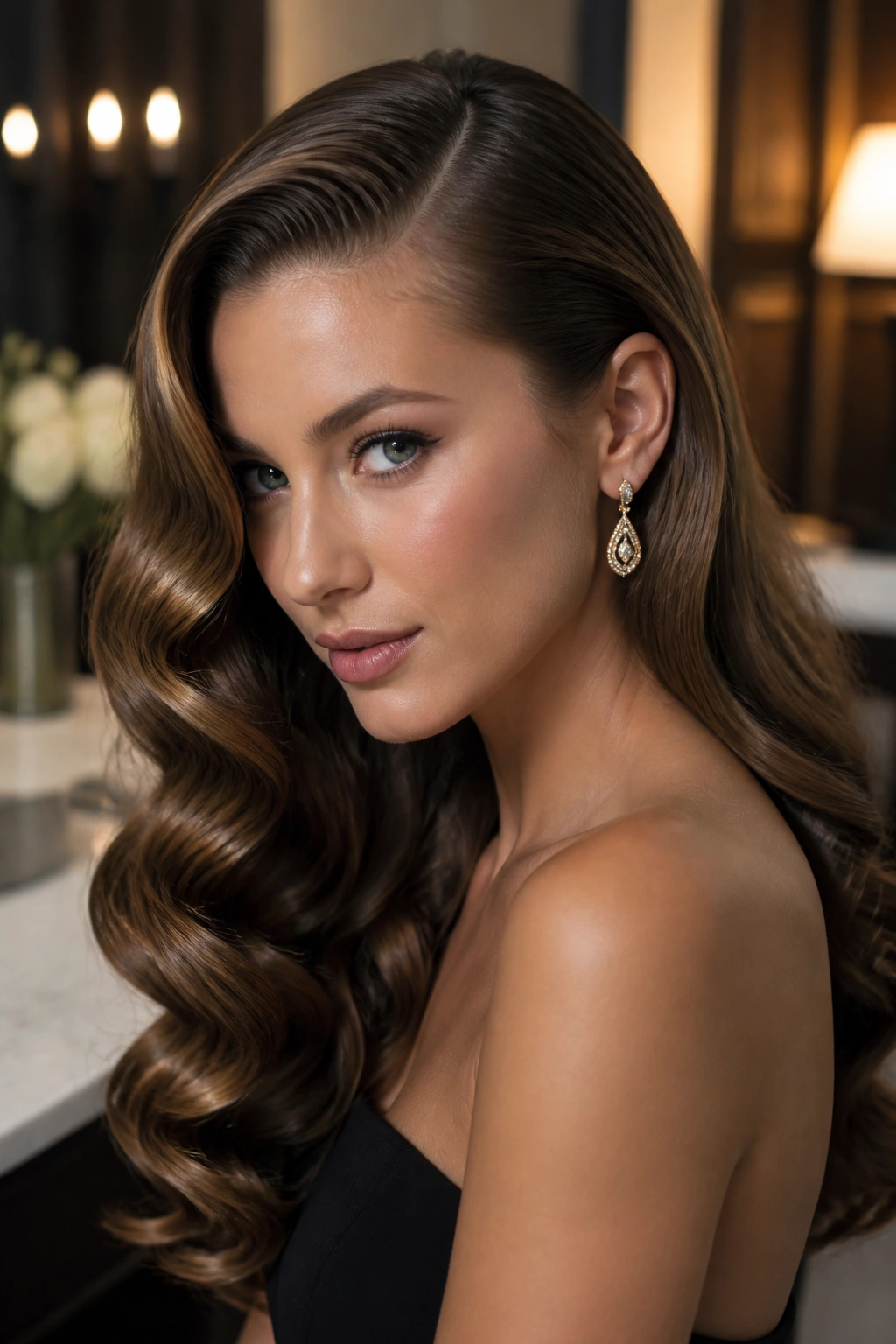
A deep side part can make long hair look polished in about ten seconds. It shifts the volume, gives the curl a clear direction, and keeps the style from sitting dead center and heavy.
This works especially well if your hair has some natural wave, because the bend does not have to fight the texture. Use a 1.5-inch iron, curl everything away from the face, and then brush the waves into one soft sheet. Tuck the smaller side behind one ear and let the bigger side spill over the shoulder.
I like this style for dinners, events, or any day when you want the hair to look deliberate without feeling stiff. The trick is the brush-out. If you skip it, the curls stay too bouncy and can look dated fast. If you overbrush, the wave disappears. Somewhere in the middle is the sweet spot.
The best version has shine at the ends and a little shadow at the roots. Flat roots kill the whole thing.
3. Face-Framing Layers with Soft Bends
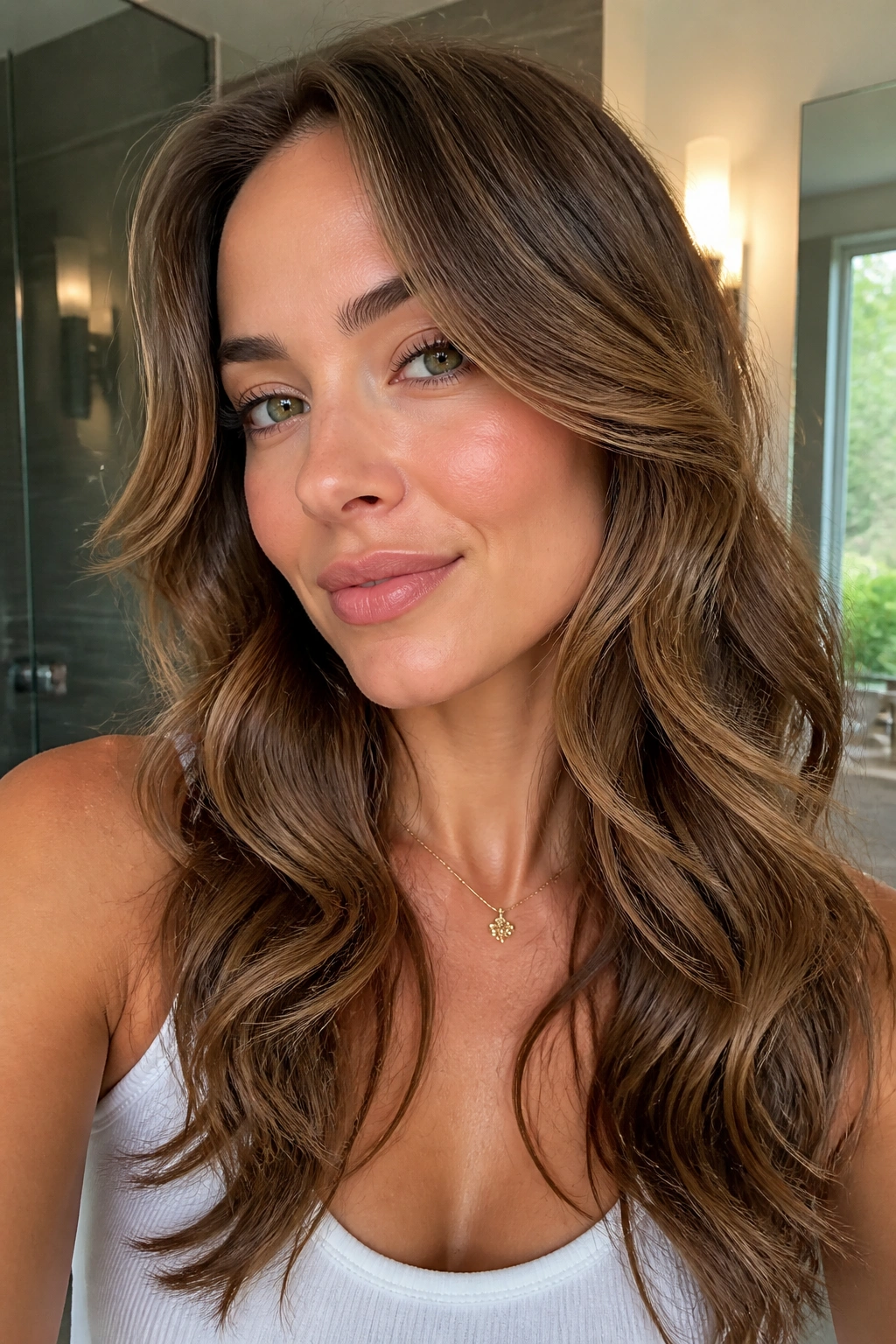
Why do some long curls look airy while others look weighed down? Usually it comes down to where the bend starts. If every curl begins at the root, the hair can look too dense. If the bend starts lower, the style opens up around the face.
How to Use It
Ask for long face-framing layers if you wear your hair down a lot. Those shorter pieces are what keep the curl shape from turning into one long curtain. If you already have layers, work with them instead of against them. Curl the front sections away from the face and stop the wrap a little earlier on the mid-lengths.
A round brush helps here, but so does a curling wand used on the top half of the section only. The point is not to make the whole head match perfectly. A little difference in curl size gives the style life.
- Start the curl below the cheekbone
- Keep the ends a touch straighter
- Use light mousse on damp hair
- Finish with a flexible spray, not a crunchy one
The Small Detail That Matters
Pinning the front pieces up while they cool keeps the face-framing bend from collapsing under its own weight. It sounds fussy. It isn’t. It takes two clips and maybe three minutes.
4. Half-Up Twist Crown Curls
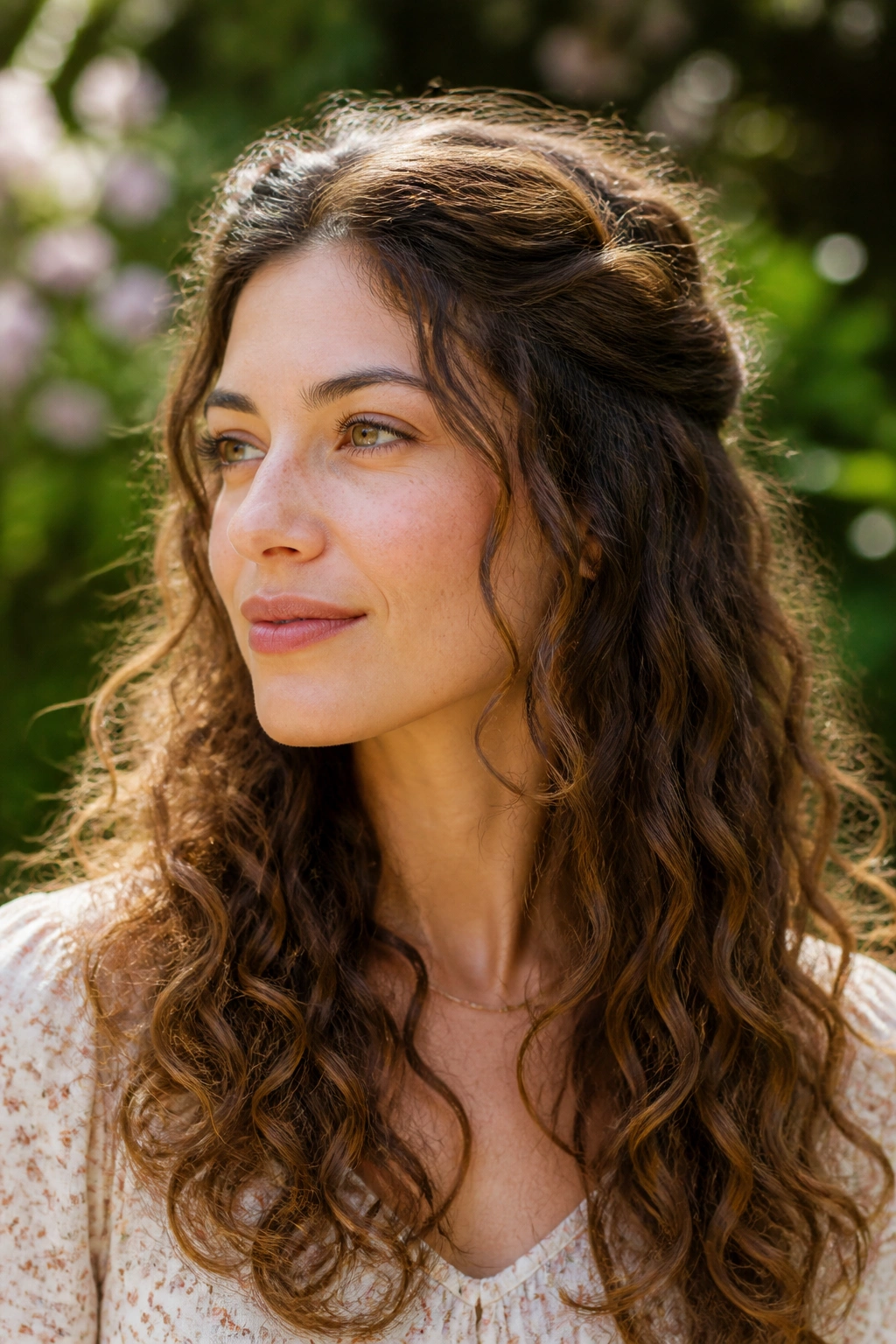
If your hair keeps sliding into your collar, this is the one I reach for. A twisted half-up style controls the top section, but it leaves the length open, which is exactly why it works so well on long hair.
The twist acts like a soft frame across the back of the head. It lifts the crown a little, hides the part, and gives the curls a place to sit. I like to take two 2-inch sections from the temples, twist them back loosely, and pin them just under the crown so the pins disappear.
- Twist the sections away from the face
- Cross them once before pinning
- Leave the crown slightly lifted
- Curl the loose lengths after the twist is secured
Keep the twist soft. Tight twisting makes the style look narrow, and narrow is not the goal here. You want the top to look casual and the bottom to keep its full movement. A few loose pieces around the hairline help too. They stop the style from feeling too neat, which is usually the first thing that makes half-up hair lose its charm.
5. Claw-Clip Lift with Loose Length
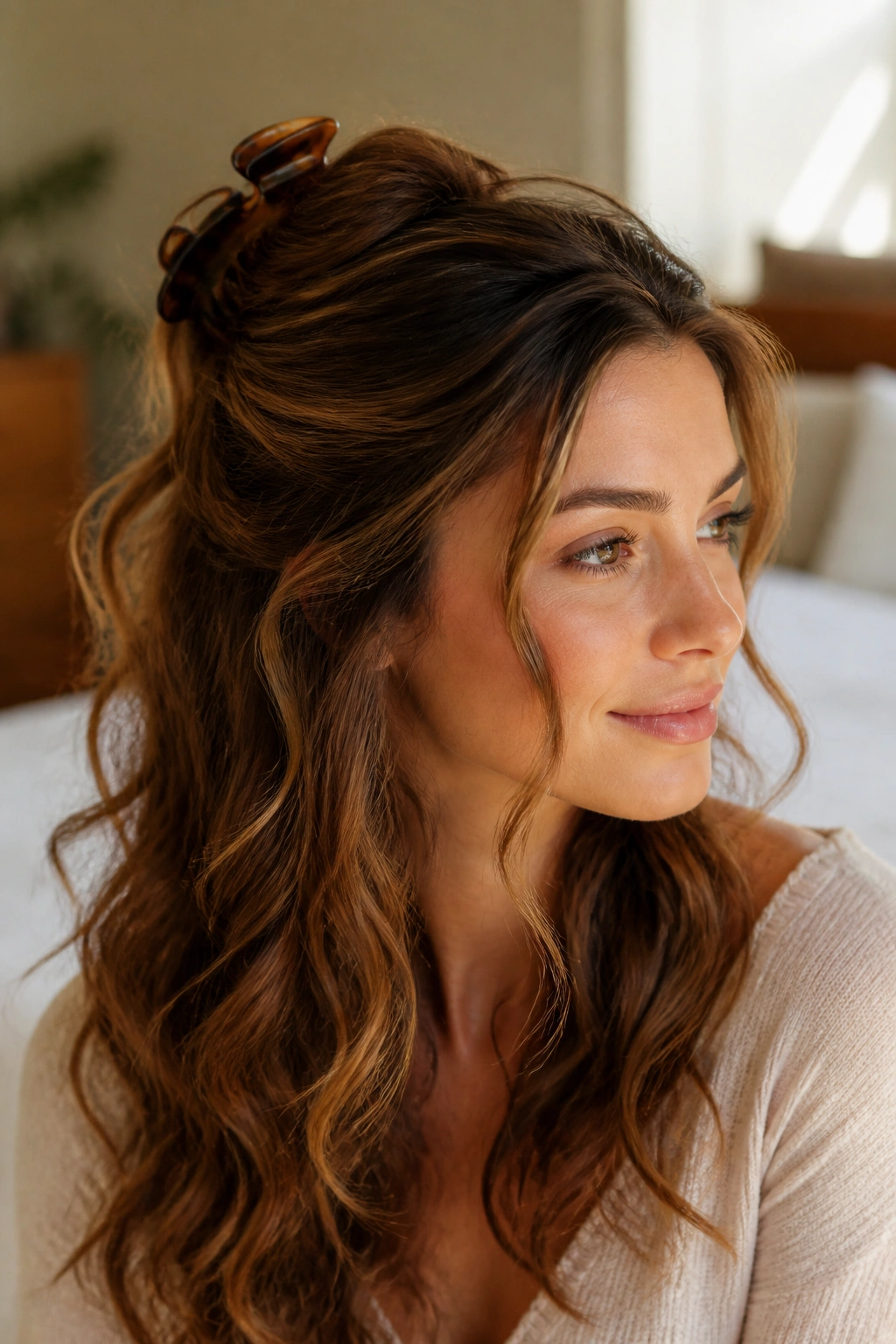
A claw clip changes the shape of long curls fast. That is the appeal. One clip, a few turns, and the hair suddenly sits higher without losing the loose curl at the ends.
I prefer this style on second-day hair, when the wave already has some bend and does not need a full restyle. Gather the top half or two-thirds of the hair, twist it once, fold it up, and secure it with a medium or large claw clip. Let the ends spill out in a soft waterfall. That spill is the whole point.
The clip matters more than people think. A tiny clip digs in and flattens the crown. A heavy one makes the style look bulky. Somewhere in the middle is best, especially if the hair is thick. If your hair is fine, a matte clip with a slightly curved shape usually holds better than a slick one.
I like this because it does not pretend to be perfect. It looks easy, but not sloppy. That’s a hard line to hit, and the clip does most of the work.
6. Low Curly Ponytail with a Wrapped Base
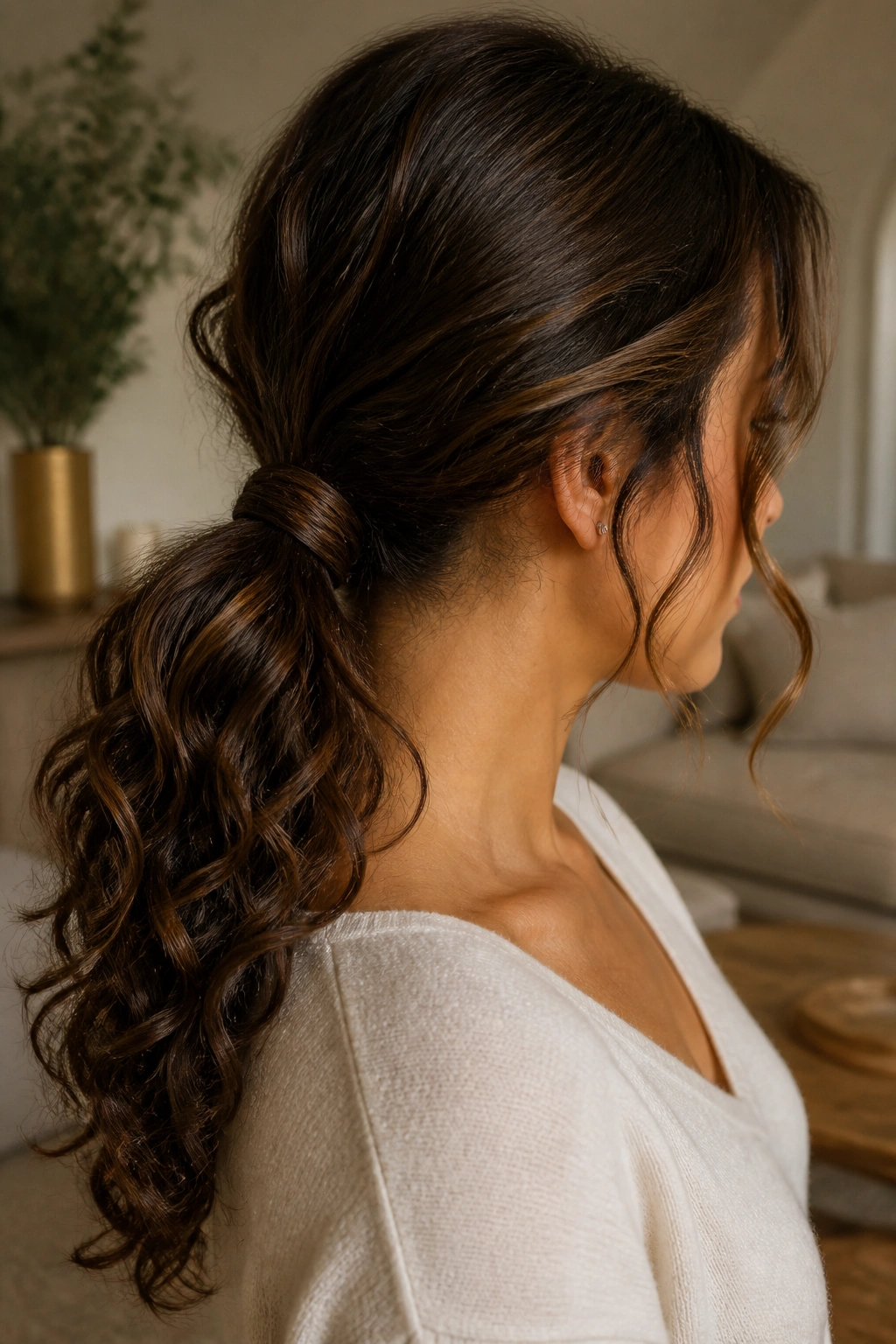
Unlike a tight high ponytail, this one keeps the curl shape alive at the ends. The low placement matters. It lets the long length fall naturally while the top stays smooth enough to look intentional.
Start with a loose ponytail at the nape, then wrap a small section of hair around the elastic and pin it underneath. That tiny cover-up makes a cheap hair tie look finished. Pull out two face-framing pieces and bend them with a small iron if they need help. The rest can stay wavy and soft.
This style works when you want your hair out of the way without losing the feel of long curls. It also plays well with volume. If the hair is thick, leave the ponytail a little fuller instead of smoothing it flat. If the hair is fine, pinch the crown up with your fingers after tying it.
Best use: days when you want the length visible but not in your face.
7. Braided Crown with Loose Ends

A braid does not have to mean the length disappears. With a braided crown, the hairline gets the detail and the long curls get to stay down where they belong.
Where It Flatters Most
This style is strong around the temples and soft everywhere else. That mix is why it works so well on long hair. The braid gives structure, and the loose ends keep the whole thing from feeling too done. If the braid is too thick, the style starts looking heavy. Thin, flat braids sit better.
Take a section from one side, braid it along the hairline, and pin it across the back like a band. Then leave the rest of the hair in loose curls or brushed waves. The braid should look like it belongs there, not like it was pasted on at the last minute.
- Use a small clear elastic to finish the braid end
- Keep the braid close to the head
- Hide pins under the top layer
- Leave the length soft, not overstyled
A small warning: if the braid is too tight, it can pull the front pieces weirdly and make the crown sit flat.
8. Side Braid into Curl Cascade

This is the easiest way to make long curls look intentional without pinning half your head. One braid, one side, and the rest of the hair gets to fall the way it wants.
Start the braid just above the temple and work it down toward the back of the head, then stop once you reach the point where the length can flow freely. Let the braid feed into loose curls or waves rather than trying to continue it all the way to the ends. That keeps the style from feeling busy.
This one is good for thick hair because the braid controls the top layer without flattening the rest. It also works on hair that has grown out from layers, since the braid hides uneven pieces near the front. I like a slightly messy finish here—just enough looseness that you can see the texture, not so much that the braid falls apart.
If your hair is slippery, a tiny bit of texturizing spray at the roots helps. Not much. Too much and the braid goes crunchy.
9. Curtain Bangs with Airy Curl Ends
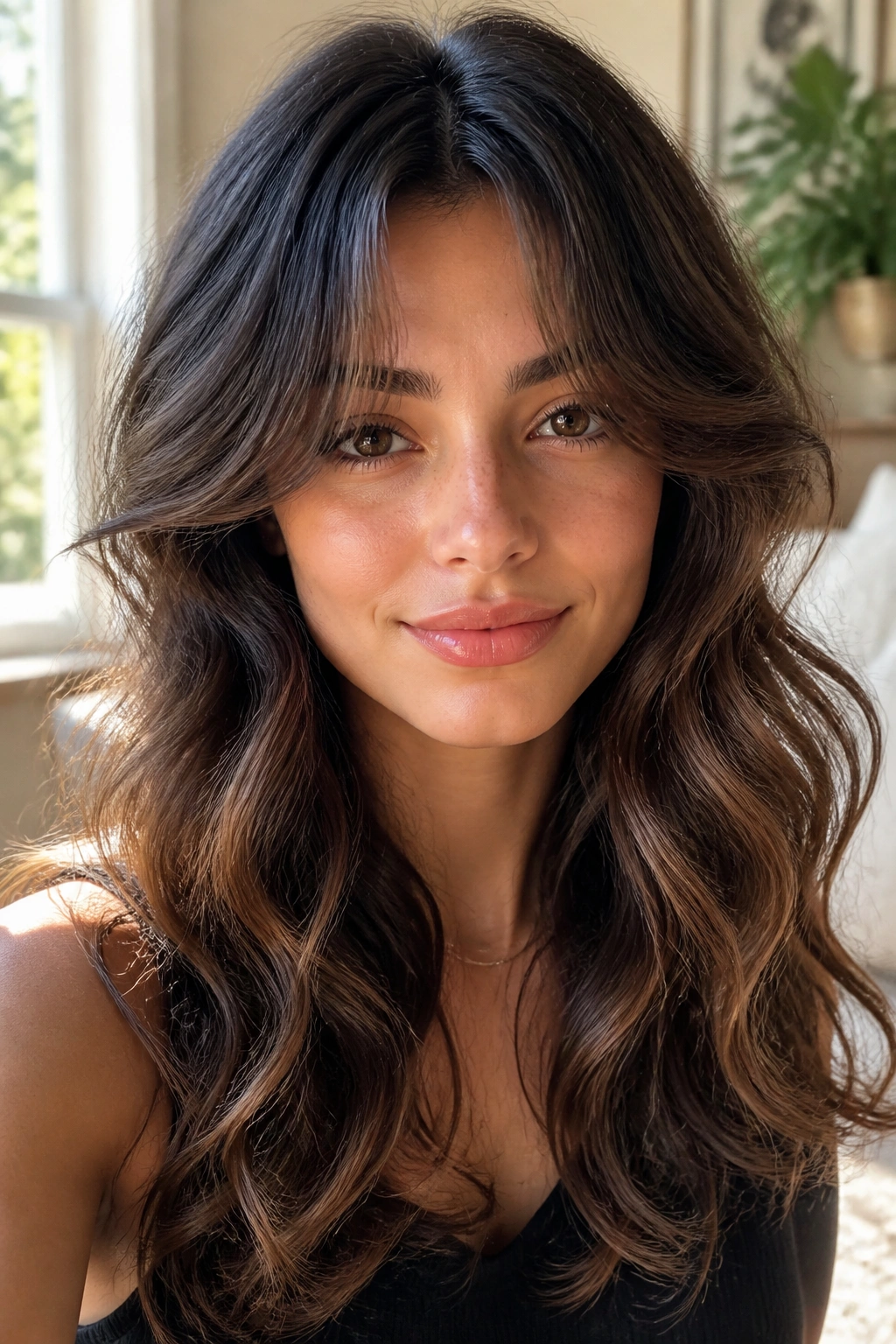
What if you want softness around the face without giving up length? Curtain bangs do that job better than almost anything else. They break up long curls, open the face, and make the rest of the hair look lighter by comparison.
How to Style the Bangs
Curtain bangs should bend away from the face, not curl under it. Wrap each side around a round brush for a few seconds, then let them cool in place before touching them. If you heat-style them straight out of the shower, they usually fall too hard and lose that airy curve.
The rest of the hair can stay loose and bendy. In fact, it usually looks better if it does. The contrast between the shorter front pieces and the longer wave is what gives the whole style movement.
If you do not have bangs, you can fake the effect with two front pieces cut or styled shorter than the rest. That small change changes everything. It makes long hair look lighter around the face, which is what this style is all about.
One extra note: keep the bang area separate from heavy products. That part goes greasy fast.
10. Brushed-Out Ringlets

The trick is to start with defined curls, then ruin them on purpose—gently. Brushed-out ringlets are what you get when the curl has been set, cooled, and then softened into a cloudlike wave.
Use a curling iron or wand on medium sections, let each curl cool fully, then brush through with a boar-bristle brush or a soft paddle brush. The shape should loosen, not disappear. You should still be able to see the bend; it just feels softer and fuller at the same time.
- Curl in alternating directions for a softer mix
- Let the hair cool before brushing
- Use light-hold spray after the brush-out
- Finish by lifting the roots with your fingers
This style is one of my favorites for long hair because it keeps the ends from looking stringy. It adds body without turning the whole head into a tight set. If your hair frizzes easily, stop brushing before it gets too puffy. The sweet spot is fluffy, not fuzzy.
11. High Half-Ponytail with Flowing Waves
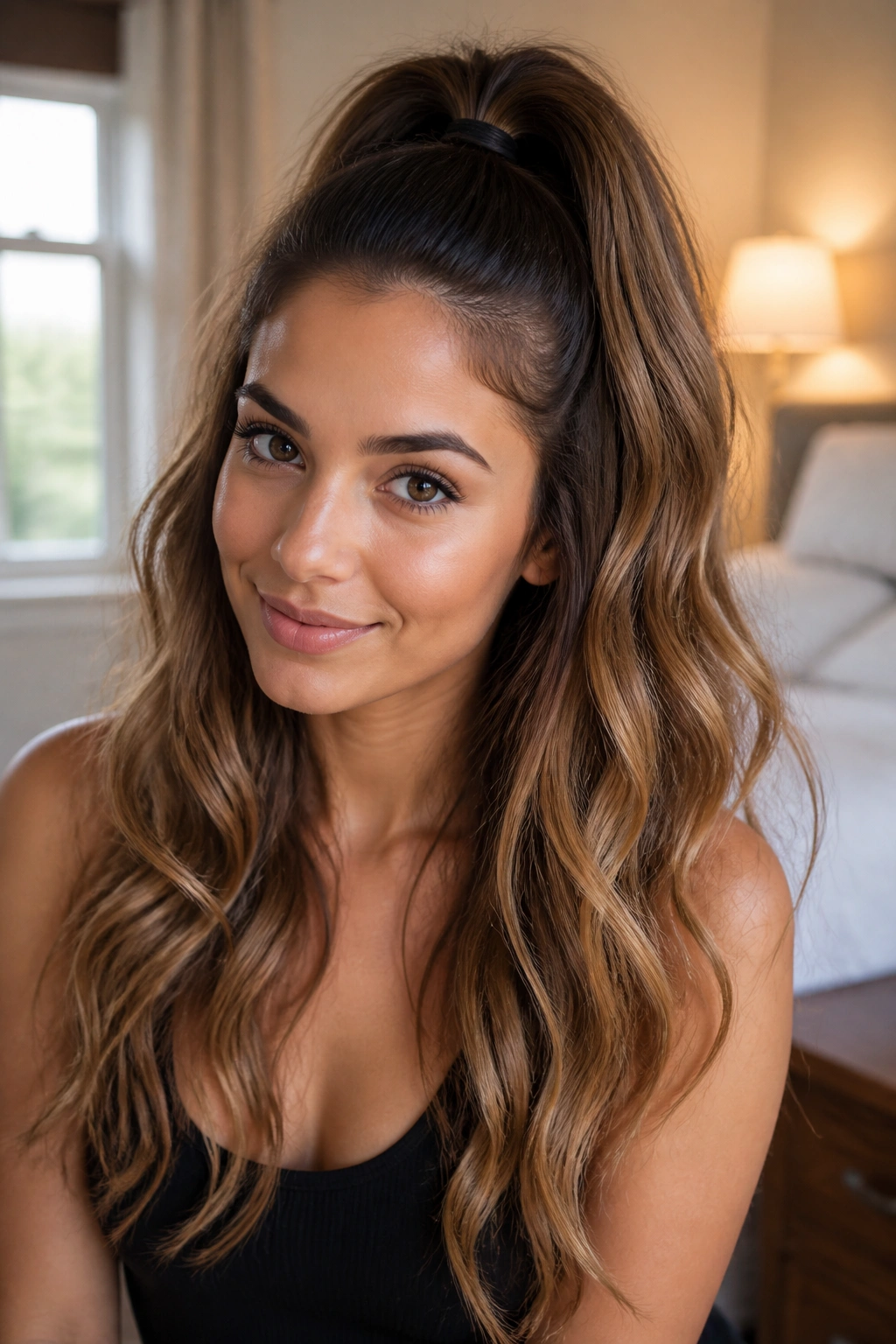
A high half-ponytail lifts the face and keeps the length visible, which is a nice trick when long hair starts feeling too heavy around the shoulders. It gives you height at the crown and movement underneath.
I like this one because it feels playful without looking childish. Pull the top section back from temple to temple, secure it with a clear elastic or a wrapped scrunchie, then fan the top a little with your fingers. Leave the bottom half in loose waves. If the ends need a touch-up, a quick bend with a wand is enough.
The main thing to watch is tension. Tight pulling makes the crown flat and gives the style a harsh line. Looser is better. You want the top section to sit like a soft lift, not a severed layer.
This works well on days when the hair is clean but not newly washed. Too squeaky clean, and the half pony can slip. A tiny bit of texture gives it grip.
12. Low Chignon with Skimpy Tendrils
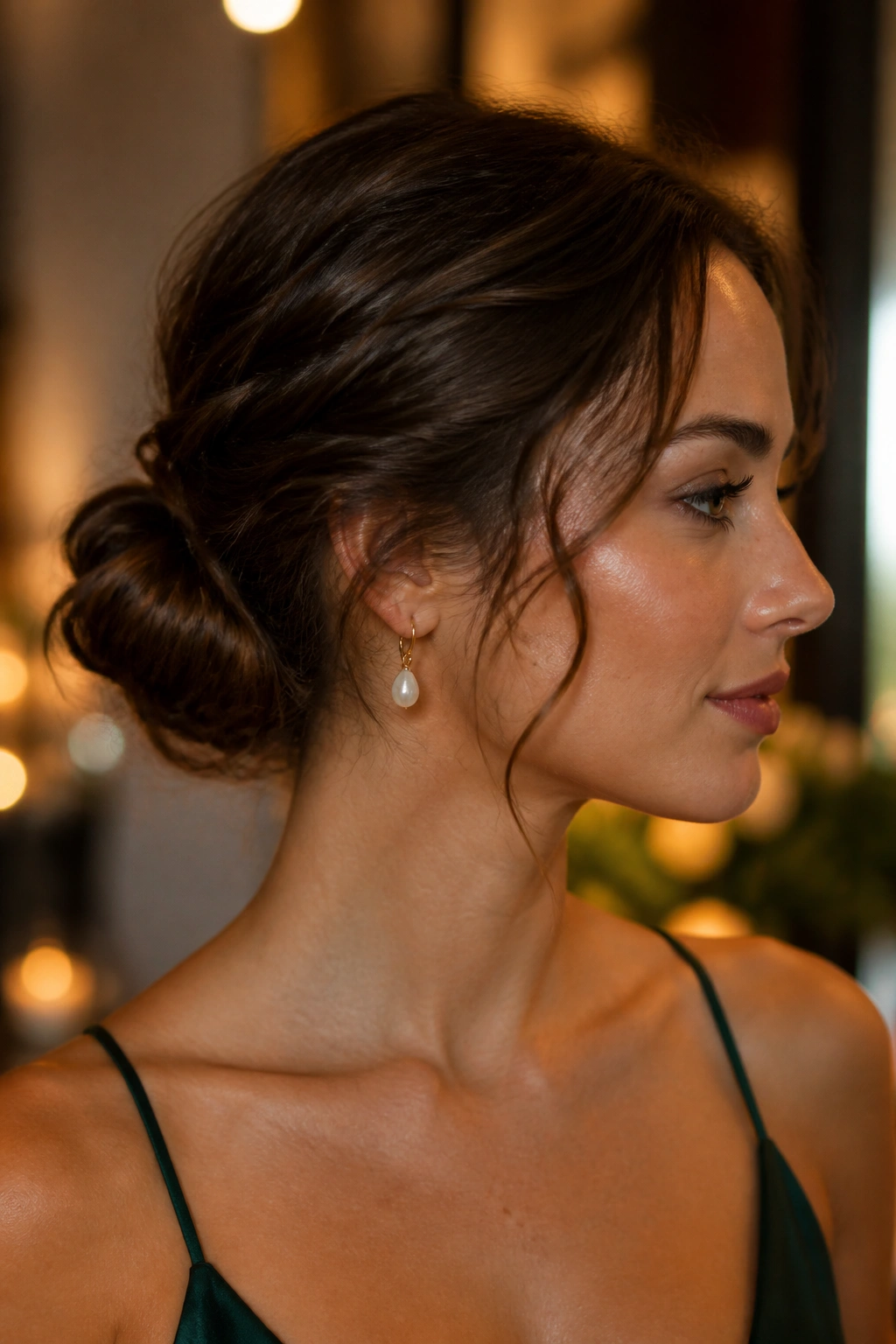
A chignon can feel too formal, unless you leave the edges loose. That is the whole secret. A low knot at the nape keeps long hair under control, while a couple of curled tendrils soften the front enough that it does not look severe.
This is a smart choice for evenings, weddings, or any time you want the neck clear and the face framed. Twist the length into a low bun, tuck the ends under, and pin from two directions so the knot does not sag. Then leave out thin pieces near the ears and temple. Curl those pieces away from the face for a softer line.
The chignon should not sit too high. Higher placement tends to make long hair bulge at the back. Lower placement keeps the shape cleaner. If the hair is very thick, split the bun into two smaller coils and pin them together. That usually holds better than trying to force one heavy knot.
I like this one for long hair because it feels calm. No drama. Just clean shape and soft edges.
13. Waterfall Braid with Loose Curls
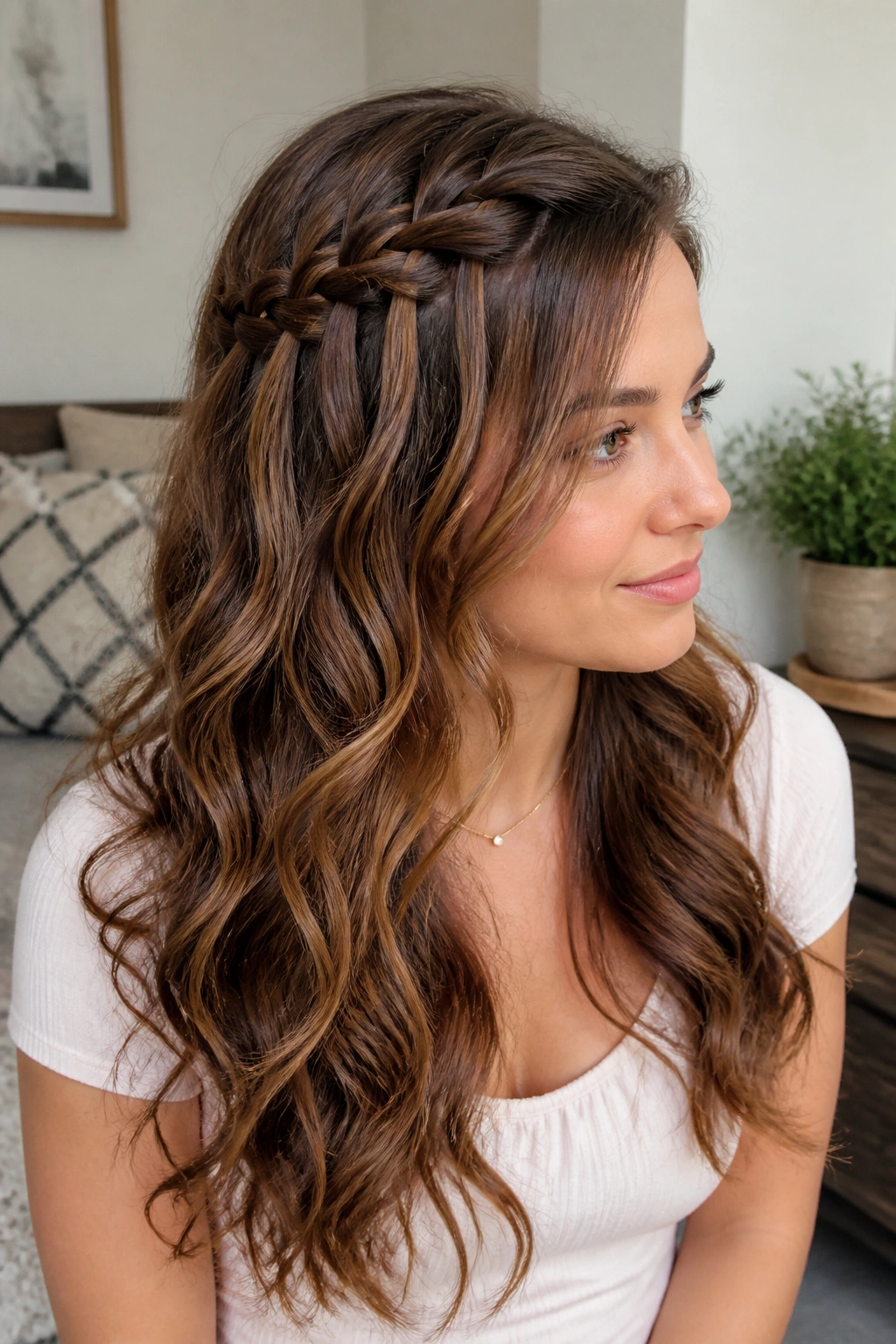
This one has motion even when you stand still. A waterfall braid drops strands through the braid as it moves across the head, so the style looks detailed without stealing the whole show from the curls.
Why the Drops Matter
The dropped pieces are what make the braid feel light. If every strand is held in, the style turns dense fast. By letting sections fall through, you keep the long length visible and give the curls a place to spill out below the braid.
Work the braid along one side or across the back, then leave the released pieces to blend into the loose hair underneath. The result is part braid, part cascade, and the combination reads as soft rather than heavy.
- Best with medium-to-long layers
- Works better on hair with some grip
- Keep the braid loose enough to widen slightly
- Curl the loose length after braiding if needed
My favorite detail: a waterfall braid looks better on hair that is not freshly washed. Day-two texture helps the dropped pieces stay put instead of slipping out.
14. Headband Style with Soft Volume
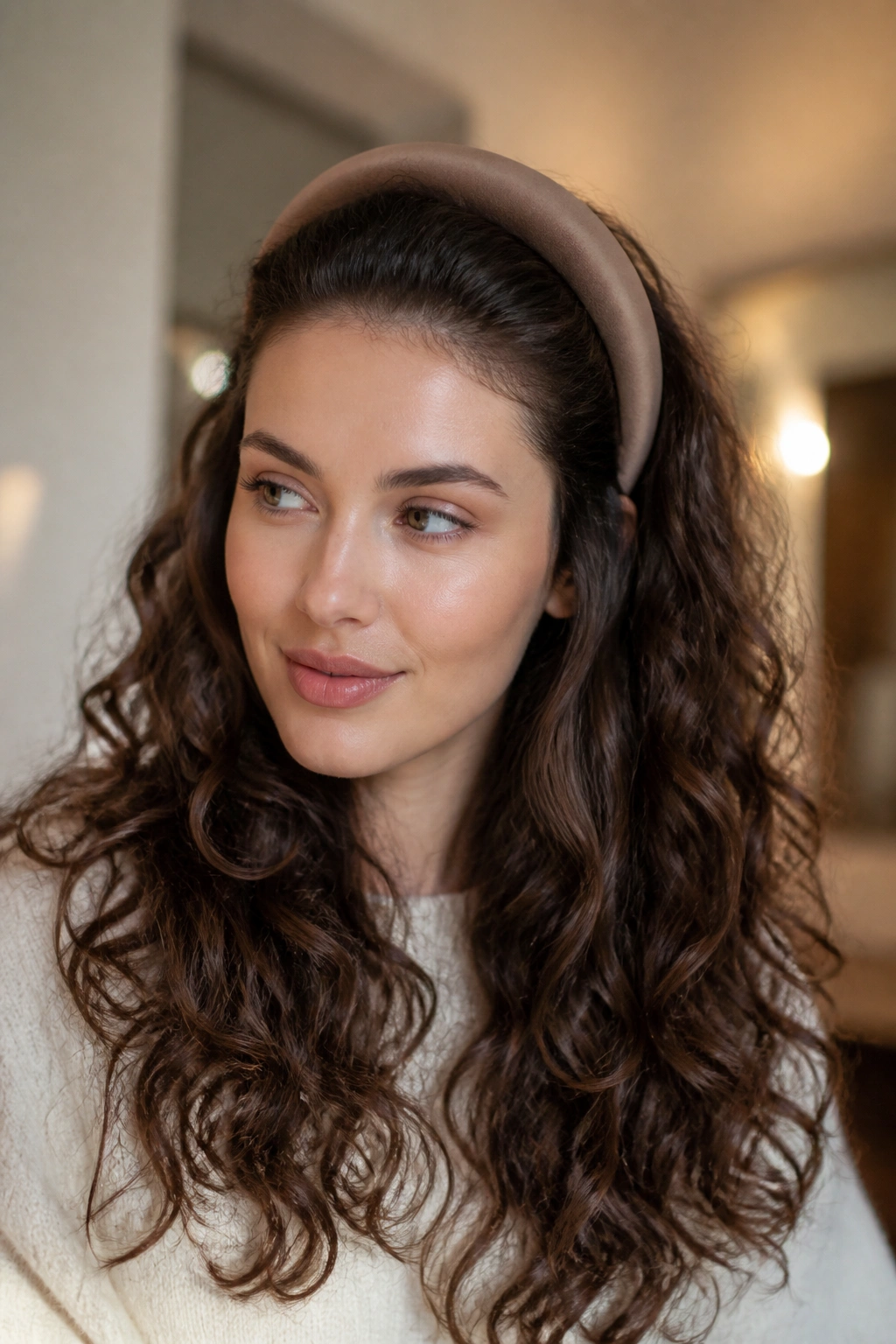
A padded headband changes the whole mood of long curls in about ten seconds. It pushes the hair back, gives the crown a little lift, and keeps the front from collapsing into your face.
This works well when the curls are soft, not overly tight. Place the headband about an inch behind the hairline, then use your fingers to pull a little volume back at the crown. Let the long lengths rest over the shoulders. If the front looks too smooth, pinch a few bends forward around the cheeks.
I prefer this style when the hair needs a break from heat styling. A fabric or satin headband can dress up second-day curls without making the head look overloaded with accessories. The key is balance. If the headband is too wide and the curls are too dense, the whole thing gets crowded. If the headband is slim and the hair is airy, the style looks easy.
And that is what makes it work. It adds shape without stealing the curl.
15. Feathered Blowout Curls
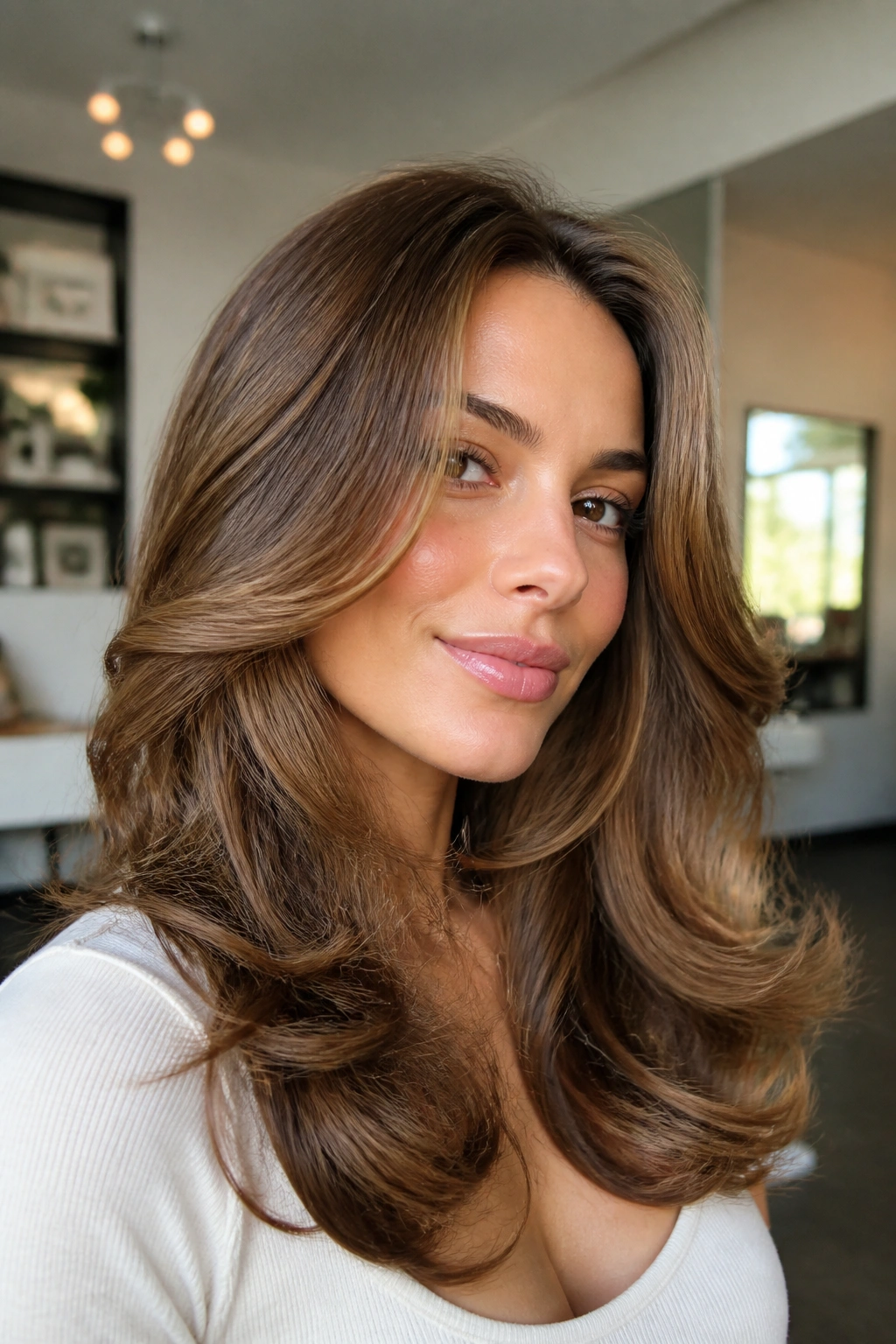
Want curls that sit between a blowout and a wave? Feathered blowout curls are the answer. The shape is soft at the top, bendy through the middle, and lightly turned at the ends, which keeps long hair from looking blocky.
The Shape to Ask For
If you’re getting a cut, feathering around the face and through the lower layers helps a lot. Those shorter pieces move first when you style, so the whole head looks lighter. With a round brush or large-barrel iron, bend the mid-lengths away from the face and let the ends curve under just a little.
This style works well when you want body without a full curl pattern. It has a salon feel, but it is not fussy. The hair moves in soft sections instead of one solid sheet, and that movement keeps long hair from feeling too flat.
If your ends tend to flip out hard, use a large round brush and a low-heat pass at the very tips. That keeps the feathering gentle. Too much heat at the bottom makes the style look dated fast.
A blunt truth: this is one of those styles that looks simple only after you’ve done the shaping work.
16. One-Shoulder Sweep with Side Clip

Some days long hair looks best when it stops trying to behave on both sides. Sweeping it to one shoulder changes the whole shape, especially if the curls are soft and loose.
Start with brushed-out waves or loose curls, then part the hair a little off center. Gather the heavier side across one shoulder and clip the opposite side back with a decorative pin or a few hidden bobby pins. The result is a deep, elegant line that shows off the length without making it sit flat across the chest.
- Use a strong clip, not a flimsy one
- Let the front bend away from the face
- Keep the nape loose so the hair can move
- Spray only the mid-lengths if the style slips
This one is good when you want one clean side and one fuller side. It gives the eye something to follow. Also, it does a nice job of showing off layers, which can disappear in simpler styles.
17. Bubble Ponytail with Soft Curl Ends

A bubble ponytail can look playful or polished, depending on how much you pull it apart. On long hair, that segmented shape keeps the length visible while still giving the style structure.
Gather the hair into a ponytail, then add small elastics every 2 to 3 inches down the length. Gently tug each section outward so it forms a soft bubble. Leave the very ends loose and curled. That little contrast—tighter shape up top, loose movement at the bottom—is what keeps it from looking costume-like.
The style works well if your hair has some bend already. Straight hair can do it too, but the bubbles look better when there is texture in the ponytail. If the hair is fine, pinch each bubble a little wider. If it is thick, keep the bubbles smaller so the shape does not get bulky.
I like this one for long hair because it breaks up all that length in a clean way. It makes the ponytail part of the hairstyle, not just a holding place.
18. Ribbon-Tied Half-Up Curls

A ribbon does what a hair tie can’t: it finishes the style without hardening it. That’s why ribbon-tied half-up curls feel softer than a lot of other long-hair looks.
Take the top section back, secure it lightly, then tie a ribbon over the elastic or around the gathered hair itself. Leave the tails long so the ribbon has some movement. Satin, grosgrain, or even a thin velvet strip all work, as long as the width is about ½ to 1 inch and the color does not fight the hair.
This style suits long curls that already have a little body. The ribbon keeps the crown controlled, and the loose lengths carry the rest. It is especially nice when the front pieces are layered, because the shorter strands near the face help the half-up section blend into the lower hair.
If you want the style to feel less sweet and more grown-up, pick a ribbon in a matte fabric and keep the bow small. Big bows can be fun, but they pull the eye away from the curl shape. Sometimes that’s fine. Sometimes it’s too much.
Final Note
The easiest way to keep long curls light is to think about shape, not just curl pattern. A 1.25-inch barrel, a soft part, and a little room around the face usually do more for the style than another coat of product.
If your hair is fine, start with the simplest versions: center-parted waves, a half-up twist, or a ribbon tie. If it is thick, the low ponytail, side braid, and chignon keep the weight under control without flattening the movement.
Long hair looks best when it can still move. That’s the whole trick.
