



Cutting curly hair is rarely about following a simple geometry. If you have ever sat in a salon chair, watched the stylist pull a wet strand taut, snip, and then realized an hour later that your hair has sprung up three inches shorter than you wanted, you know the drill. Curls are temperamental. They have a mind of their own, they react to humidity, and they definitely do not obey the same rules as pin-straight hair. When you are looking for a new look, you are not just choosing a style; you are choosing a relationship with your texture.
The best cuts for curls are those that respect the shrinkage. If you have Type 3 or Type 4 hair, you need a stylist who understands that what you see when your hair is wet is not what you get when it dries. Some of the most successful cuts are done dry, allowing the curls to fall into their natural pattern before the scissors ever touch them. This approach allows the stylist to sculpt the shape of your head rather than just hacking away at length.
Do not worry about being perfectly symmetrical or creating a look that is meant to stay in place for twelve hours straight. Curly hair thrives on movement. The cuts below are designed to give your hair space to expand, bounce, and live. Whether you have tight, kinky coils or loose, S-shaped waves, the goal is to manage weight without sacrificing volume, or to add volume where you feel the hair has gone limp.
1. The Classic Curly Bob

This is the baseline for many who want a change without going too short. The classic curly bob is a blunt cut that stops right around the chin or slightly below. The trick here is in the interior layering. If you cut a bob on curly hair without removing weight from the inside, you will inevitably end up with the dreaded “triangle head”—flat at the roots and puffy at the bottom.
How to Style It
You need to use a lightweight mousse or a curl cream that provides hold without heavy silicones. Apply it to soaking wet hair and scrunch upward. If you let it air dry, you will get a more natural, lived-in look. If you use a diffuser, you can build serious volume at the roots.
Pro Tip: Ask your stylist to carve out weight using thinning shears or point-cutting techniques. It is the only way to keep the bottom from expanding outward like a bell.
2. Shoulder-Length Layers

If you are not ready for a bob but hate the feeling of long, heavy hair pulling your curls straight, this is your solution. Shoulder-length layers allow the curls to sit right at the collarbone, which frames the face beautifully. It is a forgiving length because if it does not quite work, you have enough hair to put in a ponytail.
Why It Works for Most Curl Patterns
The layers prevent the hair from becoming a uniform mass. By varying the lengths, you allow the tighter curls on the bottom to coil up without being weighed down by the longer sections on top. It creates a soft, rounded shape that moves with you.
- Versatility: You can pin the sides back for a different look.
- Maintenance: Easier to manage than long hair, but not as high-maintenance as a pixie.
3. The Curly Shag

The shag has made a massive comeback, and honestly, it was always meant for curly hair. This cut relies on heavy layering, particularly around the crown and the bangs. It is designed to be messy. If you have been struggling with flat roots, this cut forces volume into the top of your head by removing the weight that usually pulls the hair down.
The Anatomy of the Cut
The shag is all about texture. You will have shorter, choppier layers on top and longer, thinner layers toward the back. It creates a silhouette that looks like you just woke up and shook your head, in the best possible way. This is not a “neat” hairstyle. It is a rock-and-roll haircut that embraces frizz as part of the aesthetic.
4. Long Face-Framing Layers

Long hair can be beautiful, but it often loses its definition as gravity takes over. Face-framing layers are the answer. By cutting shorter pieces around your cheeks and jawline, you create a dynamic look that highlights your features rather than hiding them behind a curtain of hair.
Why This Style Succeeds
When you have long curls, the weight of the hair often stretches the coils near the scalp, making them look wavier than they actually are. Shorter layers near the face help “reset” the curl pattern by reducing the weight of those sections. This gives you more volume right where you want it.
Styling Note: Use a small amount of gel on the face-framing pieces while they are still damp to define them. These are the pieces everyone sees, so keep them crisp.
5. The Pixie Cut for Curls
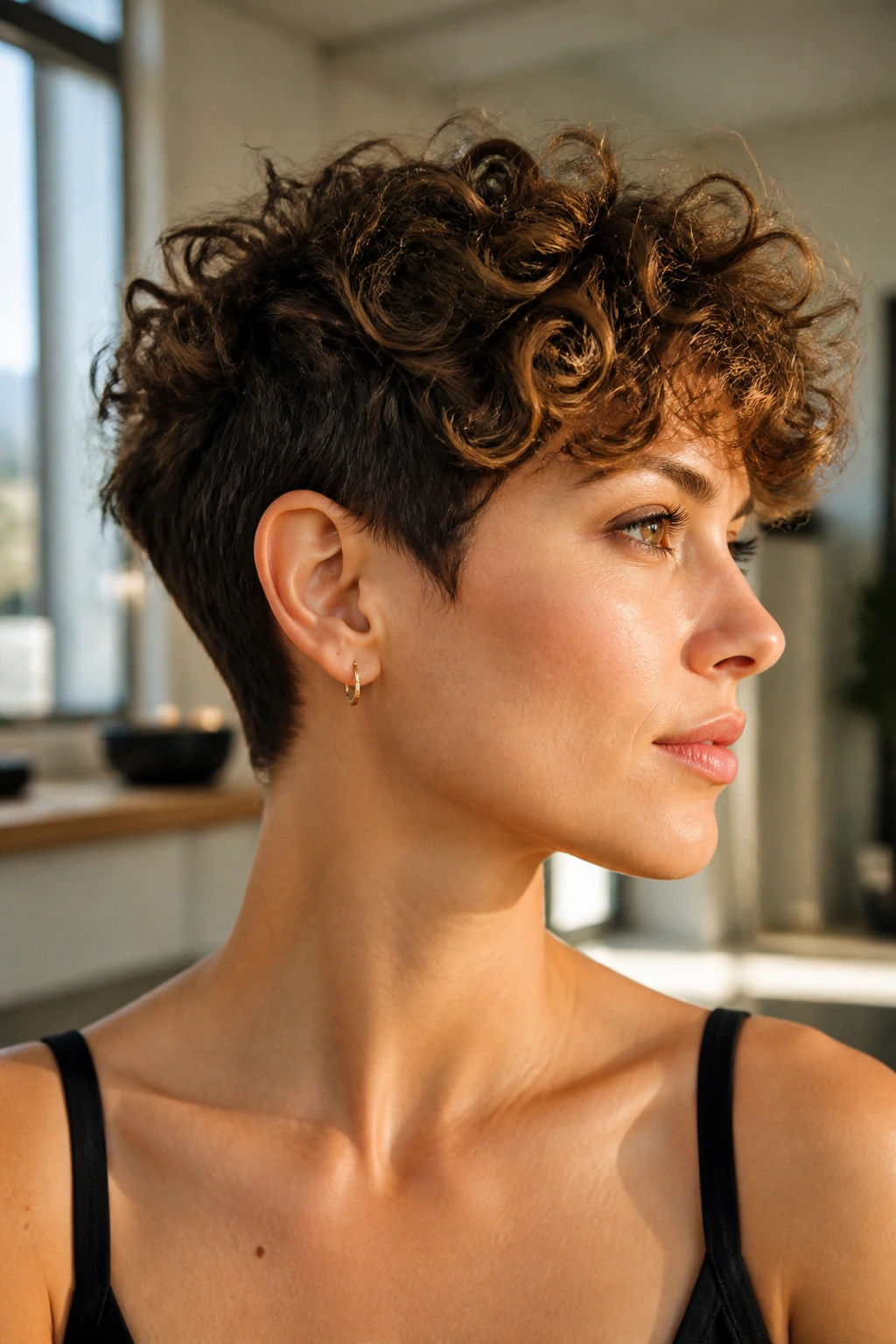
Cutting your hair into a pixie is liberating, but it requires a high level of trust in your stylist. On curly hair, a pixie needs to be cut with the hair’s natural growth pattern in mind. You do not want a uniform length all over. You want longer curls on top and tighter, shorter ones on the sides and back.
Managing the Transition
Most people worry that a pixie will look like a mushroom. That only happens if it is cut like straight hair. For curls, your stylist should use the “carving” method, shaping the hair around the contour of your skull. If you have really tight coils, you can keep the sides very short—almost a fade—and leave the top longer for a high-contrast look.
6. The Tapered Curly TWA (Teeny Weeny Afro)

The TWA is a celebration of texture. This cut involves tapering the sides and the back while leaving the top with a bit more length to show off the curl definition. It is incredibly easy to manage—you basically wake up and go.
Why It Stays Popular
It is functional, clean, and highlights your facial structure. Because there is so little hair, the emphasis is entirely on the health of your scalp and the hydration of your strands. You can play with different colors, highlights, or even just keep it in your natural shade. It is a low-effort, high-impact style.
7. The Modern Curly Mullet

Yes, the mullet is back, and on curly hair, it actually makes sense. The short, choppy front and sides contrast with the longer back in a way that feels intentional and artistic rather than ironic. It is a bold choice, but it works surprisingly well for people with looser, wavy-to-curly textures.
Keeping It Balanced
The key to a curly mullet is the transition zone. You do not want a hard line where the short hair meets the long hair. You want the layers to blend seamlessly. It adds volume to the top of the head—a common struggle for wavy hair—while giving you the length you might still want in the back.
8. Disconnected Undercut

If you have extremely dense hair, you might feel like you are constantly fighting your own volume. A disconnected undercut removes a large portion of hair from underneath, usually at the nape of the neck or on one side, while leaving the hair on top to hang over it.
The Practical Benefit
This takes the “bulk” out of your hair immediately. It makes the hair much easier to wash, condition, and dry. When you let your hair down, you cannot tell the undercut is there. It is a hidden adjustment that makes your daily routine significantly faster.
9. The Rounded Afro
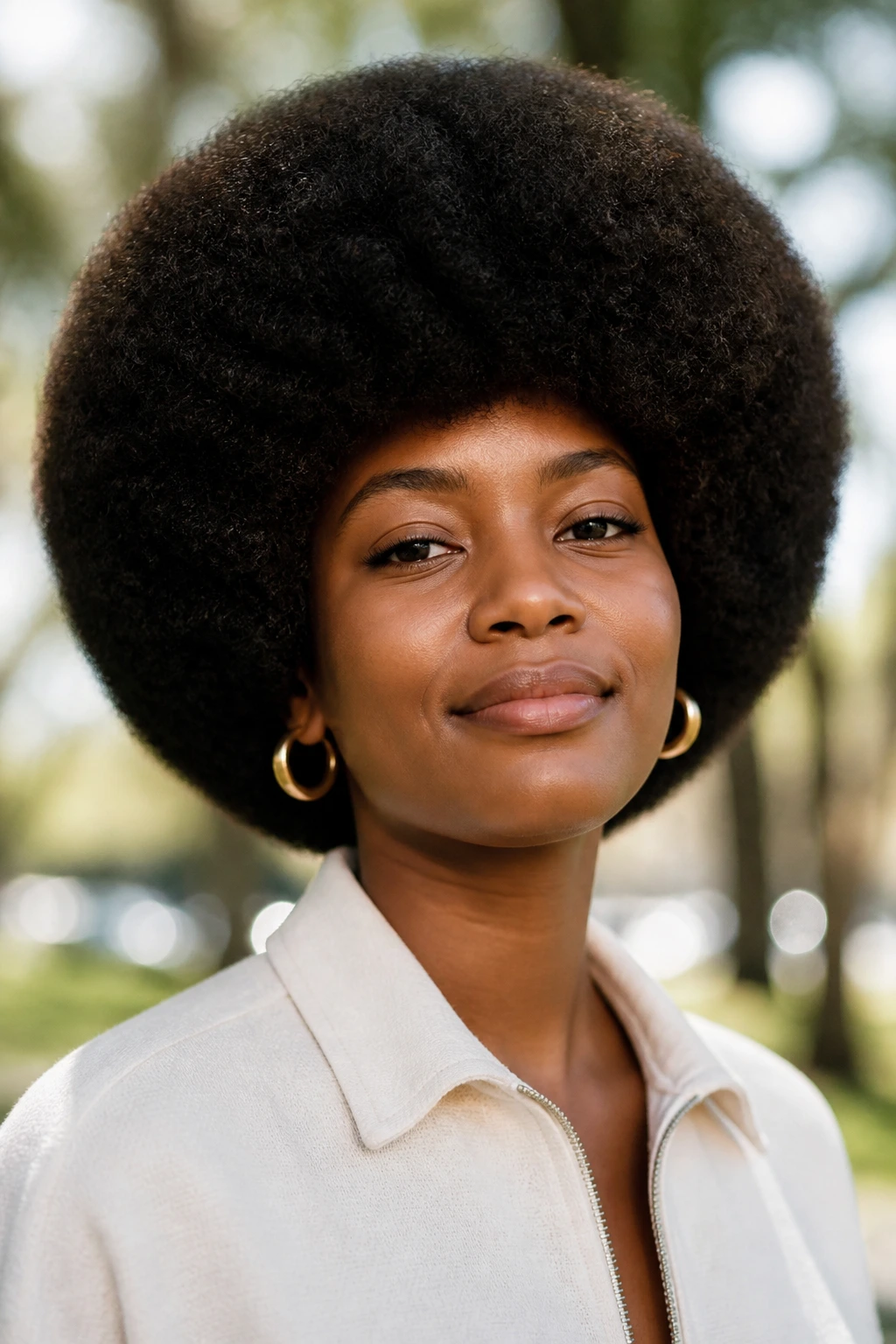
This is a classic for a reason. The goal is to shape the hair into a perfect sphere. This requires a skilled hand because your hair needs to be cut specifically to grow into that shape. It works best for tighter, coiler textures that hold their volume naturally.
Building the Shape
You cannot just grow your hair out and hope for a sphere. You need regular trims to keep the bottom edges from growing out faster than the top. Think of it like topiary. The maintenance is higher, but the result is a bold, iconic shape that commands attention.
10. Mid-Back Long Layers

If you have been growing your hair for years and cannot bear the thought of losing the length, mid-back layers are your middle ground. The length provides the weight that some prefer, but the layers ensure you do not have a flat, triangular wall of hair.
The “Dry Cut” Requirement
Please, for the sake of your hair, find a stylist who specializes in dry cutting for this length. At this length, the weight can cause the hair to stretch significantly. If they cut it wet, you will likely end up with uneven layers once the hair dries and bounces back to its natural, shorter state.
11. Asymmetrical Bob

Want to add an edge to your look? An asymmetrical bob—shorter on one side, longer on the other—is a great way to do that. It creates a dynamic shape that draws the eye and helps break up the heaviness of a standard bob.
Who Should Try It?
This style works wonders for people with oval or heart-shaped faces. It creates a visual weight shift that can balance out broader cheeks or a narrower chin. Because curly hair creates its own volume, the asymmetry feels very natural rather than stiff or forced.
12. The Shullet (Short Shag-Mullet)

The “shullet” sits right between the shag and the mullet. It is shorter, punchier, and focuses entirely on texture. It incorporates the fringe of a shag with the tapered silhouette of a mullet. It is an excellent choice if your hair has been damaged from heat or chemical treatments, as the chop gets rid of the dead ends while keeping a cool, intentional style.
13. Curly Bangs with Layers
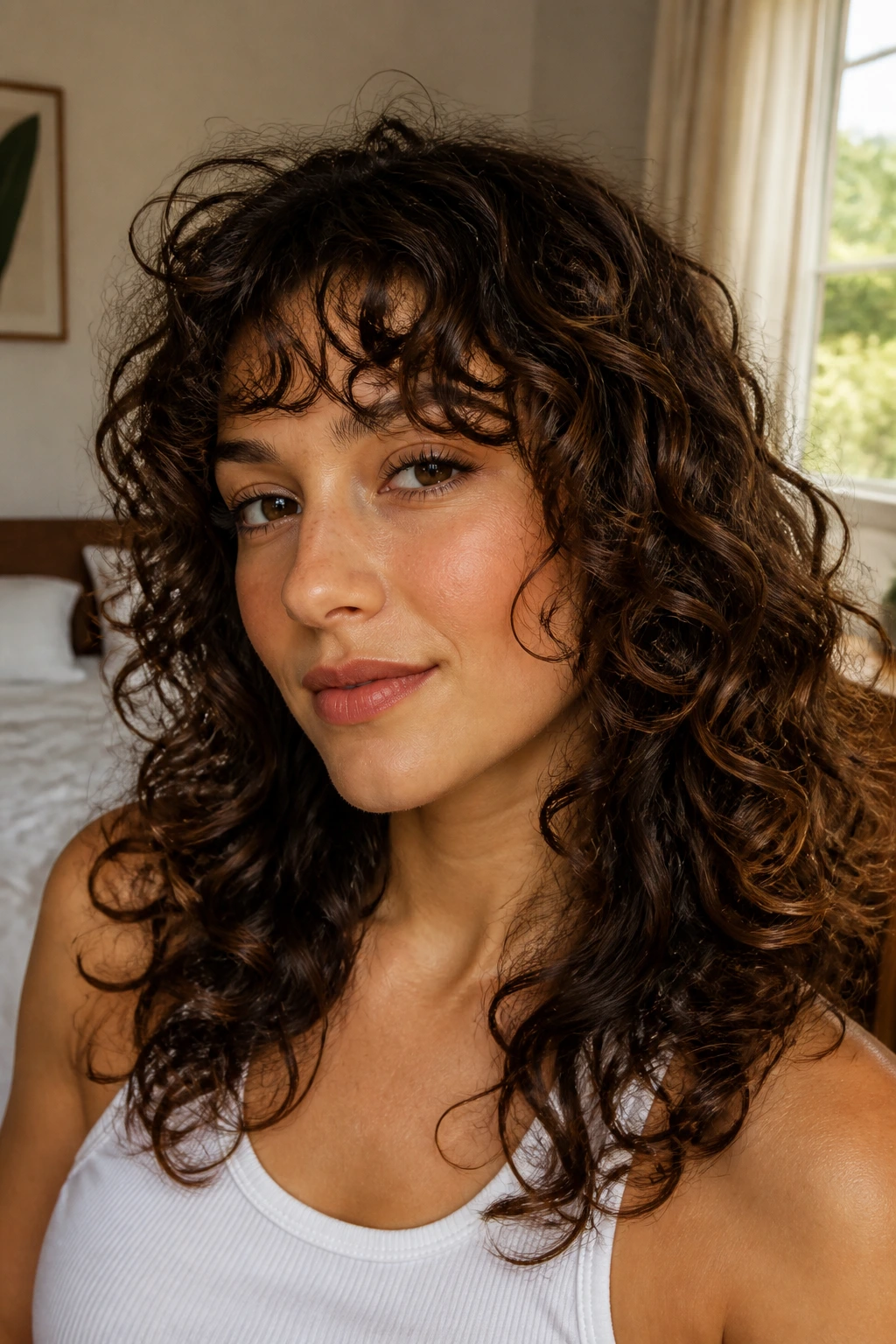
For the longest time, the advice for curly girls was “stay away from bangs.” That advice was wrong. Curly bangs can look incredible, but they must be cut dry. You want the fringe to sit just above the eyebrows or graze the eyelashes when dry.
The Commitment Factor
Bangs on curly hair are high-maintenance. You have to style them every single morning, even if you put the rest of your hair in a bun. If you are willing to spend two minutes with a spray bottle and a bit of product on your forehead every morning, the look is unmatched.
14. The Blunt Cut for Curls

This is the opposite of the layered look. A blunt cut creates a heavy, solid line at the bottom. It is best for those with fine but dense curls who want to maximize the appearance of thickness.
Does It Cause Triangle Head?
Yes, it can. To prevent this, you need to use products that encourage root volume. Since you are removing the internal layers, you need to compensate by making sure the top of your hair has enough lift to counteract the weight of the blunt ends.
15. Pixie Bob (The “Lixie”)

A “lixie” is the stage between a pixie and a bob. It is a long pixie, usually featuring wispy, curly layers that graze the ears and neck. It is a romantic, soft look that is very easy to grow out if you decide you want to go longer again.
Why It’s Great
It is the ultimate “low-maintenance chic.” You can use a bit of leave-in conditioner, shake your hair, and head out the door. It embraces the natural shape of your curl without trying to force it into a specific structure.
16. Shaggy Lob

The long bob (lob) is the most versatile haircut in existence, and the shaggy version is perfect for curls. It falls somewhere between the shoulders and the collarbone. It is long enough to pull back but short enough to avoid tangling.
Why It Works
The shaggy layers add interest to the length. If you have loose waves that tend to go flat, the shaggy lob gives them the boost they need to maintain definition throughout the day. It is the style that requires the least amount of “fiddling” with your hair.
17. Tiered Layers

Tiered layers are a more structured version of traditional layering. You can see distinct “steps” in the hair. This is particularly popular for those with looser curl patterns who want to emphasize the spiral of each individual lock.
Visual Impact
Each tier acts as a shelf for the curl to sit on. This prevents the hair from clumping together too much and helps distribute the volume evenly from top to bottom. It is a great way to make thinner curls look more voluminous.
18. The Deep Side-Parted Pixie
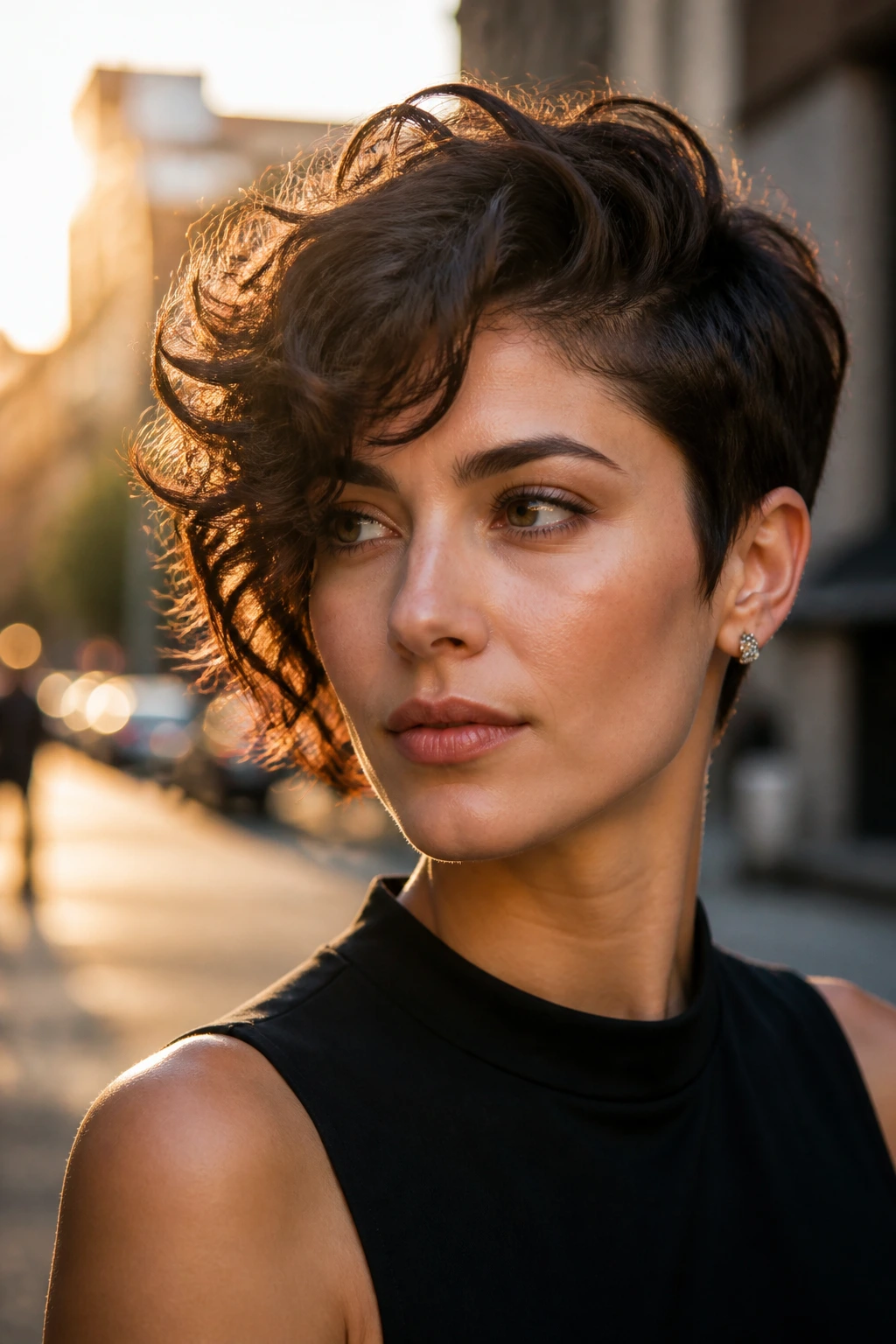
Sometimes, the cut is the same, but the styling changes everything. A deep side-parted pixie takes a standard short cut and creates massive, sweeping volume on one side. It is dramatic, sophisticated, and incredibly easy to achieve.
Changing Your Silhouette
If your face shape is round, a side part can help elongate it. If you have been wearing your hair with a middle part for years, switching to a deep side part on a shorter cut will make it feel like a completely new hairstyle without the need for a trip to the salon.
19. Undercut with Pattern

This is for the adventurous. You take an undercut (removing hair at the nape or sides) and use clippers to etch a design into the remaining short hair. It is a subtle way to express personality. When your hair is down, it looks like a normal cut. When you pull it up, you reveal a geometric, floral, or abstract pattern.
Maintenance Reality
You will need to visit your barber or stylist every three to four weeks to keep the lines crisp. This is not a “set it and forget it” haircut. It requires commitment, but it is a fun way to experiment with your look.
20. Softly Layered Ringlets
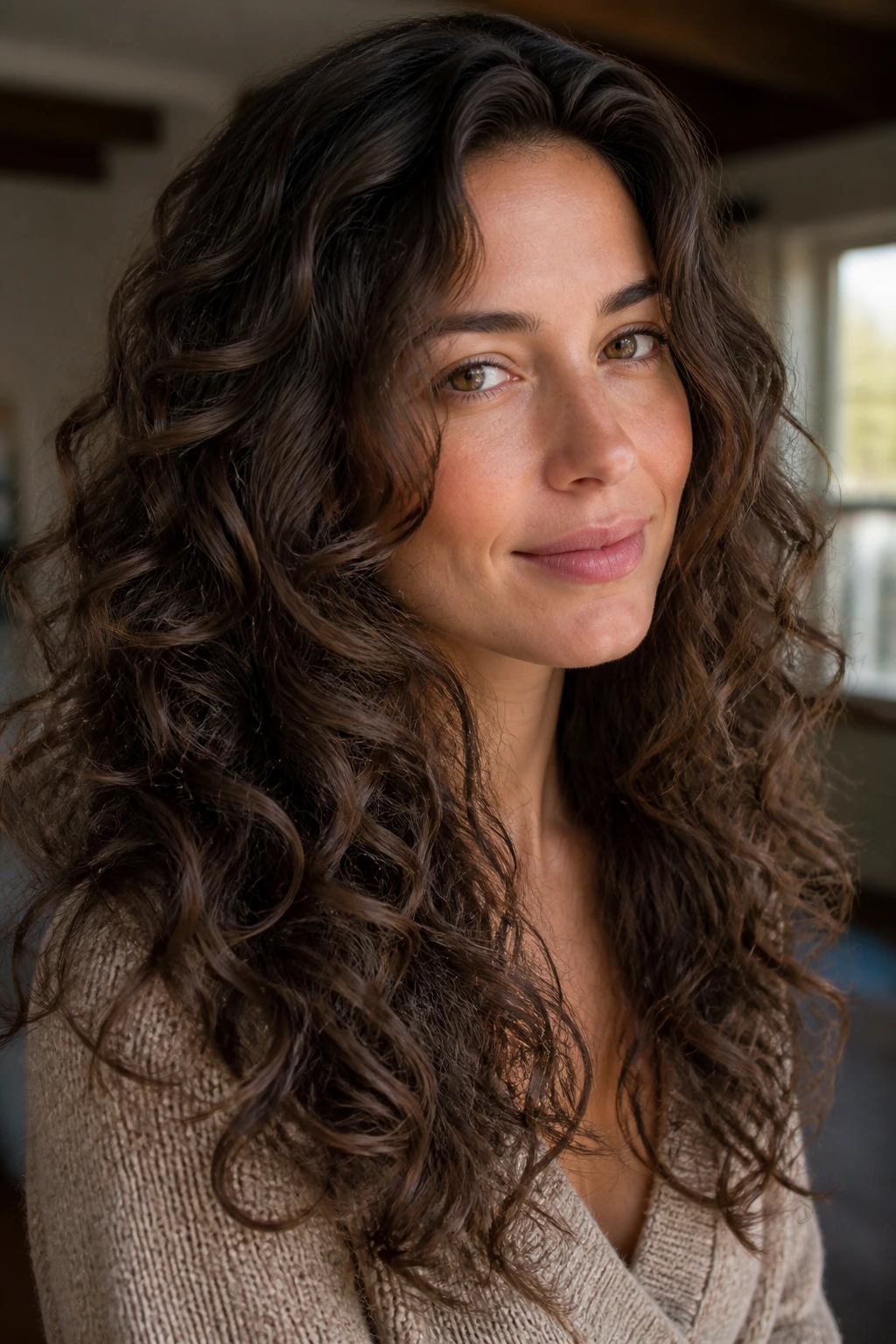
If you have very loose, soft ringlets, you do not need aggressive cutting. You need soft, long layers that keep the hair moving. The goal is to allow the rings to coil around each other without getting tangled.
Essential Technique
Keep the layers long. If you cut them too short, you will interrupt the natural ringlet pattern and end up with frizz instead of defined coils. The longer the hair, the more weight you have, which actually helps stretch the ringlets into a sleek, elegant shape.
21. The Curly Mohawk

You do not have to shave the sides to get a mohawk look. You can use bobby pins and gel to create a “faux-hawk” by pinning the sides up tightly. However, the real curly mohawk cut involves shorter sides and a dense, high-volume strip of curls running from the forehead to the nape.
Embracing the Height
This is a high-fashion look. It works best if you have a tight curl pattern that stands up on its own. Use a strong-hold gel to shape the curls along the center strip so they do not fall over the sides.
22. Long and Airy Layers
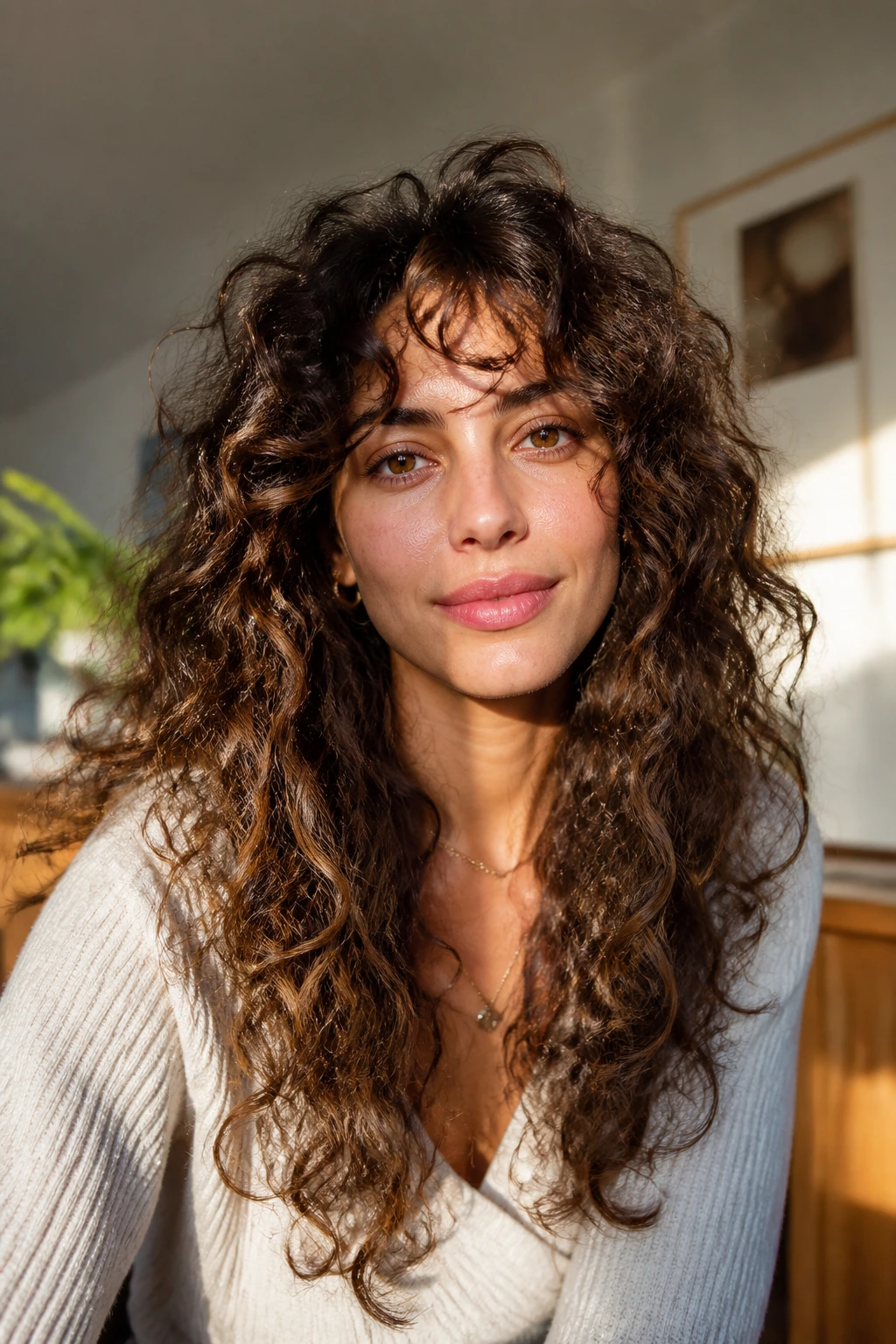
Airy layers are about removing weight throughout the hair shaft without changing the overall length. It makes long hair feel lighter and easier to dry.
Why It’s Different
Most layers are about adding shape; airy layers are about adding breathability. If your hair feels like a heavy blanket on your shoulders, ask for this. It is a thinning technique that focuses on the mid-lengths, ensuring that the curls at the ends still have enough weight to stay defined but aren’t weighed down by the density near the scalp.
23. The Graduated Curly Bob

This is the angled bob: shorter in the back, longer in the front. For curly hair, this creates a gorgeous, stacked effect at the nape of the neck that emphasizes the volume of your curls.
Balancing the Face
The longer pieces in the front frame the face, while the stacked back provides lift. It is a very polished look. Unlike a classic blunt bob, the graduation gives the hair a natural sense of direction, which can make styling much easier because the hair already wants to fall into place.
24. Tapered Sides with Volume on Top

This is a classic “business in the back, party in the front” curly variation. You keep the sides tapered short and leave the hair on top very long. This allows your curls to be the focal point of your look.
How to Style
Apply your defining cream while the hair is soaking wet, then use a wide-tooth comb to gently lift the roots. Because the sides are short, you don’t have to worry about them frizzing or tangling. You only have to focus on perfecting the curls on the top of your head.
25. The Collarbone Shag
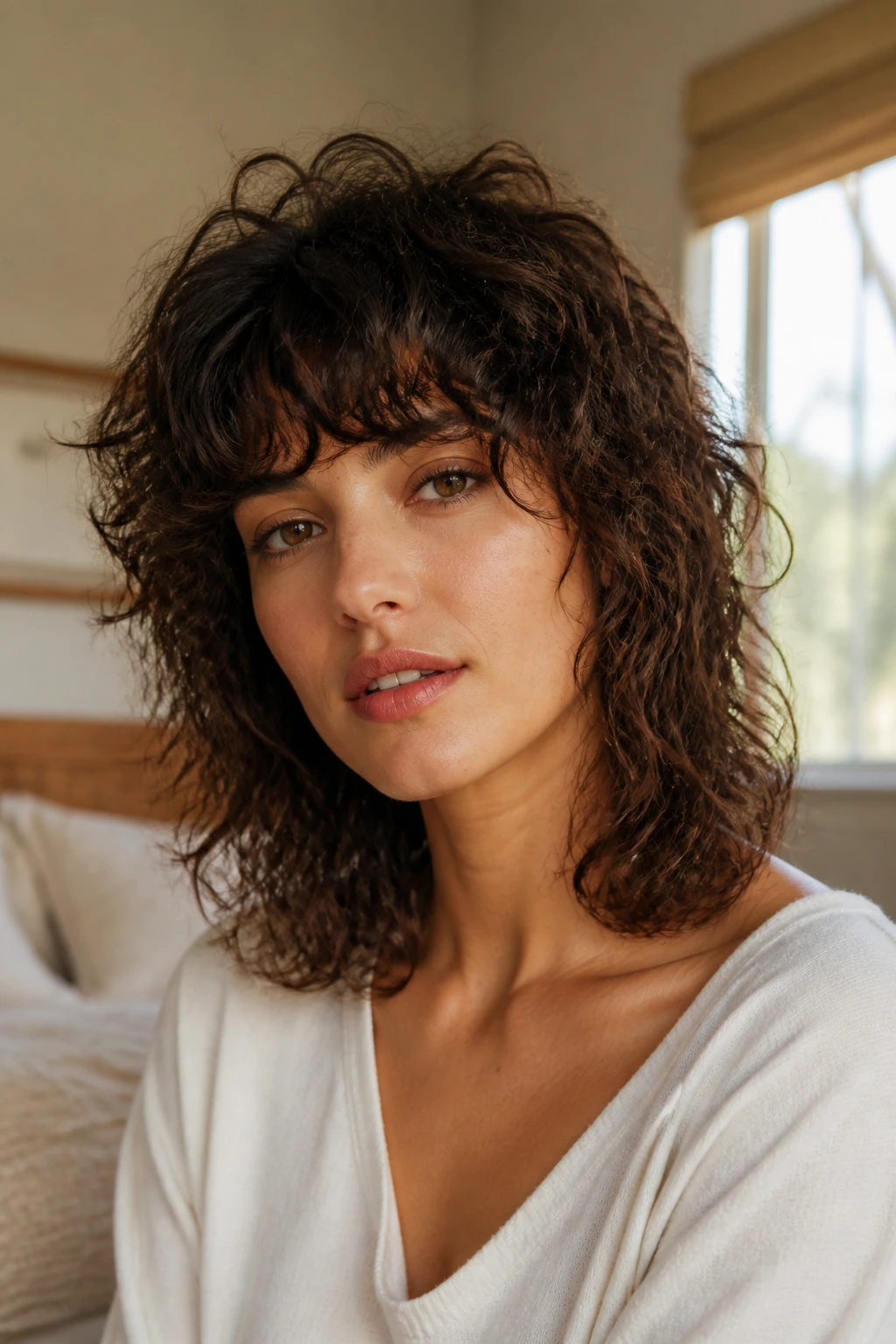
We touched on the shag earlier, but the collarbone-length version is a specific beast. It is the perfect length for someone who wants to try a shag but is afraid of the “frizzy hair” look. The extra length at the collarbone keeps the curls from puffing out too much at the cheekbones.
The Best of Both Worlds
You get the fringe, you get the choppy layers, and you get the effortless vibe, but you keep enough length to pull the hair back when you are working out or just having a bad hair day. It is arguably the most practical, stylish cut on this entire list.
Final Thoughts
Finding the right cut for your curls is less about copying a trend and more about understanding what your hair actually does when left to its own devices. Do not be afraid to advocate for yourself in the chair. If you see a stylist heading for a razor and you know that razors turn your hair into a ball of frizz, speak up. You are the expert on your own hair’s history.
The most successful haircuts are the ones that make your daily routine easier. If you spend an hour styling your hair, the cut is wrong. A good cut should minimize the time you spend fighting your texture and maximize the time you spend enjoying it. Take these ideas, look at your current length, and think about where you want to feel the most weight or the most volume. Then, find a stylist who listens, and go for it.
