



Medium hair is a sweet spot for messy waves. The length has enough weight to fall in bends instead of puffing out, but it’s still short enough to keep movement after a full day of wear.
That’s why messy wave hairstyles for medium hair feel so useful. They can look casual, but they don’t collapse the way longer hair sometimes does, and they don’t demand the kind of heavy styling short hair can need to stay in place. A shoulder-skimming cut, a blunt lob, or a layered mid-length shape can all carry wave texture beautifully if the bend is loose and the roots stay a little lived-in.
The trick is not making every strand cooperate. A few pieces that flip out, a section that hugs the cheekbone, a wave that loosens after brushing — that’s the good stuff. Too much symmetry makes medium hair look stiff fast. Too much product does the same thing, honestly. The styles below lean into movement, texture, and that slightly imperfect finish that makes wavy hair feel easy instead of dressed up.
1. Air-Dried Tousled Lob for Medium Hair
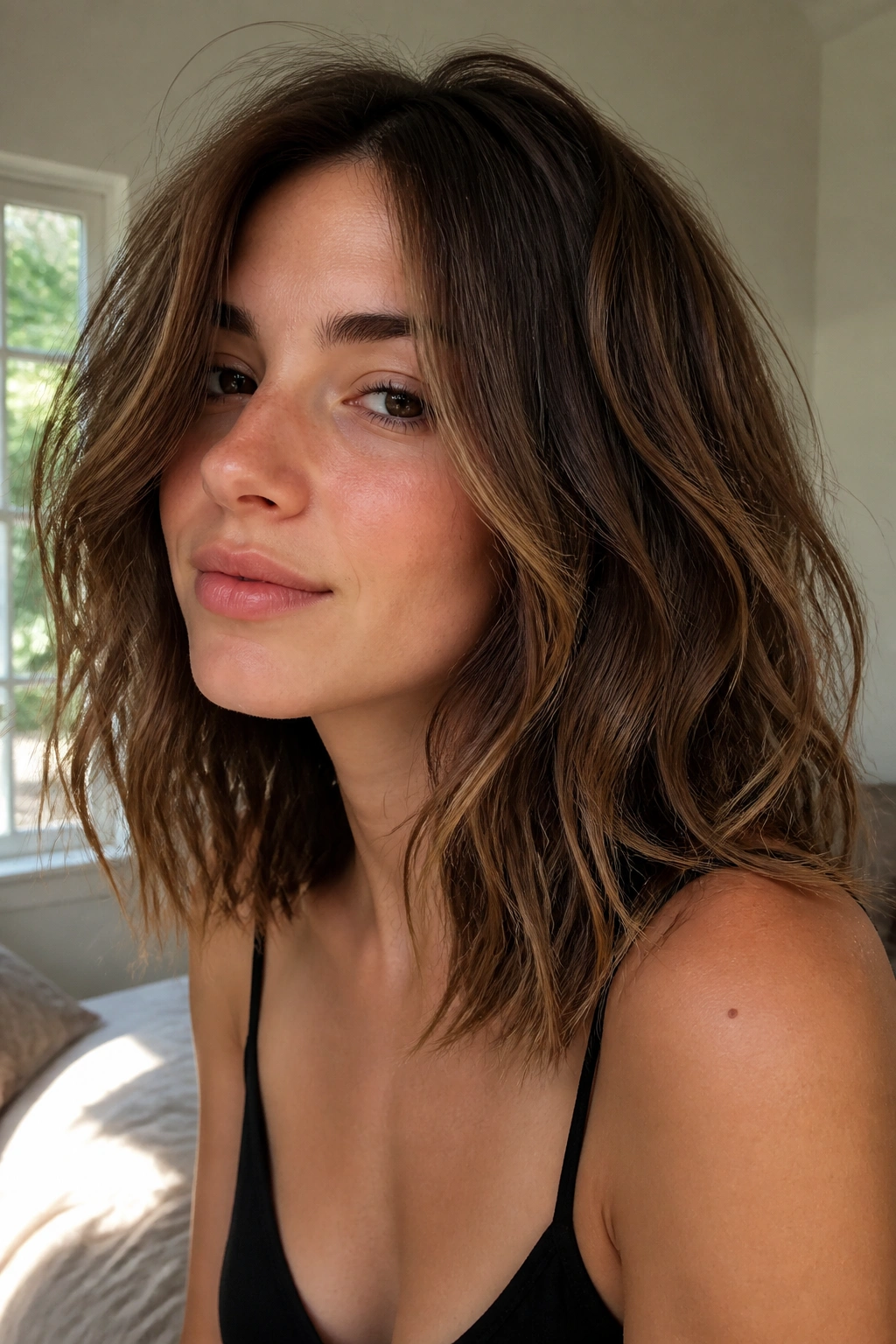
An air-dried tousled lob is the most believable kind of messy wave. It looks like your hair dried on its own, behaved itself for most of the day, then decided to keep a little bend at the ends. That loose finish works especially well on medium hair because the length is short enough for the wave pattern to stay visible.
Why It Works on Medium Hair
Medium-length hair doesn’t have to fight gravity the way long hair does. A lob can hold a soft S-wave with very little help, especially if you rough-dry the roots and let the ends dry without being touched.
The best version of this style starts with a light mousse or wave cream on damp hair, then a quick scrunch with a microfiber towel. You do not want the hair dripping wet when you stop paying attention to it. That’s when the frizz starts to show up.
- Use a pea-sized amount of cream on fine hair.
- Use a golf-ball-sized puff of mousse on thicker hair.
- Scrunch from the ends upward, not the crown down.
- Let the front pieces fall where they want.
- Finish with a small mist of texture spray once the hair is dry.
Pro tip: Flip your part while the hair is still drying. It lifts the roots a little without teasing, and that tiny change keeps the lob from lying flat.
2. Deep Side Part With Loose, Undone Ends
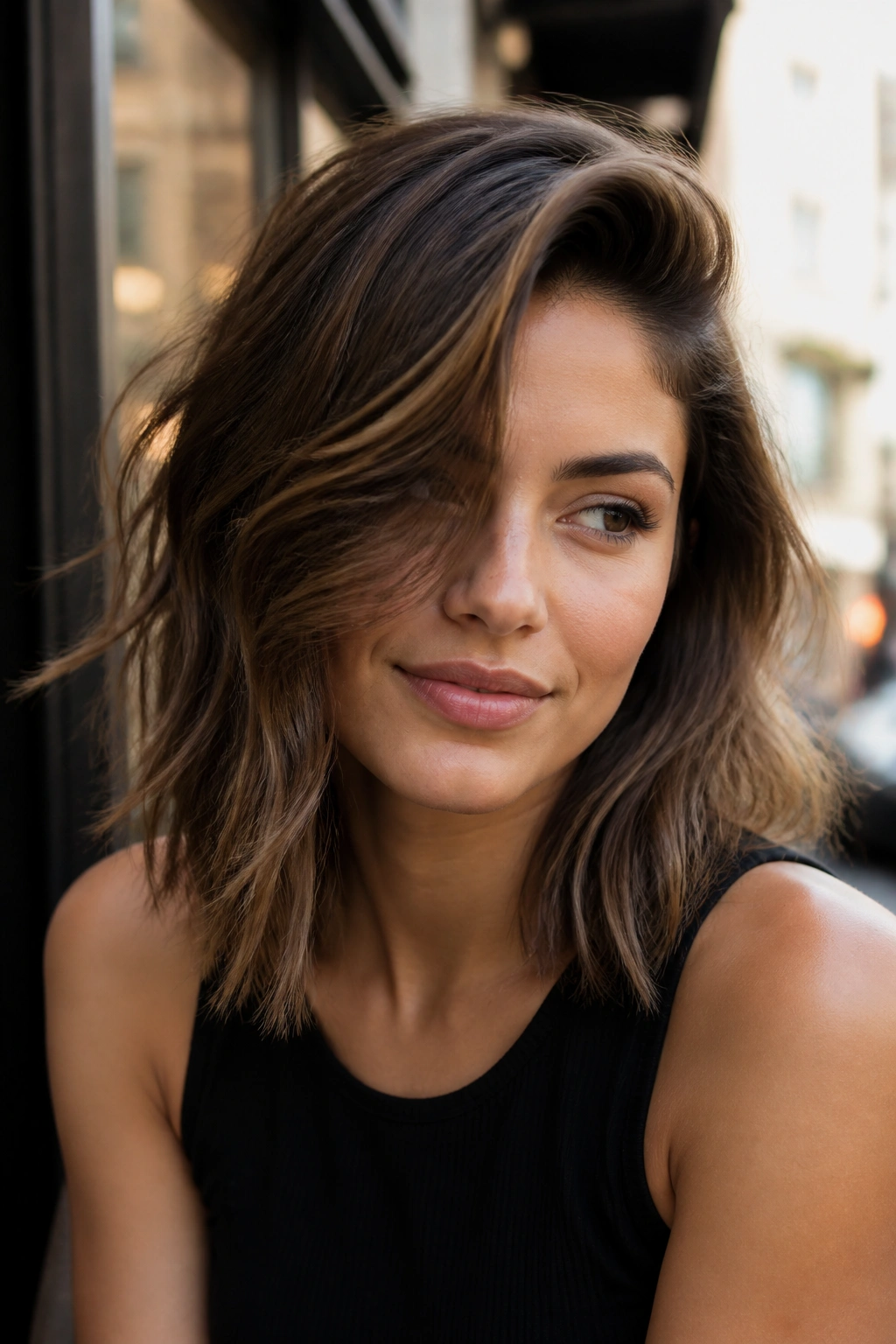
A deep side part changes the whole mood of medium hair in one move. Suddenly the waves look a little sultrier, a little more deliberate, and a lot less school-picture-day neat. It’s one of those styles that looks like you spent more time than you did.
The reason it works is simple: a side part breaks up the symmetry that can make medium-length waves look boxy. When the heavier side falls across the cheekbone and the other side sits a bit flatter, the shape feels softer and more human. That asymmetry is doing a lot of work.
A 1.25-inch curling iron or wand is usually the right size here. Wrap the sections away from the face, leave the last inch out, and let the ends stay straighter than the mid-lengths. That little contrast keeps the style from turning into a polished pageant wave. A drop of light serum on the very ends is enough. More than that and you lose the airy texture.
3. Half-Up Knot With Face-Framing Waves
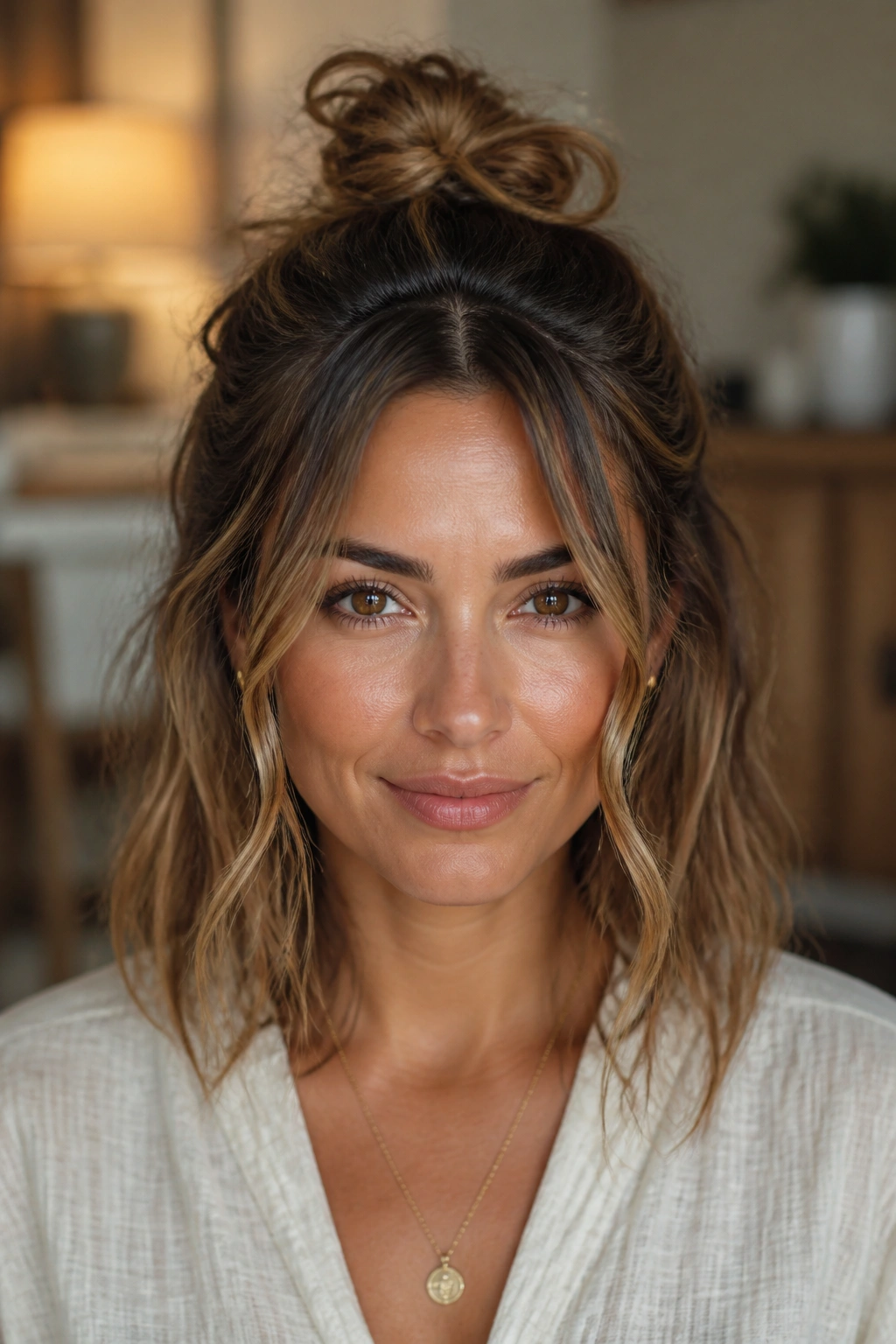
Need something that looks put together in about five minutes? This is the one. A half-up knot keeps the top section out of your face, but the waves underneath still do the pretty work, which makes it a smart choice for medium hair that gets floppy at the crown.
How to Style It
Start with waves that are already loose and cool to the touch. Hot hair slips apart too fast, and the knot can sag before you leave the house. Pull the top third of the hair back, twist it once or twice, then secure it with a small elastic or two bobby pins crossed in an X.
Leave two front sections out. Not tiny ones. Pieces about the width of your index finger give the style that face-framing shape without looking fussy. If you want a softer finish, curl those front bits away from the face and pinch the ends while they cool.
The charm of this style is the mess. A few bumps near the crown are fine. So is a knot that sits a little low. If it looks too neat, tug the twist apart with your fingers and pull out one extra wave near the temples. That one move changes the whole thing.
4. Claw-Clip Twist With Piecey Strands

You know the look: hair twisted up, ends sticking out a bit, a few loose strands around the ears, and that easy clip sitting at the back like it has no interest in trying too hard. On medium hair, the claw-clip twist is one of the fastest ways to turn day-two waves into a style.
The shape matters. Twist the hair upward once, then fold the ends under or let them spill out a little depending on your length. The clip should catch the hair in the middle of the twist, not at the very top, or it starts to sag by lunch. That’s the part people usually get wrong.
- Best with medium-to-thick hair that has a little grip.
- Works on soft waves, brushed-out curls, or bedhead bends.
- Looks better with one or two face-framing pieces left out.
- Feels more relaxed when the clip is matte instead of shiny.
The style is not precious, and that’s why it’s useful. If your medium-length waves are messy in the back, fine. Let them be messy. A claw clip that looks slightly improvised usually beats one that looks like it was arranged under a ruler.
5. Brushed-Out Waves That Look Soft, Not Set
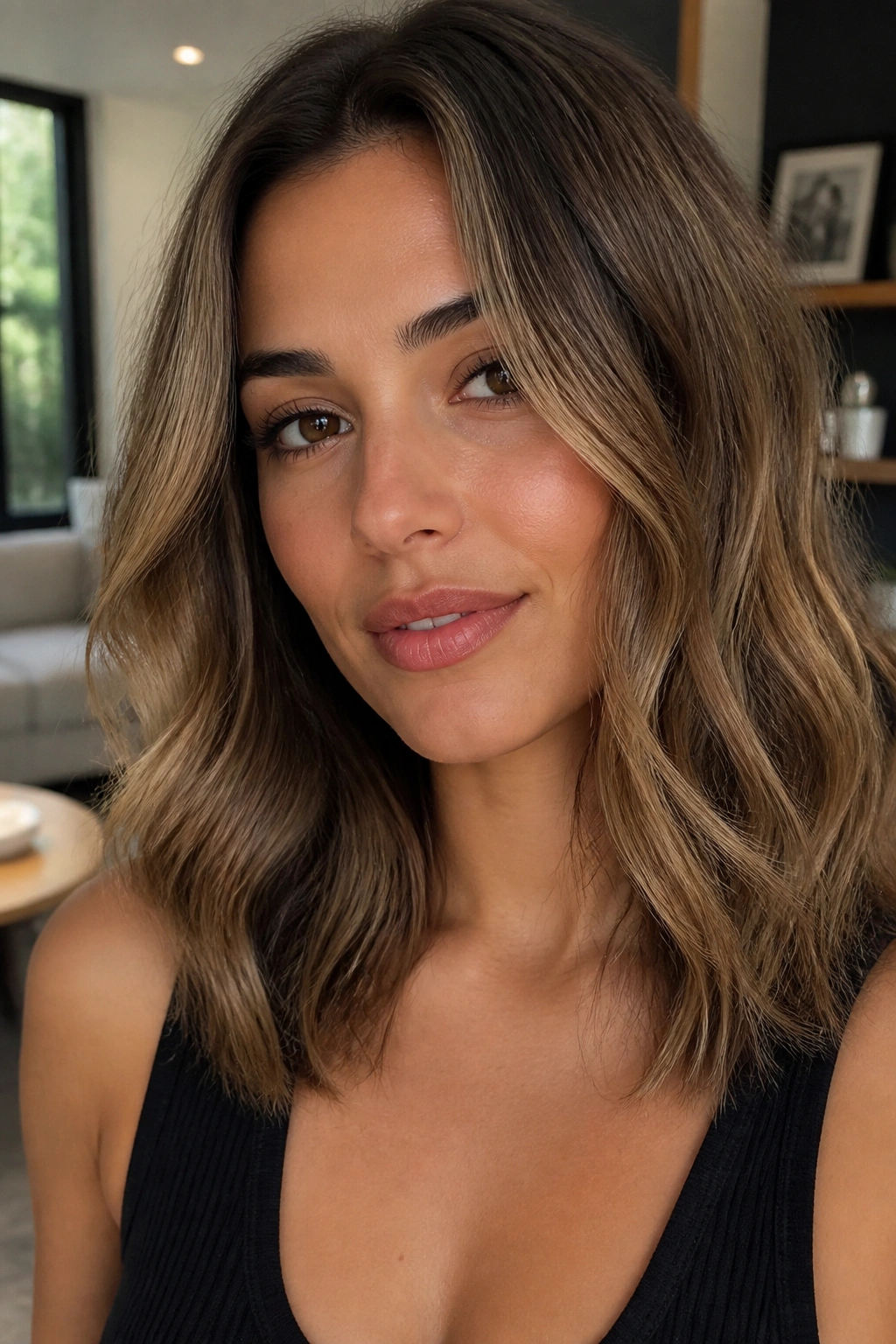
Brushed-out waves sit in that sweet middle ground between curl and straight hair. They have shape, but no hard edges. On medium hair, that softness keeps the cut from looking bulky, especially if the layers sit around the collarbone.
This style starts with waves you set with a wand or flat iron, then let cool completely. That cooling step matters more than most people think. Warm waves brush out too fast and can swell into frizz. Cool ones flatten into a smoother, more expensive-looking texture — even though I hate that phrase, because it sounds like a perfume ad and not a hair tip.
Once the waves are cool, use a paddle brush or even a wide boar-bristle brush and make two or three slow passes through the lengths. Stop before the hair turns straight. You want ribbon-like bends, not a blowout. A tiny bit of lightweight oil on the ends helps the hair separate in a nice way instead of looking dry.
This is the style I’d pick for dinner, a nicer shirt, or any day when you want your waves to feel soft around the face instead of beachy and rough.
6. Curtain Bang Waves With Bend at the Cheeks
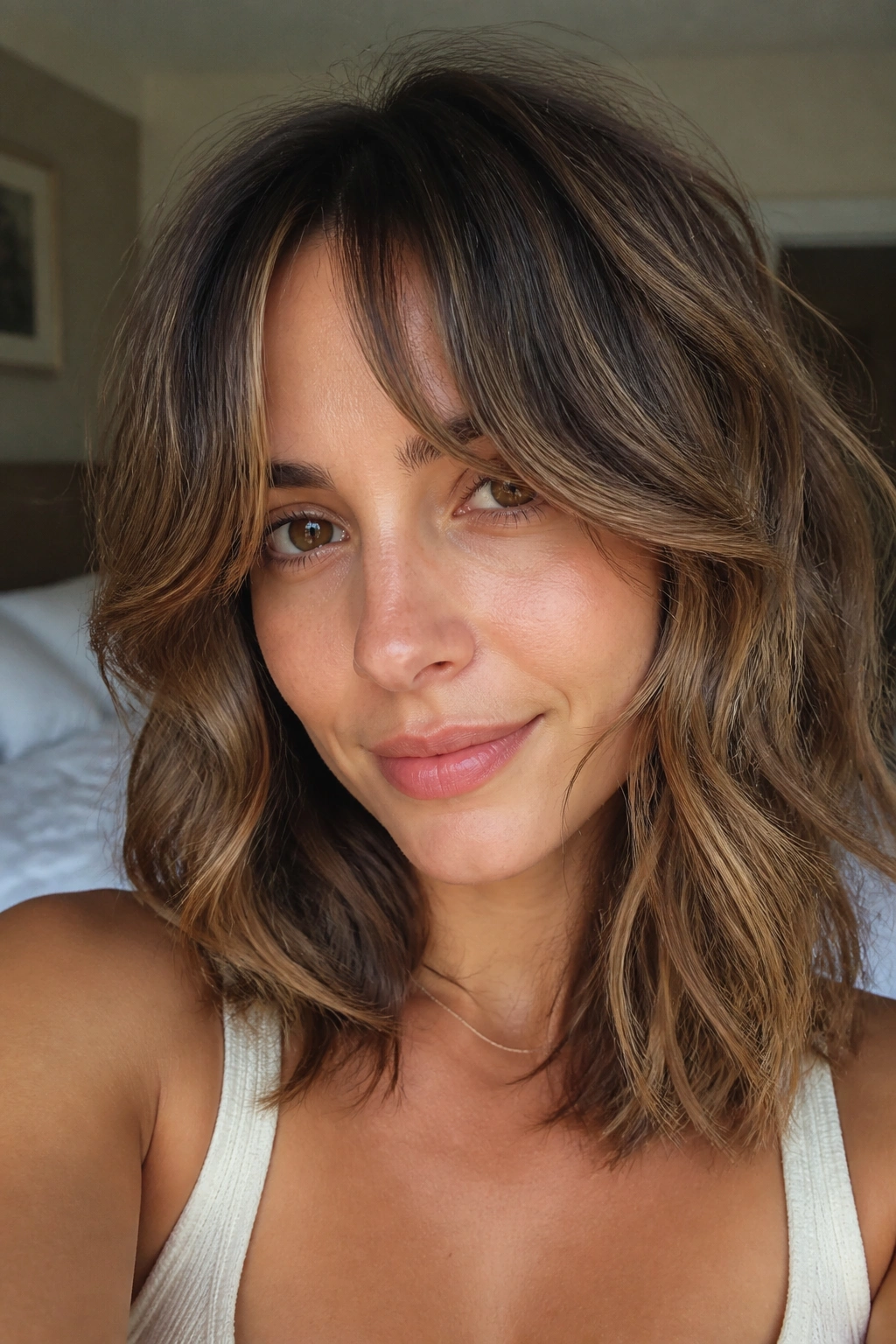
Curtain bangs and messy waves are natural partners. The bangs break up the front, the waves keep the rest from looking too tidy, and medium hair gives both pieces enough room to move. The result feels light around the face without turning flimsy.
Unlike blunt bangs, curtain bangs don’t fight the wave pattern. They follow it. That means the front sections can bend away from the cheekbones and the rest of the hair can stay loose through the ends. If your hair is medium length and tends to puff at the sides, this shape solves that better than one giant curl ever could.
The best way to wear it is with a soft center part or a barely off-center part. Blow-dry the bangs first with a round brush or let them air-dry with a small clip pushing them away from the forehead. Then style the rest in loose, messy bends. A wave that starts around the jawline and falls toward the shoulders usually looks best here.
It’s especially good if your face shape benefits from a little opening around the eyes. The bangs do the framing, and the waves do the relaxing. Easy enough.
7. Side-Swept Waves Tucked Behind One Ear
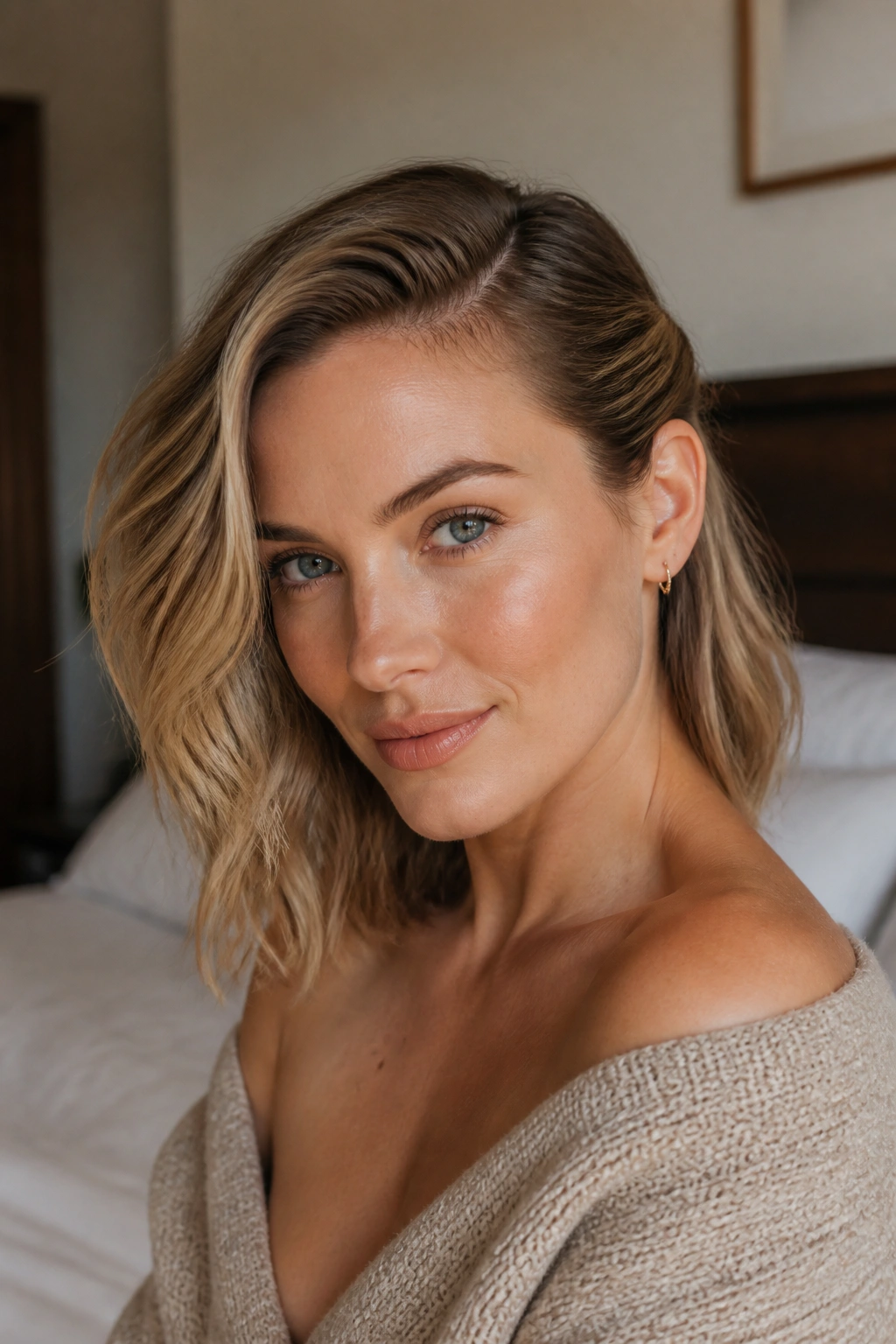
A tucked-behind-one-ear wave has a clean side and a loose side, which sounds simple because it is. That’s part of why it works. Medium hair can look heavy when every strand hangs in the same direction, but a single tucked side gives the shape some air.
What to Watch For
Keep the tucked side soft. If you jam too much hair behind the ear, the style starts to look accidental in the wrong way. Leave a small front section loose, slide the rest back, and pin it from underneath if the hair keeps slipping.
A statement earring helps, sure, but the real point is the shape. One side becomes neat, the other stays wavy and open. That contrast makes the style feel intentional without looking stiff. If your waves are looser, add one extra bend near the ends of the loose side so the shape doesn’t go flat at the bottom.
This is a good choice when you want your medium waves to show your jawline a little more. It also works on second-day hair, which is probably why I keep coming back to it. It forgives a lot.
8. Low Messy Bun With Wavy Tendrils
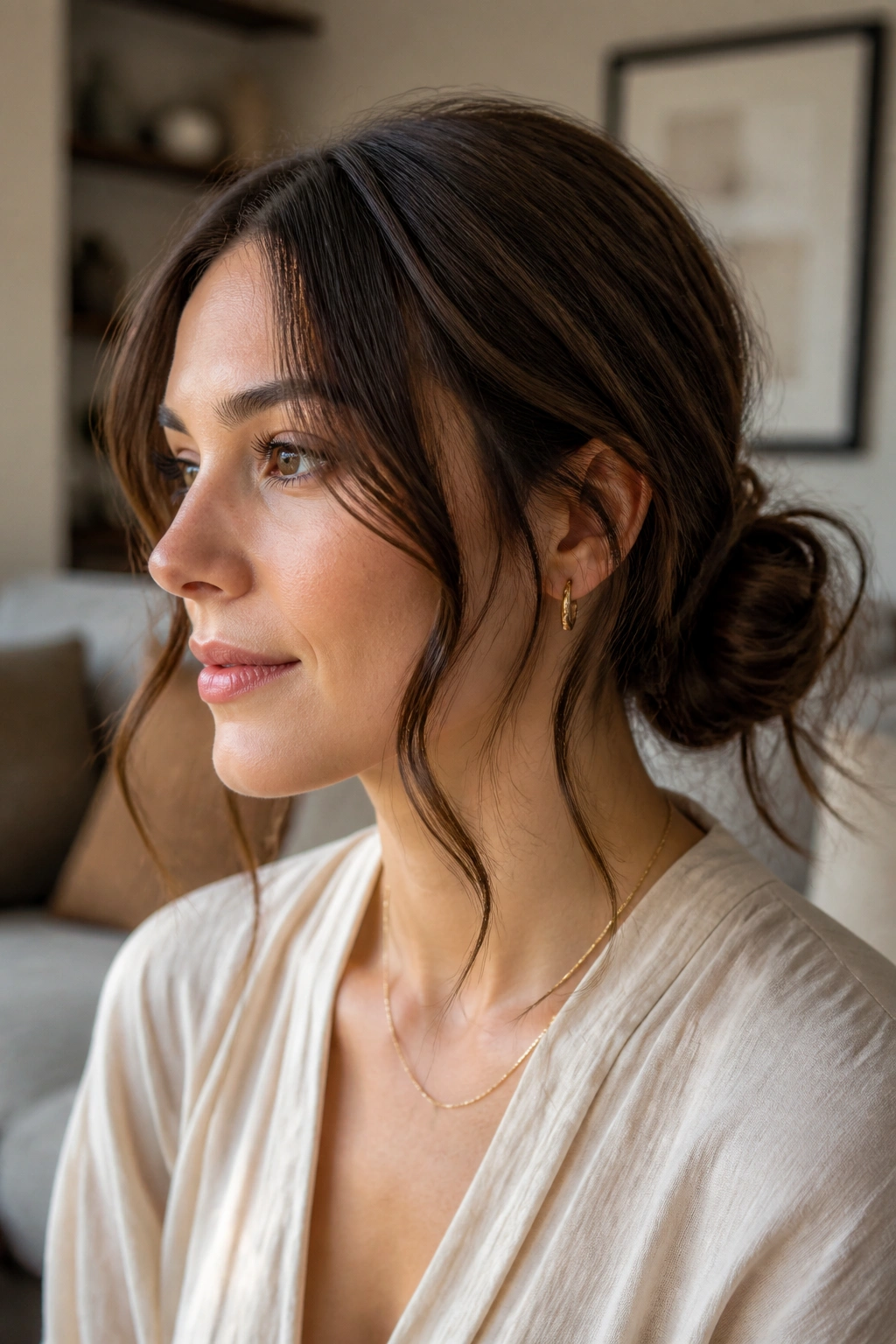
A low messy bun is what medium hair does when it needs to be up but refuses to look severe. The wavy tendrils are the whole point. They keep the style from turning into a tight knot and give the face some movement around the temples and neck.
Pull the hair into a low ponytail first, then twist it loosely and coil it into a bun. Don’t smooth every bump away. A few little irregularities make the shape better, not worse. Leave several pieces out before you secure the bun — one near each ear, one at the nape, and maybe a longer front piece if your cut has layers.
This style shines when the waves are slightly stretched, not freshly curled. Fresh waves are too springy and can make the bun look bulky. Day-two hair has more grip and less bounce, which helps the bun sit flat against the head.
A soft bun like this is also kinder to medium hair than a tight updo. Less pulling at the roots. Less weird denting later. More control, less fuss.
9. Shoulder-Grazing Shag Waves
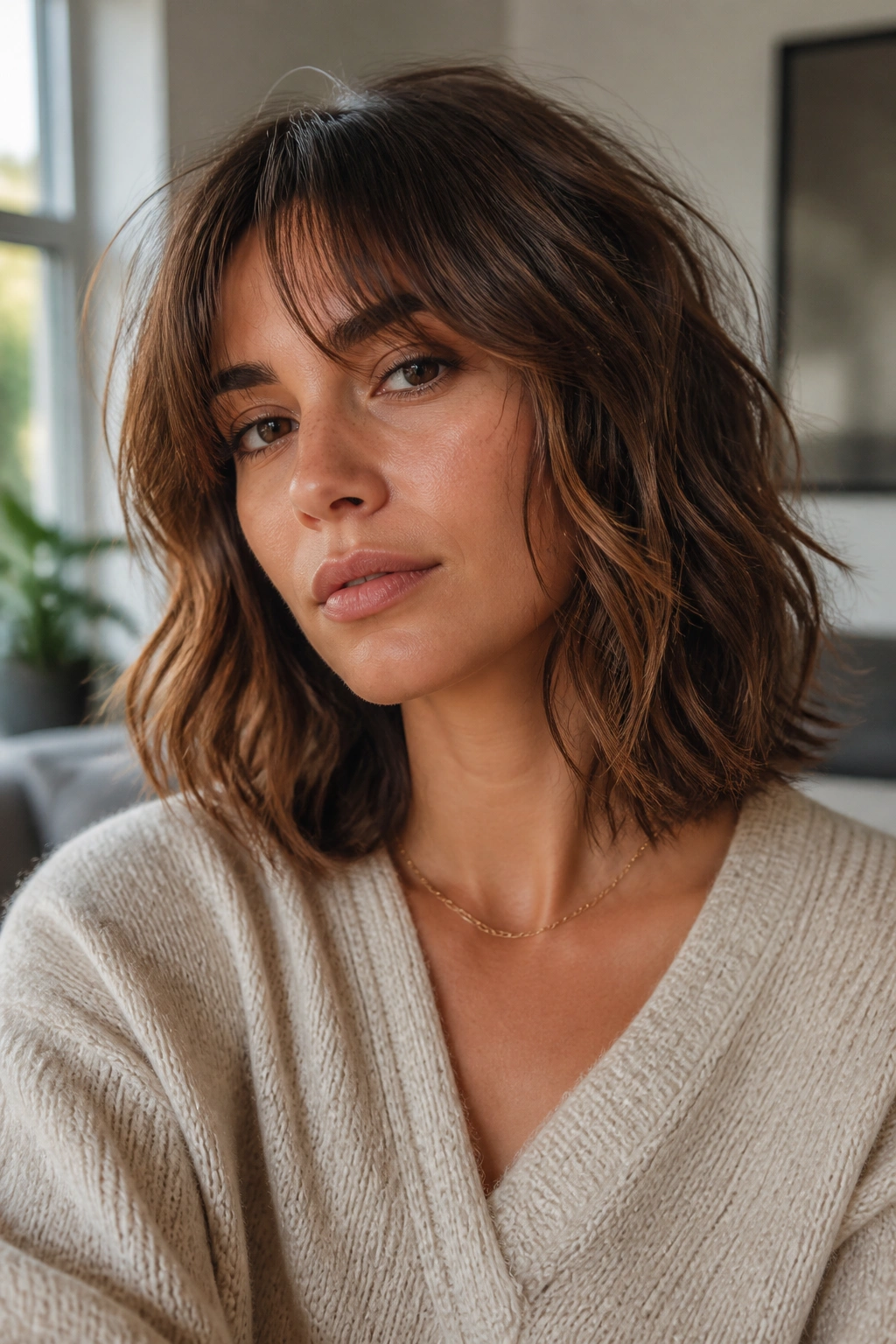
Why do shag waves look so good at medium length? Because the layers do half the work for you. The cut gives the hair built-in movement, and the messy waves keep the shape from looking too polished. On shoulder-grazing hair, that mix can be sharp in the best way.
How to Wear It
Let the layers dry with a little lift at the roots. A diffuser works well if your hair is naturally wavy; a rough blow-dry with your fingers works if it needs more push. What you’re trying to avoid is a flat top with puffy ends. The shag wants some height near the crown and some looseness through the bottom.
A light styling cream at the mid-lengths can keep the layers together without making them heavy. Then add texture spray only where the hair looks too soft. You do not need to coat the whole head. That’s how shags lose their shape and turn dusty.
This style has an edge to it, but not a harsh one. If your medium hair tends to feel plain when it’s waved, the shag fixes that fast. The layers make each bend visible. That is the whole point.
10. Rope-Braid Waves You Can Sleep In

Rope-braid waves are one of the few heatless styles that can look genuinely good on medium hair without much effort. The braid shape gives you a tighter, more defined bend than loose overnight braids, so the wave pattern holds better through the mid-lengths.
Here’s the practical part: split damp hair into two sections, twist each section in the same direction, then twist those two ropes around each other. Secure the ends with a soft elastic. Sleep on it. In the morning, undo the twist, shake out the roots, and separate the waves with your fingers.
- Best on slightly damp hair, not wet hair.
- Use a light leave-in conditioner so the lengths stay smooth.
- The smaller the rope sections, the tighter the bend.
- A satin pillowcase helps the shape stay cleaner.
The finish is a little different from wand curls. It looks looser at the roots and more uneven through the ends, which is exactly why it suits a messy wave look. If your hair is medium and tends to fall straight overnight, this gives you texture without hot tools.
11. Flip-Out Ends With a Soft Wave Bend

Flip-out ends are a nice change from the usual inward wave pattern. On medium hair, that outward movement gives the cut a bit of lift, especially if the ends have started to sit heavy from too much straightening or too much layering. It feels playful without turning cartoonish.
Unlike inward bends, which pull the hair toward the face, flipped ends open the silhouette. That makes the shoulders look a little broader and the length look a little bouncier. The style works best when the top half stays soft and the bend shows up mostly from the cheekbone down.
Use a flat iron or a curling iron and turn the tool outward at the last inch of each section. Not a huge flip. A small one is enough. If the flip gets too sharp, the style stops looking messy and starts looking retro in a very specific way. Cute for some people. Not for everyone.
This is the one I’d hand to someone who says their medium hair always falls flat at the tips. The ends are the personality here. Keep them loose, not crunchy, and the whole style wakes up.
12. Headband Tuck With Loose Waves
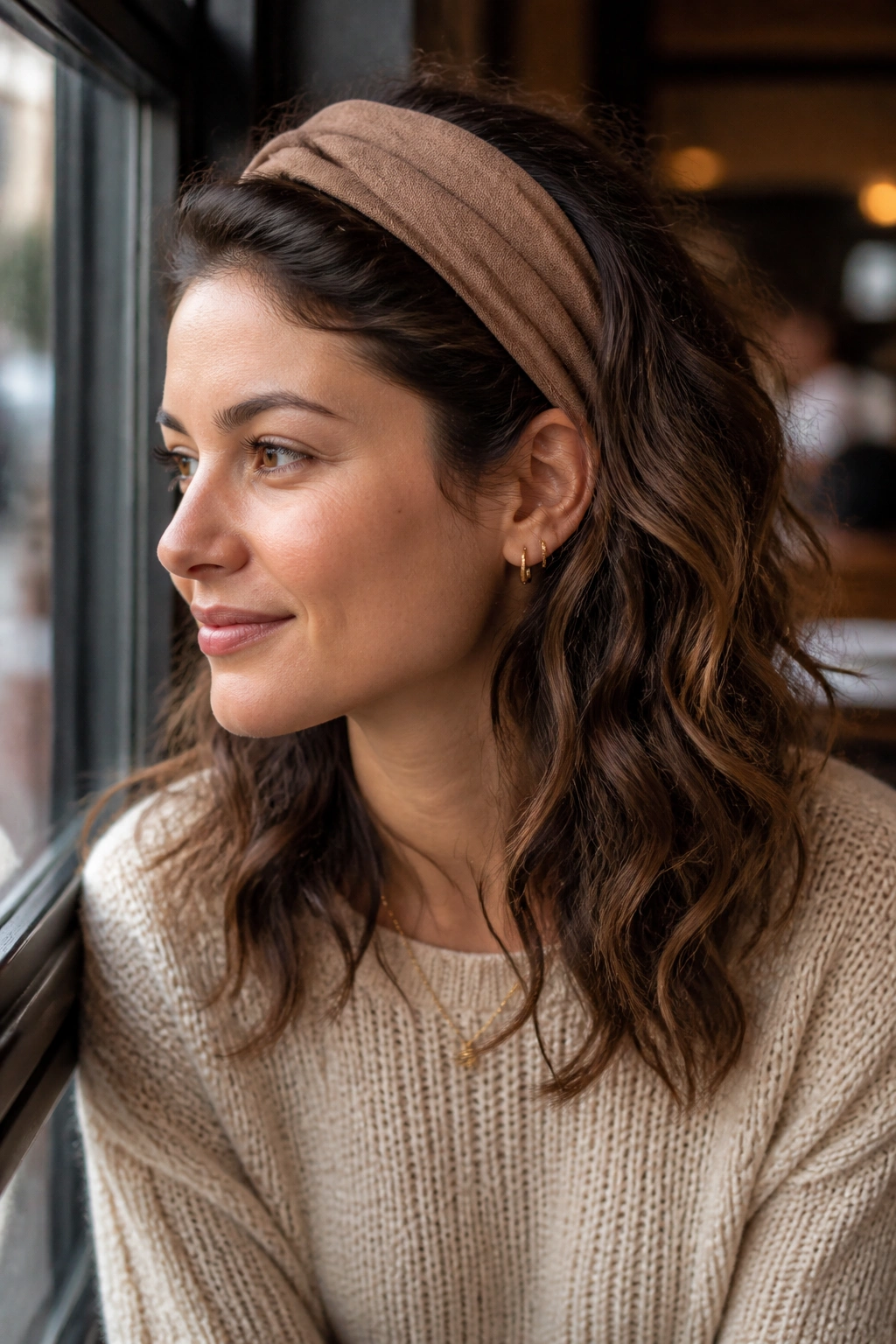
A headband tuck gives medium waves a softer frame than a full-up style, and it’s a lot easier than it looks. The headband holds the front away from the face while the waves keep spilling through the back, which keeps the style feminine without getting fussy.
Placement Matters
Set the headband just behind the hairline, not pushed all the way to the crown. If it sits too far back, the shape gets awkward fast. Then tuck small sections of hair around and over the band so it blends into the waves instead of sitting on top of them.
A wide fabric headband works better than a thin plastic one when the goal is messy texture. It gives the style a softer edge and doesn’t dig into the waves as much. If the hair is very clean and slippery, add a little dry shampoo at the roots first. That gives the band something to grab.
The nice thing about this style is how forgiving it is. If one side tucks better than the other, fine. Let it be uneven. Medium hair usually benefits from a bit of asymmetry anyway.
13. Pinned-Back Sides on a Center Part

A center part with pinned-back sides can look sharp or sweet depending on how loose you keep the waves. For medium hair, I like it best when the part is clean but the rest stays soft and a little wild. That contrast keeps the style from feeling too school-uniform neat.
The pinning part is simple. Take one-inch sections from each side, twist them back lightly, and pin them just above the ears. Leave the ends and back free. If your hair has a little bend already, great. If not, add loose waves first and then pin. Straight hair can work too, but the style gets much better when the lengths have some texture.
A few reasons this works so well:
- It opens the face without fully pulling hair away.
- It shows off the wave pattern at the back.
- It stays comfortable for long wear.
- It handles layered medium cuts without bulk.
Use matte pins if you can. Shiny ones stand out in a way that can feel too done. The softer the finish, the better the whole style reads.
14. Wet Texture Waves With Grit at the Roots

Wet texture is the messier cousin of beach waves, and medium hair handles it well because the length can support a sharper shape near the roots. The look is damp, piecey, and a little cool in an almost unfinished way. That’s the appeal.
Start with towel-dried hair and work a small amount of gel or strong-hold styling cream through the top half. Keep the ends lighter so they stay bendy instead of stiff. Then scrunch the lengths or twist a few sections by hand. You want the roots to look controlled and the ends to feel softer.
A diffuser can help here, but low heat is the move. High heat cooks the product fast and leaves the hair crunchy before the waves have time to form. If you want more separation, pinch a few front pieces together with your fingers while the hair is drying.
This style is not for anyone who hates product. It needs grip. But on medium hair, that grip is what keeps the shape visible. Without it, the waves can disappear into a flat, fuzzy layer.
15. Soft Crown Volume Waves

Soft crown volume waves are the style I’d save for the days when medium hair needs a little lift. Not height for the sake of it. Just enough root movement so the whole shape doesn’t sit heavy around the face and shoulders.
The easiest way to get there is with a loose side-to-side lift at the roots, then messy waves through the mid-lengths. Tease the crown gently with a fine comb if the hair is flat, or set the roots with a blow-dryer and round brush while leaving the ends mostly alone. That mix keeps the top airy and the bottom relaxed.
Use a small amount of dry shampoo at the crown even if the hair is clean. Clean roots can be slippery. A bit of texture gives the waves something to sit on, and the style lasts longer because of it. If the front falls too flat, clip the top back while it cools, then release it and shake it out with your fingers.
This is the kind of medium-hair wave style that looks good from the front and from the side, which sounds obvious until you try a few others and notice how many of them only work in one angle. Soft crown volume fixes that. It gives the hair shape without making it feel stiff, and it’s one of the easiest ways to make messy waves look alive instead of simply tousled.
